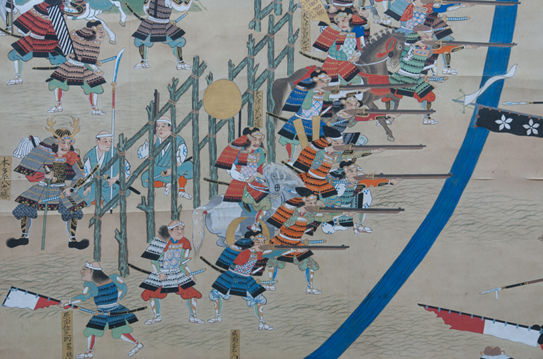
The best cavalry in Japan died standing in front of a fence. This is the simplest way to summarise what happened at Nagashino on the morning of 21 May 1575, and it is more or less exactly what the contemporary chroniclers recorded. The Takeda clan, for three generations under Takeda Nobutora, Shingen, and Katsuyori, had fielded the most feared mounted force in the country — a highly-drilled corps of ashigaru-free riders from the Kai-Shinano plateau, who in open ground could break almost any formation their opponents put in front of them. On 21 May 1575 they faced an Oda-Tokugawa coalition twice their size, dug in behind a three-tiered wooden palisade with approximately 1,000 matchlock muskets, across a narrow valley called Shitara-ga-hara at the westernmost edge of Mikawa Province. The Takeda cavalry charged the palisade for eight hours. The palisade held. By early afternoon, 10,000 Takeda men were dead, including the three surviving members of Shingen’s legendary “Four Heavenly Kings” — Yamagata Masakage, Baba Nobuharu, and Naitō Masahide — plus most of the senior command. Takeda Katsuyori escaped with a handful of attendants and lived another seven years as a weakened regional lord before the Tokugawa-Oda coalition finally destroyed the clan in 1582.
Nagashino is frequently described in popular English-language accounts as the battle that proved muskets beat cavalry and ushered in the modern era of Japanese warfare. Modern Japanese historiography has softened this claim — the famous 3,000-muskets-in-rotating-volleys scheme is almost certainly an Edo-period reconstruction rather than a historical practice, and the palisade plus terrain plus Takeda tactical errors probably matter more than the firearms did. But the broad outline is correct and the outcome is not in dispute: an outnumbered Takeda force, attacking a prepared fortified position, took casualties that destroyed its command structure in a single morning, and the samurai class’s long-term relationship with firearms was permanently changed as a result. This is also where the Okudaira retainer Torii Sune’emon was executed for his famous message-run — the scene I covered in detail in my Torii Sune’emon biography. Nagashino is the setting in which that story happens.
In This Article
- How we got here — Shingen’s death, Katsuyori’s inheritance
- The siege — 15,000 against 500
- The palisade — how Nobunaga stopped a cavalry charge
- 20 May night — Sakai Tadatsugu’s flanking raid
- 21 May — the morning of the Takeda cavalry
- Aftermath — seven years to Tenmokuzan
- Where to visit the Nagashino battlefield
- Nagashino Castle site and Torii-zuka
- Shitara-ga-hara battlefield park and Nagashino-Shitara-ga-hara Kassen Iseki-kan
- Takeda command tombs
- Getting to Nagashino — the logistics
- Closing — the palisade that killed a cavalry tradition
How we got here — Shingen’s death, Katsuyori’s inheritance
The road to Nagashino begins in April 1573 with the death of Takeda Shingen. Shingen — the Tiger of Kai, and for most of the 1560s-early-1570s the most militarily capable warlord in Japan — had spent the previous winter driving south through Mikawa in what was called the Seijō Sakusen, the “Westward Advance Strategy,” intended to reach Kyoto and confront Nobunaga directly. In January 1573 Shingen had beaten Tokugawa Ieyasu decisively at Mikatagahara; Ieyasu had retreated into Hamamatsu Castle; the Takeda coalition was poised to move on Owari. Then Shingen fell ill, possibly with tuberculosis, and died on campaign at Komaba in Shinano on 12 April 1573 at age 53. The Takeda chronicles attempted to conceal his death for three years per his deathbed instructions. They partly succeeded. The ally-hostility balance in the Kantō region did not shift immediately, and the Takeda retainer corps stayed cohesive long enough to get the army back to Kai.
Shingen’s successor was his fourth son Takeda Katsuyori. Katsuyori was 27 at the time of the succession, a capable battlefield commander by Sengoku standards, but he inherited several problems that were not his fault. Shingen had designated his grandson, Katsuyori’s son Nobukatsu, as the long-term heir, with Katsuyori serving only as regent until Nobukatsu came of age; this meant Katsuyori’s authority over the senior Takeda retainers was always legally provisional. The “Four Heavenly Kings” (Shitennō) of the Takeda — Kōsaka Masanobu, Yamagata Masakage, Baba Nobuharu, and Naitō Masahide — were all men who had served Shingen for decades and regarded Katsuyori as a caretaker. And the Takeda domains, while substantial, were economically under pressure: Shingen’s wars had cost a lot of koku, the Kai-Shinano mountain terrain produced limited rice, and the clan’s finances required continued military success to keep the retainer corps paid.
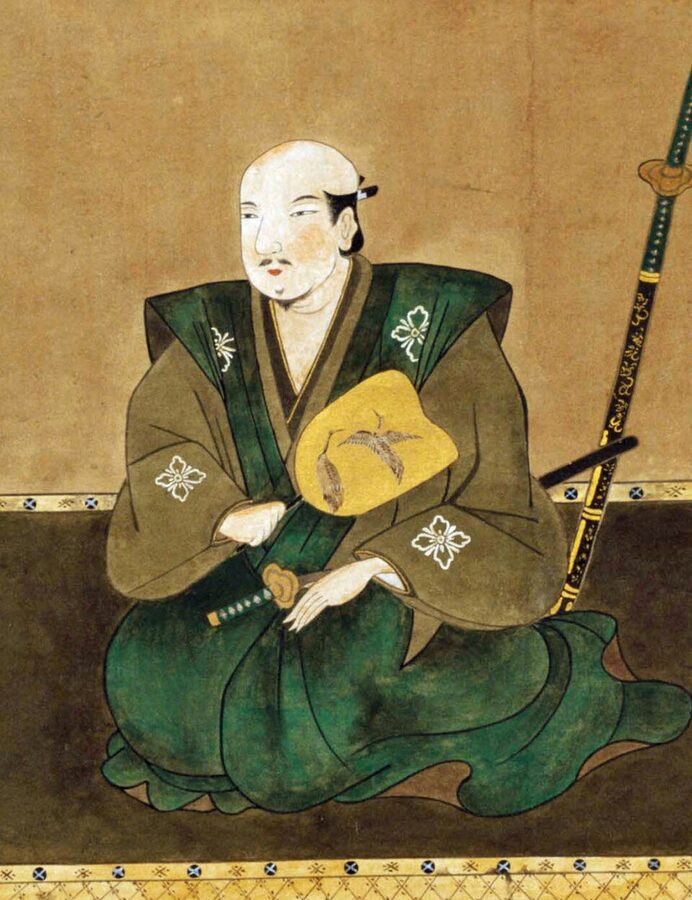
Katsuyori’s first two years as head of the clan produced mixed results. He took the Tokugawa-held Takatenjin Castle in Tōtōmi in spring 1574 — an operation Shingen himself had attempted and failed at. He maintained the alliance network with the Late Hōjō to the east and the Uesugi to the north (the latter temporarily, after Uesugi Kenshin’s 1578 death). He kept the Four Heavenly Kings in the field. But by early 1575 the economic pressure was forcing him into more aggressive operations, and the decision he made that spring, to launch a major campaign into Mikawa to support the besieged Honganji faction at Osaka, would prove the strategic error that produced Nagashino. His target was Oda Nobunaga’s main ally Ieyasu, and his method was a multi-pronged invasion of eastern Mikawa aimed at capturing the Okazaki-Toyokawa-Yoshida axis that controlled Tokugawa’s rear. The campaign opened in mid-April 1575 and reached Nagashino Castle by early May.
The siege — 15,000 against 500
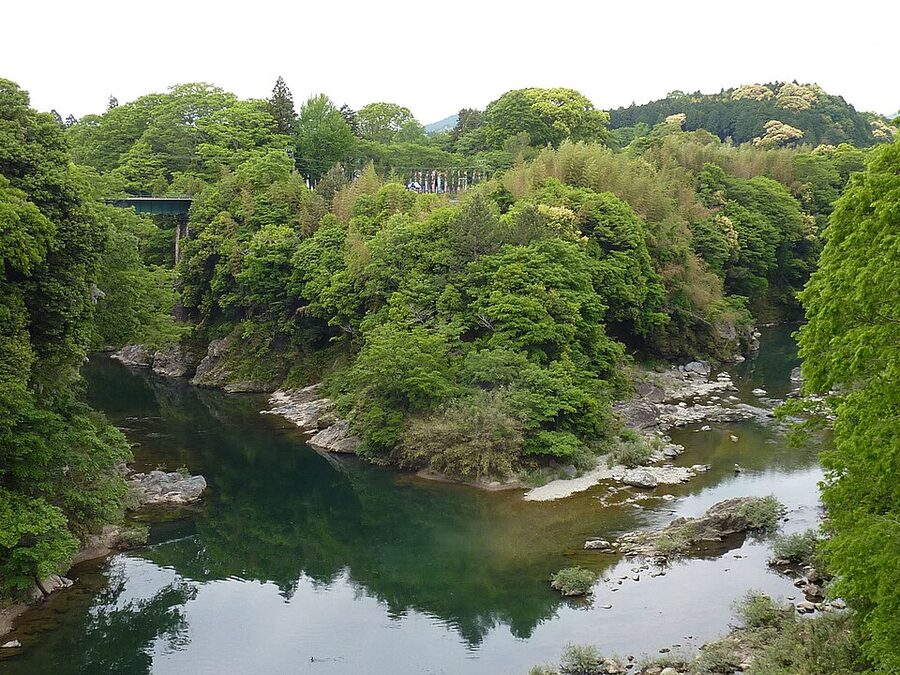
Nagashino Castle sat at the confluence of the Ure and Takigawa rivers in northern Mikawa, on a narrow promontory of land protected on three sides by steep ravines. The castellan was Okudaira Sadamasa — a 22-year-old Mikawa native whose father Sadayoshi had recently switched the family’s allegiance from the Takeda to the Tokugawa. Sadamasa was holding the castle with approximately 500 men when Katsuyori’s advance force arrived on 1 May 1575, followed by the main Takeda body of 15,000 on the 5th. On paper the castle should have fallen within days — a 30-to-1 force ratio against fortifications that were solid but not especially strong. What the Takeda did not expect was that Sadamasa had 200 matchlock muskets inside, plus a half-dozen heavier ōzutsu swivel-guns, and that the promontory terrain would force the attackers to channel their assaults through a few predictable approach routes where the musket fire could concentrate.
The siege lasted three weeks. The Takeda burned out the Okudaira rice stores on 13 May, which turned the defence into a race against starvation. On the night of 14 May, Sadamasa’s retainer Torii Sune’emon volunteered to swim downriver through the Takeda cordon, reach Okazaki Castle 65 km southwest, and summon Ieyasu’s relief force. Sune’emon swam out through the Ure river at midnight, reached Okazaki by the afternoon of 15 May, delivered his message to Ieyasu (who was already mobilising, having received earlier reports and with Nobunaga’s 30,000-man reinforcement already on the way from Owari), and turned around to swim back with the news that the relief was coming. He was captured at dawn on 16 May by Takeda sentries within sight of the castle walls. Katsuyori offered him his life if he would shout a false surrender-message to the garrison; Sune’emon agreed in appearance, was led to a position within earshot of the walls, and shouted instead that the relief force would arrive within two days. He was crucified on the spot. The full story is in my Torii Sune’emon piece. For Nagashino’s purposes, his death bought the castle the 48 hours it needed.
The palisade — how Nobunaga stopped a cavalry charge
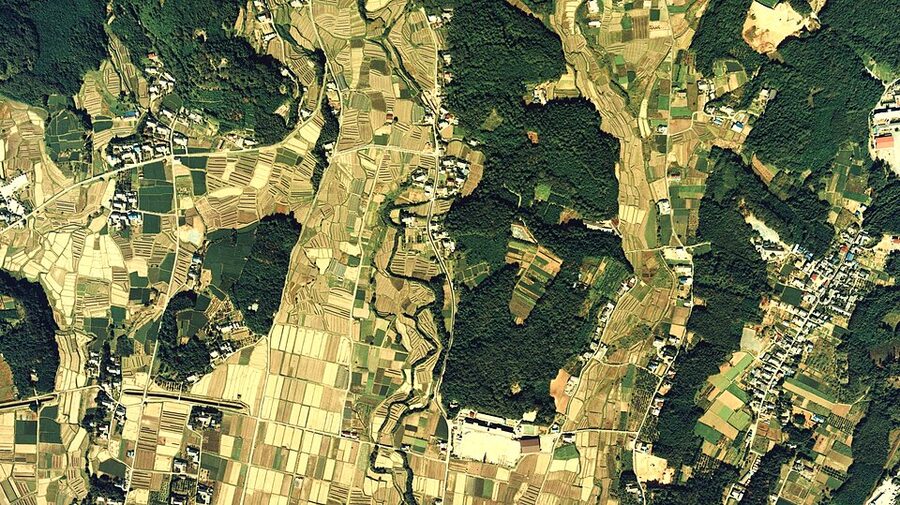
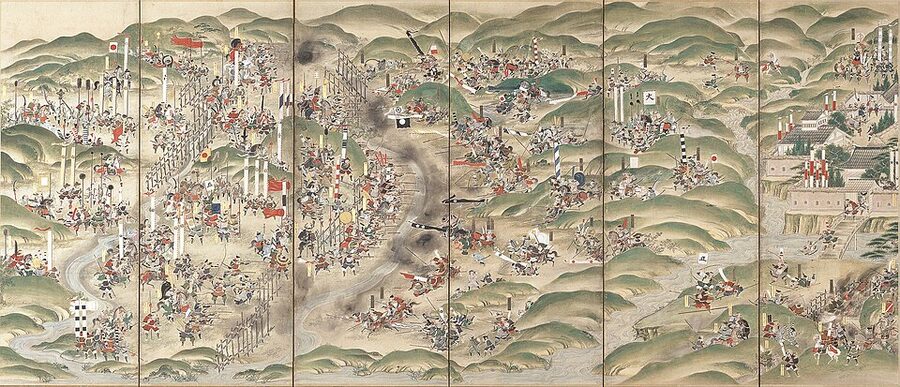
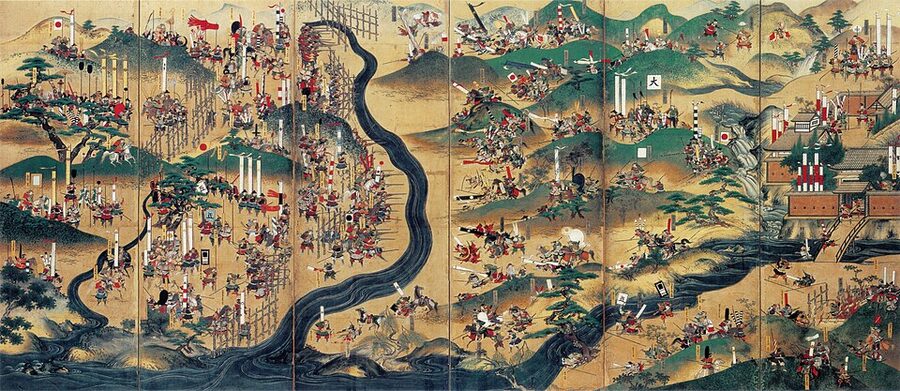
Nobunaga’s 30,000-man main body and Ieyasu’s 8,000 reached Shitara-ga-hara, the narrow basin 3 kilometres west of Nagashino Castle, on 18 May 1575. The terrain was not as cramped as Sekigahara’s would prove 25 years later, but it was similarly constricted: a small open area roughly 2 kilometres across, bounded on the north by the Rengogawa stream and on the south by a series of wooded hills. Any force moving west from Nagashino toward Okazaki had to pass through Shitara-ga-hara, and anyone holding the western edge of the basin could force the eastern force to engage on ground of the holder’s choosing. Nobunaga immediately began fortifying.
The construction was unusual by Japanese standards. The Oda-Tokugawa engineers cut earthworks along the Rengogawa’s eastern bank to create an artificial escarpment 2-3 metres high, sloping the west side sharply upward so cavalry could not easily clamber across. Above the escarpment they built three tiers of wooden palisade — bōsaku, “horse-fences” — using angled stakes driven into the earth with horizontal rails, each tier set back about 5-10 metres from the one in front. The net effect was a compound barrier: a small stream at the bottom, a steep earthen slope immediately behind it, and three stepped wooden fences beyond that. The defenders, primarily Oda matchlockmen with some Tokugawa support, positioned themselves in the gaps between the palisade tiers, so that fire could be delivered from three separate ranges. Behind the rearmost palisade were the reserve infantry and the senior command posts. The total construction period was about 48 hours, possibly less. The whole field was ready by the night of 20 May 1575.
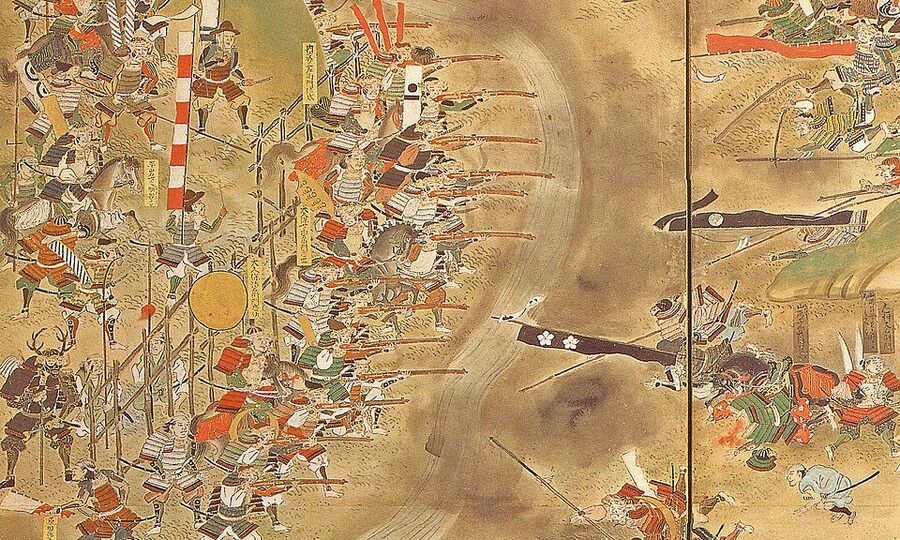
A note on historiography is worth making here because the “3,000 muskets in rotating volleys” claim has become so embedded in popular accounts. The source for that specific tactical formation is the Kōyō Gunkan, a Takeda-perspective campaign history compiled by Obata Kagenori in the early Edo period, probably 1620s-1650s. The Kōyō Gunkan is an invaluable source on the Takeda military but it has a distinct rhetorical interest in explaining the scale of their defeat at Nagashino in technical-tactical terms rather than political-strategic terms. The specific “1,000 muskets, three ranks, rotating volleys” formation attributed in later accounts to Nobunaga’s tactical order at Nagashino does not appear in the contemporary Oda-side account (the Shinchō Kōki of Ōta Gyūichi), which describes the action more simply as “the teppo discharged in great volume.” Modern researchers, including Fujimoto Masayuki and Fujita Tatsuo, have argued that the rotating-volley scheme is essentially Edo-period back-projection. The total number of matchlocks on Nobunaga’s side was probably 1,000-1,500 rather than 3,000, and they probably fired individually or in small groups rather than in synchronised ranks. The tactical effect, a sustained heavy-fire barrier, was achieved anyway, because that’s what happens when you concentrate 1,500 matchlocks on a prepared defensive line facing a limited-frontage attack.
20 May night — Sakai Tadatsugu’s flanking raid
What actually made the Oda-Tokugawa victory possible on 21 May was the flanking operation on the night of 20 May. Sakai Tadatsugu, one of Ieyasu’s senior retainers — the man whose famous “empty castle” drum-trick had saved Hamamatsu after Mikatagahara — proposed at the 20 May war council that a Tokugawa-led detachment slip around the southern flank, cross the Toyokawa, and strike the Takeda rear position at Tobigasuyama (the ridge where Katsuyori had placed his castle-blockade forces). Nobunaga publicly rejected the proposal as “trivial” at the council, but privately summoned Sakai afterwards, told him to execute the plan immediately, and gave him 500 Oda matchlockmen plus the commissars Kanamori Nagachika and Sagara Yoshishige as attached observers to lend the operation Oda legitimacy. The 20 May 1575 deception — reject the plan publicly so that any spy in the Takeda camp would not hear about it, then execute it privately — is one of the cleanest demonstrations of Nobunaga’s operational paranoia in the contemporary record.
Sakai’s flying column of approximately 4,000 men (2,000 Tokugawa archers and matchlockmen, 500 Oda matchlockmen, 1,500 supporting infantry) crossed the Toyokawa at midnight and worked their way up the southern ridge system in darkness. They reached Tobigasuyama at dawn on 21 May and hit the Takeda blockade force from behind. Tobigasuyama fell within an hour; the adjacent supporting forts (Nakayama, Kumayama, Ubagafutokoro, Kimigafushido) fell immediately after. The Takeda commander at Tobigasuyama, Katsuyori’s uncle Kawakubo Nobuzane, was killed along with roughly a dozen named retainers. Most critically, the surviving Takeda blockade forces scattered westward through the Toyokawa valley, where Sakai’s troops pursued them and cut down several hundred more. By approximately 7am on 21 May, Nagashino Castle had been lifted, the southern Takeda flank was destroyed, and the main Takeda body at Shitara-ga-hara had its line of retreat threatened. Katsuyori understood this; his choice was to retreat back to Kai and admit the campaign was lost, or to fight through the Oda-Tokugawa main position and try to punch through to the west. He chose to fight.
21 May — the morning of the Takeda cavalry
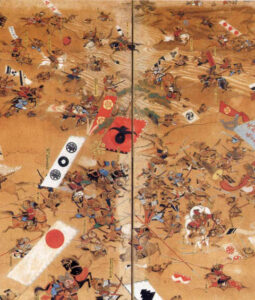
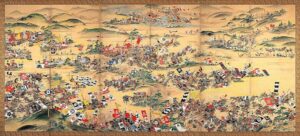
The Takeda opening attack came at approximately 8am. Katsuyori deployed in conventional Sengoku formation: Yamagata Masakage’s 3,000 men on the southern flank with orders to push against the Tokugawa positions around the Yasugoro shrine; Naitō Masahide’s 2,000 in the centre to strike Nobunaga’s headquarters zone; Baba Nobuharu’s 1,700 on the northern flank; Anayama Nobutada’s 1,500 in reserve; Katsuyori himself with the personal command force of about 3,000 behind the main line. The total deployed force was roughly 12,000 men, with 3,000 left behind at Nagashino as the (now pointless) castle blockade. The attack was meant to be delivered in waves — infantry first to absorb the initial volleys, cavalry second to exploit any breakthrough — but the terrain constrained the Takeda to narrow approach columns that funnelled directly in front of the palisade. What the Oda-Tokugawa matchlocks had was a straight shooting lane through a 500-metre-wide kill zone that the Takeda had to cross to reach the palisade, and across which the defending line could concentrate fire without breaking formation.
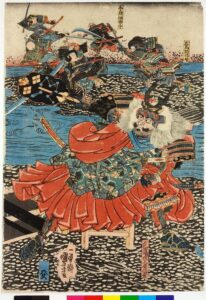
The first wave hit the Oda northern-flank palisade around 8:30am and was cut down almost to the man. Yamagata Masakage led the second wave’s assault personally, on the southern flank, and was shot from his horse at close range around 9:15am — the first of the Four Heavenly Kings to die. Naitō Masahide, leading the centre, was killed about an hour later in a similar charge; his head was brought to Ieyasu’s tent by the Tokugawa retainer Asahi Naotomo. By 10:30am, three hours into the battle, both Takeda flanks were in partial collapse. Baba Nobuharu — the last Heavenly King on the field, holding the northern position — continued to press attacks through the late morning, but his force was thinning with each wave. At approximately noon, as Katsuyori began ordering a general retreat, Baba formed a rear-guard with the surviving 700 of his original 1,700 men and turned to fight the pursuing Oda force long enough for Katsuyori to clear the field.
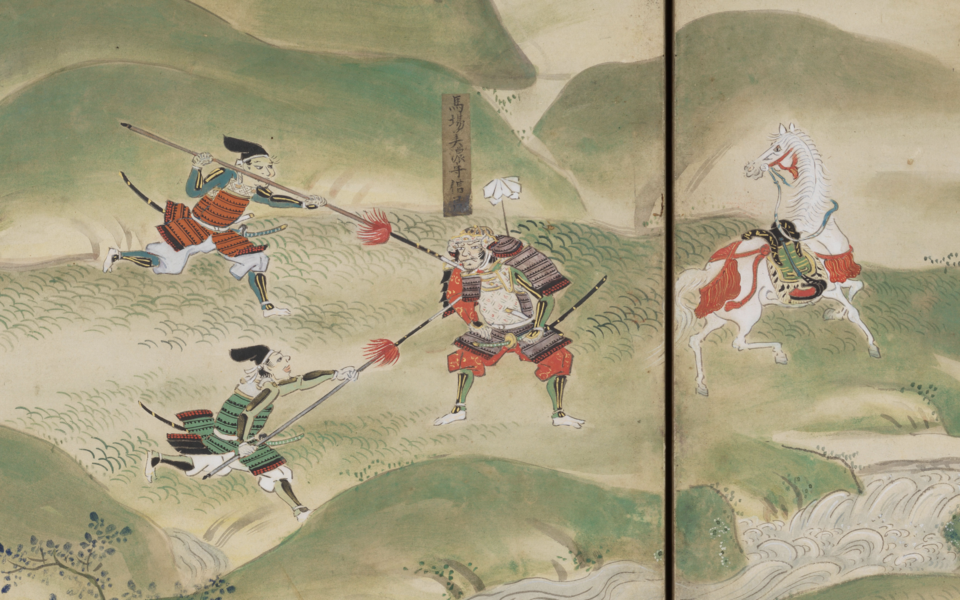
The Takeda dead roll-call read like a funeral register for the pre-Nagashino Takeda retainer corps. Sanada Nobutsuna and Sanada Masateru, the older brothers of the Sanada Masayuki who would later become famous at the Siege of Ueda and the Osaka Winter Campaign, were both killed. Tsuchiya Masatsugu, Tsuchiya Naoki, Anzai Kagehira, Mochizuki Nobunaga, Hara Masatane, Hara Morihira, Yonekura Shigetsugu, Obata Masatoshi — senior Takeda retainers whose names filled the chronicle registers of the previous decade. The Shinchō Kōki lists 86 named Takeda casualties by name alone; the total death count for the Takeda including foot-soldiers was between 8,000 and 12,000 depending on which account you read. The Oda-Tokugawa side lost no named generals and approximately 6,000 men of the 38,000-strong combined force. The force ratio of casualties was approximately 2:1 in favour of the Oda-Tokugawa side — an extraordinary result given that the defending army was twice the size of the attacking one, and the kind of ratio that only a prepared fortified position could produce.
Aftermath — seven years to Tenmokuzan
Katsuyori reached Takatō Castle in Shinano on 26 May 1575 with approximately 500 survivors from his original 12,000 deployed at Shitara-ga-hara. He spent the next seven years trying to rebuild. The surviving Takeda commander on the Uesugi front, Kōsaka Masanobu, the one Heavenly King not on the field at Nagashino, continued to hold the northern boundary; the Late Hōjō alliance remained intact for a few years; Katsuyori even managed a minor recovery campaign into Mikawa and Tōtōmi in 1578-79. But the loss at Nagashino had destroyed the Takeda military core, and the strategic calculation behind the alliance network that had once made Shingen the most-feared daimyō in eastern Japan could not be reconstructed from the survivors. In 1579 the Hōjō alliance broke; in 1580 the Takatenjin garrison surrendered back to the Tokugawa; in 1581 the Akechi-Hosokawa alliance began closing off the Kai-Shinano escape routes.
The end came in March 1582. A combined Oda-Tokugawa-Hōjō invasion from three directions converged on the Takeda heartland; the clan’s senior retainers defected within days of each other; Katsuyori retreated through the mountains with his wife (the daughter of Hōjō Ujimasa, now a hostage to her own father’s army) and about 40 remaining attendants; they were run to ground at Tenmokuzan in eastern Kai on 11 March 1582 by Takigawa Kazumasa’s advancing Oda force. Katsuyori killed his wife and son rather than see them captured, and committed seppuku facing west toward Kyoto. His head was taken by Ieyasu’s retainers and sent to Nobunaga at Gifu, where Nobunaga is said to have kicked it contemptuously and had it displayed at the Hōkō-ji pagoda in Kyoto. The Takeda clan was extinguished. Seven years earlier, standing in front of a triple palisade at Shitara-ga-hara, the Four Heavenly Kings had already known this outcome was coming.
Where to visit the Nagashino battlefield
Nagashino Castle site and Torii-zuka
Start your visit at the Nagashino Castle ruins in Shinshiro City, Aichi Prefecture — the castle that held out for three weeks in May 1575. The site sits on its original promontory with intact earthwork kuruwa enclosures, a well-preserved Honmaru platform, the reconstructed Nagashino-jō Hotetsubashi approach bridge, and a small but excellent on-site museum called the Nagashinojō-shi Hoson-kan. The museum covers the three-week siege with period-correct rice-store displays, replicas of the Okudaira garrison’s matchlock weapons, and the full siege chronology as reconstructed from the Okudaira Bukan-shū and the Shinchō Kōki. Admission is ¥220; open 9am-5pm, closed Tuesdays. Adjacent to the castle site, a short walk along the Ure river bank, is Torii-zuka — the monument marking the approximate spot where Torii Sune’emon was crucified on 16 May 1575. The monument is free to visit, open always, and usually quiet.
Getting there: Nagashinojō Station on the JR Iida Line, 20 minutes from Toyohashi (on the Tōkaidō Shinkansen, 2 hours from Tokyo). The castle site is a 10-minute walk from the station. Budget 2-3 hours for the castle + museum + Torii-zuka combined.
Shitara-ga-hara battlefield park and Nagashino-Shitara-ga-hara Kassen Iseki-kan
The main battlefield at Shitara-ga-hara is 3 kilometres west of Nagashino Castle, reachable in 40 minutes by foot or 8 minutes by car. The area is preserved as a historic park with full signage: reconstructed bōsaku palisade sections (at roughly 30% actual scale — the original palisades were much longer), individual commander-position markers for Yamagata Masakage’s death site, Naitō Masahide’s death site, Baba Nobuharu’s last stand, and the central Oda command post, plus a Rengogawa-side earthworks reconstruction. The main interpretive facility is the Nagashino-Shitara-ga-hara Kassen Iseki-kan, the “Nagashino-Shitara-ga-hara Battlefield Ruins Museum”, a dedicated battle museum with reconstructed period weapons, 3D battlefield models, and good English signage. Admission ¥330, open 9am-5pm, closed Tuesdays.
The battlefield park is always accessible, with the commander-position markers on an easy walking circuit of about 4 kilometres that takes 90 minutes if you read every sign. The Yamagata Masakage marker and the Torii-zuka together are the two most emotionally effective single stops — Yamagata being the most senior Takeda casualty and dying in roughly the same 50-metre square where Baba Nobuharu would die three hours later. Local volunteer guides with the Shinshiro City historical society are available on weekends in Japanese and sometimes English.
Takeda command tombs
Scattered across the wider Shinshiro area are individual tombs and memorial markers for specific Takeda commanders. The Yamagata Masakage tomb is at Shiohara-ji temple, 3 km south of the battlefield. The Baba Nobuharu memorial is at Baba-ji, 2 km north. The Naitō Masahide marker sits in a small shrine at the edge of the rice paddies where his force’s final collapse happened. These are small sites, unmanned most of the time, with modest monuments and offering boxes; but they are the places where specific men died on 21 May 1575, marked by the communities that have kept their memory for 450 years. Combining them into a day-long circuit requires a car or a willingness to walk about 15 km. Local bus service is limited outside of central Shinshiro.
Getting to Nagashino — the logistics
Nagashino is an awkward day trip from most of Japan’s main cities because it sits in the rural interior of eastern Aichi with limited rail service. From Tokyo, the fastest option is Shinkansen to Toyohashi (1h40) + JR Iida Line to Nagashinojō (40 min); total about 2h30 one way, making a day trip from Tokyo tight but possible. From Kyoto or Osaka, the same pattern via Nagoya-Toyohashi-Nagashino works but takes closer to 3h30 one way — an overnight in Shinshiro is more practical. From Nagoya, Nagashino is 1h15 one way, the easiest base. Shinshiro has a handful of small business hotels (Shinshiro Onsen, Toyoko Inn) within walking distance of the JR station, which make a reasonable overnight anchor.
The logical pairing is with other regional history sites: Okazaki Castle (Tokugawa Ieyasu’s birthplace, 45 minutes west by JR from Toyohashi), Gifu Castle (covered in my separate piece, 90 minutes northwest via Nagoya), or the Sekigahara battlefield (2 hours northwest via Gifu). Nagashino plus Sekigahara makes a natural two-day pair covering the opening and closing of the late-Sengoku Oda-Tokugawa arc. Nagashino plus Nagoya Castle plus the Oda family’s Shōbata/Kiyosu sites makes a good three-day circuit centred on the Nobunaga unification narrative.
Closing — the palisade that killed a cavalry tradition
Walking the Shitara-ga-hara battlefield on a spring morning, which is when I have always done it, the thing you notice most is how small it is. The whole engagement took place in roughly the area of six Japanese rice paddies stacked side-to-side. You can stand at the Yamagata Masakage marker, turn, and see the exact slope of ground that his cavalry charged up, the same 150-metre approach that 3,000 Takeda retainers crossed at the gallop toward Nobunaga’s palisade on 21 May 1575. Most of them died in the first 80 metres. The remainder died at the fence itself, hacking at the palisade rails with swords and naginata while the Oda matchlocks discharged through the slots at 5-10 metre range. The ground does not look dramatic now — rice paddies, a stream, a few plane trees, the reconstructed palisade sections at 30% scale. But stand at the right spot and you can feel the tactical problem the Takeda commanders faced. There was nowhere else to go. The ground forced them across a 500-metre kill-zone. The palisade would not let them past. The muskets would not let them stop and reform. Every minute they spent in front of the fence was a minute of irreplaceable losses.
The historiographical debates about Nagashino — how many muskets, whether rotating volleys were actually used, how much of the outcome was Nobunaga’s tactics versus the Takeda’s strategic error — will continue. What’s not debated is the outcome. A cavalry tradition that had taken three generations to build up in Kai was effectively extinguished in a single morning. The Four Heavenly Kings died behind a palisade. The Takeda clan survived for seven years after Nagashino but never fielded another major offensive force. And the Japanese warrior class — still in the middle of its firearms revolution, which had started with the 1543 arrival of the Portuguese matchlock at Tanegashima — was handed a lesson about what prepared defensive positions could do to cavalry that was both tactically obvious and philosophically awkward. Every subsequent major Sengoku battle would be shaped by the memory of the fence at Shitara-ga-hara.
If this battle interests you, the natural companion reads on the site are my pieces on the commanders and episodes adjacent to Nagashino: Torii Sune’emon, whose death bought the castle 48 hours; Mikatagahara, the 1573 Takeda victory two years before that had brought Ieyasu to the brink of destruction; and Sassa Narimasa, who fought in the Oda matchlock corps at Shitara-ga-hara as part of Nobunaga’s personal command. For the strategic arc that began here and finished in 1600, the Sekigahara piece covers the decisive closing action — many of the palisade-tier veterans of Nagashino who survived into 1600 found themselves deployed again, this time on the Tokugawa side, against an entirely different enemy.