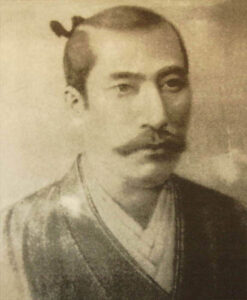
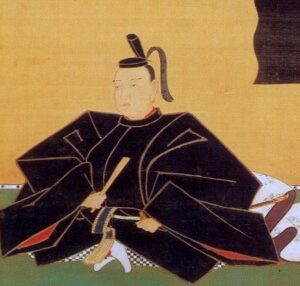
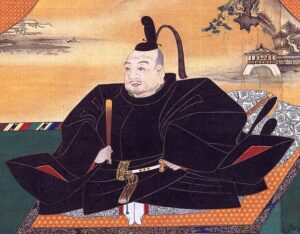
At around three o’clock in the afternoon of 21 October 1600, with the Battle of Sekigahara conclusively lost, Shimazu Yoshihiro was sitting on a camp stool in the middle of an army that had already surrendered around him. His unit was the last Western-coalition force still under arms. It numbered roughly fifteen hundred men. The Eastern Tokugawa force that had closed off his position numbered somewhere between seventy and eighty thousand. Most commanders in that situation would have ordered their men to put down weapons and wait for formal surrender terms. Yoshihiro, who was sixty-five years old that afternoon, did something else.
He stood up, called his junior commanders over, and told them the Shimazu were going home. The direction they were going home in was south. The Eastern army was south. He ordered the fifteen hundred men to form a wedge and charge, on horseback and foot, directly through the densest part of the Tokugawa formation, the line that included Honda Tadakatsu’s cavalry and Matsudaira Tadayoshi’s personal guard, and out the far side of the battlefield onto the road that ran south toward Ōsaka and then, if any of them survived long enough, to the ports of Sakai and the ship home to Satsuma. It is not really accurate to call what followed a retreat. It is closer to a shout: that the Shimazu clan would walk off the field of the biggest battle of the Sengoku period in the exact direction Tokugawa Ieyasu did not want them to walk, and that either all of them would die making the point or some of them would live.
Eighty of them lived. The manoeuvre has a name in Japanese — Shimazu no Nokiguchi (島津の退き口), “the Shimazu fighting withdrawal” — and it is one of the three or four most-referenced military improvisations of the Sengoku period. Yoshihiro was one of the eighty.
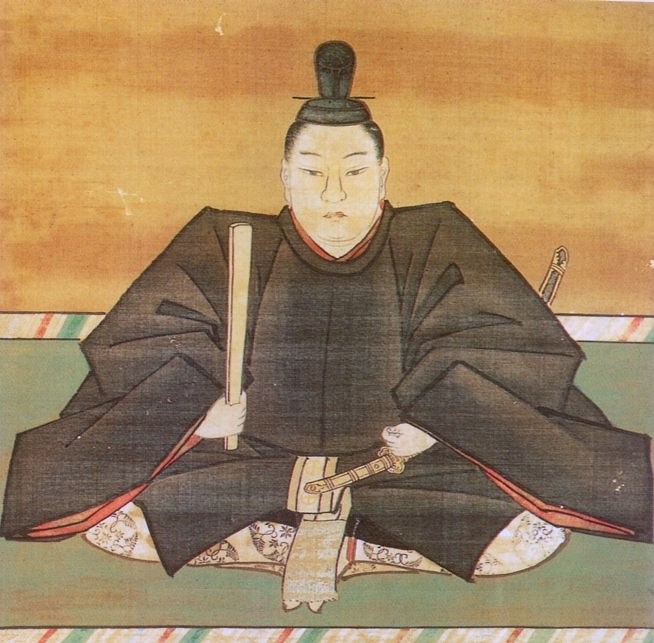
In This Article
- The Satsuma Position
- The Kyūshū Unification
- Korea and Sacheon
- Sekigahara and the Retreat
- The Settlement
- Retirement at Kajiki
- Where to visit Shimazu Yoshihiro’s story today
- 1. Sekigahara battlefield and Yoshihiro’s position marker — Gifu
- 2. Tsurumaru Castle and Sengan-en — Kagoshima
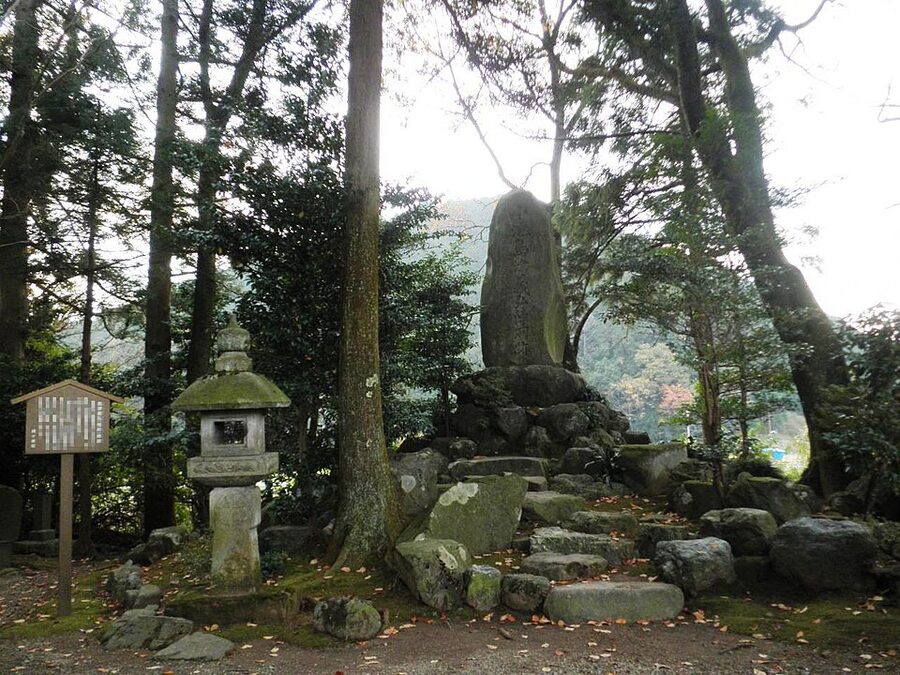
- 3. Kajiki — Yoshihiro’s retirement estate and grave
- 4. Naeshirogawa — the Korean-potter village
- The Retreat as Argument
The Satsuma Position
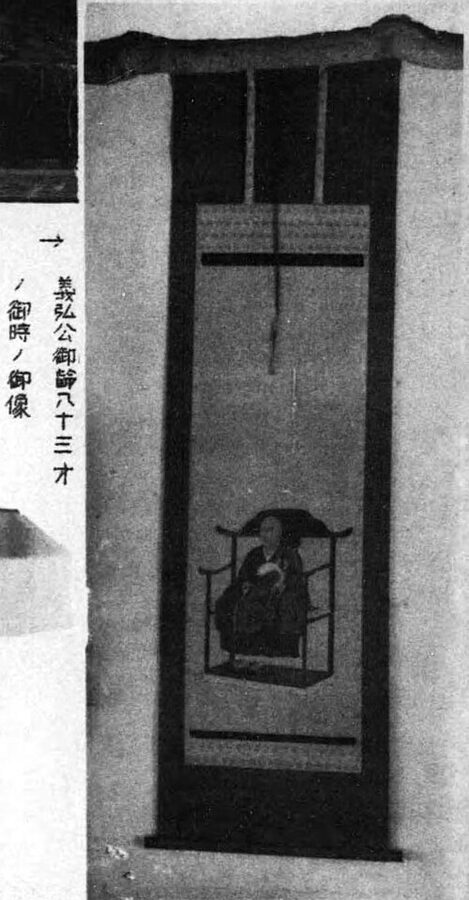
Yoshihiro was born in 1535 at Iiji Castle in Satsuma, the second son of Shimazu Takahisa, the lord of a 640,000-koku domain on the southern tip of Kyūshū that had been in his family for four hundred years. This is an unusually long lineage by Japanese standards. The Shimazu had held Satsuma since 1185, when the founder Shimazu Tadahisa, possibly an illegitimate son of Minamoto no Yoritomo, was appointed military governor after the establishment of the Kamakura shogunate. By the time Yoshihiro was born, the clan had outlasted three consecutive governments and was on what Japanese administrators now call its fourteenth or fifteenth generation of continuous rule from the same set of castles. The institutional memory was extensive.
Yoshihiro’s older brother Yoshihisa was the formal head of the clan from 1566. Yoshihiro ran the fighting arm. This was the Shimazu operating model: the senior brother held court, negotiated, administered, and represented the clan in formal diplomacy; the junior brothers commanded the army. There were four brothers in total and a rolling hierarchy among them; Yoshihiro was at the top of the military pyramid by his mid-thirties and stayed there for the next fifty years.
The Kyūshū Unification
From the early 1570s through 1587 the Shimazu brothers did something that nobody in Japanese history had done before or has done since: they unified Kyūshū. The island has seven historical provinces and a complicated geography of mountains, inland seas, and defensible peninsulas, and no pre-Sengoku power had successfully governed more than four of them. The Shimazu, starting from their 640,000-koku base in Satsuma, drove outward in careful expanding concentric arcs — Ōsumi 1572, Hyūga 1578, Higo 1582, Bungo 1586 — and by the spring of 1587 they controlled every province on the island except Chikuzen and Buzen, which they were about to take.
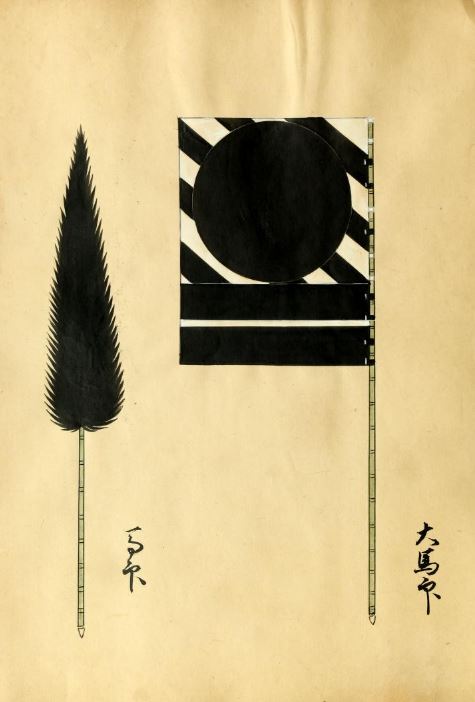
Yoshihiro’s defining military action of this period was the Battle of Mimigawa in 1578, against the Ōtomo clan of Bungo. The Ōtomo had 40,000 men; Yoshihiro had 30,000. He manoeuvred the Ōtomo army into a marshy valley north of the Mimigawa river, lured the main body across a single narrow ford under controlled retreat, and then hit them from the flanks with reserves he had hidden in the surrounding bamboo forests. The Ōtomo lost 25,000 men in four hours and never fought as an independent clan again. This is the engagement that established the Shimazu tactical signature of the late Sengoku: staged retreat, ambush from concealed flank positions, rapid cavalry counter-attack. It would be recognisable at Sacheon twenty years later and at Sekigahara thirty years later.
The Shimazu would have controlled Kyūshū outright by 1588 if they had been allowed to finish. They were not allowed to finish. Toyotomi Hideyoshi, who was at that point consolidating his control of central Japan, was not going to accept a single-family empire of three million koku at the southern end of the country. In February 1587 he declared a punitive expedition against the Shimazu and committed 280,000 men to it. The expedition was unprecedented, no army of that size had ever been moved in Japanese history, and it settled the matter in about four months. The Shimazu surrendered in May 1587; their territory was reduced from a near-island-wide empire back to the three provinces of Satsuma, Ōsumi, and Hyūga; and Yoshihisa entered a Buddhist monastery as a form of formal contrition. Yoshihiro took over as active head of clan and spent the next decade rebuilding.
Korea and Sacheon
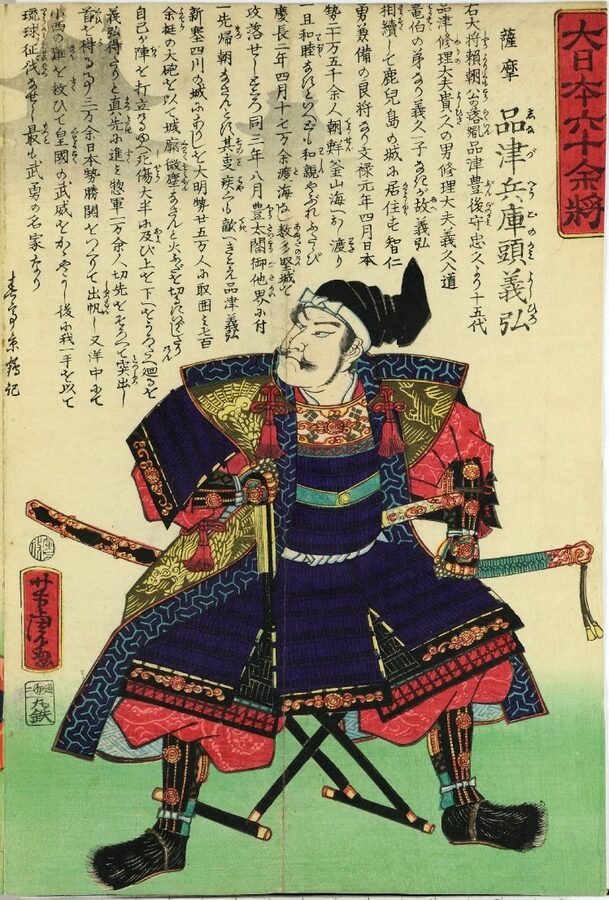
Between 1592 and 1598 Yoshihiro served in the two Korean campaigns, Hideyoshi’s two failed attempts to invade the Asian mainland. The Shimazu deployment was small by the standard of the expeditions — about 10,000 men across the two campaigns — but Yoshihiro’s use of the force was disproportionately effective. At the siege of Jinju in 1593 he led the assault that finally took the castle after three weeks of failed attempts by other Japanese units. At the Battle of Sacheon (泵川, Sacheonsaeng) in October 1598 he performed the action that made him a military celebrity.
Sacheon is a port on the southern Korean coast. In October 1598 a Ming Chinese relief army of 37,000 men was advancing on the Japanese position there, which Yoshihiro was defending with 7,000 Shimazu troops plus 2,000 auxiliaries. He let the Ming army into the open ground west of the castle, retreated his men behind the walls, and waited for the Ming to spend a full day arranging their artillery for the planned assault. At dawn on the second day, before the Ming gunners had completed their firing positions, Yoshihiro led a mass sortie out of the castle — his full 9,000 men against a 37,000-man line in open country — and hit the Ming artillery column while it was still setting up. The Ming panicked. Yoshihiro’s men fought them back from the artillery to the central camp, and from the camp into the river behind the camp, and across the river into a rout. The Ming lost 29,000 men. Yoshihiro lost less than 500. Sacheon is one of the most lopsided tactical victories in the recorded history of East Asian warfare. The Shimazu were known in Korean-Chinese military records as Oni Shimazu (鬼島津), “the Demon Shimazu”, from that day onward.
Hideyoshi died the same month as the Battle of Sacheon. The Japanese forces in Korea withdrew. Yoshihiro came home to Satsuma having delivered the most militarily impressive performance of any Japanese commander in the Korean campaigns, arriving in the middle of a succession crisis that was about to escalate into the largest internal Japanese war in a generation.
Sekigahara and the Retreat
The Sekigahara campaign of 1600 is on one level a simple story and on another level an extremely complicated one. The simple story is that Tokugawa Ieyasu, the senior surviving ally of the dead Hideyoshi, manoeuvred the Toyotomi regent Ishida Mitsunari into a decisive pitched battle at Sekigahara in western Mino, won the battle through a combination of pre-arranged defections and superior manoeuvre, and used the victory to install the Tokugawa shogunate. The complicated story is the question of what each individual daimyo was actually trying to achieve inside that overall shape, and Yoshihiro’s decisions are one of the harder to read.
He came to Sekigahara on the Western side, Ishida’s side, with about 1,500 men, which was a deliberately small fraction of the total Shimazu muster of roughly 12,000. He did not bring the main Shimazu army because he was not fully committed to Ishida’s cause. He considered the Western position legally correct but strategically reckless, and he had told Ishida in the weeks before the battle that Shimazu support would be limited to the 1,500-man observer force and only upgraded if Ishida’s position visibly improved. On the morning of 21 October he was camped on the low rise north of the Ishida main position, holding his 1,500 men out of the line of fire, waiting to see what happened.
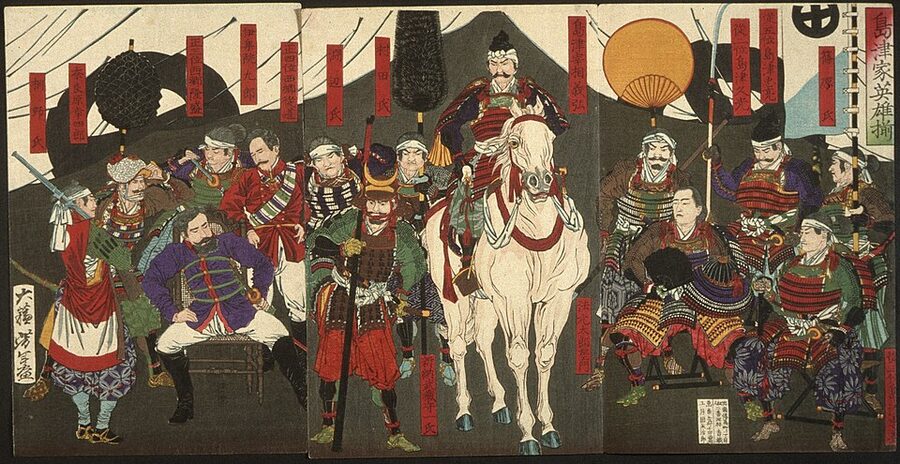
What happened was the defection of Kobayakawa Hideaki. The Kobayakawa were supposed to be a Western unit; at noon on 21 October they changed sides, hit the Western flank from above, and collapsed the Ishida line inside two hours. By 2:30 pm the entire Western army had dissolved. Ishida had fled. The Ōtani, the Ukita, and the Konishi commanders were dead or fleeing. The only Western unit still visibly standing in formation was Yoshihiro’s 1,500 on the north rise, and it was standing because Yoshihiro had been observing, not fighting, when the collapse happened.
Around 2:45 pm the Tokugawa main force began moving into position to accept the formal surrender of Yoshihiro’s unit. At this point the numerical disparity was roughly 1,500 to 80,000. The honourable thing, the expected thing, the bureaucratically clean thing would have been for Yoshihiro to come down from the rise under a white flag, negotiate a domain-reduction settlement, and walk home to Satsuma with most of his men intact. This is what Ieyasu’s staff was expecting.
Yoshihiro did the other thing.
He ordered his men into a wedge formation, centre forward, flanking cavalry pushed back to second echelon. He ordered them to face south — which is to say, directly into the Eastern army. He ordered a charge. The charge hit Honda Tadakatsu’s formation head-on and broke through it in the first fifteen minutes; Tadakatsu’s own personal guard was routed by the initial impact and Tadakatsu himself took a sword cut on the left arm from a retainer named Asai Tomomichi. Matsudaira Tadayoshi — Ieyasu’s fourth son, commanding the reserve to Tadakatsu’s south — was shot in the thigh by a Shimazu arquebusier. The Shimazu wedge moved through the Eastern formation in a shape that can still be traced on modern topographic maps: a thinning path of broken units running from north-by-north-east to south-by-south-west, straight through the hardest part of the opposing army.
Yoshihiro lost his nephew Shimazu Toyohisa at about the halfway point — Toyohisa deliberately turned and charged back into the pursuit to buy time for the main body, a standard Shimazu decoy-sacrifice technique called sutemari (捷場, “thrown ground”) that his family had been using for three centuries — and arrived at the edge of the battlefield with somewhere between two hundred and three hundred men still alive and moving. They kept moving south through the night. At Sakai, four days later, they got on a ship to Satsuma. When the ship docked at Kagoshima port on 2 November, the surviving count was eighty men including Yoshihiro.
The Settlement
The Tokugawa settlement after Sekigahara eliminated the Ishida, the Konishi, the Ōtani, the Uesugi, the Ukita, and most of the other Western-aligned clans. They were confiscated, reduced, or ordered to seppuku. The Shimazu were not touched. Their domain was preserved intact at its pre-war size. Yoshihiro was not required to submit to any personal punishment. Tokugawa Ieyasu, who personally controlled the settlement negotiations, effectively pretended Sekigahara had not happened for the Shimazu.
The reason is the retreat itself. Ieyasu had watched a sixty-five-year-old provincial commander take 1,500 men through an 80,000-man army and come out the other side with 80 survivors, having wounded the best tactician on the Tokugawa general staff and nearly killed Ieyasu’s own son. The implicit negotiation of the next two years — between Yoshihiro’s brother Yoshihisa, who conducted the formal settlement, and Ieyasu’s senior staff — ran on the unspoken question of what another Shimazu mobilisation would cost the new shogunate. The final settlement preserved Satsuma intact on the understanding that the Shimazu would never attempt a north-bound campaign again. The understanding held for 268 years, until a Shimazu descendant commanded the Meiji Restoration armies that overthrew the Tokugawa shogunate itself. That is a separate story.
Retirement at Kajiki
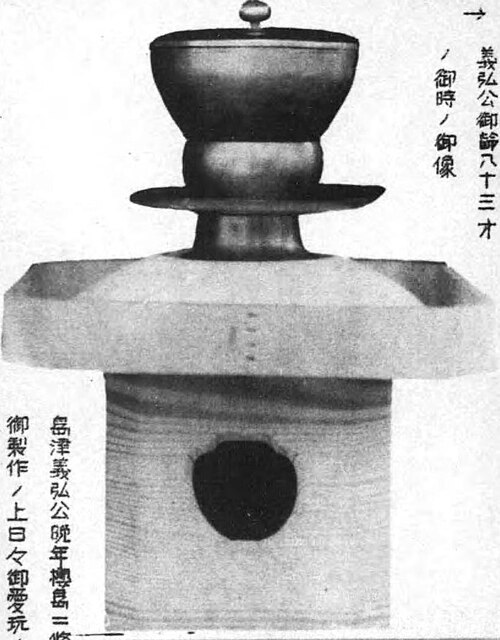
Yoshihiro retired to a small estate at Kajiki in Ōsumi province in 1602, aged sixty-seven. He spent the next seventeen years there. The retirement was genuine. He did not interfere in his brother Yoshihisa’s formal administration, which continued until Yoshihisa died in 1611 and the headship passed to Yoshihiro’s grandson Iehisa. He practised tea ceremony, built a small garden, corresponded with former retainers, and, this is the surprising part of the retirement biography, founded the Satsuma ceramics industry.
He had brought back from Korea at the end of the 1598 campaign about eighty Korean potters, whom he settled at Naeshirogawa in Kagoshima and whose descendants founded the Satsuma-yaki (薩摩焼) pottery tradition. The first-generation potter Chin Jukan became Yoshihiro’s tea master in the retirement years; Chin’s descendants produced Satsuma-ware continuously for fourteen generations and still run a studio in Naeshirogawa today. If Yoshihiro is a military biography to most readers, he is also a patron-biography to anyone who has ever picked up a piece of dark-glazed Satsuma tea ware and turned it in their hand.
He died on 30 August 1619, aged eighty-four. He had outlived all three of his brothers, all of his Sekigahara antagonists, and both Tokugawa Ieyasu and his son Hidetada. He was buried at Myōenji temple in Kajiki. The grave is modest and is still there.
Where to visit Shimazu Yoshihiro’s story today
Three places in Kagoshima prefecture plus one detour to Sekigahara. You can do everything in a long weekend if you fly into Kagoshima.
1. Sekigahara battlefield and Yoshihiro’s position marker — Gifu
The Sekigahara battlefield is about ninety minutes from Kyoto on the JR Tokaido line to Sekigahara Station. The battlefield is preserved as a historic site with walking trails, unit-position markers for every major Western and Eastern formation, and a small museum at the station. Yoshihiro’s position marker is on the north-east of the field, about a kilometre from the museum; the route of the retreat is walkable if you follow the modern footpath south through the rice fields toward the Iseji road. It takes about forty minutes to walk what his 1,500 men did in roughly ninety. The difference is that they had to fight every step.
Allow three hours for the battlefield, longer if you do the full retreat walk. I write more about the battle in the Sekigahara article on this site once it’s up; for Yoshihiro-specific interest, the museum has an excellent scale diorama of the retreat with the formation shapes marked.
2. Tsurumaru Castle and Sengan-en — Kagoshima
Tsurumaru Castle (鶴丸城, also called Kagoshima Castle) was the main Shimazu seat from 1602 onward. Yoshihiro himself never lived there, he was already retired at Kajiki by the time construction finished, but it was his administrative base during the Sekigahara campaign planning and it contains the Reimeikan Museum with an excellent Shimazu-history permanent exhibit. Sengan-en (仙 wordstill園), the Shimazu retirement villa a few kilometres east of the castle, is an Edo-period garden with Sakurajima volcano views and the original Shōkōshūseikan industrial works — the first Japanese-Western hybrid iron foundry, built by Yoshihiro’s great-great-grandson in 1855.
From Kagoshima-Chuō Station the castle is a ten-minute walk. Sengan-en is a twenty-minute bus ride further east. Allow a full day for both.
3. Kajiki — Yoshihiro’s retirement estate and grave
Kajiki is about forty minutes by JR Nippo line east of Kagoshima. The estate is mostly gone, the house burned in a 19th-century fire and was not rebuilt, but the Myōenji temple where Yoshihiro is buried is intact, the small tea-house garden he designed is preserved, and the Kajiki-kyōdo historical museum has his surviving personal effects, including the helmet he wore at Sekigahara and the brush he did his retirement calligraphy with. The helmet has a visible sword-cut across the left temple from the retreat. Allow a half-day.
4. Naeshirogawa — the Korean-potter village
Naeshirogawa is the village where the eighty Korean potters Yoshihiro brought back in 1598 settled. Most of the current residents are descended from them, and the pottery tradition has run continuously for fourteen generations. The fourteenth-generation head potter, Chin Jukan XIV, runs a small museum at the Chin family kiln and will take visitors on a walk-through of the workshop if arranged in advance. You can buy Satsuma-ware directly from the kilns. The whole village is about ninety minutes by JR from Kagoshima and is worth a full day.
The Retreat as Argument
Japanese military historians treat the Shimazu retreat as one of the three or four Sengoku events where tactical decision-making and political signalling achieved the same outcome at the same moment. What Yoshihiro did on the afternoon of 21 October 1600 was not a battle and was not a surrender. It was an argument, delivered in the only language the Tokugawa staff would hear, that the Shimazu clan could not be absorbed by force — that the cost of trying to destroy them would exceed the value of the destruction. The argument was accepted. The Shimazu domain was preserved. Two and a half centuries later, when the same argument needed to be made in reverse, their descendants remembered how it had worked the first time.
Compare this to the careers of his contemporaries. Sassa Narimasa spent thirty years being loyal to dead men and died in disgrace. Saitō Dōsan was killed by his own son. Miyamoto Musashi gave up swordsmanship at thirty and wrote a book instead. Tokugawa Tsunayoshi, two generations later, tried to rule philosophically and failed. Yoshihiro did none of those things. He fought when fighting made a political point and stopped fighting when it did not. His retirement was genuine; he built pottery kilns instead of dynasties. He lived to eighty-four and died in his own garden. The Sengoku biographies do not usually end like this.
If you are going to Kagoshima anyway, do Tsurumaru in the morning, take the JR east to Kajiki in the afternoon, and stand at the grave at Myōenji. The stone is small. The volcano is in the distance. The man who is buried under it walked home from a battlefield that killed every other Western-army commander, and then spent twenty years making tea bowls. If you want a Sengoku role model, in the straightforward sense of someone who figured out when to move and when to stop, the options are limited. Yoshihiro is the best of them.