Toyotomi Hideyoshi is the only man in the history of Japan’s ruling class who arrived at the top from genuine peasant stock. That sentence sounds like a throwaway trivia point. It isn’t. Japanese society for a thousand years before 1585 had never produced a ruler whose father was a landless foot-soldier and whose mother was a washerwoman’s daughter from a single-village backwater. And Japanese society for three hundred years after 1585 would never produce another. Hideyoshi was the impossible case — the son of a man called Kinoshita Yaemon who fought on foot for the Oda family, born in a mud-walled farming hamlet called Nakamura in Owari Province, kicked out of his stepfather’s house at fifteen because the stepfather beat him, and who by his late forties had unified Japan by military and political action, been appointed Kanpaku (Imperial Regent) by the emperor, received the brand-new Toyotomi surname for use by him and his descendants alone, and built himself a palace in Kyoto covered in gold leaf. Nothing like this had ever happened. Nothing like it has happened since.
The mechanics of how Hideyoshi rose matter because they explain the shape of what followed. He didn’t get to the top through an inheritance or a political alliance or a marriage. He got there through 25 years of continuous, visible, highly-public competence in the Oda military system — starting as a sandal-bearer who warmed his master’s footwear in his jacket, moving to foot-soldier, to squad leader, to castle foreman, to administrator, to regional commander, to general, and finally to the succession-defining role at Kiyosu in 1582 after Nobunaga’s assassination. Every step was visible to his peers, and every step was meritorious by standards the Japanese warrior class had always claimed to honour but had rarely applied outside of its own hereditary families. When Hideyoshi got to the top, he didn’t abolish the system that had kept people like him out. He closed it, hard, for everyone coming up behind him. The 1588 sword hunt and the 1591 separation-of-classes edicts are Hideyoshi’s personal legacy to a country that had just let a peasant rule it, and the country never let that happen again.
In This Article
- Nakamura — the village that should not have produced a ruler
- Kinoshita, Hashiba, Toyotomi — three names and three promotions
- The rise under Nobunaga — 1567 to 1582
- The Chūgoku Great Return — thirteen days that changed Japan
- Shizugatake, Komaki, and consolidation
- Kanpaku, Jurakudai, Osaka — the infrastructure of rule
- Katana-gari, Taikō-kenchi, separation of classes
- Kyushu, Odawara, and the reach of the regime
- The Hidetsugu disaster and the dying lord’s panic
- Deification — Toyokuni Daimyōjin
- Where to visit Hideyoshi today
- Nakamura Park, Nagoya — the birthplace
- Osaka Castle — the showpiece
- Toyokuni Shrine, Kyoto — the deification
- Kōdai-ji — Nene’s memorial temple
- The Jurakudai site and Fushimi-Momoyama
- Closing — the peasant, the regent, the ghost
Nakamura — the village that should not have produced a ruler
The village was called Nakamura, which means simply “middle village.” It sat in the farmland west of the Oda clan’s Nagoya-Owari heartland, on the flood plain between the Shōnai and Kiso rivers. The village was divided into three hamlets — Upper, Middle, and Lower Nakamura — and Hideyoshi was born in Middle-Middle Nakamura to two people whose names are still not firmly attested in contemporary records. The birth year is probably 1537 (alternatively 1536; the sources differ). The father was in all likelihood a man called Kinoshita Yaemon, a low-ranking foot-soldier — ashigaru — in the Oda service; the mother was Naka or Nara, later called O-Mandokoro when her son’s rise required a courtly name for her. Yaemon died around 1544, when Hideyoshi was six or seven. Naka remarried a man called Chikuami, a member of Nobunaga’s dōbō-shū — the attendants who ran the lord’s tea ceremonies and casual entertainments. Chikuami disliked Hideyoshi intensely. Hideyoshi left home in 1550 at age fifteen or thereabouts, and did not come back.
Between 1550 and 1554 Hideyoshi wandered. The Taikō Sōsei-ki, a Hideyoshi biography compiled in the early Edo period, says he sold needles door-to-door in Tōtōmi province, which is probably a romanticised version of a more honest story about drifting-for-work. Somewhere in this period he took service with Matsushita Yukitsuna, a minor retainer of the Imagawa faction based at the Zudaji fortress near modern Hamamatsu. Yukitsuna reportedly thought well of the young Kinoshita Tōkichirō, that was Hideyoshi’s name in this period, but had no meaningful work for him, and Hideyoshi moved on again. Around 1554 he surfaced in Oda service at Kiyosu Castle as a low-level attendant, serving under a squad leader called Kinoshita Utanosuke. His job appears to have been a combination of messenger-running, kitchen duty, and personal attendance on the then-20-year-old Nobunaga. The famous story of Hideyoshi warming Nobunaga’s sandals in his kimono before his master went out into the cold dates to this period — it’s probably apocryphal, but it’s the kind of apocryphal story that captures the actual hierarchy Hideyoshi was working inside.
Kinoshita, Hashiba, Toyotomi — three names and three promotions
Hideyoshi’s career is legible partly through his names. He was Kinoshita Tōkichirō Hideyoshi from roughly 1561 through 1573, during the Nobunaga retainer period. In 1573, shortly after the fall of the Azai clan gave him a 120,000-koku domain centred on Nagahama on Lake Biwa, he changed his surname to Hashiba. The Hōkan chronicle explains the Hashiba name as a composite — taking one character from Shibata Katsuie (柴) and one from Niwa Nagahide (羽) and combining them, in a gesture of respect to Nobunaga’s two senior generals. This is probably partly true and partly a retrospective polish; whatever the exact mechanics, Hashiba signalled that Hideyoshi had crossed the line from hired samurai to independent commander. He kept Hashiba for the next fourteen years.
The Toyotomi name came in September 1586, three years after Hideyoshi had established political dominance and a year after his Kanpaku appointment. Emperor Ōgimachi granted him a new surname — 豊臣, literally “Abundant Retainer” — which had no previous family-line attached. This was not a normal practice. The great surnames of Japanese history — Minamoto, Fujiwara, Taira, Tachibana — had all been granted in similar ceremonies to branches of the imperial family moving out of court service, and they carried with them implicit links to the imperial lineage. Toyotomi was constructed ex nihilo, a brand-new name with no history, given to Hideyoshi and (formally) only to Hideyoshi’s direct-descent family. It was a legitimising gesture by a court that was short on options — the throne could not easily accept that a man without a noble family had the top political post, so it gave him a noble family, invented from scratch. This is the name history remembers him by.
The rise under Nobunaga — 1567 to 1582
The fifteen years between Nobunaga’s capture of Gifu Castle in 1567 and his assassination at Honnō-ji in 1582 are when Hideyoshi turned from promising retainer to serious general. The inflection point is usually identified with the 1566 Sunomata-ichiya-jō episode, in which Hideyoshi is supposed to have built a fortress at Sunomata on the Nagara River in a single night — a classic Japanese tall-tale that probably conflates a longer construction project with Hideyoshi’s genuine logistical gift for fast work. Whether or not the single-night construction ever happened, what did happen was that Hideyoshi was given independent command responsibilities under Nobunaga from 1566 onwards. He was part of the Mino conquest that took Gifu, fought in Ōmi against the Azai, held the rear guard at the disastrous Kanegasaki retreat of 1570 when Nobunaga was caught between Asakura and Azai forces, and played a decisive role at the Battle of Anegawa‘s aftermath in consolidating western Ōmi.
From 1577, Hideyoshi was given the Chūgoku front — the long campaign against the Mōri clan that controlled the western half of Honshu. The Chūgoku campaign is where Hideyoshi’s distinctive strategic style crystallised: avoid frontal sieges where possible, prefer starvation, cut the enemy’s supply lines, and give generous peace terms to anyone who surrendered. He reduced Miki Castle in 1580 through a two-year blockade that killed most of the garrison through hunger — the Miki no hoshi-goroshi (“Starvation of Miki”). He took Tottori in 1581 by buying up all the rice in the surrounding villages before besieging the castle, so that when the castle fell, the garrison had already eaten the horses and started on each other. And he reached the culminating action at Takamatsu Castle in Bitchū in 1582, where he flooded the castle’s surroundings by damming a river — the mizuzeme, “water attack” — cutting off relief forces and forcing a surrender. This is the moment that changed Japanese history, because on 2 June 1582, while Hideyoshi was outside Takamatsu negotiating the castle’s surrender, Akechi Mitsuhide attacked and killed Nobunaga at Honnō-ji in Kyoto.
The Chūgoku Great Return — thirteen days that changed Japan
Hideyoshi received word of Nobunaga’s death within 48 hours. What he did next is one of the most decisive twelve-day sequences in Japanese military history. He concealed the news from the Takamatsu garrison, negotiated an immediate peace with Mōri Terumoto on unexpectedly generous terms (Shimizu Muneharu’s seppuku only — no land seizures), and turned his army around on 6 June 1582 to march back toward Kyoto. The distance was approximately 230 kilometres. The army was 40,000 men. The march took ten days. This is the Chūgoku ō-gaeshi, the “Great Return from Chūgoku,” and it is still studied at Japanese military academies for what it demonstrates about operational speed. By 12 June 1582 Hideyoshi’s army was approaching Kyoto from the west, having outpaced every expectation of how fast a 16th-century force could redeploy over that distance.
On 13 June, Hideyoshi met Akechi Mitsuhide’s forces at Yamazaki, a narrow pass between Mount Tennō and the Katsura River west of Kyoto. Mitsuhide had about 16,000 men; Hideyoshi had 40,000. The critical political factor was that on the march back, Hideyoshi had been joined by almost every significant Oda retainer in the capital area — including Oda Nobutaka (Nobunaga’s third son), Ikeda Tsuneoki, Niwa Nagahide, and crucially Nakagawa Kiyohide and Takayama Ukon, both of whom had been Akechi’s nominal allies until the arrival of Hideyoshi’s army. Mitsuhide was outnumbered, outflanked, and abandoned by his own wing commanders before the fighting even started. The battle was brief. Mitsuhide fled, was caught by bandits on his way back to Sakamoto, and killed that night. Eleven days had passed since Nobunaga’s death. Hideyoshi had transformed himself from one Oda general among many into the avenger of Nobunaga — a political position from which almost everything that followed flowed naturally.
Two weeks later, on 27 June, the surviving Oda retainers convened at Kiyosu Castle to decide the succession. The obvious candidate was Nobunaga’s third son Nobutaka, backed by Shibata Katsuie. Hideyoshi, calculating that Nobutaka plus Shibata gave him a dangerous combined block, nominated instead Nobunaga’s infant grandson Sanbōshi — the three-year-old son of Nobunaga’s dead oldest son Nobutada. By making Sanbōshi heir and Nobutaka only the regent, Hideyoshi placed himself (as co-regent) in the decision-making role. Shibata was outmanoeuvred. The Kiyosu Conference is the moment Hideyoshi stopped being an Oda general and started being the de-facto head of the Oda political system. The subsequent conflict with Shibata was an almost-inevitable consequence.
Shizugatake, Komaki, and consolidation
The war with Shibata Katsuie came in spring 1583 and culminated at the Battle of Shizugatake, covered in more detail in my separate piece. The short version: Hideyoshi was briefly drawn away from the front by an incursion from Nobutaka at Gifu; Shibata’s nephew Sakuma Morimasa attacked Hideyoshi’s rear position at Ōiwa prematurely and killed Nakagawa Kiyohide; Hideyoshi force-marched his army back from Mino in 12 hours (the Mino ō-gaeshi, echoing the Chūgoku return almost exactly one year earlier) and counter-attacked at dawn on 21 April 1583. Shibata’s forces collapsed, Maeda Toshiie defected at the critical moment, and Shibata retreated to his home castle at Kitanoshō, where he committed seppuku with his wife Oichi — Nobunaga’s sister, Hideyoshi’s nominal sister-in-law — rather than surrender. Nobutaka committed seppuku a few days later. The main opposition inside the Oda system was eliminated.
The next obstacle was Tokugawa Ieyasu, the Oda clan’s long-time Owari-Mikawa ally, who had held his forces back during the Shizugatake conflict and was now the only significant daimyō capable of challenging Hideyoshi in central Japan. The 1584 Battle of Komaki-Nagakute, fought between Hideyoshi and a coalition of Ieyasu plus Nobunaga’s surviving second son Oda Nobukatsu, was the largest military confrontation of Hideyoshi’s career and ended in a negotiated draw. Ieyasu could not be reduced; Hideyoshi could not be dislodged. The two settled in November 1584 for a political compromise: Ieyasu accepted Hideyoshi’s seniority in principle, gave up his second son Yūki Hideyasu as a nominal hostage, and Hideyoshi sent his own mother Ōmandokoro to Okazaki as a counter-hostage. Neither side trusted the other, but neither side was willing to fight the rematch. Hideyoshi spent the remaining thirteen years of his life carefully never putting the peace under stress.
Kanpaku, Jurakudai, Osaka — the infrastructure of rule
1585 is the year Hideyoshi definitively stopped being a warlord and started being a ruler. On 11 July 1585, Emperor Ōgimachi appointed him Kanpaku, Imperial Regent, the highest civilian post in the Japanese court system, traditionally reserved for members of the Fujiwara clan. The Kanpaku appointment had been in the middle of a bureaucratic dispute between two Fujiwara factions (the Kanpaku-sōron); Hideyoshi resolved it by having himself adopted by Konoe Sakihisa, the senior Fujiwara figure, thereby becoming technically eligible for the post. The following year the Toyotomi surname followed, and in December 1586 he was appointed Daijō-daijin (Prime Minister of the Senior Council) as well — the highest court rank then existing, and the first time a Daijō-daijin had held office who was not born into the high aristocracy.
The physical manifestations followed. In 1583, Hideyoshi had begun building Osaka Castle on the ruins of the Ishiyama Hongan-ji complex on the north side of Osaka Bay — a castle deliberately scaled to intimidate. The compound covered roughly 35 hectares at its peak, surrounded by concentric moats, with a five-story keep clad in plaster and gold. The contemporary daimyō Ōtomo Sōrin, visiting in 1583, called it “a castle without peer in the three kingdoms” (meaning China, Korea, and Japan). The castle’s inner sections were covered in gold leaf — gold-plated tiger statues on the ridgepoles, gold-leafed wall panels, gold-lacquered screens — to an extent that scandalised the Kyoto aristocracy and delighted the Portuguese Jesuits. This was Hideyoshi’s main residence from 1585 until the construction of Jurakudai.
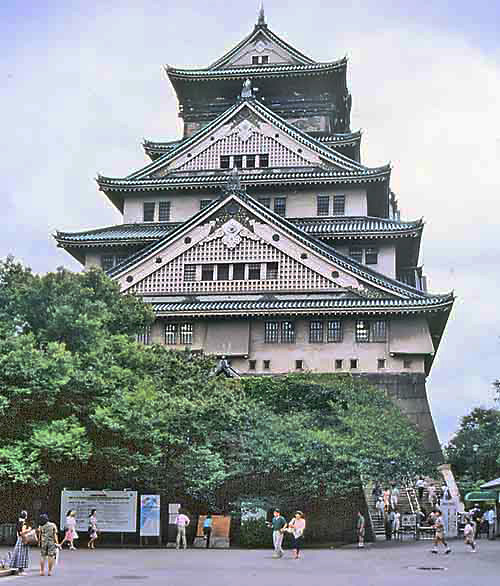
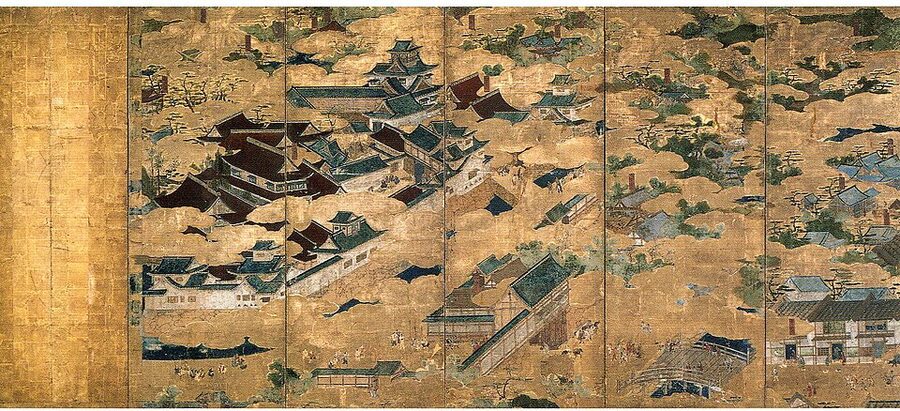
Jurakudai came in 1587. The site was the former imperial palace precinct — the Daidairi — in central Kyoto, abandoned since the Ōnin War 120 years earlier and overgrown with farmland. Hideyoshi built a new compound on this site, formally his personal residence as Kanpaku, but in reality a palace-scale demonstration of his status as effective ruler. The name — Juraku-tei, “Mansion of Gathered Pleasures” — was from a Chinese classical phrase. The construction was completed in fourteen months. In April 1588, Emperor Go-Yōzei made a formal state visit to Jurakudai — the Jurakudai Gyōkō — at which every major daimyō in Japan was required to attend and swear loyalty to the Toyotomi regime in the emperor’s physical presence. This is the event that historians generally mark as the moment of Hideyoshi’s unambiguous consolidation of power. Anyone who did not attend, such as the Late Hōjō of Odawara, was marked for the next campaign. The Jurakudai itself was destroyed only seven years later, in 1595, after Hideyoshi executed his nephew Hidetsugu and chose to erase the buildings associated with him. Almost nothing remains on the site today — a few earthen walls and a signposted lane in modern Kamigyō-ku.
Katana-gari, Taikō-kenchi, separation of classes
Hideyoshi’s most lasting administrative legacy was domestic rather than military. In 1588 he issued the Katana-gari-rei, the Sword Hunt Edict, confiscating all weapons from non-samurai households across Japan. Peasants, temple communities, urban merchants, and religious sects were all required to surrender their swords, spears, guns, and armour; the weapons would be “melted down to forge the nails and fittings for a great Buddha statue at Hōkō-ji.” The Buddha statue was a cover story — the real purpose was disarming the rural population to prevent the kind of peasant rebellions that had given the Sengoku period its distinctive flavour. Within three years, rural Japan was largely weapons-free. The class of armed peasant-samurai known as jizamurai disappeared as a category. The foundation of the three-class Edo-period social structure — samurai on top, peasants-merchants-artisans below, no upward movement — was laid here, by a man who had himself been born into the peasant class and risen through exactly the kind of social movement he was now closing off.
The companion reform was the Taikō-kenchi, the “Retired-Regent’s Land Survey”, conducted in phases from 1582 (before Hideyoshi’s Kanpaku appointment) through the late 1590s. Every plot of cultivated land in Japan was measured, classified by quality, assessed for productive capacity in koku of rice, and entered into a registry tied to the farming household working it. The result was the Kokudaka system, which assigned every koku of agricultural production to a specific samurai or daimyō, and which formed the economic basis of Japanese society until the Meiji Restoration. No previous Japanese ruler had attempted anything on this scale. The Taikō-kenchi registered approximately 18 million koku of total national productivity and assigned every single koku to a named holder. The system worked, and it continued working, without major modification, for 280 years.
The third leg — the Mibun Tōsei-rei, the “Separation of Classes Edict” — came in 1591. This formalised the categorical distinction between samurai and non-samurai, required every household in Japan to register as one of the two, and prohibited movement between categories. Samurai could not farm. Peasants could not take up arms. Merchants could not enter the official bureaucracy. The categories were heritable. Your grandchildren would be the same caste you were. This is the moment when Japanese social structure ossified into the three-hundred-year Edo-period rigidity that Hideyoshi’s own rise had demonstrated was, in his lifetime, still possible. Reading the 1591 edict today, it’s hard not to detect a specific biographical irony: the document was drafted in Hideyoshi’s name, sealed with his personal Tenka-torimono stamp, and issued from Jurakudai, at a moment when the country was ruled by a man whose father had sold firewood on the Shōnai river.
Kyushu, Odawara, and the reach of the regime
The remaining military campaigns came in rapid succession. Kyūshū in 1587 — the invasion that forced the Shimazu of Satsuma to submit, covered in detail in my piece on Shimazu Yoshihiro. The 1590 Odawara Campaign against the Late Hōjō, which ended 400 years of Kantō-based Hōjō power and ceded their territory to Tokugawa Ieyasu (who was thereby moved from his Mikawa homeland to the unfamiliar Kantō, a decision that would shape the next century when Ieyasu made his new base at Edo). The 1590-1591 Ōshū-shioki settlement, which brought the Date, Uesugi, and other northern clans into the Toyotomi system. By the end of 1591, there was no independent daimyō in Japan. Hideyoshi had unified the country.
At this point he should have stopped. He didn’t. In 1592, after a decade of grumbling about his long-term ambitions in letters to the Jesuits and to his own retainers, Hideyoshi launched the Bunroku no Eki — the invasion of Korea, with the eventual stated goal of conquering Ming China. The 1592-1593 first invasion reached the Yalu River before overextension and Korean naval resistance (Admiral Yi Sun-sin’s turtle ships) forced a withdrawal. The 1597-1598 second invasion — the Keichō no Eki — got less far, ended in stalemate, and cost Japan an estimated 200,000 dead. The Korean campaigns are the clearest evidence that Hideyoshi, in his sixties, had lost the sense of proportion that had built his career. The campaigns bankrupted the domains, killed more Japanese soldiers than any single Sengoku battle, and accomplished nothing. His death in 1598 ended them by default, because his successors immediately pulled the armies out.
The Hidetsugu disaster and the dying lord’s panic
The final years are a tragedy with a specific shape, and the shape is about succession. Hideyoshi had no biological heir through most of his career. His nephew Hidetsugu (son of his sister Tomo) had been his designated successor through the 1580s and early 1590s, adopted and given the Kanpaku post in 1591. Then in 1593, Hideyoshi’s concubine Yodo-dono, the same Chacha who had been Oichi’s daughter rescued from Kitanoshō in 1583, gave birth to a son, Hideyori. Hideyoshi was 56; this was his second child by Yodo (the first, Tsurumatsu, had died in 1591); this was, functionally, his one chance at a biological heir. Hideyoshi’s reaction was to destroy Hidetsugu, who had done absolutely nothing wrong, in order to clear the succession for Hideyori. In July 1595 Hidetsugu was accused of a vague “rebellion,” ordered to commit seppuku, and his entire family — his wives, concubines, children, infants — were executed at Sanjō Kawara-chō in Kyoto in a single afternoon. The scale of the killing shocked even contemporary observers. The Jurakudai, where Hidetsugu had lived, was dismantled within months.
The remaining years were consumed by trying to secure Hideyori’s succession. In 1598, aware that he was dying, Hideyoshi had five of his senior generals — the Go-tairō, the “Five Regents” — swear a formal oath to preserve Hideyori’s position. The Five Regents included Tokugawa Ieyasu, Maeda Toshiie, Mōri Terumoto, Uesugi Kagekatsu, and Ukita Hideie. He supplemented this with a Go-bugyō — a “Five Commissioners” group of administrative seconds, led by the rising Ishida Mitsunari. The two groups were intended to balance each other, with Ishida’s team running day-to-day administration and the five regents providing the military backstop. Within two years of Hideyoshi’s death, Ishida and Ieyasu would be at open war at Sekigahara. Within fifteen years, Hideyori would be killed in the 1615 Osaka Summer Campaign, the Toyotomi family extinguished, and every one of Hideyoshi’s political arrangements overturned. He had, in the end, held the realm for exactly his own lifetime.
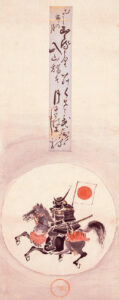
Hideyoshi died on 18 September 1598 at Fushimi Castle, south of Kyoto. He was 62. His final written wish, addressed to his retainers, survives in a famous short passage: “I am like the morning dew on the grass — coming for a moment, disappearing for a moment. Everything under heaven was a dream inside a dream.” The poem — tsuyu to ochi / tsuyu to kieshi / waga mi kana / Naniwa no koto wa / yume no mata yume — is one of the most famous death poems in Japanese literature. It reads, in my paraphrase: “I fell as dew, I vanish as dew; this life of mine — and everything at Naniwa was a dream within a dream.” Naniwa was the old name for Osaka, and the line is an explicit acknowledgement that the castle, the regency, the gold leaf, the Korean war, everything was going to fade. He was not wrong. Within seventeen years, every monument he built was either destroyed or taken over by someone else.
Deification — Toyokuni Daimyōjin
The deification of Hideyoshi came immediately after his death. Emperor Go-Yōzei granted him the posthumous divine title Toyokuni Daimyōjin, “Abundant-Country Great Bright Deity”, and a shrine was built at the foot of Amida-ga-mine in Higashiyama, east of Kyoto, to enshrine him. The Toyokuni Shrine opened in 1599 and became immediately the scene of lavish annual memorial rites. This continued until 1615. When the Tokugawa extinguished the Toyotomi family in that year’s Osaka Summer Campaign, Ieyasu also dismantled the Toyokuni shrine as a political act — the shōgunate could not tolerate a deified rival regime at the foot of its new capital. The shrine was demolished, the deification was retroactively annulled, and the site was left to grow over. The family was erased from the official calendar of national veneration for the next 265 years.
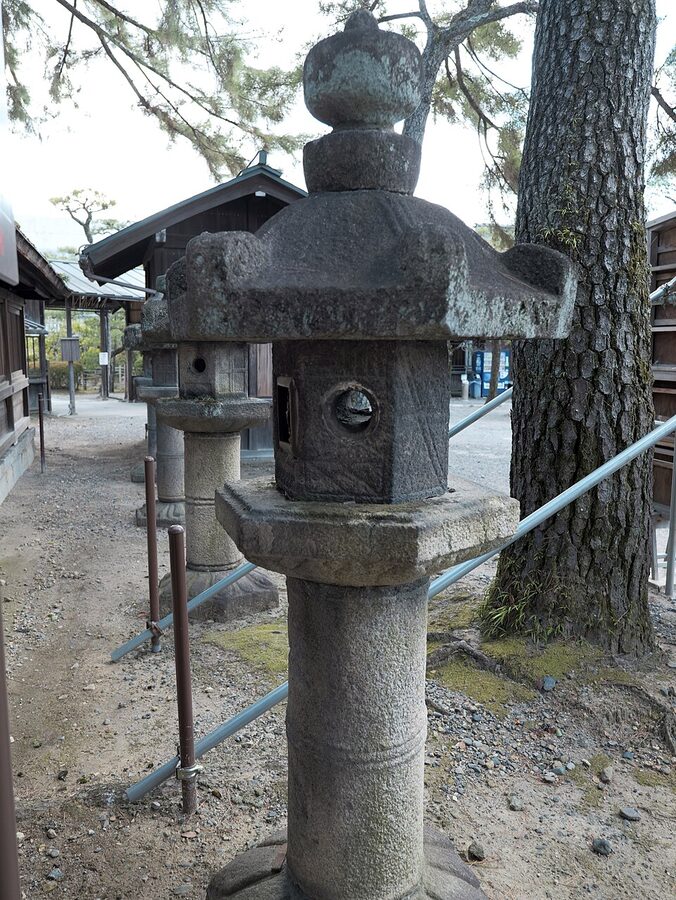
In 1880, twelve years after the Meiji Restoration, the new imperial government re-established the Toyokuni Shrine — partly as a deliberate reversal of Tokugawa-era suppressions, partly as a symbolic reclaiming of Hideyoshi’s legacy as a national unifier. The current Toyokuni Shrine in Higashiyama is the 1880 reconstruction, built about 200 metres south of the 1599 original site. It is an active shrine with regular ceremonies, and its Hōkoku-matsuri festival on Hideyoshi’s death anniversary (18 September) is still observed annually. There are sister Toyokuni shrines in Osaka (at the castle) and in Nagoya (in Nakamura Park) for visitors who want to cover the full geography of the deification cult.
Where to visit Hideyoshi today
Nakamura Park, Nagoya — the birthplace
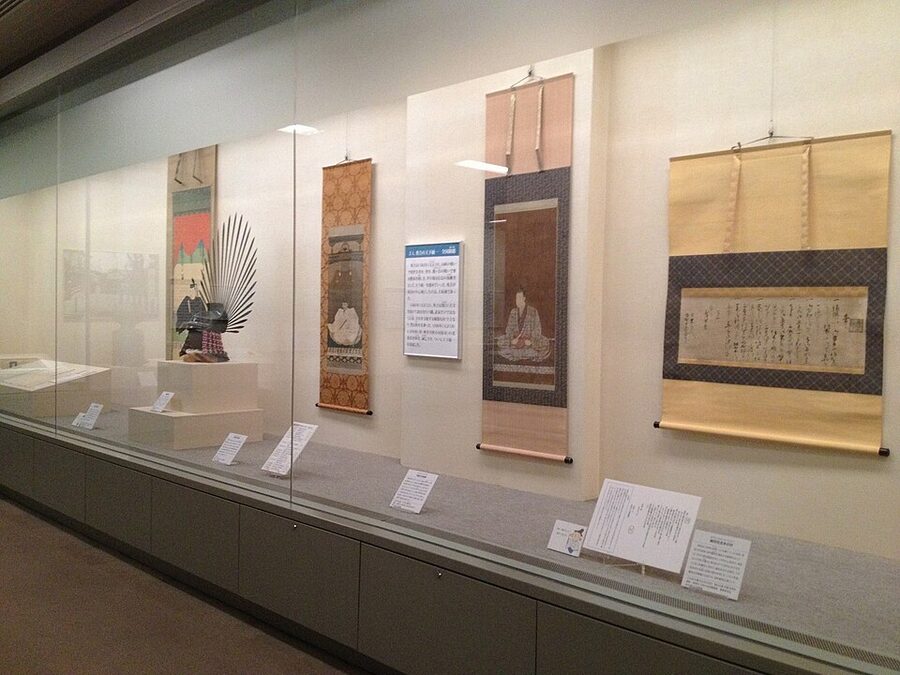
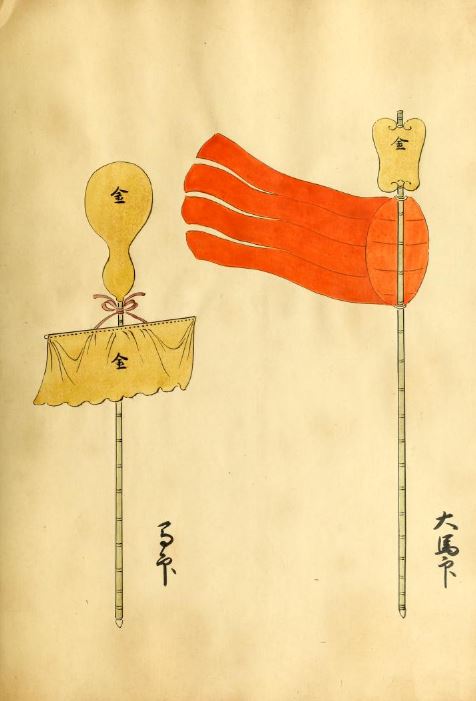
In Nakamura Ward, west of Nagoya Station, Nakamura Park marks the approximate site of the village where Hideyoshi was born in 1537. The park includes the Hideyoshi-Kiyomasa Memorial Museum (admission ¥150, open 9:30am-5pm, closed Mondays), a small reconstructed Toyokuni Shrine specifically for the Nakamura branch of the deification cult, and the supposed site of Hideyoshi’s birth-house marked by a stone. The museum is modest but has a decent collection of 16th-century documents, replicas of Hideyoshi’s battle standards, and a good English audio guide. The Katō Kiyomasa half of the museum covers Hideyoshi’s protégé, who was also born in Nakamura Ward a few years later and rose to become one of Hideyoshi’s most effective generals in the Korean campaigns.
Getting there: Nakamura-kōen Station on the Nagoya subway Higashiyama Line, five stops west of Nagoya Station. The park is a four-minute walk from the station. A half-day in Nakamura Ward pairs naturally with a full-day in Nagoya proper (Nagoya Castle, Atsuta Shrine, Noritake Garden) for anyone coming from Tokyo or Kyoto.
Osaka Castle — the showpiece
Osaka Castle is the obvious primary destination for any Hideyoshi itinerary. The current keep is a 1931 reconstruction and is taller than Hideyoshi’s original, but the site — the 35-hectare compound, the massive outer moat, the Ōtemon main gate with its gigantic stone-wall construction — is essentially as Hideyoshi laid it out in the 1580s. The Sakuramon gate and the Tamatsukuri-guchi stones are specifically identifiable as Toyotomi-era masonry. The Nishinomaru Garden, the Gokurakubashi bridge, and the Hōkoku Shrine (the Osaka sister of Kyoto’s Toyokuni) are all within the outer moat and worth seeing separately. The keep itself houses a Hideyoshi-focused museum on the lower floors and an observation platform on the top.
Getting there: Osaka-jō-kōen Station on the JR Osaka Loop Line, or Tanimachi-yonchōme Station on the Tanimachi/Chuo subway lines. Castle open 9am-5pm daily (extended hours in summer), admission ¥600. Budget half a day for the full compound, a full day if you include the surrounding park and the Osaka Museum of History across the street. I’ve walked the compound more than a dozen times; it remains the single most impressive castle site in Japan, even knowing how much of it is post-war reconstruction.
Toyokuni Shrine, Kyoto — the deification
In Higashiyama on the east side of central Kyoto, Toyokuni Shrine is the 1880 reconstructed shrine dedicated to Hideyoshi as Toyokuni Daimyōjin. The shrine is small but specific — the main hall, the karamon gate (a National Treasure, originally from Hideyoshi’s Fushimi Castle, relocated here in the Meiji reconstruction), and the small adjacent museum with Toyotomi-family documents. The annual Hōkoku Matsuri on 18 September is the best time to visit for atmospheric reasons: period costume, official Shinto rites, offerings arranged on the Hideyoshi-themed altars. Year-round the shrine is quiet; you can usually spend an hour there on a weekday morning with the grounds essentially to yourself.
Getting there: Shichijō Station on the Keihan Main Line, five minutes’ walk north, or any bus stopping at the Hakubutsukan-Sanjūsangen-dō-mae stop (the same stop as the Kyoto National Museum). Admission is free to the shrine itself; the Karamon gate closeup is free; the adjacent museum is ¥300. Combine with Hōkō-ji (the temple that houses Hideyoshi’s Great Bell, site of the 1614 “Kuni-no-shūtoku” curse controversy that Ieyasu used as a pretext for the Osaka Winter Campaign) and with Sanjūsangen-dō next door for an efficient Higashiyama Hideyoshi-era circuit.
Kōdai-ji — Nene’s memorial temple
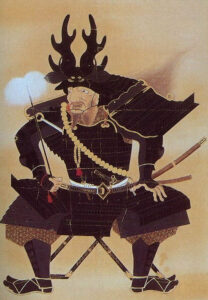
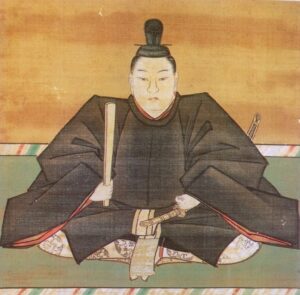
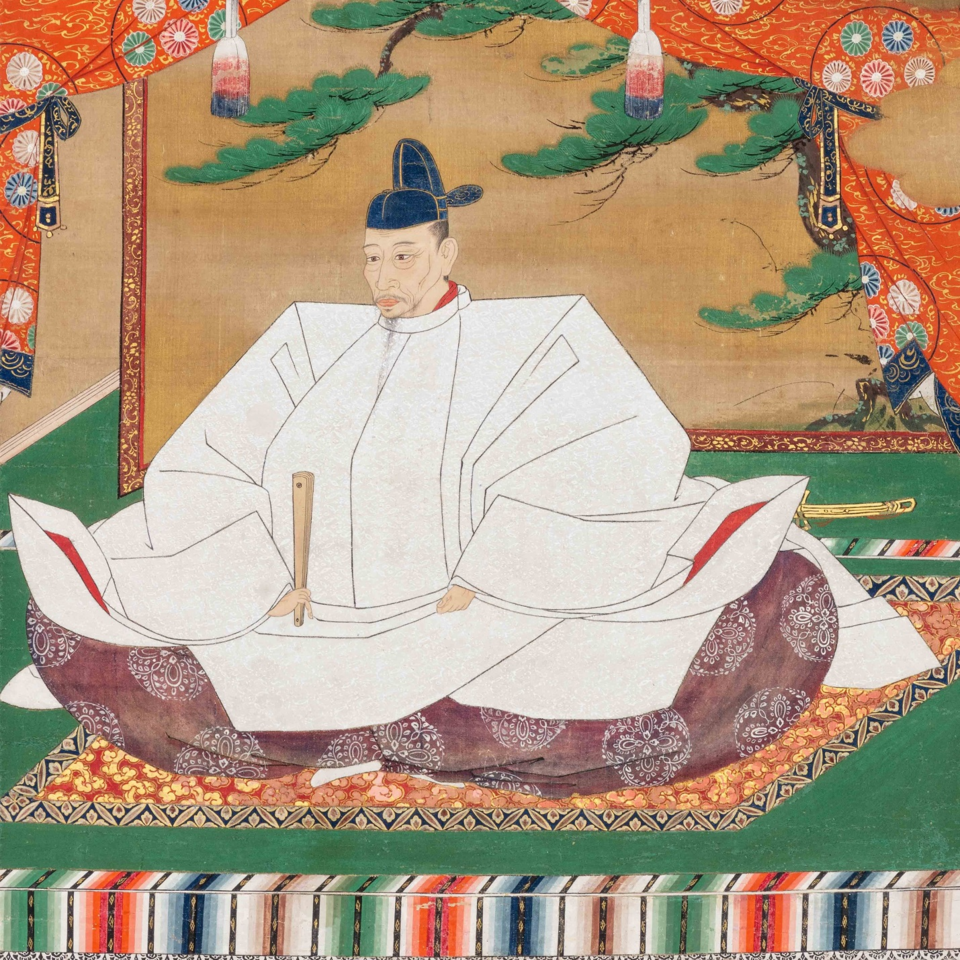
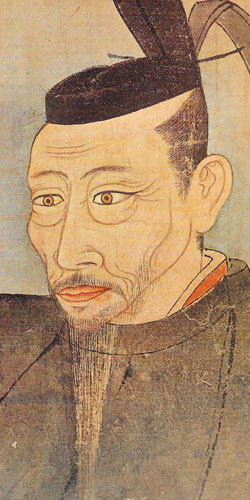
A 12-minute walk uphill east of Toyokuni Shrine is Kōdai-ji — the Zen temple built by Hideyoshi’s widow Nene (Kita-no-Mandokoro) in 1606 to house her husband’s memorial. The Kanō Mitsunobu portrait at the top of this piece is kept here, though it is rotated through display so you won’t necessarily see it on any given visit. What you will see is the formal grounds, the Kaisan-dō founder’s hall, the tea rooms designed by Sen no Rikyū’s protégé Kobori Enshū, and the Gulf-shaped pond with Shigure-tei and Kasa-tei tea pavilions — examples of early-17th-century shoin architecture in their original Toyotomi-to-Tokugawa transitional form. The temple also holds Hideyoshi’s own grave marker and Nene’s tomb (she outlived him by 26 years, dying in 1624 at the start of the Tokugawa Iemitsu period).
Getting there: 15-minute uphill walk from the Higashiyama-Yasui bus stop, or via the Kōdai-ji Nishi bus stop directly. Open 9am-5:30pm with extended evening hours during spring and autumn illumination seasons. Admission ¥600. The illumination nights in April and November are among the most atmospheric tourist experiences Kyoto offers — go if your trip dates allow.
The Jurakudai site and Fushimi-Momoyama
For the completist, two more Kyoto sites close the Hideyoshi circuit. First, the Jurakudai site in Kamigyō-ku: almost nothing is left, but a small memorial stone on Jurakudaimon-dōri commemorates the palace, and the street pattern itself preserves the compound’s original boundaries. You can walk the perimeter in about 20 minutes if you’re interested in the archaeology; most visitors don’t bother, but I think it’s worth it for the specific emotional experience of walking on top of what used to be the most lavish building in 16th-century Japan and is now entirely ordinary middle-rank Kyoto residential real estate. Second, the Fushimi-Momoyama area in southern Kyoto: Hideyoshi’s mausoleum at Amida-ga-mine, a steep 260-step climb up a forested mountain east of the city (free, open all hours, no signage in English but you can’t get lost — the steps go up, the grave is at the top); and the Fushimi Castle reconstruction at the base of the same mountain, which is a 1964 concrete replica but sits on the original Hideyoshi footprint and contains a decent Toyotomi-era museum.
Amida-ga-mine climb: enter from the Hōkoku-byō-mae bus stop, south of Kōdai-ji. The 260-step path is steep but not technical. Allow 45 minutes up-and-down. The view from the summit is one of the best Kyoto vistas and almost no tourists make the climb — you’re likely to be alone up there with the grave marker and the silence.
Closing — the peasant, the regent, the ghost
Hideyoshi’s specific historical shape is hard to grasp because he was so obviously three different people in sequence. The young Tōkichirō — scrappy, resourceful, aggressive, hungry — made himself visible to Nobunaga and rode that visibility for fifteen years into actual military competence. The middle Hashiba — decisive, strategic, almost frighteningly quick — survived Nobunaga’s death by eleven days, avenged him, and by 1583 was the de-facto ruler of a country that was still nominally the Oda’s. The late Toyotomi — paranoid about succession, sentimental about his mother, increasingly divorced from the realities his retainers were handling below him — made the Korean campaigns and killed Hidetsugu and spent his last decade becoming the caricature of an oriental despot that Jesuit observers were already writing in their letters home. All three versions were the same man. You cannot separate them; the ambition that built the career was the ambition that invaded Korea and executed the nephew. The peasant who rose is the regent who closed the ladder. The closing the ladder is part of the same drive that got him up it.
What’s left on the ground is a strange, layered thing. Osaka Castle, which is his — scaled up by the Tokugawa, burned in 1615, rebuilt 1931, but sitting on his footprint. Kyoto’s Toyokuni Shrine, which is his — erased by the Tokugawa, re-established 1880, still receiving Shinto rites. Nakamura Park, which is his birthplace — now an urban park in a Nagoya ward that would have been unrecognisable to Kinoshita Yaemon’s son. The Kōdai-ji portrait, which is his — painted as he died, preserved by the woman who outlived him by 26 years. And the poem, which is his: tsuyu to ochi, tsuyu to kieshi, waga mi kana / Naniwa no koto wa yume no mata yume. The only peasant who ever ruled Japan, looking at his own empire, telling us it would vanish like dew. It did. He was right. And he built enough that we can still walk the sites, 428 years later, and try to imagine how the dew looked while it was still there.
If you’ve followed this far, the obvious companion reads are on the men who worked under and against him: Sassa Narimasa, the loyal Nobunaga retainer who lost to Hideyoshi in the north; Shimazu Yoshihiro, whose Kyūshū campaign surrender began his decades of resistance; Hosokawa Tadaoki, the son-in-law of Akechi Mitsuhide who sided with Hideyoshi after Yamazaki. For the castle that sits at the centre of his reign, the Gifu Castle piece covers where Nobunaga started declaring Tenka Fubu — the unification project Hideyoshi ended up completing.