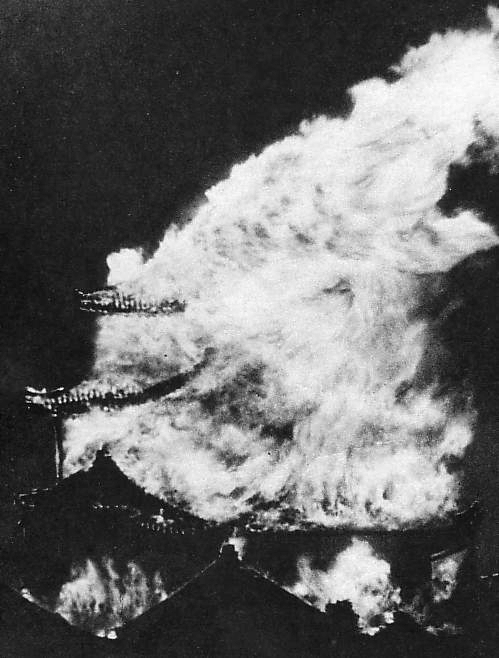
On the morning of 14 May 1945 the men on the roof of Nagoya Castle were trying to save the fish. For three weeks a crew from the army arsenal at Atsuta had been working on scaffolding around the top of the keep, prising the gold scales off the two great shachihoko on the ridge so that the city’s most famous possession could be taken down and hidden. To fix the scaffolding they had opened three windows on the south side of the top floor. When the B-29s came over that morning, according to the deputy chief of the castle watch, an incendiary flew in through one of those windows, and the keep that had stood for 333 years burned from the top down.
The official account puts it slightly differently: the bombs caught in the scaffolding, and the fire climbed from there. Either way, the precaution was the cause. I find it hard to think of a better summary of Nagoya Castle, a building whose history is largely a list of things people did to its two golden fish, and what happened to everything else as a result.
This is the story of the castle Tokugawa Ieyasu made twenty lords build for his ninth son, of the Owari house that lived in it for two and a half centuries, of the fish, the fire and the concrete, and of the long and still unfinished argument over putting the keep back in wood. Nagoya is not one of Japan’s 12 original castles, and nothing on the skyline is older than 1959. It is still one of the most interesting castle sites in the country, and it ends, as everything here does, with where you can stand today.
In This Article
- A plateau above the marsh
- Nobunaga’s first castle
- Kiyosu floods, and a boy lord
- Twenty lords and their stones
- The biggest keep ever built
- The other Nagoya
- The senior house that never got the top job
- Muneharu and the white ox
- A precept in the family
- Pine needles in the first month of 1868
- The fish
- Thieves, a kite and a kabuki play
- Palace, garrison and the morning of 14 May
- Concrete, a palace and a keep nobody can enter
- The palace comes back
- The wooden keep
- Should they do it?
- Where to see Nagoya Castle and the Owari Tokugawa today
- Nagoya Castle
- The Honmaru Palace
- The Ninomaru Garden
- The Tokugawa Art Museum and Tokugawa-en
- Atsuta Shrine
A plateau above the marsh
The castle sits on the north-western tip of the Atsuta plateau, a low tongue of high ground that pushes out into the flat, wet Nōbi plain. Before the castle the west and north faces of the plateau were steep and the ground below them was marsh, which is the whole reason anyone built here. From the edge you could watch the plain, and nobody could come at you from the bog.
Nobunaga’s first castle
The first castle on the spot was not Tokugawa at all. In the 1520s Imagawa Ujichika, the governor of Suruga, built a fort here called Yanagi-no-maru to push his family’s reach into Owari, and put a young son, Imagawa Ujitoyo, in charge of it. It stood roughly where the castle’s Ninomaru is now, and it came to be called Nagoya-jō, written with different characters (那古野城) from the later castle.
Ujitoyo lost it to Oda Nobuhide, father of Oda Nobunaga. The story goes that Nobuhide made friends with the young man over linked-verse poetry, came to stay, fell conveniently ill, and had his men let in at night. Older accounts, and most English ones, date the seizure to 1532 and have Nobunaga born in the castle two years later; Japanese historians now generally prefer about 1538, which would put Nobunaga’s birth at Shobata Castle to the west instead.
Nobuhide handed the castle to his son, and Nobunaga ran his early career from here, in the middle decades of the Sengoku era, until 1555, when he moved to Kiyosu. From Kiyosu he rode out to Okehazama, and from there to Komaki, to Gifu and to Azuchi. The castle at Nagoya was left to an uncle, then a retainer, and was abandoned around 1582, the year Nobunaga died.
Kiyosu floods, and a boy lord
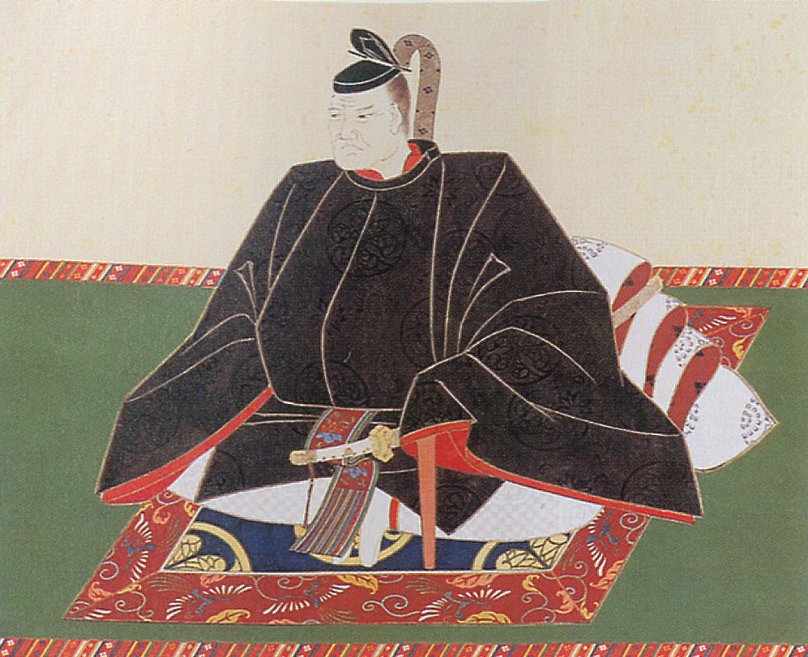
For the next generation the centre of Owari was Kiyosu, a few kilometres north-west on the Gojō river. When Hideyoshi moved Ieyasu east to the Kantō after the siege of Odawara in 1590, Kiyosu went to Hideyoshi’s nephew Hidetsugu and then to Fukushima Masanori. After Sekigahara Ieyasu gave Owari to his fourth son, Matsudaira Tadayoshi, who died at Kiyosu in 1607 aged twenty-eight. The province passed to the ninth son, Yoshinao, who was eight by the Japanese count, and it was run for him by a veteran retainer, Hiraiwa Chikayoshi.
Kiyosu was cramped, it flooded, and it was the wrong shape for what Ieyasu now wanted. In 1609 he decided to move the whole provincial capital to the old Nagoya plateau. He wanted a fortress close to the Tōkaidō, halfway between Edo and Kyoto, at a moment when Toyotomi Hideyori was still sitting in Osaka Castle with his father’s gold and a great many unemployed samurai who remembered it.
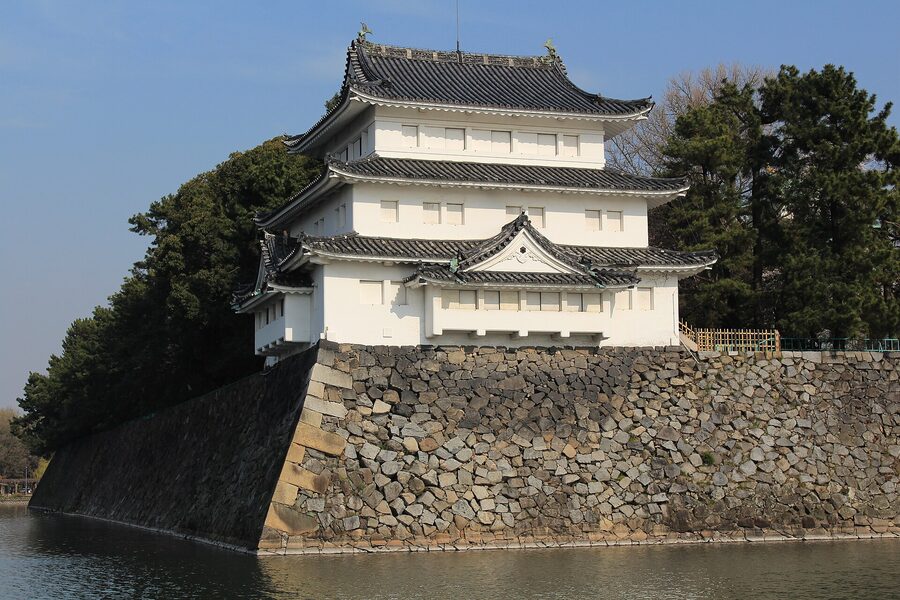
The move, the Kiyosu-goshi, was total. Something over 50,000 townspeople went, with 110 temples and three shrines, and Kiyosu’s own buildings were cannibalised for the new castle. The Kuroki Shoin in the Honmaru Palace was said to be Ieyasu’s lodging at Kiyosu, and the three-storey turret in the north-west corner is still called the Kiyosu turret.
Twenty lords and their stones
Ieyasu did not pay for Nagoya. Work began in 1610 as a tenka-bushin (天下普請), a project of the realm: the shogunate drew the plans, and the lords of the west and north were ordered to supply the labour and the stone at their own expense. Twenty houses were named, nearly all of them lords of the west, and many of them men who owed their careers to Toyotomi Hideyoshi. They were being made to build a fortress aimed at Hideyoshi’s son.
The list reads like a roll call of the age: Katō Kiyomasa, Fukushima Masanori, Ikeda Terumasa, Kuroda Nagamasa, Hosokawa Tadaoki, Asano Yoshinaga, Nabeshima Katsushige and Maeda Toshimitsu, the son of Maeda Toshiie, among others. Several of their own castles turn up elsewhere on this site. Toshimitsu’s was Kanazawa, Terumasa had just rebuilt Himeji and his son held Okayama, and Fukushima would lose Hiroshima in 1619 for repairing its walls without permission.
Fukushima, the Edo-period anecdote runs, complained to Ikeda that building Edo and Sunpu was one thing, but now they were being made to build castles for the old man’s younger sons. Kiyomasa is supposed to have told him that if he disliked it he should go home and raise an army, and otherwise stop grumbling and dig. It is almost certainly improved in the telling. It is also a fair account of the choice every man on that list had already made.
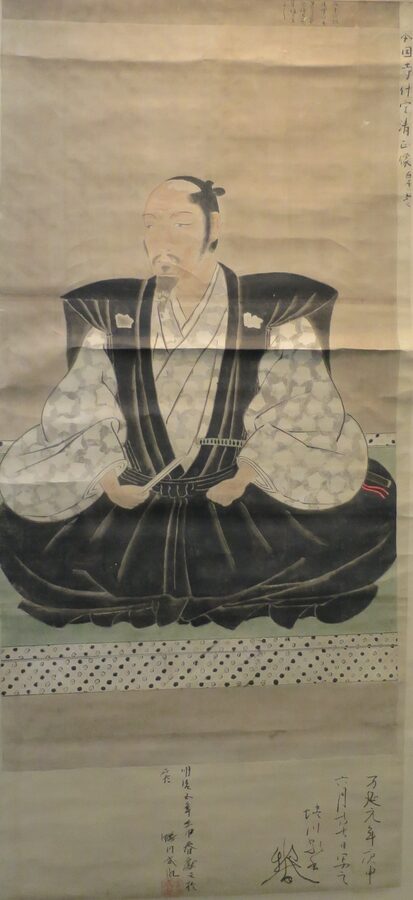
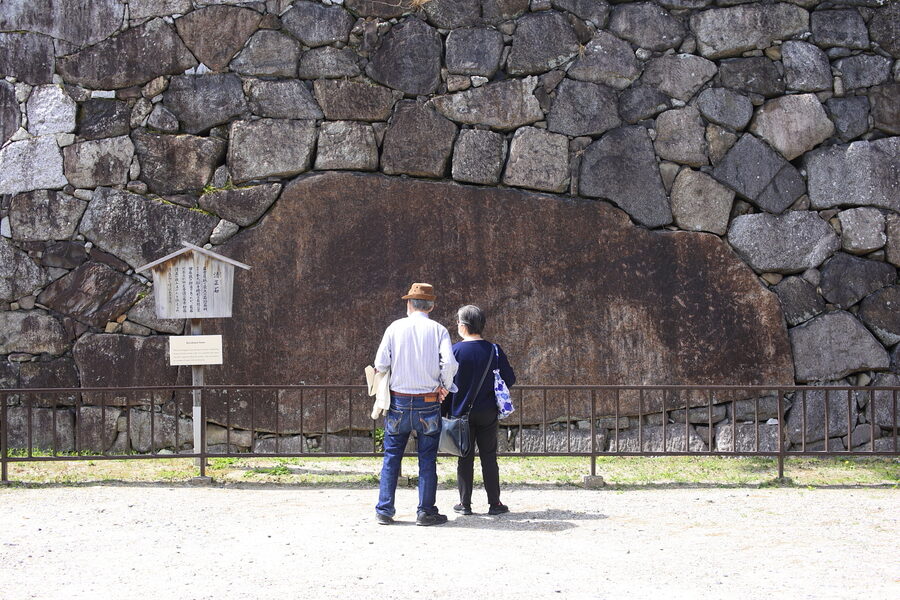
The stone walls went up in a single season. The lords’ crews laid the first foundation stones on the 3rd day of the sixth month of 1610, and the castle’s own chroniclers say the walls were finished by winter, when the lords went home. The Kinjō Onkoroku, the vast record of the castle that the Owari official Okumura Kaneyoshi began compiling in the 1840s, says Kiyomasa asked for the hardest job, the base of the keep, and got it.
He is said to have brought some 20,000 men from Higo and finished in under three months. The base is built in the curving ōgi-kōbai style, steep at the top and flaring at the foot like an opened fan, and the stones on its north-east corner still carry the names of his retainers. It is the same hand that built Kumamoto, and if you have seen Kumamoto’s walls you will recognise it.
Look closely at the walls anywhere in the castle and you will find the stones marked: circles, triangles, fans, crests, simple numerals. Each lord’s crew cut its mark into the stones it hauled so that no other crew could claim them. Some came from the hills around Mikawa Bay, some from the Yōrō range in Gifu, and some from as far as Kumano in Mie, and every one of them was paid for by somebody who was not a Tokugawa.
The biggest keep ever built
The buildings went to a different team. The chief carpenter was Nakai Masakiyo, who had already built for Ieyasu at Nijō, Fushimi, Edo and Sunpu, and among the construction magistrates was Kobori Enshū, better known now as a garden designer and master of the tea ceremony. Working under Nakai was Okabe Mataemon of Atsuta, of the family of carpenters who had built Nobunaga’s keep at Azuchi.
The keep went up in a hurry. Timber was late, Ieyasu wanted the keep finished before the palace, and the walls had to be plastered before winter, so Nakai pulled in carpenters from the imperial palace and the Great Buddha hall in Kyoto and came to Nagoya himself. Assembly took less than three months, and the ridge-pole ceremony was held late in 1612 by the old calendar.
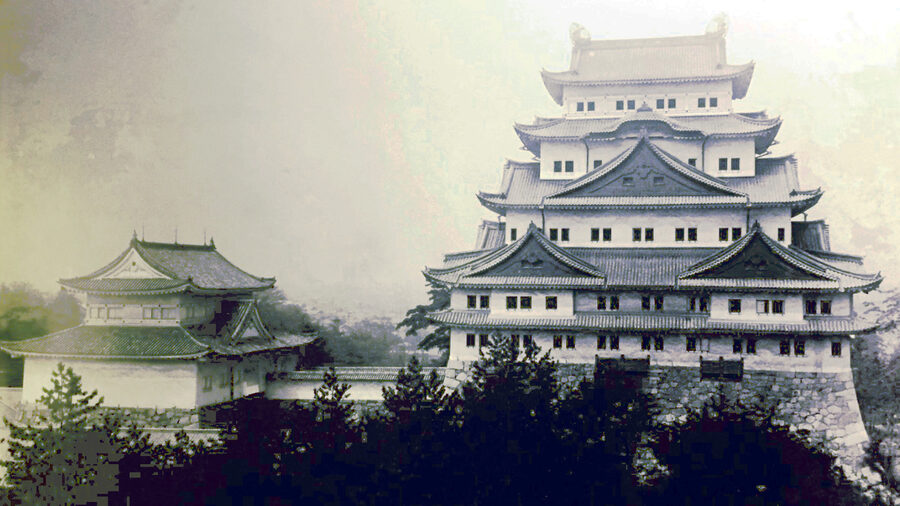
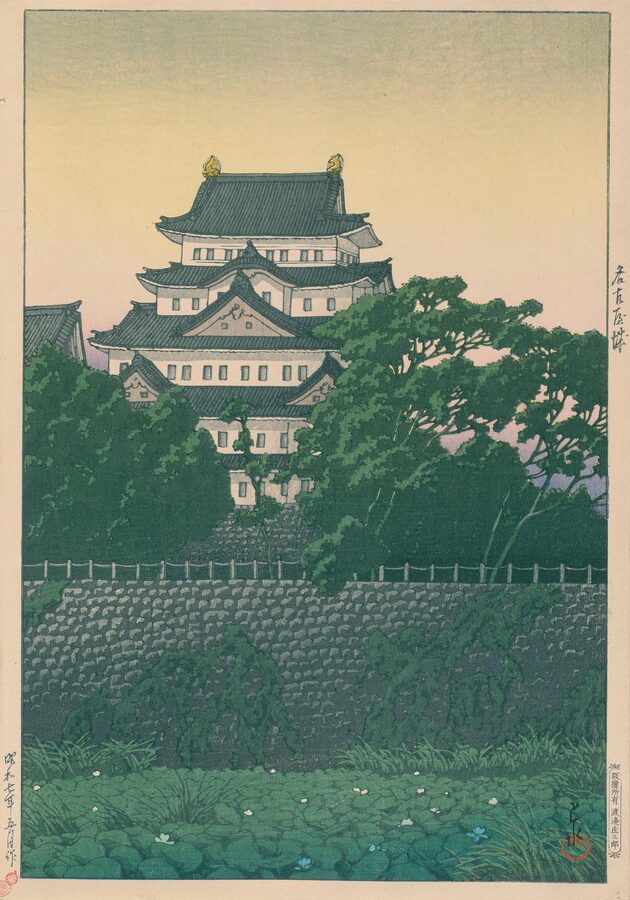
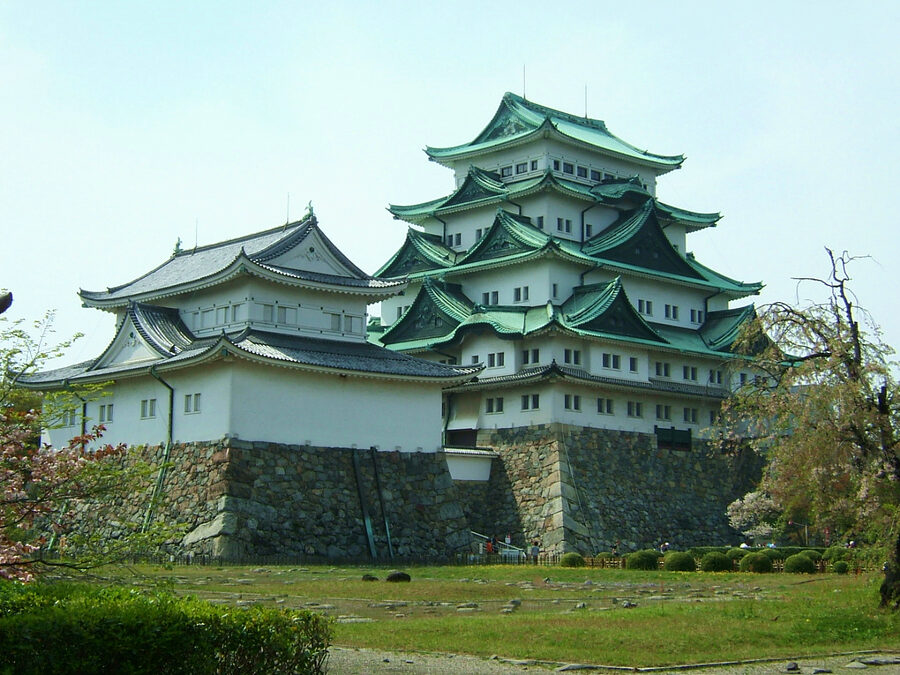
What they built was, by floor area, the largest keep ever raised in Japan: 4,424.5 square metres over five floors and a basement, with 1,759 large tatami mats on the floors. Edo and Osaka had taller keeps for a while, but both burned in the 17th century and were never rebuilt, so for most of the Edo period Nagoya’s was the biggest standing. The original roofs were clay tile below and copper on the top storey only; a big repair in the 1750s, which also corrected a lean, put copper on everything from the second roof up, and that is why the keep is green-roofed in every colour picture you have seen.
You entered the main keep only through the small one, across a walled bridge whose eaves were lined with spear points, and the basement of the main keep held a well. The walls were packed with thick oak planks to stop cannon shot. None of it was ever tested: Osaka fell in 1615, before the outer defences around the town were even finished, and the plans for them were dropped.
The other Nagoya
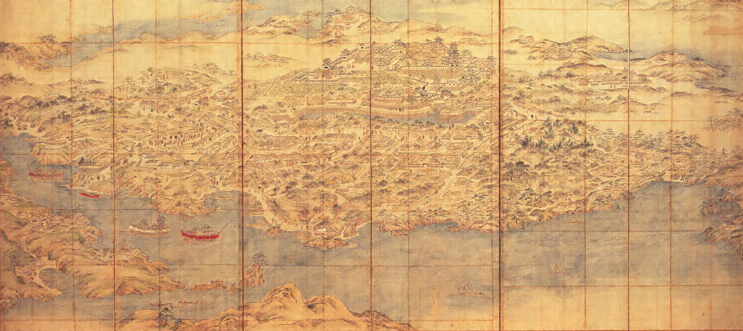
There is a second Nagoya Castle, and Kiyomasa knew it better than this one. In 1591 Hideyoshi built a huge fortress at Nagoya on the coast of Hizen in northern Kyushu, written 名護屋, as the headquarters for his invasion of Korea. For a few years more than 150 lords camped around it, and Kiyomasa sailed from there to fight in the Imjin War.
The senior house that never got the top job
Yoshinao married in the fourth month of 1615, between the two sieges of Osaka, and his father came from Sunpu for the wedding. The bride was Haruhime, daughter of Asano Yoshinaga, one of the twenty lords who had built the walls. During the celebrations word came that Osaka was arming again, and Ieyasu left Nagoya for the campaign that would end the Toyotomi.
The Owari house that Yoshinao founded was the first of the gosanke, the three Tokugawa branch families, with Kii and Mito, entitled to supply a shogun if the main line failed. Its domain was assessed at about 620,000 koku and took in the Kiso valley, whose cypress forests the Owari guarded so jealously that the saying went “one tree, one head”. Its lords spent alternate years in Edo under sankin-kōtai, at a great residence at Ichigaya where the Ministry of Defence stands now.
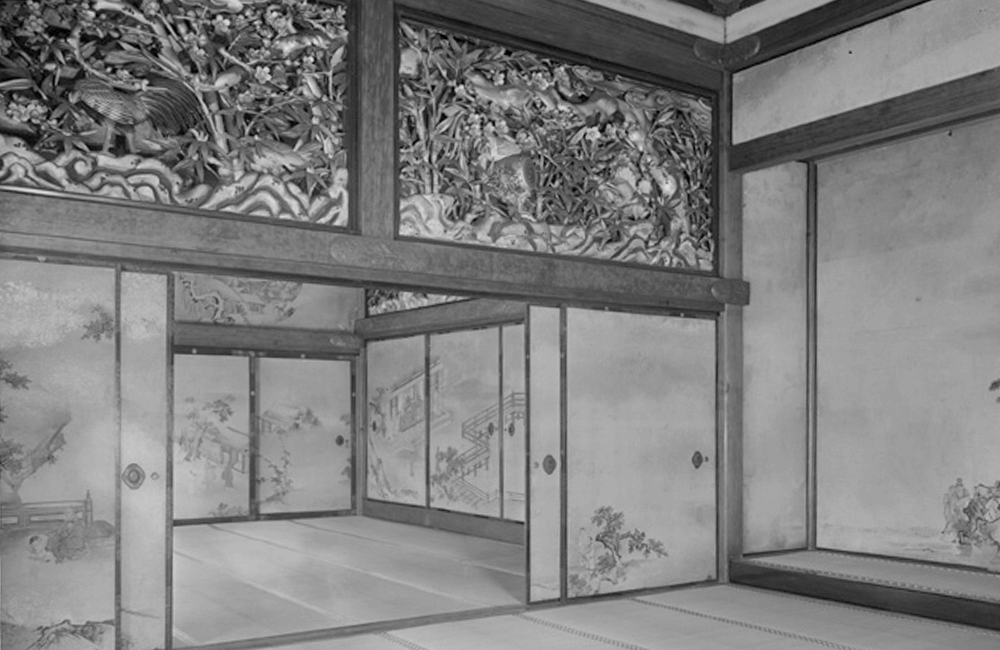
Yoshinao moved out of the Honmaru Palace in 1620 into a new palace in the Ninomaru, and the Honmaru Palace became a lodging reserved for shoguns. Only three ever used it: Hidetada in 1626, Iemitsu in 1634, and Iemochi, for a single night, in 1865. For Iemitsu’s visit the palace was enlarged with a new suite, the Jōrakuden, painted by Kanō Tan’yū, then thirty-three, and for most of the next two centuries even the lord of Owari entered the Honmaru only on inspection.
Senior rank never turned into power. When the main line ran out in 1716, the obvious candidate was Owari’s lord, Tsugutomo, and the job went instead to Yoshimune of Kii. Owari never produced a shogun in the whole Edo era, and for long stretches of the 19th century the shogunate filled the Owari house with its own adopted sons, which Owari’s retainers resented bitterly.
Muneharu and the white ox
The one Owari lord most people in Nagoya can name is the seventh, Tokugawa Muneharu, who took over in 1730 and did the opposite of everything the shogun wanted. Yoshimune was preaching austerity. Muneharu wrote a short book of political principles, the Onchi Seiyō, which argued that too much frugality only made ordinary people suffer and that more regulations only made more offenders.
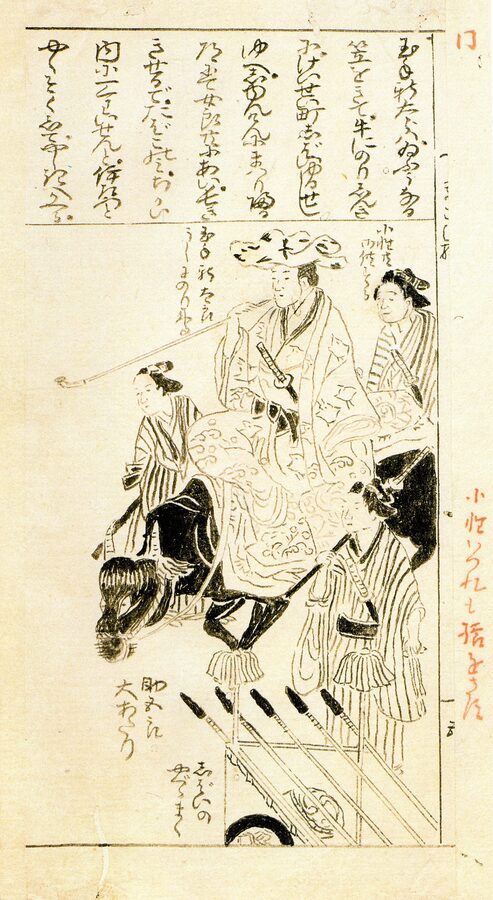
He licensed theatres and pleasure quarters, encouraged festivals, hung lanterns in the streets so that women and children could walk out at night, and rode through town in extravagant costume, sometimes on a white ox. Nobody was executed in Owari while he ruled. The town boomed, and the joke went round that Nagoya’s prosperity had put Kyoto’s nose out of joint.
The bill came in. The domain’s finances went into deficit, and in 1739 Yoshimune ordered him into retirement and confinement, which he served in a residence in the castle’s Sannomaru. He died in 1764 and lay in disgrace for another seventy-five years, until the shogunate restored his honours in 1839. Nagoya has long since forgiven him, and the newer half of the food street outside the castle gate is named after him.
A precept in the family
The Owari had a secret. Yoshinao is said to have left his heirs a short precept, Ōmei ni yotte moyōsaruru koto (王命に依って催さるる事), passed down privately from lord to lord. Roughly, it means that when a summons comes by the emperor’s command, you answer it. It was read as an instruction for a day nobody expected to see, when the court and the shogunate stood on opposite sides.
That day came under the fourteenth lord, Tokugawa Yoshikatsu, who took over in 1849. He was from the Takasu branch of the family, not a shogunate placement, and his retainers had campaigned for him for years. In 1858 he opposed Ii Naosuke over the treaties with the Americans and was forced into retirement in the Ansei purge, and after Ii’s murder he came back.
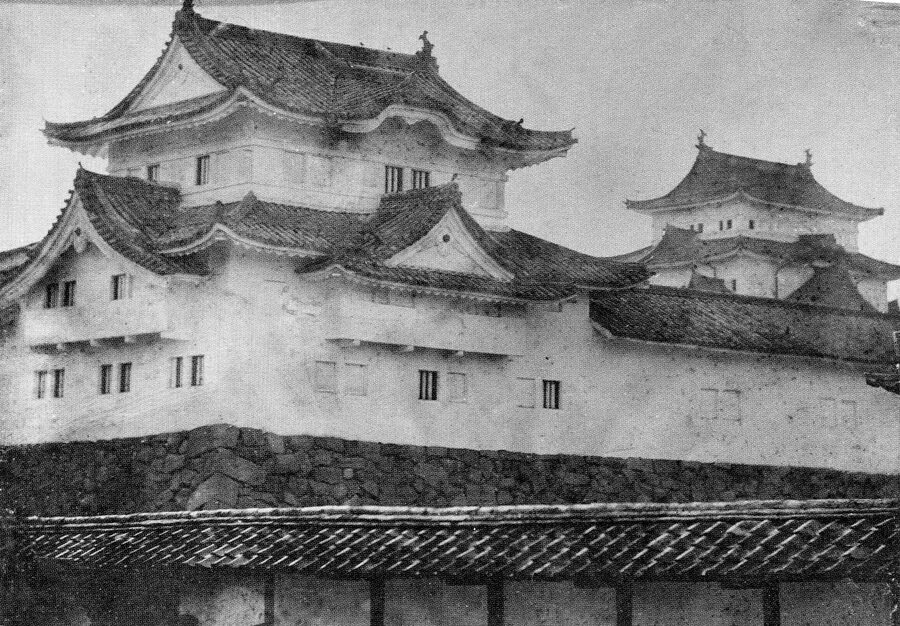
He also took photographs, which very few lords of his time did. He did his own developing, and he photographed his own castle, including buildings that were pulled down a few years later. In 1864, as commander of the shogunate’s first expedition against Chōshū, he photographed the castle at Hiroshima, one of the earliest known photographs of a Japanese castle.
Pine needles in the first month of 1868
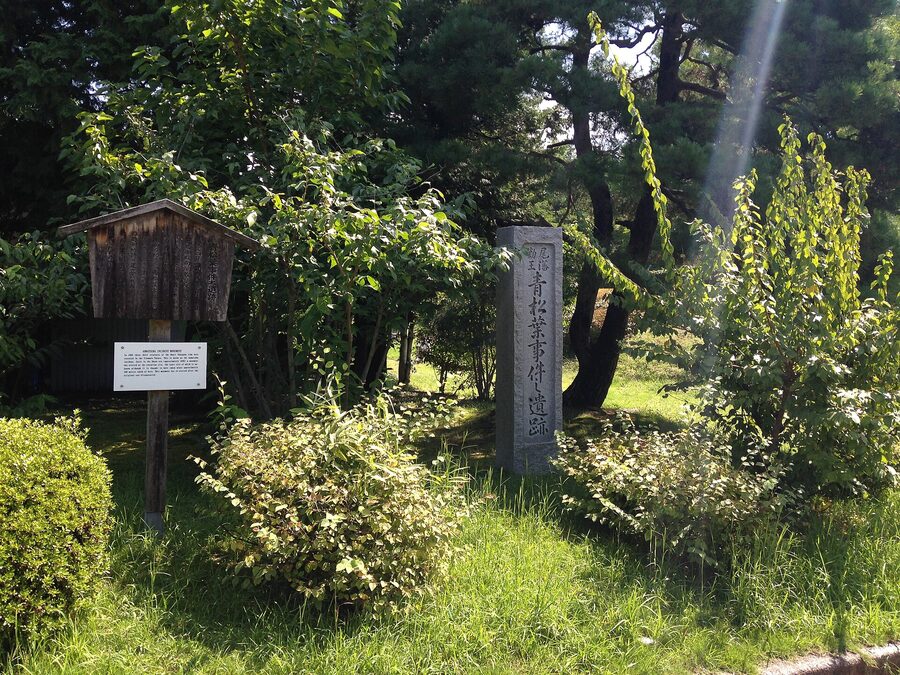
At the start of 1868 Yoshikatsu was in Kyoto as one of the leaders of the new imperial government when the fighting at Toba-Fushimi began the Boshin War. Word reached him that men at home wanted to rally Owari behind the shogunate. He came back to Nagoya with an imperial order to punish “traitors”, and on the day he arrived, the 20th day of the first month, three senior retainers were beheaded in the Ninomaru.
By the 25th fourteen men had been executed and twenty more punished, with no charges ever made public. The affair is called the Aomatsuba Incident, the “green pine needles”, after a nickname of the leading family among the dead. Whether there really was a plot is still disputed; what followed was that Owari sent men down the Tōkaidō and the Nakasendō collecting pledges of loyalty from every lord on the road, and the imperial army marched east almost unopposed.
Yoshikatsu had three younger brothers who mattered. One, Mochinaga, had been lord of Owari while he was in disgrace. The other two were Matsudaira Katamori of Aizu and Matsudaira Sadaaki of Kuwana, the shogunate’s hardest men in Kyoto, and that autumn Katamori held Tsuruga Castle for a month against the army his eldest brother had helped wave through.
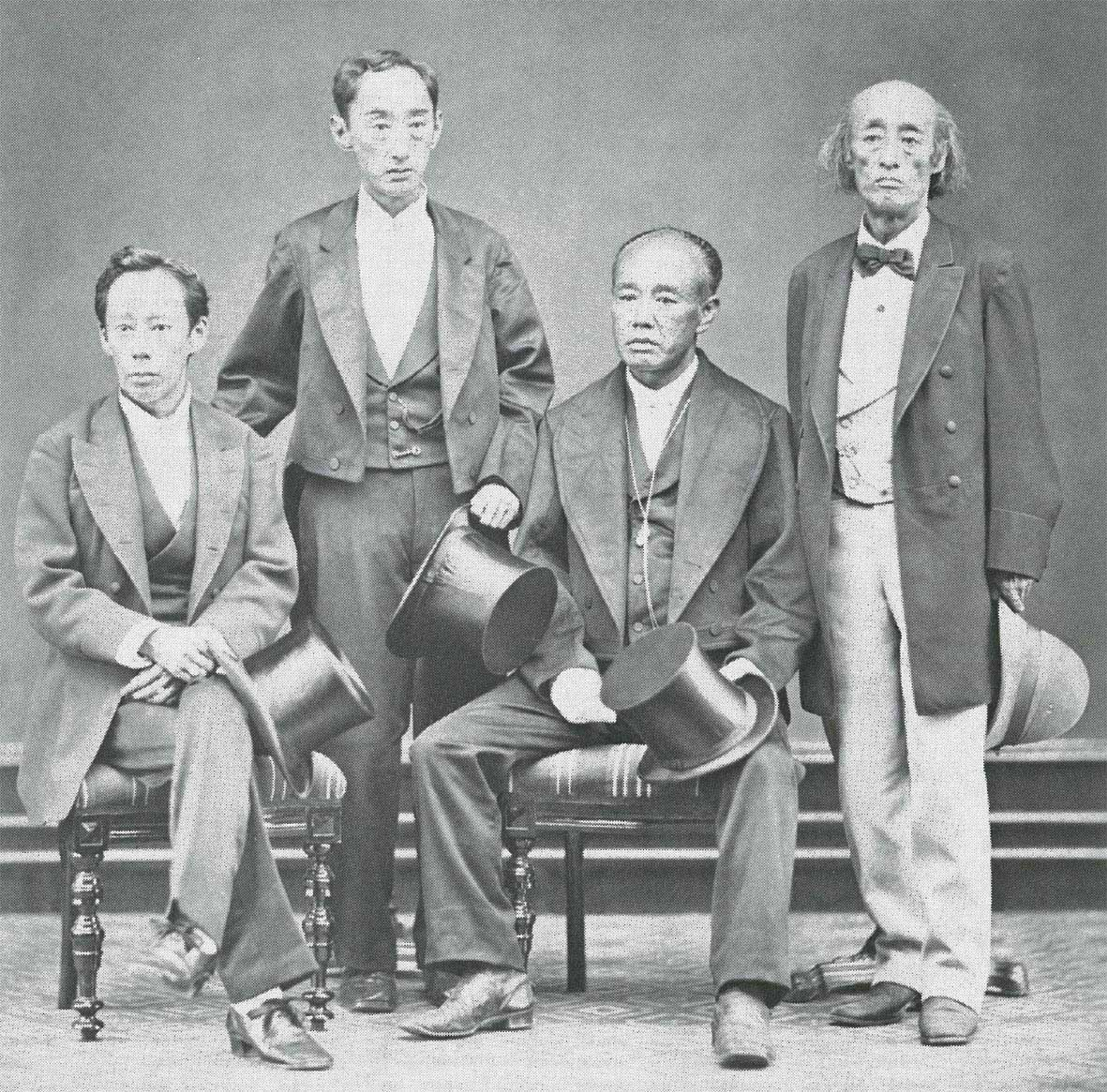
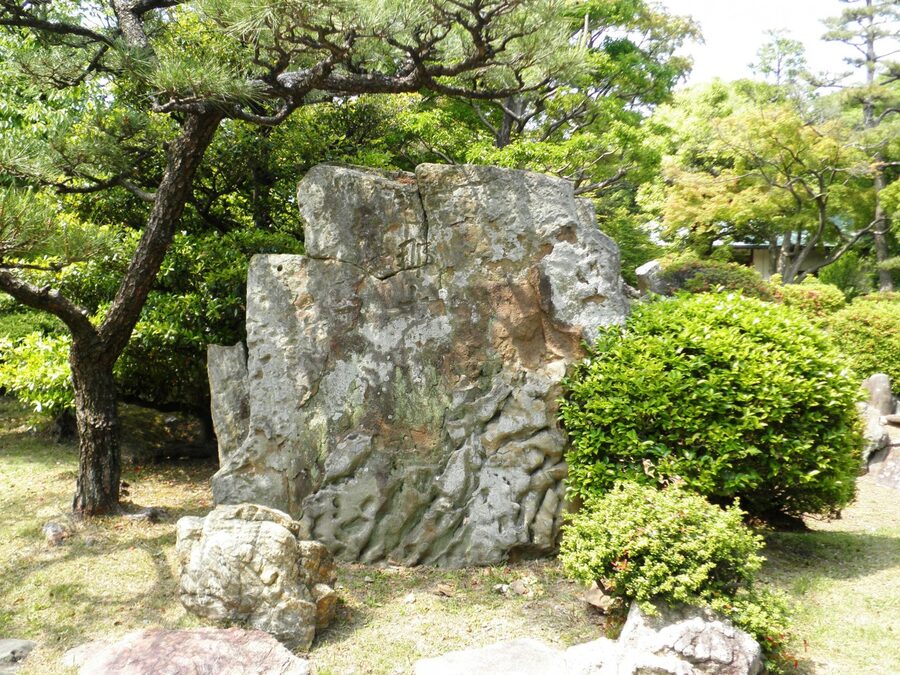
The precept had done what it was written for, and after the Meiji Restoration it became the house’s favourite explanation of 1868, carved in stone in the Ninomaru. Owari, it said, had been loyal to the throne all along. It did not hurt that, unlike Aizu, Owari was on the winning side; Yoshikatsu’s young cousin, the last shogun Tokugawa Yoshinobu, was not so lucky.
The fish
A shachihoko is a creature of the roof: the body of a fish, the head of a tiger, the tail flung up in the air. It lives in water and was supposed to spout it, so a pair at each end of the ridge guarded a building against fire. By Ieyasu’s time they had become a sign of rank as well, and the ones on Nagoya’s keep were made to be seen from the Tōkaidō.
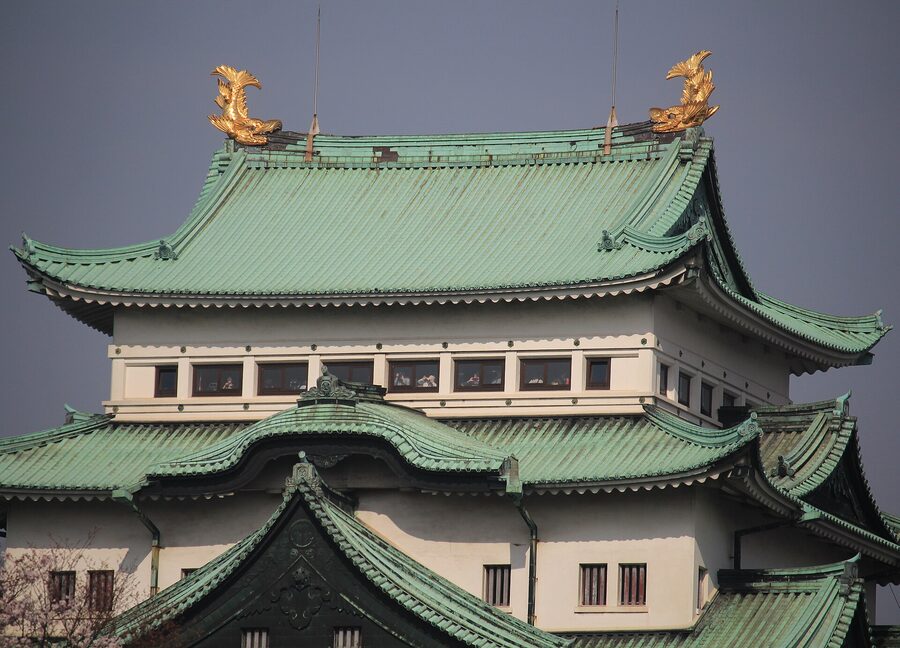
The originals of 1612 were a pair about 2.74 metres tall, gold hammered over a wooden core. Japanese sources give their gold as 1,940 Keichō ōban coins, or about 215 kilograms of pure gold; the figure usually repeated in English is 17,975 ryō, which is a value, not a weight. A popular song had it that the shachi shone so brightly the fish would not come in to the beach at Atsuta.
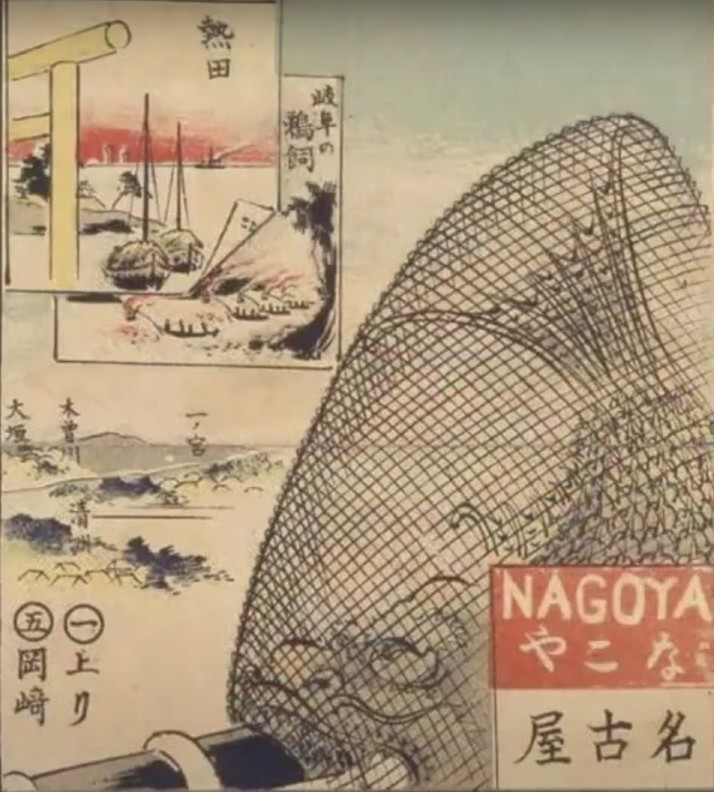
The fish were also the Owari treasury’s rainy-day fund. In 1730, 1827 and 1846, when money was short, they were taken down, the gold plates were melted, and the scales were recast with less gold each time. To hide how dull they had gone, the domain hung wire mesh round them, officially to keep birds and thieves off.
Thieves, a kite and a kabuki play
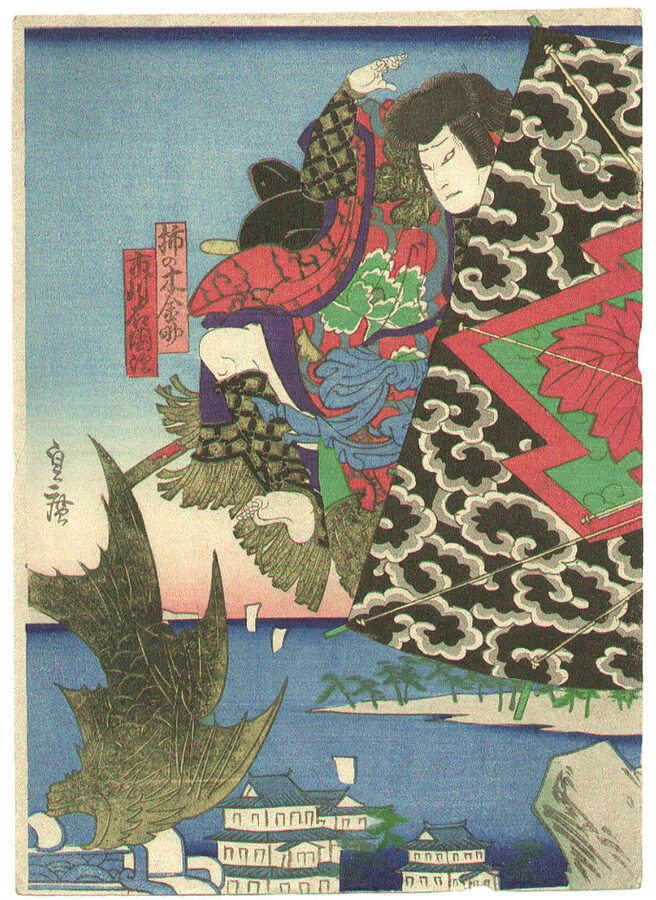
They attracted thieves anyway. The best story is Kakinoki Kinsuke, a farmer’s son turned robber from what is now Inazawa, who was supposed to have flown up to the keep on a giant kite and stolen scales off the fish. The real Kinsuke broke into a storehouse in the Honmaru and escaped by boat, and he was crucified in 1763.
The genuine thefts all came after the domain gave the fish away. In 1870 Yoshikatsu, now governor of Nagoya, offered the national government the castle for demolition and the shachi for melting down, the gold to help settle samurai on the land. The government did not melt them. In 1871 they came down from the keep and went to Tokyo by steamer from Atsuta, and on the way a soldier of the garrison stole three scales, for which he was shot.
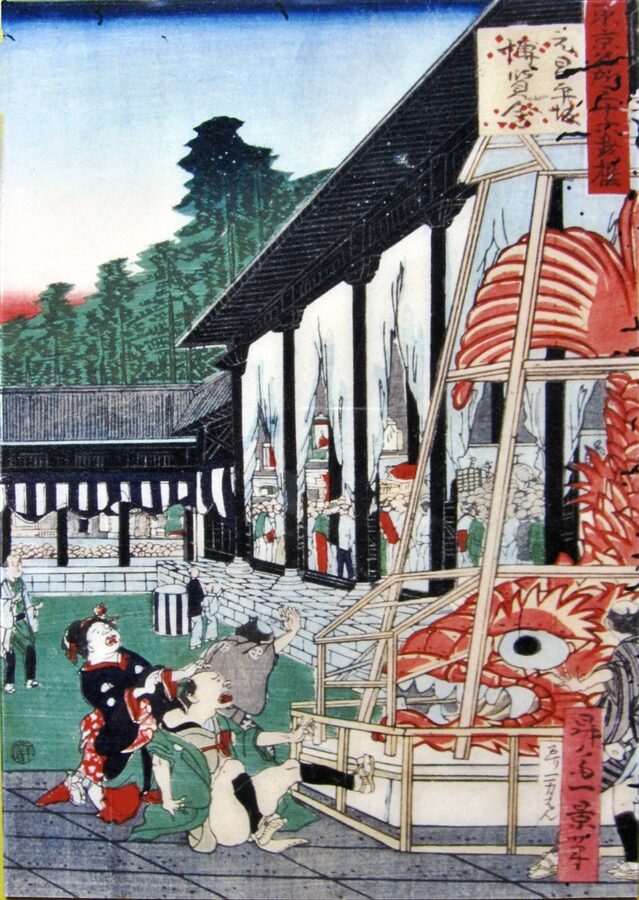
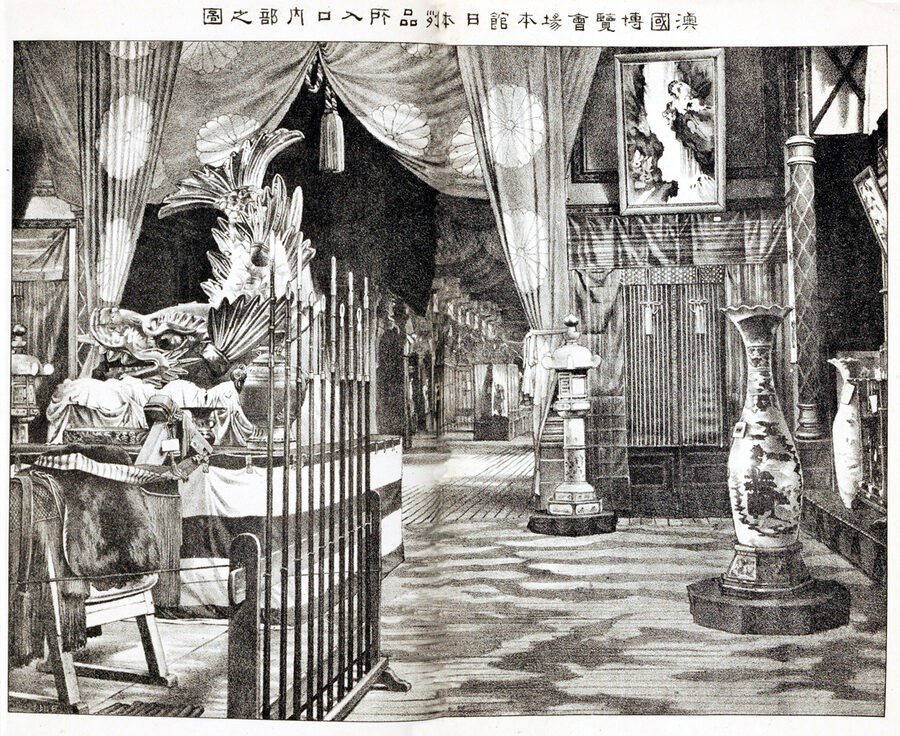
The male went on to exhibitions in Ishikawa, Ōita, Ehime and Nagoya. The female went abroad, to the World Exposition in Vienna in 1873, where she stood at the entrance to the Japanese section; the Iwakura Mission came through Vienna that June and saw the show. Merchants in Nagoya campaigned to get both fish back, and in February 1879 they returned to the roof.
Japanese sources count four thefts of scales after the Meiji Restoration, English ones usually three, and the difference is the one the army hushed up. There were the soldier in 1871, a thief at the Tokyo museum in 1876, someone in the army during the restoration work of 1878, and in early January 1937, during a survey of the castle, a man who climbed the scaffolding and took 58 scales off the male fish. He was caught in Osaka later that month trying to sell the gold, got ten years, and the mayor of Nagoya resigned.
Palace, garrison and the morning of 14 May
The Meiji government gave the castle to the army. The Nagoya garrison moved in in the early 1870s, later becoming the 3rd Division, and the army pulled down the Ninomaru Palace, the Sannomaru mansions and most of what it could not use. Men of the 3rd Division marched out from here to the First Sino-Japanese War and the Russo-Japanese War.
The keep was saved by people who were not from Nagoya. The German minister, Max von Brandt, spoke against demolition, and an army engineer, Colonel Nakamura Shigetō, argued for it inside the ministry. In December 1879 Yamagata Aritomo ruled that Nagoya and Himeji were to be preserved as the finest castles in the country.
The great Nōbi earthquake of 1891 knocked down the long tamon galleries round the Honmaru but barely touched the keep. In 1893 the Honmaru became the Nagoya Detached Palace, an imperial lodging, and the court decorated it with bits of another castle: bronze shachi from Edo Castle for the small keep and the turrets, and in 1911 Edo Castle’s Hasuike Gate, rebuilt here as the main gate.
In 1930 the court handed the castle to the city. That year 24 of its buildings, the keeps and the Honmaru Palace among them, were designated National Treasures, the first castle buildings ever to receive the title, and in February 1931 the gates opened to the public. The city then did something for which everyone who wants to rebuild the keep is still grateful: from 1932 it measured every protected building in detail, producing 309 sheets of drawings, 71 of them of the keeps, and from 1940 it took more than 700 photographs on glass plates.
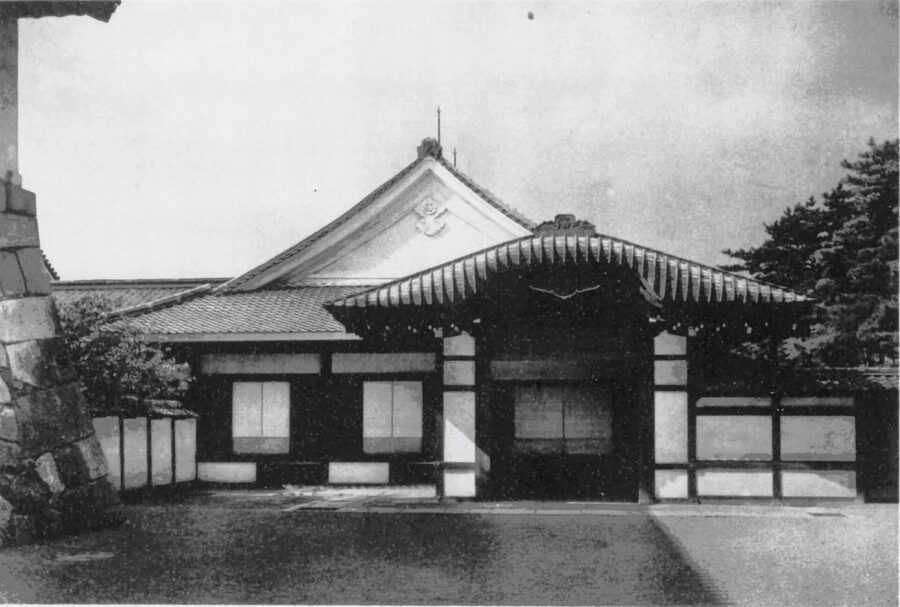
The war came anyway. From October 1944 the city took 1,047 painted doors, screens and ceiling panels out of the palaces and dispersed them to warehouses and temples round Inuyama, Komaki, Kasugai and Toyota. In April 1945 the arsenal crew began on the fish. On 14 May the keeps, the Honmaru Palace, the north-east turret and the main gate burned; the paintings that could be carried survived, and about 140 fixed to the walls did not.
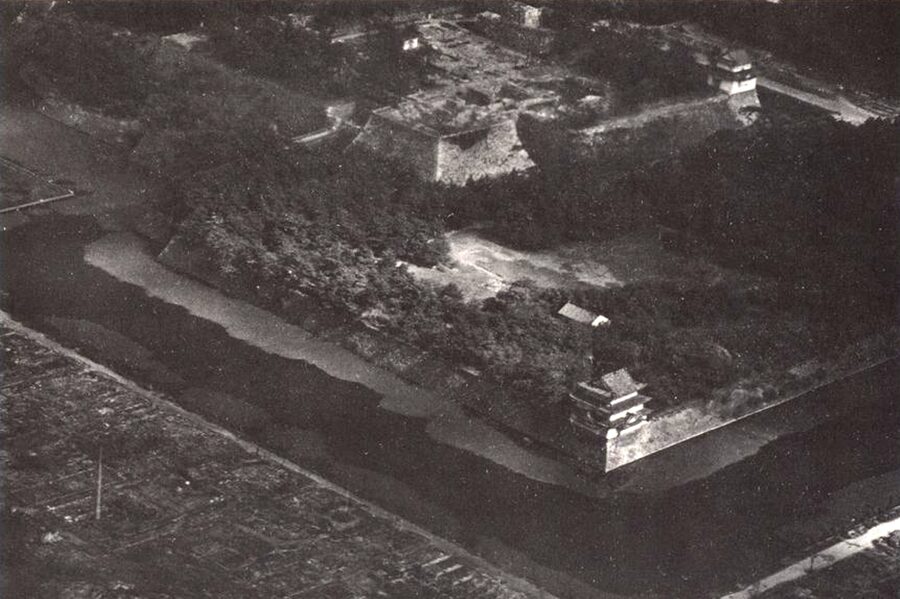
In the Shōwa war the castle was not a target in itself. It was in the middle of a city full of aircraft factories, and in the spring of 1945 the city burned. In August 1946 the occupation forces impounded the melted gold from the shachi, thirteen coal boxes of it, as precious metal.
Concrete, a palace and a keep nobody can enter
Nagoya wanted its castle back quickly. Citizens started a rebuilding fund in 1954, and in 1957 the city began work on new keeps as a project for its seventieth anniversary. Under the fire laws of the time a timber keep was out of the question, so the contractor sank a caisson inside the scorched stone base, to keep the weight off it, and built a steel-framed concrete keep on top, with the outside copied from the 1930s drawings.
It cost ¥640 million, ¥200 million of it from donations, and it opened in October 1959 (sources variously give the 1st and the 3rd). The Ise Bay typhoon had wrecked the city days earlier, so the opening was a muted affair. A new pair of shachi, beaten out by craftsmen at the Osaka Mint, went up on the ridge with 88 kilograms of 18-carat gold between them, and the melted gold of the old ones, returned by the national government in the 1960s, became a finial for the city flag and a golden tea kettle.
The concrete keep was a museum with a lift, and for nearly sixty years it was one of the most visited sights in Nagoya. I climbed it more than once and remember nothing of the inside but display cases and a view. The outside, especially from across the moat, did its job well.
The palace comes back
The Honmaru Palace took longer. Citizens’ groups lobbied from the 1990s, a painting workshop at the Aichi Prefectural University of Fine Arts began copying the surviving panels in 1992, and in 2005 the city decided to rebuild. Work started in 2009 at a cost of about ¥15 billion, split three ways between the city, the national government and private donors, with Kiso cypress from the forests the Owari once guarded.
It opened in stages, the entrance hall and the Omote Shoin in 2013, the Taimenjo in 2016, and the whole palace on 8 June 2018. The roof is cypress shingle, as it was before an 18th-century economy drive replaced it with tile, and every panel inside is a new painting, made with period materials and techniques from the originals and the photographs.
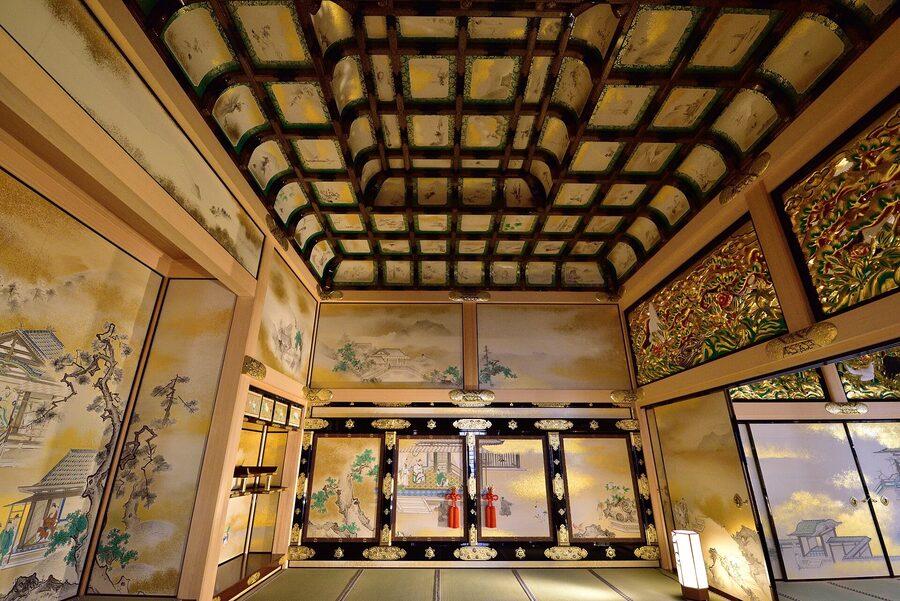
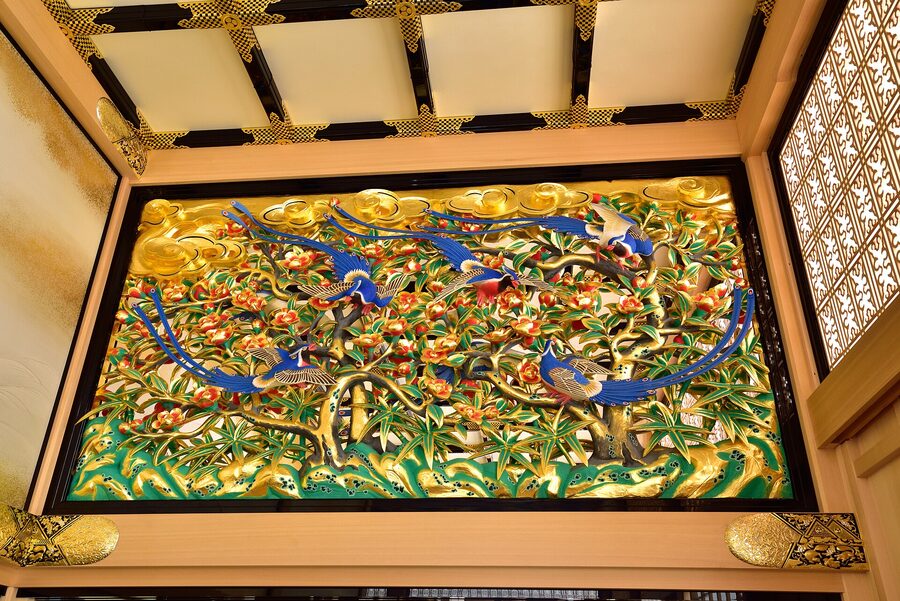
It is the best reconstruction I have seen in Japan, and the only one I would put in the same sentence as the original Ninomaru Palace at Nijō. The Jōrakuden’s openwork transoms were carved by carvers from Inami in Toyama and coloured by craftsmen in Kyoto, seven of them, the largest 3.24 metres across, and they took seven years. The site’s piece on ranma explains why a room was judged by what was above its doors.
The wooden keep
The idea of rebuilding the keep in wood as well belongs mostly to one man, Kawamura Takashi, who became mayor in 2009 and complained that visitors to Nagoya said there was nowhere to go. The concrete keep was ageing and did not meet modern earthquake standards; the 1930s drawings were good enough to rebuild the original exactly. In May 2017 the city signed a basic agreement with the Takenaka Corporation for a project of up to ¥50.5 billion, with the keep to be finished in December 2022.
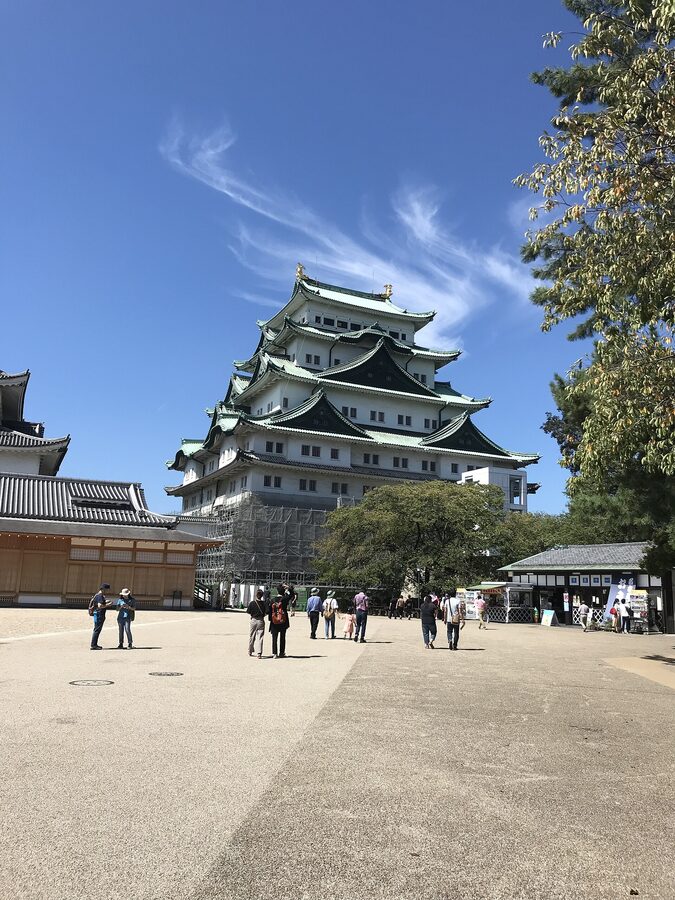
The keep closed on 7 May 2018, and since then nearly everything has gone sideways. The Agency for Cultural Affairs, which has to approve any work on a Special Historic Site, would not allow the concrete keep to be demolished until the city could show how the 400-year-old stone base would be protected, and in August 2019 Kawamura gave up on 2022. In March 2020 a contractor digging in the Nishinomaru damaged buried stonework, which did not help.
Then there was the lift. The mayor insisted on a faithful reconstruction with no lift; disability groups marched against him. The city held a competition for a lifting device that would not cut through the historic frame, chose a design by an aerospace subsidiary of Mitsubishi Heavy Industries in 2022, and at a public debate in June 2023 a wheelchair user asking for access to the top was shouted down with abuse while part of the audience applauded. The city has apologised for it repeatedly since.
In March 2023 the city gave its first new estimate: completion around fiscal 2032 at the earliest, if every permit came through on time. Kawamura left for national politics in 2024, and his chosen successor, Hirosawa Ichirō, won the mayoral election that November and kept the project. As I write in November 2026 the keep is still closed and no construction start has been set; the city is repairing the stone walls, keeping the milled cypress in storage, and holding dialogue sessions with disabled people about a lift that would go “as high as possible consistent with historical accuracy”.
Should they do it?
I think the stone base should come first, and the city has finally accepted that. Beyond that I am torn. The case for a wooden keep is strong: nobody has better records of a lost keep than Nagoya, the palace proves the craftsmen exist, and a timber keep would teach more than any concrete museum ever did.
The case against is that the concrete keep is now a historic building in its own right, put up with citizens’ money in the rubble of 1945, and that a reconstruction which cannot let everyone in is a strange gift to a city. Okinawa has just shown it can be done faster: Shuri Castle‘s main hall burned in 2019 and its wooden replacement opens to the public on 23 November 2026. Whatever you think, go and see the Honmaru Palace, which is the argument for the whole idea made in cypress.
Where to see Nagoya Castle and the Owari Tokugawa today
Nagoya is on the Tōkaidō Shinkansen, about an hour and forty minutes from Tokyo and thirty-five from Kyoto, and everything below is on the city subway or the Meguru sightseeing loop bus. Do the castle and the palace in a morning, the Tokugawa Art Museum and its garden in an afternoon, and Atsuta Shrine on a second day or on your way to the station. If you are already in the area, Inuyama Castle, which has an original keep and was held by the Owari house’s senior retainers, the Naruse, and the battlefield of Komaki-Nagakute are both within an hour.
Nagoya Castle
The castle is open daily from 9:00 to 16:30, closed only from 29 December to 1 January; the Honmaru Palace and the Nishinomaru museum take their last visitors at 16:00. Admission went up on 1 October 2026 from ¥500 to ¥1,000 for adults, with junior high school pupils and younger free. A combined ticket with Tokugawa-en is ¥1,040 and is cash only.
Take the Meijō subway line to Nagoya-jō station, renamed from Shiyakusho in 2023, and walk five minutes from exit 7 to the East Gate, or take the Meguru bus to the Main Gate on the west side. From 1 to 28 February 2027 the city is trialling free entry to the grounds outside the Honmaru, so check the castle’s website if you are going then. Allow an hour and a half, more if you want the turrets and the walls.
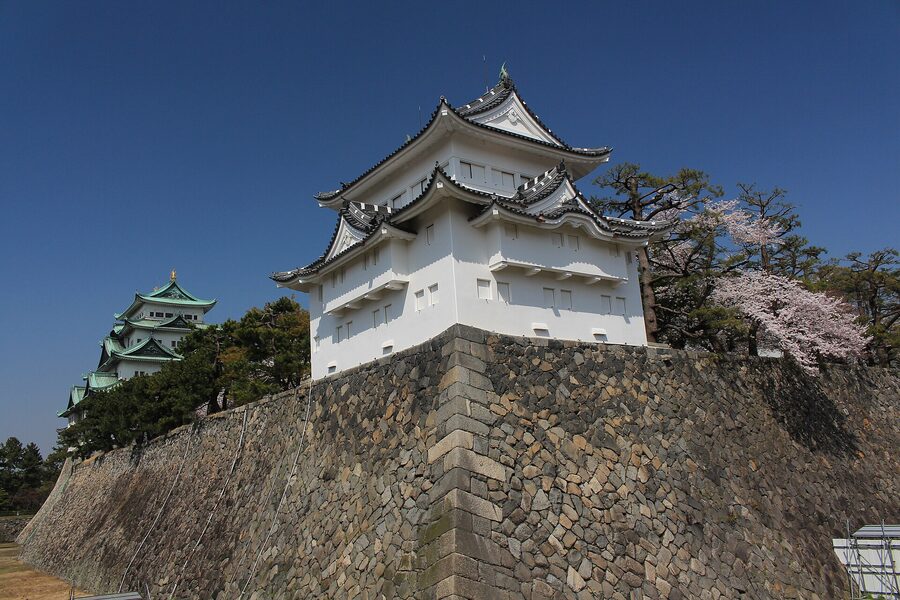
The keep is closed, but walk round it anyway to see Kiyomasa’s base, the spearpoint wall on the bridge and the fish. Then look for the original buildings: the south-east and south-west turrets, the Kiyosu turret in the north-west, and three gates, including the iron-plated Omote Ninomon on the way into the Honmaru. The foundation stones of the old keep, blackened by the fire, were moved out during the rebuilding of the 1950s and now lie on a lawn in the Ofukemaru, north-west of the keep.
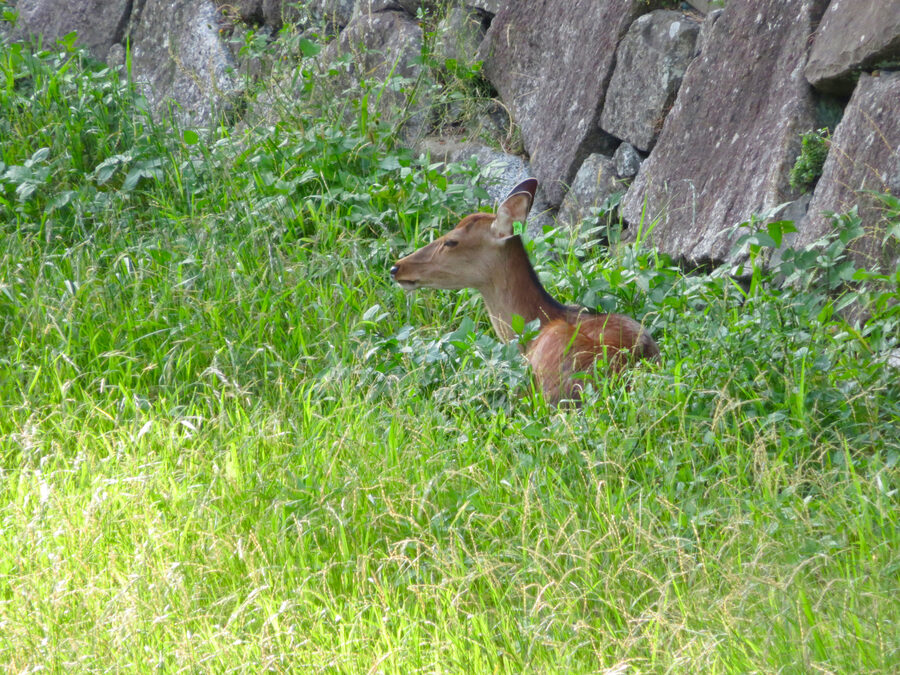
In the Nishinomaru, near the Main Gate, the Okura Jōhōkan museum opened in 2021 in a building made to look like the old rice stores, and it shows the real palace paintings in rotation. Outside it stands a kaya nutmeg tree more than 600 years old, the only natural monument in Nagoya; Yoshinao is said to have eaten its nuts for luck before setting out for Osaka. The keep is lit up from dusk until 23:00, and the outer moats are a good walk after dark.
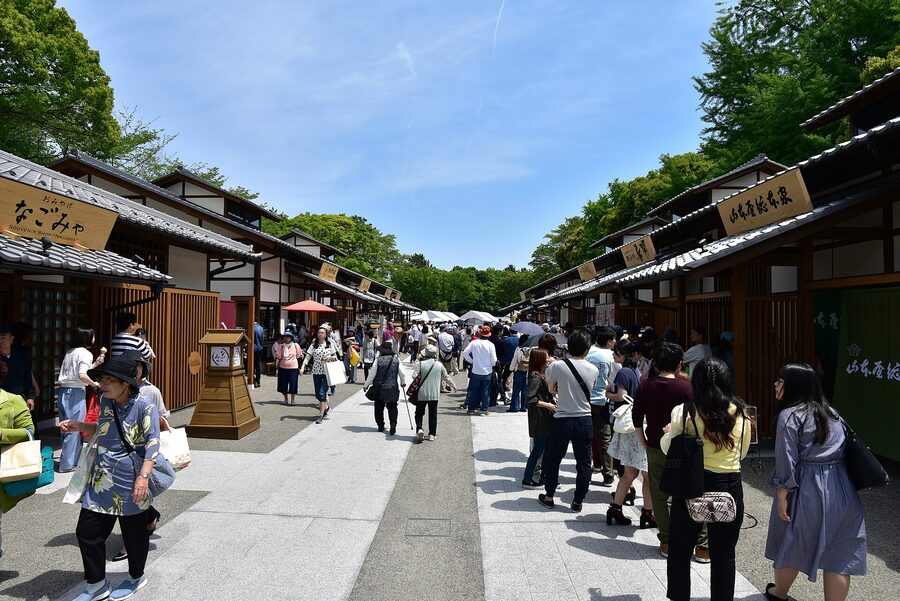
The Honmaru Palace
Entry is included with the castle ticket. There are two entrances, one by the Naka-no-kuchi for the Genkan, Omote Shoin, Taimenjo and Jōrakuden, and one by the Yudono Shoin for the bath suite and the Kuroki Shoin. You take your shoes off, the floors are cold in winter, and there is no heating, no air-conditioning and no toilet inside, because the palace is lit and built as it was in the 17th century.
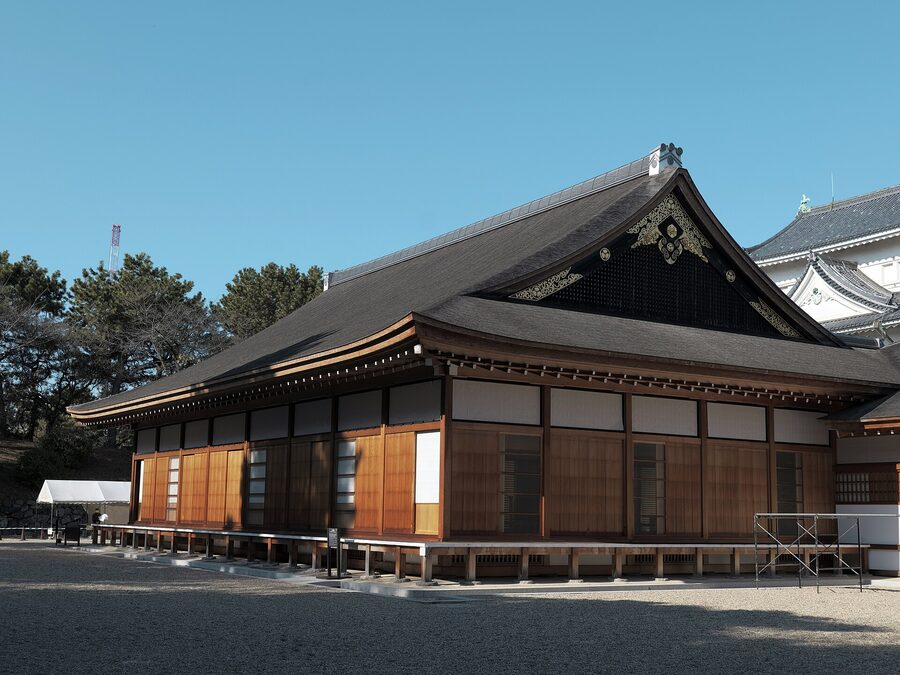
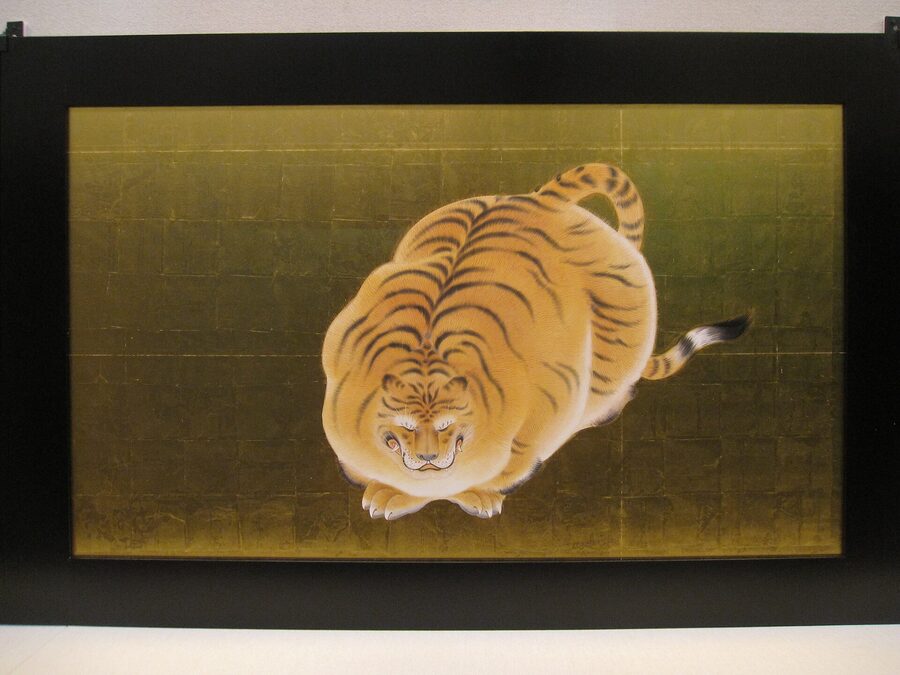
Start in the Genkan, where visitors once waited, painted with tigers and leopards in a bamboo grove; in the period, the usual explanation goes, leopards were taken for the female of the tiger. Then go through the Omote Shoin and the Taimenjo, whose upper rooms are painted with scenes of Kyoto and Wakayama, the home of Yoshinao’s wife, so that a lord who never went anywhere would know how ordinary people lived. Save the Jōrakuden for last, and look up at the ceilings as well as the walls: the grade of the ceiling told you the rank of the room.
The Ninomaru Garden
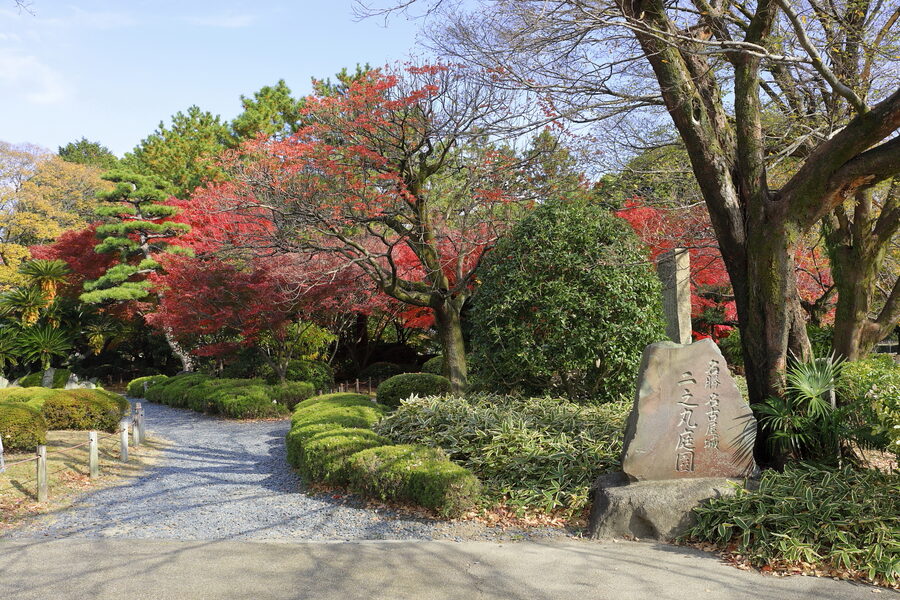
East of the Honmaru, the garden of the Owari lords’ own palace was, the castle claims, the largest any lord in Japan had, and it has been a National Place of Scenic Beauty since 1953. What survives is the northern part, rocks and ponds and a reconstructed tea arbour. It is free with the castle ticket and the quietest part of the grounds, and the Aomatsuba stele, the precept stone and the marker for Nobunaga’s castle are all nearby.
The Tokugawa Art Museum and Tokugawa-en
The museum stands on the site of the Ōzone villa of the second Owari lord, Mitsutomo, and holds what the house kept: the core of it is the share of Ieyasu’s own possessions that came to Yoshinao when Ieyasu died, and after that, the gear of sixteen lords. There are more than 10,000 objects, including nine National Treasures, among them the 12th-century Tale of Genji handscrolls, plus swords and samurai armour in quantity, and a full-size reconstruction of rooms and a Noh stage from the lost Ninomaru Palace.
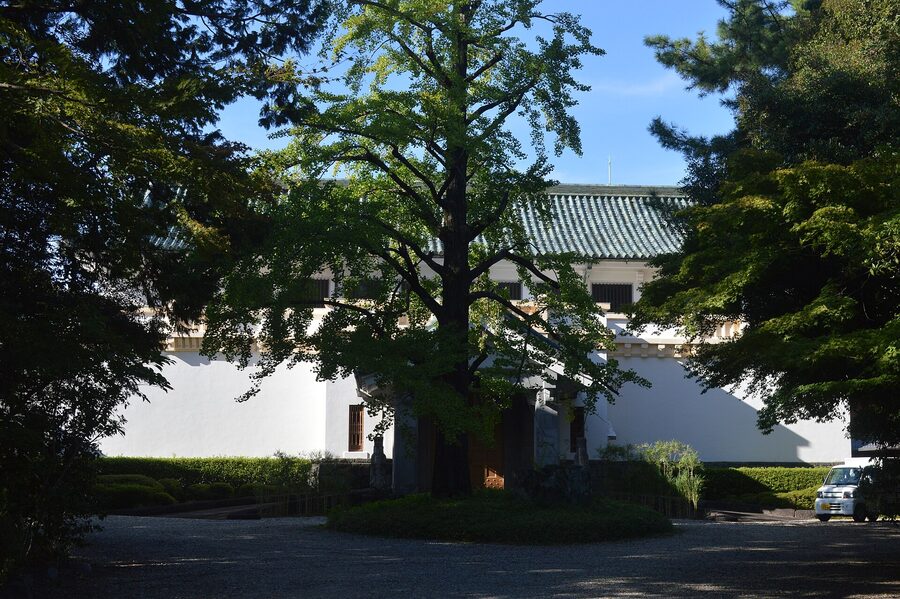
It is open from 10:00 to 17:00 (last entry 16:30), closed on Mondays, or the following weekday when Monday is a holiday, and closed for the New Year from 14 December 2026 to 4 January 2027. Admission, which includes the Hōsa Bunko, Yoshinao’s library next door, is ¥2,000 for adults and ¥1,600 between exhibitions. Take the Meguru bus, or the Kikan 2 bus from Nagoya Station to Tokugawaen Shindeki and walk three minutes; from JR Ōzone station it is ten minutes on foot from the south exit.
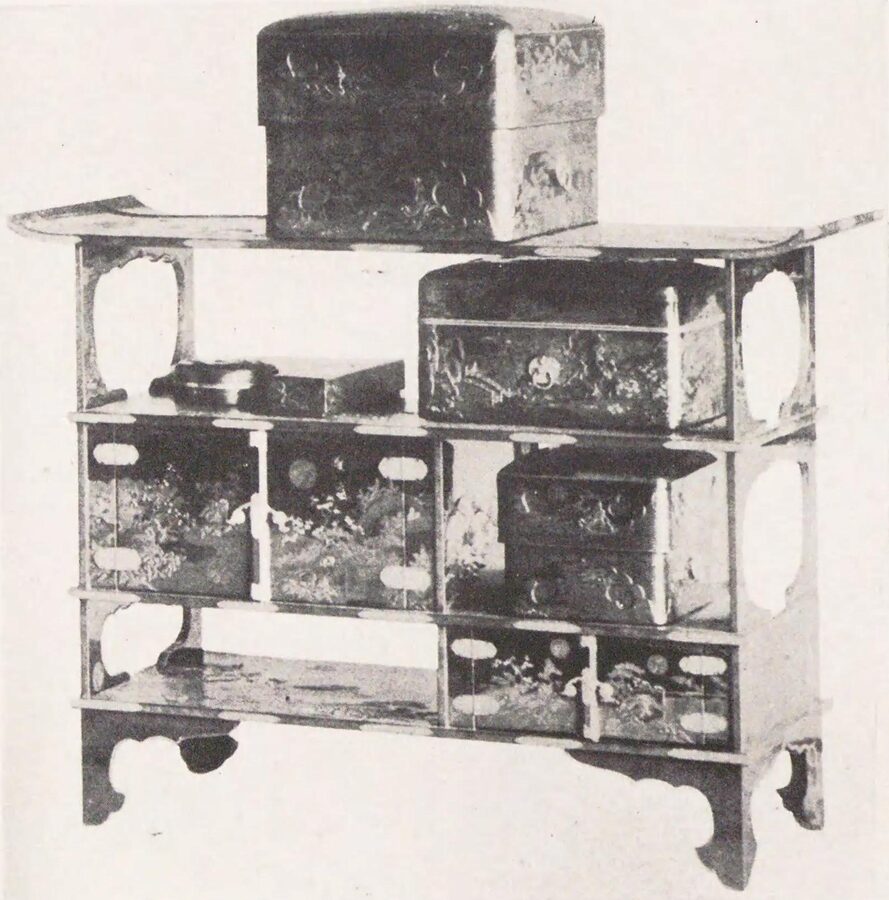
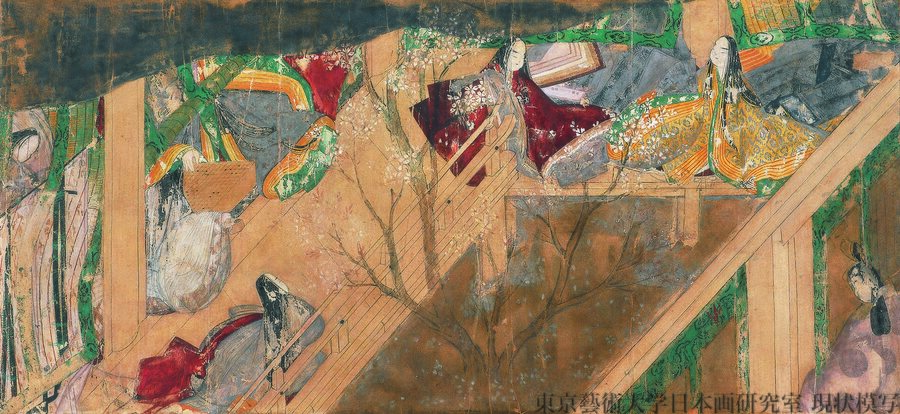
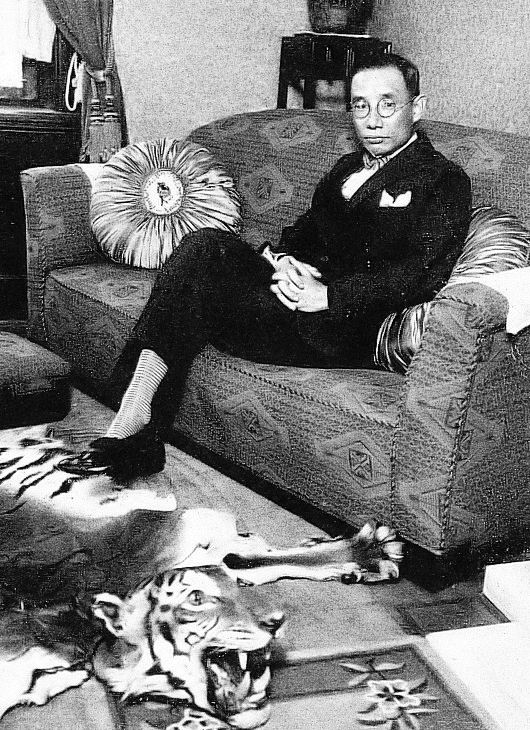
Until 13 December 2026 the museum’s special exhibition is on Tokugawa Yoshichika, the nineteenth head of the house, who founded it in 1935. He hunted bears in Hokkaido and tigers in Malaya, which made him the tiger-hunting lord to the newspapers, and he is credited with bringing home from Switzerland the carved wooden bear that became Hokkaido’s best-known souvenir.
Next door, Tokugawa-en is the Ōzone villa’s garden, laid out from 1695 as a model of Owari in miniature: hills for the Kiso mountains, a stream for the Kiso rivers, and a pond for Ise Bay. Yoshichika gave it to the city, it burned in 1945, and it was remade as a Japanese garden in 2005. It is open from 9:30 to 17:30 (last entry 17:00), closed on Mondays and from 28 December to 1 January, and costs ¥300.
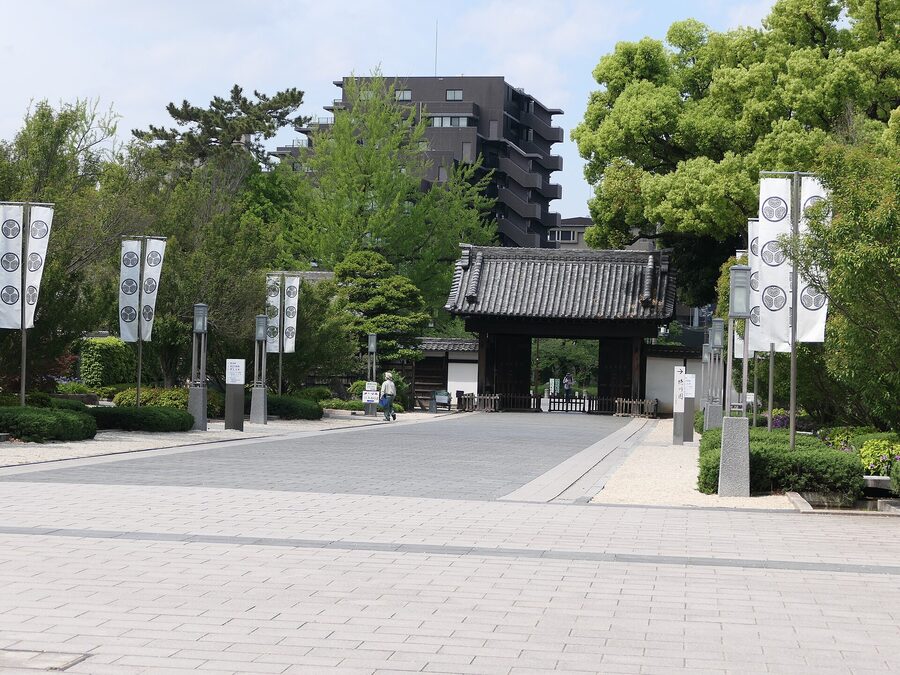
If you have time, walk about fifteen minutes south-west to Kenchū-ji, which Mitsutomo founded in 1651 for his father and which became the family temple of the house. Muneharu was buried there in 1764, still in disgrace. The temple grounds are free.
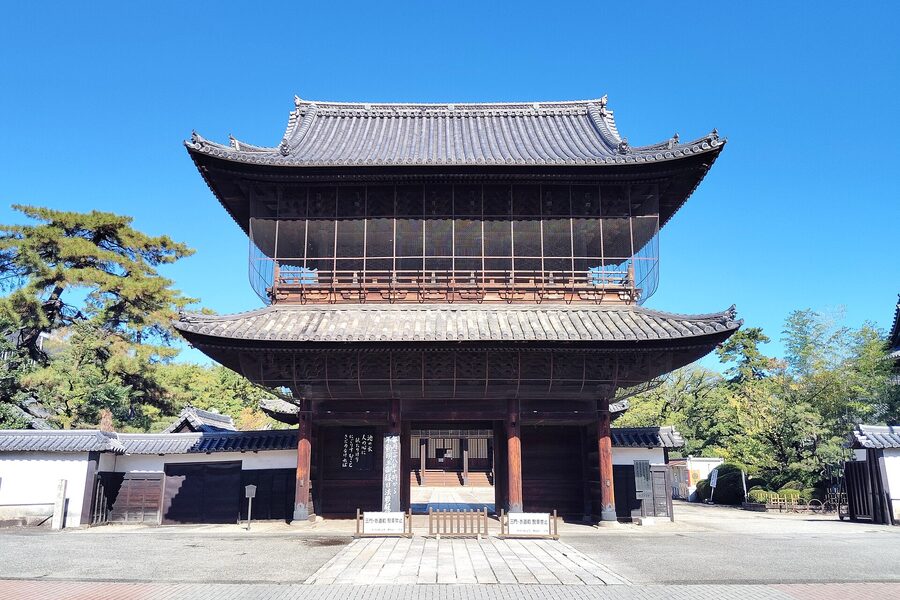
Atsuta Shrine
Atsuta was here long before the castle and is the reason the town south of it existed at all. It enshrines the Kusanagi sword, one of the three sacred treasures of the imperial regalia, which nobody is allowed to see. The Nihon Shoki says a Silla monk stole it in 668 and it came back in 686, and it was moved to safety in August 1945; Nagoya has a long history of people wanting to remove its valuables.
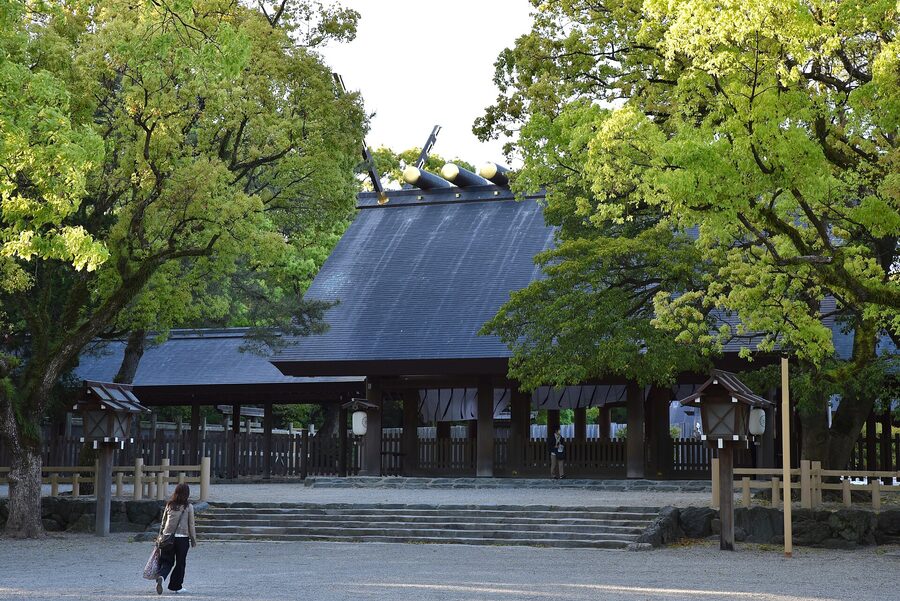
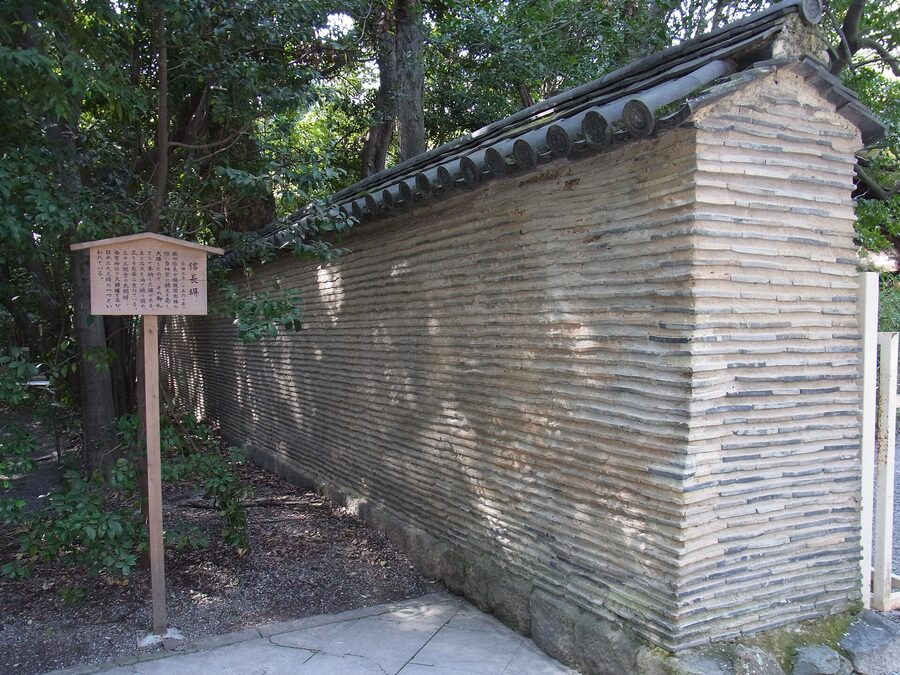
Nobunaga stopped here to pray on his way to Okehazama in 1560, and after the victory he gave the shrine a long earthen wall. The Nobunaga-bei, built of clay and lime worked with oil and capped with tiles, still stands in the grounds and is counted among the three great earthen walls of Japan.
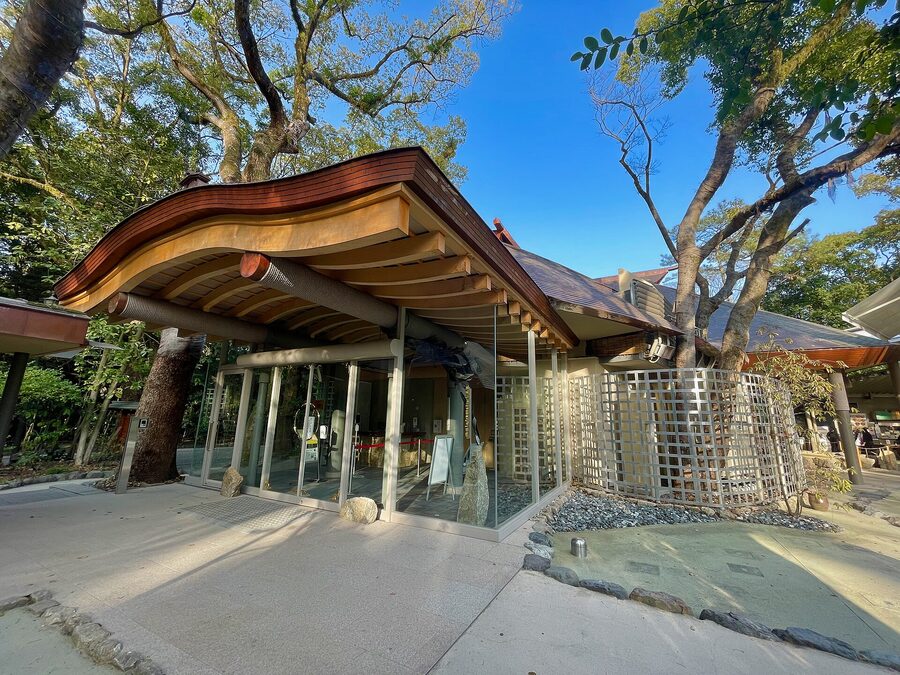
The shrine also holds hundreds of swords given over the centuries, and since October 2021 a selection has been shown in the Kusanagi-kan, a small sword museum in the grounds. It and the Treasure Hall are open from 9:00 to 16:30 (last entry 16:00) and cost ¥500 each or ¥800 for both. The Treasure Hall closes on the last Thursday of the month and the day before, and the Kusanagi-kan on the day before that, so midweek at the end of the month needs checking; the site’s guide to Japanese swords is worth reading first.
The grounds are open at all hours and free. Take the Meitetsu line to Jingū-mae and walk three minutes to the east gate, or the Meijō subway line to Atsuta Jingu Nishi (exit 2) or Atsuta Jingu Temmacho (exit 1), each about seven minutes from a gate; the castle to the shrine is about twenty minutes by subway. Read the site’s survey of Japan through the ages on the way, and you will notice that this one city covers most of it.
Go back to the castle at the end of the day if you can, and stand on the east side of the Honmaru where the keep and its base fill the sky. Kiyomasa’s stones are still there, and the fish are still on the ridge, 88 kilograms of gold on a building nobody has been allowed into since 2018. They are the second pair, and someday they may sit on a third keep. For now they are the one thing on the roof that has always been worth stealing.