On the morning of 6 February 1950, six high school students from Sapporo’s Tōhō school finished six small snow figures in Odori Park and, against everyone’s expectations, drew an estimated 50,000 onlookers to a frozen median strip in the middle of a city most of Japan still considered a frontier outpost. That single afternoon, with no admission, no sponsors, and no marketing plan, is the seed event of what is now the Sapporo Snow Festival, さっぽろ雪まつり (Yuki Matsuri), an event that pulls roughly two million visitors a year to a city of fewer than two million residents and fills its central park with sculptures the size of small apartment blocks. I have spent more winters in Hokkaido than I care to count, and every February I still find myself standing in front of one of the giant statues at the Odori site at minus eight degrees Celsius, watching the floodlights come on, wondering how an idea that started as a school project ended up requiring 6,000 truckloads of snow and an army battalion to pull off.
In This Article
- The afternoon six teenagers accidentally invented a national event
- How a school art project became a military operation
- The 1972 Olympics and the moment Sapporo became a global brand
- Three sites, three personalities
- Odori Park: the main stage and the photo-perfect mile
- Susukino: ice carvings and a lot of beer
- Tsudome: the family site nobody outside Japan knows about
- The numbers that nobody believes when you tell them
- The COVID interruption and what nearly killed the event
- The Navy from Misawa, the unexpected forty-year fixture
- How to actually visit without freezing or getting lost
- Dressing for the weather without overdoing it
- Where to eat that is not a festival food stall
- What else to do in Sapporo while you are there
- The cultural lineage and what Yuki Matsuri actually means
- The festival’s relationship to other floats, processions, and seasonal events
- The future, the climate question, and whether the festival will last
- The practical bottom line
The afternoon six teenagers accidentally invented a national event
The official birth date is 6 February 1950, but the planning started weeks earlier when a teacher at Tōhō High School suggested the students do something with the snow piled up at the western end of Odori Park. The Sapporo Tourism Association and the city government quietly co-sponsored the idea, hoping to draw a few hundred families out of their homes during the long lull between New Year and spring. What they got instead was 50,000 people elbowing past each other on Nishi 7-chōme and a local newspaper photographer climbing a lamppost to fit them all in frame.
I find it useful to remember how minor the original sculptures were. There were exactly six of them, none larger than a person, and one was reportedly a snow rabbit a younger sibling kept knocking the ears off. The Tōhō students had no design plan, no architectural drawings, no budget for tools beyond what their parents kept in the garage. The genius of the event was never the craftsmanship in year one, it was the realisation that Sapporo had something Tokyo and Osaka could not buy: a guaranteed, week-long supply of pristine white snow in a flat downtown park, free of charge, every single February.
How a school art project became a military operation
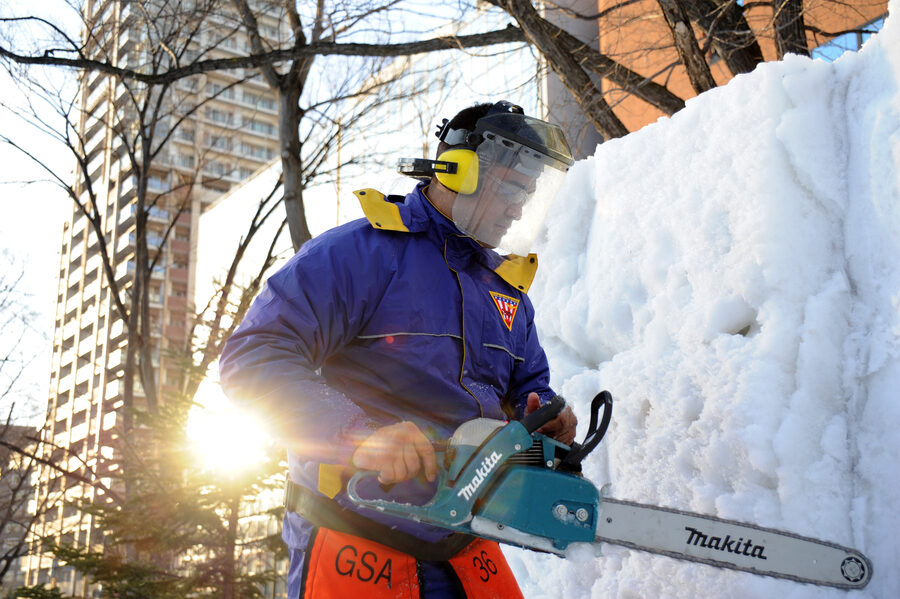
The size of the sculptures you see today, the ones tall enough to need an internal scaffold and a shoot date that begins three weeks before the festival opens, owes everything to a decision made in 1955. That year, the 11th Hokkaido Camp of the Ground Self-Defense Force (陸上自衛隊) at Makomanai base was looking for a way to give its engineers something useful to do during winter exercises. The Sapporo Tourism Association, by then dealing with crowds the city was struggling to manage with sleds and shovels, asked if the army would build something larger than the students had been doing.
The first SDF contribution was a 10-metre statue of the Virgin Mary (聖母マリア), a curious choice given that Hokkaido’s Christian population was tiny, but the engineers wanted something tall and instantly recognisable. It worked. Newspapers across Honshu picked up the photograph, and from that year on the festival had two parallel tracks: small-scale community sculptures done by neighbourhood teams, and architectural showpieces built by uniformed engineers using cranes, snow guns, and structural steel armatures hidden inside the snow. By 1972, the cooperation was formalised in writing, and the SDF was responsible for the central row of large statues at the Odori site.
That arrangement held for nearly fifty years. After the September 2001 attacks, security concerns and unit reorganisation began to chip away at the SDF’s role. By 2025 the Force was still participating but had quietly cut its commitment from multiple large sculptures to a single set-piece, with the rest of the heavy work shifted to private contractors and corporate sponsors. The festival adapted, but you can feel the difference if you have been going long enough: the sculptures used to feel slightly more austere, more rigorously geometric, in a way that betrayed who was actually building them.
The 1972 Olympics and the moment Sapporo became a global brand
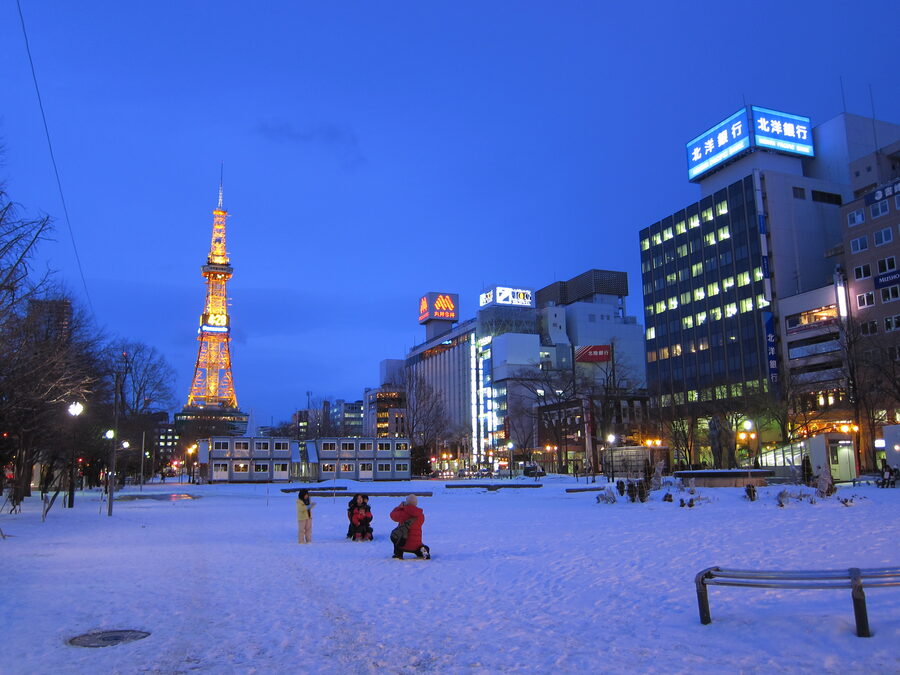
The Sapporo Winter Olympics in February 1972 took the snow festival from a popular regional event to a name on every European and North American travel page. The Olympic torch arrived at New Chitose Airport on 28 January, the snow festival ran in parallel during the Games, and the international press corps that had been assigned to cover ski jumping suddenly had a 15-metre snow castle outside their hotel windows on Odori. The coverage was relentless and uniformly enchanted.
What I find more interesting is the secondary infrastructure the Olympics left behind. The Mount Moiwa ropeway, the Ōkurayama ski jump (still in use as a museum and viewing platform), the Makomanai indoor arena, and the dramatic expansion of the subway under Odori Park all happened in the run-up to 1972. Without that build-out, the modern festival simply could not handle two million visitors squeezing through a single kilometre-and-a-half corridor in February. The festival benefits from infrastructure decisions that were technically made for ski jumpers but turned out to suit snow tourists almost as well.
Three sites, three personalities
The modern festival is split across three distinct venues that run simultaneously for roughly twelve days in early February. Each one has its own character, its own opening hours, and its own crowd profile, and treating them as a single event in your head is a mistake that will leave you missing two thirds of what is on offer.
Odori Park: the main stage and the photo-perfect mile
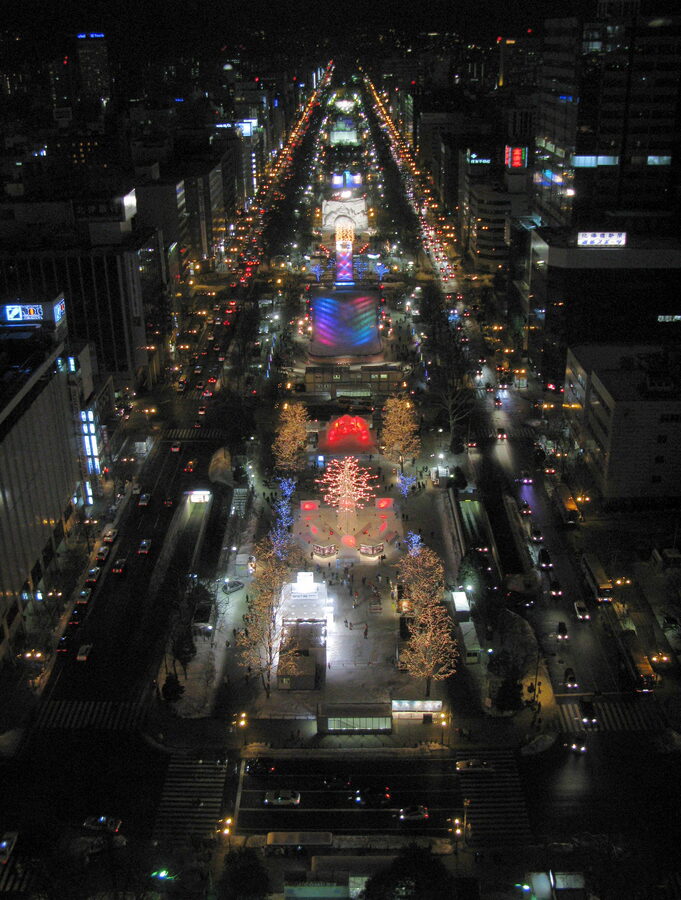
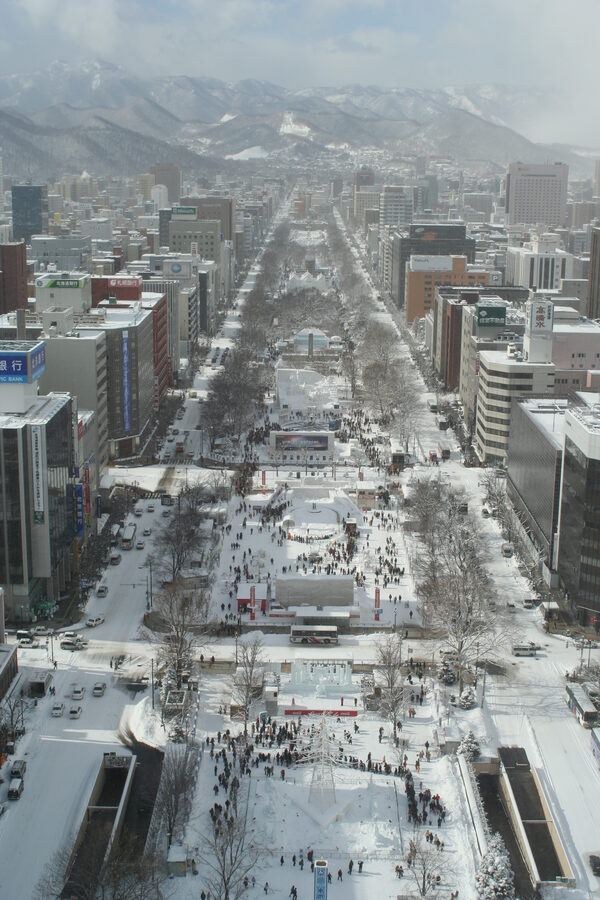
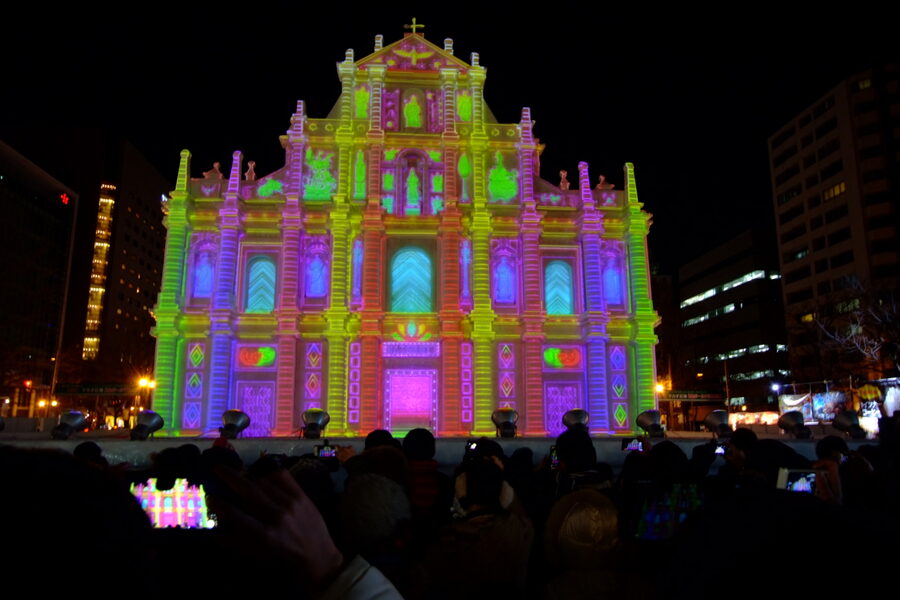
The Odori site is the one you have seen in every guidebook. It runs east to west for about 1.5 kilometres along the central park strip from Nishi 1-chōme to Nishi 12-chōme, and it holds the largest sculptures, the international snow contest, the projection mapping shows, and roughly 1.5 million of the festival’s annual visitors. The big SDF and corporate set-pieces, the ones tall enough to require building permits, all live at Odori. So does the food street running along Nishi 6-chōme, where you can buy hot Hokkaido scallops, jingisukan (mutton barbecue), and a small paper cup of hot sake for around 500 yen.
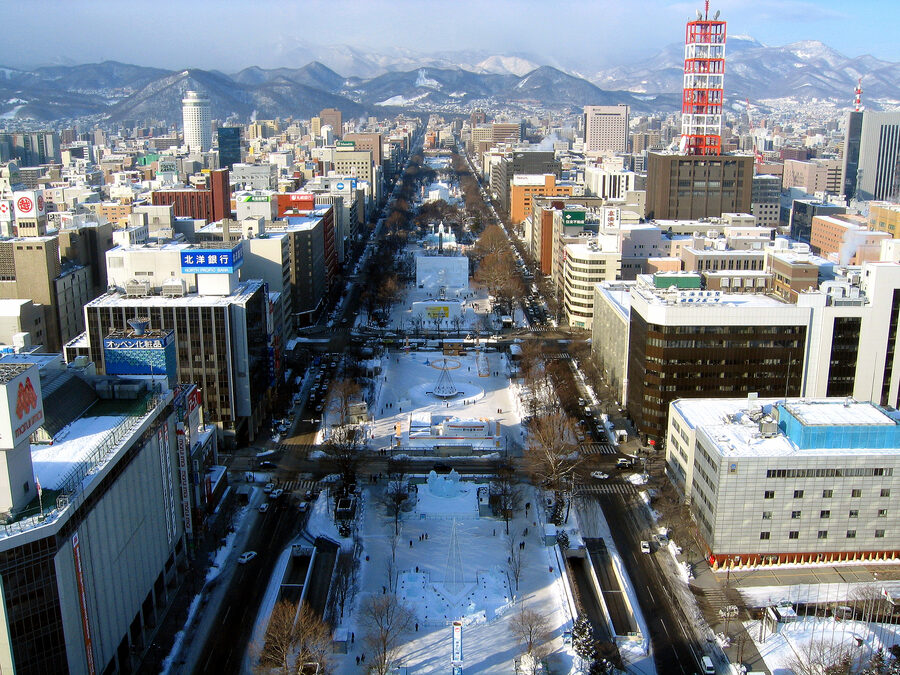
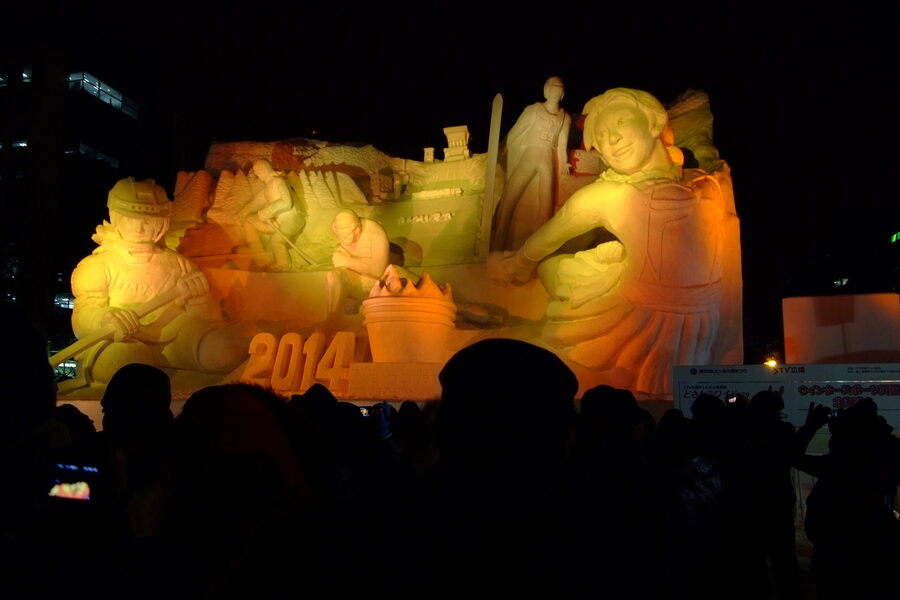
What you actually see at Odori has changed dramatically over the years. In the early decades the statues were carved versions of buildings: Nara’s Tōdai-ji, the Forbidden City, the Taj Mahal, a recurring rotation of UNESCO heritage sites at slightly-larger-than-life-size scale. Then in the 1990s the brand statues started arriving. The 2005 Star Wars Episode III tie-in with a snow Yoda was the first global hit. Studio Ghibli sculptures have been a near-annual fixture since the late 2000s. The 2014 festival ran a full Snow Miku theme park around a 10-metre Hatsune Miku ice statue. In 2018 there was a sculpture of the Final Fantasy XIV Eorzean stronghold the size of a small house.
The Odori site is also where you will find the international snow sculpture contest (国際雪像コンクール), which started in 1974 and pauses only for genuine emergencies. Teams of three from countries as varied as Mongolia, Lithuania, Singapore, Indonesia, and Hawaii get a 3-metre cube of compacted snow and 70 hours to turn it into something the judges score on creativity, technique, and difficulty. I have spent more time watching the Singapore team carve a tropical fish at minus six degrees than I have watching any of the bigger statues, because the contest crews work in front of you with hand tools and you can actually see the sculpture emerge.
Susukino: ice carvings and a lot of beer
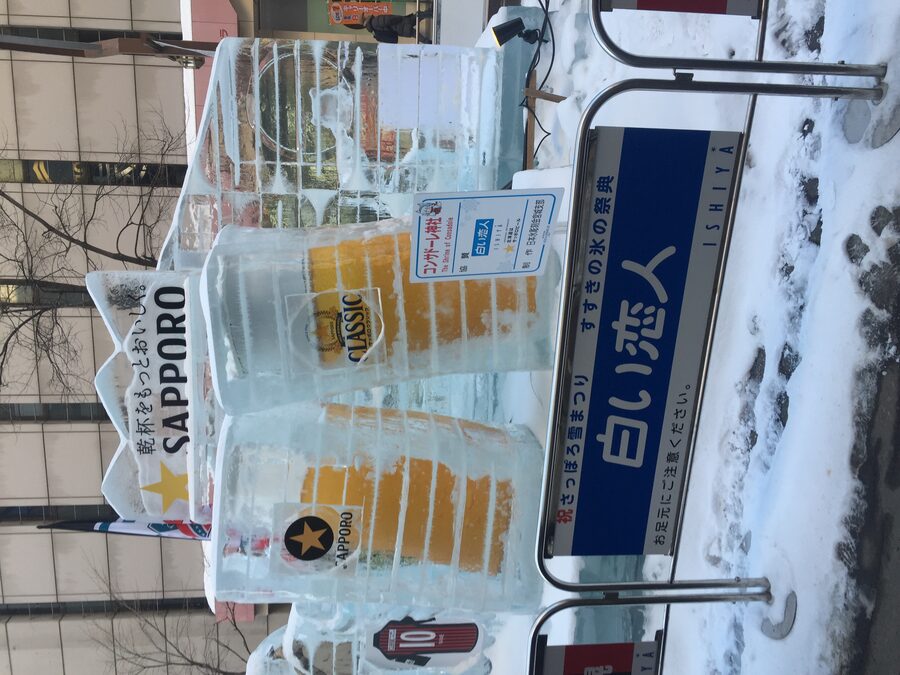
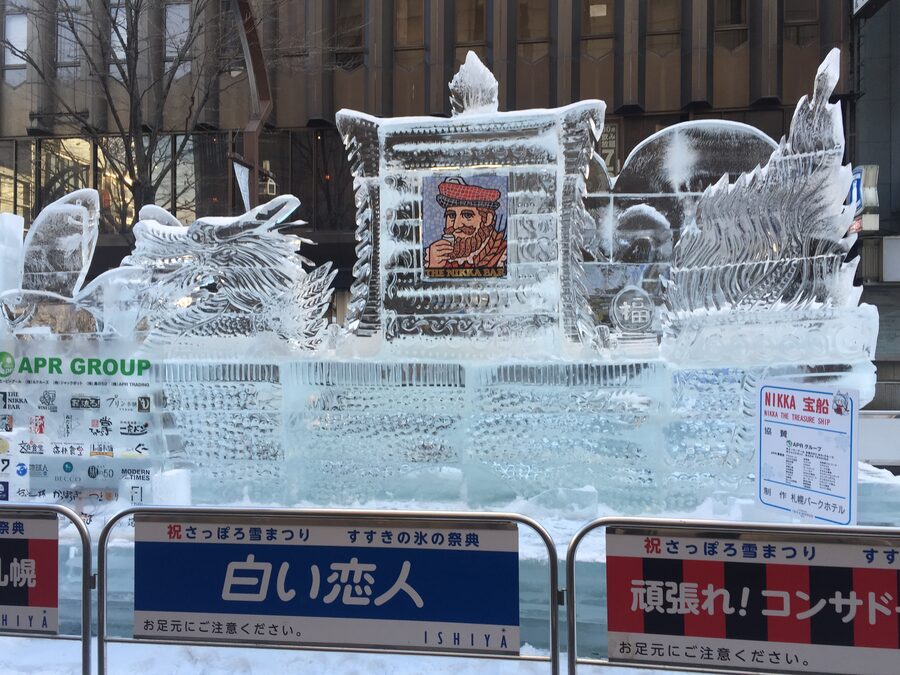
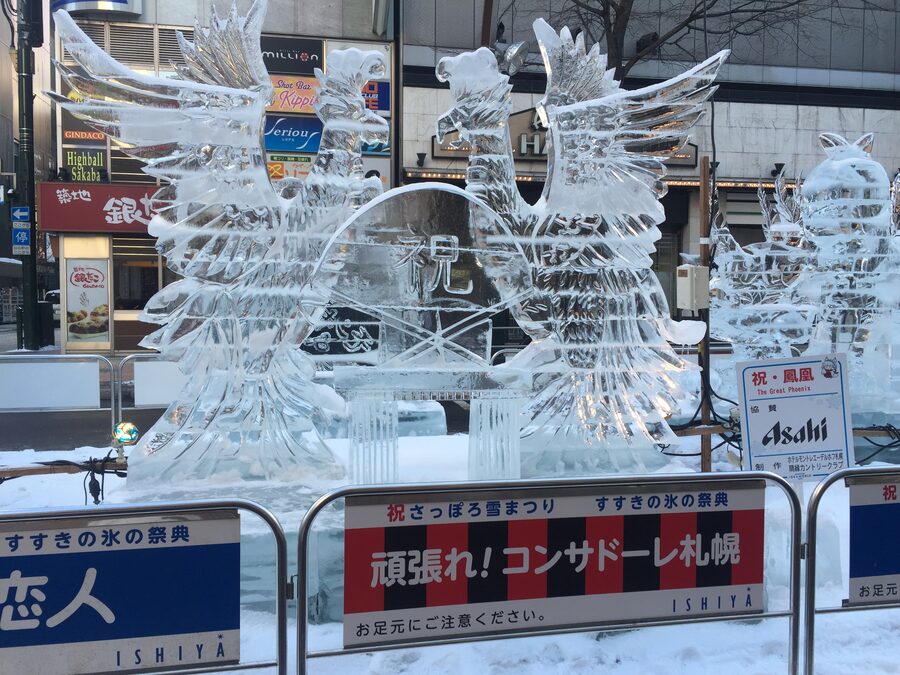
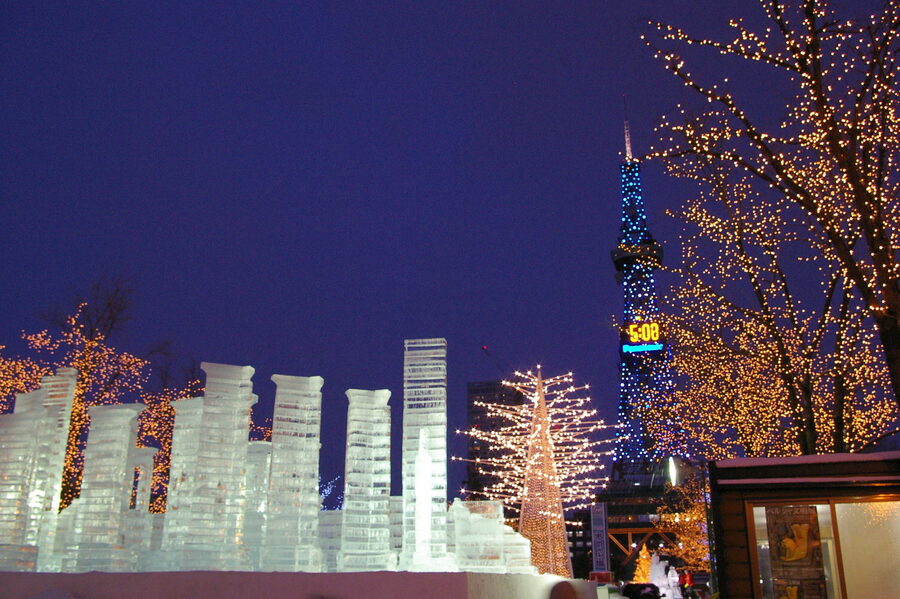
The Susukino site, formally the Susukino Ice World (すすきのアイスワールド), runs along Ekimae-dōri Avenue south of Odori through the city’s main nightlife district. It was added to the festival in 1983 after locals pointed out that thousands of tourists were already pouring into Susukino every evening for ramen, sushi, and bars, so you might as well give them something to look at on the walk between restaurants. The site holds about 100 ice sculptures, most of them in the 2 to 3-metre range, all illuminated, and a meaningful percentage paid for by the bars and restaurants whose logos end up frozen inside.
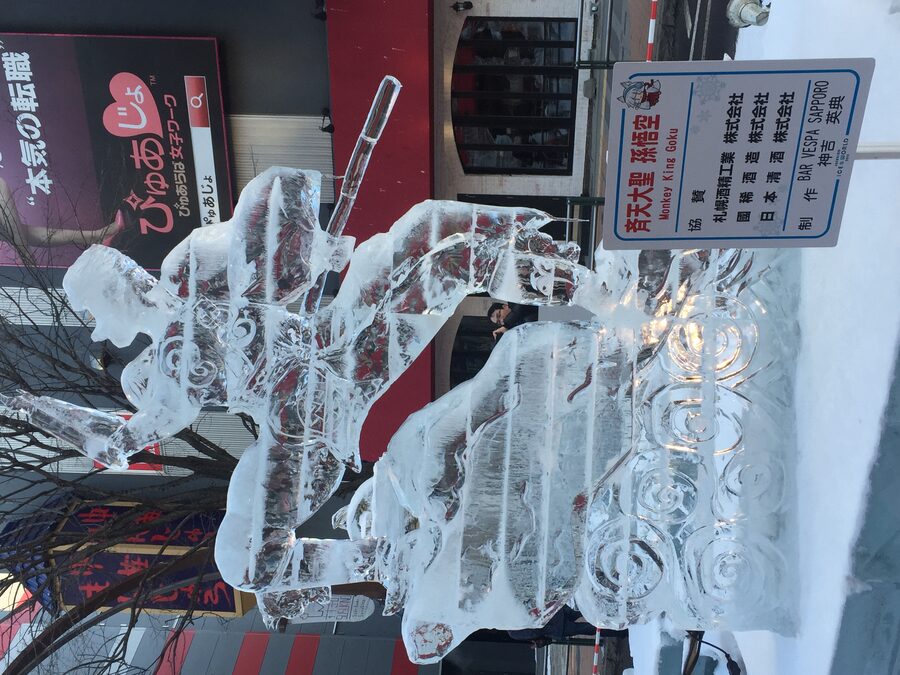
What makes Susukino different from Odori is the material. Ice carved from blocks behaves nothing like packed snow, and the artists who work this site come from a different lineage: many trained as chefs cutting decorative pieces for hotel banquets, and you can see it in the technique. The scoring is finer, the curves are tighter, and the sculptures rely on internal lighting in a way that snow never can. A live coelacanth fish frozen inside a clear ice block, which I saw in 2016, is the kind of trick Odori cannot pull off.
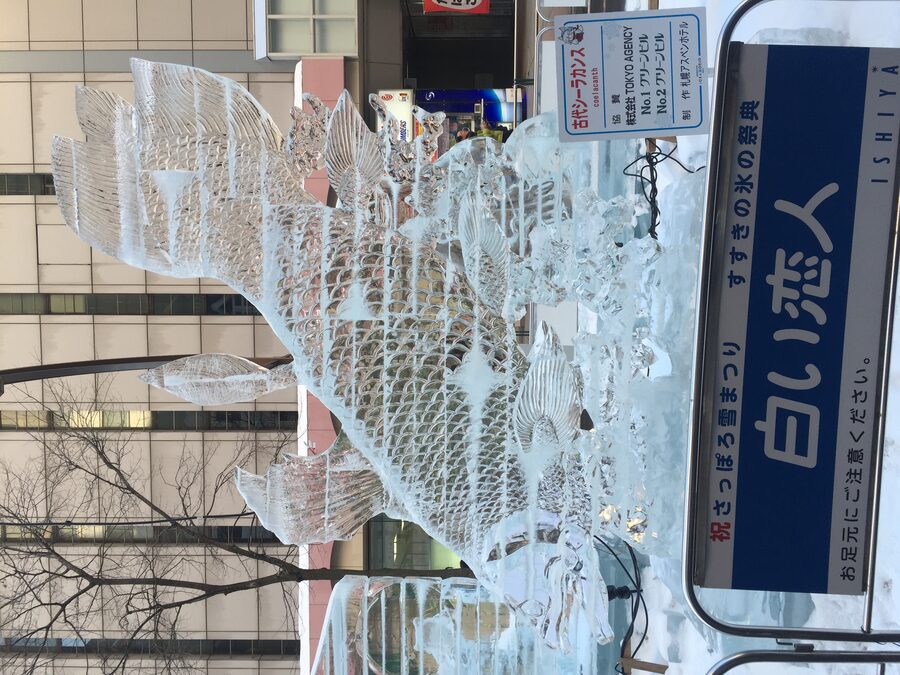
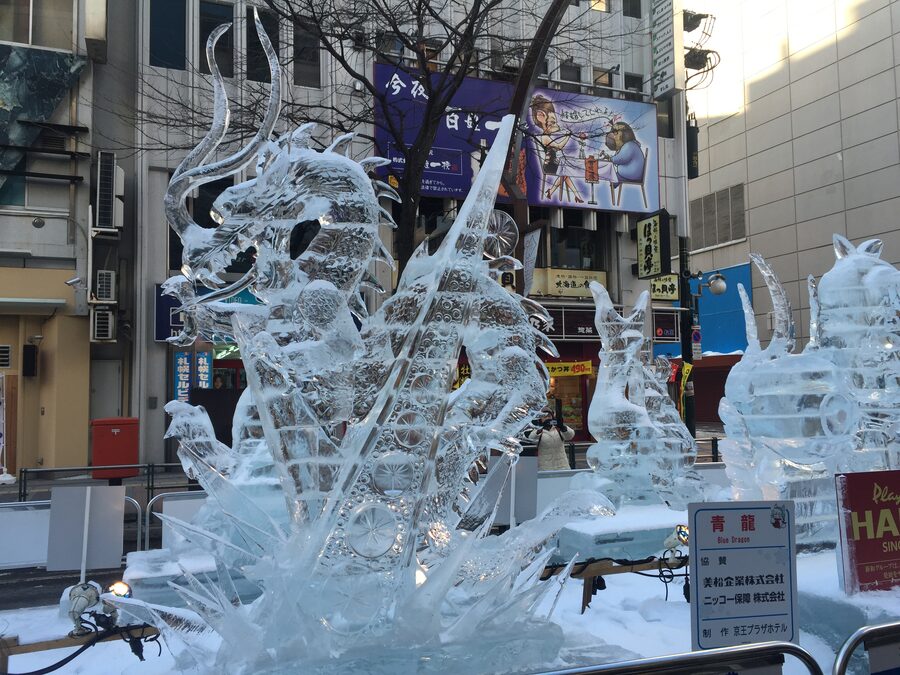
Susukino also holds the corporate-branded pieces in a way Odori does not. Sapporo Beer (which was founded just up the road in 1876), Nikka Whisky, Asahi, and a rotating cast of sake brewers all sponsor pieces here, and you can taste-test most of them at booths set up alongside the sculptures. I would budget roughly 90 minutes for the Susukino walk, which is about how long a hot bowl of Sapporo miso ramen takes to find and eat between the start and end of the strip.
Tsudome: the family site nobody outside Japan knows about
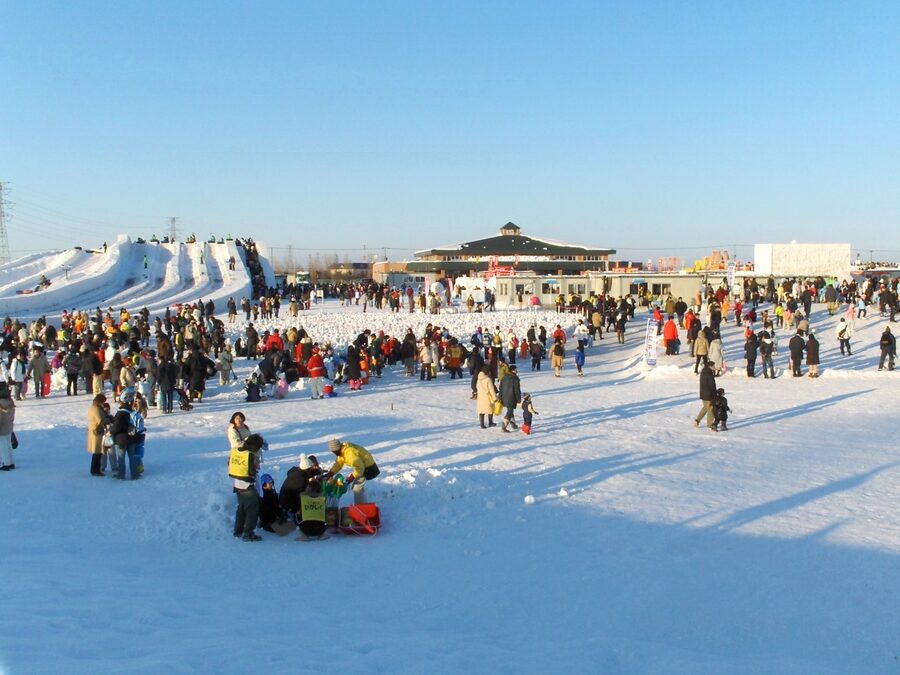
The third venue, Tsudome (つどーむ), is a 30-minute subway and bus ride out from central Sapporo and operates more like a snow theme park than a sculpture exhibition. It became an official festival site in 2009, replacing the older Satoland location, and it is built around the Tsudome community arena north of the JR Sapporo Station. The interior of the dome holds a craft fair, food stalls, and a children’s play area, and the exterior is converted every year into a series of giant snow slides, tube runs, snow rafting tracks, and family snowman-building zones.
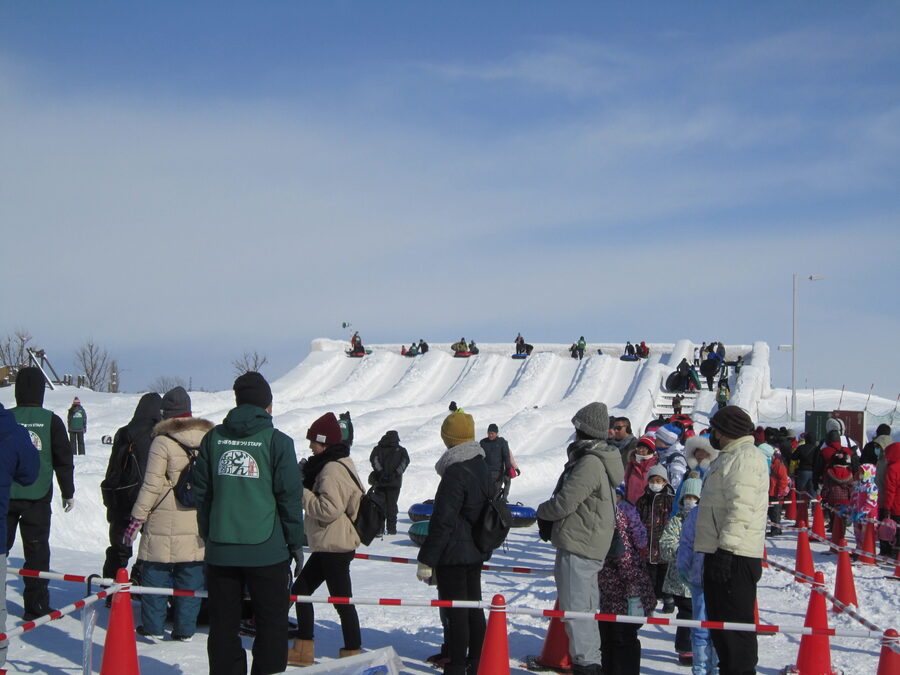
Tsudome is genuinely overlooked by international visitors, and I think that is because it requires you to leave the central walking circuit and commit to a separate trip. If you have children, or even if you do not but you want to throw yourself down a 100-metre snow slide in an inflatable tube without any of the queue dynamics of an actual ski resort, this is the venue you should care about. The site is free to enter, the slides cost between 200 and 500 yen per ride, and the food court inside the dome serves the same Hokkaido dairy and pork specialities you find at Odori for about 30 percent less.
The numbers that nobody believes when you tell them
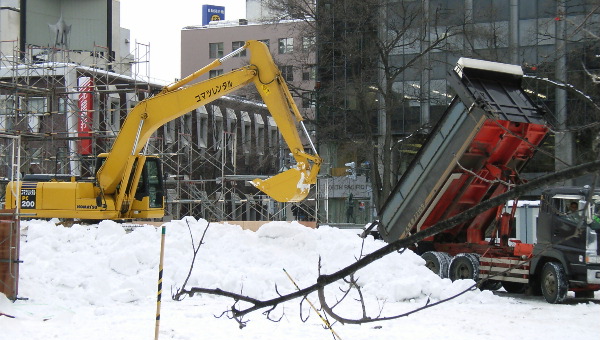
The logistics of staging Yuki Matsuri are, to put it gently, absurd. The festival displays roughly 160 to 200 sculptures across the three sites, depending on the year, and roughly 32,000 tonnes of snow are required to build them. Because Sapporo’s downtown does not produce that much snow on its own, the city imports it from suburbs and outlying areas like Sapporo Satoland and from rural fields north of the city. The Japanese Wikipedia entry pegs the haul at roughly 6,000 truckloads of five-tonne dump trucks, or close to one truck every five minutes for a full month before the festival opens.
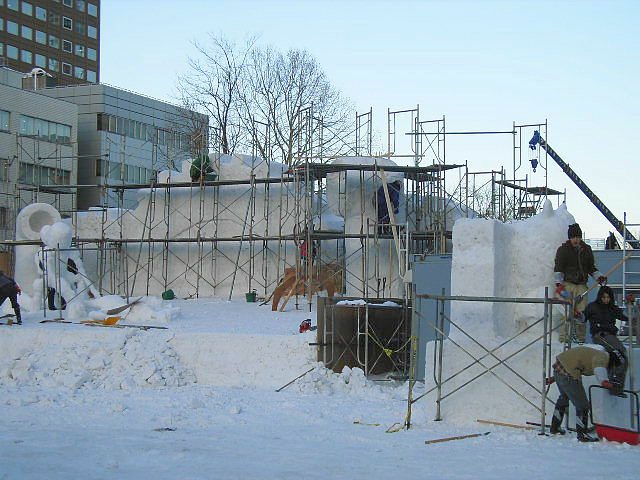
The construction window is brutal. The SDF and the international contest crews start carving roughly three weeks before opening day, working through nights when the temperature drops to minus 12 or lower because warmer daytime carving softens the sculpture surfaces. By the time the festival opens, the city has spent close to two billion yen on direct festival costs, and the local economy generates roughly 30 to 50 billion yen in inbound tourism revenue across those twelve days. The 2024 festival, the first full reopening after COVID, drew 2.39 million combined visitors to the Odori and Tsudome sites alone.
The COVID interruption and what nearly killed the event
The 71st festival opened on 4 February 2020, three weeks before Japan’s first significant COVID-19 cluster, and ran in close-to-normal form because the disease had not yet hit the population. The 72nd festival in February 2021 became the first full cancellation in the event’s history. The organisers shifted to a fully online format, broadcasting virtual tours of past years’ sculptures and running a dramatically reduced ice sculpture exhibition with no physical visitors.
The 2022 festival was an even stranger story. Construction at the Odori site actually began in late January, then halted mid-build when the Omicron variant produced a sharp case spike, and the physical event was cancelled with sculpture armatures still standing in the park. I walked past one of them on a layover that February and the half-finished statues, abandoned in the snow without lighting or fencing, were genuinely eerie. The 2023 festival was scaled back, and only the 75th anniversary edition in 2024 saw the full return of the international contest, the projection mapping, and crowd numbers above two million.
The 75th edition in 2024 was also notable for what it cost. The four-year disruption broke many of the long-running corporate sponsorship arrangements, and the SDF used the gap to formalise its reduced participation. The result is a festival that is now noticeably more dependent on private contractors and entertainment-IP partnerships, less on the unglamorous, structural-engineering work the army used to do for free.
The Navy from Misawa, the unexpected forty-year fixture
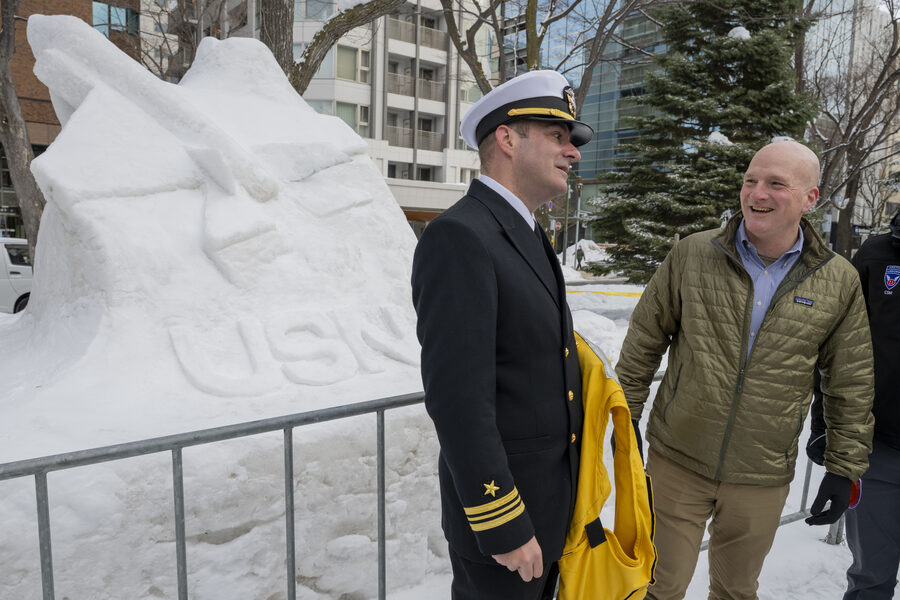
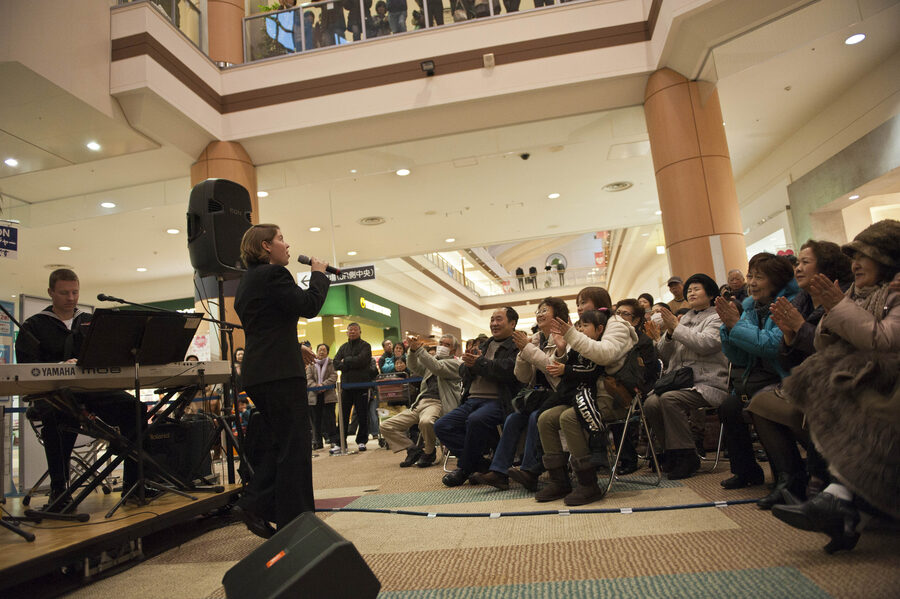
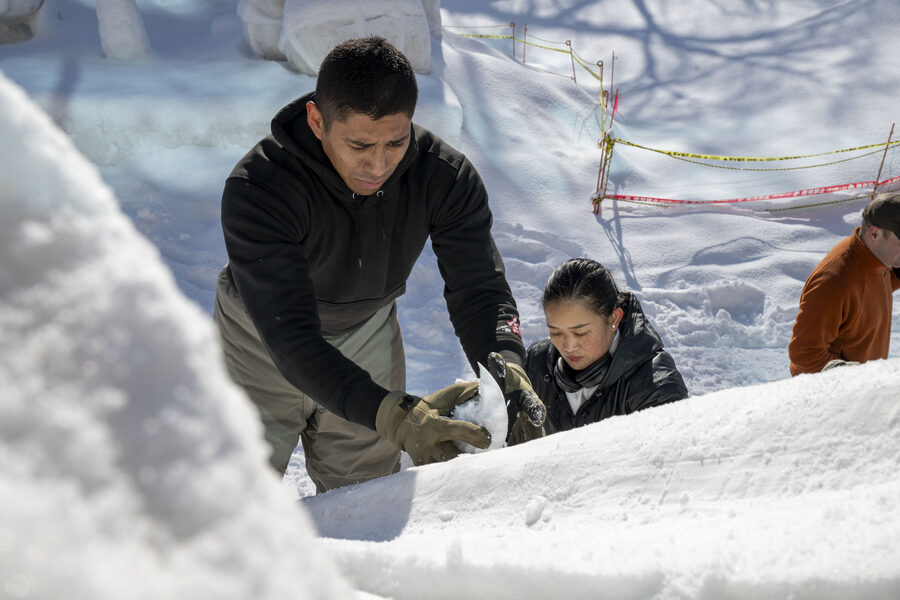
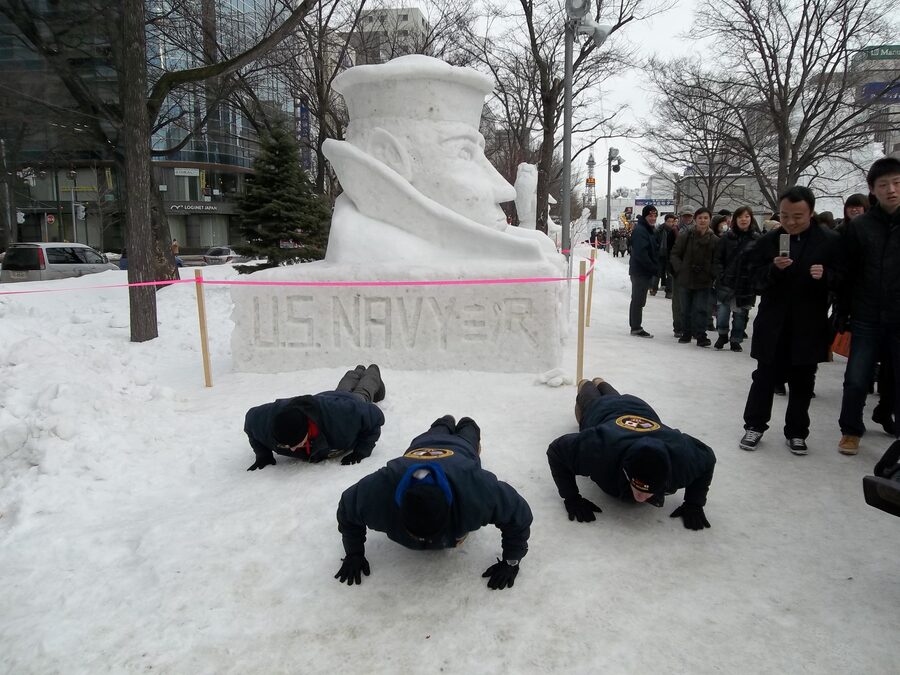
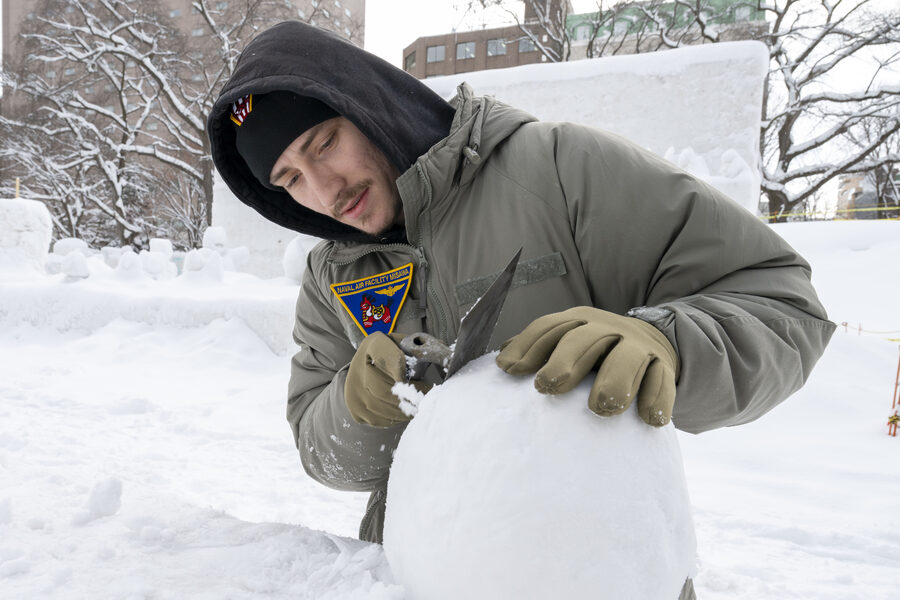
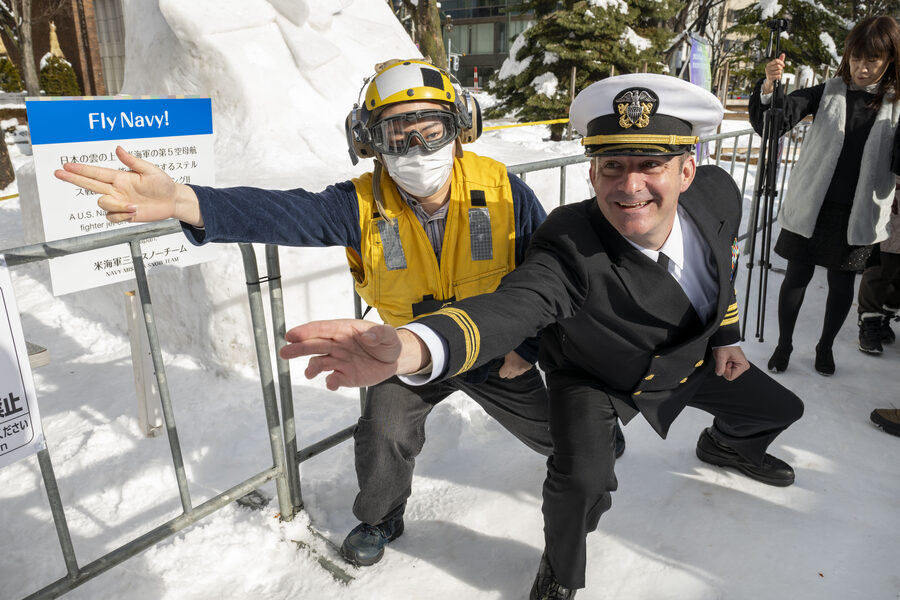
One of the more genuinely surprising stories at the festival is the United States Navy team from Naval Air Facility Misawa, in Aomori Prefecture across the strait from Hokkaido. The Misawa snow team has been carving at Odori every February since 1986. The 2025 festival marked their 40th consecutive year. The crew is a rotating mix of about 25 sailors, drawn from whatever specialists Misawa can spare for the three weeks of carving, and their sculptures rotate between historic American military subjects and pop culture pieces that play to the festival audience.
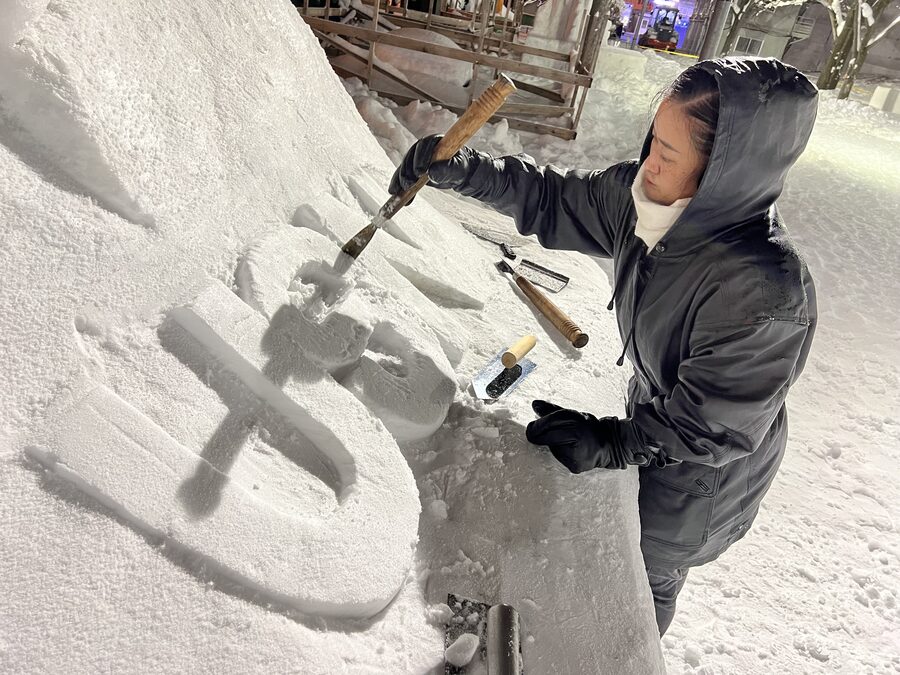
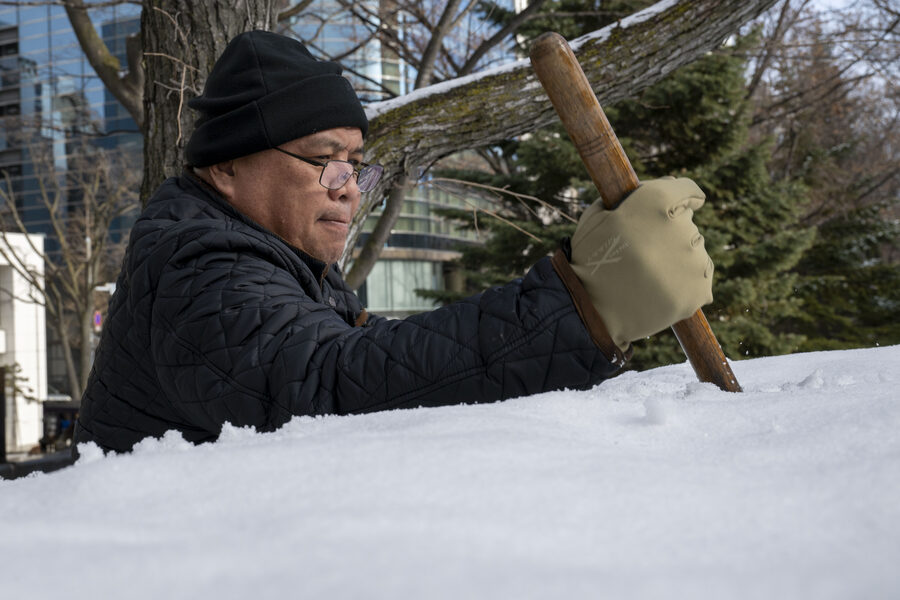
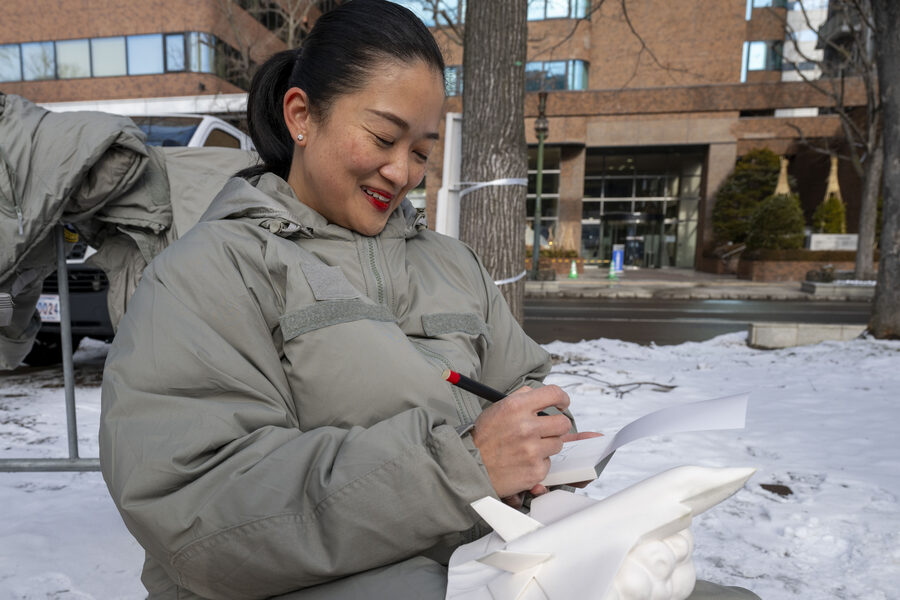
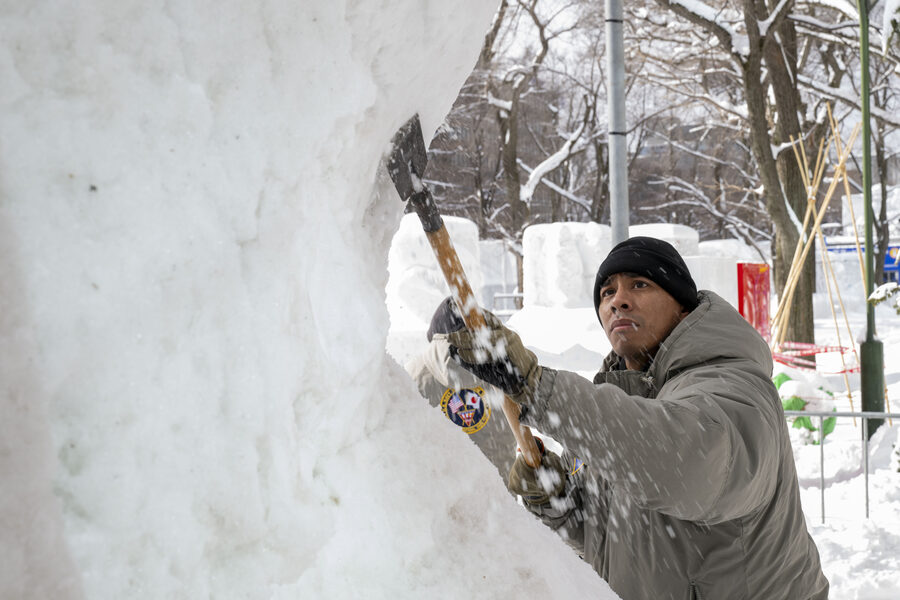
What I find revealing about the Navy crew is how much it tells you about the festival’s social fabric. The military presence has always been a quiet undercurrent at Yuki Matsuri (the SDF, the US Navy, occasional Australian and Canadian crews, and the Korean military photography team), but it never feels institutional in the way an air show does. The carvers wear uniforms during the day and become anonymous photographers and beer drinkers at the public hospitality tents in the evening. The 2025 festival ran a full diplomatic reception at the Navy site, with the Deputy Chief of Mission from the US Embassy speaking with sailors in front of a half-finished sculpture, and most festival attendees walked past it without realising what they were seeing.


How to actually visit without freezing or getting lost
If you are coming from outside Japan, the practical approach is to fly into New Chitose Airport (CTS) and take the JR Rapid Airport line into Sapporo Station, which takes about 37 minutes and costs roughly 1,150 yen. From Sapporo Station the city’s subway takes you to all three festival sites: the Namboku or Tōzai line one stop south to Odori for the main park, the Namboku line two stops south of Odori to Susukino for the ice sculptures, and the Tōhō line to Sakaemachi plus a shuttle bus for Tsudome. A one-day subway pass at 830 yen pays for itself if you visit all three on the same day.
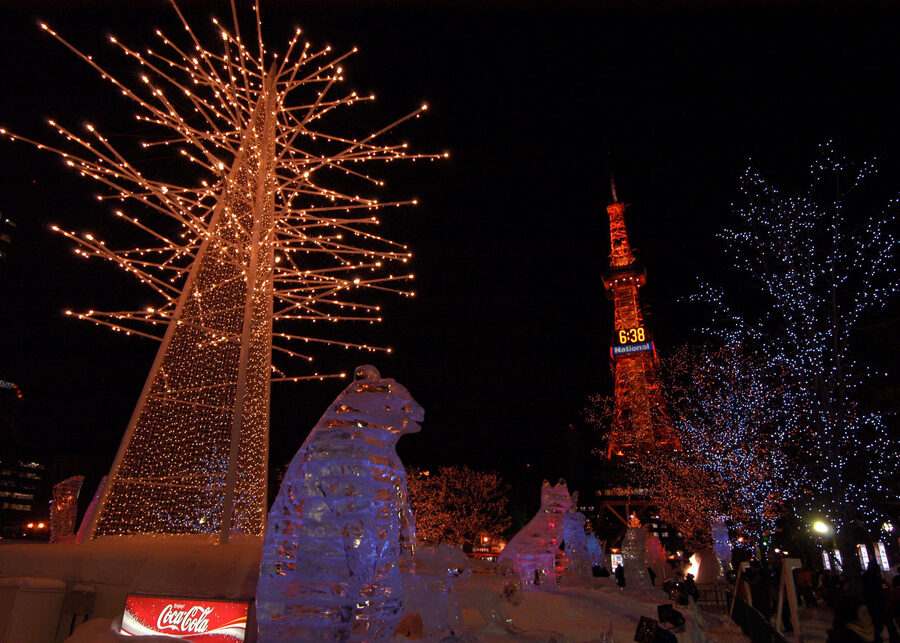
The festival operates on a daytime and nighttime rhythm. Most of the sculptures look completely different in afternoon daylight than they do under floodlights, and I would strongly recommend visiting Odori twice, once around 14:00 and once again at 19:00 after the projection mapping has started. The illumination kicks in at around 16:30 and the projection sequences run on roughly 15 to 30-minute loops at the largest statues until 22:00. Susukino’s ice site stays lit until 23:00, which suits its bar district context nicely.
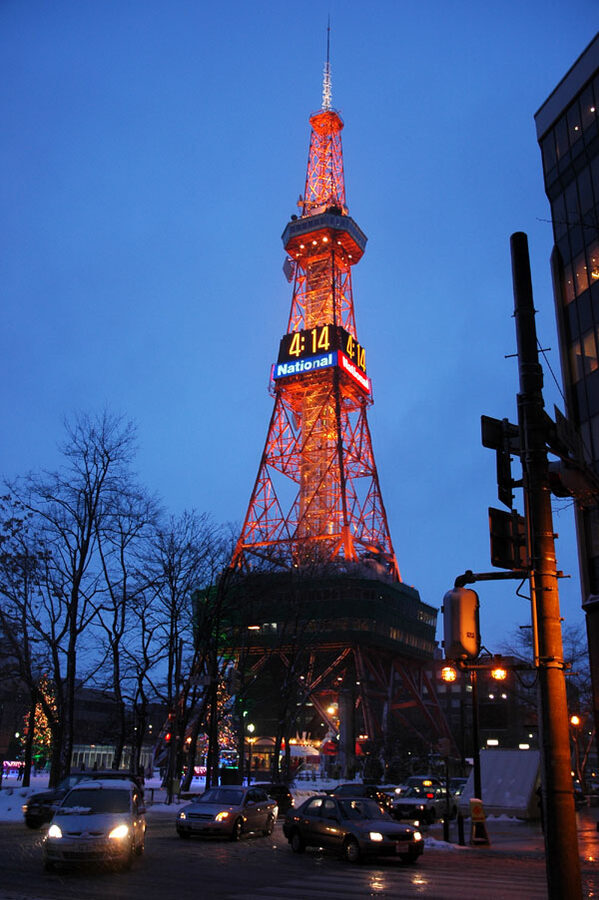
Hotel pricing during the festival is, predictably, brutal. A mid-range business hotel that costs 7,000 yen a night in October will run you 22,000 to 30,000 yen during festival week, and the hotels closest to Odori start booking out by mid-September. If you cannot get a room downtown, look at Otaru (45 minutes by train) or Chitose (40 minutes), both of which have much cheaper rooms and decent late train service back to Sapporo. The very last train from Sapporo to Otaru leaves around 23:30, which gives you a usable window after the projection mapping closes.
Dressing for the weather without overdoing it
The festival runs through the coldest stretch of the Hokkaido year. Average daytime highs in early February sit around minus 1 degree Celsius, and night-time lows regularly drop to minus 8 to minus 12. Wind off the Ishikari plain pushes the wind chill several degrees colder than that. None of this is dangerous if you dress properly, but it is significantly colder than Tokyo in winter, and people who pack for a Kyoto trip and then route through Sapporo invariably end up buying a heavier jacket from Uniqlo on the second day.
What I wear, for reference: a base layer of merino, a fleece mid-layer, a down jacket rated to about minus 10, waterproof gloves, a fleece neck gaiter, and proper winter boots with grip. The sidewalks around Odori are kept reasonably clear but the side streets in Susukino get genuinely treacherous after foot traffic packs the snow into ice. I have seen tourists in fashion sneakers go down four times in a block, and a pair of crampons that strap onto your shoes for 1,500 yen at any drugstore is a better investment than you would expect.
Where to eat that is not a festival food stall
Festival food at Odori and Tsudome is cheerful but limited. You will find good Hokkaido scallops, Sapporo miso ramen in disposable bowls, jingisukan slices on griddles, and various potato-based things that the Hokkaido tourism board pushes hard. None of it is bad, but most of it is overpriced relative to sit-down equivalents two blocks away. If you are spending a full day at the festival, plan one proper meal at a real restaurant.
For ramen, the basement food street called Ramen Kyōwakoku in the ESTA building above Sapporo Station is touristy but consistently good and gives you a side-by-side comparison of three or four Hokkaido styles. For sushi, Sushi-zen and Nemuro Hanamaru both have branches that handle festival crowds well and source their fish from the morning Tsukiji-style markets at the port. For the full Hokkaido experience, the Sapporo Beer Garden in the converted brick brewery north of Odori serves all-you-can-eat jingisukan with all-you-can-drink Sapporo classic for around 4,500 yen for 100 minutes, and the building itself is a 19th-century Meiji-era industrial monument.
What else to do in Sapporo while you are there
The festival absorbs about a day and a half of attention if you do all three sites and pace yourself. That leaves the rest of a typical four-day Sapporo trip for the city’s other winter draws, all of which are within easy subway reach. The Hokkaido Shrine (北海道神宮) sits at the western edge of the central park system and offers a genuine winter shrine experience, not the crowded New Year scene Tokyo does but a quieter, snowier walk through the cedar avenue with fewer tourists than you would expect. The Maruyama Zoo next door has a polar bear exhibit and a snow leopard pair, both of which are markedly more active in February than in any other season.
Mount Moiwa (藻岩山) on the southwestern edge of the city has a ropeway that runs to the 531-metre summit, and the view of Sapporo at night from the observation deck is probably the most photographed cityscape in northern Japan. The ropeway is open until 22:00 during festival season, so you can do the climb after the projection mapping closes at Odori. The trip up costs 2,100 yen round trip and a small restaurant at the summit serves good hot wine and warm onion soup.
If you want a full day outside Sapporo, the Otaru canal town is 45 minutes north by JR train and runs its own much smaller snow festival (Otaru Yuki Akari no Michi, the Snow Light Path Festival) during a roughly overlapping window in February. Otaru’s version is more intimate, more candle-lit, and entirely walkable in three or four hours, and many of the festival attendees who skip Tsudome end up doing Otaru instead. The festival’s winter scenery and small-scale charm pair beautifully with the bigger Sapporo show, in the same way that cherry blossom viewing at quieter sites pairs with the major spring festivals further south.
The cultural lineage and what Yuki Matsuri actually means
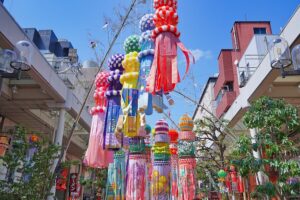
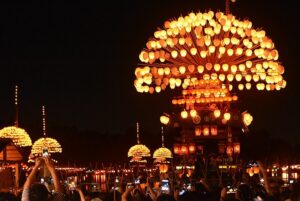
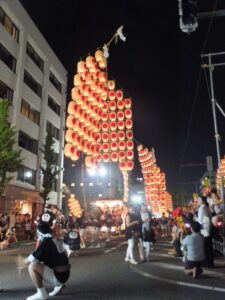
Yuki Matsuri sits at an unusual intersection of Japanese festival traditions. Most of Japan’s named matsuri, things like Kyoto’s Gion Matsuri or the Aomori Nebuta Matsuri, trace back centuries to specific religious rituals or historical events, and the modern celebration is a continuous adaptation of those origins. Sapporo’s festival, by contrast, is barely 75 years old and was deliberately invented by a tourism association as a way to put winter Hokkaido on the national map.
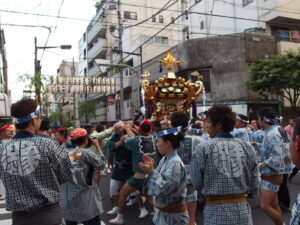
That distinction matters more than it might sound. When you walk through the Odori site you are seeing a festival without the religious substrate that makes older Shinto traditions feel like ritual rather than entertainment. There is no shrine procession, no portable mikoshi, no priests, no purification. What you have instead is a civic-municipal exercise in winter tourism, executed with the precision of a Japanese festival and the visual ambition of an Olympic opening ceremony. It is not a contradiction so much as a reminder that Japan invents new traditions all the time and treats them with the same gravity as the older ones.
The relationship to the country’s broader winter aesthetic is where Yuki Matsuri does land squarely in the older tradition. Snow has been a recurring subject in Japanese painting and poetry since the Heian period, and the deliberate framing of natural beauty under snowfall (yukimi) sits alongside cherry blossom viewing and autumn maple viewing as one of the three classical seasonal aesthetics. The careful arrangement of Japanese garden landscapes after a winter snowfall, with the rocks and lanterns half-buried, is the same eye that produces Yuki Matsuri’s deliberate compositions. The festival’s central insight is that you can take that quiet, contemplative aesthetic and stage it at industrial scale without losing what makes it work.
The festival’s relationship to other floats, processions, and seasonal events
Sapporo’s festival shares more DNA with the country’s elaborate float-procession festivals than it does with the smaller community matsuri you find at neighbourhood shrines. The scale is similar, the choreography is similar, and the public-facing aesthetic priorities (visual impact, photographic memorability, social-media shareability) are essentially identical. The only meaningful difference is that float festivals are mobile and the floats survive between years, while Sapporo’s sculptures exist for twelve days and then melt entirely.
That ephemeral quality is something I keep coming back to. There is a moment around February 12, the day after the festival closes, when the city deploys industrial crews to break down all the sculptures with chainsaws and front-loaders. Watching a 12-metre snow castle reduced to rubble in 90 minutes is a peculiar experience, one I have only deliberately gone out to witness once. It felt much closer to a Buddhist sand mandala than a tourism event, and the fact that everyone involved already knows the next year’s sculptures will be entirely different makes the impermanence feel less like loss and more like a structural feature of the form.
The future, the climate question, and whether the festival will last
The most pressing question at the festival is the one nobody at the tourism association wants to answer on the record: how much longer can Sapporo run this in its current form, given that Hokkaido’s winter snowfall has been measurably declining since the 1990s? Several recent years (2020, 2024) saw the city import substantial snow from outlying mountain regions because central Sapporo did not have enough on the ground. The Tsudome family slides have been visibly smaller in low-snowfall years. The 2024 festival’s organisers privately acknowledged that the snow-trucking budget had grown by 40 percent in the previous decade.
None of this is existential yet. Hokkaido still gets a lot of snow by international standards, and the trucking infrastructure is in place. But it is the first Japanese festival I can think of where the underlying natural conditions are visibly shifting, and where the cost of the workaround is starting to show up in the budget. Talking to one of the Odori construction supervisors at the 2024 event, he was matter-of-fact about it: the festival will continue as long as Sapporo decides it should continue. What changes is who pays for the snow and where it gets trucked from.
Looking at the wider arc, Yuki Matsuri’s evolution from six high-school sculptures in 1950 to a 2-million-visitor industrial spectacle in 2024 is the kind of trajectory that makes me think of how rapidly modern Japan has invented its own traditions. The Meiji-era figures who shaped modern Hokkaido, men like Kuroda Kiyotaka and the broader cohort that included Saigō Takamori‘s contemporaries, would be genuinely astonished to find that the frozen frontier they were so determined to colonise eventually became a tourism powerhouse off the back of a tradition invented by teenagers in 1950. The Hokkaido they tried to build was practical and military. The Hokkaido they accidentally enabled is something stranger and more interesting.
The practical bottom line
If you are planning a trip and trying to decide whether the Sapporo Snow Festival deserves four days of your itinerary, my honest answer is yes, but with the caveat that you should treat it as a winter destination first and a festival second. Hokkaido in February gives you onsen towns, ski resorts, fresh seafood markets, and a quiet, contemplative version of Japan that the rest of the country mostly does not have. The festival is the spectacle that pulls you to Sapporo, but the Hokkaido around it is what you remember.
I would budget four full days, two of them dedicated to the festival sites and two of them to other things in and around Sapporo. The flight in from New Chitose, the ride down to Otaru on the JR Hakodate line, an evening at the Sapporo Beer Garden, and a late afternoon at Mount Moiwa would round out a near-perfect trip. The festival is enough on its own to justify the journey, but the journey is more than the festival, and the Hokkaido winter experience is one of the few things Japan still does that genuinely cannot be replicated anywhere else.