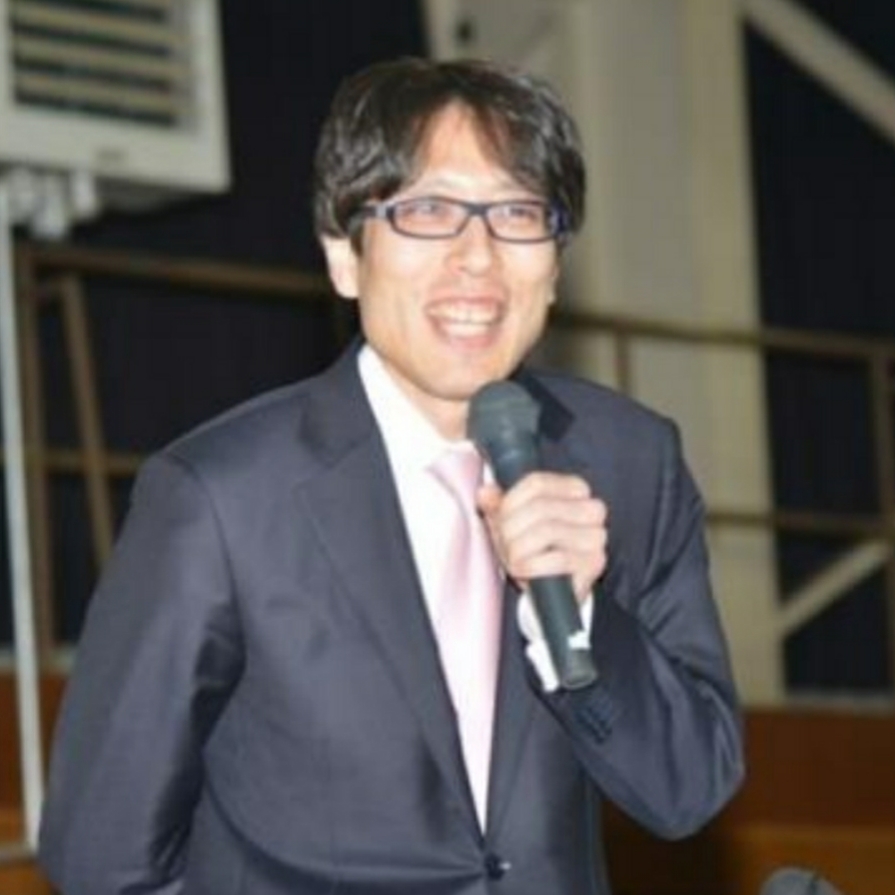
Takeda Tsuneyasu is a man you can trace to Emperor Meiji in three generations. His grandmother was Princess Masako, Meiji’s third daughter. Her husband was Prince Takeda Tsunehisa, an imperial-family cadet in the generation that was born with titles and died without them. Their son — Tsuneyasu’s father Takeda Kōya — grew up as a prince until he was twelve years old, was demoted by American occupation order to the status of ordinary Japanese citizen in October 1947, and spent the rest of his life as a commoner who occasionally got mistaken for one. Tsuneyasu himself, born in 1975, has only ever been a commoner. But he has spent most of his adult life as one of Japan’s most visible public commentators on the country’s monarchic tradition, and the visibility rests on the lineage he was born into and the one he was born too late for.
He is an unusual figure to include in a history site whose other topics are 16th-century warlords and 18th-century shōguns. But he is also, precisely because he is modern and unusual, a useful way into a question most English-language Japan writing skips entirely: what happened to the cadet branches of the imperial family after the Americans abolished them in 1947, and what do the people descended from those branches do now? Tsuneyasu is the best-known living answer. The answer is more interesting than the abolition.
In This Article
- The 1947 Abolition
- The Takeda-no-miya Branch
- Growing Up in the Residue
- The Public Commentator
- The Succession Question
- Where to see Takeda Tsuneyasu’s context today
- 1. Meiji Shrine — Shibuya, Tokyo
- 2. The former Takeda-no-miya residence site — Takanawa, Tokyo
- 3. Keio University campus — Mita, Tokyo
- 4. The Imperial Household Agency library — Tokyo
- The Residue
The 1947 Abolition
You cannot understand Tsuneyasu without understanding what happened to his family on 14 October 1947. On that date, under SCAP Directive 542, part of the Allied Occupation’s broader restructuring of the Japanese state, eleven of the thirteen cadet branches of the imperial family were abolished. The eleven branches involved were known collectively as shinnō-ke (親王家) and ō-ke (王家), “imperial prince houses” and “prince houses” in the strict Japanese classification, and their members were removed from the imperial genealogy, stripped of their princely titles, and registered as ordinary Japanese citizens. Fifty-one individuals were demoted at once. One of them was Tsuneyasu’s father, a twelve-year-old boy named Prince Takeda Kōya, who woke up on 15 October with a new legal name and an income of zero.
The demotion was not, by the standards of 20th-century political restructuring, particularly violent. The branches were given token severance payments, allowed to keep their private property, and permitted to continue using their family names on a commoner basis. None of the fifty-one were imprisoned or sent into formal exile. They were simply removed from the imperial register and told to find commoner occupations.
What drove the abolition was a GHQ calculation about post-war imperial governance. The Occupation was committed to preserving the Emperor Hirohito as a constitutional monarch; it was not committed to preserving the much broader imperial aristocracy that had surrounded him. The calculation was that a larger imperial family structure would create permanent pressure for a political role for its members; by compressing the family to the Emperor’s direct descendants only, the Occupation removed the systemic incentive for cadet-branch political involvement. The policy has held, in the sense that none of the eleven abolished branches have been restored. Whether the policy has also foreclosed a future political role for lineage-holders like Tsuneyasu is the active question his public career revolves around.

The Takeda-no-miya Branch
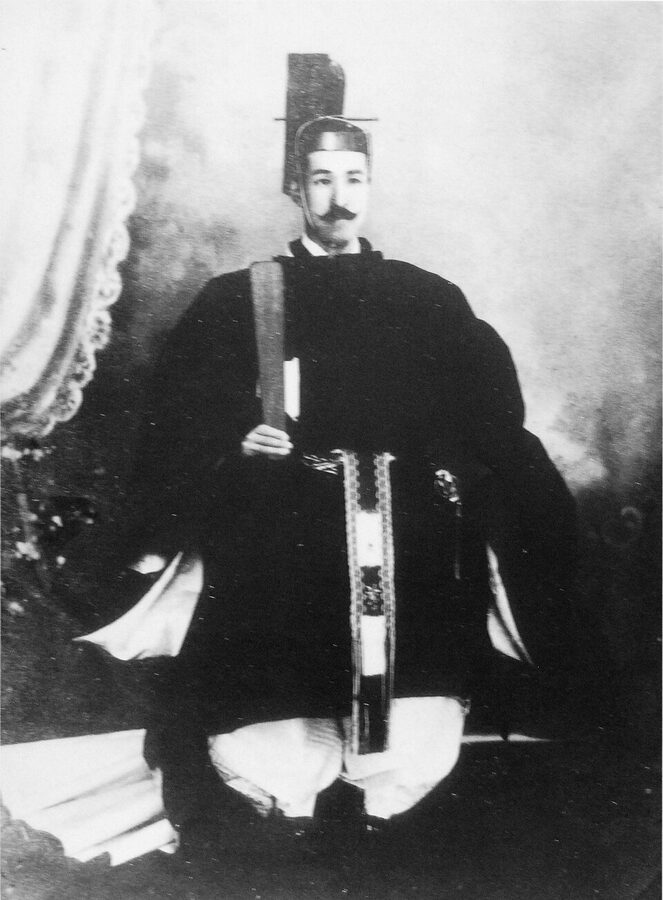
The Takeda-no-miya was a relatively young cadet branch. It was established on 1 March 1906 when Emperor Meiji elevated his twenty-three-year-old grandson Tsunehisa — the son of Prince Kitashirakawa Yoshihisa, who himself had been adopted into the imperial line — to independent princely status. Tsunehisa took as his branch name the historical Takeda family name, which had been one of the great samurai clans of the Sengoku period (— the Takeda of Kai, Shingen’s family — although there is no direct genealogical connection between the Takeda-no-miya and the historical Sengoku Takeda; the branch name was chosen for its historical weight, not its lineage).
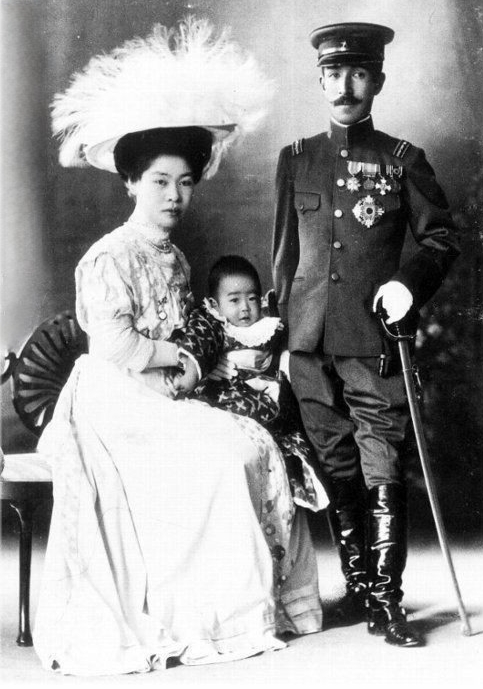
Tsunehisa’s career was cut short by the 1918-19 influenza pandemic. He died on 5 April 1919 of Spanish flu complications, aged thirty-six. He was succeeded as head of the branch by his infant son Tsuneyoshi, then ten years old. Tsuneyoshi, Tsuneyasu’s grandfather, grew up to be an Imperial Army officer, served as a liaison officer in China and the Kwantung Army during the 1930s and 40s, and was arrested on suspicion of Class A war crimes at the end of the Pacific War. He was cleared and released in late 1945 but was one of the figures whose presence in the imperial family the Occupation wanted removed, and the abolition in October 1947 hit him directly.
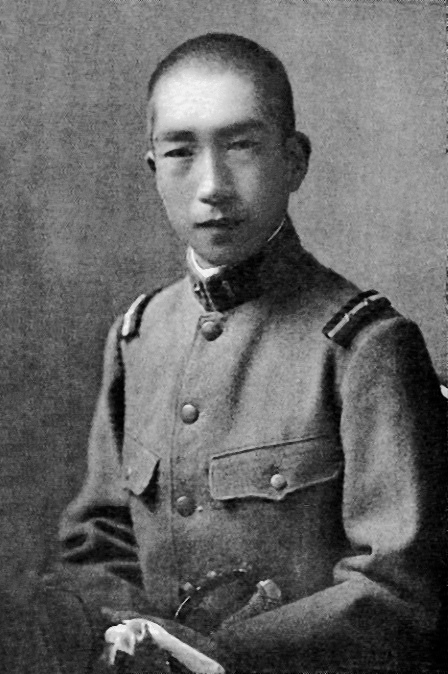
Tsuneyoshi’s personal reaction to being declassified from prince to citizen is a matter of speculation because he did not write memoirs and discussed it in interviews only sparingly. The household-staff accounts that have been published, by a former gardener at the Takanawa residence who wrote a retrospective in 1989, describe him as unusually self-possessed during the demotion, dealing with the logistical paperwork of selling the imperial residence and finding post-demotion employment with almost no visible emotional register. He spent the rest of his life as a businessman — a horseman, actually, one of the Olympic equestrian riders for Japan in the 1960 and 1964 games — and died in 1992 aged eighty-three. Tsuneyasu was seventeen at that point and had only limited memories of his grandfather as a ceremonial figure at family gatherings.
Growing Up in the Residue
Tsuneyasu was born on 21 November 1975 in Tokyo, the third child and only son of Takeda Kōya (the demoted prince from 1947) and his wife Hanako. By this point the family had been commoners for twenty-eight years. Kōya had completed a law degree at Keio University, joined the Ministry of Finance as a policy officer, and reached a moderately senior position before taking early retirement to run a private equestrian training facility at Karuizawa. The family was comfortable, not wealthy by former-imperial standards, and had decisively committed to a post-demotion bourgeois life rather than to maintaining a private court in exile. Tsuneyasu grew up in ordinary Tokyo schools, played football, studied moderately hard, and was, by his own later account, a completely normal boy except for the occasional family event at which an elderly male relative would remove the photograph of his great-grandfather from the wall to show him.
He went to Keio Shiki High School, then to Keio University Law, graduating in 1998. His undergraduate thesis was on constitutional monarchy in Japan and Sweden — a topic that in Japanese academic circles is very rarely approached without either explicit right-wing political framing or explicit post-war critical framing, and Tsuneyasu’s thesis was an attempt at neither. He then took a master’s in law, specialising in constitutional theory with a focus on the 1947 constitutional provisions on the Emperor’s role. He finished the master’s in 2001 and joined Keio as a part-time lecturer.
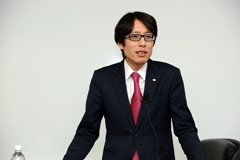
The career shift to public commentator began in 2006, when he was thirty-one, and was mostly accidental. He had written a book — The Story of the Japanese Imperial Family (天皇のお話, Tennō no Ohanashi) — originally intended as a non-academic history of the imperial institution for general-adult readers. It sold a quarter of a million copies, largely because the jacket copy identified him as “the great-grandson of Emperor Meiji” and nobody had expected a descendant of the imperial line to write plainly about the institution’s history. The book’s success pulled him into television commentary within a year. From 2007 onward he was a recognisable face on Japanese news panels whenever imperial or constitutional topics came up.
The Public Commentator
Tsuneyasu has published over thirty books between 2006 and 2025, most of them on the imperial institution, Japanese history, and constitutional questions. He has maintained a YouTube channel since 2017 which has about 550,000 subscribers and produces three videos per week on political, historical, and religious topics. He has made two attempts at elected office — a 2012 campaign for the Governor of Tokyo in which he placed eighth of fourteen candidates, and a 2015 prefectural-council race in Kanagawa which he also lost — and has spent significant time on the board of various nationalist-leaning educational foundations.
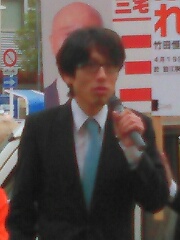
The political positioning is conservative by Japanese standards, which is to say roughly aligned with the post-Abe Liberal Democratic mainstream on most domestic questions but meaningfully to the right of that mainstream on imperial and constitutional issues. He is a strong advocate for the restoration of male-only imperial succession — specifically the re-legitimisation of cadet branches from male-line Meiji descendants, which would solve the current imperial succession crisis by expanding the pool of eligible male heirs — and he has argued publicly for a symbolic role for the former cadet-branch families in contemporary imperial ceremonies. He has not argued for the formal reinstatement of the eleven abolished branches, which is a position that has no political traction. But the restoration of male-line succession via cadet-branch re-adoption is an active debate in current Japanese politics, and Tsuneyasu is one of its most visible public advocates.
He has been controversial. His 2014 book on Korean history was the subject of a high-profile Korean complaint and was briefly withdrawn by his Japanese publisher before being reissued with modifications. He has made comments about Korean-Japanese historical relations that human-rights observers have criticised. He has been a public supporter of Yasukuni Shrine visits by Japanese politicians, a position that in contemporary Japanese foreign policy terms is squarely nationalist. On the other hand, his writing on the imperial institution is substantive and non-hagiographical in a way very little English-language Japan writing reaches; his law-school lectures at Keio have been well-reviewed by students who disagree with his politics; his treatment of his own family history is unsentimental and precise. The public image is more complex than the televised version of it.
The Succession Question
The political problem that has given Tsuneyasu’s career its specific shape is the current succession crisis in the imperial family. The Japanese Imperial Household Law permits only male-line male descendants of Emperor Taishō to succeed to the throne. As of 2026 there are exactly three such heirs: Emperor Naruhito’s younger brother Crown Prince Fumihito (born 1965), Fumihito’s son Prince Hisahito (born 2006), and Emperor Naruhito’s elderly uncle Prince Hitachi (born 1935). Naruhito himself has no son; his only child is Princess Aiko, who cannot succeed under current law. The pipeline ends with Hisahito unless Hisahito has male children.
There are three possible solutions to this demographic problem: permit female succession (opposed by the conservative coalition that dominates the ruling LDP); permit female-line male succession (also opposed, by roughly the same coalition); or reactivate descendants of the abolished 1947 cadet branches as eligible male heirs (the position Tsuneyasu advocates, which has the support of the conservative wing of the LDP but has not yet been formally proposed as legislation). The debate has been live in Japanese policy circles since 2005 and there is no visible resolution path. Tsuneyasu’s public role is as one of the small number of actual descendants of one of those branches who is willing to talk publicly about the option.
It is probably worth being explicit about what is not the case here. Tsuneyasu is not suggesting, and has never suggested, that he personally should be reinstated as an imperial prince or become a candidate for succession. The policy he advocates is male-line adoption from the abolished branches into the current imperial household, which would affect specific individuals selected by the Imperial Household Agency and would almost certainly not include him — he is too old and too politically active to be a realistic candidate for an adoption that would require lifelong ceremonial abstention from political commentary. What he is arguing for is the legal possibility of the policy, not his own role within it. Japanese political discourse frequently conflates the two positions; Anglophone coverage conflates them more.
Where to see Takeda Tsuneyasu’s context today
Tsuneyasu is a living figure, not a historical one, so the usual battlefield-and-grave structure does not apply. What you can visit is the institutional context of his family and the imperial lineage he connects to.
1. Meiji Shrine — Shibuya, Tokyo
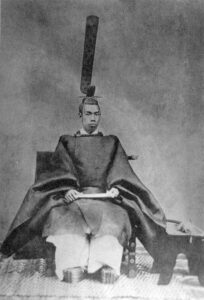
The shrine dedicated to Tsuneyasu’s great-great-grandfather Emperor Meiji (1852-1912) is in Yoyogi Park in Shibuya and is the second-most-visited Shinto shrine in Japan. Free admission, 24-hour access. The central hall is where the Emperor is enshrined; the surrounding forest was specifically planted in the 1910s as an artificial imperial grove and has now grown into a mature woodland. The shrine’s library annex has a small permanent exhibit on the imperial family under Meiji that includes a genealogy chart showing the founding of the eleven cadet branches; the Takeda-no-miya is fourth from the left on the 1906 row.
Allow two hours. Best visited early morning in autumn (late October through November) for the leaves in the grove; avoid New Year’s when 3.2 million people also visit.
2. The former Takeda-no-miya residence site — Takanawa, Tokyo
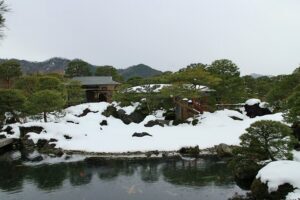
The original Takeda-no-miya residence, built in 1911 for Prince Tsunehisa, stood in the Takanawa district of Minato-ku. After the 1947 demotion the family sold the residence and the surrounding grounds; the site is now occupied by the Takanawa Prince Hotel. The hotel name preserves the connection, the Prince Hotels chain was founded in 1954 by the Tsutsumi family who had purchased several former imperial-family residences from their demoted owners, and the garden behind the hotel retains portions of the original Takeda-no-miya landscaping. The small Takeda-no-miya gatehouse, a single-story brick-and-granite structure from 1911, still stands as the entrance to the hotel grounds from Sakurada-dori. Most visitors to the hotel do not know what it is.
Access: Takanawadai Station on the Toei Asakusa subway line. The gatehouse is a ten-minute walk. Free to look at from the street; the gardens require hotel patronage.
3. Keio University campus — Mita, Tokyo
Tsuneyasu still lectures part-time at Keio, and the university’s faculty of law maintains an Imperial Family Studies seminar in which he has a longstanding role. The Mita campus is open to the public on weekends; the law school building, East Hall, is the one where his seminars meet. You cannot sit in on the seminar without advance arrangement, but you can see the faculty offices and the public-access Hara Museum of Contemporary Art next door if you have half a morning.
4. The Imperial Household Agency library — Tokyo
The Imperial Household Agency’s official library inside the Imperial Palace grounds contains the formal genealogical records (kōtō-fu, 皇統譜) of the imperial family including the pre-1947 registration of the eleven cadet branches. Public access is by written application through the Agency’s secretariat; the process takes about six weeks and is available only to credentialled researchers. Not realistic for a general visit. But the Agency also maintains a public exhibition space at the Sannōmon gate of the palace where a selection of historical imperial family documents is displayed quarterly; the exhibit rotates and has included Takeda-no-miya material twice (2011 and 2019). Check the IHA website before going.
The Residue
Compared to the samurai biographies elsewhere on this site — Sassa Narimasa dying on his own sword in Osaka, Shimazu Yoshihiro charging through 80,000 men at Sekigahara, Miyamoto Musashi in his cave above Kumamoto — Takeda Tsuneyasu is a very ordinary modern biography. He runs a YouTube channel. He writes books. He loses elections. He gives seminars. He is one of fifty-one people alive today who can trace their direct line to Emperor Meiji, and he is one of perhaps half a dozen who have chosen to make the lineage a public fact rather than a private one.
What he is interesting for is the specific institutional question his biography surfaces: what does a country do with the descendants of abolished aristocratic structures, when those descendants are alive and available and politically engaged, and the structures themselves are demographically failing? Tsuneyasu’s answer, implicit in a twenty-year public career, is that the descendants should be allowed to argue for the reactivation of the structure. The Japanese political system has so far partially accepted this answer, his voice is a recognised one in the succession debate, and partially rejected it — no policy has actually moved. The debate is unlikely to resolve before Hisahito reaches maturity. Tsuneyasu will be one of the voices heard in the interim.
If you are in Tokyo and interested in this end of Japanese civic history, walk to the Takeda-no-miya gatehouse at the Takanawa Prince Hotel. Stand at the granite wall. It is small. Most passers-by do not notice it. Imagine it as the boundary of a residence that once housed a branch of the Japanese imperial family, abolished by American order, sold by its last prince to a post-war entrepreneur, and now enclosing a hotel garden. Then, if you have a spare evening, watch one of Tsuneyasu’s YouTube videos. The man in the video is the great-grandson of the man the residence was built for. The residence is a hotel. The YouTube channel is at half a million subscribers. That is the shape of 1947 as it works out seventy-nine years later.