The reason I keep coming back to Sassa Narimasa, and the reason the other samurai of his generation kept talking about him long after he died, is that in the winter of 1584, with the north Japanese Alps already waist-deep in snow and the passes technically closed, he got on a horse with a handful of retainers and crossed them anyway. He did it because he was trying to save the country from Toyotomi Hideyoshi. He failed. A few months later Hideyoshi surrounded Toyama Castle with 100,000 men and took it without a fight. Three years after that, Sassa was dead on his own sword in a temple in Settsu.
This is the story of that crossing, everything that led up to it, and where in Japan you can still stand on the ground where it happened.
In This Article
- The Oda Man
- Lord of Toyama — and the Shizugatake Fork
- The Sasaragoe Crossing
- The Fall
- The Ghost Story, or, The Hackberry in Toyama
- Where to visit Sassa Narimasa’s story today
- 1. Toyama Castle Park and An’yōbō Temple — Toyama city
- 2. The Sasaragoe route — Tateyama Kurobe Alpine Route
- 3. Castle Site of Hira — Nagoya, Aichi
- 4. Shizugatake battlefield — Shiga Prefecture
- Why he matters
The Oda Man
Sassa was born in 1536 in Owari Province, roughly the area around modern Nagoya, to a minor vassal family of the Oda clan. If you have read anything about this period you already know where this is going: the lord of that Oda clan was Nobunaga, the man who would spend the next forty years inventing a new kind of Japan by burning down the old one. Sassa was in it from the start.
He joined the Kuro-horo-shu — the “Black Cloak” cadre, Nobunaga’s hand-picked bodyguard of about sixty men who rode behind him into every battle. It is worth understanding what that means. By the 1570s, Nobunaga controlled more land than any single man had controlled in Japan in two hundred years, and his preferred weapons were matchlock arquebuses and cavalry shock. The men around him on the battlefield were the most-trusted, most-used professional killers in the country. Sassa was one of them for roughly twenty years.
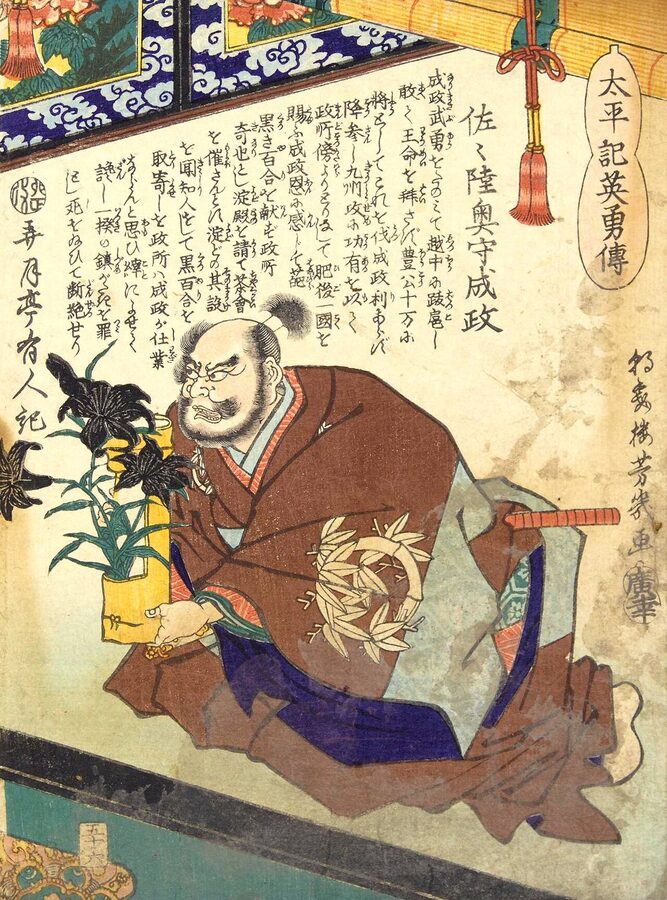
He fought at Anegawa in 1570, at Nagashino in 1575 (the battle where Oda cavalry tactics caused arquebus fire to make the Takeda house-elite irrelevant in a single afternoon), and a long list of smaller engagements up and down the Kansai basin. The Japanese chronicles give him credit for specific actions at each — leading a counter-charge that broke the left flank at Anegawa, holding the centre under gunfire at Nagashino — although you should read those accounts the way you would read a school yearbook: everyone looks good on the page. What is not disputed is that Nobunaga liked him and kept finding him work.
In 1581 he was given a castle of his own — Komaru, in Echizen Province (modern Fukui). The castle was not much by Azuchi-Momoyama standards; Echizen had just been pacified after a savage campaign against the Ikkō-ikki peasant-warrior sects, and what remained was a small hilltop fortress overlooking the Kuzuryū River. Sassa ran it for two years while the Oda armies broke the Uesugi hold on the Hokuriku coast. Then, in 1583, he was handed the far bigger prize of Toyama Castle (富山城) in Etchu Province, the gateway to the Sea of Japan.
By the time I reach this point in the story when I am telling it to friends I always notice that they want to know the same thing: what was Toyama worth? The answer is that Etchu Province produced rice, fish, and, crucially, salt, the last one being what everybody in land-locked Kai and Shinano needed but could not make. Whoever held Toyama could throttle half of central Japan. Sassa at forty-seven years old had been handed the second or third most important post in the entire Oda domain.
Then, two months after he received it, Oda Nobunaga was assassinated at Honnō-ji in Kyoto by one of his own generals. Everything Sassa thought he knew about the shape of the country dissolved in a single June morning.
Lord of Toyama — and the Shizugatake Fork
After Nobunaga’s death, the Oda senior vassals split into two factions. Toyotomi Hideyoshi, a peasant-born general Nobunaga had elevated to one of the top commands, moved to avenge his master and present himself as the natural successor. Shibata Katsuie, the stern old general who had run the northern campaigns for Oda for a decade, argued that Nobunaga’s son Nobutaka was the rightful heir and Hideyoshi an upstart.
Sassa chose Shibata. There is no evidence he agonised over it. The Oda Hokuriku forces had been a unit under Shibata for ten years; loyalty-structures in the Sengoku period were horizontal before they were vertical. He was Shibata’s man, so he fought on Shibata’s side.
The two sides met at Shizugatake, north of Lake Biwa, in April 1583. Shibata lost. He retreated to his castle at Kitanosho in Echizen, set it on fire with himself and his wife Oichi and their children inside, and died. Sassa was not at the main battle — he had been left commanding a holding force further north against the Uesugi, whose continued presence in Echigo was the one thing preventing Shibata from throwing every man he had at Hideyoshi. That holding action probably saved Toyama from a Uesugi counter-invasion while the major fighting went on further south, but it also meant Sassa was not physically there when Shibata’s line collapsed. He found out from a messenger three days later.
Hideyoshi could have killed him. Instead he did something stranger: he confirmed Sassa’s holding of Toyama and absorbed him into the new Toyotomi order as a semi-trusted outer vassal. This was Hideyoshi’s signature move, buy enemies with castles they already hold, and it usually worked. In Sassa’s case it did not. For the next eighteen months Sassa stewed in Toyama, resenting the peasant from Owari who had taken his master’s place, waiting for someone else to try for the top.
That someone came in 1584. Tokugawa Ieyasu — then lord of Mikawa and Suruga, the shrewdest of Nobunaga’s surviving allies — joined forces with Oda Nobukatsu (the son Shibata had been fighting for) and declared war on Hideyoshi. They fought to a bloody standstill at Komaki and Nagakute in the summer of that year. And then, at the end of 1584, with winter coming, Nobukatsu suddenly made peace with Hideyoshi without consulting Ieyasu. Ieyasu had no choice but to accept the terms.
Sassa, watching from Toyama, understood what this meant. If Hideyoshi had time to consolidate, he was finished. The Toyotomi army would come for him by spring. He needed Ieyasu to keep fighting. If Ieyasu would not keep fighting, he needed to go and make him. And the direct route from Toyama to Ieyasu’s territory in late December, with Hideyoshi’s vassals holding every road through the plains, ran straight across the Japanese Alps.
The Sasaragoe Crossing
Here is what you need to understand about the north Japanese Alps in midwinter. They are a thirty-kilometre-wide wall of three-thousand-metre peaks running down the spine of central Honshū. The snow line in December sits at about 1,500 metres and climbs no higher until May. In the 1580s the only route across the range was a string of grass cattle-drover paths used in summer by monks and salt merchants, which closed when the snow came and did not reopen until the thaw. Modern Japan sends 2.8 million visitors a year through this same terrain via the Tateyama Alpine Route, buses and cable cars and a tunnel under the mountain, and they still shut down parts of it for weather two months out of every twelve.
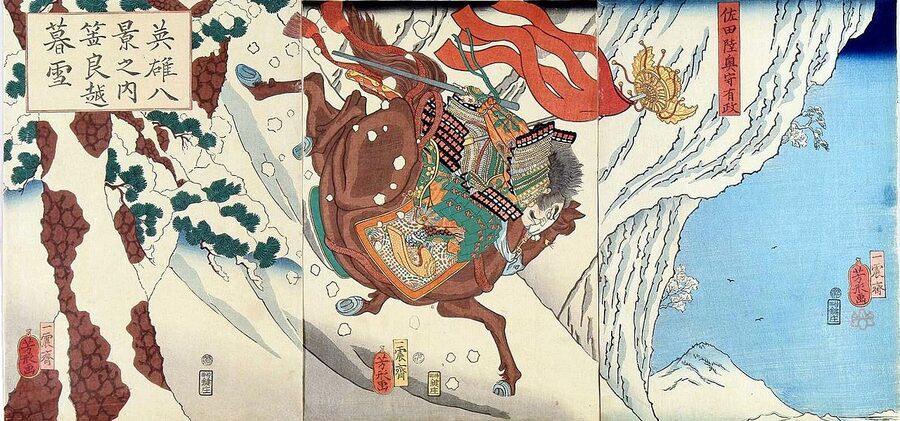
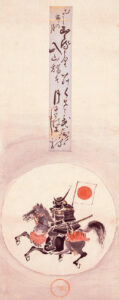
On a date that sources variously give as late December 1584 or very early January 1585, Sassa Narimasa left Toyama with about a hundred men, a string of pack horses, and enough rice to get across the mountains if everything went right. The route he took is called the Sasara-goe in Japanese, “the Sasara crossing”, and it went through the Zara Pass at roughly 2,350 metres, down past the modern Tateyama Kurobe Alpine Route corridor, into Shinano Province (modern Nagano), and on toward Ieyasu’s headquarters at Hamamatsu.
They lost horses. They lost men. Contemporary accounts are sparse but the Edo-period chronicles — the Taikōki among them — agree that some of his retainers died on the mountain and others had to be left behind with frostbite. The most reliable of the accounts puts the crossing at about two weeks. At the other end, having come down into the friendly territory of the Hayakawa clan in Shinano, Sassa made his way south through Mikawa-adjacent country to meet Ieyasu and argued his case at Hamamatsu Castle in late January.
You should picture what he arrived looking like. He was forty-eight years old. He had just done something younger men would not have attempted. He had ridden through frostbite and starvation for fourteen days to deliver a strategic argument in person, because he believed that argument would change history. The Japanese chroniclers agree that Ieyasu treated him politely. No version of the story has Ieyasu changing his mind.
Ieyasu listened, because Ieyasu always listened. He agreed with every word Sassa said about the danger of letting Hideyoshi consolidate. He also refused to do anything about it. The peace with Hideyoshi had been signed; it could not be unsigned without his ally Nobukatsu’s support; Nobukatsu had already taken Hideyoshi’s money. Sassa, for the rest of his life, seems to have found this incomprehensible.
He tried Nobukatsu anyway. He got no further with him. Then he turned around and crossed the Alps a second time, going home to Toyama to wait for what he knew was coming.
The Fall
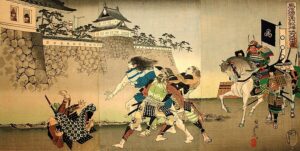
Hideyoshi’s Toyama campaign of August 1585 was the biggest army Japan had ever seen up to that point — about 100,000 men, drawn from across the western provinces, moving in three columns up the Hokuriku coast and across the mountain passes Sassa had just used. The intent was to make a point. Within a week the outer defences of Toyama had fallen and Sassa, whose own forces amounted to perhaps 8,000 men, was boxed into the main keep.
He did not fight. Oda Nobukatsu, the same man who had abandoned the anti-Hideyoshi war the year before, came north as an intermediary and persuaded Sassa to surrender. The terms were harsher than Shizugatake. Sassa had to perform a formal tonsure ceremony: shave his head, hand over the castle, give up his fief, and enter monastic retreat. Which he did. A monument marking the spot where he was tonsured stands today in Toyama, at An’yōbō Temple.
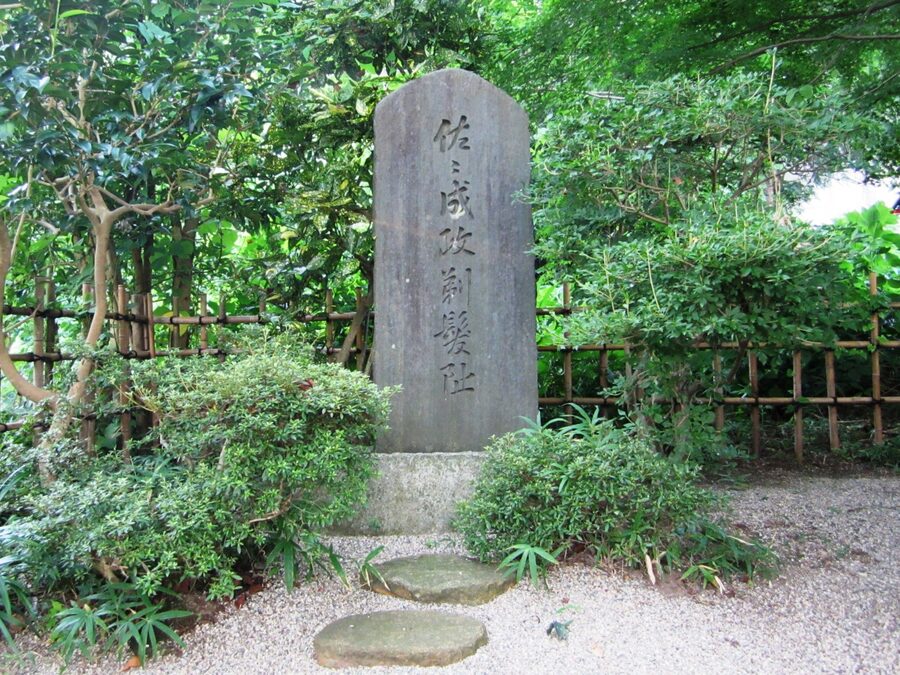
It did not stay a monastic retreat. Hideyoshi was not done with him. Two years later, in 1587, he pulled Sassa out of retirement and handed him the province of Higo, modern Kumamoto, to govern on the Toyotomi’s behalf. The job was impossible. Higo was a cluster of independent-minded kokujin houses — the Kumabe, the Jo, the Kai, the Hemmi, the Koshi — who had just been conquered in the Kūshū campaign and who had no intention of being governed by a northern outsider from Etchu. Worse, Hideyoshi had briefed Sassa to go slow on land reform; Sassa, either misunderstanding or out of temperament, went fast. Within months of his arrival he had ordered a full kenchi land-and-population survey, which to a local landlord in 1587 was basically a tax audit combined with a property seizure.
They rose in revolt, starting with the Kumabe of Jo Castle in late 1587. Sassa could not put them down. Hideyoshi had to send reinforcements from across Kyūshū — Katō Kiyomasa from the north, Kobayakawa Takakage from the west — to do it for him. It took a full year and ruined whatever remained of Sassa’s reputation. When the revolt was finally crushed in the early summer of 1588, Katō stayed in Higo and kept the province; Sassa was held responsible for letting the rebellion happen in the first place.
In July 1588 Hideyoshi sent Sassa a short, unambiguous instruction to kill himself. He did so formally at Hotokō-ji (法光寺) in Amagasaki, Settsu Province, on 14 July 1588 by the old lunar calendar. He was fifty-two years old. His seppuku poem, recorded in Edo-period chronicles, reads: “even in this drifting world / a man’s name remains / written on the wind” — which, for a Sengoku death-poem, is relatively modest.
The Ghost Story, or, The Hackberry in Toyama
Sassa’s legend did not end with him. Japanese history writing, which got properly started in the two centuries after the Sengoku, needed villains, and a man who had died in disgrace after crossing the Alps in winter was too good to waste. The story that grew up around him is the story of Sayuri.
Sayuri — 早百合姬 (Sayuri-hime), “Princess Sayuri” — was reportedly Sassa’s favourite concubine during his Toyama years. The Edo-period chronicle versions of the tale go like this: an accusation of infidelity was made against her, Sassa believed it without checking, and he had her executed by being tied to a hackberry tree and cut down with a sword. Before she died she cursed him, his line, and the tree itself. His line did indeed end — his eldest son died in the Higo rebellion; the second son vanished into obscure vassalage under the Tokugawa and left no male heirs of record. The hackberry tree is reportedly still standing. It is in the Isobe district of Toyama city and is known locally as Isobe no Ippōn Enoki (碳部の一本榶), the Solitary Hackberry of Isobe. Local people told me when I visited that branches cut from the tree bring bad luck, and that nobody has pruned it in living memory.
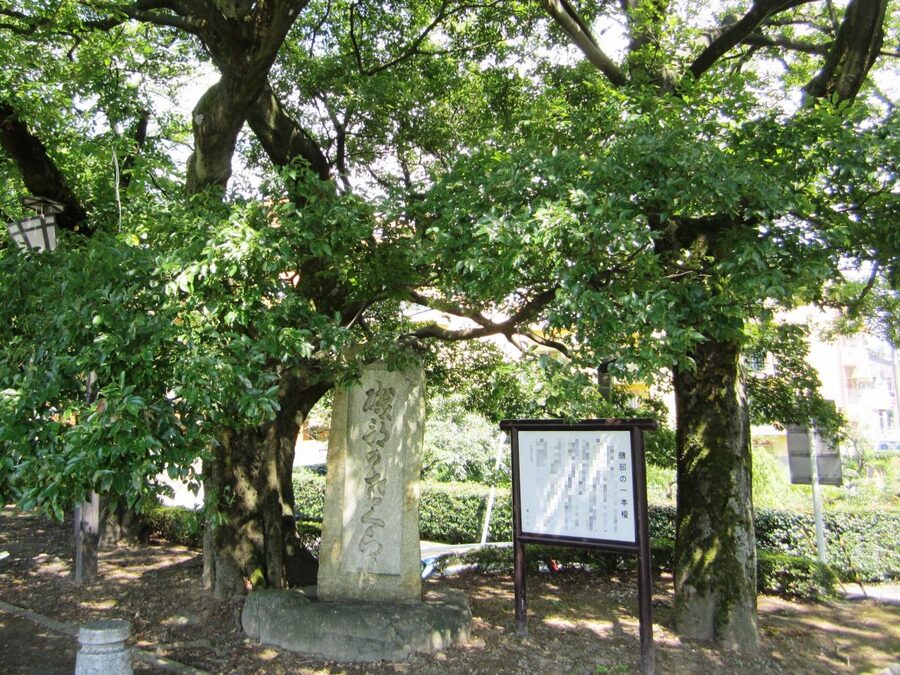
I am agnostic about ghost stories. I will say that I walked past that tree twice on one visit, both times without meaning to, and that the second time I noticed I was on the opposite side of a residential block from where I had intended to be. There are rational explanations for that. I did not stop to cut a branch.
Where to visit Sassa Narimasa’s story today
Four places. You can do Toyama in one day, the Alpine Route in two if the weather cooperates, Hira in half a morning, and Shizugatake in half a day out of Kyōto. In the order I would do them:
1. Toyama Castle Park and An’yōbō Temple — Toyama city
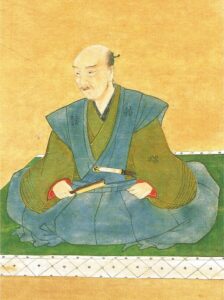
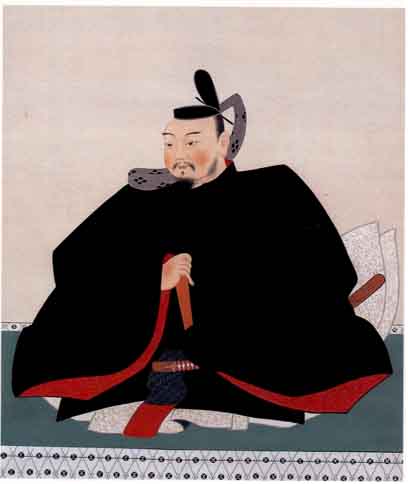
Toyama Castle is five minutes’ walk from Toyama Station. The main keep is a 1954 concrete reconstruction and holds the Toyama City Folk Museum, which has the portrait of Sassa at the top of this article along with a small exhibit on his tenure. The walls and moat are original sixteenth-century earthworks — the layout is his. For context of how things would have looked, the castle park is best visited in late April, when the cherry trees on the inner moat come out.
An’yōbō Temple and the tonsure monument are about a ten-minute walk south of the castle. The temple’s main hall is unspectacular but the garden at the back is where Sassa shaved his head and there is a small stone saying so. The Isobe hackberry is in a residential neighbourhood further out, roughly two kilometres south-east of the station — the easiest way is to take the tram to Isobe-mae.
Toyama Station is about two hours from Tokyo on the Hokuriku Shinkansen. It is one of those Japanese cities that most foreign visitors miss entirely and which reward you for the effort. The masu-zushi is famously good.
2. The Sasaragoe route — Tateyama Kurobe Alpine Route
You cannot do the exact Sasaragoe route in winter any more (the pass is closed) and you should not want to, but the modern Tateyama Kurobe Alpine Route runs through more-or-less the same corridor, and if you take the bus from Murodo (2,450 m) you are passing within walking distance of Zara Pass. The route is open roughly mid-April to late November. The “snow corridor” at Murodo in April and May, walls of snow twenty metres high where the road has been ploughed, is the closest most visitors will ever come to understanding what Sassa was riding through.
Practicalities: the full route takes six to seven hours one-way if you stop at Murodo for any length of time, involves seven changes of conveyance (train, cable car, bus, trolleybus, ropeway, cable car, bus), costs around ¥10,000 end-to-end, and should be done from Toyama out to Ōmachi on the Shinano side, or the reverse. Book the morning slot. Pack warm even in June.
3. Castle Site of Hira — Nagoya, Aichi
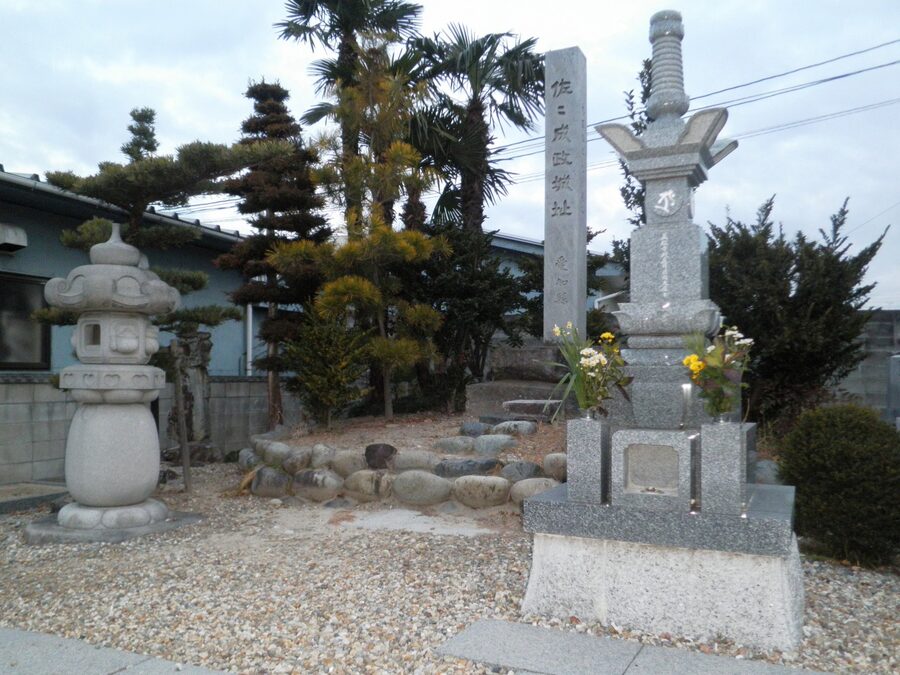
Before Toyama — before Komaru, even — Sassa’s family held a small castle at Hira, in what is now the Nishi-ku ward of Nagoya. Nothing of the castle remains above ground. What is there is a neighbourhood park with an obelisk, a stone with his dates, and a small grave marker his descendants put up in the Edo period. It is twenty minutes by bus from Nagoya Station and will take you forty minutes to see everything. Worth it if you are a completist; skippable otherwise.
4. Shizugatake battlefield — Shiga Prefecture
Shizugatake is reachable from Kyōto in about ninety minutes by train plus a short cable car up the hill. The battlefield is now a walking path along the ridge above Lake Yogo, with signposts explaining where each unit was posted. The viewpoint at the top is worth the climb on its own — you can see all the way to Biwa. I write more about the battle itself in my Shizugatake article, but standing on the ground gives you something the maps do not: you realise how small the battle space was, and how quickly Shibata’s position became untenable once Hideyoshi’s forced march arrived.
Sassa himself was not at Shizugatake, he was holding the north for Shibata, but the battle is the reason he spent the rest of his life angry.
Why he matters
Sassa Narimasa is one of those Sengoku figures whose story only makes sense when you line him up against the men who outlived him. Hideyoshi, who died in 1598 of old age having unified the country. Ieyasu, who outlived Hideyoshi, took the country off his toddler heir, and founded a dynasty that lasted 265 years. Shibata Katsuie, his own master, who died three years before he did, by his own hand.
Sassa was too loyal and too stubborn for an era that was about to reward flexibility above everything else. He made the wrong call at Shizugatake because he owed his loyalty to Shibata, not to Oda Nobutaka or anyone else. He made the Alps crossing because he owed it to his dead master to keep fighting. He took Higo because he was ordered to and could not refuse. Every one of those decisions, looked at from the viewpoint of 1590, looks stupid; every one of them, looked at from 1570, looks honourable.
Compare his biography to Katō Kiyomasa’s — Katō served under Nobunaga, then under Hideyoshi, then under Ieyasu, then died peacefully as lord of the richest castle in Kyūshū. Compare it to Maeda Toshiie’s, whose own move from Shibata’s orbit to Hideyoshi’s before Shizugatake is one of the quieter turning points of the period. Both of those men saw what was happening and changed their mind. Sassa saw it and did not. He refused to see it even when the Alps were in front of him. You can call that stubbornness, or stupidity, or integrity, depending on how much you approve of the Toyotomi regime that replaced him.
Which is a reasonable definition of tragedy. He was a man whose own best qualities killed him, at exactly the wrong moment in history to have them.
If you are travelling to Toyama anyway, go and find the hackberry. Do not cut a branch. And if you take the Tateyama Kurobe Alpine Route in late April, when the snow corridor is at its maximum, stop for a minute at Murodo and look south. The Zara Pass is about seven kilometres away as the crow flies, hidden behind Mount Tateyama itself. Sassa Narimasa came through there on horseback in the dark of winter to try to change the outcome of a war. He almost succeeded. Almost.