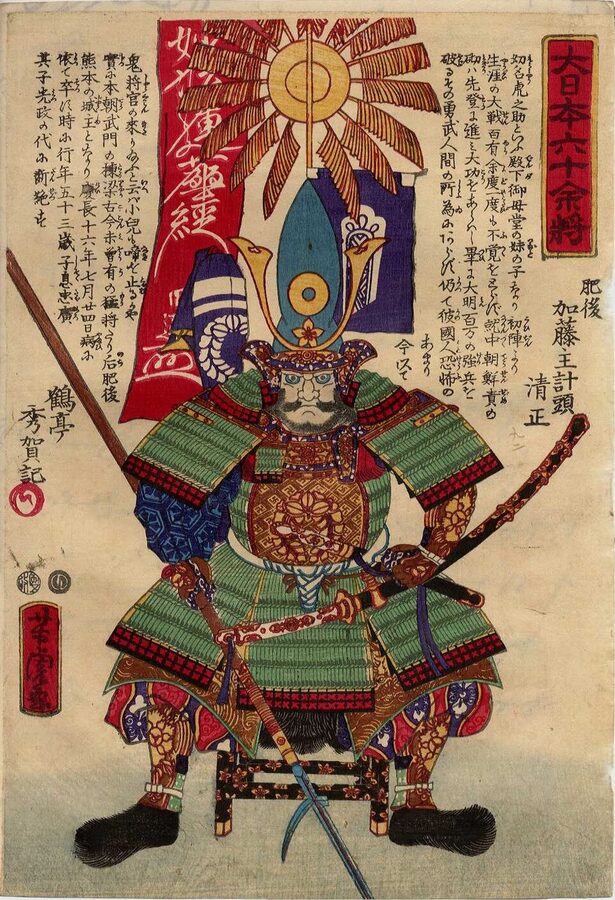
Katō Kiyomasa took his first enemy head in April 1583, at Shizugatake, aged twenty-two. He was a nobody — a junior foot-soldier from a village nobody had heard of, fighting under a commander who was still officially a peasant. By the time the smoke cleared, he was one of the Shizugatake no Shichi-hon-yari, the Seven Spears of Shizugatake, and his cousin Hideyoshi had decided he would no longer be carrying spears for other people.
Twenty-eight years later — having built a half-province’s worth of irrigation, invaded Korea twice, hunted tigers with a spear for the lord of Japan, raised what is still arguably Japan’s most formidable castle, and outlived his master by thirteen difficult years — he died in the cabin of a ship off the Higo coast, probably of a stroke, possibly of poison. He was forty-nine.
The reason I keep returning to Kiyomasa, and keep finding him the most usefully complicated of the Toyotomi loyalists, is that the legends about him are never quite what you think. The tiger hunts in Korea are real; the one usually pictured on the ukiyo-e is probably Kuroda Nagamasa’s. The unbreakable Ulsan Castle winter siege is real and he did hold it with five hundred men on almost no food; the cannibalism reported in some Korean sources is also real.
He was known as Toranosuke, “Tiger Boy”, from the age of seven, for reasons that had nothing to do with Korea. He was a devout Nichiren Buddhist who persecuted Christians as policy. He outlived Hideyoshi and bent the knee to Ieyasu, but until the day he died he never stopped arguing for the boy Hideyori, and the shogunate almost certainly had him killed for it.
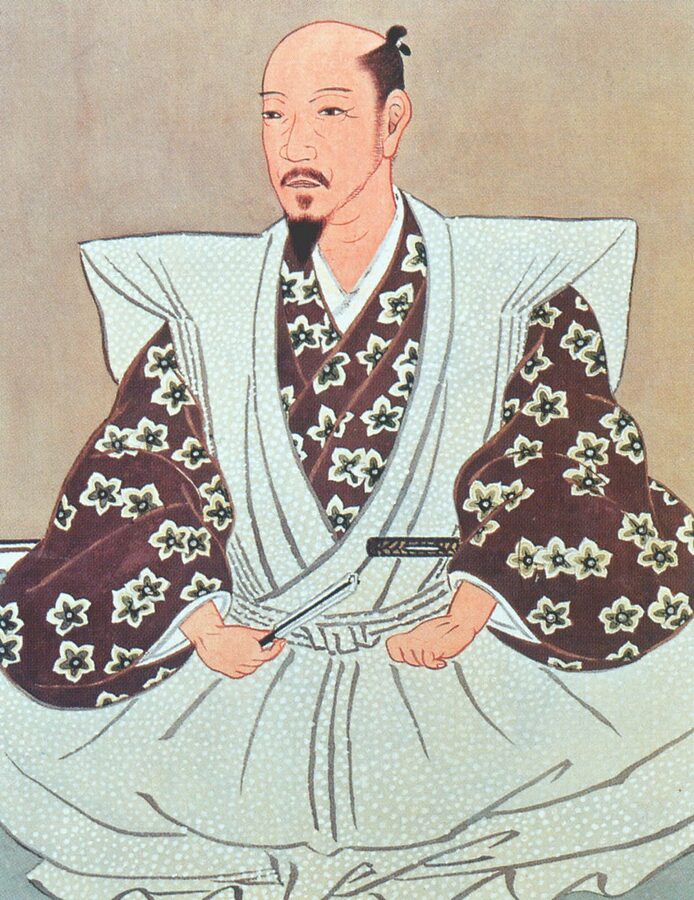
In This Article
- Nakamura, 1562 — the swordsmith’s son
- Shizugatake, 1583 — first spear at twenty-two
- Kyūshū, 1587, and Higo — the 195,000-koku promotion
- The Korea invasions, 1592 and 1597 — twice through the same door
- Ulsan, 1597–1598 — five hundred men, no water
- The Mitsunari break and the Ieyasu calculation
- Kumamoto, 1601–1607 — the seven-year fortress
- 1611 — Nijō Castle and the poisoned cake
- Seishōkō — the cult of Kiyomasa
- Where to visit Kiyomasa today
- Nakamura Park and the Hideyoshi-Kiyomasa Memorial Museum
- Kiyomasa’s Well at the Meiji Shrine Inner Garden
- Kumamoto Castle — brief, with a cross-reference
- Katō Shrine (Katō-jinja)
- Hommyō-ji Temple and the 176-step approach
- The Seishōkō Matsuri — 23-24 June in Kumamoto
- Further afield — the grave in Yamagata
- What Kiyomasa gets wrong in English
- A last word
Nakamura, 1562 — the swordsmith’s son
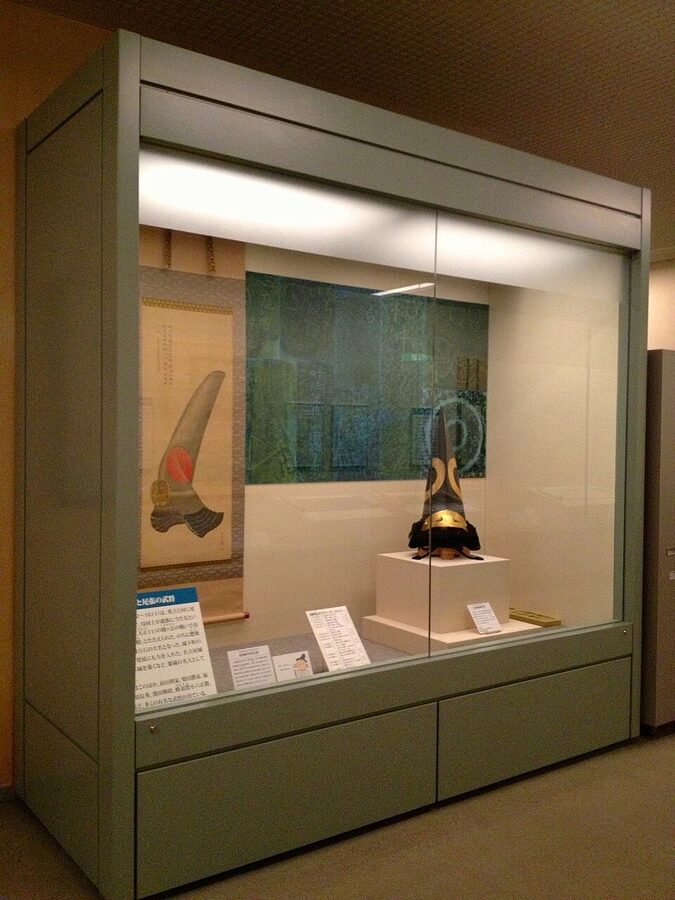
Kiyomasa was born on 24 June 1562 in Nakamura village, Aichi District, Owari Province — now Nakamura-ku in central Nagoya, a fifteen-minute walk from the future shōgun Hideyoshi’s birthplace in the same village. His father, Katō Kiyotada, had once served Saitō Dōsan — the Viper of Mino — as a low-ranking samurai before being wounded out of the service, retraining as a swordsmith, and marrying the daughter of another Nakamura smith.
That mother, Itō, mattered. She was either the cousin or the slightly-more-distant relative of Ōmandokoro, Hideyoshi’s mother — the precise kinship is disputed in the contemporary sources, but what is not disputed is that the two women were close. When Kiyotada died in 1564, and Kiyomasa was three, his mother moved him to Tsushima, another village within a day’s walk. Nine years later — in 1573, when Hideyoshi was newly installed at Nagahama Castle in Ōmi — Itō took her eleven-year-old son across the mountains to serve her cousin.
Hideyoshi, who had just started having children of his own, adopted Kiyomasa functionally as one. The boy became a koshō, a page-attendant at the lord’s knee, and was raised inside Hideyoshi’s household. By 1576, aged fourteen, he was drawing 170 koku.
The contemporary record gives his childhood name as Yashamaru, but Hideyoshi himself called him Toranosuke, “Tiger Boy,” from the beginning. The epithet stuck. Long before Kiyomasa ever saw Korea, he was already Toranosuke to everybody who knew him.
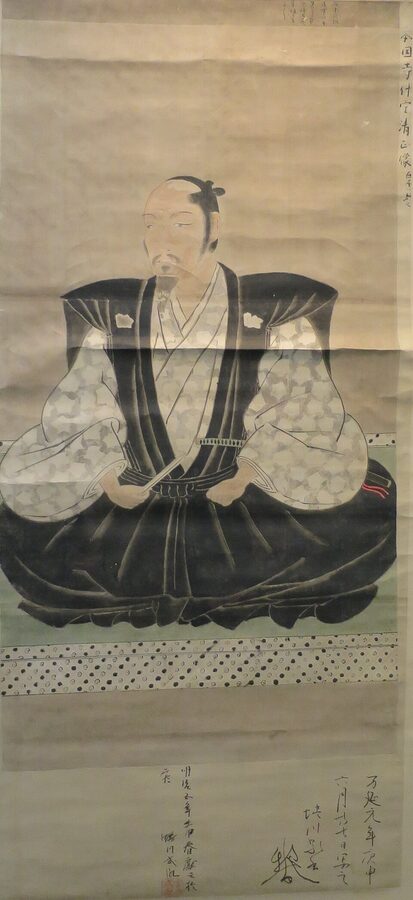
The Hideyoshi household of the late 1570s was not a bad place to come up in if you were twelve. Hideyoshi was a field commander with his own castle, not yet the dictator of Japan, and his retinue was a rough meritocratic collection of young men — Kiyomasa, Fukushima Masanori, Katō Yoshiaki, Kasai Shigenori — most of them similarly semi-related to the family through Ōmandokoro’s side. They grew up training together, fighting together, and competing with each other for Hideyoshi’s notice. The rivalries that defined the rest of Kiyomasa’s life — with Fukushima, with Ishida Mitsunari, with Konishi Yukinaga — all started in this adolescent retinue.
Shizugatake, 1583 — first spear at twenty-two
Kiyomasa’s adolescence shaded into military service the way it did for most Sengoku retainers: a string of minor actions, a first recorded head-taking, a first small fief. In 1580, aged eighteen, his first surviving document gives him 120 koku in Harima Province under the Hideyoshi administration. In April 1582, during Hideyoshi’s Chūgoku campaign against the Mōri, he was credited with first-into-the-breach at the Kannonyama Castle assault, where he killed a named defender called Takei Shōgen. A month later, Nobunaga died at Honnō-ji and everything changed.
Kiyomasa followed Hideyoshi back east for the Yamazaki engagement against Akechi Mitsuhide, the thirteen-day campaign that settled the succession. The proper test came the following spring, at the Battle of Shizugatake in April 1583 — the decisive engagement between Hideyoshi and Shibata Katsuie over who would inherit Nobunaga’s unfinished realm. The fight was fought in the hills above Lake Yogo in northern Ōmi, a ridge-and-gorge landscape that suited skirmishing infantry more than formal cavalry. Hideyoshi’s young retainers, Kiyomasa among them, went forward as yari spearmen in the pre-dawn assault on the Shibata advance camps.
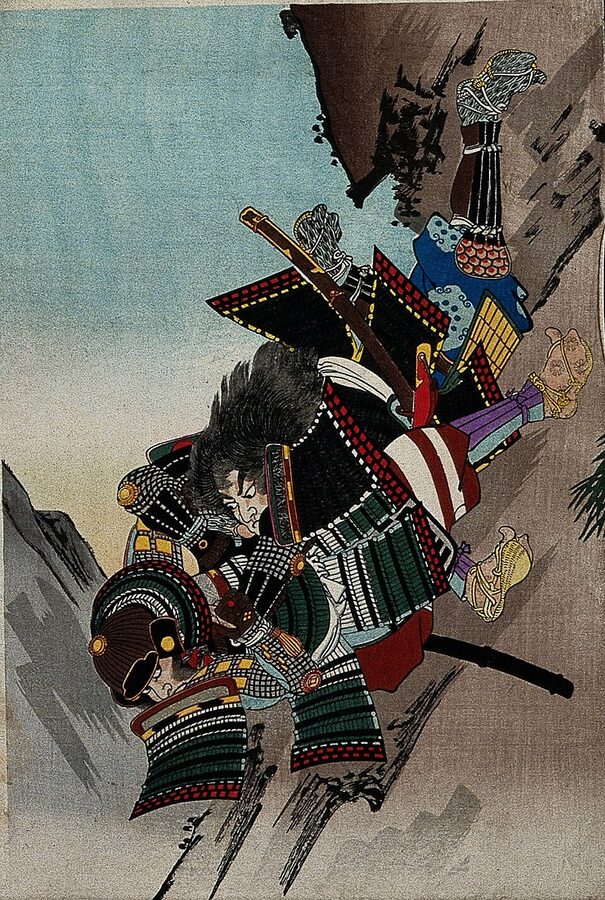
The name Kiyomasa brought back was Yamaji Masakuni — a ranking Shibata commander. Seven other Hideyoshi retainers similarly distinguished themselves in that pre-dawn action: Fukushima Masanori, Katō Yoshiaki, Wakisaka Yasuharu, Kasuya Takenori, Hirano Nagayasu, Katagiri Katsumoto. They were, collectively, retroactively enshrined in Toyotomi hagiography as the Shichi-hon-yari, the Seven Spears. Each received three thousand koku on the spot.
Modern historians have queried whether seven was the actual count, some sources list nine, but the point is not the number. The point is that Hideyoshi was constructing a generation of young loyalists around the Shizugatake story, and Kiyomasa, at twenty-two, was now publicly in that group.
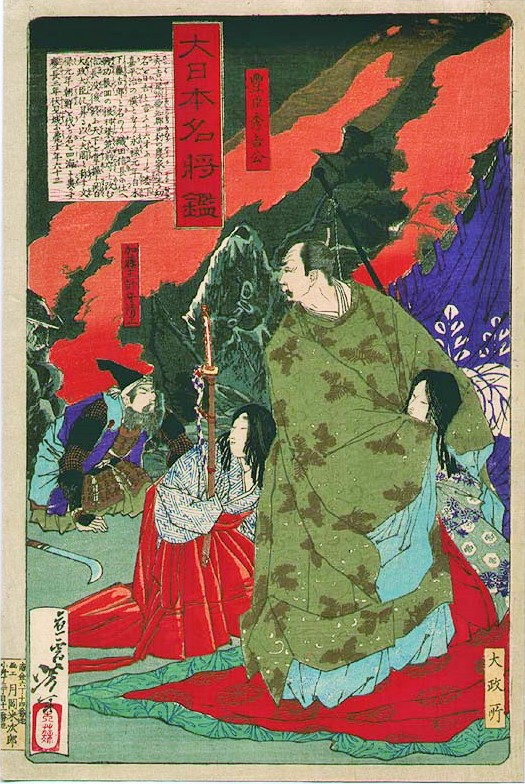
Two years later, when Hideyoshi took the court title kampaku in July 1585, he pulled Kiyomasa up with him: ju go-i no ge, junior fifth court rank lower grade, with the bureaucratic title Kazue no Kami (“Chief of Accounts”). It was a slightly ridiculous title for a man who had just finished killing people on a mountainside — but the Toyotomi administration was increasingly being run on fiscal and administrative lines, and Hideyoshi was training Kiyomasa to be a regional governor, not only a field commander. For the next six years, most of Kiyomasa’s work was administrative: serving as Toyotomi tax-commissioner in Harima, Izumi, and Sanuki, handling post-conquest paperwork after the Kyūshū campaign. The famous Seven-Spears mention in contemporary biography undersells how much of Kiyomasa’s early career was spent with a brush.
Kyūshū, 1587, and Higo — the 195,000-koku promotion
Kiyomasa campaigned across Kyūshū with Hideyoshi’s army in 1587 against the Shimazu — less as a front-line commander than as a rear-area administrator and logistics officer, the role Hideyoshi mostly cast him in. The Shimazu capitulated; Hideyoshi reorganised the Kyūshū provinces; and the man handed Higo Province was Sassa Narimasa, a veteran Nobunaga commander whose political stock Hideyoshi was trying to cauterise. Sassa was given Higo at 520,000 koku and lasted ten months before his attempts at land-surveying provoked the Higo kokujin into an open revolt that only Kiyomasa’s old comrades could suppress. In spring 1588, Sassa was recalled and ordered to commit seppuku in Osaka, Hideyoshi deliberately making him the object-lesson for provincial mismanagement, and Higo was chopped in two.
Kiyomasa received the northern half: 195,000 koku, anchored on the old Kumamoto-area fortress of Kumamoto Castle (then called Kumamoto-jō, on a smaller scale than the one he would later build — see the separate Kumamoto Castle article for the architectural detail). The southern half, Yatsushiro and Uto, went to Konishi Yukinaga, a Sakai-merchant-class Christian commander whom Kiyomasa already despised on religious grounds and would come to despise on every other ground over the following twelve years. The Higo dispensation set up the feud that would define the next phase of both men’s lives.
Kiyomasa was twenty-six. He had never run a province. The task in front of him, take over land the previous administrator had been ordered to kill himself for mismanaging, was obvious and daunting in equal measure. He responded by becoming, over the following decade, the best civil engineer in sixteenth-century Japan.
This is a point the English-language histories tend to underweight. Kiyomasa is remembered abroad as a castle-builder and a tiger-hunter, but the Japanese sources, and the modern Kumamoto Prefecture infrastructure record, remember him as the man who rerouted the Shira River. He separated the Shira and the Tsuboi near what is now Kumamoto City Hall, diverting the volcanic-silt-heavy Shira around the future castle site and leaving the clean Tsuboi as the inner moat.
He built the Ba-ba-kusu-no-ide irrigation tunnel beneath the Shira to feed the Kumamoto Plain. He threw stone weirs across the Kuma and the Midori, drained the Yatsushiro estuary, and pushed the rice-growing boundary forty kilometres closer to the coast.
When UNESCO’s International Commission on Irrigation and Drainage designated the Shira-system irrigation works as a World Heritage Irrigation Structure in 2018, four hundred and thirty years after Kiyomasa ordered them built, most of the hydraulic features were still in active service. That is not Seven Spears territory. That is the work of a serious provincial ruler, and the reason Kumamoto people still call him Seishōkō-san today, affectionately, as “Lord Kiyomasa,” with the same familiar honorific you would attach to a grandparent. No other Sengoku daimyō has retained that kind of popular memory in his old domain.
The Korea invasions, 1592 and 1597 — twice through the same door
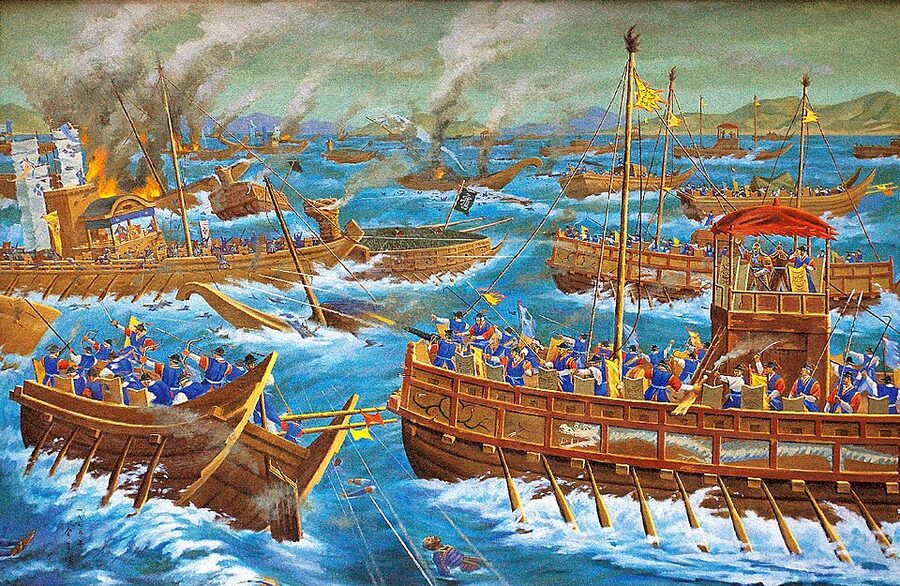
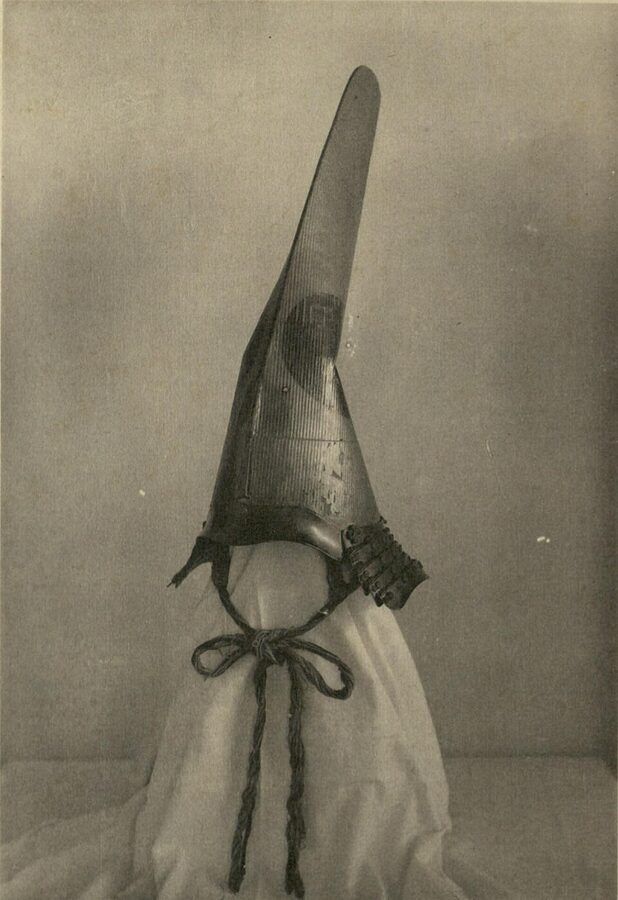
You cannot write about Kiyomasa without writing about Korea. It was the central disaster of the Toyotomi era, it consumed six years of his life, and it produced most of the iconography — the spear, the tiger, the tall helmet — that attached to him in subsequent chronicles.
In April 1592, Hideyoshi launched the first of two invasions of Joseon Korea with the ultimate ambition of using Korea as a staging-post for invading Ming China. The main Japanese army numbered somewhere around 150,000 men organised into nine divisions. The Ni-bantai, the Second Division, was commanded by Kiyomasa at the age of thirty, with Nabeshima Naoshige and Sagara Yorifusa under him. Roughly 22,000 men.
The First Division, under Konishi Yukinaga, landed at Busan on 13 April and began pushing north. Kiyomasa’s Second Division landed four days later. From the start, Kiyomasa and Konishi were competing — formally for the honour of entering Hanseong (modern Seoul) first, personally because they loathed each other.
On 3 May 1592, Kiyomasa’s division broke through the South Gate of Hanseong; Konishi’s division had entered through the East Gate hours earlier, but Kiyomasa’s men took the palace first. The Korean king Seonjo had already abandoned the capital and fled north. The Japanese then split: Konishi pushing northwest toward Pyongyang, Kiyomasa’s division pivoting northeast into Hamgyong Province, beyond the Korean plateau, into the coldest and most mountainous part of the peninsula.
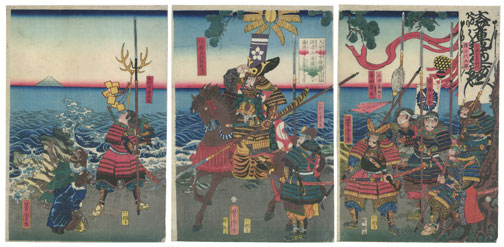
In Hamgyong, Kiyomasa won the only properly set-piece victory the invasion ever produced: the Battle of Haejōngchang, where he destroyed Han Geuk-ham’s Korean northern army and captured two Korean princes, Imhae-gun and Sunhwa-gun, whom local chieftains delivered to him as hostages. He then did something nobody had authorised him to do.
He crossed the Tumen River, left Korean territory altogether, and pushed into southern Manchuria — the land the Japanese called Orankai, home of the Jurchen clans who would, forty years later, conquer China as the Qing. He fought several actions against Jurchen cavalry, realised the terrain gave him nothing, and pulled back to Korean territory. The contemporary Edo chronicles give him credit for being “the only Japanese commander ever to invade Manchuria.” They are technically correct.
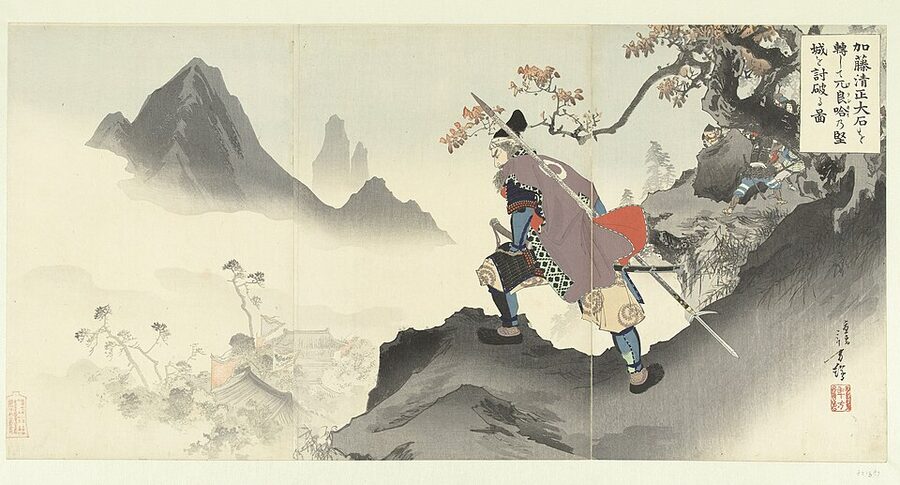
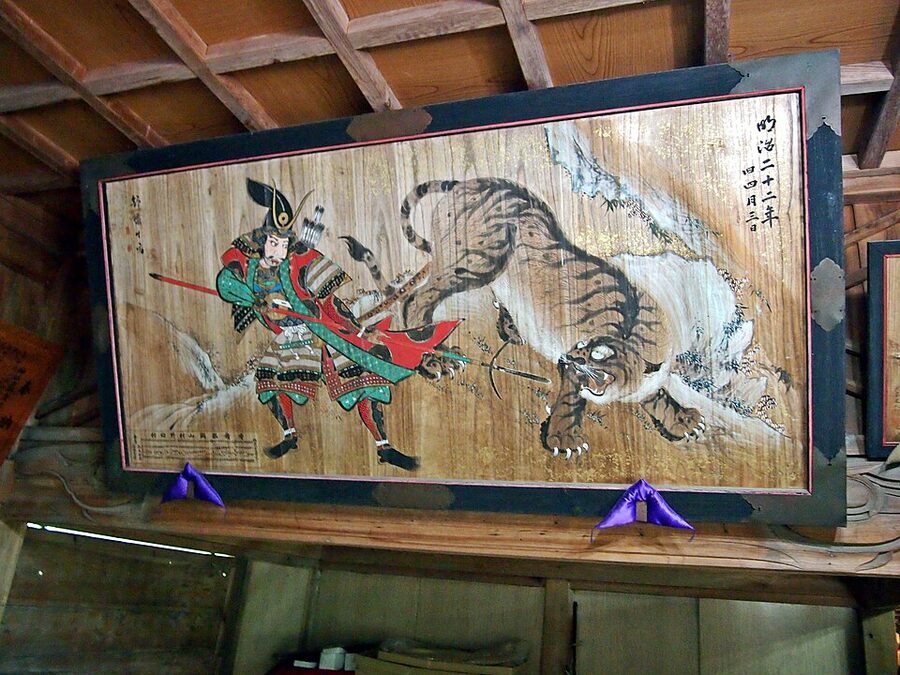
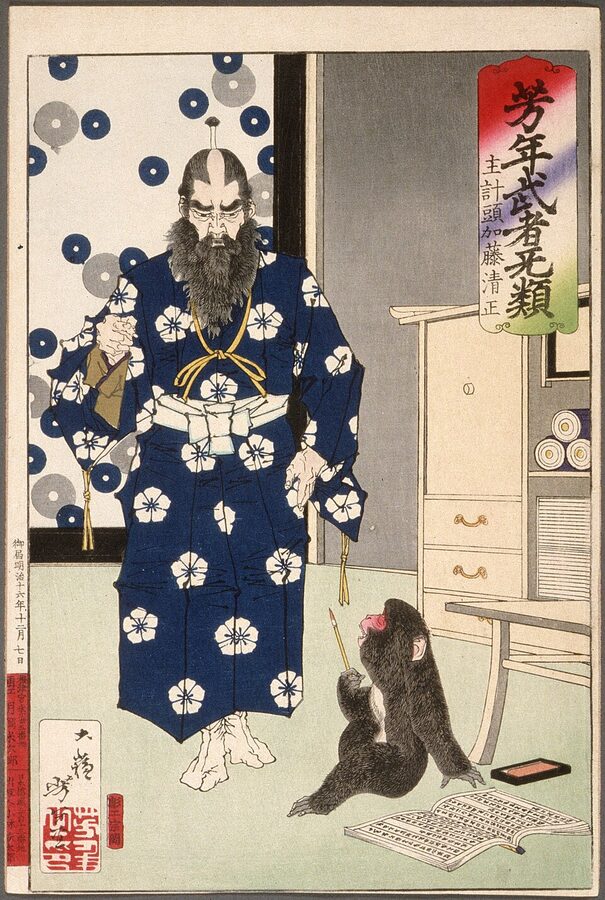
The tiger hunts belong to this Hamgyong period. The contemporary Shō-jutsu-zassho and the later Kiyomasa-ki agree that Kiyomasa personally hunted tigers in the Hamgyong mountains during the winter of 1592–1593, using a spear rather than a gun, and sent at least two skins back to Hideyoshi in Osaka. Modern Japanese scholarship has now suggested that the specific iconic tiger-kill most ukiyo-e depictions record, the moment of the stab, actually belongs to Kuroda Nagamasa, whose story seems to have been absorbed into the Kiyomasa legend in the 18th century.
But Kiyomasa did hunt tigers in Korea. The pelts were documented gifts. The claim that they were shot to provide meat for his starving troops is a retroactive softening by Edo-period chroniclers embarrassed by the idea of senior commanders tiger-hunting during a military occupation. In the winter of 1592, however, his troops were in fact starving.
Korea got steadily worse for the Japanese through 1593. Admiral Yi Sun-sin’s turtle-boat navy cut the supply lines from Kyūshū; Ming reinforcements under Li Rusong ground the Japanese advance to a halt at Pyongyang; Konishi’s peace negotiations went sideways. Kiyomasa, whom Ishida Mitsunari, the liaison officer between the Osaka government and the Korean front, thoroughly distrusted, was recalled to Kyoto in 1594 and placed under house arrest for the rest of the lull.
When the famous Jishin Katō incident happened — the Keichō Fushimi earthquake of August 1596, in which Kiyomasa supposedly dashed to the collapsing Fushimi Castle to protect Hideyoshi against the house-arrest order — modern scholarship places him in Osaka rather than Kyoto, and the whole heroic-loyalty scene is probably embellished. What isn’t embellished is that he was back in Hideyoshi’s favour within a year, and in 1597, aged thirty-five, he was sent back to Korea for the second invasion.
Ulsan, 1597–1598 — five hundred men, no water
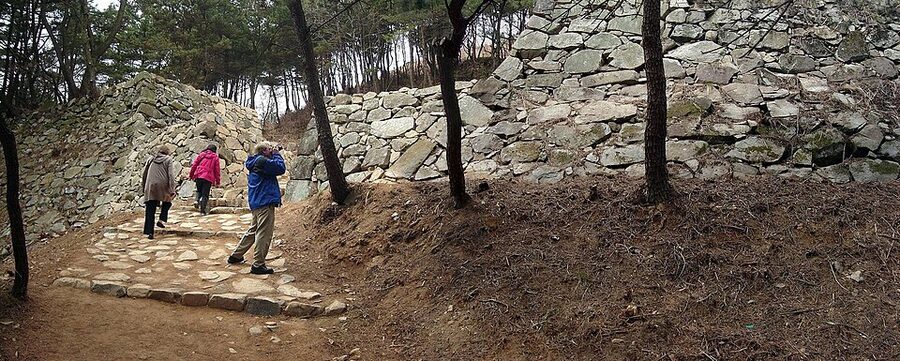
The second Korean campaign — Keichō no Eki in Japanese, the Jeongyu War in Korean — was launched with smaller objectives: hold the southern Korean coast, build a chain of Japanese-style mountain castles (the waesōng), squeeze the Ming into a negotiated settlement on Hideyoshi’s terms. Kiyomasa commanded the right wing. He advanced west into Jeolla, took Jeonju, then fell back to oversee the construction of his assigned fortress: Ulsan Castle, on a high bluff over the Taehwa River estuary in southeast Korea.
Ulsan was built to hold 5,000 men and was still under construction on 22 December 1597 when a combined Ming-Joseon army of 57,000 under Yang Hao attacked it. Kiyomasa, who had been at the outer perimeter fortress of Seosaengpo, rushed back to Ulsan with about 500 personal retainers and took command inside the walls. The garrison numbered perhaps 5,000 altogether, with very few supplies and, critically, no wells. Water had to be collected from melting snow.
The Siege of Ulsan is usually told as Kiyomasa’s most famous battle, and in strict military terms it was probably his worst. Over twelve days, the Ming-Joseon army pushed three major assaults against walls that were literally still being built. The Japanese garrison ran out of food within a week.
Korean primary sources — including the Joseon wangjo sillok and Yi Sun-sin’s war diary — record instances of garrison members eating the corpses of their own dead and, in the grimmest accounts, eating the dead horses of the besiegers. Japanese contemporary reports confirm the starvation and disease but do not confirm the cannibalism; modern scholarly consensus is that some of it probably occurred, given the twelve-day window and the absolute lack of logistics.
Kiyomasa held the position. On 3 January 1598, Japanese relief forces under Mōri Hidemoto and Kuroda Nagamasa arrived from Seoul and the Ming-Joseon army pulled off.
Yang Hao reported victory to his court and was unfortunately for him eventually found out to have been lying. Kiyomasa was decorated. His personal household casualty rate was close to fifty percent.
He built a new well at Ulsan immediately after the siege lifted — Kiyomasa-no-ido at the site — and dug several more across his Korean fortress-chain because, by his own later account to the poet-monk Fujiwara Seika, he had never wanted to feel that particular thirst again. This is the origin of his later obsession with well-digging at every castle he held, Kumamoto and Edo both.
Ulsan lifted, the Japanese position in Korea stabilised through 1598. In August of that year Hideyoshi died in Fushimi. The Go-tairō, the Council of Five Regents, ordered the withdrawal from Korea in September.
Kiyomasa, who had fought the second siege of Ulsan just weeks earlier and repulsed another Ming attack, pulled his troops back to Busan and embarked for Japan by December. He had been at war on the Asian mainland for nearly seven years of his life. He was thirty-six, and on arriving back at Kumamoto found that his mother Itō had died that summer. He buried her at Myōei-ji Temple and went to Osaka to deal with the political question that had grown in his absence.
The Mitsunari break and the Ieyasu calculation
The political question was Ishida Mitsunari. During the Korea years, Mitsunari had been running the Osaka administration — the “civil” faction, by the later historiographical shorthand — while Kiyomasa and his cohort fought on the continent. Mitsunari had repeatedly submitted unfavourable reports on Kiyomasa’s conduct (the Orankai excursion, the row with Konishi, the suspected misappropriation of supplies), and Kiyomasa had been briefly placed under house arrest on Mitsunari’s prompting in 1594–1595.
There was no love lost. When Maeda Toshiie, the senior statesman who had been holding the Toyotomi coalition together after Hideyoshi’s death, died in March 1599, the constraint on Kiyomasa’s faction evaporated.
On the night of 4 April 1599, Kiyomasa, Fukushima Masanori, Hosokawa Tadaoki, Asano Yoshinaga, Ikeda Terumasa, Katō Yoshiaki, and Kuroda Nagamasa — seven senior commanders, all of them former Korean-front generals — gathered at Kiyomasa’s Osaka mansion and then marched on Mitsunari’s house with the intention of killing him. Mitsunari had been tipped off. He had left his mansion, taken refuge in Satake Yoshinobu’s compound, and eventually fled to the unfinished Fushimi Castle.
The seven generals besieged Fushimi. Tokugawa Ieyasu — acting as the tairō in formal session — brokered a settlement: Mitsunari would retire from active administration, go home to Sawayama Castle, and leave the running of the regime to the Council of Regents.
The attempt failed as a murder. It succeeded as a political act. It put seven of the most effective commanders of the Toyotomi administration into Ieyasu’s debt.
For most of 1600, Kiyomasa was formally frozen out by Ieyasu. The reason is oddly specific: the Shōnai disturbance, a Satsuma-clan internal quarrel, had produced a rebel in the form of Ijūin Tadamune, and Kiyomasa, without permission, had offered Tadamune covert support. Ieyasu, as senior tairō, was trying to resolve the Shōnai affair diplomatically; Kiyomasa’s meddling was a breach of political etiquette significant enough that Ieyasu banned him from attending court at Osaka. When Ieyasu launched the Aizu campaign against Uesugi Kagekatsu in summer 1600, Kiyomasa was ordered to stay in Higo rather than join.
When Ishida Mitsunari raised the Western army and the country split for Sekigahara, Kiyomasa did not cross to Mino with Ieyasu. He stayed in Kyūshū, his formal instruction, and fought a private war against the Western-aligned lords of southwest Kyūshū. The key target was Konishi Yukinaga, whose Uto Castle was taken by Kiyomasa’s forces on 18 October 1600. Yukinaga himself had already been captured at Sekigahara proper and was executed in Kyoto ten days after Uto fell.
Kiyomasa also took Tachibana Muneshige’s Yanagawa castle and was preparing to invade Shimazu territory when Ieyasu ordered a general stand-down. The reward for the Kyūshū front was the other half of Higo, Yukinaga’s former domain, bringing Kiyomasa’s total holding to 520,000 koku. Real income was probably closer to 790,000. He was now a major provincial lord.
Kumamoto, 1601–1607 — the seven-year fortress
With all of Higo in hand, Kiyomasa began the project that would occupy the rest of his working life: tearing down the old Kumamoto fort and building in its place the extraordinary mountain-citadel that is still standing (despite the 2016 earthquake’s best efforts) on the same site today. The full architectural, tactical, and cultural history of the castle is in a separate article — Kumamoto Castle — and I will not repeat it here. What belongs in the Kiyomasa biography rather than in the castle piece is the building years themselves.
Construction ran formally from 1601 to 1607 but the main structural work was probably complete by 1606. Kiyomasa employed Ōmi anōshū stonemasons, the same craft guild that had built Azuchi and Ōsaka for Hideyoshi, and the characteristic musha-gaeshi sloped stone bases of Kumamoto are recognisably their work.
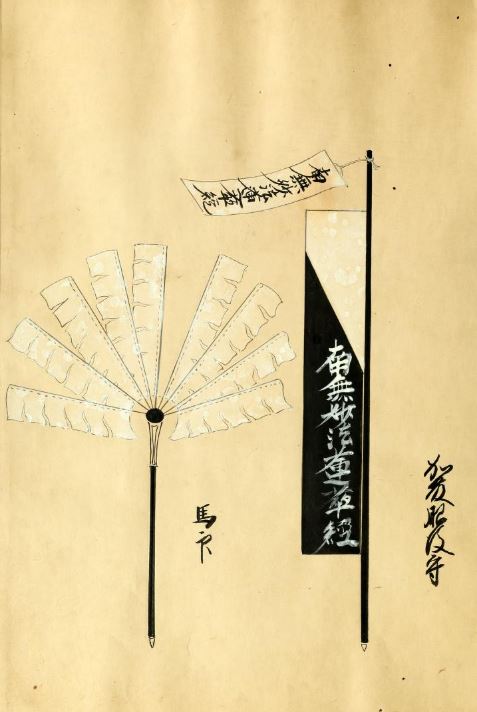
He personally inspected the site every evening when he was in residence. One ri by another ri of stonework: 49 turrets, 18 gates, 120 wells (the Ulsan lesson applied very literally). He planted gingko trees, his personal favourite, along every significant approach, which is why the signature Kumamoto-jō photograph is still a gingko corridor against black walls.
Alongside the castle, Kiyomasa was running a parallel civic project that matters as much in its own way. He founded Hommyō-ji Temple (本妙寺) on the wooded ridge northwest of the castle as the Katō family’s bodai-ji (hereditary Buddhist mortuary temple), in Nichiren-sect rite. He imported Nichiren monks from Ikegami Honmon-ji in Edo.
He invited, or in some cases compelled, Christians in Higo to abjure; the ones who would not were handed over to Hideyoshi’s persecution edict and in some cases executed. Konishi Yukinaga had been a Christian, his former Higo half had been populated by Christian peasantry, and Kiyomasa enforced the religious conversion ruthlessly.
The episode sits uncomfortably in the modern biography. He was, beyond doubt, personally responsible for the beheading of pregnant Christian women in the 1589 Hondo action (Jesuit sources attest the atrocity). It is the one clear moral stain on him. Unlike the tiger hunts, the Edo chroniclers did not try to soften it.
Kiyomasa was by now one of the senior daimyō of the new Tokugawa order, and he was being used. In 1603 Ieyasu had him formally adopted into the Toyotomi surname — a gesture designed to pull his Toyotomi loyalty inside the Tokugawa framework. In 1606 Ieyasu married his tenth son, Tokugawa Yorinobu, to Kiyomasa’s second daughter Yaso-hime — the eight-year-old who would later become Yōrin-in, the matriarch of the Kii Tokugawa line.
In 1610, Kiyomasa was directed to contribute personally to the construction of Nagoya Castle for the Tokugawa and to Edo Castle’s expansion. The well he supposedly dug at Edo — Kiyomasa-no-ido, inside what is now the Meiji Shrine Inner Garden — is almost certainly one of the dozen wells the Katō labour contingent dug during those duties. It still flows. You can visit it; I do most years.
1611 — Nijō Castle and the poisoned cake
The political question that hung over the final years of Kiyomasa’s life was what to do with Toyotomi Hideyori — Hideyoshi’s son by his second concubine Yodo-dono, then a teenage lord nominally governing Osaka Castle. Ieyasu had established the Tokugawa shogunate in 1603 and abdicated it to his son Hidetada in 1605, but the shogun’s writ did not yet run in Osaka, where the Toyotomi loyalists still treated Hideyori as the rightful inheritor of his father’s dispensation. Kiyomasa was the most eminent of those loyalists, and the most senior daimyō who publicly refused to let the Hideyori question be closed.
In March 1611, Ieyasu summoned Hideyori to Nijō Castle in Kyoto. The meeting was ostensibly ceremonial. It was also a test of loyalty — nobody had seen Hideyori outside Osaka for a decade, and Ieyasu wanted to make clear, publicly, that Hideyori acknowledged the Tokugawa hierarchy.
The Toyotomi loyalists were terrified Hideyori would be seized or killed on the road. Kiyomasa, as the most trusted senior retainer of both sides, was designated as Hideyori’s escort. The contemporary accounts, including Hosokawa Tadaoki’s letter to his son, agree that Kiyomasa carried a short dagger concealed under his formal clothes on the Kyoto trip — either to defend Hideyori or, in the grimmer reading, to kill himself and Hideyori both if Ieyasu moved against them.
The meeting passed uneventfully. Ieyasu was polite. Hideyori was polite. Both sides retired claiming reconciliation.
Kiyomasa left Kyoto for Kumamoto in May. He made the trip by ship down the Inland Sea. Somewhere on the passage he fell ill — vomiting, difficulty speaking, paralysis on one side.
He did not recover. On 24 June 1611, the same day he had been born, he died in Kumamoto Castle at the age of forty-nine.
The immediate contemporary explanation was a stroke — almost certainly accurate, given the single-sided paralysis and the speech loss. The Edo chroniclers preferred different explanations. The Tōdai-ki suggested venereal disease contracted in younger days.
The kabuki tradition developed the Doku-manju no Kiyomasa, “Poison Cake Kiyomasa”, story, in which the daimyō had been served poisoned sweet-bean buns by Ieyasu’s agents during the Nijō meeting and died slowly afterwards as the toxins took effect. Ikenami Shōtarō’s 1964 novel Hi-no-kuni no Shiro takes the poison story as its core conceit. Modern historians treat the poison theory sceptically, the symptoms do not match the pharmacology of the period, but the political circumstances were so convenient for Ieyasu, and Kiyomasa so decisive as a Toyotomi firewall, that the suspicion will not quite die.
What happened after him confirms the reading, whichever way you go on the poison. His only surviving son, Katō Tadahiro, was eleven when Kiyomasa died. Tadahiro inherited the 520,000-koku fief. Twenty-one years later, in 1632, the Tokugawa shogunate under Iemitsu arbitrarily revoked the Katō grant, alleging a conspiracy that no surviving document substantiates, and removed Tadahiro to a 10,000-koku pension in Shōnai, up in Yamagata.
The Katō direct line at Kumamoto was extinguished. The domain was given to Hosokawa Tadatoshi — the son of Kiyomasa’s old colleague Hosokawa Tadaoki — and the Hosokawa governed Kumamoto for the remaining 236 years of the shogunate. Hosokawa Tadatoshi, on entering Kumamoto Castle in October 1632, dismounted at the Jōchibyō mausoleum at Hommyō-ji and bowed toward the dead Kiyomasa, saying “I am holding your castle in trust.” The bow is historical. So is the subtext.
Seishōkō — the cult of Kiyomasa
One more thing matters before the travel section. Kiyomasa is, quite genuinely, the only Sengoku daimyō who was posthumously deified as a kami by his former subjects — not by government decree, but by spontaneous popular religion. Within a generation of his death he was being referred to in Kumamoto as Seishōkō, a direct on-yomi reading of his name with the honorific -kō (“lord”) that is normally reserved for imperial ancestors. By the 18th century, Hommyō-ji was holding monthly memorial services on the 23rd of every month (the ni-jū-san commemoration of his 24 June death-day by the old lunar calendar), and the anniversary service on 23 June was drawing tens of thousands of pilgrims.
The Seishōkō shinkō cult, “Faith in Lord Kiyomasa”, is still active. The July 24 annual festival at Hommyō-ji fills the slopes. The Katō Shrine inside Kumamoto Castle grounds is a functioning Shinto shrine that enshrines Kiyomasa explicitly as a kami — not a national-pantheon deity, but a regional one, local to Higo. There is also a smaller cult chapel, Kiyomasa-kō-dō at Yokohama, and the Kakurin-ji sub-temple in Tokyo’s Shirokanedai district where Kii Tokugawa retainers installed a Kiyomasa shrine in memory of Yōrin-in’s father. Kumamoto’s relationship with him has, if anything, deepened since the 2016 earthquake — the castle he built took most of the structural damage, and the rebuilding effort has been framed in civic posters as “a debt to Seishōkō-san’s workmanship.”
Where to visit Kiyomasa today
Kiyomasa’s footprint across Japan is surprisingly geographic. Nagoya has the birthplace; Edo has the construction-era wells; Kumamoto has the castle and the shrine and the grave. I’ll take these roughly in the order a visitor with a full week might take them.
Nakamura Park and the Hideyoshi-Kiyomasa Memorial Museum
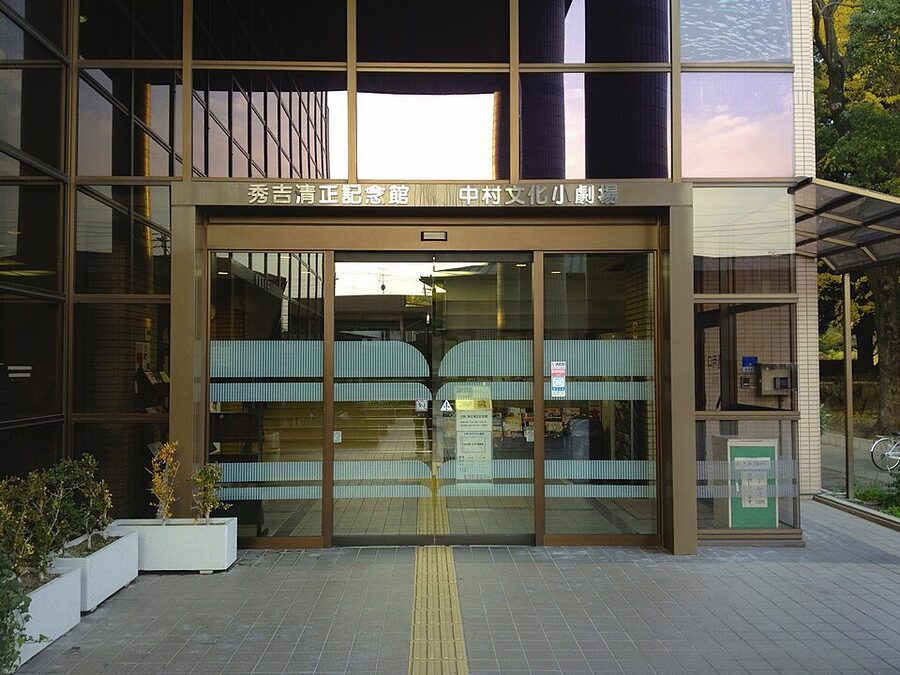
Take the Higashiyama Line subway from Nagoya Station three stops west to Nakamura-kōen Station. Exit 3, five minutes’ walk south. The park is a modest municipal green space on the ground where Nakamura village used to be, and it contains two small museums: the Toyotomi Hideyoshi Memorial (Toyokuni Shrine) at the centre, and the Kiyomasa-kō Seitan-chi, “Kiyomasa’s Birthplace”, stone marker about three hundred metres southeast, inside the Myōgyō-ji Temple grounds.
The joint museum — Hideyoshi Kiyomasa Kinenkan — is at the northwest end of the park and is open 10:00–17:00 daily except Mondays. Admission is ¥150. The collection is small and mostly pedagogical (scrolls, repro armour, dioramas of the Nakamura village as it was), but there is one genuine Kiyomasa artefact worth the trip: the so-called kata-kama-yari, a one-sided-bladed cross-headed spear fragment said to have been Kiyomasa’s childhood weapon.
Its provenance is Edo-period rather than contemporary, but the piece itself is handsome. You will want maybe forty-five minutes for the park and museum together.
Kiyomasa’s Well at the Meiji Shrine Inner Garden
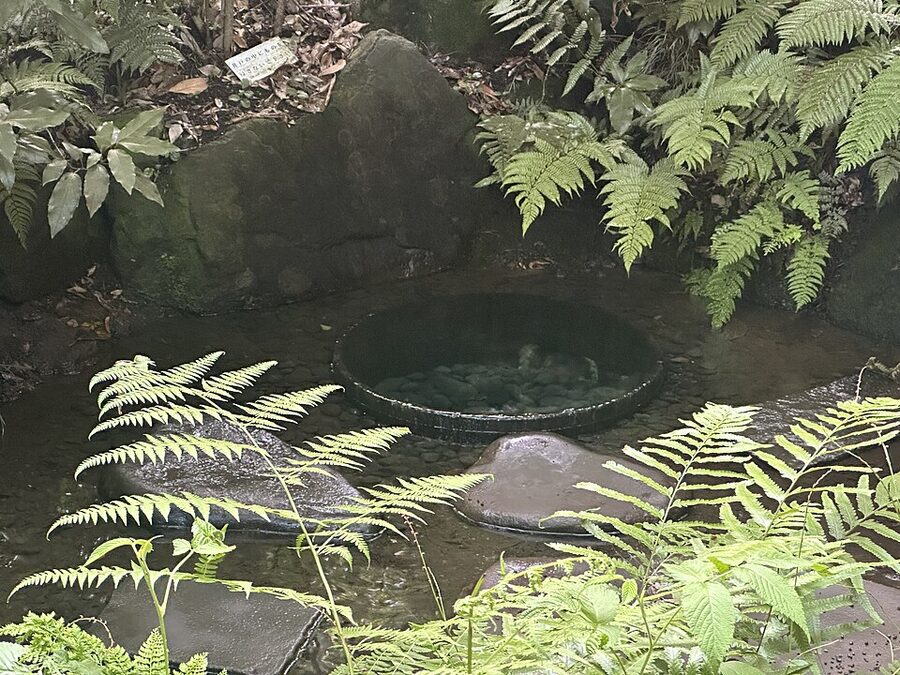
This is an odd one and worth a paragraph of explanation. When Kiyomasa was put to work on the Tokugawa’s national-construction programme in 1610–1611 — the tenka-bushin labour obligation — one of his assigned sites was the expansion of Edo Castle’s western defences. He is supposed to have personally surveyed and dug the well that sits in what is now the Meiji Shrine Inner Garden (Gyoen), in central Tokyo near Harajuku. The well is still flowing, still clean (the water has been lab-tested by the shrine office), and, because of a social-media vogue that swept Japan in the early 2010s, is now something of a pilgrimage site for women in their twenties seeking “love-fortune” energy from the octagonal stone lining.
You enter via the Inner Garden gate at Harajuku Station, pay the ¥500 admission (this is the Inner Garden only; Meiji Shrine itself is free), and walk ten minutes through the iris beds. The well is signposted in English and Japanese.
A queue is possible on weekends. Avoid rainy days — the ground goes spongy. My preference is first thing on a weekday morning; you can have the whole garden to yourself until about 10:00.
Kumamoto Castle — brief, with a cross-reference
Kumamoto Castle itself, the building Kiyomasa spent seven years putting up and the Hosokawa spent two hundred years not quite finishing, is covered in full detail in a separate piece, and if you are in Kumamoto the castle is plainly the single thing you should see. Take the Kumamoto City Tram from Kumamoto Station to Kumamoto-jō-Shiyakusho-mae, allow three hours minimum for the main circuit, four if you want the Honmaru Goten interior reconstruction. The 2016 earthquake did significant damage and the reconstruction is still ongoing in 2026; the main tenshu keep reopened in 2021 but several turrets are still in scaffolding. Current admission is ¥800 for adults.
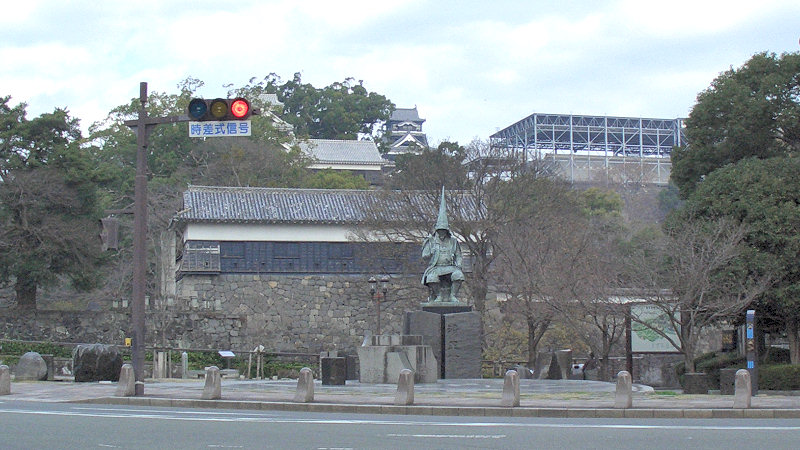
The thing I want to point out here, the thing that connects the castle to the man, is the Kiyomasa bronze outside the Nishi-dai-tenshu, the smaller western keep. Most visitors pose for a photograph with it. Very few go around to the back of the base and read the cast-bronze inscription, which is a direct quote from the Kiyomasa-ki: “Build castles as if they will stand a thousand years, even if you will not live to see the next ten.” The castle has in fact stood — despite cannon fire in the 1877 Satsuma Rebellion, when it held 4,000 Imperial Army defenders against 14,000 Satsuma rebels for 54 days; despite the firebombing of 1945; despite the 2016 quake. Four hundred years and counting.
Katō Shrine (Katō-jinja)
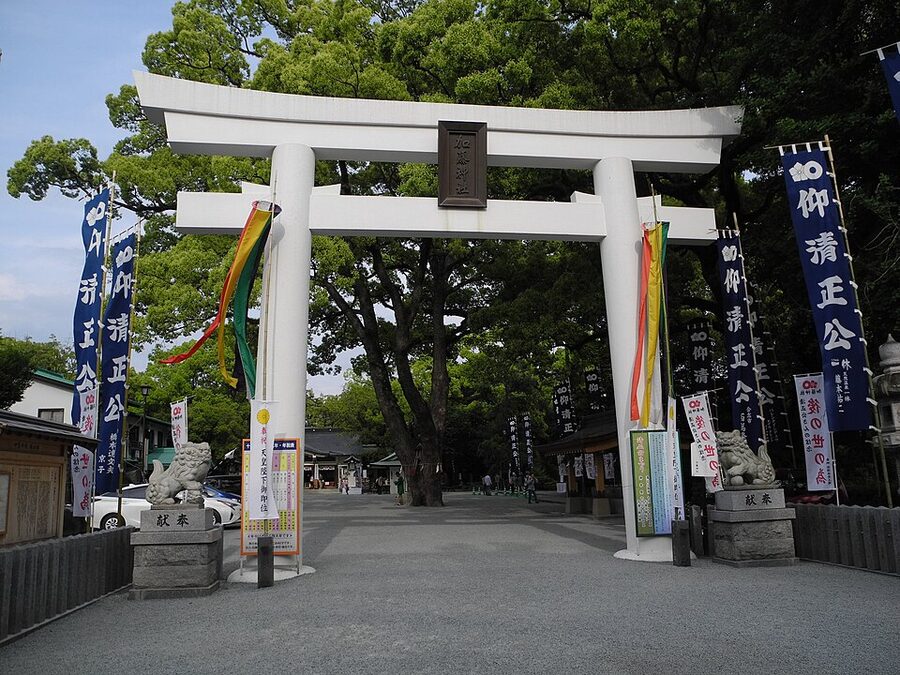
Inside the Kumamoto Castle grounds, northeast of the Honmaru Goten, sits Katō-jinja. This is the shrine that enshrines Kiyomasa as a Shintō kami — a remarkable repurposing of his memory, given that he was a lifelong Nichiren Buddhist who would have been appalled at the Shinto-kami framing. The shrine was moved to its present location after Kumamoto Castle was decommissioned as a feudal-period site; it is open 24 hours and free.
There are omamori amulets at the shrine office (9:00–17:00) and the staff are patient with foreign visitors. The most serious pilgrims come at New Year and on 24 June. I have always found it a calm place, even in midsummer; the castle’s internal grounds take the breeze off the Shira River.
Hommyō-ji Temple and the 176-step approach
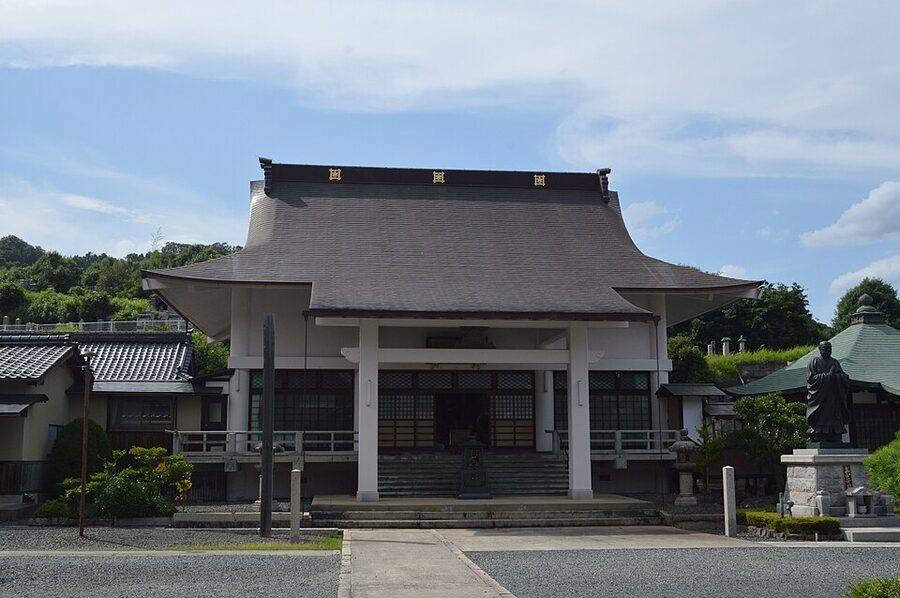
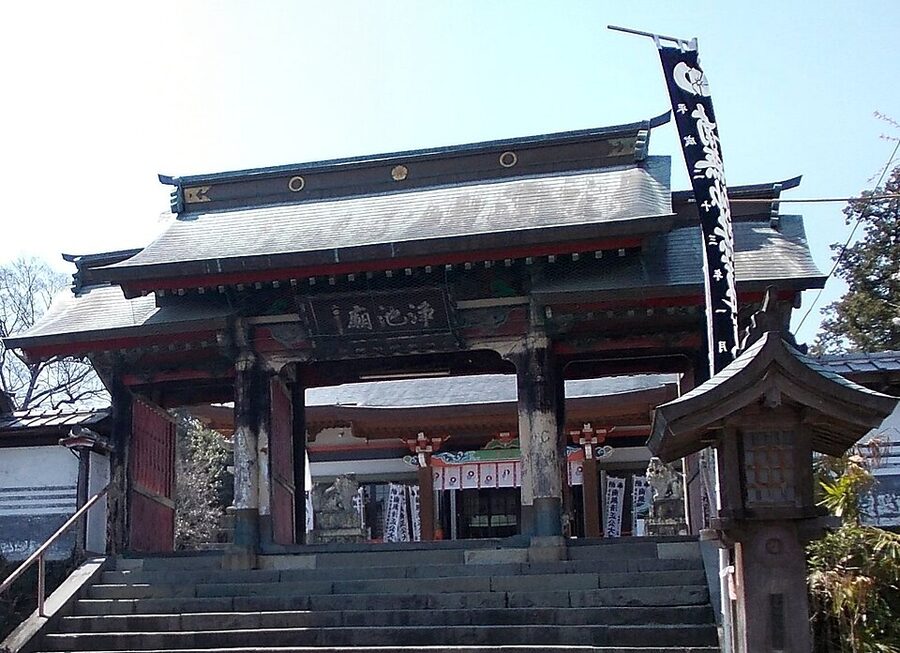
This is the one. If you visit only one Kiyomasa site, make it this one. Hommyō-ji is the Katō family bodai-ji, the Nichiren-sect temple that has been guarding his remains since 1611.
It sits on a wooded ridge (Fuseiyama) three kilometres northwest of the castle. You reach it from Kumamoto Station by bus — Line 4 to Honmyōji Iriguchi, then a five-minute walk north — or from the castle by taxi for about ¥1,200.
The 176 stone steps are the site’s signature. Climb them slowly. There are gingko trees along the way that Kiyomasa supposedly planted, and plaques marking the Shitō-e ritual stops — the spots at which the 18th-century processions paused for Lotus Sutra recitations on his death-day.
At the top you reach the Kiyomasa-dō, a small black lacquer-beamed chapel that houses the seated statue of Kiyomasa in armour, and behind it the Jōchibyō mausoleum itself, fenced off and closed to visitors but visible from the outer courtyard. The seated statue is 17th-century, contemporary with the temple. It is the closest thing to a real Kiyomasa-portrait we have; it was carved by a craftsman who had served him personally.
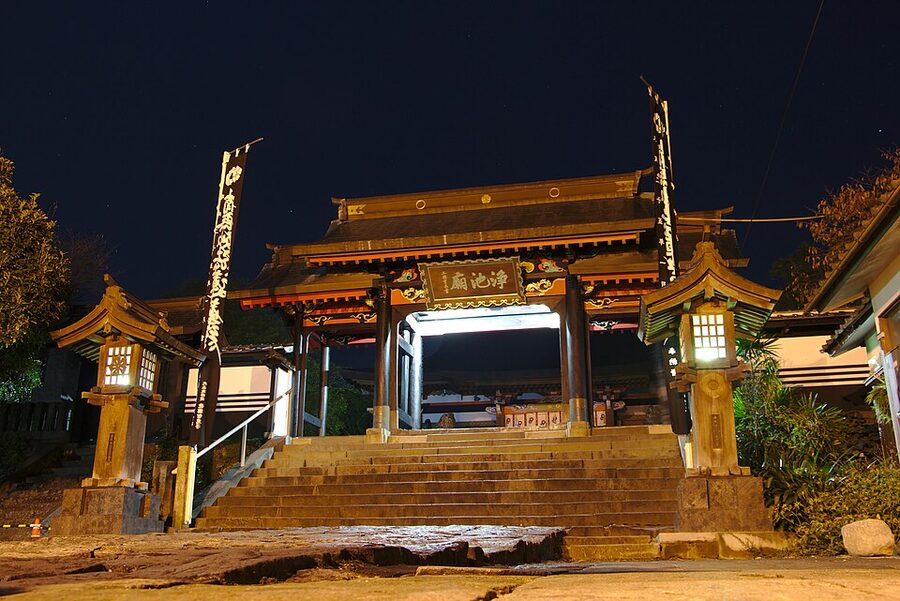
The temple complex below the steps contains the Hōmotsu-kan treasury museum (¥300, 9:00–16:30, closed Mondays) which is genuinely worth visiting. The preserved items include Kiyomasa’s presentation spears, a scroll of his personal letters, and, most affectingly, the small iron jūmonji yari blade-fragment that is supposedly the tiger-hunt spear from Hamgyong. The provenance is contested. The object is arresting anyway.
The Seishōkō Matsuri — 23-24 June in Kumamoto
Kumamoto holds the Seishōkō-sai (清正公祭) on 23 and 24 June every year — the shōtō-kō eve-vigil on the 23rd and the anniversary service on the 24th, which is the lunar-calendar equivalent of Kiyomasa’s death-day. The festival is centred on Hommyō-ji: processions of Nichiren priests in yellow robes, Lotus-sutra recitations in the Kiyomasa-dō, an all-night vigil at the mausoleum, stalls along the gingko approach selling Seishōkō-manju sweet-bean buns (a slightly black joke given the poison-cake story), and a closing bell-ring at dawn on the 25th.
The festival is not a tourist-boosted production in the style of Gion Matsuri. It is genuinely religious and genuinely Kumamoto-local. If you attend, behave as you would at any major temple observance: no photography inside the Kiyomasa-dō during service, join the recitation-line if invited, and buy a stall item as an act of temple support rather than a souvenir.
My last visit was 2019, and the rebuilding of the post-quake castle was a major theme of the priest’s address that year. The festival has been unbroken since 1735 when the 125-onki, the 125th-year commemoration, formalised it.
Further afield — the grave in Yamagata
There is one more Kiyomasa grave, and it is not in Kumamoto. When Katō Tadahiro was exiled to Shōnai in 1632, he took his father’s personal armour and a portion of the cremated remains north with him. They were buried at Tenzawa-ji Temple, in what is now Tsuruoka City in Yamagata Prefecture. The site was forgotten for almost three hundred years; in 1949 a grave-stone inscribed Kiyomasa was dug up and, inside, a Momoyama-period suit of Kiyomasa armour and a Kei-period Yumino-yaki ceramic funerary pot containing bone fragments were recovered.
Tenzawa-ji is a very quiet temple, rarely visited, and a long train ride from anywhere. You take the Uetsu Line to Tsuruoka Station, then a twenty-minute taxi or a forty-minute bus to Maruoka. The armour is exhibited at the Chido Museum in Tsuruoka city centre; the temple itself is a simple compound with the grave-stone in an enclosed courtyard.
It does not compare to Hommyō-ji as a site. But it matters, if you care about the after-life of the Katō line — because it is the one unbroken physical link to Tadahiro’s own exile, and the only reason the Katō surname has persisted continuously in Japan for the last four centuries. The current Katō head of house still lives in Tsuruoka.
What Kiyomasa gets wrong in English
Two things that English-language history persistently gets wrong about Kiyomasa, and that I want to correct before closing. The first is the “brutal suppressor of Christianity” framing, which is accurate but incomplete. He did persecute Christians, and in 1589 at Hondo he is credibly recorded by Jesuit sources as having committed atrocities on pregnant converts.
But his motive was not anti-Christian generally; it was Nichiren specifically. The Nichiren sect in the 16th century was aggressively militant against all other religious traditions, including other Buddhist sects — Kiyomasa was as hostile to the Jōdō-shū, the Shingon-shū, and the Rinzai-Zen as he was to the Jesuits.
The Higo Christianity persecution was part of a larger Nichiren-sectarian campaign, not a discrete anti-Christian policy. The nuance does not exonerate him. It does shift the angle of the charge.
The second is the tiger-hunt story. English tourist books still present the Hamgyong tigers as a heroic adventure narrative — Kiyomasa against the beast, spear in hand. The Japanese record actually frames it more awkwardly. Hideyoshi had asked for tiger meat because his Chinese physicians were prescribing it as a vigour tonic in the old man’s declining years (tiger parts were standard materia medica in late-Ming pharmacology).
Kiyomasa’s troops were hungry enough that they probably did eat some of the tigers they killed. The skins went to Osaka as formal gifts. It was a supply operation, not a heroic trophy hunt, and the Edo-period rewriting made it heroic to preserve Kiyomasa’s dignity. The real scene is grimmer: a starving army in the Korean mountains, a lord under orders to provide exotic tonics, and a man who did the best he could under those particular constraints.
A last word
Kiyomasa is, I think, the most fully three-dimensional of the major Toyotomi retainers. He was a teenage spearman who became a civil engineer, a Nichiren persecutor who bequeathed an irrigation system still in service four centuries later, a Korea invader who hated the war and said so in writing, a tiger-hunter who dug wells, a Tokugawa ally who tried to save Hideyori, probably at the cost of his own life.
Every side of him is documented and none of the sides add up cleanly. He is not a hero and he is not a villain. He is something harder — a competent man doing very difficult administrative work inside a very violent empire, forced repeatedly to make morally compromising choices, and finally outmanoeuvred by a shrewder politician.
If you are in Kumamoto anyway, climb the 176 steps at Hommyō-ji. The view from the top is not exactly dramatic — it is a quiet wooded ridge with a small lacquered hall at the top and the city laid out in the distance. But the sight-line is deliberate, and if you look west you will see Kumamoto Castle’s black keep floating above the trees at exactly the same height.
That is not an accident. The teenager who took his first head at Shizugatake in 1583 is buried where he can still look at the fortress he spent the rest of his life building. When you come back down, take the tram into the city and walk the castle walls. Both halves of him are still standing.