
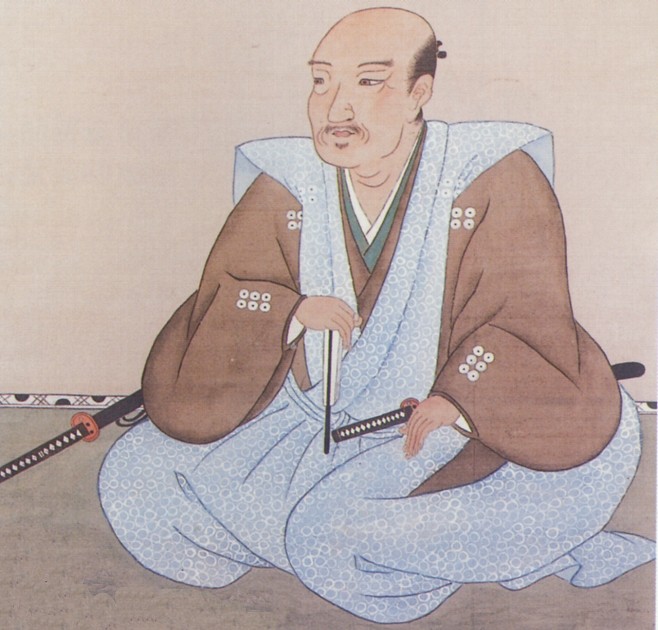
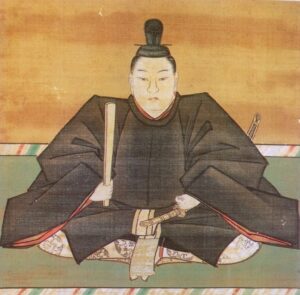
The thing to get straight about Sanada Yukimura is that he never called himself Sanada Yukimura. His name, in every document he signed in his lifetime — every surviving letter, every battlefield commendation written the day before he died — was Sanada Nobushige (真田 信繫). “Yukimura” (幸村) is a posthumous Edo-period stage name, first attested in 1672, fifty-seven years after his death, in a popular war-tale called the Namba Senki. Nobody has ever been able to identify who coined it or why. And for the last three centuries, Japan has known him almost exclusively by a name he would not have recognised.
This kind of thing happens, in Japanese historical reception, to men who acquire a mythology heavier than their record. The record is already extraordinary. On 7 May 1615, leading three and a half thousand men against a Tokugawa army of a hundred and fifty thousand in the open field south of Osaka Castle, Nobushige’s cavalry punched through the vanguard, broke through a second line, broke through a third, and got within striking distance of Tokugawa Ieyasu’s personal command post on Chausuyama Hill. Ieyasu prepared to kill himself twice that afternoon.
By the time it was over Nobushige was dead, the Toyotomi cause was dead, and the Tokugawa age had begun. But the Shimazu general Iehisa, who watched the whole thing through a spyglass from a neighbouring hill, wrote in his dispatch that evening that Nobushige was Nihon-ichi no Tsuwamono (日本一の兵): “the number-one warrior in Japan.”
In This Article
- The Name Game
- Second Son of the Most Slippery Clan in Shinano
- Hideyoshi’s Horse-Guards and a Very Useful Father-in-Law
- The Inubushi Conference, 1600
- The Second Siege of Ueda
- Fourteen Years in Kudoyama
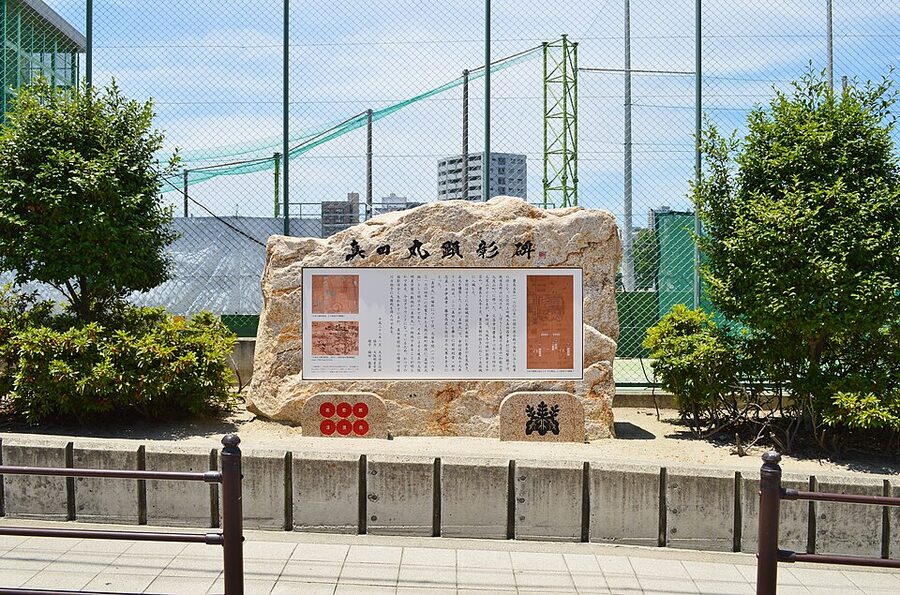
- The Sanada-maru
- The Peace That Wasn’t
- Dōmyō-ji and Tennōji-Chausuyama
- “Japan’s Number-One Warrior”
- From Nobushige to Yukimura
- The Sanada Line After 1615
- Where to visit Sanada Nobushige’s story today
- Ueda Castle Park, Ueda, Nagano
- Zenmyō-shō-in (Sanada-an), Kudoyama, Wakayama
- Matsushiro Sanada-yashiki, Matsushiro, Nagano
- Yasui Jinja, Tennōji, Ōsaka
- Shingan-ji and the Sanada-maru site, Ōsaka
- Chōkoku-ji, Matsushiro
- Nihon-ichi no Tsuwamono
The Name Game
You should know the naming problem up front because it affects everything else. In this article I will call him Nobushige when I am writing about the man, and Yukimura when I am writing about the legend — which is roughly the boundary between the documentary record through 1615 and the Edo kabuki-and-bunraku industry that grew up around him afterwards. The Japanese scholarship has made peace with this distinction; the English-language reception has not, and still prints “Yukimura” everywhere.
Twenty of Nobushige’s personal letters survive. None of them use the character 幸 (yuki) in any position. They are signed “Sanada Saemon-no-suke Nobushige” or shortened to “Nobushige.” In May 1615, the day before he died, he issued a battlefield commendation to six retainers written on shogi-piece-shaped wooden tablets, those tablets survive, and the signature is Nobushige again. The Matsushiro Sanada-ke, his older brother Nobuyuki’s descendants who ran the 100,000-koku Matsushiro domain through the Edo period, were still officially answering Tokugawa inquiries in 1809 that “in our house he is known as Nobushige; the name Yukimura he may have adopted after entering Osaka” — hedging, politely, in a way that tells you they knew he hadn’t.
The scholar Shinohara Yukihisa has argued that the Namba Senki author invented “Yukimura” in 1672 to avoid confusion with Takeda Nobushige, Shingen’s younger brother, who had died at Kawanakajima a century earlier and whose name was identical in characters. War-tales needed a distinguishable hero. “Yukimura” made for a cleaner print.
By the 1701 Tōgen Iji — a biographical collection compiled for Tokugawa Mitsukuni, lord of Mito — the editors were explicitly complaining in their preface that “Yukimura is an error; the correct reading is Nobushige.” Nobody listened. By the 1780s the Shogunal Bureau of Genealogy had given up trying to correct it and simply used “Yukimura” in the official Sanada pedigree. The myth had overtaken the archive.
Second Son of the Most Slippery Clan in Shinano
Nobushige was born in 1567, the second son of Sanada Masayuki, at a moment when his father was still a Takeda retainer using the adopted surname Mutō. The Sanada were a small kokujin clan from Shinano province’s Chiisagata district — a compact 40,000-koku holding in the upper Chikuma valley — who had bound themselves to the Takeda under Nobushige’s grandfather Sanada Yukitaka in the 1540s. The Sanada specialty was mountain warfare, small-castle defence, and careful political reading. These would all come up.
Masayuki became head of the Sanada in 1575 by accident. His two older brothers, Nobutsuna and Masateru, both died at Nagashino on the same afternoon — they went down in the second wave of the cavalry charge against the Oda arquebusiers, which is the kind of detail the family cultivated afterwards. (Cross-link: Nagashino is where the Takeda cavalry tradition died.) Masayuki, the third son, inherited the Sanada name and left the Mutō adoption. Seven years later, in 1582, the whole Takeda edifice collapsed under the Oda-Tokugawa invasion, Katsuyori committed suicide at Tenmokuzan, and the Sanada found themselves small and conspicuously alive in a territory about to be partitioned.
What Masayuki did next is the thing the Sanada are still remembered for in Shinano local history: between 1582 and 1585 he changed sides five times. He swore fealty to Takigawa Kazumasu (Oda), then to the Later Hōjō after Honnō-ji, then to the Uesugi, then to Tokugawa Ieyasu, then back to the Uesugi, with a final swerve to Toyotomi Hideyoshi by 1586. Every time he switched, the Sanada held on to the 40,000 koku.
And every time a larger power sent an army up the Chikuma valley to crush him, the army came back a week later with nothing to show for it. The First Siege of Ueda in August 1585, when Ieyasu sent 7,000 men against Masayuki’s 1,200, ended with the Tokugawa column retreating after losing about 1,300 men at the gate to the Chđyama stream — an ambush built into the terrain and executed by Masayuki with the kind of precision that made the Tokugawa subsequently careful. Nobushige was eighteen. He led the sally-gate detachment.
Nobushige spent his boyhood as the currency of those switches. In 1582 he was sent north as a hostage to Uesugi Kagekatsu’s court at Kasugayama Castle, where he lived for roughly three years as a guarantee of Sanada loyalty. The Uesugi court was also where he would have first encountered the political weight of Kagekatsu’s uncle, the late Uesugi Kenshin, still felt as a presence in every retainer’s room. (Cross-link: the teenage hostage years at Uesugi Kagekatsu’s court are the one credentialing experience the chronicles describe in any detail.) When the Sanada jumped to Hideyoshi in 1586, Nobushige was reassigned as a hostage-retainer at Ōsaka, and the real political education began.
Hideyoshi’s Horse-Guards and a Very Useful Father-in-Law
Under Hideyoshi, Nobushige was promoted out of hostage status and into Hideyoshi’s own umamawari horse-guard — a retinue of about forty elite retainers who rode with Hideyoshi personally on campaign. This was not a junior position. It was the route by which regional second sons with no formal domain became trusted Toyotomi administrators. Nobushige was given an independent 19,000-koku stipend separate from his father’s Ueda holding, a house in Fushimi and another in Ōsaka, and was saddled with the Fushimi Castle construction buyaku — a public works obligation that most scholars now read as Hideyoshi’s way of absorbing him into the regime.
The other piece of Toyotomi integration was his marriage, around 1594, to the woman known posthumously as Chikurin-in — in life, Akihime — who was the daughter of Ōtani Yoshitsugu. Yoshitsugu was one of Hideyoshi’s closest strategic planners, afflicted with leprosy, friend-of-friends with Ishida Mitsunari, and the man whose position in 1600 would make Ishida’s western coalition possible. Marrying into the Ōtani family tied Nobushige directly into the Toyotomi inner circle and away from his father’s older Takeda-retainer network. It is probably the single most consequential choice of his life, and he didn’t make it — Hideyoshi and the Ōtani matriarch Ō-no-tsubone did, and presented it to him as a done deal. (Cross-link: this period was Nobushige’s patron Hideyoshi at the height of his domestic power.)
Through the 1590s the picture you get of Nobushige is quiet and administrative. He was in Hizen Nagoya during the Koryō campaigns, commanding 700 Sanada men in the castle-garrison rota rather than crossing to the continent. He received court rank — Junior Fifth, Saemon-no-suke — in 1594 and a grant of the Toyotomi surname, both arranged at Yoshitsugu’s prompting.
His first son Daisuke Yukimasa was born around 1601 in exile, but several of his daughters were born in Ōsaka or Fushimi in the late 1590s. He spent the decade raising a family and running a small independent estate within the Toyotomi bureaucracy, which was exactly what a second-son hostage-turned-ōkūgi horseguard was supposed to do.
The Inubushi Conference, 1600
When Hideyoshi died in 1598 and Ieyasu began preparing the consolidation that would end at Sekigahara, the Sanada faced the problem that had been shadowing them for fifteen years. They were tied to the Toyotomi through Nobushige’s marriage and Masayuki’s court connections. They were also tied to the Tokugawa through the marriage of the eldest son, Nobuyuki, to Komatsuhime — Honda Tadakatsu’s adopted daughter. Whichever way the clan jumped, it was leaving a daughter-in-law on the losing side.
In July 1600, travelling north with Ieyasu’s Uesugi-chastisement army, the three Sanada men — Masayuki, Nobuyuki, and Nobushige — met at Inubushi in Shimotsuke province (modern Sano, Tochigi) and talked for a day. The chronicles call this the Inubushi no wakare, “the parting at Inubushi.” They decided to split. Masayuki and Nobushige would go west with Ishida; Nobuyuki would ride east with Ieyasu. Whichever side won, the Sanada would survive.
Two competing theories explain the decision. The older one, pushed by the Matsushiro chronicles, is that Masayuki orchestrated the split as a calculated hedge — an insurance contract written in the blood of whichever son drew the losing lot. The more recent reading, pushed by the Inubushi-conference document now held at Sano City Museum, is that there was a real ideological argument inside the tent: Masayuki actually believed Ishida would win and wanted the family to be on the winning side afterwards, and Nobuyuki refused to go along because he trusted Ieyasu.
On this reading the survival of the Sanada is an accident rather than a plan. I find the second version more convincing; most serious readers of the period now do.
The Second Siege of Ueda
Masayuki and Nobushige rode home from Inubushi and shut themselves in Ueda Castle with 2,500 men. Tokugawa Hidetada, Ieyasu’s third son and designated heir, marched up the Nakasendō with 38,000 troops on 5 September 1600 and demanded the castle’s surrender. The Sanada stalled. Masayuki negotiated at the front gate for three days while Nobushige led night raids against Hidetada’s forward positions, setting fires, harassing foragers, and generally reducing the besieging force to a state of low-grade distraction.
The critical tactical detail about the 2nd Siege of Ueda, which the popular history often flattens, is that the Sanada never intended to win. Their objective was to waste Hidetada’s days, not to defeat him. Every day Hidetada spent at Ueda was a day he was not at Sekigahara.
On 17 September, twelve days in, Hidetada received an urgent courier from Ieyasu ordering him to march for the main battle immediately. Hidetada abandoned the siege, force-marched his men down the Nakasendō, and arrived in Mino on 18 September — three days after Ishida Mitsunari had already lost. (Cross-link: the absence of Hidetada’s 38,000 men is one of the three things that decided Sekigahara. The other two were Kobayakawa Hideaki’s defection and the weather.)
Ieyasu never forgave the delay. When the Sanada were rounded up after Ishida’s defeat, both Masayuki and Nobushige were condemned to death by seppuku for obstructing the shogun-designate. Nobuyuki rode to Ieyasu’s camp and begged. Honda Tadakatsu, Nobuyuki’s father-in-law, seconded the plea — and Tadakatsu was the one general Ieyasu could not refuse.
(Cross-link: Honda Tadakatsu saved the Sanada from extinction here, which is why the Sanada line continued to produce Edo daimyō for the next 270 years.) The sentence was commuted to internal exile at Mount Kōya in Kii province. On 12 December 1600, Masayuki, Nobushige, and a small household of retainers rode out of Ueda into what both of them expected to be a quiet death in the Kii mountains.
Fourteen Years in Kudoyama
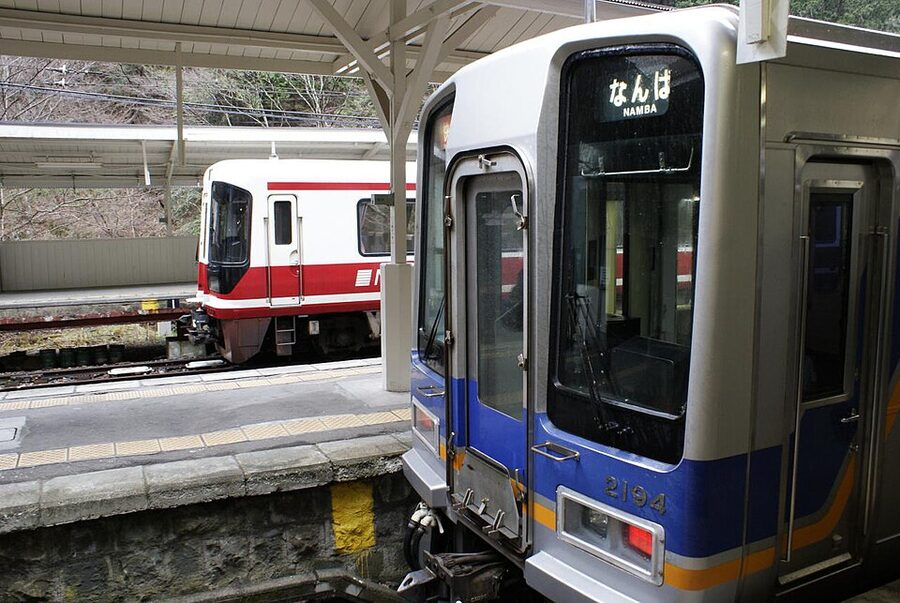
The household spent about a year at the Renge-jō-in sub-temple on Kōya-san proper, then moved down to a compound in Kudoyama — literally “nine-degree mountain,” a small village at the foot of the Kōya pilgrim road. The compound became known as the Sanada-an, “the Sanada hermitage.” The family stayed there for the next fourteen years.
Masayuki died at Kudoyama in 1611, at sixty-four; Nobushige took tonsure in 1612 and adopted the Buddhist name Kōhaku. Five of his seven children were born in Kudoyama. Money came from old Sanada retainers in Shinano, smuggled in through intermediaries — the family would otherwise have been destitute.
The chronicles of Nobushige’s Kudoyama years are thin, but the ones that exist read like those of any learned rural gentry. He hunted in the forest behind the compound. He played go and sugoroku with visiting monks. He read military treatises at night, reportedly late into the evening, and on at least one occasion his older brother Nobuyuki sent him a copy of the Sonshi from Matsushiro with a note asking his opinion on the fifth-chapter commentary.
He drilled local gōshi, rural warriors, in spear and arquebus technique in the compound yard, teaching the sons of Kudoyama farmers what their fathers would not have bothered to learn. When the call came in 1614, many of those same Kudoyama gōshi followed him to Ōsaka.
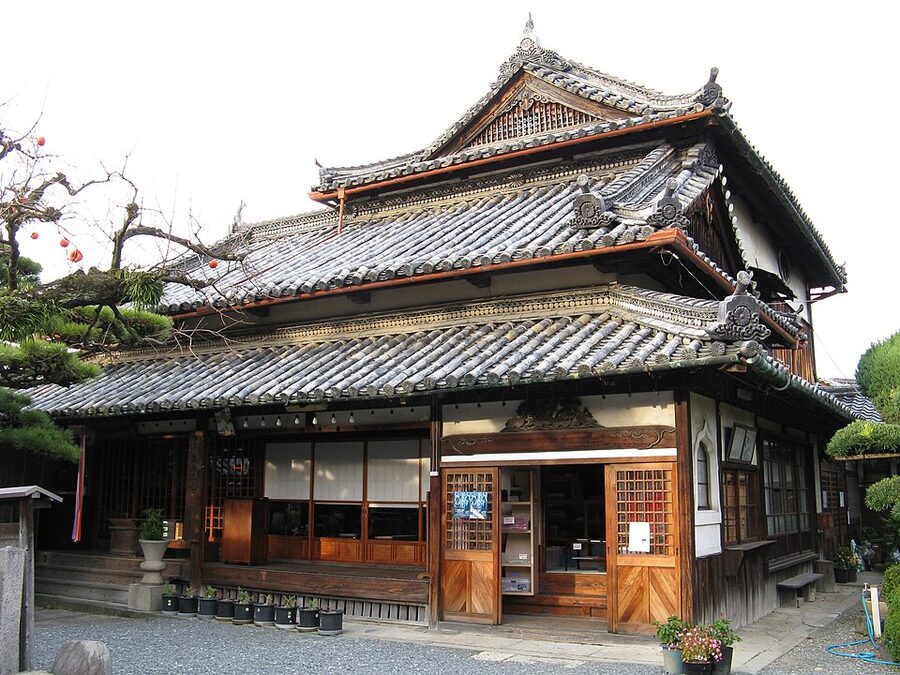
In October 1614, a messenger from the Toyotomi loyalist Goto Matabei arrived at Kudoyama with 200 gold pieces and 30 kan of silver. Hideyori — Hideyoshi’s son, now twenty-one — was reconstituting an army at Ōsaka Castle against the inevitable Tokugawa siege, and he was inviting the survivors of the 1600 generation who had not been absorbed into the new order.
Nobushige slipped the Kōya monastic guard, rode out of Kudoyama at night with his son Daisuke and about thirty retainers, and arrived at Ōsaka on 9 October. He was forty-seven. He had not fought a pitched action in fourteen years.
The Sanada-maru
Nobushige’s first proposal in the Ōsaka war council was to abandon the castle and fight a mobile campaign to hold Kyoto and Seta Bridge, cutting the Tokugawa approach before Ieyasu could concentrate. Katagiri Katsumoto and the Toyotomi fudai rejected the plan. They wanted to defend the castle.
The castle defence was what they had been organising for four months and what the ronin recruits were being paid to do. Nobushige lost the argument. (Cross-link: this was the point at which the strategic initiative of 1614 passed permanently to Ieyasu, who now had four months to drag his cannon into range.)
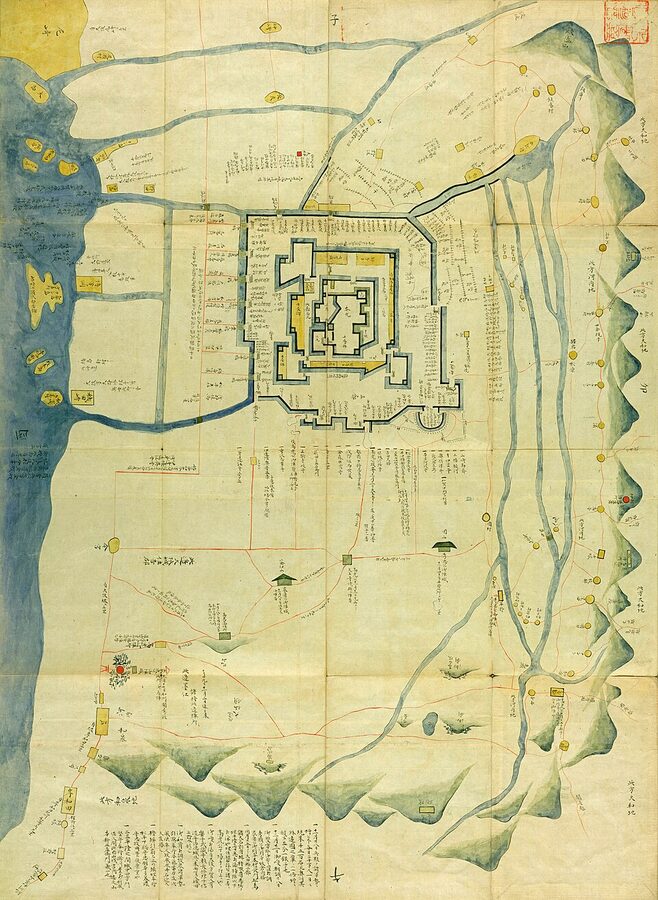
What Nobushige did instead was build the Sanada-maru. The castle’s weakest approach was the southern face — the outer moat there was narrow, the Uemachi plateau dropped towards open farmland, and a siege line could be established within arquebus range of the third bailey wall. Nobushige was given 5,000 men and a fortnight, and constructed an earthwork barbican about 220 metres forward of the outer moat, at the outer edge of the plateau, designed to draw attacks onto itself and break them.
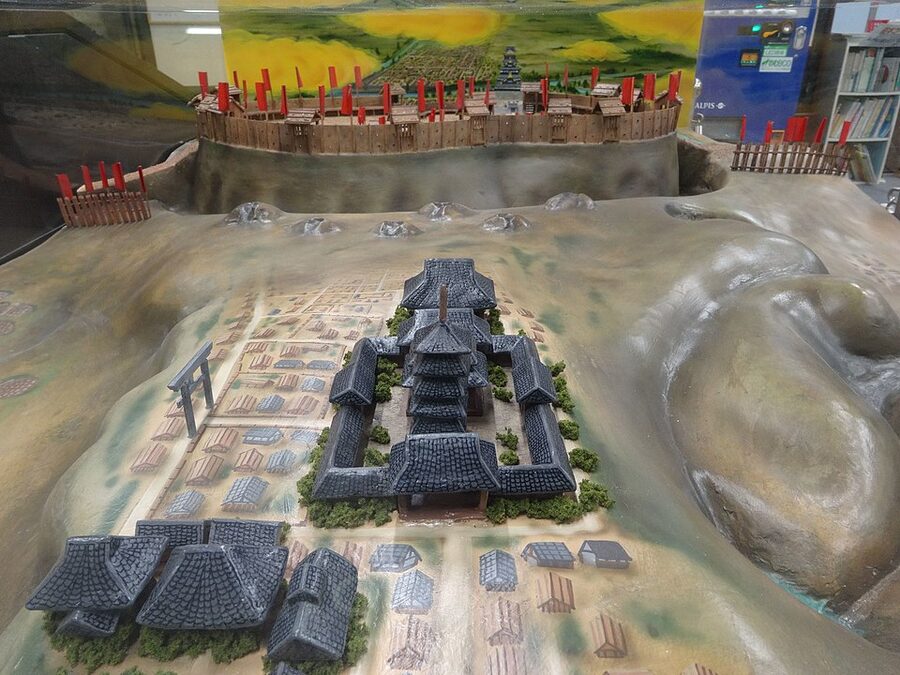
The Winter Campaign opened on 4 December 1614 when the Tokugawa main force reached the south plateau. On 4 January 1615 the Maeda, Ii, and Matsudaira Tadanao contingents — something like 30,000 men together — made a concentrated assault on the Sanada-maru. Nobushige had 7,000 arquebusiers deployed behind the palisade and in positions along the forward ditch, shooting in rotation.
The assault broke in three waves. Each wave advanced into the killing ground, was shot down in concentrated volleys from three directions, fell back, and was pursued by Sanada counter-charges that routed the rear echelons back to their own lines.
The Tokugawa losses on 4 January were on the order of 15,000 men killed or wounded. The Sanada-maru lost about 200. It was the single most one-sided engagement of either Ōsaka campaign, and it is the action that made Nobushige’s reputation within his own lifetime — every retainer in every daimyō camp outside Ōsaka heard the casualty numbers by the end of the week.
The Maeda Toshitsune contingent that led the morning’s assault took the worst of the arquebus volleys and lost roughly 3,000 men in the first half-hour. The Ii Naotaka element, which had been promised a prominent role in the campaign, was so badly mauled it spent the rest of the winter in the rear. The Matsudaira Tadanao column lost its senior retainers almost to a man. In the Tokugawa after-action review at Sakai, the consensus was that Nobushige had defeated each detachment in sequence by baiting them onto a killing ground designed specifically against their combined-arms doctrine.
The Peace That Wasn’t
After 8 January Ieyasu turned to artillery — seventeen imported European cannons dragged overland from Sakai, plus domestic cannon, firing at the inner keep from the fourth bailey of the captured outer wall. On 19 January a cannonball passed through a chest in Yodo-dono’s chamber and killed eight of her maids. She panicked. By 22 January she had signed a ceasefire agreement: the Toyotomi would keep the castle and the Hideyori household, in exchange for filling in the outer moat.
The Tokugawa filled in the outer moat the following week, then continued to work, and by the end of the second week in February had demolished the inner moat as well. The Sanada-maru was razed in the moat-filling operation.
When the Toyotomi council objected in March, Ieyasu’s envoys pointed to the text of the agreement and noted that it did not specify which moat, and that the Tokugawa had merely been thorough. This is the standard reading of the Genna armistice and the one every contemporary source in Japanese and English accepts. It was, straightforwardly, a breach of terms.
In February 1615, Ieyasu tried a different tack on Nobushige personally. He sent Nobushige’s uncle Sanada Nobutada to Kudoyama, actually to the family’s old Matsushiro connections, with an offer of 100,000 koku in Shinano if Nobushige would abandon the Toyotomi. Nobushige declined.
The offer was raised to “one full province.” Nobushige declined again and reportedly told Nobutada that if the Tokugawa thought a man could be bought for a province then they had misunderstood the nature of the transaction. This is recorded in the Taitokuin-den jikki, the official Tokugawa chronicle of the second shogun’s reign, which would not invent the line. It is one of the few direct Nobushige quotes we have.
Dōmyō-ji and Tennōji-Chausuyama
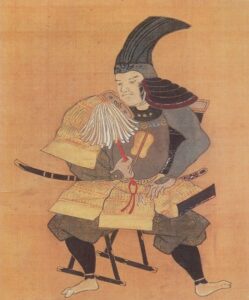
The Summer Campaign opened on 26 April 1615 when the Tokugawa force marched south from Fushimi. Ōsaka Castle no longer had moats. Nobushige knew this meant fighting in the open, and he spent the spring drilling his reconstituted 3,500-man force — many of them former Kudoyama gōshi and late-arriving Toyotomi ronin — for pitched cavalry action. The armour was red-lacquered to match the Takeda-style akazonae; the sashimono were black with six white coins, the Sanada rokumonsen mon, which represents the six copper coins placed in the coffin of a dead man to pay the ferryman across the river of the underworld. It is a death-accepting heraldic symbol.
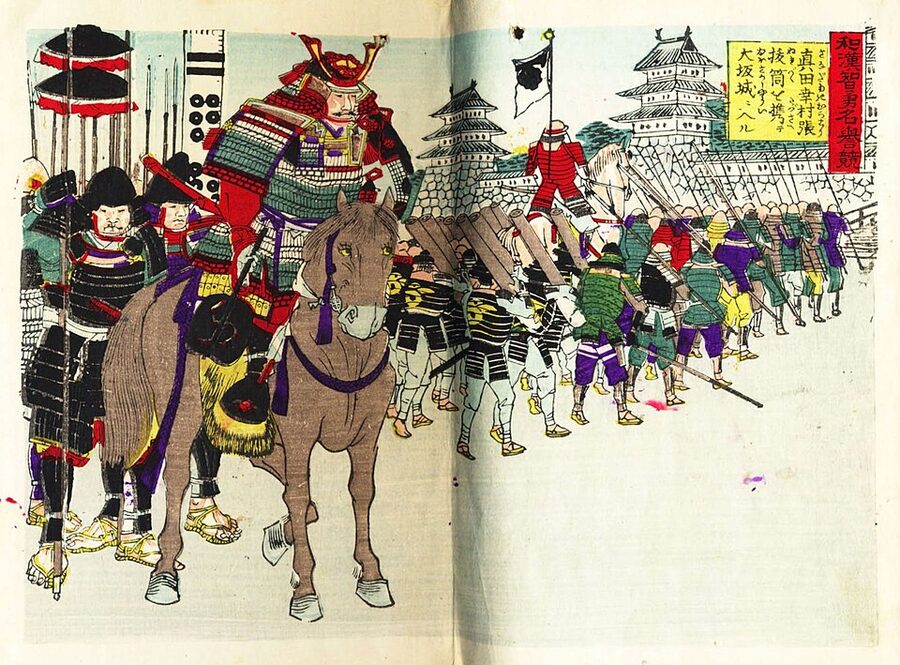
On 6 May the Sanada contingent engaged the advance guard of Date Masamune’s army at Dōmyō-ji on the south bank of the Yamato River. The fog was thick that morning and Nobushige’s column arrived an hour late, to find that Gotō Matabei, the man who had personally delivered Hideyori’s invitation to Kudoyama five months earlier, had already engaged Date’s vanguard alone and been killed. Nobushige absorbed the news on the saddle. (Cross-link: Date Masamune was the Tokugawa right-wing commander for the entire Summer campaign; his vanguard under Katakura Shigenaga was the force that killed Gotō.) Nobushige and Mori Katsunaga then held the rear-guard while the Toyotomi main force withdrew to the castle, and as they pulled back Nobushige reportedly shouted across the paddies, “The Kantō may have a hundred thousand, but not a single man among them is worth a man.” The line has been reprinted hundreds of times since.
On the evening of 6 May, with the castle ringed by something like 150,000 Tokugawa troops now, the remaining Toyotomi commanders met in the keep. Nobushige proposed a desperate operational plan: a two-pronged assault on the morning of the 7th with the Sanada on the right flank at Chausuyama Hill, the Mori in the centre at Tennōji, and a cavalry reserve under Akashi Morishige to swing wide and hit the Tokugawa rear.
The objective was to break into Ieyasu’s command post at Chausuyama and force a decisive engagement before Hideyori could be starved out. It was an attack plan in a situation that almost every commander present knew was hopeless. It was also the only plan with any chance of changing the outcome.
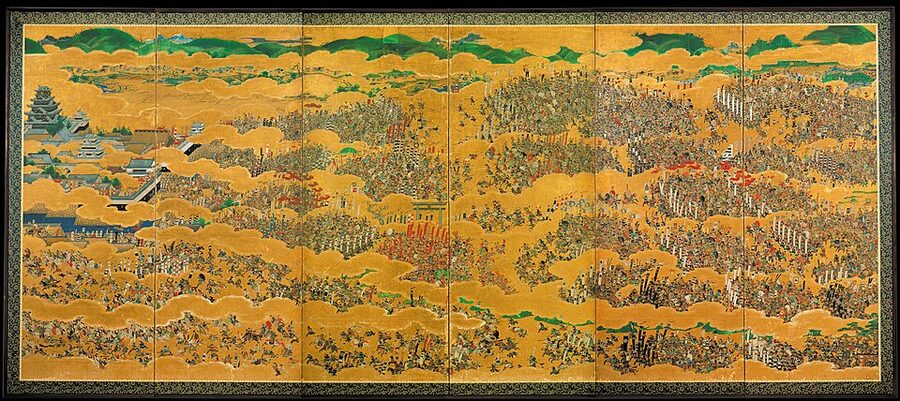
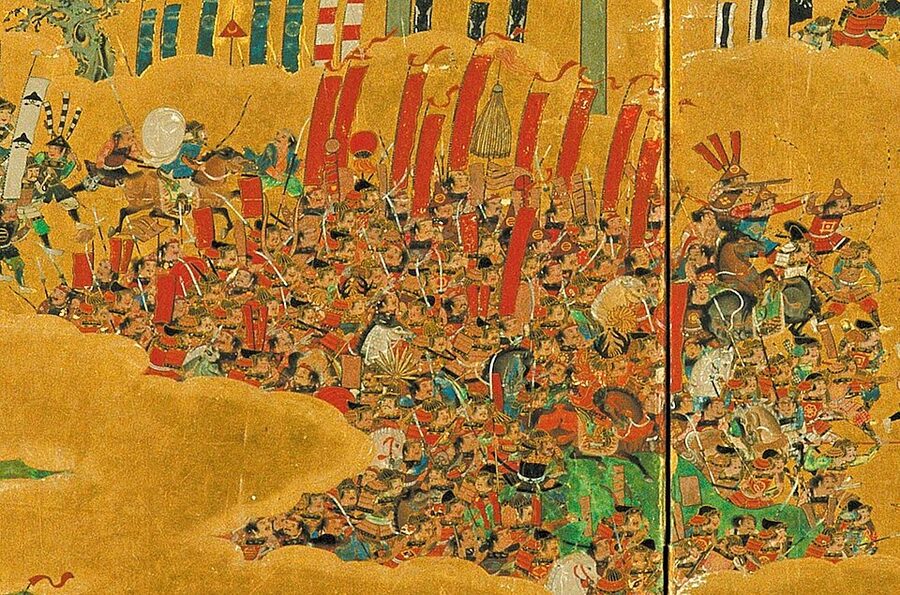
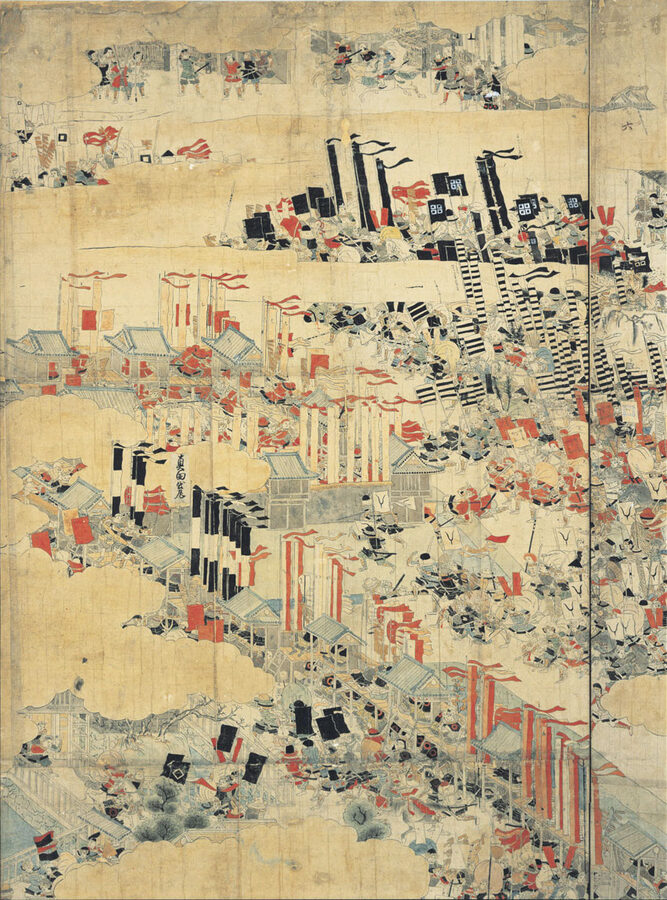
The 7 May battle started early when Honda Tadatomo’s arquebusiers opened fire on Mori Katsunaga’s lines, spoiling the coordinated timing before Akashi’s wide-swing was in position. Nobushige, watching the plan collapse in the opening minute, ordered a straight charge anyway. The Sanada hit Matsudaira Tadanao’s 15,000-strong van at a full gallop, broke it, broke the second line under Honda Tadatomo, broke the third line, and kept going.
The Kuroda-byōbu screen shows what the attack looked like from the Tokugawa right-wing commander’s eye-view: a red wedge driving through white formations, one after another, towards a small cluster of standards on the hill where Ieyasu was watching. The red-armoured figure at the wedge’s point, in every copy of the screen, is Nobushige. That he is the only recognisable individual on the Toyotomi side of the composition is an editorial choice by Kuroda Nagamasa — a Tokugawa daimyō choosing to memorialise an enemy commander as the day’s singular figure.
The Sanada reached the command post twice. Ieyasu’s umajirushi, the golden fan standard that marked his location, was knocked down on the second charge. Ieyasu, at seventy-three, prepared to cut himself open twice that afternoon, according to the Tokugawa retainer logs.
The only other time in his career that his standard had been knocked down was at Mikatagahara against the Takeda cavalry, forty-three years earlier. He noticed this, and so did every retainer still alive around him.
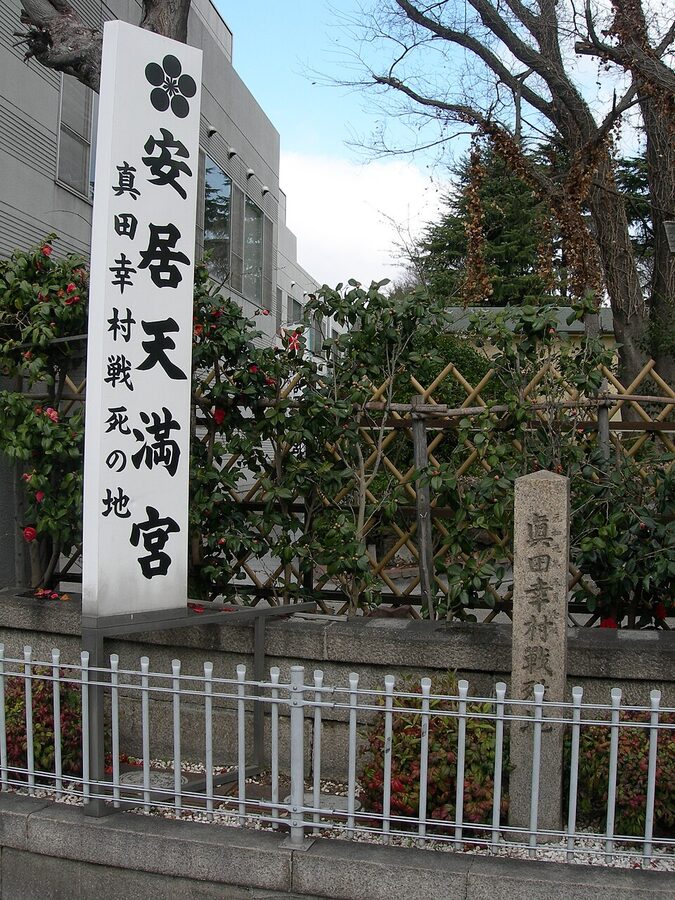
By mid-afternoon the Sanada had lost about 2,500 of 3,500 men and were pinned down by Ii Naotaka’s flanking force from the Okayama road. Nobushige had been in close combat on horseback for the better part of four hours. He disengaged, fell back towards the rice paddies behind Yasui Shrine at Tennōji, dismounted, and sat down against a pine tree to rest.
An arquebus-platoon commander in Matsudaira Tadanao’s army, Nishio Muneji (Jinzaemon), was sweeping the shrine precinct for stragglers and found him there. The two men did not recognise each other. They dismounted, fought briefly with spears, and Nishio killed him.
He took the head to headquarters. An old retainer of the Sanada recognised the face and confirmed the kill. Nobushige was forty-eight.
“Japan’s Number-One Warrior”
The Ōsaka Castle keep caught fire the following morning, 8 May. Hideyori and his mother Yodo-dono killed themselves in the basement. Nobushige’s son Daisuke, who had fought beside his father at the Sanada-maru and led a contingent on 7 May, followed Hideyori into suicide.
The Toyotomi line ended. The Sengoku era ended. The Genna armistice opened, and the Tokugawa age began.
On the night of 7 May, the Satsuma commander Shimazu Iehisa — nephew of Shimazu Yoshihiro, who had fought at Sekigahara — wrote the dispatch to his lord in Kagoshima that has been quoted more times than any other contemporary source on Nobushige. The full passage, rendered literally from the classical Japanese: “On the seventh day of the fifth month, Sanada Saemon-no-suke charged the shogunal command post, drove the guards back, and fought at close quarters. The shogunal retainers who fled three leagues survived.”
“On the third charge Sanada was killed. Sanada was the number-one warrior in Japan. Such a thing is not found in the old tales. People speak of nothing else.” (Cross-link: Iehisa learned his soldiering from his uncle Shimazu Yoshihiro, whose own cavalry break-out at Sekigahara fifteen years earlier was structurally the same action Nobushige attempted at Chausuyama. Iehisa would have known exactly what he was watching.)
Hosokawa Tadaoki, in his letter to his father the same week, wrote simply: “Saemon-no-suke died in the field. An achievement unmatched in past or present.” (Cross-link: Hosokawa Tadaoki was another veteran of the same generation; his assessment matches Iehisa’s almost word for word.) The Taitokuin-den jikki preserves an Ieyasu quote from afterwards: “Sanada Yukimura fought in a way unfitting a commander of his rank. The previous day at Dōmyō-ji he had lost his best men to Date Masamune’s eight thousand arquebuses, and he was exhausted.” This is Ieyasu, at seventy-three, seven days after nearly dying on a hill because of Nobushige, looking for a way to explain the thing in the least embarrassing way possible. Nobody believed him then; nobody believes him now.
From Nobushige to Yukimura
The reason the name “Yukimura” exists at all is that the Tokugawa shogunate, remarkably, did not attempt to suppress the Nobushige legend after 1615. The opposite, in fact: the shogunate permitted and even encouraged the printing and staging of war-tales about him across the Edo period. The standard modern explanations for this are three.
First, glorifying a loyal-to-death enemy was standard samurai-class ideology of the new order — loyalty itself was the virtue being celebrated, even when directed at the wrong lord. Second, the Tokugawa needed to explain away Hidetada’s embarrassing absence from Sekigahara, and a legendary Sanada made the 2nd Siege of Ueda a respectable delay rather than a failure of the shogun-designate. Third, the Tokugawa conduct at Chausuyama had been genuinely poor, and a demi-god of an opponent made the near-loss of the day look heroic rather than incompetent.
So the Edo literary industry got to work. The Namba Senki in 1672 introduced “Yukimura” as the hero’s name. The Meiji-period Tachikawa Bunko popular paperback series in the 1910s wrapped him in the fictional Ten Braves — Sarutobi Sasuke, Kirigakure Saizō, and eight other ninja-retainers whose names everyone in Japan now knows and none of whom existed.
The ukiyo-e masters who really made the Sanada image in the Edo mass market were Utagawa Kuniyoshi, Utagawa Yoshitoshi, and Toyohara Chikanobu, working the 1840s through the 1880s. Kuniyoshi in particular produced dozens of Sanada prints in which Yukimura is the central red-armoured figure on a black horse, six-coin banner streaming, spear aloft. None of them had any documentary relation to 1615 — they were generic heroic icons, the Edo equivalent of movie posters — but they became what everyone in Japan saw when they thought of Nobushige.
The 2016 NHK Taiga drama Sanada-maru, scripted by Mitani Kōki, pulled a national audience back to the Kudoyama years and the Winter Campaign in a way that probably won’t be matched for another generation. It ran forty-seven episodes and averaged about a 17 per cent viewer share, which for a drama set in 1570 is remarkable. Every decade Japan produces a new Yukimura.
The relation of the myth to the man has been the standard scholarly question for the last century. My own reading, after fifteen years of walking the battlefields: the myth is an accurate description of the ninety minutes between noon and half-past on the afternoon of 7 May 1615, and not much else.
For ninety minutes a forty-eight-year-old tonsured exile who had not led cavalry for fifteen years broke through four Tokugawa formations and put the shogun-to-be within a thousand yards of surrender. That did happen. The rest of the Yukimura myth is decoration.
The Sanada Line After 1615
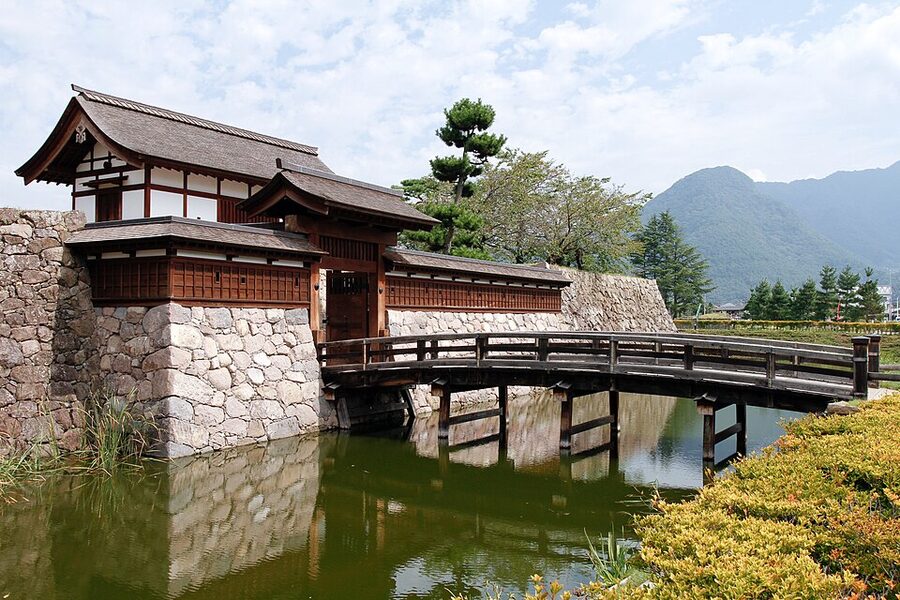
The survival of the Sanada family after 1615 is the most striking footnote to the whole story. Nobushige’s older brother Nobuyuki — who had stayed loyal to the Tokugawa through Sekigahara and sat out the Ōsaka campaigns entirely — was relocated in 1622 from Ueda to Matsushiro, upgraded to 100,000 koku, and given a domain that his descendants ran for the next 247 years.
Nobushige’s own daughters were quietly absorbed into other clans: Oume married into the Katakura family of Date Masamune’s retainers; Oshōbu went to the Tamura. The Katakura even changed their clan crest to the Sanada six-coin mon, out of respect. It is the kind of gesture that reveals what the samurai class thought of the man.
The Matsushiro Sanada became cultivated Confucian scholars — the fifth-generation lord Sanada Yukitsura sponsored the philosopher Sakuma Shōzan — and produced in Yukitsura’s grandson Sanada Yukimoto one of the most important bakumatsu-era Western-studies advocates. The clan’s Edo career is almost invisible in popular history because Yukimura’s legend absorbs all the attention, but the Matsushiro Sanada archive (now in the Matsushiro Sanada Treasure Museum) is one of the richest single-domain document collections in Japan.
The retainers preserve two different kinds of Sanada in this material. Nobuyuki’s line — careful, administrative, Confucian — is the one the archive’s documents are by. Nobushige’s line — legendary, absent, entirely posthumous — is the one the archive’s documents are about. For two and a half centuries the Matsushiro Sanada quietly kept both, maintaining the Nobushige memorial rites every year at Chōkoku-ji, while themselves serving the shogunate whose founder’s grandson had been saved from seppuku in 1600 by the absent brother they still honoured.
Nobushige’s actual grave is not at Matsushiro. The Matsushiro Sanada erected a memorial marker at Chōkokuji, the family temple, but the head was taken by Nishio Muneji’s clan to their family temple Kōkenji in Fukui and given the title “Sanada Jizō”; the body was said to be cremated at Yasui Shrine.
Several other temples in Japan preserve stones claiming the grave — Shingan-ji in Ōsaka at the Sanada-maru site, Taishuin at Ryōan-ji in Kyoto — and there are even folk traditions in southern Kyūshū claiming the body was smuggled out by the Shimazu and buried in Eii. The last is almost certainly romance. The others are memorials to a man whose actual burial place is unknown.
Where to visit Sanada Nobushige’s story today
Six sites across three prefectures. The full circuit — Ueda in the north, Kudoyama in the south, Ōsaka in the middle — takes a week, and is one of the better single-figure pilgrimages in the country. Most visitors prioritise Ueda and the Ōsaka battlefield; Kudoyama is the one I recommend most strongly if you want to understand the man rather than the legend.
Ueda Castle Park, Ueda, Nagano
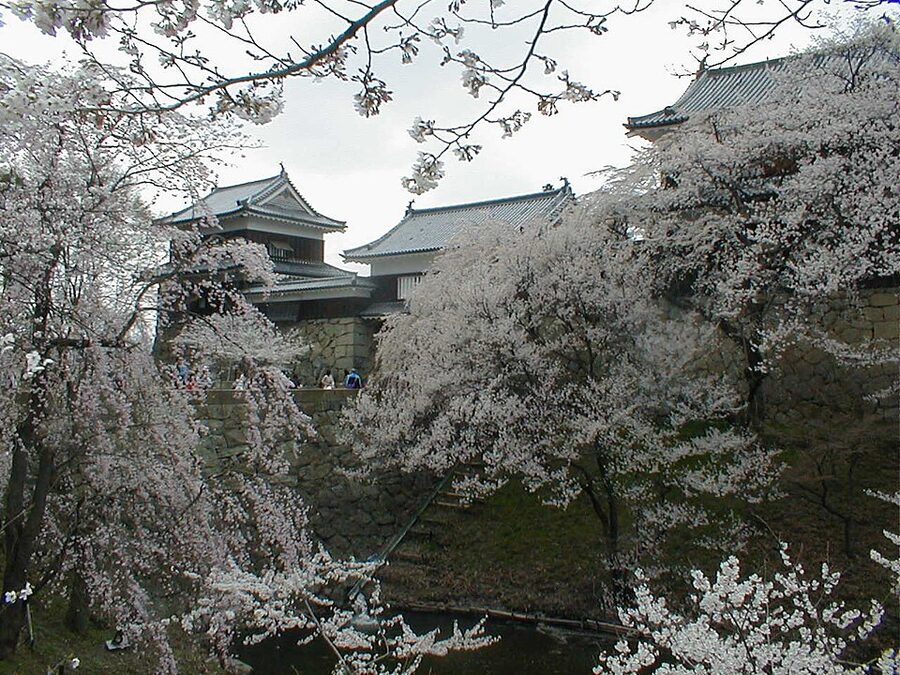
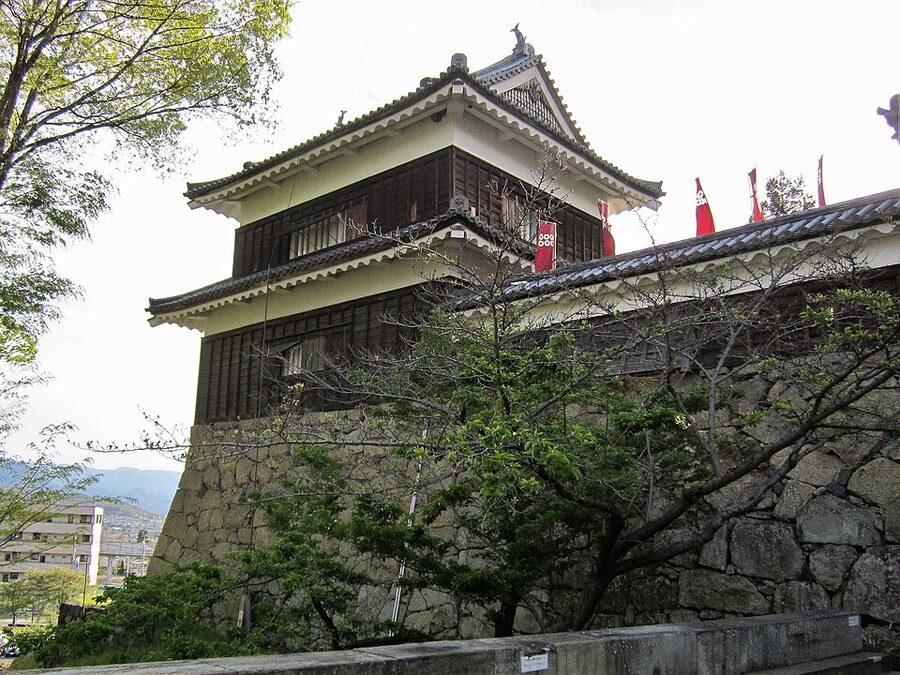
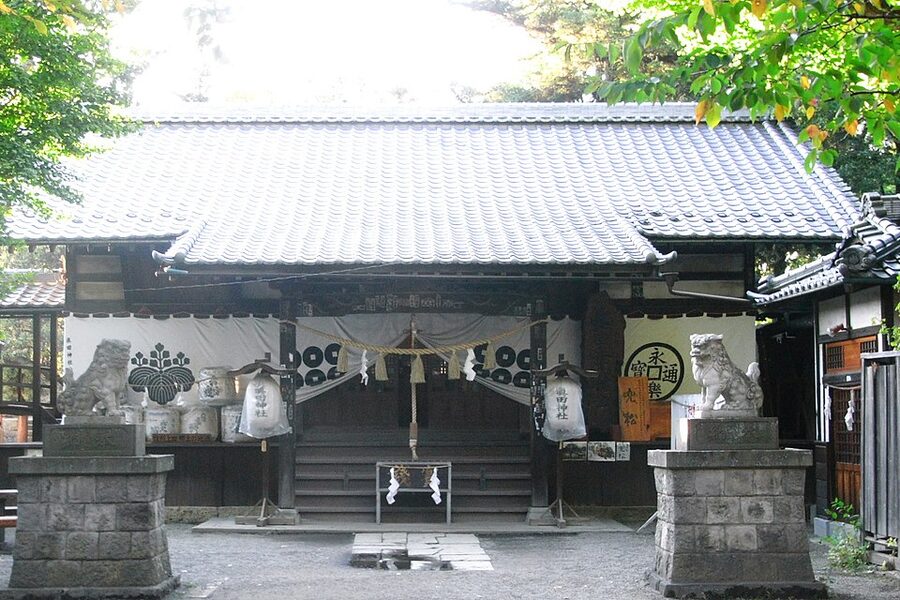
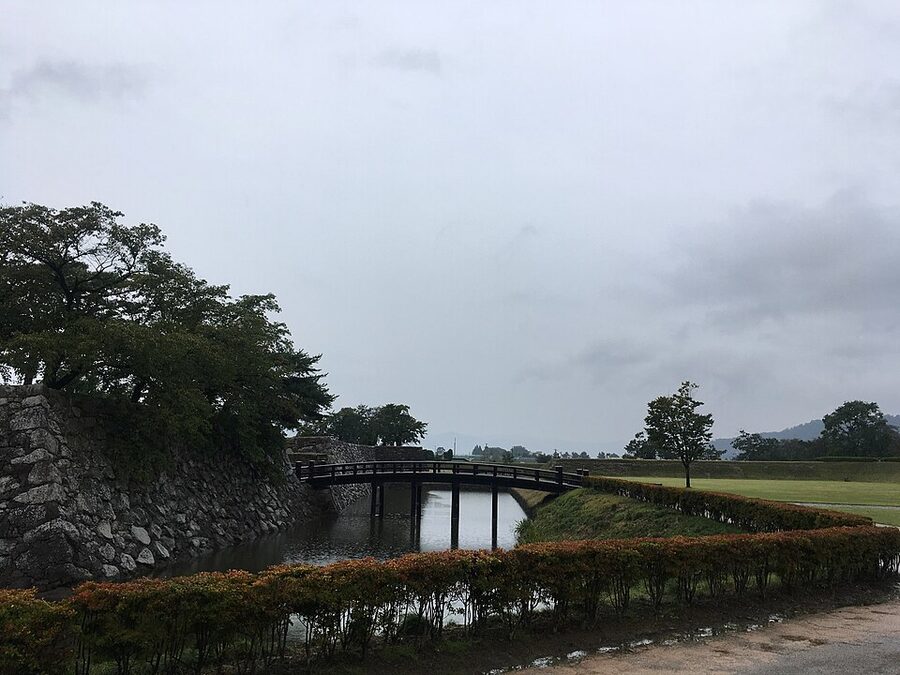
The Sanada power base from 1583 to 1600. The castle was razed by the Tokugawa in 1622 and rebuilt over the Edo period under Sengoku and Matsudaira successors, but the moats are original and the south and west turrets are Edo Senkoku-era. Take the JR Hokuriku Shinkansen to Ueda Station; the castle is a fifteen-minute walk west, inside Ueda Castle Park. Annual Sanada Matsuri early April, if you can time it — the festival parade puts four hundred residents in reproduction Sanada akazonae armour through the main gate.
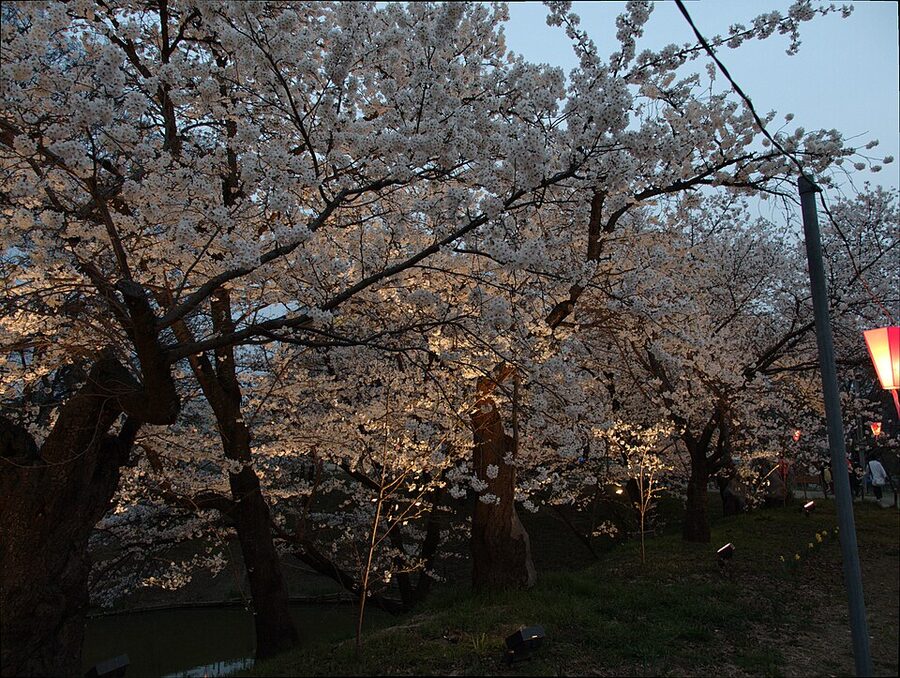
Inside the park, Sanada Shrine (Sanada Jinja) is at the northern end of the enclosure. The shrine was founded in 1879 to deify the three Sanada generations — Yukitaka, Masayuki, and Nobushige — and is the main cult site for the Yukimura following today.
There is a large helmet-shaped votive well in front of the shrine that will dispense, for 100 yen, a fortune-slip about your duelling prospects. It is unserious and mostly for children. Take one if you like.
Zenmyō-shō-in (Sanada-an), Kudoyama, Wakayama
The site of the fourteen-year exile. Zenmyō-shō-in is a small temple built in the early 18th century on the footprint of the Sanada compound, and the main hall is now a modest Nobushige museum — the six-coin banner, a reconstruction of the red-armour set, a few authenticated household items from the Matsushiro archive. The temple gardens include a stone said to be from Masayuki’s 1611 grave (the original grave is elsewhere on the mountain).
Take the Nankai Kōya Line from Namba to Kudoyama Station, about an hour and a half, then walk ten minutes uphill to the temple. The quiet is the real reason to go. Fourteen years of this quiet is what the man used to make himself into a cavalry commander again.
Matsushiro Sanada-yashiki, Matsushiro, Nagano
The residence of Nobuyuki’s 100,000-koku Matsushiro-han, maintained by the family for ten generations, now preserved as a Nagano prefectural historic site. The Sanada Treasure Museum (Sanada Hōmotsu-kan) in the same precinct holds the clan’s Edo-period archive, including correspondence between Nobuyuki and Nobushige from Kudoyama, and the rokumonsen banner carried at Osaka. The museum also preserves Komatsuhime’s residence, Nobuyuki’s Tokugawa-side wife, which survived into the 20th century. Matsushiro is twenty minutes by bus from Nagano Station; it is the quietest of the three main Sanada pilgrimage sites and the richest in primary material.
Yasui Jinja, Tennōji, Ōsaka
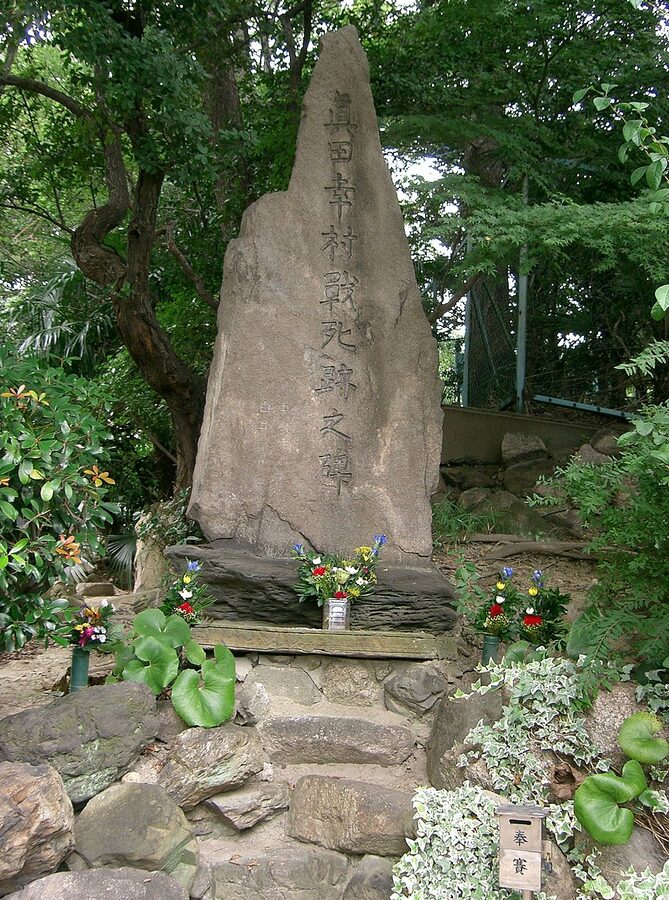
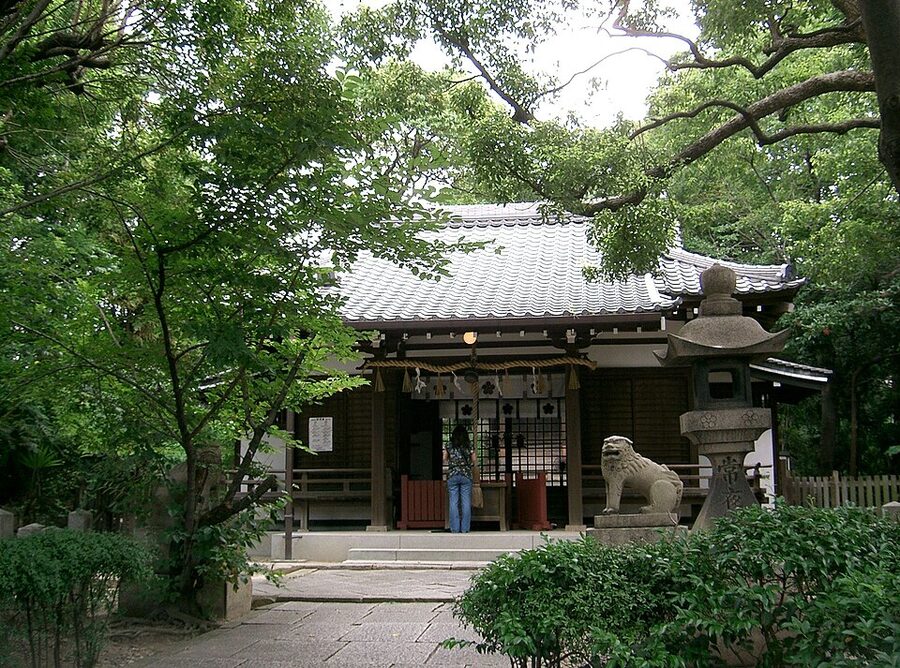
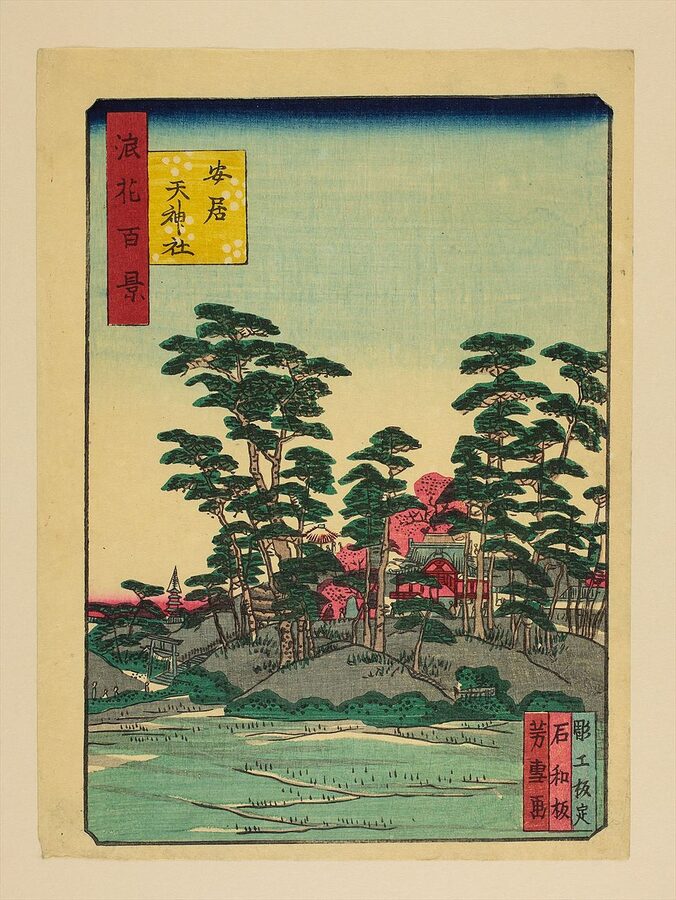
The shrine in whose precinct Nobushige was killed on 7 May 1615. A stone marker inside the gate reads Sanada Yukimura Senshi-ato-no-hi (“the place where Sanada Yukimura fell in battle”). The pine tree he is said to have rested against is gone; a modern replacement stands in its place, which the shrine will tell you is the fourth tree to occupy the site and is conventionally called the Yukimura Pine.
Reach Yasui Jinja from Tennoji Station Yotsubashi-line in about ten minutes. It is small. The marker is where to go, and the marker is where the event happened, and the two things are the same.
Shingan-ji and the Sanada-maru site, Ōsaka
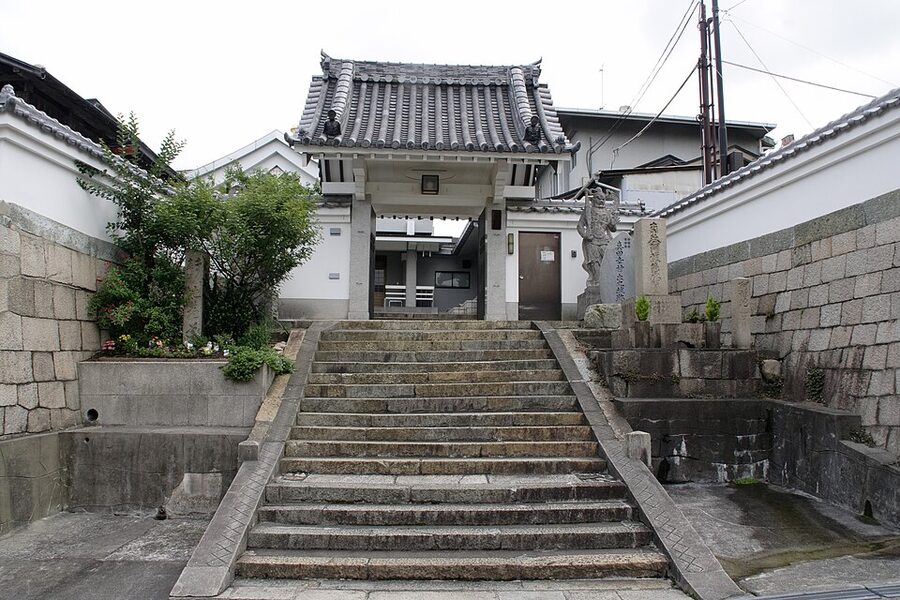
Shingan-ji was founded in 1622, seven years after the Summer Campaign, on the site of the Sanada-maru barbican specifically to pray for Nobushige’s Buddhist memorial. The temple keeps a small collection of period documents and, since the 2014 quatrocentenary, a new stone marker on the Sanada-maru foundations. It is a five-minute walk from Morinomiya Station. The neighbourhood is entirely residential, and the Sanada-maru footprint has been almost completely overbuilt — what you get is the shape of a plateau edge and the faint traces of an earthwork.
Chōkoku-ji, Matsushiro
The bodaiji of the Matsushiro-han Sanada, the family Buddhist temple, on a quiet hillside south-east of Matsushiro Castle. The Nobushige memorial stone was erected here by his brother’s descendants in the early Edo period and still stands in the forecourt beside the Nobuyuki monument. Nobushige is not actually buried here; the stone is a kuyōtō, a memorial tower, not a tomb. Pair Chōkoku-ji with the Matsushiro Sanada-yashiki visit — they are twenty minutes apart by foot.
Nihon-ichi no Tsuwamono
The Shimazu Iehisa phrase has, for four hundred years, been the single sentence of Japanese historiography that fixes Nobushige in place. The literal meaning is “Japan’s number-one warrior”; the looser sense is “the best fighting man this country has ever produced.” It was written the evening of the battle by a Kagoshima commander who had watched the whole thing from a neighbouring hill and owed Nobushige nothing — Iehisa was on the Tokugawa side that day.
What Iehisa meant, I think, is not that Nobushige was more skilled than every other Sengoku commander, there were plenty of better tacticians and quite a few better swordsmen, but that what he had done at Chausuyama was categorically different from what commanders generally did. He had accepted his death, committed his men to an action whose only chance of success required every break going right, and then made every break go right for an hour and a half against an army forty-two times his size. The category Iehisa was identifying is something like decisive willingness-to-lose. This is, in the samurai moral vocabulary of 1615, the highest form of the warrior virtue.
Miyamoto Musashi fought on the Tokugawa side at Ōsaka that week, probably within a mile of the Chausuyama charge, though nobody knows his exact disposition. (Cross-link: whether Musashi was at Ōsaka on the Toyotomi or Tokugawa side is one of the genuine open questions in the literature; the domain chronicles are deliberately unclear.) Musashi would have heard about the Sanada charge before the day was over. Whatever he was doing that afternoon, he was not doing what Nobushige was doing.
If you are travelling to Nagano anyway, go to Ueda Castle, walk the south wall in spring, and then take the train south to Matsushiro and walk the moat. The two castles were run by the two brothers who made opposite choices in July 1600 and between them kept the Sanada alive, and the contrast is physically present in the cut of the stone.
If you are going to Ōsaka, take the Yotsubashi line to Tennoji and walk to Yasui Shrine. Stand in the Sanada Yukimura Senshi-ato forecourt for a minute. It is smaller than you expect.
The man who was called Japan’s number-one warrior spent the last ten minutes of his life leaning against a pine tree on this square of ground, and the thing he died for was not a cause he thought would win. He died because he thought it was the thing to do. Four hundred years of Japanese schoolchildren have been made to understand this was enough.


.jpg)
.jpg)


.jpg)
