
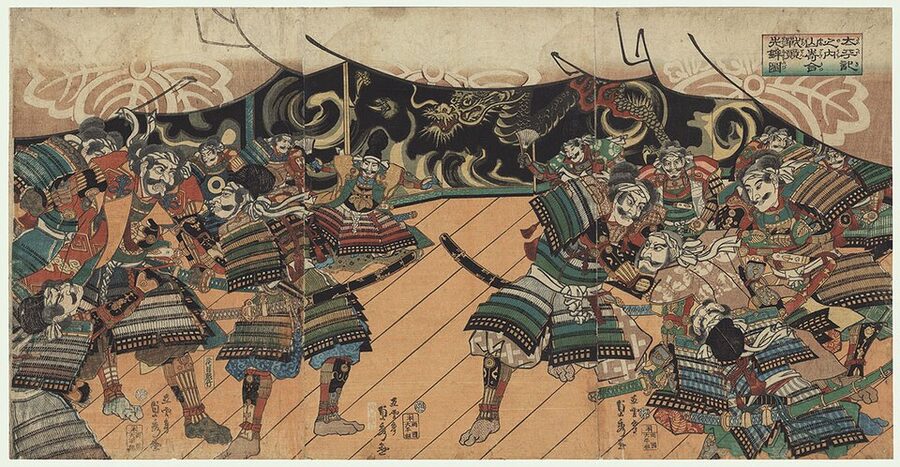
Akechi Mitsuhide was a head of state for eleven days. On 21 June 1582 he rode into the Honnō-ji compound in central Kyoto with 13,000 men and forced Oda Nobunaga, the most powerful warlord Japan had produced in two centuries, to commit seppuku in the burning temple. On 2 July 1582 he was dead himself, ambushed by peasant bandits in a bamboo grove at Ogurusu south of Kyoto, killed with farming spears by men who had no idea they were killing anyone important.
Between those two dates he had been, technically, the most powerful man in the Japanese realm. Eleven days. The Japanese language still calls a vanishingly short run at power mikka tenga (三日天下), “three-day rule.” The phrase comes from Mitsuhide.
What killed him was not really the bandits. What killed him was a 230-kilometre forced march. Hashiba Hideyoshi — the later Toyotomi Hideyoshi, then Nobunaga’s western-front commander and besieging Bitchū Takamatsu Castle 230km from Kyoto — heard the Honnō-ji news on 3 June, made peace with the Mōri inside 48 hours, and drove his 30,000-man army from Takamatsu to Amagasaki in nine days.
That march, the Chūgoku ō-gaeshi, is the operational miracle of Sengoku-period Japan. It is also the sole reason Mitsuhide’s rule lasted eleven days rather than six months. Everyone else in the Oda senior command who might have come to destroy Mitsuhide was too far away. Hideyoshi turned out not to be.
In This Article
- Honnō-ji, 21 June 1582
- Hideyoshi at Takamatsu, 3 June 1582
- The Chūgoku ō-gaeshi — 230 kilometres in 9 days
- Mitsuhide’s eleven days
- The ground at Yamazaki
- The battle — afternoon, 13 June 1582 (2 July Gregorian)
- Ogurusu — the death in the bamboo grove
- The Kiyosu Conference and the long consequences
- Where to visit the Yamazaki sites today
- The battlefield at Ōyamazaki-chō
- Shōryū-ji Castle ruins — Nagaokakyō
- Akechi-yabu and the Ogurusu site — Yamashina, Kyoto
- Honnō-ji — Nakagyō-ku, central Kyoto
- Saikyō-ji temple and Sakamoto Castle site — Ōtsu
- Closing — the corridor, the grove, and the eleven days
Honnō-ji, 21 June 1582
You need the Honnō-ji Incident in your head to make sense of what follows. Oda Nobunaga had come up to Kyoto in late May 1582 with about 150 attendants and stopped at Honnō-ji, a small Nichiren-sect temple in Nakagyō that Nobunaga had used as his Kyoto lodging for years. He had no military garrison with him because he was not expecting a battle. He had dispatched Akechi Mitsuhide’s 13,000 men westward toward the Chūgoku region to reinforce Hideyoshi’s siege of Takamatsu Castle, and he was waiting at Honnō-ji while his son Oda Nobutada, holding a separate force nearby at Myōkaku-ji, prepared to accompany him.
At some point between Kameyama Castle and the Saga plain, Mitsuhide turned his army around. The Shinchō Kōki records him saying “Teki wa Honnō-ji ni ari” — “The enemy is at Honnō-ji.” His 13,000 men, expecting a march west, instead marched east through the night of 20-21 June and surrounded Honnō-ji at dawn.
The fighting inside the compound lasted perhaps two hours. Nobunaga, wounded by an arrow early on, retreated into the burning inner hall and committed seppuku. His body was never recovered from the fire.
Mitsuhide’s motive has been argued over for four centuries. The candidates are: a personal grudge over humiliations Nobunaga had inflicted (the Azuchi-banquet slap, the insulting dismissal of Mitsuhide’s mother as a hostage); strategic calculation about Nobunaga’s weakness that morning; shogunal ambition (he had been petitioning the imperial court for Sei-i Taishōgun credentials); or a genuine political disagreement over Nobunaga’s treatment of the Mōri clan. The truth is probably a combination. What matters for what follows is that Mitsuhide, having killed Nobunaga, now needed the next forty-eight hours to go extremely well.
They did not. Within three days of Honnō-ji, three of the six senior-retainer alliances Mitsuhide needed to consolidate power had quietly refused him. His son-in-law Hosokawa Tadaoki and father-in-law Hosokawa Fujitaka, the closest family connection Mitsuhide possessed, shaved their heads and declared mourning for Nobunaga on 3 June, a courteous way of saying no.
The Tsutsuji daimyō Junkei, ostensibly an Akechi ally, kept his army parked at Horagatoge pass and waited to see who would win. Both refusals were catastrophic; the combined Hosokawa-Tsutsuji forces would have added 8,000 to 10,000 men to Mitsuhide’s side.
Hosokawa Tadaoki refusing was particularly bad news, because his wife was Mitsuhide’s daughter. Hosokawa Gracia — born Akechi Tama, one of the great figures of 16th-century Japanese-Christian history — was Mitsuhide’s gambler’s stake in the Hosokawa alliance, and she should have brought the Hosokawas in. She did not.
Tadaoki, operating on Fujitaka’s advice, sent Gracia into internal exile on the Tango peninsula to make clear that the Hosokawa line was staying out. She would eventually be baptised and martyred in 1600, another story, but for Mitsuhide in June 1582, the marriage stake had paid zero. The Hosokawas were no longer in play.
Hideyoshi at Takamatsu, 3 June 1582
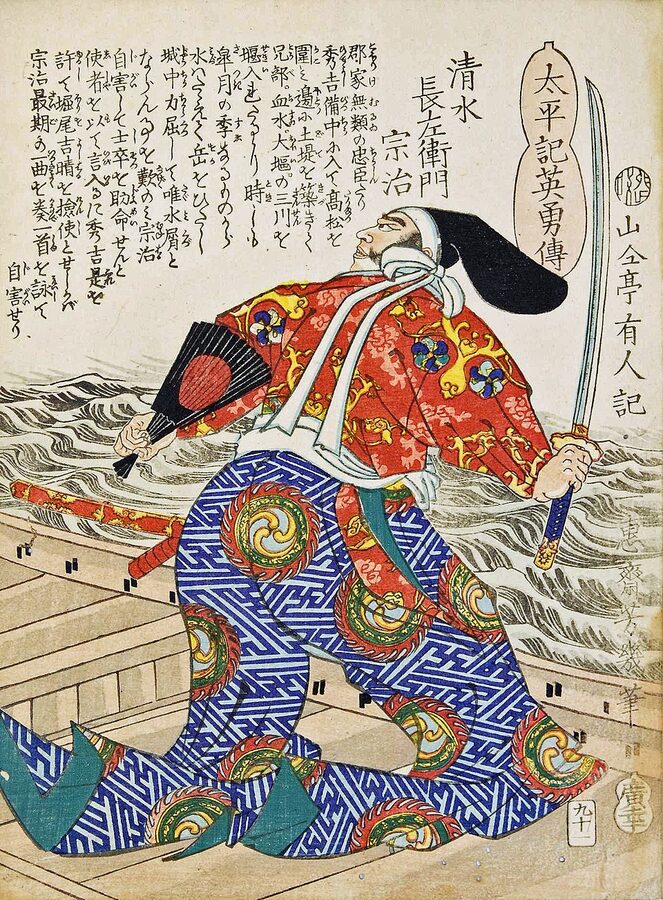
Meanwhile 230km west of Kyoto, at the edge of a flooded rice plain in Bitchū Province, Hashiba Hideyoshi was conducting a siege. Takamatsu Castle — held by a Mōri loyalist named Shimizu Muneharu with about 3,000 men — had been encircled for two months, and Hideyoshi had done something unprecedented: he had built a 4-kilometre earth dike around the castle’s surrounding rice fields and diverted the Ashimori River into the enclosure, turning the castle into an island in a shallow artificial lake.
The water-attack (mizuzeme) was a Kuroda Kanbei conception. It was working. Muneharu’s garrison was exhausted and rations were failing, and a Mōri relief army of 30,000 had arrived at Sarukake Castle, 8km away, too late to break the dike.
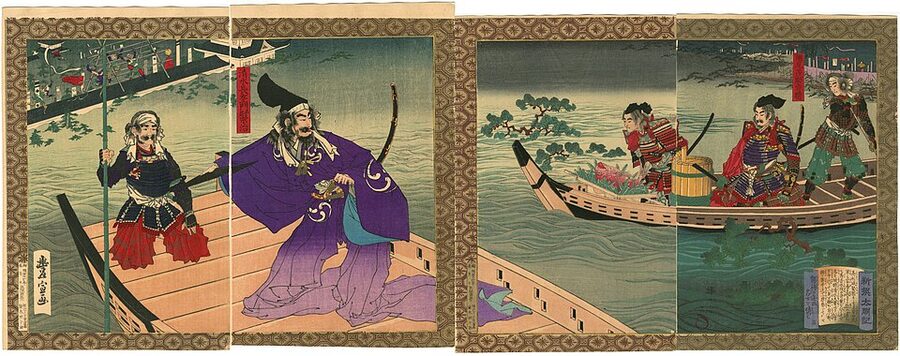
Hideyoshi had written to Nobunaga at Honnō-ji on 26 May asking for reinforcements to finish the siege. He had not yet received a reply when, at some point during the night of 2-3 June, a Mōri courier was intercepted by Hideyoshi’s scouts on the coast road east of Okayama. The courier was carrying letters from Mitsuhide, addressed to Mōri Terumoto and his generals Kikkawa Motoharu and Kobayakawa Takakage — an explicit proposal for a Mōri-Akechi alliance to crush Hideyoshi between them.
The courier had taken the wrong road in the dark. His letters reached Hideyoshi sometime before dawn on 3 June.
Hideyoshi’s reaction, according to the Taikōki, was to sit in his tent and weep for several hours. Then he called for Kuroda Kanbei. By mid-morning on 3 June he had made three decisions: conceal Nobunaga’s death from the Mōri for as long as possible; offer the Mōri peace on the most generous terms he could plausibly justify; and turn his army around for Kyoto.
All three were executed inside 48 hours. The peace was signed on 4 June. Terumoto accepted three provinces (Mimasaka, Bitchū, and Hōki) being ceded back to the Mōri in exchange for Muneharu’s seppuku. The Mōri did not learn that Nobunaga was already dead until approximately 6 June, by which point Hideyoshi’s army was already 30km east on the road home.
The Chūgoku ō-gaeshi — 230 kilometres in 9 days
The Chūgoku ō-gaeshi is the operational achievement on which Hideyoshi’s entire subsequent career rests. On 6 June his army began moving east from the Takamatsu lines at approximately 3am. By evening they had covered 25km to Numa, a staging point east of Okayama. On 7 June they reached Himeji Castle — 80km east of Takamatsu, covered in a single day over bad roads with a 30,000-man column.
This was not normal marching pace for a Sengoku army. Standard Japanese period infantry could cover 25-30km in a long day. Hideyoshi’s column did 40km per day, average, for the first week.
At Himeji, Hideyoshi’s own castle, he allowed the column a single full day of rest on 8 June. He used the day to distribute the entire Himeji treasury to his soldiers in small advance payments, a gesture designed to both motivate the march east and leave nothing behind if the campaign collapsed. Gold was weighed by the momme, rice by the koku. There was no money or grain remaining in the Himeji keep by the evening of 8 June.
The troops who had been ordered to wait at Himeji as a reserve garrison were simply told to find their own provisions until Hideyoshi came back, one way or another. The column pushed on on 9 June for Akashi and Hyōgo.
By 11 June the lead elements had reached Amagasaki, at the edge of what is now western Osaka. Niwa Nagahide brought 3,000 men in from Osaka to join; Oda Nobutaka (Nobunaga’s third son) arrived with another 4,000 from Sakai. By 12 June the Hashiba force was at Tomita, 25km west of Kyoto, and Hideyoshi called a council of war.
In nine days, from Takamatsu on 6 June to Tomita on 12 June, the army had covered roughly 230km. The logistics were half the achievement; the other half was that Hideyoshi had arrived in the Kyoto region before Mitsuhide realised how fast he was coming.
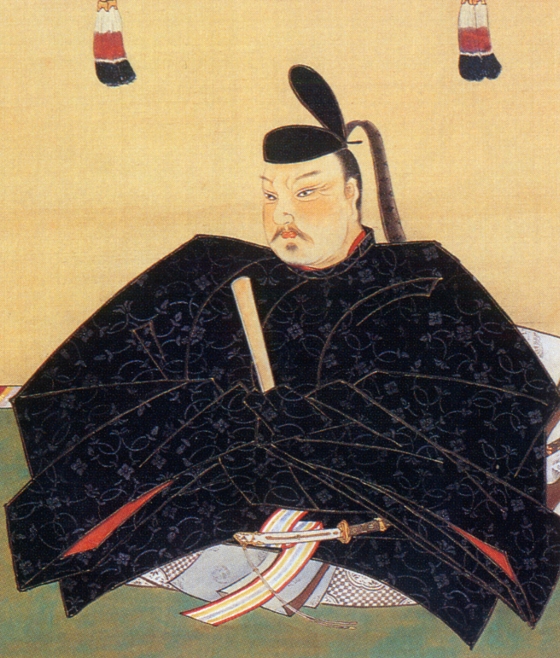
The Tomita council is the other moment that matters. Hideyoshi, technically Hashiba Hideyoshi at the time, formally offered supreme command of the Oda revenge army to Niwa Nagahide first, then to Oda Nobutaka. Both refused, on the grounds that Hideyoshi had done the work of getting here.
What this manoeuvre actually accomplished was to convert Hideyoshi’s de facto leadership into a de jure commission: he was now commanding an Oda-family revenge army, operating under Nobutaka’s nominal legitimacy as Nobunaga’s son. Every subsequent step, including the Kiyosu Conference two weeks later, would trade on this framing. Hideyoshi had converted a forced march into a legal regency.
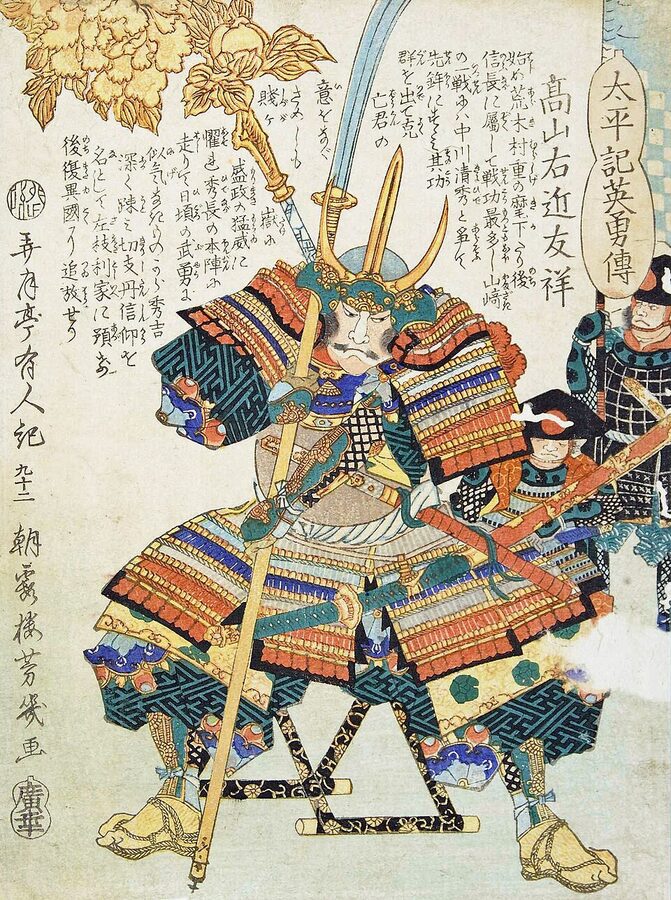
The Settsu daimyō Takayama Ukon and Nakagawa Kiyohide, nominally loyal to Mitsuhide, sent envoys to the Tomita council offering their forces to Hideyoshi instead. Both had been put off by Mitsuhide’s failure to consolidate. Ukon brought 2,000 men and Kiyohide 2,500 — a combined 4,500-man defection on the eve of battle.
Together with Niwa’s 3,000 and Nobutaka’s 4,000, Hideyoshi’s field force was now past 35,000. Some sources give him 40,000 by the time the columns closed up at Yamazaki. Mitsuhide had, after the Hosokawa and Tsutsuji refusals and the Takayama-Nakagawa defections, approximately 16,000.
Mitsuhide’s eleven days
Mitsuhide’s own movements in the eleven days between Honnō-ji and Yamazaki tell you a lot about the political problem he was trying to solve. On 22-23 June he occupied Azuchi Castle, Nobunaga’s great fortress on Lake Biwa, and, according to the Jesuit diarist Luís Fróis, distributed the Oda treasury there to his senior retainers as loyalty payments. On 24 June he returned to Kyoto and petitioned the imperial court for formal recognition.
Emperor Ōgimachi, wisely, offered titles but withheld the Sei-i Taishōgun appointment. Mitsuhide was a head of state without a legal ceiling.
On 25 June he sent envoys to the Mōri (the same letters Hideyoshi’s scouts intercepted), to Uesugi Kagekatsu in Echigo, to Shibata Katsuie in Echizen, and to the Chōsokabe in Shikoku. Of these, only the Chōsokabe responded favourably, and they were too far away to matter.
Katsuie, who was fighting the Uesugi at Uozu Castle and took Uozu on the morning of 3 June, could have reached the Kyoto region in ten days. He chose not to. The Hashiba return march was faster than Katsuie realised, and by the time the Echizen army was ready to move on 18 June, Mitsuhide was already dead.
On 10 June, Mitsuhide learned that Hideyoshi was at Amagasaki. This was the moment he understood the problem. He had been expecting to consolidate the Oda heartland over four to six weeks while the other senior commanders were too far away to interfere; Hideyoshi had made those four to six weeks into four to six days.
Mitsuhide immediately ordered repairs to Shōryū-ji Castle at Nagaokakyō — a small Hosokawa-family castle 15km south of Kyoto, which he had taken over — and to Yodo Castle nearby. He withdrew the Akechi garrison holding the Iwashimizu Hachimangū shrine complex on Otoko-yama. The defensive lines were being pulled in.
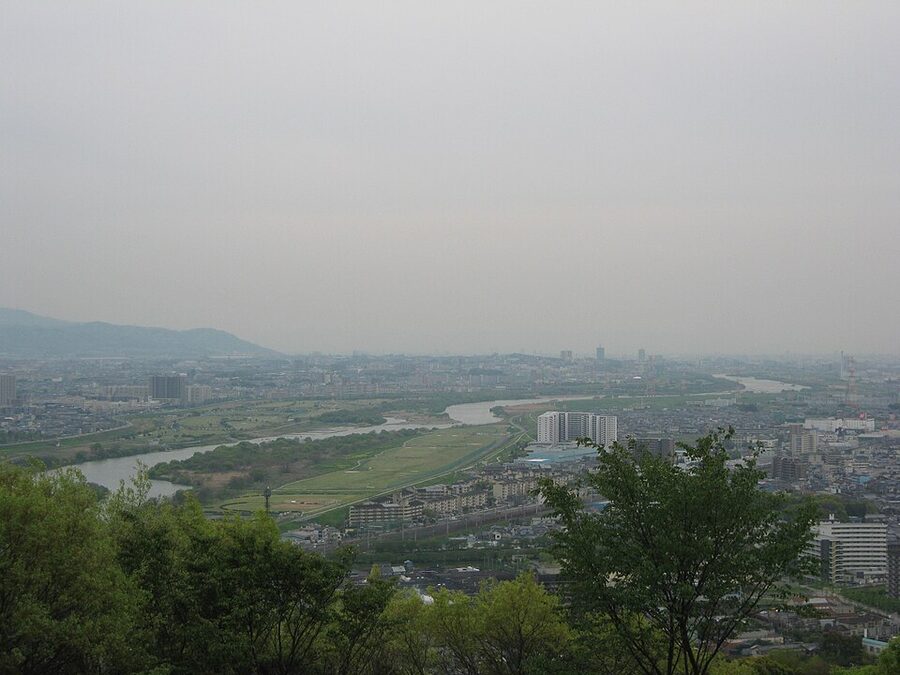
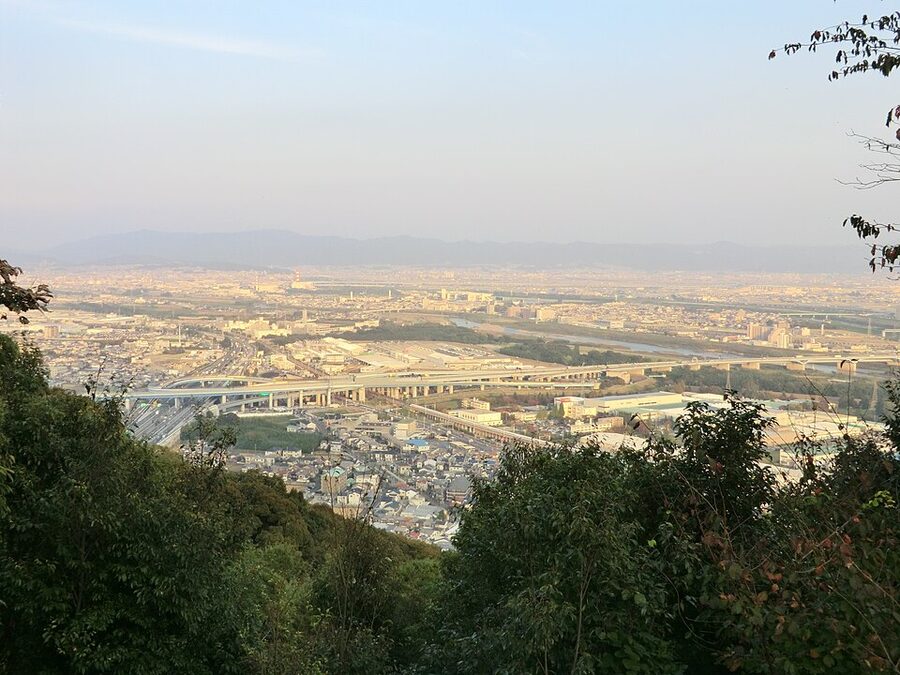
On 12 June, the same day Hideyoshi’s council was at Tomita, Mitsuhide’s forward units reached the Yamazaki area. Yamazaki (山崎, modern Ōyamazaki-chō in Kyoto Prefecture’s Kuze-gun) sits at a geographic choke point where the Yodo River runs close to the flank of Tennō-zan (天王山), the “Mountain of the Heavenly King.” The corridor between river and mountain is about 1.2km wide.
Any army moving from the west into Kyoto had to pass through it. Mitsuhide’s position blocking that corridor made strategic sense; it was also the last place he could make sense. Behind Yamazaki there was no second defensive line before Kyoto.
The ground at Yamazaki
You should stand at Yamazaki today to see the ground properly, but the written description will get you most of the way. The battlefield sits at the junction of three rivers — the Katsura, the Uji, and the Kizu — which merge into the Yodo 500 metres east of the modern JR Yamazaki Station. On the west side of the corridor is Tennō-zan, a 270-metre ridge running roughly north-south.
On the east is the broad Yodo floodplain, boggy in 16th-century conditions, crossable but slow. Running north-south between the two is the Enmyōji-gawa — in 1582 a small stream with defensible banks, now a minor drainage channel that you can step across.
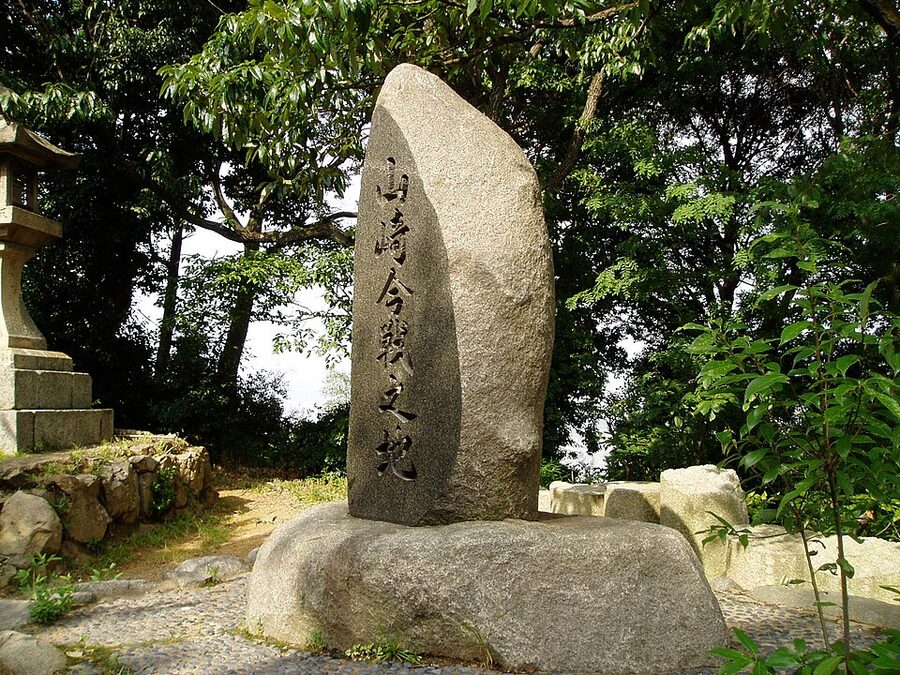
Mitsuhide’s 16,000 deployed on the east side of the Enmyōji-gawa, blocking the road north toward Kyoto. His best troops — the 2,000 Mino veterans under Saitō Toshimitsu, Mitsuhide’s senior retainer — held the centre. His left flank reached the Yodo marshes; his right pressed against the foothills of Tennō-zan.
His personal command post was at Gobozuka (御坊塚), a small rise about 500m behind the front line. Ōta Gyūichi’s account of the deployment has the Akechi formation drawn on the defensive with a clear preference for letting Hideyoshi attack into the narrow corridor rather than committing to a meeting engagement.
Hideyoshi’s 40,000 deployed west of the stream in three lines. Takayama Ukon and Kimura Shigetsugu (2,000 combined) held the extreme left of the forward line, anchored against Tennō-zan. Nakagawa Kiyohide’s 2,500 were next, with Ikeda Tsuneoki and his son Motosuke (5,000) on the right wing against the Yodo bank.
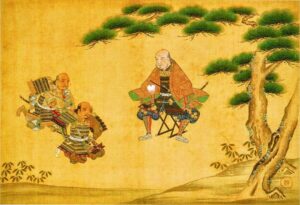
Hideyoshi’s main body of 20,000 — including his half-brother Hidenaga, Kuroda Kanbei, Hachisuka Masakatsu, Hori Hidemasa, and most of the Hashiba household retainers — was in the second line behind Nakagawa. Niwa Nagahide’s 3,000 and Oda Nobutaka’s 4,000 formed the third line as reserve. Hideyoshi’s command post was further back, at Hōshaku-ji temple on the eastern slope of Tennō-zan.
One Akechi ally did not show up. Tsutsuji Junkei, holding 4,000 men at Kōriyama Castle in Yamato, had promised Mitsuhide his support as recently as 10 June. On 12-13 June he marched his army to Horagatoge pass, halfway between his castle and the Yamazaki battlefield, and stopped. He stayed there for the entire duration of the battle.
The Japanese idiom horagatoge o kimekomu (洞ヶ峠を決め込む), “to plant oneself at Horagatoge”, entered the language from Junkei’s hedging that afternoon, and still means “to sit on the fence until you can see which side is winning.” It is not a flattering idiom. Junkei never recovered his political standing. He died three years later at 32.
The battle — afternoon, 13 June 1582 (2 July Gregorian)
The sources are unanimous that it had been raining on and off for two days. The morning of 13 June 1582 (by the lunar calendar then in use; 2 July by our Gregorian) was overcast and humid. The two armies had been in contact across the Enmyōji-gawa since the afternoon of 12 June.
Light skirmishing had gone on through the night, with Nakamura Kazuuji and Horio Yoshiharu sending infiltrators into the Akechi camp to burn tents and keep the enemy from sleeping. By mid-morning of the 13th, both armies were in position but neither had yet committed to a general engagement.
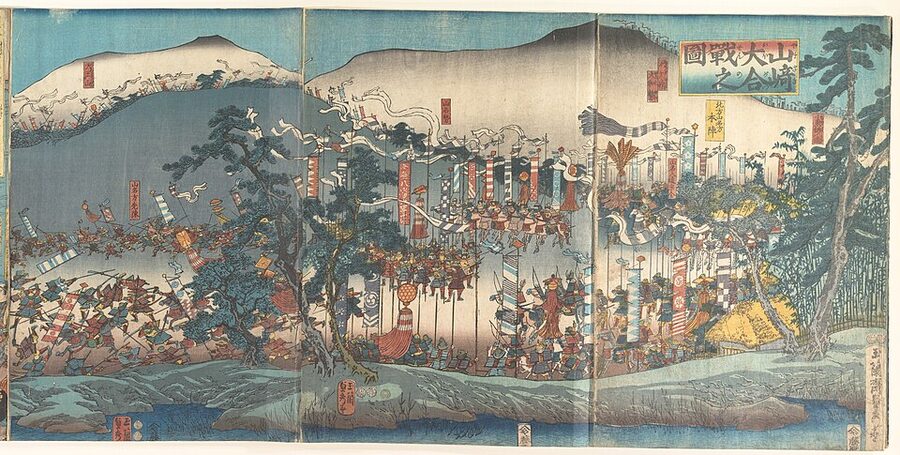
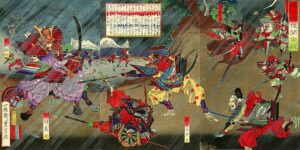
The action opened around 4pm. The trigger was a movement on the Tennō-zan slope: Nakagawa Kiyohide was shifting his 2,500 men westward along the mountain’s foothills to take position next to Takayama Ukon on the Hashiba far left. Mitsuhide’s right-wing commander Ise Sadaoki (a former Ashikaga shogunate retainer, a highly capable officer), positioned on the Akechi right, saw Nakagawa in motion and interpreted it as a flank attack.
He launched Isenke’s 2,000 men across the Enmyōji-gawa against Nakagawa’s moving column. Saitō Toshimitsu’s centre immediately followed up, crossing the stream against Takayama Ukon’s Christian force further left.
For about an hour, the Akechi attack held. Nakagawa and Takayama were heavily pressed; the Tennō-zan slope was steep enough that the Hashiba left could not fully deploy. Hideyoshi committed Hori Hidemasa’s reinforcements from the main body to stabilise the line, and Nakagawa and Takayama held.
Further north on the slope, the Hashiba supporting force under Hidenaga, Kuroda Kanbei, and Mikoda Masaharu engaged Matsuda Masachika and Nabika Yasuie’s Akechi detachments coming up through the mid-slope. Fighting across the ridge line was confused, broken into small-unit actions, and inconclusive.
The battle was decided on the flat, not the ridge. An hour into the engagement, around 5pm, Ikeda Tsuneoki and his son Motosuke moved their 5,000-man right wing northward along the Yodo bank. They crossed the Enmyōji-gawa east of the main line, curled behind the Akechi left flank, and hit Tsuda Nobuharu’s detachment from an unexpected angle.
Tsuda’s men broke immediately. Niwa Nagahide and Oda Nobutaka, who had been holding the Hashiba reserve, brought their 7,000 combined into the gap Ikeda had opened. The Akechi left, caught between Ikeda’s flanking assault and Niwa’s frontal push, collapsed inside twenty minutes.
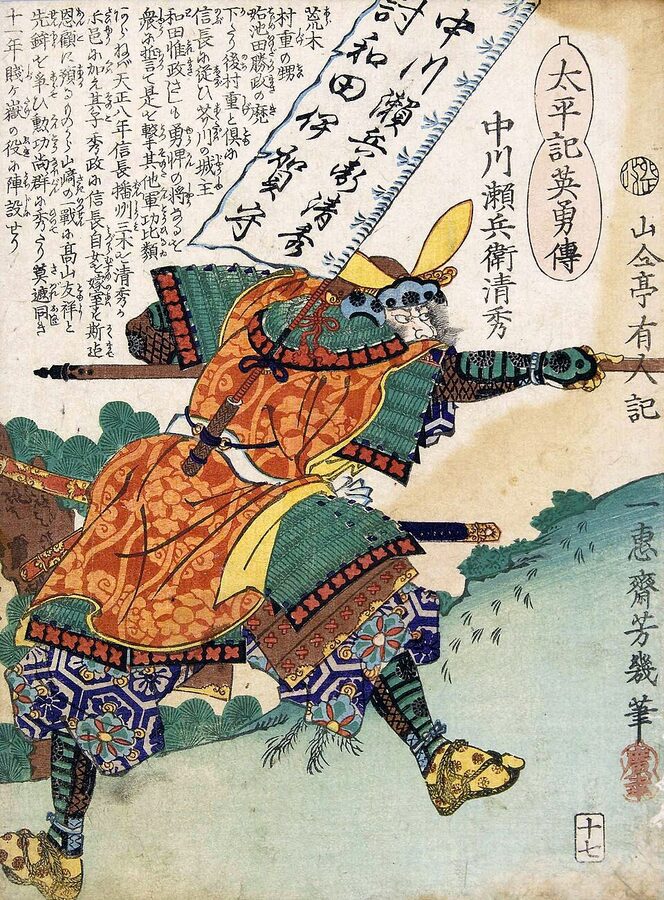
Once the left broke, Saitō Toshimitsu’s centre was exposed. Nakagawa and Takayama pushed forward; the Hashiba main body under Hidenaga pressed from the west; Ikeda swung south-east to roll up the Mino line. Saitō held for another forty minutes, making what the Edo chronicles call a model fighting withdrawal, but his men began to desert in growing numbers.
The Akechi right under Ise Sadaoki covered the retreat and was overrun; Ise was killed leading a rearguard action in the flats near the Enmyōji-gawa. Matsuda Masachika, who had been fighting on Tennō-zan all afternoon, also died there — one of the many small-unit commanders who did not come off the ridge.
The Akechi command rearguard under Mimaki Kaneaki — 200 men, mostly personal retainers of Mitsuhide — covered the army’s disintegration with a classic Sengoku last stand. Kaneaki sent a runner back to Mitsuhide with the words “Die in my place while I am dying” and charged into Ikeda’s forward columns. All 200 of his men were killed.
Mitsuhide, watching from Gobozuka, understood what had happened and ordered a general retreat to Shōryū-ji Castle. The order went out around 7pm. By sunset the Akechi army had ceased to function as a field force.
Ogurusu — the death in the bamboo grove
Mitsuhide reached Shōryū-ji Castle at Nagaokakyō around 9pm on the night of 13 June. The castle was not defensible with the few hundred men he still had — perhaps 700, mostly wounded, demoralised, and scattered. A holding action against Hideyoshi’s now-consolidating 40,000 would have been a ritual suicide in the Shimizu Muneharu mould, which Mitsuhide was not prepared to commit.
He concluded instead that his only chance was to reach his home castle at Sakamoto, on Lake Biwa, 30km north, where his wife Hiroko and his adult son Akechi Mitsuyoshi were still holding. Reassemble forces there, marry the Uesugi, fight another day.
He slipped out the Shōryū-ji north gate around 11pm with a handful of attendants — somewhere between seven and forty, sources disagree. The route to Sakamoto ran across the rice plain toward Daigo, skirting south of Kyoto, and passed through a village called Ogurusu in what is now the Yamashina ward of modern Kyoto.
The Ogurusu road was cut through a dense bamboo grove. It was raining. Mitsuhide’s small party was mounted and moving at a walk through broken terrain, wearing what was left of their armour.
Post-battle Sengoku Japan had a specific social phenomenon called ochimusha-gari, “defeated-warrior hunts”, where local peasant bands, operating on informal warrants from whichever daimyō was locally ascendant, would hunt fleeing survivors for their armour, weapons, and cash bounties. The peasants at Ogurusu that night were in the business. Whether they knew the rider they had trapped was Akechi Mitsuhide or simply assumed him to be an officer worth robbing is an argument that has no primary-source resolution.
The chronicles give different versions: Kawasumi Taikōki names Nakamura Chōbei as the man who speared him; the Akechi Gunki says the killing blow came from a peasant called Naka. Mitsuhide was stabbed in the flank with a bamboo farm-spear, bled out inside the hour, and was either beheaded by his own attendant to prevent trophy-capture (Akechi Gunki) or decapitated by the peasants and the head claimed later (Kawasumi).
The head reached Hideyoshi the next day. Hideyoshi had it displayed at Honnō-ji, the same compound where Mitsuhide had killed Nobunaga eleven days before, and then moved to the crossroads at Awataguchi, where heads were conventionally exposed to rain and crows. Saitō Toshimitsu, captured alive four days later, was beheaded at Rokujō-gawara.
Mitsuhide’s son Mitsuyoshi committed seppuku at Sakamoto Castle on 15 June when Akechi Hidemitsu — Mitsuhide’s adopted nephew, who had tried to march a relief force to Shōryū-ji and been defeated by Hori Hidemasa at Uchidenohama — was killed at the castle after giving up the family heirlooms to the besieging Hashiba troops. By 20 June 1582, the Akechi line was extinct except for one son in a monastery.
The Kiyosu Conference and the long consequences
Hideyoshi did not wait. On 27 June 1582, fourteen days after Yamazaki, he convened the senior Oda retainers at Kiyosu Castle in Owari to settle the succession. The conference is its own piece of political theatre.
Present were Hideyoshi, Shibata Katsuie (who had finally arrived from the north), Niwa Nagahide, Ikeda Tsuneoki, and Takigawa Kazumasu. The question was which of Nobunaga’s surviving sons should become head of the Oda clan. Katsuie argued for Oda Nobutaka (Nobunaga’s third son, 24 years old, who had been with Hideyoshi at Yamazaki). Hideyoshi argued for Sanbōshi — the infant son of Nobunaga’s eldest son Nobutada, who had died defending his father at Honnō-ji.
Sanbōshi was three years old. That was exactly Hideyoshi’s point. Putting a three-year-old at the head of the Oda clan meant the clan’s actual decisions would be made by the senior retainers — which meant, in practice, by Hideyoshi.
Katsuie lost the argument. Sanbōshi was confirmed as Oda heir. The territorial redistribution that followed gave Hideyoshi the Yamashiro, Tamba, and Kawachi provinces, essentially the entire Kyoto region, plus command of the Hashiba forces that had won Yamazaki.
Katsuie got Echizen and Ōmi, nominally larger but with no political centre. The Kiyosu settlement converted Hideyoshi’s tactical victory at Yamazaki into a durable institutional position.
Katsuie understood what had happened. He married Nobunaga’s widow Oichi, Nobunaga’s sister, in October 1582 as an attempt to rebuild political legitimacy against Hideyoshi’s infant-figurehead arrangement. It did not work. Inside six months the two men were at war.
Shizugatake in April 1583 was the direct follow-on to Yamazaki — Hideyoshi against Katsuie, at the north end of Lake Biwa, with Nakagawa Kiyohide (dying at the opening of the battle, covering the Hashiba right) and Ikeda Tsuneoki leading the victorious wings again. Katsuie lost.
He committed seppuku at his Kitanoshō Castle on 24 April 1583 with Oichi beside him. The three Ichi daughters — Chacha, Ohatsu, and Oeyo — survived the fall of the castle and entered Hideyoshi’s household.
The next year Hideyoshi faced Tokugawa Ieyasu at Komaki-Nagakute (1584), a campaign that ended in a negotiated draw but left Hideyoshi as the national military power. By 1585 he had taken the court title of Kanpaku (imperial regent), a position higher than the Sei-i Taishōgun Mitsuhide had tried to claim. By 1590 he had unified Japan under Toyotomi authority with the conquest of the Hōjō at Odawara.
And in 1600, fifteen years after Hideyoshi’s own death, the tensions inside the Toyotomi succession would produce Sekigahara — where the political fault-line Yamazaki had established, between the post-Hideyoshi fudai loyalists and the tozama outer daimyō, would be resolved in favour of Tokugawa. Every major campaign of the next eighteen years traces back to Hideyoshi’s victory in the corridor between Tennō-zan and the Yodo.
The tennōzan (天王山) idiom I mentioned earlier is where the linguistic residue of the battle lives. Modern Japanese still uses the phrase “Kono shiai wa tennōzan desu”, “this game is the Tennōzan”, to mean “this is the single decisive contest.” Baseball commentators use it. Political journalists use it.
The phrase is so ingrained that most Japanese speakers who use it daily could not tell you which mountain it refers to. It refers to a 270-metre hill in Ōyamazaki, Kyoto Prefecture, where on an overcast afternoon in July 1582 two armies crossed a stream and one of them came apart. Four hundred and forty-four years later the phrase still means what it meant at 7pm that evening: everything you have been working for is decided in the next two hours.
Where to visit the Yamazaki sites today
The battlefield at Ōyamazaki-chō
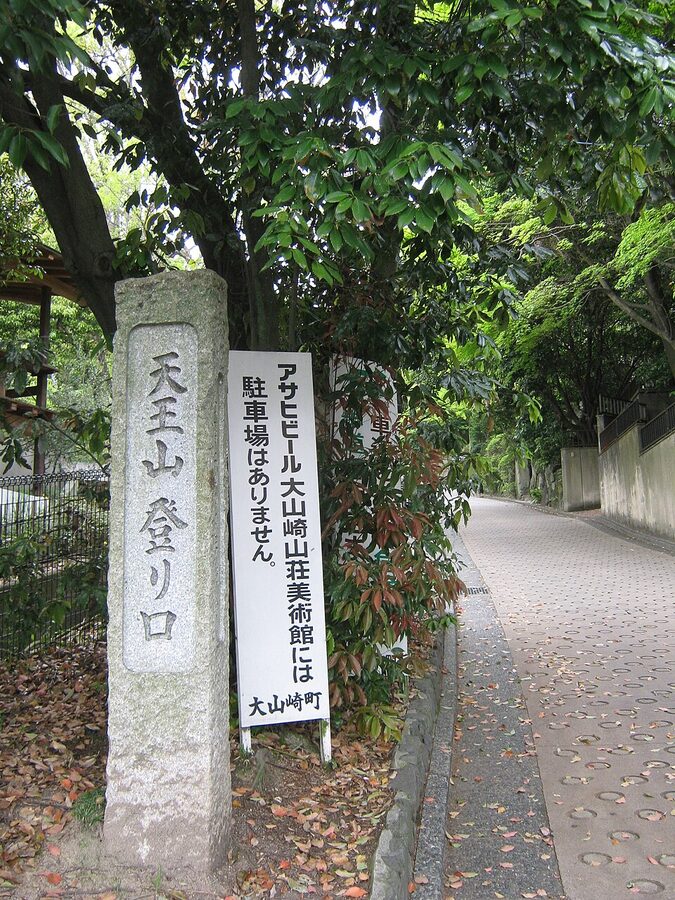
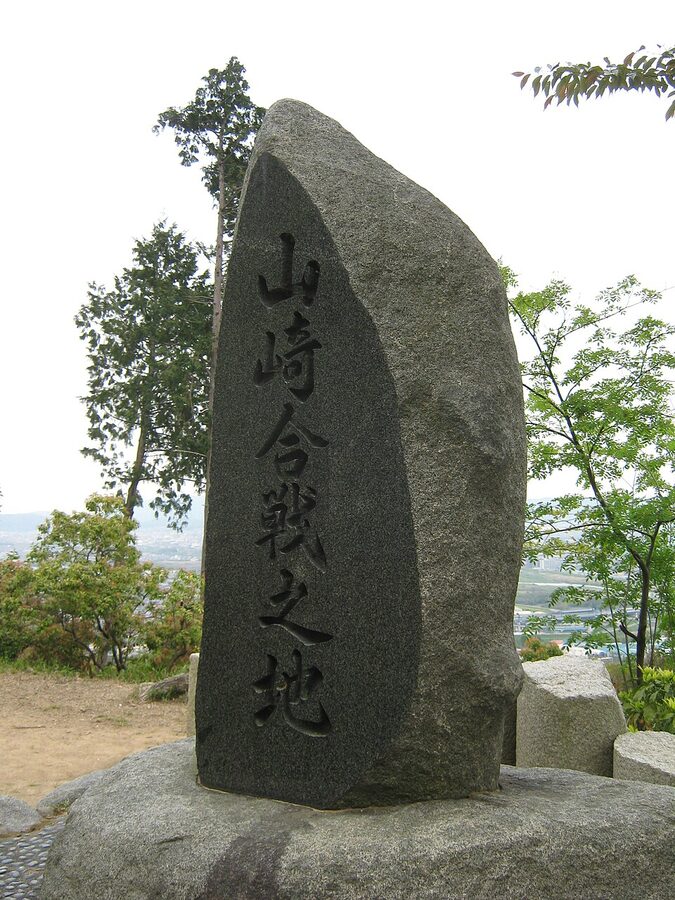
The Yamazaki battlefield is in Ōyamazaki-chō (大山崎町), Kuze-gun, Kyoto Prefecture, 15 kilometres southwest of central Kyoto. Access is absurdly easy: JR Kyoto Line to Yamazaki Station (ten minutes from Kyoto, fifteen from Osaka) or Hankyū Kyoto Line to Ōyamazaki Station (a two-minute walk from each other, either works). The JR station is closer to the Yodo-bank portion of the battlefield; Hankyū is closer to the Tennō-zan trailhead.
Both are free to access. The interpretation-panel network around the battle sites is excellent in Japanese and patchy in English — bring a translation app.
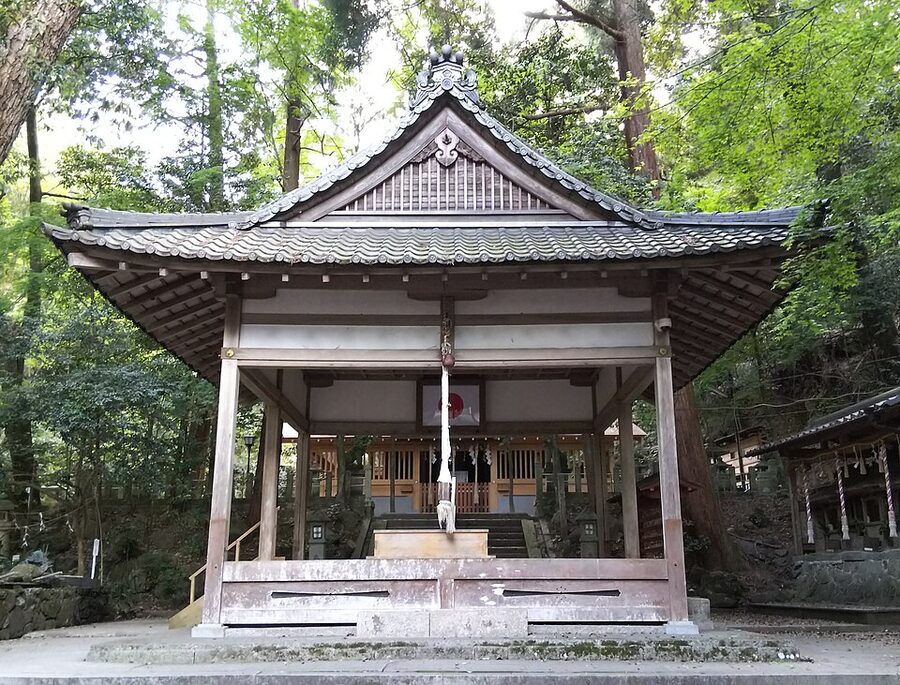
The Tennō-zan summit hike is 30-40 minutes from the Hankyū station, through a Buddhist temple complex called Hōshaku-ji (宝積寺) where Hideyoshi had his command post. Hōshaku-ji is a working temple with a National Treasure-designated three-storey pagoda dating to 1604 that Hideyoshi commissioned in commemoration. Entry to the temple is ¥500, open 9am-4:30pm.
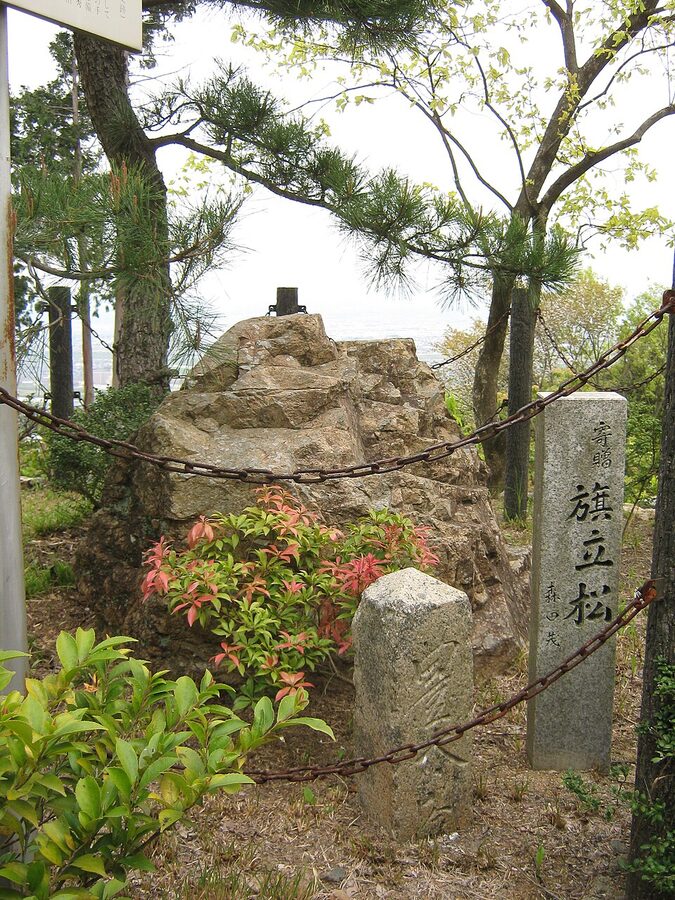
The pagoda cannot be entered but can be walked around. From Hōshaku-ji the trail continues up through pine and bamboo to the Tennō-zan summit at 270m — panoramic views south over the Yodo plain and west toward Osaka. Hideyoshi’s Flag-Planting Pine (旗立の松) is a marked site on the summit path. The tree you see is a 20th-century replacement; the spot is traditional.
Immediately adjacent to the Hōshaku-ji entrance is the Myōki-an (妙喜庵), a small tea-house temple containing Tai-an (待庵) — a two-mat tea room designed and built by Sen no Rikyū in 1582, in the months immediately before Yamazaki. It is the oldest surviving tea room in Japan and a National Treasure. Entry is by reservation only (by postal mail one month in advance — the temple does not take email bookings) and costs ¥1,000.
The connection to Yamazaki is direct: Rikyū was patronised by Hideyoshi, who built this tea house during the Chūgoku campaign. The room is 2.7m square. You should not miss it if you have the lead time. If you are interested in tea ceremony generally, our tea ceremony article covers Rikyū in more depth.
Shōryū-ji Castle ruins — Nagaokakyō
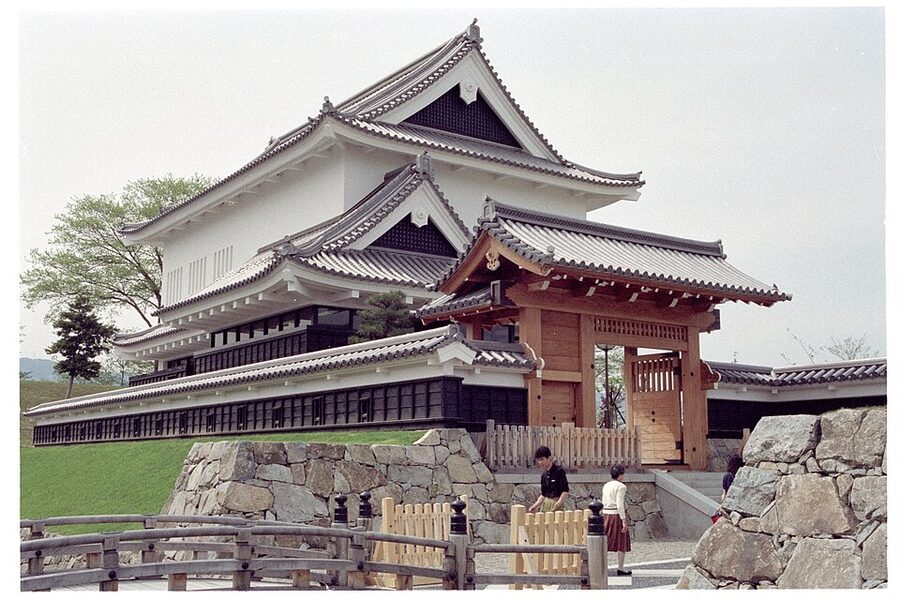
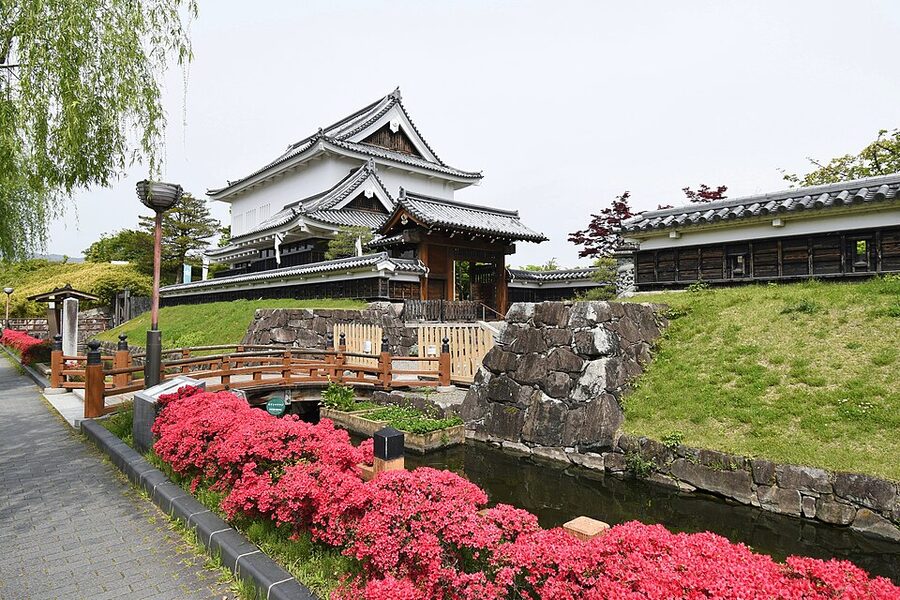
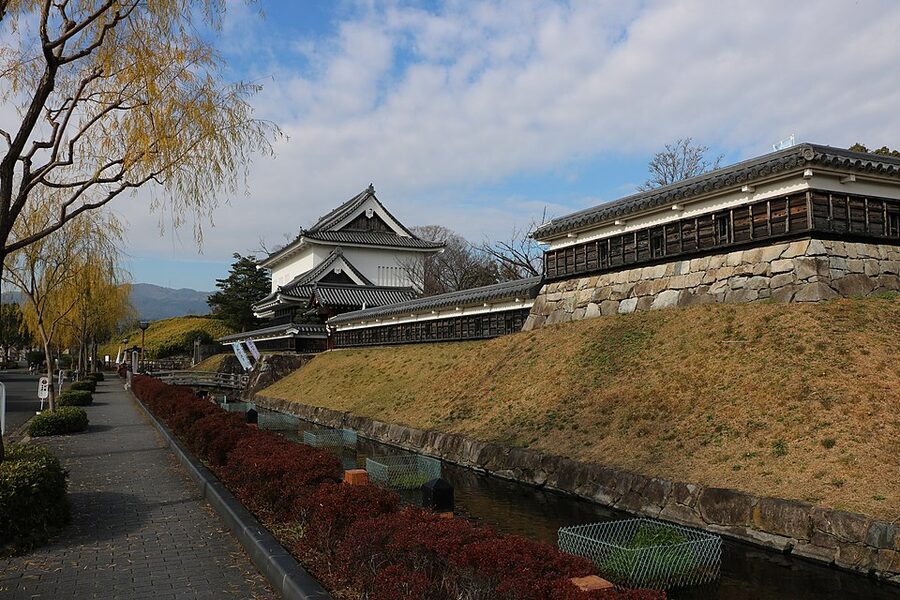
Shōryū-ji Castle Park is in Nagaokakyō City, 15 minutes from Yamazaki on the JR Kyoto Line (transfer from the battlefield at Yamazaki Station; Nagaokakyō Station is the third stop). The castle is a reconstructed earthwork-and-stone fortification with a visitor centre built into the Edo-period walls, open 9am-5pm, ¥200 entry. The reconstruction is modest — a donjon was never there; what you see are the reconstructed yagura turrets and the original stone base of the walls. The site matters because this was Mitsuhide’s shelter on the night of 13 June 1582 between Yamazaki and Ogurusu, and his adult sons held here for two days after his death.
You should plan about an hour for Shōryū-ji: thirty minutes for the castle walk, fifteen for the interpretation room, fifteen for the garden. The garden is a modern creation — Hosokawa Tadaoki’s late-period Hosokawa residence was here before Mitsuhide’s occupation, and the small pond-and-stone layout references that earlier period rather than the 1582 military occupation. The visitor centre has a small exhibition on the Akechi occupation and a 10-minute video in Japanese covering the battle. The combination of Yamazaki and Shōryū-ji in a single day is the standard way to do this site; you can walk both in about six hours if you include the Tennō-zan climb.
Akechi-yabu and the Ogurusu site — Yamashina, Kyoto
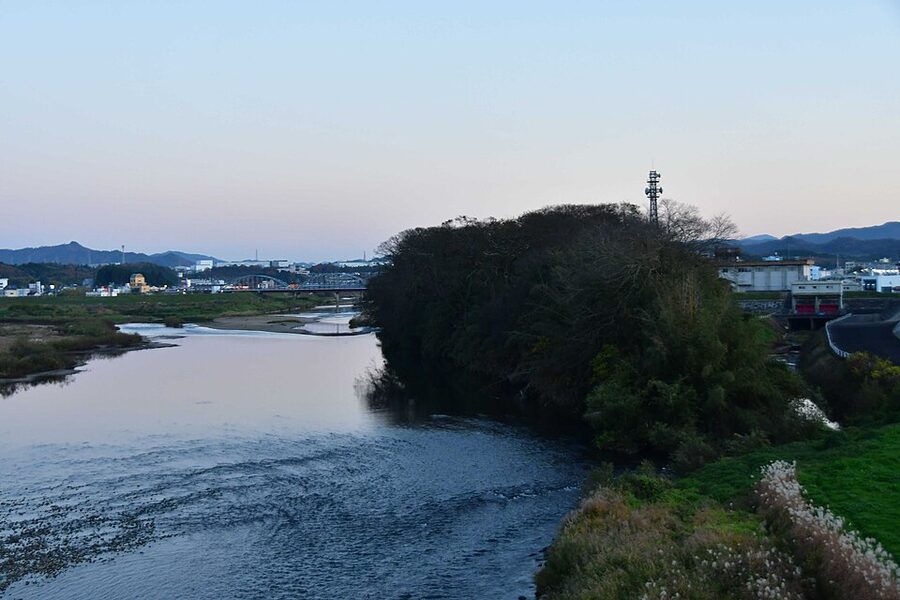
The Ogurusu ambush site is in Yamashina-ku, southeastern Kyoto — administratively not in the Yamazaki cluster, but 25 minutes by JR from Yamazaki or ten minutes by subway from Kyoto Station. The Akechi-yabu (明智藪) bamboo thicket has been preserved as a small historic-site park surrounded by the modern suburban Kohata neighbourhood. Free entry, always open.
The park is about the size of a small urban playground; a low stone monument marks the traditional spot of Mitsuhide’s death. The surrounding Kohata shopping area and the nearby Zushi-Oku train station make the site easy to combine with other south-Kyoto destinations.
A five-minute walk from the Akechi-yabu brings you to the Akechi-dera (明智寺), a small Buddhist temple founded 400 years ago specifically to pray for Mitsuhide’s spirit. The temple is quietly Akechi-partisan, a 17th-century reaction against the Edo-period chroniclers’ hostile treatment of Mitsuhide, and the caretakers will talk about the man if you speak reasonable Japanese. A small donation (¥200-300) is expected.
The experience is less a battlefield-tourism stop than an exposure to an alternate reading of Mitsuhide: not the treacherous retainer but a daimyō caught in an untenable political position. You can read the full Mitsuhide story in the full biography, which covers his earlier career in depth.
Honnō-ji — Nakagyō-ku, central Kyoto
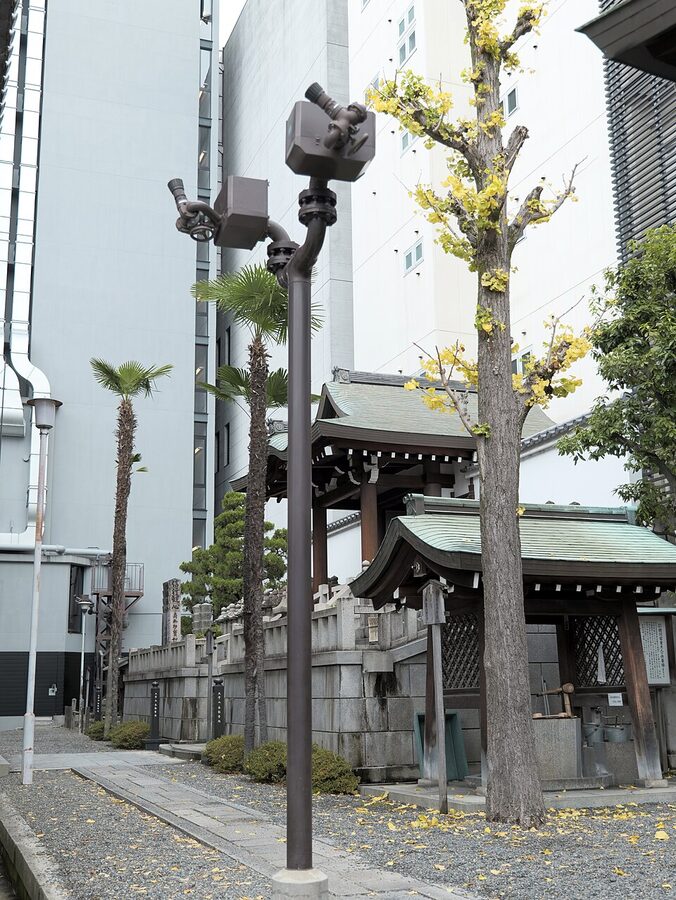
The modern Honnō-ji temple is in central Nakagyō-ku Kyoto, a 7-minute walk from Shijō Station on the Karasuma subway line. It is a working Nichiren-sect temple and open during daylight hours, no entry fee. The current buildings are Edo-period reconstructions on a site one kilometre southeast of the original 1582 compound — the temple was relocated on Toyotomi Hideyoshi’s orders in the 1590s.
The Honnō-ji treasure hall (Daihoden) contains Oda Nobunaga mementos including personal effects traditionally attributed to him. Entry to the treasure hall is ¥500, open 9am-4pm.
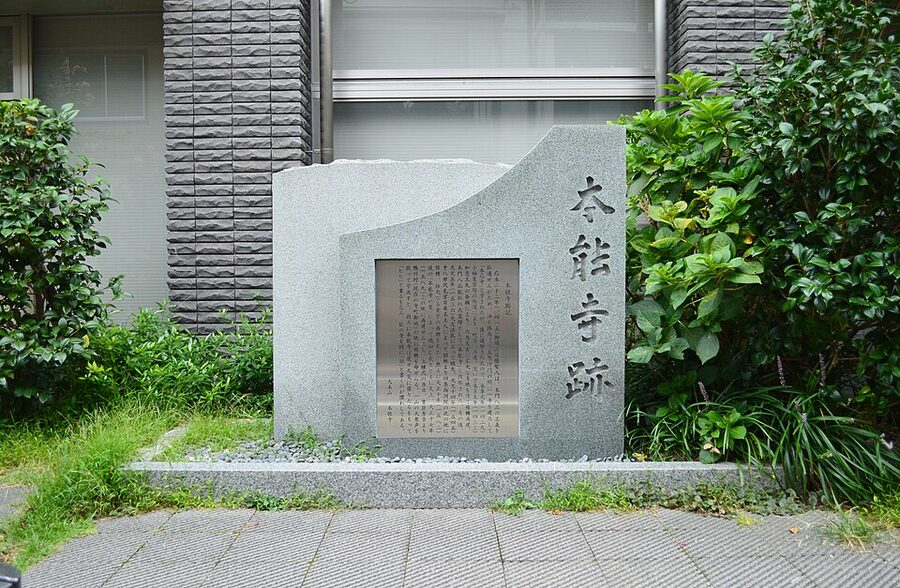
The original Honnō-ji-ato stone marker, where Nobunaga actually died, is at a small neighbourhood corner about 1.5km northwest of the current temple — address Aburanokoji-dori Kayamachi-sagaru, Nakagyō-ku. The marker is free and always accessible. The site is residential; you will be standing on a neighbourhood sidewalk, with cars going past, looking at a stone.
The plain version, where the event happened, is the more instructive of the two Honnō-ji visits. You can pair it with the modern temple in the same afternoon by walking from one to the other in about twenty minutes.
Saikyō-ji temple and Sakamoto Castle site — Ōtsu
For Mitsuhide completists, Saikyō-ji (西教寺) in Sakamoto on the west shore of Lake Biwa is the Akechi family temple. Access: Keihan Ishiyama-Sakamoto Line to Sakamoto-Hieizan-guchi, 10-minute walk, or JR Kosei Line to Hieizan-Sakamoto, 25 minutes. Entry ¥500, open 9am-4:30pm.
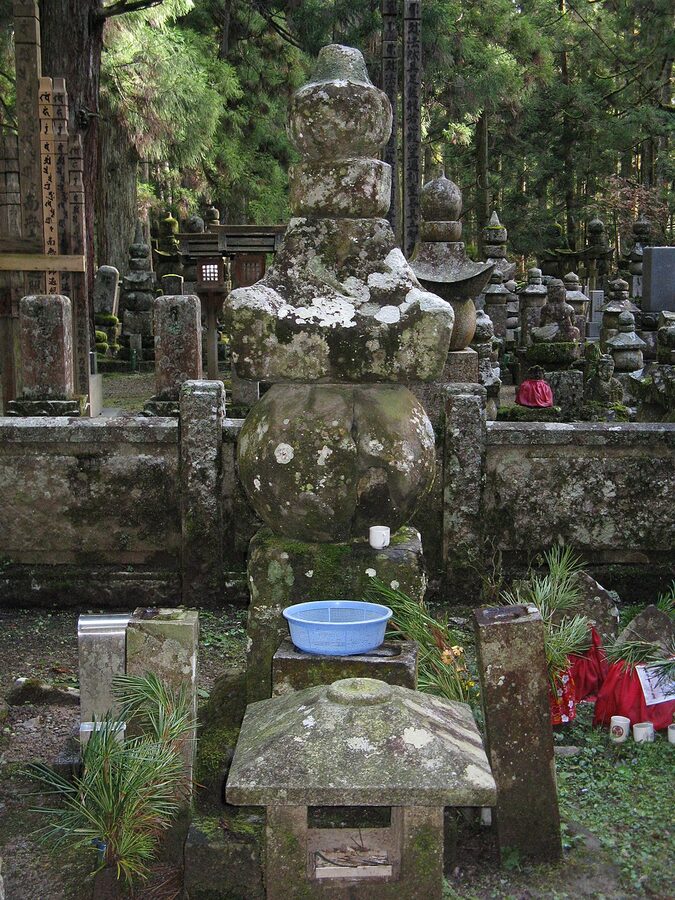
The temple contains the Akechi clan graves — Mitsuhide, his wife Hiroko, his son Mitsuyoshi, and a collective memorial for the retainers who died at Sakamoto Castle on 15 June 1582. The temple has a quiet, unforced quality; it is an active Tendai-sect practice centre rather than a tourist destination, and the cedar-and-stone gravestones sit in an internal garden that most visitors miss because it is not signposted from the main hall.
The Sakamoto Castle site itself is 500 metres east of Saikyō-ji, at the shore of Lake Biwa. The castle was Mitsuhide’s primary residence and the administrative centre of his fief from 1571 onward; it was destroyed on 15 June 1582 when Akechi Hidemitsu lost the relief action and Akechi Mitsuyoshi committed seppuku inside.
Nothing above ground survives. The site is a small memorial park — a stone marker, a diagram of the original castle footprint, views across the lake toward Enryaku-ji on Mount Hiei. Free, always open. If you are doing the full Mitsuhide circuit, this is the emotional endpoint: you can stand where his family died and look at the water where his boats used to go.
Closing — the corridor, the grove, and the eleven days
If you do the full Yamazaki circuit in two days — Ōyamazaki and Tennō-zan on day one, Shōryū-ji and Akechi-yabu on day two, Sakamoto on a third if you have it — you come away with something the textbooks do not quite give you: the physical scale of Mitsuhide’s eleven days. The distances are small. Honnō-ji to Yamazaki is 20 kilometres. Yamazaki to Ogurusu is 18.
Ogurusu to Sakamoto, the route Mitsuhide was trying to complete, is another 12. The whole arc of his rule happened inside a triangle you can walk across in a single long day, and at no point was he more than a morning’s ride from the place he had killed Nobunaga. He died seven kilometres from the compound where he had started.
The Japanese idiom mikka tenga, three-day rule, is a slight numerical rounding. The actual count is eleven days between 21 June and 2 July 1582, or thirteen by the lunar calendar everyone used at the time. Either way it is the shortest headship of state in Japanese recorded history, and the one that produced the most durable linguistic residue.
The phrase is still in daily newspaper headlines. Politicians who hold office briefly get called three-day rulers. Business executives brought in as caretaker CEOs get called three-day rulers. Every time a Japanese speaker uses the idiom, they are invoking, without thinking about it, a man in the rain on a suburban road in 1582, stabbed with a bamboo spear by people who did not know who he was.
Hideyoshi’s forced march is the other thing you cannot leave Yamazaki without. The Chūgoku ō-gaeshi remains, on any reasonable measurement, the most logistically accomplished rapid redeployment in pre-modern Japanese history. A 230km march with 30,000 men in nine days, in early summer, over rain-softened roads, with the lead officer riding point on a political crisis he had to conceal from his own rank-and-file — nothing else in the Sengoku canon is quite comparable.
When the Japanese historians talk about Hideyoshi’s genius, they are not really talking about the battlefield. They are talking about the march. Yamazaki was the part of the campaign Hideyoshi fought once he had already won the operational contest.
Stand at the Tennō-zan summit on a clear afternoon with the Yodo plain spread below you, and it is hard not to notice how small the corridor is. Both armies could see each other’s banners the entire morning of 13 June. The eventual distance between Hideyoshi at Hōshaku-ji and Mitsuhide at Gobozuka was maybe 1,200 metres — close enough to see the individual standards, close enough to know that the other commander was already looking back.
Eleven days before, one of them had been at Honnō-ji with 13,000 men and the empire in his hand. By 8pm on this afternoon he would be in retreat toward Shōryū-ji, and by midnight he would be dead in a bamboo grove. The Japanese word for “decisive moment” comes from the mountain you are standing on. You can see why.
For more on the cast, read my Akechi Mitsuhide biography (which covers the pre-Honnō-ji career I have skipped over here), my Toyotomi Hideyoshi piece (the Chūgoku ō-gaeshi and everything that followed), my Oda Nobunaga article (the man in the burning temple), and the Hosokawa Tadaoki + Hosokawa Gracia pair, whose refusal to back Mitsuhide is the single most-consequential alliance failure of the eleven days. For the next act in the campaign, go to Shizugatake (1583 — Hideyoshi finishes off Shibata Katsuie) and then Komaki-Nagakute (1584 — Hideyoshi draws with Tokugawa Ieyasu). The long arc reaches Sekigahara in 1600, where every political fault-line Hideyoshi opened at Yamazaki finally resolves.
_Temple_hdsr_S5_03.jpg)


.jpg)


