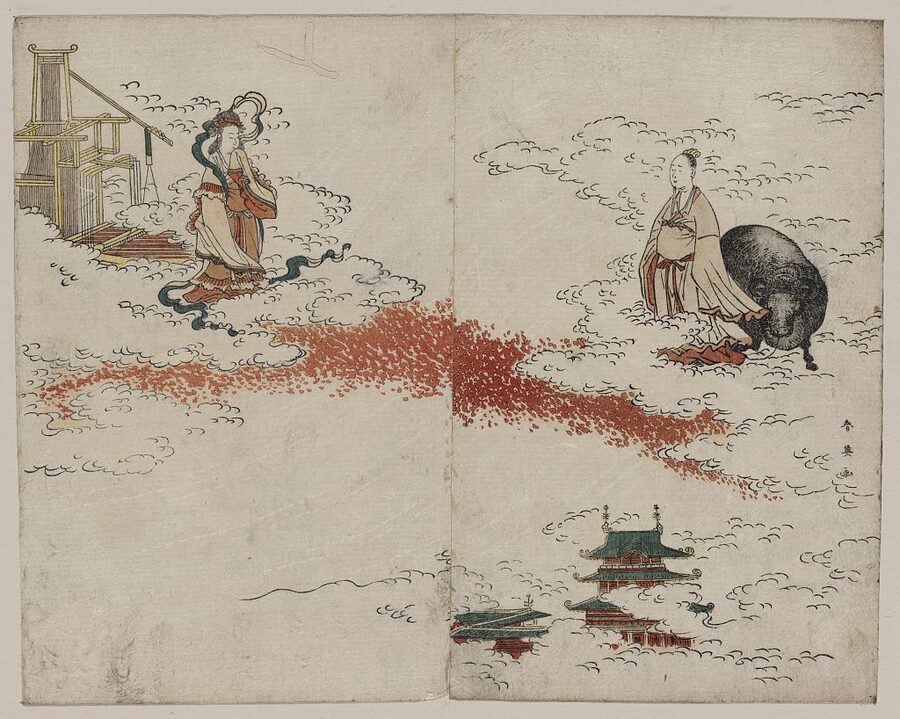
Once a year, on the seventh night of the seventh month, two stars are supposed to meet across the Milky Way. Vega is the weaving princess, Hikoboshi is the cowherd, and the Heavenly Father separated them for working too little and loving too much. They get one night a year, and only if the magpies bring a bridge, and only if it does not rain. That is the entire premise of Tanabata, and Sendai turns it into the largest paper-streamer festival on Earth every August.
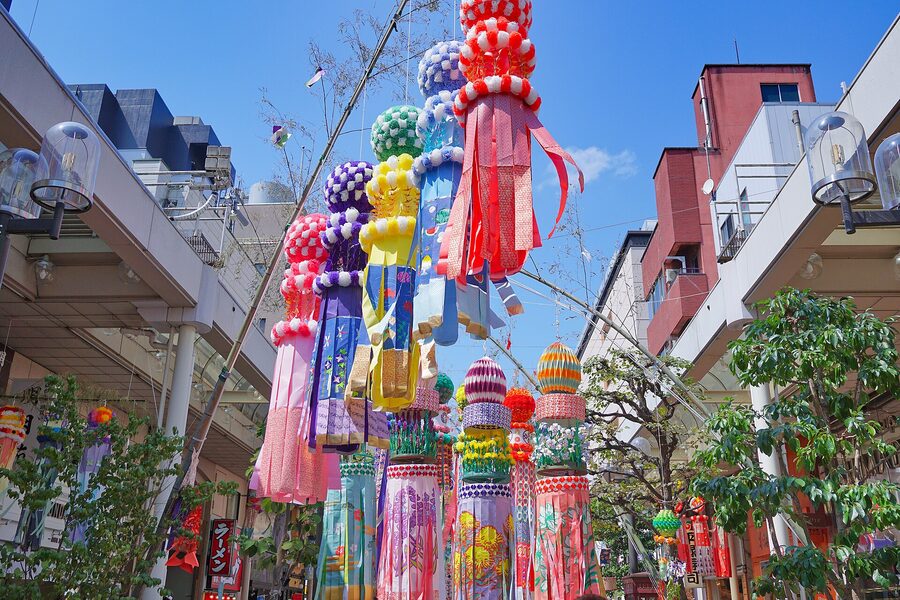
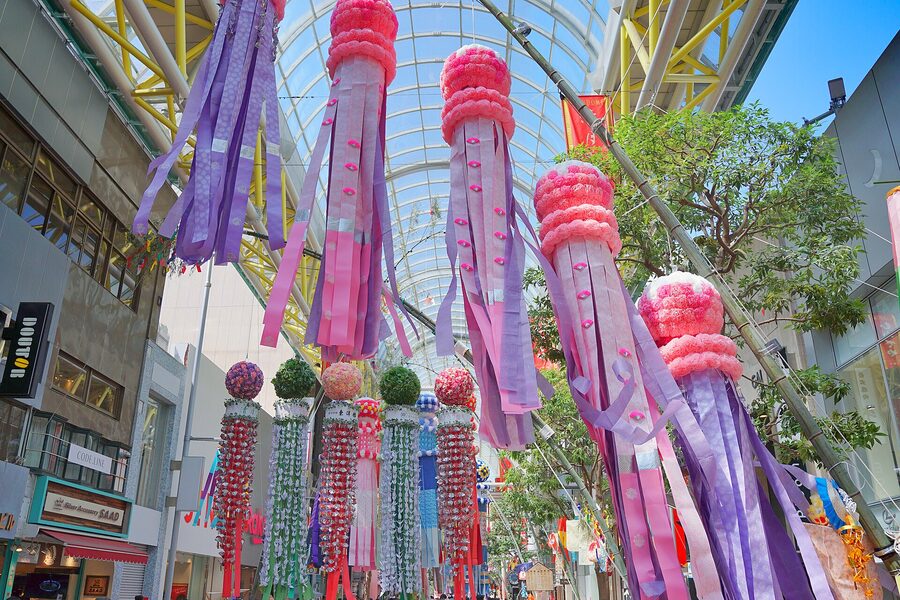
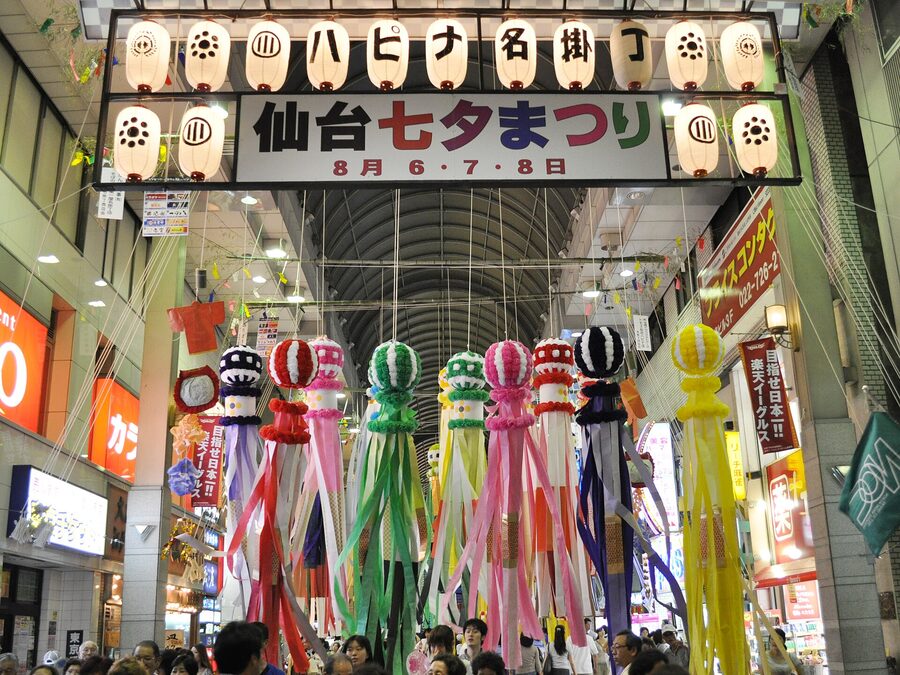
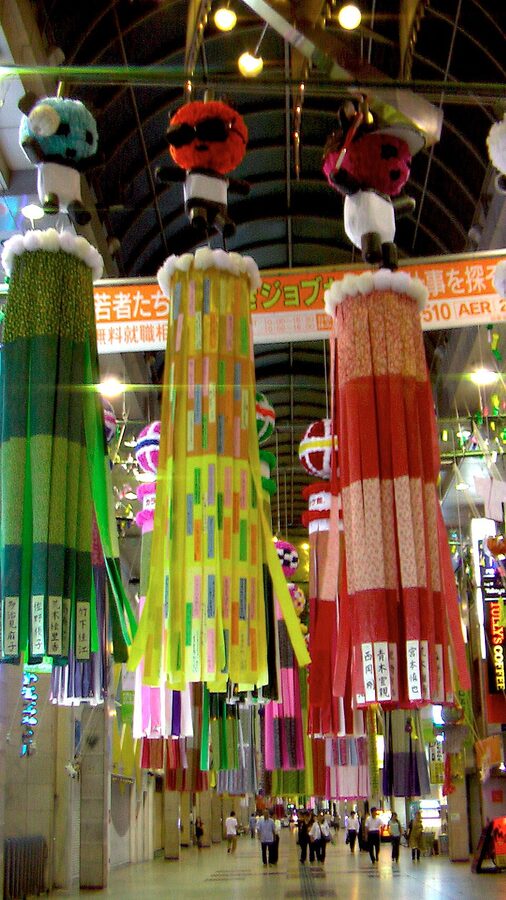
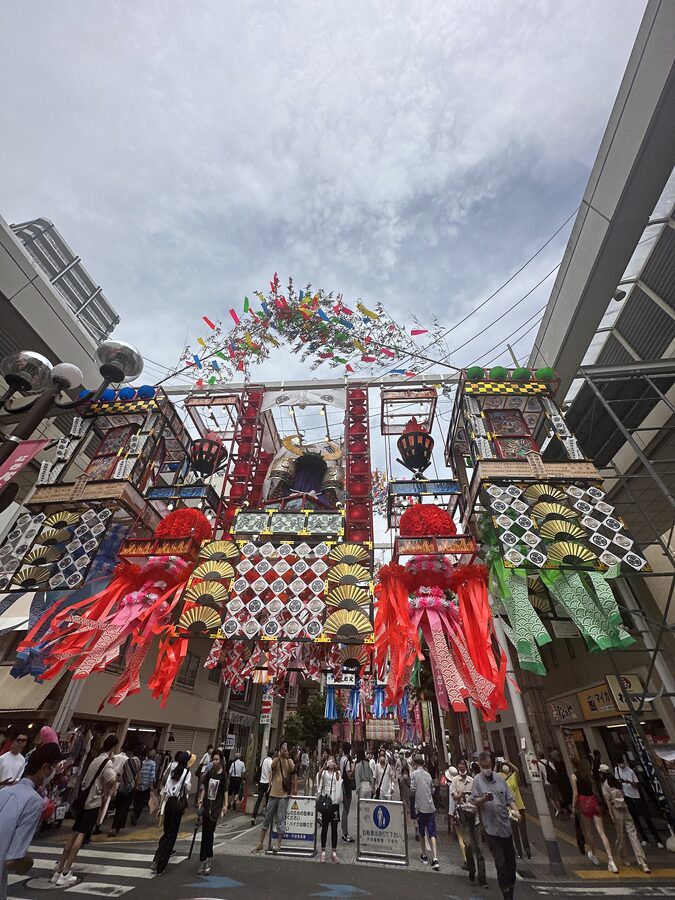
I have been to Sendai in early August, and I want to tell you what 3,000 handmade paper streamers up to ten meters long actually look like when you walk under them. They hang from bamboo poles strung across the Chuo-dori shopping arcade. They sway. The longest of them brush the tops of pedestrians’ heads, on purpose, because the festival is supposed to be a thing you walk through.
The whole thing was set up by Date Masamune in 1623, almost exactly four centuries ago. He moved Tanabata, which Heian-era courtiers had been doing as a delicate poetry-and-needle-pleading ritual for nine hundred years already, to August instead of July, and turned it into the city-wide spectacle it still is. He liked culture, and Sendai liked him, and the whole arrangement has worked out for four hundred years and counting.
In This Article
- The Two Stars and the Story That Made Them Famous
- How Empress Koken Imported It in 755
- The Star-Crossed Lovers, Properly Told
- Why Sendai Took Over the Festival
- Why Sendai Is on the Old Calendar When Most of Japan Is Not
- The Showa Emperor and the 1947 Revival
- The Seven Decorations and What Each One Actually Means
- How a Sendai Streamer Is Actually Made
- The Three Days, Hour by Hour
- What You Actually Wish For on a Tanzaku
- The Rest of the Three Great Tohoku Festivals
- Hiratsuka, the Other Famous Tanabata
- The Ichinomiya, Asagaya, and Anjo Variants
- What to Eat on Tanabata Night
- Visiting Sendai: Where to Stand and When
- The Date Masamune Connection You Can Walk To
- Tanabata in the Imperial Court vs Tanabata in the Street
- The Astronomy on a Clear Night
- Tanabata as a Cultural Anchor
- The Three Categories of Tanabata Decorations
- What the Festival Says About Modern Japan
- Tanabata and the Sankin-Kotai Connection
- The Festival in São Paulo, Los Angeles, and Vancouver
- Why I Keep Coming Back
The Two Stars and the Story That Made Them Famous
Look up on a clear August night in Japan and find the Summer Triangle. The brightest of its three stars is Vega, the fifth-brightest star in the entire sky, sitting 25 light-years from Earth in the small constellation Lyra. The second-brightest is Altair, twelfth in the sky, much closer at 16.7 light-years away, in Aquila the eagle.
Between them stretches the Milky Way. From a dark countryside in Tohoku you can see the band of it clearly, a smear of densely packed stars running diagonally from horizon to horizon. The two bright stars sit on opposite banks of that smear like two villages on opposite sides of a wide silver river.
The Chinese saw that arrangement and built a story around it more than two thousand years ago. The earliest written reference is in the Han-dynasty poetry collection Gushi shijiu shou, sometime in the second century. By the Southern and Northern Dynasties period, the festival was fixed to the seventh night of the seventh lunar month, and the Vega and Altair characters had names: the Weaver Maiden and the Cowherd.
How Empress Koken Imported It in 755
The story arrived in Japan around 755 under Empress Koken, along with most of the rest of imported Tang-dynasty ceremony. The Chinese version was called Qixi (Seventh Night) and the festival in honor of it was called the Pleading-for-Skills Festival, in Japanese Kikkoden (乞巧奠). Court women would pray to Vega for better needlework, weaving, and calligraphy.
The Heian court took to it immediately. Aristocrats threaded seven-colored thread through seven needles by moonlight, wrote poems on mulberry leaves, and floated them in basins of water. The whole rite was elegant, indoor, and utterly disconnected from the popular festival it would later become.
What made it stick was that the imported Chinese festival merged, in Japan, with an existing Shinto purification rite of similar timing. That rite involved a miko, a shrine maiden, weaving cloth on a special loom called a tanabata (棚機) to offer to a kami who came down on the seventh night to drive off summer impurities. Same numerals, same loom imagery, same stars overhead. The two ceremonies fused in language and in ritual, and the imported word Qixi got read with the indigenous loom-name pronunciation.
That is why you hear Tanabata pronounced in Japanese while it is written with Chinese characters for “seventh night.” It is one of the cleanest cases in Japanese language of two completely separate origins fusing into a single word that nobody hears as foreign anymore.
The Star-Crossed Lovers, Properly Told
The legend goes like this. Tentei, the Sky King and ruler of the heavens, has a daughter named Orihime (織姫), the Weaver Princess, who weaves beautiful cloth on the bank of the Heavenly River. She is so devoted to the loom that she has no time for anything else.
Tentei worries his daughter is unhappy, so he arranges a meeting with Hikoboshi (彦星), a hardworking cowherd who keeps his cattle on the opposite bank. The two fall in love instantly. They marry. They become so absorbed in each other that the cloth stops being woven and the cows wander loose.
Tentei is furious. He pulls them apart and forbids them ever to meet again, sending them back to opposite shores of the Milky Way. Orihime weeps so persistently that her father softens, but only a little. He tells her she may meet Hikoboshi exactly once a year, on the seventh night of the seventh month, and only if she finishes her weaving on time.
The first year, the lovers find that there is no bridge across the celestial river and no way to get to each other. Orihime cries again. A flock of magpies, taking pity, fly up and form a feathered bridge across the gap with their outspread wings. Every seventh night since, if the night is fine, the magpies come.
If it rains on the seventh night, though, the river floods and the magpies cannot fly. The lovers stay apart for another year. The drops you feel falling on you in the rain on Tanabata night are called the Tears of Orihime and Hikoboshi, and Japanese parents still tell their children that on the way home from the festival.
I think it is one of the few celestial myths that gets the actual physics roughly right while being completely wrong about the mechanism. Vega and Altair really are on opposite sides of the Milky Way. They really do appear at their highest around the seventh lunar month. They really do come into closest proximity, in the apparent-position sense, in the late summer evening sky.
And they really are about 16 light-years apart, which means even at light speed, neither of them is meeting anyone tonight. The myth-makers had no idea about light-years, and they spent two thousand years writing songs about a meeting the universe was never going to allow. That the festival is still going strong, with full belief in the romance, says everything about how stories outlast their physics.
Why Sendai Took Over the Festival
By the early Edo period, Tanabata had moved out of the imperial palace and into ordinary commoner life across Japan. Children wrote wishes on paper strips. Households decorated bamboo branches.
Shopkeepers used it as an excuse for street festivities. The whole country celebrated, but no one yet did it on the scale that Sendai would later make standard.
Date Masamune (1567 to 1636), the One-Eyed Dragon of Oshu, founded the Sendai Domain in 1600 after Tokugawa Ieyasu transferred him there. He moved into the small fishing village of Sendai in 1604 and turned it into a major Tohoku city over the following decades. He had a particular weakness for cultural pageantry, and a particularly long memory for which kinds of court ritual would translate well to his new northern fief.
In 1623, according to local tradition, Masamune wrote eight tanka poems for the Tanabata festival and ordered every household in his castle town to celebrate it formally. He was 56 years old, eight years from his death, and clearly thinking about what kind of city he was leaving behind. The festival took root immediately.
Masamune is the same warlord I cover in my Date Masamune profile, where I look at his late military career and his strange diplomatic embassy to Rome. The Tanabata patronage is one of the more peaceful things he did. Sendai still treats him as the founding patron of the festival, and the Aoba Festival in May celebrates him separately.
Why Sendai Is on the Old Calendar When Most of Japan Is Not
Most of Japan now celebrates Tanabata on July 7. Sendai does not. Sendai celebrates from August 6 to August 8, and you can blame, or thank, the Meiji-era calendar reform for the split.
The original Tanabata date was the seventh day of the seventh lunar month, which in the lunisolar calendar fell in what is now early to mid August. When Japan switched to the Gregorian calendar in 1873, the government simply moved the festival to July 7 of the new calendar. That is roughly a month earlier in the actual season.
The result is that on the new July 7, the rainy season is still raging across most of Honshu. The Milky Way is invisible behind cloud cover. The lovers, in theory, are getting drenched. It is not the date the festival was designed for.
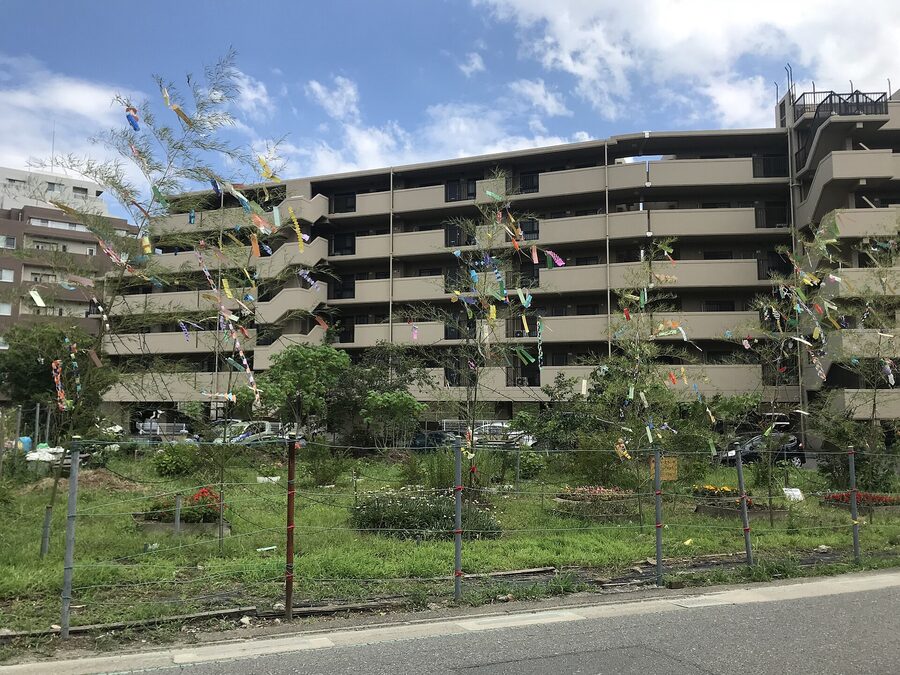
Some regions handled the mismatch by keeping the old lunar date, called Old Tanabata or Kyu-Tanabata, which still falls in August. Others adopted what is called tsuki-okure, the “month-late” method: just shift everything one calendar month forward, so the seventh of the seventh becomes the seventh of August.
Sendai went tsuki-okure. Hiratsuka went new-calendar. The country has done both ever since.
The Showa Emperor and the 1947 Revival
Tanabata in Sendai was suppressed during the Pacific War. Bamboo and paper went to other uses, and a city under wartime austerity was not in the mood for paper streamers. The festival fell silent for several years.
The first major postwar Tanabata in Sendai was held in 1946, with 52 decorations along the main streets. It was modest, but it was alive. The city was still recovering from the firebombing of July 10, 1945, which had destroyed roughly a quarter of the urban area, and getting any bamboo, any colored paper, and any spare hands at all to make 52 streamers in the summer of 1946 was a small miracle.
The proper revival came the following year. On August 6, 1947, the Showa Emperor Hirohito visited Sendai as part of his postwar tour of the country, and the city greeted him with 5,000 Tanabata decorations along his route. He had renounced his divinity less than two years earlier, in the 1946 New Year declaration, and a tour like this was part of him meeting his people as ordinary head of state for the first time.
The 5,000 decorations were a deliberate gesture: the city was telling the new postwar emperor that ordinary Sendai life had returned. The streamers in 1947 ran the same arcades that had been bombed flat two years before. From that summer onward, Sendai Tanabata grew steadily into the modern festival you can visit today, with two-million-plus visitors during the three-day run.
The Seven Decorations and What Each One Actually Means
Sendai Tanabata is technically defined by seven specific decorations. Most of the giant tubular streamers people associate with the festival are just the most visible category. The official set is older, smaller, and meaning-loaded.
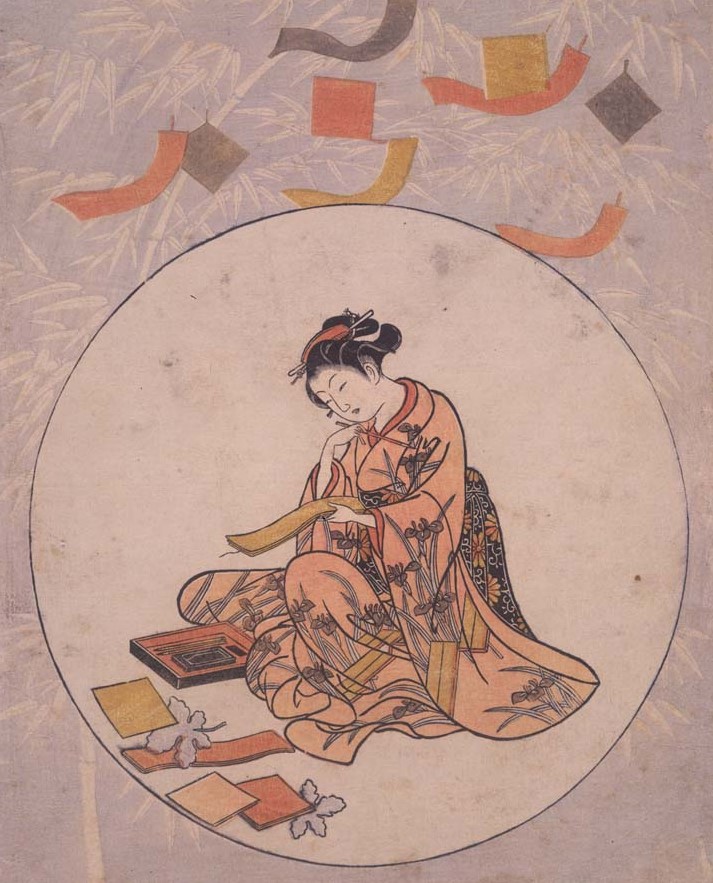
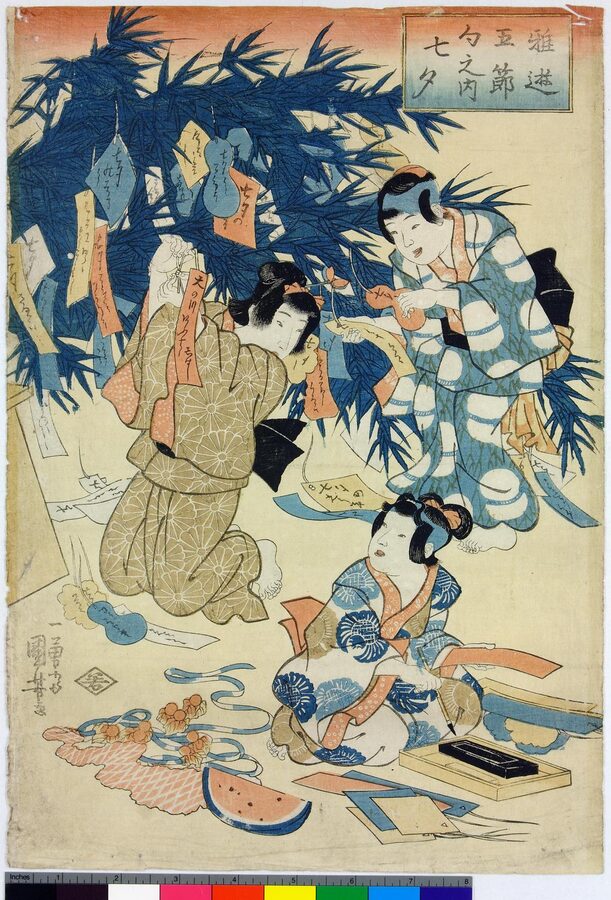
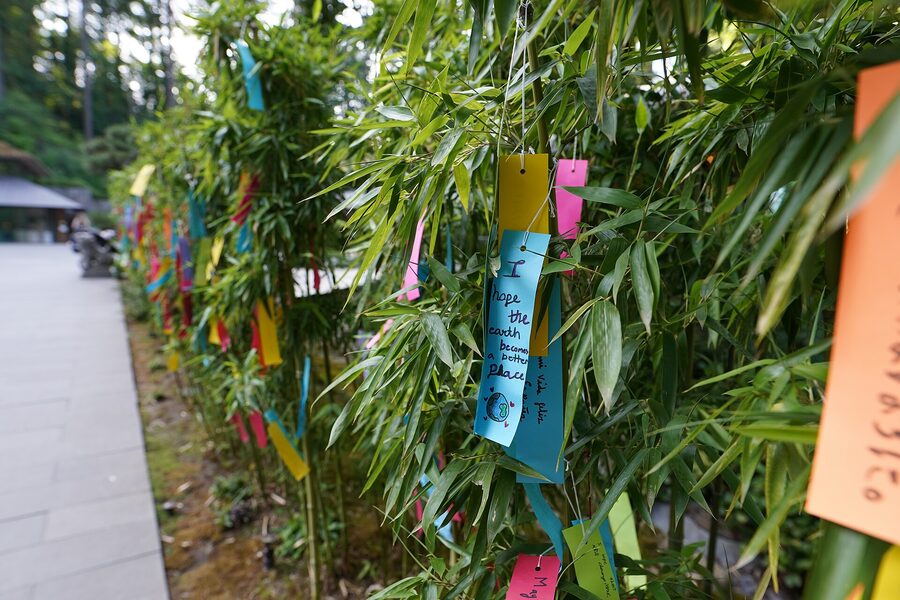
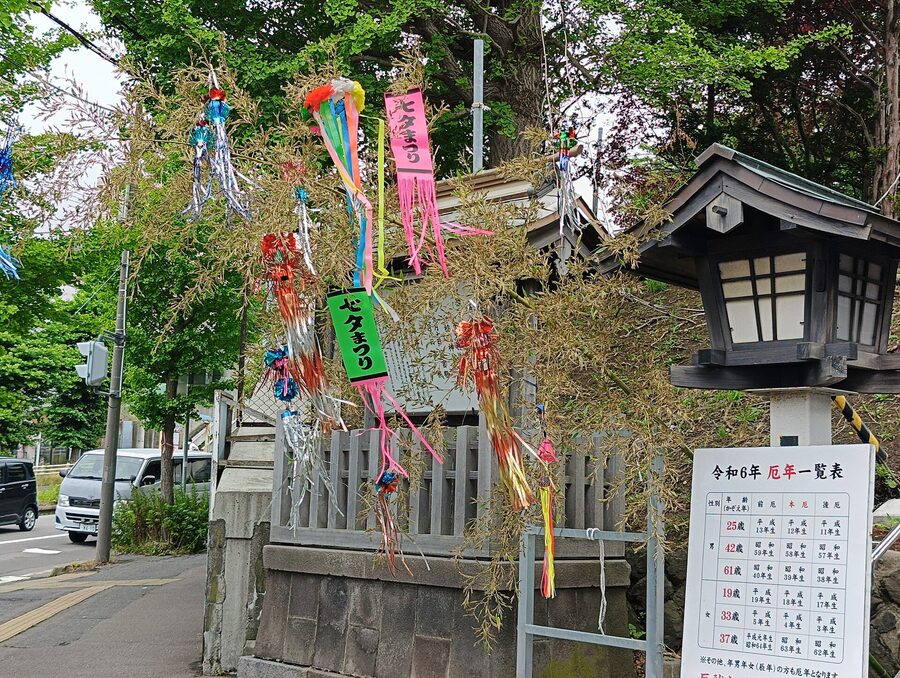
The first is Tanzaku (短冊), the rectangular paper strip on which a wish is written. Tanzaku started in the Heian court as a strip for poems and only later became a wish vehicle. Modern Tanzaku at Sendai use seven colors and are tied to the bamboo stalks closest to the ground, where children can reach them.
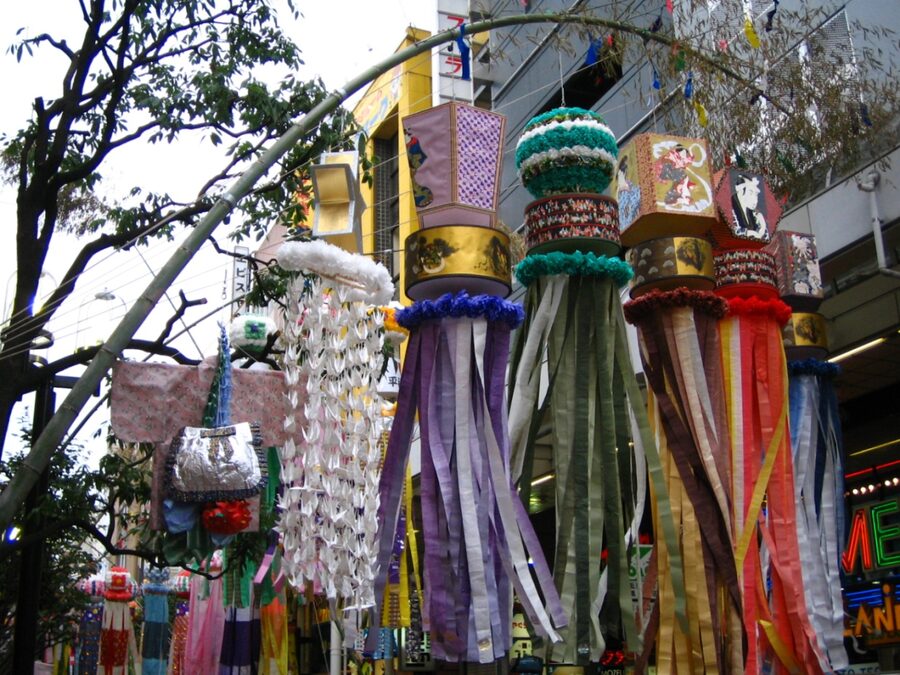
The second is Kamigoromo (紙衣), a paper kimono. The Kamigoromo means good health and protection from harm, and historically it stood in for the actual cloth Orihime is supposed to weave. Some Sendai shotengai compete each year on the elaboration of their Kamigoromo, sewing real-looking miniature kimono out of washi paper.
The third is Orizuru (折鶴), the paper crane. Cranes traditionally signify a thousand years of life in Japanese folklore, and they are folded for Tanabata as a wish for longevity, especially for elders in the household. The Sendai versions are sometimes thousand-strong garlands threaded together, called senbazuru.
The fourth is Kinchaku (巾着), the drawstring purse, hung from the bamboo as a wish for prosperity in business. Kinchaku in modern Sendai are often handmade by district shopkeepers, so a kinchaku on a streamer is also literally an advertisement of the merchant’s craft.
The fifth is Toami (投網), the throwing net for fishing. Toami means a good catch, both literally for the fishing villages along the Sanriku coast and metaphorically for everyone hoping to “catch” good luck. Sendai has a fishing-port history, and the net imagery survives even though Sendai itself is inland.
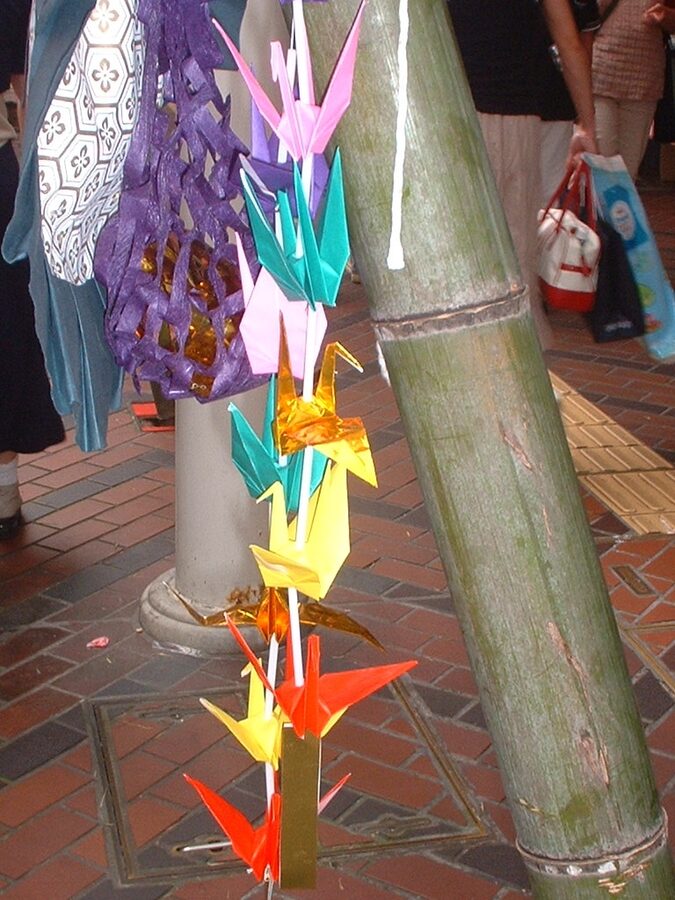
The sixth is Kuzukago (くずかご), the wastebasket. Cleanliness as a wish: at the end of folding all the other decorations, you sweep up your scraps and put them in a paper kuzukago hung on the bamboo, symbolically committing to keep your home and your conduct tidy. It is the most modest of the seven and the easiest to overlook.
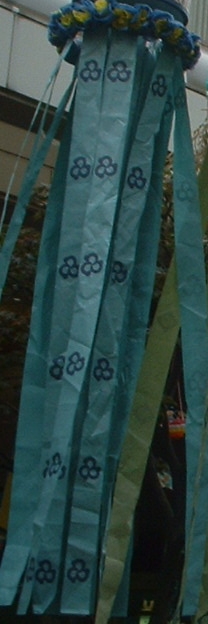
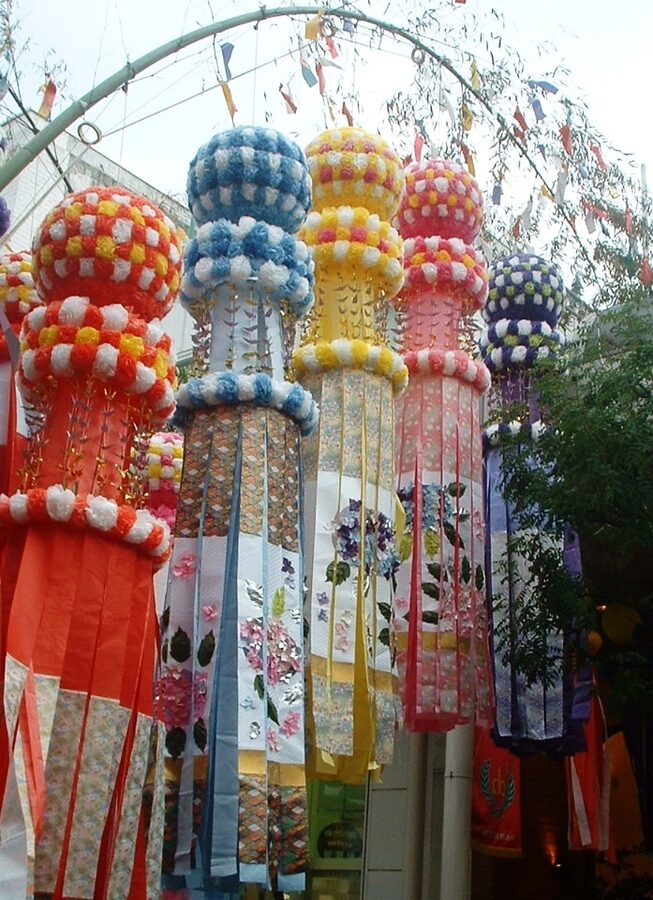
The seventh is Fukinagashi (吹流し), the long streamer. Fukinagashi look like Orihime’s woven thread itself, descending from heaven. They are the largest, longest, and most visible of the seven decorations, and they are the ones that became the iconic image of Sendai Tanabata. The biggest fukinagashi in Sendai run up to ten meters long and use a kusudama (薬玉) ornamental ball at the top.
How a Sendai Streamer Is Actually Made
I keep saying “handmade.” That is not marketing. Each major streamer in Sendai is made entirely by volunteers from the shotengai it represents, often over the course of months, almost always by the same families year after year.
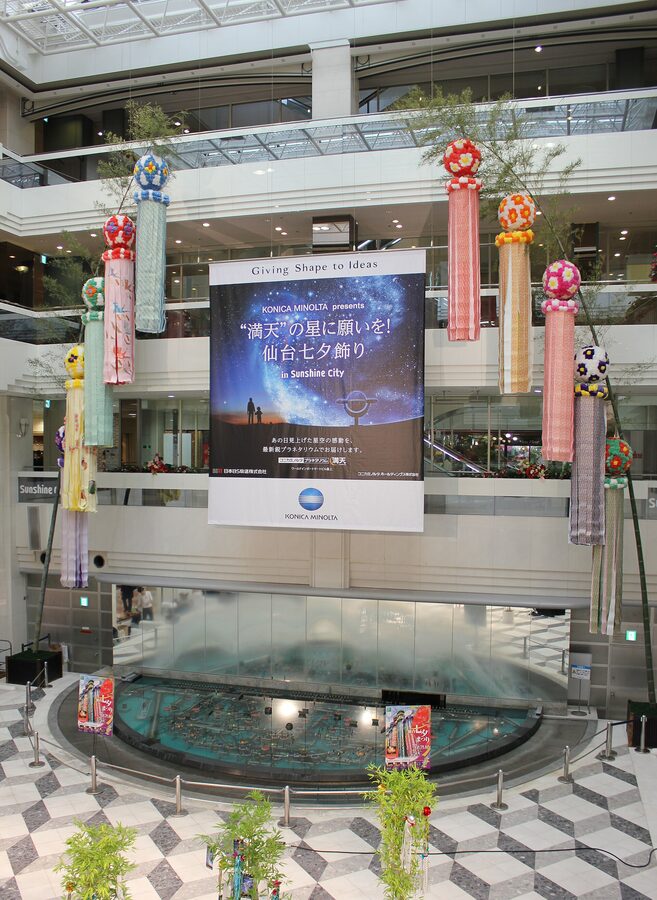
The construction is simple in concept. You take a circular kusudama at the top, a paper ball about a meter in diameter, then attach long strips of washi paper that fall down like a giant tassel. The kusudama itself can have a thousand individual paper folds. The streamers below can run anywhere from three to ten meters long, and the longest brush the heads of pedestrians passing under them on Chuo-dori.
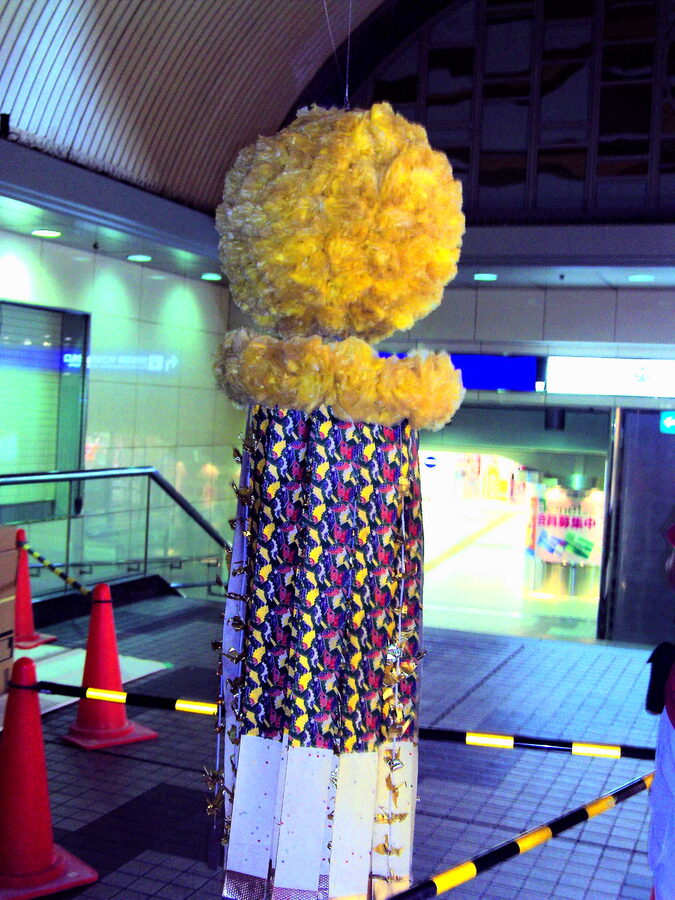
The kusudama itself is interesting. It was invented for Sendai Tanabata in 1946 by a local craftsman named Sakamoto who was trying to make the postwar streamers look more impressive without using more materials. He took the design from the herbal-medicine pomanders the Japanese court used to hang at New Year for protection against disease. The shape stuck, and now the kusudama is iconic enough that you find them on streamers from Sendai to São Paulo.
The whole assembly is hung from a bamboo pole strung horizontally across the arcade. The bamboo has to be cut fresh each year, because dried bamboo splinters when the streamers swing in summer wind. Sendai sources its bamboo from a few specific groves in Miyagi Prefecture, and the whole supply chain has been running on the same families for generations.
The Three Days, Hour by Hour
Sendai Tanabata runs from August 6 to August 8 every year without fail. August 6 is the major opening day, August 7 is the central day matching the original lunar seventh, and August 8 is the closing.
August 6 starts in the morning with the streamers being raised across the Chuo-dori arcade, the Ichiban-cho arcade, and the Sun Mall arcade, which together form the central shopping district just west of Sendai Station. By 10 a.m. the streamers are up, the judges are walking the circuit, and the crowds are starting to fill in from the suburbs.
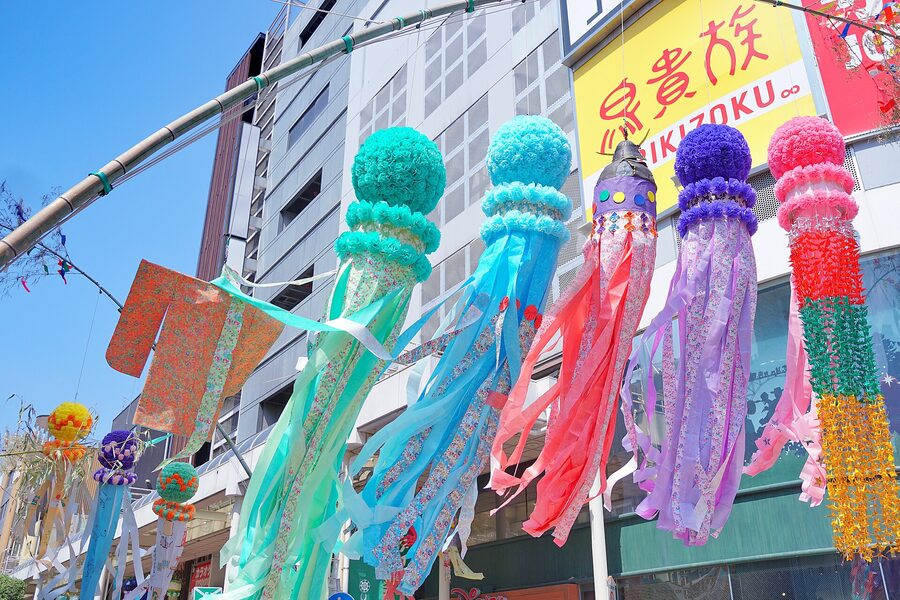
The crowds peak in the early evening of August 6 and again on August 7. Rough city counts put attendance at around two million across the three days, which means the arcades hit close to a person per square meter at peak.
You shuffle. You do not walk. You stop when the crowd in front of you stops, and that is the entire experience.
The night of August 5, the day before the festival officially opens, has its own event: a fireworks display along the Hirose River. About 16,000 fireworks are launched over the course of an hour and a half. The fireworks predate the postwar Tanabata revival; they were originally a separate summer event that got absorbed when the city rebuilt the festival in 1947. Now they read as the unofficial opening salvo.
By the morning of August 9, the streamers are gone. The arcades are back to ordinary commerce. The bamboo is taken to riverbanks and either set afloat or burned, an old tradition for sending the year’s wishes up to the sky.
What You Actually Wish For on a Tanzaku
I have been to enough Tanabata events, including small neighborhood ones in Tokyo and Sapporo, to have read a lot of tanzaku over the years. The wishes are not what you might expect from the romantic legend.
Most of them are practical. Children wish to do well on entrance exams. University students wish for jobs.
Office workers wish for promotions and for their kids to recover from colds. People dealing with illness wish for stability or for a parent’s surgery to go well. Couples occasionally wish for a partner, but not as often as the romance of the festival might suggest.
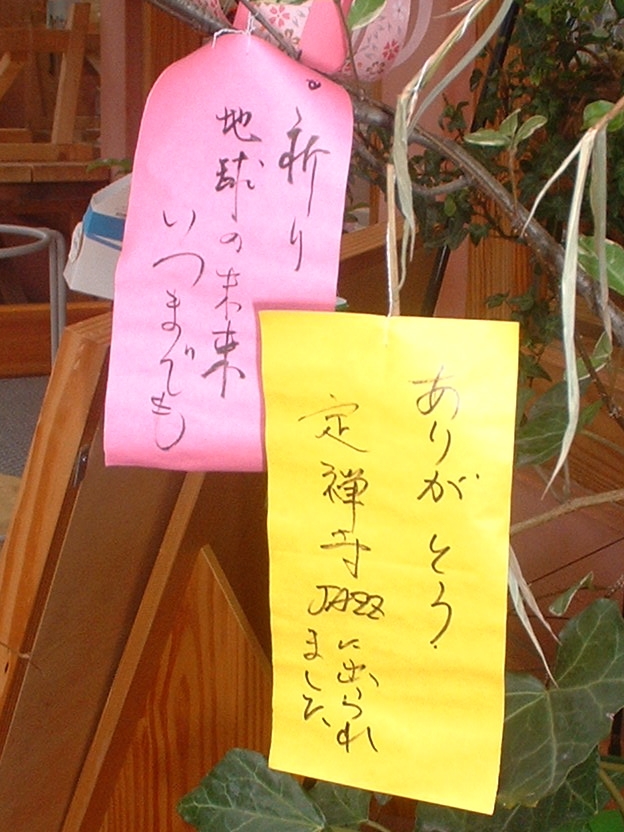
You write your wish in the present tense, as if it has already happened. “I will pass the entrance exam” rather than “I hope to pass the entrance exam.” That linguistic detail, the affirmative present, is identical to the way Buddhist sutra-copying treats vows. Tanabata sits at a pleasant intersection of Shinto, imported Chinese folk religion, Buddhist phrasing, and modern superstition, and you can feel all four traditions in any handful of tanzaku you read.
The official seven colors of tanzaku in Sendai correspond to the Chinese five-element theory expanded to seven: blue (or green) for trees, red for fire, yellow for earth, white for metal, black (or purple, by Edo modesty) for water, and two extras for orange and pink. Pick a color matching the kind of wish you are making. Most people, in practice, just pick the color they like.
The Rest of the Three Great Tohoku Festivals
Sendai Tanabata is one of the Three Great Festivals of Tohoku, the unofficial trio of summer festivals that draws domestic tourists to the northeast in the first ten days of August. The other two are Aomori Nebuta and Akita Kanto.
Aomori Nebuta runs from August 2 to August 7. It is built around enormous illuminated paper lantern floats, often six to nine meters tall, depicting warriors, kabuki characters, and mythological figures. They are wheeled through the streets at night by teams of hundreds, accompanied by drums, flutes, and dancers called haneto who jump rhythmically alongside. I have a longer piece on the festival in my Aomori Nebuta deep dive.
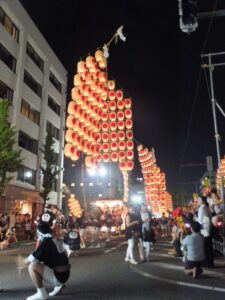
Akita Kanto runs from August 3 to August 6. The signature image is the kanto pole, a long bamboo rod with up to 46 paper lanterns hung from it in tiers, balanced by a single performer on the forehead, shoulder, hip, or lower back. A full kanto pole weighs about 50 kilograms when carrying lit lanterns, and the festival is essentially a city-wide balance contest. My Akita Kanto piece explains the technique.
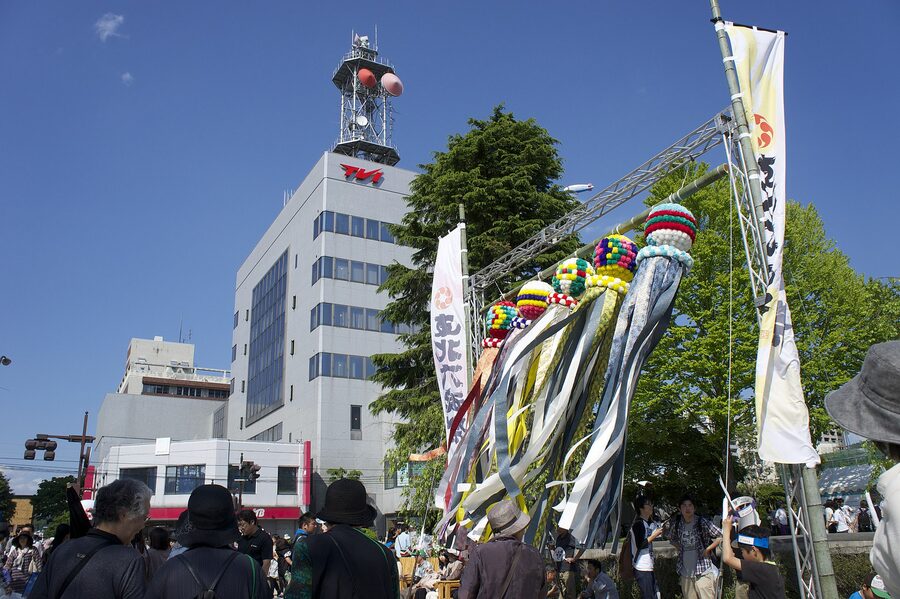
The three festivals run with overlapping dates by design. A determined traveler can hit all three in a single trip: Aomori from the 2nd, Akita from the 3rd, Sendai from the 6th. The shinkansen makes the geography manageable. I have done it once, and the resulting photo album is the densest five days of my Japan travel notes.
If you have time for a fourth, Yamagata’s Hanagasa Matsuri runs from August 5 to August 7, and Fukushima’s Waraji Matsuri runs the first weekend of August. Together with the original three they form the Tohoku Rokkonsai or “Six Soul Festival,” which rotates a joint event among the six prefectures every year.
Hiratsuka, the Other Famous Tanabata
If you want a Tanabata festival on the Western July 7 calendar instead of the August Sendai date, the famous one is Hiratsuka, in Kanagawa Prefecture, just south of Yokohama. Shonan Hiratsuka Tanabata Festival runs the first weekend of July, three days starting from Friday, around the new-calendar Tanabata.
Hiratsuka began in 1951, almost three centuries after Sendai. It was a deliberate postwar attempt by Hiratsuka shop owners to imitate Sendai and revive their own bombed-out shopping district. The first festival had 41 decorations. It now hosts about a million and a half visitors over its three days.
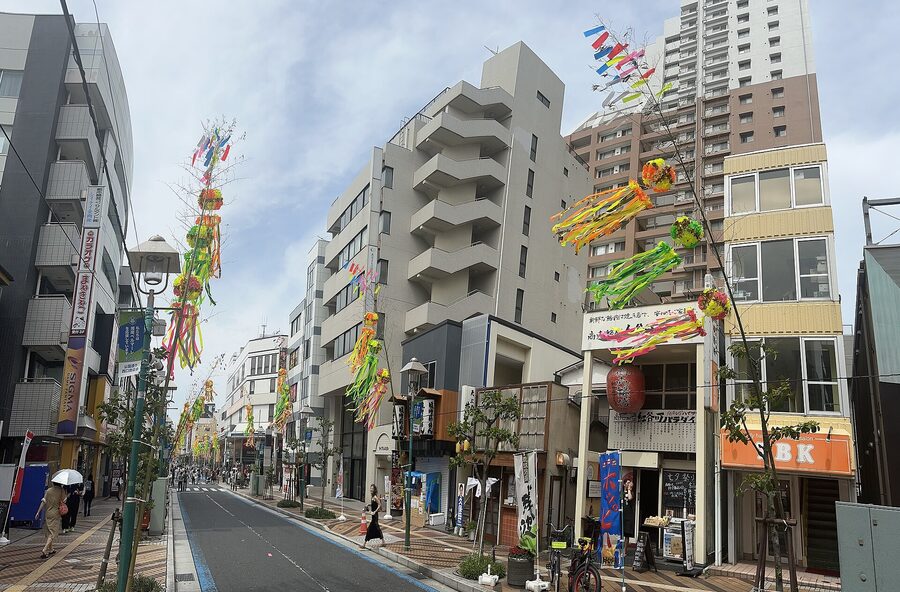
The character of Hiratsuka is different from Sendai. Hiratsuka leans modern and topical. The streamers there often feature anime characters, J-pop idols, current sports stars, and parody political figures. Each year there is a “best topical streamer” prize, judged on how cleverly the team has captured something specific to that summer.
Sendai is more conservative. The decorations stay closer to the seven traditional categories, and topical references are subtler. You see the difference immediately if you do both: Hiratsuka feels like a paper-streamer Comiket, while Sendai feels like a city honoring a four-hundred-year-old tradition.
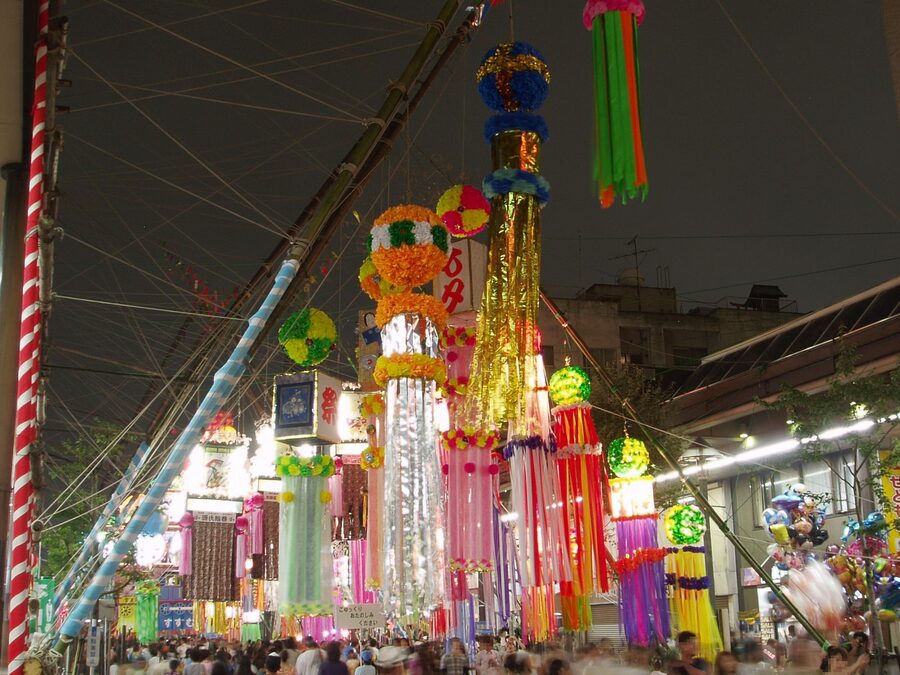
Both festivals are wonderful. If you have to pick one, Sendai is the historic choice and Hiratsuka is the easier day-trip from Tokyo. If you can do both, do Hiratsuka in early July and Sendai in early August, and you will have seen the entire cultural range Tanabata covers in modern Japan.
The Ichinomiya, Asagaya, and Anjo Variants
Below those two giants, there is a tier of regional Tanabata festivals worth knowing about. Ichinomiya in Aichi Prefecture, near Nagoya, runs a major Tanabata festival on the last weekend of July with about 1.3 million visitors. Ichinomiya is a textile town, and the festival there leans hard into the weaving symbolism, with displays of local cloth and competitive yarn-arrangement contests.
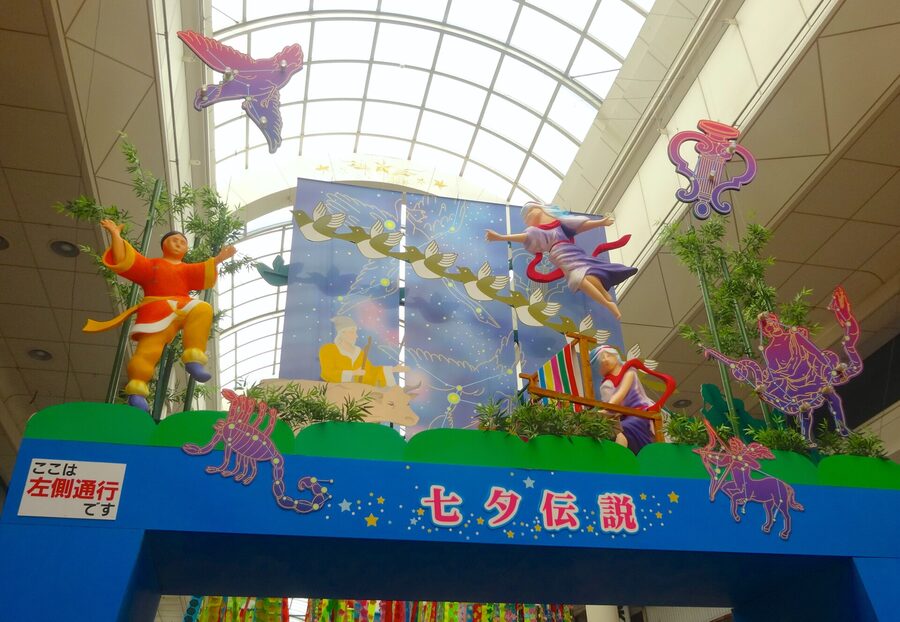
Anjo in Aichi runs the Anjo Tanabata Matsuri the first weekend of August, with about 1.1 million visitors. It is most famous for hosting the Tanabata-themed mascot kingdom and for being the city that invented the wishing-tile street installation. Asagaya in Tokyo, which I prefer because it is a Tokyo neighborhood you can reach in 20 minutes from Shinjuku, runs Tanabata in early August with paper-mache pop-culture characters strung above the shotengai.
Then there are dozens of smaller events. Almost every shrine in Japan does some Tanabata observance, even if it is just a bamboo branch with a stack of free tanzaku for visitors. Sendai is the spectacle, but the festival lives in every neighborhood.
What to Eat on Tanabata Night
The traditional Tanabata food is somen (素麺), the very thin wheat noodle, served cold in summer with a soy-and-mirin dipping sauce. Somen has been the Tanabata food in Japan since the Heian period, when it was eaten at court on the seventh of the seventh as a meal to ward off disease.
The connection traces back to a Chinese dish called sakubei, a fried wheat-flour string-shape that the Tang court ate on Qixi for the same anti-disease purpose. When the festival came to Japan, sakubei evolved over centuries into modern somen. The resemblance to the threads Orihime weaves is poetic icing on a connection that was originally medical.
I have eaten somen on the night of August 7 for years now. There is a specific cold somen variant called nagashi-somen where the noodles flow down a half-pipe of split bamboo and you catch them with chopsticks as they pass. Some Tanabata events do this in public, and it is genuinely fun to do once and tedious to do twice.
Other regional Tanabata foods include the Tohoku-specific izumi mochi (sweet rice cakes pounded for the festival), the Kanto-specific kashiwa-mochi-style cakes wrapped in oak leaves, and the universally found karinto fried sweets. None of these are required, but if you are in Tohoku in early August, somen and mochi will appear together at any household event.
Visiting Sendai: Where to Stand and When
The streamers concentrate in three covered arcades just west of Sendai Station: Chuo-dori (the main one, running east-west from the station), Sun Mall Ichiban-cho (the longer north-south arcade), and the smaller side arcades branching off both. All three are within a fifteen-minute walk of each other, and you can do the entire major route in a slow afternoon.
I recommend going in around 9 a.m. on August 6 or 7, before the day-trip crowds arrive on the shinkansen. The streamers will already be up. The arcades will be full but moving.
You can actually see the kusudama details from a normal walking distance, which becomes impossible by noon.
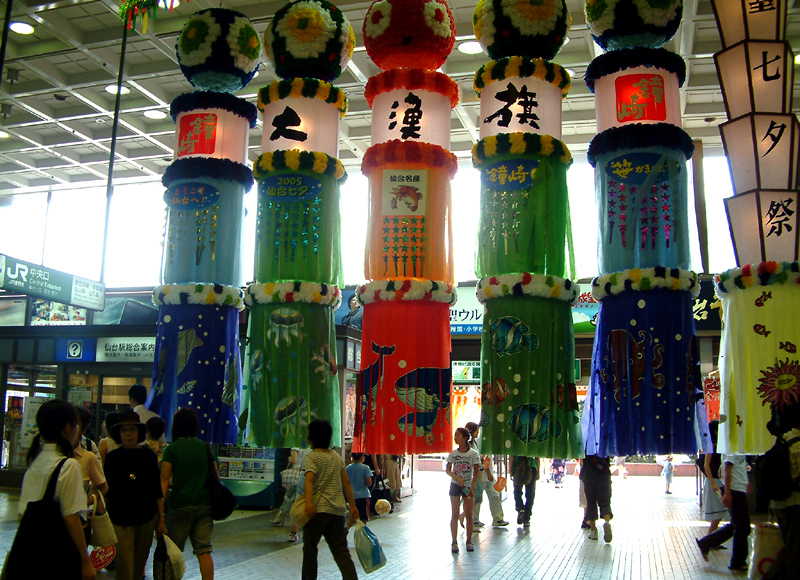
For the streamer judging, walk the full circuit and look for the small placards each shotengai puts up next to its biggest fukinagashi, identifying the makers and listing the year’s prize ranking. Each of the seven decoration categories has a separate prize, and the most prestigious is the Sendai Mayor’s Prize for the best overall presentation.
If you can stay until the evening of August 7, the central night, walk back through the arcades after dark. Many of the larger fukinagashi are lit from above, the crowd thins to about half its daytime peak, and the bamboo rustles audibly in the night wind. That is the moment when, if you squint, you can almost see what the festival looked like in 1947.
The Date Masamune Connection You Can Walk To
If the festival has you thinking about Date Masamune, you are a fifteen-minute taxi ride from where he is buried. The Zuihoden mausoleum, on Kyogamine hill on the western edge of Sendai, was built in 1637 to house his remains. It survived the Edo period intact, was destroyed by US air raids in July 1945, and was rebuilt to its original specifications in 1979.
I went the morning after I had walked the streamers, partly because I wanted to thank the founder of the festival in some symbolic way. The mausoleum is small. The walk up the hill takes you past three additional Date-clan tombs and a small museum. The whole site is, deliberately, much more solemn than the festival downtown.
Sendai Castle, the Aoba-jo, is also a short distance from the city center, on the eastern slope of Mount Aoba. The castle was largely destroyed during the war and never rebuilt, but the ramparts, the foundation walls, and the famous equestrian statue of Masamune are all still there. The view from the statue across to the modern city is exactly the view he would have seen, minus four hundred years of buildings.
In Sendai, the Tanabata festival, the Aoba-jo, and the Zuihoden form a kind of trinity for understanding the city. You go to the festival to see what Masamune started, to the castle to see where he ruled from, and to the mausoleum to pay your respects to the man himself. I would do all three on a two-day visit if your schedule allows.
Tanabata in the Imperial Court vs Tanabata in the Street
I find it useful to remember that Tanabata in Japan has always been two festivals at once. There is the courtly version, descended from the Heian Kikkoden, that focuses on poetry, calligraphy, and the formal elegance of the legend. There is the popular version, descended from the Edo-era street observance, that focuses on commercial display, neighborhood pride, and street-food joy.
The seven decorations sit at the intersection of both. Tanzaku are the Heian poetry tradition; kuzukago is the Edo modesty. Fukinagashi is the spectacular street display; kamigoromo is the formal court robe. Sendai’s genius, in 1623 and again in 1947, was figuring out how to do both at once at festival scale.
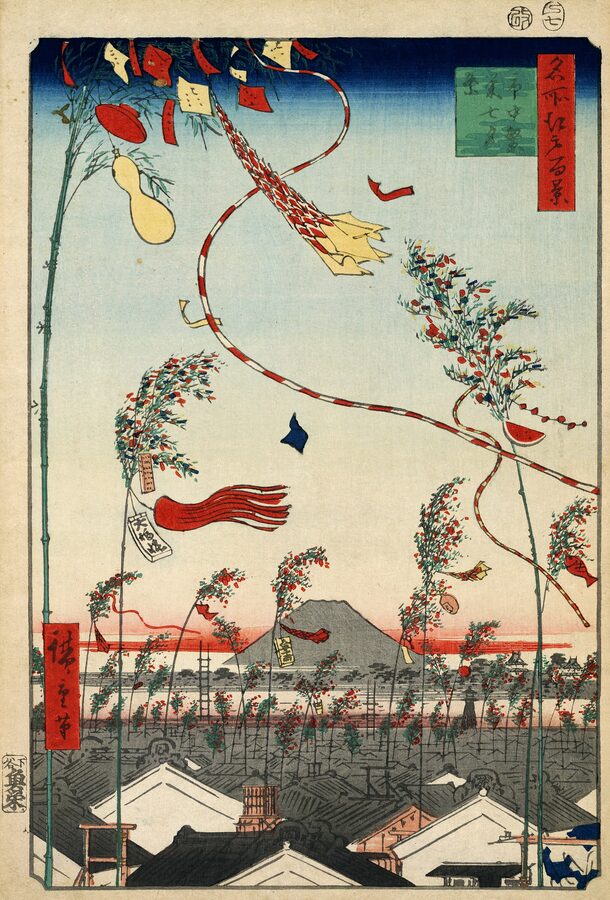
Look at Hiroshige’s 1857 print of Edo Tanabata. The bamboo poles already tower over the rooftops. Streamers and small decorations fly from every house.
Children run in the street with extra bamboo. Edo, two centuries before Sendai’s current scale, was already doing essentially the same thing on a per-household basis.
What Sendai did was concentrate that household-level decoration into a single arcade-wide spectacle. What Hiratsuka did was take the Sendai concept and make it modern. What every Tokyo neighborhood does each summer is take the Hiratsuka or Sendai model and miniaturize it for one block. The festival flows downward in scale and outward in geography, but the seven-decoration core remains identical to the one Date Masamune codified.
The Astronomy on a Clear Night
If you have a clear sky on August 7 or 8, walk away from the festival lights and look up. Vega will be high overhead in the south. Altair will be slightly lower, to the southeast. The Milky Way will be a soft band running between them, and the third bright star of the Summer Triangle, Deneb in Cygnus, will close the figure to the northeast.
Vega is, again, 25 light-years from Earth. Altair is 16.7 light-years. The light arriving at your eye from Vega tonight left the star around the year 2001.
The light from Altair left around 2009. The two stars are 16 light-years from each other in three-dimensional space, which means a magpie bridge would need 16 years to span the gap even at light speed.
Altair, incidentally, rotates extremely fast: a full rotation every 8.9 hours, with an equatorial speed of about 286 kilometers per second. The star is visibly oblate at that speed, with an equatorial diameter more than 20 percent greater than its polar diameter. If Hikoboshi is in any sense a real cowherd, he is one with seriously bizarre weather, because a sun spinning that fast spits enormous solar storms.
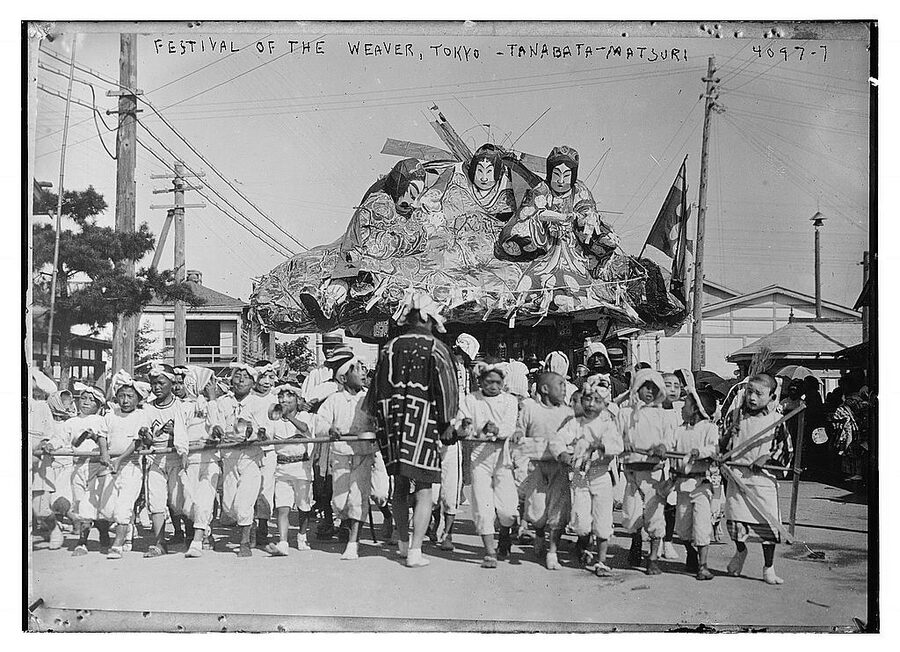
None of that matters in the legend, of course. What matters is that on the seventh night of the seventh month, the two stars are reliably high in the sky, on opposite sides of a softly visible river, and human beings invented a story to make sense of the geometry. The story has lasted almost as long as the stars have been observable, and it will probably last as long as the festival keeps going, which currently appears to be indefinitely.
Tanabata as a Cultural Anchor
For me, Tanabata sits alongside sakura season in the small group of Japanese seasonal events that are also cultural touchstones. Sakura marks the spring threshold and the beginning of the new fiscal year. Tanabata marks the deep heart of summer and the moment of greatest cosmic possibility, the one night a year when an impossible meeting becomes possible.
It is one of the festivals you can use as a lens to read all of Japanese culture at once. The myth is Chinese, imported. The festival is Heian, courtly.
The streamers are Edo, commercial. The current scale is postwar, civic. The wishes are individual, modern. Almost every layer of Japanese history shows up in a single August night in Sendai.
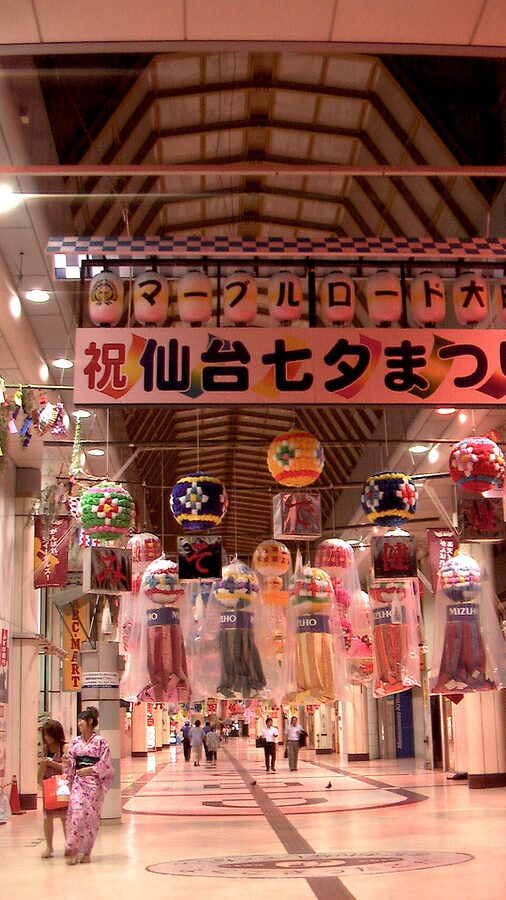
If you ever get a chance to walk under those streamers, take it. The specific feeling of moving through a roof of paper and bamboo, with two thousand years of overlapping mythology hanging two meters above your head, is something I have not found at any other festival. It is the closest I have come, in Japan, to walking inside a story.
The Three Categories of Tanabata Decorations
To round out the seven traditional symbols I described earlier, it helps to think of them in three working categories. The first category is the wish-bearers: tanzaku for individual prayers and orizuru for collective long-life wishes. These are the items you actually write on or fold to express something specific.
The second category is the protectors: kamigoromo for health and kinchaku for prosperity. These are items that look like miniature versions of the things they protect (a kimono, a purse) and stand in for the real protection through sympathy. The third category is the work-objects: toami for fishing, kuzukago for cleanliness, and fukinagashi for the weaving thread itself. These honor the labor that makes ordinary life possible.
You can tell which category a Sendai shotengai is emphasizing in any given year by counting which of the seven decorations it scaled up. Wish-heavy years (after disasters or major news events) lean on tanzaku. Long-life years (often around senior-population campaigns) lean on orizuru.
Pure spectacle years lean on fukinagashi. The grammar of the decorations is its own annual statement.
What the Festival Says About Modern Japan
The thing that gets me about Sendai Tanabata is that it has survived four centuries of upheaval and only become more itself. Date Masamune founded it in 1623, an early-Edo cultural project. The Tokugawa peace lasted long enough to embed it as Sendai-specific tradition.
The Meiji calendar reform did not kill it; the city kept the August date by switching to tsuki-okure. The Pacific War nearly killed it, but the 1947 revival re-rooted it after just two missing years.
Then the festival absorbed the postwar economy. The shotengai system that hosts the streamers is itself a postwar invention, a covered-arcade format that spread across Japanese cities in the 1950s and 1960s. The festival and the arcades grew together. By the time mall culture started displacing arcades in the 1990s, Sendai’s arcades were too central to the festival to disappear, and the arcades survived in part because the festival anchored them.
The 2011 Tohoku earthquake and tsunami struck just five months before the festival. Sendai itself, while shaken, was not in the worst-hit coastal zone. The city held the festival in 2011 anyway, with the streamers carrying explicit messages of solidarity for the coastal towns north and south.
Attendance was higher than usual that year. The festival has been part of the regional recovery messaging ever since.
I think Tanabata is, in that sense, the most resilient large festival in Japan. Gion Matsuri in Kyoto is older and more elaborate. Aomori Nebuta is more visually overwhelming. But Sendai Tanabata has a quiet ability to absorb whatever the year throws at it and make it a streamer.
Tanabata and the Sankin-Kotai Connection
One of the historical curiosities of Sendai Tanabata is that Date Masamune was a major participant in the early Tokugawa sankin-kotai system, the alternate-attendance policy that required daimyo to spend every other year in Edo. He commuted between Sendai and the capital regularly, and the festival in Sendai is in some sense the cultural project of a man who spent half his life away from the city he founded.
Masamune brought back stylistic ideas from Edo and Kyoto every time he traveled. The Sendai Tanabata in 1623 reflected, in part, what he had been seeing in courtly observances during his Edo residencies. That cross-pollination is one reason Sendai Tanabata kept the formal seven-decoration structure rather than improvising entirely local forms.
The Hiratsuka festival is more directly the product of postwar local initiative, with no historic warlord patron. Asagaya is a 1950s Tokyo neighborhood project. Both follow the Sendai template even though their geography and history are completely different. That template is itself a four-hundred-year-old artifact of one specific man’s cultural taste exported through the alternate-attendance commute.
The Festival in São Paulo, Los Angeles, and Vancouver
One of my favorite small notes about Tanabata is that it is now an international festival in a way few Japanese festivals are. The Liberdade district of São Paulo, home to one of the largest Japanese diaspora populations outside Japan, has held a Tanabata Matsuri every July since 1979. Los Angeles has run a Tanabata festival in Little Tokyo since 2009. Vancouver has done a smaller version since the 1990s.
The decorations in those events follow the Sendai seven-decoration template almost exactly. The kusudama-and-fukinagashi format crossed the Pacific intact, partly because it photographs spectacularly and partly because the seven categories are easy to teach as a set of design rules. You can find tanzaku-on-bamboo at Japanese cultural events on every continent except Antarctica.
The legend itself has even broader reach. The Cowherd and the Weaver Maiden is celebrated in China as Qixi (the original), in Korea as Chilseok, and in Vietnam as Tet Trung Thu (a related, though differently dated, harvest festival). The four East Asian neighbors all share the same celestial story, and the festival arrived in each country by way of the same Han- and Tang-era cultural exchange.
If you happen to be in São Paulo on the first weekend of July, the Liberdade Tanabata is exactly the same festival as the one in Sendai, scaled to a single street and decorated with neon-tinged Brazilian-Japanese style. The legend is identical, the seven categories are identical, and the magpies are still the same magpies. Only the language of the wishes changes.
Why I Keep Coming Back
I have probably been to a dozen Tanabata events in my time in Japan, and I keep coming back to Sendai’s. There is something about the specific sound of bamboo creaking under fukinagashi at night, mixed with the low hum of two million people walking through paper, that I cannot find anywhere else.
The legend is a love story, but the festival is not, particularly. The festival is about labor: weaving, herding, paper-folding, bamboo-cutting, kusudama-tying. All of the seven decorations are tributes to the kinds of work that made ordinary Japanese life possible across centuries. The lovers in the sky are an excuse to honor the lovers’ parents, who were gardeners and sewers and rice farmers and, eventually, paper-streamer makers in covered arcades.
That is the Tanabata I want you to picture. Stars overhead, a paper river underfoot, a magpie bridge in legend, a bamboo rustle in fact, and Date Masamune nodding from his hill four centuries down the line. For three days, every August, Sendai turns the whole city into a story you can walk through. I cannot recommend it enough.
Go in early August. Stay until evening. Read at least ten tanzaku. Eat cold somen.
Look up after dark. The festival has been waiting four centuries to share that night with you, and it is one night a year you do not want to miss.