
On October 21, 1600, Tokugawa Ieyasu won the Battle of Sekigahara and effectively became the most powerful man in Japan. Before he marched east to fight, his retainers stopped at a small Tokyo shrine called Kanda Myojin and prayed for victory. Ieyasu kept his promise after he won. He poured money into the shrine, declared its festival the spiritual guardian rite of his new shogunate, and gave Kanda Matsuri a status no other festival in Japan would ever match.
I have spent a long time trying to wrap my head around why this particular Tokyo festival matters so much, and the answer keeps coming back to that one prayer in 1600. Kanda Matsuri is not just a parade. It is the only Edo-era festival, along with its sibling Sanno Matsuri at Hie Shrine, that the Tokugawa shoguns personally allowed inside the gates of Edo Castle to be viewed by the shogun himself. They called it the Tenka Matsuri, the Shogun’s Festival, and the name still gets used today.
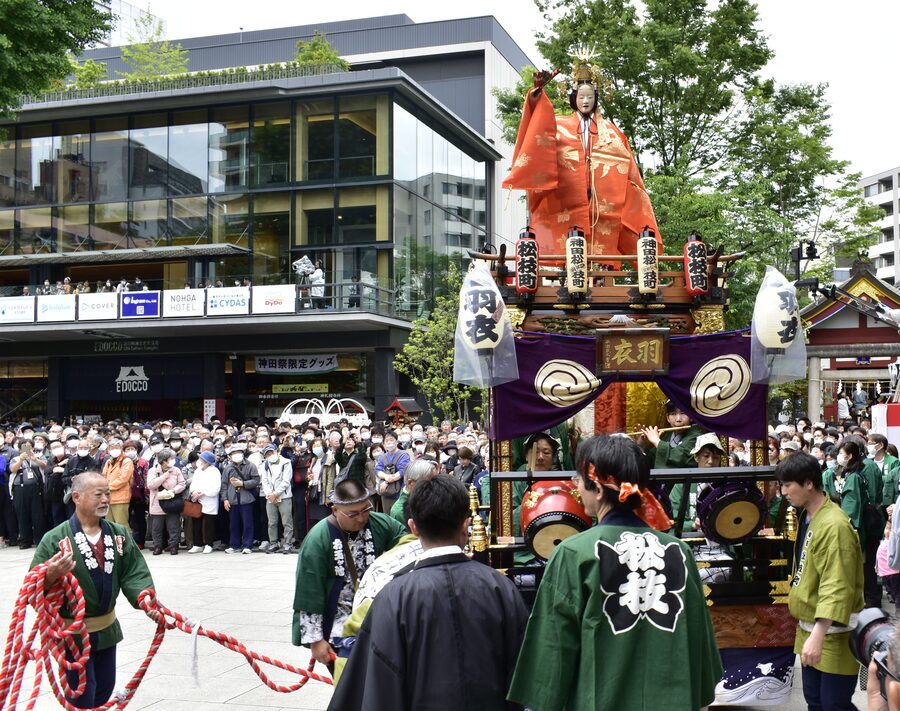
If you visit Tokyo during a mid-May weekend in an odd-numbered year, you can watch the Shinko-sai procession leave Kanda Myojin at 8 in the morning and travel a 30-kilometer route through 108 parish districts before returning to the shrine around 7 in the evening. The next day, more than 200 neighborhood mikoshi converge on the shrine in a deafening, sweat-soaked ritual called the Mikoshi Miyairi. I want to walk you through the whole thing, because once you understand the layers, you will never look at a Tokyo festival the same way again.
In This Article
- The 1600 prayer that changed everything
- Why a beheaded rebel ended up as the city’s protector deity
- What “Tenka Matsuri” actually means
- The shogun who said “alternate years only”
- How the modern festival is structured across three days
- Friday: the tea ceremony and the inner rites
- Saturday: the Shinko-sai 30-kilometer parade
- Sunday: the Mikoshi Miyairi shrine entry
- Why Akihabara claims this shrine as its patron
- A festival that survived three near-extinctions
- The Meiji disruption
- The 1923 Great Kanto Earthquake
- The post-war recovery
- The merchant guilds, the floats, and the money
- How Kanda Matsuri compares with the other Tokyo festivals
- What you actually do on the day, if you are visiting
- Getting to the shrine
- What to wear
- Where to position
- Food and stalls
- Etiquette around the mikoshi
- A festival as a portrait of its political era
- The Kanda Myojin year-round, not just festival weekend
- What to buy on a non-festival visit
- The single piece of Kanda Matsuri I keep thinking about
The 1600 prayer that changed everything
I want to start with the founding moment, because every other detail of this festival traces back to it. In the autumn of 1600, Ieyasu was about to fight Ishida Mitsunari at Sekigahara for control of Japan. His army marched east through what would later become Tokyo, and somewhere along the way his men stopped at Kanda Myojin to pray for victory.
The shrine they prayed at was already old. It had been founded in 730 AD in the village of Shibasaki, near what is now the Otemachi business district. By Ieyasu’s time it had been there for almost 900 years.
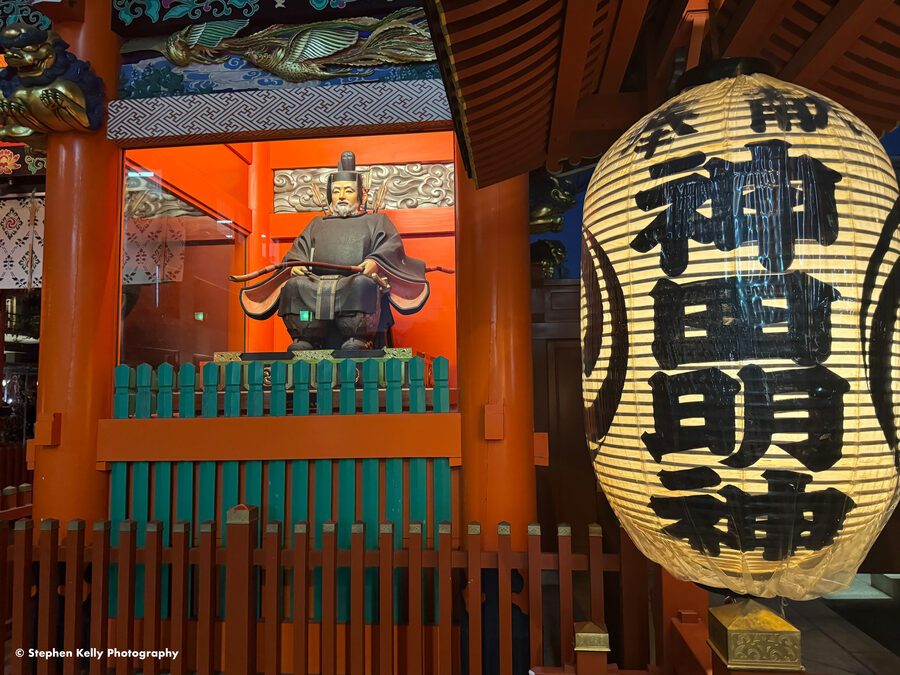
The deities his retainers prayed to were not the kind you ask politely. One of them was Taira no Masakado, a 10th-century rebel samurai whose severed head was buried at Shibasaki and whose vengeful spirit was widely believed to still wander the area.
Sekigahara was not even close. Ieyasu’s eastern army won in a single afternoon, partly because two large enemy units defected mid-battle. He took it as proof that Kanda Myojin had answered. Three years later, in 1603, the emperor named him shogun, and Ieyasu became the founder of a dynasty that would rule Japan for 265 years.
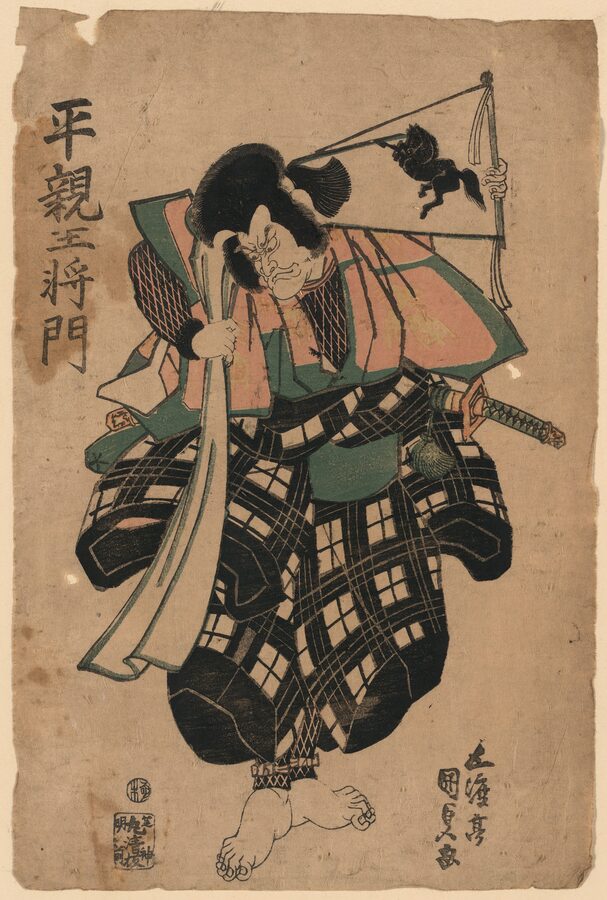
If you want the full backstory of the man behind the shogunate, I have written a deep dive on Tokugawa Ieyasu and the patient strategy he used to outlast everyone. But for our purposes here, the important thing is what he did next. He did not just say thank you in the abstract. He turned Kanda Myojin into the spiritual headquarters of his new regime.
Why a beheaded rebel ended up as the city’s protector deity
This is the part of Kanda Matsuri that nobody seems to mention in the brochures, and it is genuinely the strangest piece of the whole story. The shrine has three principal deities, and one of them is, by any reasonable definition, a treasonous rebel.
The first two are conventional enough. Ōnamuchi-no-Mikoto, also known as Daikoku, is one of the Seven Lucky Gods and a deity of nation-building and good harvests. Sukunahikona-no-Mikoto, also known as Ebisu, is another of the Seven Lucky Gods, associated with medicine, sake, and good fortune. Both are popular with merchants and businesspeople, which is part of why Kanda Myojin has become the patron shrine of Tokyo’s financial district.
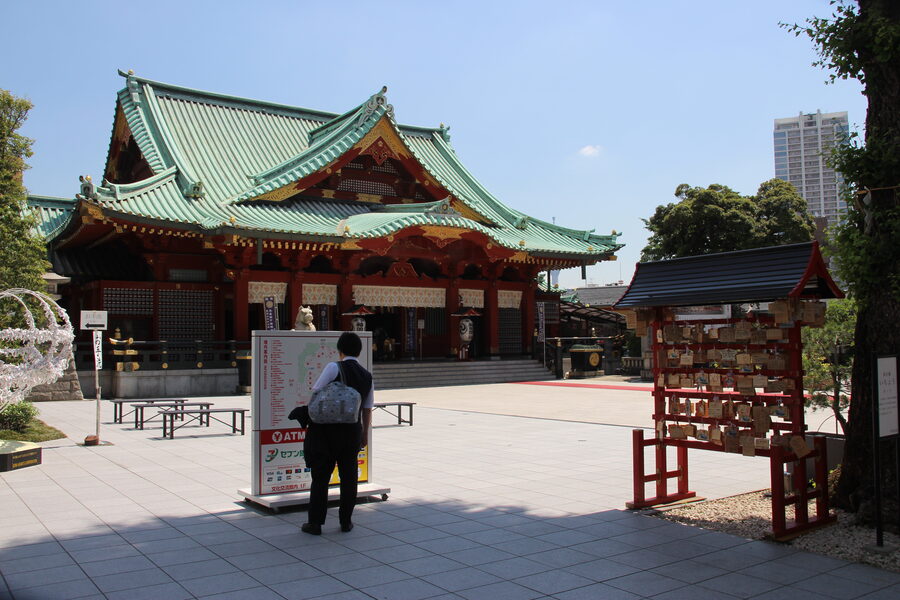
The third deity is where it gets interesting. Taira no Masakado was a Heian-era warrior who, in 939 AD, mounted what is recorded as the first organized rebellion against the imperial court in Kyoto. He conquered most of the Kanto region, declared himself the New Emperor, and was killed in battle in 940. His severed head was sent to Kyoto as proof of the victory.
According to legend, the head refused to die. It hung in Kyoto for months without rotting, with eyes open, gnashing its teeth and shouting threats. One night it flew east through the air and landed in the fishing village of Shibasaki, the future Otemachi. Locals buried it there and built a small shrine, terrified that the spirit would curse the area if ignored.
That mound, the Masakado-no-kubizuka or “head mound,” is still there today. It sits in a small fenced plot in Otemachi, surrounded by some of the most expensive office real estate in the world, and Tokyo developers have refused to disturb it for over a thousand years. When the original shrine that watched over the head was moved by Ieyasu’s son in 1616 to make room for an expanded Edo Castle, the head mound stayed put. The shrine itself relocated to the hillside in modern-day Soto-Kanda where I visited it.
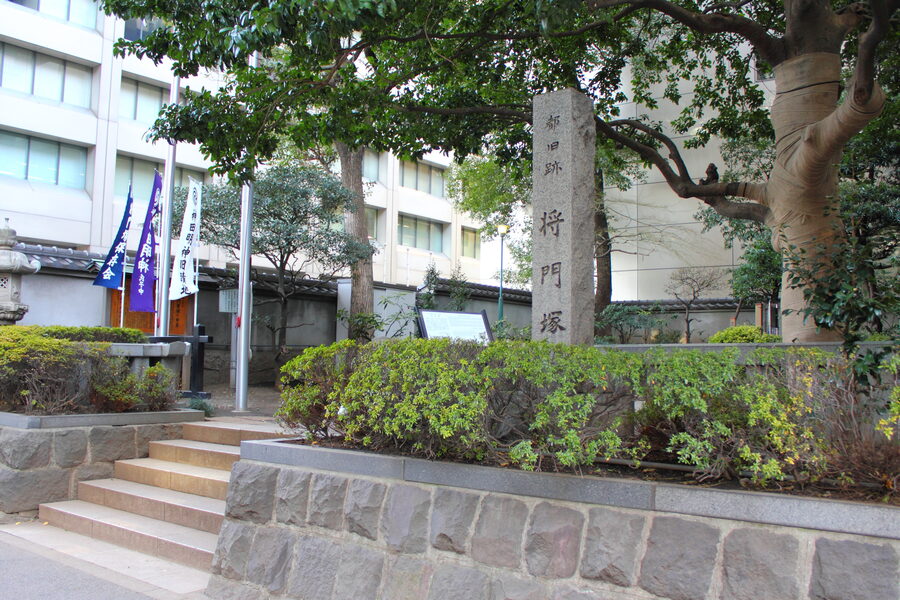
So here is what Ieyasu chose to make the spiritual center of his shogunate. A shrine whose deity was, according to belief, a vengeful rebel head that had once flown across Japan. Some readers of mine will know I love this kind of detail. The most powerful military government in Japanese history rooted itself, on purpose, in the reverence of a guy who had tried to overthrow the central government 660 years earlier.
What “Tenka Matsuri” actually means
The Tokugawa shoguns picked two festivals out of all the festivals in Edo and gave them a privilege nobody else got. Their processions were allowed to enter the grounds of Edo Castle, parade past the shogun, and receive his personal viewing. Those two festivals were Kanda Matsuri at Kanda Myojin and Sanno Matsuri at Hie Shrine in Akasaka.
Together they got a special name. Tenka Matsuri, often translated as “the Festival of the Realm” or more loosely “the Shogun’s Festival.” The word “tenka” literally means “under heaven,” and in samurai-era Japan it was the term for the country as a whole or the supreme political authority. When Oda Nobunaga used the slogan “Tenka Fubu,” he meant “the realm covered by martial might.” So Tenka Matsuri is, structurally, the festival of the man who runs the country.
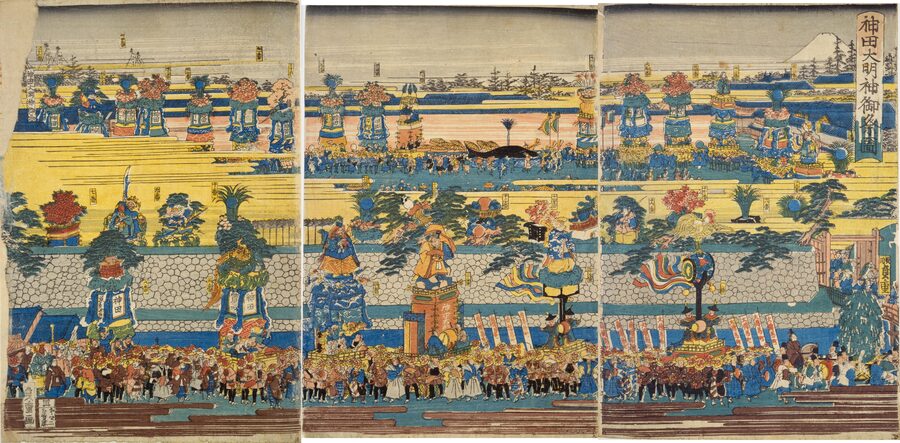
The fact that the festival was permitted inside the castle is, to me, the single most important historical detail. Edo Castle was the heart of the shogun’s authority, the building from which a single family ruled 30 million people for over two and a half centuries. You can read about how Edo Castle became the Tokyo Imperial Palace if you want the full architectural history. For now, the takeaway is that the procession of mikoshi, dashi floats, dancers and musicians of Kanda Matsuri got to march straight through the Otemon gate and into the inner precincts, while every other festival in Edo had to stay outside.
That privilege came with money attached. The shogunate covered the costs of the festival directly, and the major merchant houses of Edo competed to fund the most spectacular floats. By the late 17th century, Kanda Matsuri had become so absurdly extravagant that it was bankrupting the city’s commerce.
The shogun who said “alternate years only”
Tokugawa Tsunayoshi, the fifth shogun, gets a lot of attention from me because he was a strange man with strange policies. I have written about how Tsunayoshi tried to legislate kindness through laws protecting dogs and other animals. But it was his late-17th-century reforms, not his successor Yoshimune, that established the alternation rule for Tenka Matsuri, and the practice was formalized in 1681. The reason was straightforward economics.
Both festivals had grown so elaborate that the merchant guilds and the shogunate were spending more on a single year of celebrations than entire prefectures spent on flood control. The dashi floats had grown to be three or four stories tall. Each float represented a specific neighborhood, and the rivalry between neighborhoods drove costs up year after year.
Tsunayoshi’s solution was elegant. From now on, only one of the two festivals would be staged at full scale per year. They would alternate.
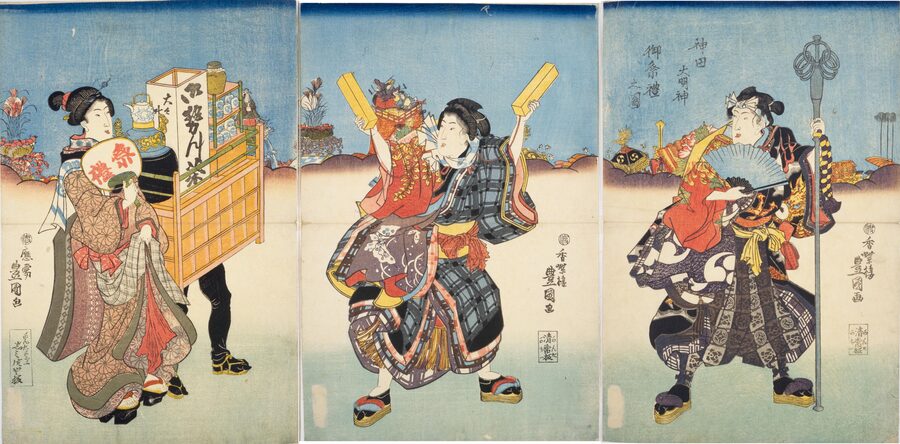
The decision stuck. Kanda Matsuri took the odd-numbered years and Sanno Matsuri took the even-numbered ones. That schedule has held for over three centuries.
If you visit Tokyo in 2025, 2027 or 2029, Kanda is on. If you visit in 2024, 2026 or 2028, Sanno is on at full scale and Kanda runs a much smaller “off year” version.
The system is older than the United States, older than the French Revolution, older than the steam engine. I find that delightful. The Tokugawa solved a budget problem in 1681, and visitors are still planning their Tokyo trips around the answer.
How the modern festival is structured across three days
The current Kanda Matsuri is essentially a long weekend that begins on Friday and finishes Sunday evening. Each day has its own ritual, and they build on each other. I want to walk through them in order, because the festival makes much more sense once you see how the pieces connect.
Friday: the tea ceremony and the inner rites
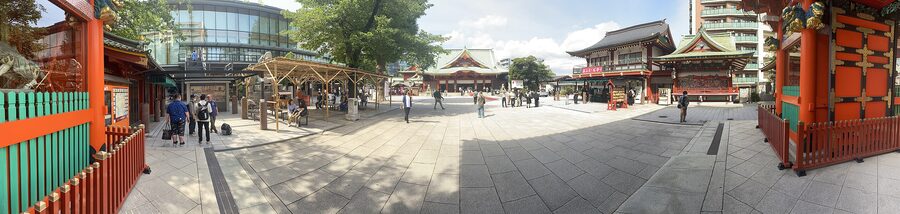
The Friday opening is small and almost private. Priests perform a tea ceremony, the sacred mirror and other shintai (kami-vessels) are prepared, and a series of inner rituals take place at the haiden and the honden. You will not see a parade on Friday. What you will see is the priests of Kanda Myojin doing the work of transferring the spirits of the three deities into the portable shrines that will travel the city the next day.
If you go, dress conservatively, stay quiet, and watch from the courtyard. The atmosphere is closer to a Buddhist temple than to a typical Tokyo festival. I find this the most photogenic moment of the whole weekend, partly because the crowds have not arrived yet.
Saturday: the Shinko-sai 30-kilometer parade
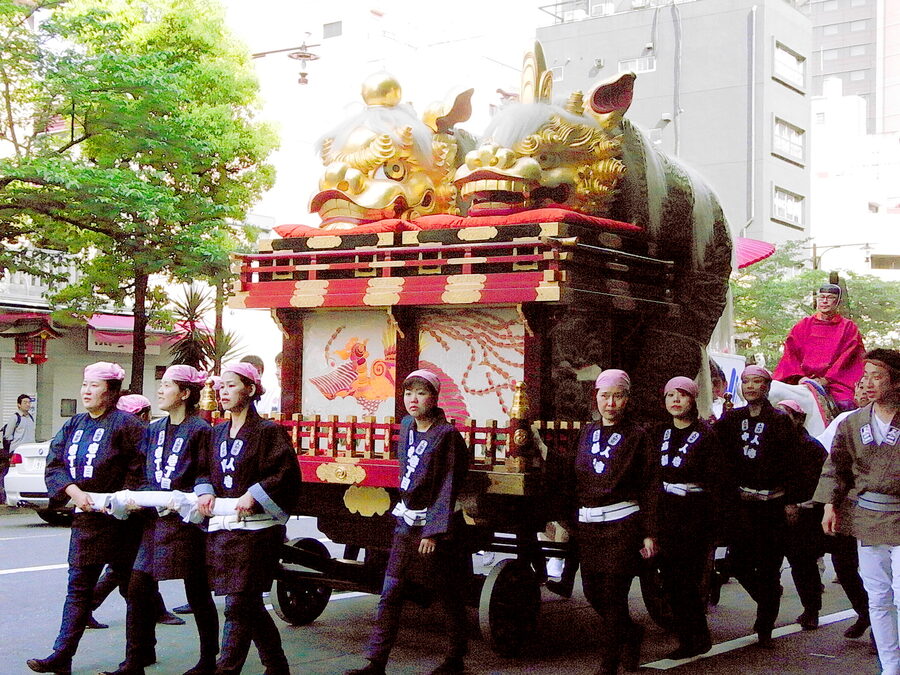
Saturday is the day I wish more people would prioritize. The Shinko-sai is the formal parade of the deities through the territory they protect, and it is enormous. It begins at 8 in the morning when the procession leaves the shrine.
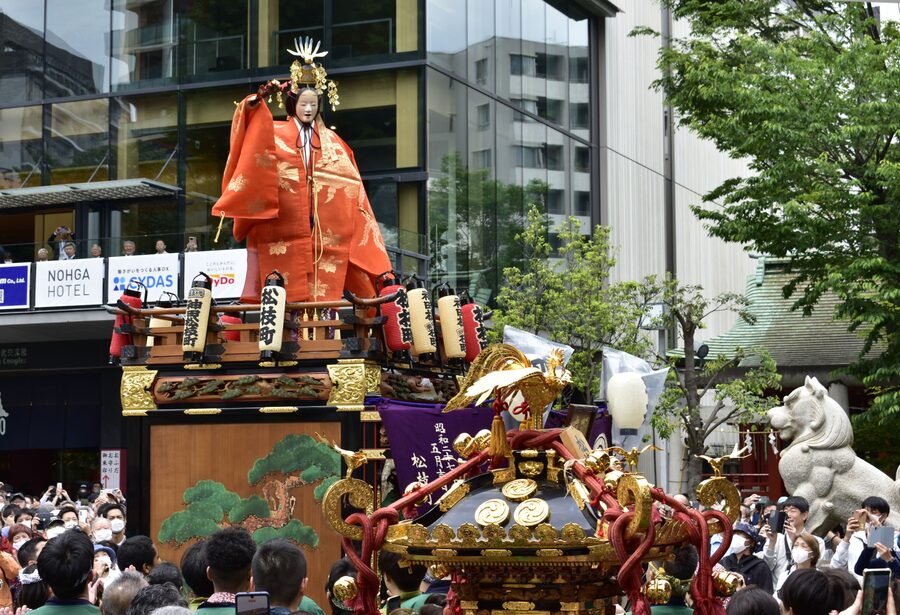
Three sacred palanquins, called horen, carry the kami of Daikoku, Ebisu and Masakado. Around 1,000 attendants in Heian-era costume escort them.
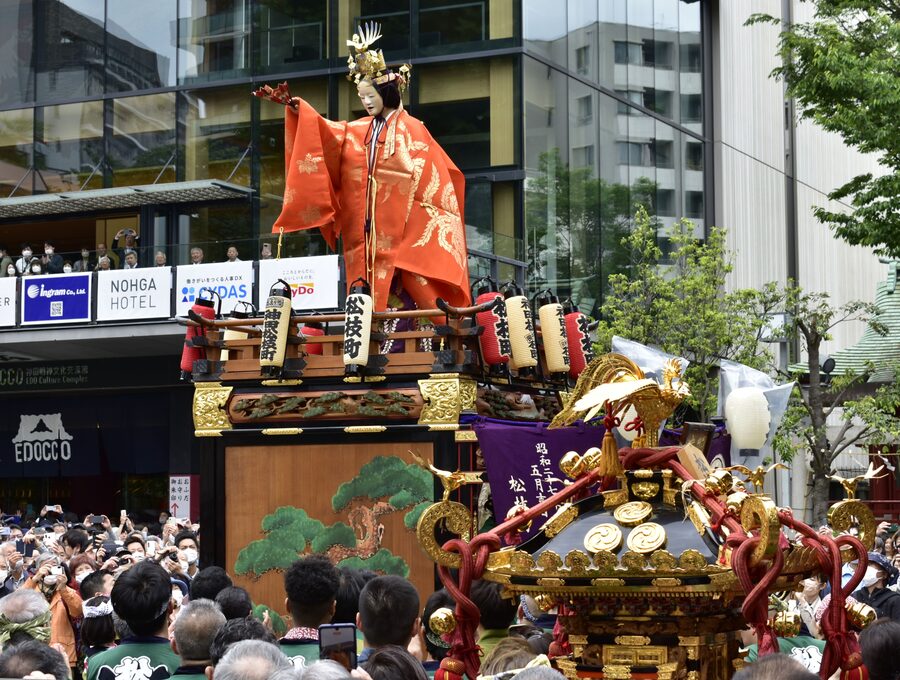
The route is roughly 30 kilometers long, which is almost a full marathon. It loops through 108 parish districts including Kanda, Nihonbashi, Otemachi, Marunouchi, and Akihabara. These are the heart of old Edo and the heart of modern Tokyo, often the same buildings on the same blocks.
The procession passes the Tokyo Stock Exchange, the Bank of Japan, the Imperial Palace moat (which used to be Edo Castle), and the Akihabara electronics district. It returns to the shrine at around 7 in the evening.
You do not need to walk the whole 30 kilometers. Most people pick one or two viewing spots. My honest recommendation is to position yourself near Otemachi Station around mid-morning or near Akihabara Station in the early afternoon. The parade moves slowly enough that if you miss it at one spot you can hop a train and catch it again two stations away.
Sunday: the Mikoshi Miyairi shrine entry
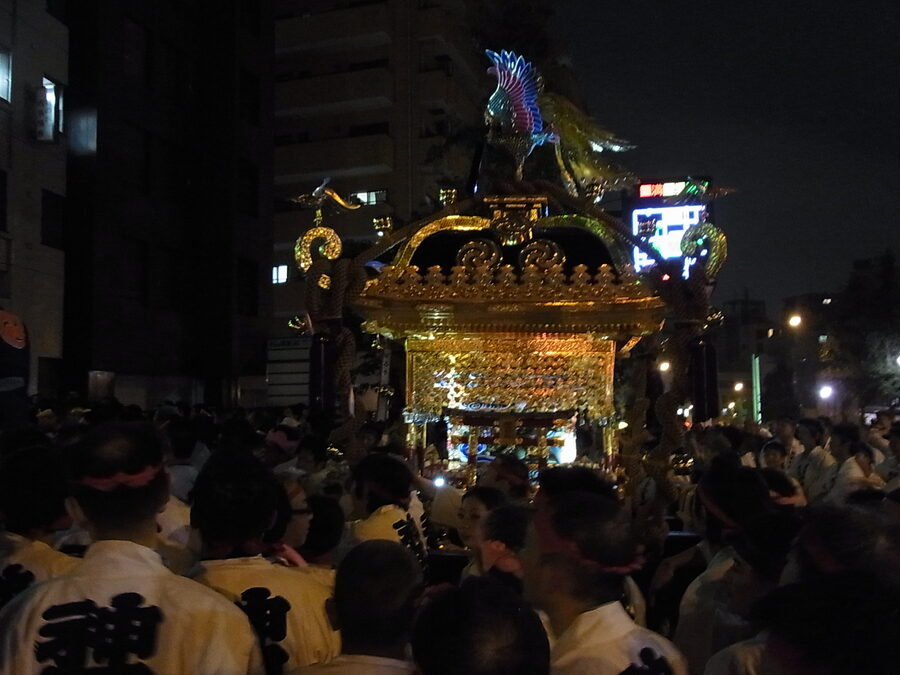
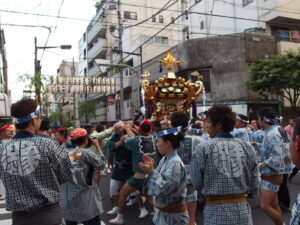
Sunday is the loud, sweaty, glorious day. Each of the 108 parish neighborhoods owns its own portable shrine, called a mikoshi. On Sunday, more than 200 of these mikoshi (some neighborhoods own more than one) converge on Kanda Myojin from every direction. Each is hauled by a team of 30 to 50 people in matching happi coats, chanting and rocking the shrine on their shoulders to “wake up” the kami inside.
If you have only one day in Tokyo and want a real Kanda Matsuri experience, this is the one. The mikoshi enter the shrine grounds in waves, and the air is thick with sweat, sake, and the smell of yakitori smoke from the food stalls. The chant of “Wasshoi! Wasshoi!” is constant from morning until late afternoon.
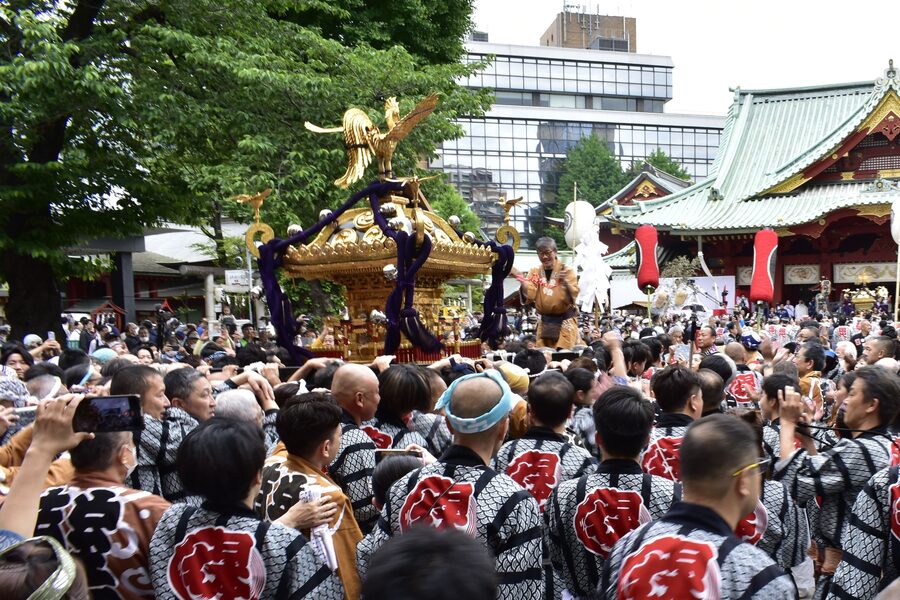
The neighborhoods compete in subtle ways. Whose mikoshi is best decorated. Whose team chants loudest. Whose rocking is most rhythmic.
Nobody officially “wins,” but everybody knows where they place. The same dynamic that powered the Edo-era extravagance is alive and well in 2025.
Why Akihabara claims this shrine as its patron
The most interesting modern wrinkle of Kanda Matsuri is the Akihabara connection. Akihabara is the electronics district two stations south of the shrine, and over the past 30 years it has become the global capital of anime, manga, video games, and IT subculture. The fact that Akihabara is part of Kanda Myojin’s parish has produced one of the strangest blendings of tradition and modern subculture you will see in Japan.
The shrine sells talismans specifically for blessing electronic devices. You can buy an omamori for your laptop, your phone, your server, or your data center. IT companies in the Otemachi-Marunouchi business district come to Kanda Myojin for their annual safety prayer ceremonies, the same way an old samurai household would pray for the safety of their armor and horses.
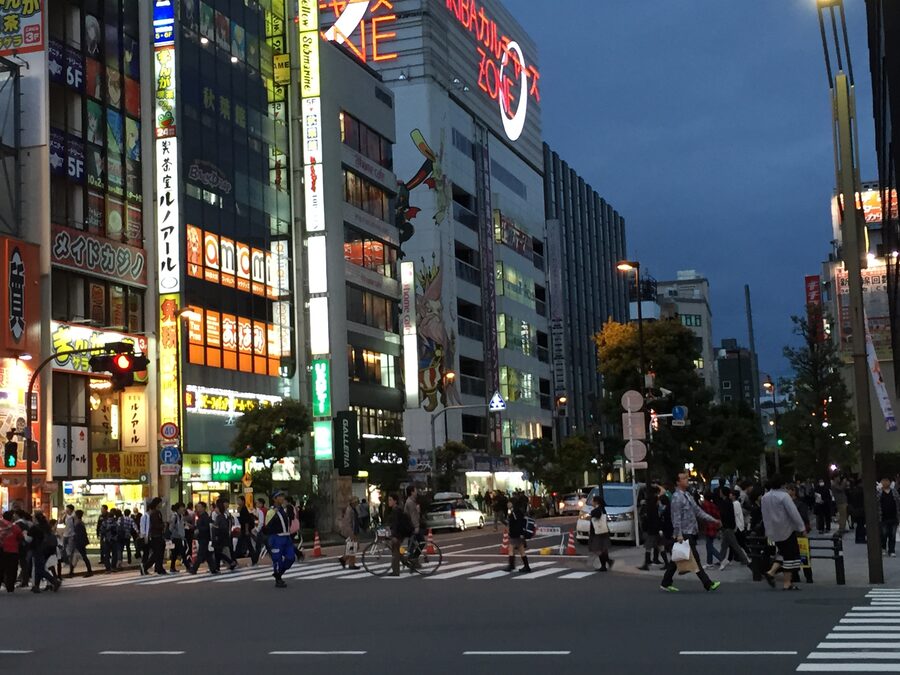
In 2015, Kanda Myojin became the first major Shinto shrine to formally collaborate with an anime franchise. The franchise was Love Live!, a wildly popular idol-themed anime, and the shrine sold limited-edition omamori and posters featuring the show’s characters in Heian-era priestess robes. The shrine had become the model for the Otonokizaka High School in the show, so the cross-promotion made narrative sense to the fans, but it caused a small controversy among Shinto traditionalists.
The shrine kept doing it. Today you can buy Love Live! omamori, ema (prayer plaques) signed by anime fans, and seasonal goods tied to other anime franchises whose stories use Kanda Myojin as a setting.
I find this an honest evolution rather than a corruption. The shrine has been adapting to its constituency since 730 AD. Its current constituency includes a lot of programmers, IT engineers and anime fans, and the shrine treats them with the same respect it once gave to merchants and samurai.
A festival that survived three near-extinctions
If you study the history of Kanda Matsuri carefully, you notice it has died and been resurrected three times in the last 160 years. Each near-death taught the festival to come back smaller and stranger.
The Meiji disruption
When the Meiji Restoration ended the Tokugawa shogunate in 1868, the new imperial government was uncomfortable with anything that celebrated the old shoguns. The Tenka Matsuri name fell out of official use. The deity list at Kanda Myojin was altered briefly so that Taira no Masakado, classified as a rebel against the imperial court, was demoted from primary to secondary status. He was not formally reinstated as one of the three principal deities until 1984.
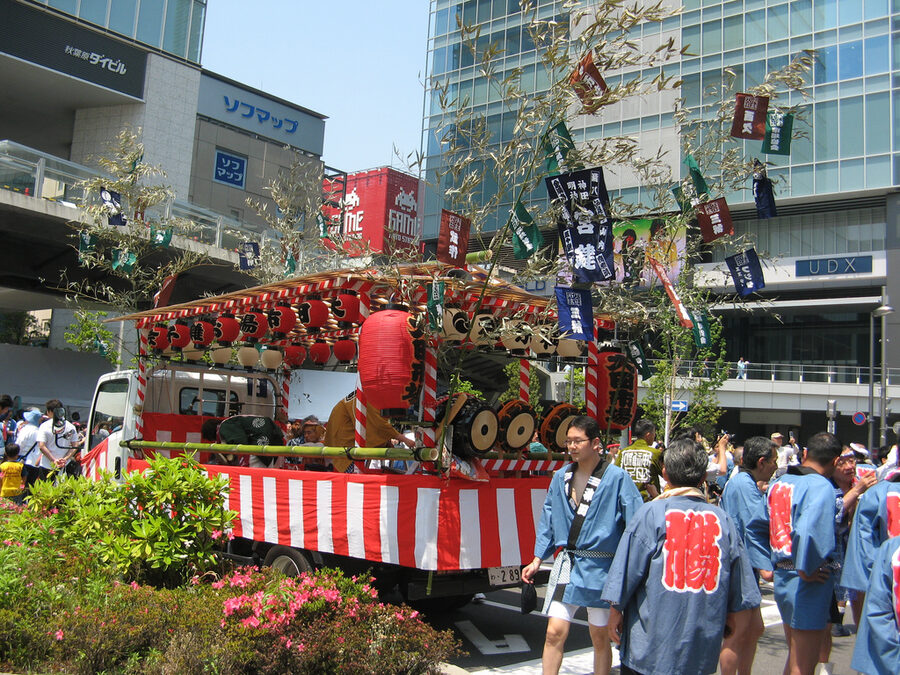
The Meiji era also brought streetcars and overhead electrical wires to central Tokyo. The towering three-story dashi floats that had defined the Edo-era processions could no longer pass under the wires. Most of them were retired, sold, or destroyed. Only a handful survive, and the ones you see on parade today are smaller modern reconstructions.
The 1923 Great Kanto Earthquake
The September 1, 1923 earthquake leveled most of central Tokyo and triggered fires that burned for days. Kanda Myojin’s wooden structures were destroyed. The kubizuka in Otemachi was badly charred and the surrounding ground was disfigured. Most of the surviving Edo-era dashi floats and mikoshi were lost.
The shrine was rebuilt in 1934 in reinforced concrete made to look like the original wooden structure. That choice turned out to be prophetic. The concrete shell survived the firebombing of Tokyo in March 1945 when most of the surrounding city did not.
The post-war recovery
The Mikoshi Miyairi resumed in modest form by 1952, and the full alternating Tenka Matsuri schedule was reestablished by the early 1960s. New mikoshi were built, slowly, neighborhood by neighborhood. Many of the modern mikoshi you see today are post-1960 in construction but follow Edo-period designs from preserved drawings.
The merchant guilds, the floats, and the money
One thing the official histories of Kanda Matsuri tend to underplay is the absolutely staggering amount of money the Edo merchant guilds spent on this festival. The Tokugawa state was funding the religious side of things, but the dashi floats and the supporting performers were paid for by the cho, the neighborhood merchant associations, and they competed in a way that genuinely astonishes me when I look at the records.
By the late Genroku era around 1700, a single full-scale dashi float could cost the equivalent of several years of a senior samurai’s stipend. The merchants of the Nihonbashi fish market, the Kanda greengrocers, the Kuramae rice brokers, and the Otemachi book merchants each had their own neighborhood float, and the inter-neighborhood rivalry over whose float was more elaborate drove the budgets up year over year.
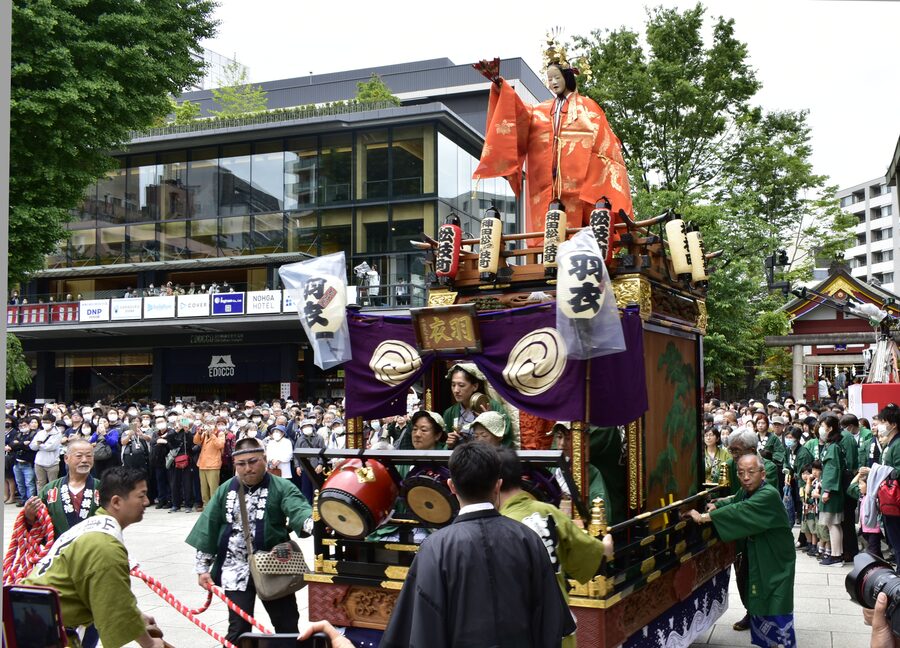
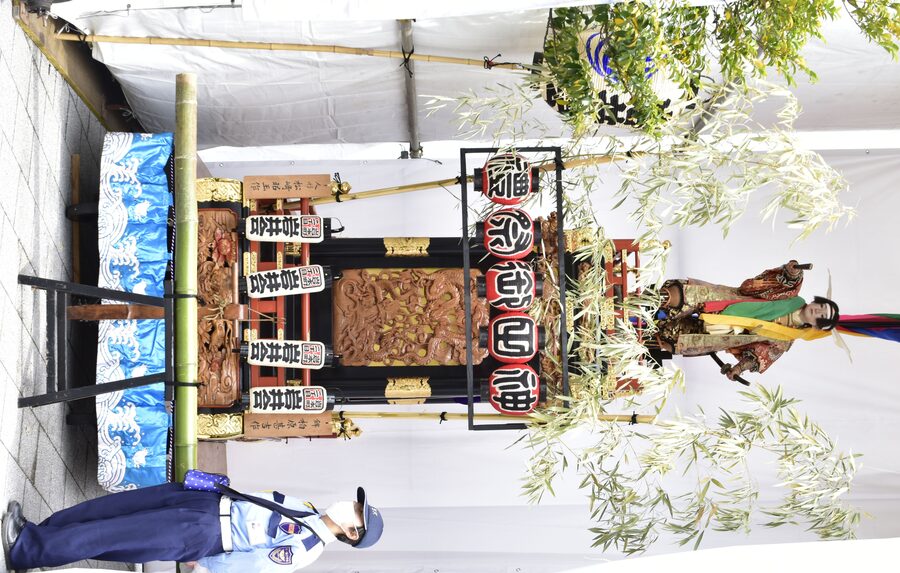
The decoration was not random. Each neighborhood’s float had a fixed motif. The Kanda fish-market float carried a giant carved tai (red snapper).
The Marunouchi merchant district float was topped by a phoenix. The Kuramae rice merchants had a samurai-on-horseback. These motifs were essentially trade marks, and they functioned as advertising for the neighborhood’s commercial identity inside the festival.
The merchants paid for it because the floats were a public statement of solvency. A neighborhood that could not maintain its dashi was a neighborhood whose merchants were going broke, and customers, suppliers, and the shogunate’s tax collectors were all watching. The festival was, among other things, the closest thing Edo had to a stock ticker.
That economic logic is part of why the 1681 alternation rule had so much social weight. By forcing the festival into every-other-year cycles, the shogunate was not just saving money. It was also dampening the merchant-on-merchant competition that was inflating the festival’s cost out of all proportion. It was a stealth antitrust regulation, dressed up as a religious schedule.
How Kanda Matsuri compares with the other Tokyo festivals
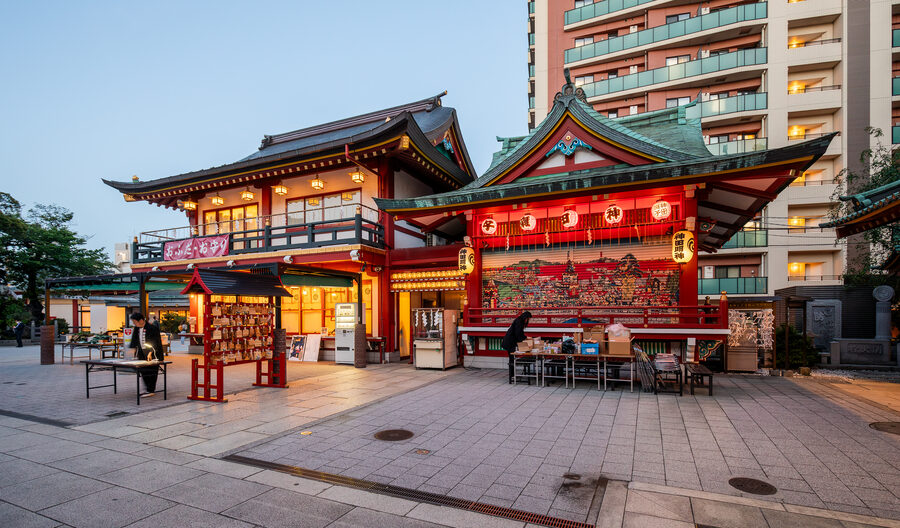
Kanda Matsuri is one of three festivals collectively known as the Edo Sandai Matsuri, the Three Great Festivals of Edo. The other two are Sanno Matsuri at Hie Shrine in Akasaka and Sanja Matsuri at Asakusa Shrine. If you have any interest in the Tokyo festival circuit, you should know how they relate.
Sanno Matsuri is the closest sibling. It is the other half of the Tenka Matsuri pair, and it runs in even-numbered years on the same alternation schedule the Tokugawa established. The procession takes a different route, looping through Akasaka and Nagatacho instead of Kanda and Akihabara, but the historical status is identical. If you cannot make Kanda this year, Sanno is your answer next year.
Sanja Matsuri at Asakusa Shrine is the third member of the Edo trio, and it has a completely different vibe. It runs every year in May, has no alternation, and is associated with traditional working-class Tokyo and the yakuza tattoo culture rather than the merchant-and-samurai world. Sanja is louder, more chaotic, and arguably more visually spectacular than Kanda, but it never had the shogun’s seal of approval that Kanda did.
If you want to compare Tokyo festivals to other major Japanese ones, the obvious counterparts are Kyoto’s Gion Matsuri, which originated as a 9th-century plague response and runs through all of July, and the Tsushima Tenno Matsuri, which Oda Nobunaga personally favored.
Each festival reflects the politics and economics of its host city. Kyoto’s reflects court culture and the Buddhist plague-prevention tradition. Nagoya-area festivals reflect Sengoku-era warlord patronage. Kanda Matsuri reflects the merchant-and-shogun economy of Edo, and the Tenka Matsuri privilege is the fingerprint of the Tokugawa state.
What you actually do on the day, if you are visiting
I want to be practical for a moment, because most of the writing on Kanda Matsuri online is more interested in history than in the question of “where do I stand and when do I show up.” Here is what I have learned.
Getting to the shrine
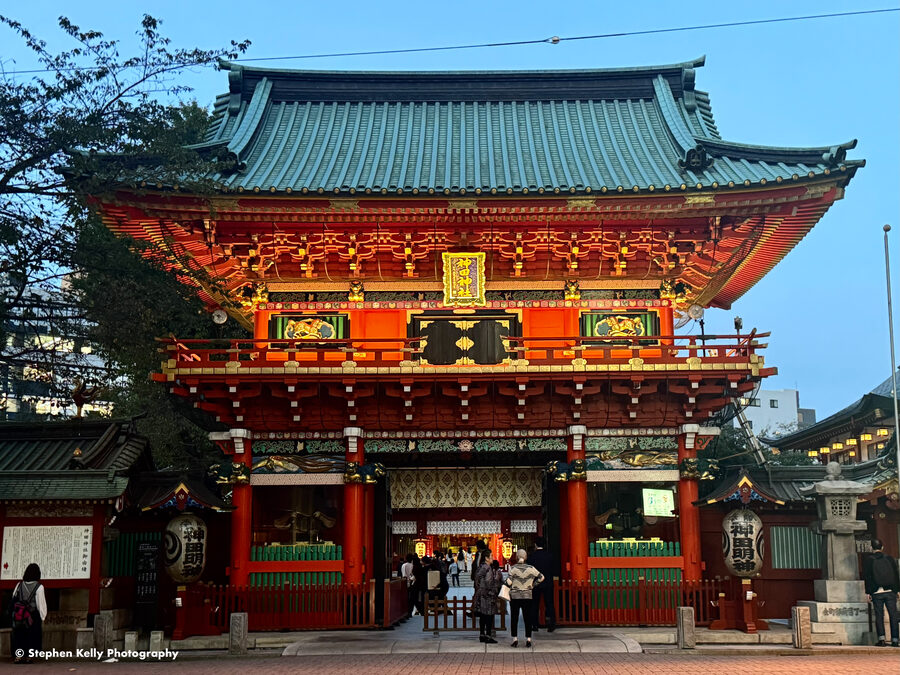
Kanda Myojin is at 2-16-2 Soto-Kanda, Chiyoda, Tokyo. The two closest stations are JR Ochanomizu (5 minutes walk) and JR Akihabara (10 minutes walk). The Hijiribashi exit at Ochanomizu drops you on the Kanda River side, and you walk down through a quiet residential block before the shrine appears on a hill to your right.
The Akihabara approach is louder. You walk uphill past anime shops and electronics stores until the maid cafes give way to torii gates.
What to wear
Comfortable shoes. The Saturday parade route is 30 kilometers and even if you only follow part of it, you will walk a lot. The Sunday Mikoshi Miyairi requires a lot of standing in crowds.
May in Tokyo is warm and humid, but morning ceremonies can be cool. I wear lightweight long pants, breathable long-sleeve shirt, and a cap or hat for sun.
If you want to participate in carrying a mikoshi, you need to be invited by a parish neighborhood association. They will provide the happi coat. You cannot just show up and lift. The teams are tight-knit and rehearse all year.
Where to position
For Saturday, the best viewing is at the start (8 AM at the shrine itself, see the procession line up), at the Imperial Palace moat (mid-morning, see them pass the old castle grounds), or at the Akihabara crossroads (around 1 to 3 PM, see them through the modern electronics district). For Sunday, the answer is simple. Be at the shrine itself between 10 AM and 4 PM and watch the mikoshi arrive in waves.
Food and stalls
Yatai food stalls fill the streets around the shrine on Saturday and Sunday. Yakisoba, takoyaki, grilled corn, kakigori (shaved ice), and the local specialty kibi-dango (millet rice balls) are everywhere. I budget about 2,000 yen for a day of stall food. The shrine itself sells amazake, a sweet low-alcohol fermented rice drink, which is cold and surprisingly refreshing when it is humid.
Etiquette around the mikoshi
If you are watching the Sunday Mikoshi Miyairi, there is one rule of crowd behavior worth knowing. Do not step in front of an oncoming mikoshi. The bearers cannot stop quickly, the kami inside are technically active, and the team will not break formation to avoid you.
If you hear the chant getting louder behind you, step to the side and let them pass. Photographers in particular have a habit of backing up while framing a shot, and the more experienced shrine attendants will gently grab your shoulder to keep you out of the path.
The bearers themselves rotate. A team of 30 to 50 carries the mikoshi, but only about 12 to 16 are actually under the carrying poles at any moment. The rest walk alongside, ready to swap in.
If you watch carefully, you can see the moment when a substitution happens. The team chant changes pitch for two seconds, the swap happens in a half-step, and the chant returns to normal. It is the most efficient running substitution I have seen in any sport, including ice hockey.
The mikoshi rocking is not random either. The team deliberately tosses the shrine up and down on their shoulders, sometimes in long slow heaves, sometimes in short rapid pulses. This is meant to “wake up” the kami inside and make them happy.
A mikoshi that is being rocked vigorously is a mikoshi whose neighborhood is feeling lucky and confident. A flat, even carry usually means the team is exhausted or the shrine is unusually heavy. Both are respected, and the flat carries are technically harder.
A festival as a portrait of its political era
Coming back to where I started. The reason I keep returning to Kanda Matsuri is that it is a remarkably clean record of one specific political system.
The Tokugawa state ran on a few core principles. Centralized authority, tightly regulated commerce, and public ritual that reinforced the social hierarchy. Tolerance for local diversity sat inside a framework of loyalty to Edo.
Kanda Matsuri encodes all of that. The 30-kilometer Shinko-sai parade route covers exactly the merchant and administrative core of Edo, the part that mattered to the shogun.
The 108 parish districts each contribute a mikoshi, which is a controlled performance of local diversity inside a unified framework. The Tenka Matsuri privilege is a literal expression of the shogun’s authority. The 1681 alternation rule is the kind of paternalistic budget control that Edo-period government did better than almost any pre-modern state.
If you want the deeper political backdrop, I have written about the sankin-kotai alternate attendance system, which was the Tokugawa’s other big tool for managing the daimyo and which directly subsidized the Edo-period merchant boom that paid for festivals like Kanda Matsuri. The two policies (Tenka Matsuri and sankin-kotai) work together as a single piece of statecraft.
The Kanda Myojin year-round, not just festival weekend
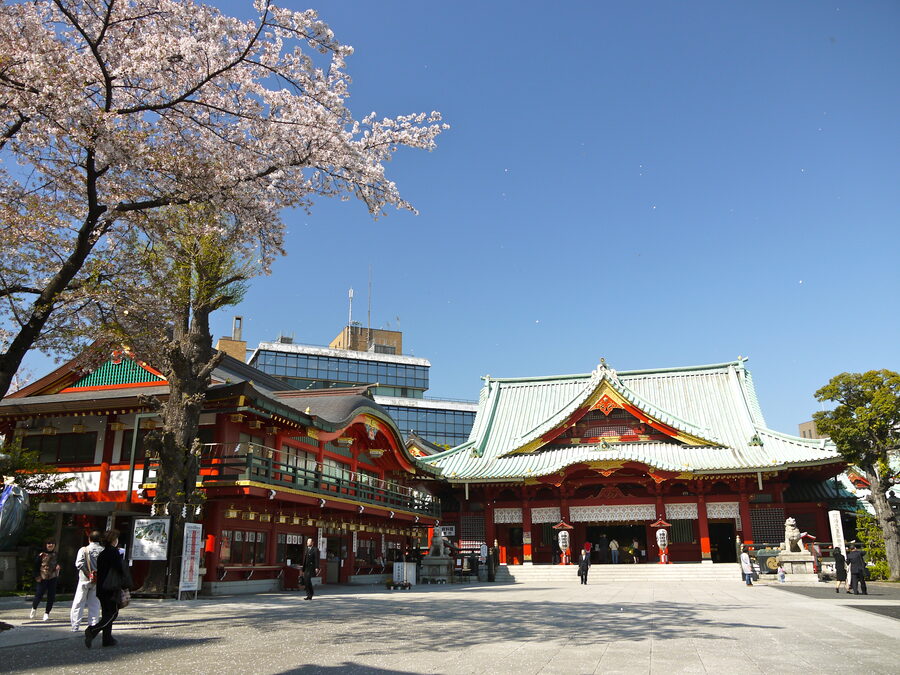
Kanda Matsuri only happens in odd-numbered Mays, but the shrine is open every day. If you are in Tokyo on a non-festival weekend, I still recommend a visit. The atmosphere is calmer, the gardens are accessible, and you can read the inscriptions without trying to navigate a crowd.
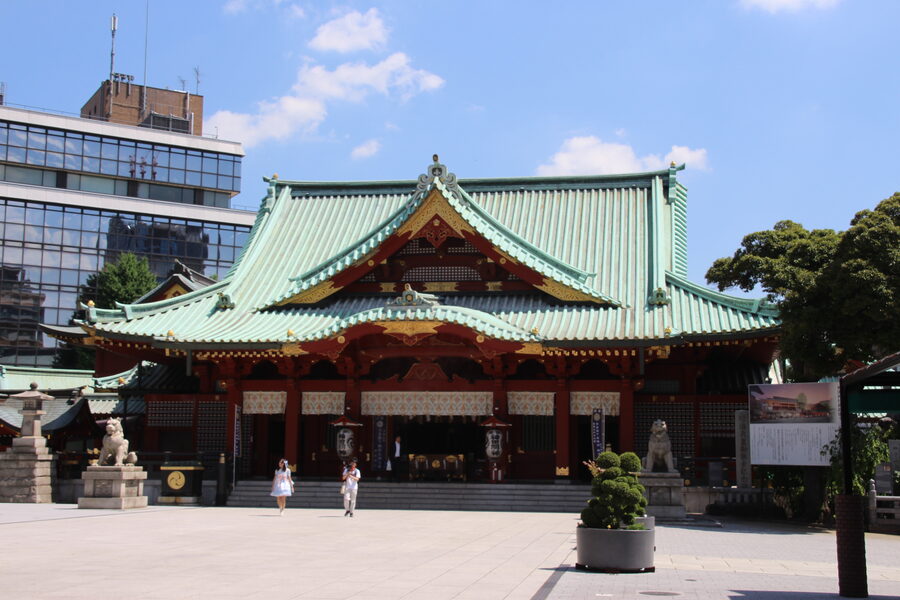
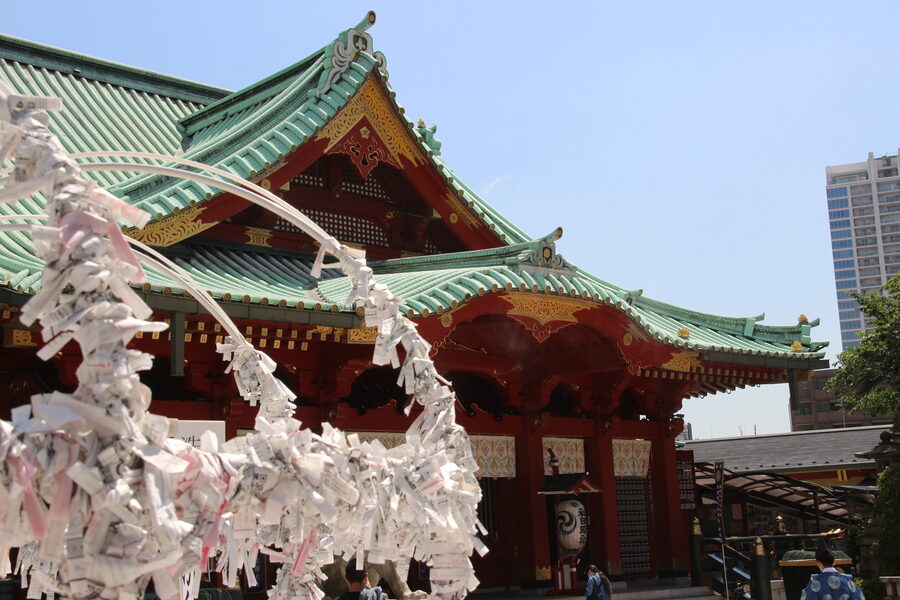
The shrine sells goshuin, the calligraphic shrine stamps that pilgrims collect in special books. Kanda Myojin’s goshuin is one of the more elaborate ones in Tokyo, and the stamp-master changes the design seasonally. If you visit during cherry blossom season in early April, the courtyard cherry tree is genuinely lovely. If you visit during Shichi-Go-San in November, you will see families with three- and seven-year-old daughters and five-year-old sons in formal kimono being blessed at the haiden.
What to buy on a non-festival visit
The IT-blessing omamori are the signature item. They come in different colors for different functions (general data safety, network security, programming productivity, anime production project safety). I bought one for my laptop years ago and have nothing useful to report about whether it has worked, but the laptop is still going.
The shrine also sells regular Shinto omamori for safe travel, business prosperity, academic success, and matchmaking. The matchmaking ones, called en-musubi, are popular with young Tokyoites. The business prosperity ones are popular with the surrounding office workers. There is a real social ecosystem here that does not depend on the festival.
The single piece of Kanda Matsuri I keep thinking about
The festival has many layers, and I have tried to walk you through them. But if I had to pick the one detail I keep coming back to, it would be the fact that this entire system was built on the prayer of a man who was about to start a civil war.
Tokugawa Ieyasu in 1600 was not yet shogun. He was a daimyo with armies, a candidate for power, a man whose chances of dying in battle that autumn were genuinely high.
He stopped at Kanda Myojin and asked a beheaded rebel deity to back his bid for control of Japan. That deity, by his rebellion, had set a precedent for someone outside the imperial court grabbing political power. So the prayer was, in a way, asking for kindred treatment from a kindred spirit.
Ieyasu won. He kept his promise. He built the deity into the heart of his regime, gave the festival the privilege of entering his castle, and in doing so created the longest-running political-spiritual celebration in Japanese history. Four hundred years later, on a humid May Saturday, you can stand on the corner of Otemachi 1-chome and watch a procession that is, in its bones, still the thank-you note Ieyasu wrote in 1600.
I will leave you with one practical thought. Kanda Matsuri runs in 2025, 2027, 2029. Pick a year and book your Tokyo trip around it.
Land on Friday and watch the inner rituals. Pick a viewing spot for the Saturday Shinko-sai. Spend Sunday at the shrine for the Mikoshi Miyairi.
By the time the procession returns to the shrine on Sunday afternoon, you will have seen the longest unbroken political ritual in modern Japan, performed exactly the way it was performed for the eighth Tokugawa shogun in the year 1742, and exactly the way it will be performed for whoever happens to be running Tokyo in 2042.
If you want to go deeper into the Edo political world this festival emerged from, three of my long-form pieces will fill in the gaps. Edo Castle covers the building Kanda Matsuri’s procession was uniquely allowed to enter. Tokugawa Ieyasu covers the man whose 1600 prayer started everything. Japan’s Three Sacred Treasures covers the deeper Shinto background of why kami are housed in palanquins and processed through cities at all. The whole festival is a doorway into Japanese political and religious thought, and once you walk through it, you stop seeing Tokyo as just a city and start seeing it as a 400-year-old performance.


.jpg)


.jpg)


.jpg)
.jpg)

