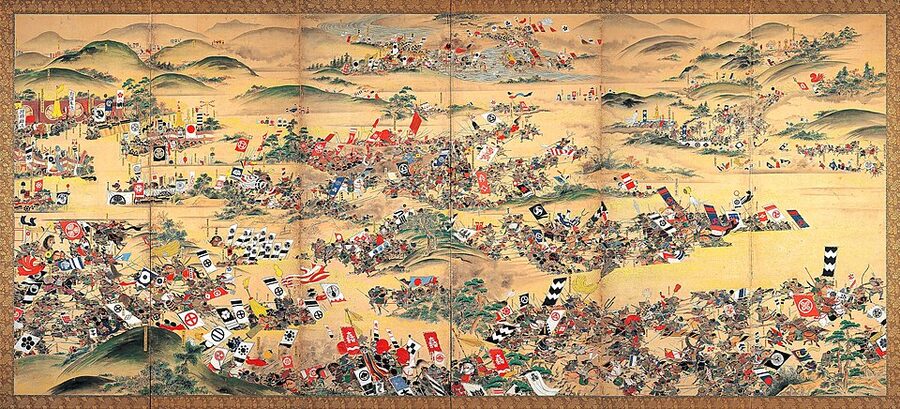
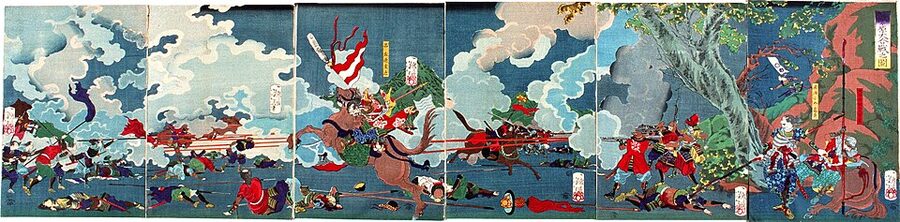
The battle that decided the next 260 years of Japanese history was over by lunchtime. On 15 September 1600, a foggy autumn morning in a narrow valley at the westernmost tip of Mino Province, roughly 160,000 armed men deployed on two sides of a mountain-ringed basin about three kilometres across. First shots were exchanged around 8am. Initial cavalry charges hit home by 9. The decisive betrayal — Kobayakawa Hideaki’s 15,000 men switching sides from the Western Army to the Eastern — came at about noon. By 2pm the Western Army was in full collapse, fleeing down the road toward Ōgaki. By 4pm most of its commanders were either dead, captured, or running for home domains they would never see again. Tokugawa Ieyasu, watching from Momokubari-yama, had invested ten years of political manoeuvring and a single morning’s worth of cannon-and-musket volleys in the project of becoming the next ruler of Japan. The accounting was done before the farmers in the surrounding villages had finished the day’s rice threshing.
What Sekigahara decided was not just the immediate succession to Toyotomi Hideyoshi. It decided the shape of the Japanese state for a quarter of a millennium — who would rule, from which castle, under which legal framework, with which class structure, which religious policy, which foreign policy, which economic policy. It decided that Edo would become Tokyo. It decided that the emperor would remain a ceremonial figure. It decided that Japan would close itself to European contact from the 1630s forward and remain closed until Perry arrived in 1853. Every one of those outcomes was in play on the morning of 15 September 1600, and every one of them hinged on a handful of tactical decisions made inside a six-hour window. This is why the Japanese treat Sekigahara with the intensity they do. It’s not just the biggest battle in their pre-modern history. It’s the single most-consequential afternoon their country ever had.
In This Article
- How a two-year political crisis ended at a road junction in Mino
- The Uesugi pretext and the march that wasn’t
- The approach — August-September 1600
- 8am to noon — the fight that went to plan
- Noon — the musket volley that changed everything
- The Shimazu retreat and the long afternoon
- The redistribution — how Sekigahara became Edo Japan
- Why the battle still matters to Japanese identity
- Where to visit Sekigahara today
- The battlefield — a walkable national historic site
- Gifu Sekigahara Battlefield Memorial Museum
- Sawayama Castle site — Mitsunari’s home
- Closing — the field, the museum, and the missing heads
How a two-year political crisis ended at a road junction in Mino
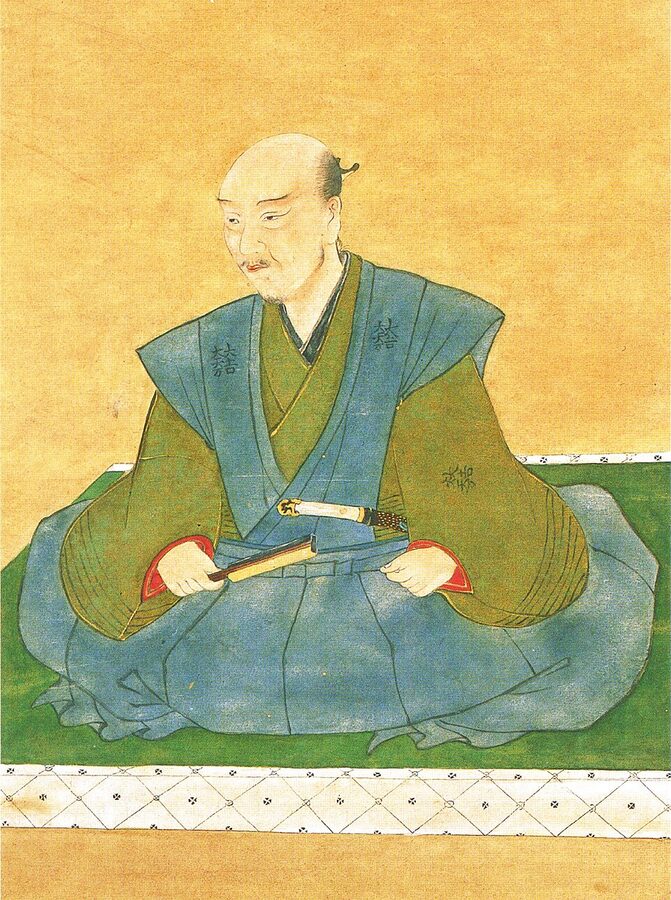
To understand why the battle happened at Sekigahara, you need to understand what Japan looked like in the two years between Toyotomi Hideyoshi’s death on 18 September 1598 and the morning of the battle. Hideyoshi died having designated his five-year-old son Toyotomi Hideyori as his successor, protected by a council of five senior daimyō — the Go-tairō, and a secondary council of five senior administrators, the Go-bugyō. The five regents were Tokugawa Ieyasu, Maeda Toshiie, Mōri Terumoto, Uesugi Kagekatsu, and Ukita Hideie. The five commissioners were Ishida Mitsunari, Asano Nagamasa, Maeda Geni, Masuda Nagamori, and Natsuka Masaie. The system was designed to balance force (the regents, mostly military men) against administration (the commissioners, Hideyoshi’s civilian policy team). It functioned for approximately six months.
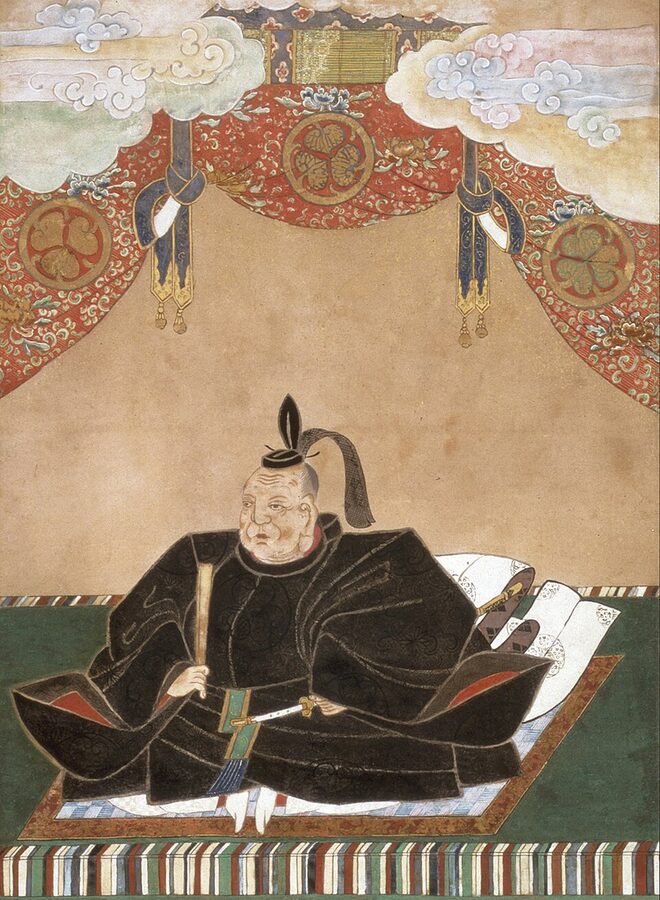
The immediate breakdown came over the prohibition on private marriage alliances. Hideyoshi’s final instructions had explicitly forbidden the senior daimyō from arranging marriages without council approval — a measure aimed at preventing coalition-building against the infant Hideyori. In early 1599, Ieyasu began quietly arranging marriages between his relatives and the Date, Fukushima, and Hachisuka clans. Maeda Toshiie confronted him; the two almost came to blows; only direct intervention by Hideyoshi’s widow Kōdai-in prevented open war. Toshiie died in April 1599, and with him the one figure inside the regent council capable of restraining Ieyasu without triggering a civil war. Within weeks of Toshiie’s death, seven of Hideyoshi’s senior military retainers, led by Katō Kiyomasa and Fukushima Masanori, attacked Ishida Mitsunari’s residence in Osaka over a dispute dating to the Korean campaigns. Ieyasu brokered the peace by exiling Ishida to his Sawayama castle, stripping him of his bugyō post. From this point, the political centre of gravity shifted decisively to Ieyasu. Within a year he had moved into the Osaka Castle West Enclosure, in direct violation of Hideyoshi’s express written instructions, and begun issuing orders in his own name rather than the Toyotomi regency’s.
The Uesugi pretext and the march that wasn’t
The spark was Uesugi Kagekatsu. One of the five regents, transferred to Aizu in Mutsu Province in 1598 with an enormous 1,200,000-koku domain, Kagekatsu began in early 1600 to build fortifications, stockpile weapons, and refuse to come to Osaka when summoned. Ieyasu accused him, formally, of preparing rebellion. The accusations were probably exaggerated — Kagekatsu’s buildup was defensive, directed against the powerful neighbouring Date clan — but they gave Ieyasu a legal pretext to mobilise the other daimyō. In June 1600 Ieyasu issued a general summons: he would march on Aizu personally, and every senior daimyō was expected to attend with their troops. By 16 June, roughly 50,000 Eastern-aligned men were massing at Osaka. The march began on 1 July. Ieyasu himself left Osaka on 2 July with his senior Tokugawa retainers and rode east at forced pace, reaching Edo on 10 July and continuing north.
Ishida Mitsunari had been waiting for this. The moment Ieyasu’s main body was committed north of the Tokai corridor, Ishida sent out summons of his own to the western daimyō. On 17 July, fifteen days after Ieyasu left Osaka, Ishida’s coalition issued the Naifu-chigai no Jōjō, a formal 13-point indictment of Ieyasu’s violations of Hideyoshi’s prohibitions: the private marriages, the West Enclosure occupancy, the unilateral land decisions, the Uesugi mobilisation without bugyō approval. Three of the other regents — Mōri Terumoto (the nominal supreme commander), Ukita Hideie, and Ōtani Yoshitsugu — formally sided with Ishida’s faction. The Uesugi-Aizu campaign was now a political trap: if Ieyasu continued north, he left the western capital unprotected; if he turned back, the Uesugi could move south unchallenged. Ieyasu received the indictment at Oyama in Shimotsuke on 24 July. He called a council of his retainers and his allied daimyō, read them the Western declaration, and asked each man in turn whether he would continue east or return with him to fight Ishida. Fukushima Masanori — Hideyoshi’s personal foster-son, and the Western Army’s most feared catch — stood up first. “I am for the Naifu-sama [Ieyasu],” he said. The rest of the council followed him. The Uesugi campaign was abandoned on the spot. Within a week, the Eastern Army was moving back down the Tōkaidō toward the Mino border.
The approach — August-September 1600
What followed across August and September 1600 was a slow-motion strategic pursuit down the Tōkaidō and Nakasendō. The Eastern Army under Ieyasu’s forward commanders Fukushima Masanori and Ikeda Terumasa took Gifu Castle on 23 August — the action that ended the Oda family’s 35-year hold on the central-Japan fortress, covered in more detail in my Gifu Castle piece. Ishida fell back to Ōgaki Castle, about 15 kilometres east of Sekigahara, and dug in. Ieyasu himself reached the Kiyosu area in mid-September after a slower ride down from Edo, and on 14 September 1600 the two armies were separated by approximately 20 kilometres with the Western Army at Ōgaki and the Eastern at Akasaka. Ishida’s position at Ōgaki was defensible but passive; it could not stop the Eastern advance on Osaka if Ieyasu decided to bypass it. On the night of 14-15 September, in heavy rain, Ishida ordered a night march west to intercept the Eastern Army at the Nakasendō gap between Mount Sasao and Mount Matsuo — the narrow pass through which any force moving from Mino into Ōmi had to travel. The night march is what brought the Western Army to Sekigahara. They finished deploying around 6am on the morning of 15 September, exhausted, wet, and with their formations not quite where Ishida had intended them to be.
The terrain is worth describing because it shaped everything. Sekigahara sits at the western tip of the Nōbi Plain, where the Nakasendō passes through a basin roughly five kilometres long and three wide, ringed by low mountains. The main road enters from the east between Mount Sasao (south side, 300m) and Mount Tenmano (north side, 200m). It exits to the west through a second gap between Mount Matsuo (south, 300m) and Mount Nangū (north, 400m). Any army wanting to get from Mino to Kyoto had to come through this valley. Any army able to deploy on the surrounding mountains could command the road. Ishida’s plan, and it was a good plan on paper, was to block the Eastern Army’s advance with the Western Army deployed on the north side of the valley (himself at Sasao, Ōtani Yoshitsugu at Tenmano, Ukita Hideie’s 17,000 in the centre), while a second force under Kobayakawa Hideaki (15,000) and Mōri Hidemoto (15,000) held the south side at Matsuo and Nangū. When the Eastern Army reached the Sekigahara basin, they would be surrounded on three sides. On paper. In practice, Kobayakawa and Mōri would both, for different reasons, spend the morning of 15 September doing absolutely nothing.
8am to noon — the fight that went to plan
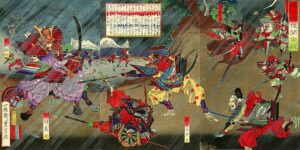
The morning of 15 September was foggy. The Japanese account compilations — the Kuroda Kafu, the Yoshida Kasuga Kyūki, the Ii Ke Kafu — all mention visibility limited to less than 100 metres at dawn. The fog began to lift around 7:30am. The Eastern advance guard under Fukushima Masanori caught sight of the Western Army deployments on the north ridge and ordered the first volleys at approximately 8am. Ii Naomasa — Ieyasu’s “Red Devil” general, so called for his red-lacquered armour — launched a direct cavalry charge on Ukita Hideie’s central formation shortly after, trying to collapse the Western centre before the flanks could engage. Ukita held. Fukushima’s forces engaged Ōtani Yoshitsugu’s 7,000 men on the south side of the road; Ōtani was sick (he was in the terminal stage of the illness later called leprosy, likely Hansen’s disease; he had to be carried into the battle on a litter) but held position fiercely. By 10am the central valley was a chaotic melee, with approximately 75,000 men engaged directly on both sides, neither side able to achieve a breakthrough.
This is the moment Ishida’s plan should have worked. At roughly 10:30am he fired the pre-arranged signal rocket instructing Kobayakawa Hideaki and Mōri Hidemoto to attack the Eastern rear from Matsuo-yama and Nangū-san. Neither moved. Mōri Hidemoto had been bought — his main retainer Kikkawa Hiroie had made a secret deal with Ieyasu days earlier to keep the Mōri forces out of the fighting in exchange for a guarantee of the Mōri domain post-battle (a guarantee Ieyasu would famously renege on two months later). Hidemoto’s 15,000 men sat on Mount Nangū and did not engage. Kobayakawa Hideaki’s 15,000 sat on Mount Matsuo-yama in almost exactly the same posture — technically allied with the Western Army, in fact having been in secret correspondence with Ieyasu for the previous week, and now unable or unwilling to commit to either side. The central battle continued unresolved. Ishida fired the signal rocket a second time at 11am; again no movement. He sent a messenger; the messenger came back with evasive responses. By 11:45am Ishida understood that his south flank was either compromised or, at best, neutralised.
Noon — the musket volley that changed everything
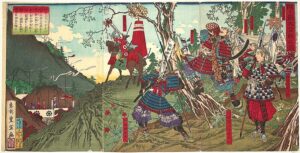
The famous episode is Ieyasu’s musket volley. By 11:45am Ieyasu understood the same thing Ishida understood — that Kobayakawa Hideaki was the pivot point, and that Kobayakawa had not committed. At noon, from his command post at Momokubari-yama across the valley from Matsuo-yama, Ieyasu ordered a small contingent of his personal muskets to fire a deliberately-ineffective volley toward Kobayakawa’s position. Range was approximately 1,500 metres — well beyond the effective range of an Edo-era matchlock. The shots were not meant to hit. They were meant to communicate. Kobayakawa was being told, explicitly and publicly, that he had a choice, and that Ieyasu would count any further delay as a declaration for the Western Army. Kobayakawa took approximately fifteen minutes to respond. At around 12:15pm, his 15,000 men wheeled off Matsuo-yama and attacked — not the Eastern Army, but Ōtani Yoshitsugu’s Western force on the south flank.
Ōtani had anticipated this. He had reserved a small detachment, about 600 men under Hiratsuka Tamemasa, specifically to guard his south flank against a Kobayakawa defection, and the opening salvos of the Kobayakawa attack ran straight into Hiratsuka’s prepared position. For about forty minutes Hiratsuka held. But four other secondary Western commanders — Wakizaka Yasuharu, Ogawa Suketada, Akaza Naoyasu, and Kuchiki Mototsuna, whose 4,200 combined men had been stationed in reserve behind Ōtani — also defected to the Eastern side the moment Kobayakawa’s attack made clear which way the battle was going. With 19,200 men now attacking Ōtani’s position from two sides simultaneously, the south flank collapsed at about 1pm. Ōtani, too sick to retreat, ordered his attendant to behead him and to hide his head so the Eastern side could not claim it as a trophy. The attendant did so. Ōtani’s head was never recovered.
With Ōtani destroyed, the Eastern Army could now pivot east and hit the Ukita and Konishi forces in the Western centre from two sides. Ukita Hideie’s formation — the largest single Western Army contingent at 17,000 men — held for about an hour more, as Ukita personally rode in and out of the melee rallying his troops, but by 2pm the pressure was overwhelming. Konishi Yukinaga’s 4,000 men broke first, fleeing east toward Ōgaki. Ukita himself survived the battle and escaped to Satsuma, where the Shimazu clan would shelter him for decades. Ishida, watching from Sasao-yama, ordered a general retreat at about 2:30pm. The retreat became a rout within minutes. By 3pm the Western Army had ceased to function as a coordinated military force. Individual commanders were running for their home castles. The Eastern pursuit continued until nightfall, mostly along the Nakasendō heading east toward the Sawayama-Ōmi border. The battle was, in every meaningful sense, over.
The Shimazu retreat and the long afternoon
One Western contingent did not retreat eastward with the rest. Shimazu Yoshihiro, holding the extreme southwestern corner of the Western deployment with approximately 1,500 Satsuma retainers, had been left stranded when Ōtani’s position collapsed at 1pm. Rather than attempt the conventional retreat up the Nakasendō, which would have taken him straight through the advancing Eastern pursuit, Yoshihiro made the famous decision of his career. He drove his 1,500-man column due south, directly through the centre of the Eastern Army, heading for the coast road and the 900-kilometre journey back to Satsuma. The manoeuvre — known forever after as Shimazu no Nokiguchi, “the Shimazu’s Retreat Through the Eaves” — was one of the great feats of military improvisation in Japanese history. Of the 1,500 men who set off, approximately 500 survived to reach Satsuma. Yoshihiro himself did. The full story is in my Shimazu Yoshihiro piece; what matters for Sekigahara is that the Shimazu retreat represented the only part of the Western Army’s collapse that preserved any military credibility, and that this was precisely why Ieyasu spent the next year carefully avoiding any escalation with the Shimazu clan despite their Western affiliation. The retreat bought Satsuma its autonomy through the next two and a half centuries.
Ishida Mitsunari escaped north-west into the mountains. He hid for six days — in caves, in abandoned temples, briefly with a sympathetic village headman named Tawaraya Takatsugu near Lake Yogo — before being captured on 21 September by Tanaka Yoshimasa’s forces in the village of Kohoku. He was transported to Kyoto, paraded through the streets on a cart with Konishi Yukinaga and Ankokuji Ekei (two other senior Western commanders), and publicly executed by beheading at Rokujō-gawara on 6 October 1600. His head was displayed at Sanjō Ōhashi for three days afterwards. The other principal Western commanders met varying fates: Ukita Hideie eventually surrendered to the Shimazu, was exiled to the Hachijō-jima penal island, and lived there until 1655 (dying at age 83 — he was the longest-surviving combatant from either side); Mōri Terumoto, who had been the nominal Western commander but had spent the battle in Osaka Castle rather than at Sekigahara, was stripped of most of his territory and reduced from 1.2 million koku to 370,000; Konishi Yukinaga was beheaded alongside Ishida. Kobayakawa Hideaki, the Judas figure, was rewarded with the forfeited Ukita domain — and died two years later of what Edo-period chronicles attributed to drink, guilt, and the vengeful ghost of Ōtani Yoshitsugu.
The redistribution — how Sekigahara became Edo Japan
The immediate administrative consequence of the battle was the largest property transfer in Japanese history up to that point. In the months following Sekigahara, Ieyasu confiscated the territories of 88 Western-aligned daimyō (totalling approximately 4.21 million koku of productive capacity) and reduced the territories of 5 others (another 2.06 million koku). The redistributed 6.27 million koku was given out as rewards to Eastern-aligned daimyō — Fukushima Masanori’s territory increased from 240,000 to 498,000 koku, Kuroda Nagamasa’s from 180,000 to 523,000, Ikeda Terumasa’s from 150,000 to 520,000, Tōdō Takatora’s from 80,000 to 200,000. Ieyasu himself added significantly to his Tokugawa direct holdings; so did his sons. The resulting map of Japanese feudal domains — 271 daimyō divided into Tokugawa-house shinpan, longtime-ally fudai, and post-Sekigahara-converted tozama categories — would remain essentially fixed until the Meiji abolition in 1871.
Three years after Sekigahara, on 12 February 1603, Emperor Go-Yōzei formally appointed Ieyasu as Sei-i Taishōgun — the “Barbarian-Subjugating Great General.” This title, last held by a Tokugawa-ancestor Minamoto shōgun in 1333 and dormant through the entire Sengoku period, was the formal legal basis for a hereditary military regime independent of imperial authority. Ieyasu moved his administrative capital from Fushimi to Edo, then a small castle town on a marshy bay on the Kantō coast, and began the infrastructure construction that would turn it into Tokyo. The bakufu, the shogunate, began operating in 1603 and continued continuously until the surrender of Edo Castle on 3 April 1868 — a run of 265 years. Hideyori, Hideyoshi’s son, survived as a titular lord at Osaka Castle until 1615, when the Tokugawa finally extinguished the Toyotomi family in the Osaka Summer Campaign. With that, every political faction represented at Sekigahara had been either absorbed or erased, and the Edo-period settlement was complete.
Why the battle still matters to Japanese identity
Sekigahara is the single most-studied, most-referenced, most-dramatised event in pre-modern Japanese history. The reasons are cumulative. First, it was the largest single-day land battle Japan had ever fought, and for the next two and a half centuries nothing would exceed it. The combined deployment of roughly 160,000 men across a three-kilometre basin was an exercise in military organisation at a scale that neither the Sengoku period’s preceding campaigns nor the Edo peace would see again. Second, it is the textbook example of how a single act of treachery, Kobayakawa’s noon defection, can collapse a numerically-superior force. Every Japanese student who learns about Sekigahara in secondary school also learns that betrayal is always operationally available, that alliances hold only as long as the incentives hold, and that the Tokugawa regime which followed was built specifically to prevent any daimyō from ever holding that kind of pivot position again. The whole Edo-period daimyō control system — the sankin-kōtai residence requirement, the hostage systems, the kaieki powers — is traceable in its design logic directly to Ieyasu’s memory of having needed to buy off Kobayakawa Hideaki.
Third, and more loosely, Sekigahara is the generative moment of modern Japanese regional identity. The tozama outer daimyō — the Western Army survivors, who would spend the next 267 years as second-class aristocrats locked out of the Tokugawa political centre — are the families who eventually drove the Meiji Restoration from Chōshū and Satsuma in the 1860s. It is not coincidence that the domains that would topple the Tokugawa were the domains that had lost at Sekigahara. The Satchō alliance that led the 1868 coalition descended directly from the Shimazu-Mōri-Chōshū coalition that had lost the morning of 15 September 1600. Sekigahara created the political fault line that would eventually split Japan open 268 years later. When the Meiji Restoration finally came, it was seen by its architects, quite explicitly, as a long-delayed reversal of the Sekigahara outcome.
Where to visit Sekigahara today
The battlefield — a walkable national historic site
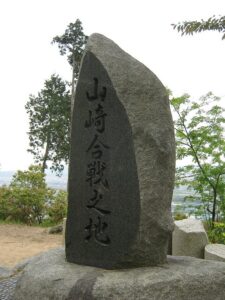
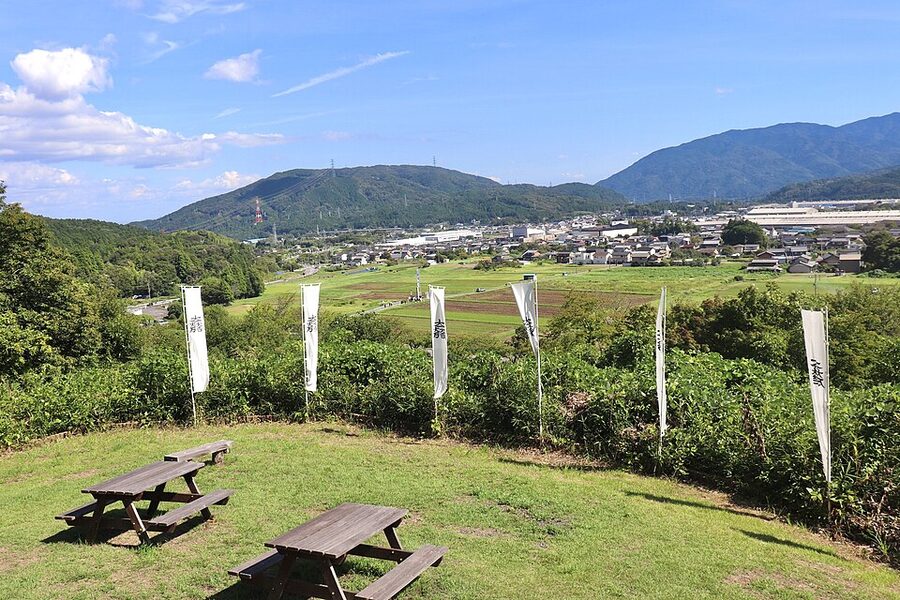
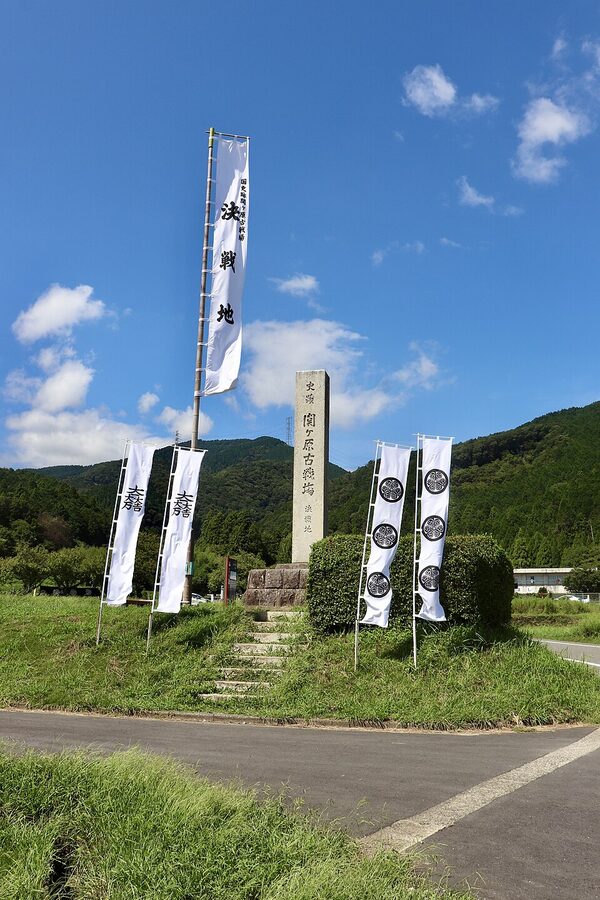
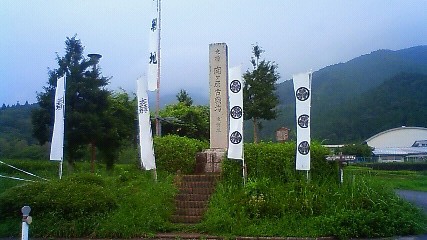
Sekigahara is one of the most completely-preserved pre-modern battlefields anywhere in the world. The entire valley — mountains, rice paddies, road alignments, spring-water sources — is essentially unchanged from 1600, because the area became a National Historic Site in 1931 and has since been shielded from the kind of road-widening and industrial development that has erased most other Japanese Sengoku-era battlefields. Forty separate commander-position markers, stone monuments with Japanese and English signage, are dotted around the valley at the exact coordinates where each commander deployed. You can walk a figure-eight circuit covering every major position in about four hours, following a numbered route provided by the Sekigahara Tourist Information Center at the JR Sekigahara Station. The main sites in walking order from the station are Higashi-Kubizuka (Eastern Head Mound), Ishida Mitsunari’s ikiten at Sasao-yama, Ōtani Yoshitsugu’s ikiten at Tenman-yama, the decisive-battle central marker at Fujikawa, Kobayakawa’s ikiten at Matsuo-yama (a steep 30-minute climb), and Ieyasu’s Momokubari command post.
Getting there: JR Sekigahara Station on the JR Tōkaidō Main Line, about 30 minutes west of Nagoya or 50 minutes east of Kyoto (Maibara-kaisoku services run direct). The Tourist Information Center is adjacent to the station with English maps and a left-luggage service. Expect 4-5 hours for a thorough visit; a half-day if you include the central museum. Most of the markers are free to visit and always accessible. The paths are generally well-maintained, but the climbs to the upper mountain positions require proper footwear — Matsuo-yama and Tenman-yama specifically are not flat walks.
Gifu Sekigahara Battlefield Memorial Museum
The Gifu Sekigahara Kosenjō Kinenkan, which opened in October 2020, is a purpose-built museum adjacent to the decisive-battle central site. It is the most modern battlefield-interpretation facility in Japan and worth an hour or two at minimum. The exhibition takes a 4D approach — a wraparound projection theatre that walks you through the morning chronologically with accurate sightlines from each commander’s perspective, a tactical-map simulator where you can reposition forces and see what would have happened if Kobayakawa hadn’t defected, a replica-weapon handling room with period-authentic matchlock arquebuses and sashimono banners, a Kanō-school battle-screen room with high-resolution reproductions of the major extant screens, and a rotating curated collection of original 1600-era documents on loan from the Tokyo National Museum and the Kōbe City Museum (specifically, letters from the pre-battle negotiations). The museum has professional English audio guides and all major signage in English.
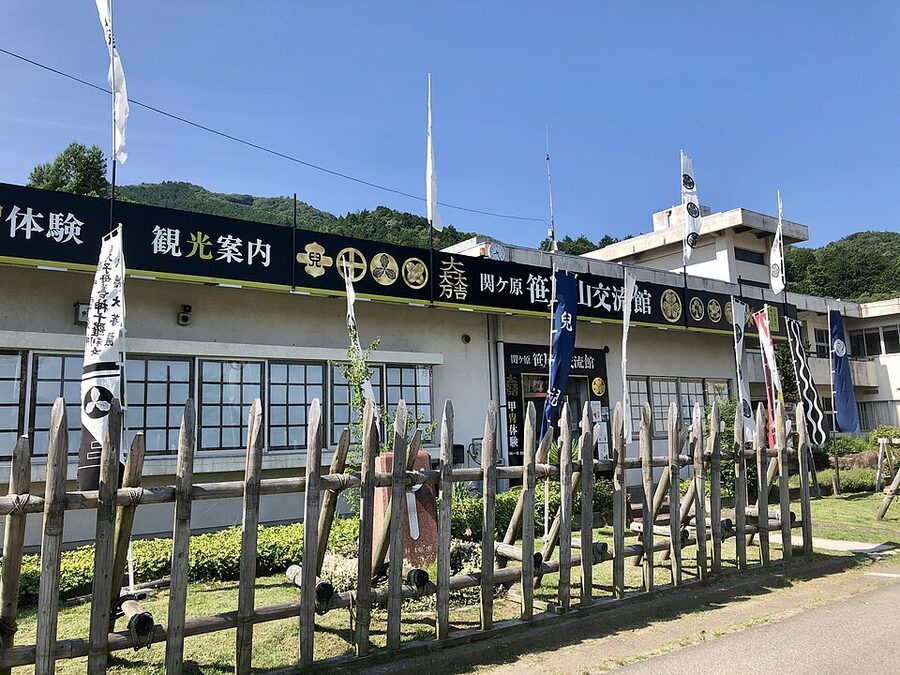
Museum hours 9:30am-5pm, closed Mondays and the day after national holidays. Admission ¥500. Allow 90 minutes minimum, 3 hours if you do all the interactive exhibits. The central museum is a 10-minute walk from the station. I recommend visiting the museum first for context and then walking the battlefield with the mental map already in place — doing it in the opposite order can leave you with a lot of unfamiliar commanders’ names in your head when you start looking at the signage.
Sawayama Castle site — Mitsunari’s home
For a Mitsunari-specific side trip, Sawayama Castle site in Hikone City (Shiga Prefecture) is 20 minutes west of Sekigahara by local JR train. The castle was Ishida Mitsunari’s main residence before Sekigahara; it was besieged and destroyed by Eastern forces under Ii Naomasa on 18 September 1600, three days after the battle — Mitsunari’s father Ishida Masatsugu committed seppuku in the main tower as the castle fell. The site is now an earthwork-and-stone-wall archaeological preserve, free to visit, at the top of a moderate 30-minute hike. The view from the summit toward Mount Ibuki (where Mitsunari’s personal retreat route passed) is the view that Masatsugu would have seen as the Ii Red Devils came through the Sawayama-guchi gate.
Getting there: JR Hikone Station on the Tōkaidō Main Line, 20 minutes west of Sekigahara. The castle site is a 45-minute walk (or 10-minute taxi) from the station. Free entry, always open. Combine with Hikone Castle (the current Edo-period Ii family castle, one of the five original-construction castle-towers in Japan) for a full Ishida/Ii day trip covering both sides of the Sekigahara aftermath.
Closing — the field, the museum, and the missing heads
If you spend a full day at Sekigahara — museum in the morning, battlefield walk in the afternoon, perhaps with a short climb up Sasao-yama — you come away understanding something that written history can’t quite convey: how compressed the space was, and how physically close the opposing commanders were to each other. Ishida Mitsunari on Sasao-yama and Kobayakawa Hideaki on Matsuo-yama were separated by approximately 2.5 kilometres of open sight-line across the basin. They could see each other’s banners all morning. When Ishida fired his signal rocket at 10:30am, Kobayakawa watched it burst directly over his head. When Ieyasu fired the 1,500-metre warning volley at noon, it came from across a valley narrow enough that Kobayakawa could hear the individual reports. Everything at Sekigahara happened in a space you can walk across in forty minutes, with weapons designed for close-quarter fighting, among men who had in most cases been on campaign together at some point in the previous twenty years and knew each other by name.
The two heads Japanese historians still talk about not finding are Ōtani Yoshitsugu’s and Shimazu Toyohisa’s. Ōtani’s attendant hid the head after the ritual beheading, and no one has ever located it; the Yoshitsugu-ki says the attendant buried it under a pine tree on the south slope of Tenman-yama and then committed seppuku himself, but the tree was never identified. Toyohisa, Shimazu Yoshihiro’s younger nephew, died leading the rear guard of the Satsuma retreat, covering his uncle’s escape south, and was decapitated by a Honda Tadakatsu retainer in the cornfields east of Fujikawa; where the head went after that is not documented. Both absences have become part of the Sekigahara mythology: the men who committed too completely to the losing side to let the winners keep their trophies. You can stand at Ōtani’s ikiten at Tenman-yama today and see roughly the terrain where the head might still be buried under 425 years of forest leaf-mould. It’s not a cheerful view. It is a good one.
For more on the Sekigahara commanders this piece has only briefly named, read my biographies of Shimazu Yoshihiro (whose retreat through Eastern lines remains the most celebrated act of the afternoon), Hosokawa Tadaoki (whose wife Gracia was killed by Western forces in Osaka three months before the battle, a catalyst for Tadaoki’s Eastern allegiance), Toyotomi Hideyoshi (whose two-year-old death triggered the whole crisis), and Takenaka Hanbei (whose son Shigekado fought on the Eastern side under Ieyasu’s direct command at Momokubari). For the Shimazu retreat through Eastern lines, the specific detail is in the Yoshihiro biography — it’s worth reading after Sekigahara to see how a compact 1,500-man unit outran an entire victorious army.