
The most persistent English-language misconception about the geisha, a five-letter word that has done a great deal of damage to the profession it refers to, is that this is, or ever was, a category of sex worker. It is not. A geisha is a licensed performer of traditional Japanese arts. She spends four or five years as an apprentice in a formal, fee-paying pyramid system that produces perhaps thirty qualified graduates across the whole country in a good year. She plays shamisen. She dances the kyo-mai or nihon-buyō. She serves tea, pours sake, carries a full memorised repertoire of seasonal songs, and entertains with a conversation skill that takes longer to learn than the music does. Her trade association has been a registered professional union since 1877. Her okiya, the lodging house she is contracted to, operates on a registered revenue stream of between forty and sixty million yen a year and keeps audited books. The single largest obstacle to writing about geisha in English is that the reader’s first association is almost always wrong, and the correction takes two paragraphs before the actual subject can be addressed.
What I want you to hold in your head as you read is the five-year apprenticeship. A fifteen-year-old girl arrives at a Kyoto okiya in the district of Gion Kōbu, spends her first year — the shikomi year — cleaning floors, running errands, learning to walk in a kimono without tripping. She then spends a brief minarai phase, two weeks to a month, shadowing a senior at live engagements without speaking. Then she becomes a maiko, the apprentice geisha in the elaborate long-sleeved kimono and the trailing darari-obi and the real-flower kanzashi hairpin, and she works in that form for four to five years. Somewhere around her twentieth or twenty-first birthday she performs the erikae, the “turning of the collar” from red to white, and becomes a geiko, a fully qualified senior. That is a longer formal training pathway than a Japanese doctor goes through. Geiko work into their eighties. Several of the women teaching in the Gion kaburenjō today are in their sixties and still actively dancing.
In This Article
- What the word geisha actually means
- Edo, male geisha, and the 1750s shift
- The 1877 unionisation and the Meiji consolidation
- Maiko, geiko, and the training pyramid
- The five Kyoto hanamachi
- The ochaya, the okiya, and how the money moves
- Kimono, darari-obi, kanzashi
- Where to see maiko and geiko today
- Gion Kōbu — Hanamikoji, Shirakawa, and the Ichiriki corner
- Pontochō — the Kamo River corridor
- Gion Higashi — the quieter half
- Kamishichiken — 1444, and the oldest of them all
- Miyagawachō — the lively district
- The Odori calendar, booking, and what to pay
- Arashiyama, Kitano, and the shoulder walks
- What a geisha is not, and what she is
What the word geisha actually means
The word geisha (芸者) decomposes into two kanji: gei (芸, “art”) and sha (者, “person who does”). An artist, in the strict craftsman’s sense. It is a Kantō term — a Tokyo-region generic. In Kyoto and Kanazawa the equivalent profession uses a different pair of words. A senior performer in those western hanamachi is a geiko (芸妓, “woman of art”); her apprentice is a maiko (舞妓, “woman of dance”). English writing routinely collapses both stages into “geisha” and loses the whole apprentice-versus-senior distinction in the process, which is roughly equivalent to a Japanese writer describing every Western musician as an “orchestra player” regardless of whether they are a first-year conservatory student or a retiring principal.
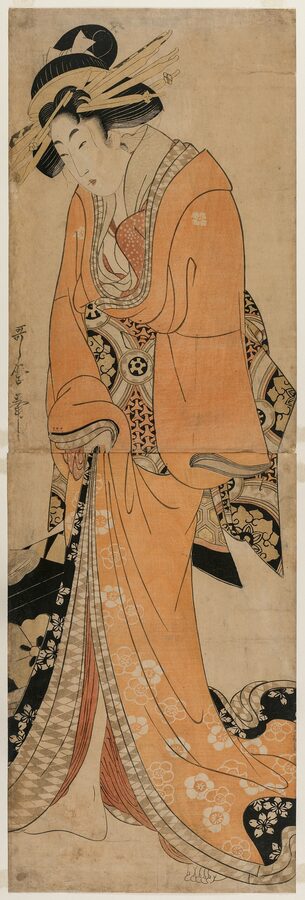
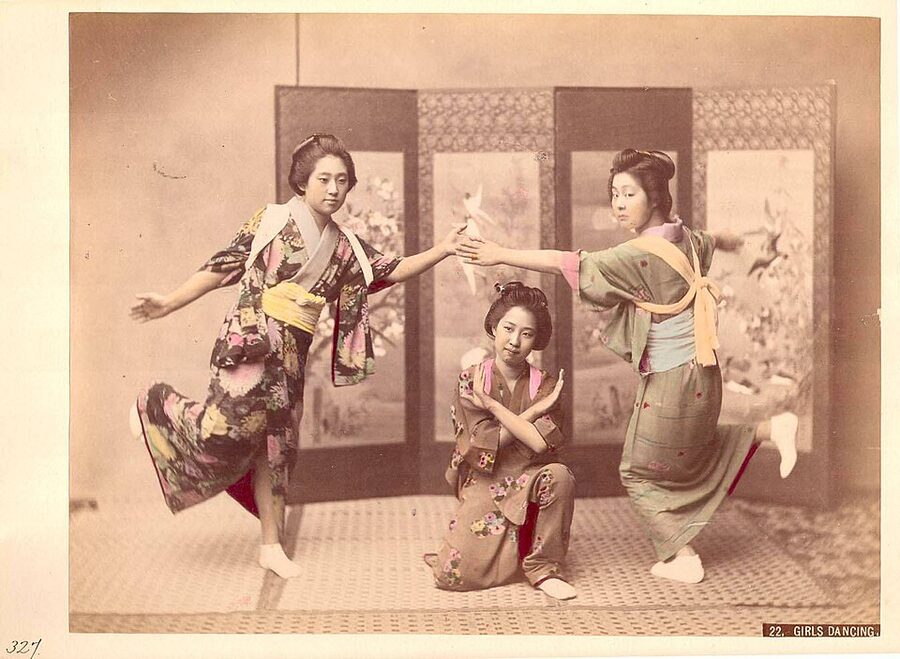
The arts a geisha performs are the same core set the tea ceremony tradition produced and then formalised — chadō, kadō flower arrangement, the shamisen, the small-drum kotsuzumi, kyo-mai dance, vocal nagauta narrative song, and the more recent jiuta-mai and nihon-buyō forms. A Gion Kōbu geiko is trained exclusively in the Inoue school of kyo-mai, a dance tradition whose last grand master, Inoue Yachiyo IV, was designated a Living National Treasure by the Japanese government in 1955 and whose fifth-generation successor, Inoue Yachiyo V, still teaches at the Gion Kōbu kaburenjō today. That single detail is worth sitting with: the women entertaining at an ochaya in Kyoto this evening are studying a dance style taught by a teacher who is herself a designated preserver of an intangible cultural asset of Japan. This is not a theme-park costume shift. It is a state-recognised artistic lineage with a living master at the head of it.
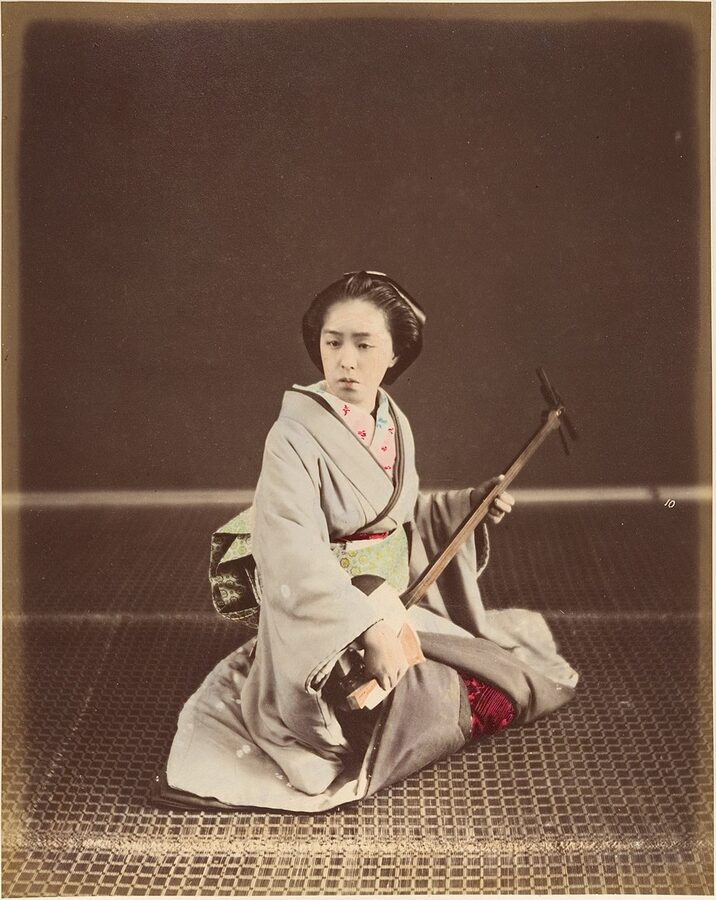
The evening event at which the geiko works is called an ozashiki, literally “in the banqueting-room”. A small number of guests — usually between two and eight, often introduced through a standing client — are seated in a private tatami room at an ochaya (tea house), served a formal kaiseki meal by a separate restaurant, and entertained for two or three hours by a combination of maiko and geiko. The junior members dance. The senior members play. Everybody, senior and junior, talks, serves sake, and keeps the room moving. The older women at the piece are performing a craft that is, in its purest form, indistinguishable from the Zen-adjacent attention-craft that runs through the whole of Japanese traditional culture: this is the same “top millimetre of an iceberg” that the tea ceremony’s chajin perform, only the surface you see is a conversation rather than a whisked bowl.
Edo, male geisha, and the 1750s shift
The first geisha in Japan were men. The word and the profession both begin in the Edo-period pleasure quarters of the early 17th century — Yoshiwara in Edo, Shimabara in Kyoto, Shinmachi in Osaka — where the core business was the licensed prostitution of the yūjo and the oiran, but where a parallel trade of male entertainers worked alongside them to provide the non-sexual half of the evening. These male performers were called hōkan or taikomochi, “drum-carriers” — they played shamisen, told jokes, did comic dances, kept the atmosphere at a tea-house evening alive while the sexual transactions were being arranged elsewhere in the same building. The earliest use of the word geisha referred specifically to these men. Early records from the 17th-century Yoshiwara identify “geisha” as a category of male entertainer, roughly a century before the first woman called herself one.
The transition to female geisha happened in the middle of the 18th century through a sidelong route. In the Edo pleasure quarters a class of teenage dancers called odoriko, “little dancing girls”, had been working as paid private entertainers at samurai residences since roughly the 1680s. By the 1730s and 1740s, these odoriko were staying in the trade past their teens, ageing out of the “dancing girl” category, and needing a new occupational label. In 1751 a Fukagawa prostitute named Kikuya — working in one of Edo’s unlicensed quarters, where the full yūjo regime did not apply — took the old male-entertainer word and called herself a geisha. The name was a claim. It said: I am not an oiran; I am a performer. The claim took. Other women in Fukagawa adopted it, and by about 1780 the female-geisha trade had overtaken the male version in public visibility.
The collision between the new female geisha and the older licensed yūjo prostitution system was immediate, and the shogunate’s response was an institution that still runs the profession today. In 1779 the Edo authorities established the Mizuage-kai — a regulatory body whose practical name is kenban, a registry office — to license and supervise the growing number of geisha working in Fukagawa, the Shinbashi strip, and the Shimabara-adjacent unlicensed quarters. The kenban did three things: it collected fees for each engagement, it issued licences that allowed a geisha to perform legally in a given district, and, critically, it drew a bright line between what a geisha sold and what a yūjo sold. A geisha was licensed to sell her art. She was not licensed to sell sex. If she crossed the line, her licence was pulled and she was expelled from the profession. The kenban is still the operating regulator of every hanamachi in Japan. If you want to hire a Gion Kōbu geiko tonight, the booking routes through the kenban.
This is the distinction that the English language has been bad at holding since it first encountered the profession, and it is also the distinction that American occupation troops in 1945 crashed into with extra violence — the “geesha girls” slur of that moment was a grouping together of the trade with the street prostitutes the GIs had actually been soliciting, and it took Japanese-language correction decades to half-unpick. The point to hold now is that by the late 18th century the institutional structure of what an actual geisha is — artist, licensed, non-sexual, regulated, professional — had been finalised. Every subsequent development adds detail, not direction.
The 1877 unionisation and the Meiji consolidation
The Meiji Restoration of 1868 threatened the profession almost as badly as the war would. In 1872 the new government passed the Geigi Kaihōrei, the “Emancipation Edict for Prostitutes and Geisha”, which ambiguously grouped the two categories together and appeared to dissolve the licensed regime that had kept them separate. The edict was intended as a humanitarian gesture, the Meiji reformers had been embarrassed by Western diplomatic reactions to the Edo-period licensed-sexual-labour system, but its practical effect was to collapse the legal distinction between arts-licensed and body-licensed work. The geisha establishment spent the next five years fighting back.
In 1877 the geisha districts of Kyoto, Tokyo, Osaka, and a handful of smaller regional hanamachi formed the Hanamachi Kumiai, the Flower-Town Guild, as a formal professional association under the new Meiji commercial-guild legislation. This is the moment the profession becomes, in the modern sense, a union. The kumiai negotiated with the Home Ministry, re-established the kenban’s regulatory role under the new legal framework, and re-drew the art-versus-body line that the 1872 edict had fudged. Every currently-operating hanamachi descends directly from the 1877 consolidation. The Gion Kōbu kumiai still holds its quarterly council meetings at the Yasaka Nyokōba, a building that has served as the district’s administrative centre since the Meiji period, and its current president is elected by the geiko of the district, from among the geiko of the district.
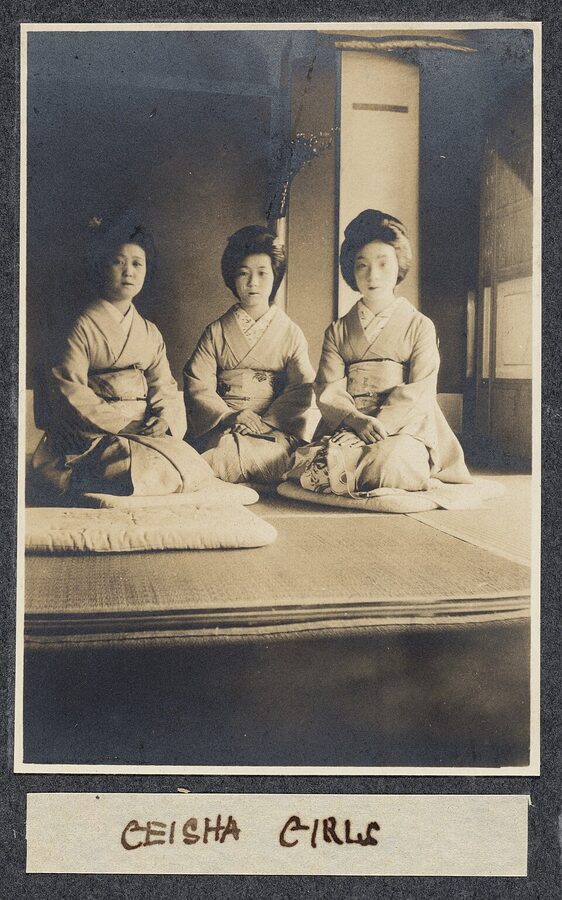
The Meiji settlement produced the numbers-peak of the profession. In the 1920s, at the registered count’s high-water mark, there were roughly 80,000 geisha working in Japan — the equivalent of a mid-sized Japanese city. Every prefectural capital had at least one kumiai. Resort towns, post stations along the Tōkaidō, spa towns with their own onsen circuit — Atami, Ito, Dōgo, Kinosaki — ran independent local hanamachi. The profession was, for a generation, an ordinary part of the urban service economy. Today that number sits at roughly 1,000 nationwide, with Kyoto’s five hanamachi holding about 250 geiko and 80 maiko in total as of 2024. A hundred-year contraction of roughly 99 per cent, and the survival has only been possible because the Kyoto kumiai, in particular Gion Kōbu, treated the post-1960s collapse as an active cultural-preservation problem and spent the last fifty years running training programmes that deliberately do not pay for themselves.
That last point matters. An okiya in 2024 runs on gross revenue in the ₹€¥40-60 million range, and a maiko in her four-to-five-year apprenticeship is not a net earner for the house — her training costs (kimono, music lessons, dance lessons, rent, the daily contribution to the kumiai, and the very significant cost of a maiko’s formal hair-dressing regime, which requires a tokoyama specialist and several hours a week) roughly match what her engagements bring in. The okiya subsidises her. The subsidy is only recoverable if she survives to erikae and works as a geiko for ten or fifteen years afterwards — the mother of the house is running a long-cycle investment. About half of maiko do not survive to erikae. The ones who do are, by the time of the collar-turn, the cream of the cream of a pipeline that has been filtering since the age of fifteen.
Maiko, geiko, and the training pyramid
The five-year apprenticeship has four named phases, and a maiko is expected to progress through each on a timetable the kumiai tracks precisely. The first phase is shikomi, which is a one-year preparatory period. A shikomi arrives at the okiya at fifteen or sixteen, wears ordinary kimono rather than maiko costume, studies under the mother of the house, attends music and dance classes at the district kaburenjō, and, when required, serves at engagements in a purely supporting role, often without speaking. The year is designed to test fit. About a quarter of girls drop out during shikomi.
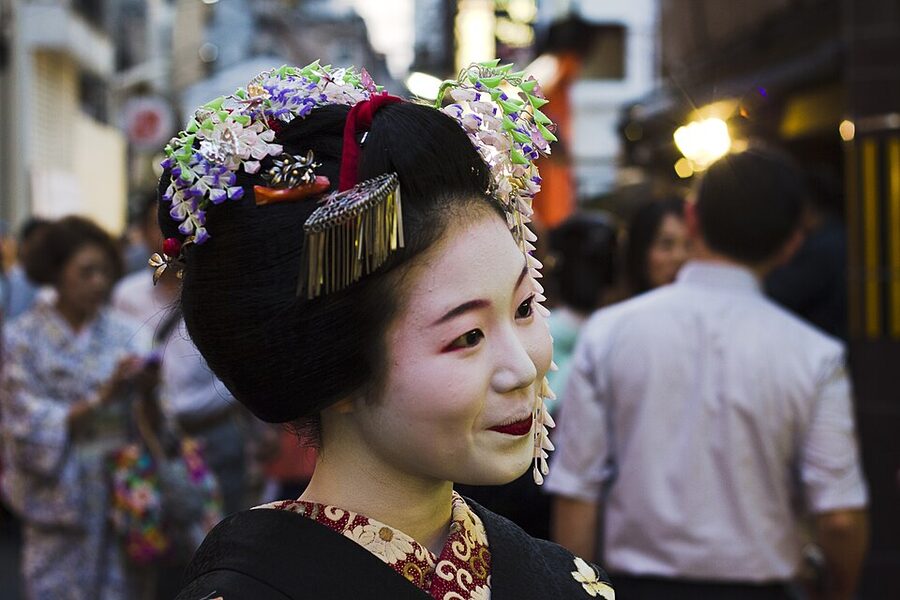
The second phase is the minarai, a short observational bridge — usually two weeks to a month, occasionally as short as a single engagement. A minarai wears a version of the maiko outfit with a shorter obi, shorter kimono sleeves, and less-elaborate kanzashi, and attends engagements without entertaining — she watches her onee-san work. Each minarai is apprenticed through one specific tea house, the minarai-jaya, which effectively pre-books the girl’s first real engagements. At the end of the minarai, the okiya stages a formal debut — the misedashi — and the girl becomes a maiko in the public sense.
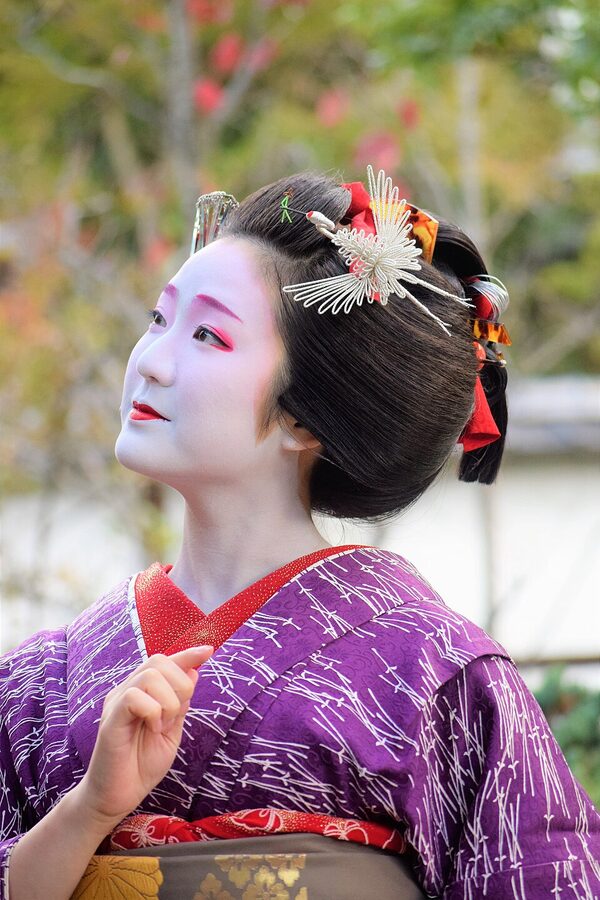
The maiko phase itself runs four to five years. The kit is distinctive and deliberately expensive: a silk furisode kimono with swinging sleeves that reach below the knees, the signature darari-obi that measures over six metres long and hangs from the back nearly to the floor, a set of seasonally-rotating kanzashi hairpins (one per month, themed — plum in January, cherry in April, chrysanthemum in September), and the oshiroi white make-up applied with a deliberate brushwork pattern. The hair is done in the maiko’s real hair, not a wig, and the style — wareshinobu for a junior, ofuku once the girl turns seventeen, yakko-shimada and a sequence of further variants through her senior year — is re-dressed weekly by a specialist tokoyama and then preserved overnight on a small raised-neck wooden pillow. A maiko sleeps on a takamakura for four years. The pillow is three inches wide. There is a reason she looks exhausted in some of the candid photographs.
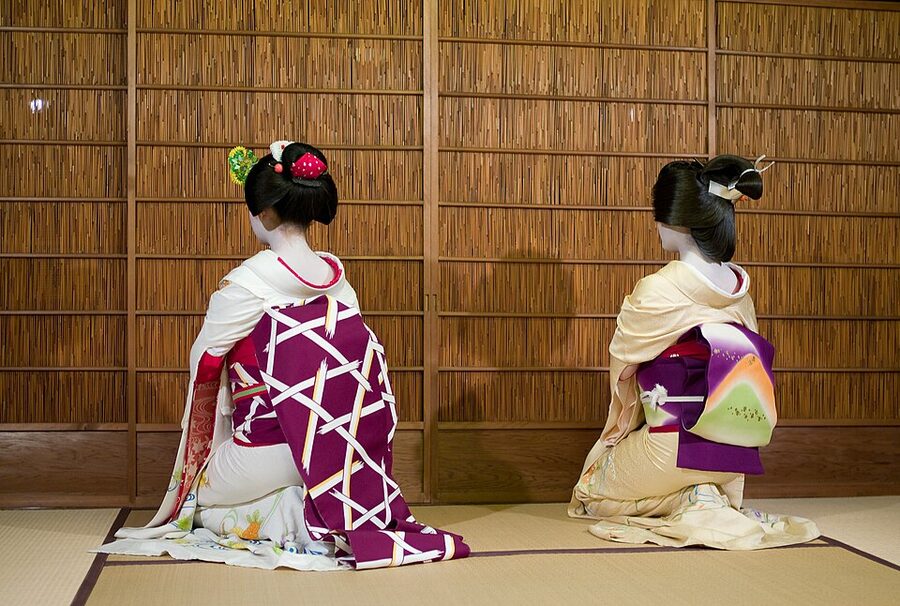
Maiko training is organised across three parallel tracks. The first is the formal-arts studio work at the district kaburenjō — shamisen, kotsuzumi (small shoulder drum), ōtsuzumi (hip drum), transverse bamboo flute, kyo-mai dance under the Inoue or Wakayagi school depending on the hanamachi, a dedicated chadō hour, calligraphy, and the seasonal-song repertoire. The second is the entertainment-technique track, learned not in a classroom but on the floor at live engagements — how to pour sake, how to hold a conversation without dominating it, how to read the room, how to hand-signal another maiko across the tatami when a guest needs attention. The third is the social-etiquette track — the formal greeting round every hanamachi expects a maiko to make on the first of each month, the handling of seasonal gifts, the managed relationship with the mother of her okiya, the much more managed relationship with her onee-san. It is a four-year pedagogic sprint in three dimensions.
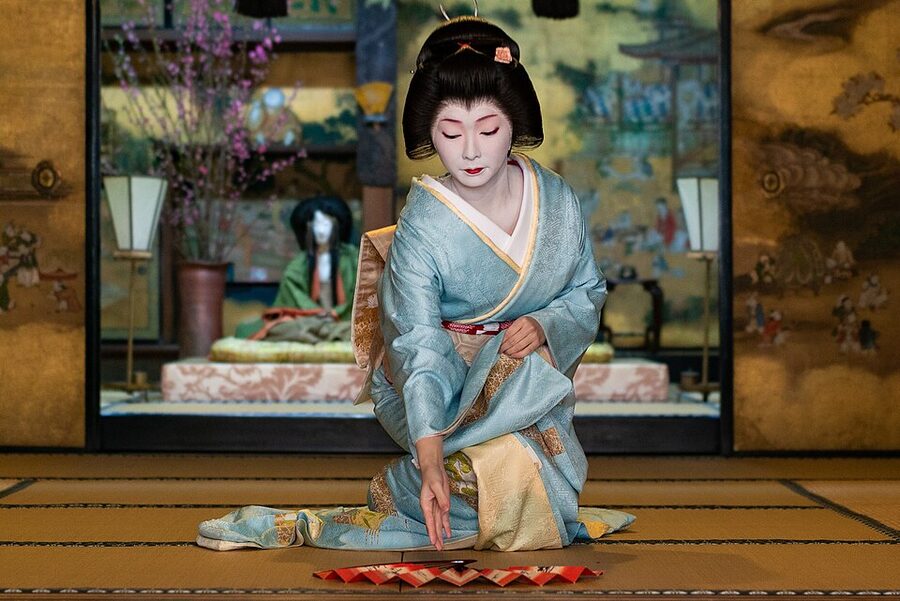
The final transition — the erikae, “turning of the collar” — happens at about age twenty. The maiko’s red under-collar, embroidered in gold thread, is replaced with a plain white geiko collar, and every other visible element of the costume shifts at the same time. The swinging furisode sleeves shorten. The darari-obi is replaced by the squared taiko. The monthly-rotating kanzashi are retired. The hair style moves to a wig-based katsura that can be set off-stage and kept overnight. The erikae itself is a week-long ceremony with formal visits to the mother’s house, the tea houses the girl has worked at, and the onee-san who has sponsored her through the apprenticeship. After that Wednesday, the girl walks out of the house in a geiko’s dress for the first time and the mother publishes her as such. The apprentice has become the practitioner.
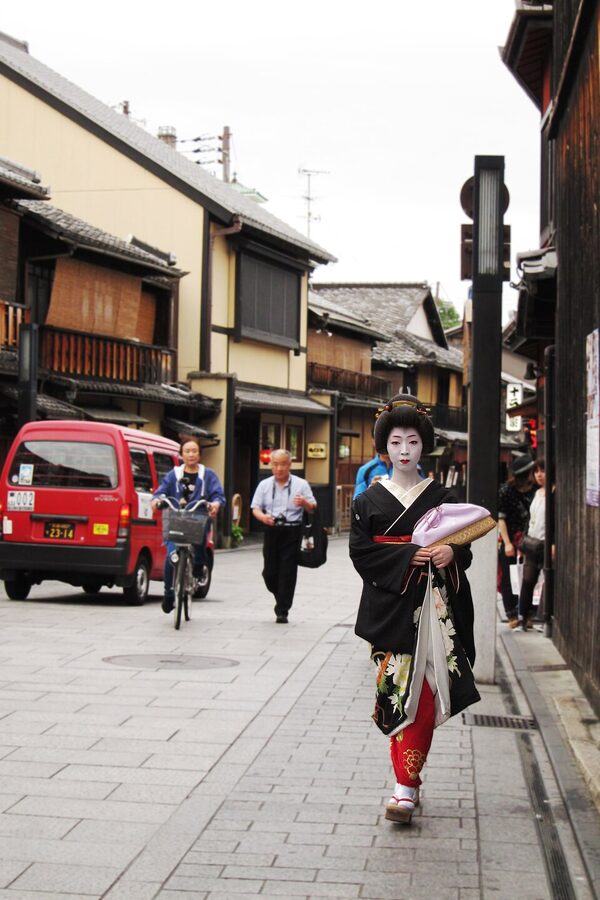
A senior geiko of thirty, who has been working the Gion Kōbu district for about a decade in a geiko’s capacity and four-and-a-half years before that as a maiko, is the decisive career stage. She is doing the actual dance teaching of the new cohort, she is senior-sister to a younger geiko or maiko below her, and her engagement fees have risen to the point where her year’s income can run seven to eight figures in yen. She has paid off the okiya’s training debt. She has started building her own kimono collection. From this point the career-path branches: some geiko stay and work into their eighties, teaching and performing; some become the okami (mother) of an okiya in their forties and take over the business side; a few retire to marry a regular client, though that move is rarer than Edwardian Western fiction suggests — once a geiko marries, she has to leave the trade, and most successful geiko are by that point running businesses they would rather not abandon.
The five Kyoto hanamachi
Kyoto’s surviving hanamachi are called, collectively, the Gokagai (五花街, “five flower towns”). They are: Gion Kōbu, Gion Higashi, Pontochō, Kamishichiken, and Miyagawachō. Each one is a self-contained working district with its own kumiai, its own kaburenjō theatre, its own named annual dance performance, its own dance-school affiliation (Inoue, Wakayagi, or, in Kamishichiken, a specific Onoe line), and its own visual dress-code distinctions that a practitioner can read from across the room. The five districts together account for the vast majority of currently-working geiko and maiko in Japan. The sixth historical district, Shimabara, survived on paper into the 1970s and now operates only as a preservation-only setting for the tayū tradition — a related but distinct profession the Shimabara kumiai still technically holds the licence for, even though it is no longer an active hanamachi in the ordinary sense.
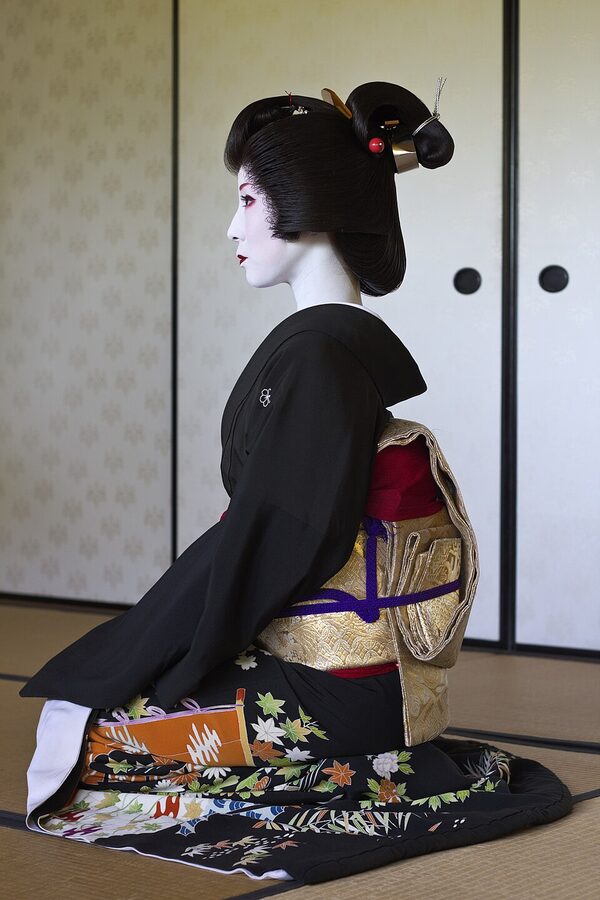
The ranking between the five hanamachi is not formal but is widely acknowledged. Gion Kōbu is the senior district — the largest, the wealthiest, the one with the most international visibility, and the one whose dance tradition (Inoue kyo-mai) is the most prestigious. Gion Higashi and Pontochō are the mid-tier mainstream districts, each with a distinct stylistic identity. Kamishichiken is the oldest hanamachi in Japan, its founding tradition-date is 1444, and is tucked adjacent to Kitano Tenmangū in a part of Kyoto most tourists never reach. Miyagawachō is the youngest and liveliest, the district that held on to the most first-generation maiko through the post-war contraction and that continues to recruit in the largest volumes today.
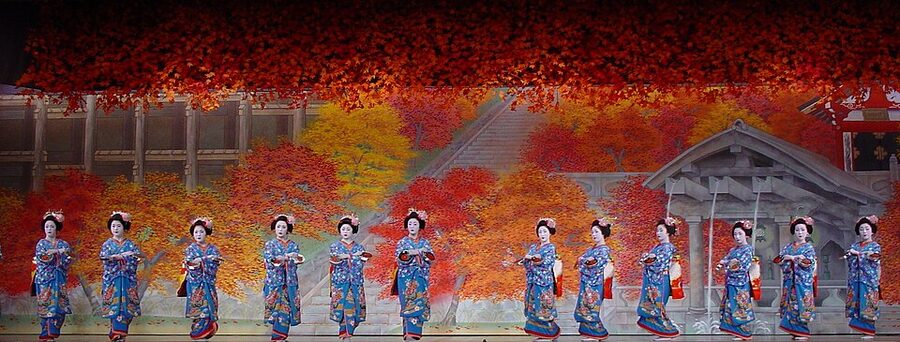
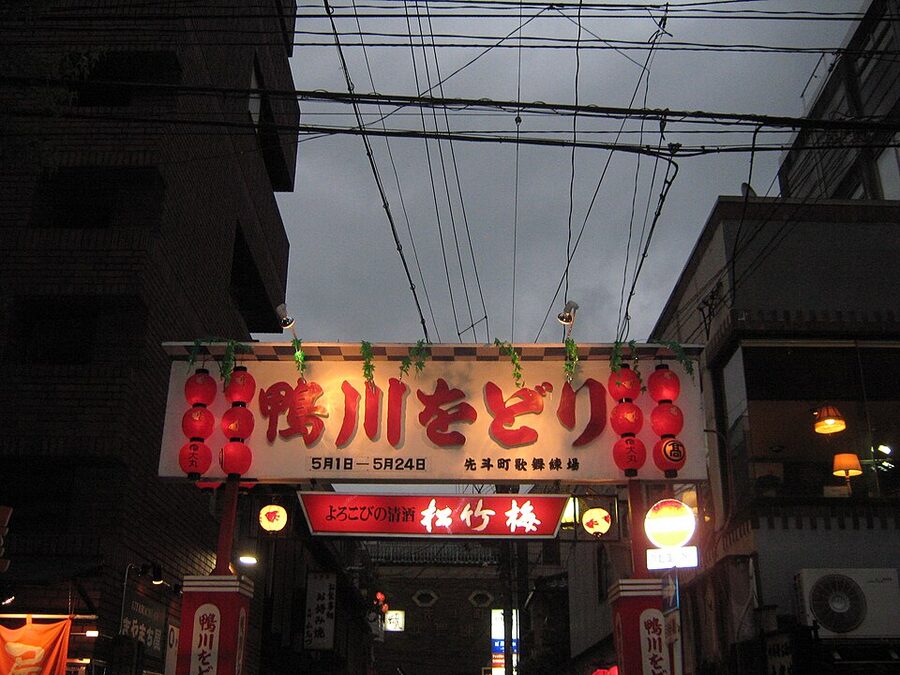
Each district’s calendar revolves around its annual public-dance performance, the Odori. These are month-long series of matinées and evening shows staged at each district’s kaburenjō, open to the public with tickets between ₹€¥5,000 and ₹€¥7,000 for ordinary seats, and representing the only reliable way for a non-introduced visitor to see working maiko and geiko perform at a professional standard. Gion Kōbu’s Miyako Odori runs the whole of April (around the same peak cherry-blossom window that fills the city with a million additional tourists). Gion Higashi’s Gion Odori runs in November. Pontochō’s Kamogawa Odori runs May; Kamishichiken’s Kitano Odori runs late March into early April; Miyagawachō’s Kyō Odori runs April. Taken together, they are the single best use of a Kyoto spring week.
Gion’s own split into Kōbu and Higashi in 1881 is one of the Meiji-period consolidation stories. The district had been a single hanamachi since the late 17th century, when Yasaka Shrine’s Gion Matsuri infrastructure funded the first licensed tea houses along the eastern edge of the Kamo River. The 1881 split was a political disagreement — one faction wanted tighter dance-school discipline and closer alignment with the Inoue school; the other wanted greater independence. The faction that went with Inoue became Gion Kōbu; the other became Gion Higashi. The two districts still sit ten minutes’ walk from each other and are run entirely independently — separate kumiai, separate kaburenjō, separate Odori performances. A geiko cannot move from one to the other. If she debuts in Kōbu, she dies in Kōbu.
The ochaya, the okiya, and how the money moves
The workshop unit of the hanamachi is the ochaya — literally “tea house”, but in practice a private entertainment establishment that books and hosts ozashiki evenings. An ochaya is usually a single traditional Kyoto townhouse, two or three storeys, with three to six tatami rooms of different sizes that can be configured into single-party or linked-party formats. The business is old — many of the Gion Kōbu ochaya trace their ownership back six or seven generations and preserve 18th-century ledgers documenting continuous trade through the 1864 Kinmon Incident, the Meiji transition, and the Pacific War — and almost all are owned and run by women, almost always former geiko who have stepped off the floor. Booking an ochaya evening requires, as a rule, an introduction from a standing client (ichigen-san okotowari, “first-time guests politely refused”), although this rule has been relaxed in a handful of Gion Kōbu houses over the last decade to permit credit-card bookings through the kumiai’s official channel.
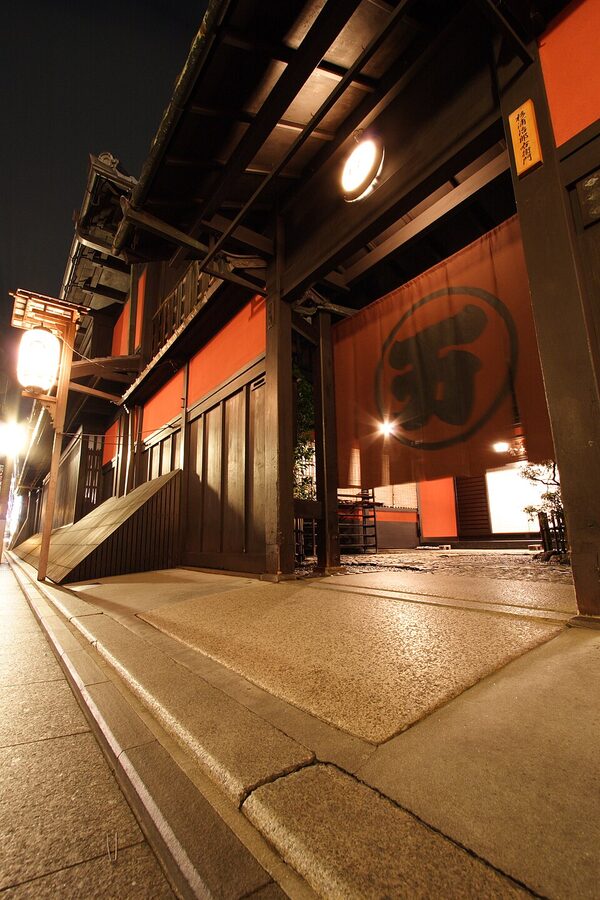
The geiko and maiko attending at an ochaya do not live there. They are contracted to an okiya — the lodging house and career-management firm that is the actual employer. An okiya signs up a shikomi girl at fifteen, pays for her entire apprenticeship from clothes to lessons to hair, books her out to ochaya via the kenban, and takes a percentage of every engagement fee she earns. The relationship is formal, contractual, and long — a senior geiko who is the atotori (heir) of the okiya may ultimately become the okami and run the house herself, inheriting the debts and the name. This career-ladder continuity is the reason that Kyoto okiya have names in the 80-to-200-year-old range as active businesses. The Tama okiya, for instance, has been trading out of the same Miyagawachō address since 1858.
The money works like this. A three-hour ozashiki evening with two maiko and one geiko attending, a kaiseki meal for four guests provided by an affiliated restaurant, and a private tatami room at a Gion Kōbu ochaya will run between ₹€¥80,000 and ₹€¥200,000 all-in, depending on the house’s scale and the guest’s standing. The engagement fees — called hanadai, “flower money”, in Kyoto — are charged by the senkōdai (incense-stick unit), a per-hour figure registered with the kenban and consistent across all ochaya in a district. The bill is settled monthly, on account, by the ochaya to each guest’s introducing client; the guest never sees cash at the evening. The geiko’s cut of the hanadai flows through the ochaya to the okiya and then to the geiko, net of the okiya’s cut. A senior Gion Kōbu geiko, fully booked, will clear annual income in the ₹€¥8 to 15 million range. A maiko brings in less than that and has less net because the okiya is paying her training costs — the full system only sustains because the post-erikae geiko years are long and well-paid.
Kimono, darari-obi, kanzashi
The kimono a maiko or geiko wears is perhaps the single most visible and most expensive variable in the profession. A formal maiko furisode costs between ₹€¥1.5 and ₹€¥5 million yen, is hand-dyed and hand-embroidered, and will be worn perhaps a dozen times before its wear pattern is considered inappropriate for the district. A senior geiko’s kurotomesode, a five-crest black formal kimono with a landscape painted on the hem, costs two or three times that and is worn for life. The okiya owns and rotates the kimono; a geiko who leaves the okiya leaves the kimono behind.
The darari-obi is the single most expensive piece of a maiko’s daily kit, and also the clearest visual difference between apprentice and senior. The obi is the wide sash that goes around the kimono’s midsection and then is tied off at the back in a knot whose form signals the wearer’s rank. A maiko’s obi is darari — it hangs down nearly to the hem, with the formal trailing-end pattern of the district embroidered into the bottom panel. Six metres is the standard length. Gion Kōbu’s darari-obi carry a corner-chrysanthemum mon; Miyagawachō’s carry a different crest; Kamishichiken’s an older plum-blossom motif with a distinct asymmetric hang. An experienced practitioner identifies another practitioner’s district from the darari-obi alone, at distance. The dress-up is not decoration — it is a district badge.
The kanzashi, the hairpins, are the other district-specific element, and they rotate on a strict twelve-month seasonal calendar. January’s kanzashi features pine, bamboo, and plum in auspicious New Year trio. February’s is plum-blossom alone. March is rapeseed-flower or peach. April is cherry. May is iris; June is hydrangea; July is cooling fans or morning-glory; August is silver-grass or susuki; September is chrysanthemum; October is autumn-ivy or bellflower; November is maple; December is the mochi-hanabira sugared-rice-cake motif. A senior maiko’s kanzashi set is worth a minor car. The okiya buys it and rotates it across all of that year’s apprentices. The craftsmen who still make them — mostly in Kyoto’s Higashiyama district, in a trade that dovetails with the tatami-mat trade and the fan trade and the woodblock-carving trade — are registered as intangible-cultural-asset preservers in their own right.
One last costume detail the English-language literature consistently gets wrong. The long-sleeved maiko kimono is called a furisode, the same word used for an unmarried young woman’s most formal kimono in ordinary Japanese society. In both cases the sleeves reach below the knee. But a maiko‘s furisode is different from a regular unmarried woman’s — it is held slightly shorter at the shoulder, the collar-layering at the neck is done in a two-row red-and-white pattern specific to maiko, and the back-neckline is cut significantly lower to expose the eri-ashi, the unpainted two-or-three-lined back-of-the-neck zone that the oshiroi leaves uncoated. The eri-ashi is the single most sexually-charged visual element of the maiko costume, and, precisely because it is so visible and so specific, is also the element most often missed by Western descriptions that focus on the front of the kimono.
Where to see maiko and geiko today
The five Kyoto hanamachi are all walkable from Gion-Shijō or Kawaramachi stations and are best approached in a loop that takes a single morning plus one afternoon Odori ticket. What follows is the route in the order I usually walk it, starting at the Kamo River and working outward.
Gion Kōbu — Hanamikoji, Shirakawa, and the Ichiriki corner
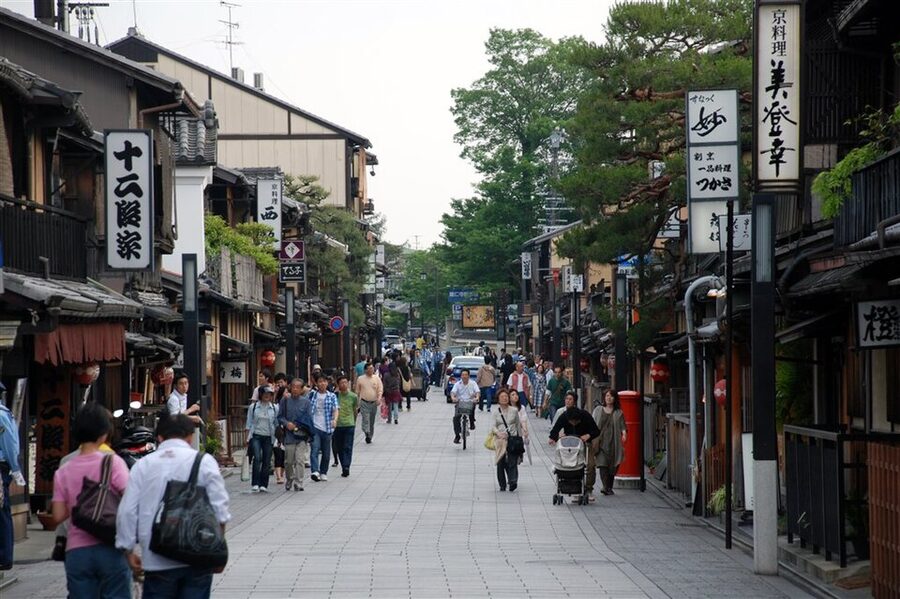
Gion Kōbu is the senior hanamachi, the oldest of the two Gion halves, and the one you want to walk after dark. The district is roughly a five-hundred-metre grid bounded by Yasaka Shrine to the east, Shijō-dōri to the south, the Kamo River to the west, and the Shirakawa canal to the north. The spine of it is Hanamikoji-dōri (花見小路), “flower-viewing alley”, which runs south of Shijō-dōri and is the most photographed lane in Kyoto. The ochaya are on both sides, their brown-wood machiya frontage broken only by low lanterns with the house name in sumi-ink. If you walk the length of Hanamikoji between about 17:30 and 18:30, you will almost certainly see a maiko or a geiko hurrying between engagements — not a staged photo-op but a working commute. Do not block her path. Do not run after her with a phone camera. The district put up signs in 2019 formally banning intrusive photography of geiko and maiko on the street; the signs are enforced by district watchers, and fines are real.
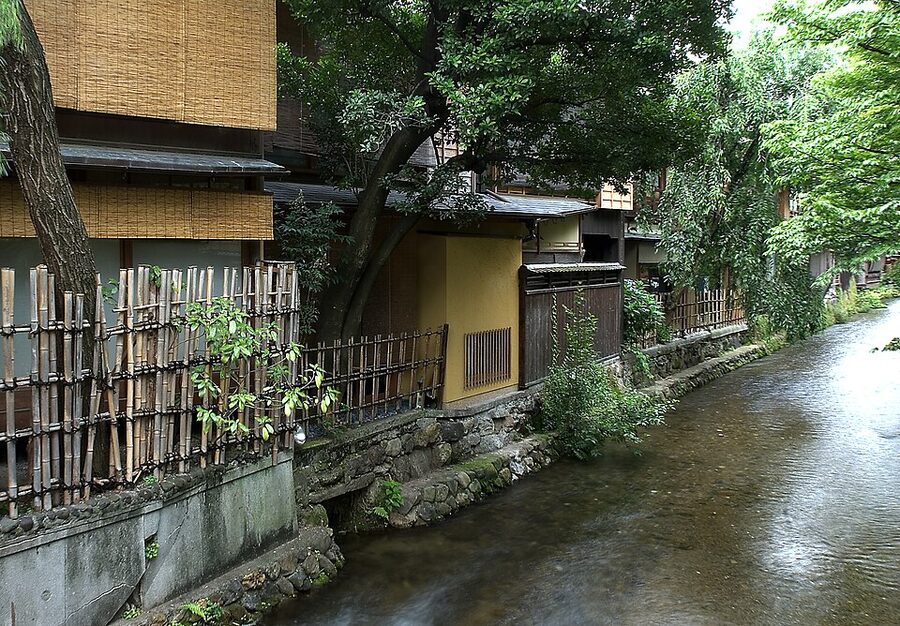
The Shirakawa canal runs the district’s northern boundary and is the other photographic spine of Gion Kōbu. The path beside it, Shinbashi-dōri, is a preservation-designated historic lane, one of three in all of Kyoto, and the buildings on the canal side are mostly ochaya with their rear gardens abutting the water. Cherry blossoms along the canal in April are intensely photographed; willow-leaves in the canal in May are quieter and better. At the Shirakawa’s end, the lane meets the Shijō-Hanamikoji corner, and on that corner, on the south-west diagonal from the intersection, sits the Ichiriki Chaya. The Ichiriki is the most famous ochaya in Japan. Its red-plastered street wall is visible from fifty metres; its entrance gate is a permanent security photograph-target; and it has been trading continuously on this corner since at least 1650.
A walk around Gion Kōbu without a booking is free. It does not get you inside an ochaya. For that you need one of three paths: an introduction from a standing client (the traditional route), a credit-card booking through the Gion Kōbu kumiai’s formal foreign-visitor programme (opened in 2018, expensive, available through the Kyoto city tourism office), or the Miyako Odori ticket. The Odori is by far the easiest path, and it is worth its ticket price for a first-time visitor. Tickets go on sale in February each year; the first-tier seats sell out in days. Shoulder dates (first week and last week of April) are easier to get and no worse from a performance standpoint.
Pontochō — the Kamo River corridor
Pontochō is the narrow strip of ochaya immediately west of the Kamo River, running between Shijō-dōri and Sanjō-dōri on the east bank side. The district’s main lane, Pontochō-dōri, is a single three-metre-wide alley of ochaya and restaurants with their back gardens facing the water; in summer, those restaurants build temporary kawadoko wooden platforms out over the river and serve dinner on them. It is the most tourist-traffic-heavy of the five hanamachi and the easiest to visit on a walk-in basis, because the number of non-ochaya kaiseki restaurants fronting the lane is high.
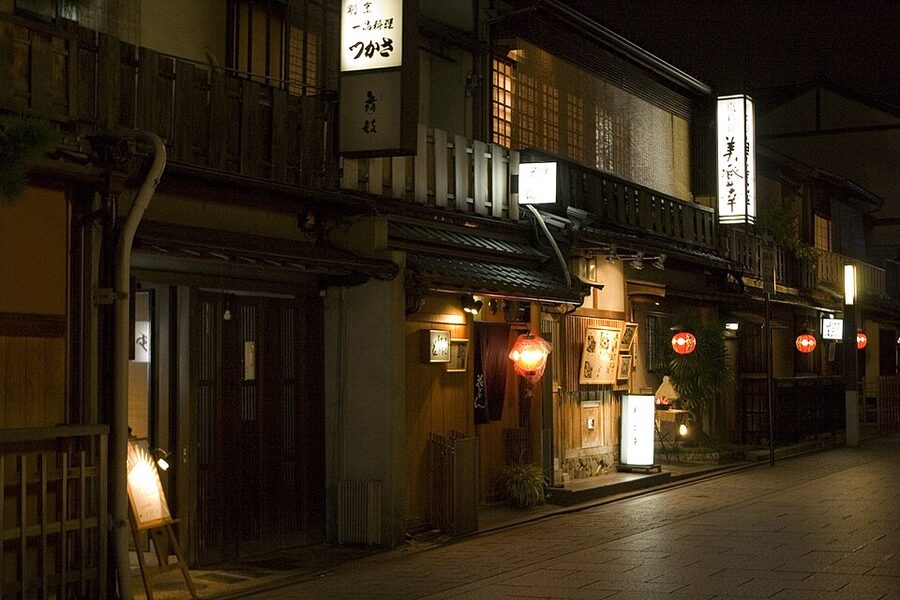
Pontochō’s dance school is the Onoe-Kikunojō line of nihon-buyō, a separate lineage from Gion Kōbu’s Inoue school. The district’s Kamogawa Odori runs every May, the only one of the five Kyoto Odori that happens outside the April cherry-blossom window, and is performed at the Pontochō Kaburenjō, a 1927 art-deco-adjacent theatre that is itself a registered tangible cultural asset. The Kamogawa Odori is, in the opinion of several senior geiko I have talked to, the most accomplished of the five dance programmes, although the Miyako Odori is more famous. Tickets for Kamogawa are easier to get. If you have to pick one Odori and you are not tied to an April date, I would pick this one.
Gion Higashi — the quieter half
Gion Higashi — the eastern Gion, which split from Kōbu in 1881 — sits north of Shijō-dōri and stretches toward Yasaka Shrine. It is significantly smaller than Kōbu, with perhaps ten ochaya currently operating against Kōbu’s forty-plus, and a corresponding geiko roster that numbers around twenty across all career stages. Its annual dance, the Gion Odori, runs for nine days in early November, a quieter autumn counterpart to the cherry-blossom-season performances of the other districts, and is staged at the Gion Kaikan theatre on Hanamikoji’s northern extension.
Gion Higashi’s stylistic identity is anchored by the Fujima-school tradition of nihon-buyō, again distinct from Kōbu’s Inoue-school kyo-mai. Walking the district is quieter, you are far more likely to be the only Western visitor on a given evening, and the ochaya, though fewer, are older. It is also the cheaper half of Gion for a walking visitor: most of the preservation-designated photography lanes are on the Kōbu side, so the evening traffic is lower, and the restaurant-frontage is less saturated with cover-charge kaiseki options.
Kamishichiken — 1444, and the oldest of them all
Kamishichiken (上七軒, “seven upper houses”) is the oldest hanamachi in Japan. Its founding date is given as 1444, when seven tea-houses were built out of the salvaged timber from a Kitano Tenmangū reconstruction and granted licence to serve travellers approaching the shrine from the northern Yamashina road. The district sits adjacent to Kitano Tenmangū — Kyoto’s major Tenjin-cult shrine, the one dedicated to Sugawara no Michizane, and also the shrine that hosted the 1587 Ōchanoyu tea-gathering that Hideyoshi co-staged with Sen no Rikyū — and is effectively the shrine’s service quarter. It is a fifteen-minute walk from Kitano-Hakubaichō tram stop, or twenty-five minutes from Imadegawa subway.
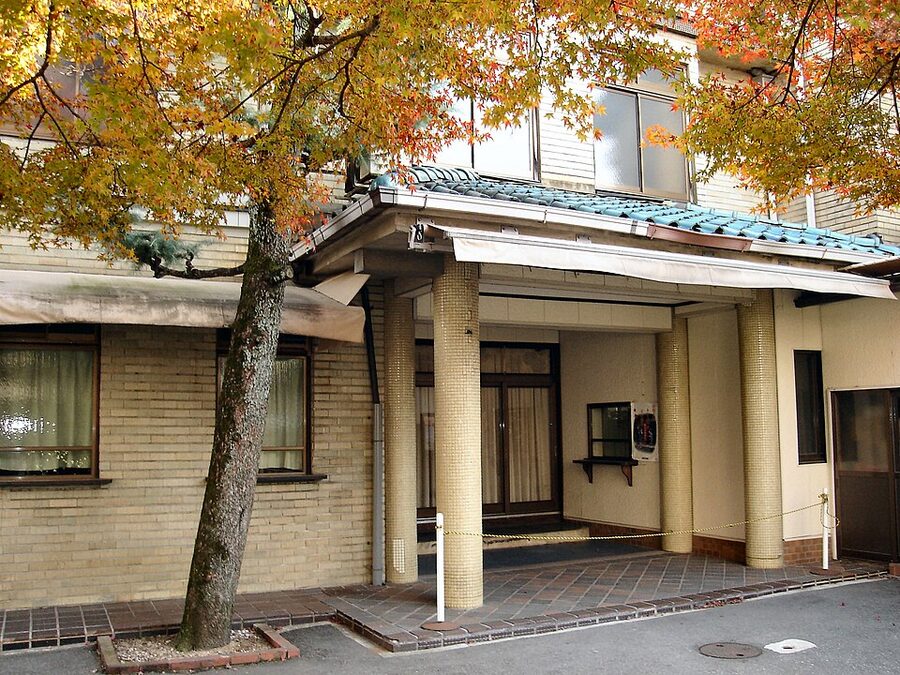
The Kamishichiken roster is the smallest of the five — around ten geiko and five maiko currently active. The district runs its Kitano Odori for about nine days in late March, bridging the cherry-blossom and Gion Kōbu Miyako-Odori windows. Kitano Odori tickets are the easiest of the five to get walk-up, and the Kamishichiken Kaburenjō is the smallest theatre — an intimate, under-three-hundred-seat venue where the stage is perhaps ten metres away from any given seat. It is, for a newcomer who wants to watch maiko close up in a non-touristed atmosphere, the single best introduction of the five. Kamishichiken’s own distinguishing costume detail is the plum-blossom crest on the kanzashi and the obi, a year-round motif that honours the district’s shrine relationship.
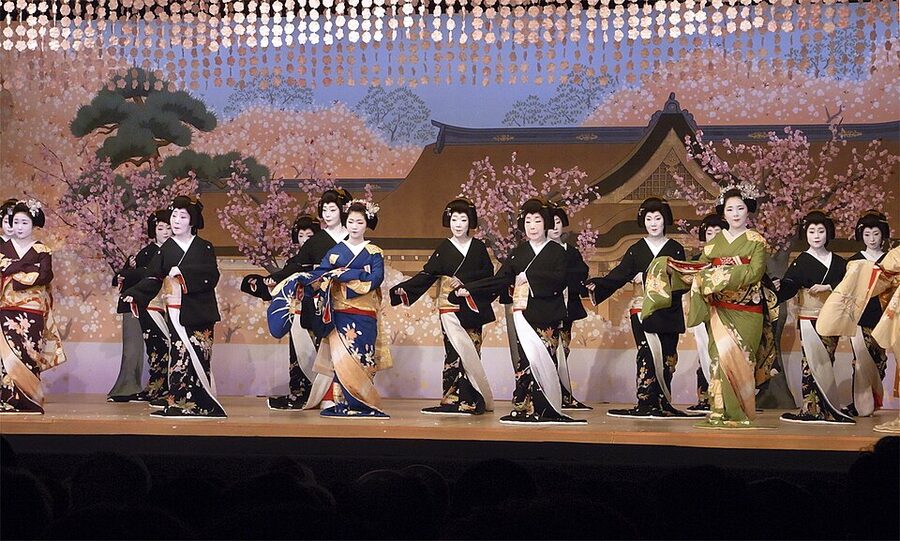
Miyagawachō — the lively district
Miyagawachō runs along the east bank of the Kamo River south of Shijō-dōri, parallel to the river and directly across from Pontochō on the opposite side. It is the youngest of the five, consolidated in its current form during the early Edo period, and remains the liveliest — with roughly fifty maiko and geiko currently active across a similar number of ochaya, it is the second-largest district after Gion Kōbu. The Miyagawachō Kaburenjō sits near the Matsubara-dōri intersection and stages the Kyō Odori through April. Kyō Odori tickets are mid-priced relative to Miyako’s and easier to secure on under-a-month notice.
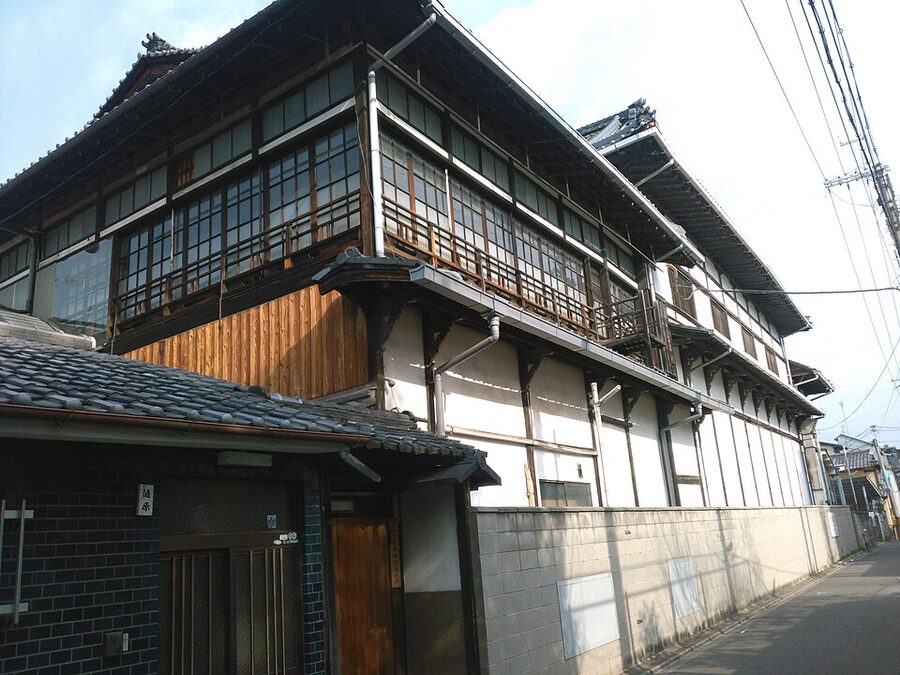
Miyagawachō’s ochaya are concentrated on the narrow north-south lanes between Matsubara-dōri and Gojō-dōri, and the atmosphere is lower-budget than Gion Kōbu — less preservation-designated machiya, more ordinary working kaiseki restaurants, a general sense of being a district that is still actively a service quarter rather than a heritage display. The district’s dance school is the Wakayagi line of nihon-buyō, close-kin to Pontochō’s Onoe-Kikunojō tradition. If you want to walk a hanamachi in the evening and pick up a meal at an affordable price without navigating the introduction bottleneck, Miyagawachō is the easiest of the five to walk into.
The Odori calendar, booking, and what to pay
If you are in Kyoto for the April cherry-blossom week, four of the five district Odori run inside that window, and a keen visitor could see three of them in a single long weekend. The practical schedule: Miyako Odori (Gion Kōbu) runs most of April at the Gion Kōbu Kaburenjō; Kyō Odori (Miyagawachō) runs for about two weeks in early-mid April at the Miyagawachō Kaburenjō; Kitano Odori (Kamishichiken) runs the last nine days of March through the first week of April at the Kamishichiken Kaburenjō; Kamogawa Odori (Pontochō) runs May at the Pontochō Kaburenjō; Gion Odori (Gion Higashi) runs November at the Gion Kaikan. Ordinary-seat tickets are in the ₹€¥5,000 to ₹€¥7,000 range across all five. Premium seats, which include a pre-show tea service served by a maiko, are roughly double.
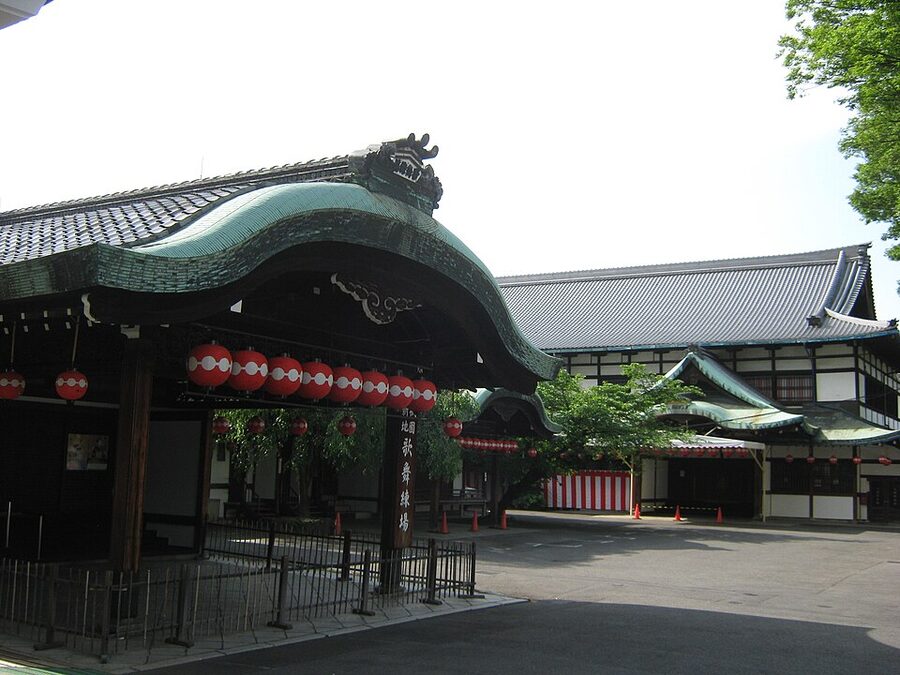
A full ochaya evening, if you have the introduction to book one, costs ₹€¥80,000 to ₹€¥200,000 all-in for two guests in a three-hour format with a kaiseki dinner and two maiko plus one geiko attending. The price scales by district, house reputation, and the number of entertainers booked — four guests with three maiko and two geiko at the Ichiriki Chaya, one of Gion Kōbu’s senior houses, would run well over half a million yen. For most foreign visitors, the Odori ticket and an evening walk of the hanamachi is the correct level of investment, and the difference in cultural understanding between that and a private ochaya is smaller than you would think. The Odori stage the exact same dance traditions, with the exact same performers, on a larger but equally precise platform.
Arashiyama, Kitano, and the shoulder walks
If you are in Kyoto for the cherry blossom and want to combine a hanamachi walk with the city’s major flower-viewing sites, two shoulder combinations are worth planning. First, the Kitano Tenmangū / Kamishichiken loop: take a morning at the shrine’s plum and camphor grounds, walk ten minutes south to the Kamishichiken Kaburenjō, then work east through Nishijin’s weaving-workshop district and end up at Imadegawa subway in the afternoon. Second, the Arashiyama-Pontochō axis: spend the morning at Arashiyama’s Tenryū-ji and its traditional garden, take the Randen tram back to Shijō-Ōmiya, walk the last mile to Pontochō, and have early-evening dinner on a kawadoko platform over the Kamo River. The hanamachi are woven into the city’s broader heritage geography rather than isolated from it, and the experience lands better if you build out to them from the larger Kyoto walks.
What a geisha is not, and what she is
The distinction I opened with — the one between the Edo-period licensed prostitute, the modern sex worker who has no licence at all, and the registered geisha who is neither — is not a distinction that English-language writing has ever been good at holding. The confusion is partly linguistic (English has only the single word), partly colonial (the early Western observers from the 1860s through the 1930s wrote, as a rule, as if they had been to a brothel even when they had been to an ozashiki), and partly commercial (twentieth-century Western fiction and cinema has routinely used the geisha as a substitute for the licensed-prostitute stereotype, because the kimono is more photogenic). The historical record does not support the confusion. The 1779 Mizuage-kai regulation drew the line in black and white. The 1877 Hanamachi Kumiai unionisation reinforced it. The profession has, for two and a half centuries, been a registered, licensed, regulated, union-affiliated arts career.
What a modern geiko actually is, then: a professional performer of the kyo-mai, nihon-buyō, shamisen, kotsuzumi, and nagauta traditions, licensed through a district kumiai that descends directly from the 1877 consolidation, contracted to an okiya that has typically been in business for more than a century, working regular engagements at ochaya whose booking records go back to Hideyoshi’s time, and performing, in her annual public Odori, for a ticket-buying public at a standard of dance and music that the Japanese government has formally recognised as an intangible cultural asset. The ₹€¥8 to 15 million annual income of a senior geiko is earned. The ₹€¥40 to 60 million gross revenue of a mid-scale okiya funds a professional household whose operating practices have not changed significantly since the Meiji period.
Kyoto’s five-hanamachi roster of roughly 250 geiko and 80 maiko in 2024 is a tiny remnant of the 80,000-geisha peak of the 1920s, and the survival has been hard-won. The kumiai’s willingness to subsidise apprentice costs that the okiya cannot recover for ten years, the kaburenjō theatres’ willingness to stage Odori productions whose ticket revenue does not cover their production costs, and the Kyoto city government’s willingness to preserve the hanamachi’s machiya street-frontages at the cost of foreclosing redevelopment — all of these have combined to keep the tradition alive through a century of economic pressure. What you are seeing, when you see a maiko walking Hanamikoji at dusk or a geiko teaching kyo-mai at the Gion Kōbu Kaburenjō, is the continuous lineage of a 260-year-old female profession that fought the Meiji bureaucrats, survived the 1945 collapse, and has come out the other side on roughly one per cent of its pre-war headcount but with its artistic standard intact.
If you go to Kyoto looking for geisha, start in April at the Miyako Odori in the Gion Kōbu Kaburenjō; walk the Hanamikoji lane between 17:30 and 18:30 in the evening; take the afternoon next day at the Kitano Odori in Kamishichiken; and end the week at the Kamogawa Odori in Pontochō in early May. Do not follow a maiko down the street with your phone camera. Buy the Odori ticket. You will have seen the same performers, in the same costumes, performing the same art they will perform the following night at an ochaya fifty metres away for a private party that is paying thirty times your ticket price. The five-year apprenticeship stands behind all of it. The woman on the Kaburenjō stage this evening has been working since she was fifteen, has slept on a three-inch pillow for four of those years, has studied under a living national treasure’s successor, has survived an attrition rate that culled half her entry cohort, and is performing a dance whose choreography her teacher’s teacher’s teacher was refining in 1877. That is what a geisha is.


.jpg)


