
At the first grey light of 15 September 1600, in fog so thick that no commander on the Sekigahara plain could see fifty paces, a small detachment of red-armoured cavalry rode past the Fukushima vanguard and fired into the Western line. The vanguard commander was Fukushima Masanori, one of the most senior generals in the Eastern Army. The orders he held in his hand were signed personally by Tokugawa Ieyasu, and they said, in writing, that the honour of opening the battle belonged to Fukushima.
The commander of the red-armoured detachment knew this. He ignored it. He was thirty-nine years old, he was Ieyasu’s favourite retainer, and he had decided — on his own authority, without consulting anyone — that the first shots of the battle that would decide Japan were going to be fired by the Ii cavalry. They were.
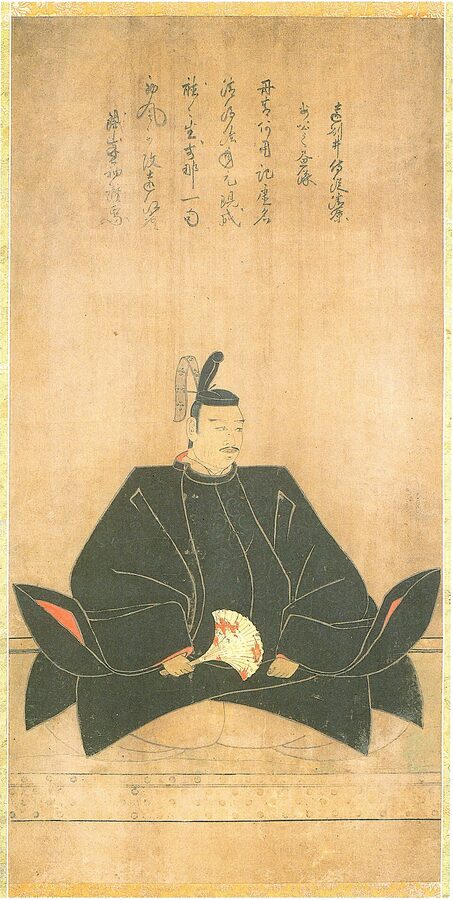
The man was Ii Naomasa, and the reason I keep coming back to him is that he is almost the only Sengoku commander whose career reads, from start to finish, as a sustained argument with the rules. He was found by Ieyasu as a fugitive fourteen-year-old on a hunting trail in 1575, a boy who had been hiding from the Imagawa for most of his life. He was given his first independent command at twenty and wore into it the red-lacquer armour inherited from a dead general of the clan that had just been destroyed in front of him.
He took the highest single stipend of any Tokugawa retainer in 1590 — 120,000 koku at Minowa, more than Honda Tadakatsu got — and then took a musket ball through the right elbow chasing the Shimazu retreat at Sekigahara. The wound killed him two years later at the age of forty-two, in an unfinished castle he had not yet named. The castle, finished by his son, is now one of Japan’s twelve original-tenshu survivors. Most of his story is like this: red armour, insubordination, and buildings that outlasted him.
In This Article
- Iinoya, 1561 — the hidden child
- 1574 — the thirteenth-anniversary rites and the hunt
- Takatenjin, 1581 — first command
- The red armour — Yamagata’s inheritance
- Iga-goe, Komaki-Nagakute, and the diplomacy years
- Odawara, Kantō, Minowa — the 120,000 koku
- 1600 — the battle he started
- The Shimazu retreat and the wound
- Sawayama, 18 September 1600
- 1602 — the death at 42
- Hikone Castle, 1604 — the one he never saw
- Where to visit Ii Naomasa today
- Hikone Castle and the Castle Museum
- Ryōtan-ji and Iinoya — the childhood temple
- Kiyo-ryō-ji and Seiryō-ji — the Hikone tombs
- Sawayama Castle ruins — the stormed hill
- Sekigahara and the Ii command-position marker
- Closing — the argument with the rules
Iinoya, 1561 — the hidden child
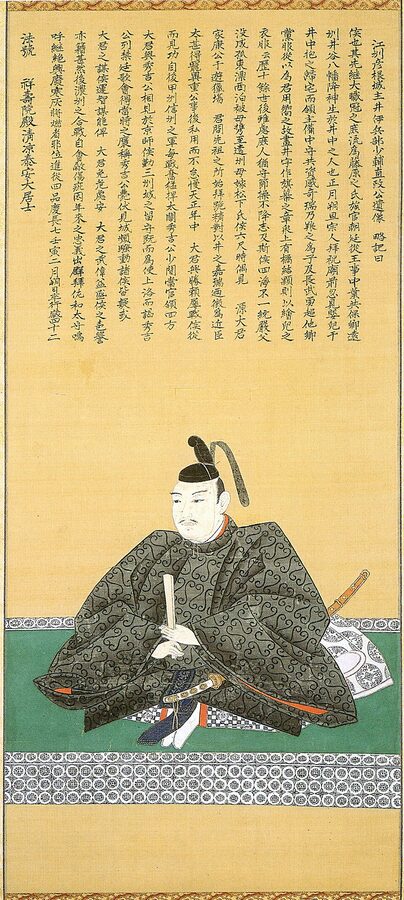
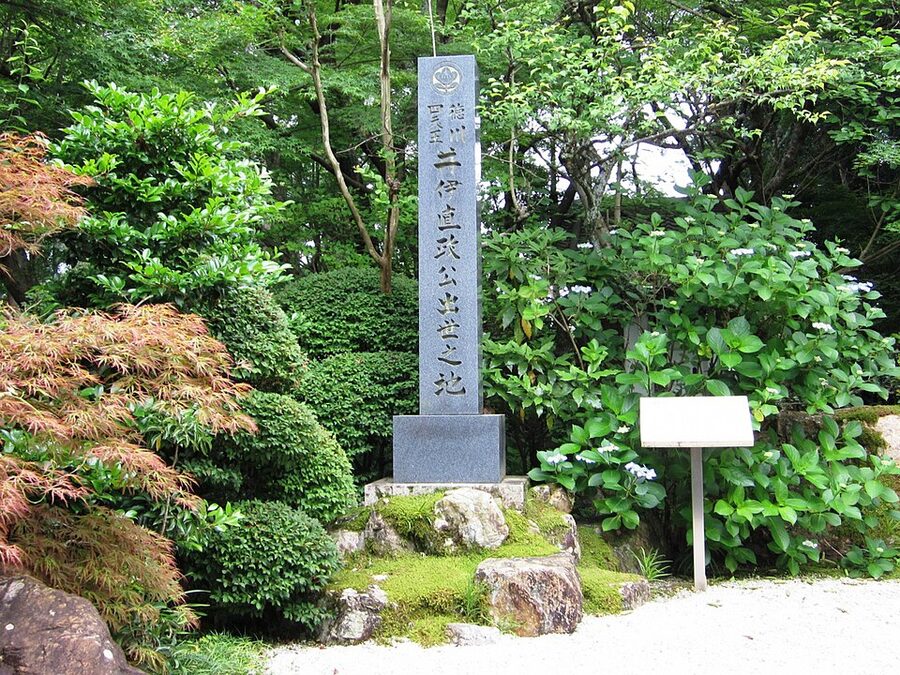
Naomasa was born in February 1561 at Iinoya in western Tōtōmi Province, the modern Iinoya district of Hamamatsu City, Shizuoka Prefecture. His father was Ii Naochika, heir to the Ii clan’s kokujin lordship of the Iinoya valley; his mother was Hiyo, a daughter of the neighbouring Okuyama house. His childhood name was Toramatsu. The Ii had been local lords of this valley for generations, and in 1561 they were nominally loyal to the Imagawa — though as it turned out, not loyal enough.
In the spring of 1562, Naochika was arrested on suspicion of Tokugawa sympathies. The Imagawa daimyō Imagawa Ujizane had him executed — chūsatsu, judicially killed — for treason he had probably not actually committed. Toramatsu was one year old when his father died.
The Ii main line shortly afterwards collapsed into female regency. The clan head Ii Naomori had died at Okehazama in 1560; his daughter Jirō Hōshi took the name Ii Naotora and ran the domain herself — one of the very few documented female daimyō of the period, whose story NHK dramatised at length in the 2017 Onna Jōshu Naotora morning serial. Naotora was Naomasa’s cousin, and she was what stood between the child and the Imagawa executioners.
The Imagawa kept trying to kill Toramatsu throughout the 1560s. A retainer named Nīno Chikanori formally petitioned for the boy’s life and took him into his own household in 1562; Nīno was killed in combat in 1564. Toramatsu was then hidden at the Iinoya widow-household — his grandaunt Yūchin-ni, the widow of the Okehazama-killed Ii Naomori.
In 1568, when Takeda Shingen was preparing the invasion that would crush the Imagawa, the Ii clan’s own senior retainer Ono Michiyoshi, a man openly working for the Imagawa, pushed for Toramatsu to be killed so that Ono could take the Ii forces to war under his own name. Yūchin-ni’s counter-move was to have the boy tonsured and sent into a temple: first Jōdo-ji in Iinoya, then, when that was too close, Hōrai-ji in far eastern Mikawa. The tonsure saved him.
1574 — the thirteenth-anniversary rites and the hunt
In 1574, Toramatsu, now 13, came back to Iinoya for the jūsan kaiki, the thirteenth-anniversary memorial for his executed father. The rite was held at Ryōtan-ji and coordinated by Yūchin-ni, Naotora, Hiyo (the boy’s mother), and the temple’s abbot Nankei Zuibun. Their problem: once the anniversary was done, Toramatsu was supposed to go back to Hōrai-ji and resume his monastic training.
His entire life to that point had been a hiding operation. They had a solution, but it required cover: Hiyo formally remarried a Tokugawa retainer named Matsushita Kiyokage and had Toramatsu adopted into the Matsushita line. This was cosmetic. The real plan was to get the boy in front of Tokugawa Ieyasu.
What happened next is preserved in the Ii-ke Denki, the official Ii family chronicle, and in broad outline in the Tokugawa Jikki. On a day in early 1575, Ieyasu — then 33, campaigning up and down western Tōtōmi — was out on a hawking expedition on a trail near the Hamamatsu-area village of Hamamatsu-chō. He encountered Toramatsu, who by standard procedure should have thrown himself down in the road to let the lord pass.
The boy instead walked up and looked him in the face. Ieyasu asked who he was. Toramatsu gave his name. Ieyasu, who had known Naochika personally before the 1562 execution, looked at the boy for a long time.
The records say he immediately recognised the family resemblance. He took Toramatsu into the Tokugawa household on the spot, assigning him as a 300-koku koshō, page, with the new adult-track name Ii Manchiyo. His clan name was restored. He was fourteen.
The promotion schedule that followed was almost absurd. From 300 koku in 1575, Naomasa was at 3,000 by 1577, at full samurai rank with a retainer tail of his own by 1580, and commanding an independent unit by 1581 — six years from hunted-child to battlefield officer. Ieyasu’s favouritism was the obvious engine.
The Tokugawa Jikki and the Tengen Jikki both note that Ieyasu had a house built for Manchiyo adjacent to his own garden at Hamamatsu Castle and visited it regularly. The relationship was almost certainly what contemporaries understood it to be — Ieyasu’s first documented case of shudō, the male-affective mentorship common in Sengoku courts — and it shaped the Tokugawa retainer hierarchy for the next twenty years. The three Mikawa-born Four Heavenly Kings — Honda, Sakai, Sakakibara — understood that Ii Manchiyo was going to be promoted past all of them, and they had to live with it.
Takatenjin, 1581 — first command
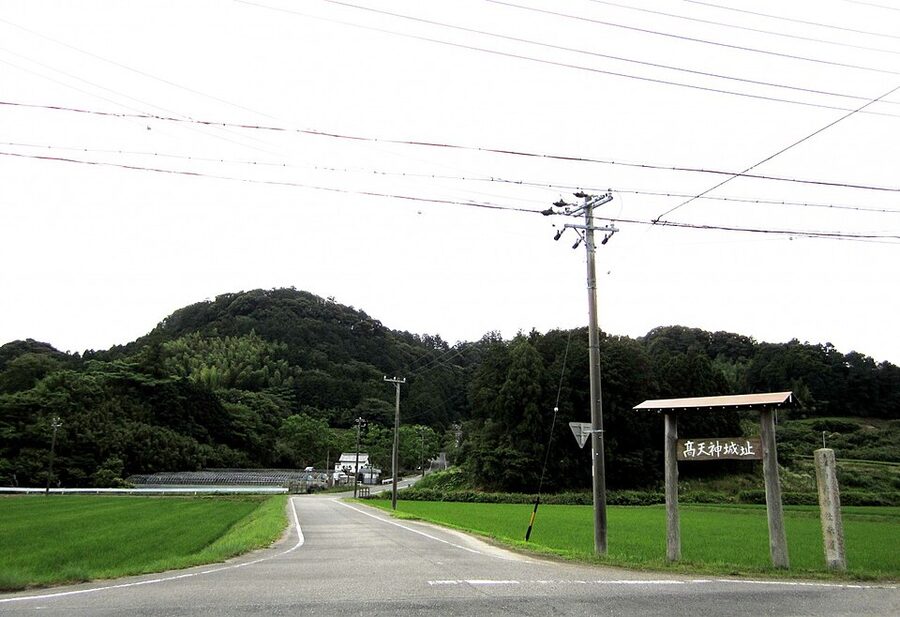
Naomasa’s first independent combat command came at the siege of Takatenjin Castle in March 1581. Takatenjin, in modern Kakegawa City, was a strategic mountain fortress the Tokugawa had lost to the Takeda in 1574 and were now taking back — part of the long grinding Tōtōmi campaign that ran through the late 1570s. Naomasa, aged 20, was given a battalion-sized detachment and a specific sector of the siege line.
The castle fell on 22 March after a seven-month blockade. The Takeda garrison commander Okabe Motonobu and several hundred of his men committed mass seppuku in the keep; the rest were cut down in the retreat. Naomasa’s sector performed well. Ieyasu formally recognised the service by promoting him into the direct-vassal hatamoto officer class.
The Takeda collapse came within the year. Nobunaga’s armies invaded Kai and Shinano in early 1582 and ended the Takeda main line at the battle of Tenmokuzan on 11 March. Takeda Shingen’s son Katsuyori and his heir Nobukatsu killed themselves on the mountain.
The Takeda retainer corps, the hardest-trained cavalry force in sixteenth-century Japan, dispersed across the collapsed Kai-Shinano region, some joining the Hōjō, some the Uesugi, some going to ground. Ieyasu was given the task of absorbing whichever of them would come west. What he did with the ones who did come west is the single decision that defined Naomasa’s career.
The red armour — Yamagata’s inheritance
In the autumn of 1582, after the Hōjō peace that ended the so-called Tenshō Jingo no Ran, the turbulent months after the Honnō-ji Incident when the former Takeda territories changed hands again, Ieyasu formally assigned approximately 120 former Takeda retainers to Naomasa as a personal force. Among them was the staff of the late Yamagata Masakage, who had been killed at Nagashino in 1575. Yamagata, one of Shingen’s Four Heavenly Kings, had led the Takeda’s elite red-lacquer vanguard cavalry for twenty years; his men had fought at Mikatagahara, Nagashino, and every major Takeda engagement of the 1570s. They came to Naomasa as a unit, bringing their armour, their discipline, their signals — and their colour.
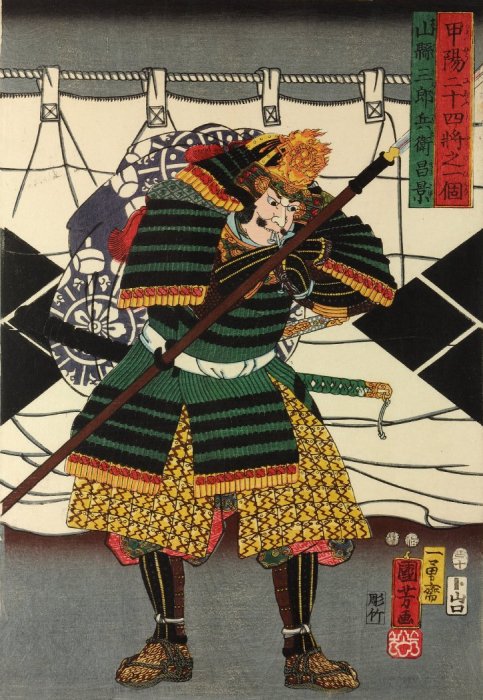
Ieyasu’s instruction to Naomasa in the autumn of 1582, preserved in the Ii Gunshi and the later Kōyō Gunkan, was unambiguous. The entire Ii unit — helmet, body armour, spear-staff, horse-harness, sashimono standard-sticks, everything — was to be lacquered uniformly in cinnabar red.
Partly this was a morale transfer. Yamagata’s reputation was one of the few Takeda assets still worth inheriting, and marking the new unit in his colours told the remaining Takeda retainers they had been absorbed, not replaced. Partly it was operational.
Red in a battlefield context carries at distance and through smoke. A commander looking across a valley could see where his Akazonae were without needing runners. The Ii adopted the uniform instantly and kept it for the next 280 years. Every Ii cavalry force raised between 1582 and 1867 wore the red lacquer — the single longest continuous military-unit livery tradition in Japanese history.
Iga-goe, Komaki-Nagakute, and the diplomacy years
In the chaos immediately after the Honnō-ji Incident of June 1582, the Akechi Mitsuhide coup that killed Nobunaga and very nearly killed Ieyasu too, Naomasa was one of the few Tokugawa retainers who made it across the Iga-goe, the emergency overland retreat from Sakai to Mikawa through hostile ninja country. He was part of the rearguard that Honda Tadakatsu organised, and at the Kidzugawa crossing he took the main wound-risk while Tadakatsu smashed the ferryboats behind them. In recognition of the Iga-goe service, Ieyasu gave him a jinbaori, campaign-surcoat, woven from peacock feathers, which was preserved until 1945 at the Yoita Historical Museum in Niigata (the surcoat survived the war).
The first major field test of the new red-armour Ii unit came two years later at the 1584 Komaki-Nagakute campaign against Hideyoshi. Naomasa, aged 23 and in independent command for the first time in a major engagement, led the red cavalry into the Nagakute phase of the battle on 9 April. The chroniclers are unified on what the Toyotomi front line saw: a compact formation of cinnabar-red horse in a tight wedge, spears lowered, going at a gallop straight at the line.
The Toyotomi vanguard broke. Naomasa’s reputation for aggression — the quality that earned him the later nickname “Hitokiri Hyōbu,” “Hyōbu the killer,” for his harshness with his own men — was established at Nagakute. He came off the field with a fresh combat injury; Naomasa was wounded in almost every engagement he fought, in direct contrast to Honda Tadakatsu, who according to every surviving source never took a wound in 57 battles. The new Ii Akazonae had its reputation by sunset.
The five years after Komaki-Nagakute were mostly diplomatic. Naomasa handled the peace-negotiation traffic between Ieyasu and Hideyoshi — he escorted Hideyoshi’s mother Ōmandokoro back to the Toyotomi capital when the hostage arrangement was unwound, and he negotiated the 1586 settlement at which Ieyasu formally accepted Toyotomi overlordship. Hideyoshi noticed him.
The Toyotomi court started giving Naomasa ceremonial titles — Hyōbu-shōyū in 1586, eventually Jushi-inoge (junior fourth court rank, lower grade) — and putting him on the formal civic rosters of the Imperial-sponsored events. At the 1588 Jurakudai imperial progress, Naomasa walked in the daimyō-tier procession; he had personal friendships with Chōsokabe Motochika of Tosa and with the Mōri family through a mediation role that became important at Sekigahara.
The diplomacy was not incidental. It was one of the three jobs Ieyasu relied on Naomasa to do — fighting, diplomacy, and administration — and Naomasa ran circles around the other Four Heavenly Kings at diplomacy specifically.
Odawara, Kantō, Minowa — the 120,000 koku
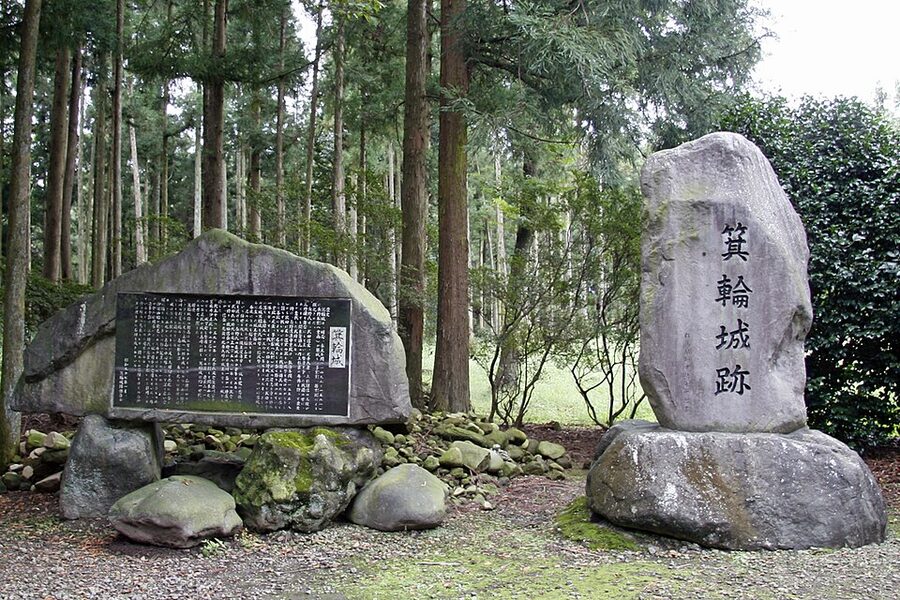
The 1590 Odawara campaign — Hideyoshi’s final campaign of unification, against the Later Hōjō of Sagami — was Naomasa’s opportunity to break through the 1580s’ mostly-diplomatic run. The Ii Akazonae participated in the main siege of Odawara Castle and, according to the Hōjō Godaiki, Naomasa personally led the only successful penetration into the castle’s outer bailey during the long blockade, taking approximately 400 Hōjō defenders dead in the action. The Hōjō Godaiki‘s praise — “he performed above the standard in every matter of battle, won praise in the realm, and left his name to later ages” — is unusually direct for a text whose Hōjō-partisan authors had every reason to hate the man.
The action was memorable enough that Jōzan Kidan, a later Edo-period collection of anecdotes, includes the story that Naomasa had privately advised Ieyasu during a quiet phase of the Odawara siege to assassinate Hideyoshi while Hideyoshi’s bodyguard was thin. Ieyasu, the chronicle says, stopped him: “not now.” The Odawara fall was in July 1590. Hōjō Ujimasa committed seppuku, and the old Kantō power structure was gone.
Hideyoshi’s immediate reward for the Tokugawa was the transplantation — the Kantō move, the Tokugawa Kantō nyūhō — from the ancestral Mikawa-Suruga-Tōtōmi territories to the former Hōjō domains of Musashi, Sagami, Kōzuke, Kazusa, Awa, Shimōsa, and the Hitachi fringe. Ieyasu redistributed his retainers across the new geography. Honda Tadakatsu went to Otaki (100,000 koku), Sakakibara Yasumasa to Tatebayashi (100,000 koku), Sakai Tadatsugu was already old and got a smaller portion.
Naomasa got Minowa in Kōzuke — modern Takasaki City, Gunma Prefecture — and he got 120,000 koku. The number is not a typo. Naomasa, age 29, with under fifteen years of Tokugawa service and entirely without Mikawa-born pedigree, was given the largest single stipend among all the Tokugawa retainers. Tadakatsu and Sakakibara each got 100,000; Naomasa got 120,000 outright.
This was Ieyasu being deliberate. The Kantō retainer layout was engineered to put senior commanders at strategically-critical distances from the new capital Edo, and Minowa sat on the Nakasendō — the inland highway into Shinano and the Sea of Japan coast, the counterpart of the coastal Tōkaidō. A hostile force moving east down the Nakasendō would hit Naomasa before it reached Edo.
The 120,000-koku figure was partly a function of the terrain’s administrative complexity (Kōzuke had dense mountain villages and a long tradition of minor-lord independence) and partly a vote of confidence. Sakakibara at Tatebayashi faced the same eastward approach; Tadakatsu at Otaki guarded the southern sea approach from Awa. The three Four Heavenly Kings’ Kantō postings are a textbook case of perimeter defense-in-depth, and Naomasa’s slot was the hardest one.
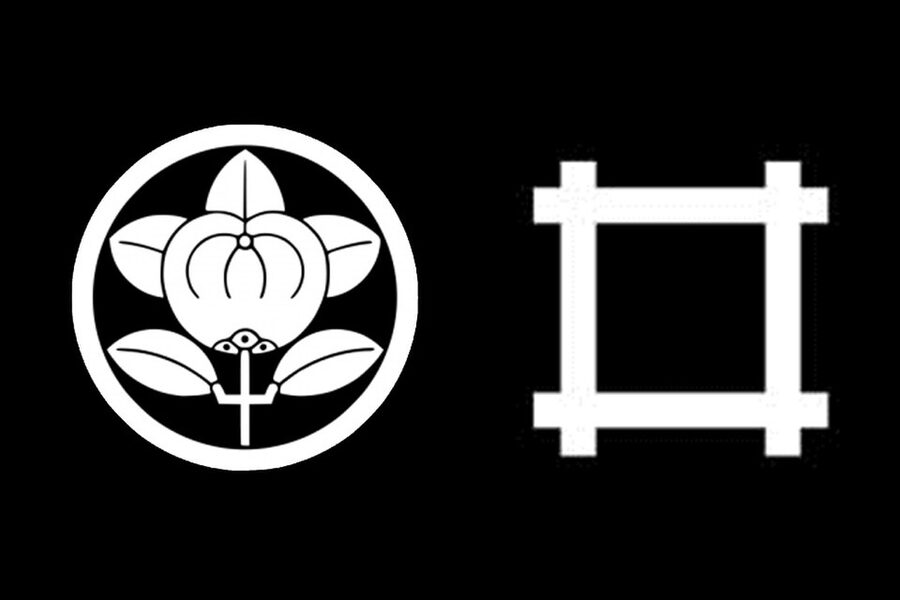
The Minowa period, 1590-1598, was Naomasa’s only substantial administrative run before the end of his life. He rebuilt the castle, moving it from the Nagano clan’s 16th-century layout onto a larger footprint with expanded outer baileys, reorganised the surrounding village tax rolls, and in 1598 relocated the whole apparatus downhill to a new site at Takasaki that he personally named (takasaki, meaning “tall promontory,” was Naomasa’s choice). The modern city of Takasaki derives its name directly from him. The local administrative continuity from Naomasa’s 1598 reorganisation lasted through the entire Edo period and is still largely visible in the layout of central Takasaki today.
1600 — the battle he started
Hideyoshi died in September 1598. The Toyotomi regency council — the gotairō — collapsed almost immediately into the factional fight that produced Sekigahara. Naomasa’s role through 1599-1600 was as Ieyasu’s senior diplomatic operator.
He handled the defections from the pro-Toyotomi camp to the pro-Tokugawa camp — Kyōgoku Takatsugu, Takenaka Shigekado, Katō Sadayasu, Inaba Sadamichi, and crucially the Kuroda father-son (Jōsui and Nagamasa) who brought with them a major fraction of the Kyūshū daimyō. By the time the 1600 campaign opened, most of the strategic daimyō fence-sitting had been resolved in the Tokugawa direction, and the Western Army was smaller than it should have been because of Naomasa’s work.
On 14 September 1600 the Eastern Army reached Sekigahara. The overnight position was set: Fukushima Masanori’s vanguard on the Eastern far right, Hosokawa Tadaoki and Kuroda Nagamasa extending the line, Naomasa and Matsudaira Tadayoshi (Ieyasu’s fourth son, Naomasa’s son-in-law) in a reserve slot near the centre.
Ieyasu’s written order assigned the opening of the battle to Fukushima. The understanding was universal: the morning’s first shots would honour Fukushima’s clan because Fukushima had brought the largest block of ex-Toyotomi commanders to the Eastern side. At dawn on 15 September, in heavy fog, Naomasa and Tadayoshi rode out of their assigned position with a small force, roughly thirty horse, and filtered forward past Fukushima’s vanguard screen, citing “reconnaissance” as the cover.
Some later Edo-period sources soften this into a “chance encounter in the fog.” The contemporary chroniclers — the Ii Nenki and the anonymous Sekigahara Gunki both written before 1620 — do not. The move was deliberate, it was Naomasa’s call, and it was made because Naomasa did not want Fukushima (a Toyotomi-turned-Eastern defector) to have the credit for the first shot.
His small force opened fire on the Western vanguard; the Fukushima column, hearing musket fire ahead of it, broke discipline and advanced as well, engaging Ukita Hideie’s 17,000 Western troops almost immediately. By the time Ieyasu’s staff at Nangu-san could assess what had happened, the battle was general. Fukushima later raged to Ieyasu about the nukigake (the unauthorised advance) but Ieyasu, characteristically, did nothing. Naomasa had given him exactly the result he wanted, with exactly the deniability he needed.
The 90-head tally that Honda Tadakatsu put up by dusk on 15 September is well-documented. Naomasa’s figure was 104, the highest individual count in the Eastern Army, and the majority came from the late-afternoon pursuit phase, not the central melee.
The Shimazu retreat and the wound
By mid-afternoon the Western Army was broken. The Kobayakawa Hideaki defection at noon had tipped the centre; Ishida Mitsunari’s main line collapsed; Ukita Hideie and Konishi Yukinaga fled.
The only Western-Army force still intact and still in reasonable fighting order by four in the afternoon was Shimazu Yoshihiro’s Satsuma contingent, approximately 1,500 men. Yoshihiro had held his position through the whole engagement without firing a shot, waiting for the Shimazu’s formal moment to enter the battle; when the tide turned and the moment never came, he made the decision to retreat. The Shimazu retreat — Shimazu no Nokiguchi, the Shimazu’s “Breaking Out” — is the most famous tactical episode in Sengoku military history.
What Yoshihiro did was the opposite of a normal retreat. He chose to break directly through the Eastern rear rather than around the flanks, using the sutegamari tactic — a sacrificial rearguard cycling in wave after wave of volunteers who stayed behind to die while the main body moved. The Shimazu cut straight south through the pursuit forces, and Naomasa, who had been stacking heads in the central melee all afternoon, wheeled his red cavalry about and chased. The Ii Nenki records that the Red Devils took the Shimazu nephew Shimazu Toyohisa personally, the head-taker was Naomasa or Matsudaira Tadayoshi depending on the source, and then, with around 100 horse, went after Yoshihiro himself.
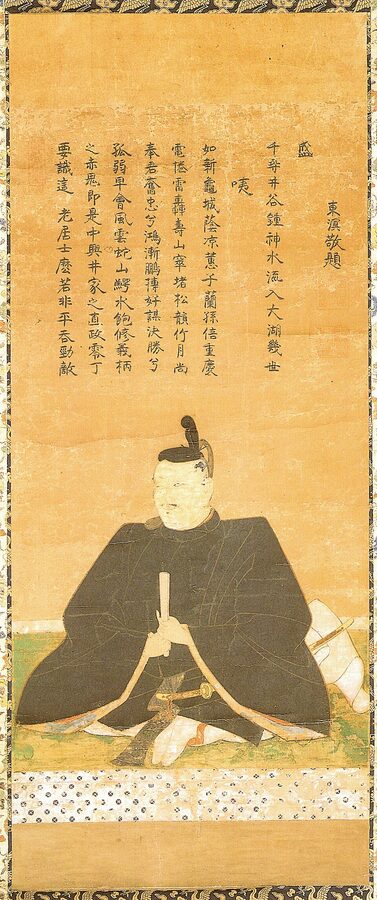
Naomasa caught up. He was within sight of Yoshihiro’s personal retainer-screen, calling out the order to take the Satsuma commander alive, when a Shimazu retainer named Kashiwagi Gentō turned in his saddle and fired a matchlock directly at him. The ball hit Naomasa in the right elbow, shattered the joint, and knocked him from his horse.
His personal bodyguard had fallen behind in the pursuit, he was effectively riding alone, and there was nobody to close up around him for a minute or more while he was on the ground. Yoshihiro got clear. The Shimazu completed the retreat south, eventually reaching Satsuma via the Kansai coast; Yoshihiro died of natural causes in Kagoshima in 1619, a free man.
Naomasa never recovered his right arm’s full function. The wound kept reopening; the bone never set properly; an infection cycle set in during the Sawayama campaign later that month and would, eventually, kill him.
Sawayama, 18 September 1600
Three days after Sekigahara, still bleeding from the Shimazu wound, Naomasa led the assault on Sawayama Castle — Ishida Mitsunari’s main fortress on the hills east of Lake Biwa. Sawayama was the centre of Mitsunari’s administrative and logistical system; the assault was not ceremonial. The castle was defended by Mitsunari’s father Ishida Masatsugu, his elder brother Masazumi, and a small family-retainer garrison.
Naomasa’s Akazonae broke the outer bailey on the afternoon of 18 September; the inner keep fell by evening. Masatsugu and Masazumi committed seppuku with their senior retainers. Mitsunari himself had not been at the castle, he had been captured on 21 September in hiding near Mount Ibuki, but the destruction of Sawayama ended any residual Western-faction organisation in the Kinai.
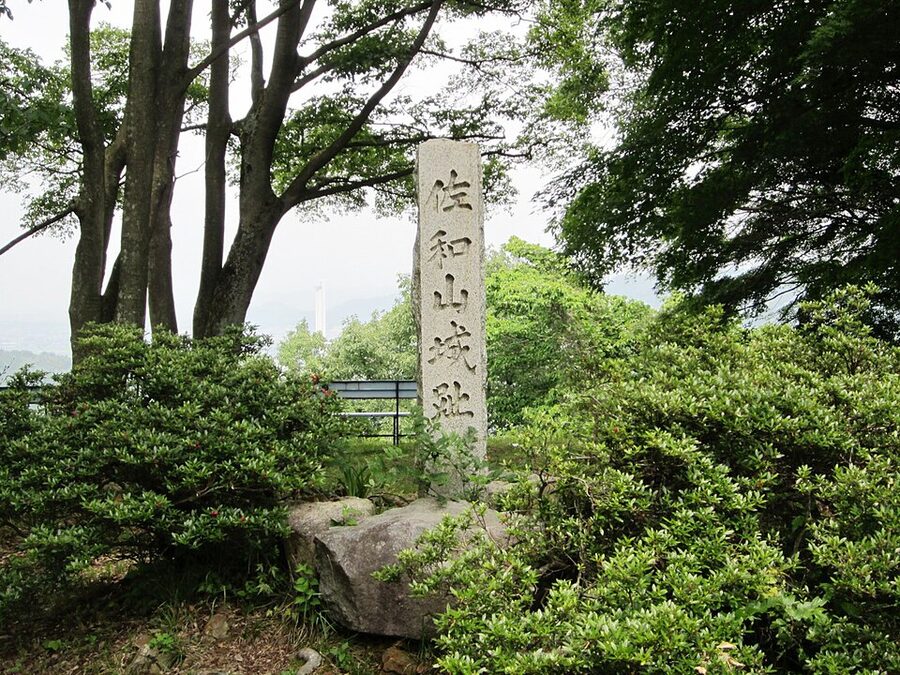
Ieyasu transferred Naomasa to the Ishida confiscated domain as the post-Sekigahara reward. The jump was from 120,000 koku at Minowa to 180,000 at Sawayama, plus Jushi-inoge court rank — the single largest reward given to any Eastern commander. The political logic was straightforward: the Sawayama hill-castle sat on the Nakasendō/Tōkaidō approaches to Kyoto, and Ieyasu needed a senior and unquestionably loyal man holding the western approach to Kansai. Naomasa got the job because he had spent two decades earning it.
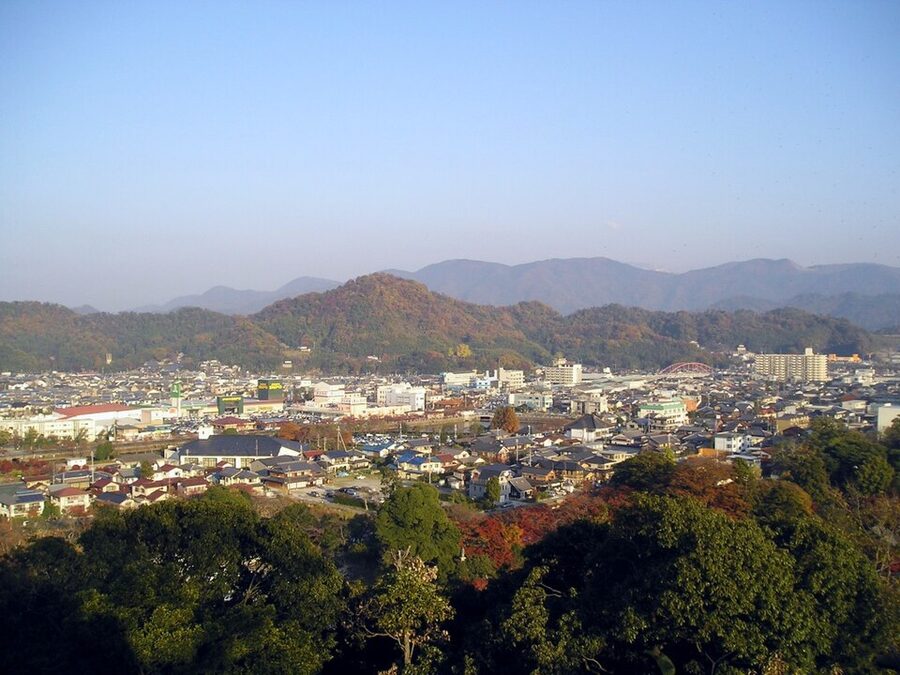
He did not take to the castle. The Sawayama keep, designed by Mitsunari in the late 1590s, was a tight hilltop plan with limited bailey space, expensive to run and logistically poor for administrative work. Naomasa’s decision, made in 1601 and finalised before his death in 1602, was to abandon the hilltop and build a new castle on Kombyō Hill, the rise that would become Hikone, with lake access, better road connections, and room for the domain-town that Naomasa already knew he needed. He did not live to see the new castle started.
1602 — the death at 42
Through 1601 the Shimazu wound steadily got worse. Naomasa did his administrative work one-armed. He conducted the peace negotiations with Shimazu Yoshihiro, the man who had shot him, personally, and the terms he extracted were unusually lenient: the Shimazu kept Satsuma, kept Ōsumi, paid no major indemnity.
This was not sentimentality. Naomasa judged that a punitive peace with Satsuma would make the bakufu’s southwest position permanently unstable, and he handed the Shimazu face-saving terms in exchange for formal acknowledgment of Tokugawa overlordship. Ieyasu got an operationally quiet southwest for the next forty years. Satsuma stayed formally loyal until 1868.
He also ran the clemency negotiations for Sanada Yukimura and his father Masayuki, who had been captured after the Ueda engagement where they had delayed Tokugawa Hidetada’s Nakasendō column. Sanada Nobuyuki (the elder brother, an Eastern Army commander) pleaded for the lives of his father and brother; Naomasa took the case to Ieyasu and got the exile-in-place arrangement at Kudoyama that kept Masayuki and Yukimura alive until 1614. Yukimura’s eventual death at Osaka in 1615, fighting for the Toyotomi, is a separate story — but he was only alive to fight that last battle because Naomasa had talked Ieyasu out of killing him a decade earlier.
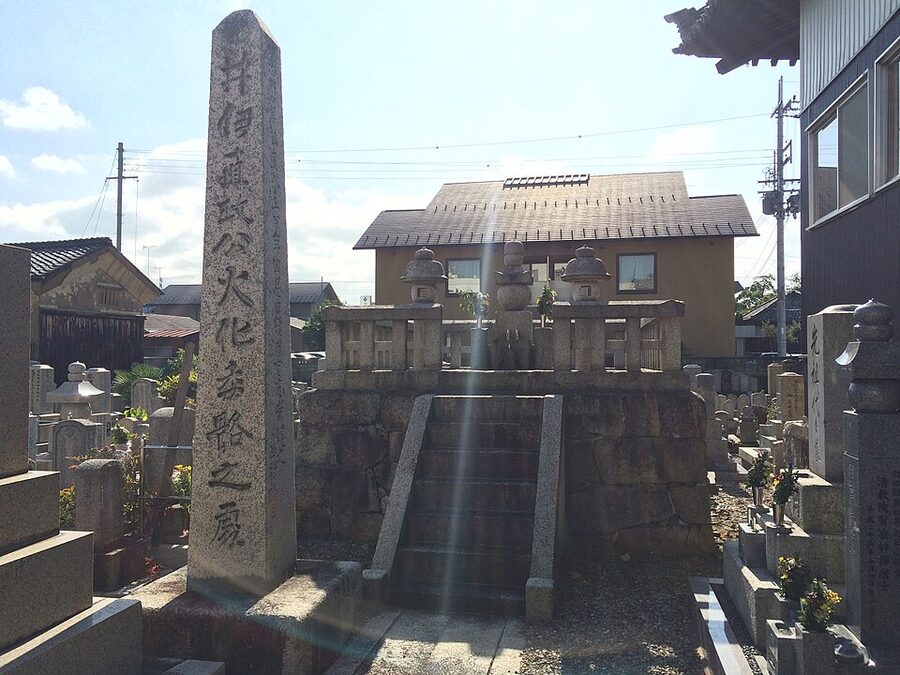
The Shimazu-wound infection went critical in late January 1602. Naomasa died at Sawayama Castle on 1 February 1602 (the old-calendar 2nd day of the 2nd month, 7th year of Keichō). He was 42. His body, at his specific request, was cremated on the Serikawa river’s triangular delta-bar below the castle.
The Chōshō-in temple was built on the cremation site in the Edo period and preserves his ash-mound. The main-line Ii descendants became the Hikone-han’s hereditary daimyō — the Ii Kamon-no-kami branch — and held the domain’s 300,000 koku for fourteen generations until 1868.
His son Naokatsu (the original heir) was displaced by illness from the main line, and Naomasa’s second son Naotaka got the domain under Ieyasu’s direct intervention; Naokatsu took a 30,000-koku cadet-branch at Annaka. Every Hikone lord from 1615 onward was Naotaka’s direct descendant.
Hikone Castle, 1604 — the one he never saw
Construction of Hikone Castle began in 1604 under the tenka bushin — the mandatory national-construction levy that Ieyasu imposed on the western daimyō as post-Sekigahara tribute. Seven daimyō across the Kansai and Tōkai were assigned labour and material quotas; the work was supervised by Naomasa’s heir Naokatsu (still nominally Hikone daimyō at that point) and overseen by shogunal engineers. The tenshu, the three-storey keep that is now Hikone’s most recognisable feature, was completed in 1606.
It was not built from scratch. Most of its structural members were reused from the earlier Ōtsu Castle on Lake Biwa’s southern shore, dismantled and floated to the Hikone site as an economy measure after the fiscal load of Sekigahara. The Hikone tenshu is one of Japan’s twelve surviving original-tenshu keeps, and among those twelve it is one of five designated Kokuhō — National Treasure.
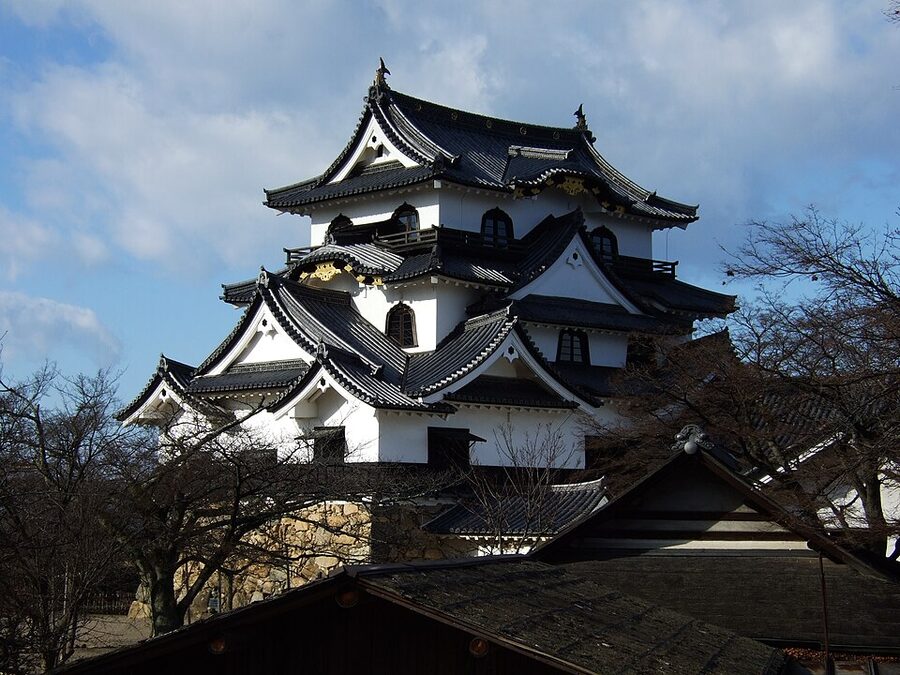
The castle-town layout, Hikone-jō-shita, is substantially Naomasa’s paper plan, executed after his death by his sons and their administrators. The outer moat ring, the samurai-district along the eastern approach, the merchant district along the lake-side frontage, and the Nakasendō routing that sent the post-road past the castle’s main gate are all Naomasa’s decisions. The reason Hikone today has the kind of walkable Edo-era town grid that Takayama or Kanazawa have, and that most Japanese cities conspicuously do not have any more, is that the plan was made by a dying man with a view of what needed to be permanent.
Where to visit Ii Naomasa today
Hikone Castle and the Castle Museum
Hikone is the main pilgrimage site. The castle is twelve minutes on foot from JR Hikone Station on the JR Biwako Line — Nagoya to Hikone is an hour and a half on a local train via Maibara, or thirty-five minutes on a Shinkansen to Maibara plus a five-minute connection. The castle grounds include the tenshu, the surviving inner bailey, the reconstructed outer gate complex, and the Genkyū-en garden (a beautifully preserved Edo-period lord’s landscape garden, worth an hour of your afternoon). Admission is ¥800 for the castle alone or ¥1,200 with the museum.
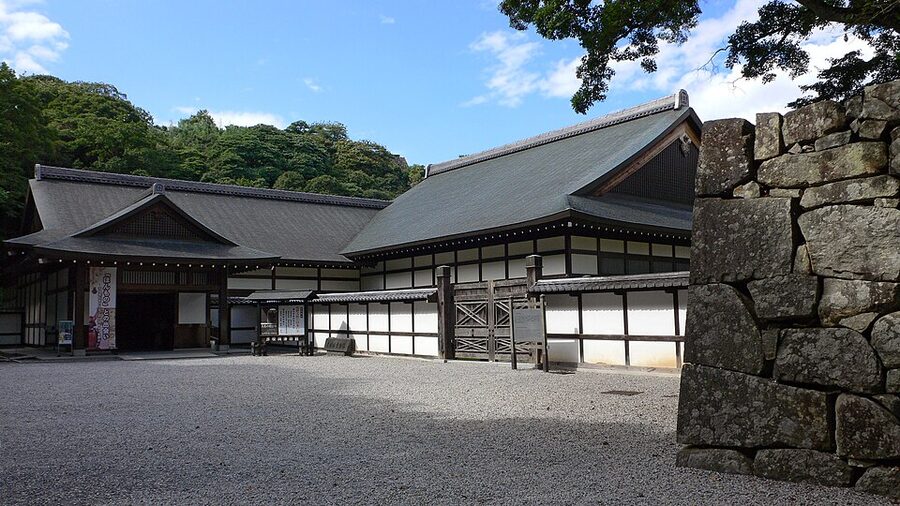
The Hikone Castle Museum sits on the castle grounds in the reconstructed omote goten (the Ii lord’s formal residence). It holds the authentic Ii clan red-lacquer armour — multiple sets, including ones demonstrably used in the Osaka campaigns of 1614-1615 — the lord’s katana collection, domain administrative documents, and a reconstruction of the Ii lord’s Noh stage. If you are coming for Naomasa specifically, this is where you see the physical objects. The Noh reconstruction alone is worth the extra ¥400.
Ryōtan-ji and Iinoya — the childhood temple
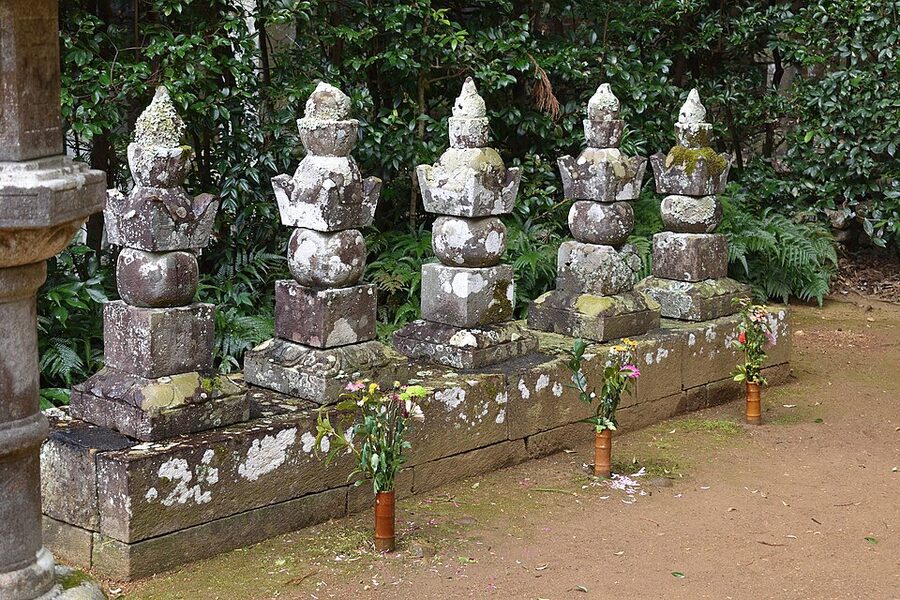
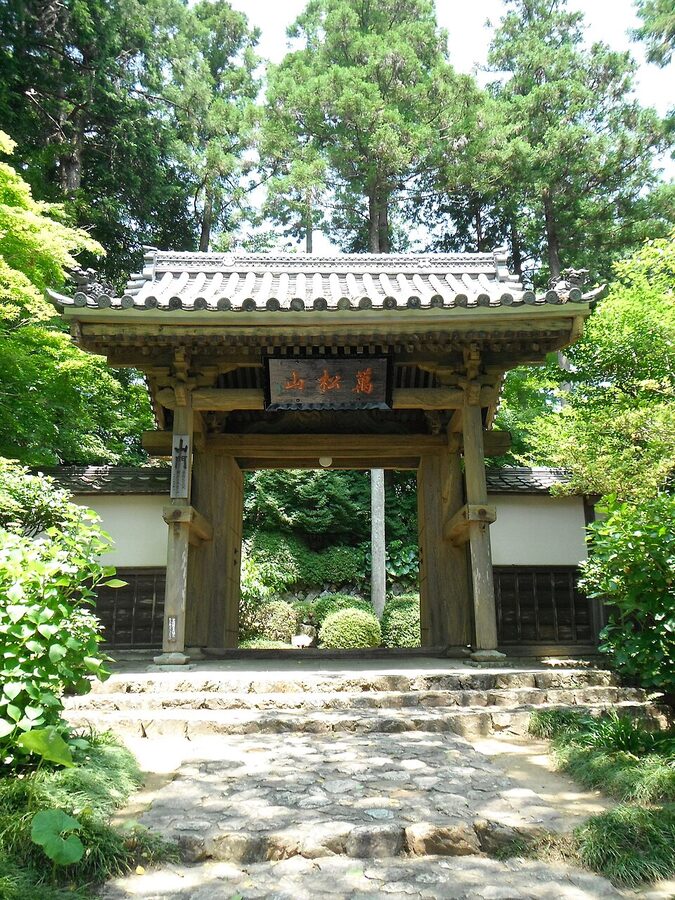
Ryōtan-ji in the Iinoya district of Hamamatsu is the Ii family’s bodai-ji, their hereditary memorial temple, and it is the single best site for Naomasa’s childhood. The temple grounds include the Ii family graves (Naochika’s is among them), Jirō Hōshi / Ii Naotora’s tomb, and a small treasure hall with early-17th-century documents and portraits.
The gardens — attributed to Kobori Enshū, though the attribution is conventional — are formally designated a national scenic site. Admission ¥500, open 9am to 4:30pm daily. Iinoya is about an hour’s drive from Hamamatsu Station or 90 minutes by bus (the Totetsu bus line to Iinoya-san stop, approximately eight buses a day).
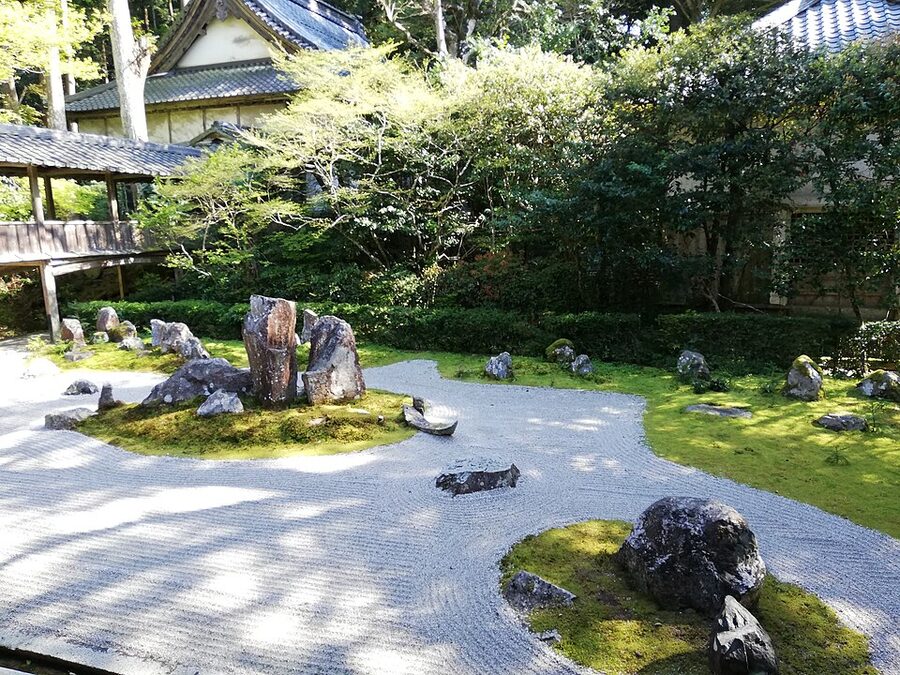
If you are Iinoya-bound, combine Ryōtan-ji with the nearby Iinoya-gū shrine (dedicated to the medieval Emperor Go-Murakami’s son Prince Munenaga, who had taken refuge here in the 14th century) and the small Iinoya-jōshi — the ruin of the Ii ancestral castle. The castle site is on a modest hill a few minutes north of Ryōtan-ji; the walk up is straightforward and takes maybe fifteen minutes. From the top you can see the small river valley that was the Ii clan’s entire world for several centuries, and frankly you can see why nobody bothered fighting them for it.
Kiyo-ryō-ji and Seiryō-ji — the Hikone tombs
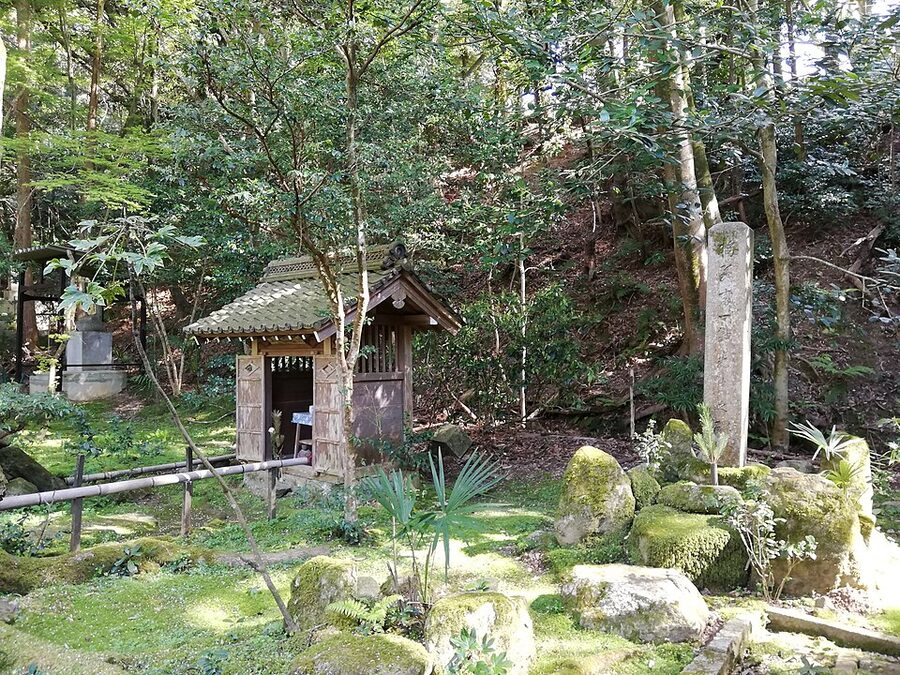
Naomasa is buried in two places in Hikone. The ash mound at Chōshō-in, the Serikawa delta-bar cremation site, is free and always open; it is on a quiet side-street twenty minutes south-east of the station, walkable but not signposted obtrusively.
The formal grave is at Seiryō-ji, where the Ii family maintained their Hikone-han bodai-ji; Seiryō-ji’s Ii family grave complex is designated a National Historic Site, and includes Naomasa’s stupa-form muhōtō marker plus the markers of every subsequent Hikone lord through the fourteenth. The formal hall is open 9am to 4pm, admission ¥300, and the grave complex is approached via a short paved path from the main temple gate. It is not heavily visited.
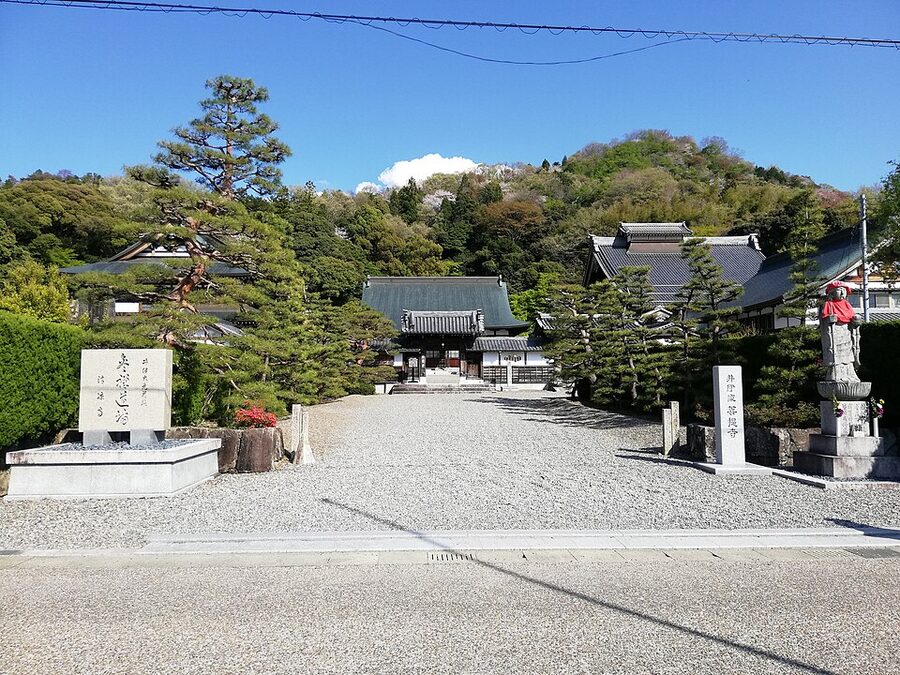
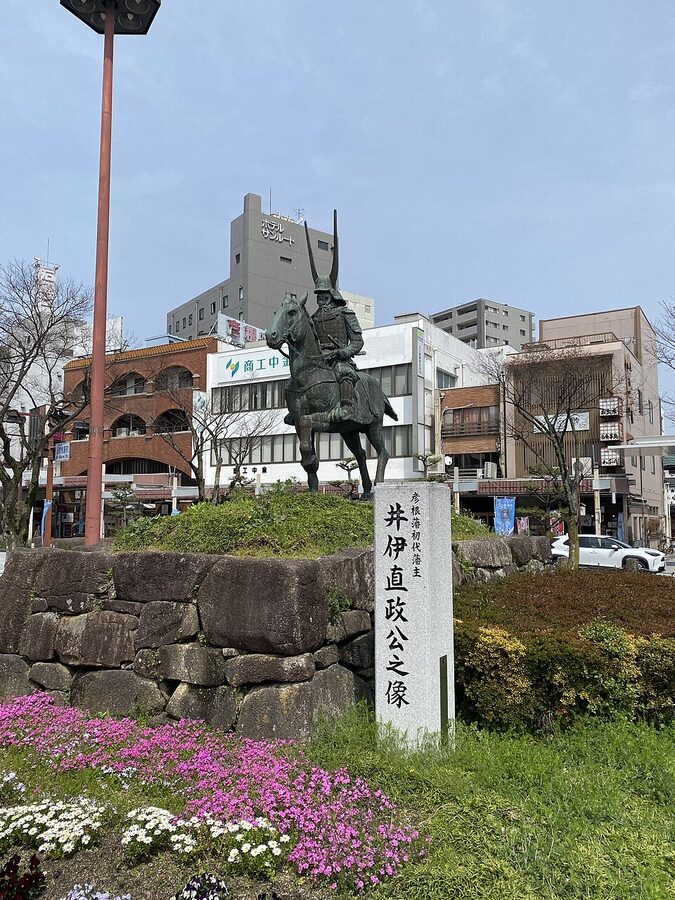
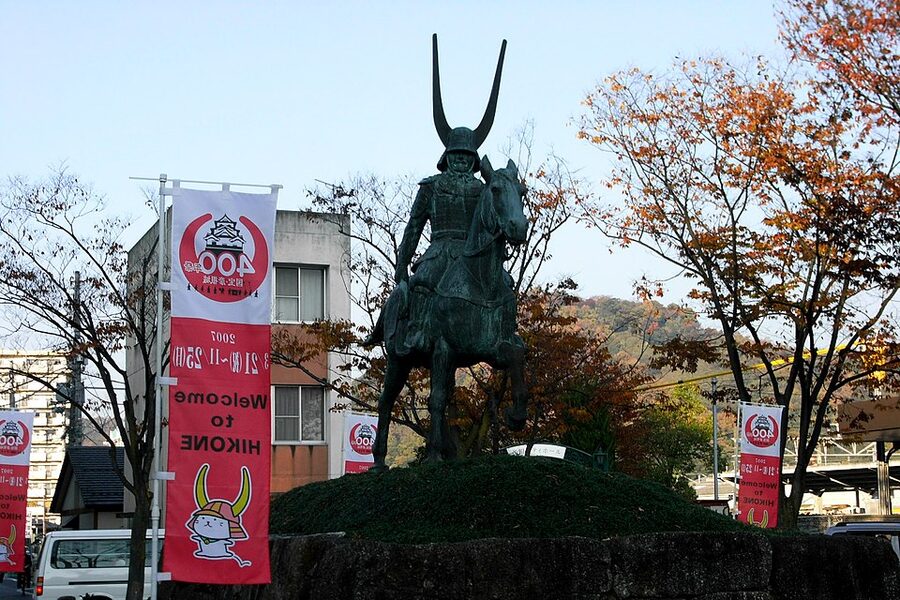
Also inside Hikone: the Naomasa bronze statue outside the east exit of JR Hikone Station. Full red armour (bronzed, but painted detail where appropriate), the horned helmet, spear at port. It is the obvious meet-point in Hikone if you are travelling with someone.
Most visitors photograph it briefly on arrival. I am recommending you stop for longer than that — the sculptor, Mukai Ryōkichi, put Naomasa’s face in a specific expression (something between composed and mildly irritable) that contemporaneous descriptions of the man’s personality converge on. It is a good piece of reading-backward from the historical record.
Sawayama Castle ruins — the stormed hill
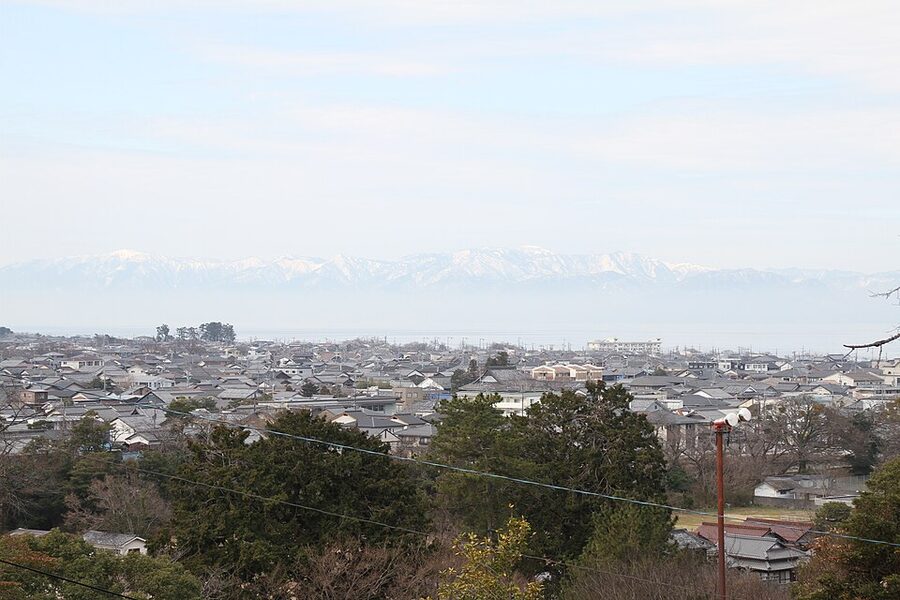
Sawayama Castle itself was dismantled in 1606 when the Hikone build took over, but the hilltop site is preserved as a minor historical park. The hike up is steep, probably forty minutes from the Sawayama trailhead on the east side of Hikone, and most of what remains is earthwork foundations and a single summit-marker stone. The point of going is the view.
You can see Hikone Castle below you, the lake behind it, and the road-grid of modern Hikone stretched out as a substantially-preserved Edo-period plan. You are standing on the hill Naomasa stormed on 18 September 1600; it is also the hill on which he died seventeen months later. Free, always open, but bring decent shoes.
Sekigahara and the Ii command-position marker
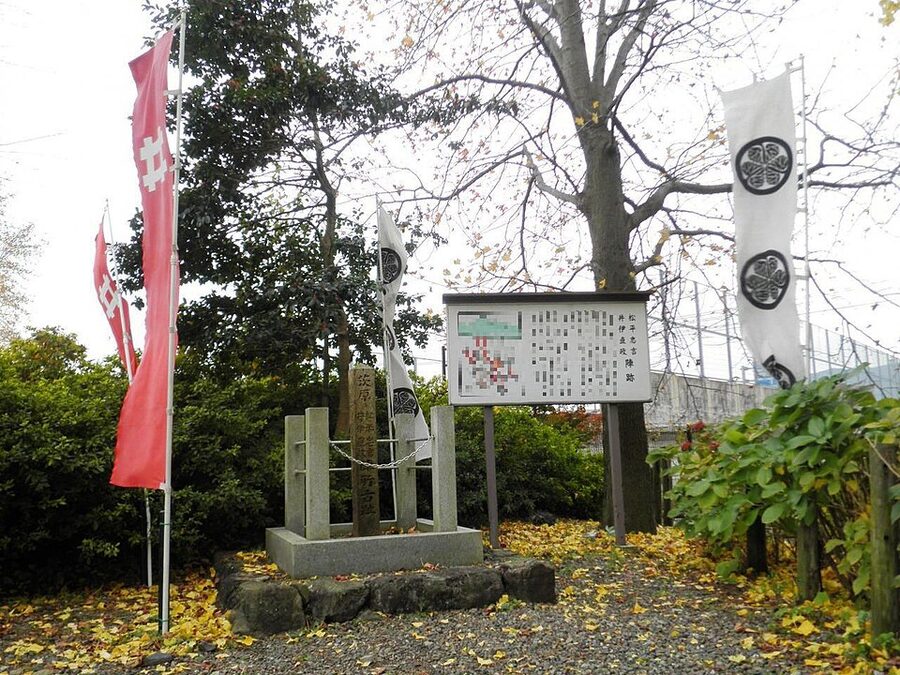
For completists, the Sekigahara battlefield has a marker at the Naomasa/Matsudaira Tadayoshi ikiten position — roughly in the centre of the modern battlefield walking circuit, about 800 metres west of JR Sekigahara Station. This is the approximate spot from which Naomasa rode out at dawn on 15 September 1600 to open the battle. The marker is a modest stone, signed, and the surrounding field has a small explanation board. The overall walking circuit, including Naomasa’s marker, covers maybe two hours at a leisurely pace and takes you past Ishida Mitsunari’s position, the Kobayakawa position on Matsuo-yama, the main engagement memorial, and the Shimazu retreat-route marker.
Closing — the argument with the rules
What Naomasa and Honda Tadakatsu make, set next to each other, is a working contrast in what Sengoku loyalty looked like in practice. Tadakatsu, a Mikawa-born child of a retainer family, joined Ieyasu’s service at twelve and ran it to the letter for fifty years; his death-poem is an explicit refusal to be detached from his lord. Naomasa, an outsider picked up off a hunting trail at fourteen, ran Ieyasu’s service by breaking the rules in his lord’s favour — starting battles he was not authorised to start, taking stipends above the Mikawa-fudai’s pedigree, ignoring the written order from Ieyasu’s own hand at Sekigahara because he had a better idea.
Both men were loved. Only one was feared.
Naomasa was “Hitokiri Hyōbu,” the killer; he executed his own retainers for minor infractions; he made the people under him afraid of him, and at the same time Ieyasu said about him, in a private letter to his daughter-in-law Ōgō, that Naomasa was the one man in his service he could always rely on to tell him when he was wrong. “Reisei chinchaku ni shite kuchi-kazu sukunaku” — calm and composed and never saying much, but when he spoke in private he said the truth. You can hear Ieyasu trusting that voice, and you can hear Naomasa’s retainers afraid of it, and both things are true.
The Ii line he founded ran Hikone for 260 years. The Akazonae red armour, Yamagata’s inheritance, was on the Ii banners again in the 1614 Osaka winter campaign and the 1615 summer campaign; the Ii sadaime Ii Naotaka took it to Tennōji-Okayama and broke Sanada Yukimura’s left flank at the decisive afternoon.
It was on the Ii banners in the 1860 Sakuradamon-gai incident when Ii Naosuke, the sitting tairō of the bakufu, was assassinated in his palanquin by Mito rōnin in a snowstorm outside the Edo Castle gate — the Ii bodyguards wore red armour that day too, at the very end of the feudal system. The colour Naomasa inherited from a dead Takeda general in the autumn of 1582 was the last red armour on a Japanese battlefield: an unbroken line from Yamagata’s red at Nagashino through the Bakumatsu in 1860. Almost three hundred years of a single unit colour.
If you go to Hikone, and if you have come this far I suggest you do, take the train to Maibara in the late morning, switch to the local to Hikone, walk to the castle by way of the statue at the station, climb the tenshu, and then go out the north gate and take the path up to Sawayama. The hike is not ceremonial. You will sweat.
When you get to the top, look west toward Lake Biwa with the Hikone castle-town laid out below you. What you are seeing is the town a dying man drew on paper and never got to walk through. He opened the battle that put his lord in charge of Japan, and he paid for it with the use of his right arm, and he is in a grave about a mile downhill from where you are standing.
The red was his. So was the town.


.jpg)


.jpg)
