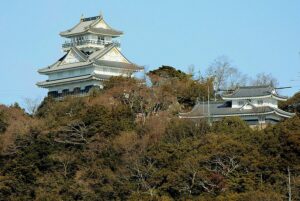
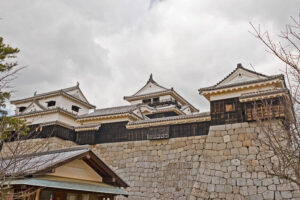
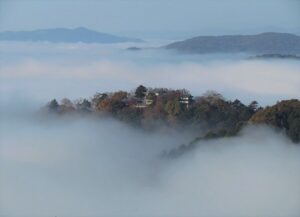
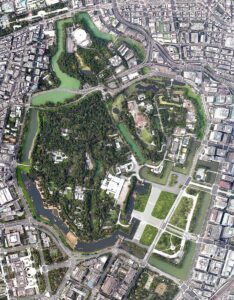
The reason I keep coming back to Inuyama is that from the top-floor veranda of its four-storey keep you can look straight across the Kiso River and see the mountain where Oda Nobunaga built Gifu Castle, and the view has not changed in four hundred and sixty years. Nobunaga used to look back. The river runs between the two castles like a drawn line — Gifu on the north bank in what was then Mino Province, Inuyama on the south bank in Owari — and the Oda family held them as a matched pair for most of the sixteenth century. The smaller of the two, the one on the cliff above the river, is the keep that survived. Gifu burned in 1600 and again in 1943 and again on the modern concrete rebuild. Inuyama is still up, and the lower two storeys of the thing you climb today are, on the most recent dendrochronology, the oldest surviving original-construction tenshu in Japan.
Inuyama is also the only castle in Japan that was privately owned until 2004. For nine generations, from 1617 to 1871, the Naruse family held it as a hereditary fief under the Owari Tokugawa; and then, in the Meiji shuffle, when almost every other major castle was either seized by the state or sold off at auction, the Naruse held on. The 1891 Nōbi earthquake damaged the tenshu and the Aichi prefecture authorities gave the castle back to the Naruse in 1895 on condition that they repair it. They did. The family lived with it until the thirteenth-generation head, in the spring of 2004, finally concluded that running a National Treasure on a private balance sheet was no longer tenable and handed the building to a foundation. You are climbing a keep that, at the start of this century, was somebody’s house.
In This Article
- What Inuyama Castle actually is
- 1469 — the Iwakura Oda fort and the Muromachi origins
- 1537 — Oda Nobuyasu moves the castle to the cliff
- 1564 — Ikeda Tsuneoki and the first Oda recovery
- 1582 — after Honnō-ji
- The Oda family lost Inuyama three times, and every time they got it back
- 1595 — Ishikawa Mitsuyoshi rebuilds
- 1600 — Sekigahara, the Western Army, and Ishikawa’s surrender
- 1617 — Naruse Masanari, the nine-generation dynasty
- 1871 — the Meiji seizure and the 1895 return
- 1961-1965 — the Shōwa dismantle-and-repair
- 2004 — the end of private ownership
- Architectural details — what to look for when you climb
- Where to visit Inuyama Castle today
- Inuyama Castle and the tenshu climb
- Urakuen garden and the Jo-an teahouse
- Inuyama Matsuri — the 360-year float festival
- Ukai cormorant fishing on the Kiso River
- Meiji-mura open-air architectural museum
- Combining Inuyama with Gifu — the upstream castle day
- Naruse Masanari’s grave and the foundation museum
- Getting there
- The small castle on the river that kept coming back
What Inuyama Castle actually is
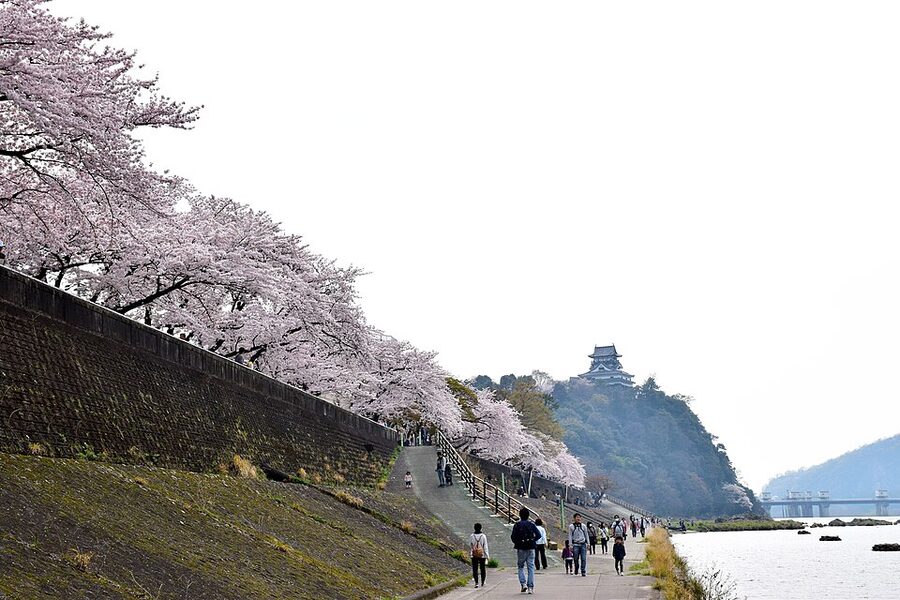
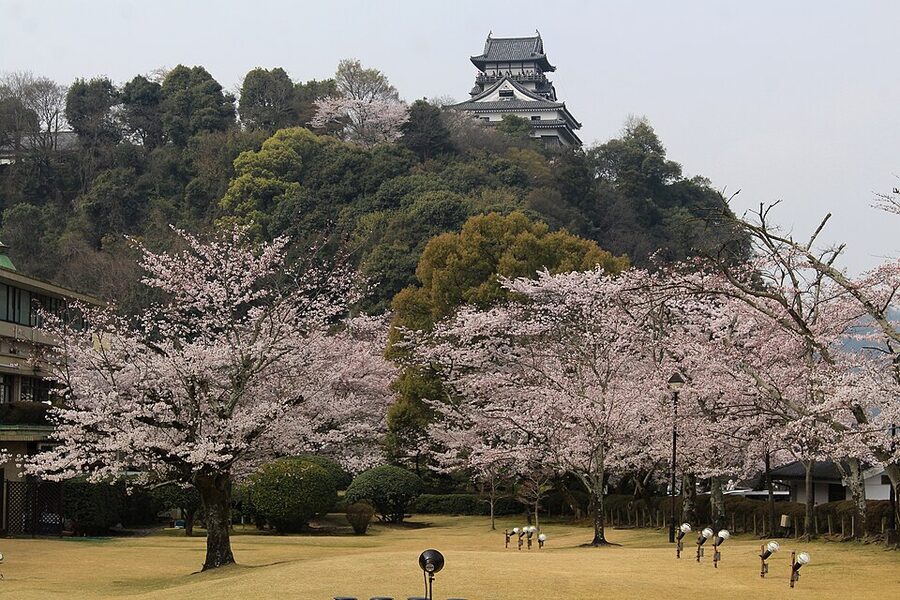
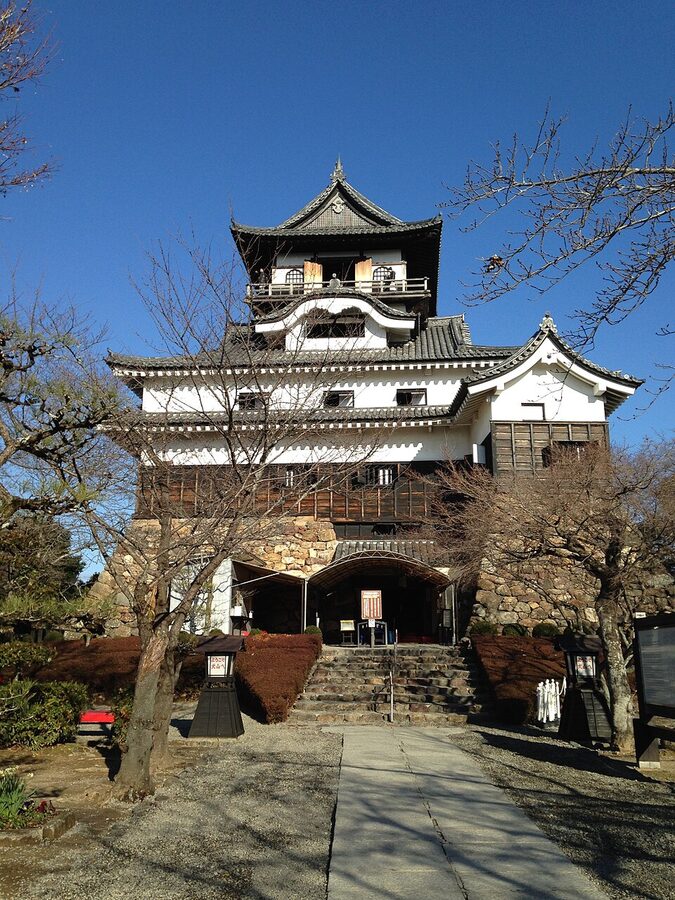
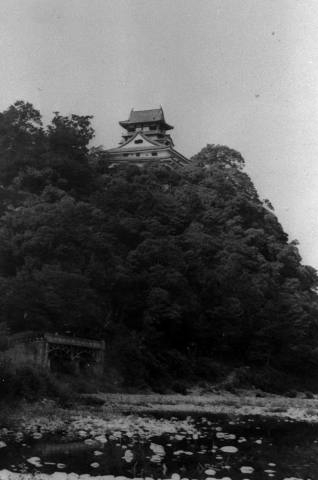
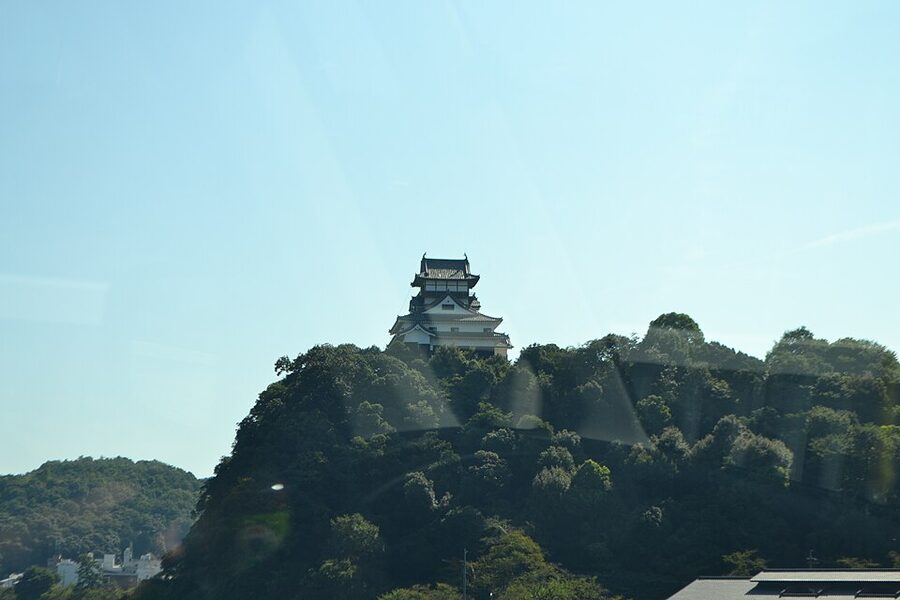
Inuyama Castle (犬山城, Inuyama-jō) is a hirayama-jō, a hill-top castle on a low plateau rather than a mountain summit, built on an 88-metre bluff on the south bank of the Kiso River in what is now Inuyama City, Aichi Prefecture. Its older name, Hakutei-jō (白帝城, “White Emperor Castle”), was given by the Edo-period Confucian scholar Ogyū Sorai, who said the cliff-top profile reminded him of the Chinese Baidicheng of Li Bai’s “Leaving Baidi Early” poem. The nickname stuck. You will still see it on old maps and the foundation that manages the castle is named for it.
The building is a single four-storey keep with an attached single-storey annex on its south and west faces, all sitting on a five-metre stone-wall base laid in nozura-zumi — the rough-cut, uncoursed masonry that the Sengoku castle-builders used before the later Edo kirikomi-hagi technique was invented. Total height is 19 metres from the stone base to the ridge. It is the smallest of the twelve surviving original-construction tenshu in Japan. For context, Matsumoto’s daitenshu is 29 metres, Himeji’s is 46. Inuyama is compact, and that is the point.
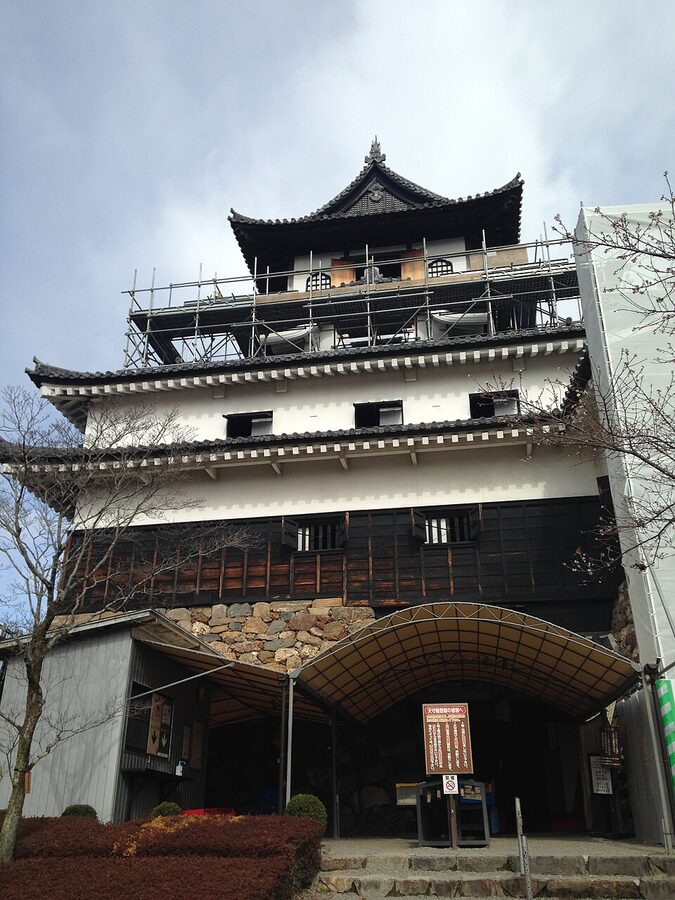
The scholarly classification is bōrō-gata fukugō-shiki, “watchtower-complex style”, meaning the top two storeys are stacked as a separate watchtower on a two-storey residential base, and a small annex is attached to the main block. Only Inuyama, Kōchi, and the lost Azuchi daitenshu were built in this idiom. Himeji and Matsumoto are sōtōgata (“bird-tower style”) — taller, more unified, later. Inuyama is older, smaller, and more frankly military. The lower floors were storage and garrison space; the third floor is a decorated reception room with painted ceilings; the fourth floor is a wraparound observation deck. Only the top floor was built for looking at things.
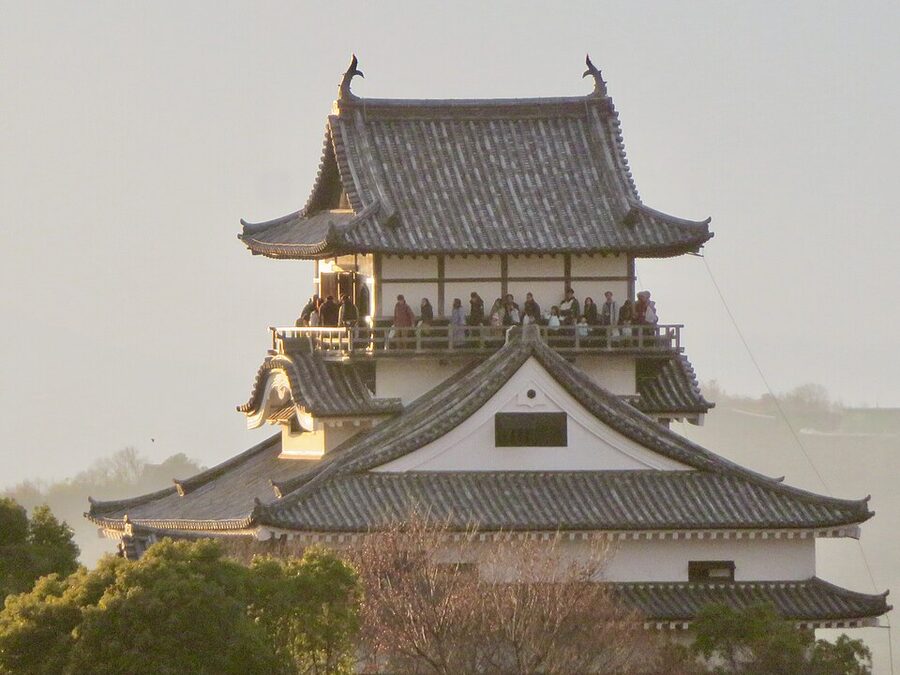
There is one feature Inuyama has that no other surviving castle in Japan offers. The top-floor kōran balcony, the wooden railing at the edge of the uppermost floor, runs unbroken around all four sides of the tenshu, and you are allowed to walk on it. Every other original-12 castle restricts you to an interior loop. At Inuyama you step outside, at the top of a four-century-old wooden keep, onto a 15-metre-high veranda with a head-height wooden railing and nothing between you and the Kiso River except a lot of air. The flooring is the same pine the Ishikawa carpenters laid in the 1580s. You walk the circuit slowly, because the boards creak, and because if you are even mildly sensitive to heights it is an experience.
The dating question is the other thing that makes Inuyama interesting, and it is unresolved. The received twentieth-century view, based on documentary sources and the 1961-65 dismantling survey, was that the lower two storeys dated from the 1537 Oda relocation of the castle to its current cliff, and the upper two storeys were added in or around 1601 by the Ogasawara or by Ishikawa Mitsuyoshi’s rebuild. This made Inuyama the oldest original-construction tenshu in Japan by a considerable margin, and every Japanese castle book printed before 2020 said so. Then the Nagoya Institute of Technology ran a dendrochronology on the structural timbers in 2019 and came back with felling dates clustered between 1585 and 1588. That would make the whole tenshu later than the 1537 tradition, roughly contemporary with Matsumoto’s 1596 timbers, and would unwind the “oldest” claim.
I will say this about the controversy. The 2019 result is not yet the consensus. Some Japanese scholars have argued that the sampled timbers were concentrated in the upper, later-addition floors and that the lower-floor beams, which were the ones the tradition identified with 1537, were not well represented in the sample. Others have accepted the result and argued that the “1537 foundation” is of the earlier castle buildings on the site rather than of the surviving tenshu. Either way, Inuyama is one of the three or four oldest surviving tenshu in Japan, and it almost certainly predates Matsumoto. The partisans of Maruoka Castle in Fukui, which has a traditional 1576 date, argue a different case I am not qualified to adjudicate. The signage at Inuyama still says “oldest surviving tenshu in Japan”; I would personally say “one of the oldest”. The distance between those two claims is not very large.
1469 — the Iwakura Oda fort and the Muromachi origins
The first fortification on the Inuyama bluff was not the current castle and not on the current spot. In the first year of the Bunmei era, 1469, during the long unwinding of the Ōnin War, an Iwakura-branch Oda retainer named Oda Hirochika built a small earthwork fort at a lower location nearby. The Iwakura Oda were one of several Oda lineages competing for dominance in Owari Province, and Hirochika’s fort at Inuyama was a forward post controlling the Kiso River crossings into Mino. It was not architecturally significant, and its remains are today under the parking lot of the Inuyama Castle approach.
The Iwakura Oda had a torrid seventy years. They allied with the Western Army during the Ōnin War, they held central Owari through the second half of the fifteenth century, they fought the Kiyosu-branch Oda (the winning line that later produced Nobunaga) through the 1490s and early 1500s, and by the 1530s they were the losing side of an intra-clan civil war that had reduced Owari to a patchwork of rival fortifications. Inuyama, in this period, was a secondary outpost of a declining minor branch. It is worth saying plainly that nothing about the 1469 fort suggests what Inuyama Castle would become. The castle you climb is not the Iwakura Oda’s castle. It is the Kiyosu Oda’s.
1537 — Oda Nobuyasu moves the castle to the cliff
The decisive moment came in the sixth year of the Tenbun era (1537), when Oda Nobuyasu — a younger brother of Oda Nobuhide, who was Oda Nobunaga’s father — was given the Inuyama district as his personal holding. Nobuyasu was a minor figure in Sengoku history but a competent military administrator, and his first act on arrival at Inuyama was to abandon the Iwakura-era lower fort and relocate the castle to the top of the 88-metre Kiso-river bluff. The traditional date for this relocation is 1537; the traditional date for the construction of the lower two storeys of the current tenshu is also 1537, and the 2019 dendrochronology has destabilised the second claim without entirely overturning it.
What Nobuyasu was doing with Inuyama was putting an Owari-province Oda outpost directly opposite the Saitō-clan’s Inabayama Castle across the Kiso River. Saitō Dōsan — the Viper of Mino, the man who had usurped the Toki shugo in Mino Province — was consolidating on the other side. The Kiso River was the contested border. A fort on the south bluff meant Owari could see Mino’s river traffic, control the ferry crossings, and (if it came to it) project force north. Nobunaga’s father Nobuhide was already fighting Dōsan intermittently through the late 1530s and 1540s, and Inuyama was one of the forward bases from which that campaign was waged.
Nobuyasu died in 1544 at the Battle of Kanōguchi, a Saitō Dōsan victory just outside what would later be Gifu, fighting the same Viper his castle had been built to watch. His son Oda Nobukiyo inherited Inuyama and held it through the next two decades under the increasingly chaotic terms of the Oda-family civil wars. Nobukiyo had a complicated relationship with his more famous cousin. When Nobunaga began his consolidation of Owari in the late 1550s, Nobukiyo initially submitted; by the mid-1560s he had switched sides, allying himself with Saitō Yoshitatsu — Dōsan’s son, by then running Mino — and openly resisting Nobunaga. The cousins were fighting an internal Oda war with external Saitō backing, and Inuyama was the prize.
1564 — Ikeda Tsuneoki and the first Oda recovery
Nobunaga solved the Inuyama problem in 1564 by deploying Ikeda Tsuneoki, one of his most trusted early retainers, to take the castle by force. The details are not well preserved in the contemporary record; the Shinchō-kōki chronicle of Nobunaga’s early years passes over the siege in a line or two. What is recorded is that Ikeda’s men took the cliff and that Oda Nobukiyo fled to the Takeda territory in Kai Province, where he lived out a quiet retirement under Takeda Shingen’s protection. Inuyama, from 1564, was a Nobunaga castle in the full sense. Ikeda Tsuneoki held it as castellan for the next seventeen years, and those were the years that mattered most for Nobunaga’s political consolidation.
You have to understand what Ikeda meant to Nobunaga. He had been a playmate of the young Nobunaga in the Nagoya castle-town during the 1540s, his mother had been Nobunaga’s wet nurse, and he was one of the four or five people Nobunaga would trust with independent military commands through the whole of his career. Giving him Inuyama was a mark of how central the castle was to Oda security. The castle sat on the Mino-Owari border; it watched the Kiso River; after Nobunaga took Inabayama in 1567 and renamed it Gifu, Inuyama was the downstream watchpost for his new capital. The two castles functioned as a matched pair through the whole of Nobunaga’s Mino consolidation. You can still see both from either one’s top floor.
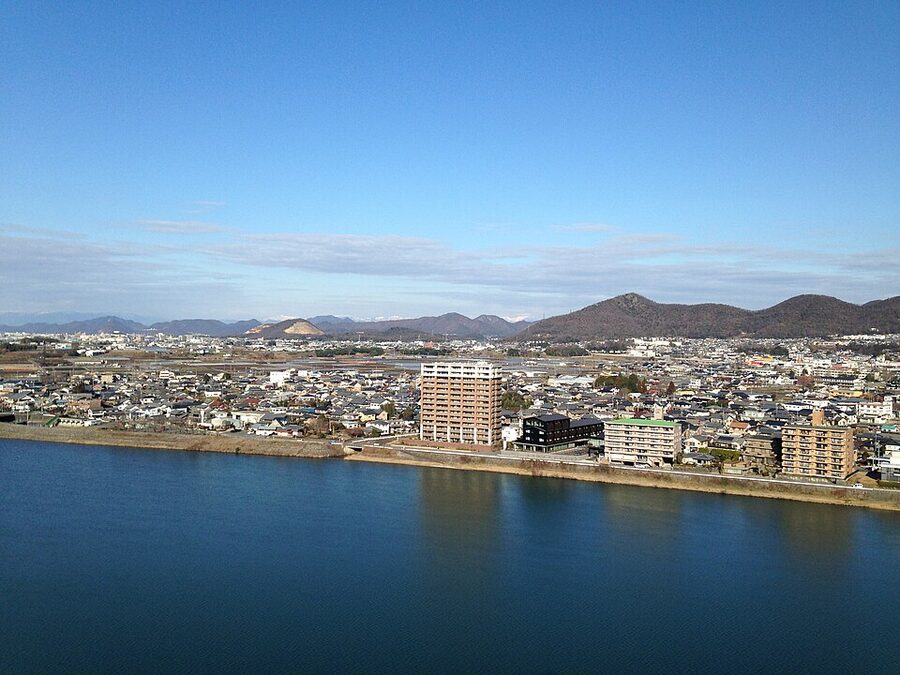
Ikeda’s tenure at Inuyama ran from 1564 to around 1581. During those seventeen years he upgraded the fortifications, deepened the outer moat, added stone walls at the lower approaches, and, if the 2019 dendrochronology is correct, began the construction of the lower floors of the current tenshu, with his carpenters felling pine in the Kiso valley in 1585-1588. He was also the one who accompanied Nobunaga on most of the major campaigns of the 1570s, which meant Inuyama was often under the management of a deputy. In 1581 he moved on. Nobunaga reassigned him to a larger holding in Settsu, and Oda Nobufusa — one of Nobunaga’s own sons, the twelfth child — was installed at Inuyama as castellan.
1582 — after Honnō-ji
Oda Nobufusa’s tenure at Inuyama lasted nine months. On 21 June 1582, Akechi Mitsuhide killed Nobunaga at Honnō-ji and the Oda succession collapsed. Nobufusa died in the chaos that followed — the contemporary sources disagree about where, but most place him in the Honnō-ji compound itself, fighting alongside his father’s household guard. Inuyama was abruptly an orphaned castle. Oda Nobukatsu, Nobunaga’s second son and the eventual titular head of the Oda clan after Hideyoshi’s Kiyosu Conference settled the succession, took nominal control and installed a deputy named Nakagawa Sadanari as castellan.
The arrangement lasted eighteen months. When the Oda-Toyotomi split came to a head in the spring of 1584 — Nobukatsu allied with Tokugawa Ieyasu against Hideyoshi — the Nakagawa were on Nobukatsu’s side and therefore on Ieyasu’s. Hideyoshi needed a forward base for the Komaki-Nagakute campaign that was about to break out in Owari, and Inuyama was the obvious choice. On the 13th day of the third month of Tenshō 12 (22 April 1584), Ikeda Tsuneoki, the same Ikeda who had taken Inuyama for Nobunaga in 1564, switched sides from the Oda/Tokugawa coalition to Hideyoshi, brought his men across the river from Ōgaki, and launched a surprise assault that captured Inuyama Castle in a single day. Nakagawa surrendered. The castle flipped.
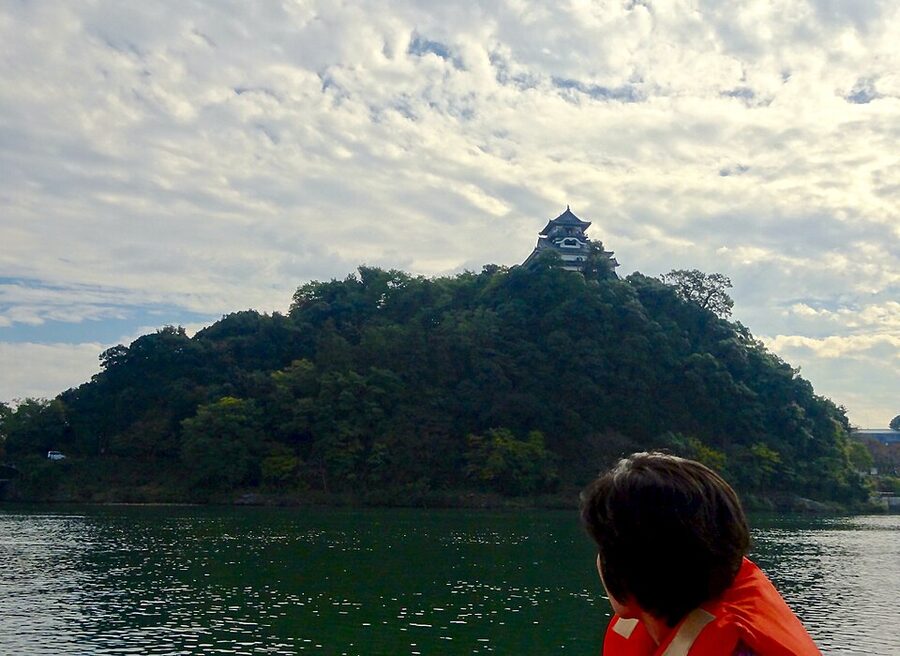
The capture turned Inuyama into the forward headquarters of Hideyoshi’s Komaki-Nagakute campaign. Hideyoshi himself arrived a few days later and installed his main army camp in the castle’s outer compounds, facing south toward Ieyasu’s opposing position at Komaki-yama, ten kilometres down-country. The two armies stared at each other for the next three months. The actual battle — Nagakute, on 9 May 1584 — was fought forty kilometres east, when Ikeda Tsuneoki led a detached column around Ieyasu’s flank and was caught and killed. Ikeda died on the battlefield along with his son Ikeda Motosuke and his son-in-law Mori Nagayoshi, and the Komaki-Nagakute campaign ground to a political settlement shortly afterward. Inuyama reverted to Oda Nobukatsu in 1587, then, when Nobukatsu was stripped of his domain in 1590 for refusing a transfer Hideyoshi had ordered, passed under Hideyoshi’s direct control.
The Oda family lost Inuyama three times, and every time they got it back
The pattern is worth naming, because it is the through-line of Inuyama’s Sengoku story. The Oda family lost control of Inuyama three times in forty-seven years, and three times they got it back. They lost it first in the late 1540s when the Imagawa-aligned forces briefly pushed into central Owari and took the river crossing — Nobuyasu had died at Kanōguchi, Nobukiyo was holding it with a weakened garrison, and for a period between roughly 1547 and the 1550s the castle was nominally subject to Imagawa influence. The Battle of Okehazama in 1560 ended that.
They lost it a second time in 1562-1564, when Oda Nobukiyo himself defected to the Saitō and Nobunaga had to deploy Ikeda Tsuneoki to retake it. And they lost it a third time in 1584, when Ikeda, of all people, switched sides to Hideyoshi and took Nakagawa Sadanari’s garrison in a dawn raid. The first loss was to a rival clan (Imagawa), the second was to an internal defector (Nobukiyo), the third was to a former retainer (Ikeda). Each time the castle changed hands, its strategic role shifted: forward post against Mino, consolidation outpost under Ikeda, Hideyoshi’s headquarters against Ieyasu. The 1584 flip was the last. From 1587 onward Inuyama was, however nominally, always part of the winning central-Japan coalition.
1595 — Ishikawa Mitsuyoshi rebuilds
The rebuild of Inuyama into something close to its modern form is credited to Ishikawa Mitsuyoshi, who received the castle in the fourth year of the Bunroku era (1595) after Toyotomi Hidetsugu was forced to commit suicide and his domain was broken up. Mitsuyoshi was a middle-rank Toyotomi retainer — competent, not famous — and the Bunroku era was when he did the architectural work that made Inuyama a Momoyama-period castle rather than an Oda-era fort. He extended the stone base, added the annex turrets to the south and west of the main tower, and (on the traditional dating) built the upper two storeys of the current tenshu on top of the 1537 lower floors. The 2019 dendrochronology complicates this, but the broad outline, that the castle was substantially rebuilt in the 1590s under Toyotomi patronage, is not in doubt.
There is a local tradition that Mitsuyoshi sourced his timber by dismantling the nearby Kanayama Castle in Mino — the so-called Kanayama-goshi, “Kanayama crossover” — and reassembling its beams at Inuyama. The 1961-65 dismantle-and-repair campaign examined the beams carefully and found no evidence of reassembly marks, tenon re-cuts, or the other signatures that a transplanted timber would have. The tradition is almost certainly wrong. The carpenters under Mitsuyoshi seem to have felled fresh pine in the Kiso valley and built from new, which is consistent with the 1585-1588 dendrochronology window if you accept the view that the felling was for the upper floors rather than the lower ones.
1600 — Sekigahara, the Western Army, and Ishikawa’s surrender
In the tenth month of 1600 (the last year of the Keichō era), Ishikawa Mitsuyoshi made the one wrong bet of his career. He sided with the Western Army, Ishida Mitsunari’s coalition, at Sekigahara, and he fortified Inuyama as one of the forward Western-Army positions on the Gifu-Owari border. He had been assigned a joint garrison under Inaba Sadamichi, Katō Sadayasu, Seki Kazumasa, and Takenaka Shigekado, a respectable roster of minor Toyotomi retainers, and the plan was to hold Inuyama against the Tokugawa advance as a flanking force while Gifu Castle under Oda Hidenobu held the main crossing.
The plan collapsed quickly. Gifu fell to the Eastern Army on 23 August 1600 — a three-day siege, a comprehensive defeat for Oda Hidenobu — and within days the entire Inuyama joint garrison switched sides, leaving Mitsuyoshi isolated in his own keep. Abandoning the castle was his only option. He marched his personal troops west toward Sekigahara to join Mitsunari, and when the Western Army lost the battle on 21 October 1600 he was among the defeated. He should have been executed, on the normal Tokugawa pattern for Western-Army commanders. He was not.
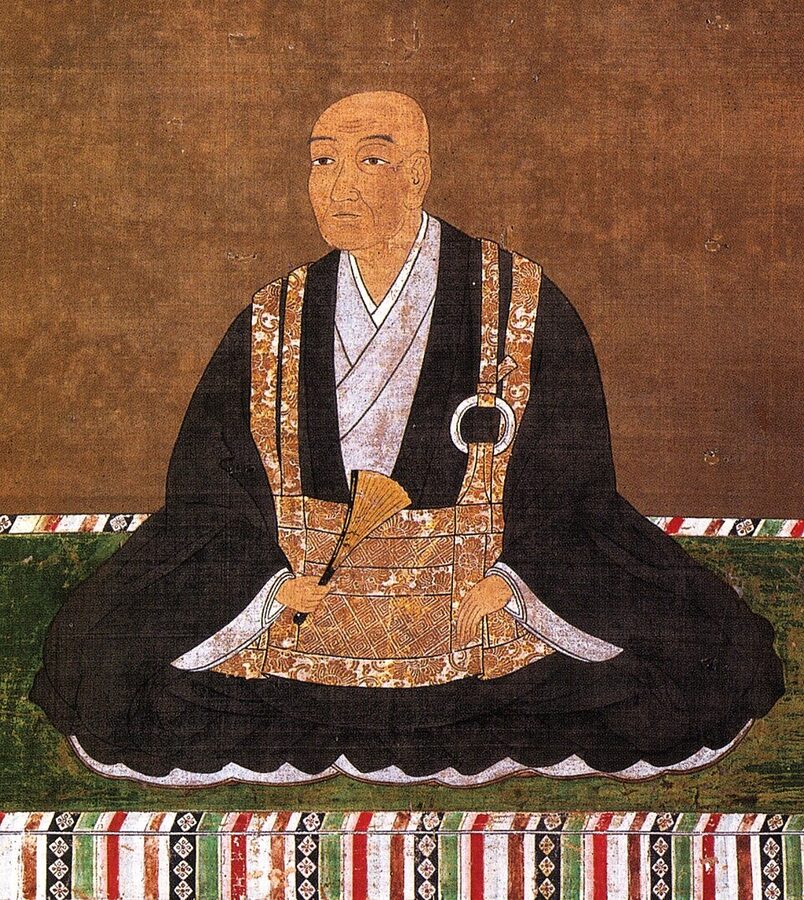
Mitsuyoshi had a specific credit to call on. When the Eastern-Army Kiso clan had been captured and briefly held at Inuyama earlier in the campaign, Mitsuyoshi had released them unharmed rather than executing them — an act of clemency that Yamamura Yoshikado, a Kiso retainer, remembered. After Sekigahara, Yamamura went to Ieyasu and personally pleaded for Mitsuyoshi’s life on the grounds of that past mercy. Ieyasu agreed. Mitsuyoshi was stripped of Inuyama but spared execution, given a small retirement stipend, and died in obscurity in 1619. The castle was reassigned to Ogasawara Yoshitsugu, a Tokugawa-aligned retainer, who held it for six years before passing it on to Hiraiwa Chikayoshi in 1607.
1617 — Naruse Masanari, the nine-generation dynasty
The Naruse settlement that defined Inuyama for the next two and a half centuries began in 1617, when Naruse Masanari was appointed as tsuke-garō, attached house-elder, to the Owari Tokugawa branch and given Inuyama as his personal fief. Masanari had been a long-serving Tokugawa retainer who had fought at Nagakute in 1584, commanded troops at Sekigahara, and been a senior staff officer at Ōsaka in 1614-1615. The Owari Tokugawa domain had been established in 1610 for Ieyasu’s ninth son Yoshinao, and Inuyama became a sub-fief within it — meaning the Naruse held it as daimyō in their own right but were formally subordinate to Owari rather than directly to the shogunate.
Masanari’s first major building campaign at Inuyama was the 1620 renovation of the tenshu, during which the distinctive karahafu arched gables on the third floor and the nyūmoya double-hipped lower roof were added. The castle as you see it now is substantially the Naruse rebuild. Every Naruse generation that followed — nine of them, from Masanari in 1617 to Masamitsu at the Meiji Restoration in 1868 — maintained the tenshu, repaired the stone walls, and ran a small and politically uneventful sub-domain of 35,000 koku. They were middle-rank hereditary vassals, they did their sankin-kōtai rotation through Owari rather than direct to Edo, and they kept a low profile.
The one item of genuine drama in the Edo-period Naruse tenure is that the seventh-generation head, Naruse Masaharu, became an unexpectedly close friend of the Nagasaki-based Dutch trading factor Hendrik Doeff in the early nineteenth century. Masaharu had carpets shipped in from the Dutch, and the top-floor observation deck of the tenshu was carpeted for his lifetime — an unusual fusion of castle architecture and Dutch mercantile textile that the Shōwa restoration of the 1960s reconstructed based on surviving inventories. You will see the carpet on the top floor today. It is a nineteenth-century detail embedded in a sixteenth-century building, and it is one of the small things that makes Inuyama specific.
1871 — the Meiji seizure and the 1895 return
The Meiji Restoration of 1868 removed the Naruse from their formal daimyō status along with every other domain lord in Japan. The castle auxiliary buildings — the yagura, the outer gates, the ninomaru wall — were torn down through 1872 and their materials sold off. The tenshu alone survived, on the standard Meiji pattern where major keep buildings were sometimes preserved while their subsidiary structures were demolished for timber. Aichi Prefecture seized the tenshu under the nationwide castle-abolition haijō-rei of January 1873, and for the next two decades it stood as an untended state property on the bluff, slowly deteriorating.
Then on 28 October 1891 the Nōbi earthquake struck. The Nōbi — magnitude 8.0, epicentre in Gifu Prefecture — remains the largest inland earthquake in Japanese history, and it did serious damage to every castle in the region. Inuyama lost the south-east annex turret completely; the tenshu’s own structure shifted on its base and the upper floors developed visible tilt; stone walls in the outer compound collapsed. The castle was by this point more than three hundred and fifty years old and had never been in worse condition. Aichi Prefecture had neither the budget nor the political will to repair it, and the tenshu was, if not in imminent collapse, then well on the way.
In 1895, Aichi made the Naruse family an offer that looks odd by modern heritage-management standards and was probably unique at the time. The prefecture would give Inuyama Castle back to the Naruse, transfer ownership free of charge, on the condition that the Naruse repaired the earthquake damage and maintained the building thereafter at their own expense. The ninth-generation head Naruse Masamitsu agreed. The deal made the Naruse the only private owners of an original-construction major castle tenshu in Japan, and it stayed that way from 1895 until 2004.
The Naruse did the repairs. The earthquake-damaged upper structure was stabilised between 1897 and 1901; the fallen south-east annex turret was not rebuilt (the damage was too extensive and the family did not have the money) but the main tenshu was returned to structural soundness. In 1935 the keep was designated a National Treasure under the Meiji-era Old National Treasures Preservation Law. In 1952, under the post-war Cultural Properties Protection Law, it was redesignated as a New National Treasure along with the four other original-12 tenshu that had earned the top-tier status — Himeji, Matsumoto, Hikone, Matsue, and Inuyama. The family still owned it.
1961-1965 — the Shōwa dismantle-and-repair
Naruse Masao, the eleventh-generation head, died in 1949 and was succeeded by Naruse Masakatsu. Masakatsu is the man who committed the family to the large-scale Shōwa restoration of the tenshu. The keep had taken serious damage in the Ise-wan Typhoon of September 1959 — the worst typhoon to hit central Japan in the twentieth century, which killed more than five thousand people and did structural damage to roofs, windows, and the south-west annex from which the castle had not been properly protected. By the end of 1959 it was obvious that a full dismantle-and-repair campaign was needed, on the Matsumoto 1950-1955 pattern.
Work began in 1961 and ran to 1965. The whole tenshu was dismantled down to the stone base, every beam examined, members replaced or repaired as needed, the entire building reassembled. This is also when the 1960s survey team established — conclusively, via joint and construction analysis — that the Kanayama-goshi relocation tradition was false and that the castle had been built from fresh-felled timber. The 2019 dendrochronology sampled the same beams the 1960s team had catalogued, which is why the 1585-1588 felling dates have the authority they do. The Shōwa work cost about 250 million yen, most of it covered by Aichi Prefecture and the national Cultural Properties Commission, with the Naruse family contributing a substantial minority share.
The building that emerged from the 1961-65 restoration is the one you climb today. Every beam was returned to its original position; where replacements were necessary, pine from the same Kiso-valley forests as the 1580s originals was used; the stone base was repointed but not expanded. The karahafu gables, the nyūmoya lower roof, the top-floor wraparound balcony, the interior karahafu room — all restored to their Edo-period specification. What the Shōwa work did not restore was the demolished 1890s annex turrets, the outer gates, or the ninomaru residential buildings. Those remain gone. The tenshu stands alone on the honmaru, ringed by its stone base and nothing else.
2004 — the end of private ownership
On 1 April 2004, at a small ceremony in the honmaru, the thirteenth-generation head Naruse Masatoshi formally transferred ownership of Inuyama Castle from the Naruse family to a newly established foundation called the Inuyama-jō Hakutei Bunko Zaidan (Inuyama Castle Hakutei Bunko Foundation). The family had held the castle as personal property for 109 years, from the 1895 return by Aichi Prefecture until 2004, and had concluded, after the last major repair cycle, that maintaining a National Treasure on a private balance sheet was no longer possible. Masatoshi’s sister Naruse Junko was installed as the foundation’s president. The castle passed, finally, to an institutional owner.
I want to be honest about what 2004 meant. The Naruse held the castle for nine generations as daimyō and a further five as private owners under Meiji and Shōwa, and the building survived three and a half centuries largely because successive family heads chose to keep paying for it. In 1895 Naruse Masamitsu accepted a state property on condition of earthquake repair. In 1901 he finished those repairs at a cost that consumed most of the family’s remaining Meiji-era capital. In 1959 Naruse Masakatsu committed to a four-year dismantle-and-repair that cost more than the family’s entire annual income. The foundation transfer in 2004 was not a surrender — it was an acknowledgment that the thing the family had been protecting was bigger than any family could protect alone. The black silhouette above the Kiso River stands because the Naruse refused, four times over, to let it fall.
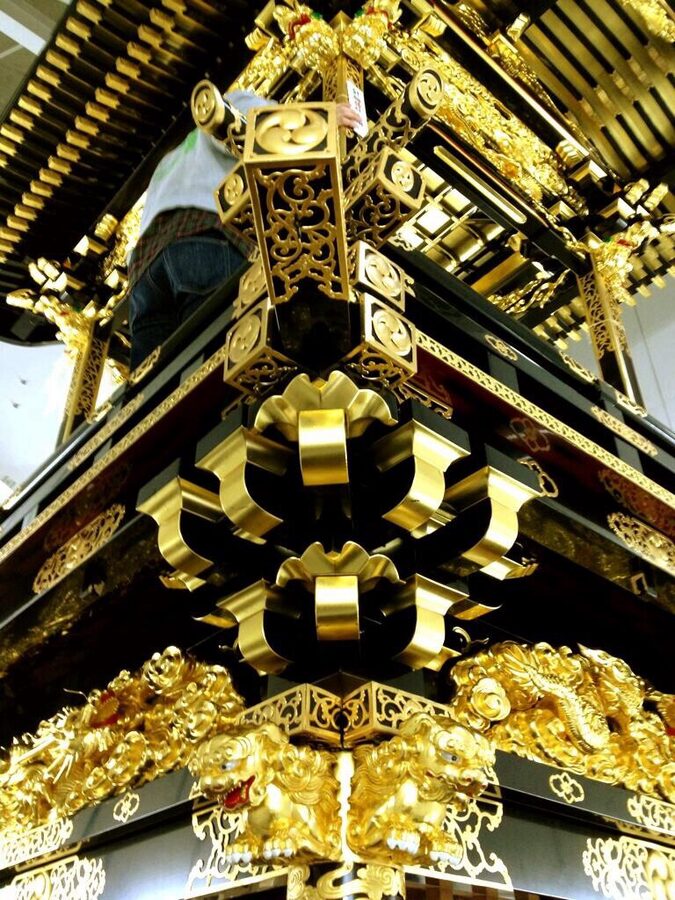
Architectural details — what to look for when you climb
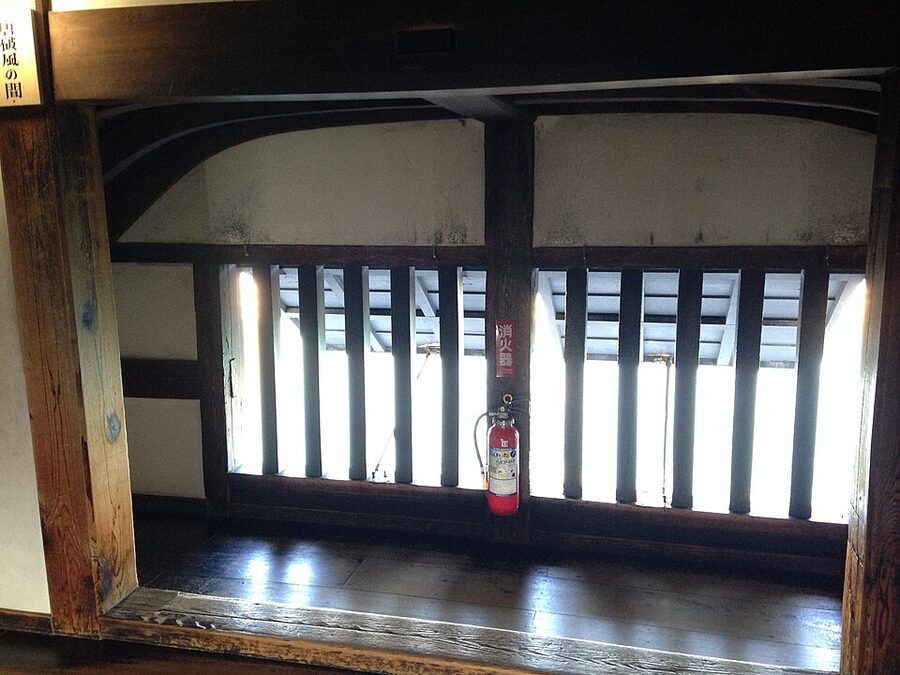
The climb up the tenshu is four floors plus a half-landing basement, which in practice means four very steep wooden staircases, each at a gradient close to 55 degrees. Inuyama’s stairs are less vertical than Matsumoto’s 61-degree flights, but they are still defensive — a climber with a sword cannot easily draw it on the way up. The treads you are walking on are the original Edo-era pine, worn in a trough pattern down the middle from four centuries of feet using exactly the same line. As at Matsumoto, you remove your shoes at the entrance and climb barefoot or in socks. The interior temperature in August reaches 33 Celsius; bring water.
On the second floor — the armoury room, bugu-no-ma — the floor area is 246 square metres and the original ceiling beams are visible overhead. This was storage and garrison space in the Ishikawa and Naruse periods; the rack marks on the walls where the armour cases and matchlock-firearm racks stood are still faintly visible. The third floor is where the interior shifts from military to residential. The karahafu-no-ma, the karahafu gable room, is an early-Edo noble-reception space with painted ceiling panels, 82 square metres, and the inside faces of the distinctive arched gables you saw on the exterior. This is the floor the Naruse would have used for formal visits; the domain business was run from a separate building in the ninomaru that has not survived.
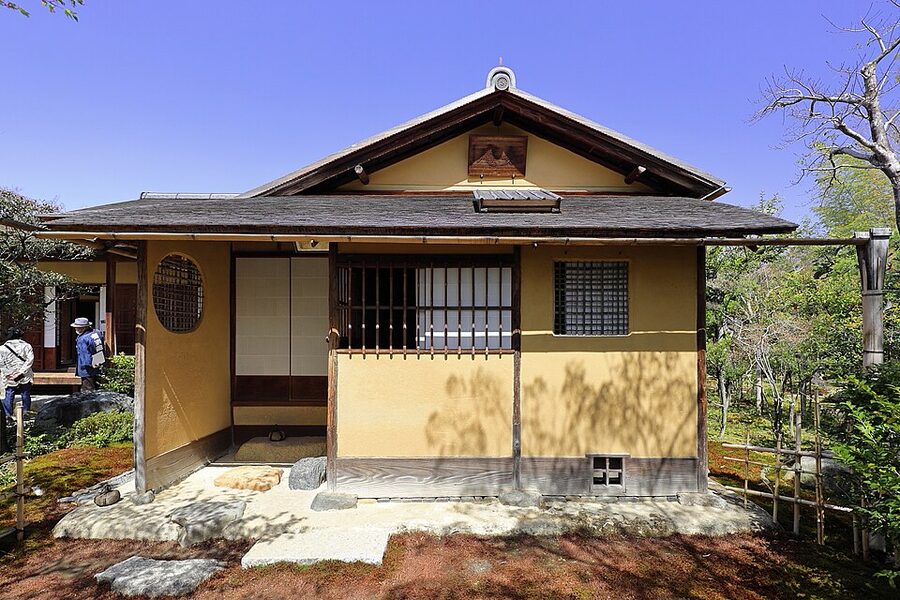
The fourth floor is the one you are climbing for. It is the kōran-no-ma, the railing room, and the 50 square metres of interior floor space opens out onto the wraparound exterior balcony. The ceiling is a coffered gō-tenjō, painted, about 49 square metres. You step through a removable wooden screen onto the balcony, which runs unbroken around all four sides at a height of 15 metres above the honmaru. The railing is waist-height and of-its-period, and from it you see: north across the Kiso River to the Gifu-Kakamigahara bank, with Mount Kinka and Gifu Castle visible on a clear day; west up the river toward the Kiso-valley Alps; south over the old castle town; east to Mount Igi. Every direction is part of what the castle was built to watch.
The feature on top of the keep that most visitors miss is the shachi ornamental fish on the ridge ends. These are the curled-tail roof ornaments that every Japanese castle uses to ward off fire; Inuyama’s current shachi are the second set installed in the Heisei era, because on 12 July 2017 a lightning strike hit the tenshu’s lightning rod (the rod itself was bent visibly) and the north-side shachi was shattered from body to tail. Fragments fell onto the honmaru roof and several broke apart. A new shachi was commissioned in kawara tile from the same Nagoya workshop that had made the 1965 set, installed on 26 February 2018, and formally unveiled at a small ceremony on 17 March 2018. The fragments of the 2017 shachi were discovered thirty metres north of the tenshu in March 2020 and are now displayed in the castle museum at the foot of the hill.
Where to visit Inuyama Castle today
Inuyama Castle and the tenshu climb
The castle compound is open daily 9am to 5pm, with last entry 4:30pm. The entry ticket changed in March 2026 to the current ¥1,000 for adults and ¥200 for children — up from the ¥550 / ¥110 rates that had held for most of the Heisei era, on the Hakutei Bunko Foundation’s argument that the previous pricing did not cover long-term conservation costs. Combination tickets that include the Jakkō-in castle-town museum, the Karakuri Exhibition Hall, the Donden-kan float hall, and the Urakuen garden run to ¥1,600 for adults and are worth buying if you are doing a full Inuyama day. The castle closes for major New Year days (29-31 December) and is open every other day of the year.
Practical advice for the climb. Wear socks without holes — shoes off at the entrance, carry in a plastic bag issued there, you are on bare 16th-century pine. The stairs are steep; hold the handrail. There is no disabled access — the original tenshu has no elevator and will not get one, by deliberate decision of the Hakutei Bunko Foundation, to preserve the authenticity of the structure. Visitors with mobility limitations can still walk the honmaru courtyard and photograph the tenshu from the outside, which is worth doing in its own right. The wraparound top-floor balcony is open to anyone who makes it up; the boards creak underfoot and the railing is waist-height and of-its-period. If you are afraid of heights, you will know. Most people still go out.
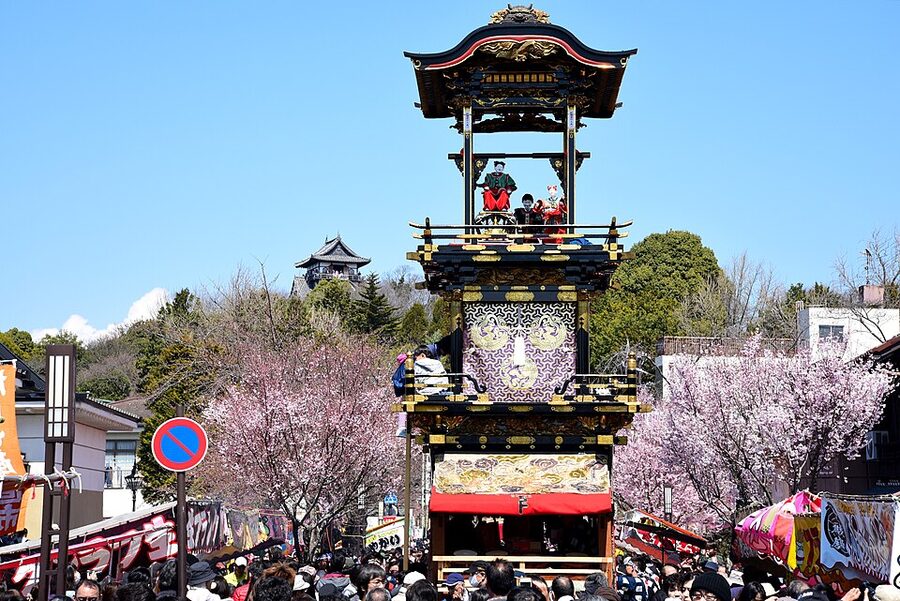
Urakuen garden and the Jo-an teahouse
A three-minute walk east of the castle entrance brings you to the Urakuen garden (有楽苑) and the Jo-an teahouse (如庵) — one of the three National Treasure tea rooms in Japan and the single most important standalone building in Inuyama after the castle itself. Jo-an was built in 1618 by Oda Urakusai, younger brother of Oda Nobunaga, at the Shōden-in sub-temple of Kennin-ji in Kyoto, where Uraku had taken vows after surviving Honnō-ji. Uraku was a serious student of the tea ceremony and a protégé of Sen no Rikyū; Jo-an is the building he designed for his own late-life tea practice, and it is a textbook Momoyama-period wabi-cha teahouse with a three-tatami interior, a built-in shoin window, and a naturally-curved structural beam that is one of the most photographed pieces of carpentry in Japanese architectural history.
Jo-an had a travelled twentieth century. It was moved from Kennin-ji in 1908 to the Mitsui family’s Kyoto residence; in 1938 it was relocated to Ōiso in Kanagawa; in 1972 it was moved one final time to Inuyama, to a purpose-built stroll garden the city laid out around it. The garden itself, Urakuen, is a 1970s composition, not a historic garden, and most of the planting is four to five decades old. The Jo-an structure, though, is the 1618 original. You cannot enter the teahouse (it is viewable only from the path), but you can stand within a few metres of it, and the approach is arranged so that the moss carpet, the stone basin, and the curved south-west support beam present themselves in the sequence Uraku intended.
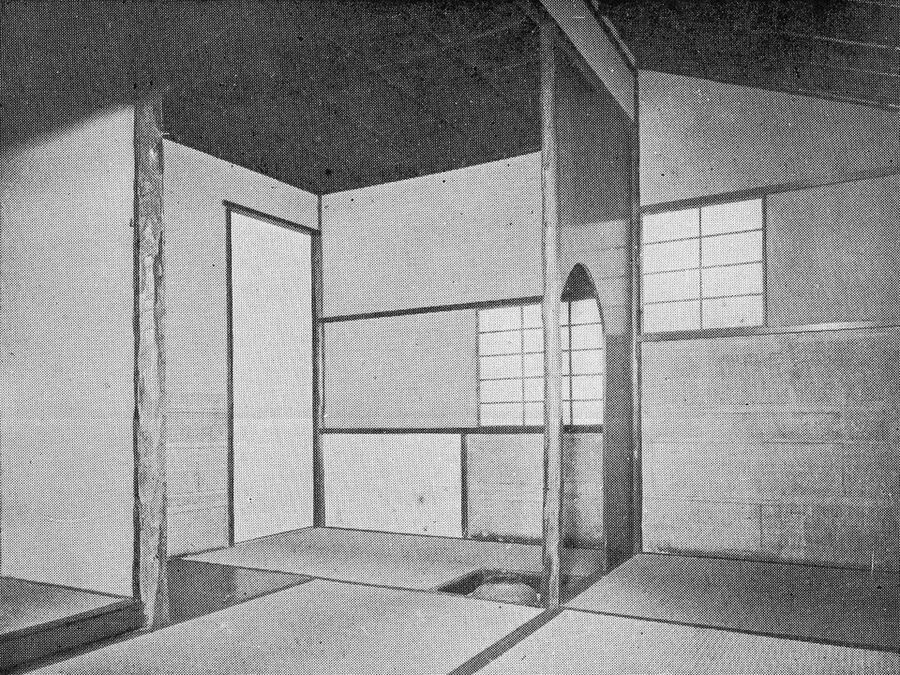
The Urakuen garden also contains two other period buildings the city has accumulated — the Genan, a modest sukiya-style residence of the Uraku school, and the Kōan, a nineteenth-century teahouse relocated from Nagoya — and the full circuit takes about forty minutes at a deliberate pace. Entry is included in the castle combination ticket or ¥1,000 on its own. There is a small tea café at the garden entrance where you can order matcha and a seasonal wagashi for ¥650, served with a view toward Jo-an. This is, I would argue, the single best way to sit with the building, which you cannot enter but which you can contemplate from a distance with a cup in your hand.
Inuyama Matsuri — the 360-year float festival
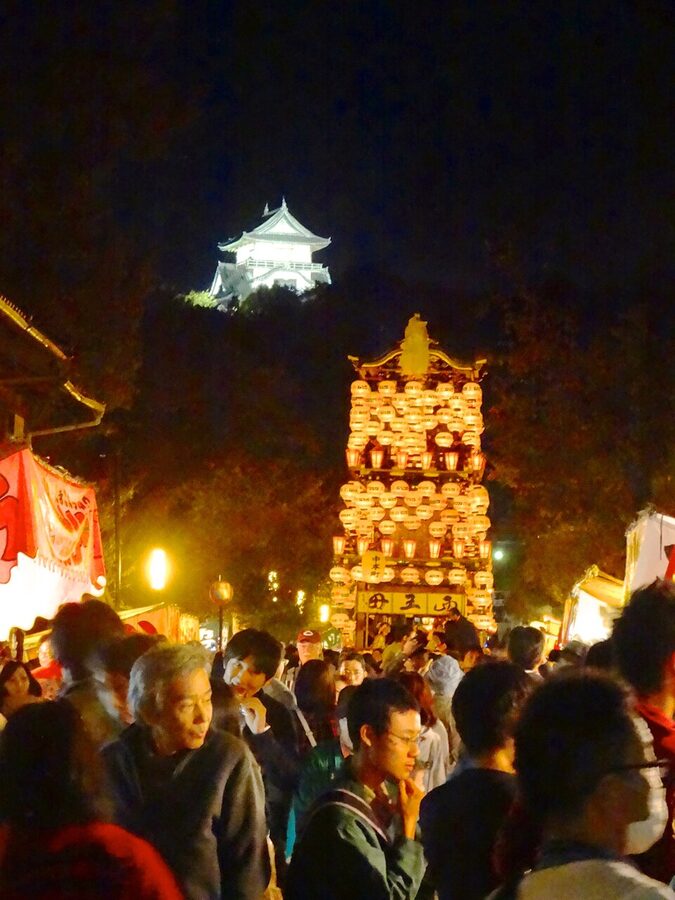
The Inuyama Matsuri, held on the first Saturday and Sunday of April every year since 1635, is the biggest annual event in the old castle town and one of the oldest continuously-operated yamaboko-float festivals in Japan. Thirteen three-tier floats — each about seven metres tall, each owned by a neighbourhood guild, each with its own mechanical karakuri puppet vignette on the top tier — are pulled through the streets from Haritsuna Shrine to the castle gate and back, over two days, with night parades on Saturday evening when the floats are lit by three hundred and fifty lanterns each. The festival was added to the UNESCO Intangible Cultural Heritage list in 2016 as part of the nationwide Yama-Hoko-Yatai float-festivals group.
If you are choosing between the major yamaboko festivals, the Inuyama Matsuri sits in an interesting middle position. It is smaller than Kyoto’s Gion Matsuri (thirty-three floats to Inuyama’s thirteen), smaller than the Tsushima Tennō Matsuri just to the west in terms of overall crowd, but it has the single advantage none of them match — the destination of the parade is an actual working castle rather than a shrine or a waterway. The floats end at the Inuyama Castle gate, with the tenshu visible on the bluff behind them, and the night lighting on Saturday evening combines the lantern-lit yamaboko with the floodlit keep in a pairing no other festival in Japan delivers. If you have any interest in matsuri at all, the first weekend of April in Inuyama is worth planning around.
Ukai cormorant fishing on the Kiso River
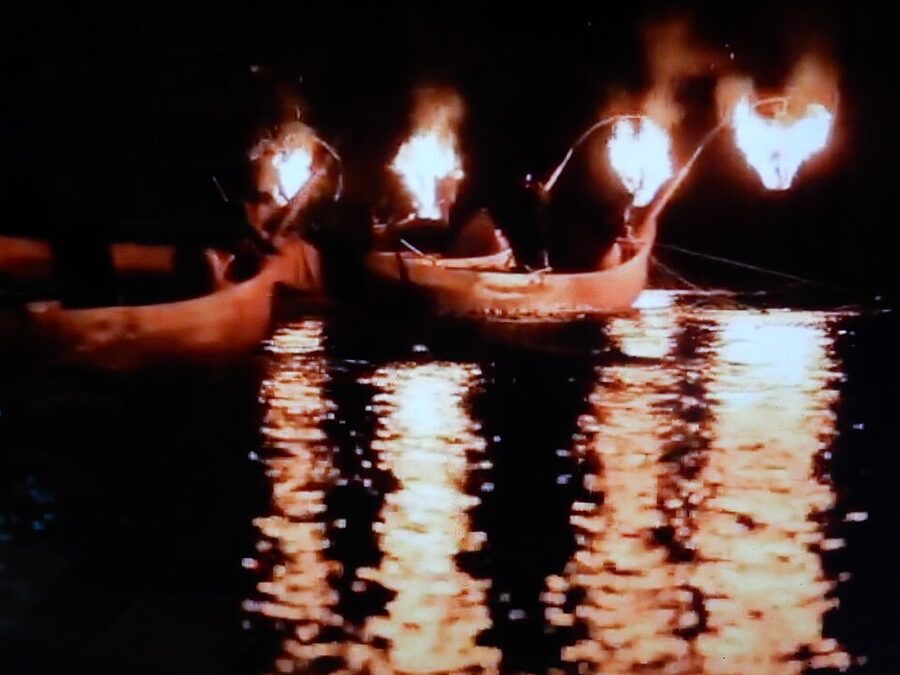
Inuyama’s summer draw, running from 1 June through 15 October every year, is the ukai cormorant-fishing operation on the Kiso River. This is one of only three surviving imperial cormorant fisheries in Japan — the others are Nagara River ukai in Gifu, and Uji ukai in Kyoto — and like those other two operations it has been running continuously for more than thirteen hundred years. The Kiso River ushō (cormorant masters) hold an imperial household license, sail out from the riverside port at dusk every evening in the season, and catch ayu sweetfish by hand using tethered cormorants with rings around their necks that prevent them from swallowing anything over a certain size.
You watch from a flat-bottomed yakata-bune riverboat that leaves the Inuyama-bashi bridge pier at 6pm and runs until about 8:30pm. Tickets are ¥3,000 for adults on the basic public viewing boat; there is a premium dinner option at ¥8,500 that includes a meal on board, and a charter option for groups. The key detail is that the ukai runs after dark — the cormorants fish by the light of iron braziers suspended from the fishing boats, and watching from a viewing boat you see the water illuminated in a ring of firelight around each fishing craft, the birds diving, the fish flashing silver when the ushō haul them up. It is the same practice the Man’yōshū poets described in the eighth century. The castle is usually visible on the bluff above the fishing grounds, floodlit against the night sky.
Meiji-mura open-air architectural museum
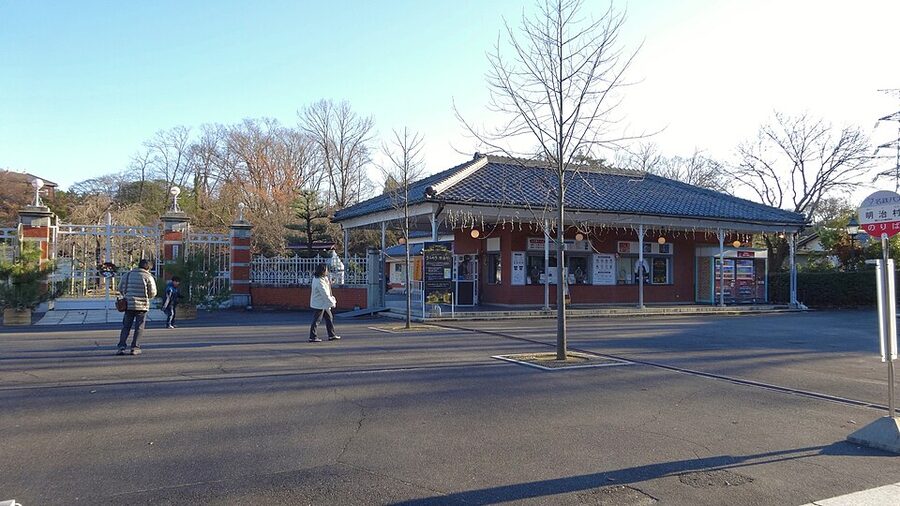
Meiji-mura (明治村, “Meiji Village”) is a fifteen-minute taxi or thirty-minute bus ride north of central Inuyama, and it is the other major stop that turns a castle day-trip into a full Inuyama two-day itinerary. The museum was founded in 1965 by the architectural historian Taniguchi Yoshirō and the former Nagoya Railroad president Tsuchikawa Motoo, and it is built around an assembled collection of sixty-seven historic Meiji-era buildings relocated from around Japan and reconstructed on a 1-square-kilometre site in the Iruka-ike lake hills. The collection includes the original façade of Frank Lloyd Wright’s Imperial Hotel Tokyo (demolished 1968, relocated as a partial façade here), the old Sapporo telephone exchange, the Nagoya Prison central guard tower, and a working narrow-gauge steam locomotive that runs a mile-long line through the site.
Entry is ¥2,000 for adults; the site takes most of a day to walk at any pace. If you are building an Inuyama itinerary and you are interested in Japanese architecture more broadly than the sixteenth century, Meiji-mura is the natural second-day stop. The combination of Inuyama Castle (1537 foundations, 1580s-1620s upper floors, 1961-65 dismantle-and-repair) and Meiji-mura (1870s-1910s buildings, 1965 museum assembly) is a cross-section of the whole recent history of Japanese building — the pre-modern castle, the post-restoration encounter with Western styles, and the post-war conservation ethic that preserved both. Three and a half centuries of architecture in one overnight stay.
Combining Inuyama with Gifu — the upstream castle day
The single best pairing for an Inuyama day is the upstream journey to Gifu Castle, twenty kilometres northwest along the same Kiso-river valley that both castles were built to watch. Meitetsu-line trains run from Inuyama Station direct to Gifu Station in 25 minutes, and from Gifu you take the Nagara-bashi ropeway up Mount Kinka to the Gifu tenshu. The total travel between the two castle summits is about 90 minutes, city-centre to city-centre, and the payoff is that you see — physically, in one day — the matched pair of Oda castles that anchored sixteenth-century central Japan. The view from each to the other is still clear on a good day.
If you have more time and an interest in the sixteenth century generally, you can extend the loop east via Azuchi Castle (the Nobunaga keep that no longer exists, in Shiga Prefecture, two hours east by train) or north to Matsumoto Castle (the black-lacquered 1596 tenshu, two and a half hours north via the Shinano limited express). The three castles together — Azuchi destroyed, Inuyama original, Matsumoto original-but-later — read as a chronological section through the Momoyama-to-early-Edo castle-building tradition. I would do them in that order: the remembered Nobunaga castle, the surviving Oda castle, the Toyotomi-era successor. A single overnight in Inuyama is plenty to hold the middle of that sequence.
Naruse Masanari’s grave and the foundation museum
Naruse Masanari — the first-generation lord, the man who received the castle from Hidetada in 1617 and began the 1620 renovation — is buried at Dairin-ji, a small Sōtō-sect temple about ten minutes’ walk south-east of the castle approach. The grave is a modest stone marker, signed and dated, inside the temple’s inner cemetery. Dairin-ji itself was founded in 1615 under Masanari’s patronage and was the Naruse family temple for the whole nine-generation tenure. If you are doing a full Inuyama day, the temple is worth a twenty-minute stop. The grave is easy to miss — it is a stone in a small cemetery, tucked against the temple’s north wall — which is consistent with Masanari’s personality. He was a senior Tokugawa retainer who preferred to be inconspicuous.
The foundation that now owns the castle maintains a small museum at the base of the castle hill called the Inuyama-jō Hakutei Bunko Rekishi Bunka-kan (Inuyama Castle Hakutei Bunko Museum of History and Culture). The collection is drawn from the Naruse family’s private holdings — a seventeenth-century dantō dagger by the Chinzen swordsmith Sayasuyoshi with a confirmed 1357 date that was designated an Important Cultural Property in 1940, a six-panel folding screen depicting Nagashino and Komaki-Nagakute in which the first Naruse lord Masanari’s father appears in the left panel (Nagashino) and Masanari himself appears twice in the right (Komaki-Nagakute, as a young officer), and a collection of Edo-era maps of the castle and the domain. Entry is ¥300, or included in the castle combination ticket.
Getting there
From Nagoya, the Meitetsu Inuyama Line runs from Meitetsu-Nagoya Station to Inuyama Station in about 28 minutes, with departures every 10-15 minutes from 6am to 11pm. The ticket is ¥570 one-way and the trains are frequent enough that you do not need a reservation. From the Inuyama Station main exit, the castle approach is a 15-minute walk north through the old castle-town streets — this is the route that puts you past the Haritsuna Shrine, the Karakuri Exhibition Hall, and the old merchant houses on Honmachi-dōri, which is how you are meant to approach. Do not take the taxi. The walk is the point.
From Tokyo, the fastest route is the Tōkaidō Shinkansen to Nagoya (1h40) and then the Meitetsu local. Total door-to-door is about 2h30, which makes Inuyama a feasible day-trip from Tokyo but not a comfortable one. The sensible play is to stay overnight — Inuyama has a handful of small ryokan and guesthouses in the castle-town district, and the town after the last day-tripper bus has left at 5pm is a substantially different place than during the day. From Kyoto or Osaka, it is the Shinkansen to Nagoya then the Meitetsu, total 1h50-2h10. From Takayama, a scenic alternative is the JR Hida limited express down the Kiso valley to Nagoya and back up on the Meitetsu — this takes roughly 3 hours but runs through some of the best Kiso-valley mountain scenery in the country.
The small castle on the river that kept coming back
I opened with the view from the top-floor balcony, across the Kiso River to the mountain where Gifu Castle once stood, because that view is the whole point. What Inuyama is, what Inuyama has always been, is the smaller of a matched pair of castles on opposing banks of the Kiso, holding a river crossing that mattered for a century and then carried on mattering for four more. Nobunaga looked back at it from Gifu; Hideyoshi held it against Ieyasu; Ieyasu gave it to the Naruse; the Naruse held it for nine generations; the foundation holds it now. The Oda family lost control of Inuyama three times during the Sengoku and got it back three times, and by the end of that cycle the castle was an Oda-adjacent Tokugawa-Naruse keep that stayed in the same family for 252 years after the last shot was fired.
When you stand on the wraparound balcony at the top of the tenshu and the Kiso River is running below you, what you are looking at is the reason the castle exists. The river was the contested border; the bluff was the vantage point; the keep was built to watch both. Four and a half centuries after Oda Nobuyasu picked this spot, the geography still reads the way it was designed to. The black silhouette above the Kiso is not a fortress that survived because armies failed to take it. It is a fortress that survived because the Naruse family, across nine generations and then five more in the private-ownership era, refused to let it fall. If you are travelling through central Japan, the Meitetsu from Nagoya runs hourly and the walk from the station to the gate is fifteen minutes. The boards on the top-floor balcony creak. Most people still go out.