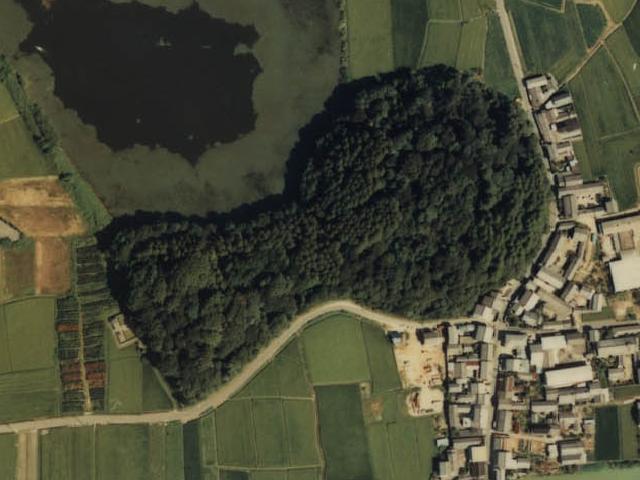
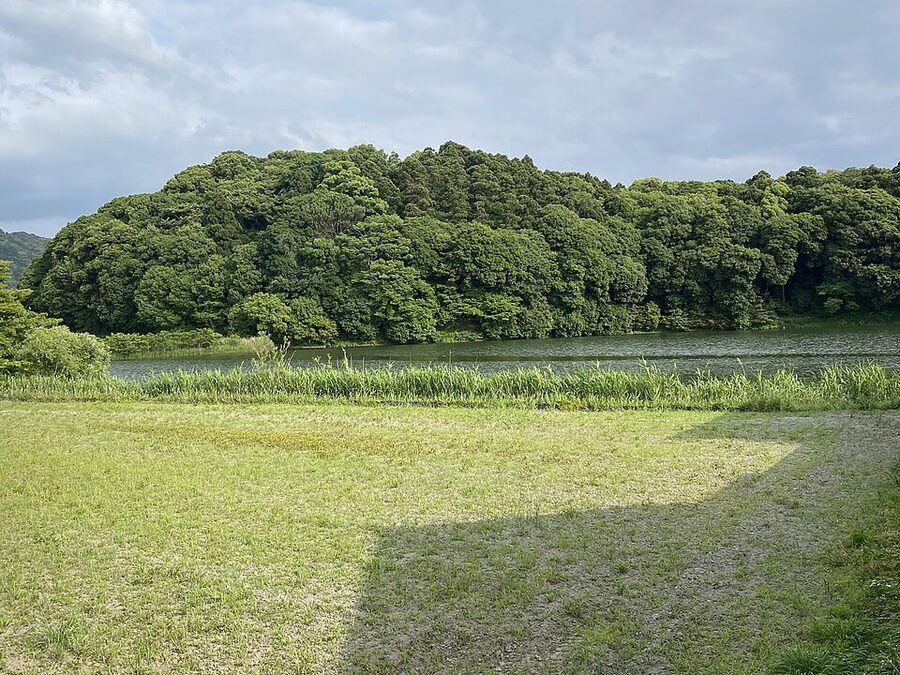
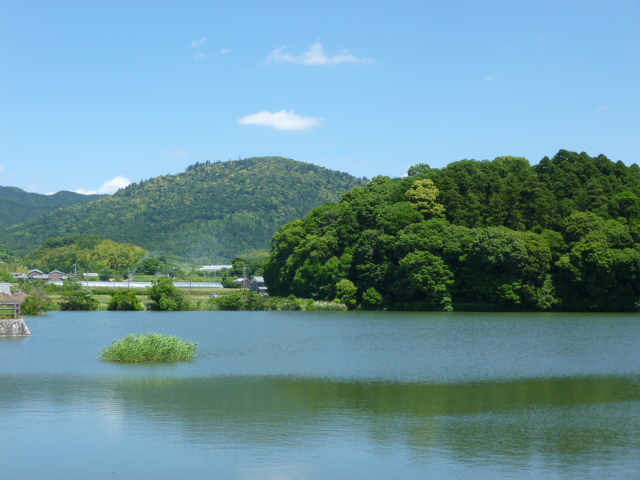
Hashihaka Kofun is the oldest large-scale burial mound in Japan, and possibly the single most important unexcavated archaeological site in East Asia. It was constructed around the year 250 CE, about thirty kilometres south of modern Nara, for the burial of a person who may have been the shamaness-queen Himiko of Yamatai — the ruler whose embassy to Wei-dynasty China in 238 CE produced the earliest external documentation of a unified Japanese political authority. The tomb is 280 metres long, 160 metres wide at the rear, keyhole-shaped in the format that would define Japanese monumental burial for the following four centuries, and occupied by a substantial but unknown quantity of burial goods, ceremonial objects, and human remains. Nobody has been inside the tomb since it was sealed seventeen hundred and seventy-five years ago.
This is because in 1889 the Imperial Household Agency, the government organ that administers the imperial family’s genealogical records and property, formally designated Hashihaka Kofun as the tomb of Princess Yamatototohimomosohime-no-mikoto (倒従迫日百袜姫命), a legendary figure from the Nihon Shoki chronicle who is described there as an aunt of the tenth Emperor Sujin. The Imperial Household Agency designation means the site is imperial-family property, like all 896 tombs so designated, and is legally closed to archaeological excavation in perpetuity. Japanese and international scholars have been requesting access to Hashihaka since the 1970s. None has been granted. The tomb is visible from every approach, walkable around the perimeter, photographable. You cannot dig.
In This Article
The Chopstick Name
The name Hashihaka (篇墓) literally means “chopstick grave”. The naming story, preserved in the eighth-century Nihon Shoki, is a classic Japanese legendary explanation for an otherwise inexplicable place-name: Princess Yamatototohimomosohime, the designated occupant under the Imperial Household Agency ruling, was married to a kami-god named Ōmononushi, the deity of Mount Miwa, who visited her only at night and forbade her from seeing him in daylight. She eventually demanded proof he was real. He agreed to appear in her comb-box at dawn. When she looked, the comb-box contained a small snake. She screamed. The insulted god took the form of a young man, walked away across Mount Miwa, and never returned. The princess, realising her mistake, sat down on her chopsticks in a gesture of self-punishment; the chopsticks impaled her and she died. The tomb was built on the spot.
You can read this story several ways. As a family-friendly folk-etymology explanation for an unusual name, it is fine. As an early Japanese account of a ruler who enacted symbolic self-punishment to atone for a political failure (most Kojiki-Nihon Shoki scholars read the stories this way), it is more interesting. As evidence of the tomb’s actual occupant or date of construction, it is useless — the Nihon Shoki was compiled in 720 CE, nearly five hundred years after the tomb was built, and the Yamatototohimomosohime story is explicitly labelled as oral tradition passed down through an unspecified number of intermediate generations. The chopstick detail may be original or may be added centuries later to explain a place-name whose real etymology was already lost. Nobody knows.
The Himiko Question
The Himiko hypothesis is the reason most people outside Japan have heard of Hashihaka Kofun. The hypothesis goes like this. The Chinese historical text Wei Zhi (魏志) — part of the San-guo zhi, the official history of the Three Kingdoms period of China, compiled around 297 CE — contains an embedded account of Japan called the Wajin-den. The Wajin-den describes a confederation of small states on the Japanese islands, unified under a shamaness-queen named Himiko (卑弱呼), who ruled from a central polity called Yamatai (邪馬台国). Himiko sent diplomatic embassies to the Wei court in 238, 240, and 243 CE; she died around 248 CE and was succeeded after a brief civil war by a thirteen-year-old female relative named Toyo. The Wajin-den states that Himiko was buried in a tomb one hundred paces across.
The question of where Yamatai actually was has been the largest single controversy in Japanese ancient history for three centuries. Two candidate locations have dominated the debate: northern Kyūshū (the “Kyūshū-setsu”) and the Yamato basin in modern Nara prefecture (the “Kinai-setsu”). The evidence on each side is partial, ambiguous, and compatible with multiple interpretations. The debate has been unresolvable because the crucial piece of evidence, which tomb of that era is the tomb of Himiko, cannot be identified without excavation, and the strongest candidate for a Kinai-location Himiko tomb is Hashihaka Kofun, which cannot be excavated.
The circumstantial case for Hashihaka being Himiko’s tomb is strong. The dating is right: construction of the tomb is dated by surrounding ceramics to approximately 250 CE, essentially contemporary with Himiko’s recorded death in 248. The tomb’s “one hundred paces” size in the Wei Zhi corresponds, using Wei-dynasty pace measurements, to about 140-150 metres — close to Hashihaka’s 160-metre rear diameter. The location is in the Makimuku area, which post-1970 archaeology has established as a major political-ceremonial centre of the late Yayoi / early Kofun transition. The scale of labour mobilisation required to build Hashihaka implies a political organisation of exactly the kind the Wei Zhi describes Himiko as ruling. None of this is conclusive. All of it is consistent.
The counter-argument is institutional rather than evidentiary. The Imperial Household Agency’s designation of Hashihaka as the tomb of Yamatototohimomosohime was made in 1889 under the assumption that all officially listed imperial-lineage tombs from the Nihon Shoki genealogy correspond to actual physical tombs. Modifying that designation would require the IHA to accept that either (a) the Nihon Shoki assignment was historically incorrect and the tomb is actually Himiko’s, or (b) the tomb has nothing to do with either Yamatototohimomosohime or Himiko and is an imperial-family tomb of an unrelated individual. Both options are institutionally uncomfortable, and the IHA has chosen to preserve the 1889 designation in perpetuity by refusing excavation requests.
The 2009 Radiocarbon Finding
In 2009 a team from the National Museum of Japanese History (国立歴史民俗博物館, Rekihaku) at Sakura published a radiocarbon study of fifteen organic samples recovered from the immediate exterior of Hashihaka Kofun — charred wood from cooking fires, fragments of the haniwa-prototype pottery known as tokushu kidai, organic traces in the moat sediments. The samples could be extracted without entering the tomb proper because they came from the construction-phase workers’ camps and from post-construction ritual deposits. The radiocarbon analysis dated the tomb’s construction to 240-260 CE with a 95% confidence interval. The central date is 250 CE.
This finding, published in the Kokuritsu Rekishi Minzoku Hakubutsukan Kenkyu Hokoku in 2011, was a significant public event in Japanese archaeology. It narrowed the tomb’s construction window to the specific decade during which Himiko died. It is still not conclusive evidence for the Himiko hypothesis — other Yamato rulers could have been buried in the same decade, and ceramic stratigraphy dating has known error bands — but it shifted the academic centre of gravity significantly toward the Kinai-setsu. The 2011 Japan Association for the History of Religions formally endorsed the Kinai location for Yamatai by a narrow majority vote at its annual conference. The debate is not over but it has moved.
The irony of the 2009 finding is that it brought the actual identification question closer without making it resolvable. Only the internal burial-chamber contents could confirm or refute Himiko. The 2009 samples pushed the problem one level further into the tomb without getting inside. As of 2025 the Imperial Household Agency has not responded to renewed excavation requests from a consortium of Japanese universities and the International Council of Archaeological Research. There is no indication the position will change.
Makimuku and the Early Yamato
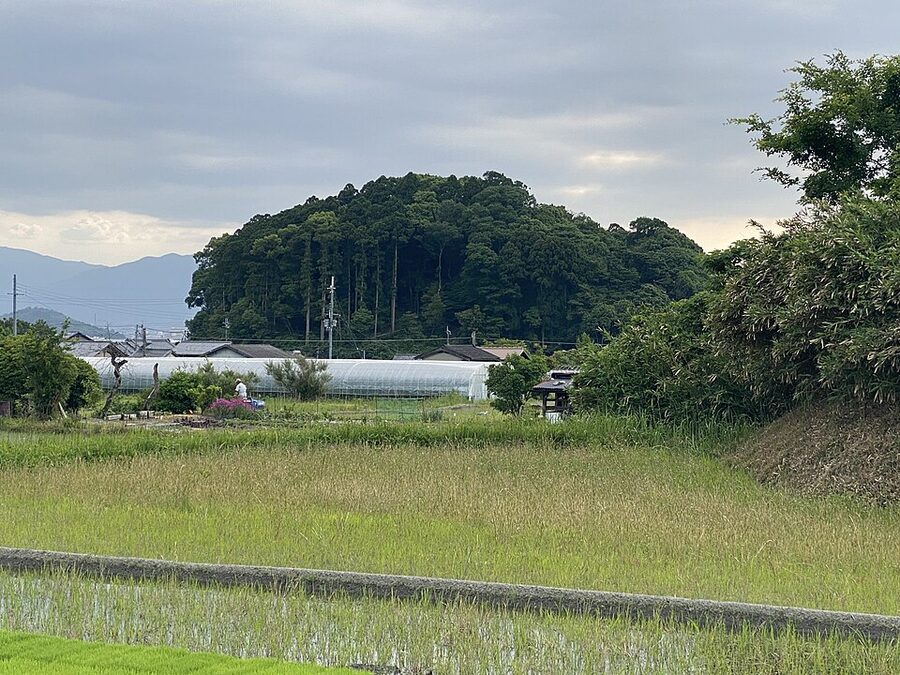
The Makimuku archaeological site (繾向遥跡, Makimuku iseki), a large settlement site immediately adjacent to Hashihaka, has been under intermittent excavation since 1971. The surveys have produced evidence for a substantial urban-scale settlement at Makimuku active from roughly 200 to 350 CE: planned street grids, multiple large timber-frame buildings, a ceremonial centre with post holes for structures up to fifteen metres long, and a large volume of trade goods from both northern Kyūshū and the Korean peninsula. Makimuku is the most likely candidate for the physical location of Yamatai if Yamatai was in the Kinai, and its population during the peak period is estimated at ten to twenty thousand.
Several of the Makimuku site’s buildings have been dated to within a few decades of Hashihaka Kofun’s construction. A 2009 ceremonial-centre survey identified the post holes of a large hall about one kilometre north-west of Hashihaka that was standing in the 240s and 250s — exactly during the period the Wei Zhi describes Himiko as ruling. Whether the hall is Himiko’s palace, Yamatototohimomosohime’s residence, an unrelated religious building, or something else entirely is unknown. But it is real, and it is in the right place, and it is the right age.
Makimuku was replaced as a political centre by about 350 CE when the later large kofun complexes — the Daisen Kofun of the 5th-century “Emperor Nintoku” near Osaka, the larger tombs of the Furuichi and Mozu clusters — began to be constructed further west. Whatever had been at Makimuku, the community moved. Hashihaka remained, sealed, for the next seventeen centuries.
Where to visit Hashihaka Kofun today
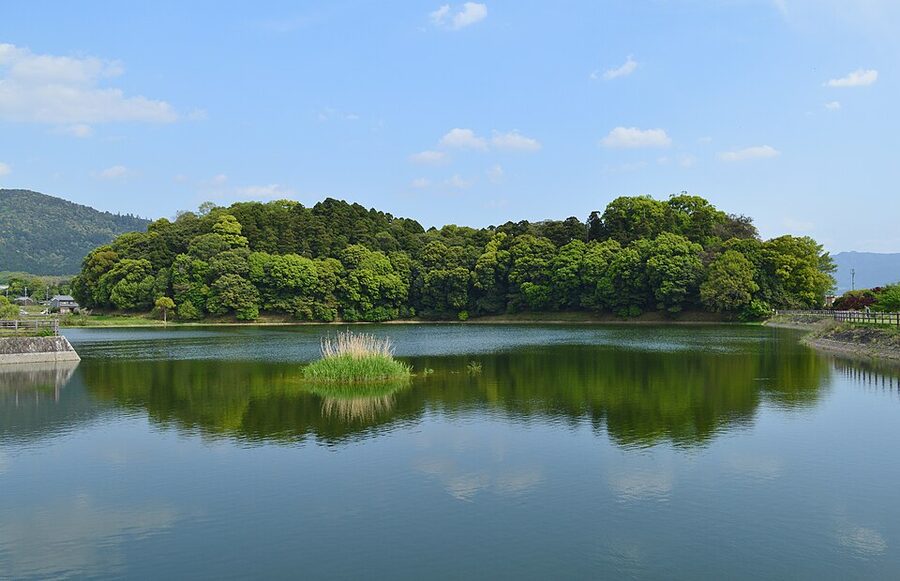
The tomb is in Sakurai city, Nara prefecture, about thirty-five minutes by train from Nara and ninety minutes from Kyoto. You cannot enter the mound but you can walk around it and visit the adjacent Makimuku archaeological sites.
1. Hashihaka Kofun perimeter walk — Sakurai, Nara
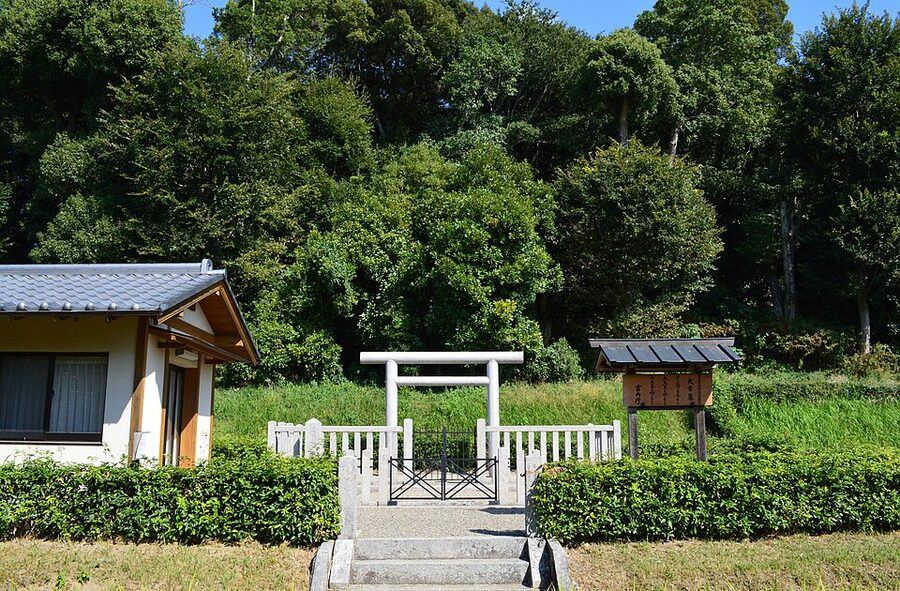
The tomb perimeter is a flat one-kilometre walk around the outer moat. Access is free and open 24 hours. The walk takes about forty minutes at a normal pace and includes three interpretive signs that cover (a) the basic physical specifications of the tomb, (b) the Princess Yamatototohimomosohime / Himiko identification debate in neutral language, and (c) the 2009 radiocarbon findings. No entrance fee. No restroom on the perimeter; the nearest public facility is at Makimuku Station.
Access: Makimuku Station on the JR Sakurai line (easily reached from Nara or Kyoto). Ten-minute walk south-east from the station. Allow ninety minutes for the walk plus reading the signage. Best visited on a clear day in spring or autumn; summer is humid and the mound’s tree cover does not help.
2. Makimuku Site Museum — 500 metres north of the tomb
The Makimuku Site Museum (繾向遥跡象形館, Makimuku Iseki Zokei-kan) is a small municipal museum five minutes’ walk north of the tomb. It is the single best place in Japan to understand the archaeological context of early Yamato. The permanent exhibit covers the 1971-onward excavations of the Makimuku settlement site, including reconstruction models of the large ceremonial hall, samples of the tokushu kidai pottery that produced the 2009 radiocarbon date, and a dedicated section on the Himiko-Yamatototohimomosohime debate presented with restraint and nuance. Admission ¥200. Allow ninety minutes.
If you are in Nara for the main city sites and can spare half a day for this detour, the museum is worth the trip alone. It is the thing that turns the Hashihaka perimeter walk from a forty-minute curiosity into a one-afternoon engagement with the actual substance of what the tomb might represent.
3. Ōmiwa-jinja shrine and Mount Miwa — Sakurai
Ōmiwa-jinja (大神神社), the shrine at the base of Mount Miwa, is the oldest continuously operating Shinto shrine in Japan — possibly older than the shrine form itself, since the mountain was a worship object before the shrine-complex structure existed. The shrine has no main sanctuary in the modern sense; the mountain is the sanctuary. Worshippers face the mountain and the mountain is the deity.
The shrine is about two kilometres east of Hashihaka, reachable by the same JR Sakurai line. If you are walking Hashihaka and the Makimuku museum, adding Ōmiwa-jinja makes a three-site day. You can climb Mount Miwa itself through a special pilgrimage permit obtained at the shrine office (no cameras, no food, no water bottles past the check point), but the climb takes about three hours and should not be undertaken casually. Most visitors stay at the shrine and look toward the mountain.
The Sealed Tomb
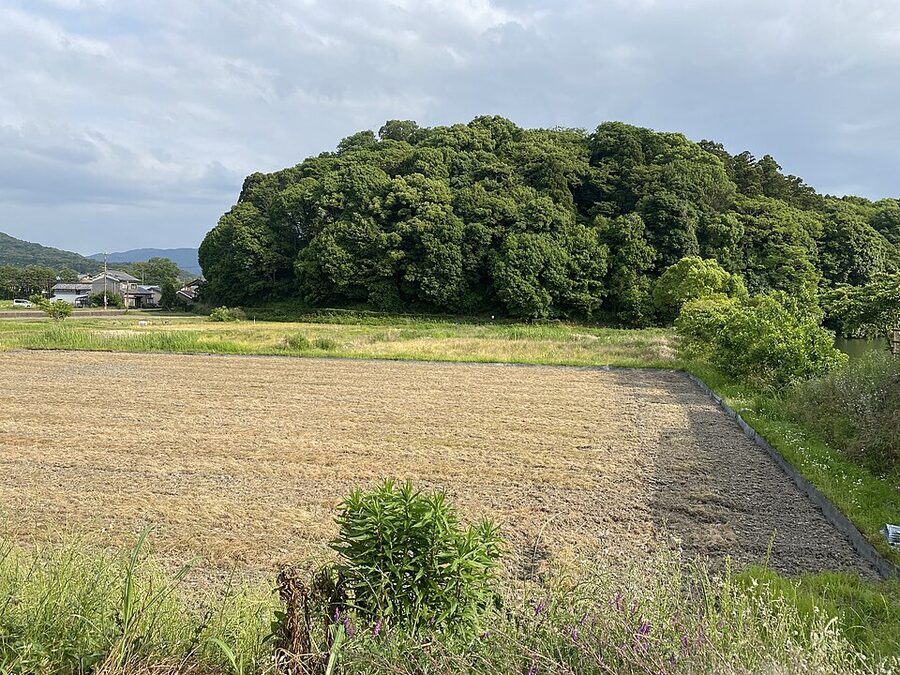
Hashihaka Kofun is the largest unanswered question in the first chapter of Japanese history. If it is Himiko’s tomb, the Kinai-setsu of the Yamatai location question is resolved and the entire timeline of early Yamato state formation gets anchored to a specific place and date. If it is not Himiko’s tomb, the Kinai-setsu has lost its strongest piece of physical evidence and the Kyūshū-setsu becomes the leading hypothesis again. Either way, the identification is load-bearing for how Japanese scholars understand the country’s political origins.
The Imperial Household Agency’s preservation policy is institutionally coherent but academically unsustainable in the long run. The Agency’s position is that designated imperial tombs are religious property and should not be disturbed; the academic position is that the tombs are cultural heritage that belongs to the country at large and should be at least partially investigated. The tension has been active since the 1880s and is not visibly close to resolution. Future governments may make different choices about access; the current government will not. The tomb stays sealed.
Compare this to the other unknown-tomb situation on this site. Torii Suneemon‘s grave at Shoei-ji is modest, marked, and visitable. Miyamoto Musashi‘s grave at Musashi-jinja is small but open. The samurai tombs can be identified, approached, and in several cases physically touched. The 3rd-century tombs cannot. The distance between these two types of historical presence, accessible personal burials and institutionally-sealed royal ones, maps almost exactly onto the distance between the Japanese archaeological record for the last four hundred years (rich, well-documented) and the first four hundred years (silent, unavailable).
If you are in Nara anyway, and Nara is a standard stop on any Japan itinerary, take the JR Sakurai line thirty minutes south-east to Makimuku. Walk the Hashihaka perimeter. Read the signage, which handles the Himiko question fairly. Then go to the Makimuku Site Museum and look at the tokushu kidai pottery fragments that produced the 2009 radiocarbon date. Then walk to Ōmiwa-jinja and look at the mountain. The mountain is an active religious site. The tomb on its plain is an active archaeological argument. The shrine between them is the oldest continuously operating religious institution in the country. Read the three sites together and you will come away with a clearer sense of what first-millennium Japan actually was — a set of political centres oriented around sacred mountains, with shamanistic royal lineages, physical monuments built at scales that strain modern labour estimates, and political histories preserved in later chronicles that may or may not be accurate. The tomb is sealed. The shrine is open. The argument continues.