
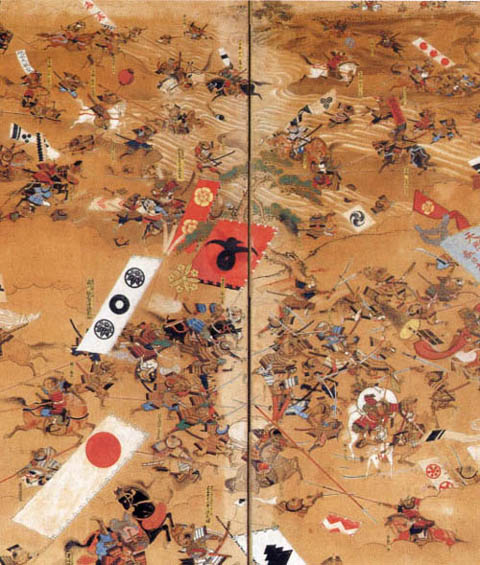
At around eleven in the morning on the 30th of July 1570 — the 28th day of the sixth lunar month, by the old calendar — a single Tokugawa samurai named Honda Tadakatsu rode out from the Tokugawa right-wing line alone, on one horse, and put himself between roughly 10,000 retreating Asakura troops and the pursuing Oda-Tokugawa vanguard. He was 22 years old. He had a cross-shaped spear called the Tonbokiri, a battlefield nickname he was still in the process of earning, and he had served Tokugawa Ieyasu as a line retainer since he was thirteen.
The Asakura had formed up into an odachi-line, the two-handed long swords carried by their heavy infantry, and a second samurai, Magara Jūrōzaemon Naotaka of the Asakura side, stepped out of the line and issued a formal single-combat challenge. Honda Tadakatsu rode straight at him. The two men fought for roughly the length of time it took Tadakatsu’s uncle Honda Tadazane to arrive with reinforcements, at which point Magara withdrew. Both survived the encounter.
Everything about Honda Tadakatsu’s subsequent career — the 57 lifetime engagements without a single wound, the position at Ieyasu’s right hand for the next 40 years, the Tokugawa shogunate founded partly on his reputation — traces to this specific ten-minute horseback duel in the shallows of a northern Ōmi river.
You will not find Anegawa in most English-language surveys of the Sengoku period. It sits awkwardly between the more famous moments on either side. Okehazama ten years earlier is the one where Nobunaga lit the fuse. Mikatagahara three years later is the one where Ieyasu nearly got himself killed.
Nagashino five years after that is the one with the matchlocks. Anegawa is the middle-brother battle — the one where both founders of the Tokugawa-Oda alliance first fought in the same field together, where Ieyasu’s flanking manoeuvre saved a broken Oda centre, where Honda Tadakatsu became Honda Tadakatsu. It is also the only major field battle Oda Nobunaga very nearly lost.
In This Article
- What Anegawa is, geographically
- The context — Nobunaga in Kyoto and the Asakura problem
- Oichi and the two brothers-in-law
- The Kanegasaki retreat — the rearguard that saved Nobunaga
- Nobunaga at Gifu — the campaign-launch base
- Forces and deployment on 30 July 1570
- Seven in the morning, the first crossing
- Ieyasu’s right wing — the flanking manoeuvre
- Honda Tadakatsu and Magara Jūrōzaemon
- The Azai collapse and the rolling-up
- Why Anegawa matters — the alliance, the lessons, the three-year war
- The afterlives — Ōmi, Hideyoshi, and the northern Biwa corridor
- Where to visit the Anegawa campaign today
- The Anegawa Battlefield Monument, Nomura village, Nagahama
- Odani Castle Ruins, Mount Odani, Nagahama
- Ichijōdani Asakura Ruins, Fukui
- Nagahama Castle Rekishi Hakubutsukan
- Hikone Castle and the Ii connection
- Sawayama Castle ruins and Mitsunari’s ground
- A note on dates and sources
- Closing — the 22-year-old on the single horse
What Anegawa is, geographically
The Anegawa (姉川, “elder-sister river”) is a short, shallow stream in northern Ōmi Province, modern Shiga Prefecture, that drains the western slope of the Ibuki mountains down to Lake Biwa. Near the village of Nomura, about four kilometres upstream from the lake, the Anegawa meets the slightly smaller Hokō-gawa at a broad gravel confluence. In modern terms the site is inside the city limits of Nagahama, on the flat agricultural plain between the Ibuki foothills and the Biwa shore. You can stand on the embankment today and see perhaps six kilometres in any direction across the rice fields.
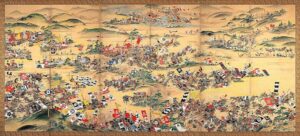
The battlefield itself is the stretch of river and paddy between the village of Nomura on the south bank and the village of Mitamura on the north. Total ground covered is about two kilometres east-west and one kilometre north-south — a small engagement area for an 18,000-versus-28,000-man clash.
The reason the battle ended up here rather than at one of the fortified positions on either side is that the Anegawa crossing was the narrowest viable approach between the Oda-Tokugawa field base at Tatsugahana and the Azai home castle at Odani, about six kilometres north of the river. Both sides deliberately met at the crossing. Neither tried to hold the far bank.
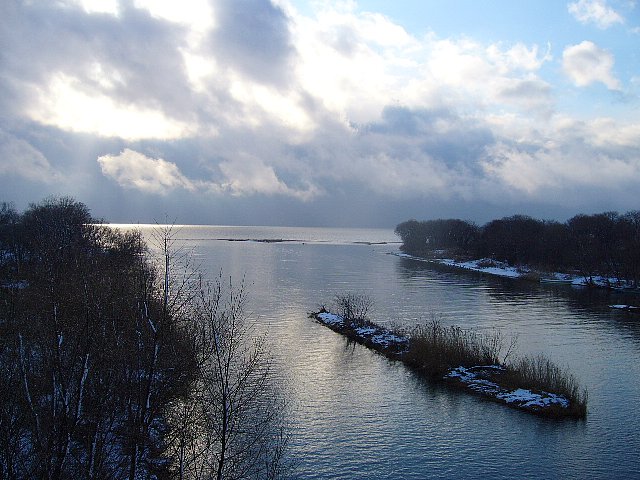
I have walked the Anegawa confluence in both summer and winter, and the thing that stays with me is how little terrain there is to hide behind. From the south embankment you can see the low northern ridge where the Azai deployed; from the north you can see the rise at Tatsugahana where the Oda came up. At two o’clock in the afternoon in late July the sun is directly overhead and there is no shade along either bank.
Any illusions about heroic long-range manoeuvre you might have brought from reading about other Sengoku battles dissolve the moment you stand on the gravel. This was a flat, hot, visible slog. It lasted from roughly seven in the morning to three in the afternoon, and it produced something on the order of 3,900 combined casualties in eight hours.
The context — Nobunaga in Kyoto and the Asakura problem
The road to Anegawa starts in late September 1568, when Nobunaga marched 50,000 men up the Nakasendō from Gifu Castle to Kyoto and installed Ashikaga Yoshiaki as the fifteenth Ashikaga shōgun. This is the moment that transformed Nobunaga from a successful regional daimyō into a national political actor.
Yoshiaki’s installation was the pretext under which Nobunaga now claimed the right to issue instructions in the shōgun’s name to any daimyō in Japan. The problem with this arrangement was that several of the most powerful houses, the Asakura of Echizen chief among them, did not recognise the shōgun’s authority, or Nobunaga’s right to speak for him, or both.
Asakura Yoshikage was the fifth-generation Asakura daimyō of Echizen Province, holding Ichijōdani, a valley-floor castle-town in what is now Fukui Prefecture, as his seat. He was 37 years old in 1570 and commanded roughly 1,000,000 koku of productive territory.
More importantly, he had an old and specific grudge against Nobunaga: Yoshiaki had originally taken refuge in Ichijōdani before the Nakasendō march, and Yoshikage had been on the verge of sponsoring Yoshiaki’s return to Kyoto himself before Nobunaga pre-empted him. From the Asakura perspective, Nobunaga had stolen a shōgun who was, procedurally, already theirs.
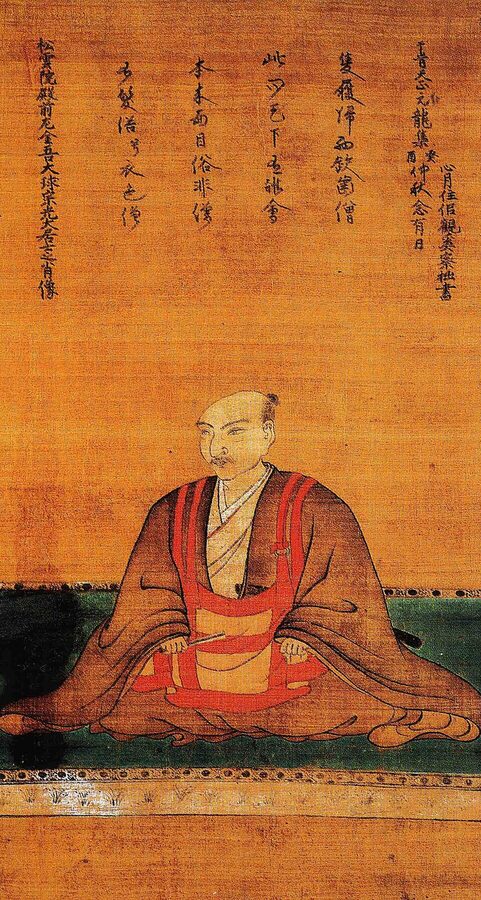
In January 1570 Nobunaga issued a formal summons — in Yoshiaki’s name, with the shogunate seal — calling Yoshikage to Kyoto to pay his respects. Yoshikage refused. The refusal was the pretext Nobunaga needed.
In the fourth lunar month of 1570 (late April in the solar calendar), Nobunaga marched out of Kyoto with roughly 30,000 men, a combined Oda-Tokugawa-Matsunaga-Hatakeyama coalition, and moved north into Wakasa and then Echizen. The target was Ichijōdani, the Asakura capital. The campaign is known as the Kanegasaki campaign, after the coastal fortress on the Sea of Japan where it ended.
The Kanegasaki operation did not go well for Nobunaga. His advance into Echizen was faster than his intelligence, and as his column was pushing north along the Tsuruga coast, a courier arrived in camp with the news that Azai Nagamasa — Nobunaga’s brother-in-law, lord of Odani Castle in northern Ōmi, strategically blocking Nobunaga’s line of retreat to Kyoto — had just declared for the Asakura.
The Azai had been Oda allies by marriage since 1564. Nagamasa had married Nobunaga’s own sister Oichi; they had three daughters together by 1570, and no contemporary chronicler had expected the alliance to fail. The news in Kanegasaki suggested that it had.
Oichi and the two brothers-in-law
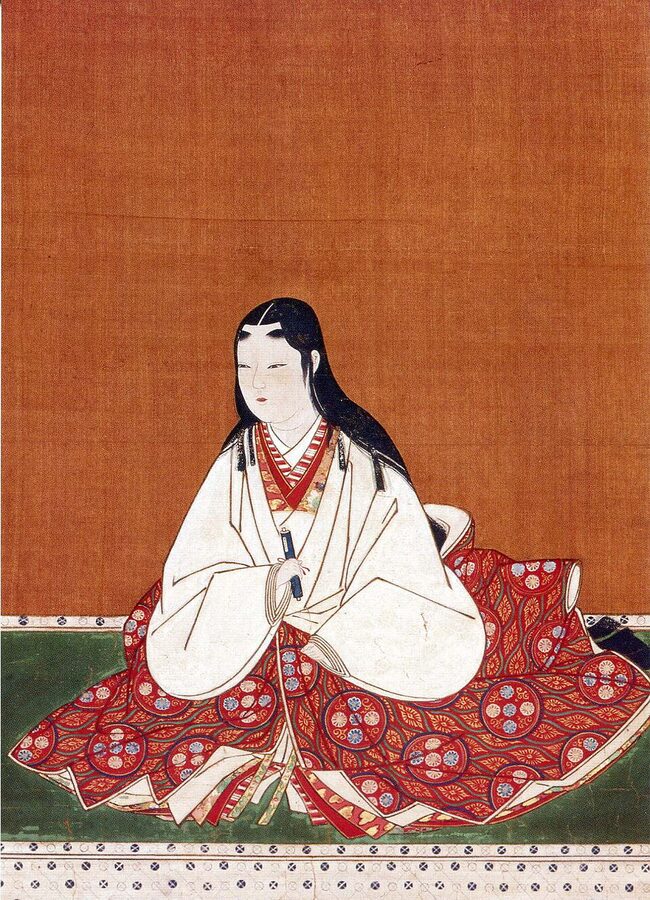
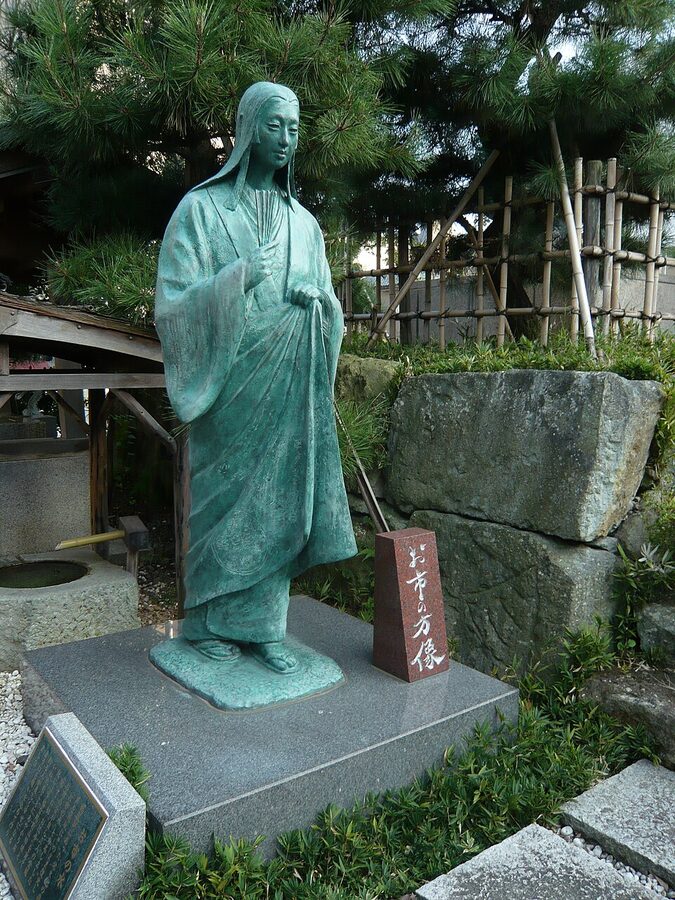
The story of Oichi is the one that humanises Anegawa. She was born around 1547, six years younger than her brother Nobunaga, and was married to Azai Nagamasa in the fourth lunar month of 1564 — a political marriage explicitly arranged to cement the Oda-Azai alliance that secured Nobunaga’s eastern Ōmi flank during his Mino campaign.
By contemporary standards she was famously beautiful. By any standard she was placed in the worst possible position in July 1570: her husband’s army and her brother’s army were about to meet in open battle, eight kilometres south of the castle she was living in, with three infant daughters in the inner keep.
The most widely told anecdote about her role in the Kanegasaki retreat is the bag-of-beans story. The Edo-period Asai Sandai-ki records that Oichi, having learned of her husband’s decision to break the alliance, sent a messenger to Nobunaga’s field camp in Kanegasaki carrying a small cloth sack of red azuki beans tied tightly at both ends.
The signal was meant to indicate: you are now in the same position as these beans, closed at both the front and the rear. The bag was not accompanied by a written message, because a written message would have been death for Oichi if it had been intercepted. Nobunaga, on receiving the bag, is said to have understood immediately.
Whether the bag of beans is literal history or later embroidery is debated. The Shinchō Kōki does not mention it. The Asai Sandai-ki was compiled roughly a century after the events. What is not debated is the underlying fact of the betrayal: Nagamasa did declare for the Asakura in late April 1570, Nobunaga’s position in Kanegasaki was suddenly untenable, and Oichi spent the next three years at Odani Castle waiting to see whether her husband or her brother would survive the resulting war.
The Kanegasaki retreat — the rearguard that saved Nobunaga
What saved Nobunaga at Kanegasaki was not the warning from Oichi, whether the beans were real or not. It was a specific three-name rearguard. When the Azai defection was confirmed on about the 28th day of the fourth lunar month, Nobunaga’s main army started an emergency retreat back down the Tsuruga coast toward the Kinome pass, aiming for Ōmi and then Kyoto.
Nobunaga himself and a small personal party, perhaps 10 mounted men, rode ahead through the passes and reached Kyoto on 30 April, having ridden through the night. The main body of the army had to be extracted more slowly, and the rearguard holding the Kinome pass was the critical assignment.
The three men Nobunaga left at the rear were Kinoshita Tōkichirō (the future Toyotomi Hideyoshi), Maeda Toshiie, and the then-still-Oda-retainer Akechi Mitsuhide. This is the single thinnest concentration of future Japanese political history in any Sengoku rearguard action. All three survived the ambush.
Hideyoshi’s contingent took most of the casualties and he built a permanent reputation for disciplined retreat — a skill that would reappear at Yamazaki twelve years later. Toshiie earned a personal commendation for holding the Kinome pass itself. Mitsuhide held the flank position.
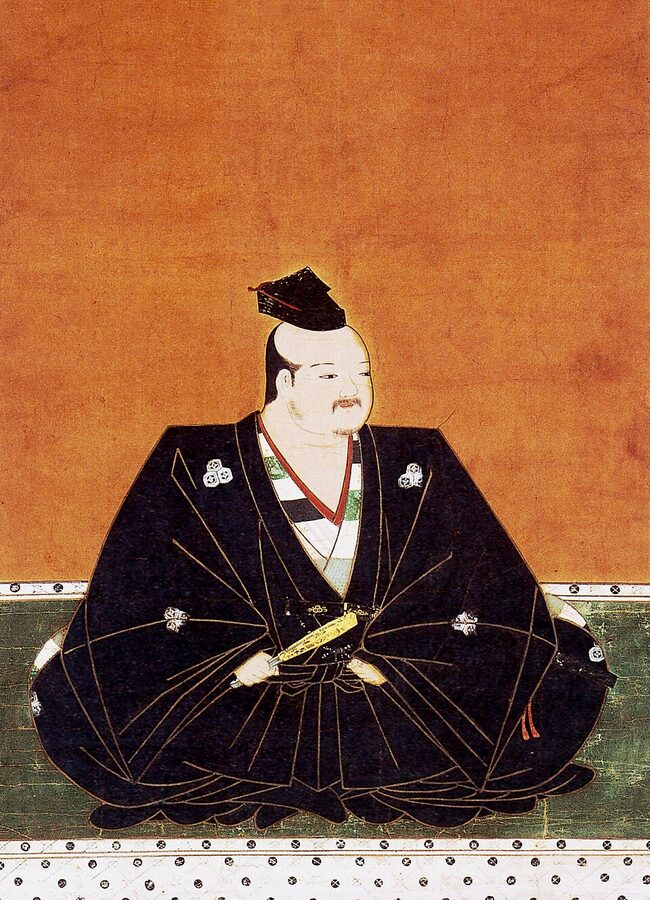
By the first week of May 1570, Nobunaga was back in Kyoto, his army was reconsolidating in northern Ōmi, and the Azai-Asakura alliance had converted a clean Echizen campaign into a three-front regional war. Nobunaga’s response was characteristic. He did not negotiate. He did not pause to bind up other threats.
He spent most of May and June staging at Gifu, reinforcing from the Owari-Mino base, and preparing for a direct strike at Odani Castle, the Azai headquarters, to force Nagamasa into a field battle under unfavourable conditions before the Asakura could fully reinforce him. Ieyasu was called up from Mikawa with 5,000 men to strengthen the Tokugawa contingent of the alliance.
Nobunaga at Gifu — the campaign-launch base
Gifu Castle had been Nobunaga’s headquarters since 1567, after the fall of the Saitō and the absorption of Mino province. From the Mino base Nobunaga could move west into Ōmi along the Nakasendō, north into Echizen along the Hokurikudō, or south into Ise — all within a week’s march. In June 1570 the Gifu staging operation turned over roughly 23,000 men of Oda mobile field force into a northbound column, and by the 21st day of the sixth lunar month (roughly 23 June) the Oda-Tokugawa combined force was on the move through the Nakasendō corridor toward Odani.
Ieyasu’s 5,000-man Tokugawa contingent joined at Tarui, inside Mino, on about the 25th lunar (27 June). By the 28th (30 June Gregorian) the combined force had crossed the Ōmi border and was at Tatsugahana, the forward Oda position directly south of the Anegawa.
Odani Castle, the Azai headquarters, was six kilometres north of the river. The Oda plan was to invest Odani, force Nagamasa either to surrender or to commit to a sortie, and in either case destroy the Azai in detail before the Asakura relief column from Echizen could arrive.
The plan did not entirely work. Odani was stronger than Nobunaga had expected — the mountain-castle complex was supplied for a long siege, the inner keep was on a natural rock shoulder 500 metres above the valley floor, and a rapid investment was not going to crack it in the summer of 1570.
Nobunaga’s response was to reduce the pressure on Odani itself and focus on the outer castles and supply lines, burning off the Azai-controlled villages in the Anegawa basin to draw Nagamasa into the field. This worked. By 27 July the Azai-Asakura had combined, and on the 28th lunar day of the sixth month they crossed south of Odani toward the Anegawa line.
Forces and deployment on 30 July 1570
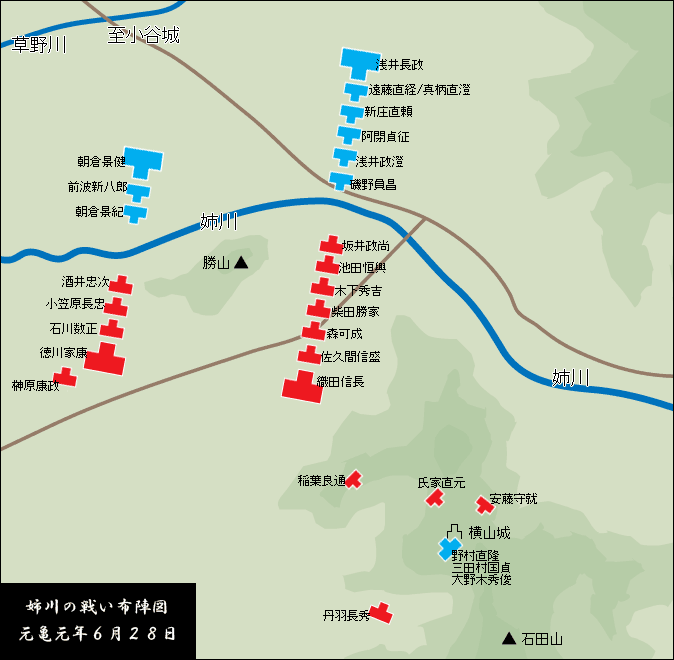
The force numbers at Anegawa are roughly known from the Shinchō Kōki, the Asai Sandai-ki, and the Mikawa Monogatari, which agree within the tolerances of Sengoku military-historical uncertainty. The Oda-Tokugawa side fielded about 28,000 men total: 23,000 Oda under Nobunaga, and 5,000 Tokugawa under Ieyasu.
The Azai-Asakura side fielded about 18,000: 8,000 Azai under Nagamasa, and 10,000 Asakura under Asakura Kagetake (the younger Asakura relative commanding the Echizen relief column; Yoshikage himself was still in Ichijōdani).
The distribution matters. Both sides deployed in two wings, with the Oda on the Oda-Tokugawa left and the Tokugawa on the Oda-Tokugawa right, facing respectively the Azai on the Azai-Asakura right and the Asakura on the Azai-Asakura left.
In other words: the smaller Azai force faced the larger Oda force across the eastern half of the confluence, and the larger Asakura force faced the smaller Tokugawa force across the western half. On the surface this favoured the Azai-Asakura coordination — each wing had its numerical counter. But the Azai were a sharper field army than the Asakura, and this is where the unevenness of the engagement would emerge.
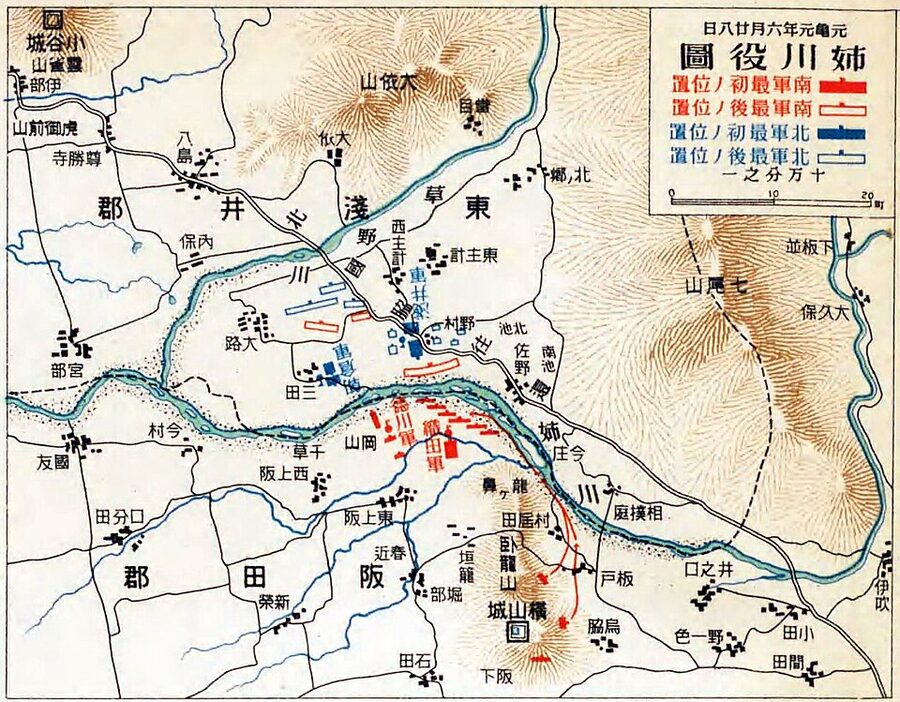
The Oda left wing was commanded by Sakai Masanari as primary field commander, with Ikeda Tsuneoki, Kinoshita Tōkichirō (Hideyoshi, still three years from his Toyotomi rename), Niwa Nagahide, and Shibata Katsuie in the line. The Azai right, facing them, was led by Isono Kazumasa, with Nagamasa personally commanding the rear reserve behind Isono.
The Tokugawa right wing was commanded by Sakai Tadatsugu on the left of the Tokugawa line and Ishikawa Kazumasa on the right, with Honda Tadakatsu on the right-most extremity of the Oda-Tokugawa deployment. The Asakura left, facing them, was led by Asakura Kagetake as overall commander and Magara Jūrōzaemon Naotaka as the senior frontline fighter.
Nobunaga himself commanded the Oda reserve behind the centre-left. Ieyasu commanded the Tokugawa line directly, with no reserve behind him — the 5,000-man Tokugawa force was committed in a single block along the western stretch of the river. This is the tactical peculiarity that would define the battle.
The Tokugawa had no depth. If they broke, they broke completely. If they held, they could commit everything to a flanking strike. Ieyasu chose the latter option, for reasons that are not entirely clear in the chronicles but that are consistent with his general preference for decisive commitment over reserve conservation.
Seven in the morning, the first crossing
Contact began at approximately seven in the morning on the 28th day of the sixth lunar month, 1570 — 30 July in the Gregorian calendar. The Azai crossed the river first, with Isono Kazumasa leading the right-wing vanguard into the shallow water.
Isono was perhaps the most aggressive Azai field commander in the entire campaign, and his opening move was to drive his column directly at the Oda centre-left in a concentrated assault. The tactic was what Japanese military historians call tsuraneuchi, “wave striking”, where successive units of the same line hit the same point in rapid sequence, each exploiting the disorder created by the previous wave.
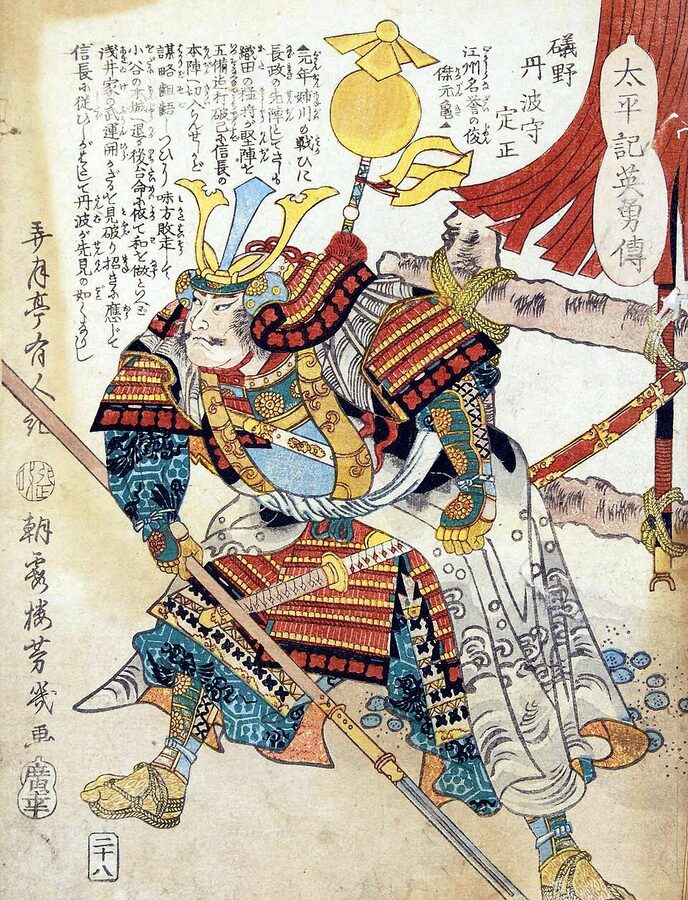
Isono’s first wave hit Sakai Masanari’s line with about 1,500 men. Sakai absorbed the impact, bent backward, and held. The second wave came through behind the first, now attacking a Sakai line that had been pushed back about 100 metres from the river bank.
The second wave broke through Sakai’s front rank and penetrated into the second. The third wave, sent forward by Isono while the second was still in contact, compounded the pressure. By the fourth wave, Sakai’s line was visibly giving way.
By the fifth, Ikeda Tsuneoki’s supporting unit had to commit to stabilise the centre. By the seventh, Nobunaga himself had started sending reserve companies forward from the Oda rear.
This is the famous eleven-wave attack (jūichi-no-tsuraneuchi) that the Japanese military-history tradition treats as Anegawa’s signature tactical image. What it meant in practice was that for about two hours, from roughly half-past seven to half-past nine, the Oda centre-left was fighting a losing battle against a smaller Azai force that was overwhelming it through sheer repeated pressure at the same point.
Isono had found a weakness in the Oda line and was exploiting it with a concentration of force that Nobunaga’s larger but more dispersed army could not match at the point of contact.
Somewhere between the ninth and the tenth wave, Nobunaga’s line was within perhaps 300 metres of being broken. The chronicles record Nobunaga sending his personal guard forward — the umawari, the mounted bodyguard that was specifically held back to protect the commander’s person — as a last-ditch reinforcement to the Oda centre.
This is a rare commitment for a Sengoku commander. It means Nobunaga had judged that the alternative was losing the battle. The Oda left flank eventually held, but only just, and only after Isono’s momentum had been expended.
Ieyasu’s right wing — the flanking manoeuvre
While the Oda centre was fighting for its life against Isono, the Tokugawa right wing was doing something entirely different. Ieyasu’s 5,000 men opened by advancing directly across the river against the Asakura left — a straightforward frontal push that used the full width of his line.
The Asakura, with 10,000 men to Ieyasu’s 5,000, expected to absorb the push, exchange casualties, and gradually force the Tokugawa back. This was the conventional expectation. It was also wrong.
Ieyasu’s signature at Anegawa was the deployment of Sakai Tadatsugu’s left-most Tokugawa unit — about 1,500 men — on a wide sweep around the western flank of the Asakura line, crossing the Hokō-gawa tributary and coming up behind the Asakura rear. The manoeuvre was possible because the Asakura commander Asakura Kagetake had committed his entire frontage to the river engagement, leaving no rear-facing unit to guard the west.
Sakai’s 1,500 hit the Asakura back line at approximately ten in the morning, about the same moment the Oda centre was stabilising against Isono on the other end of the battlefield.
You should understand what a rear strike does to a line-engaged formation. Infantry committed to a frontal fight cannot reorient on a minute’s notice. The Asakura rear rank, hearing shouts and steel behind them, had to turn around while still maintaining pressure to the front, which created a fatal compression through the middle of the formation.
Within twenty minutes the Asakura left, specifically the units directly facing Honda Tadakatsu’s Tokugawa right-extremity, began to disintegrate. By half-past ten the Asakura were in retreat across the full width of the river, withdrawing back through the paddies toward the Ibuki foothills.
The significance of this is that the flanking of the Asakura left now exposed the Azai right — Isono’s still-attacking force on the other side of the battlefield. With the Asakura collapsing, the Azai had no northwest flank protection. Ieyasu pivoted his entire right wing east and began rolling up the Azai from behind.
Isono’s eleven-wave attack on the Oda centre, which had come within a hair’s breadth of breaking Nobunaga’s line, now became a forward-committed formation with a Tokugawa force closing on its back. The battle was about to reverse completely.
Honda Tadakatsu and Magara Jūrōzaemon
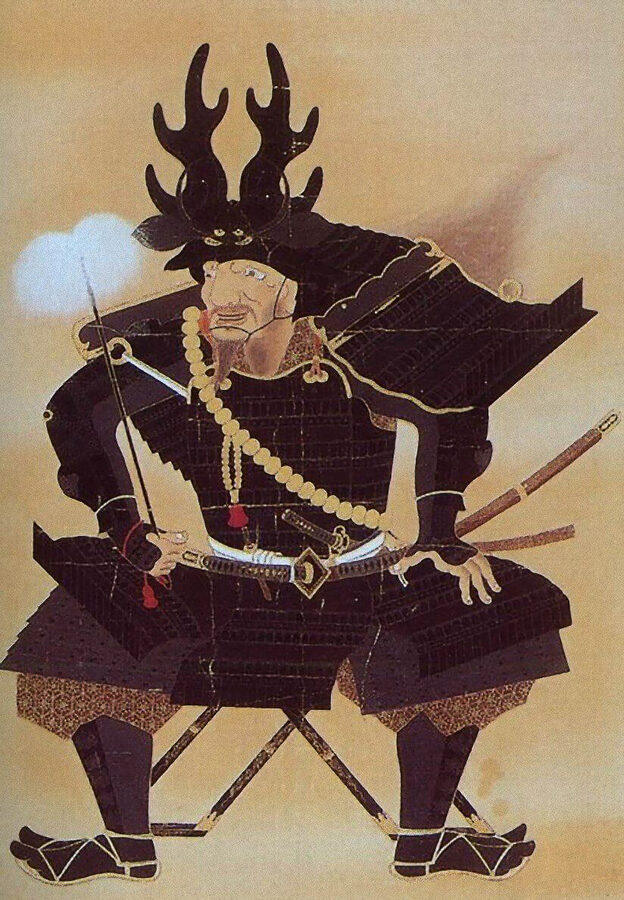
It is at this point, roughly half-past ten to eleven in the morning, that the Honda Tadakatsu single-horse moment occurs. The Asakura left was in general retreat toward the west, 10,000 men withdrawing in a ragged north-west arc toward the Ibuki foothills.
The Oda-Tokugawa pursuit vanguard, Honda’s own unit on the far right of the Tokugawa line, was moving forward to exploit the retreat. There was a moment, probably of about five minutes, when Honda’s men were strung out across a kilometre of paddy and he was ahead of them on a single horse.
The Asakura rear guard, seeing the lead pursuer isolated, formed an odachi line and turned to face him. The senior frontline fighter of the Asakura, Magara Jūrōzaemon Naotaka, stepped out from the line and raised his own odachi, a two-handed sword of over five feet, and issued a single-combat challenge (ichiriki-uchi) to Honda.
The convention at this period was that a formal challenge could not be refused by an equal-rank samurai without loss of face sufficient to end his career. Honda, 22 years old, did not refuse. He rode at Magara alone.
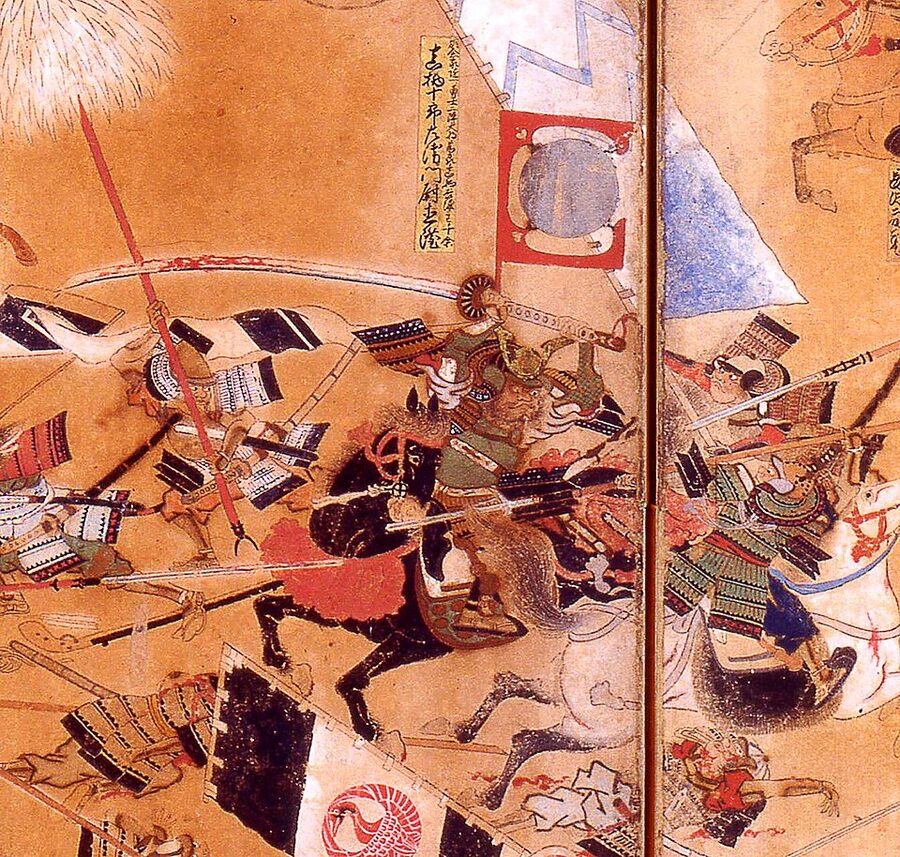
The duel itself is described in four separate Edo-period sources, and they disagree on most of the specifics. What they agree on is: the two men fought on the paddy edge near the village of Nomura, with Honda mounted and Magara on foot; the fight lasted roughly ten minutes; neither drew blood; and the engagement ended when Honda’s uncle Honda Tadazane arrived at the head of the Tokugawa reinforcement column and Magara withdrew behind the retreating Asakura line.
The lack of casualties is the point. The duel was not a fight to the death. It was a formal set-piece — a statement by two samurai that the retreat would be conducted with proper warrior protocol, not a dishonourable rout. And it gave the retreating Asakura line the ten minutes of breathing space it needed to disengage without being overrun.
What this episode does for Honda Tadakatsu’s career is remarkable. He was a junior retainer at the start of 30 July and a named public figure by the end of it. The Mikawa Monogatari records that Nobunaga himself, riding up to the Tokugawa right after the Oda centre had stabilised, asked Ieyasu who the man on the single horse had been.
Ieyasu told him. Nobunaga is said to have commented, within Honda’s hearing, that Tadakatsu would “become a whole storm wrapped in a single man” — a line that the Honda family preserved and that probably improved in the telling. Whether literal or not, the comment captures what Nobunaga had seen. A 22-year-old Tokugawa retainer had just gone alone into the front of 10,000 retreating enemies and come back.
The Azai collapse and the rolling-up
With the Asakura in retreat and Ieyasu’s right pivoted east, the Azai were now in a hopeless position. Isono Kazumasa had spent his eleven waves attacking straight ahead, and the Azai reserve under Nagamasa had been steadily committed to sustain the pressure. There was no more line to fall back on.
The Tokugawa right came in behind Isono at approximately half-past eleven, and the Oda centre, now reinforced by the umawari, began counter-pressing forward. Isono’s front-committed column found itself fighting in two directions simultaneously, and its cohesion broke inside twenty minutes.
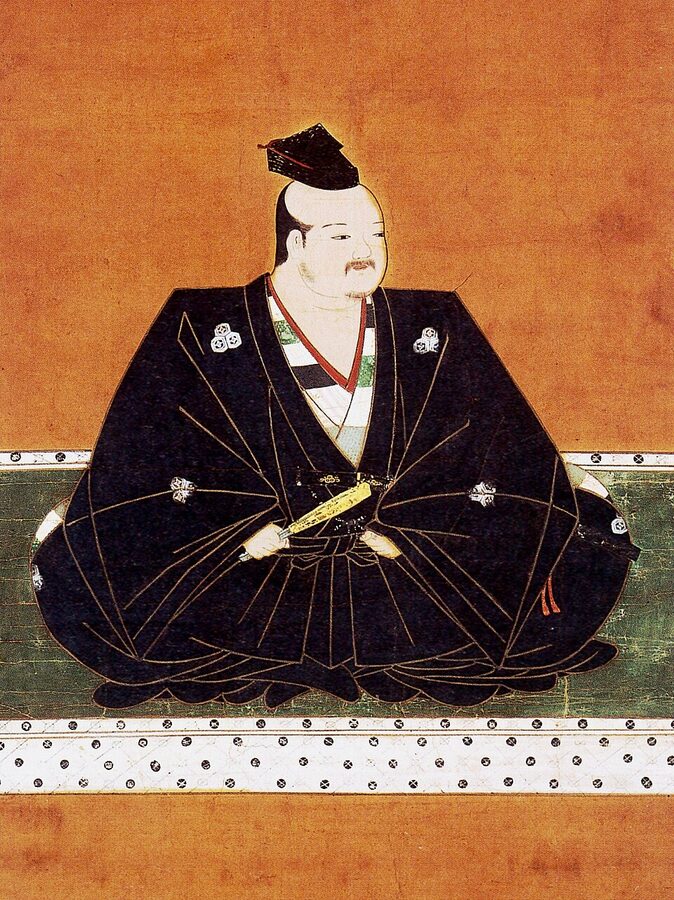
Nagamasa personally tried to stabilise the rear reserve and cover the Isono withdrawal. The Azai pulled back across the river in reasonably good order given the circumstances, leaving the Asakura half of the allied force to complete its own retreat to the west.
By one in the afternoon the engagement was effectively over. By three the last Oda-Tokugawa pursuit units had broken off. The Azai and Asakura retreated separately — the Azai back to Odani Castle, the Asakura west toward the Hokurikudō and eventually home to Ichijōdani.
The casualty figures give a specific picture of what the battle cost. Azai losses ran to roughly 1,100 men killed, most of them in the final rolling-up phase after Ieyasu closed the trap. Asakura losses were roughly 1,700, heavily concentrated in the initial Sakai Tadatsugu rear-attack and the subsequent retreat-pursuit.
Oda losses were about 800, nearly all of them from the near-disaster of the eleven-wave attack on the centre-left. Tokugawa losses were the lightest of any contingent, approximately 300, because Ieyasu’s right wing had been the attacker throughout and had broken the Asakura before serious reverse pressure could develop.
The numbers tell you that Anegawa was a pyrrhic victory for Nobunaga. On the Oda-Tokugawa side, 1,100 dead out of 28,000 engaged, roughly a 4% loss rate, for an enemy loss of 2,800 out of 18,000, about 15%. By Sengoku standards the casualty exchange favours Nobunaga comfortably.
But Nobunaga’s 800 were his centre-left, his most experienced line, and the engagement had come within perhaps a half-hour of breaking his army completely. Isono’s eleven waves were the closest Nobunaga had been to a personal field defeat in his entire career up to that point, and the post-battle Oda staff knew it.
Why Anegawa matters — the alliance, the lessons, the three-year war
Anegawa is the first major field engagement fought by the Oda-Tokugawa combined force, and it is where the alliance proves that it can operate jointly at scale. The Kiyosu Alliance had been signed in 1562, after Okehazama, but for eight years after that the two forces had fought mostly in parallel rather than together — Nobunaga absorbing Mino, Ieyasu consolidating Mikawa, each on his own frontier.
Anegawa is the first time they stand together on a single field, and the specific contribution of each is different. Nobunaga provided the mass; Ieyasu provided the decisive tactical manoeuvre that converted the Oda near-defeat into a combined victory.
You can trace a direct line from this joint operation to every subsequent Oda-Tokugawa campaign. Mikatagahara in January 1573, where Ieyasu’s army broke against Takeda Shingen and an Oda reinforcement column under Sakuma Nobumori tried to hold the left, is Anegawa played back with the numbers reversed.
Nagashino in June 1575, where the combined Oda-Tokugawa 38,000 destroyed the Takeda under Katsuyori with matchlock volleys and palisades, is the fully matured version of the alliance that Anegawa first tested. Komaki-Nagakute in 1584, after Nobunaga’s death, is Ieyasu standing against Hideyoshi on a line that was only possible because the two decades of Oda-Tokugawa joint operations had given him the independent field capability. Everything in the Tokugawa political ascent from 1570 onward runs through Anegawa.
For Nobunaga specifically, Anegawa teaches a lesson he internalises. His subsequent military reforms — the creation of a dedicated personal-guard unit, the expansion of the hatamoto reserve, the systematic use of matchlock infantry in fixed defensive positions — all respond to the specific near-disaster of the eleven-wave attack.
Isono Kazumasa’s tactic of concentrated repeated pressure at a single point had almost worked because the Oda line had insufficient local depth. The post-1570 Oda field army was organised to prevent a repeat. By 1575 at Nagashino, the same problem would be met with a palisade line and volley fire rather than shallow line infantry, and the outcome would be categorically different.
The war against the Azai-Asakura did not end at Anegawa. It continued for three more years. The Asakura returned to Ichijōdani and resumed a slow grinding resistance, raiding Oda supply lines and holding the Echizen mountain passes. The Azai returned to Odani and dug in for a siege that Nobunaga was not yet in a position to prosecute.
It was not until August 1573 that Nobunaga returned to finish both campaigns in a single season: the Asakura were defeated at the Battle of Tonezaka and Yoshikage was pursued to his final suicide at Kenshō-ji temple in Ichijōdani on 20 August 1573, and Odani Castle fell on 1 September 1573 with Nagamasa committing suicide at the inner keep on the 26th day of the eighth lunar month. Oichi and her three daughters were escorted out of the castle before the final collapse.
The afterlives — Ōmi, Hideyoshi, and the northern Biwa corridor
The Azai-Asakura destruction opened up all of northern Ōmi to Oda administrative control, and Nobunaga redistributed the territory to his senior retainers. The lion’s share went to Hideyoshi, who was promoted from Kinoshita-field-commander to full daimyō with the Azai lands, built himself a new castle at Nagahama on the Biwa lakeshore, and adopted the surname Hashiba.
The Nagahama years, 1573 to 1582, are Hideyoshi’s apprenticeship as an independent lord. Everything in his subsequent meteoric ascent through Nobunaga’s death and the consolidation of the Toyotomi shogunate starts here, on the same ground where he had been a wave-absorbing line commander three years earlier.
The wider Ōmi reorganisation is even more consequential. Nobunaga relocated his own capital from Gifu to Azuchi Castle, a new construction on the east shore of Lake Biwa, in 1576. Azuchi became the first modern castle — stone-walled, stone-based, designed around matchlock artillery — in Japanese military architecture.
The strategic logic was Anegawa’s. Ōmi was the hinge between Kyoto and Gifu; after the Azai were destroyed, Ōmi could be held directly from its own centre rather than from a remote base in Mino. The Azuchi project lasted six years until Nobunaga’s own death at the hands of Mitsuhide in 1582, after which the castle was burned. But the reorganisation of Ōmi around Azuchi is the direct political consequence of Anegawa.
The lieutenant generation that fought the Anegawa campaign went on to become the senior officer class of the late-Sengoku and early Tokugawa periods. Hideyoshi took the Nagahama fief; Niwa Nagahide took Wakasa; Shibata Katsuie eventually took Echizen (where he would later marry the widowed Oichi and die at Shizugatake in 1583).
Isono Kazumasa, whose eleven waves had almost broken the Oda line, defected to Oda service after Odani fell and lived out his retirement in Hikone. Sakai Tadatsugu, the architect of the Tokugawa flanking strike, became one of the Four Heavenly Kings (Shi-Tennō) of the Tokugawa command structure. Honda Tadakatsu was another of the four.
And the fourth of the Tokugawa Four Heavenly Kings is Ii Naomasa — too young to have fought at Anegawa (he was nine years old in 1570), but who would eventually be given the castle at Hikone, twenty kilometres south of the Anegawa battlefield, and who turned northern Ōmi into the “Red Devils” Ii-family stronghold that still defines Hikone’s identity.
The geography of the Tokugawa command class ended up drawing heavily on the specific region where the alliance had first fought together. When you walk the northern Ōmi lakeshore today, the castle towns you pass through — Nagahama, Hikone, eventually Sawayama — are the direct legacy of the 1570 campaign in a way that is not true of any other part of Japan.
Where to visit the Anegawa campaign today
The Anegawa Battlefield Monument, Nomura village, Nagahama
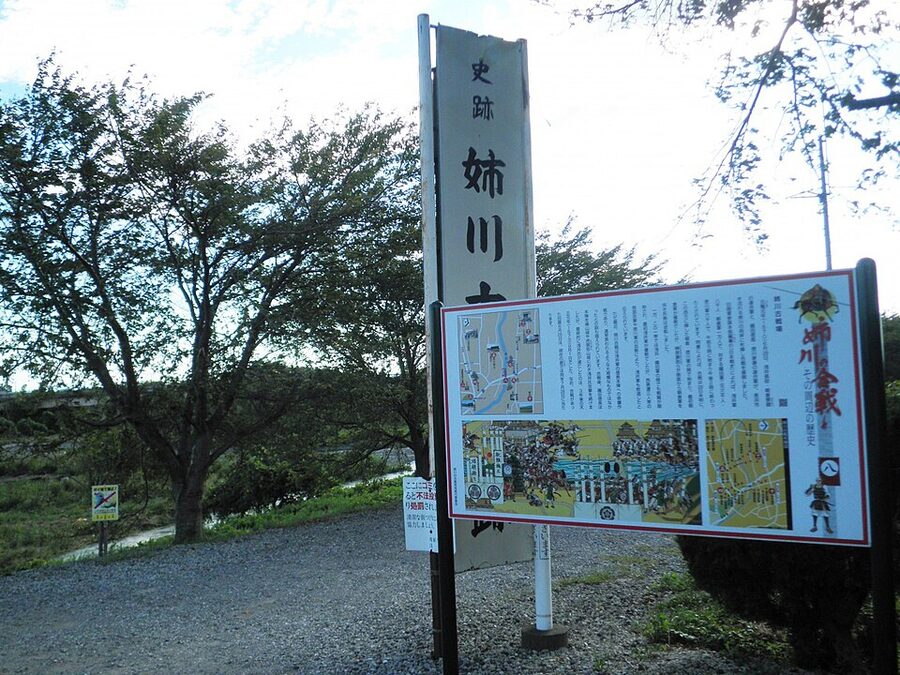
The battlefield itself is in the Nomura-chō district of Nagahama, about ten minutes by car from Nagahama Station or 25 minutes on foot if you don’t mind a walk through suburban rice country. The main memorial stone — the Anegawa Kosenjō-hi — stands at the south-bank embankment where the Oda-Tokugawa line crossed the river, with a small information panel in Japanese and basic English.
There is no museum on site. There is no parking fee. You stand on the actual ground and look across what was the combat axis.
I prefer to visit in late July, which is the anniversary month by the solar calendar, and specifically in the morning because the heat is significant by midday. You can walk east along the embankment about two kilometres to reach the eastern end of the combat line, and then cross any of several small bridges to work back along the north bank where the Azai-Asakura had deployed.
The full circuit takes about two hours at a leisurely pace. Wear something light, bring water, and be prepared for essentially no shade. If you want context before you walk, the Nagahama Rekishi Hakubutsukan (below) has an Anegawa-specific exhibit room that puts the ground in proportion.
Odani Castle Ruins, Mount Odani, Nagahama
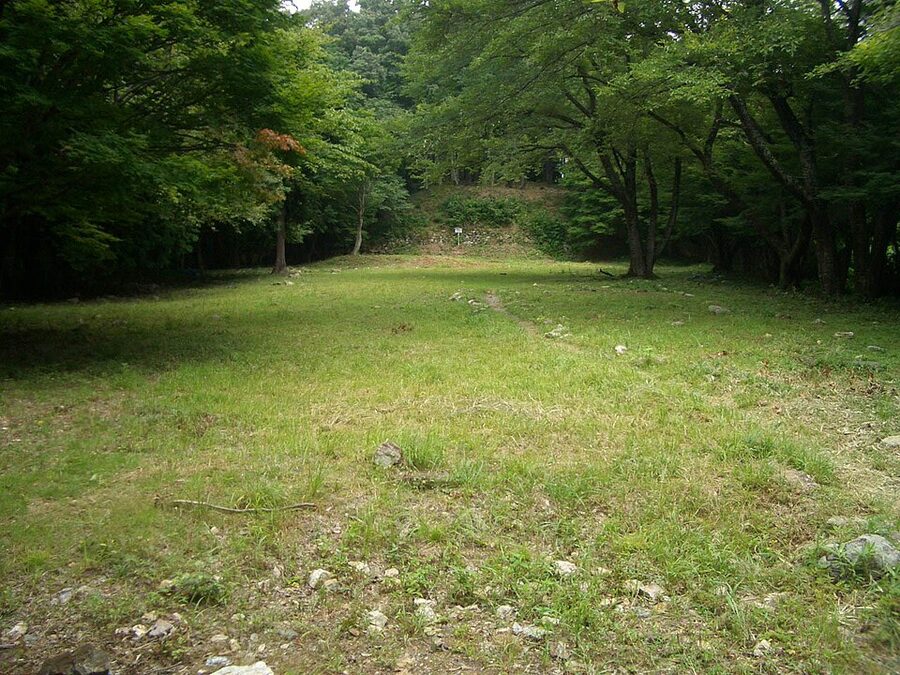
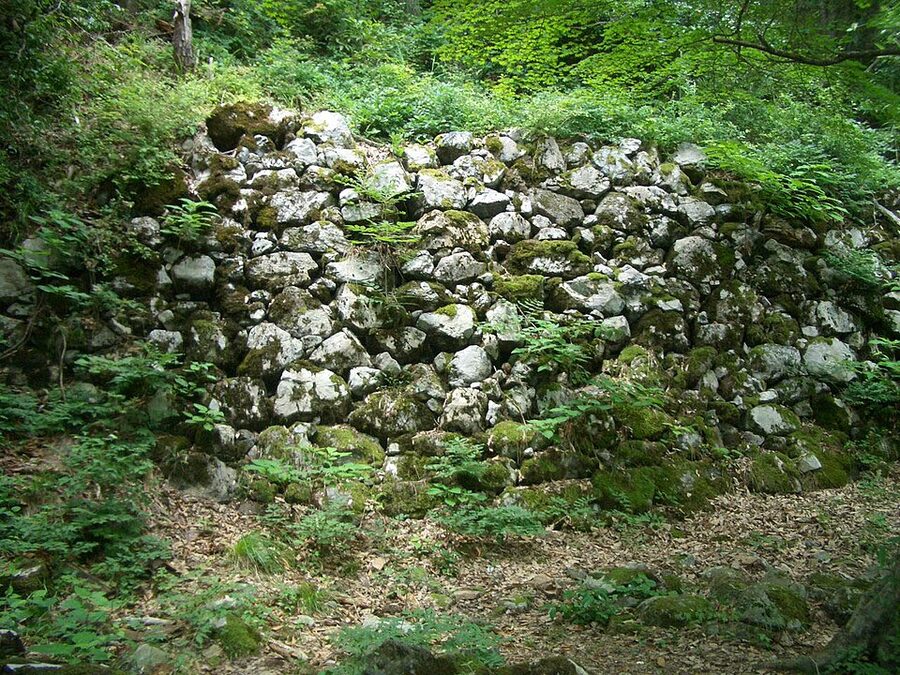
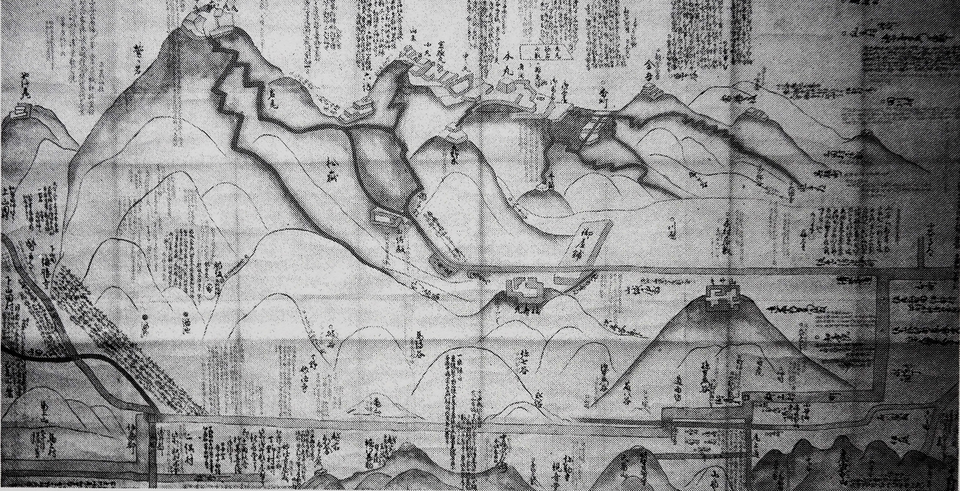
Odani Castle sits on the mountain ridge directly north of the Anegawa battlefield, and the ruins are the most substantial surviving work of the Azai era. The main keep, the secondary keep, the outer san-no-maru bailey, and the connecting walls are all visible as stone foundations and earthwork outlines.
The site is a designated Special Historic Site (Tokubetsu Shiseki) under the national preservation scheme, and the preservation is careful. No rebuilding. The ruins remain ruins.
Access is from Kawake Station on the JR Hokuriku Main Line, two stops north of Nagahama. The trail to the castle starts at the Odani-jō Sengoku Rekishi Shiryōkan (the “Odani Castle Sengoku History Materials Museum”) at the base, and the climb takes 90 minutes to two hours depending on pace.
The museum itself is worth an hour — small, free, run by volunteers, with a detailed model of the castle as it stood in 1573 and a room of Azai-family documents including Nagamasa’s death-poem. Do the museum first, then climb. The view south from the main keep covers the entire Anegawa battlefield, with Lake Biwa behind it, and on a clear day you can see the Hiei-zan ridges above Kyoto fifty kilometres west.
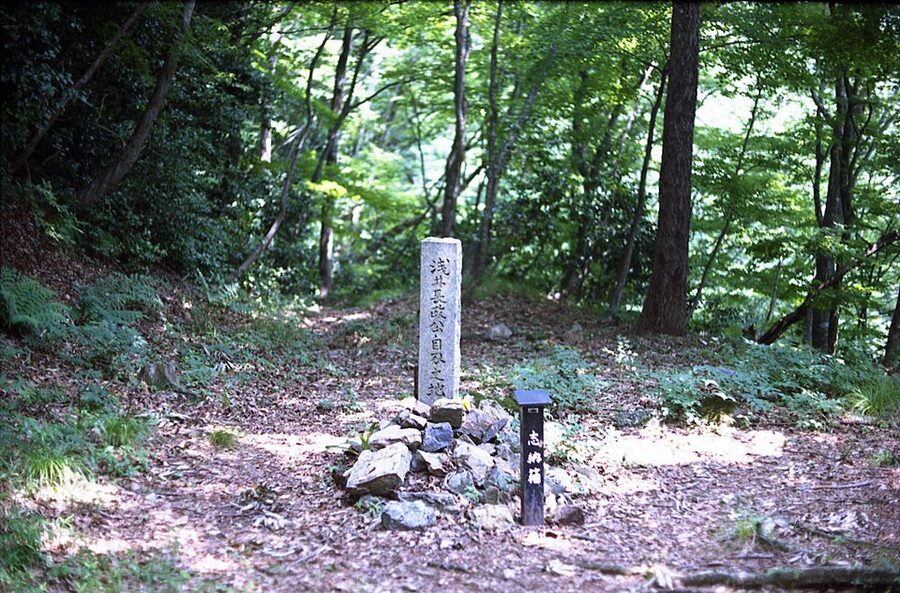
The Odani ruins include the seppuku site of Azai Nagamasa, marked by a modest stone pillar near the inner keep. There is no dramatic reconstruction; it is a walked-past stone in a clearing with a small wooden marker-board.
This is probably how it should be. Nagamasa’s death was not a heroic operatic event — it was a 29-year-old daimyō finishing a three-year war on the losing side in a room with his closest retainers. The marker does the appropriate understatement.
Ichijōdani Asakura Ruins, Fukui
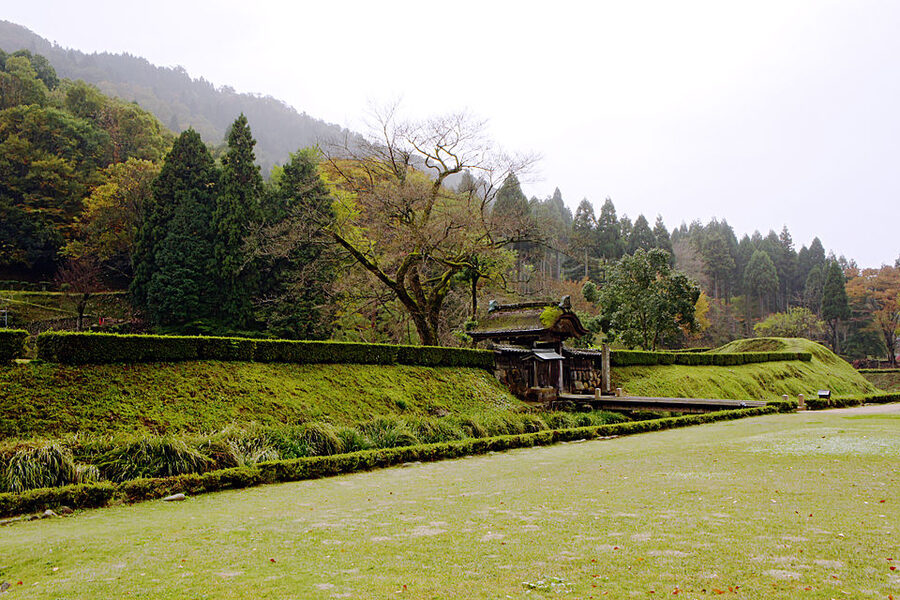
For the Asakura side of the campaign, the site to visit is Ichijōdani, in modern Fukui Prefecture about an hour east of Fukui City by local train. Ichijōdani was the Asakura capital from the late 15th century to its destruction by Nobunaga on 16 August 1573. The valley-floor castle-town was burned to the ground over three days in that campaign, and the site was never rebuilt; it was abandoned and forgotten until excavation began in the 1960s. The result is an archaeological park of the Asakura town as it stood on the day of the burning.
The preserved ground covers the main Asakura yakata (the daimyō’s manor), the samurai residential district, the merchant street, a reconstructed street of small merchant houses with period-accurate interiors, and the Asakura clan cemetery on the western slope. You can walk the full town in two hours.
The reconstruction of the merchant street, built in the 1990s on the original foundations, is the best single museum exhibit of Sengoku everyday life I have seen in Japan. The detail is not about daimyō and armies. It is about what a sixteenth-century merchant’s front room looked like, what dried foods were on the shelves, what a samurai houseboy’s bedding was.
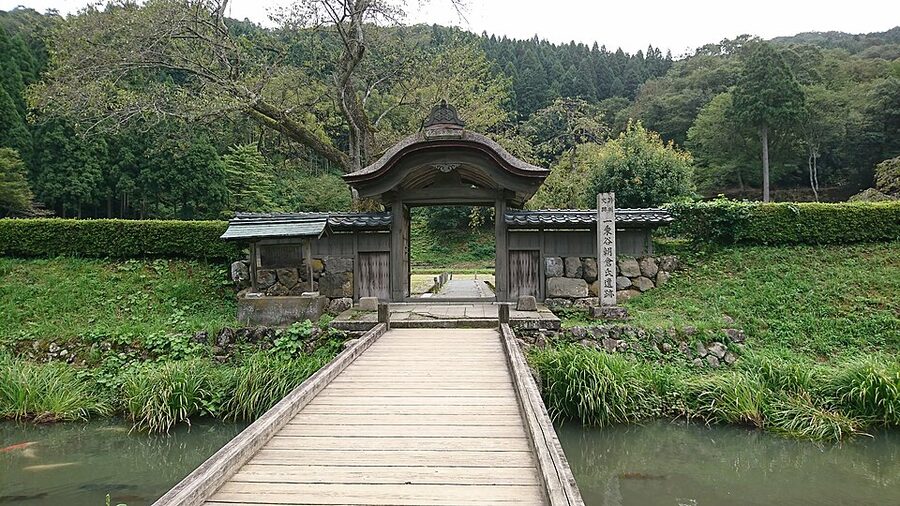
Access: Ichijōdani Station on the JR Echizen Main Line, 25 minutes from Fukui Station. Or — the better option, honestly — rent a car at Fukui and make a loop through the ruins, Kenshō-ji Temple (Yoshikage’s suicide site), and the Ichijōdani Asakura Museum. Allocate a full day.
The museum opens at 9 and closes at 5, and the archaeological park itself is open dawn to dusk. Admission to the reconstructed street is ¥330 for adults; the rest of the park is free.
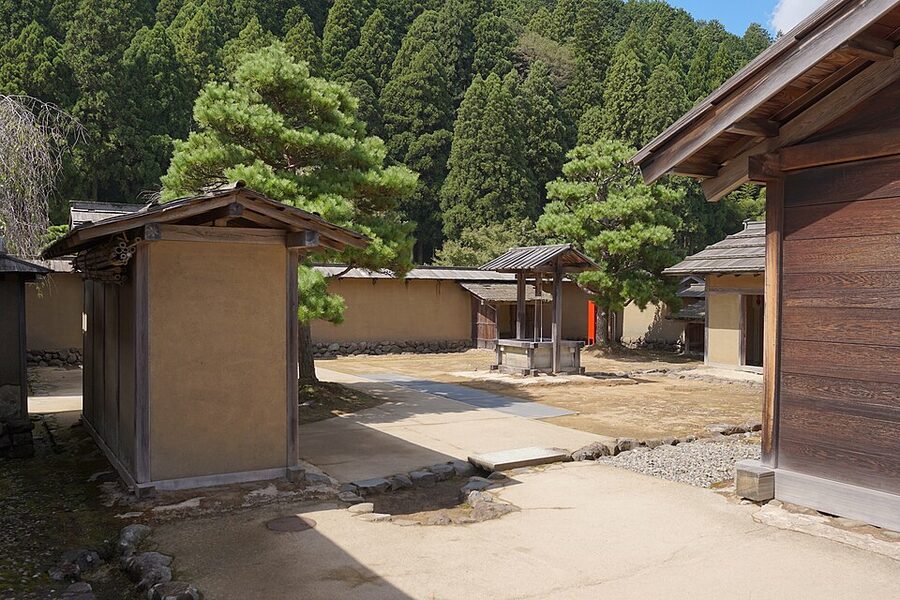
Nagahama Castle Rekishi Hakubutsukan
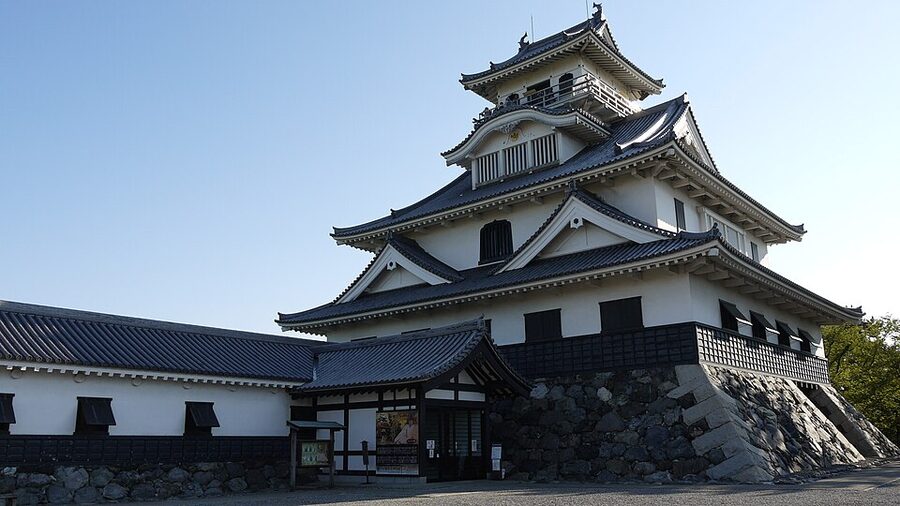
The Nagahama Rekishi Hakubutsukan is housed inside the 1983 reconstruction of Nagahama Castle, directly on the Lake Biwa shore seven minutes’ walk from Nagahama Station. This is the institutional centrepiece of Anegawa and the broader Hideyoshi-Nagahama history. The permanent exhibits cover the pre-1570 Azai history, the Anegawa campaign in detail (with a battlefield diorama at 1:500 scale), the Odani-Ichijōdani destruction campaigns of 1573, and then Hideyoshi’s Nagahama years as daimyō through 1582.
The diorama of the battle is worth specific mention. It is in a separate room on the second floor, covers about six square metres of the Nomura-Mitamura combat zone, and shows the full deployment at roughly nine in the morning with the Azai attack on the Oda centre-left already in progress. The modelling is careful: you can pick out individual unit banners, the Ieyasu right-wing positions, the Honda Tadakatsu extremity, Isono Kazumasa leading the third wave across the river. Allow 20 minutes to read the diorama properly.
Admission ¥410 adults, 9am-5pm, closed Mondays. The museum pairs naturally with an afternoon walk to the Anegawa battlefield itself — do the museum in the morning, walk the ground in the afternoon, finish at the memorial stone in Nomura. If you only have one day for Anegawa, this is the sequence.
Hikone Castle and the Ii connection
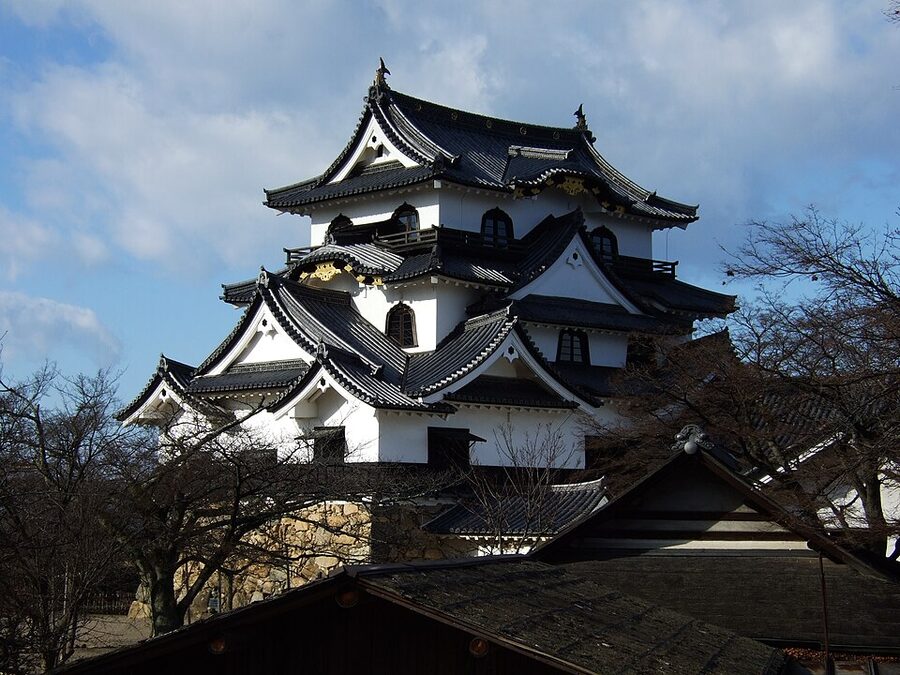
Hikone Castle is 20 kilometres south of Anegawa, 25 minutes from Nagahama on the JR Tōkaidō Main Line. The castle was built by Ii Naomasa — the fourth of the Tokugawa Four Heavenly Kings, the commander of the famous Red Devils cavalry at Sekigahara — as his post-1600 seat. Naomasa was given Ōmi because the Ii family had not previously held a province and because the Tokugawa wanted a loyal retainer controlling the Kyoto-Gifu corridor. Naomasa died before the main castle was completed, and his son Naotaka finished it in 1622.
The main keep is a National Treasure. The wall and moat complex is extensive and largely intact. The Hikone Castle Museum, housed in a replica of the Edo-period administration building inside the outer bailey, includes a specific Anegawa-reference exhibit because Isono Kazumasa is buried in the family temple attached to the castle grounds.
You can walk the inner moat circuit, climb the keep, and cover the museum in about three hours. Admission ¥800 combined ticket, open 8:30am to 5pm.
Sawayama Castle ruins and Mitsunari’s ground
The ruins of Sawayama Castle are three kilometres east of Hikone Castle, on the low ridge above the lakeshore. Sawayama was Ishida Mitsunari’s seat from 1591 to his execution after Sekigahara in 1600 — Mitsunari, the Western-camp architect of the Sekigahara alliance, is the most important post-Anegawa Ōmi political figure. Hideyoshi granted him the fief after his 1586 rise to Regent, and Mitsunari ran the castle as an administrative centre rather than a military stronghold through the 1590s.
There is very little surviving structural material at Sawayama. Naomasa deliberately demolished the castle in 1603 to clear the site for his new Hikone project, and the stonework was largely recycled. What remains is the earthwork layout, the approximate position of the main keep platform, and a walking trail with informational boards.
Access is from Sawayama-jō-ato trailhead, about a 30-minute walk from Hikone Station, then 45 minutes up the ridge. The view from the old keep platform covers Hikone Castle below, Lake Biwa to the west, and the southern edge of the Anegawa basin to the north. The site is free and always open.
This is my favourite stop on the northern Ōmi circuit precisely because there is so little to see; you have to do the imaginative work yourself.
A note on dates and sources
The Japanese sources consistently give the battle date as the 28th day of the sixth lunar month of Genki 1. The Gregorian conversion is 30 July 1570, though some older English sources give 9 August using a different calendar-conversion convention. The Japanese scholarly consensus, which I follow here, is 30 July. The battle is often also given as “the 9th of August 1570” in 19th-century Western secondary works following a now-superseded lunar-to-Julian reckoning.
Numerical totals for the engagement vary between sources. The Shinchō Kōki gives 28,000 Oda-Tokugawa and 18,000 Azai-Asakura; the Asai Sandai-ki gives slightly higher figures for the Azai-Asakura side (closer to 20,000) and slightly lower for the Oda (closer to 25,000). Casualty figures similarly vary by 10-20% across sources.
The ratios and the general shape of the battle are stable across all accounts, however. The eleven-wave attack is the single most-preserved tactical detail, every source records it, and the Honda-Magara duel is recorded in four separate Edo chronicles. The backbone of the Anegawa narrative is not seriously disputed.
What is disputed is the precise tactical mechanism of Ieyasu’s right-wing breakthrough. The Mikawa Monogatari credits Sakai Tadatsugu’s flank sweep as the decisive move; the Shinchō Kōki credits a more general Tokugawa advance without identifying the specific manoeuvre; the Asai Sandai-ki credits Honda Tadakatsu’s single-horse action as breaking Asakura morale.
These three accounts are not necessarily inconsistent — the flank sweep, the general advance, and the Honda duel could all have contributed — but the emphasis differs. Modern Japanese reconstructions generally combine all three into a single causal chain.
Closing — the 22-year-old on the single horse
What makes Anegawa the interesting Sengoku battle, for me, is that it is the one where both founders of the Tokugawa-Oda alliance come closest to losing and don’t. Nobunaga, through Isono’s eleven waves, has a two-hour window in which he is looking at the collapse of his centre-left and the end of his forward position in Ōmi.
Ieyasu, committing his entire 5,000 men to a frontal push against a force twice his size, is running a formation that would have broken against any competent Asakura commander but does not break against Asakura Kagetake. Each of them survives a near-catastrophic half-hour. Neither of them makes a second mistake.
And the specific human detail I come back to, the one I was thinking about on the embankment the last time I walked the battlefield, is the 22-year-old on the single horse. Honda Tadakatsu had no reason to ride out alone in front of the Tokugawa line that morning. He was not ordered to.
He was the right-extremity of a victorious pursuit, and the correct procedure was to maintain formation and wait for the column to close up behind him. What he did instead was see the Asakura rear-guard forming and decide, in the thirty seconds before his reinforcements would have arrived anyway, that the formal single-combat challenge should be answered.
He answered it. He did not win. He did not lose. He came back, and Nobunaga asked Ieyasu who he was, and for the next forty years he was Honda Tadakatsu of the Deer Antlers, who fought in 57 engagements and never took a wound.
If you are travelling through northern Shiga anyway, take the train to Nagahama and walk the two kilometres out to Nomura in the morning. Stand on the embankment at the main memorial, look north across the rice paddies, and pick out the ridge behind you. That was where the Tokugawa right came through.
Then turn and walk east along the river for twenty minutes to where the gravel widens out. That was where Isono crossed. In late July the cicadas in the bamboo windbreaks are deafening and you cannot hear yourself think.
It is exactly as hot and flat and unremarkable as it was in 1570. And that, in a way, is the battle’s most honest monument.


.jpg)


