Ishida Mitsunari was forty-one years old when they cut his head off on a riverbank in Kyoto, and by any reasonable measure he should have been better at keeping it attached. He had been a teenage temple novice serving tea. Then a pageboy to the most powerful warlord in Japanese history.
Then a revenue commissioner, a port reformer, a land surveyor of thirty provinces, the administrative brain of the Toyotomi government, the lord of a 190,000-koku fief at Sawayama Castle — and, in the last fortnight of his life, the operational commander of an eighty-thousand-man army that he had built from nothing in less than sixty days and that fell apart in one morning.
The Edo chroniclers settled on the version in which Mitsunari was a humourless bureaucrat who got out of his lane. You still see that Mitsunari in modern NHK dramas — the cold-faced administrator who provokes the warriors, mishandles the politics, and deserves the riverbank. The twenty-first-century Japanese scholarship has been steadily unwinding that picture.
What is left is something more interesting: a man who understood Toyotomi finance and logistics better than anyone alive, who picked the losing side because the losing side happened to be his master’s heir, and who made no serious attempt to save himself when the choice came. He was not, strictly speaking, a good general. He was, strictly speaking, a loyal one.
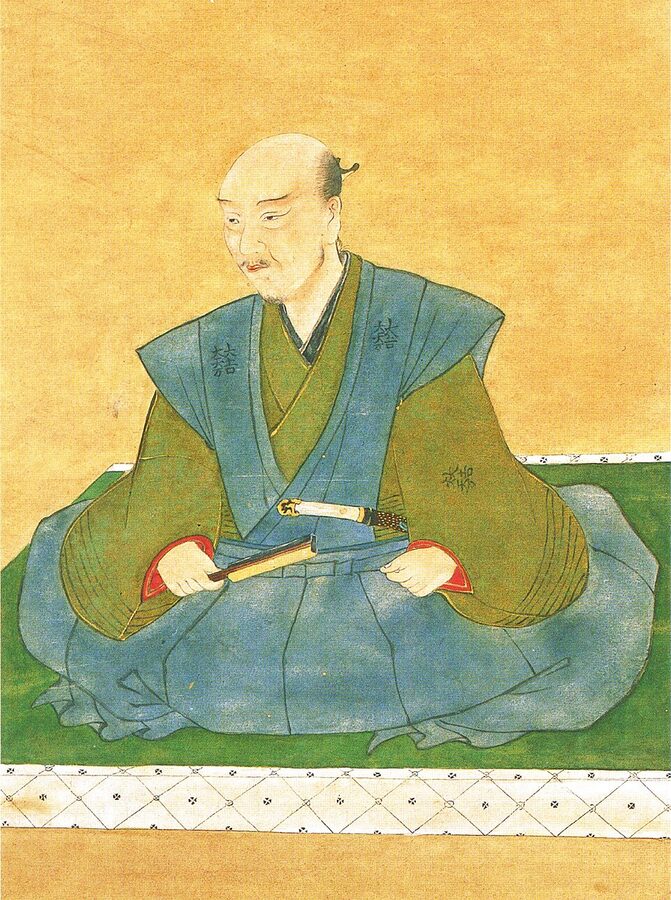
In This Article
- The three cups of tea
- From koshō to bugyō — the rise of the clever man
- The Taikō-kenchi and the civilian state
- Sawayama — 190,000 koku and the administrative fortress
- Korea — the logistics officer and the warriors who hated him
- Hideyoshi dies
- The seven-general night attack
- The Western Army — six weeks to build an army
- Sekigahara — one morning
- Capture and execution
- The long rehabilitation
- Where to find Mitsunari today
- Sawayama Castle ruins, Hikone — the mountain and the foundations
- Ryūtan-ji — the mountain-foot temple
- Ishida village birthplace, Nagahama
- Kannon-ji, Maibara — the three-cups-of-tea temple
- The Ibuki-Lake Yogo capture country
- Daitoku-ji Sangen-in, Kyoto — the grave
- The ledger
The three cups of tea
The founding anecdote of Mitsunari’s career is almost certainly folklore. It is worth telling anyway, because it is the story the Japanese tradition agreed to keep.
The year is 1574. Toyotomi Hideyoshi, then called Hashiba, is out hawking in the northern Ōmi hills, loses his dogs, gets lost himself, and stops at a small Buddhist temple to ask for water. A fourteen-year-old novice comes out, takes one look at him, disappears, and comes back with a large bowl of tepid tea. Hideyoshi drinks it in one pull.
The novice goes back for a second bowl. This one is smaller and warmer. Hideyoshi drinks it more slowly, and hands the bowl back.
The novice disappears again and returns with a tiny cup of tea, hot and strong, which Hideyoshi sips. Then he asks, with what the chroniclers report as real surprise, who the boy’s father is. The novice says his father is a retainer of the Asai clan at Ishida village, and his childhood name is Sakichi. Hideyoshi takes the boy into his service on the spot.
That boy becomes Ishida Mitsunari.
This is the san-kon no cha (三献の茶) or “three-cups-of-tea” story, and it is told in every Japanese bookshop as the origin of Mitsunari’s career. The sources that preserve it — the Bushō kanjōki and similar Edo anecdote-books — are all eighteenth-century. The contemporary records say only that Mitsunari’s father and elder brother entered Hideyoshi’s service around 1571 and that Mitsunari followed on shortly after.
His own son’s temple register, the Reihai nikkan, puts the date at age eighteen, not fourteen, and the place as Himeji, not Ōmi. There was no tea. Probably.
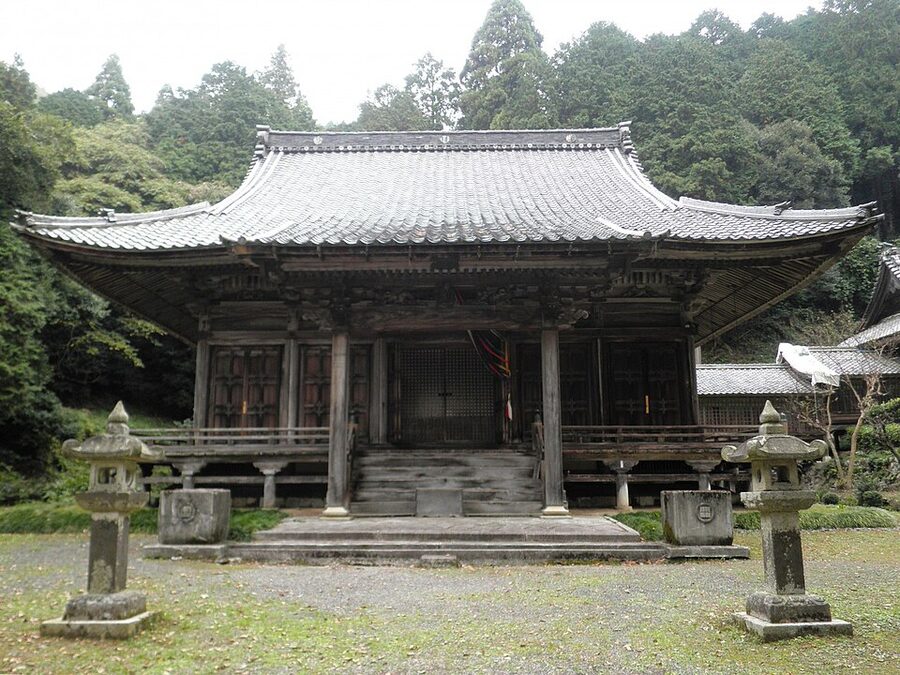
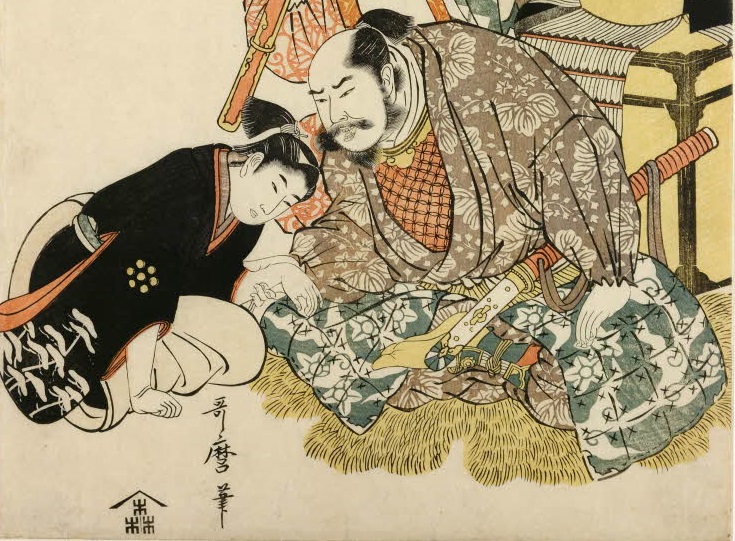
What is certainly true is that by his mid-teens Mitsunari was in Hideyoshi’s personal retinue as a koshō, a pageboy with formal duties around his lord’s person, and that he stayed there through the late 1570s and into the 1580s. He was with Hideyoshi in Chūgoku during the long Mōri campaign. He was with him at Awaji in 1581, where the chroniclers note, small-print, that Mitsunari delivered Sengoku Hidehisa’s battle report.
He was not yet a commander. He was the clever teenager whose job was to stand next to the lord and remember things correctly.
From koshō to bugyō — the rise of the clever man
Mitsunari’s career accelerated after the Honnō-ji Incident of 1582 put Hideyoshi in the running for supreme power. You can read my piece on Akechi Mitsuhide for the assassination itself, but the consequence for a twenty-two-year-old page in Hideyoshi’s entourage was that every promotion cycle now ran through the clan that suddenly had the whole country to administer. Mitsunari scouted for Hideyoshi at Shizugatake in 1583 — infiltrating the Shibata lines, talking local peasants into fighting for the Toyotomi side, earning an entry in the Ichiyanagi-ke ki as one of the fourteen men who made the breakthrough charge.
By the summer of 1585 he was at court, with a fifth-rank junior appointment and the title of Jibu-no-shōyū, the Secondary Assistant of the Ministry of Civil Administration. He was twenty-six. Compared to the more famous Hideyoshi retainers who had been fighting since Nobunaga’s time — Katō Kiyomasa, Fukushima Masanori, Kuroda Nagamasa, all roughly his age — Mitsunari came in through the court-paperwork door. He was a civilian officer with warrior-class assignments, and the distinction would define the rest of his life.
The big administrative appointment followed fast. Sakai in the same year. Hakata the year after — Mitsunari ran the reconstruction of the burnt-out port under Hideyoshi’s Kyūshū-pacification programme, gridded the streets, abolished the guild monopolies, and drafted the ordinances that turned Hakata into a free-trade port.
Mino, in 1589, got its land survey. By thirty he was one of the two men to whom Hideyoshi handed the Tōhoku reconstruction after the Oshū-shioki campaign.
In 1585 he had also, on his own nickel, recruited the ex-Tsutsui general Shima Sakon, one of the five or six most feared lance-commanders in Japan, as his household senior retainer. The anecdote has Mitsunari offering Sakon half his own stipend to take the position. Sakon, who had been ready to retire, agreed out of curiosity. Hideyoshi heard about the salary and is said to have laughed and then sent Sakon a Toyotomi-crested haori as a token of respect.
The story matters because it signals what Mitsunari was doing with his Toyotomi status: buying the best operational people he could find and using them to get things done. He was building an administrator’s army inside a warrior’s country.
The Taikō-kenchi and the civilian state
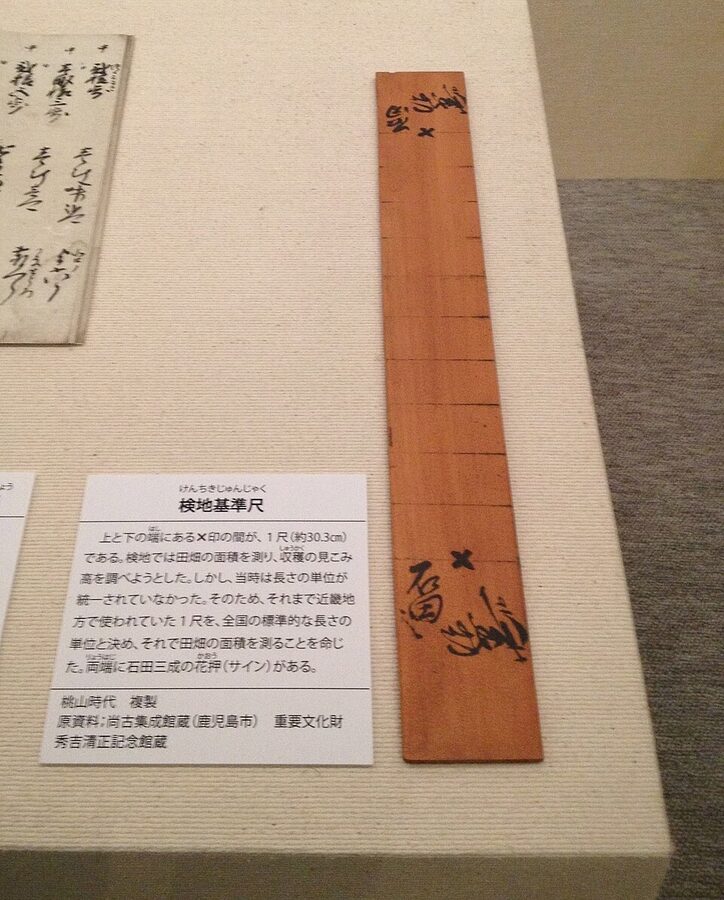
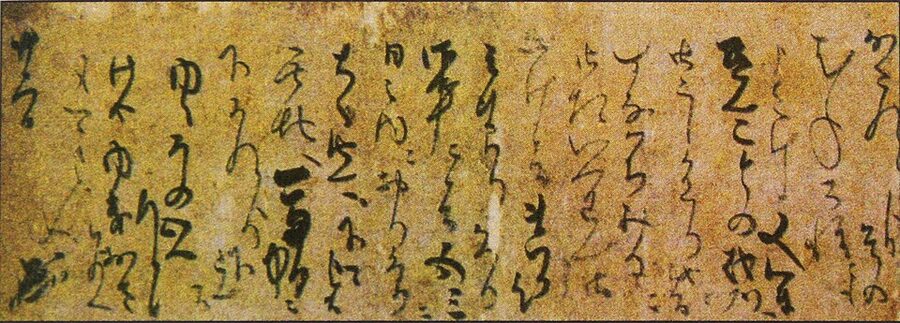
If there is one policy that defines Mitsunari’s career, it is the Taikō-kenchi — the nationwide cadastral survey Hideyoshi began in 1584 and rolled out through the 1590s. Mitsunari ran it or co-ran it in Ōmi, Mino, Mutsu, Dewa, Echigo, Satsuma, Ōsumi, Hyūga, Hitachi, Shimotsuke, Owari. Every one of those provinces got remeasured under a single national standard: 6-shaku-3-sun to a ken, 30 ken to a sé, 10 sé to a tan, 10 tan to a chō.
Land was graded into four productivity tiers. The standard Kyōto masu replaced the thousand local rice-measures that the warlord era had let proliferate. Each parcel got a productive-value number in koku of rice, and that number travelled with the parcel on the official register.
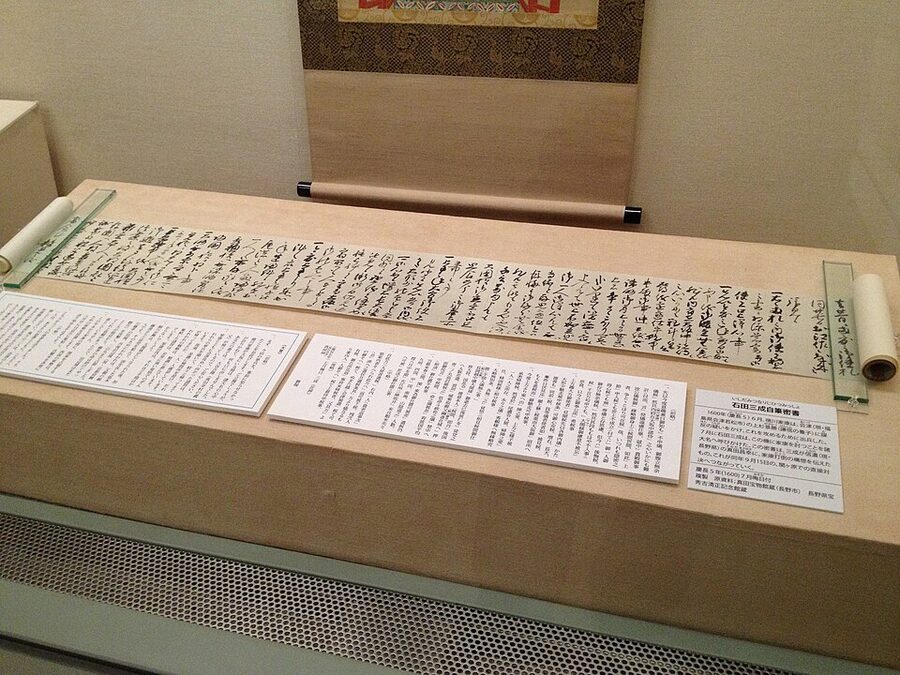
The politics of that system were Mitsunari’s. In July 1594 he issued an eleven-article instruction to his surveyors that is unusual for the period.
Do not accept gifts from landlords. Do not bully peasants. Do not show off. Do not let private grudges bias a survey.
Charge reduced assessments on ports, uplands, and other specialised-livelihood communities. Allow cotton-growers and lacquer-tappers to pay tax in product rather than rice. Do not tax forest trees. Take only one-tenth of a bamboo grove per year, never the whole stand.
These are surveyor-ethics rules written by a man who has been in the field and has watched his own people cheat.
What Mitsunari was building, without giving it a name, was the revenue apparatus of a unified early-modern state. Tokugawa Ieyasu inherited the whole system in 1600 and used it essentially unchanged for the next two and a half centuries.
You can see the Taikō-kenchi cadastre shape through every Edo-period village document. The village-by-village kokudaka numbers that determined samurai incomes, tax rates, and military-service obligations all trace back to Mitsunari’s surveyors walking fields with 6-shaku-3-sun rods. The man who killed him kept his tax policy.
Sawayama — 190,000 koku and the administrative fortress
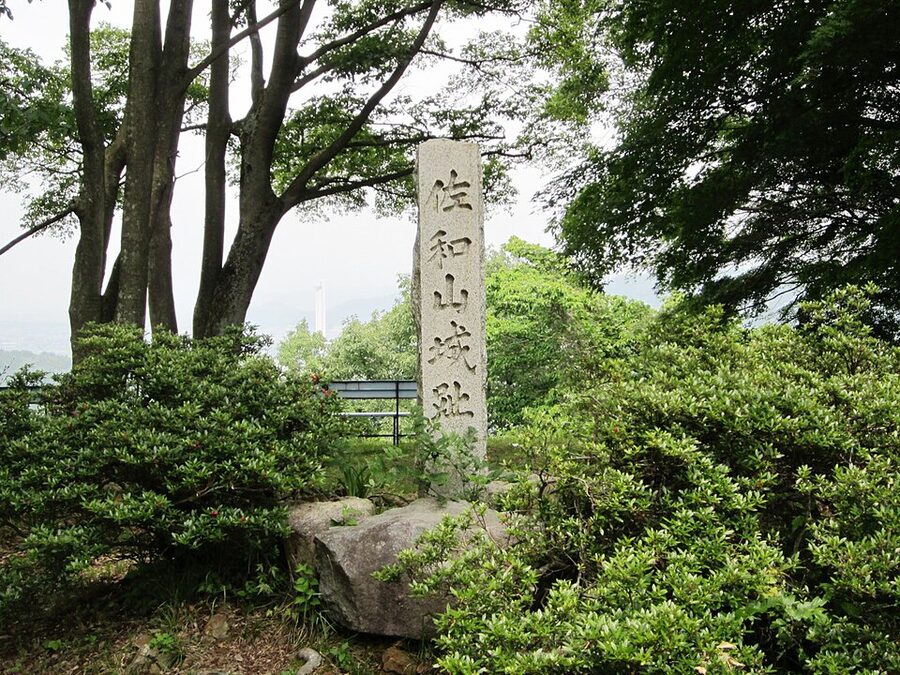
Mitsunari’s promotion to full daimyō status came in 1591, when Hideyoshi appointed him castellan of Sawayama Castle — the strategic fortress on the main Ōmi road between the Kyoto-Osaka basin and the eastern provinces. The initial posting was as a shogunal-domain steward rather than a fief-holding lord. In 1595, after the Hidetsugu purge, the post was regularised and Mitsunari was formally enfeoffed with the Sawayama domain at 190,000 koku.
He was thirty-five. By Toyotomi-government standards this put him squarely in the second tier of daimyō ranks, well below the Mōri or Tokugawa but at the same level as Kobayakawa Takakage or Maeda Toshinaga.
Sawayama was not Mitsunari’s personal luxury. The contemporary letters describe the castle as spartan — “not a gold-leaf panel in the place,” one surprised visitor writes — and Mitsunari’s income appears to have gone chiefly into three places: his retainer payroll (he kept an unusually large staff of talented people), his network of temple patronages, and his infrastructure programmes in the post-towns south of the castle.
One of those programmes regulated the corvée demands on post-town peasants. Mitsunari decreed that no traveller could requisition more than five labourers, two bales of horse-fodder, two to of bran, and sixteen portions of vegetables from a post-town in a single day. Any demand above that was void. This is the kind of ordinance you get from an administrator who has seen the paperwork and has decided the peasants are sick of it.
The Hidetsugu affair of 1595 is worth a brief note. Hideyoshi’s nephew Toyotomi Hidetsugu, the designated Toyotomi heir until the late-life birth of Hideyori, was forced to commit seppuku on Mount Kōya on suspicion of treason. The Edo chronicles make Mitsunari the chief interrogator and ascribe the whole affair to his political machinations.
Modern Japanese historiography has demolished that version — the decision was Hideyoshi’s, the investigation was run by a committee on which Mitsunari was one of several members, and Mitsunari appears to have quietly protected several Hidetsugu retainers afterwards. A group known as the “Wakae Eight” were all absorbed into Mitsunari’s Sawayama retainer register at substantial stipends.
They would fight for him at Sekigahara. The reason they fought was that Mitsunari had given them a second life after their lord had been destroyed.
Korea — the logistics officer and the warriors who hated him
Korea broke the Toyotomi court, and it broke Mitsunari’s relationship with half the daimyō class in Japan. The invasions of 1592 and 1597 put 158,000 Japanese troops across the Tsushima Strait. Mitsunari’s job, with Mashita Nagamori and Ōtani Yoshitsugu, was to get them there, keep them supplied, and bring them back.
The scale of the operation was unprecedented in Japanese military history. At one point Mitsunari’s commissariat was running 40,000 transport vessels out of Nagoya in Kyushu — listed by number, assigned to specific units, rotated back for the next wave.
The supply chain worked at first, and then it stopped working. By early 1593 the front line had over-extended, the Chosŏn irregulars had cut the rear routes, the Ming army had arrived at Pyongyang with winter provisions, and the Japanese garrisons were on starvation rations.
Mitsunari was sent across the water in June 1592 as one of the three gunbugyō, military commissioners, to impose some order on the campaign. He arrived at Hansŏng, toured the countryside, saw the scorched villages and the empty fields, and concluded that the war was unwinnable as a conquest and could only be retrieved as a negotiated partial withdrawal.
The warriors on the front line disagreed. Katō Kiyomasa — my separate piece on Katō Kiyomasa goes into the detail — was fighting his way through Hamgyŏng, taking two Chosŏn princes hostage, and had no interest in being told by a Hideyoshi staff officer that his advance was logistically impossible.
Kobayakawa Takakage, thirty years Mitsunari’s senior and the senior Mōri commander, responded to Mitsunari’s proposal for a tactical withdrawal from Kaesŏng with a line that has gone into the language: “Have the commissioners lost their nerve? If the rations run out, we will eat sand.” Mitsunari answered in writing that the enemy was a cavalry-heavy Ming force, that the Japanese rifle corps would need to be positioned high to be effective, and that retreating to Hansŏng would let them fight on ground they could hold.
He was, as usual, right on the tactics. And he was, as usual, unbearable on delivery.
The factional split that emerged from Korea — the bunchi-ha civil officers versus the budan-ha warrior lords — was not invented by Mitsunari, and it was not entirely about him. But he was its clearest face.
Kiyomasa was reported to Hideyoshi for refusing orders; the report went through Mitsunari’s office. The Ulsan Castle commanders were disciplined after the 1597 siege; one of the inspectors filing the reports was Mitsunari’s son-in-law Fukuhara Naotaka.
By the time the war ended, Kiyomasa, Fukushima Masanori, Kuroda Nagamasa, Hosokawa Tadaoki, Ikeda Terumasa, Asano Yoshinaga, and Tōdō Takatora were all in the same faction. They were in it, at least in part, because they all hated the same man.
Hideyoshi dies
Hideyoshi died at Fushimi Castle on 18 August 1598. Mitsunari was thirty-eight.
For the previous four years the Toyotomi government had been running on Hideyoshi’s personal authority alone — the two-tier system of Five Elders (Go-tairō, composed of Tokugawa Ieyasu, Maeda Toshiie, Mōri Terumoto, Uesugi Kagekatsu, Ukita Hideie, and for a time Kobayakawa Takakage) and Five Commissioners (Go-bugyō, including Mitsunari, Asano Nagamasa, Mashita Nagamori, Maeda Gen’i, Natsuka Masaie) was a deathbed patchwork intended to get young Toyotomi Hideyori to adulthood. Nobody expected it to work without Hideyoshi alive to adjudicate.
Mitsunari’s first job after the funeral was to get the Korean army home. He ran the Hakata end of the withdrawal through the winter of 1598, coordinating three hundred transports, mediating the Ming-side ceasefire, and sending repeated letters to Mōri Terumoto demanding explicit assurances that the Toyotomi loyalists would hold the capital while he was away. The letters have a tone of real anxiety. Mitsunari already understood, in the autumn of 1598, that Ieyasu was going to try something.
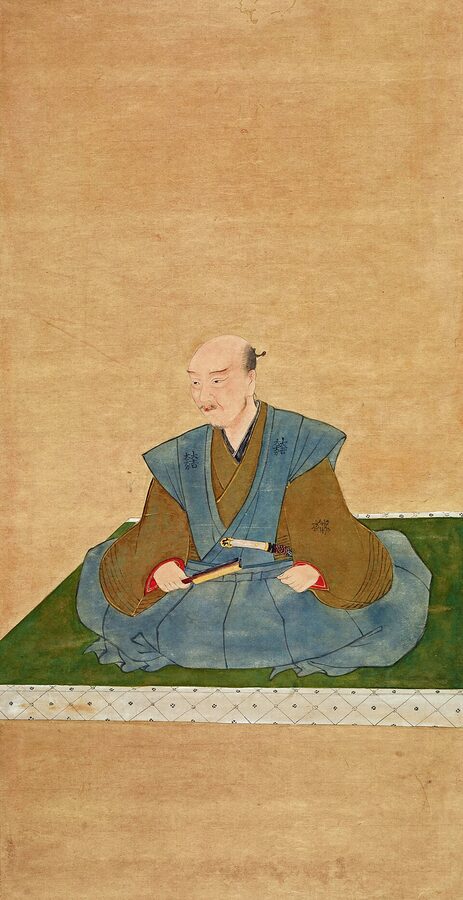
Ieyasu did. The first move was the private marriages. Across January 1599, in clear violation of the 1595 regulation requiring Council consent for daimyō marriages, Ieyasu arranged three separate unions: his son Matsudaira Tadateru to Date Masamune’s daughter, his adopted daughter to Fukushima Masanori’s heir, another adopted daughter to Hachisuka Iemasa’s heir.
Mitsunari and Maeda Toshiie caught it immediately. On 19 January 1599 they sent the monk Shōtai and the courtier Ikoma Kazumasa to Ieyasu’s residence with a formal rebuke and a hint that the Council might expel him.
Ieyasu refused to apologise. Rumours ran through Osaka that Mitsunari was preparing a dawn raid on the Tokugawa residence; Ikeda Terumasa, Kuroda Nagamasa, Tōdō Takatora, and Fukushima Masanori moved into defensive positions around it.
Mitsunari’s own partisans — Mōri Terumoto, Ukita Hideie, Uesugi Kagekatsu, Satake Yoshinobu, Konishi Yukinaga, Chōsokabe Morichika — concentrated in Osaka. Japan came within hours of a civil war in February 1599. Ikoma Kazumasa, Horio Yoshiharu, and Nakamura Kazuuji brokered a last-minute settlement on 5 February: Ieyasu would re-sign his pledge to respect the ten-man Council, and the incident would be closed.
The seven-general night attack
Maeda Toshiie — my full piece on Maeda Toshiie covers his side — was the one man on the Toyotomi side whose prestige could hold Ieyasu in check. He was sixty-one and ill. On 3 March 1599 (intercalary), he died at his Osaka residence. Mitsunari had been in attendance, nursing him.
The same evening, Katō Kiyomasa, Fukushima Masanori, Kuroda Nagamasa, Hosokawa Tadaoki, Ikeda Terumasa, Tōdō Takatora, and Asano Yoshinaga — seven daimyō, at least three of them Ieyasu’s sons-in-law by the still-controversial 1599 marriages — organised an armed column to intercept Mitsunari on his way home and kill him.
It was raining. Kiyomasa and Kuroda together had brought three thousand musketeers. Mitsunari was tipped off by one Kuwajima Chiemon, a minor retainer who owed him a personal favour, and slipped out of the Maeda compound by a different route.
He reached his own residence at Fushimi and sent word to Satake Yoshinobu at his base in Ōmi. Satake, who was unambiguously in Mitsunari’s faction, dispatched his senior retainers to Osaka within hours and came himself shortly after. He put Mitsunari in a covered palanquin under his personal escort and moved him through the back routes to Fushimi.
The seven-general column followed but did not attack a Satake guard. The next morning they surrounded Fushimi Castle instead.
What happened next has been rewritten six times over four centuries, because it is the moment at which Ieyasu’s political genius becomes visible to the naked eye. The Edo chronicles say Mitsunari ran to Ieyasu’s residence at Mukōjima and begged for protection. This is false — no contemporary source records it, and Mitsunari’s party never left Fushimi Castle during the standoff.
What did happen is that Ieyasu, the man most likely to benefit from Mitsunari’s death, stepped in as the neutral arbitrator. He negotiated a settlement: the seven generals would disband if Mitsunari retired from political office and returned to Sawayama, and if the other commissioner Mashita Nagamori was not punished (Ieyasu had private reasons to keep Mashita in play).
Mitsunari accepted the terms on 9 March and left Fushimi the following day. His son Shigeie was dispatched to serve Hideyori at Osaka Castle in his place.
Ieyasu had just removed his most effective opponent from the government by looking even-handed. Three days later, with Mitsunari on the road to Sawayama under Yuki Hideyasu’s escort, Ieyasu moved into Fushimi Castle, a posting that had been Hideyoshi’s own and was supposed to be held by the civil commissioners, and began the slow process of relocating his base of operations to the western capital.
By November 1599, Maeda Toshinaga’s forced acquiescence had effectively ended the Council of Elders, and Asano Nagamasa had been exiled to Kai. The Council of Commissioners was down to three. Ieyasu was running the country.
The Western Army — six weeks to build an army
Mitsunari spent the rest of 1599 and the first half of 1600 at Sawayama in enforced retirement. He was writing. The letters that survive from this period show a man studying the political landscape with cold attention — who was where, who owed whom, who had a grievance against the Tokugawa side that was not yet public.
In July 1600, Ieyasu opened the pretext he had been waiting for: Uesugi Kagekatsu in Aizu had been fortifying his domain and refusing to come to Osaka to pay his respects. Ieyasu declared the Uesugi buildup a rebellion, mobilised a sixty-thousand-man punitive army that included Fukushima, Kuroda, Hosokawa, Kiyomasa, and every other significant warrior daimyō except the Mōri, and marched east out of Osaka on 18 July.
Mitsunari, coordinating through Ōtani Yoshitsugu and the monk Ankokuji Ekei, spent the next week moving. By 17 July the three remaining Toyotomi commissioners — Maeda Gen’i, Mashita Nagamori, Natsuka Masaie — had publicly issued a thirteen-point indictment of Ieyasu titled the Naifu-chigai no jōjō, accusing him of treaty violations, unauthorised marriages, unauthorised castle-building, attempted assassinations, and general usurpation.
On 19 July, Mōri Terumoto arrived at Osaka Castle from Hiroshima and was proclaimed supreme commander of the Western Army. On 1 August, Fushimi Castle fell to a Western Army assault — Ieyasu’s retainer Torii Mototada died in the defence.
By 11 September the Western Army had fifty thousand men in Mino and the surrounding provinces. Six weeks.
Mitsunari’s role in this organisation has been debated by historians for a hundred years. The traditional picture — from the Jōzan kidan and other eighteenth-century compilations — has him as the sole architect, the lone conspirator who drew the Mōri and the Ukita and the Uesugi into a coordinated plot through months of secret correspondence.
Modern Japanese historians have largely rejected that picture. The primary documents show that the commissioners had been in contact with Mōri Terumoto through July; there is no evidence that Mitsunari personally coordinated with Uesugi before the movement began.
Mitsunari’s actual contribution was operational. He raised Sawayama’s fighting strength and the Hidetsugu-veteran retainers he had protected in 1595, organised the Mino-and-Ōmi logistics base, and took tactical command of the field army once it was in place. Mōri Terumoto was the nominal commander; Mitsunari was the one doing the work.
Why did Mitsunari act? The answer most modern historians give is fiscal. As a bugyō, Mitsunari had understood the shape of Toyotomi finances better than anyone.
If Ieyasu defeated Uesugi and redistributed Uesugi’s territory to his own allies, he would need more land than Uesugi’s confiscated fief contained. The shortfall could only come from Toyotomi direct-administration lands — the kuramai-chi that funded the Toyotomi household and the young Hideyori’s government.
Within a year, Hideyori would have no independent income. The Toyotomi clan would be pensioners of the Tokugawa. Mitsunari could see it on the ledger. He acted to stop it.
Sekigahara — one morning
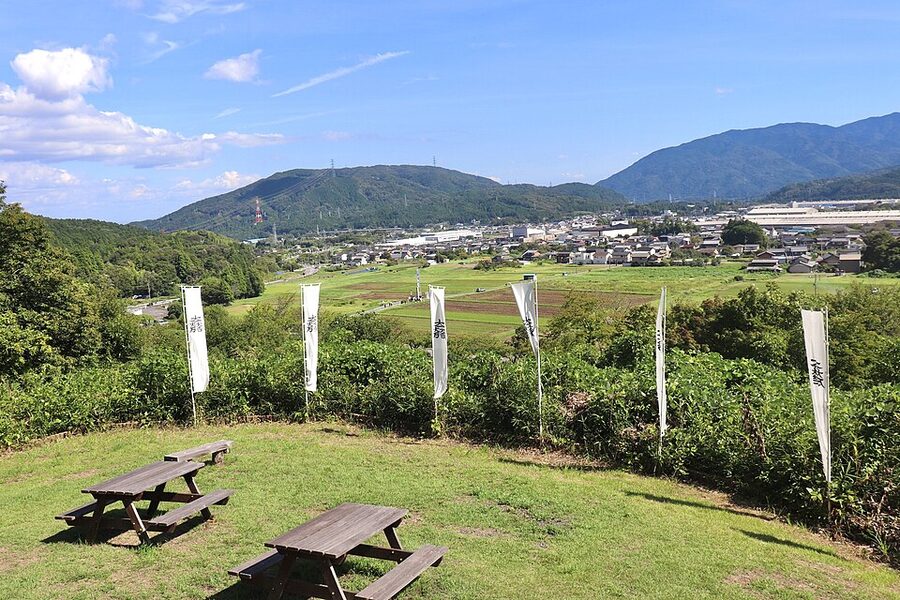
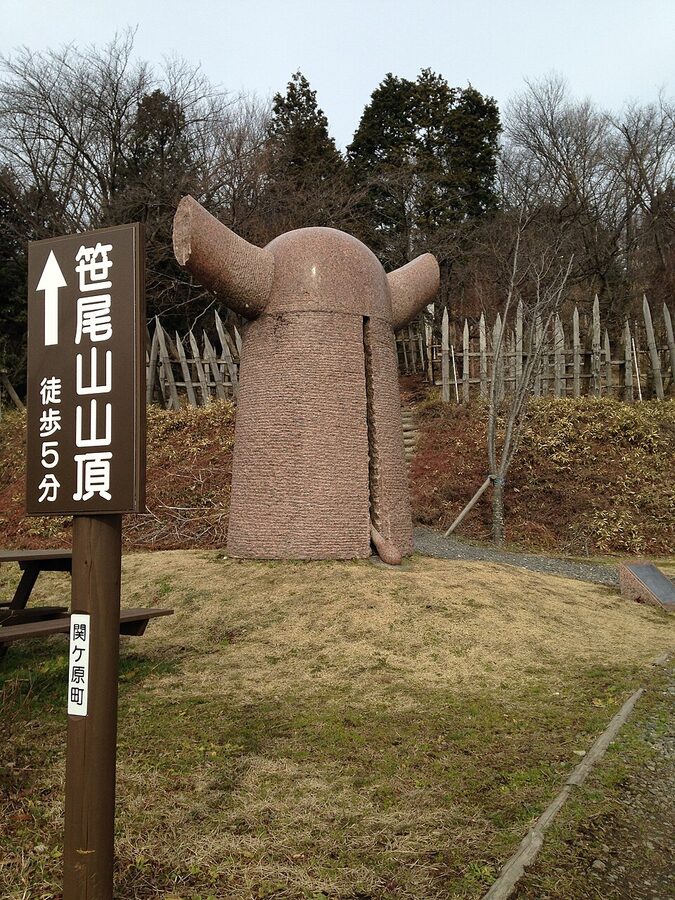
I have a separate piece on the Battle of Sekigahara, which is where the detail of 15 September 1600 belongs. The short version for the Mitsunari story: the Western Army committed to an encirclement battle at the Sekigahara basin; Mitsunari deployed on Sasao-yama at the north-west with six thousand men including Shima Sakon’s thousand-man wing; Shimazu Yoshihiro held the centre, Konishi Yukinaga and Ukita Hideie held Tenmanyama, Ōtani Yoshitsugu and Kobayakawa Hideaki held the south.
The battle opened at eight in the morning. Ishida and Ukita fought conventionally. Shimazu refused to move.
At noon, Kobayakawa Hideaki switched sides, broke through Ōtani Yoshitsugu’s flank, and triggered a cascade collapse. By mid-afternoon the Western Army had disintegrated.
Shima Sakon was killed near the base of Sasao-yama. Shimazu Yoshihiro made the famous escape south through the Tokugawa lines with about eighty survivors.
Mitsunari, on horse, fled east over the Sekigahara ridge toward Ibuki and then north into the mountains he had known since childhood — the uplands between Mino and northern Ōmi. He was carrying nothing. He had given Shima Sakon’s body his own cloak. He was trying to reach Sawayama and, failing that, the peasant villages around Furuhashi where his mother’s family had lived.
Capture and execution
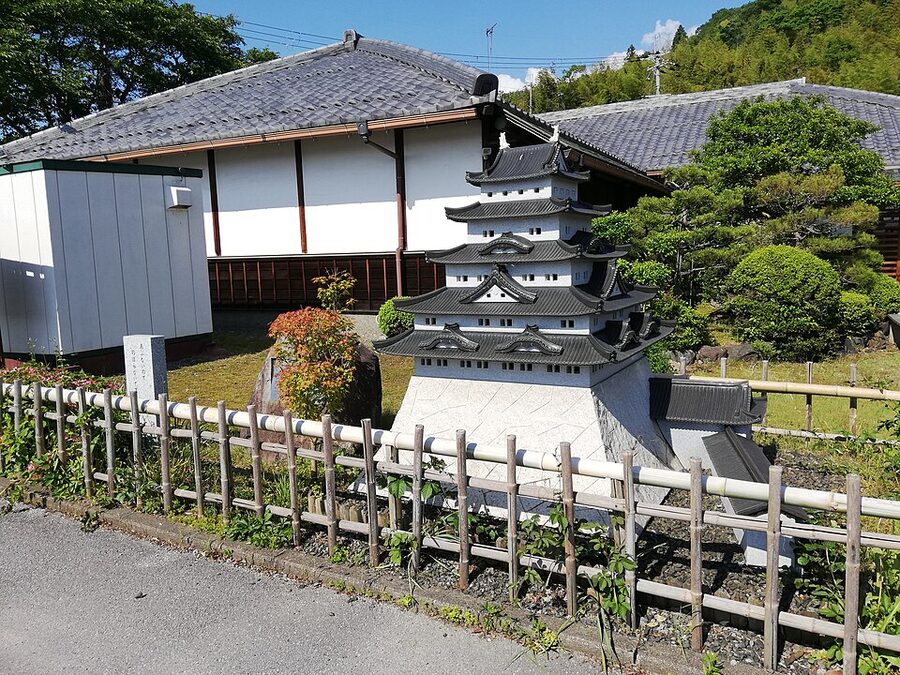
On 17 September, two days after Sekigahara, Tokugawa forces attacked Sawayama Castle. Mitsunari’s father Masatsugu and his elder brother Masazumi, inside the castle with the remaining Ishida household, led the defence.
The castle fell on 18 September. The Ishida family killed themselves in the keep. Masatsugu was seventy. Masazumi was forty-five.
The castle was looted, the keep was burned, and Ii Naomasa, who would take the Sawayama domain as his reward, began the process of dismantling the stones for reuse in his new castle at Hikone.
Mitsunari was in the mountains. Ieyasu’s captain Tanaka Yoshimasa had been assigned to hunt him down. The pursuit took six days.
Mitsunari moved through Aikawa-yama, across to Kasuga village, around Shinpo-tōge pass to the Anegawa, west through Magaritani, over Nanamawari-tōge into the Kusano valley, then north along the Takatoki River to Furuhashi-mura in Ika district. The villagers at Furuhashi, technically his own clansmen by distant tie, hid him for three nights.
Tanaka Yoshimasa caught him on 21 September, either at the base of Mount Ibuki or in the Iguchi-mura area a little to the west. The circumstances of the capture became, inevitably, the subject of six contradictory Edo-period accounts.
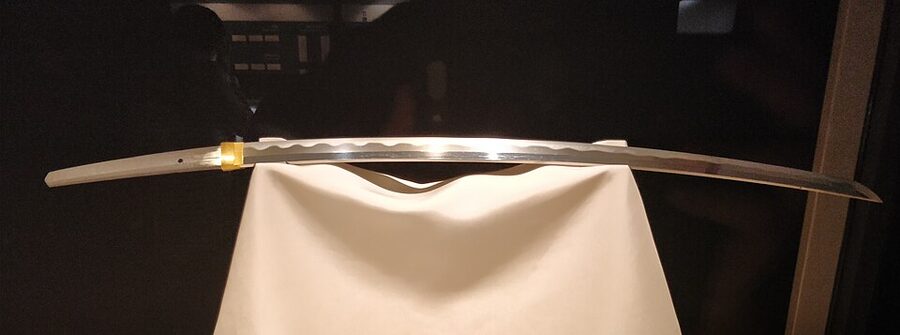
The most plausible is that a village informer tipped Tanaka’s men, and Mitsunari was arrested without resistance. When Tanaka Yoshimasa met him at Iguchi, Mitsunari handed over the sword Hideyoshi had given him, the Ishida Sadamune, as his formal surrender token.
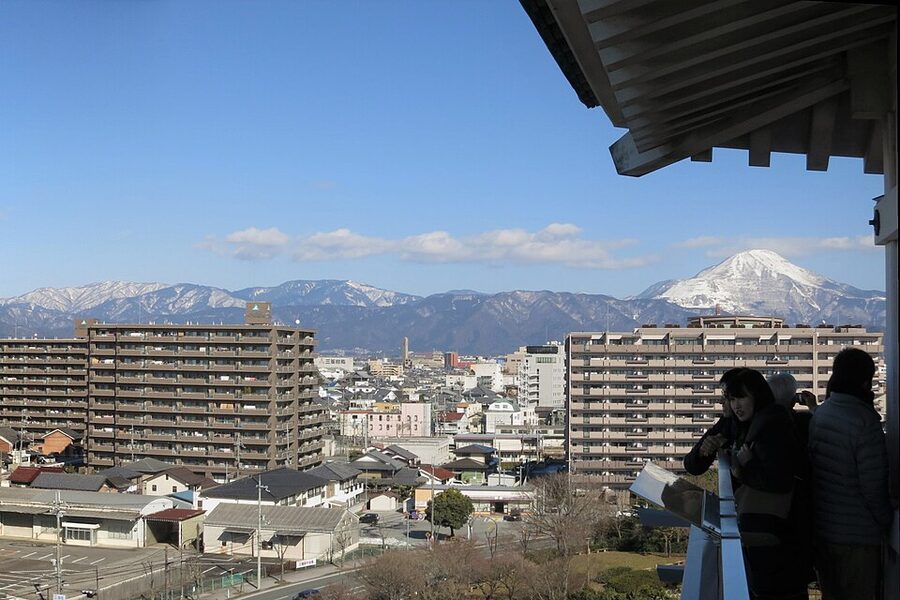
Mitsunari was taken first to Ōtsu Castle to face Ieyasu. Contemporary accounts say that Ieyasu received him with considerable ceremony, that Mitsunari comported himself as a still-serving Toyotomi official rather than a defeated rebel, and that the two men had what one observer described as a “long, quiet conversation.” Neither man wrote down what they said.
He was then moved to Osaka, paraded through Sakai with Konishi Yukinaga and the monk Ankokuji Ekei, and brought to Kyoto on 29 September. All three were executed at Rokujō-gawara, the public execution grounds on the east bank of the Kamo River, on 6 October 1600 (1 October by the old calendar).
His death-poem — the jisei — reads: Tsukuma-e ya ashima ni tomosu kagaribi to tomo ni kie yuku wa ga mi narikeri. “Like the watch-fires burning in the reed-beds at Lake Tsukuma, I too am going out.” Lake Tsukuma is the old name for Lake Biwa’s northern bay, the water Mitsunari had grown up looking at from the Ishida village.
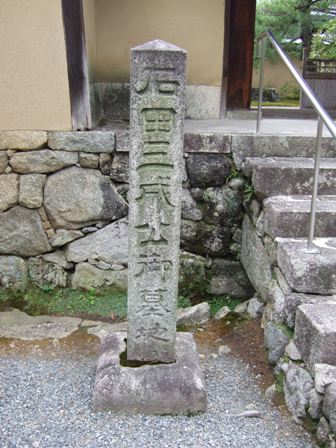
He was forty-one. His head was displayed at Sanjō-gawara alongside Konishi, Ankokuji, and Natsuka Masaie’s head (Natsuka had committed suicide a week earlier). His body was collected by the Daitoku-ji monks Shun’oku Sōen and Takuan Sōhō, both personal friends, and buried at the Sangen-in sub-temple that he himself had built in 1586.
The long rehabilitation
The Edo period was hard on Mitsunari. The Tokugawa regime had practical reasons to make the loser of Sekigahara into a clear-cut villain — it justified the new order, and it allowed the ex-Western Army daimyō who had survived (Mōri, Shimazu, Uesugi, Chōsokabe) to be rehabilitated as men who had been misled by an arrogant schemer rather than as principled opponents of the Tokugawa.
The anecdote-books of the 1620s onward pile on. Mitsunari is vain, humourless, rude, jealous of Kiyomasa, insufficiently grateful to Hideyoshi, a lover of paperwork over honour. The Taikō-ki in particular, the popular biography of Hideyoshi that settled into the common reader’s imagination, draws him in the sharpest possible colours.
The rehabilitation took three centuries and has not finished. The first serious pushback came from Tokutomi Iichirō in the 1920s, who argued that Mitsunari should be read as a Toyotomi loyalist rather than a political egoist.
The really substantial shift happened after the 1990s, with Kasaya Kazuhiko’s archival work on the primary Toyotomi commissioner correspondence. Kasaya’s basic contention, now widely accepted in Japanese academic history, is that the Edo picture of Mitsunari is forensically unreliable on the specific question of motive.
Mitsunari did not build the Western Army out of personal ambition. He built it because the alternative was the financial dismantling of the Toyotomi succession. The warrior daimyō on the Eastern Army side were not more honourable than he was; they were more willing to cut their losses. Mitsunari refused to.
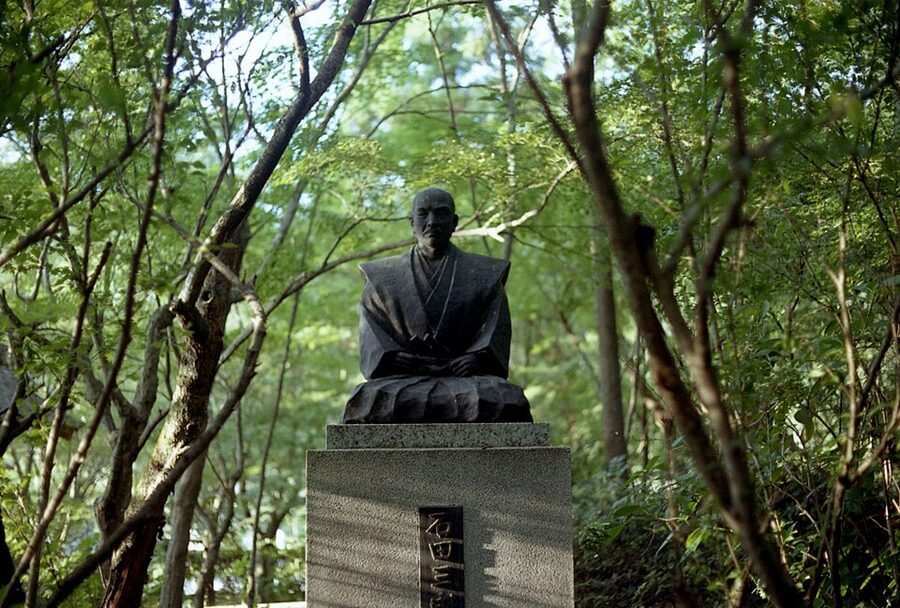
You can see this shift in contemporary popular culture. The NHK Taiga Drama Sanada Maru (2016) and Dōmei no Shōnin (2023) both treated Mitsunari sympathetically, as did the Sekigahara feature film of 2017. The modern statue at Sawayama went up in the early 2000s.
The Hikone city council now markets the castle ruins as a Mitsunari heritage site — politely, without denying the geography of what happened in October 1600. The man has, slowly, been allowed his biography back.
Where to find Mitsunari today
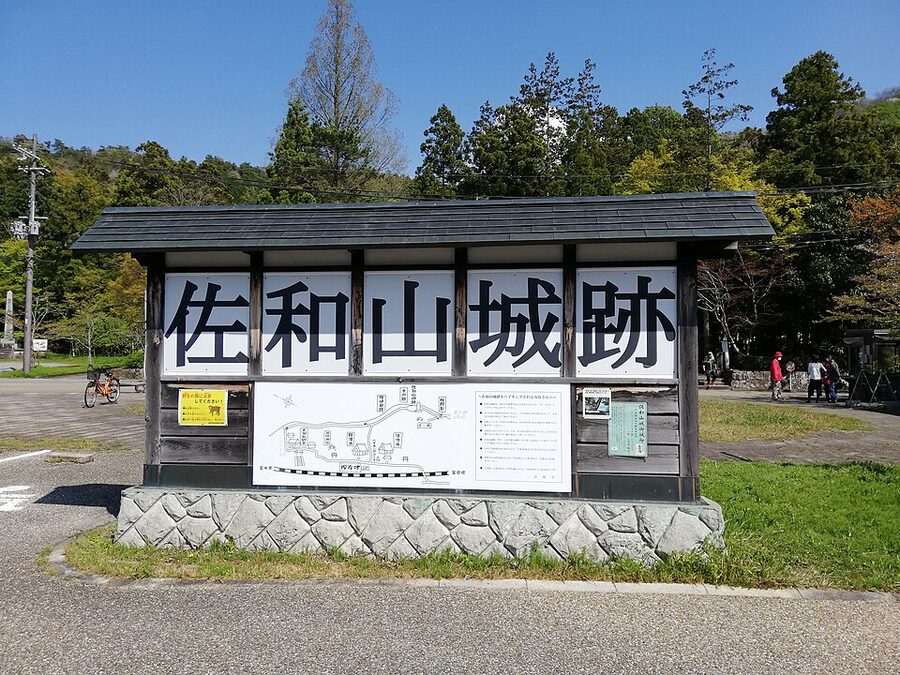
Sawayama Castle ruins, Hikone — the mountain and the foundations
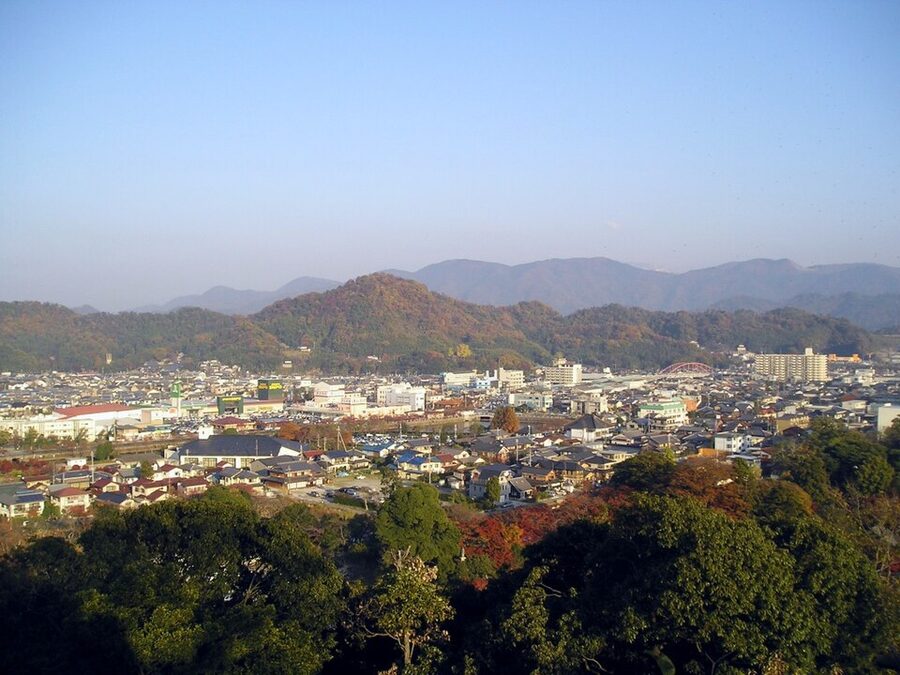
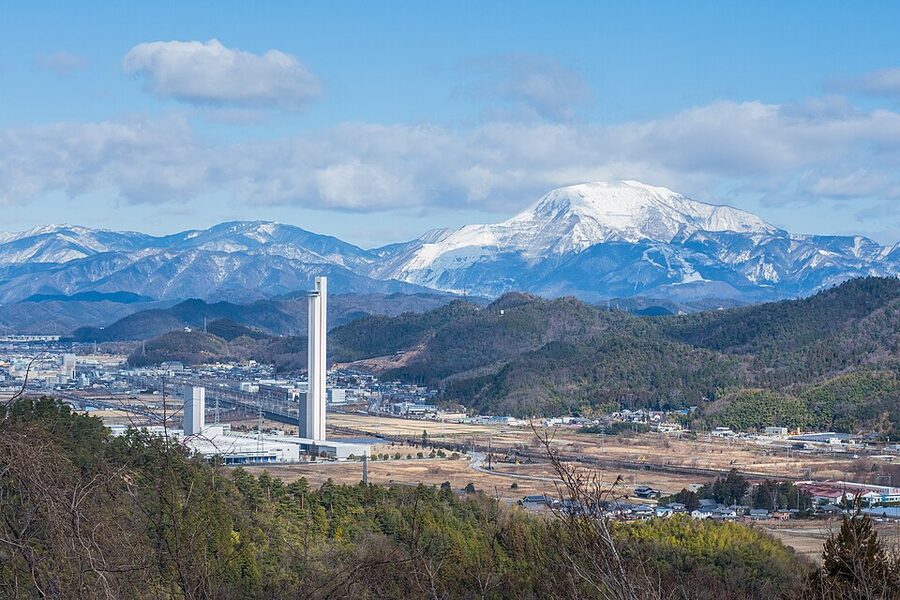
Sawayama is the site you come for if you come for one. The mountain is 232 metres above the Hikone plain, two kilometres east of modern Hikone Castle, accessible via a maintained trail that starts at Ryūtan-ji temple on the north slope. The climb takes forty to fifty minutes at a respectable pace.
The summit plateau still has the outline of the main keep, the inner bailey, and the eastern stone-cut moat — all visible, none reconstructed. You can see into the Hikone basin on one side and across Lake Biwa to Ibuki on the other. On a clear December morning the Lake Biwa waterbirds come off the water below you and you can track their vees against the bay.
Getting there: Hikone Station on the JR Tōkaidō Main Line, about fifty minutes from Kyoto by local train. Walk north-east for twenty minutes along the perimeter of Hikone Castle’s outer moat, then follow the brown signs to Ryūtan-ji. Allow three hours round-trip from the station including the castle walk itself.
Bring water. Do not attempt it in heavy rain — the summit path has exposed roots and the descent gets slick. If you plan to also visit Hikone Castle the same day, do Sawayama first and Hikone afterwards; the modern castle is the easier walk and you will be more tired than you expect.
Ryūtan-ji — the mountain-foot temple
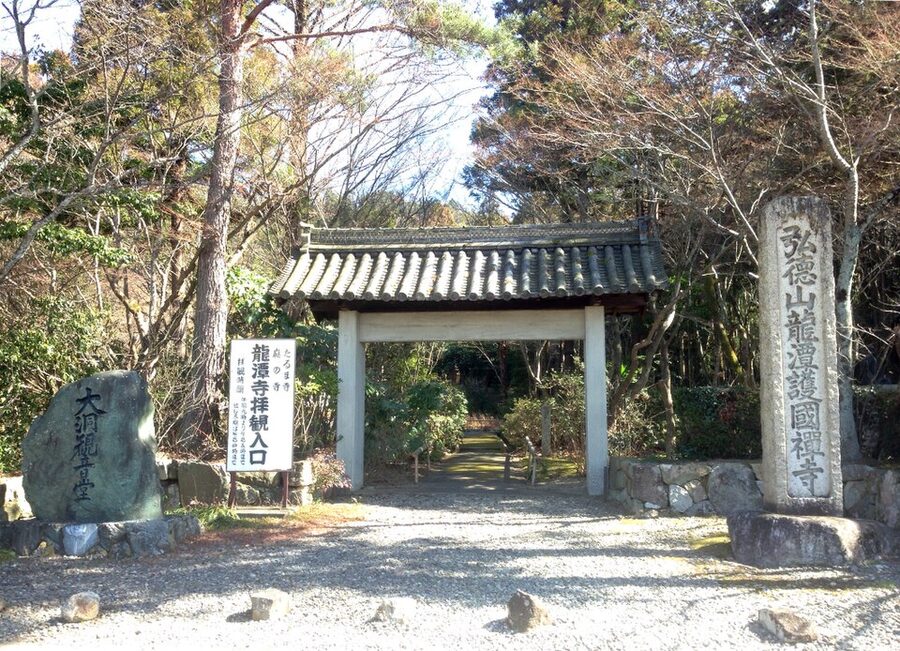
Ryūtan-ji sits directly below Sawayama at the trailhead. It is a working Sōtō Zen temple with a small Mitsunari memorial stone in the forecourt, a remarkably peaceful garden, and, if you ask the head priest, a set of Mitsunari-era roof tiles recovered from the Ii demolition programme that are occasionally displayed in the side hall. The temple charges a modest admission (currently 400 yen) that goes to grounds upkeep rather than to any tourist-board slush fund, which I think is fair. You get the view across the Hikone basin from the main hall garden, and the mountain trail starts at the north wall.
Ishida village birthplace, Nagahama
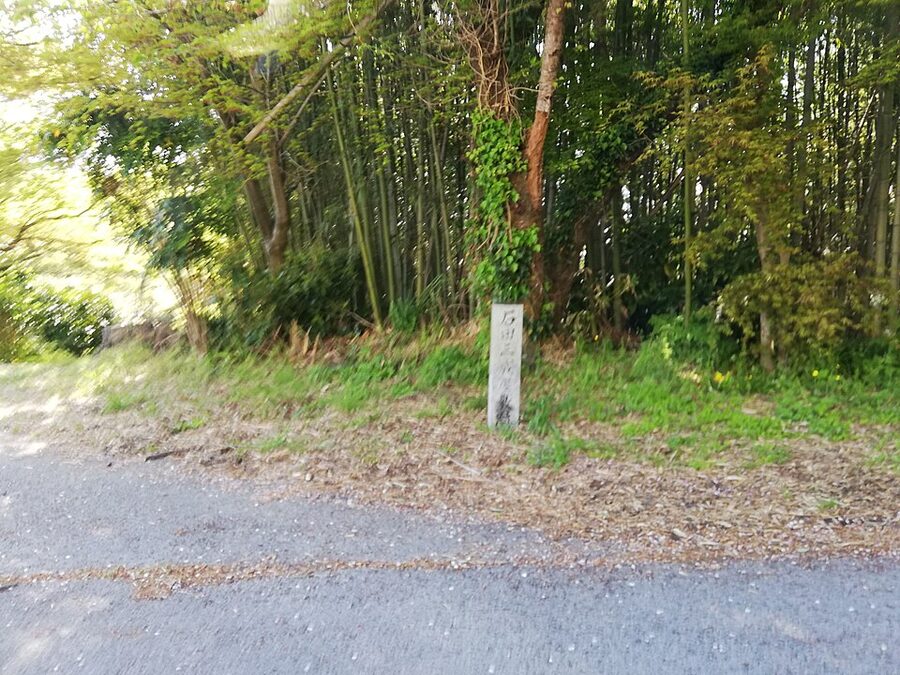
Mitsunari was born in Ishida village, in what is now the Ishida-chō district of Nagahama City. The Ishida family residence site is marked by a stone monument and a fenced plot of excavated foundations about forty minutes north of Nagahama Station on foot — or fifteen minutes by bicycle along the perimeter road of Lake Biwa.
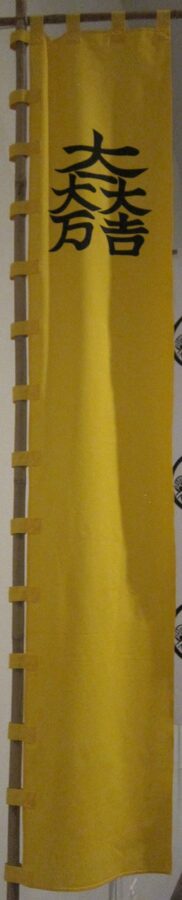
It is a quiet residential area. There is a local Mitsunari-kun mascot shop that sells reasonable daiichi-daiman-daikichi merchandise, which is less commercial than it sounds; the proceeds go to upkeep of the site. The monument itself is about chest-high, inscribed simply Ishida Mitsunari-kō seitan no chi, “Birthplace of Lord Ishida Mitsunari.”
Getting there: Nagahama Station on the JR Hokuriku Main Line, ten minutes from Maibara. You can do Mitsunari’s birthplace and Kannon-ji on the same day by renting a bicycle at Nagahama Station — the birthplace is north of the station, Kannon-ji is south at Samegai, and the total cycling distance is about fifteen kilometres. The lake road is pleasant unless the Hiragi north wind is up in February, in which case get a train.
Kannon-ji, Maibara — the three-cups-of-tea temple
The temple most commonly identified as the three-cups-of-tea site is Kannon-ji in the Ōmi-Nagaoka district of Maibara. The tradition is disputed, three other temples in the Ibuki foothills also claim the encounter, but Kannon-ji has the best documentary basis and by far the most attractive setting.
It is a Tendai-sect mountain temple, founded in 718, with a beautiful Muromachi-period main hall and a small museum that includes an Edo-period hanging scroll of the tea-serving scene. The head priest is used to Mitsunari pilgrims and will answer questions in a measured, non-commercial way.
Getting there: Samegai Station on the JR Tōkaidō Main Line, forty minutes by local train from Nagahama or Maibara. The temple is a thirty-minute walk from the station along the old Nakasendō route. The approach goes through a surviving Edo-period post-town streetscape, Samegai-juku, which is worth allowing extra time for.
If you are travelling from Kyoto, combine it with a stop at the adjacent Mishō-ji pottery village for a day that is mostly about the Ōmi backcountry rather than about Mitsunari specifically. The three-cups story is probably false, but the temple is genuinely good.
The Ibuki-Lake Yogo capture country
The final stretch of Mitsunari’s story, the six-day flight through the Ōmi mountains, can be walked, piecewise, by anyone with a map and a fair amount of time. The capture marker is at Iguchi in modern Kohoku-chō, on the north shore of Lake Yogo.
Lake Yogo itself is a small lake at the northern foot of Mount Ibuki, extremely peaceful in late autumn when the rice has been cut and the waterbirds are in. There is a simple stone monument at the Iguchi capture site — Ishida Mitsunari-kō sōsan no chi, “the place where Lord Mitsunari was seized” — in a persimmon orchard just off the lake road.
Getting there: Yogo Station on the JR Hokuriku Main Line, three stops north of Nagahama. The capture site is twenty minutes north of the station on foot or five by bicycle. Pair it with the Lake Yogo walking path, a four-kilometre loop around the lake that takes about an hour and a half, for an afternoon that feels closer to the mountain backcountry than to modern Japan.
From Yogo Station you can also pick up the bus to the Mount Ibuki trailhead if you want to climb the mountain itself the following morning; that is a six-hour round-trip, no water on the route above 1,000 metres, not to be attempted in summer heat.
Daitoku-ji Sangen-in, Kyoto — the grave
Mitsunari’s grave is at Sangen-in, a sub-temple of the Daitoku-ji Zen monastery complex in northern Kyoto. The sub-temple was built in 1586 by Mitsunari himself, along with Asano Yoshinaga and Mori Tadamasa, as a memorial hall for their shared teacher Shun’oku Sōen.
After the execution in 1600, Mitsunari’s body was brought back here by Shun’oku and the young Takuan Sōhō, and buried under a modest stone marker that is still visible today. The sub-temple is generally not open to the public (Daitoku-ji’s sub-temples have a strict rotation system) but opens for special exhibitions a few weeks per year. Check the Daitoku-ji website before making a special trip.
If Sangen-in is closed when you visit, the Rokujō-gawara execution site is a public riverbank on the east bank of the Kamo River between Gojō and Shijō. There is no monument, the site was cleared in the Meiji period and is now a running path, but you can walk the bank at dusk and get a sense of the scale of the place. It is a long way from where he grew up.
The ledger
Mitsunari’s story is often told as the morality tale of an administrator who over-reached. I think that reading is upside down. The administrators around him mostly survived Sekigahara.
Mashita Nagamori, Maeda Gen’i, Natsuka Masaie — all of them either compromised with Ieyasu or committed suicide quickly enough to preserve their families. What made Mitsunari different was not that he was an administrator. It was that he refused, at each decision point, to behave like one.
He went to Shizugatake in the first charge, when he could have stayed at Hideyoshi’s side. He took in the Hidetsugu retainers in 1595, when political prudence said drop them. He raised an army in the summer of 1600, when retirement at Sawayama was the safe play.
And at Ōtsu Castle on 25 September, when he could have begged for a commutation, he stood in front of Ieyasu and held his ground as a Toyotomi commissioner to the end.
None of those choices were the administrative choice. They were a warrior’s choices. The Edo chroniclers missed this because they were looking for a man to explain Sekigahara as a personal failure; the primary documents show someone who ran through a long series of hard decisions and kept making the loyal one.
He was, in the pure sense, a loyal retainer to a dead man whose son was seven and whose government was already finished. He knew it was finished. He fought for it anyway.
The watch-fires in Mitsunari’s death poem — the kagaribi that fishermen burned at night in the Lake Biwa reed-beds to draw the shijimi clams up off the lakebed — still burn on that stretch of water in October, and if you stand at the Ishida village site on the right evening you can see them from a kilometre off. They go out one at a time as the lake cools.
If you are travelling the northern Lake Biwa circuit anyway, walk the path from Ishida village to the lakeshore at Seiryū-ji at dusk in late autumn. Do not try to time it. The fires come on when they come on.
Mitsunari was buried facing the wrong way for one of them to fall on his grave, but the country he came from is still there, and in that country on some evenings, the fires still burn low in the reeds.