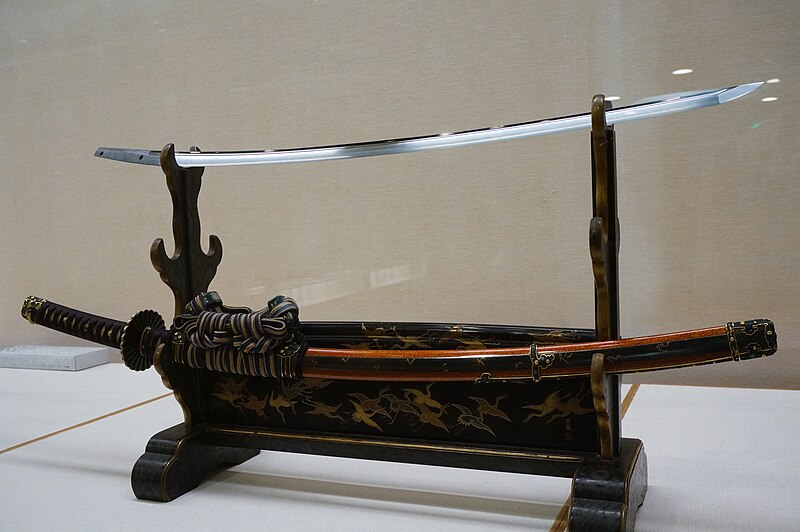
A Japanese tachi and a Japanese katana look, to an untrained eye, like the same sword. They are not. They are not even close. The giveaway is the way they are worn, and the giveaway is in exactly opposite directions. A tachi, the older of the two, is suspended from the belt with the cutting edge pointing down, dangling at the hip of a man who is about to draw it from horseback. A katana, the newer one, is thrust through the belt with the cutting edge pointing up, sitting at the hip of a man who is about to draw it on foot. One detail of hanging geometry, and the whole battlefield underneath it is different.
This is why I keep saying to people who are interested in Japanese swords but have not yet sorted out the vocabulary: the tachi and the katana are not a stylistic variation and they are not a naming convention. They are two different weapons built for two different wars, separated by about three centuries, and looking at one as if it were the other will miss almost everything that actually matters. Start with the upside-down suspension. Everything else in the tradition is downstream of it.
In This Article
- Two Swords, Two Wars
- How a Japanese Sword Is Actually Made
- The Five Traditions and the Big Schools
- The Edo Freeze and the Meiji Ban
- The 1954 Law and the Living National Treasures
- The Famous Named Swords
- Where to see the swords today
- 1. The Japanese Sword Museum — Ryōgoku, Tokyo
- 2. The Tokyo National Museum sword gallery — Ueno
- 3. Bizen Osafune Sword Museum — Setouchi, Okayama
- 4. Seki Traditional Swordsmiths Association — Seki City, Gifu
- 5. The Samurai Museum — Shinjuku, Tokyo (if you must)
- Upside Down From Each Other
Two Swords, Two Wars
The tachi (太刀) is a Heian-Kamakura weapon. It emerged in the late 10th and 11th centuries when Japanese smiths in the old sword-iron provinces — Bizen, Yamashiro, Yamato — stopped making the straight continental-style chokutō (直刀) blades and started curving them. The curve was functional: a curved blade slices when it meets a target because the geometry of the edge pulls through the cut, rather than wedging. You get a much better cutting effect at the same muscle input. The switch took about two centuries to complete and by 1200 the curved single-edged tachi was the standard weapon of the mounted warrior-aristocrats who would become the samurai class.
Average tachi blade length is about 80 cm, and the sword is suspended from the belt by two cords through mounting rings on the scabbard, with the blade hanging edge-down. On a horse, you draw the tachi with a downward sweep, because the blade is already pointing down and forward; the draw-and-strike motion is continuous. The Heian and Kamakura period is the golden age of tachi production — more than eighty per cent of Japanese sword blades currently designated National Treasure are tachi from these two periods, and seventy per cent are tachi specifically. That figure is not coincidence. The Kamakura military class commissioned enormous numbers of tachi, commissioned them from the best smiths, and kept them carefully.
The katana (刀), confusingly, is often used as the generic English word for a Japanese sword but in strict vocabulary refers specifically to the uchigatana (打刀) — the shorter, straighter, infantry version of the blade that supersedes the tachi in the 15th and 16th centuries. The switch happens for a military reason. Warfare in Japan shifts in the late Muromachi period from small bands of mounted warrior-aristocrats fighting duels on horseback to very large armies of foot-soldier ashigaru (足軽) fighting in mass formations, and the mounted tachi becomes an inefficient weapon in that new environment. A man on foot in a press of other men on foot does not want a long curved blade hanging at his hip that has to be lifted out and then brought down in an arc. He wants a blade he can draw and strike with in a single continuous motion, thrust through his belt, cutting edge up.
So that is what the smiths made. The uchigatana is typically 60-73 cm long, shorter than a tachi, with a reduced curve, and it is thrust through the belt rather than suspended. The signature on the tang is cut on the reverse face because of this: when a tachi is worn edge-down and signature-out, and a katana is worn edge-up and signature-out, the signatures end up on opposite sides of the tang. Modern Japanese swords are still formally classified tachi-versus-katana by which way the smith signed the tang, and not by anything about the blade itself. You can technically have a tachi-signed blade mounted in katana fittings; a great many surviving Kamakura-period tachi had their tangs cut down during the Sengoku period (the suriage 磨上げ procedure) to make them short enough to wear as katana, which is another reason so much of the surviving material looks homogeneous even when its origins are not.
By the late 16th century the katana was the sword of the samurai and the tachi had been displaced into ceremonial use. Upper-ranking samurai still carried tachi in full formal dress, for court audiences and on ceremonial procession, but the working weapon was the katana, usually paired with the shorter wakizashi (脇差) to form the two-sword daishō (大小) set that the Edo shogunate would eventually make compulsory for samurai. If you see a samurai in a 17th-century painting wearing two swords at his waist, the one with cutting edge up is the katana and the shorter one next to it is the wakizashi.
How a Japanese Sword Is Actually Made
The production process is specific and has been stable for about eight hundred years in its essentials. The starting material is tamahagane (玉鋼), a specific kind of carbon steel produced in a specific kind of smelting furnace, and you cannot substitute. Modern imported bar steel will not produce a Japanese sword with the right properties no matter what you do in the subsequent forging. The reason is that the Japanese sword's signature metallurgical trick, folded-steel layering plus differential clay tempering, requires a starting material whose carbon content you can reliably vary and manipulate by the ratios in which you combine different batches of it. Tamahagane is variable by design.
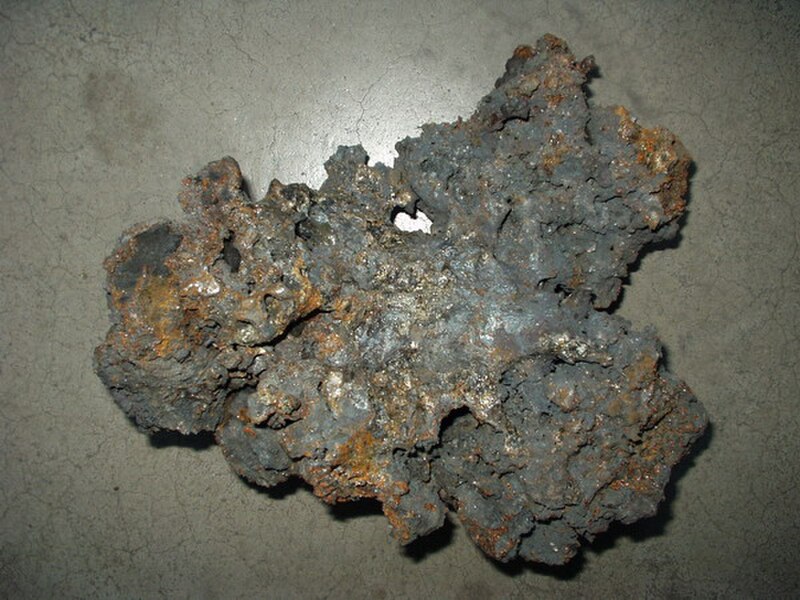
Tamahagane is made in a tatara (蹄黲炉) — a clay-and-sand smelting furnace about three metres long, powered by bellows, fed over about three days with alternating layers of iron sand and charcoal. The iron sand (satō, 碶鉄) comes historically from two regions of western Japan: the Chūgoku mountains of Shimane and Tottori (the old provinces of Izumo and Hōki) for high-quality irōn-sand with low phosphorus, and Okayama for a coarser alternative. The Shimane iron-sand is the one the tradition is built on, and the last working traditional tatara furnace — the Nittoho tatara, operated by the Japanese Society for the Preservation of Japanese Art Swords — is in Yokota in Shimane, running a handful of smelts each winter to supply the country's registered swordsmiths with tamahagane. It is the one non-negotiable raw material in the tradition, and it is made in one place.
A single tatara smelt runs for about three days, burns ten tonnes of charcoal, and produces about 2.5 tonnes of mixed output: roughly a tonne of which is usable tamahagane in various grades. The smith sorts the grades by eye — pale-grey high-carbon pieces, darker lower-carbon pieces, the in-between majority — and keeps them separate through the next stages. The highest-carbon pieces (around 1.5% carbon) will become the cutting edge; the lower-carbon pieces (around 0.6%) will become the spine and core. This differential is the whole trick.
The forging process starts by taking the sorted tamahagane, hammer-welding it into a rough bar, and then folding it. Fold, weld, fold, weld. The canonical number in the Japanese tradition is eight to sixteen folds, doubling the internal layer count each time: eight folds gives 256 layers, twelve folds gives 4,096, sixteen folds gives 65,536. Each fold homogenises the carbon distribution within the bar and drives out inclusions. Too few folds and the steel is uneven; too many and the carbon burns off and the steel goes dead. Experienced smiths stop between ten and fourteen folds depending on the starting material. The visible grain pattern (hada, 肌) on the finished blade, the fine rippling you can see in strong oblique light on a polished sword, is the cumulative record of those fold-welds. The individual schools are partly identified by their hada patterns: Bizen blades have a tight flowing grain called mōkume; Sagami (Sōshū) blades have larger bolder patterns; Mino blades have a straight grain called masame.
Once the folded block is at the right consistency, the smith combines two or three different folded billets: a high-carbon sheath (kawagane, 皮鉄) wrapped around a low-carbon core (shingane, 心鉄). This gives the sword the property that makes a Japanese blade work the way it does: a hard, brittle cutting edge that holds sharp, wrapped around a soft tough core that absorbs shock and stops the blade breaking on impact. A sword made entirely of edge-quality high-carbon steel would snap at the first hard contact. A sword made entirely of soft core steel could not hold an edge. The sandwich gets you both. The combined billet is then forge-welded along its length, drawn out to the rough shape of a blade, and heated and hammered into the final geometry over perhaps another full day of work.
The last step, and the most dangerous, is the differential tempering (yaki-ire, 焼入れ). The smith coats the blade with a clay slip — thick along the spine, paper-thin along the cutting edge — and then heats the whole blade to red heat and quenches it in water. The thinly-coated edge cools much faster than the thickly-coated spine. That differential cooling locks the crystal structure of the edge into the very hard martensite phase, while the spine cools slowly enough to stay in the softer pearlite phase. The blade curves dramatically during the quench as the edge shrinks at a different rate from the spine (this is where most of the final curve actually comes from — the smith hammered in a smaller pre-curve during forging and the quench enlarges it). And the visible boundary between the two differently-cooled regions becomes the hamon (卫紙), the signature wavy line along the cutting edge that every school varies in its own characteristic pattern.
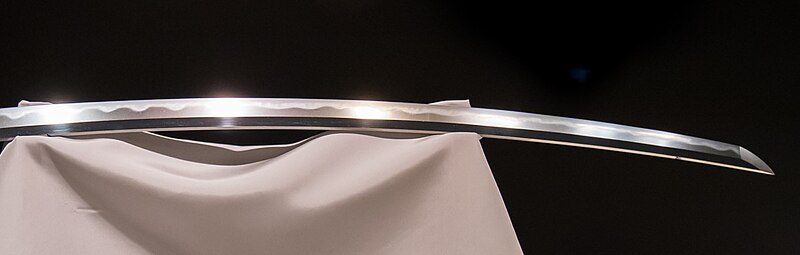
The whole forging cycle, from tamahagane in to finished blade out, takes a skilled smith about two weeks for a single katana blade. Then the blade goes to a separate specialist, a tōgishi (研売師), a polisher, who spends perhaps another two weeks grinding and polishing the blade on successive grades of stone. The polish brings out the hada and the hamon; it also sets the final geometry of the cutting edge. A sword polisher is a separate apprenticed trade from a sword smith, and most of the visual beauty of a finished blade is a polisher's work, not a smith's. Traditionally a sword is re-polished once a generation over its useful life, losing a tiny fraction of a millimetre of steel each time, until eventually after many centuries the blade is too thin to re-polish safely and has to be retired to the reliquary shelf.
The Five Traditions and the Big Schools
Japanese sword scholarship groups the great medieval swordsmith traditions into the Gokaden (五箱伝), the Five Traditions, corresponding to the five old provinces that dominated sword production at different periods: Yamashiro (Kyoto), Yamato (Nara), Bizen (Okayama), Sōshū (Kamakura / Sagami), and Mino (Gifu). Every serious pre-modern smith trained in one of the five, and you can usually identify a blade to tradition on sight once you know the signatures. The five are not equally weighted: the surviving smith counts are about 4,000 for Bizen, 1,300 for Mino, 1,000 for Yamato, 850 for Yamashiro, and 440 for Sōshū. But the Sōshū tradition punches above its weight because of who its founders were.
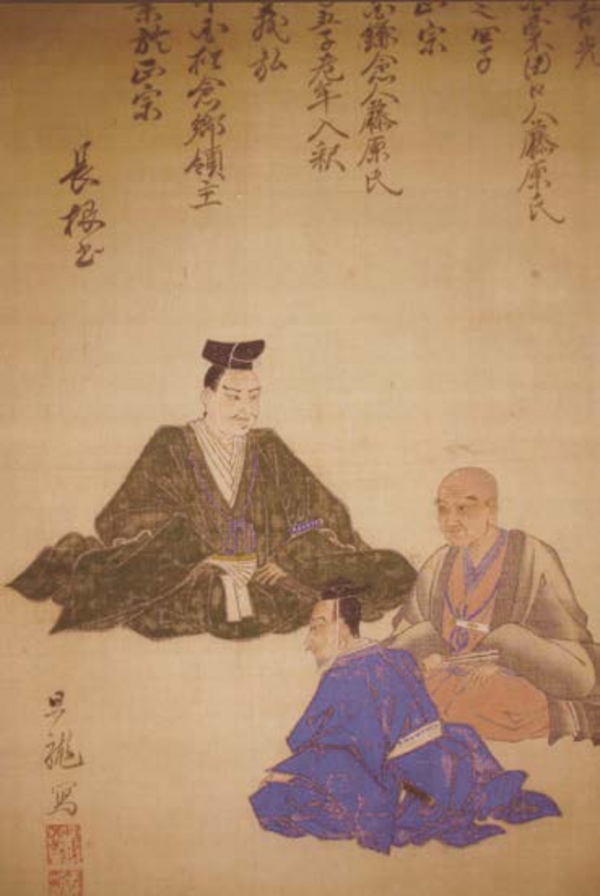
The Sōshū school was founded in Kamakura at the end of the 13th century by Shintōgō Kunimitsu, who trained under the Yamashiro master Kūnitsuna, absorbed techniques from the Yamato tradition through his contact with temple smiths, and synthesised a new style characterised by bold grain patterns, strong mixed hamon, and an almost painterly quality of polished surface. His most famous pupil was Masamune of Sagami, working in the early 14th century. Masamune is the closest thing Japanese culture has to a canonical master-smith; later generations describe him the way Europeans describe Stradivarius. His catalogued blades in the Honjō Masamune tradition are the single most prestigious lineage in the medieval sword history. He taught ten students known as the Masamune Jittetsu, the Ten Disciples of Masamune — though modern scholars accept that several of those disciples did not literally train under him and the list was retrospectively assembled to link good smiths in other provinces to the Sōshū prestige.
The Bizen school, centred on Osafune in the valley of the Yoshii river in modern Okayama, was the high-volume producer. The Bizen smiths, working across multiple sub-schools (Ko-Bizen, Fukuoka Ichimonji, Ichimonji Yoshifusa, Osafune), made most of the tachi that went to the Kamakura shogunate's armies during the 13th century Mongol invasion crisis, and most of the katana that went out to the Sengoku daimyo in the 16th century. Nagamitsu of Osafune (late 13th century) is the most respected individual Bizen smith, but the school has to be understood as a production tradition rather than an individual name: dozens of smiths named Kanemitsu, Mitsutada, or Sukesada worked concurrently under loose apprenticeship into at least twelve generations. When archaeologists find Muromachi-period battlefield debris, most of the recovered blades will be Bizen. The school was destroyed in the late 16th century when the Yoshii river catastrophically flooded in 1590, wiped out the Osafune settlement, and scattered the surviving smiths. The Bizen tradition has been partially rebuilt in the modern period but never to its old scale.
The Mino school, based in Seki (modern Gifu), overlapped geographically with the great merchant-warlord clans of the Nobi plain and became the main supplier to the armies of Oda Nobunaga and, later, to the consolidating forces of Toyotomi Hideyoshi. Mino blades are usually identified by a sharply-mixed hamon called sanbonsugi (three-cedar pattern, after its repeating cedar-tree waves) and by a distinctive straight grain on the sword's ridge plane. The leading Mino smith of the late 16th century is Kanemoto, whose descendants kept working right through the Tokugawa period. Seki today is the only Japanese city with an active ongoing swordsmith training tradition; more on that in the travel section.
The Muramasa lineage, operating in Ise province in the Sengoku period, is not one of the Five Traditions proper but is famous enough to deserve its own note. Muramasa (the founder, working around 1500) and his school made extremely sharp, slightly heavier blades that were prized by Sengoku soldiers, and which acquired a reputation during the Tokugawa period for being unlucky. The Tokugawa family ghost story holds that a Muramasa blade killed Ieyasu's grandfather (Matsudaira Kiyoyasu), another killed Ieyasu's father (Hirotada), a third wounded the young Ieyasu himself, and later Muramasa blades were used in the execution of his son Matsudaira Nobuyasu. Whether any of this is actually true is less important than the fact that Ieyasu believed it enough to restrict Muramasa blades in his own household. The restriction turned cultural: Muramasa-signed blades became the exchange currency of anti-Tokugawa resistance, and in the 19th century the late-Edo rebels against the shogunate deliberately carried Muramasa swords as political statement. The irony is that the Muramasa tradition is now preserved mostly in museums because of exactly that association.
The Yamashiro school and the Yamato school round out the five. Yamashiro, based in Kyoto, produced elegant refined blades for the imperial court — the Awataguchi sub-school of Yamashiro is the other pillar of Meibutsu-sansaku fame alongside Masamune and Gō Yoshihiro. Yamato, based in Nara, served the great Todaiji and Kōfukuji temples and their armed warrior-monk forces, and is generally regarded as the most conservative technically, holding closest to older straight-grain styles.
The Edo Freeze and the Meiji Ban
When Tokugawa Ieyasu consolidated control of Japan after Sekigahara in 1600, the sword changed function. There was no more war to fight. The samurai class (about 5-7% of the population) was effectively disarmed-in-principle while being allowed-in-practice to continue carrying swords as a marker of status; the non-samurai majority had already been disarmed by the famous 1588 katana-gari (刀狼り, sword hunt) of Toyotomi Hideyoshi. Ieyasu formalised the two-sword daishō as the samurai's compulsory dress-uniform marker, and regulated blade length: by the mid-17th century the katana was fixed at around 70 cm and the wakizashi at around 40 cm, with variation by rank and context.
The production tradition dropped sharply. The Sengoku-period demand for battlefield swords was gone; the Tokugawa samurai wanted ceremonial-grade weapons with refined surface finishes for display at castle audiences and nothing more. A new aesthetic emerged called Kanbun shintō — shallower curve, small tip, elaborate polished hada, signature clearly legible — that was in effect a ceremonial object pretending to be a weapon. The best smiths of the period (Nagasone Kotetsu in Edo, Inoue Shinkai in Osaka) made weapons of enormous technical refinement and fairly modest actual cutting capacity. I do not mean this as a criticism exactly; the Edo shintō blades are some of the most beautiful objects the tradition ever produced. They are just honestly ornaments.
Production cratered further in the 18th century and only picked up briefly in the late 18th and early 19th centuries, the so-called shin-shintō period, when the antiquarian Suishinshi Masahide led a deliberate revival movement to re-learn the Kamakura techniques. Some of the shin-shintō revival work is genuinely excellent, but the underlying market was tiny: perhaps a few hundred Japanese households seriously interested in buying new swords, plus a handful of late-Edo daimyo gift exchanges. By the 1860s, as the shogunate was collapsing, sword production had fallen to negligible volumes.
Then the Meiji government banned the wearing of swords entirely. The Haitorei (废刀令, 1876) forbade carrying a sword in public for anyone except serving military and police, and effectively ended the samurai class's physical marker of identity. The old domain samurai who had kept swords as heirlooms were now legally barred from wearing them. The consequence for the sword industry was catastrophic. The working smiths of 1875 had almost no customers by 1877; the apprentice pipeline collapsed; the tatara furnaces stopped running for lack of demand; the polishers, saya-makers, tsuba-smiths, and the whole craft ecosystem around the sword was demobilised inside a single generation. You should understand that for most of the Meiji and Taishō periods, roughly 1880 to 1920, the Japanese sword tradition was actively dying. Some very fine blades went to Europe and America at garage-sale prices. The family heirlooms of impoverished ex-samurai ended up in Osaka flea markets and in the hands of American diplomats.
The Imperial Army and Navy kept a curtailed form of the tradition alive through the officer-sword programme, commissioning new blades for officers' service weapons from the 1880s through 1945. Some of these blades are traditionally made and genuinely good; most of them are industrial pseudo-swords produced in factories and fitted into military scabbards. The broad category of Shōwa-period machine-made sword known as Shōwatō (昭和刀) is legally distinguished from traditional nihontō in modern Japan and does not qualify for preservation designation.
The 1954 Law and the Living National Treasures
After 1945, under the American occupation, most privately-held Japanese swords were confiscated on the theory that they were weapons. Around 200,000 blades were collected from Japanese households between 1945 and 1948 and either destroyed or shipped out of the country. The estimated loss includes a significant number of important pre-Edo blades whose whereabouts are now unknown. The occupation authority eventually accepted a distinction between swords-as-weapons and swords-as-heritage-art, allowed the preservation of the latter, and returned some confiscated blades to private owners. But the damage was done.
The recovery is due to a specific piece of legislation: the 1950 Law for the Protection of Cultural Properties and its 1954 Jūyō Bunkazai (重要文化財, Important Cultural Property) sub-designation system, which created a legal category of protected Japanese-sword craft and a parallel category for the living craftsmen who could make them. The law introduced the Ningen Kokuhō (人間国宝, Living National Treasure) designation, which the Agency for Cultural Affairs awards to individual masters judged to hold critical traditional skills in danger of being lost. As of 2024, eight individual swordsmiths have held the Living National Treasure designation for sword-forging specifically, and five polishers have held it for sword-polishing. The designations come with a modest government stipend and, more importantly, with an obligation to train apprentices. The pipeline is small but it exists.
The total number of working licensed traditional swordsmiths in Japan in 2024 is around 180. Each smith is allowed to produce only two long blades and three short blades per month under Japanese cultural-property law, which means the national production ceiling is roughly 2,000-2,500 traditionally-made blades per year — enough to sustain the high-end art market and to supply the small number of dedicated modern collectors, but no more. The blades trade for anywhere from ¥500,000 to over ¥5 million each depending on the smith and whether the piece is designated or not. Of the 2.5 million nihontō in existence in Japan as of 2020, about 120 are National Treasure (Kokuhō) and roughly 800 more are Important Cultural Property. The Tokyo National Museum alone holds 19 of the 120 National Treasure blades.
The Famous Named Swords
Some individual blades have their own names, their own traditions, and their own chains of ownership going back centuries. The five most famous are the Tenka Goken (天下五剣), the Five Swords Under Heaven:
The Dōjigiri (童子切) or Dōjigiri Yasutsuna, an 11th-century tachi by the Hōki province smith Yasutsuna, holds the top rank. The name translates roughly as "boy-demon cutter", from the legend that Minamoto no Yorimitsu used it to kill the oni Shuten-dōji on Mount Ōe. It is a National Treasure, held at the Tokyo National Museum. I will say that I am agnostic about demon-cutting legends, but the blade itself is a fine example of late-Heian Yasutsuna work and worth the trip to Ueno to see.
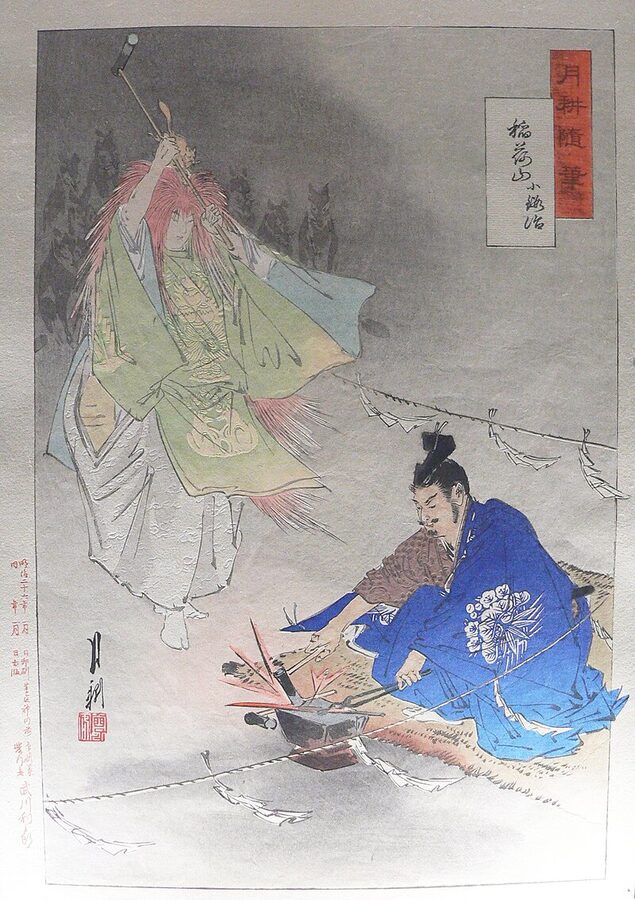
The Mikazuki Munechika (三日月宗近) is a Heian-period tachi by the same Yamashiro smith Sanjō Munechika who appears in the fox-spirit legend above. The blade is named for its moon-crescent-shaped marks in the hamon. National Treasure, Tokyo National Museum. This is one of the most technically important surviving Heian blades because it shows the transitional shape between straight Nara-period chokutō and fully-developed Kamakura tachi.
The Ōdenta (大典太), a tachi by the Chikuzen province smith Mitsuyo of the Miike school, held by the Maeda family of Kanazawa and now in the Maeda-sponsored Kurōkuni-kan Foundation collection. National Treasure.
The Juzumaru (数珠丸) — "rosary maru" — an 11th or 12th-century tachi said to have belonged to the Kamakura Buddhist monk Nichiren. Important Cultural Property, held at the Honkoji temple in Hyōgo. You can view it during the temple's winter exhibition in January each year.
The Onimaru Kunitsuna (鬼丸国綱) — "demon-maru" — a late Heian tachi, held in the Imperial Household collection, not on public display, occasionally loaned to museum exhibitions. This is the one I have actually never seen in person, despite tracking it for years; the Imperial Household is strict about access.
Beyond the Tenka Goken, two more swords deserve mention for cross-linking reasons. The Tombogiri (蜘蓑切) — "dragonfly-cutter" — is not a sword but the famous spear of the Tokugawa general Honda Tadakatsu, whose blade was forged by Muramasa-school smith Fujiwara Masazane in the early 16th century. The Tombogiri is cataloged as one of the Three Great Spears of Japan and is preserved at the Tokugawa Art Museum in Nagoya. The connection is: Muramasa-school work, in the hand of Tokugawa Ieyasu's most decorated retainer, is a small historical joke on the Muramasa-curse theory. And for a different sword tradition entirely, the two-sword style associated with Miyamoto Musashi — his Niten Ichi-ryū (二天一流) school — used a standard katana paired with a wakizashi held together, a fighting system that only makes sense when you understand the blade lengths and the cutting-edge-up geometry of the late-Sengoku katana. Musashi's style is not a mystical innovation; it is an engineer's response to the specific physics of the pair of weapons the Edo samurai class happened to be carrying.
Also worth flagging for the general name-confusion reason: the Date Masamune who was the one-eyed daimyo of Sendai is a completely different person from the Masamune who was the 14th-century swordsmith. The lord and the smith share a name two and a half centuries apart, and no, the lord was not descended from the smith. The Date Masamune of the Sengoku period did own several excellent Sōshū-school blades, but that is a coincidence of prestige, not ancestry.
Where to see the swords today
There are four places that matter if you want to understand the Japanese sword in 2026, and a fifth for the tourist version. I will go through them in order of importance.
1. The Japanese Sword Museum — Ryōgoku, Tokyo
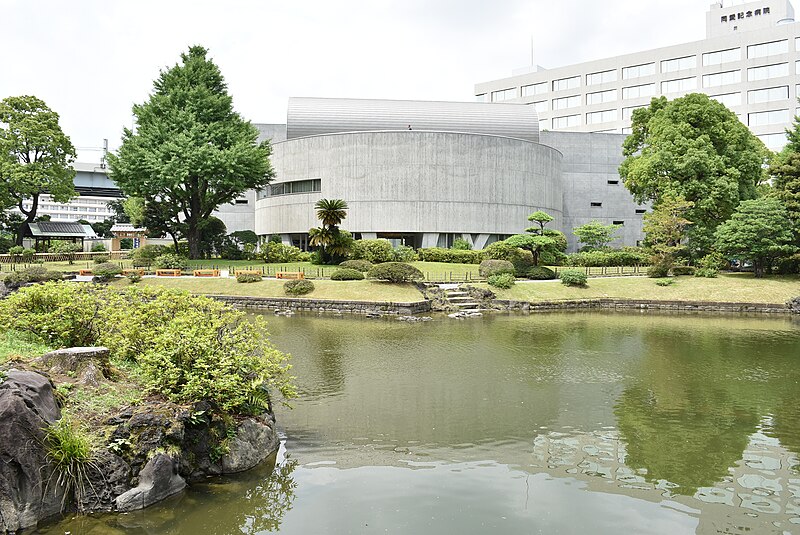
The Tōken Hakubutsukan (刀剣博物館) in Yokoami, Ryōgoku, Sumida-ku, is operated by the Nihon Bijutsu Tōken Hozon Kyōkai — the Society for the Preservation of Japanese Art Swords (NBTHK), the legally-designated national authority on sword authentication and grading. The permanent collection includes about thirty blades on rotation, with major loans from private collections and from the Imperial Household Agency. Exhibitions change three times a year and the headline spring exhibition typically includes one or two National Treasures. The bookshop sells the technical references you cannot buy elsewhere. Entry ¥1,000 (adults), closed Mondays. Ten minutes on foot from Ryōgoku Station on the Sobu line, or five minutes from the Oedo line exit A4.
2. The Tokyo National Museum sword gallery — Ueno
The Tokyo National Museum in Ueno holds 19 of the 120 National Treasure Japanese swords, the largest single holding in the country. The permanent sword exhibition is in the Honkan (the main building), Room 13 on the second floor, and rotates about a dozen blades every six weeks. Annual special exhibitions, usually in February and August, bring out the major pieces, including the Mikazuki Munechika and the Dōjigiri Yasutsuna on alternating years. The Honkan sword room is where you see the finest surviving Masamune work and the best of the Awataguchi Yoshimitsu tradition. I come here at least once a year. The room is easy to miss, most visitors stay downstairs at the Buddhist sculpture and ceramics, but it is the second-best sword experience in Japan after the Tōken Hakubutsukan, and on the weeks when the Mikazuki is out it is the first.
Practical note: photography is normally allowed in Room 13 but not during special exhibitions. The sword case lighting is low and the polish needs direct oblique light to show the hada; find the angle to the individual fixtures before judging a blade. Entry ¥1,000, closed Mondays. Five minutes from Ueno Station, Park Exit.
3. Bizen Osafune Sword Museum — Setouchi, Okayama
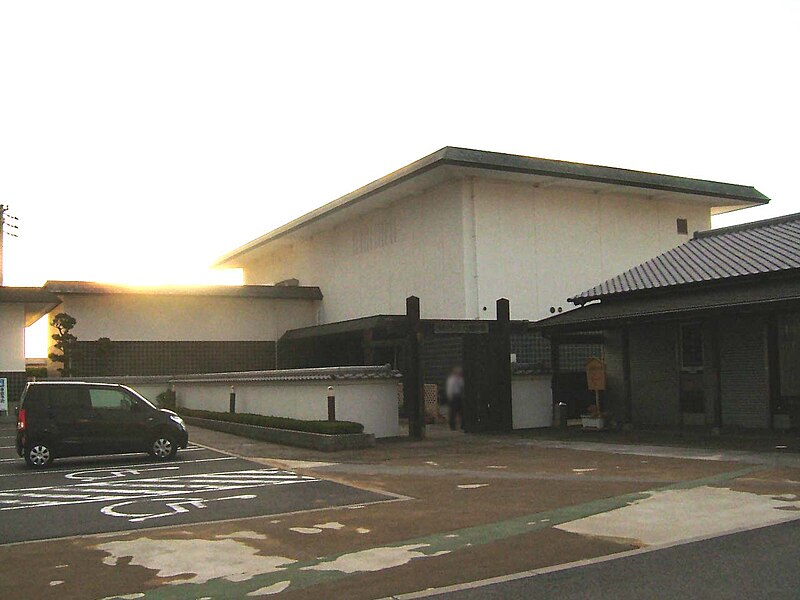
Drive or take the local train down from Okayama city to Osafune, about 40 minutes. The Bizen Osafune Japanese Sword Museum (備前長船日本刀博物館) is at the Osafune sword village itself, in the valley of the Yoshii river where the 1590 flood destroyed the original school. The museum has about 40 blades on rotation including several by Osafune Kanemitsu and Osafune Nagamitsu, and the main attraction is the adjacent craft facility: every second Sunday a licensed modern smith fires the forge and demonstrates the hammer-welding and folding stage of blade production. Watch for about 90 minutes; it is loud and hot and completely unlike any other museum experience. The polishing workshop is running on the same day and you can also watch a tōgishi work a single blade on successive polishing stones for two hours.
Practical: Osafune is 30 minutes on the local train from Okayama Station, then a 15-minute walk or 5-minute taxi. Museum entry ¥500, the forging demo is no extra charge but arrive early for a seat. Closed Mondays; demonstration calendar published on the museum website. The museum is adjacent to the Osafune sword village, which still has a few working mounting artisans; you can commission a new koshirae here.
4. Seki Traditional Swordsmiths Association — Seki City, Gifu
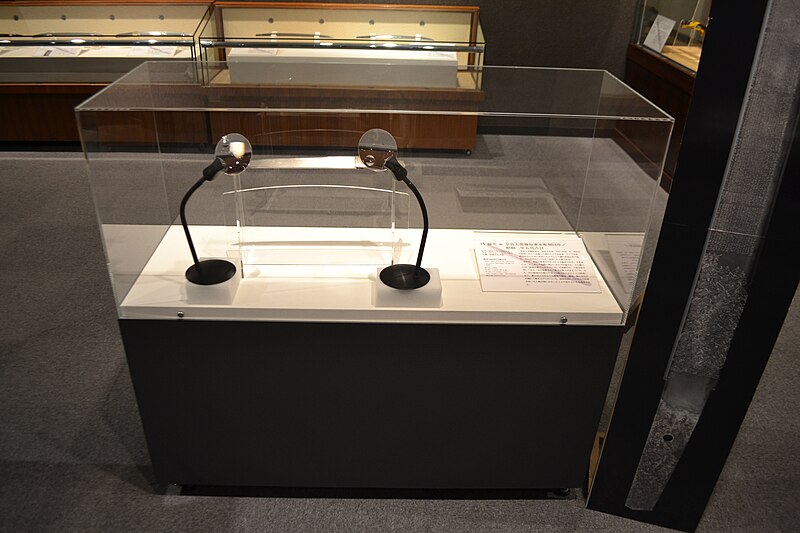
Seki (関市) in Gifu was a Mino-school sword-making town from the 14th century onward and is the only Japanese city that has continuously produced swords through to the present day — the production never fully collapsed in the Meiji period because Seki had already diversified into cutlery, razors, and scissors by the 1870s, and kept enough metalworking infrastructure to support the few surviving swordsmiths through the lean decades. The Seki Cutlery Festival every October draws crowds, and the Seki Traditional Swordsmiths Association (関伝統刀匋協会) runs monthly forging demonstrations at the Seki Sword Tradition Museum. This is also the best place in Japan to commission a new katana, although the waiting list runs three to five years for any of the senior smiths and the budget starts at ¥2 million for a basic commission.
Practical: Seki City is 40 minutes on the Nagaragawa Railway from Mino-Ota, which is 30 minutes north of Gifu. The Sword Tradition Museum is 10 minutes' walk from Seki Station. Entry ¥400. The monthly forging demonstration is the first Sunday of each month, 10:30am and 2:30pm; no booking required but the 30-seat viewing gallery fills up. If you are serious about seeing the craft, plan the visit around the forging day; if you are only in Gifu for general sightseeing, the Museum collection is the second-smallest of the four on this list and the forging demo is what makes the trip worth it.
5. The Samurai Museum — Shinjuku, Tokyo (if you must)
There is also the Samurai Museum in Shinjuku, Kabukichō, which is a tourist-oriented operation that displays mass-produced armour and a small selection of non-designated blades with audio-guide commentary in English. The quality of the individual pieces is modest and the commentary frames everything at a beginner's level. I include it because if you are not going to get to any of the above four in your trip, it is an acceptable 45-minute introduction to the subject and it is open most evenings until 8pm, which the serious museums are not. Entry is ¥2,500 which is steep for what you get. Mostly: go to Ryōgoku instead.
Upside Down From Each Other
Come back to the beginning. Tachi: cutting edge down, suspended, drawn on horseback. Katana: cutting edge up, thrust through the belt, drawn on foot. One weapon, one fighting context, one period. The other weapon, the other fighting context, the other period. The whole Japanese sword tradition is the engineering history of those two weapons answering the same basic question, how do you put an edge on a length of steel and mount it for a man who needs to use it fast, across eight hundred years of changing military conditions. The tamahagane, the folds, the differential clay tempering, the hamon, the schools, the catalogued blades, the Edo-period regulation, the Meiji ban, the Living National Treasures: all of it is scaffolding on the original upside-down pair.
If you are in Tokyo for a week, go to Ryōgoku on a weekday morning and then to Ueno in the afternoon. If you have a second week, take the Sanyo Shinkansen down to Okayama and spend half a day at Osafune watching the forge. If you have a third, come up to Gifu for the first Sunday of the month at Seki. If you are in Japan only briefly and for a completely different purpose, find the Honkan Room 13 in Ueno between other errands and give it thirty minutes. You will not learn the whole tradition in thirty minutes, but you will start to see the difference between a tachi and a katana once you have five or six actual examples in front of you at the same time. After that, the geometry of the upside-down suspension tells the rest of the story by itself.
Compared to the other Japanese crafts — tatami, the traditional candles, the ranma transoms — the sword had the hardest post-1876 century. A total legal ban on the object, rather than just a decline in the residential market, is a different order of damage. What kept the tradition alive was the combination of the 1954 cultural-property law and the stubbornness of about two dozen individual men across three generations. A craft as technically demanding as Japanese sword-forging, once it loses its apprentice pipeline for two generations, does not come back. That the Japanese tradition survived at all is unusual; that it still produces blades good enough to be designated National Treasure when made in the 2020s is, frankly, a minor miracle of institutional stubbornness. Go to Ryōgoku. Watch the forge at Osafune. The rest is tourism.