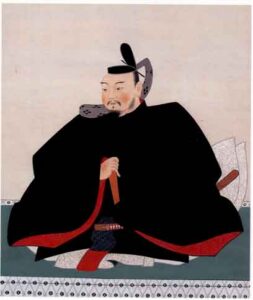
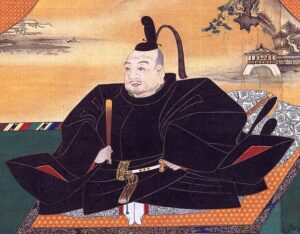
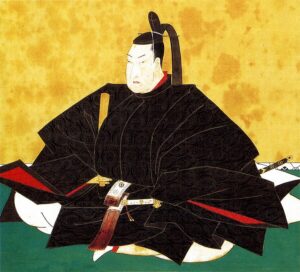
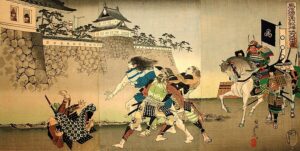
The most useful thing to know about Date Masamune is that he was ten years too young. If he had been born in 1557 instead of 1567, he would have been the same age as Tokugawa Ieyasu at the start of the 1590s campaigns that unified Japan, and by any reasonable reading of his tactical record he would have had a genuine shot at being the third unifier. Instead he was eighteen when Oda Nobunaga died, twenty-three when Toyotomi Hideyoshi finished taking the country, and thirty-three when Sekigahara closed the book on further regime changes. The age gap meant he spent his entire adult life joining other people’s empires a few years after the main decisions had been made.
His response to this problem was to build the alternative he had been born too late to build. He took what the Toyotomi-Tokugawa order left him — a 620,000-koku domain in the deep north, a city that did not yet exist, a retainer corps he inherited from his father — and constructed inside it an explicitly different version of Japan. Sendai was a planned city on European lines. Matsushima got one of the most formally sophisticated Zen temples of the early Edo period. And when he was forty-six years old he sent his own retainer to Rome with a letter to the Pope requesting a formal trade treaty and, implicitly, a Christian alliance against the shogunate that had blocked his earlier career.
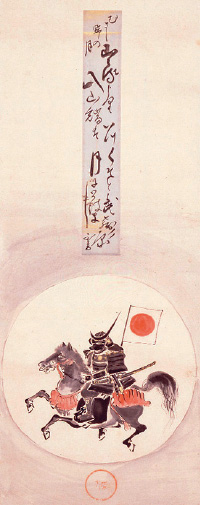
In This Article
- The Boy Who Lost an Eye
- The Ōshū Campaign
- Arriving in a Death Shroud
- Sendai and the New Capital
- Zuigan-ji and the Matsushima Programme
- The Keichō Embassy to Rome
- Death and the Mausoleum
- Where to visit Date Masamune’s story today
- 1. Aobayama Park and Sendai Castle ruins — central Sendai
- 2. Zuihōden — Masamune’s mausoleum, southern Sendai
- 3. Zuigan-ji — Matsushima, Miyagi
- 4. Yonezawa — Masamune’s birthplace
- The Ten Years
The Boy Who Lost an Eye
He was born on 5 September 1567 at Yonezawa Castle in what is now southern Yamagata prefecture, the eldest son of Date Terumune, the lord of a modest domain in the mountains of southern Ōshū. The Date were an old clan, the name appeared in the Kamakura-period records three centuries earlier, but by the 1560s their political position was middling. They held the centre of the Ōshū provinces but shared it uneasily with the Ashina, Satake, Soma, and Mogami clans, all of whom were about the same weight. Nobody in the north was any threat to the Oda forces tearing through the Kansai basin, and nobody in the Kansai basin cared much about Ōshū.
At about the age of five, in 1572, Masamune contracted smallpox. He survived, smallpox had a roughly 30% mortality in children in 16th-century Japan, but he lost the sight of his right eye. The eye itself was not damaged enough to require removal, so it remained in the socket but stared glassily out; contemporary Japanese medicine had no solution except covering it. His nurse, according to the Date household chronicles, once tried to make him eat an eyeball from a cooking pot to “strengthen” the dead one. He refused and apparently cried about it for a week.
The disfigured eye haunted him into his teens. At fifteen, when he was being trained for formal introduction to court society, his instructor Katakura Kojurō apparently walked him through a private exercise: Masamune in front of a mirror, staring at the dead eye, told to say out loud “this is my face.” The Date chronicles do not record what followed. They do record that at some point between fifteen and eighteen Masamune made a decision that the disfigured eye was part of his face, that he would neither hide it nor apologise for it, and that he would not wear a patch or bandage in public except on formal court occasions that required it. Katakura Kojurō stayed with him as chief retainer for the rest of his career.
The nickname — Dokuganryū (独眼竜, “One-Eyed Dragon”) — was attached to him by his enemies in the late 1580s and he adopted it. By 1590 he was signing provincial correspondence with a crescent-moon flourish, the same crescent he put on the helmet of his armour, a deliberate sight-reference to himself.
The Ōshū Campaign
His father abdicated in favour of him in 1584, when Masamune was seventeen. He had at that point about 300,000 koku of nominal domain, a retainer corps of about 3,500 men, and a strategic problem that every Ōshū lord of the period had to solve: the four neighbouring clans each had equivalent forces, and any two of them combined could take the Date. The only path out was to break the equilibrium before anyone else did.
Masamune started at nineteen with a pre-emptive war against the Ashina clan south of him. The Ashina, who had not been expecting a teenage neighbour to attack them, lost. Over the next six years, from 1585 to 1590, he ran a continuous campaign across southern Ōshū, defeating or absorbing the Ashina, the Nihonmatsu, the Ōuchi, the Tamura, and a long list of smaller fortified villages. By the summer of 1589 he controlled about 1,140,000 koku of territory, which made him the largest single daimyo in northern Japan and the fourth or fifth largest in the country.
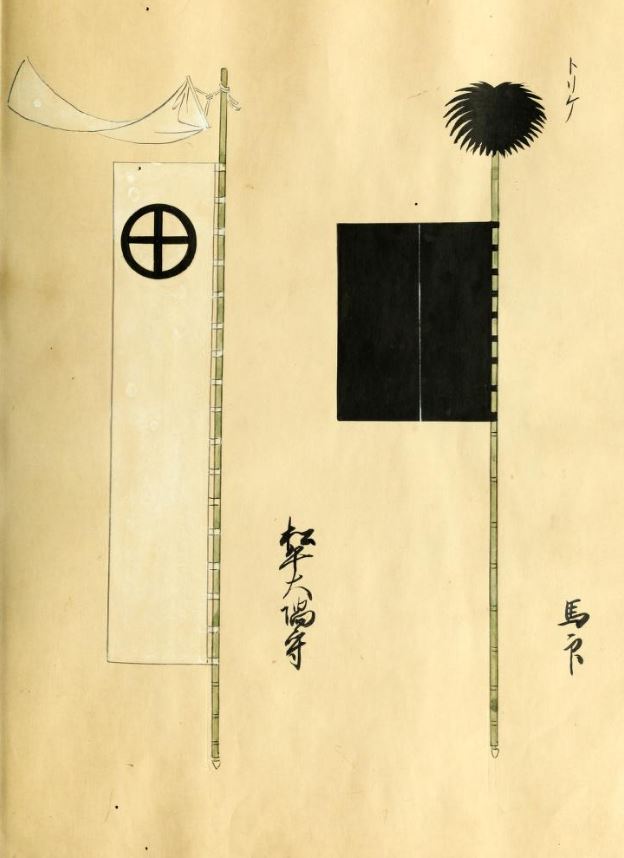
The problem with this achievement is that he made it in 1589, which was already the last year in which it was possible to achieve. Hideyoshi had finished the Shikoku and Kyūshū campaigns in 1587 and was at that point looking for a last reason to bring Ōshū into the Toyotomi fold. In the summer of 1590 he made the reason explicit: an Imperial edict, issued through Hideyoshi’s office, that forbade further expansion between daimyo and required all daimyo north of the Tone River to report to the Odawara siege that summer for formal submission. The Toyotomi were besieging the Hōjō clan at Odawara that spring, and the siege was being used as a convenient place for the last uncommitted northern lords to pledge loyalty in person.
Masamune arrived at Odawara in late June 1590, two months later than he had been asked to arrive.
Arriving in a Death Shroud
The Odawara arrival is the signature moment of Masamune’s biography. He had calculated, correctly, that Hideyoshi’s real question was not whether he would submit but whether he would submit with contrition — whether he was the kind of northern lord who would be trouble once he had been absorbed, or the kind who could be trusted with a local command in the new Toyotomi order. He was ten years younger than every other daimyo reporting at Odawara. He was two months late. He had been conquering territory in flagrant violation of the edict up to the last possible moment.
He turned up wearing white. Specifically, the white funeral kimono of a condemned man about to perform seppuku, with his hair shaved short in preparation, with a formal apology scroll in one hand and his own short-sword in the other. He walked into Hideyoshi’s camp unescorted, knelt in the dirt in front of the Taikō’s tent, and announced that he was prepared to end himself if that would settle the Toyotomi’s grievance with the Date clan. If he was spared he would serve; if he was not, he would be grateful for the dignity of an order to kneel on his own mat.
Hideyoshi — who had, after all, himself been a peasant fifteen years earlier, and who had a long-standing weakness for dramatic gestures — tapped Masamune on the neck with his fan, laughed, and said (roughly): “If you had come ten minutes later I would have had your head off. Get up.” Masamune was absorbed into the Toyotomi order that afternoon. His domain was reduced from 1,140,000 to 720,000 koku as a punitive adjustment, he was required to cede most of his new Ōshū conquests to neighbouring Toyotomi-aligned clans, and he was moved from Yonezawa to a new seat at Iwate-zawa (modern Iwadeyama). But he kept his clan, his head, and a position in the imperial order that could be built on.
The death-shroud play worked on Hideyoshi because Hideyoshi liked it as theatre. The question of whether Masamune actually would have killed himself is impossible to answer and probably wrong. The calculation he had made was that the performance of willingness to die was the token required; the performance was calibrated to the specific personality of a peasant-born ruler who valued theatre. He knew his audience.
Sendai and the New Capital
Hideyoshi died in 1598. Masamune, who had remained a loyal but peripheral Toyotomi vassal through the Kyūshū and Korean campaigns, made his strategic move during the two-year interregnum that followed. He calculated, correctly, that Tokugawa Ieyasu would win whatever power struggle came next, and in 1600 he committed the Date forces to the Eastern (Tokugawa) side at Sekigahara. The Date did not fight at Sekigahara itself; they were tied down campaigning against Uesugi forces in the north during the battle. But the commitment was absolute, and Ieyasu rewarded it.
The reward was not additional territory. Ieyasu was not handing out Ōshū land to his new Eastern Army allies; the Tohoku region had too many daimyo with complicated legacy claims, and the Date were already the largest lord up there. What Ieyasu did grant Masamune was permission to build a new capital. Permission matters because under the emerging Tokugawa sankin-kōtai system, new castle construction was strictly controlled; to be granted a fresh site was a specific act of trust.
Masamune picked the Sendai basin, about forty kilometres east of Yonezawa on the Pacific coast, and broke ground on Aoba Castle in 1601. The site was chosen for three reasons: it was on a defensible plateau above the Hirose River; it controlled the main north-south Tohoku road; and the adjoining coastal plain was capable of supporting a city of 100,000 people, which no existing northern city was. Masamune designed the city himself, on a planned grid of ten numbered streets — the jū-machi layout that still shapes downtown Sendai today. He moved his household in 1603. By 1620 Sendai had a population of 45,000 and was already the third-largest city in eastern Japan after Edo and Ushi-kubo.
Sendai Castle itself was less impressive than the city around it. Masamune deliberately kept the castle modest — no multi-storey keep, no gold leaf, no provocation to the shogunate’s growing concern about daimyo fortifications. What he put the budget into was the city: water infrastructure, planned streets, standardised plot sizes, a formal ward system. The city was the statement. The castle was just where he lived.
Zuigan-ji and the Matsushima Programme
In 1604 Masamune began the reconstruction of Zuigan-ji (瑞峚寺), the Zen temple at Matsushima, forty kilometres north of Sendai. Matsushima is the collection of 260 small wooded islands scattered across a sheltered bay, one of the three classical scenic sites of Japan, and the temple had stood there since the Heian period but had been burned in the early 16th century. Masamune commissioned a full rebuild with imported materials (cypress from Kii, stone from Owari, tile from Bizen) and finished it in 1609. The result is still one of the great buildings of the early Edo period.
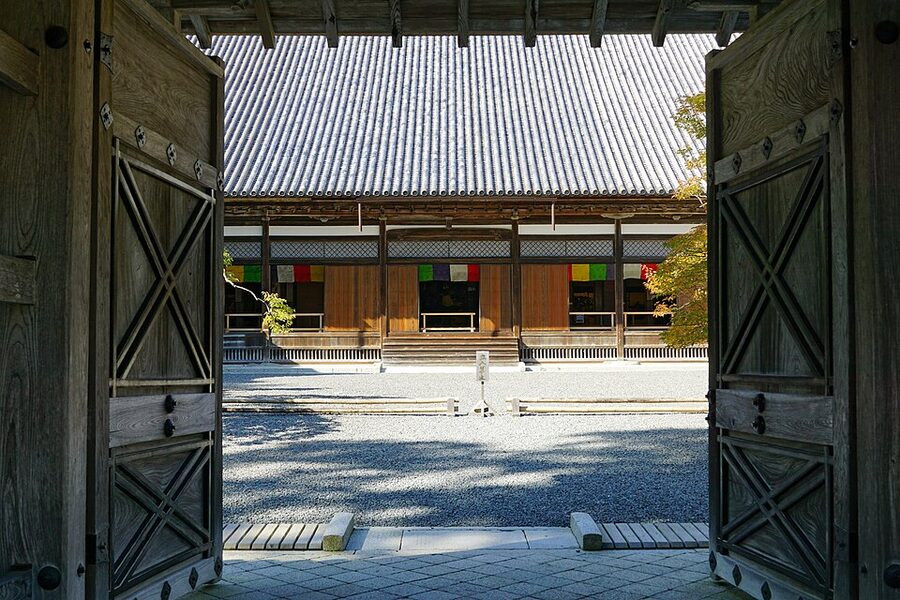
Zuigan-ji served a political purpose. The Tokugawa regime encouraged daimyo to spend their domain income on cultural patronage — temples, gardens, tea houses — because money tied up in cedar beams could not be spent on castles or retainers. Masamune was an enthusiastic participant in this policy, not because he agreed with it philosophically but because he had decided that northern Japan needed cultural infrastructure commensurate with the scale of city he was building at Sendai. Zuigan-ji was part of a deliberate programme to make the Ōshū region a cultural counterweight to Kyoto-Edo.
The Matsushima programme worked. Within a generation Zuigan-ji had attracted Zen masters from across the country; within two generations it was one of the official pilgrimage stops on the northern okunoho-michi poetry circuit followed by Bashō in 1689. The temple is the reason Matsushima is still a primary Japanese travel destination today. None of the 260 wooded islands would matter if Masamune had not built the building.
The Keichō Embassy to Rome
In October 1613 Masamune did something no other Sengoku daimyo did. He dispatched a Date retainer — Hasekura Tsunenaga, a mid-ranking samurai from the northern domain — on a diplomatic mission to the King of Spain and the Pope in Rome. The mission travelled with 180 Japanese, 40 Spanish, and a formal letter from Masamune requesting a trade treaty and permission for Franciscan missionaries in the Date domain. It took seven years. Hasekura reached Acapulco in 1614, Veracruz and then Seville in 1615, Rome in October 1615, had a papal audience in November 1615, spent three years in Spain waiting for a reply, and arrived back at Sendai in 1620.
By the time he got back, the Tokugawa regime had issued two new anti-Christian edicts, crucified twenty-six Franciscans in Nagasaki, and made it illegal under penalty of death for any Japanese to return from abroad. Hasekura was allowed home only because Masamune personally vouched for him in front of the shogun. The treaty he had brought back from the King of Spain was never ratified. The Franciscan missionaries he had been negotiating for were never permitted in Ōshū. Hasekura himself lived two more years in a form of house arrest on his family estate and died in 1622. The entire seven-year project produced no political result.
What it produced instead was the most remarkable single piece of Japanese diplomatic documentation of the early 17th century. Hasekura’s reports, in the Date family archive at Sendai, describe the Spanish court, the voyage across the Atlantic, the Pope’s audience hall in the Vatican, and the mechanics of European Catholic ceremonies with a fineness of observation that the shogunate would not match for another two hundred and twenty years. A Date retainer walking through Seville in 1615 was seeing things no other Japanese would see until the Meiji restoration. Masamune, who had sent him, knew this. That was part of the point.
The historians still argue about what Masamune actually wanted from the embassy. The traditional reading is that he wanted a trade treaty and perhaps Spanish military support against Tokugawa overreach; the revisionist reading, pushed since the 1980s by Japanese historians like Gonoi Takashi, is that he wanted to know, in the sense of collecting intelligence, what a European power actually was and whether one could plausibly ally with it. Both readings are probably correct at different layers. The honest answer is that in 1613 Masamune was forty-six years old, ten years too young to have been a unifier, and was looking at every tool available for building something he could still plausibly be remembered for.
Death and the Mausoleum
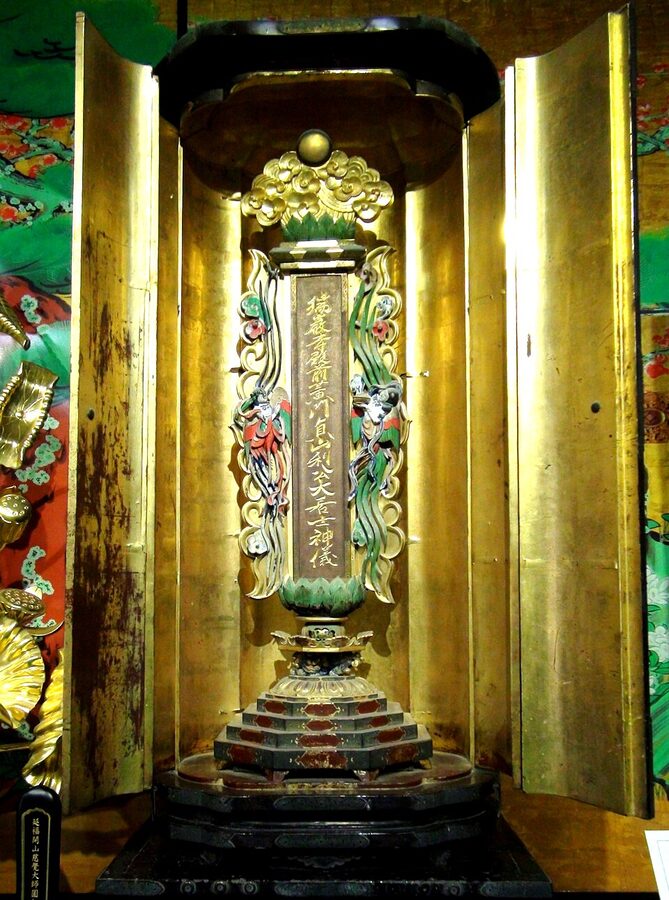
Masamune died on 24 June 1636, aged sixty-nine, of what his physicians called “esophageal obstruction” and modern readers would call esophageal cancer. He had named his son Tadamune as successor six years earlier and had been delegating active administration for a year; the transition was seamless. The Date clan continued to run Sendai without interruption until the Meiji restoration 232 years later.
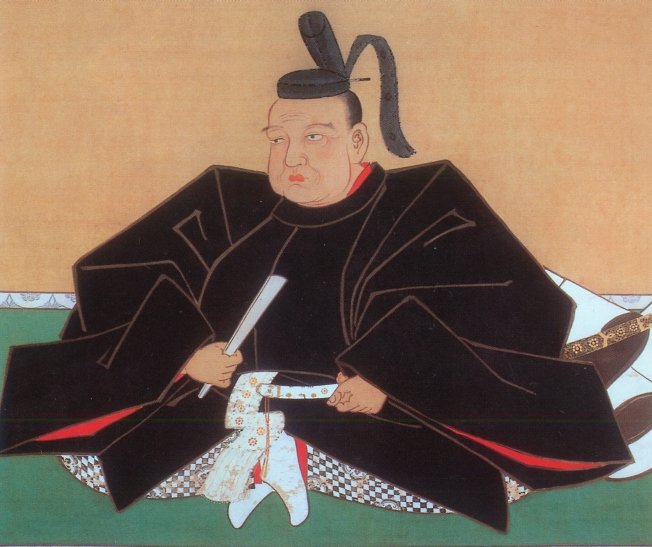
His mausoleum at Zuihōden (瑞(civ殿), a hillside compound in southern Sendai, was designed and built by his son’s government in 1637 to a deliberate specification: Momoyama style, lacquer and gold leaf, classical elements — the opposite of the restrained Sendai Castle Masamune had actually lived in. The commission makes sense only if you understand that the son was making a political point. His father, who had been restrained in life because the Tokugawa required restraint, was being granted in death the visual grandeur he had never allowed himself while alive.
Where to visit Date Masamune’s story today
Three places in Sendai city plus one detour to Matsushima. Sendai is two hours from Tokyo on the Tohoku Shinkansen; you can cover everything in a long weekend if you organise it right.
1. Aobayama Park and Sendai Castle ruins — central Sendai
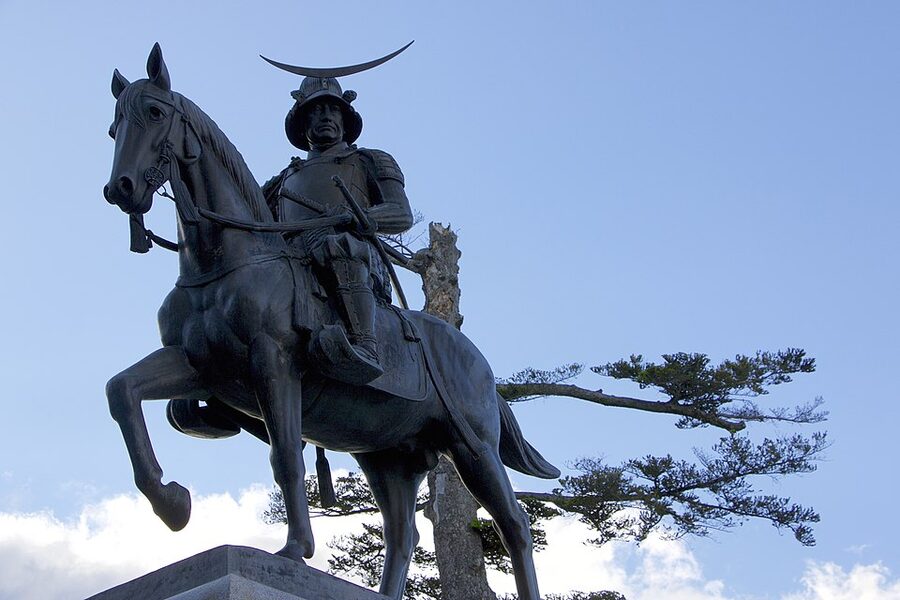
Aobayama Park sits on the plateau above the Hirose River where Masamune’s castle stood. The main keep is gone — demolished in the Meiji period, the base stones disassembled in 1940, the last outer walls bombed flat in 1945 — and what remains is the stone foundation, a good view of the city, the famous equestrian statue, and the Sendai City Museum annex with Masamune’s armour and helmet crest on permanent display.
Get there by the Loople Sendai sightseeing bus from JR Sendai Station — it runs every fifteen minutes and the fare is ¥260 for a single ride, ¥630 for a day pass covering everything in this section. Allow two hours on the plateau including the museum.
2. Zuihōden — Masamune’s mausoleum, southern Sendai
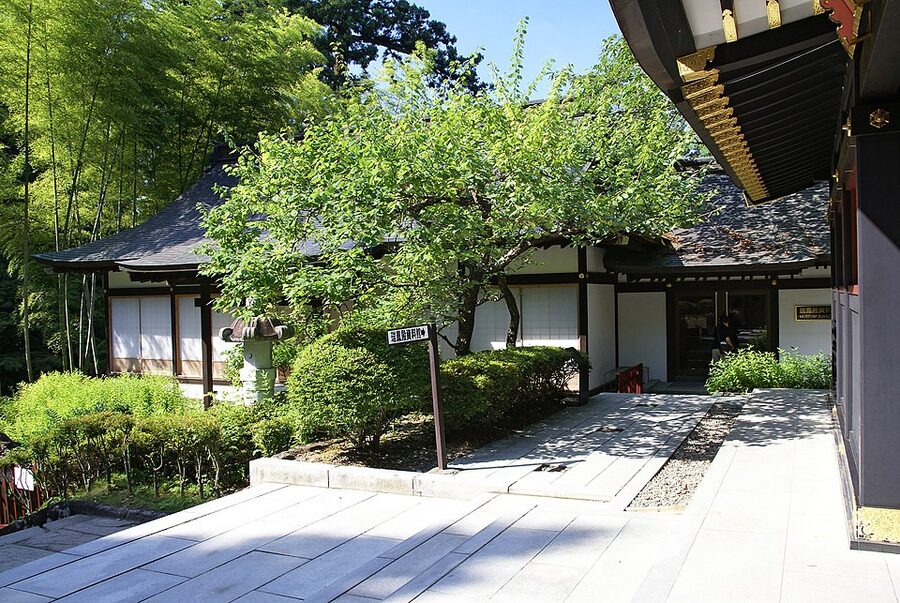
Zuihōden is fifteen minutes by Loople bus from Aobayama. The site has three main buildings: Masamune’s own mausoleum (the main Zuihōden), his son Tadamune’s (Kanzenden), and his grandson Tsunamune’s (Zennōden). All three were destroyed in 1945 and rebuilt 1979-1985. The Zuihōden Museum on the same grounds holds the grave-goods excavated during the 1974 pre-reconstruction archaeology — including the forensic reconstruction of Masamune’s face from his skull, which is uncomfortably reminiscent of the Kanō Tan’yū portrait, and the actual crescent-moon helmet crest that has been in the Date family since 1582.
Admission ¥570. Allow ninety minutes. Best visited in autumn when the maple canopy over the approach path turns; the walk up the hill is one of the good pieces of urban Japanese landscape.
3. Zuigan-ji — Matsushima, Miyagi
Matsushima is forty minutes from Sendai on the JR Senseki line. The town itself is a standard tourist stop — the famous 260-island bay, souvenir shops selling rice crackers, ferries running cruises for ninety minutes — but Zuigan-ji is the reason to go. The temple approach runs through a forest of old cedars planted the year the hall was finished (1609), past a row of meditation caves carved into the cliffs, to the main compound. Admission is ¥700. The treasure house on the north side contains the painted sliding screens from the original Momoyama interior, which you can get within a few metres of. Allow two hours. If you go late October through early December, the maples along the approach are excellent.
4. Yonezawa — Masamune’s birthplace
Yonezawa Castle is ninety minutes from Sendai by Shinkansen-plus-local-train combination. The castle is mostly gone (the Uesugi later occupied the same site, so the extant stonework is 17th-century Uesugi, not Date) but the Uesugi Shrine in the inner bailey was built on the exact location of Masamune’s birth-room, and the Yonezawa City Museum has a small Date section with his childhood wooden training-sword and the smallpox-period medical records from the Date family physician. Worth a half-day if you are a completist; skippable if you are not.
The Ten Years
What Date Masamune did with the ten years he was too young by is the question. The Toyotomi and Tokugawa unifiers built an empire; earlier warlords stole a province; less lucky contemporaries got themselves killed for loyalty to the wrong side. Masamune did none of those. He built a city, a mausoleum, a temple, and a diplomatic dossier on Europe. The first three are still there. The last is in an archive.
If you had asked him at seventy whether he was disappointed to have missed the unification by a decade, he would almost certainly have said no. The Date chronicles record him telling his son Tadamune, about six months before his death, that “a man who arrives ten years late at a banquet either starves or builds his own kitchen”. He had built a kitchen. Sendai was the kitchen. The embassy to Rome was him asking whether the kitchen could import spices from further away than the main banquet had been serving. The ledger of the life is the balance of those two activities.
If you are going to Sendai anyway, do Aobayama in the morning for the statue and the view, Zuihōden in the afternoon for the mausoleum, and save Matsushima and Zuigan-ji for the next day. At Aobayama, stand next to the statue and look east toward the coastal plain. The city he built from nothing fills the view. The sea is behind it. His retainer took a boat from that sea to Mexico in 1613. None of that was ever supposed to happen. It happened anyway.