The first thing nobody tells you about Aomori Nebuta Matsuri is that the chant means almost nothing. For six August nights, hundreds of thousands of people in straw hats jump down the streets of Aomori City shouting “Rassera, rassera, rasse-rasse-rassera,” and if you stop one of them and ask what it means, you will get a shrug, a grin, and possibly a beer. The most accepted theory traces it to a 1962 women’s dance group that mutated the Tsugaru-dialect “irasshai” (welcome) into a three-syllable chant for street dancing. That chant is now the heartbeat of one of Japan’s three great Tohoku summer festivals, with city counts logging 1.01 million visitors in 2025 alone, all wedged into a six-day window between August 2 and 7.
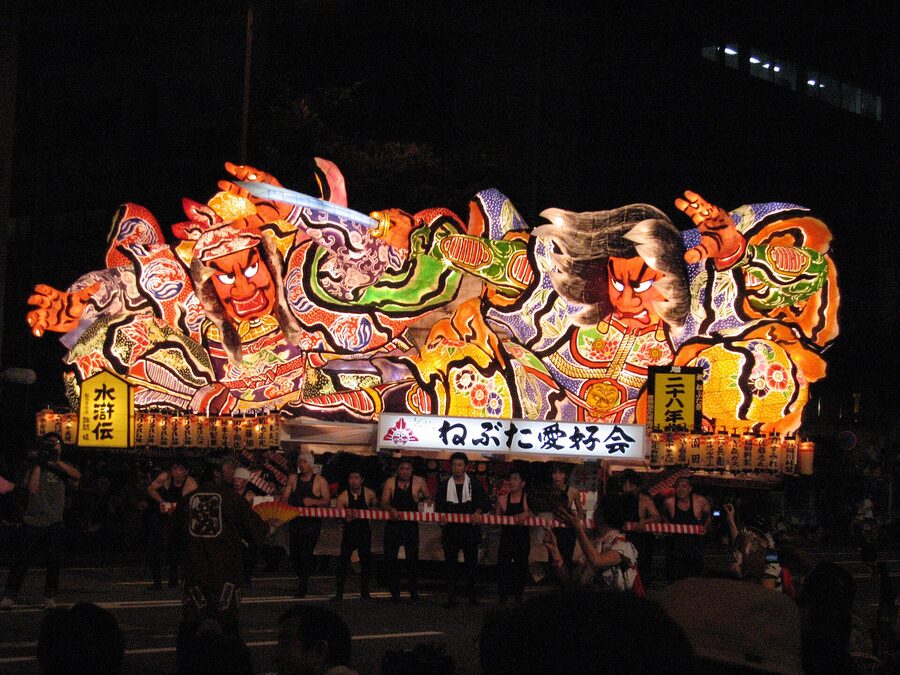
I want to walk you through what actually happens in those six days, because the festival you read about online and the festival you experience on the curb at 19:00 on August 3 are not quite the same thing. The brochure version is a parade. The real version is closer to a city-wide street rave that happens to be 1,200 years old in disguise, with 9-metre warrior floats that weigh roughly 4 tonnes apiece and balance on the shoulders of 30-person crews.
By the time it ends on the night of August 7, the prize-winning floats are floating on barges in Aomori Bay, fireworks are landing over the water, and one of the floats has already been ceremonially destroyed at sunrise. That last bit is my favourite, and you will get to it.
In This Article
- A festival with two origin stories, one of them probably fake
- The schedule, hour by hour
- How a Nebuta is built (and what is inside one)
- The nebuta-shi: who actually paints these things
- The haneto: anyone can dance, if you dress correctly
- The night parade: what you actually see
- The 1980 designation, and what it actually changed
- Wa Rasse: the year-round Nebuta museum
- The two cousins: Hirosaki Neputa and Goshogawara Tachineputa
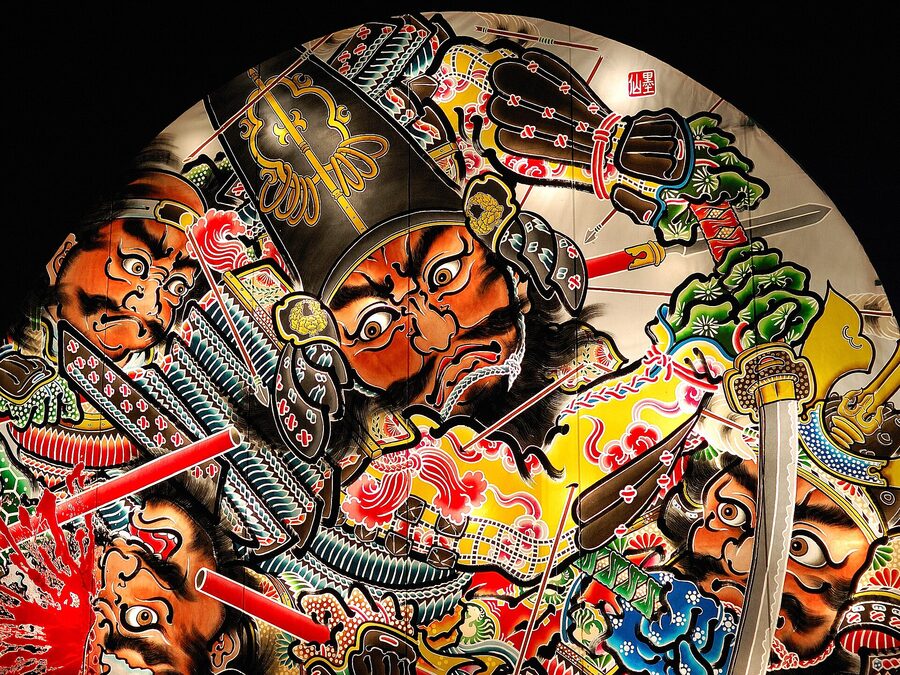
- Float themes: who shows up on the washi
- Travel: how to actually get there
- A festival in the wider Tohoku context
- Photographing Nebuta: practical notes
- A short note on the post-festival economy
- Final thoughts and one piece of advice
A festival with two origin stories, one of them probably fake
Every long-running Japanese festival has an origin myth, and Nebuta has two. The official tourist-board version credits Sakanoue no Tamuramaro (758 to 811), Japan’s second Sei-i Taishogun, who was dispatched by Emperor Kanmu to subdue the Emishi people of northern Honshu in the early 9th century.
The story goes that Tamuramaro placed huge illuminated lanterns on hilltops to lure curious Emishi out of their forts, then captured them when they came to look. The festival, in this telling, commemorates that ruse with its big illuminated paper figures. It is a tidy story.
It is also almost certainly wrong. Tamuramaro’s documented campaigns reached only as far north as Shiwa Castle in present-day Morioka, several hours south of Aomori. The Tohoku people themselves have always had complicated feelings about the legend, since Tamuramaro was, from the local perspective, a southern conqueror who broke the Emishi resistance led by Aterui. The festival’s top prize was originally called the Tamuramaro Prize when it was created in 1962, and was renamed the Nebuta Taisho in 1995 because, as the city quietly put it, “people thought it odd to have Sakanoue no Tamuramaro’s name in the award.” There is even a counter-etymology that says the word “Nebuta” comes from “Aterui,” the very Emishi general Tamuramaro defeated.
The version most folklorists now accept is less heroic and more mundane. Nebuta is most likely a descendant of nemuri-nagashi, a Tohoku regional rite for “sending away sleepiness” before the autumn harvest. That rite merged at some point with Buddhist toro-nagashi (lantern floating) ceremonies and with the broader Tanabata festival tradition that Japan imported from Tang-dynasty China and now celebrates around July 7 or August 7 depending on the region.
If you have ever wandered into the Gion Matsuri in Kyoto in July, you have already seen the southern cousin of this Tanabata-derived float festival genre. Aomori turned it into something louder.
The connection to Tanabata is almost mechanical. The early Aomori “nebuta” were small paper lanterns that families floated on the river or set adrift in the bay, asking the water to carry off summer fatigue and any stray bad luck before the rice harvest started.
Over centuries those small lanterns swelled into hand-pulled lantern floats. Then they got bigger, then they got electric, then they got their own annual prize ceremony, and now they get fireworks. The progression mirrors what happened to the float festivals at Tsushima Tenno Matsuri in Aichi, only Aomori scaled it harder.
The schedule, hour by hour
Modern Aomori Nebuta is rigorously timed. The official period is August 2 through August 7. Most travel guides write it as one block, but if you are planning a trip you should treat each day as a separate event with a different shape. Here is the schedule I would actually print on a card and hand to a friend.
August 1, evening: Eve festival. A pre-event with smaller children’s floats, taiko, and a fireworks show in Aomori Bay around 19:15. Locals call it the “warm-up.” Tourists routinely miss it. Don’t.
August 2 to 3, evenings: Children’s nebuta join the main parade route. Floats roll from 19:10 to roughly 21:00. The parade is a 3.1-kilometre loop through central Aomori, and the police block off the entire perimeter starting in late afternoon.
August 4 to 6, evenings: The full adult floats. About 22 large nebuta participate each night, plus drum corps and haneto. This is the headline experience. If you fly into Aomori for a single evening, fly in for August 5 or 6.
August 7, daytime: The day parade. Same floats, same route, but in afternoon light, which is the only chance you get to actually see the brushwork detail on the washi paper. Around 13:00.
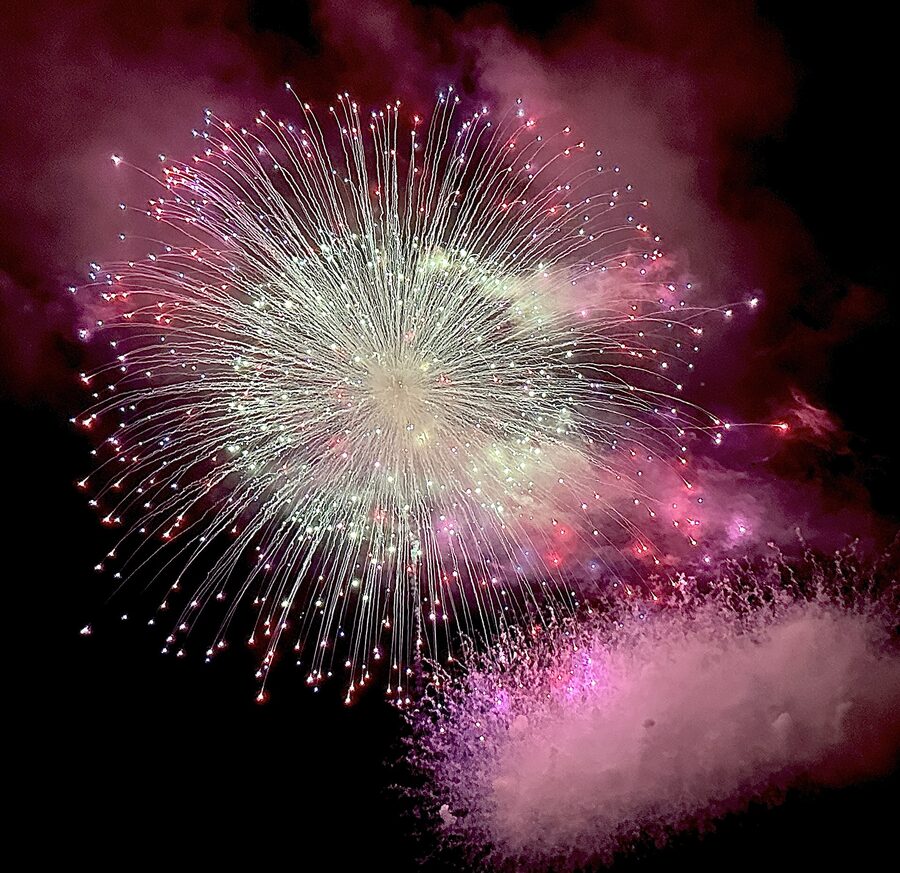
August 7, evening: The seafront finale. The floats that won the major prizes are hoisted onto barges in Aomori Bay and pulled along the harbour while a 30-minute fireworks show drops over the water. This is the photograph people post.
What I want to flag is the morning of August 7 specifically. Long before the seafront fireworks, there is a quiet ritual called onga-no-toritori, the carry-off of scrap paper. After a non-prize-winning float is dismantled, kids and old-timers grab the leftover painted washi as souvenirs.
Some neighbourhood teams ceremonially burn part of the float at sunrise. It is the closest thing Nebuta has to a closing prayer, and it is gone by 06:30 most years. If you have early flights you will sleep through it. I would not.
How a Nebuta is built (and what is inside one)
The float-construction season starts in March, five months before the parade. Each major neighbourhood team commissions a nebuta-shi, a master float-builder, to design and supervise the build. There is no Nebuta factory. Each one is built by hand inside a temporary shed called a nebuta-goya, a long aluminium hangar that the city sets up along the bay every spring.
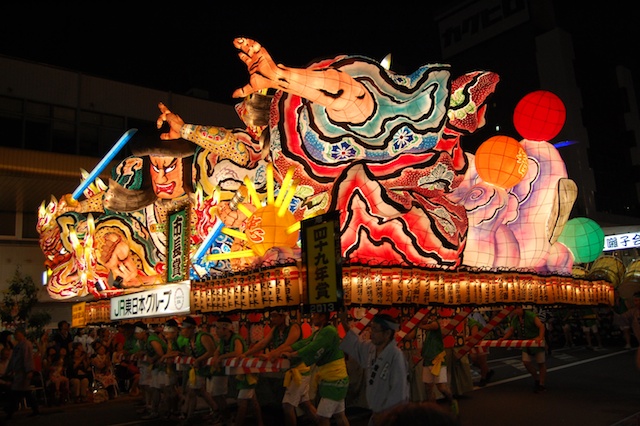
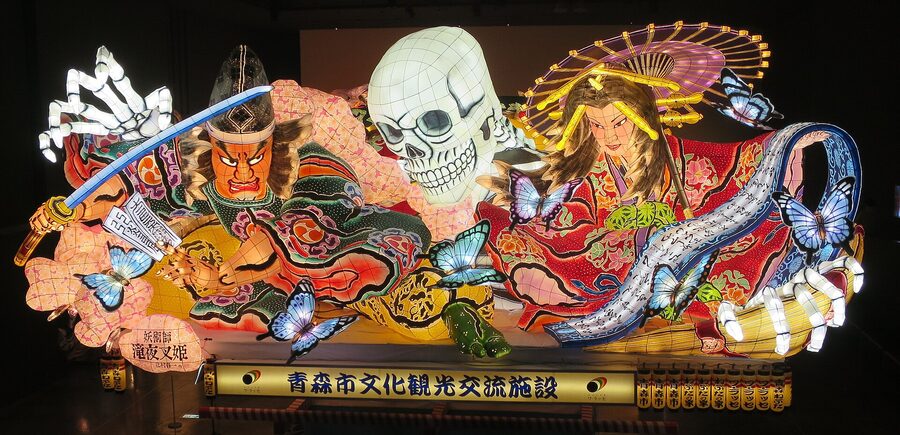
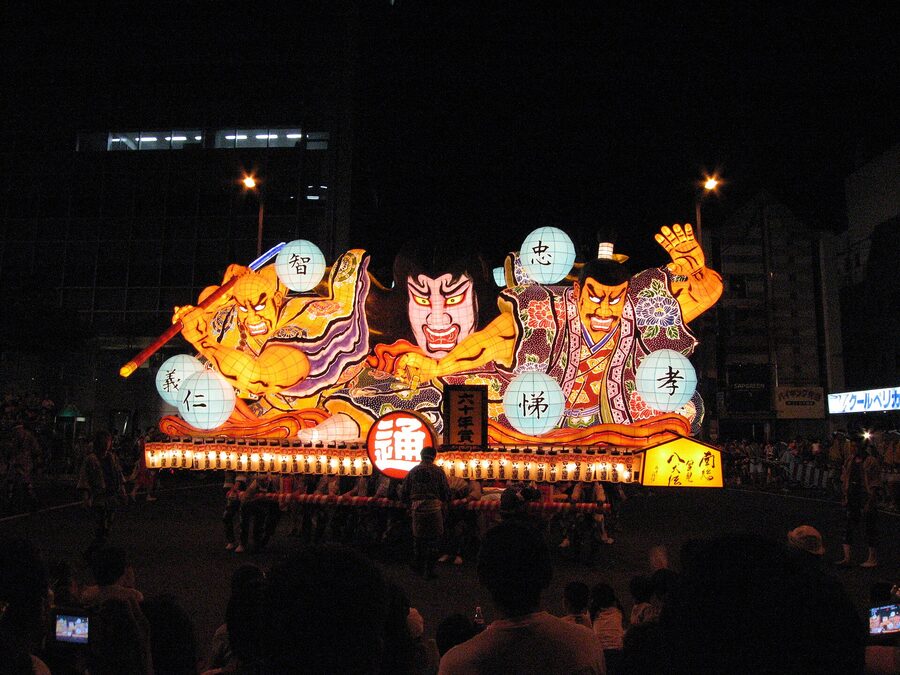
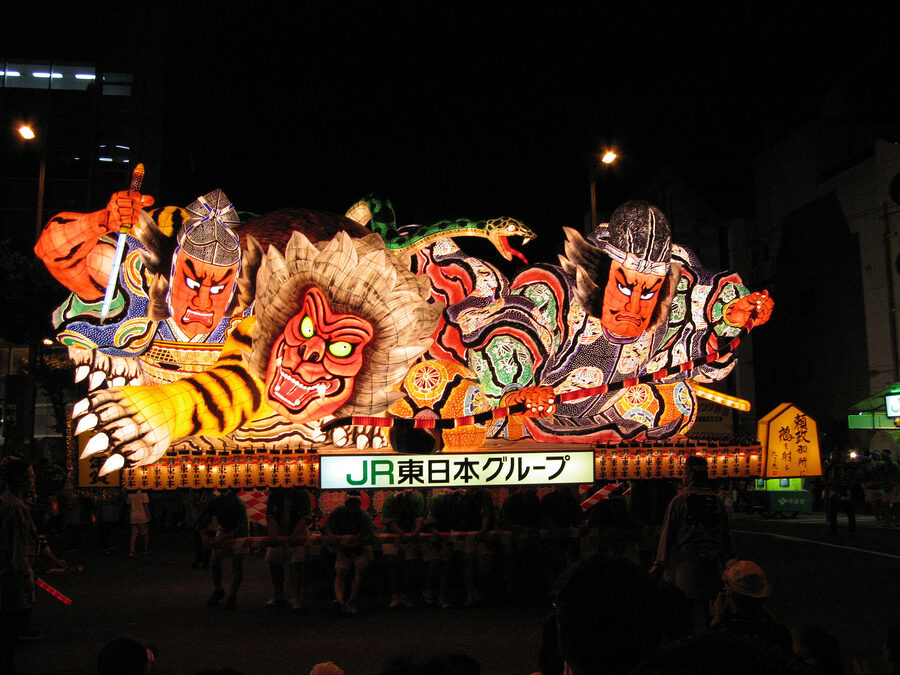
The float starts as a wooden base on wheels, roughly 9 metres wide, 7 metres deep, and 5 metres tall, which are the maximum dimensions allowed by the police because of footbridges, traffic lights, and overhead power lines along the parade route. On top of the base sits a wire skeleton. Until the 1950s this was bamboo, but bamboo loved to catch fire when the candles inside the float tipped, so the city switched to galvanised steel wire. The wire is bent and tied by hand into the shape of a samurai, a yokai, a kabuki villain, or a mythological scene, with arms in motion, jaws open, and weapons raised.
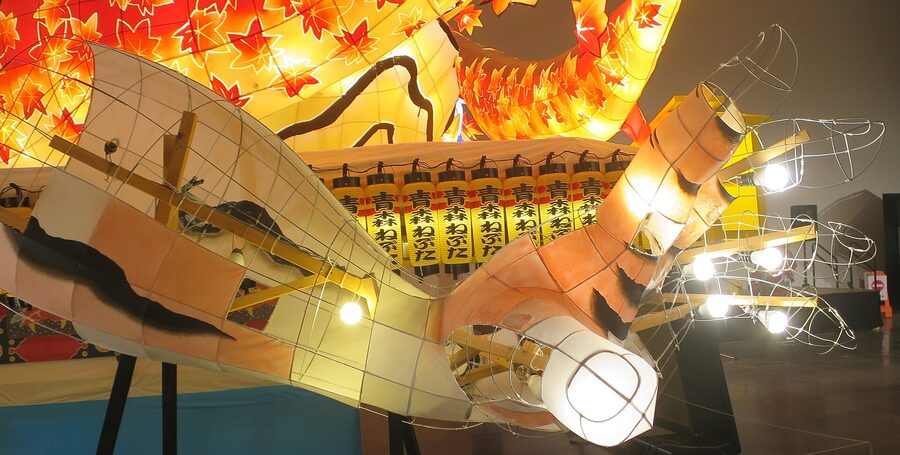
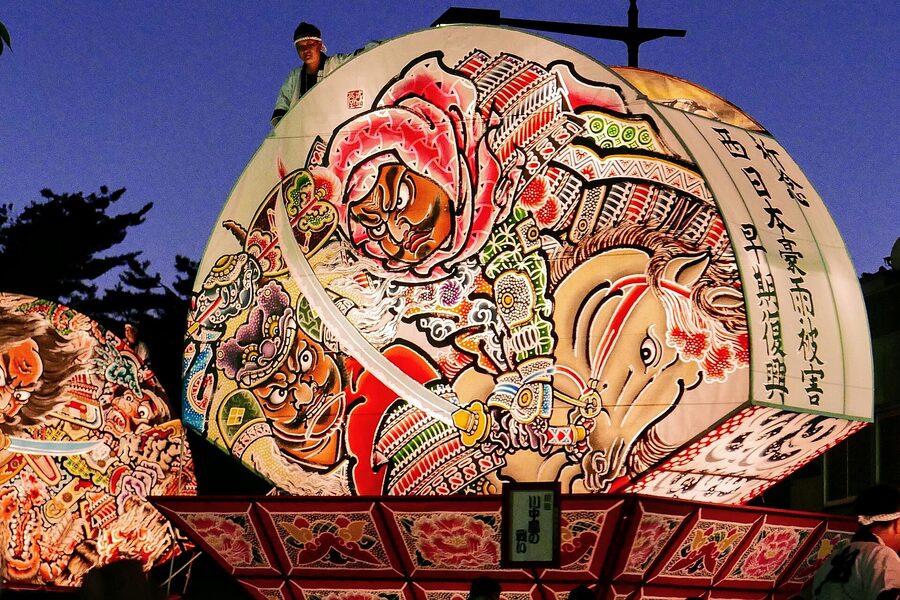
Once the wire is shaped, the team layers washi paper over it. They use thin Japanese mulberry paper because it transmits light evenly and takes ink well. The painting is done in stages: first a thin black ink outline (kakikomi), then a wax-resist treatment (rou-gaki) on areas that need to stay translucent, then the colour wash.
The colours are deliberately strong, since the float will be lit from behind by a 60-amp electric system pulling roughly 6 kilowatts off a portable generator that rides on the float itself. In daylight the colours scream. At night, with the inner bulbs on, they glow.
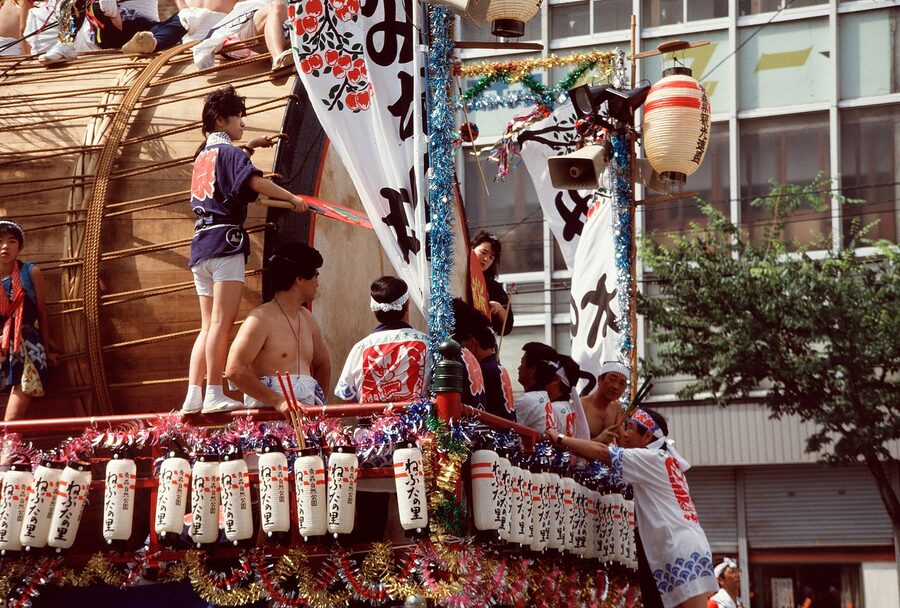
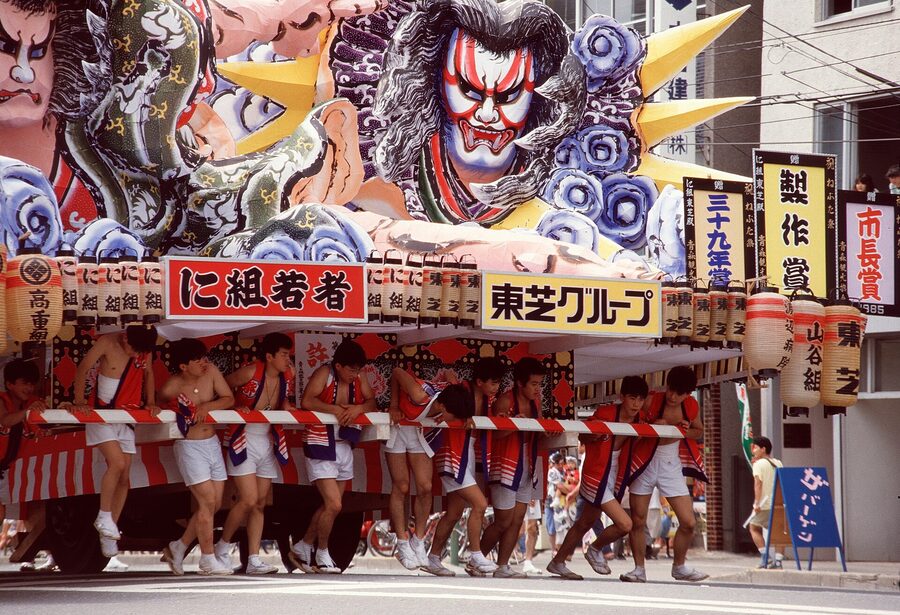
The whole structure ends up weighing around 4 tonnes, which is why the float doesn’t have a motor. It rolls on a low-platform cart and is pulled and pushed by a 30-person crew called the hikite. Two senior crew members ride on the front of the cart with what look like long batons. Those are the rotation handles.
When the team wants the float to turn 180 degrees on the spot in front of the judges’ box, the hikite let go, the riders haul the batons in opposite directions, and the entire 4-tonne float spins. The crowd loses its mind. This is the moment most photographs are trying to capture.
The nebuta-shi: who actually paints these things
There is a small guild of nebuta-shi in Aomori, never more than about 15 active masters at a time. The city formally recognises a “Nebuta Meijin” (master nebuta-shi) title, currently held by three living artists.
Chiba Sakuryu (5th Master) has been building floats since the 1970s and is famous for muscular, classical kabuki-themed compositions. Kitamura Takashi (6th Master) is from a multi-generation Nebuta family; his floats lean into Tohoku folkloric figures, the kinds of yokai you don’t see at the southern festivals. Takenami Hiroo (7th Master, formally recognised in the 2010s) is the experimental one, and his pieces have placed in the Nebuta Taisho prize repeatedly.
Below them, working masters like Uchiyama Ryusei (debuted 1987), Tatsueda Ryuho, and Kitamura Renmei put out a major float almost every year. In 2012 Kitamura Asako became the first female nebuta-shi, which the local press treated as overdue.
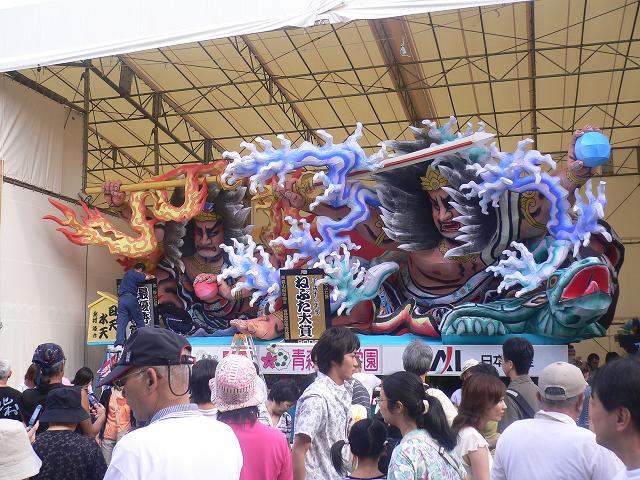
The prize structure matters because the entire economy of the festival is built on it. A nebuta-shi who consistently wins prizes can charge a neighbourhood team somewhere between 8 and 15 million yen for a top-tier float, which is partly why corporate sponsorship has crept in. NTT East, Aomori Bank, the prefecture, the city, Tohoku Electric Power, and Nippon Telegraph and Telephone all sponsor floats. The corporate floats are often very good (their teams have budget), but the purist take is that the most interesting floats still come from the small neighbourhood associations and trade unions, since those teams are building them to win.
The haneto: anyone can dance, if you dress correctly
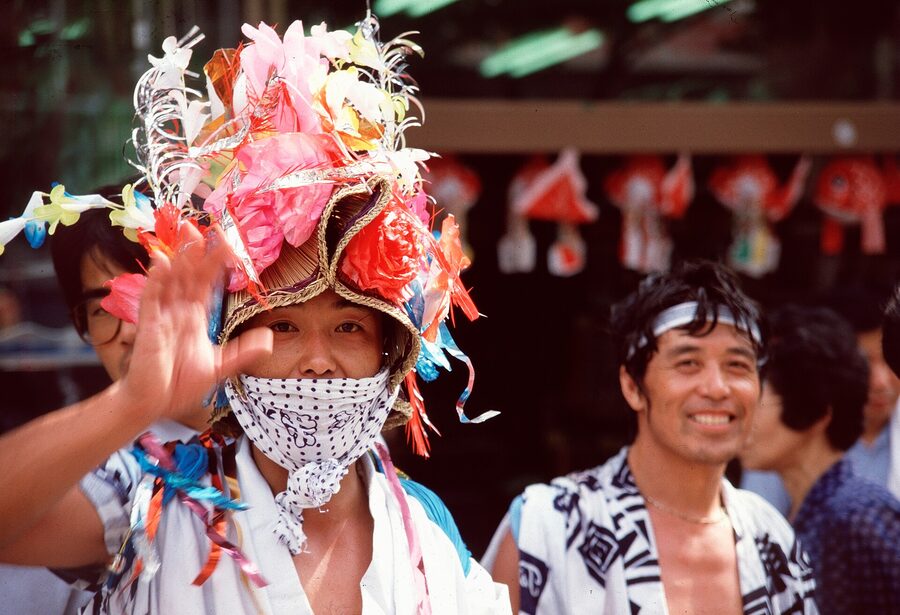
The most surprising rule of Aomori Nebuta is that you, a person reading this who probably does not speak Japanese, can join the parade as a dancer. The dancers are called haneto, which roughly translates as “leapers.” The deal is simple. You wear the correct costume, and you can jump in. No registration, no name on a list, no fee for participation itself.
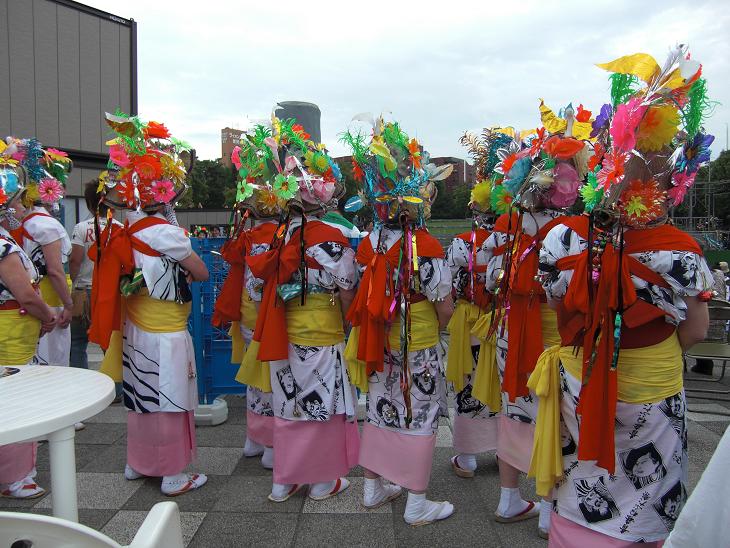
The costume is non-negotiable. It consists of a specific Aomori-style yukata with floral patterns, a sash with bells, a flower-decorated kasa straw hat, white tabi socks, and zori sandals. The bells are the important part: each haneto sews dozens of small suzu bells onto the yukata and obi, so when they jump the ringing is the bass note under the chant.
A full set bought new runs about 9,000 yen. Rental shops near JR Aomori Station rent costumes for 4,000 to 5,000 yen, and they will dress you. Show up at noon, leave the shop at 17:00, find a haneto group on the parade route at 18:30.
What you will not see written in many tourist brochures: there are also the Karasu-zoku, “crow tribes,” black-clad ad-hoc dancers who used to swarm the parade and got into a notorious incident in 2001 when about 4,000 of them set off fireworks. The city responded by tightening route control and dispersing the floats simultaneously instead of in single file. The official haneto rules now ban modifications that depart from traditional dress.
So if you turn up in black streetwear, you will be politely escorted to the curb. Wear the yukata. The system works.
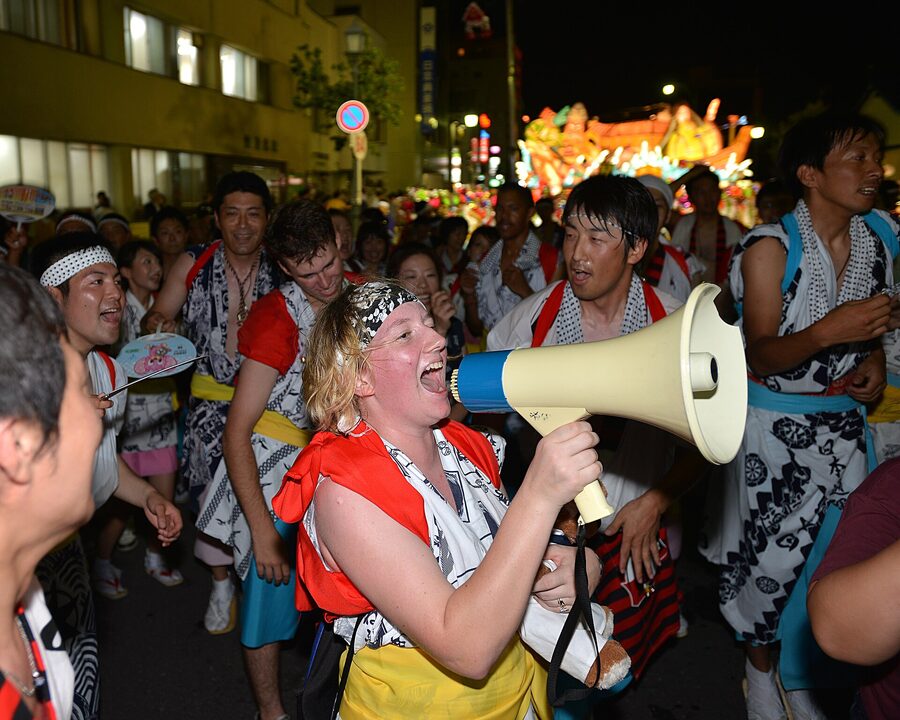
The chant is shouted on the way down from each leap. “Ras-se-ra, ras-se-ra, rasse-rasse-rasse-ra.” Some haneto groups also have a secondary call-and-response, where the shouter calls “Ya-ya-doh” and the rest of the group answers with “rassera.” The cadence is contagious. By the time you have heard 22 floats roll by with their crews chanting, you will catch yourself doing it on the train back to the hotel. Several people I know have brought it home and used it as a kitchen-counter drumming pattern for months.
The night parade: what you actually see
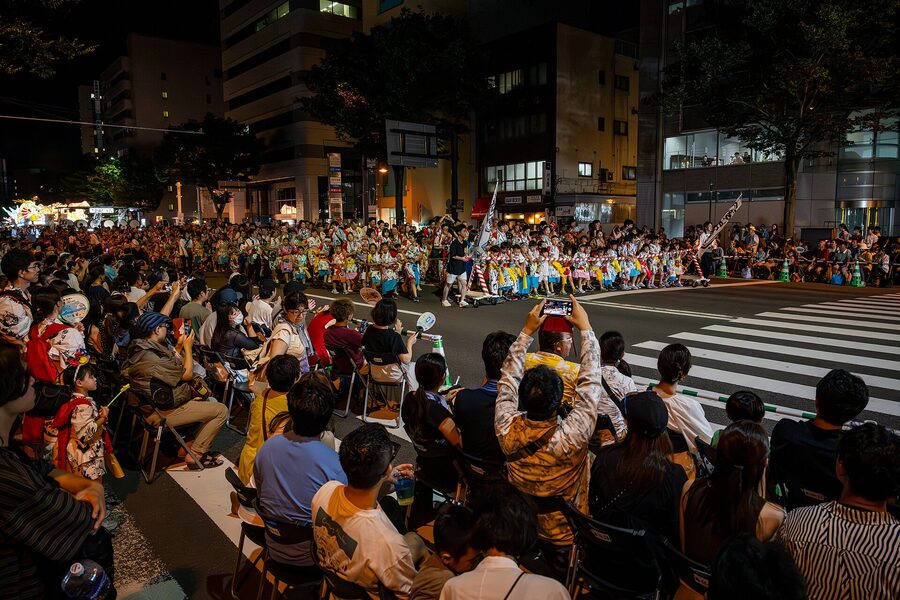
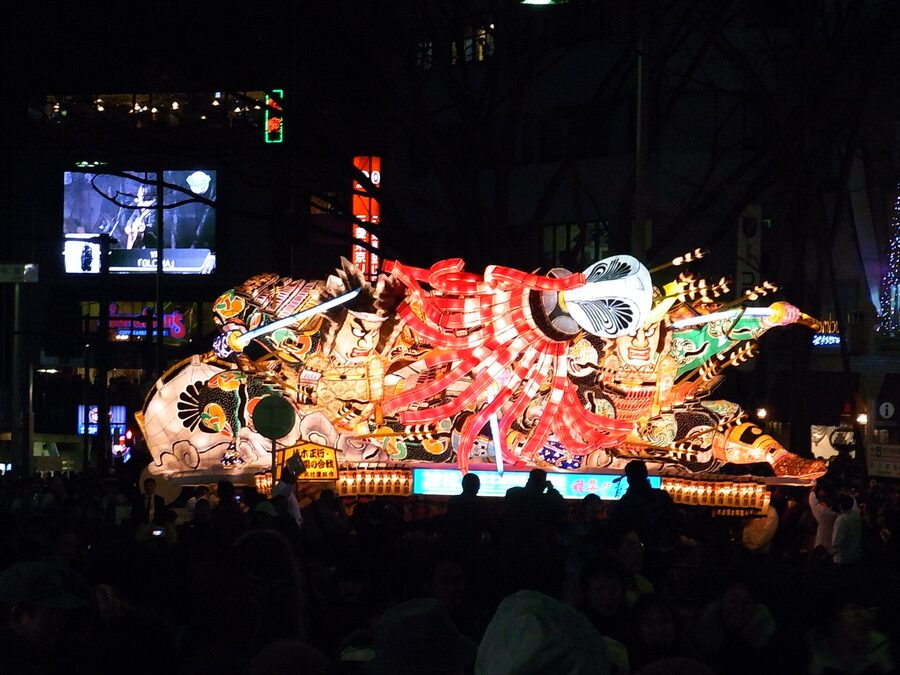
The first time I saw a Nebuta float clear the corner of Shinmachi-dori at 19:20 on August 5, I thought somebody had set up a movie effect. The thing is enormous. The face is the size of a delivery van; the arms hold weapons that look like they could break a phone booth.
The whole assembly is moving toward you at jogging pace, and twenty metres behind it are 400 haneto in matching yukata, jumping in unison. There is no equivalent in southern Japan that I have found.
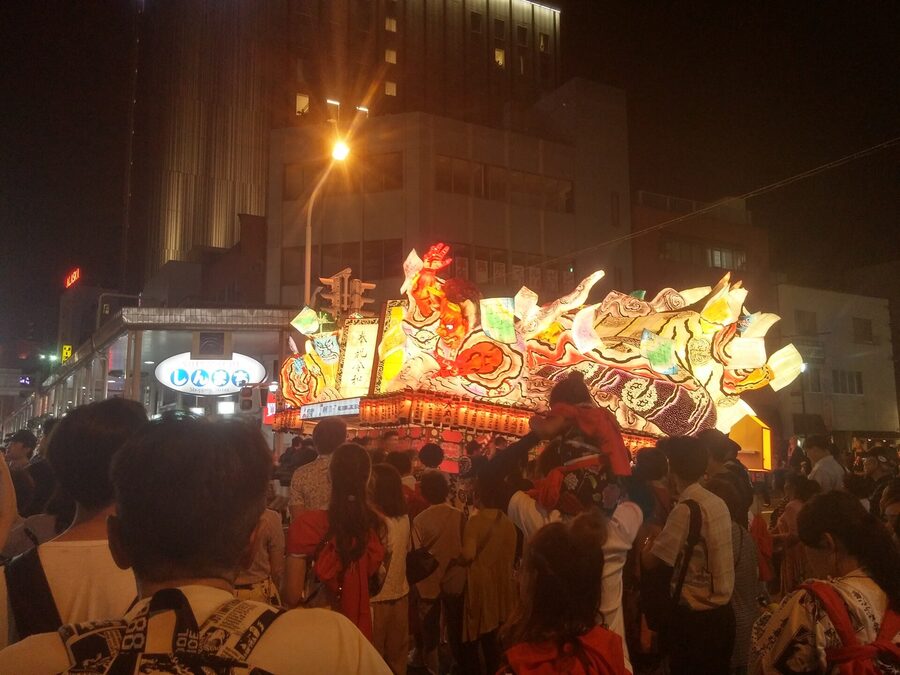
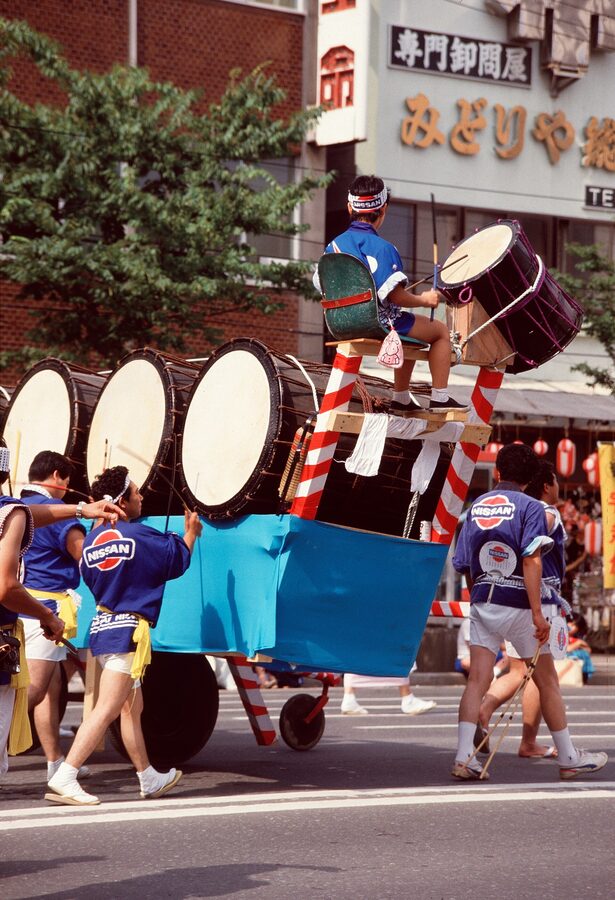
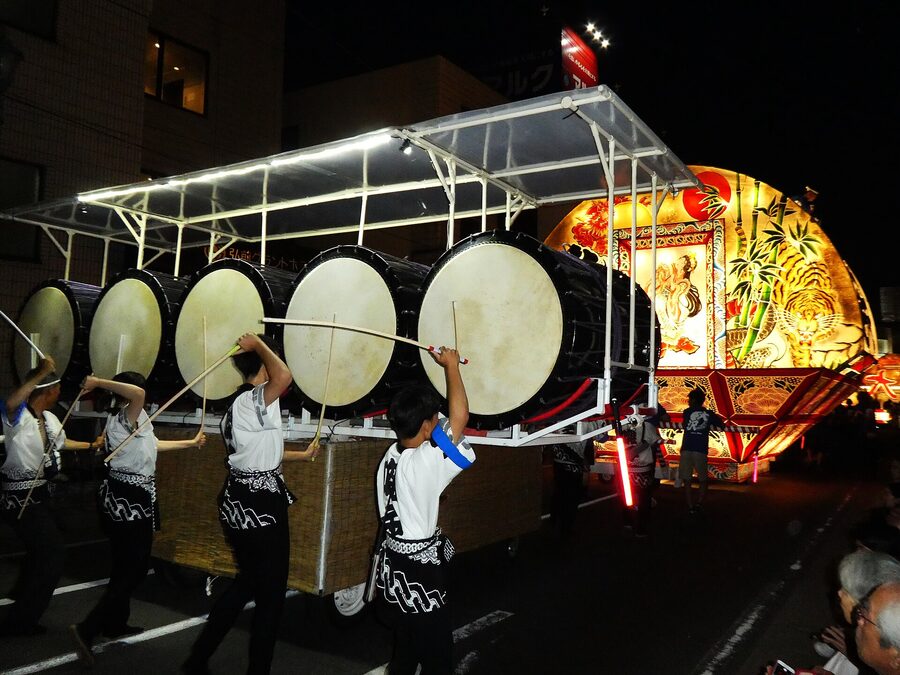
The parade is structured like a fleet. Each major neighbourhood, large company, or trade association sends one float (or one float cluster, with a smaller children’s nebuta in front and the big one behind). Drumming corps with massive taiko drums and flute teams sit between floats so the parade has its own rhythm.
The whole thing rolls at about 1 km/h. From any one curb position you will see roughly 22 large floats over the course of two hours.
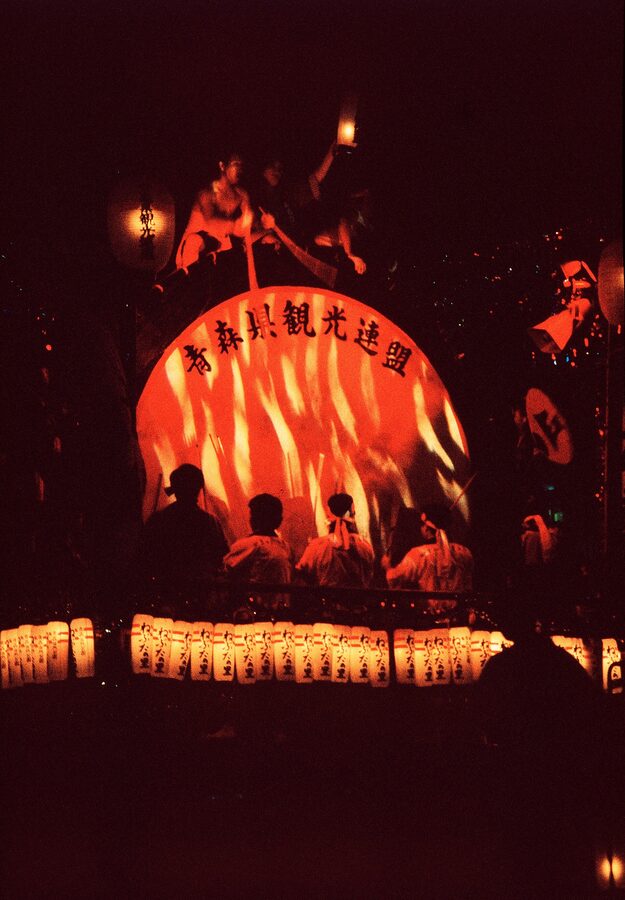
Booking a paid seat is worth it on August 5 or 6. The official paid seating along Shinmachi-dori sells out by April; you should book through the Aomori Tourism Bureau site as soon as it opens in February. A single seat for one evening is roughly 3,500 yen, which buys you a 60 cm cushion on a low folding bench at the kerb. If you don’t get a paid seat, position yourself at the south end of Shinmachi where the parade route bends; the floats spin to make the corner, and you get a free version of the same view the judges have.
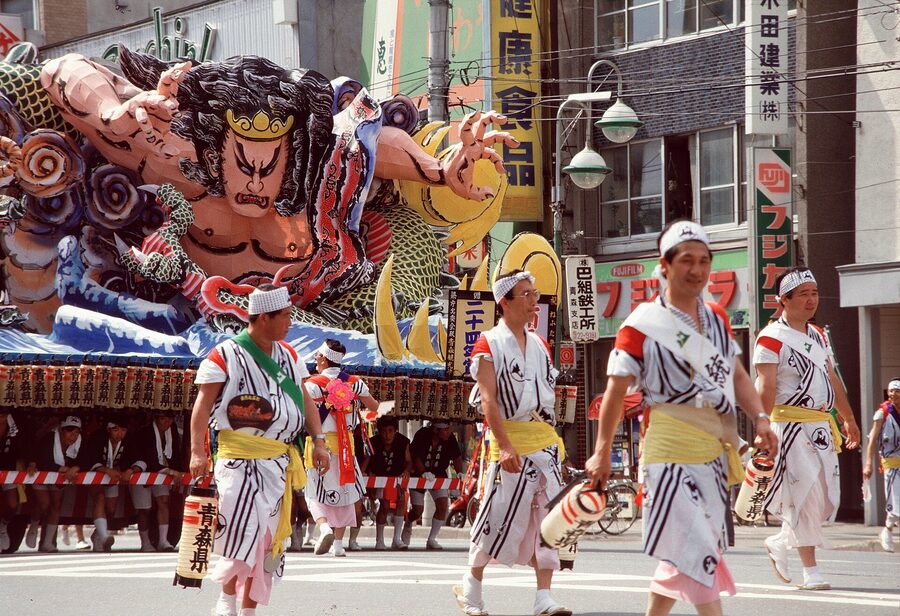
One thing the brochures never mention: the smell. Aomori is a port city on Mutsu Bay, the parade route runs about 800 metres from the harbour, and the August humidity carries everything into the street. So the sensory profile of Nebuta is, in this order: hot tarmac, fryer oil from the food stalls, grilled scallops on stick (Aomori is a major scallop port), salt water from the bay, sweat and sake on the haneto, and the faintest trace of singed paper from a candle-era memory the festival cannot quite shed.
The 1980 designation, and what it actually changed
In 1980, Japan’s Agency for Cultural Affairs designated Aomori Nebuta Matsuri an Important Intangible Folk Cultural Property (重要無形民俗文化財). This is the same protective status held by other regional festivals like the Hakata Gion Yamakasa float festival in Fukuoka and the Chichibu Yomatsuri in Saitama. The designation does not directly fund the festival, but it protects the choreography, the costumes, and the construction methods from being modified by, say, a city government wanting to “modernise” things or a corporate sponsor wanting to add LED video walls to the floats.
In practical terms, the 1980 designation is why the floats still use washi paper instead of polycarbonate sheeting (which would be cheaper and more durable but would not glow the same way). It is why the haneto cannot wear nylon. It is why the chant cannot be amplified through a speaker system.
The designation locks the festival in place at a 1970s-ish technology level for the bits that matter, and lets it modernise on the bits that don’t, like generators, LED bulbs inside the floats, and the Nebuta Museum that opened in 2011 to keep the tradition alive year-round. The Ministry of the Environment also added Nebuta to its “100 Soundscapes of Japan” list in 1996, formally protecting the audio character of the parade as well.
Wa Rasse: the year-round Nebuta museum
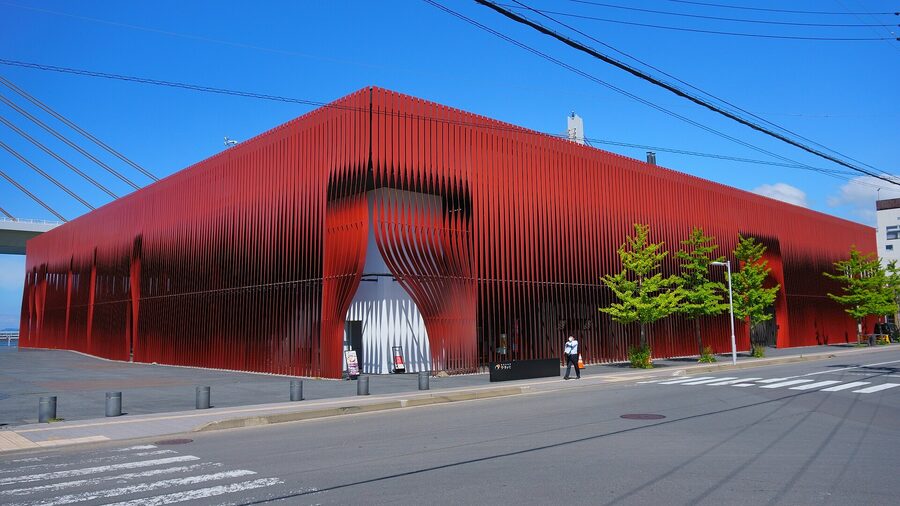
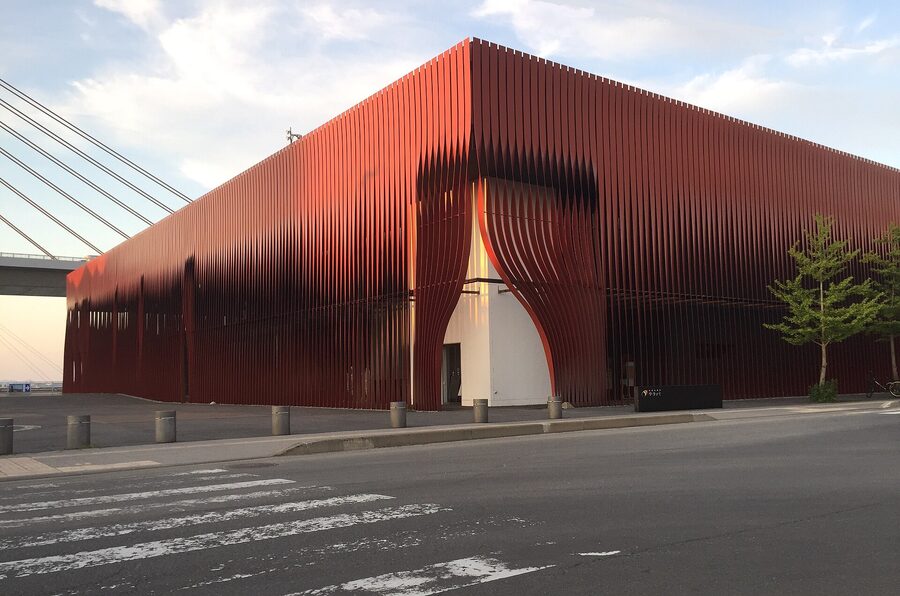
If you cannot make it in early August, the next best option is Nebuta Museum Wa Rasse. It opened on January 5, 2011, partly as a tourism counter-strategy after the Tohoku Shinkansen extension to Shin-Aomori in December 2010 made the city worried that bullet-train travellers would skip Aomori for Hakodate. The museum is two minutes on foot from JR Aomori Station, sitting between the station and the harbour at coordinates 40.829, 140.736.
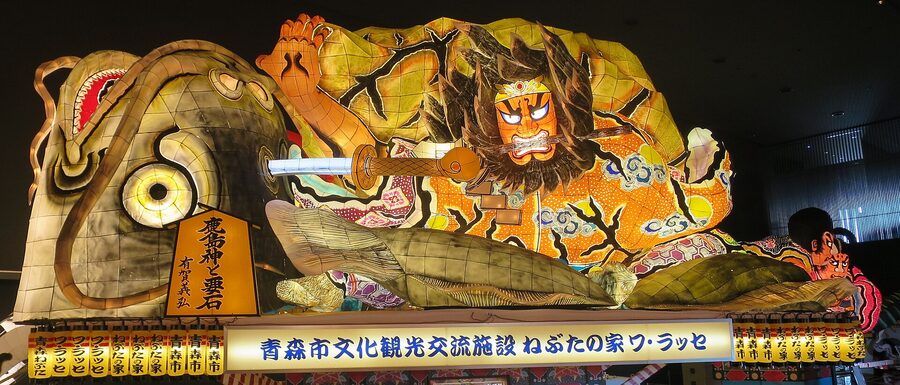
The two-floor exhibit holds four full-scale prize-winning floats from the previous summer. Lighting cycles let you see each float under both day and night conditions, which is something the August parade itself does not really do, since the daytime parade on August 7 is the only chance you get to see floats in sunlight, and even that is filtered by crowd density.
There is also a 30-minute “Haneto Experience” three times daily where staff dress visitors in haneto kit and run a simplified version of the chant and step. Tickets are 620 yen for adults, 460 for high school students, and 260 for elementary kids, last I checked. The museum is open every day except December 31 and January 1.
The two cousins: Hirosaki Neputa and Goshogawara Tachineputa
Aomori Nebuta is not the only Tsugaru-region float festival in August. It is the most famous, but if you are spending a week in the prefecture you should know about its two siblings. They use the same family of words (“nebuta,” “neputa”) but they are very different events.
Hirosaki Neputa Matsuri runs August 1 through August 7 in Hirosaki City, about 40 minutes south by JR. Hirosaki uses fan-shaped (ogi) floats instead of Aomori’s box-shaped figures. About 70 to 80 fan floats parade nightly, with painted scenes from the Heike-Genji wars (the late-Heian battles between the Taira and Minamoto clans) on the front and Chinese classical figures on the rear.
Hirosaki is also the home of one of Japan’s twelve original surviving castles. If you are doing a Tsugaru week, pair it with a visit to Hirosaki Castle, which moved sideways across the moat for a recent stone-wall renovation, and time it for the cherry blossom (you can read about the Hirosaki sakura season in the cherry blossom guide).
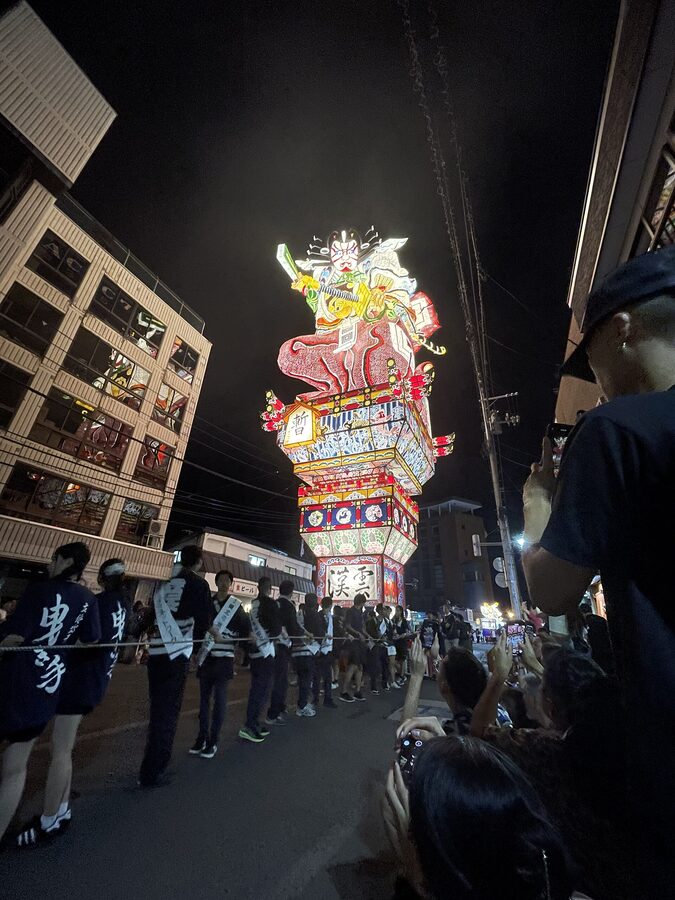
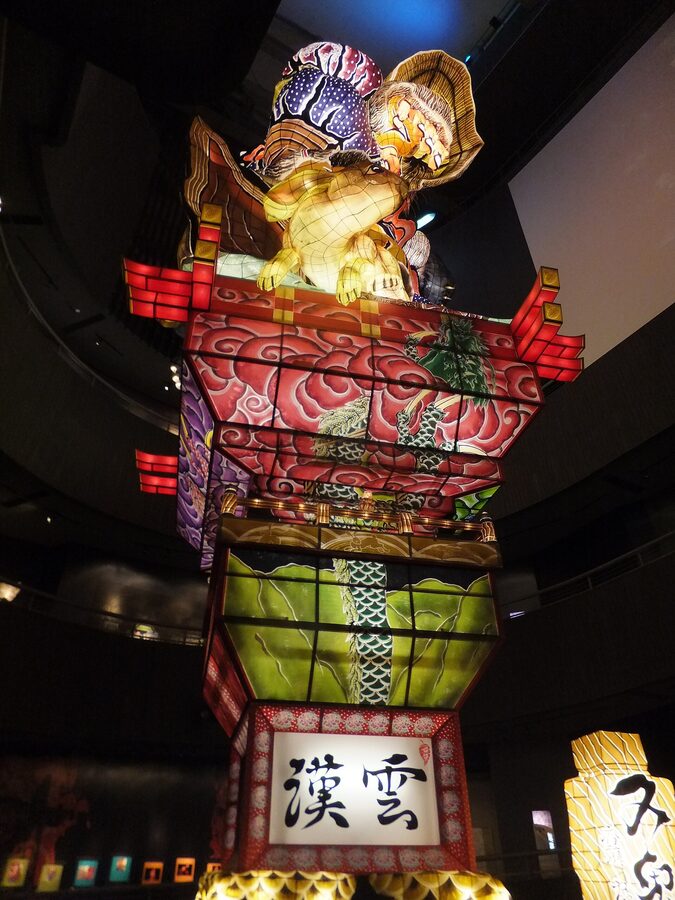
Goshogawara Tachineputa runs August 4 through August 8 in Goshogawara, about 50 minutes from Aomori on the JR Gono Line. The “tachi” in the name means “standing.” These floats are vertical, climbing roughly 22 to 23 metres tall, which is taller than a seven-storey building. They were a 19th-century Tsugaru tradition that died out in the early 20th century when the city banned them as a fire risk after a series of accidents. The festival was only reconstructed in 1996 from old photographs, and a permanent indoor exhibition called Tachineputa-no-Yakata now keeps the standing floats year-round, since the city built a road around the museum specifically to allow these vertical giants to roll in and out for the August parade.
If you only have a long weekend, do Aomori. If you have a week, pair Aomori (Aug 5 to 7), Hirosaki (Aug 4), and Goshogawara (Aug 6 daytime) into a single sweep with a rental car or the JR East Tohoku Pass. The three festivals together are sometimes called the Tsugaru Sandai-Neputa, the “three great Tsugaru festivals.”
Float themes: who shows up on the washi
The floats are sculptural narratives. Each one tells a story, and the storytelling is the part the judges are scoring on August 7. There are roughly six theme categories that recur every year, and once you know them you start spotting them in seconds.
Mythological battles, especially scenes from the Heike Monogatari and the Genpei War. Yokai folklore, including the wanyudo flaming-wheel demon and Nure-onna the snake-woman. Kabuki theatre figures, especially Benkei and the Soga brothers, plus Buddhist iconography including various Bodhisattvas and the deity Bishamonten in armour.
Heroic Tohoku regional figures appear too, especially Aterui himself, who has shown up on at least four winning floats since 2000 (a quiet correction to the Tamuramaro origin story). The occasional contemporary pop-culture float also appears, although these are rare and usually placed in non-prize categories. Star Wars characters have shown up at least twice; the Studio Ghibli connection is more common at smaller regional Nebuta-style festivals than at the main Aomori event.
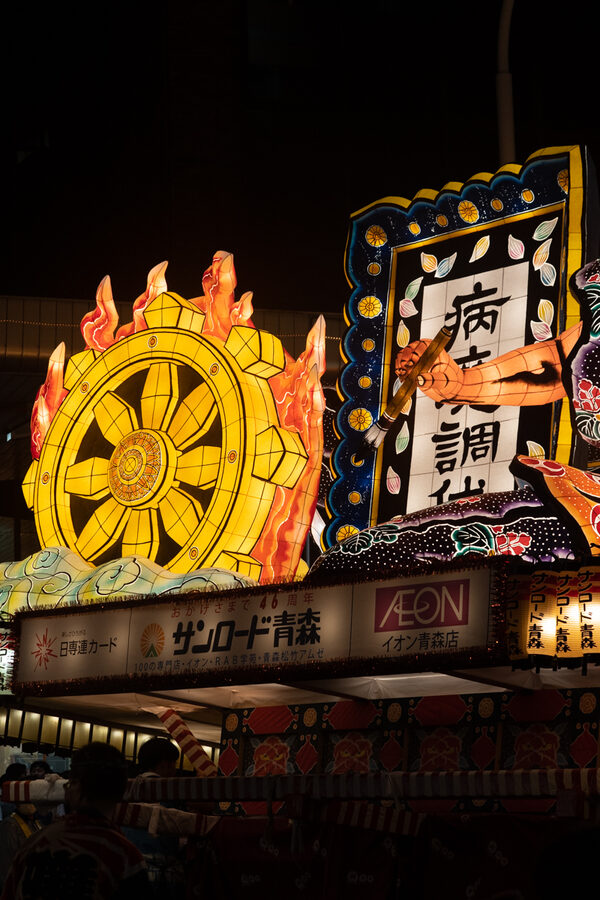
If you are interested in the regional and national mythological context that powers a lot of the Heike-Genji and Buddhist themes, the walkthrough of Japan’s Three Sacred Treasures and the wider Imperial mythology is a useful sidebar; many of the figures painted on Nebuta floats trace back to that same mythological corpus that powers the Imperial regalia and the founding myths.
Travel: how to actually get there
Aomori City sits at the top of Honshu, on Mutsu Bay, with a population of about 265,000 and a winter that holds the world record for snowfall in a city of its size (209 cm peak in 1945, no other city in the world matches it according to AccuWeather’s 2016 ranking). For Nebuta you do not care about the snow, but the geography matters because Aomori is far. You are not popping up from Tokyo on a day trip.
The fastest route from Tokyo is the Tohoku Shinkansen Hayabusa to Shin-Aomori, three hours and 20 minutes for a 720 km run. Shin-Aomori is one stop from JR Aomori (the original 1891 station, where the festival happens). You can also fly from Haneda to Aomori Airport in 80 minutes; the airport is 15 km south of the city, with a 35-minute bus connection. From Sapporo, the Hokkaido Shinkansen runs through the Seikan Tunnel to Shin-Aomori in roughly 1 hour 15.
Hotels in central Aomori sell out approximately six months ahead for festival week. By March of the festival year, you will already be looking at outlying ryokan or business hotels in Hirosaki, Asamushi Onsen, or Hachinohe, with daily JR commutes back into Aomori for the parade. If you book before October the year prior, the city-centre Daiwa Roynet, the Richmond, and the Hotel Route-Inn near JR Aomori all run roughly 18,000 to 25,000 yen per night during festival week, which is double their off-season rate.
Once you are in Aomori, everything is walkable. The parade route is 3.1 km. The harbour is 800 metres from JR Aomori, Wa Rasse is two minutes from the same station, and the Nebuta-goya construction sheds along the bay are 15 minutes’ walk west.
If you have a free morning, walk west along the harbour to the Aomori Bay Bridge for a panoramic shot of the city against Hakkoda mountain. The view is the same backdrop you will see in every photo of the seafront finale.
Aomori is a scallop city, so the food angle is straightforward. Holding a stick of grilled hotate (scallop) in soy butter while watching a 9-metre yokai roll past is the canonical Nebuta dinner, and the closer to the harbour you eat, the cheaper the scallops.
For a sit-down meal, Furukawa Fish Market opens at 07:00 and serves nokkedon, a custom rice bowl where you buy individual cuts of seafood at the market stalls and pile them onto your own bowl. Two of those a day, plus a parade, is the Aomori festival diet.
A festival in the wider Tohoku context
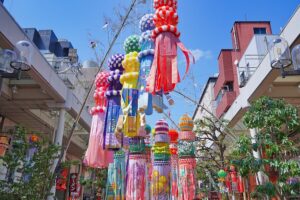
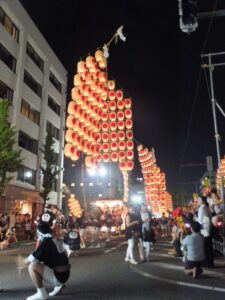
Aomori Nebuta sits inside the largest cluster of summer festivals in Japan. Together with Sendai Tanabata (August 6 to 8) and Akita Kanto (August 3 to 6), it forms what JR East markets as the Tohoku Sandai Matsuri, the “three great Tohoku festivals.” All three trace back to the same Tanabata-derived water purification rite.
Sendai built theirs around streamer poles. Akita built theirs around bamboo poles strung with lanterns balanced on a single dancer’s forehead. Aomori built theirs around the biggest, loudest float festival in the country.
The connection to Tohoku regional identity matters. The Boshin War of 1868 to 1869 was won by the southern Satsuma and Choshu domains, with figures like Saigo Takamori on the winning side, and the Tohoku domains (including the Tsugaru and Nanbu clans of Aomori) were on the losing side. The post-war Meiji government was, in the cold accounting of regional history, a southern occupation of the north for several decades. The Nebuta festival’s gradual public reframing of the Tamuramaro origin story (and its slow celebration of Aterui as a Tohoku resistance hero) is part of a much longer regional reclaiming of Tohoku identity that you can also see in Tohoku food, dialect preservation movements, and folk-music revivals.
If you want to stitch together a wider Tohoku itinerary, the guide to Senmaida covers the rice-terrace coastline that defines the Sea of Japan side of the region, and the piece on Kumano Kodo in Wakayama is a useful contrast for the Buddhist pilgrimage routes that share some folkloric DNA with the Tohoku festival cycle.
Photographing Nebuta: practical notes
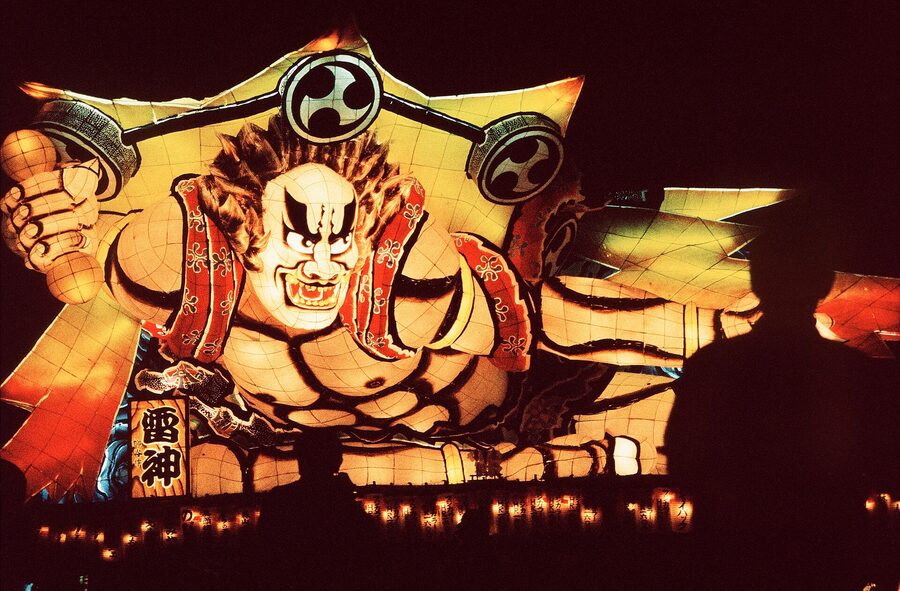
If you are turning up with a camera, accept up front that a phone shot will not capture this. The dynamic range is brutal: the float interior is brighter than a movie projector, and the surrounding street is darker than a parking garage. Auto exposure will either blow out the float face or crush the crowd to black. There is no middle ground.
For phones, use a dedicated camera app with manual ISO. Drop your ISO to 200 to 400 and let the float’s own light expose itself. For a real camera, an 85mm fast prime (f/1.4 or f/1.8) is your friend.
The float passes at jogging pace, you get one or two shots per float, and shutter speed below 1/250 will smear the haneto. The fireworks finale on August 7 is the easier shot since the floats are static on barges and you can use a tripod from the harbour walkway. The harder shot is the spinning float on Shinmachi-dori, which is what most people are after.
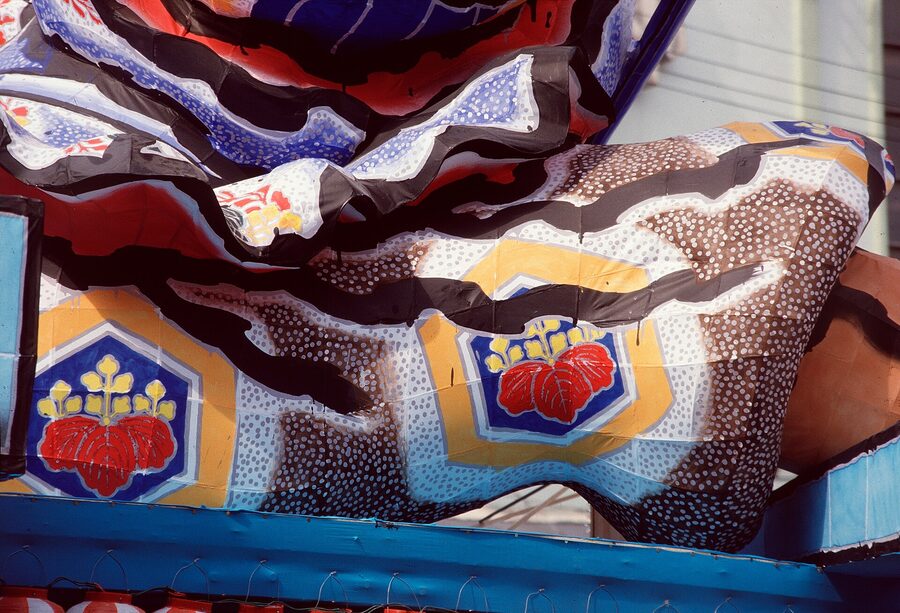
One thing nobody mentions: the washi paper itself is photogenic in a way that polyethylene plastic never will be. Try to get one shot where you are angled so the lights inside the float are visible through the paper as discrete points, not just as an overall glow. That picture is the entire selling point of why this festival looks like nothing else.
A short note on the post-festival economy
Once August 7 ends, the floats are mostly broken down. The two or three top prize-winners are saved for Wa Rasse Museum, and a few are donated to overseas exhibitions; Aomori Nebuta floats have travelled to Seoul (September 2005), Los Angeles (Nisei Week in 2007, 2009, and 2010), and several US Air Force base events.
Most of the rest are dismantled and the wire frames are recycled, while the painted washi is, in some neighbourhoods, ceremonially burned at sunrise on August 8. That morning ritual, the onga-no-toritori, is small enough that local TV barely covers it.
The financial cycle then turns immediately to next year. Nebuta-shi spend September and October sketching new designs, neighbourhood teams hold November fundraising events to commit a sponsor, and wire-bending starts in March.
The whole year is structured around the August window, in much the same way an Edo-period castle town would have been structured around the spring rice planting, which is, more or less, exactly what Aomori was 250 years ago.
Final thoughts and one piece of advice
I have been to maybe a dozen big Japanese festivals over the last 15 years. Aomori Nebuta is the only one where I came home with the chant still in my head three weeks later. It is not the prettiest festival in Japan; that is probably Kyoto’s Aoi Matsuri or the lantern night at Naka-Sengen.
It is not the most religiously profound; that is probably the Ise Shrine renewal cycle or the Kumano Kodo pilgrimages. It is not the most photogenic; that is probably the snow lanterns at Hirosaki Castle in February.
What Nebuta is, instead, is the loudest. It is a 1,200-year-old Tanabata-derived water purification rite that has been transmuted, by way of the 1980 cultural designation and the 1962 reframing of its prize structure, into something closer to an organised civic riot.
You can be inside it. You can wear the costume and join the parade. You can stand on the curb with a stick of grilled scallop and feel the drum bass in your sternum.
And then on the morning of August 7, while you are still nursing a mild beer hangover and a sore left calf, somebody is burning a 4-tonne paper warrior at sunrise on the bay, and that is just how the year ends in Aomori.
The piece of advice: if you are coming for the first time, come for August 5 to 7. Three days, and book your seat for August 6 (the most polished evening parade).
Walk to Wa Rasse on the morning of August 7 to see the brushwork up close, watch the day parade from 13:00, and get to the harbour by 18:30 for the seafront finale. Sleep, then make sure your alarm goes off at 05:30 on August 8 for the float-burning.
That is the festival you will remember. The rest is just packing.