The chant goes “Odoru aho ni miru aho, onaji aho nara odoranya son son” and a fair English rendering is: fools dance, fools watch, and since you are a fool either way you may as well dance. That is not a marketing slogan invented by a tourist board. It is the local self-description of Awa Odori, the four-day August festival that pulls roughly 1.3 million visitors into a city of 250,000 people on the island of Shikoku. Tokushima City basically empties of its parking spots and fills with dancers, lanterns, and out-of-town faces.
I have been to a lot of Japanese festivals at this point, and Awa Odori is the one that taught me what the word “matsuri” actually means in practice. It is not a parade. It is a city converting itself, for four days, into a single moving body of dancers, drummers, and a remarkable amount of cheap beer.
The English programme calls it the Awa Dance Festival, but the Japanese name 阿波踊り literally means “Awa dance,” and Awa is the old feudal name of what is now Tokushima Prefecture. Anywhere else in Japan, “the dance” would need a qualifier. Here, it does not.
The legend ties the start of the whole thing to 1586. That summer, the warlord Hachisuka Iemasa is said to have thrown an open drinking party in Tokushima to celebrate the completion of his new castle, and the locals got so cheerfully drunk that they began to weave through the streets in time to whatever instruments people had handy. Whether it really happened that way, I will get to. The story has been told for so long now that the city basically operates on the assumption that it did.
In This Article
- Where Awa Is, and Why It Matters
- The Hachisuka Legend
- What the Older Records Actually Say
- Indigo, Money, and Why Tokushima Could Afford to Dance
- The Ren System
- Two Dances, One Festival
- The Music
- Day vs Night, Nagashi vs Zomeki
- The Yakkodako Kite Dance
- The Dates: 12 to 15 August
- The 2018 Schism
- The Awa Odori Kaikan
- Awa Odori Outside Tokushima
- What It Costs You
- How To Watch If You Cannot Dance
- Getting There
- Why It Lasts
- One Last Note on the Chant
Where Awa Is, and Why It Matters
If you have not been to Tokushima, you can be forgiven. It sits on the northeast corner of Shikoku, the smallest of Japan’s four main islands, just across the Naruto Strait from Awaji Island and the Kansai mainland. It is a thirty-minute hop from Kobe airport, a two-hour express bus from Osaka, and an easy detour off the standard Kyoto-Hiroshima itinerary that most foreign visitors run. I usually drive, because Shikoku rewards a car.
The city itself is small by Japanese standards. The official population sits around 250,000, which makes the festival’s annual 1.3 million visitor count both extraordinary and slightly absurd. Imagine a Cleveland or a Newcastle that triples in size for four days every August and you have the rough idea. Hotels in central Tokushima sell out the year before, and the prefecture coordinates floor-mat lodging in school gyms for the overflow.
Awa, as a province name, predates Tokushima Prefecture by about 1,200 years. The old kanji 阿波 was the Nara-period administrative carve-up of this stretch of Shikoku, and even after Meiji-era reforms folded the province into Tokushima Prefecture in 1871, the cultural identity stayed.
People here will still say “Awa” when they mean the food, the dialect, and the dance. They will say “Tokushima” when they mean the city or the prefecture. The festival, as the name says, is Awa’s.
The Hachisuka Legend
The standard origin story is taught to every Tokushima schoolchild and printed on every souvenir tin. In 1586, the year Hachisuka Iemasa finished Tokushima Castle, he supposedly opened the gates and gave the townspeople sake on the house. They drank, they sang, they danced, they did not stop for three days.
According to one local version of the folk song “Awa Yoshikono Bushi,” the lyric runs: “What Awa’s Lord Hachisuka left to the present day is Awa Odori.” Pretty bold civic branding for a man whose castle is a ruin and whose family lost its domain in 1869.
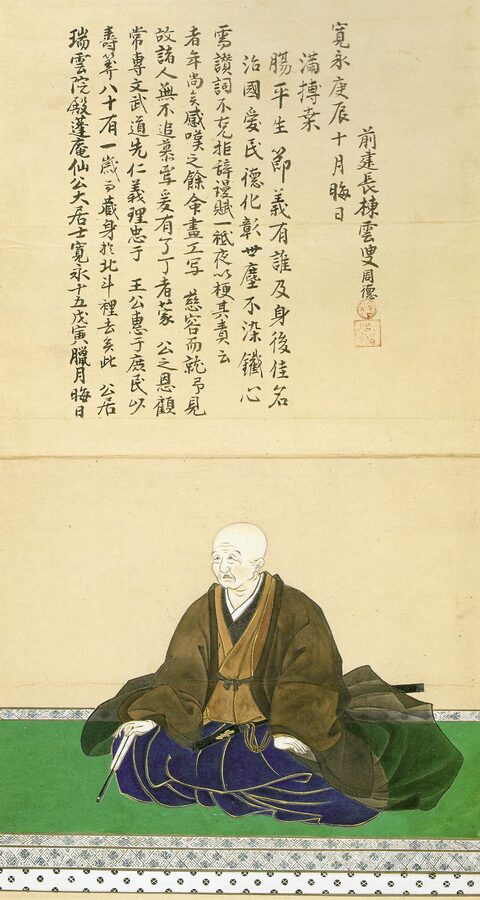
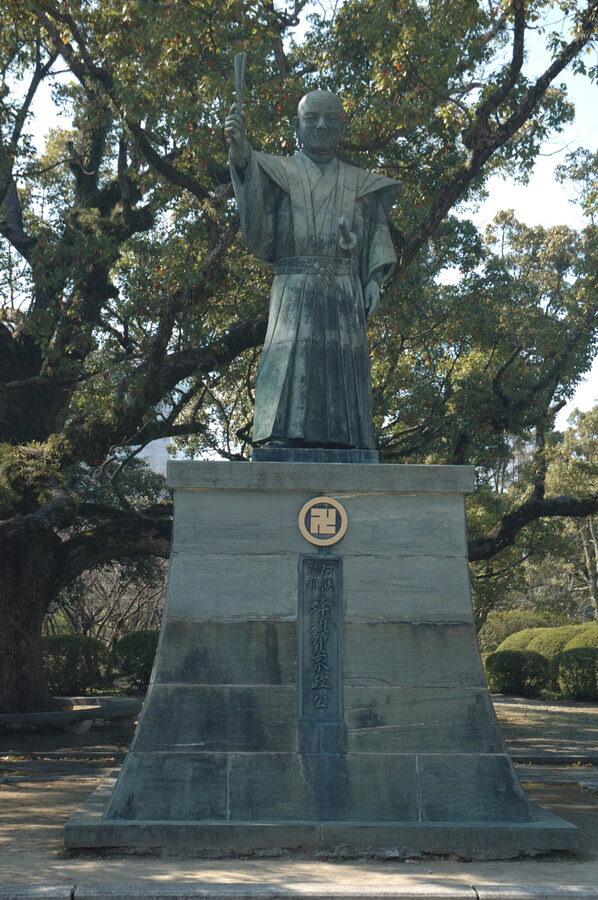
Hachisuka Iemasa himself is a real and well-documented figure. He was born in 1559 into a samurai family in what is now Konan, Aichi Prefecture, fought under Toyotomi Hideyoshi during the Shikoku campaign of 1585, and was rewarded with Awa Province for his service. Tokushima Castle went up on the mouth of the Yoshino River the same year. By 1586, the keep was largely complete and Iemasa had a young son who would later inherit the domain and serve under Tokugawa Ieyasu at Sekigahara.
The problem with the founding myth is that the story of the drunken castle-opening party only first appeared in print in 1908, in a Mainichi Shimbun newspaper article. That is more than three hundred years after the fact. The local historian Miyoshi Shoichiro, in his book Tokushima Hanshi Tokuhon, has pointed out that there is no concrete evidence for it predating that newspaper piece.
So what is going on? My read is that this is a textbook case of a 19th-century festival looking for a tidy 16th-century origin, finding a charismatic founder, and welding the two together. It is exactly the same move that turned the patchwork of Edo-era Bon dances at Gion into the modern Gion Matsuri brand. If you want a parallel, see my piece on the Gion Matsuri, which has its own carefully reconstructed origin narrative.
What the Older Records Actually Say
If you push past the legend and into the surviving documents, the picture sharpens. The earliest hard evidence for a large public dance in Tokushima comes from edicts issued by the Tokushima han, the feudal administration of the Hachisuka clan, against the dance. That is significant. Authorities only ban what is already a problem.
An edict from 1671 lays out three rules. The bon dance may be performed for only three days. Samurai are forbidden to attend the public celebration, and may dance only on their own estates with the gates shut.
No quarrels, no arguments, no carrying of poles, swords, or daggers, even wooden ones. By 1685 the authorities had added a midnight curfew and a ban on face coverings, an obvious response to dancers using the anonymity of a kasa hat to settle scores.
Three centuries later, after the Hachisuka samurai gave up trying to control the dance and after the Meiji reforms abolished the feudal class system, those same restrictions read like a confession. By the late 17th century the Tokushima Bon was already a citywide event running multiple nights, swallowing the samurai class along with the merchants and farmers, and producing enough trouble that the daimyo had to keep telling everyone, every few years, to please not stab one another.
What you are looking at, in other words, is a bon-odori that grew so big and so wild that it eventually outgrew its category and demanded a name of its own. The new name, “Awa Odori,” only stuck in the early 20th century when the prefecture decided to brand it for tourism.
Indigo, Money, and Why Tokushima Could Afford to Dance
The story I have not yet told you, and the one I think actually explains the festival, is about the colour blue. The Yoshino River basin north of Tokushima City was, from the 17th to the late 19th century, the most important indigo-producing region in Japan. The Hachisuka clan turned indigo into a state monopoly. Awa indigo, dyed into the cheap cotton of Edo and Osaka townsmen, made the merchants of Tokushima rich.
Rich merchants in Edo-period Japan did three things with their money. They built sake breweries, they sponsored temples, and they paid for entertainment. Tokushima’s merchant class brought in professional puppeteers, shamisen players, and dance troupes from Awaji Island and Osaka, and underwrote the local Bon as a kind of annual showcase of the wealth they were not allowed to display the rest of the year. By the late Edo period the festival was effectively the merchants’ yearly bonfire of the cash they could not legally turn into samurai status.
That is the part the founding myth leaves out. Awa Odori grew because the indigo trade gave it something to grow on. When that trade collapsed in the Meiji era, undercut by cheap German synthetic dyes and Indian indigo imports, the festival went into a slump for thirty years and was only revived in the 1920s as deliberate local tourism policy.
The same financial logic that built Tokushima also nearly killed its dance, and saved it again. The Hachisuka clan, by the way, were beneficiaries of the alternate-attendance system that defined the Edo political map. I cover that whole arrangement in my piece on sankin-kotai.
The Ren System
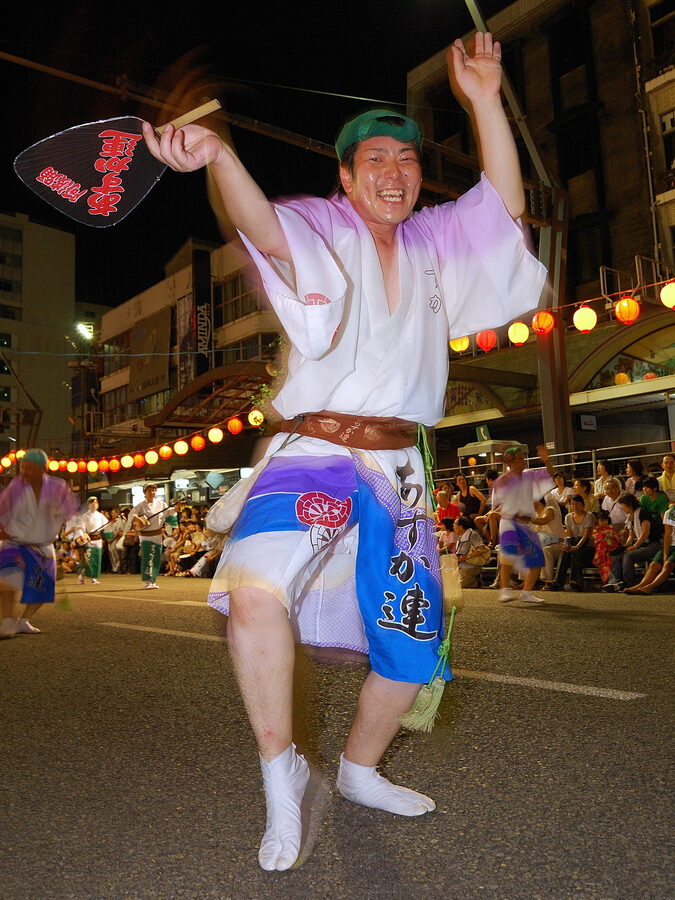
The basic unit of Awa Odori is not the dancer. It is the ren (連), the dance troupe. A ren is roughly thirty to a hundred people, divided between a dance section and a musicians’ section, with a leader who calls the formation changes.
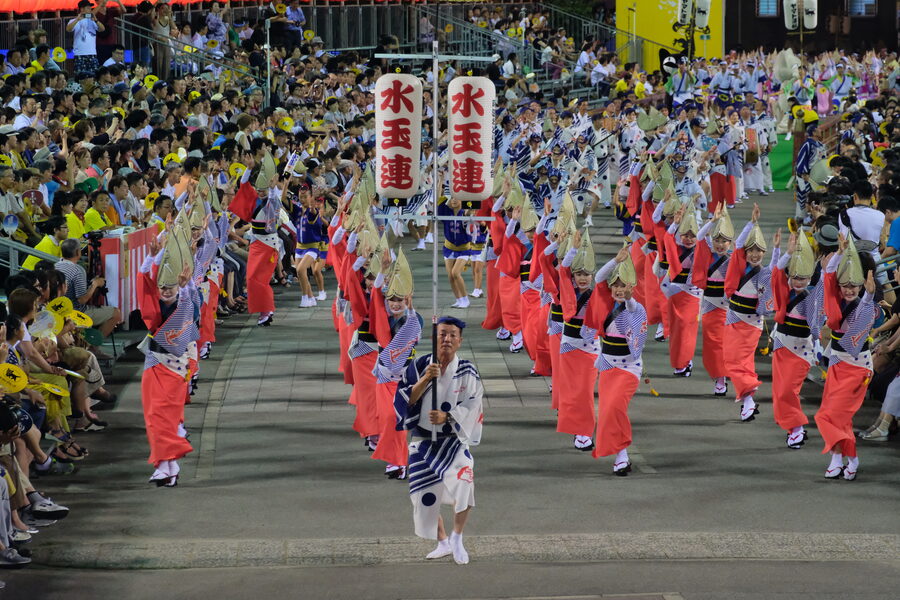
Tokushima has dozens of long-established registered ren, the so-called yumeiren, that have been around for decades. Mizutamaren, Tensui-Ren, Suikyo-Ren, Muso-Ren and a handful of others are recognisable to any local the way a baseball team would be elsewhere.
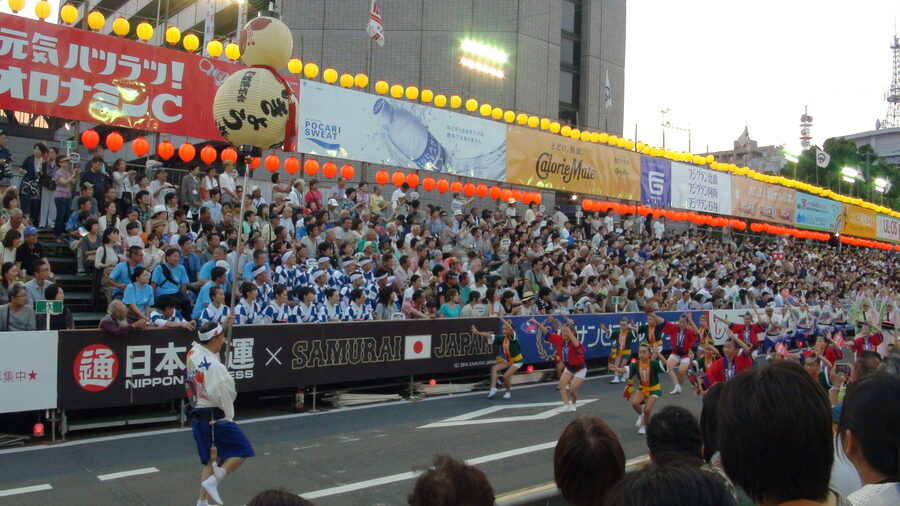
Then there are the niwakaren, the ad-hoc ren, formed each year by neighbourhood committees, schools, companies, ward offices, and, increasingly, foreigners on working visas who have decided to stay. A niwakaren might exist for one summer only. The official festival association estimates that on any given night during the four-day run there are over 800 separate ren parading through the streets.
Each ren has a uniform, a banner, and a colour scheme. Each one keeps its formation tight as it moves from one performance zone to the next. There are two big distinctions you need to keep straight.
The noboriren have professional-grade choreography and pay for a slot in the ticketed central stages. The kado ren simply parade through the open street zones, where you can stand at the kerb and watch for free. Both kinds are real Awa Odori. The first is more polished, the second is more fun.
Two Dances, One Festival
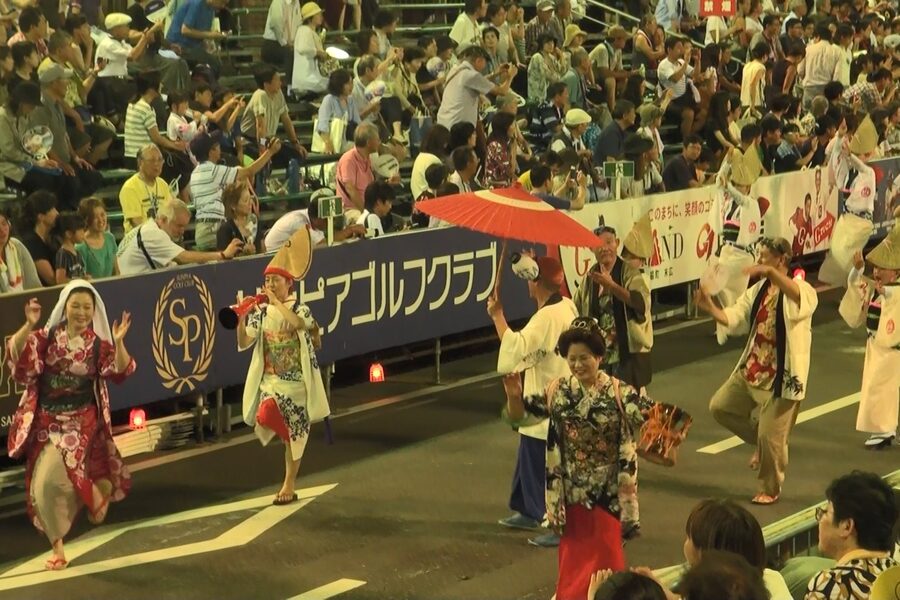
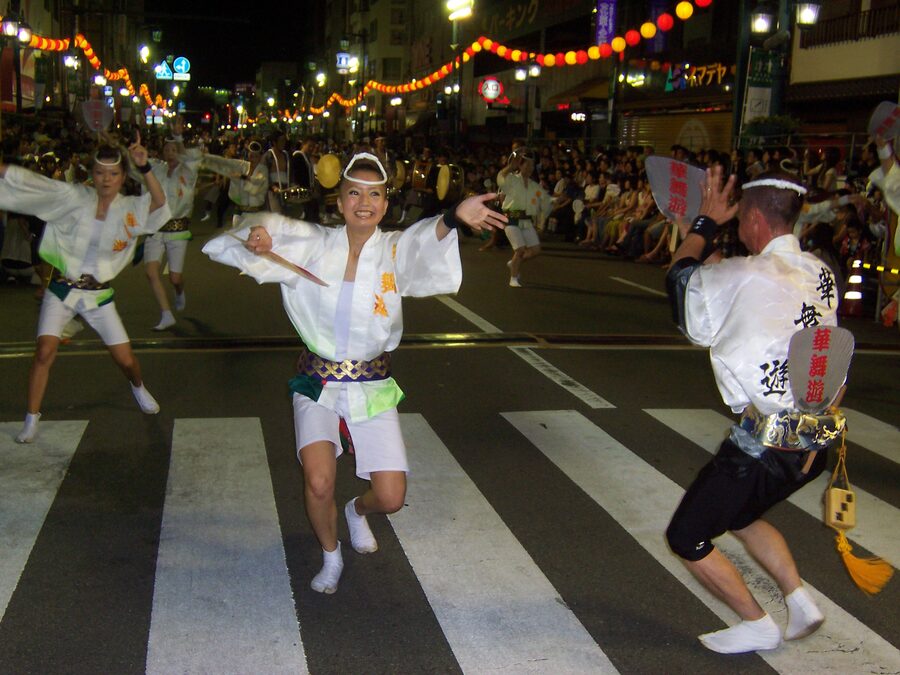
Awa Odori is not a single choreography. It is two, performed side by side, by men and women in the same ren. The men’s dance and the women’s dance use the same basic step pattern, but the body shape, the costume, and the energy level are different enough that an outsider can read the gender of a dancer from a hundred metres in the dark.
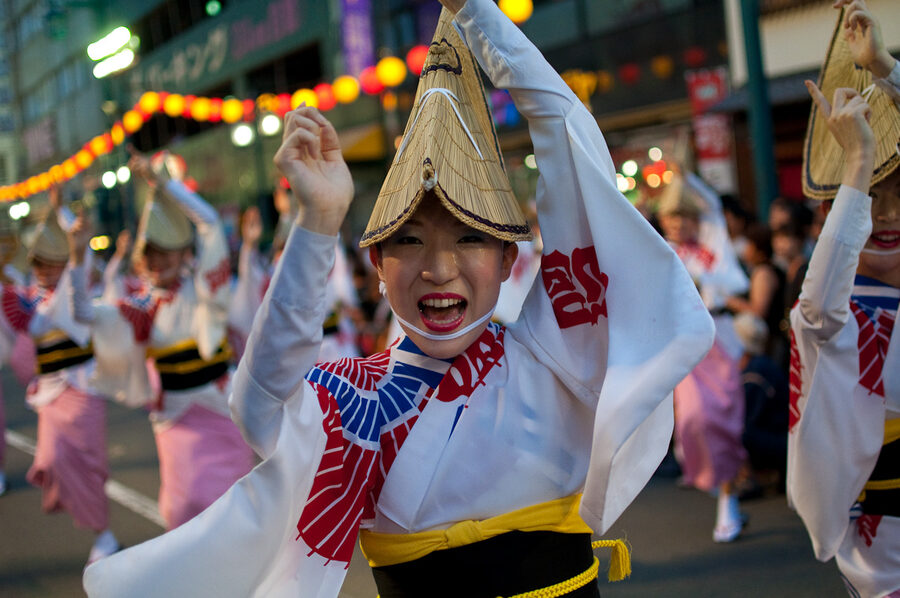
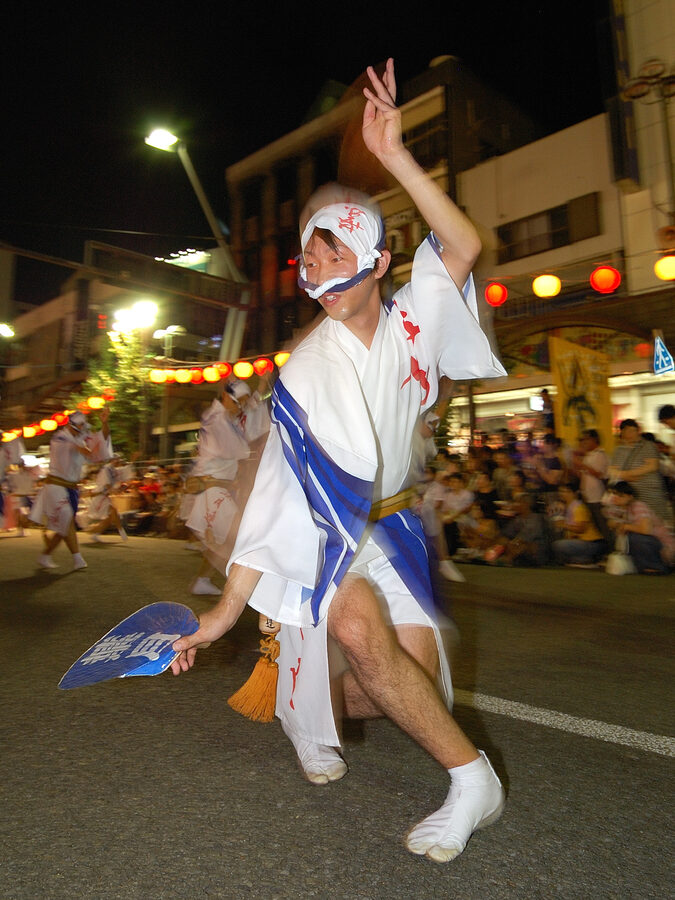
The men’s dance is called otoko odori. The men crouch low, knees pointing outwards in a wide demi-plie, arms held above the shoulders with the wrists flicked forward and back. The right foot and right arm move forward, the toes touch the ground, then the right foot crosses over the left.
Then the same on the other side. The hands draw triangles in the air with sharp wrist flicks. The whole thing reads as deliberately rough, deliberately drunk, deliberately a parody of dignified motion. It is the dance the chant is talking about when it says “fools.”
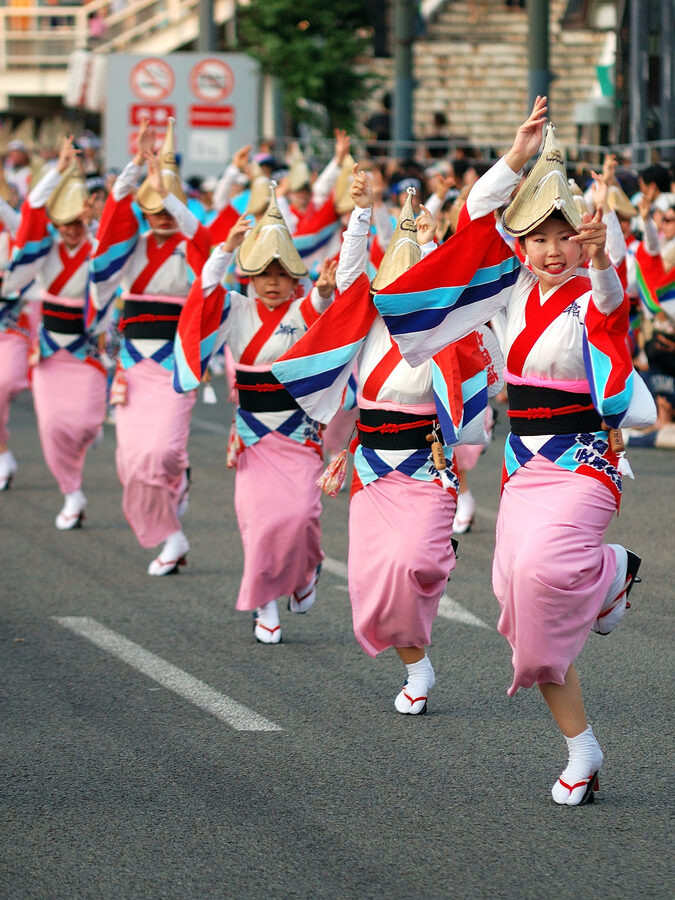
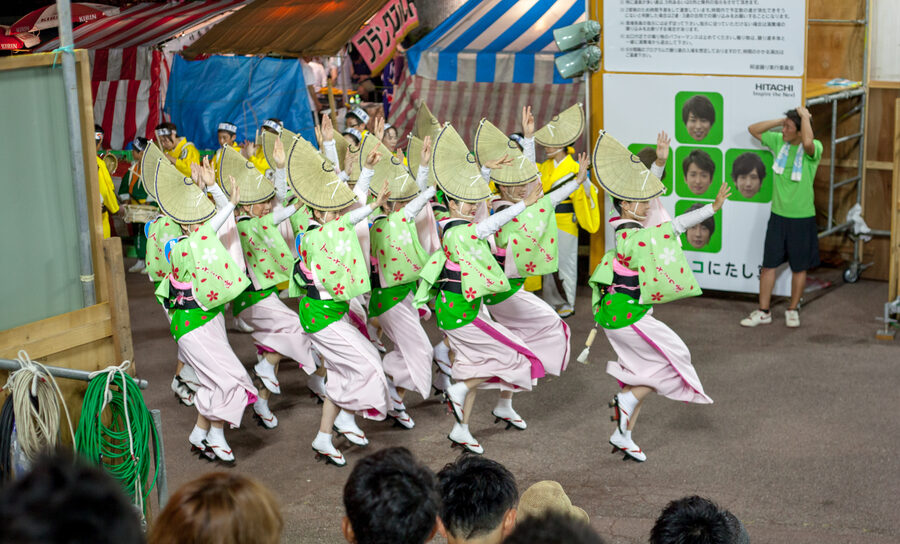
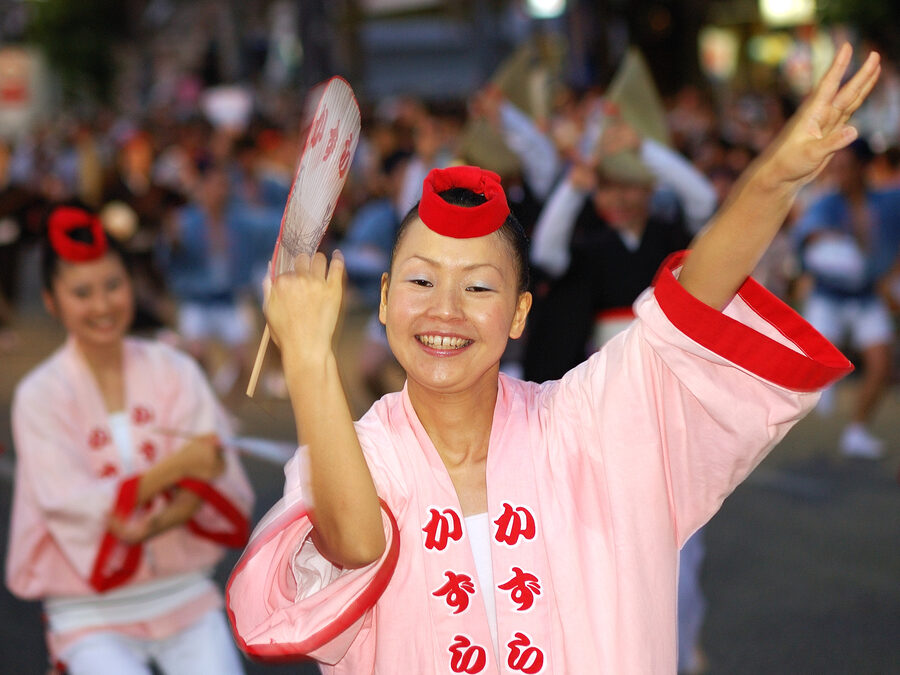
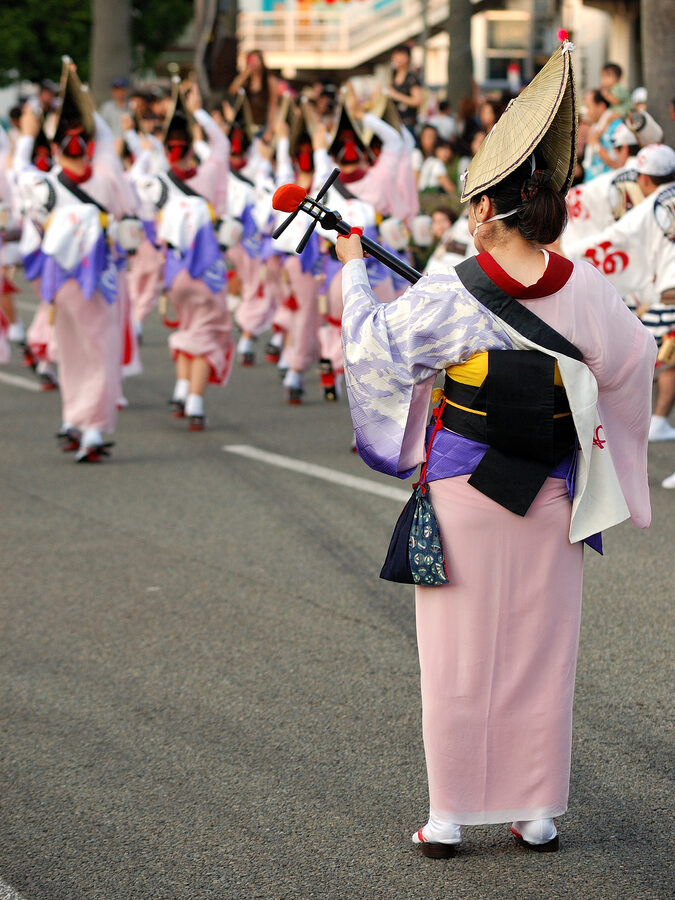
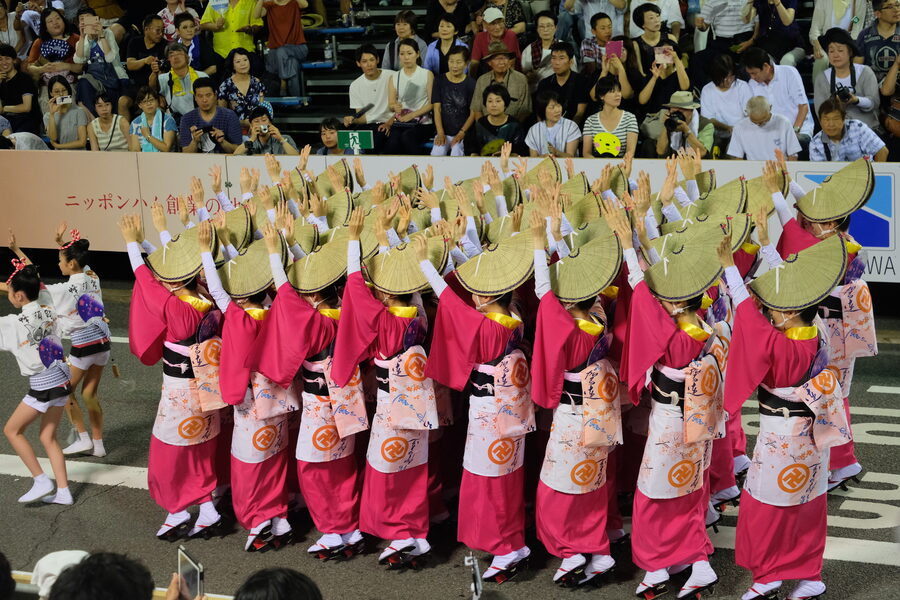
The women’s dance, onna odori, looks like the visual opposite. The women hold the body upright, arms reaching straight up to the sky, kimono cinched tight enough that the only forward step possible is small and stylised. The kick behind is sharp and clean.
The dancers hold themselves on the toes of their geta sandals so the centre of gravity stays high. From the front, a women’s line looks like a slow-rolling field of straw hats and lifted hands. From the side, you can see the geta tipped permanently forward.
The technical reason for the contrast is straightforward. The kimono and the obi physically restrict the women’s stride, so the choreography exploits that restriction and turns it into elegance. The men, in contrast, wear loose happi coats and short stepped trousers, so they can drop into the low crouch and stay there.
Children and teenagers usually dance the men’s version regardless of gender. In the last twenty years it has become more common to see adult women, especially in their twenties, choosing the men’s dance, often with cropped costumes and the same wide stance.
The Music
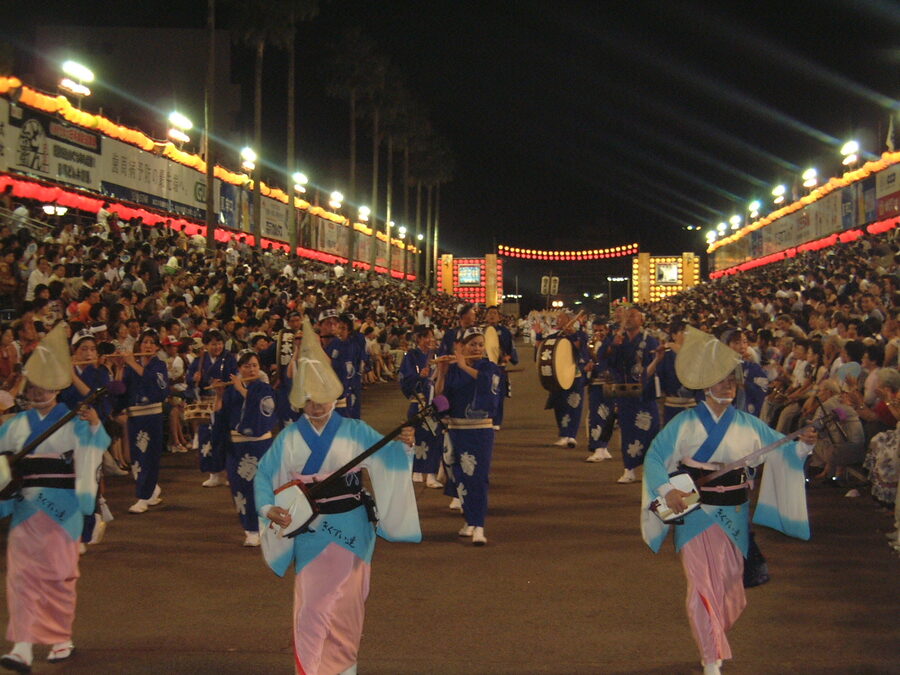
The accompaniment is called narimono, literally “ringing things.” A standard ren brings four instruments and a singer or two. The shamisen, a three-stringed lute, carries the melody.
The shinobue, a bamboo transverse flute, sits above. The taiko, a barrel drum, runs the bass. The kane, a small bronze hand-bell struck with a horn mallet, supplies the metallic top end that you can hear from blocks away.
The rhythm is in two-beat time and a brisk 110 to 130 beats per minute, somewhere between a brisk walk and a slow run. The chant that drives the column forward is the one I started this article with, “Yatto sa, yatto sa, yatto yatto.” Those words have no semantic meaning.
They are hayashi kotoba, call-and-response phrases that exist purely as oral percussion. The dancers and the crowd shout them back at each other, and the crowd’s volume tells the ren how much energy to bring.
The melodic song is “Awa Yoshikono Bushi,” a localised version of an Edo-period popular song called Yoshikono Bushi. The melody has a shaggy genealogy. It seems to have started in Kumamoto in the south, travelled north to Ibaraki in the Kanto, then spread back down through Nagoya and Kansai before lodging in Tokushima as the local matsuri tune.
Most ren only sing it during stationary performances, often at intersections or in front of the ticketed grandstands. The street parade itself is mostly the chant, the kane, and the taiko.
Day vs Night, Nagashi vs Zomeki
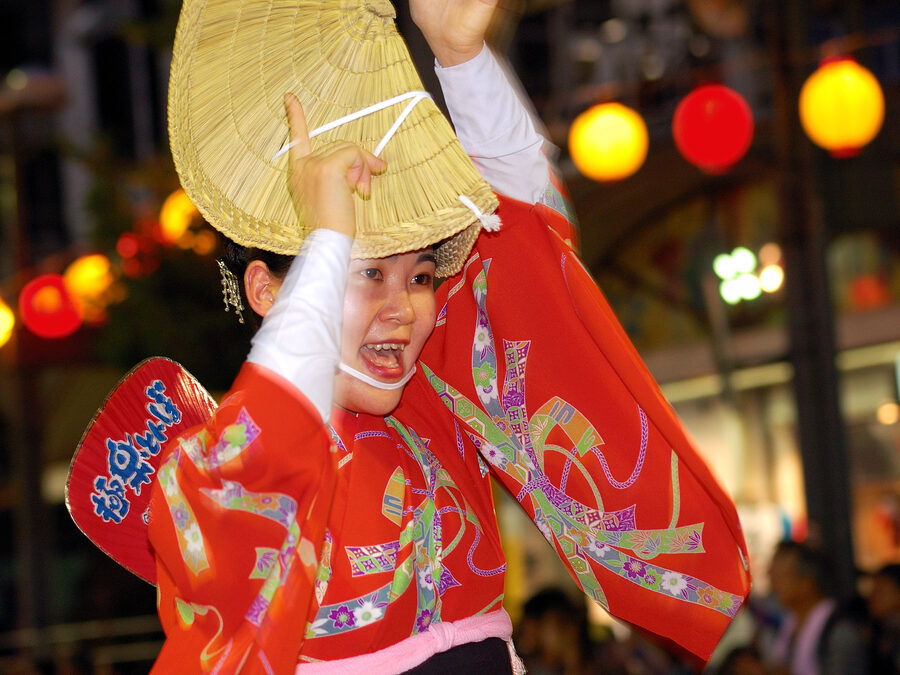
If you only watch the daytime sessions, you have only seen half of Awa Odori. The day dance is called nagashi. It is restrained, processional, formal.
Ren walk through the streets in tight formation, hold their poses, perform a stationary set at each grandstand, and move on. The official viewing zones run from about 6 in the early evening, but the daylight sets are noticeably calmer than what comes after.
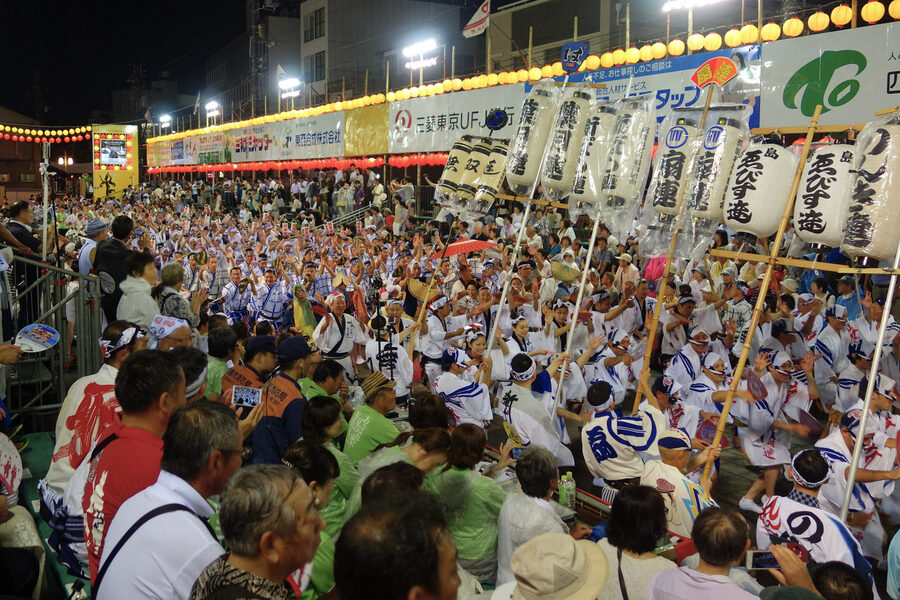
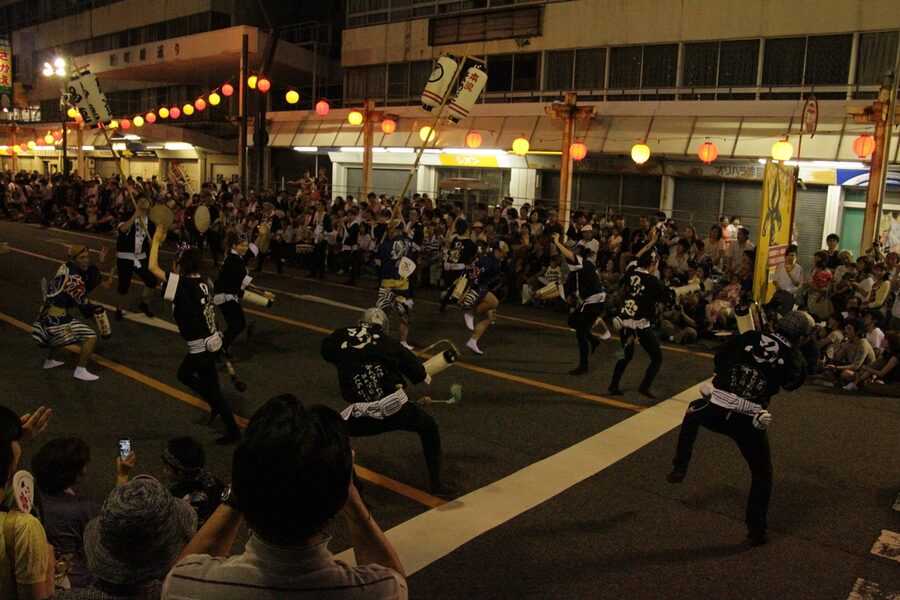
After 9pm something changes. The lanterns light up, the parade column thickens, and the dance switches mode to zomeki, a word that translates roughly as “frenzy” or “uproar.” The pace doubles.
The dancers stop holding the strict formation and start improvising. The crowd gets pulled in. By 10pm the chant of “yatto yatto” is a continuous wall of sound and the spectator zones have basically dissolved.
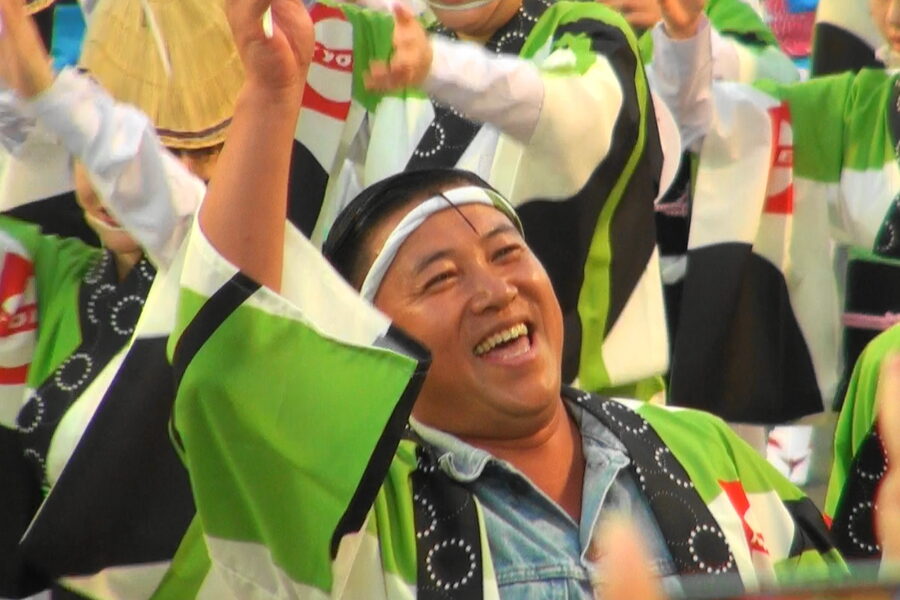
This is the part where the chant about being a fool stops being a slogan and starts being a fact. If you stand on the kerb during the zomeki phase, sober, watching with your hands in your pockets, you will get hauled into the column by a passing dancer. I have been pulled in twice.
The first time I tried to follow the steps. The second time I stopped trying and just kept up, which, I think, is what the entire chant is telling you to do.
The Yakkodako Kite Dance
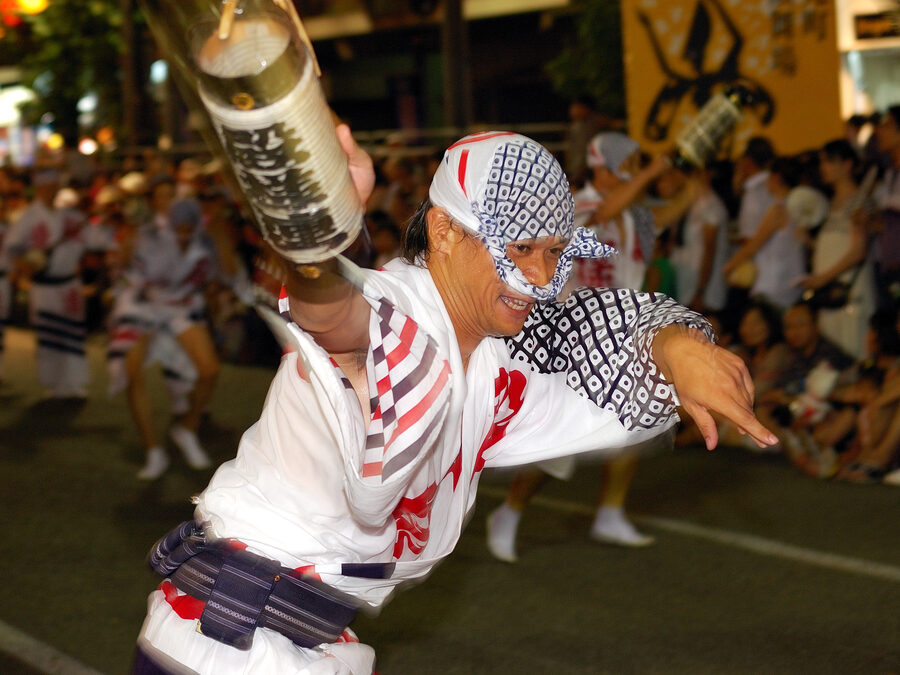
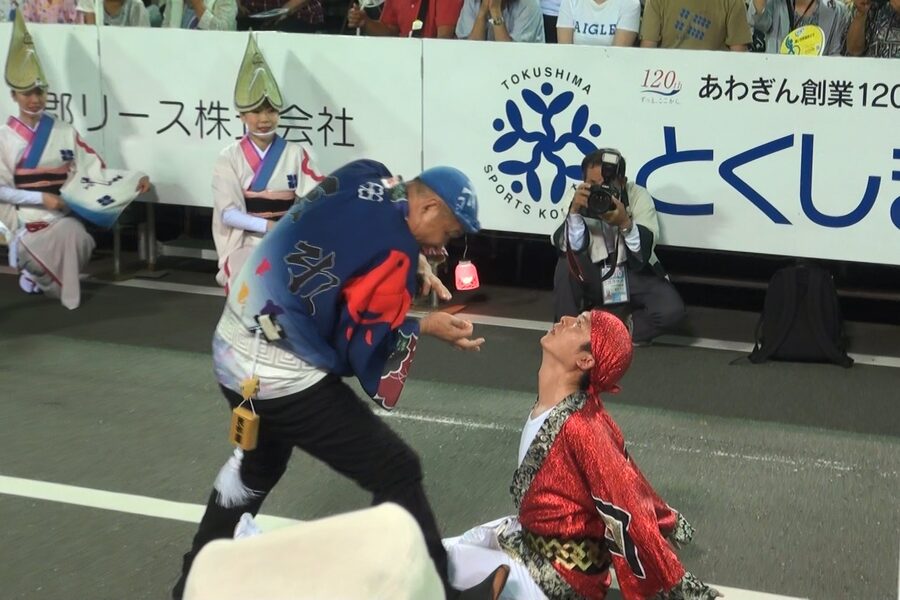
Some of the larger ren add a specialty number called the yakkodako odori, or kite dance. One brightly costumed acrobatic dancer plays the kite, darting forward and back, turning cartwheels and somersaults at speed. Behind him, a line of crouching male dancers represents the kite string, weaving in a long sinuous shape down the street. A man at the far end pretends to be the kite-flyer, miming the tug and release of an invisible string.
The yakkodako is loose and improvisational compared to the formation columns of the women’s and men’s dances. Some ren have a single named kite specialist who has been doing it for twenty years and is recognisable on sight to local fans. Watching a really good one in mid-flight is, no exaggeration, watching one of the strongest physical performers in Japan.
They are usually small, lean, and somewhere between thirty and forty years old. By forty-five they have aged out and are coaching.
The kite dance is the moment of the night when Awa Odori briefly stops being a synchronised parade and turns into a sport-circus performance. It also tells you something about how much room the festival leaves for solo virtuosity inside an otherwise group format.
The Dates: 12 to 15 August
The official festival runs four days, from 12 to 15 August every year. The dates are not random. Bon, the Buddhist festival of the dead, is celebrated in most of Japan from 13 to 15 August on the new calendar, and Awa Odori is technically a Bon dance, the local form of bon-odori. The festival’s 12 August opening is a one-day extension that the city tacked on in the modern era, partly to spread the visitor load and partly to give the ren a warm-up night.
The original Bon dates in the lunar calendar fell in the seventh lunar month, roughly mid-August in the modern reckoning. When Japan switched calendars in 1873, Bon split into three observances around the country. Some regions kept the lunar date.
Some moved Bon to mid-July. Most settled on the so-called tsuki-okure, a one-month delay that landed Bon firmly on the 13th to 15th of August new style. Tokushima went with the August schedule, which is why the festival sits where it does.
This timing is also why hotel rooms in Tokushima during those four nights are booked out a year in advance, often longer for the central and prefectural lodges. Trains from Osaka run extra services. The Awaji-bound buses are reinforced.
If you want a room and you have not booked by April, you are in a school gym. I have done a school gym once. It is fine, and it is cheap, but bring earplugs.
The 2018 Schism
In 2018 something genuinely strange happened to Awa Odori, and it is worth knowing about because it nearly broke the festival. For decades the four-day event had been organised by a coalition of Tokushima City government and the Awa Odori Promotion Association, which represented the registered ren. In the spring of 2018, the city’s then-mayor announced he was cutting ties with the Promotion Association over a long-running financial dispute about ticket revenue from the central paid bracket.
The Promotion Association responded by saying it would run its own competing version of the festival on the same August dates, in the same city, with most of the famous ren. The city stuck to its plan and ran an “official” festival with a smaller roster. For a few weeks in the spring of that year it looked like Tokushima was about to host two simultaneous, mutually hostile Awa Odoris, with the same lanterns and the same costumes and the same chant, on either side of the same river.
In the end an emergency mediated settlement put one festival back on, but the bad feeling between the city office and the registered ren took years to subside. The dispute also exposed how much of Awa Odori’s modern economic logic depends on ticketed grandstand seats, official broadcast deals, and television rights, all of which were the actual stakes underneath the 2018 fight. It is a useful reminder that these enormous festivals are also enormous businesses, in the same way the floats of the Tsushima Tenno Matsuri are also enormous engineering projects. Tradition and balance sheets coexist.
The Awa Odori Kaikan
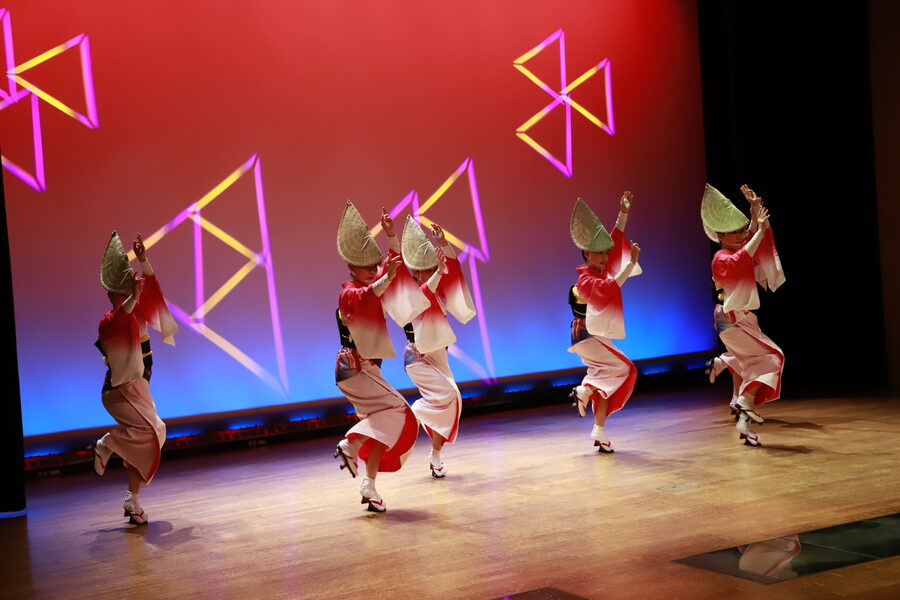
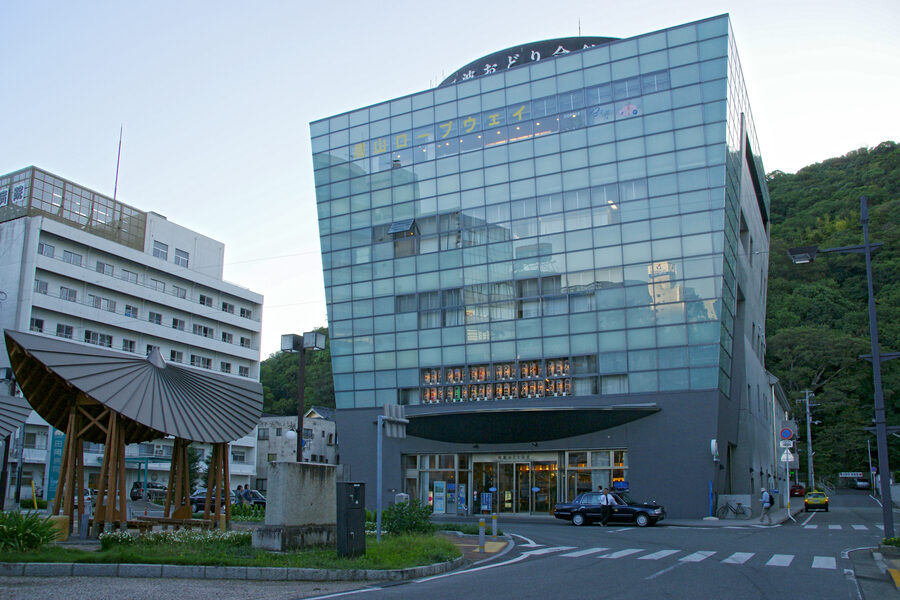
If you go to Tokushima outside the festival window, which is most weeks of the year, you can still see the dance. The Awa Odori Kaikan, the Awa Dance Memorial Hall, sits at the foot of Mount Bizan in central Tokushima. It runs daily live performances by professional ren on a small stage, plus a museum on the upper floors with costumes, instruments, and the history of the festival back to the Edo period.
The hall opened in 1999 and absorbed the older, smaller Awa Odori Museum collection. The daytime show is led by a different ren each rotation, including some of the famous yumeiren if their schedule is light, and ends with an audience-participation segment where the staff hauls visitors out of the seats and walks them through the basic men’s step. I have done that step in the Kaikan four times now and I am marginally less bad at it each time.
The building’s roof connects to the cable car up Mount Bizan, which is a cheap fifteen-minute round trip with a panoramic city view from the summit. If you have a half day in Tokushima off-season, the Kaikan plus the Mount Bizan ropeway plus a stroll through the Hyotanjima island in the river is enough to fill the afternoon. I cover the layered look of Japan’s gardens elsewhere in my guide to Japan’s greatest gardens if you want to extend the day with a strolling-pond garden.
Awa Odori Outside Tokushima
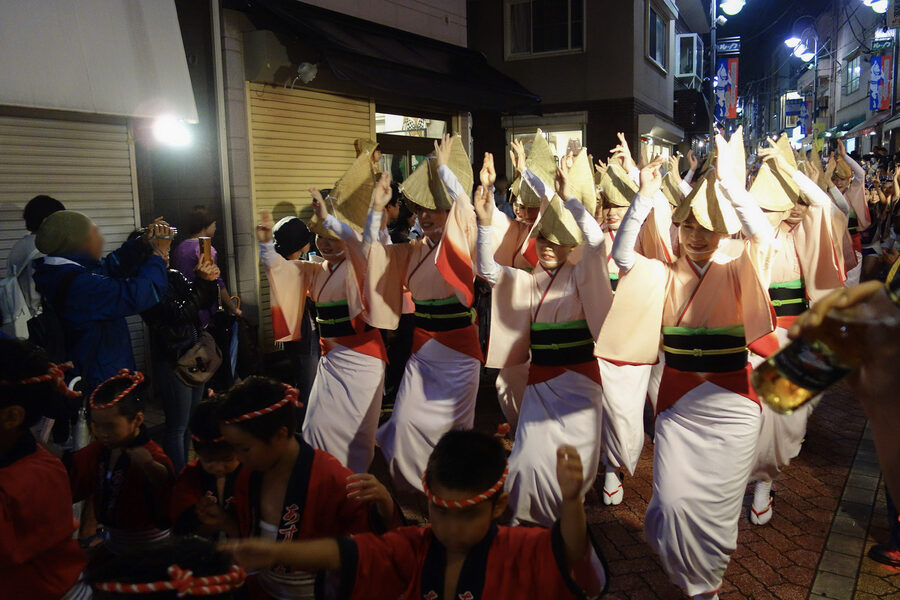
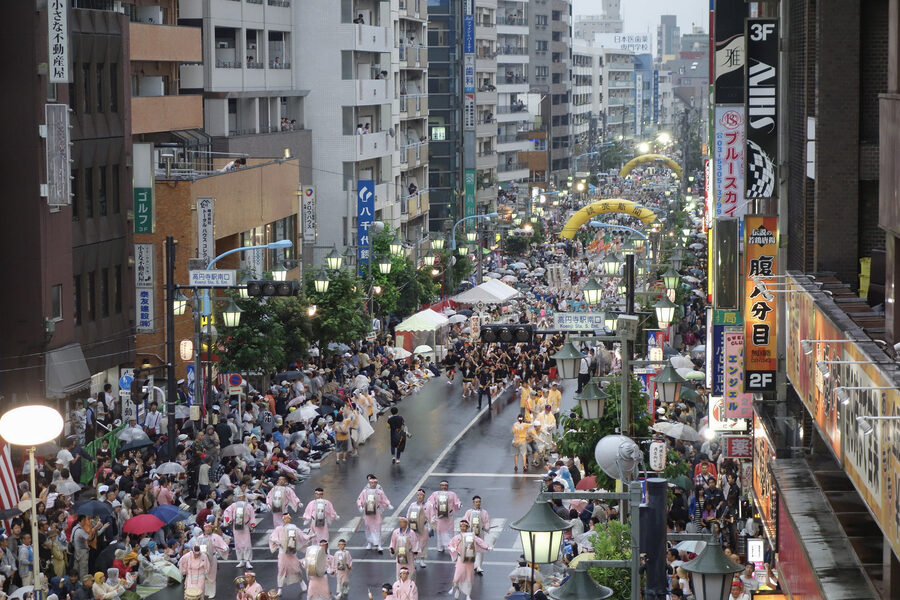
If you cannot make it to Tokushima in August, you have a back-up plan, and it is in suburban Tokyo. The Koenji Awa Odori, held the last weekend of August in the Koenji neighbourhood of Suginami Ward, started in 1957 when migrants from Tokushima Prefecture set up a small parade to combat the post-war economic gloom in their adopted city. By the 1970s it was the largest Awa Odori outside Tokushima.
Today it draws around 1.2 million visitors over two days, with about 12,000 dancers in 188 ren. That makes it the second-largest Awa Odori in Japan and, depending on how you count, the fourth-largest summer festival nationwide.
Koenji’s geography is different from Tokushima’s. The Tokushima parade runs along wide central avenues and along the river. Koenji’s parade runs through the narrow shopping streets around Koenji station, which means you are almost on top of the dancers no matter where you stand. The acoustics of the kane bells off the storefront awnings is, frankly, more intense than in Tokushima, where the sound disperses more.
There is also a Saitama version, the Minamigoto Awa Odori, held in Koshigaya on the last weekend of July. It is smaller, with fewer registered ren and a regional rather than national draw, but it predates Koenji’s by a few months in the 1955 calendar and locals will tell you so at length. There are minor Awa Odoris in many other Japanese cities too, mostly seeded by Tokushima migrant communities sometime between 1955 and 1980. The festival, like the indigo trade that funded it, has a habit of travelling.
What It Costs You
Awa Odori is partly free and partly paid, and the choice between the two changes what you experience. The free version means standing on the kerb of one of the major shopping streets and watching the parade pass. You can do this for as long as your legs hold up, and you will see most of the famous ren in rotation. There are also ad-hoc free zones where you can dance yourself, mostly on the city’s east side.
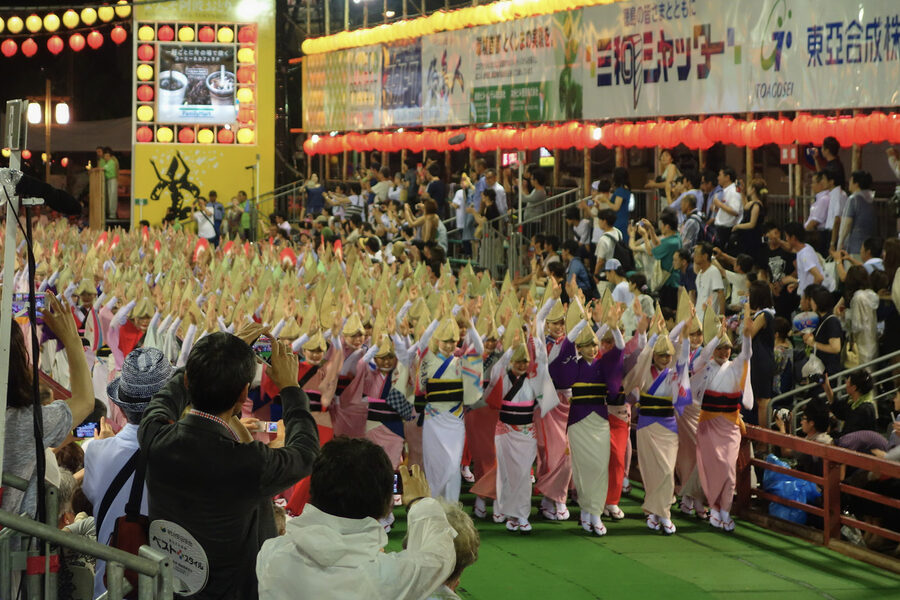
The paid version means a ticket to one of the seated grandstands. There are five main seated venues, all clustered along the central avenue, with prices in 2026 running roughly 2,000 yen for a back row to 6,000 yen for a front row in the prime central bracket. You sit, you watch a ninety-minute structured show, and the most famous registered ren rotate through.
Expect English announcements between ren. Tickets sell through Lawson convenience stores from late June and the most popular slots disappear in 48 hours.
Realistically, the smart play is one paid show on one night for a ninety-minute concentrated dose, and free street watching the other three. The paid show gives you the polished version. The free street gives you the chaos.
The chant is honest about which one is the real festival. Travel cost from Tokyo round trip plus three nights in Tokushima will run you around 80,000 yen if you book early, more if you do not.
How To Watch If You Cannot Dance
You do not need to know the steps to enjoy Awa Odori. You do, however, need to know how to watch it. The single most important thing is to pick a single corner and stay there for at least an hour.
Ren rotate through the parade route on a roughly 90-minute cycle, so you will see seven or eight of the registered ren pass within a single sitting. If you keep walking, you keep starting and re-starting the cycle on different ren and you never see the same group twice.
The second thing is to pick your side of the street based on the music. The narimono section walks at the back of each ren, so if you stand on a corner facing the direction the column is moving, the dancers reach you first and the musicians arrive last. You hear the visual before the soundtrack.
If you stand on the opposite corner, the soundtrack reaches you first, by about ten seconds. I prefer the second view. It feels like the music summons the dancers. Other people prefer the first because the dancers establish the visual frame and the music sweeps in to confirm it.
The third thing is hydration and energy. Tokushima in mid-August is regularly 32 to 34 degrees Celsius and humid. You will sweat.
Buy a ¥110 plastic water bottle from any vending machine and refill it as needed. The convenience stores around the parade routes run dry of cold drinks by about 8pm on the busiest nights.
Bring a small towel. Wear light footwear. Plan to be on your feet for four hours minimum.
Getting There
Tokushima is on the east coast of Shikoku, served by the Awa Express bus from Osaka, the Marine Liner from Okayama via the Seto Ohashi Bridge, the local airport with regular flights from Tokyo Haneda, and a ferry from Wakayama. The bus from Osaka is the cheapest option at around 4,000 yen one way and the most reliable, since it leaves every thirty minutes from Umeda’s Hankyu bus terminal and runs across the Akashi Strait Bridge to Awaji Island and then over the Naruto Bridge into Tokushima. Travel time is about two and a half hours, end to end.
If you fly, Tokushima Airport is twenty-five minutes from central Tokushima by airport shuttle bus. JAL and ANA both run the Haneda-Tokushima route at roughly 11,000 to 18,000 yen depending on advance purchase. During the festival they add extra flights, but the prices roughly double for the four festival days.
Book the airport shuttle at the airport bus counter on arrival. It runs every fifteen minutes during festival hours.
The festival is on between 12 and 15 August. If you are landing on a flight on 12 August, you will be arriving at the same time as roughly 200,000 other people. Plan accordingly.
I usually arrive on 11 August, settle in, and use that day to walk the parade route in daylight to identify which corner I want for the festival itself. By the time the first ren leaves the staging area at 6pm on 12 August, you will be glad you did the recon.
Why It Lasts
Awa Odori has been running, in some form, for at least four hundred years. The 1586 Hachisuka housewarming legend may or may not be true, but the 1671 ban-edict is real, and that means the dance was already a public-order problem 355 years ago. It survived the indigo collapse.
It survived the Meiji-era cultural reforms that destroyed many other regional festivals. It survived World War II, which interrupted it for four years before the GHQ allowed it to resume in 1946. It survived the 2018 schism. It is now in better shape than it has ever been.
I think the reason is that it solves a problem most modern Japanese festivals do not. Most matsuri are participation-light: the dancers and musicians are a designated subset, the rest of the city watches. Awa Odori is participation-heavy.
The chant explicitly invites the spectators in, the niwakaren format means that any neighbourhood committee can field a team without prior approval from a thousand-year-old shrine, and the central bracket is structured around continuous rotation rather than a single climactic moment. There is no point at which the festival peaks and then ends. It just keeps going for four nights and then stops.
That structure rewards staying. Most of the visitors I know go back a second year.
The festival is also a one-of-one in terms of the men/women duality of the choreography, the indigo-merchant origin story, and the casual way it parodies its own seriousness with the “everyone is a fool” chant. It is, to my mind, the best argument for Shikoku as a destination, full stop. If you have only one matsuri in your life, this is the one.
While you are working out your 2026 festival schedule, the cherry blossom run earlier in the year is, of course, its own pilgrimage. I have written about that arc in my cherry blossom guide. Add Awa Odori in August and you will have the bookends of the Japanese festival year covered. If Aomori’s Nebuta in early August also makes your list, see my Aomori Nebuta Matsuri piece for the warm-up.
One Last Note on the Chant
The four lines you keep hearing are: “Odoru aho ni, miru aho, onaji aho nara, odoranya son son.” Word for word: dancing fool, watching fool, same fool either way, not dancing is a loss. The English phrasing on every souvenir tin softens the second half, but the original Japanese is more pointed.
Son son means “loss, loss.” Not a tie. Not a draw. An actual missed opportunity.
The chant is therefore making a real claim, not just a rhetorical flourish. It is saying that the only mistake is to stay still. Whether you are a polished noboriren dancer with a year of formation training, or a niwakaren rookie who is two beers in, or a tourist on the kerb who joins a passing column for ninety seconds before peeling off, you are doing the thing the festival exists to do.
The watcher is not exempt. The watcher is just a slower fool.
I have thought about that line a lot since the first time I went. I think most foreigners hear it as a quaint slogan. The locals, when you sit in a Tokushima izakaya at 1am after night two, do not hear it that way at all.
They hear it as a dare. By the time you have had the dare addressed to you, in person, by a 64-year-old shamisen player, on the kerb of Higashi Shinmachi, you will know whether you accept it. I keep accepting it. You may as well.