Imagine being the lord of Kaga Domain — the richest daimyō in Japan after the shōgun himself, with a rice income of a million koku a year, a castle at Kanazawa, and a territory larger than several European kingdoms of the same era. Every second year, you packed up 2,500 to 4,000 of your retainers, plus their horses, their palanquins, their doctors, your personal tea-master, your falconer, your cooking equipment and your portable bath, and you walked them 480 kilometres down the Nakasendō to Edo. You did this twice each cycle, out and back, at an average pace of 30 to 40 kilometres a day, on foot. The procession took two weeks one way. At Oyashirazu, where the road clung to sea-cliffs above the Sea of Japan, you sometimes had to hire 700 locals to stand in the surf and break the incoming waves so your column could cross. And the cost of doing this, including maintaining your Edo mansion while you were there, consumed somewhere between 50 and 75 percent of your entire domain’s annual revenue.
This is sankin-kōtai — the alternate attendance system that structured Tokugawa Japan for 232 years. If you are a casual student of Japanese history, you already know the name. What the name usually fails to convey, and what the surviving Kaga domain travel journal called the Go Dōchū Nikki drives home with brutal specificity, is the sheer operational weight of the thing. This was not a diplomatic formality. This was an economic and logistical discipline imposed by the shōgun on every feudal lord in Japan for nearly a quarter of a millennium, and the bill came close to breaking the country twice. It also built Edo into the biggest city on earth, drained the domains’ revolutionary potential into road construction and inn-keeping, and, partly by accident, created the economic and cultural preconditions for the Meiji Restoration that eventually demolished the system that had produced them. The story is more interesting than the usual single paragraph it gets.
In This Article
- Where the system came from — three centuries of setup
- The rules — one year home, one year Edo, wife and heir never leave
- The logistics — an army on the road, twice a year
- Shita-ni, shita-ni — what happened when commoners saw the column
- The honjin — sleeping with a sword in hand
- Sekisho — the window on the palanquin opens
- The decline — by 1800 nobody really believed in it any more
- The accidental legacy — how a commute built a capital
- Where to see sankin-kōtai today
- Kusatsu-juku Honjin — Shiga
- Futagawa-shuku Honjin Museum — Toyohashi, Aichi
- Hakone Sekisho — Kanagawa
- Imaichi-shuku preserved road — Tochigi
- The Namamugi Incident monument — Yokohama
- Closing — the system that built its own grave
Where the system came from — three centuries of setup
Sankin-kōtai did not spring fully-formed from Tokugawa Iemitsu’s head in 1635. It has a deeper lineage, which matters because it explains why the Edo samurai class accepted it without the kind of revolt that a harsher innovation would have triggered. The precursor is the Kamakura-period ōban-yaku, a system under which regional warrior-class families rotated duty at the Kamakura bakufu headquarters on a three-year cycle. Wada, Hatakeyama, Miura, Sasaki and other long-service vassal lineages maintained permanent residences in Kamakura and rotated home for occasional administrative duty. In the Muromachi period, Hosokawa and Hatakeyama lived permanently in Kyoto, while other domains travelled to the capital on rotation to serve the Ashikaga shōgunate. The Kantō lords, under Kamakura-fu jurisdiction, had their own separate parallel system. Even under the Sengoku daimyō, many consolidated warlords had begun gathering their senior vassals into the castle town for extended residence, so the basic pattern, rotating attendance at a political centre, had been part of Japanese elite practice for the better part of 400 years before Iemitsu codified it.
The Tokugawa version emerged out of the late-Toyotomi practice of voluntarily attending the Toyotomi court at Ōsaka and Fushimi. After Sekigahara in 1600, daimyō continued to attend both Hideyoshi’s heirs at Ōsaka and Ieyasu at Fushimi, until the 1615 Ōsaka Summer Campaign eliminated the Toyotomi faction and consolidated attendance on the Tokugawa alone. When Ieyasu retired to Sunpu Castle in 1607, daimyō were required to visit him there as well — and the ja.wiki entry notes, with a wry historian’s aside, that the only daimyō permitted to maintain a residence at Sunpu was Tōdō Takatora, the loyalist engineer-general who had built so many Tokugawa castles. Once Ieyasu’s grandson Iemitsu came to power in 1623, residence concentrated on Edo. By 1617 — under Hidetada’s shōgunate, eighteen years before the formal codification — eastern and western daimyō were already rotating to Edo in near-annual alternation. The 1635 Buke Shohatto revision made this practice into law. The second article of the revised code reads: daimyō major and minor shall rotate residence at Edo; every year, in the fourth month, they shall attend.
The rules — one year home, one year Edo, wife and heir never leave
The core of the system was simple enough that it could be written in a paragraph, though the administrative detail filled shelves. Each daimyō maintained two residences: one in his home domain, one in Edo. He alternated between them on a roughly annual cycle — one year in Edo serving the shōgun, one year at home governing. The neighbouring-domain problem was solved by dividing the daimyō into two groups: one group in Edo in even years, the other in odd years. Neighbours were deliberately put in different groups, so that two adjacent lords could never be in their home castles simultaneously — a precaution against local alliances and cross-border plotting. Specific departure months were fixed for each domain: Kaga might leave Kanazawa in the fourth month, return in the sixth; Satsuma might leave Kagoshima in the fourth, return in the eighth; western domains often had their outbound trip timed around favourable weather on the coastal segments.
The hostage clause was the hammer. A daimyō’s principal wife and designated heir had to reside permanently at the Edo mansion. Concubines and non-inheriting children were exempt, and widows of deceased daimyō were sometimes allowed to retire to the home domain, but the main legal family was held in Edo as insurance. If the daimyō returned home and failed to come back, or if he came back but refused to follow a shōgunal order, his wife and son remained in Edo, where the shōgun’s authority reached without obstacle. This was understood explicitly as a hostage system by everyone involved, and the Japanese word for it — shoshin-hostage arrangement — was not euphemistic. A daimyō who defied the shōgun was daring him to execute his family. Very few did. In 1665, under the fourth shōgun Ietsuna, the parallel requirement that senior retainers also leave children in Edo as sub-hostages was relaxed — but the primary hostage requirement on the daimyō’s own family held firm throughout.
Certain domains had idiosyncratic arrangements. Mito-han, as one of the three Tokugawa collateral branches (the gosanke), was permitted to maintain permanent Edo residence — Edo jōfu — and in return supplied year-round consultation at the shōgunal court. This is why Mito produced so many high-level Tokugawa political actors in the late Edo period: the domain’s elite were essentially full-time Edo bureaucrats. Kitsuregawa-han, descended from Ashikaga Takauji, was formally exempt from sankin-kōtai and permitted to keep its daimyō’s family in the home domain — but the Kitsuregawa lords chose, voluntarily, to attend Edo every December, in a show of loyalty the shōgunate formally acknowledged. Tsushima, responsible for Korean diplomacy, was required in Edo for only four months out of every three years. Matsumae, handling trade with the Ainu and running the northern fur routes, got four months out of every five. These exceptions were all managed under the same legal framework; the domains’ jobs simply mattered to the shōgunate more than their attendance did.
The logistics — an army on the road, twice a year
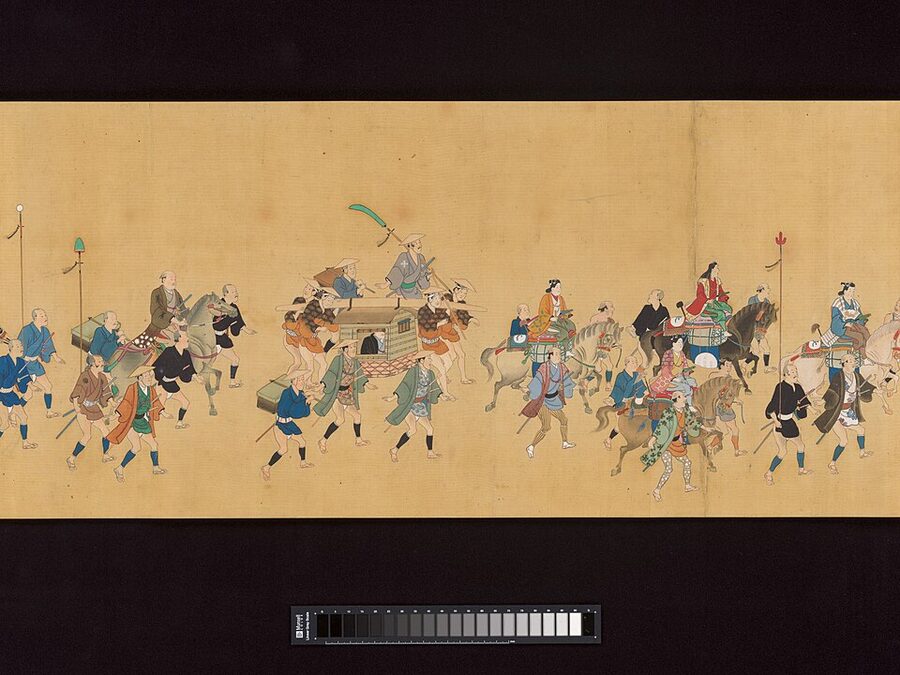
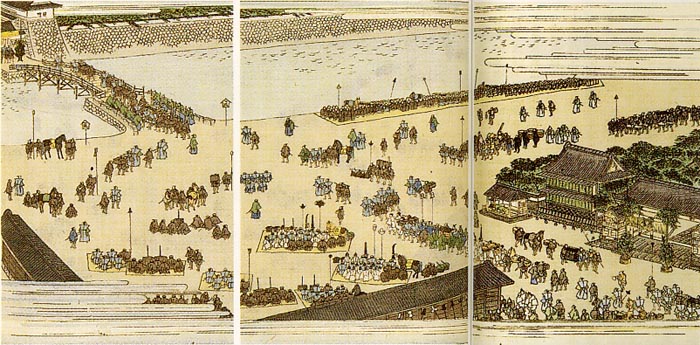
The procession — the daimyō gyōretsu — was the public face of the system. For a major domain it was effectively a slow-moving army on march. The Kaga domain’s records show processions of 2,500 to 3,000 retainers on the standard cycle, rising to 4,000 at moments of particular status display. Kishū Tokugawa’s 1841 procession was documented at 1,639 samurai, 2,337 labourers, and 103 horses — a total column of nearly 4,000 human beings and horses, stretching for kilometres down the road. Smaller domains travelled with fewer — a 50,000-koku daimyō might move with 300 to 500 men — but the principle was the same. The daimyō travelled in a sealed palanquin with guards on all four sides. In front and behind, a formalised line-of-march was maintained with specific positions for spear-bearers (yari-mochi), halberdiers, mounted senior retainers, porters carrying the lord’s personal luggage in lacquered boxes, doctors, tea specialists, falconers, and finally the general baggage train.
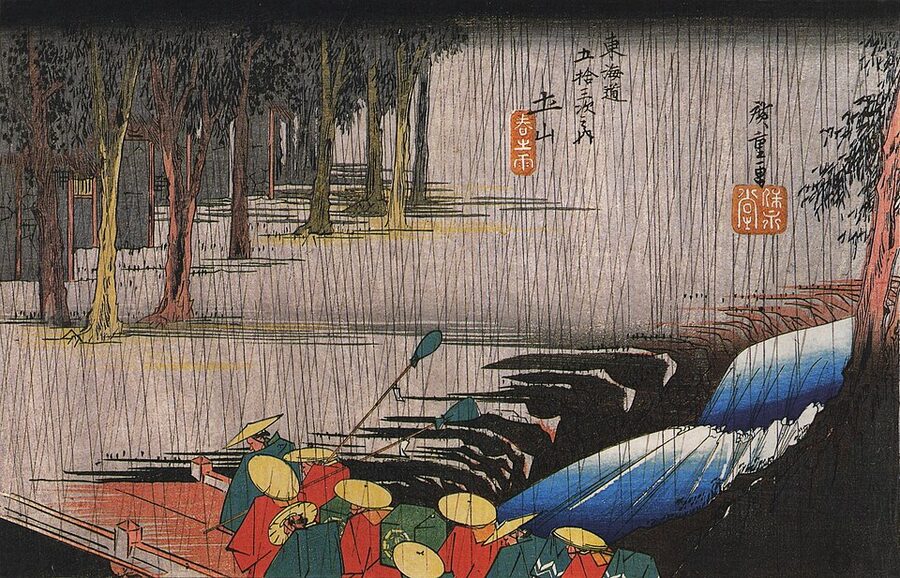
Preparation took months. The Kaga senior councillor Yokoyama Masahiro’s Go Dōchū Nikki, “travel journal along the road”, details how each procession was budgeted, scouted, and scheduled starting at least six months in advance. Scouts went ahead to check which other domains planned to use the same inn towns on the same nights; the daimyō and his party could not physically cross paths with another full procession on a single-lane post road without triggering a diplomatic protocol that delayed everyone and cost both sides money. Road and bridge repairs were arranged at the daimyō’s expense where the existing infrastructure did not cope. Where the road passed over unbridged rivers, hired labourers had to be available for the crossing. At Oyashirazu on the Sea of Japan cliffs, a stretch of coastal road beneath sheer rock walls where the incoming surf could sweep a traveller off the path in seconds, Kaga’s surviving records document hiring 700 local villagers simply to stand shoulder-to-shoulder in the surf and break the waves while the procession passed. This was not an anomaly. It was accepted logistical overhead.
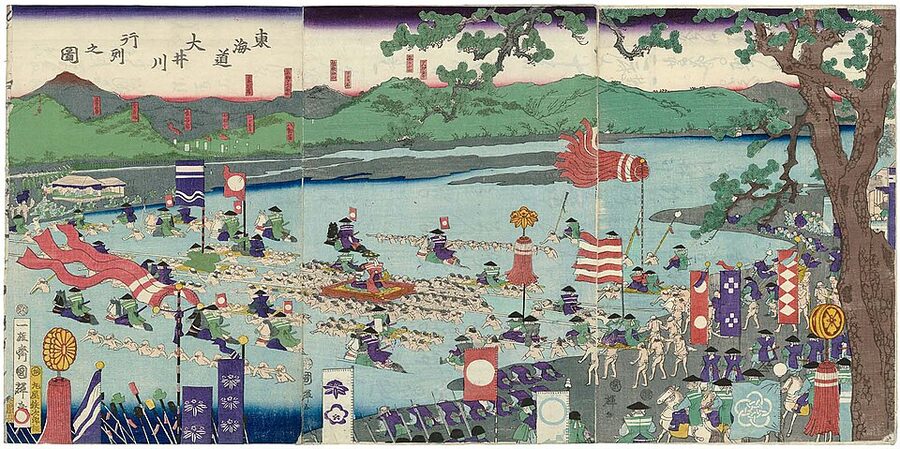
The Kaga records are unusually explicit about the financial stakes. A single day’s delay — triggered by a swollen river, a broken bridge, an unexpected rainstorm — could cost what the ja.wiki account translates into modern purchasing-power equivalents of tens of millions to hundreds of millions of yen. The daimyō had to present himself at Edo Castle on the precise date the shōgunate’s protocol office had logged in advance; late arrival was a formal breach of the shōgun’s will and carried direct political consequences, up to and including the possibility of kaieki — the confiscation of the domain. The daimyō’s mansion in Edo had similarly to be ready on that date, which meant dispatching advance parties weeks ahead to air the residence, verify supplies, and conduct protocol briefings with the shōgunal officers assigned to that domain. The logistical overhead of sankin-kōtai was, on any given day across Edo-period Japan, consuming a measurable fraction of total national economic output.
Shita-ni, shita-ni — what happened when commoners saw the column
The processions were, among other things, deliberate displays of power, and this meant the surrounding commoners and lesser travellers had to participate in the theatre. When a daimyō procession approached on a post road, heralds at the front of the column announced it with a shouted chant. For the three Tokugawa gosanke lines — Owari, Kii, and Mito — the chant was shita-ni, shita-ni! (“lower, lower!”), and commoners on the roadside were required to kneel and bow with forehead to the dirt until the daimyō’s palanquin had passed. For other domains the chant was katayore, katayore! (“move aside, move aside!”) or yokero, yokero! (“get out, get out!”), and the protocol was to stand aside, remove any headgear, dismount from any horse, and wait without eye contact. Any rider who failed to dismount could be cut down on the spot. Any pedestrian who stepped into the line of march could be cut down on the spot. The Kujikata Osadamegaki, the Edo-period criminal code, made this explicit: article 71 addendum authorised kirisute gomen, the right of immediate execution, against anyone who interrupted or disrespected a daimyō procession, with exceptions only for couriers on shōgunate business and midwives going to attend childbirth.
This ran into spectacular trouble exactly once. On 14 September 1862, a party of four British travellers on horseback rode out from the foreign settlement at Yokohama to tour the Japanese countryside. They were Charles Lennox Richardson, a merchant visiting from Shanghai; two Yokohama traders named Marshall and Clark; and a Scottish woman named Margaret Borradaile. On the Tōkaidō near the village of Namamugi, they came head-on into the procession of Shimazu Hisamitsu — father of the Satsuma daimyō, returning to Kagoshima after an Edo audience, with roughly a thousand retainers in column. Richardson and his party either did not understand or did not accept the protocol. They turned their horses sideways, rather than dismounting, and attempted to back up along the road to make room. A Satsuma samurai named Narahara Kizaemon drew his sword and cut Richardson down. Marshall and Clark were both wounded. Borradaile escaped on horseback to Yokohama.
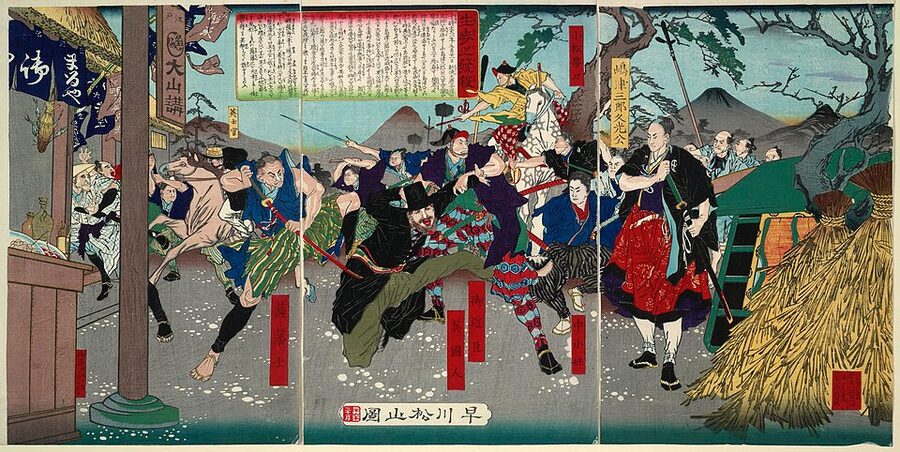
Under Edo-period Japanese law, Narahara’s action was correct. Under British law and the unequal treaties governing the foreign settlement, it was murder. The British government demanded compensation from the shōgunate (which paid, 100,000 pounds, because they had no alternative) and from the Satsuma domain (which refused). Seven months later, a Royal Navy squadron arrived off Kagoshima and fought the Satsuma domain shore batteries in what became the Anglo-Satsuma War — a brief but decisive bombardment that cost both sides lives and demonstrated to Satsuma the technological gap with European artillery. This pushed Satsuma directly into the anti-shōgunate alliance that would, five years later, topple the Tokugawa. Few single incidents in modern Japanese history can be traced to a clearer chain of political consequences. The foreign diplomat Richardson, riding on a Sunday outing, walked unknowingly into a piece of institutional procedure that had been running for 227 years. When the institutional procedure collided with European expectations of roadway, it began coming apart, and within a decade the Tokugawa shōgunate had dissolved along with it.
The honjin — sleeping with a sword in hand
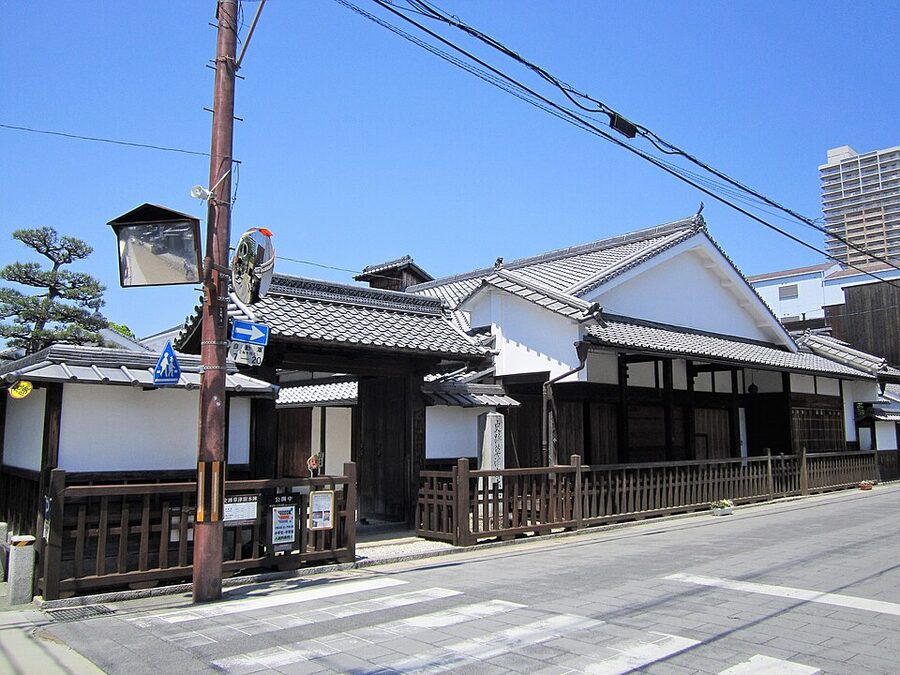
At the end of each day’s march, the daimyō and his senior staff stayed at a honjin, literally “main camp”, a dedicated inn built along the post road specifically for daimyō accommodation. Honjin were never ordinary inns. They were run by designated innkeeping families who had hereditary franchises, typically held since the early 1600s, and they had a specific set of architectural features: a formal entrance hall aligned with the road, an inner audience room with a raised jōdan dais for the daimyō to sit on, a bath arranged so that it could be drawn and drained without outside assistance, and, most characteristically, a defensive layout that allowed the daimyō’s sleeping chamber to be approached only through several narrow corridors, each of which could be blocked by a single guard. The usual arrangement had the daimyō sleep with his koshō, teenage page, sitting on the floor beside him, reading aloud from a scroll through the entire night. The reading was not for the daimyō’s pleasure. It was an anti-assassination measure: the sound of a sustained male voice at the pillow signalled to any intruder that the room was occupied and alert.
Weapons were never released. The daimyō’s personal wakizashi stayed at arm’s reach through the night; his escort’s long swords were arrayed on racks within the chamber itself. The honjin’s innkeeper family provided the lodging and food, but the daimyō’s own retainers handled all guard duty — no outsider was permitted within the inner rooms between dusk and dawn. The accounting arrangements were correspondingly complex. The daimyō’s treasurer paid the innkeeper in advance for the night’s lodging, plus contingency fees in case the procession was delayed and the inn could not be used. Disputes over cancellations were a chronic grievance on both sides, because the daimyō’s officials had incentive to negotiate hard and the innkeeper had incentive to claim full payment even when the lord’s party passed through without staying. Many honjin kept shadow accounts listing which domains were reliable payers and which needed to be pressed for collection — a surprisingly mercantile undercurrent to what looked, on the surface, like pure feudal ceremony.
Sekisho — the window on the palanquin opens
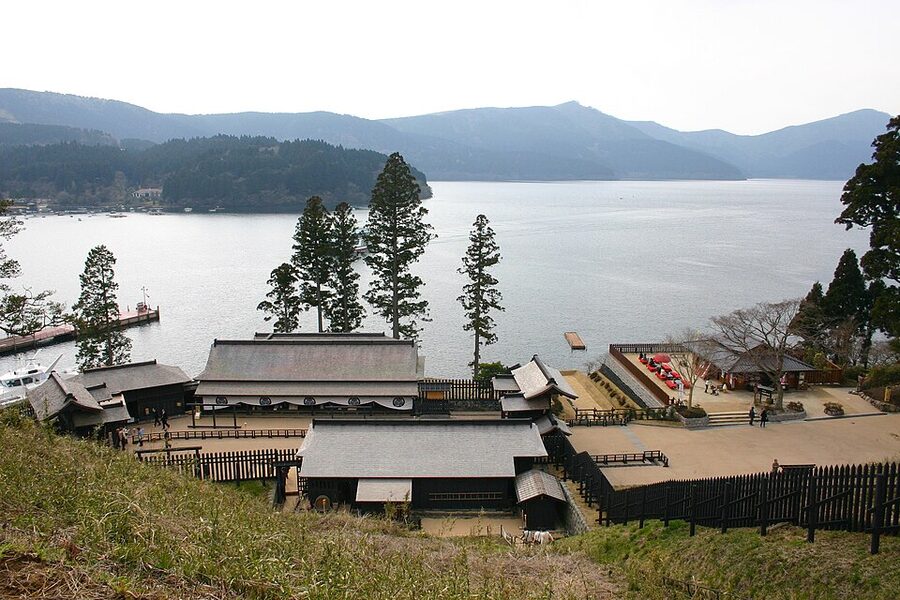
Between the daimyō’s home domain and Edo stood a series of checkpoints — sekisho — that the shōgunate used to control movement on the main arteries. There were several, but the two most important on the Tōkaidō were the Hakone sekisho, guarding the pass between the Kantō and the rest of Honshu, and Arai on the coast east of Hamamatsu. When a daimyō procession reached one of these checkpoints, the column halted, the palanquin was brought forward, and the window of the palanquin was opened so that the checkpoint official could confirm visually that the daimyō was indeed inside. Spear counts, bow counts, and retainer numbers were tallied and logged. The logs were forwarded to the shōgunate’s office of inspectors, and any discrepancy — fewer spears than the last pass, an unexplained extra guard, a different name on the register — triggered a report.
What the sekisho were really enforcing was the prohibition on weapons going into Edo and, inversely, on wives going out. The phrase deonna iriteppō (“out-going women and incoming guns”) was the sekisho’s operational summary: any woman leaving Edo was a potential hostage trying to flee, and any firearm entering Edo was a potential assassination tool. Both were illegal without specific shōgunate permits, and both were therefore what the sekisho officials watched for most closely. Women’s travel permits required the seal of the shōgunate’s women’s office; firearms permits required the seal of the inspectors’ office. A procession whose accompanying documentation could not satisfy both was stopped and held until further instructions arrived from Edo. Given that “further instructions” could take two weeks by courier, the real function of the sekisho was deterrence through friction: the bureaucratic cost of attempting to smuggle a wife or a weapon was so high that almost no one attempted it.
The decline — by 1800 nobody really believed in it any more
Sankin-kōtai worked beautifully for the first century of its operation and then started to unravel over the second century. Several things came apart at once. The financial burden on the domains, which had been severe from the start, became catastrophic as rice prices fell against urban goods prices across the eighteenth century. Small and medium domains that had managed the system comfortably in 1680 were borrowing from Osaka rice merchants to manage it by 1780, and some were effectively bankrupt by 1830. The daimyō began quietly renegotiating the terms: skipping years, arriving late, leaving early, keeping their processions artificially small. The shōgunate noticed and, in the Kyōhō reforms of 1722, briefly allowed a tax-for-time trade — domains could reduce their Edo residence from one year to six months in exchange for a tribute of 100 koku per 10,000 koku of rated income. The policy ran for eight years. The shōgunate ended it in 1730 only because it undermined the system’s logic.
By the 1840s, a Hiroshige-era Edo historian named Matsuura Seizan, himself the retired daimyō of Hirado, could write bluntly in his diary Kasshi Yawa that when he was a boy in the 1770s, only the occasional daimyō overstayed in Edo, but in his old age (1820s-30s) it was common for daimyō to simply stay in their home domains through the scheduled attendance month without sending notice. The system was grinding down to a performative minimum. The shōgunate’s repeated memoranda ordering daimyō to observe the attendance schedule became increasingly urgent and increasingly ignored. The final stage was the Bunkyū reform of 1862 — promulgated under pressure from the imperial court, which had been pushed to demand shōgunate concessions by the arrival of Commodore Perry and the unequal treaties that followed. Under Bunkyū, sankin-kōtai was formally relaxed to once every three years with a 100-day Edo residence; wives and children were permitted to leave Edo; travel documents for daimyō family members no longer required shōgunate seals.
This was intended as a defensive reform, designed to free the domains to contribute to coastal defence against Western threats. It functioned, in practice, as the end of the system. By 1864, when the shōgunate attempted to re-tighten the rules after the Kinmon Incident, the domains simply refused. Satsuma, Chōshū, Tosa and Hizen, the four western domains that would form the Meiji Restoration coalition three years later, had already pulled their hostages out of Edo and were not returning them. When the 15th shōgun Tokugawa Yoshinobu surrendered political authority in the November 1867 Taisei Hōkan, sankin-kōtai disappeared with the regime that had created it. 232 years of practice ended formally in a single imperial decree. Within two decades, the roads it had built were being torn up for railway track, and the daimyō mansions it had filled with a quarter of Edo’s population were being converted into European-style ministries for a state that no longer used them for anything.
The accidental legacy — how a commute built a capital
The side effects of sankin-kōtai are what make the system interesting to anyone besides specialists. The political goal was suppression of daimyō independence; the political goal was largely achieved. But the economic and cultural consequences, accumulated over two and a half centuries, turned out to be much bigger than the original intention. Consider the Tōkaidō. When sankin-kōtai began, the road between Edo and Kyoto was a patchwork of local paths maintained erratically by the villages they passed through. By 1720, it had been systematically upgraded — bridges standardised, post towns regulated, hostels inspected — because the requirement that 300-plus daimyō columns use it on schedule made infrastructure investment unavoidable. The same was true of the Nakasendō, the Kōshū Kaidō, the Ōshū Kaidō and the Nikkō Kaidō. Five highways, 70-plus post towns on the Tōkaidō alone, all of it planned and funded and maintained because the alternative was risking a daimyō’s arrival date at Edo.
Edo itself was sized by sankin-kōtai. At its 18th-century peak the city had around 1 million inhabitants, making it the largest city in the world. Roughly a quarter of that million — approximately 250,000 people — were samurai attached to the various domain mansions, rotating through on their lords’ schedules. Another substantial fraction were the merchants, craftspeople, servants and labourers who supplied them. Edo’s extreme male-to-female imbalance, famous in Edo-period demographic studies, was a direct consequence of the retainers who came with their lord but left their wives behind in the home domain. The giant pleasure district at Yoshiwara, the distinctive Edo food culture of street-corner sushi and tempura stalls for unaccompanied men, the sumo stables, the kabuki theatres catering to male audiences — all of this is traceable to the population distortion that sankin-kōtai created. The city that became Tokyo was shaped, architecturally and demographically, by the requirement that every daimyō in Japan maintain a household in it.
Culturally, sankin-kōtai created the single most efficient information-exchange network Japan had ever had. Provincial elites came to Edo and brought their regional dialects, regional recipes, regional art, regional gossip. Edo’s culture percolated back to the provinces in the retainers’ return baggage. Ukiyo-e prints designed for Edo townsman consumption ended up on the walls of samurai households in Kagoshima. Regional weaving techniques from Kaga — yūzen dyeing, silk brocades — found their Edo customers and spread from there. The distinctive Edo kabuki repertoire drew its plots from Osaka puppet plays and its visual conventions from Kyoto court drama. You can make a reasonable argument that the cultural integration of Japan that was politically completed by the Meiji Restoration was effectively a 250-year achievement of sankin-kōtai. The Tokugawa never intended to homogenise the country. They intended to control it. What they got, as a side effect of the controlling mechanism, was a homogenised country — and that homogenised country was what the Meiji state inherited and then accelerated into a modern nation-state within forty years.
Where to see sankin-kōtai today
Kusatsu-juku Honjin — Shiga
If you can only visit one sankin-kōtai site, this is it. Kusatsu-juku Honjin, in Kusatsu city in southern Shiga, is the most intact surviving daimyō inn complex in Japan — a 700-tsubo compound on its original Tōkaidō footprint, with the formal entrance hall, the jōdan audience room, the defensive corridor layout, and much of the original Edo-period fixtures still in place. The honjin was operated by the Tanaka family from 1635 to the Restoration, a 232-year franchise almost exactly coterminous with the sankin-kōtai system itself. Tanaka family records, preserved on site, document every daimyō overnight stay — which lord, which night, how many retainers, what was served. Walking the central corridor is the single best physical sense you can get of what a daimyō’s arrival actually felt like at the end of a 30-kilometre march day.
Getting there: Kusatsu Station on the JR Tōkaidō Main Line, 20 minutes from Kyoto. The honjin is a 10-minute walk from the south exit. Open 9am-5pm, closed Mondays. Admission ¥240. English signage is limited, but the building speaks for itself — you don’t strictly need translation to understand what a 17-meter-long formal corridor built for overnight defensibility is communicating.
Futagawa-shuku Honjin Museum — Toyohashi, Aichi
Futagawa, the 33rd post town on the Tōkaidō, maintains a second preserved honjin alongside a museum purpose-built to explain the sankin-kōtai system to contemporary visitors. The museum puts period procession documents, palanquins, porter boxes, traveller’s gear, and a detailed full-scale model of a daimyō arrival at the honjin in dialogue with each other; the adjacent preserved building gives you the physical space those documents and objects lived in. This is the site I’d recommend for a first-time visitor who wants both the narrative and the architecture in one visit. The museum’s English signage is better than most honjin sites.
Getting there: Futagawa Station on the JR Tōkaidō Main Line, eight minutes east of Toyohashi. The museum is six minutes’ walk north of the station. Open 9am-5pm, closed Mondays. Admission ¥400. Toyohashi itself is about 1h40 west of Tokyo on the Shinkansen (changing to a local at Toyohashi), and makes a reasonable half-day side trip from Nagoya or Kyoto.
Hakone Sekisho — Kanagawa
The Hakone checkpoint is the single tourist-accessible sekisho site in Japan — reconstructed on its original footprint at the western shore of Lake Ashi in the Hakone mountains, with period-authentic materials and a small adjoining museum. The layout is instructive: a narrow single-lane gate between two guard buildings, the checkpoint office with its registration desks and weapon racks, and the western gate opening onto the Tōkaidō’s continued descent toward Mishima. This is where every Tōkaidō sankin-kōtai procession opened the daimyō’s palanquin window. Hakone’s integration into the standard Tokyo tourist circuit — Mount Fuji views, Lake Ashi, the onsen — means that the sekisho is likely already on your itinerary if you’re visiting the area at all.
Getting there: Hakone-Yumoto Station via Odakyu Romance Car from Shinjuku (85 minutes), then 15 minutes by bus to Moto-Hakone-ko stop, then a 3-minute walk. Open 9am-5pm daily. Admission ¥500. Allow an hour for the sekisho and its museum proper, then build in time for Lake Ashi — the ferries across the lake give you the long daimyō-eye view of the sekisho as you approach from the west.
Imaichi-shuku preserved road — Tochigi
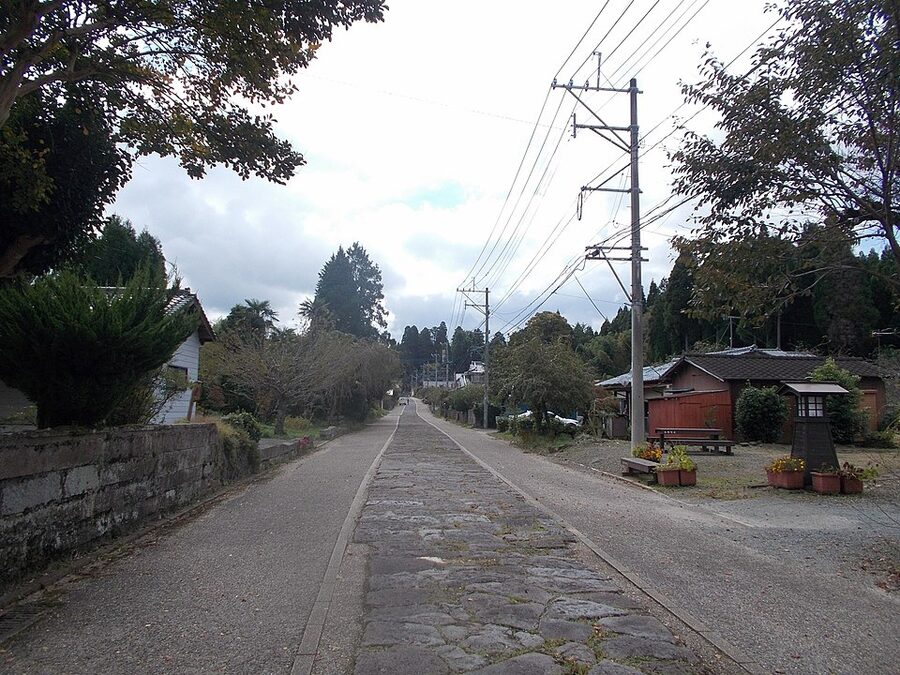
On the Nikkō Reiheishi Kaidō — the side highway that ran from Edo to Nikkō, used both for Tōshōgū pilgrimage and as a secondary sankin-kōtai route — a 1.5-kilometre stretch of original stone-paved road has been preserved near Imaichi-shuku. Walking it is the clearest remaining answer to the question “what was the surface actually like?” The answer is: uneven, varying between stone, packed earth, and corduroy log where the ground was boggy; narrow enough that two columns could not comfortably pass; and slow-going in rain. A 30-kilometre day on this surface, in wooden sandals or low-grade leather footwear, at the pace of a 3,000-person column, was an ordeal that the period novels only sketch. The Imaichi stretch puts you inside that ordeal for half an hour.
Getting there: Shimo-Imaichi Station on the Tōbu Nikkō Line, about two hours from Tokyo Asakusa. The preserved road segment is a 20-minute walk north of the station through suburban Imaichi. Free access, open at all times. Build it into a Nikkō day trip — you can cover Imaichi-shuku in the morning and be at Tōshōgū by lunch.
The Namamugi Incident monument — Yokohama
On National Route 15, in Tsurumi ward of Yokohama, a stone marker and a small free museum commemorate the site where Charles Richardson was cut down by Satsuma retainers on 14 September 1862. This is where the sankin-kōtai system made explicit contact with the foreign Japan that was about to dissolve it. The monument is understated — a stone block, a few signage boards, the museum across the road — but the location is specifically the site of the attack, and the surrounding street pattern has preserved enough of the old Tōkaidō alignment that you can orient yourself to the Satsuma procession’s direction of travel and the British party’s opposite approach. Richardson’s grave is at Yokohama Foreign General Cemetery in Yamate, about fifteen minutes’ drive south.
Getting there: Namamugi Station on the Keihin-Kyūkō Main Line, about 25 minutes from Shinagawa. The monument is a two-minute walk from the station. The small free museum is on the opposite side of Route 15, opening hours variable — it’s volunteer-run. The site pairs well with a visit to the Yokohama Foreign General Cemetery and the old foreign-settlement district at Yamate.
Closing — the system that built its own grave
The most honest thing you can say about sankin-kōtai is that it was a system that worked by creating, over two and a half centuries, the exact conditions that ended up making it unnecessary. It used daimyō wealth to build roads. The roads made movement easy, which made a national rice market possible, which made the domain economies increasingly interdependent, which made local rebellion increasingly difficult. It put regional elites in the capital together for half of every year. The regional elites got to know each other and developed the factional networks that eventually produced the Satchō alliance that toppled the Tokugawa. It filled Edo with a permanent transient samurai population that, by the late 18th century, was reading Western-influenced political philosophy in the Yushima Seidō’s lectures and coming out the other side sceptical of the shōgunate. The Tokugawa had built the machine; the machine’s output was the Meiji Restoration, and the Tokugawa could not have stopped it without dismantling the machine decades earlier.
Standing at Kusatsu-juku Honjin, or walking the preserved stretch at Imaichi, it’s hard not to feel the accumulated weight of that unintended process. The daimyō who rode these roads and slept at these inns for 232 years were not doing it because they wanted to. They were doing it because it cost too much not to. And the shōgun who received them at Edo Castle on the precise mornings his protocol office had scheduled was not doing it because he wanted to either — he was doing it because the system had its own momentum, and each shōgun’s job was essentially to not be the one who dropped it. Twelve generations of Tokugawa held on. The thirteenth lost Edo. Between the two endpoints, the system ate an estimated 12 to 15 percent of Japan’s entire GDP every year for more than two centuries — and in exchange, produced the country the Meiji reformers were able to modernise without breaking. A 480-kilometre commute, repeated twice a year by 300 households, turned out to be the most durable institution in Japanese early-modern history. It took the country’s coastline showing up on a Perry steam frigate to finally end it.
If this system interests you, read next on the specific campaigns that preceded it — the Battle of Shizugatake where the Sengoku warlords still thought they could claim the Edo role themselves, and the Battle of Komaki-Nagakute where Hideyoshi and Ieyasu negotiated the truce that would eventually put a Tokugawa in Edo Castle. For the samurai who lived the system’s daily reality, start with Tokugawa Tsunayoshi — the fifth shōgun, who was running sankin-kōtai at the peak of its smooth-functioning era — and Shimazu Yoshihiro, whose Satsuma descendants were the ones who, two and a half centuries later, collided with Charles Richardson on the Tōkaidō and broke the whole thing open.