Torii Suneemon was a foot soldier. Not a samurai, not a retainer with a landed stipend, not a man who would ordinarily appear in histories of the Sengoku period. Ashigaru (足軽, “light-foot”) was the lowest rung of a Japanese fighting force — a conscripted peasant with a spear, a padded jacket, and a wooden helmet, recruited for a campaign season and sent home at the end of it. Most of the men at his rank who died during the Nagashino campaign of 1575 died under Takeda cavalry charges at the fringes of someone else’s battle. They left behind no names.
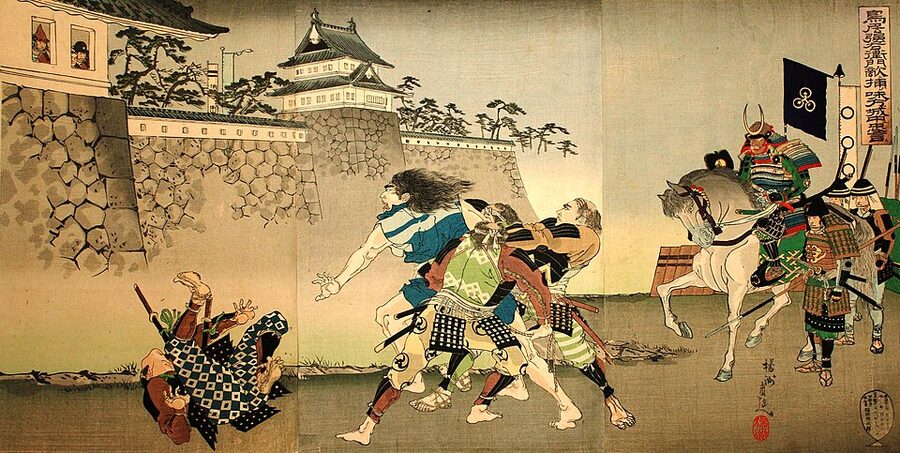
Torii Suneemon left behind a name because for about forty seconds, on 17 June 1575, standing on a levee outside the walls of Nagashino Castle, he had a choice of what to shout. The Takeda captors behind him expected him to shout the thing they had told him to shout. He shouted the opposite. They crucified him for it inside the hour. Three days later the Takeda army was destroyed by the same reinforcements he had just warned the defenders about. The Tokugawa took the country a generation later, and they never forgot the name of the peasant who had bought them the afternoon at Nagashino at the cost of his own life.
In This Article
- The Siege of Nagashino
- The Swim Out
- The Swim Back
- The Choice at the Wall
- Three Days Later
- The Posthumous Elevation
- Where to visit Torii Suneemon’s story today
- 1. Nagashino Castle ruins and the Shitaragahara battlefield — Shinshiro, Aichi
- 2. The crucifixion monument — Shinshiro, Aichi
- 3. Shōei-ji temple and Torii’s grave — Toyokawa, Aichi
- Forty Seconds
The Siege of Nagashino
To understand what Suneemon did, you need a map. Nagashino Castle sat at the junction of two rivers, the Takigawa and the Onogawa, in the Oku-Mikawa mountains of what is now eastern Aichi prefecture. It was a small castle, a regional fortification of the Oku-Daira clan, who had switched sides from the Takeda to the Tokugawa in 1571 and had been waiting ever since for the Takeda to come back and settle accounts.
In May of 1575 the Takeda did come back. Takeda Katsuyori — Shingen’s son, trying to consolidate his father’s empire after Shingen’s death two years earlier — brought 15,000 men into Mikawa and invested Nagashino from all four sides. Inside the castle the Oku-Daira commander, Okudaira Sadamasa, had about five hundred defenders. The siege began on 10 May. By the end of the third week the defenders had lost a third of their men to arquebus fire from the Takeda lines and had perhaps ten days of rice left.
The strategic problem was that help was theoretically coming. Tokugawa Ieyasu was at Okazaki Castle, forty kilometres west, waiting for Oda Nobunaga to bring his main army up from Owari. Nobunaga was coming. But the relief force would not arrive for at least another two weeks, and nobody inside Nagashino knew this with any certainty. If the castle was going to hold, they needed confirmation that relief was on the way and the date it would arrive; if relief was not on the way, they needed to surrender before starvation reduced them to cannibalism. Somebody had to get out of the castle, through the Takeda lines, to Okazaki and back.
On the morning of 13 June, Okudaira Sadamasa called for a volunteer. Ten men stepped forward. He picked Torii Suneemon, who was thirty-four years old, an experienced ashigaru, a strong swimmer, and, this last detail mattered, a native of the surrounding mountain country who knew every footpath between Nagashino and Okazaki.
The Swim Out
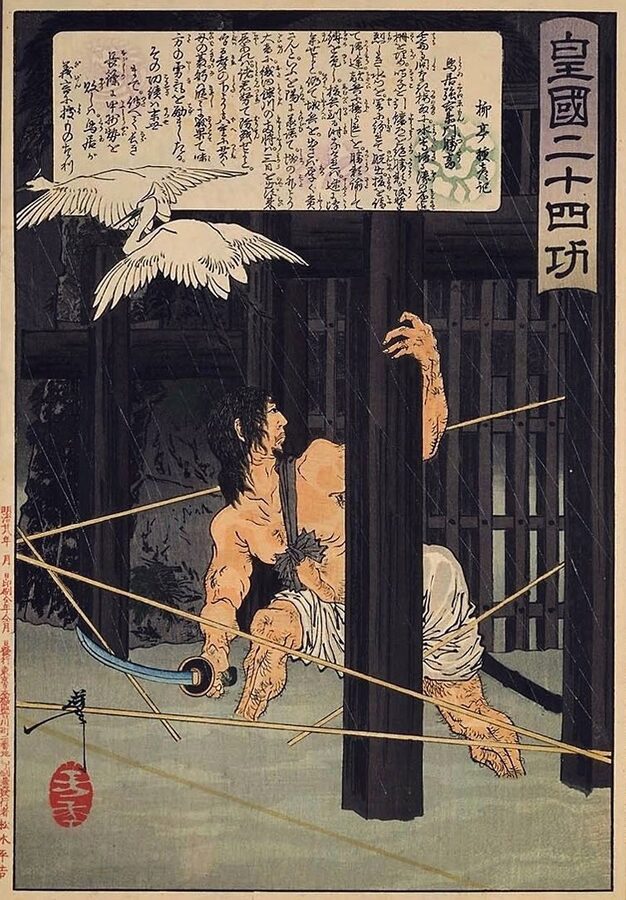
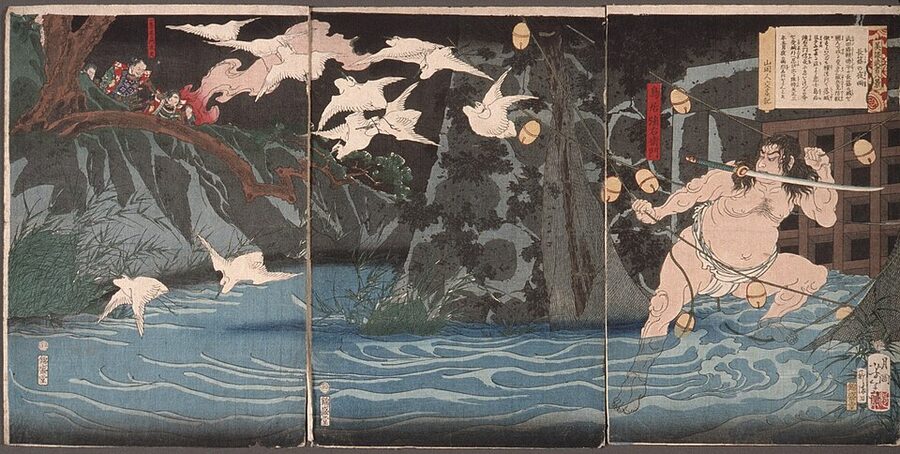
At sundown on 13 June, Suneemon stripped to a loincloth, greased his body with duck fat to resist the cold of the river, and slipped into the moat on the castle’s western side. The moat connected to the Takigawa River, which ran south through a gorge past the Takeda camps. He swam underwater where he could, floating face-up and holding a wooden bowl over his face to look like driftwood where the current was slow. The Takeda sentries had strung ropes across the river with small bells attached, a primitive signal-wire system; Suneemon later said he had heard three of them chime as he cut through them with a short knife, and had gone under the water for forty-count intervals each time to wait out the responses.
He was in the water for about three hours before he reached open country downstream of the Takeda positions. He came out of the river at Kanzan, stole a peasant’s cloak from a drying line, and began walking west on the paths he had known since boyhood. Forty kilometres on foot over mountain terrain. He arrived at Okazaki Castle at around noon on 15 June, having not slept for two days.
Okudaira Sadamasa’s nephew was the senior Oku-Daira representative at Ieyasu’s court, and it was to him that Suneemon delivered the message: Nagashino would hold for five more days, maximum, and needed confirmation that help was coming or permission to surrender. The nephew took Suneemon directly to Ieyasu. Ieyasu, according to the Tokugawa Mikawa Monogatari chronicle, listened to the ashigaru‘s report standing up, made the decision inside four minutes, and told Suneemon that Nobunaga’s forces had arrived at Okazaki the day before, that the combined relief army of thirty-eight thousand men was already moving east, and that it would reach Nagashino the morning of 18 June — three days away. He asked Suneemon if he could carry that message back.
Suneemon said yes. Ieyasu asked if he wanted to stay in Okazaki — the message could be relayed by smoke-signal, or by a different runner. Suneemon said no, that the defenders needed to hear it from someone who had seen the relief force with his own eyes, and that returning the way he had come was probably easier than the swim out because the Takeda were not expecting anyone to come back. He left Okazaki an hour later, having eaten one meal, with a freshly sealed Tokugawa order to Okudaira tucked inside his cloak.
The Swim Back
He almost made it. He walked the forty kilometres in twenty hours, reached the Takigawa River upstream of Nagashino at about noon on 16 June, and swam down through the Takeda lines in broad daylight. He had calculated, correctly, that the sentries were watching for anyone swimming out, not in. He was within two hundred metres of the castle’s north wall when a Takeda patrol on the bank saw a piece of cloth — the corner of his cloak, which he had not fully submerged — and fired on him. The first shot missed. The second broke his left arm. He went under the water but he was too tired by that point to stay under, and when he surfaced the patrol had surrounded him.
They brought him to the Takeda command tent. Takeda Katsuyori was there in person. Suneemon was questioned for about four hours. He told the Takeda interrogators — by his own later admission at the shouted moment, so the internal details of the interrogation are lost — that he had been sent out to beg for help and had been told there would be no help, that the Tokugawa and Oda had abandoned Nagashino. This was a lie. It was a very specific lie, calibrated to the shape of a trap he had already realised the Takeda were going to try to set.
Katsuyori took the bait. He offered Suneemon his life in exchange for one act: stand at the front of the Takeda lines, within shouting distance of the castle walls, and shout across to the defenders that no reinforcements were coming. Surrender was their only option. If Suneemon did this, the Takeda would spare him, release him, and pay him a small stipend on the side for services rendered. If he refused, they would crucify him.
Suneemon agreed.
The Choice at the Wall
On the morning of 17 June, Takeda soldiers led Suneemon to the levee between the Takeda camp and the castle’s north wall, a flat strip of cut ground about a hundred metres from the defenders. His broken arm was bound. He was given a length of rope to hold, a symbolic prop indicating surrender, and told to shout the prepared message. The Takeda officers behind him had drawn swords; the ashigaru guards on either side of him had their spears pointed at his ribs.
The Mikawa Monogatari records what Suneemon actually shouted, in literary-classical Japanese. Translated:
“Hear me, hold on! Nobunaga-kō is already at Noda! Ieyasu-kō has thirty-eight thousand men on the march! In three days they will relieve you! Hold the castle! Hold for three days more!”
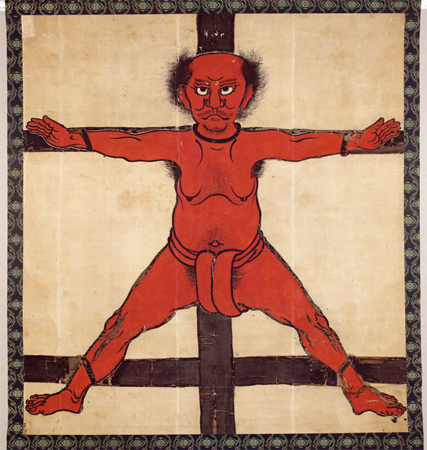
Takeda Katsuyori, according to the same chronicle, said out loud behind him: “He has betrayed us.” The Takeda ashigaru next to Suneemon drove a spear through his side on the spot. He was still alive when they tied him to a wooden cross ten metres further up the levee and executed him with four more spear thrusts in front of the castle. The whole sequence from shout to death lasted less than seven minutes.
Inside the castle the defenders heard every word. The Okudaira chronicle, written by Sadamasa’s household scribe thirty-eight years later, records that there was silence on the walls for about a minute after Suneemon’s shout, and then one of the young retainers started to cheer, and the cheering spread across the entire north wall within two minutes. The cheering was loud enough to be heard at the Takeda front lines. Suneemon was probably still alive when it started. Whether he heard it is unknown.
Three Days Later
The combined Oda-Tokugawa army reached the Shitaragahara plain, three kilometres west of Nagashino, on the afternoon of 19 June. Katsuyori, having failed to take the castle and knowing that the defenders had been told help was coming, made the fatal decision to leave his siege lines and meet the relief force in the open. He had about fifteen thousand men. Nobunaga had thirty-eight thousand, of whom three thousand were arquebusiers in rotating three-rank firing formations behind a log palisade.
The Battle of Nagashino on 29 June (the calendar slips between sources) is textbook and has been written about in a hundred English-language military histories — it is the canonical example of Japanese cavalry being rendered obsolete by volley-fire arquebuses. The Takeda lost ten thousand men in about four hours. Every senior Takeda general at the battle died except Katsuyori himself, who fled back to Kai with a thousand survivors and would commit suicide seven years later when Oda forces finally overran his home province. The Takeda were finished as a great power from the afternoon of Nagashino onward.
Torii Suneemon did not live to see any of it. What he bought, with his last forty seconds on the levee, was the three days the castle needed to hold. If he had shouted what the Takeda told him to shout, Okudaira would have surrendered; the castle would have fallen; Katsuyori would have consolidated a forward base in Mikawa before the relief force arrived; the Oda-Tokugawa coalition would have had to fight a siege of Nagashino rather than an open battle at Shitaragahara; and the arquebus-rank tactics that decided the war would not have been used. The whole subsequent shape of late-Sengoku Japan runs through those forty seconds.
The Posthumous Elevation
After Nagashino, Tokugawa Ieyasu elevated Suneemon’s family from ashigaru rank to full samurai retainer status and granted them a small fief near Okazaki. His son Torii Katsushige became a senior Tokugawa retainer; the Torii family stayed in Tokugawa service through the entire 265 years of the Edo period and produced half a dozen provincial daimyo across that span. The posthumous warrior name Katsutaka was assigned to Suneemon in 1750 during a formal recognition ceremony at Shōei-ji temple, where his grave had been moved a decade earlier from its original location near the crucifixion site.
The story remained in the Mikawa regional folk tradition throughout the Edo period but did not become nationally famous until the Meiji era, when the new Meiji state was actively looking for patriotic Japanese folk heroes to replace the ones it was discouraging (the Akō rōnin, dealt with by Tsunayoshi; the Sengoku warlords; Shinran and the anti-shogunate Buddhist movements). Suneemon was ideal. He was a commoner who had chosen loyalty to the state over personal survival. He had died a physically spectacular death. He had helped found the Tokugawa line, which the Meiji regime was carefully distancing itself from while preserving his reputation as a useful state symbol.
From the 1870s onward Suneemon appeared in school textbooks. From the 1890s he appeared in kabuki and, soon after, in the early silent cinema. By the 1930s he was one of the standard topics of wartime patriotic propaganda — the ideal sacrificial Japanese, loyal to the death. This last association is why Suneemon almost completely disappeared from Japanese popular culture after 1945, and why most people outside the Mikawa region cannot tell you today who he was. The Meiji rehabilitation had glued him to a political project that did not survive the war.
That is a loss. The Meiji propagandists got the politics wrong, but they did not get the man wrong. Suneemon was not a religious sacrificer; he was a practical man who did an arithmetic and concluded that three days’ worth of hope in a castle he knew was worth more than his own survival. The calculation is still valid. What he was a folk hero for — seeing a situation clearly, lying accurately under pressure, accepting the consequence — did not stop being a virtue just because the Meiji state was briefly using it to sell a war.
Where to visit Torii Suneemon’s story today
Three places, all in the Oku-Mikawa region of eastern Aichi prefecture, within a morning’s drive of Toyohashi. You can do them as a half-day loop if you rent a car; by public transport it is a full day because the regional buses run hourly at best.
1. Nagashino Castle ruins and the Shitaragahara battlefield — Shinshiro, Aichi
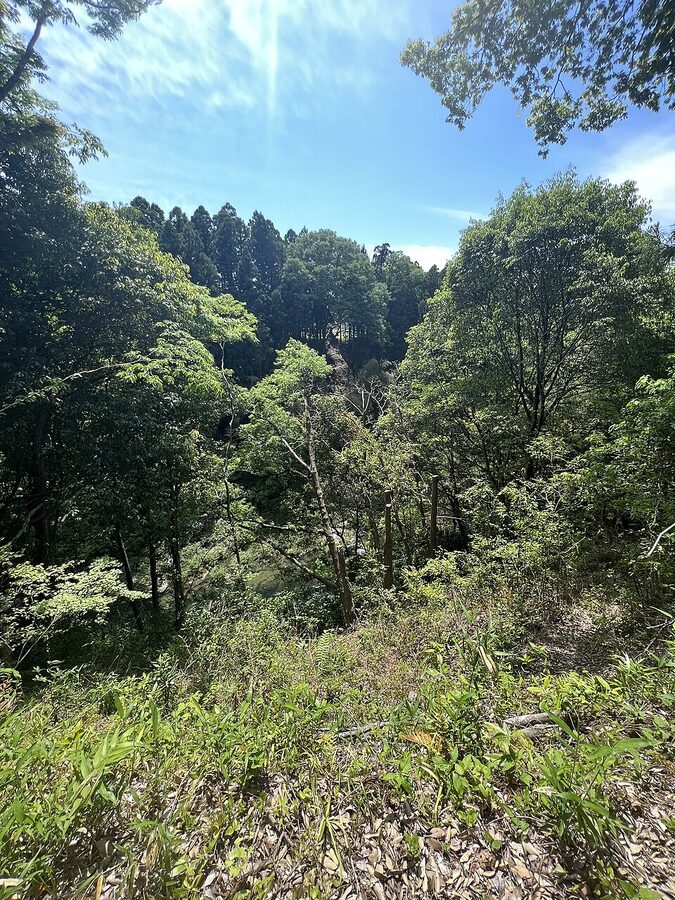
The castle itself is mostly earthworks now, the main keep burned in a 1606 fire and was never rebuilt, but the outer moats, the north wall levee where Suneemon was crucified, and the junction of the two rivers are all preserved as the Nagashino Historic Site. The Shitaragahara battlefield three kilometres west is similarly preserved; the log palisade replica, arquebus-rank markers, and the ridge where Nobunaga set up his headquarters are all walkable. The small Nagashino-Shitaragahara Museum at the castle entrance is one of the best regional battlefield museums in Japan and worth an hour on its own.
Access: JR Iida line to Hon-Nagashino station, then fifteen-minute walk. Or by car, about forty minutes from Toyohashi. Allow three hours for the castle, museum, and battlefield together. Best visited in early June when the Takigawa is still running cold — the same physical conditions Suneemon swam through.
2. The crucifixion monument — Shinshiro, Aichi
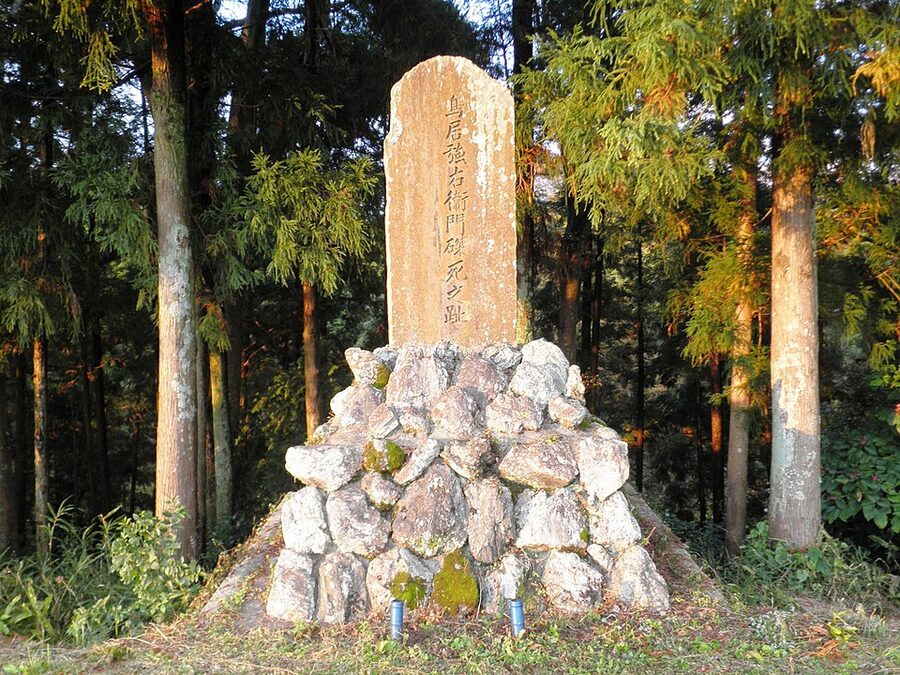
The crucifixion monument proper is ten minutes’ walk from the castle ruins along the Takigawa levee. It is in a small park with benches and a shade tree. The inscription in classical Japanese describes the sequence of shout, betrayal, and execution; there is no English signage. Most visitors to the castle skip this detour because it is not on the main tour route. You should not skip it.
3. Shōei-ji temple and Torii’s grave — Toyokawa, Aichi
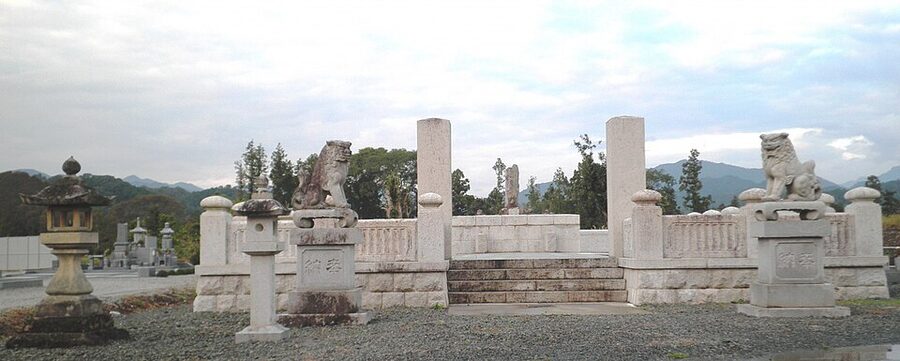
Shōei-ji is in Nakanoshima, Ichida-chō, Toyokawa, about twenty minutes’ drive east of the castle. The grave is in the small samurai cemetery behind the main hall. The temple does not advertise its connection to Suneemon — you have to ask at the office. The current head priest will walk you to the grave if he is available; if not, there is a small stone map at the cemetery gate.
If you are pressed for time and can only do one of the three sites, do the crucifixion monument at the castle, not the grave. The grave is a formal marker for his descendants’ convenience. The levee is where he actually stood.
Forty Seconds
Suneemon’s contribution to Japanese history is a negative image — a thing that did not happen because he did not do what he was told. If he had stood on the levee at noon on 17 June 1575 and shouted the surrender message, Nagashino would have fallen, the Takeda would have taken Mikawa, the arquebus-rank tactics would not have been tested, and the shape of late-Sengoku Japan would have rotated onto some other axis. It is very rare, in the history of any country, to be able to point to a single hour in which a named individual’s choice closed a door the country never walked through.
Compare what he did to the decisions of the named warlords of his period. Sassa Narimasa crossed the Alps to try to change an alliance; he did not. Saitō Dōsan spent forty years engineering a succession that his own son undid inside three years. Tokugawa Ieyasu outmanoeuvred three successive rivals across forty years to found the longest-running military government in East Asian history. Suneemon was a foot soldier with a three-hour walk, a swim out, a swim back, and forty seconds on a levee. His ratio of strategic impact to personal rank is the highest in the Sengoku period. Nobody else is close.
If you are going to Aichi anyway, drive the forty minutes from Toyohashi out to Shinshiro. Walk the levee. The castle is mostly earthworks now. The Takigawa is a small river. The monument is in a quiet park. Stand on the ground where he stood and think about how long forty seconds actually is.
If the Nagashino story pulls you toward Aichi, it is worth seeing what else the region offers — this ranking of Nagoya’s 15 top tours is a useful starting point, and the official Nagoya tourism site maps the castle and samurai sites.