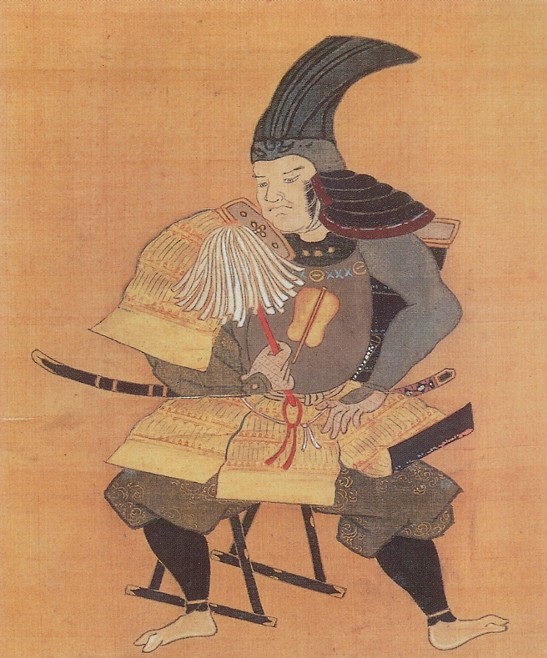
In the spring of 1564, a twenty-year-old samurai named Takenaka Shigeharu walked into Inabayama Castle, one of the most formidable mountain fortresses in central Japan, with sixteen men. He came in under the polite pretext of a family visit. His younger brother, a Takenaka-clan retainer stationed inside the castle, had been ill for weeks, and the twenty-year-old was bringing him medicine. The sixteen men who accompanied him were carrying swords under their kimono. By sunset the castle was under Takenaka control. The garrison of about two thousand was locked out of the inner compound. The lord of Mino, Saitō Tatsuoki, was hiding in a rice storehouse. It was one of the most implausible fortress-seizures in the history of Japanese warfare, and it was carried out by a man who is remembered in the Japanese historical tradition not as a fighter but as a strategist — gunshi (軍師), the battlefield thinker — which is the archetype most inconsistently rewarded in the Sengoku period.
He held the castle for six months. He used the six months to press Saitō Tatsuoki into a set of administrative reforms he thought Mino badly needed. When the reforms were in place he opened the gates, walked out, and gave the castle back. He then retired to a mountain hermitage and did not return to active service for three years. This is also not a sequence that most Sengoku twenty-year-olds went through. Most of them, given a captured castle and a humiliated lord, would have kept the castle. Hanbei, the name by which the Edo-period storytellers eventually agreed to call him, was not most samurai.
In This Article
- The Tarui Inheritance
- The 1564 Takeover
- The Mountain Retreat
- The Two Hanbei
- The Bessho War and Saving Kuroda Nagamasa
- Death at Miki
- Where to visit Takenaka Hanbei’s story today
- 1. Bodaiyama Castle ruins — Tarui, Gifu
- 2. Miki Castle ruins and Heirin-ji — Miki, Hyōgo
- 3. Sonzen-ji — Fukuoka
- The Kongming Archetype
The Tarui Inheritance
The Takenaka were a minor vassal clan of the Saitō of Mino province, holding about 6,000 koku of mountainous territory in the western end of the province around modern Tarui and Kōchō — the area north-west of modern Gifu city. Hanbei was the eldest son of Takenaka Shigemoto, the clan head, and he inherited the position in 1560 at sixteen when his father died of illness. By the standards of the generation he was an underweight inheritor: thin, physically weak, already showing signs of the tuberculosis that would eventually kill him, and more interested in reading Chinese military classics than in drilling retainers. The neighbouring clans of Mino wrote him off at once.
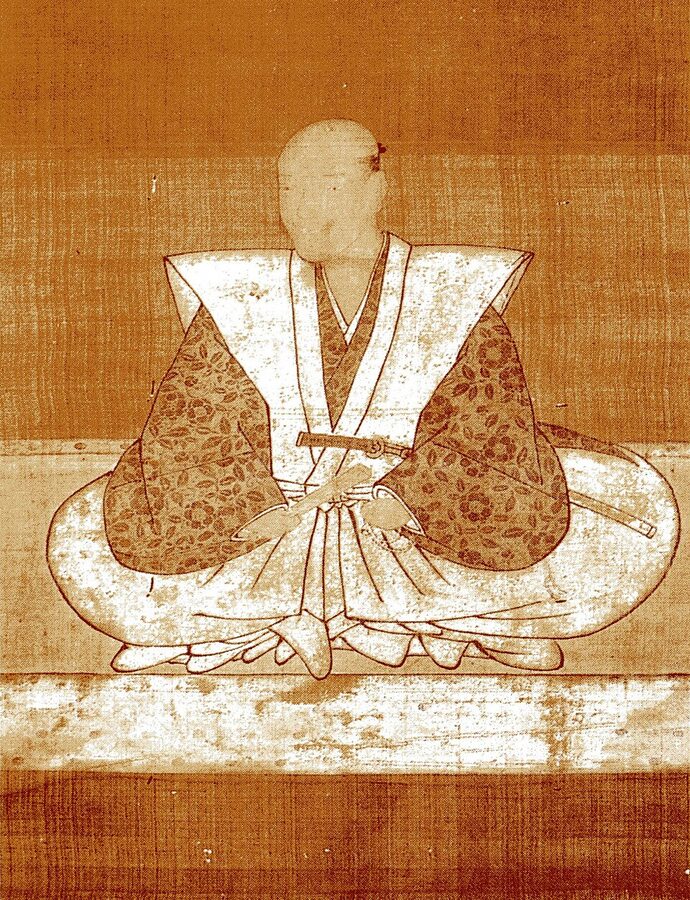
The thing to understand about Saitō Tatsuoki, the lord of Mino at this time, is that he had just inherited the province from his grandfather Saitō Dōsan, whose elaborate multi-generation takeover of Mino from the Toki was the most refined piece of political engineering of the previous generation. Tatsuoki was fourteen. He had not earned his position; he was running Mino on the reputation of a grandfather and a father who had both done the hard work for him. The traditional samurai reflex to an unearned inheritance is tight administrative control and frequent displays of authority. Tatsuoki did the opposite. He was running the province badly, slighting retainers who had served his grandfather for decades, and, according to the Takenaka household chronicles, had publicly humiliated Hanbei’s younger brother Shigenori during a court function by spraying him with urine from an upstairs window.
Hanbei found out about the urine incident around the turn of 1564. His response, across the next six weeks, was the most carefully planned insult in the recorded history of late-Sengoku Mino.
The 1564 Takeover
The plan ran like this. Hanbei selected sixteen retainers, all trusted family men, none of them senior enough to be known by face to the Saitō court. He had his brother Shigenori, who was still stationed in Inabayama Castle as a Takenaka representative, write home reporting a serious illness — fever, weakness, possibly contagion — and asking for the traditional elder-brother visit. Medical visits were a recognised exception to the Saitō rule that limited armed retainers entering the castle; a visiting family member could bring attendants bearing practical items (medicine, bedding, food). Hanbei arranged for his sixteen men to carry small chests of medicine supplies, with blades concealed under the false bottoms.
They entered Inabayama on the morning of 28 March 1564 through the main approach gate. The gate guards recognised Hanbei, accepted the medical-visit protocol, waved the seventeen men through. Hanbei went up the main staircase to his brother’s quarters in the inner keep. He drew the ill-person curtains around the bed; his “sick” brother sat up; the sixteen attendants drew swords. Within an hour the senior commanders of the castle guard had been killed or taken hostage. Within three hours the seventeen Takenaka men had secured the main keep, the treasury, and the inner gate. Saitō Tatsuoki, who had been in the upper residential floor and had heard the fighting on the staircase, fled to the kitchens and hid in a rice storage drum. The castle was under Takenaka control by late afternoon.
At this point the sensible thing, strategically, would have been to hold the castle, negotiate with the Saitō senior retainers outside the walls, and either keep Inabayama or trade it for a permanent upgrade to the Takenaka family position. Hanbei did not do this. He sent a formal letter to the Saitō senior council stating that the seizure was an act of protest against Tatsuoki’s administration, that he intended to hold the castle only until Tatsuoki publicly reformed his handling of the Mino clan structure, and that the Takenaka had no territorial ambition. He enclosed a list of demands: remove specific senior-court courtiers Tatsuoki had promoted inappropriately, reinstate retainers Tatsuoki had dismissed, adopt a more structured consultation process for major decisions.
Tatsuoki agreed to the reforms under duress. Hanbei held Inabayama for six months to make sure the reforms actually happened, oversaw the first wave of personnel changes from inside the castle, and, in October 1564, walked the sixteen men back out of the gate and returned the keys to the Saitō guard commander. This action has no close parallel in the Sengoku record. The nearest analogues are the palace reformers of late-Heian Kyoto courtly culture. As a fighting man’s act it is not a fighting man’s act at all.
The Mountain Retreat
The six months at Inabayama had exposed Hanbei’s tubercular lungs to the long-term strain they could not bear. He came home to Tarui in late 1564 in worse physical condition than he had left. He spent the winter recovering, and in the spring of 1565, aged twenty-one, he formally abdicated the clan headship to a cousin and withdrew to a small mountain hermitage at Kurihara, above the Mino river about ten kilometres north of the Takenaka main residence. He stayed there for three years.
What he did during those three years is only partially recorded. He read. The Tarui family archive preserves a list of the books he had sent up to the hermitage over the period: the Sanguo zhi (the Chinese Records of the Three Kingdoms, which contained the Zhuge Liang material he had apparently been teenaged-obsessed with), the Sun Tzu Art of War, a Chinese medical classic called the Shanghan Lun, a Japanese military manual called the Koyo Gunkan that was popular among Takeda-aligned retainers — and, unusually for the period, a Portuguese-to-Japanese Jesuit dictionary that had been published in Nagasaki in 1565. The last entry is interesting because it suggests Hanbei was planning to read further than his current professional network required. He was not preparing to return to Sengoku Mino. He was preparing for something bigger.
In 1567 Oda Nobunaga finally finished his multi-year campaign against the Saitō. Inabayama Castle was taken, the Saitō clan was destroyed, Tatsuoki fled into exile and was eventually killed, and Mino came under direct Oda control. Nobunaga, who knew about the 1564 takeover and was fascinated by it, sent a formal invitation to the Kurihara hermitage in the autumn of 1567 asking Hanbei to join the Oda administration. Hanbei initially declined. He sent a polite letter citing his health. Nobunaga responded by assigning his most talented junior commander, the former ashigaru-born Hashiba Hideyoshi, the specific task of recruiting Hanbei personally.
Hideyoshi went up the mountain three times. The story, preserved in the Taikōki chronicle, a source to be read sceptically, is that Hanbei refused him on the first two visits and capitulated on the third because Hideyoshi had spent the intervening week in a monastery at the base of the mountain learning Zen meditation to impress him. Whatever the real mechanism, Hanbei came down from Kurihara in February 1568, aged twenty-four, and took service with Hashiba Hideyoshi rather than with the Oda main office. He stayed with Hideyoshi for the next eleven years.
The Two Hanbei
Hideyoshi’s military rise across the 1570s is well known. Less well known, outside Japan, is that most of the strategic planning for Hideyoshi’s campaigns during this period was done by two men: Hanbei, and Kuroda Kanbei (officially Kuroda Yoshitaka, 1546-1604), who joined Hideyoshi’s staff about three years after Hanbei did. The two men worked in tandem — Hanbei handling grand-strategic planning and campaign logistics, Kanbei handling negotiation with hostile clans, defection diplomacy, and close-in tactical advice during battles — and the Edo-period chronicles collapsed them into a single archetype, the “Ryō-bei” (兩兵衛), “Two Hanbei”.
The Ryō-bei legend is partly real and partly Edo-period mythmaking. Takenaka and Kuroda did work closely together; they did contribute complementary skill sets to Hideyoshi; they did share credit for several specific campaigns. But Hanbei was the senior of the two throughout their working relationship — he was two years older, six years longer in Hideyoshi’s staff, and held the higher formal stipend — and the “equal pair” framing of the Edo chronicles systematically understates his seniority. Kanbei’s extraordinary career after Hanbei’s death in 1579 — ending as a daimyo in his own right, founder of the Kuroda line of Fukuoka — was partly built on the political network Hanbei had constructed before he died.
The Bessho War and Saving Kuroda Nagamasa
The single most consequential act of Hanbei’s life was the one that nearly broke Nobunaga’s confidence in the Hashiba Hideyoshi command staff. In 1578, in the middle of Hashiba’s western campaign against the Mōri, a regional lord named Araki Murashige rebelled against the Oda from his base at Arioka Castle in Settsu. The Araki rebellion was a political crisis of the first order; it threatened the entire Oda western flank. Nobunaga moved to crush it.
During the early weeks of the crisis, Kuroda Kanbei, who had been sent as Hashiba’s negotiating representative to Arioka in an attempt to talk Araki back to loyalty, was taken hostage by Araki and imprisoned in the castle. The Kuroda family’s official representative at Hashiba’s court at this point was Kanbei’s ten-year-old son Nagamasa, who was being raised at Hashiba’s headquarters both as a political hostage and as a sign of Kuroda loyalty.
Nobunaga, receiving the news of Kanbei’s capture, concluded that Kuroda Kanbei had switched sides. His order to Hashiba was unambiguous: kill the ten-year-old Kuroda Nagamasa at once, send the head to Nobunaga, and make sure the Araki revolt did not spread further through Kuroda defection. Hashiba forwarded the order to Takenaka Hanbei, who was the ranking senior staff at the headquarters.
Hanbei did not obey the order. He hid Nagamasa at his own Kurihara mountain hermitage — the same hermitage he had retired to thirteen years earlier, now turned into a safe-house — and produced a substitute head: the head of a ten-year-old boy who had died of illness elsewhere, recovered from a local burial, anatomically close enough that it could pass casual inspection. The substitute head was presented to Nobunaga. The real Nagamasa stayed at Kurihara under the care of Hanbei’s household retainers. Kanbei, meanwhile, survived his imprisonment at Arioka and was eventually freed when the castle fell in 1579.
When Kanbei came back and learned what Hanbei had done, he understood, correctly, that his son was alive because a single senior officer had decided to disobey a direct order from Nobunaga and risk the most severe possible consequences for himself if it was discovered. Kanbei reunited with Nagamasa. Nagamasa grew up to be one of the founding-generation figures of the early Edo period and a daimyo of 520,000 koku. He named his first son Tadayuki, using the tada (忠, “loyalty”) character from Hanbei’s own posthumous Buddhist name. The Kuroda clan maintained a formal annual memorial service for Takenaka Hanbei at Sonzen-ji in Fukuoka, a temple they built specifically for the purpose, until the Meiji restoration. The service is still performed by the modern Kuroda family every June.
Death at Miki
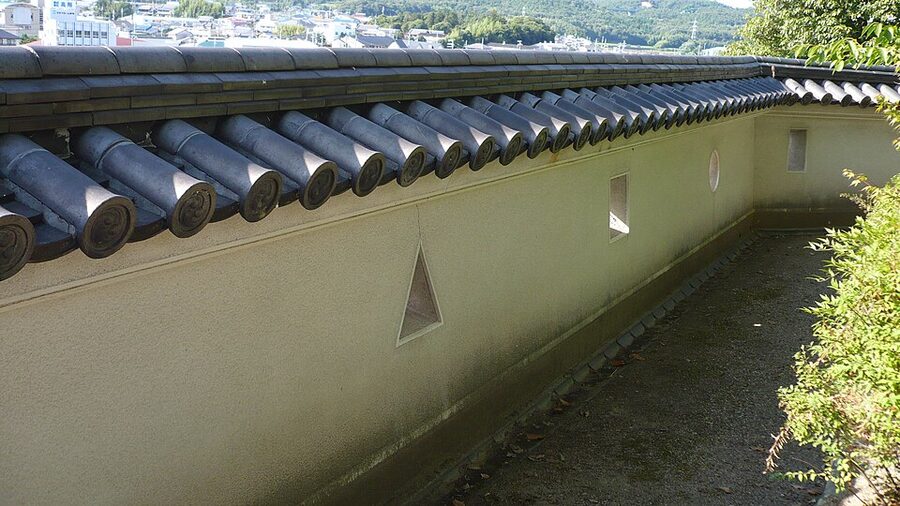
The tuberculosis that had been with Hanbei since his teens had worsened through the 1570s. By the spring of 1579, during the siege of Miki Castle in Harima province — the Bessho clan’s main stronghold, which Hashiba had been investing for a year — Hanbei was coughing blood. Hideyoshi tried to send him back to Kurihara to recover. Hanbei refused. His argument, recorded in the Hashiba household letters, was that the Miki siege was the most important single operation of the western campaign, that the Bessho and their Mōri reinforcements were making sophisticated moves he wanted to be present to counter, and that he would prefer to die useful than die in retirement. Hideyoshi let him stay.
He died on 13 June 1579 in a tent at the edge of the siege lines, aged thirty-six. The immediate cause was pulmonary tuberculosis with probable secondary pneumonia. Kuroda Nagamasa, then eleven years old, was present at his deathbed — he had been brought from Kurihara to the siege camp some months earlier, once the Araki revolt was clearly over and the substitute-head fraud no longer needed to be protected. Hanbei’s last recorded conversation, according to the Kuroda household chronicle written fifty years later by Nagamasa’s secretary, was with the eleven-year-old. Nagamasa asked him if he was afraid of dying. Hanbei said he was not; he regretted only that he had not finished reading the Sanguo zhi commentary he had started in the tent the previous week. He is reported to have asked Nagamasa to finish reading it for him.
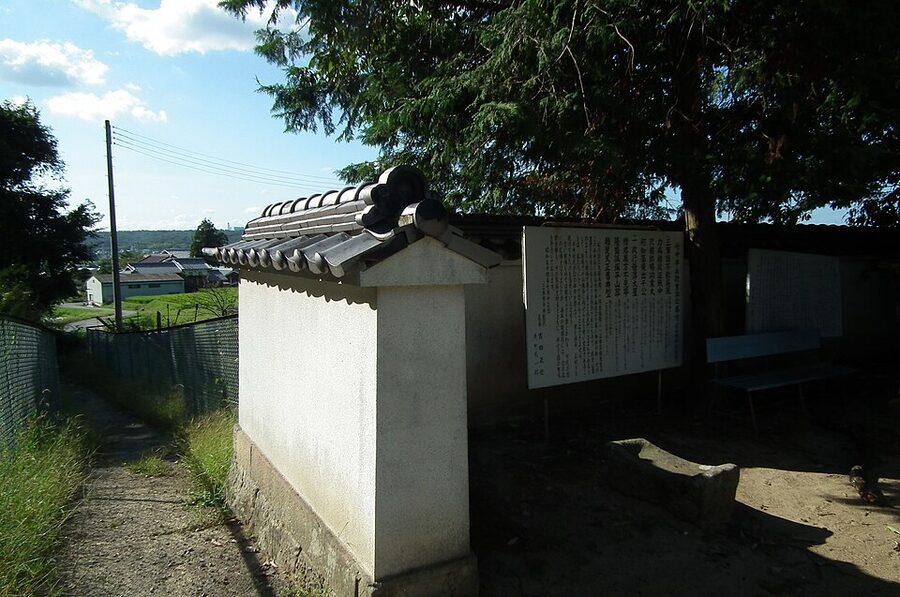
Miki Castle fell nine months after Hanbei’s death. The Bessho surrendered; the Hashiba western campaign progressed as he had planned it; Hashiba Hideyoshi himself went on to unify Japan, become Toyotomi Hideyoshi, and die in 1598 at sixty-one. Hanbei did not live to see any of it. He had been on Hideyoshi’s staff for eleven years. He was thirty-six.
Where to visit Takenaka Hanbei’s story today
Three places, all reachable in a long weekend if you are starting from Osaka or Kyoto.
1. Bodaiyama Castle ruins — Tarui, Gifu
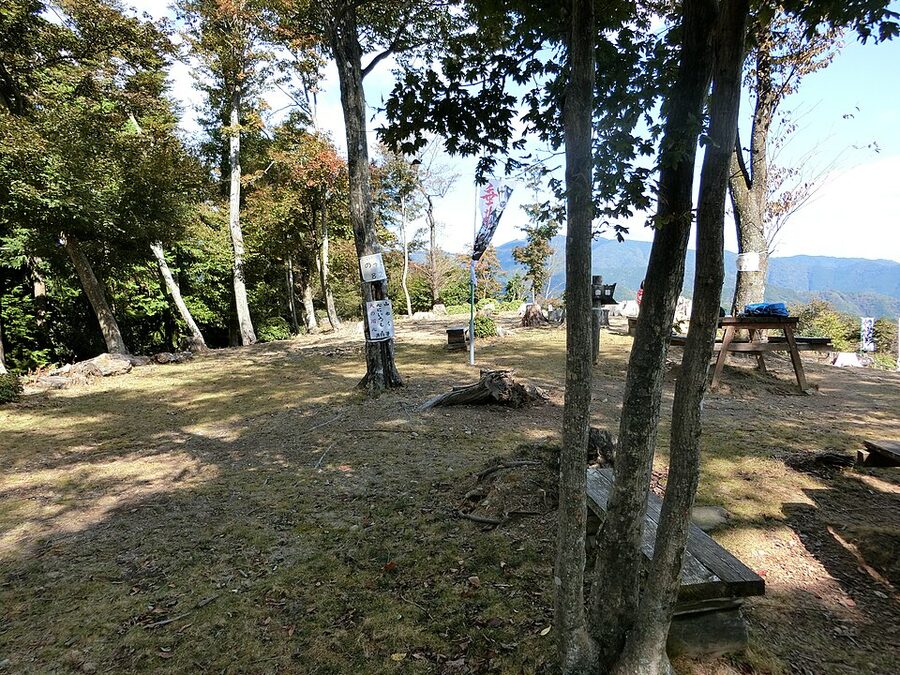
The Takenaka family castle, Bodaiyama, is in the modern town of Tarui in western Gifu prefecture. It is a small mountain fortress, walk-up access only, no modern reconstruction. The main bailey still has its earthworks intact and the walk up the hill takes about forty minutes from the parking area at the base. At the top you can see out to the plain below and understand why the Takenaka chose this location — the view reaches as far as modern Gifu city, and on a clear day Inabayama is visible on the horizon fifteen kilometres east.
Access: Tarui Station on the JR Tokaido line, then twenty minutes by local bus or a forty-minute walk to the trailhead. Allow three hours. Combine with the main Takenaka family cemetery at the base of the mountain — the full clan graveyard, with Hanbei’s formal family memorial stone, is in a small temple compound adjacent to the trailhead.
2. Miki Castle ruins and Heirin-ji — Miki, Hyōgo
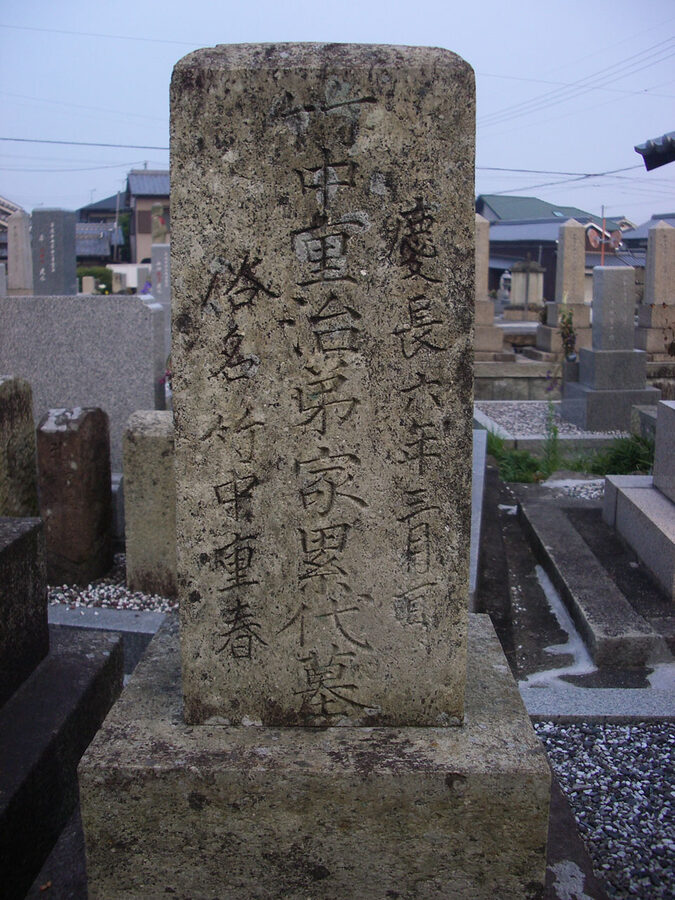
Miki is about forty-five minutes from Osaka on the Shintetsu Ao line. The castle ruins are preserved as a historic park with interpretive signage, walking paths around the siege perimeter, and a small museum at the ruins entrance with a good exhibit on the 1578-80 siege including a dedicated Hanbei section. Heirin-ji temple, where Hanbei’s actual grave is, is a ten-minute walk from the castle site; the grave is modest and tucked into a back corner of the temple grounds but is well marked with a modern information plaque.
Allow a full day. Best visited in late spring or autumn for temperature; Miki is humid in summer and the walk around the siege perimeter is exposed.
3. Sonzen-ji — Fukuoka
Sonzen-ji is the Kuroda-clan memorial temple in Fukuoka that was built specifically to hold the annual remembrance for Takenaka Hanbei. It is in the Hakata district of modern Fukuoka city, about fifteen minutes by bus from Hakata Station. The temple is small but the annual Takenaka memorial service on 13 June (the anniversary of his death) is still performed; if you time your visit for the service, the current head priest will walk you through the temple’s Hanbei-related artefacts including a letter from Kuroda Nagamasa that references the substitute-head incident in careful diplomatic language. The service is free to attend, no reservation required.
Combine with Fukuoka Castle ruins in the same city if you are interested in Kuroda Nagamasa’s own career arc. Allow half a day for the temple, full day if you add the castle.
The Kongming Archetype
Japanese military historiography has a specific archetype for the unusually talented strategist who dies young — the gunshi-gata (軍師型), “strategist-type” — and Hanbei is its defining example. The closest Chinese parallel is Zhuge Liang of the Three Kingdoms period, the strategist whose premature death (at 54 in 234 CE) is treated as one of the decisive moments in the fall of the Shu Han kingdom. Hanbei studied Zhuge Liang as a teenager; the Edo-period biographers explicitly framed his biography as a Japanese echo; the posthumous label “Kongming of the East” is the direct reference.
The archetype is useful but only approximate. Hanbei did not die at a moment of maximum strategic value the way Zhuge Liang did. He died in the middle of a minor siege that would eventually succeed anyway. His biographical arc is more about choosing when to act and when not to: the 1564 Inabayama protest-takeover where he gave the castle back; the three-year hermitage where he did not return to service; the Araki-revolt substitute-head decision where he disobeyed Nobunaga to save an eleven-year-old. The pattern is a man whose tactical intelligence was always subordinate to a moral-political judgement about when intelligence should be applied. Most Sengoku careers do not run on that ratio.
Compare him to his contemporaries. Miyamoto Musashi killed sixty men and went into retirement. Sassa Narimasa crossed the Alps to save a war that was already over. Saitō Dōsan took a province through three adoptions and a murder. Hosokawa Tadaoki survived by outliving everyone. Hanbei did none of those things. He took a castle at twenty with sixteen men and gave it back; he saved a child against an emperor’s order and died young. The strategic genius claim is plausibly overblown. The moral-sequencing claim is not.
If you are going to Osaka anyway, take the Shintetsu line to Miki on a Saturday morning. Walk the siege perimeter. Go to Heirin-ji. The stone is small. Nagamasa visited this grave as a teenager in 1580; Nagamasa’s grandson visited it in 1620; the Kuroda family has visited it every summer for the next four hundred years. It is a modest stone. The man buried under it decided once, at twenty, that a protest that ended with the keys being returned was a better statement than a coup that kept them. The biography is worth the walk up.