
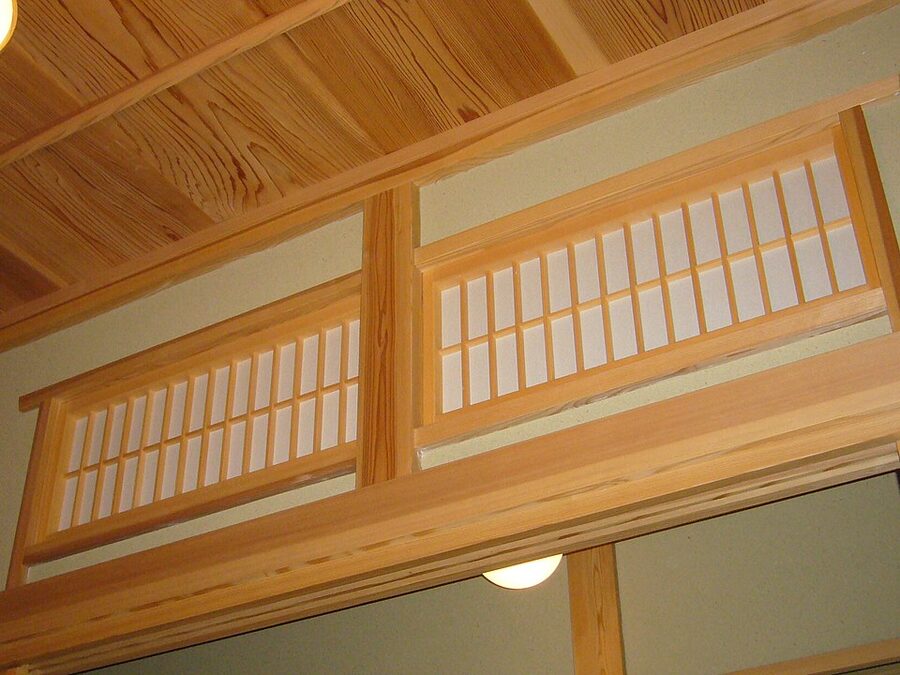
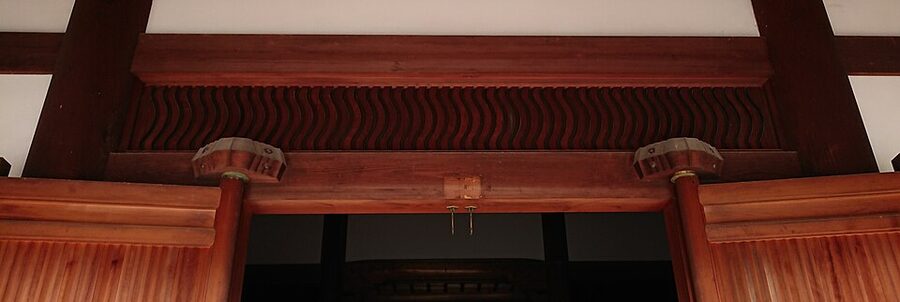
In almost every serious traditional Japanese room — the zashiki reception room of a merchant house, the abbot’s quarters of a Zen temple, the main hall of a provincial shrine — there is a carved wooden panel above the sliding doors. The panel is called a ranma (欄間), roughly “railing space”, and it sits in the specific architectural gap between the top rail of the door frame (the kamoi) and the ceiling. The gap is about 40-60 centimetres high. The ranma fills it.
Most Western tourists in Japan have seen dozens of ranma without noticing them. The eye is usually on the floor (tatami, maybe furniture), the walls (shoji, fusuma), the ceiling panels (natural wood grain); ranma sit in the transition zone the eye skims past. Once you see them, you see them everywhere. They are the single most expressive piece of Japanese interior architecture — sculpted wood tiles carrying birds, flowers, dragons, clouds, historical scenes, family crests, abstract geometries. Every traditional room has a story above the door. You just have to look up.
In This Article
What a Ranma Is
The structural function of the ranma is ventilation plus partitioning. In a traditional Japanese building with sliding fusuma and shōji doors and no structural walls between rooms, air-flow management is a genuine problem. Opening the fusuma at the bottom creates a draft; closing them creates a sealed box that accumulates heat and humidity. The ranma gap at the top of the door frame allows ambient air circulation whether the doors are open or closed. The carved ranma panel fills the gap decoratively without blocking the airflow.
The technical design is specific. Ranma panels are typically 60-90 centimetres wide (matched to the fusuma width below) and 30-45 centimetres tall. The wood is hinoki Japanese cypress by preference, keyaki zelkova or kiri paulownia as second choices. The panel is carved, not built up — the motif is cut out of a single piece of wood, with all the negative space as part of the design. A well-made ranma weighs 4-6 kilograms and is held in position by grooves in the kamoi rail below and the tenjo-buchi ceiling beam above. It can be removed from the frame for cleaning or seasonal rotation; a wealthy Edo-period household might own two or three sets of ranma and swap them between seasons.
Heian to Edo
The earliest ranma references in the Japanese architectural record appear in the 11th-century shinden-zukuri palace architecture of Heian-period Kyōto. At this point they were strictly an aristocratic-court feature — installed in the formal reception rooms of senior Fujiwara residences and imperial palaces, carved with abstract cloud and wave patterns, and considered status markers as much as ventilation devices. Evidence for this phase is largely literary; the actual buildings from the Heian period did not survive the Onin War and the subsequent Sengoku-period burning of Kyōto, so what we know about Heian ranma comes from the Genji Monogatari, the Makura no Sōshi, and occasional surviving diagrams in aristocratic-household records.
The surviving physical record starts with the Kamakura period (12th-14th centuries) and specifically with Zen Buddhist temple architecture. The new Zen institutions borrowed Chinese Song-period temple layouts that included carved wooden transoms over the main-hall doorways, and Japanese carpenters adapted the form for Japanese climatic conditions. By the 15th century, ranma were standard in upper-class temple and shrine construction, and the standard motif repertoire — birds, flowers, Chinese landscape scenes, dragons, clouds — had been established.
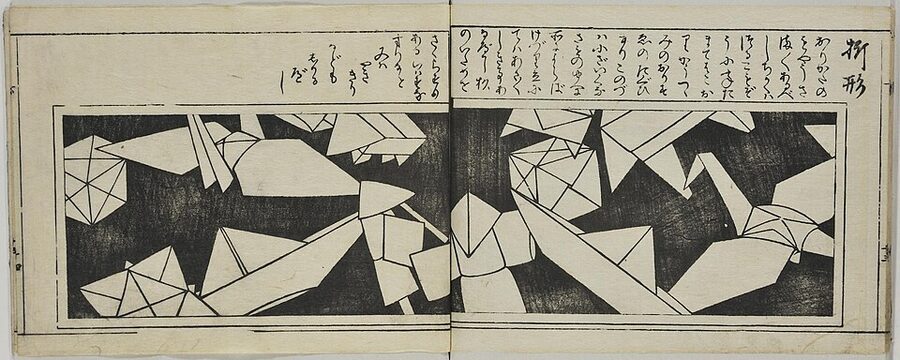
The Edo period (1603-1868) was the democratisation era. Before 1600, ranma were aristocratic or temple-grade objects only; after about 1650, they were standard in wealthy merchant houses, domain offices, upper-tier ryokan inns, and senior bureaucrat residences. The driver was mass-market design literature: the Ranma Zushiki of 1734, a three-volume pattern book compiled by an Edo-based architect, made 240 standard ranma templates available to any carpenter who could read. Provincial woodworkers could order the book, pick a pattern, and produce a respectable ranma for a merchant customer. By 1800, essentially any building grander than a farm cottage was expected to have some form of ranma.
The Inami Workshop Tradition
The central Japanese ranma-carving industry consolidated around the town of Inami (井波) in Toyama prefecture. The origin is specific and well-documented. In 1390, the Zen priest Ryōsho was exiled from Kyōto by the Ashikaga shogunate for political reasons and settled at Zuisen-ji temple in Inami. Zuisen-ji needed rebuilding; Ryōsho sent to Kyōto for master carpenters; the carpenters arrived, spent twelve years on the temple reconstruction (finished 1402), and some of them stayed. By the late 15th century there were about forty active woodcarvers in Inami. By 1762, when the Zuisen-ji main hall burned and was rebuilt again, the Inami guild had grown to about 180 carvers.
Inami’s specific advantage was its geography. The town sat between the timber-producing Toga mountains and the merchant-house demand centres of Kanazawa and Kyoto. Raw cypress and zelkova could be rafted down the Shō River; finished ranma could be crated and sent south by coastal boat. The Maeda lords of Kaga domain, one of the wealthiest domains in the country, became major Inami customers during the 17th and 18th centuries, commissioning elaborate ranma sets for Kanazawa’s merchant houses and the Kenroku-en pavilion buildings. By 1820 Inami was the recognised national centre for the craft and produced probably 80% of the ranma sold in Japan at the formal-grade level.
The Meiji Restoration of 1868 hit most traditional Japanese crafts hard; Inami was an exception. The growing Meiji-era middle class wanted traditional architecture at domestic scale, which meant demand for the lower end of the ranma market held up. Industrial cabinetmaking took over the high-volume plain-pattern segment, but the carved-sukashi high end remained hand-work. Inami’s workshop count stayed around 200 carvers across the full 19th century and the first half of the 20th. The post-war tourism boom of the 1960s, which produced thousands of traditional-style ryokan inns all wanting ranma, actually expanded the craft rather than shrinking it. The current carver count in Inami is about 230 active workshops, which makes it the single largest concentration of master woodcarvers in Japan. The town was formally designated a Traditional Crafts Production Area (伝統的工芸品産地) by the Japanese government in 1975.
Three Main Carving Styles
The three main technical styles of ranma, in order of complexity, are:
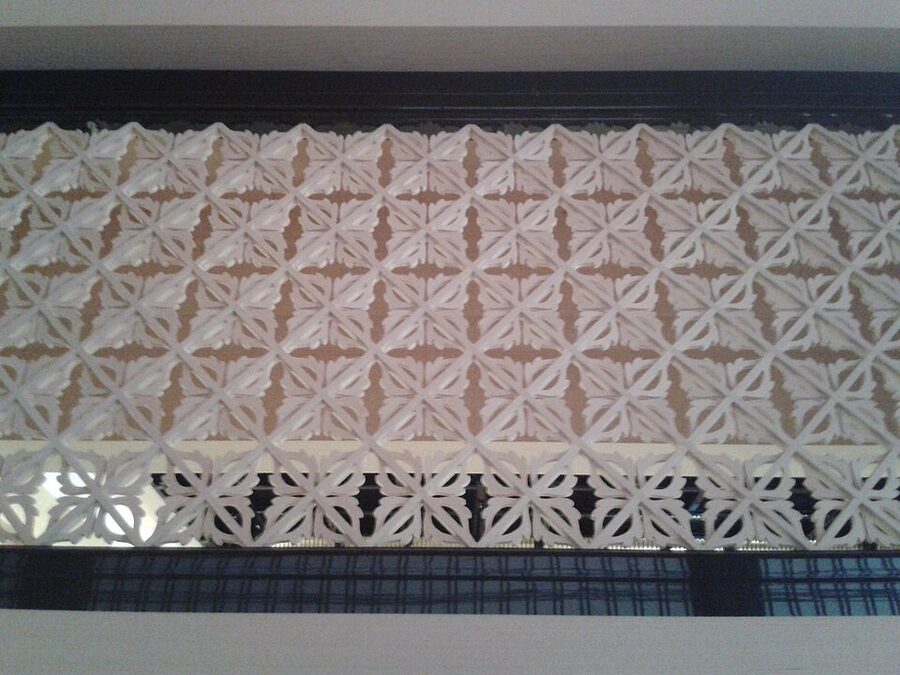
Kumiko ranma (組子欄間) — the simplest, a geometric lattice of small interlocking wooden pieces assembled without nails or glue. The pattern is entirely abstract: diamonds, hexagons, pine-needle clusters, snowflake forms. Kumiko ranma are visually restrained and appropriate for smaller residential rooms; they are also the fastest to produce, and are the dominant style in Edo-period merchant-house ranma.
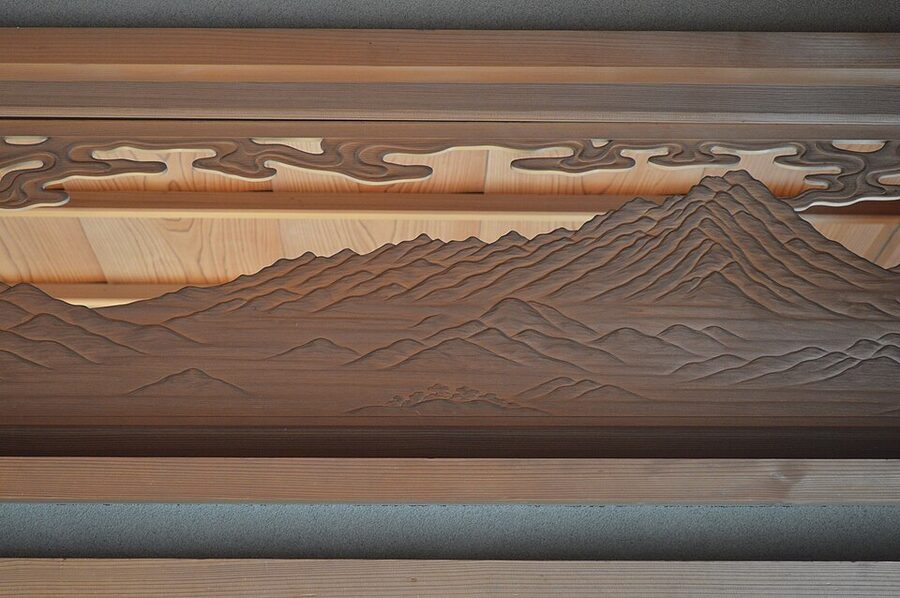
Ita-bori ranma (板惧り欄間) — relief carving on a solid wooden panel. The image is carved down into the wood but not all the way through; the panel is solid from behind. This is easier to carve than sukashi-bori (you do not have to produce a piercing cut) but the motif has less visual impact because you cannot see through it. Ita-bori ranma are common in temple interiors and in Edo-period domain offices, where the solid backing improved acoustic damping between rooms.
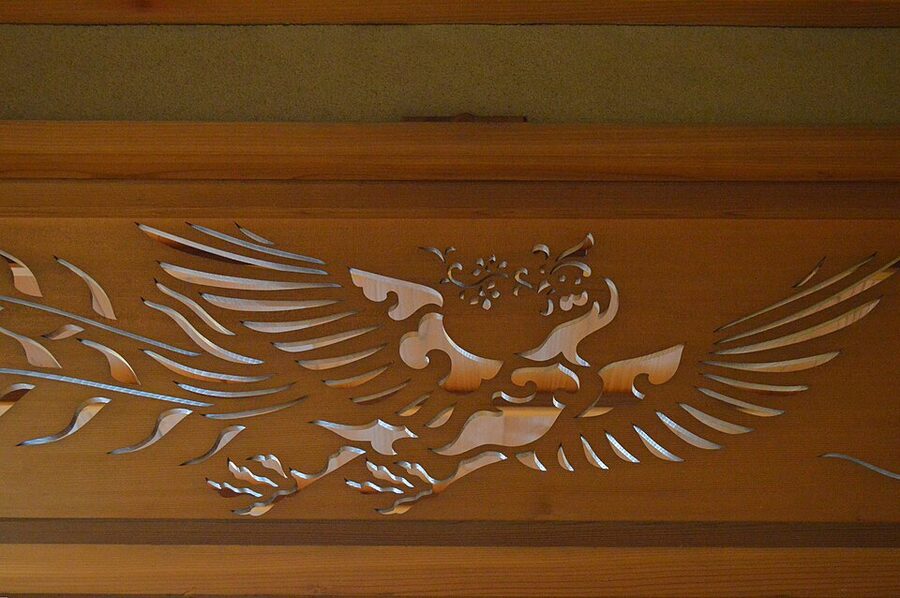
Sukashi-bori ranma (透欄間) — openwork carving, the highest-status form. The panel is cut all the way through the wood, so the motif is visible from both sides and air flows through freely. Sukashi-bori requires greater technical skill because the wood must remain structurally coherent despite the piercing, and it is visually more complex because the motif has to read at both viewing distances (close-up from the room below, further-away from the adjacent room). The finest ranma in Japan — the ones at Nijo Castle, Nagoya Castle Hommaru Palace, or the top-tier merchant houses of Kanazawa — are sukashi-bori.
Iconography
The motifs on a carved ranma are never random. Each traditional pattern carries specific symbolic associations, and the choice of motif for a particular room signals something about the room’s function, the household’s status, and the season in which the ranma is being displayed.
The core motif categories, in rough order of frequency:
Flower-and-bird (kachō, 花鳥) — the most common category. Each season has canonical flower-bird pairs: plum-with-nightingale for early spring, peony-with-butterfly for late spring, hydrangea-with-kingfisher for early summer, chrysanthemum-with-quail for autumn, bamboo-with-sparrow for winter. A household might own five ranma sets, one per season plus one “formal/any-season” default, and rotate them through the year.
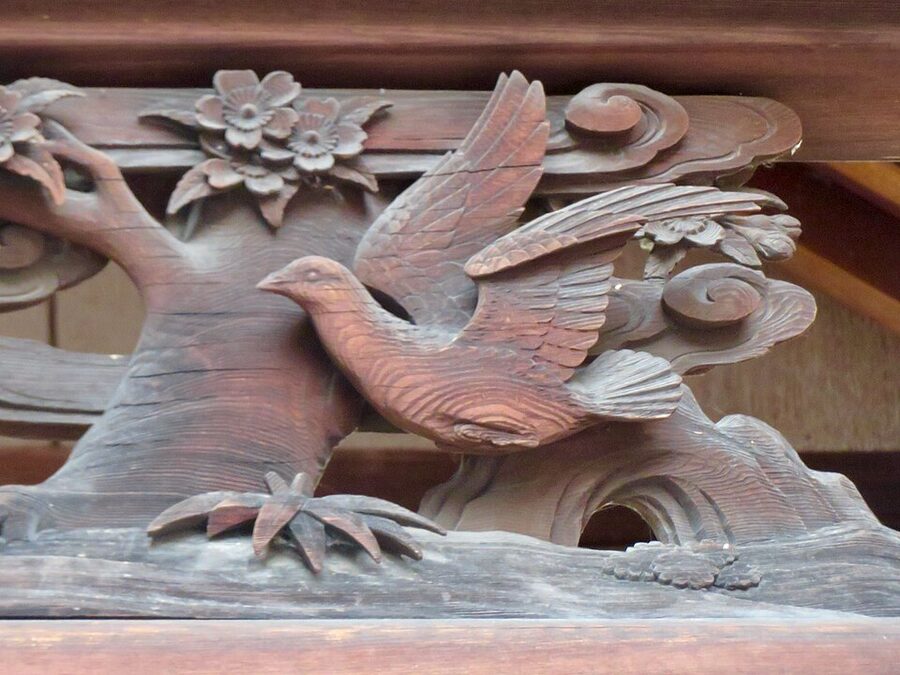
Pine-bamboo-plum (shō-chiku-bai, 松竹梅) — the “three friends of winter”, auspicious for formal rooms used for important guests. Shōchikubai motifs are appropriate year-round and are the default for reception rooms in merchant houses.
Dragons and mythical animals (ryu, kirin, hō-ō) — for formal temple and shrine use, or for top-tier samurai residences. Dragon ranma were regulated during the Edo period: only daimyo-rank households could legally commission them, and a merchant who installed a dragon ranma in his reception room was subject to a fine.
Cloud-and-wave (kumo-nami, 雲浪) — abstract atmospheric motifs, common in Heian-derived formal architecture, rare in merchant-grade work.
Family crests (kamon, 家纹) — a household’s specific crest carved as the main panel motif. Crest-ranma are found in samurai residences and in merchant houses where the household has a registered crest. The form is usually combined with a supporting floral element for visual interest.
Where to visit ranma country today
Three main sites: the production centre at Inami, a couple of preserved old residences where you can see ranma in situ, and the palace-grade reconstruction at Nagoya Castle.
1. Inami woodcarving town — Nanto city, Toyama
Inami is the single most concentrated traditional woodcarving district in Japan. The main street — Honmachi-dōri, running from Zuisen-ji temple north into the town centre — has about forty active workshops with open front windows where you can watch the carvers at work. The Inami Woodcarving General Hall (井波彩刻総合会館, Inami Chokoku Sogo Kaikan) is the craft’s main visitor facility, with a permanent exhibit of historical ranma dating back to the 17th century and a contemporary gallery showing current master work. Admission ¥500. Allow a full day for the town.
Access: Johana line from Toyama Station to Shin-Kosugi, then bus to Inami, about 90 minutes total. Zuisen-ji temple, the origin-point for the whole Inami tradition, is at the south end of the main street and is free to enter; the 1762 reconstruction main hall has some of the finest historical sukashi-bori ranma in Japan. Visit in spring for the Inami Woodcarving Festival (first weekend of May) if you can.
2. Ishitani House — Chizu, Tottori
Ishitani House (石谷家住宅, Ishitani-ke Juutaku) is a preserved Meiji-era merchant residence in Chizu, Tottori prefecture. The main house has forty rooms; roughly thirty have ranma above the doors; the quality range from serviceable kumiko to exceptional sukashi-bori. Ishitani is a good single-site introduction to the full range of what ranma look like in a working residential context rather than a museum context. The house is a National Important Cultural Property and is open to visitors. Admission ¥600.
Access: JR Chizu line from Tottori Station to Chizu, then a twelve-minute walk. Allow two hours for the house itself. Combine with a visit to the Chōdai Falls a short drive away.
3. Nagoya Castle Honmaru Palace reconstruction
The Honmaru Palace (本丸御殿) at Nagoya Castle was destroyed by American bombing in 1945 and was reconstructed in three phases between 2009 and 2018. The reconstruction used original 1615 palace specifications including all the ranma, which were re-carved in Inami workshops using the pre-war architectural drawings. The completed palace has about seventy original-specification ranma spread across fourteen rooms; the flower ranma featured at the top of this article is the headline example. This is about as good as ranma displays get, anywhere.
Admission to the Honmaru Palace is ¥500, combined with castle entry. Allow two to three hours for the palace alone; longer if you are doing the keep and the outer grounds. The palace was formally nominated for UNESCO World Heritage status in 2023; the nomination is pending.
The Story Above the Door
Ranma are the single most under-noticed element of traditional Japanese interior architecture, and the reason they are under-noticed is that the foreign eye has not been trained to look up. Japanese children learn to notice them in school, through the conventional visual-literacy curriculum that covers the same ground as tatami, kawara, and hakama. Foreign visitors typically miss the ranma entirely, which is why English-language travel writing so rarely mentions them. You have not been told to look; the panels are small and high; the eye moves past.
Once you do start looking, the knowledge compounds. The pattern vocabulary learned at one site reads at the next; the seasonal-rotation logic becomes visible as you move between rooms in the same house; the quality differences between kumiko, ita-bori, and sukashi-bori work become obvious at a glance. By the third or fourth ranma-rich building you visit, the cognitive work has already happened, and the rooms start to feel furnished in a way they did not before.
If you are going to Kanazawa or Takayama or Kyoto for traditional-merchant-house tourism, add Inami to the itinerary. The town is forty minutes by bus from Kanazawa and makes a reasonable overnight side-trip. Watch the carvers work at one of the Honmachi-dōri workshops. Go to Zuisen-ji temple at the south end of the street and look up. The main-hall ranma are original 1762 work. A pair of sukashi-bori flower-bird panels carved by a carpenter whose great-great-great-grandfather had been exiled from Kyoto by a shogun the carpenter never met. The panels are fifty centimetres tall. The story above the door in that specific main hall has been unchanged for 263 years and the wood is still tight. That is unusual continuity. The rooms you will sit in later, on your trip, will make more sense afterward.
.jpg)
.jpg)
.jpg)


