
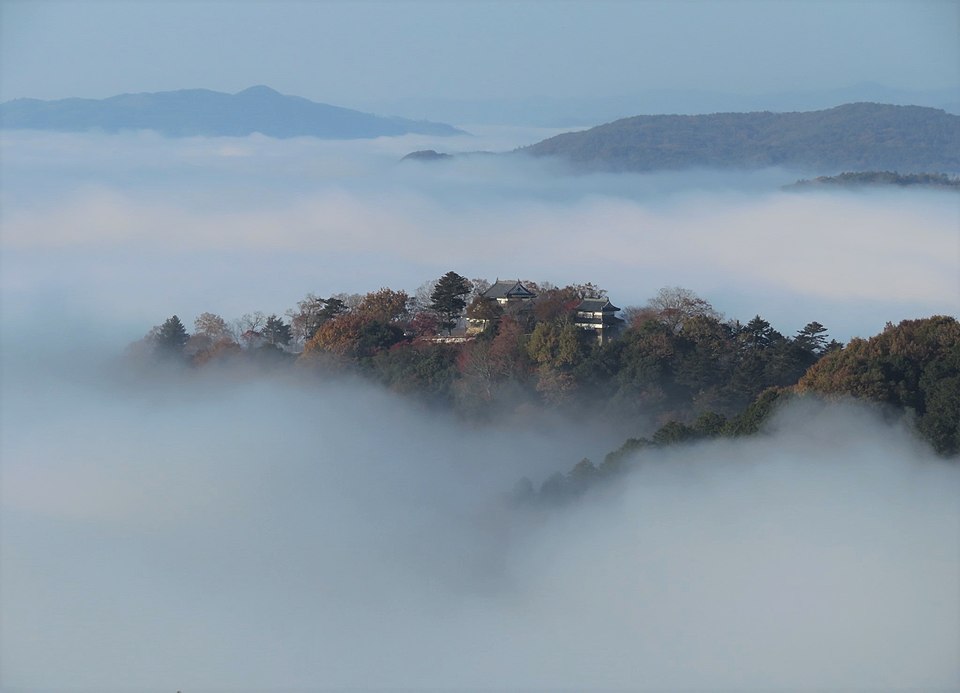
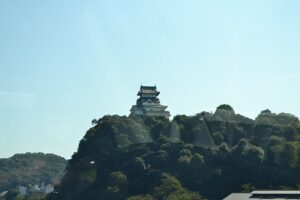
Between late September and early April, in the hour before dawn, if the cold air has pooled thickly enough in the Takahashi river valley and the summit of Mount Gagyū has stayed clear of it, a small two-tier keep at 430 metres above sea level appears to float on a white ocean. The unkai, literally “sea of clouds”, is a banal enough phenomenon on any mountain, but Bitchū Matsuyama is the only surviving original-construction Japanese castle tenshu that sits high enough to do this reliably, and the image of the black tiled roof above the cloud layer has quietly carried the castle from third-tier obscurity into the Instagram-era national consciousness. Takeda Castle in Hyōgo does the same trick, but Takeda is a set of stone foundations; the keep above them burned out centuries ago. Bitchū Matsuyama is the original wood.
I keep coming back to Bitchū Matsuyama because it is, quietly, the most improbable building on the twelve-original-tenshu list. It is the highest, by a margin — the next-closest original keep, Matsue, sits at 28 metres above sea level. It is the smallest, by floor area, and roughly half the volume of the least-imposing rival on the list.
And it was built in 1683, which is peculiar, because eleven of the other twelve original tenshu date from the Sengoku decades and early-Tokugawa consolidation when building a keep still meant something military; only Bitchū Matsuyama was raised in the middle of the Genroku peace, when its own domain lord didn’t particularly need a defensive structure and went ahead anyway. The building is an anachronism dressed as a fortification. Climbing the mountain path to it — forty minutes on foot from the shuttle-bus terminus, the last section on stone steps cut by Mimura-era engineers — you are climbing toward a 17th-century architectural statement that no textbook asked for.
In This Article
- What Bitchū Matsuyama actually is
- 1240 — Akiba Shigenobu on Mount Ōmatsu
- The medieval owners — Uenos, Shōs, Mimuras
- 1600 — Sekigahara and the Kobori appointment
- 1617–1641 — the Ikeda interlude
- 1681–1683 — Mizunoya Katsumune builds the tenshu
- The Mizunoya heirless collapse and the Akō connection
- 1868–1873 — bloodless surrender and near-demolition
- 1929–1940 — the Shinno rescue
- The post-2012 unkai tourism boom
- 2018 — the Sanjūrō cat
- Architectural details — what to look for when you climb
- Where to visit Bitchū Matsuyama Castle today
- The castle itself — honmaru, tenshu, and the mountain trail
- The unkai viewpoint — Fukiyama-chōbō-dai
- Raikyū-ji and the Kobori Enshū garden
- Takahashi old town — the Ishibiya samurai district
- Meeting Sanjūrō — where and when the castle cat actually appears
- Seasonal timing — autumn, cherry blossom, and winter
- Getting there
- The building that should not quite be there
What Bitchū Matsuyama actually is
Bitchū Matsuyama Castle (備中松山城, Bitchū Matsuyama-jō), also called Takahashi Castle (高梁城) to distinguish it from the other Matsuyama Castle two prefectures east on Shikoku, sits on the south ridge of Mount Gagyū (臥牛山, “recumbent ox mountain”) in the city of Takahashi, Okayama Prefecture, in the western San’yō region. The mountain itself is a long four-peaked ridge — Ōmatsu, Tenjin-no-maru, Komatsu, and Maeyama — with a summit elevation of 487 metres. The honmaru and its surviving two-tier two-storey tenshu sit on the Komatsu peak at 430 metres.
This is the only yamashiro, mountain castle, on the twelve-original-tenshu list. All other originals are either hirajiro (flatland) or hirayamajiro (flat-topped hill).
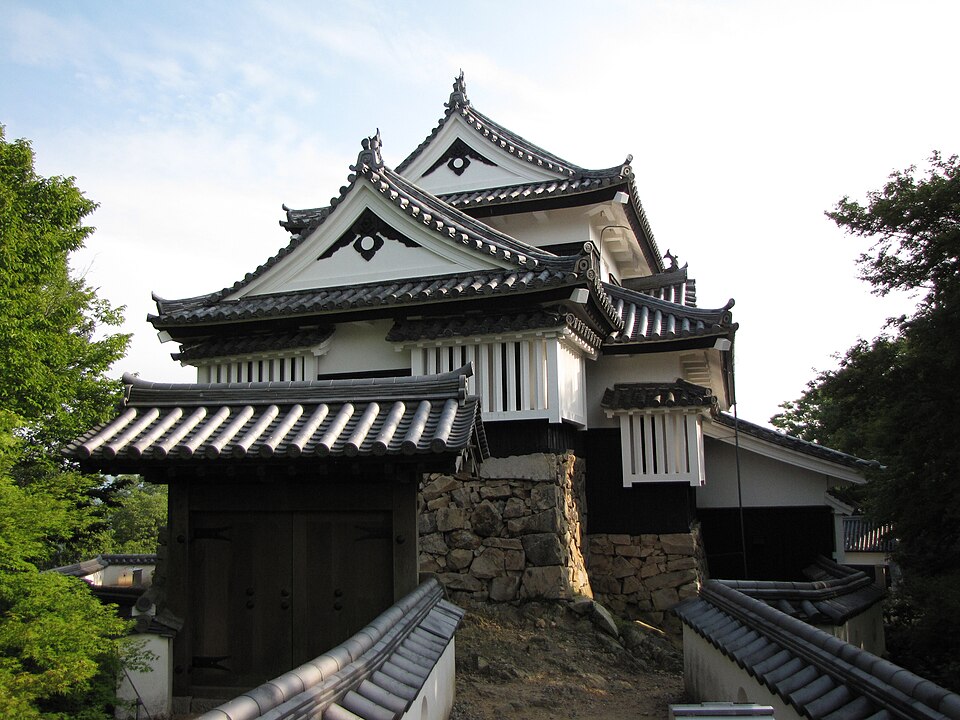
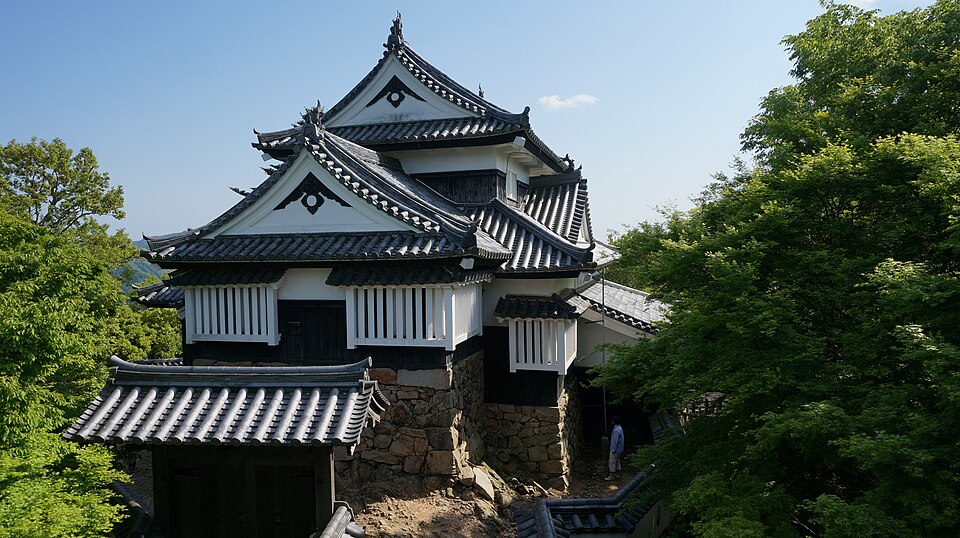
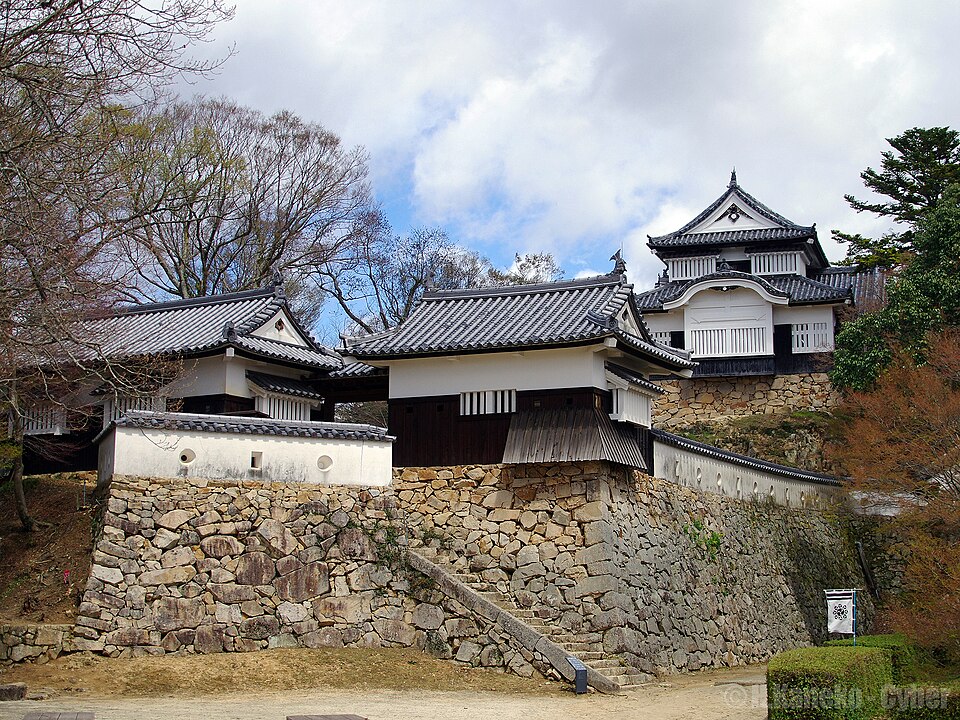
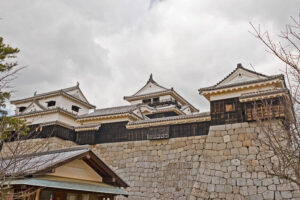
The tenshu is a compact two-storey watchtower-style borō-gata keep about 11 metres tall, with a half-sunken western tsukeyagura corridor attached to its west face, classified architecturally as a connected-complex (fukugō-shiki) keep. You enter now through the western corridor door, but in the original layout the approach came from the Hachi-no-hira yagura via a covered watari-yagura passage, and only then turned into the main keep. The first floor has a long sunken hearth (nagaro), built in, the sources say, for cooking and winter warmth but in fact almost never fired, because open flame in a wooden keep was regulation-forbidden and the lord’s household lived at the foot of the mountain anyway.
The raised shōzoku-no-ma on the first floor was the lord’s formal seat in the unlikely event of a siege, and, the slightly grim local convention says, the place he would have committed seppuku if the castle fell. The second floor has a nine-kami goshadan shrine compartment, partitioned by mairado sliding doors, dedicated to Atago Gongen and eight other protective deities.
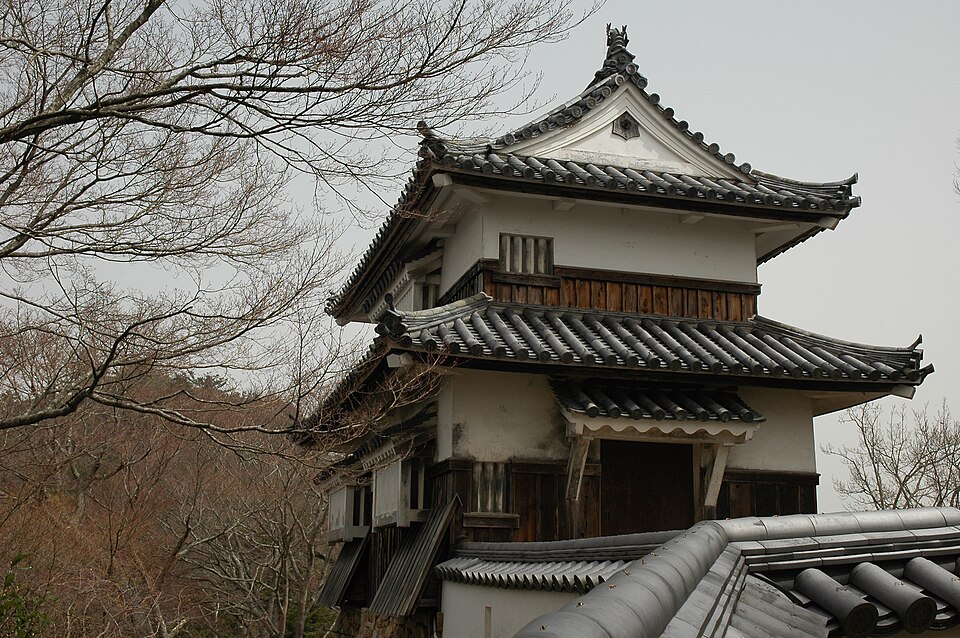
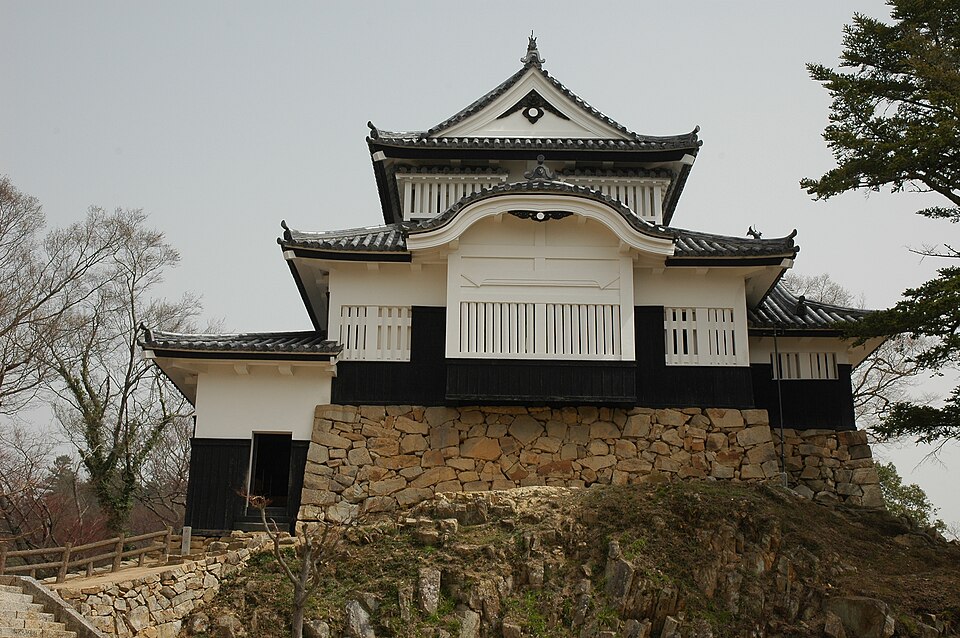
The exterior is clad in plastered lath with a wooden wainscot at the base. The first-storey roof carries a curved karahafu bay window on the south face and stepped ori-ma-gari dashi-mado bay windows on the second. The whole building uses vertical lattice tate-renji windows rather than the horizontal style you see on most surviving keeps — a small detail, but a dating one: vertical lattice is typical of the late-17th-century when the Bitchū Matsuyama tenshu was raised, not of the Sengoku decades when the famous keeps like Matsumoto and Inuyama were built.
Stand in front of Bitchū Matsuyama and you are looking at a building that wears its late arrival on its sleeve. For comparison, the black-lacquered Matsumoto Castle tenshu in Nagano was built ninety years earlier as a genuine Toyotomi-era fortress complex, and the difference in architectural register is immediately obvious.
What Bitchū Matsuyama does have in common with the twelve-original club is authenticity of fabric. The beams are original 17th-century timber. The wall plaster is reapplied on a cycle, but the wooden structure behind it is the exact wood that Mizunoya Katsumune’s carpenters put in place between 1681 and 1683.
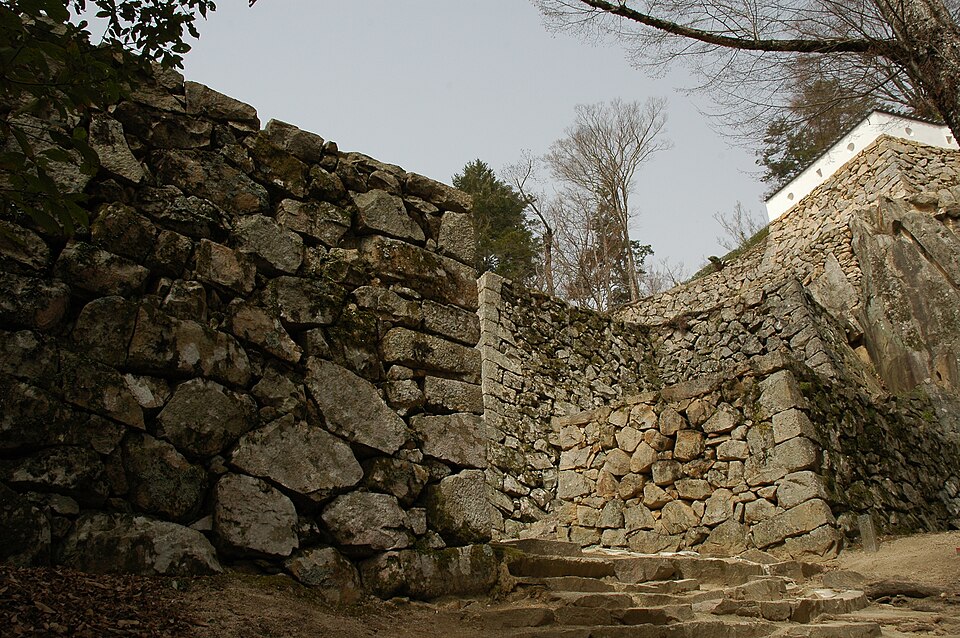
The building has never been dismantled for reassembly. The foundation stones — the ishigaki running up the Komatsu ridge — are older still, dating from the Mimura consolidation of the 1570s with probable earlier layers from the Kamakura period. For its first three centuries the castle lived the ordinary career of a mountain stronghold; in the 20th century it nearly collapsed from neglect; in the 21st, the cloud-photograph and a specific stray cat pulled it abruptly back into relevance.
1240 — Akiba Shigenobu on Mount Ōmatsu
The castle begins in 1240, when a man called Akiba Saburō Shigenobu received the jitō, estate stewardship, of the Ukan district of Bitchū Province under the Kamakura shogunate’s land redistribution policy. Ukan (有漢) is the upland area of modern Takahashi’s northern half, and Akiba’s appointment was part of the broader post-Jōkyū-War (1221) programme in which the Hōjō-led Kamakura bakufu moved eastern warrior-class jitō into former Taira-clan and court-noble estates across western Japan. Akiba was an outsider from the Kantō brought in to administer a western province’s surplus rice levy. He built his fortress on Ōmatsu (大松), the northernmost peak of what would later be the Gagyū four-peak ridge, which at that date was probably a straightforward wooden palisade on an earthwork platform rather than a proper keep.
No physical trace of Akiba’s 1240 fortification survives. The surviving stone-wall traces on the mountain are all later, Mimura-era and Mizunoya-era, and the documentary evidence for the Akiba fortress is thin, one or two mentions in late-Kamakura cadastral records. But the 1240 date is the one you will see on every Japanese-language sign at the castle, and it is the date Takahashi City uses in its tourism literature, so it is the date this article will use too. Ninety years later, in the Genkō era (1331 or thereabouts), a successor stewardship holder named Takahashi Muneyasu extended the fortress south from Ōmatsu to the Komatsu peak, the south peak where the current tenshu stands, and it is probably Takahashi who gave the city its eventual name (Takahashi, “high bridge”), though that etymology is disputed.
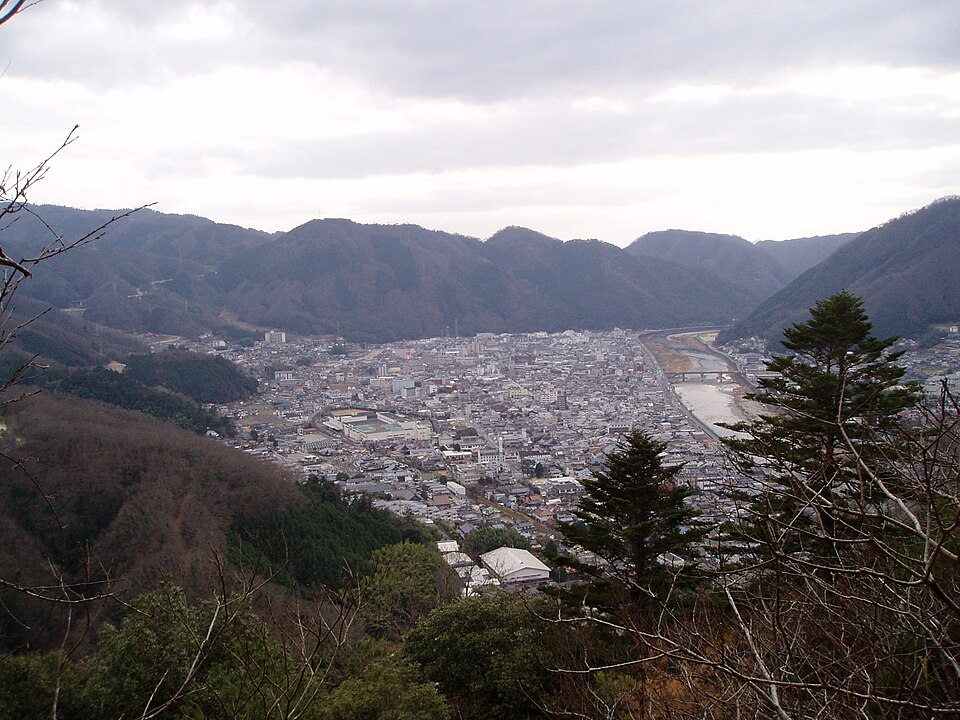
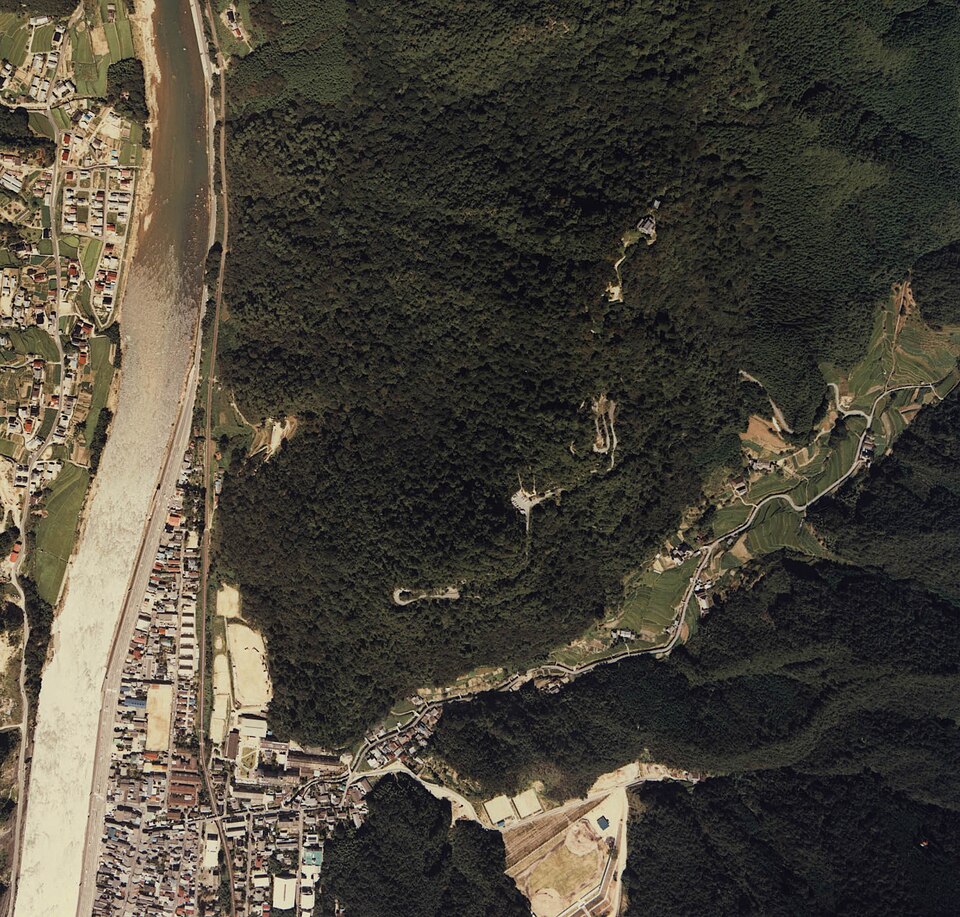
The location made sense in 13th-century terms and makes sense in 21st-century terms for the same reason. Mount Gagyū sits directly above the Takahashi River, the principal north-south water route between the Seto Inland Sea and the San’in interior, and its ridgeline commands the east-west road that links Tsuyama in old Mimasaka Province to Miyoshi in the Chūgoku interior. Any Kamakura-era steward trying to police a western upland district of Bitchū would put his fortress exactly here. The same geography, nine hundred years on, gives you the river valley that fills with the cold-air layer that produces the unkai; the mountain stayed strategic as long as overland freight mattered, and then stayed scenic when freight went to railways.
The medieval owners — Uenos, Shōs, Mimuras
Between the 1330s and the 1570s the castle passed through the hands of a series of clans whose names mean very little outside Japanese regional history and quite a lot inside it. The Hosokawa clan were the shugo, provincial military governors, of Bitchū through the Muromachi period but administered the province through local deputies, of which Matsuyama was one of several. The Ueno clan held the Matsuyama post for some decades in the 15th century. They were displaced by the Shō clan around 1532, when the regional warlord politics of western Japan were being transformed by the rise of the Amago in Izumo Province to the north-west, and then by the arrival of the Mōri clan from Aki Province further west.
The decisive decades were the 1560s and 1570s. Mimura Iechika, an ambitious Bitchū lord with Mōri backing, took the castle from the Shō in 1561 and began turning it into a major regional stronghold. Iechika was assassinated in 1566 by the rival warlord Ukita Naoie, one of the more spectacularly treacherous players of mid-Sengoku western Japan, at a dinner Naoie had arranged in order to remove him.
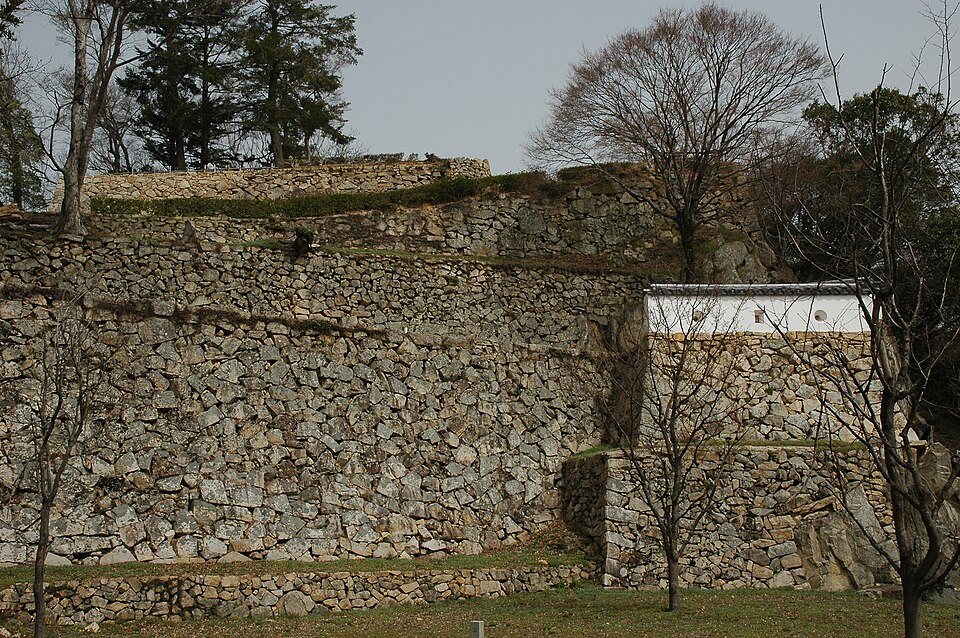
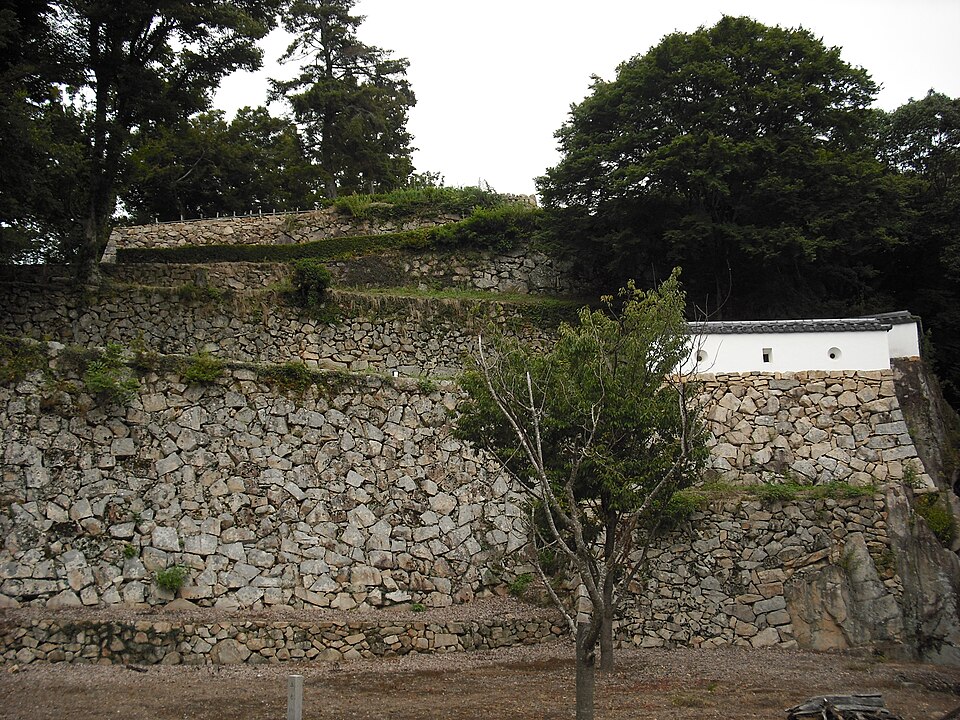
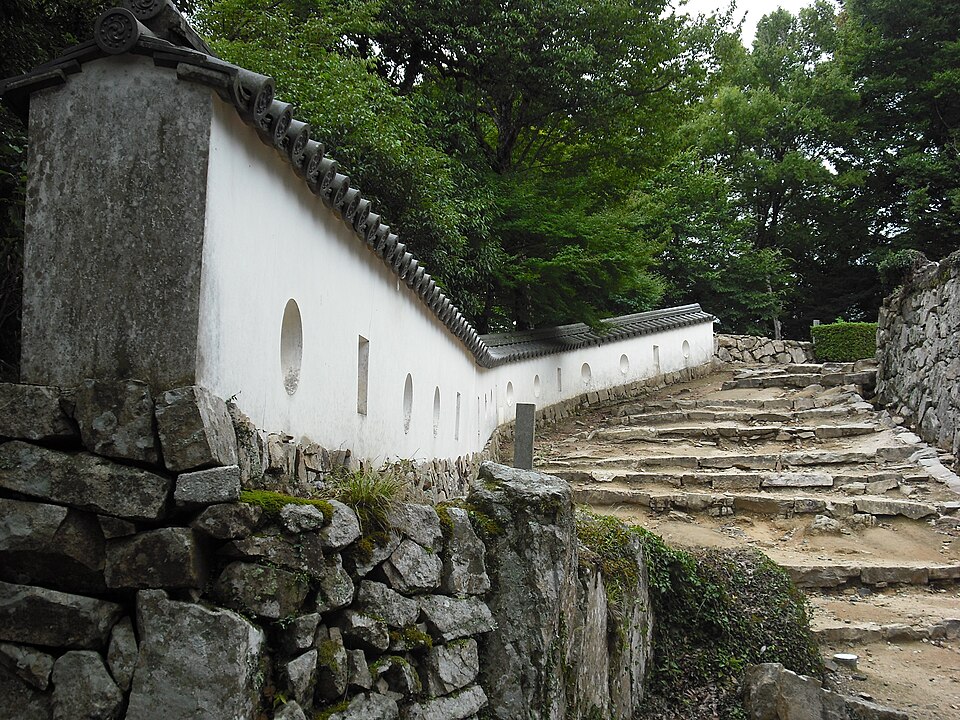
Iechika’s son Motochika recaptured the castle in 1571 and then did the ambitious thing: he extended the fortifications along the entire Gagyū ridge, converting what had been a single-peak castle into a linked multi-peak fortress complex with outworks on Ōmatsu, Tenjin-no-maru, and Komatsu. Most of the stone walls you see on the mountain today were originally Mimura Motochika’s work, though they have been extensively repaired since.
The Mimura period ended abruptly. In 1574 Motochika broke with his Mōri patrons and entered secret communications with Oda Nobunaga — the gamble being that the Oda tide would reach western Japan faster than the Mōri could reconsolidate against it. The gamble failed. The combined forces of the Mōri and the Ukita besieged Bitchū Matsuyama in the 1574–75 campaign known as the Bitchū hyōran (Bitchū Disturbance), and in the sixth lunar month of 1575 the castle fell.
Motochika committed suicide in the honmaru, and the Mimura clan was extinguished as a political entity. The castle passed back into Mōri hands and stayed there for the next twenty-five years. It saw no combat in that period; the geography that had made it strategically valuable to a regional Kamakura steward now made it a secure archival storage site for a Mōri clan whose interests had shifted further west.
1600 — Sekigahara and the Kobori appointment
The Mōri backed the losing Western Army at Sekigahara on 21 October 1600, and Tokugawa Ieyasu’s reprisal reduced their 1.2-million-koku domain to the 300,000-koku Chōshū enclave overnight. Bitchū Province was stripped out and reassigned; the castle at Matsuyama passed into direct Tokugawa rule as tenryō land, administered by a shogunal deputy. The first Tokugawa-appointed daikan of Bitchū Matsuyama was Kobori Masatsugu, a veteran Tokugawa retainer. His son Masakazu — who is much better known by his Zen-derived sobriquet Enshū — inherited the Matsuyama posting in 1604 and held it until 1617.
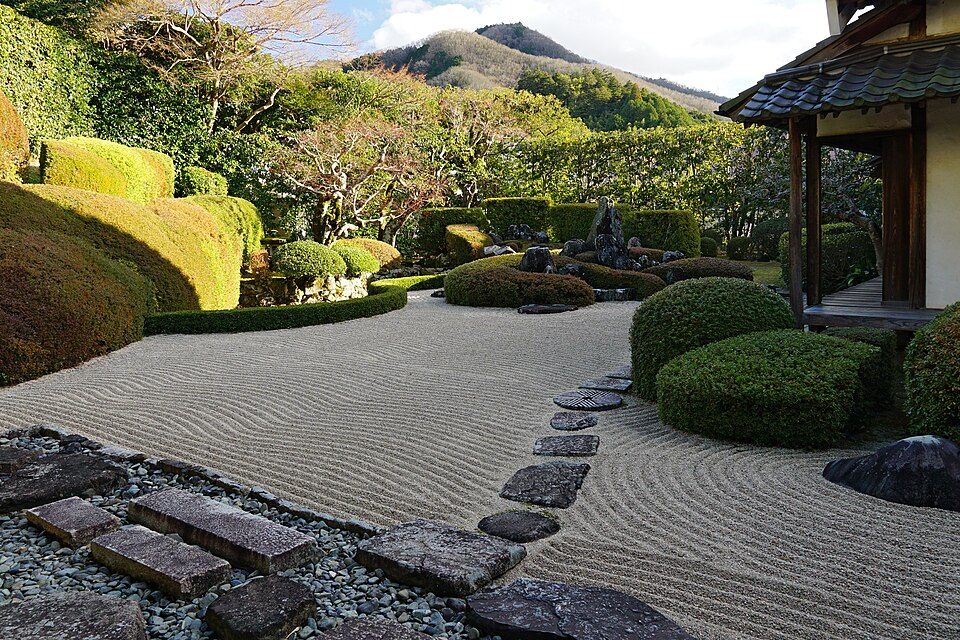
Kobori Enshū (1579–1647) is one of the figures who makes a provincial Tokugawa-era castle appointment worth writing about. He was a senior sakuji-bugyō, master of works, for the shogunate, personally responsible for the Edo-era reconstruction of several major castles including Nagoya, Fushimi, and eventually Sunpu, and he is the canonical grand master of the Enshū school of Japanese tea ceremony, the one that positioned itself as the polite, daimyō-court successor to Sen no Rikyū‘s more ascetic wabi-cha tradition. He was also the first important garden designer of the early Edo period. The garden he laid out at Raikyū-ji (頼久寺) at the foot of Mount Gagyū between roughly 1604 and 1610 is the earliest surviving major example of his work and is what actually gets listed when Bitchū Matsuyama appears on Japanese-garden tour itineraries.
What Enshū may or may not have built on the mountain during his Matsuyama posting is the more contested question. The traditional account, the one the Bitchū Matsuyama tourist signage repeats, is that the current tenshu was raised in 1683 by the second-generation Mizunoya lord, and that nothing of Kobori-era construction survives on the summit. A revisionist reading, supported by some of the Japanese architectural historians who have examined the keep timbers, suggests that a small Kobori-era tenshu was built on the Komatsu peak around 1604–1610 and that Mizunoya Katsumune’s 1681–1683 works were a rebuild rather than a fresh construction on virgin ground.
The dendrochronology is inconclusive, the surviving timbers all test late-17th-century, but the stone foundation patterns hint at earlier work. Either way, Kobori Enshū’s principal mark on Bitchū Matsuyama is not on the mountain; it is in the temple garden at the mountain’s foot.
1617–1641 — the Ikeda interlude
In 1617 the Tokugawa reorganised the Bitchū Matsuyama lordship out of direct shogunal administration and into a formal domain. The first appointed daimyō of the newly-created 63,000-koku Bitchū-Matsuyama-han was Ikeda Nagayoshi, from a cadet branch of the major Ikeda clan whose senior line held neighbouring Okayama. The Ikeda were a reliable Tokugawa-allied house, they had been given Okayama after Sekigahara as part of the same reallocation that had broken the Mōri, and putting an Ikeda cadet into Bitchū Matsuyama made political sense as a buffer between the Okayama-Ikeda heartland and the shrunken Mōri presence further west.
Nagayoshi’s tenure was unremarkable. His son Nagatsune inherited in 1632 and died without an heir in 1641, and the domain reverted to the shogunate for reassignment. This is the point at which the castle’s second serious architectural phase begins.
The Ikeda lords had been content to administer from the Go-Nekoya — the lord’s residence and administrative complex that sat at the foot of Mount Gagyū, where Takahashi High School now stands — and had let the mountain infrastructure drift. The Mizunoya lords who came next did not have that luxury.
1681–1683 — Mizunoya Katsumune builds the tenshu
Mizunoya Katsutaka took possession of the 50,000-koku Bitchū-Matsuyama domain in the early months of 1642. He was a cadet-branch Mizunoya, the main line of which had come up through Tokugawa service in the Kantō, and his appointment was straightforward patronage — a steady Tokugawa family given a steady western domain. Katsutaka ruled for roughly twenty-two years, died in 1664, and passed the domain to his son Mizunoya Katsumune. It is Katsumune who commissioned the rebuilding that produced the tenshu now standing.
The works ran from Tenna 1 (1681) through Tenna 3 (1683). The scale was significant by Edo standards — a full reconstruction of the tenshu, rebuilding of the nijū-yagura (two-tier turret) and other yagura on the honmaru, repair of the yamashiro gates (the Udegi-gomon, the Ni-no-hira, the Roji-mon), and extensive restoration of the lord’s compound at the foot of the mountain. It is possible, as the revisionist reading argues, that some Kobori-era work was salvaged and incorporated; the dendrochronology of the visible timbers does not support pre-1681 felling dates, so if a Kobori tenshu existed Mizunoya either took it down entirely or the surviving traces are buried in the foundations.
The peculiar thing about the 1683 keep is that it is, in architectural historians’ terms, an Edo-period building in fortress dress. By the 1680s Japan had been at peace for sixty-five years under the Tokugawa system. The Shimabara Rebellion, the last serious armed resistance to the bakufu, had ended forty-five years earlier. No Edo-era daimyō expected to defend his castle against besieging armies in 1683.
And yet Mizunoya Katsumune built a full fortified keep with arrow slits, a lord’s seppuku platform, a defensive shrine compartment on the second floor, and a hidden entrance through a covered passage. The ornamentation gives the building away — the curved karahafu bay window on the south face, the stepped bay windows on the upper storey, the decorative chidori-hafu gables — these are peacetime aesthetic choices. The defensive apparatus is residual fortress convention; the detail work is daimyō-residence taste.
My reading of this is that Mizunoya Katsumune built the tenshu as a statement of status as much as function. The Bitchū Matsuyama domain was middling (50,000 koku), and its administrative lord had to perform a credible daimyō role on the sankin-kōtai circuit. A visible tenshu on a highly-placed mountain, seen from every approach road, was both cheap signalling and good propaganda for a family that was not otherwise going to be mistaken for front-rank Tokugawa allies. The building is an anachronism, yes, but a calculated one.
The Mizunoya heirless collapse and the Akō connection
Mizunoya Katsumune died in 1689 and the lordship passed to his son Katsumi, whose tenure was brief and disastrous. Katsumi died in 1693 without an heir, and the adopted-heir Katsuharu, thirteen years old, died a month later, in November 1693. The Mizunoya house, having built the keep ten years earlier, was extinguished as a main line in less than a decade. This produced one of the more gothic footnotes in Edo-period Japanese history: because the Mizunoya extinction left the Bitchū Matsuyama domain without a lord, the Tokugawa bakufu sent the neighbouring Akō Domain’s lord Asano Naganori and his chief retainer Ōishi Yoshio (better known by his personal name Kuranosuke) to take formal possession of the castle during the reassignment interval.
The records preserved in the Mizunoya line’s successor branches suggest that the Asano-Ōishi delegation’s behaviour during the handover was not ideal. Asano reportedly showed insufficient respect for Mizunoya household protocols during the 1694 inspection visit, and Ōishi’s personal conduct in Matsuyama town, the specifics are coyly undocumented, was apparently poor enough to be remarked on in local records. This is pertinent because Asano Naganori is the same Asano who would, in 1701, draw a sword on Kira Yoshinaka inside Edo Castle over an etiquette dispute and be ordered to commit suicide, triggering Ōishi Kuranosuke’s eventual 47 Rōnin revenge against Kira in December 1702. The Bitchū Matsuyama records that describe a rude Ōishi in 1694 are the closest the Akō narrative comes to a neutral character witness, and the neutral character witness does not speak well of him.
After the 1694 Akō handover, the Bitchū Matsuyama domain was awarded to Andō Shigehiro with a raised rice-yield of 65,000 koku. The Andō held it for sixteen years and were moved on; in 1711 the Ishikawa line of Toda-Matsudaira ally vassals came in at 60,000 koku and held it for thirty-three years. Then, in 1744, the Ishikawa were reassigned and the final Edo-era lords arrived: the Itakura. A cadet branch of the main Itakura house, they would hold Bitchū Matsuyama for eight generations from Itakura Katsuzumi’s appointment in 1744 through to the Meiji Restoration of 1871.
Their 127-year tenure is, from the point of view of a castle visitor, unexciting — they maintained the infrastructure, sent their delegation on sankin-kōtai, and presided over a Bitchū Matsuyama that had settled comfortably into mid-ranking Edo-era irrelevance. This is the normal condition of a 17th-century-built provincial castle in the late Edo period. Nothing happened. Nothing was supposed to happen.
1868–1873 — bloodless surrender and near-demolition
On 11 February 1868 (18 January Keiō 4 by the old lunar calendar), during the Boshin War, the Itakura-ruled Bitchū-Matsuyama domain was declared an enemy of the new imperial court for its Tokugawa-loyalist stance. The domain’s senior administrator, a Yang-ming Confucian scholar named Yamada Hōkoku, took the responsibility for the surrender decision himself, ordered the castle gates opened, and handed the keep to the imperial forces without a fight. It is one of the quieter capitulations of the Boshin War, and it saved the mountain structures from the cannon-fire that damaged or destroyed several other resistant castles in 1868–69. The Meiji legislature did the rest of the damage via administrative decree.
The 1873 Haijō-rei (castle abolition edict) classified Bitchū Matsuyama as abolished. The Go-Nekoya, the lord’s compound at the foot of the mountain, was pulled down, its timbers and stone sold off. The mountain castle was auctioned to a merchant household for 7 yen (roughly 50,000 yen in 2026 money — the price of a decent dinner out, for a working Edo-period fortress).
The buyer, however, could not economically dismantle the buildings. The mountain location was too remote, the haulage down the ridge too expensive, and there were no domestic buyers for the timber in a region that had already stripped the Go-Nekoya for scrap. The purchased buildings were therefore simply left standing — abandoned, not actively destroyed.
Left-standing and maintained-well are not the same thing. Across the next fifty years the mountain buildings rotted. The Hachi-no-hira yagura, the main secondary turret, collapsed outright at some point in the 1910s.
The tenshu itself was overrun by ivy, and by 1929 photographs show the northern roof sagging visibly, with water damage spreading through the upper-floor interior. The building was within a decade or so of structural failure when the intervention came.
1929–1940 — the Shinno rescue
The man who saved Bitchū Matsuyama was Shinno Tomoharu (信野友春), a history teacher at the Takahashi Middle School. He spent the late 1920s conducting a detailed architectural survey of the mountain castle, published the results as Bitchū Matsuyama-jō oyobi sono jōka (備中松山城及其城下, “Bitchū Matsuyama Castle and its Castle Town”) in 1929, and used the documentary evidence to lobby Takahashi town council for rescue funds. The council voted a budget of 18,000 yen for the work — substantial for a Depression-era local government. Shinno’s documentation convinced the prefecture that the mountain buildings were worth saving; the prefecture matched the town funding; and the 1929-inaugurated restoration ran from 1930 through 1940.
The schedule was two-phase. The nijū-yagura was restored first, between 1930 and 1933 — re-roofed, re-plastered, structurally re-timbered where the decay required. The tenshu itself followed from 1933 through 1940 — a much more extensive job, because the damage was more advanced.
Local schoolchildren were mobilised to carry replacement roof tiles up the mountain trail in the final year of the work; local sources put the total carried at roughly 20,000 tiles, which is almost certainly a rounded-up figure but indicates the order of magnitude. The work was completed ahead of the 1941 Important Cultural Property designations, which confirmed the tenshu, the nijū-yagura, and the east dobei wall fragment as state-protected structures under the Meiji-era National Treasures legislation.
The 1941 designation was the first state recognition the castle had received since the Meiji abolition; it was, in practical terms, the moment Bitchū Matsuyama re-entered the heritage system. The restoration continued after the war. Between 1957 and 1960, under the post-war Cultural Properties Protection Law, a further restoration campaign, the so-called Shōwa Great Restoration, carried out partial dismantling and repair of the tenshu, full dismantle-and-reassemble work on the nijū-yagura, and restoration of the east dobei wall fragment.
Takahashi City took over as the castle’s managing body in 1960. The compound has been under continuous municipal management since; a further reconstruction programme, running from 1994 onward, rebuilt the honmaru’s minor gates and yagura from Edo-period drawings — the Minami Goten, the Higashi Goten, the Udegi-goten, the Roji-mon, and the small ground-level yagura that now anchor the honmaru courtyard.
The post-2012 unkai tourism boom
For the first fifty years of its post-war heritage status Bitchū Matsuyama was a minor destination. Okayama Prefecture’s castle traffic went to Okayama Castle and Himeji an hour east; the twelve-originals circuit drew serious castle enthusiasts but was a tiny share of overall visitor numbers. What changed things was the cloud photograph.
The unkai had been documented at Bitchū Matsuyama for decades, local photographers had produced atmospheric images from the Fukiyama-chōbō-dai viewpoint for the town tourist office throughout the 1990s, but the phenomenon remained regionally known and nationally obscure. Then in 2006 the Japan Castle Foundation named the castle one of the country’s Top 100 Castles (list position No. 68), and in the early 2010s the unkai image finally met its medium: the smartphone camera with a functional night mode, and the Japanese travel Instagram.
The castle’s annual visitor numbers climbed from around 60,000 in the mid-2000s to above 100,000 by 2015. Then in 2016 NHK used Bitchū Matsuyama as the opening-credits backdrop for the major Taiga-drama television series Sanada-maru, about the Sanada clan of central-Japan fame, and visitor numbers spiked further. The castle has nothing historically to do with the Sanada (they were an Shinshu clan, not a Bitchū one), but the aerial shots of the keep floating above the unkai were too visually compelling for NHK’s director to use anywhere else, and the series accordingly shows a castle it is not describing. Okayama Prefectural tourism did not complain.
The unkai itself has predictable timing. Late September through early April dawn mornings is the main window. Late October through early December is the highest-probability window; deep winter (late December through February) still produces the phenomenon but less frequently.
Summer, when the valley warm air does not cool enough overnight, produces nothing at all. The conditions required are a calm night, a clear sky, and a large day-to-dawn temperature differential. Okayama University of Science maintains an AI forecast model for the unkai at Bitchū Matsuyama (find it on the Ōhashi Research Group site), which has become accurate enough that serious unkai photographers now check it the night before alongside the standard weather forecast.
2018 — the Sanjūrō cat
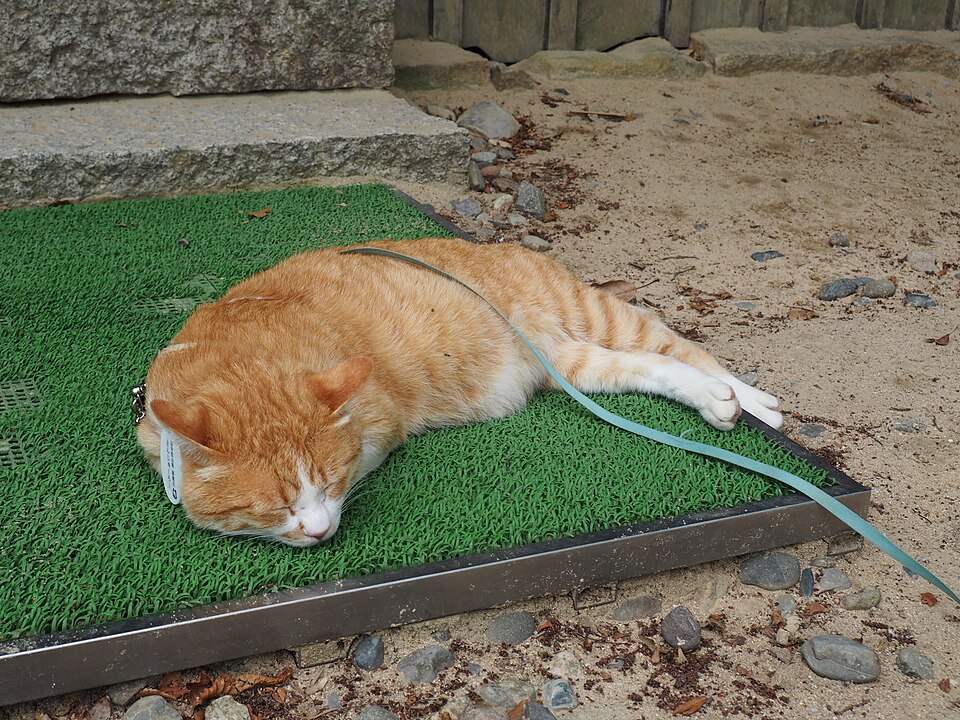
If the unkai photograph pulled Bitchū Matsuyama into the Instagram era, what pushed it into the national-mascot conversation was a stray cat. On 1 July 2018, a Takahashi-resident woman called Megumi Nanba took custody of an adult cat named Sanjūrō — the name a deliberate homage to the Bakumatsu-era Bitchū-Matsuyama-han samurai Tani Sanjūrō. Two weeks later, on 14 July 2018, during the torrential rains that produced the Heisei-30 West Japan flood disaster, Sanjūrō jumped out of an apartment balcony and ran.
Nanba searched for him without success for weeks. A castle employee noticed a stray cat living around the honmaru area of Bitchū Matsuyama and began feeding him. By the time Nanba’s search reached the castle, Sanjūrō had taken up residence.
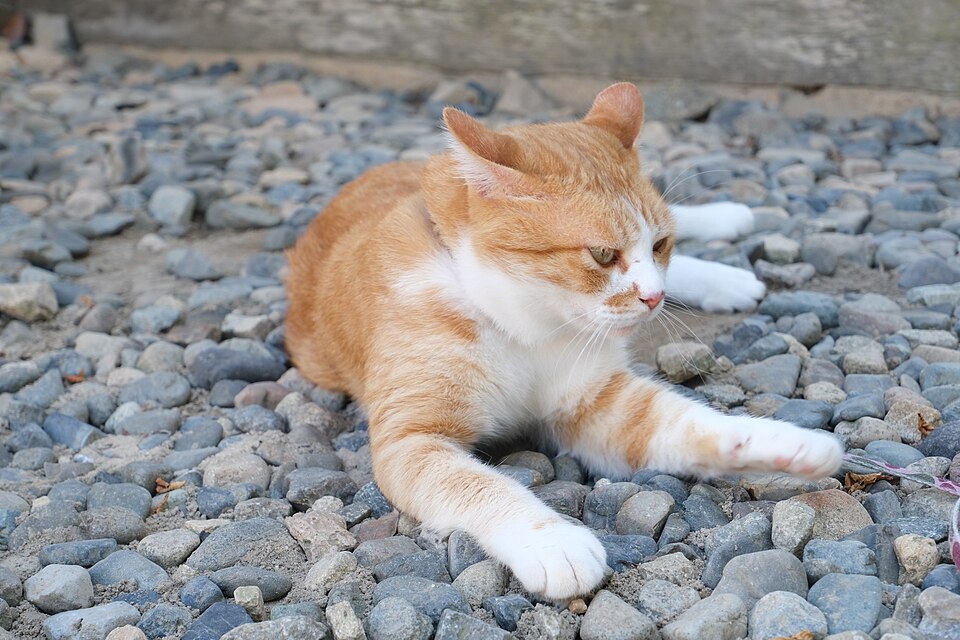
The Takahashi Tourist Association, faced with a cat that refused to leave the castle and had begun attracting photographs from passing tourists, first installed him as a provisional mascot in October 2018. Nanba, confronted with the choice between reclaiming her cat and letting him remain at a job he had self-selected, agreed in October 2018 to formally sign him over. The formal “re-enthronement” ceremony (Sai-nyūjō-no-gi) was held on 16 December 2018.
Sanjūrō was declared official cat-lord of Bitchū Matsuyama Castle. Visitor numbers, which had cratered during the summer flood disaster, recovered sharply over the following twelve months.
There has been some controversy. Sanjūrō went missing again on 4 November 2018 — a separate escape, apparently stress-related — and was recovered on 23 November. The tourist association subsequently imposed veterinarian-supervised rules on his duties, including restricted encounter windows and a designated quiet-area retreat for hours when he declines public appearances. Cat-averse visitors are warned at the ticket gate about the possibility of feline contact; cat-loving visitors are warned that Sanjūrō may simply not be visible on any given day.
The formal comparison is with Hikonyan — the samurai-cat mascot of Hikone Castle in Shiga — but Sanjūrō is an actual cat with actual independent behaviour rather than a costumed performer, which makes him less reliable but, on the days he cooperates, more interesting to meet. I will confess to strong partisanship on this point. A real cat on a real castle is the right version of this.
Architectural details — what to look for when you climb
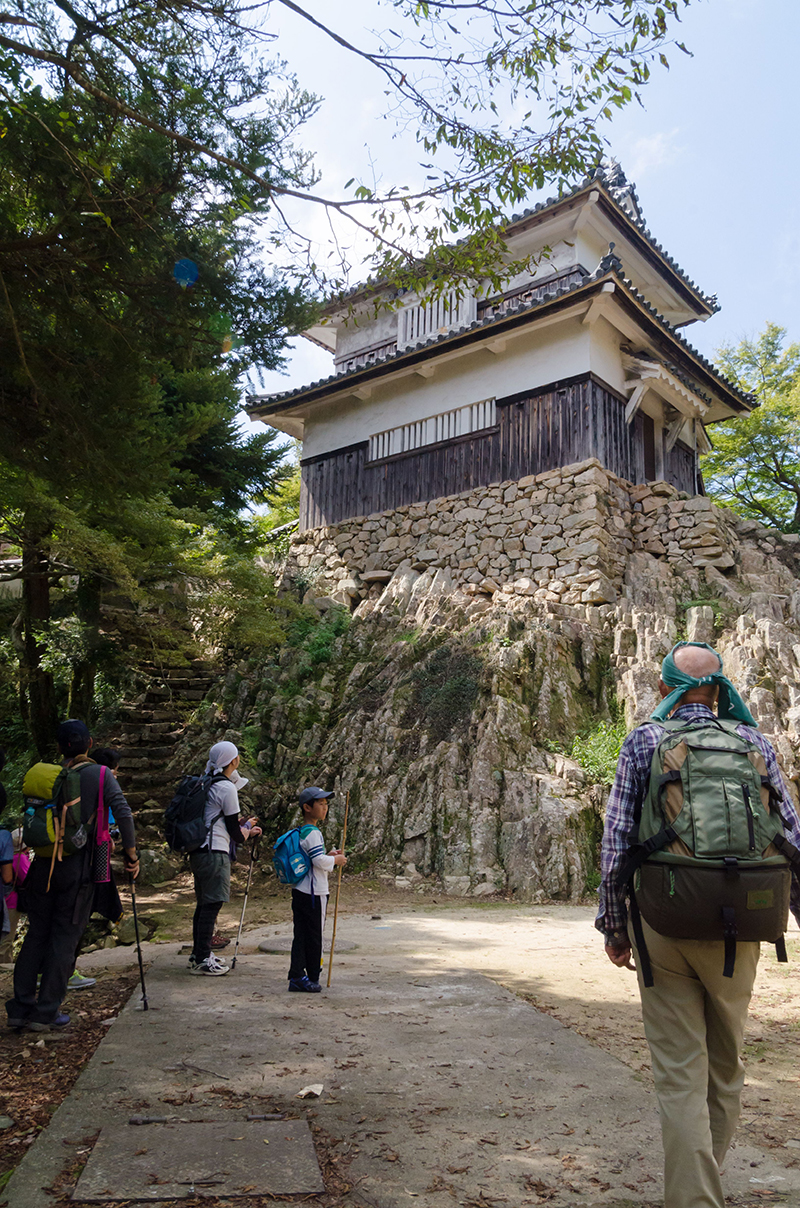
Start at the entrance — the western corridor door, the half-sunken tsukeyagura attached to the west face of the keep. The approach is designed to obstruct: the stone steps directly in front of the door turn through ninety degrees before reaching it, which was a standard late-Edo fortification trick to slow an attacker carrying a weapon. Inside, the first thing you notice is how low the ceiling feels compared to Matsumoto or Inuyama.
The building is genuinely small — the first-floor main hall is about twelve by six metres, and the second is smaller still. This is the smallest original tenshu in Japan by floor area, and the compact dimensions are palpable from the moment you step inside.
The first floor has the long sunken hearth (nagaro) running down the south-east side. It is decorative more than functional — open flame was regulation-banned in the keep from the moment of construction, and in 344 years nobody has lit a proper cooking fire here. Near the hearth, the raised platform area (shōzoku-no-ma) is the lord’s formal seat.
Japanese castle scholarship diplomatically calls this the “lord’s residence platform”; the blunter Japanese tradition says it is also where the lord would commit seppuku if the castle fell, and the platform’s raised height and slightly-recessed position relative to the room wall are consistent with that function. In practice Mizunoya lords administered from the Go-Nekoya at the mountain foot and never used the platform for anything at all.
Climb to the second floor. The ceiling remains low, the room is smaller, and on the north wall you will find the goshadan (御社壇), the nine-kami shrine compartment, partitioned off by mairado sliding doors. The nine deities enshrined here are Atago Gongen (the fire-protection deity), Narita Myōjin, and seven others; the installation is unusual for a tenshu second floor, and it speaks to the peacetime-ornamental register in which the building was conceived. Most original tenshu reserve their second and third floors for arrow-slit positions and garrison accommodation; Bitchū Matsuyama turns its second floor partly into a small religious space, because the building’s primary function by 1683 had shifted from fortification to signalling.
The windows are the detail that repays closest attention. The vertical-lattice tate-renji frames are late-17th-century construction and are visibly different from the horizontal-lattice frames you see at older keeps. The curved karahafu bay window on the south face of the first storey is a specifically Kobori-era aesthetic borrowing, common in tea-house architecture of the period but rare on fortified buildings.
The stepped dashi-mado bay windows on the second storey are an architectural refinement you find on only a few surviving tenshu — Matsue Castle has a similar feature. Each of these details individually is minor; together they tell you that Mizunoya Katsumune was building a building that would make a statement, not win a battle.
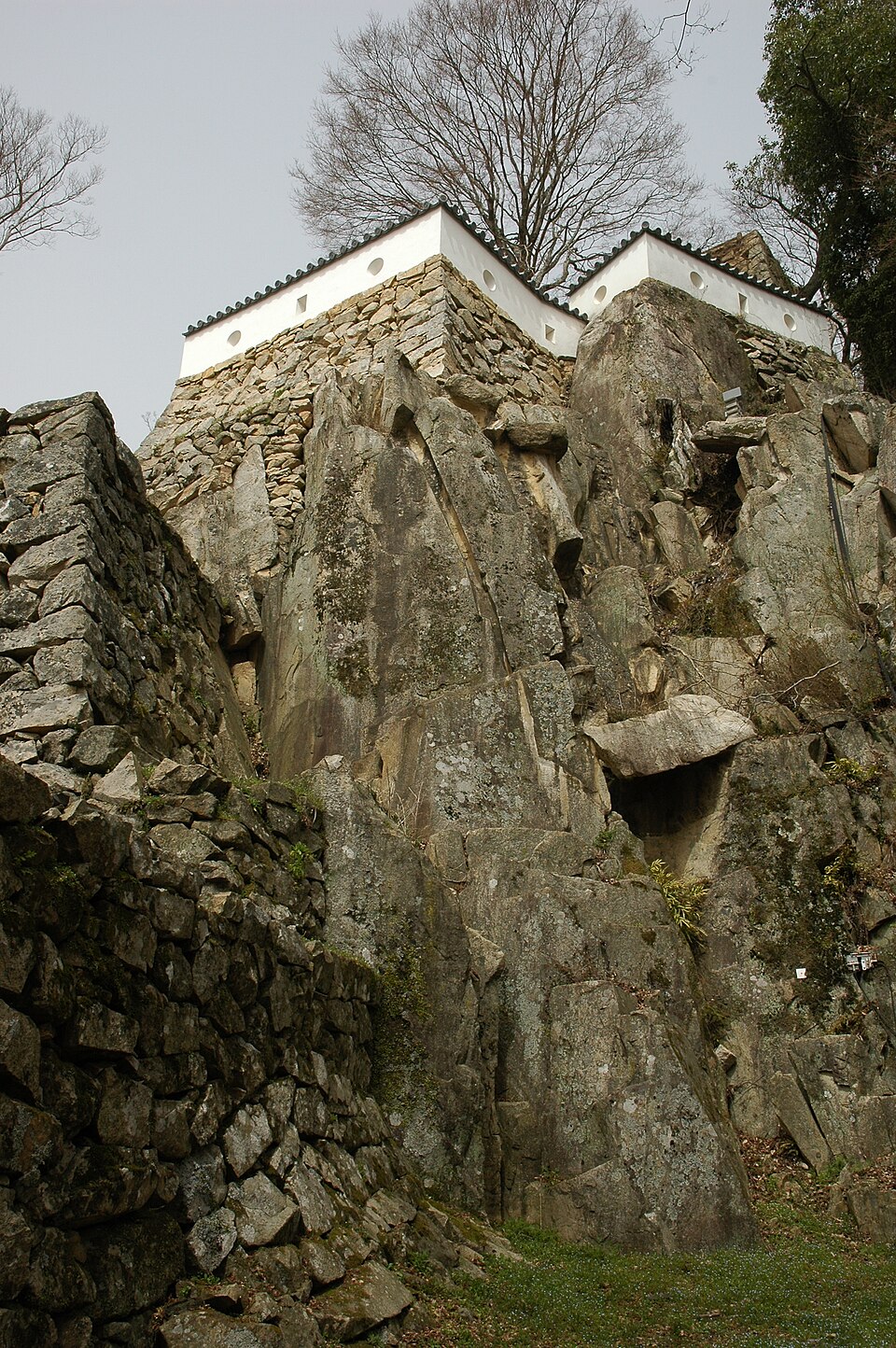
One last thing to notice on the way down — the stone walls themselves. A continuing engineering project, started in 1999 under the Takahashi City Board of Education in collaboration with Kyoto University’s Disaster Prevention Research Institute, has been monitoring instability in the upper courses above the Ōte-mon gate site. The problem is straightforward: tree roots penetrating the granite foundation are splitting blocks and shifting the wall courses above them.
The same monitoring technology used at Machu Picchu in Peru is installed at Bitchū Matsuyama for exactly the same reason. If you see monitoring sensors embedded in a few specific stone faces, you are looking at the infrastructure keeping the wall from sliding. The castle’s long-term preservation is less a matter of wood and tile than of granite and root.
Where to visit Bitchū Matsuyama Castle today
The castle itself — honmaru, tenshu, and the mountain trail
The honmaru and tenshu are open daily except 29 December to 3 January. Hours are 9am to 5:30pm in April–September (last entry 5pm) and 9am to 4:30pm in October–March (last entry 4pm). Admission is ¥500 for adults and ¥200 for school-age children; group rates apply for parties of twenty or more. The ticket covers the tenshu climb and the honmaru precinct; the nijū-yagura is visible from outside but not entered.
Reaching the castle takes planning. The mountain road does not go all the way to the summit; you start from one of three base points depending on the day. On weekends and during peak tourism periods (April cherry blossom, October–November autumn, and the first week of the New Year), private cars are excluded from the upper road, and visitors must park at the Shiromi-bashi Kōen car park (elevation 196 metres, 110 spaces, free) and take the ¥500-return shuttle bus up to the Fuigo-tōge (elevation 291 metres, 14 spaces, also free) trailhead.
From Fuigo-tōge it is approximately twenty minutes on foot up the switchback trail to the honmaru. The final 139 metres of elevation are on stone steps that are steep, authentic, and slippery in wet weather. Wear proper shoes.
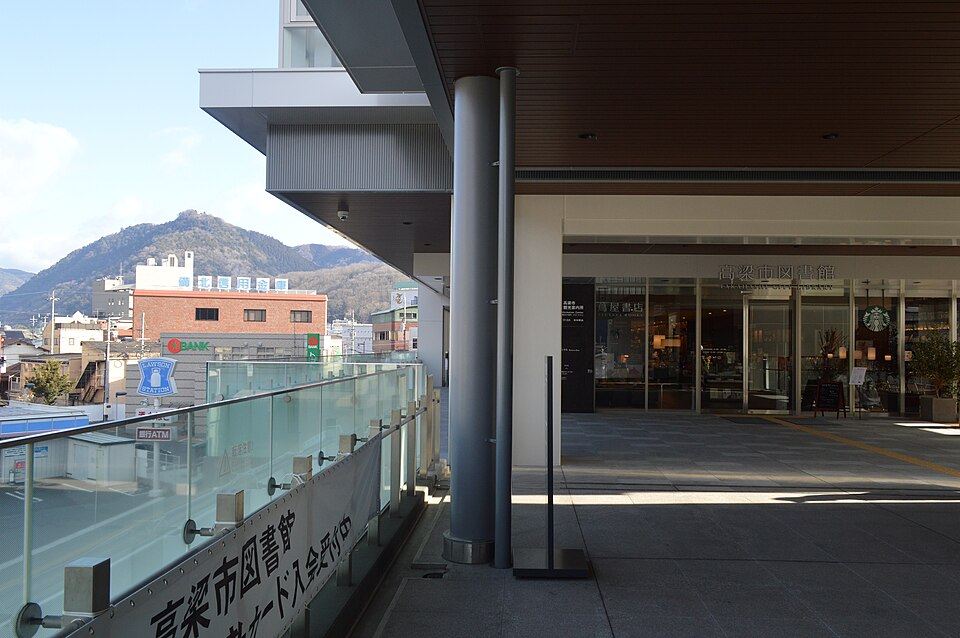
On weekdays outside the peak windows, private cars can drive all the way to Fuigo-tōge; there is no shuttle then and no road closure. From Bitchū-Takahashi Station, the lowest-altitude option is the Bitchū Matsuyama Castle Tourist Shared Taxi, bookable by 5pm the previous day through the Takahashi Tourist Information Centre (on the second floor of the Takahashi Composite Facility attached to the station). The fare is ¥1,000 one-way per person and it runs year-round with four return trips a day.
The Bihoku-Bus municipal service also runs from the Takahashi Bus Centre — it stops at Matsuyama-jō-tozan-guchi (elevation 87 metres, fare ¥170), the lowest of the three access points, which means a 50-minute uphill walk to the honmaru. Fit visitors may prefer the full climb for the approach experience; less-fit visitors should take the shared taxi.
The unkai viewpoint — Fukiyama-chōbō-dai
The unkai viewpoint is on a different mountain from the castle itself. The Bitchū Matsuyama Castle Unkai Observatory (備中松山城雲海展望台) sits on a ridge across the Takahashi River valley from Gagyū, about 3.7 kilometres off Route 484 via a narrow city road. The driving time from the Kayō IC on the Okayama Expressway is about ten minutes; the walk from the parking space to the viewing deck is one minute.
The catch is that the parking area has fewer than a dozen spaces, and on a morning with a good unkai forecast those fill by 5:30am. Peak-season spillover is into the access road, which becomes a single-lane queue of parked vehicles within an hour of first light.
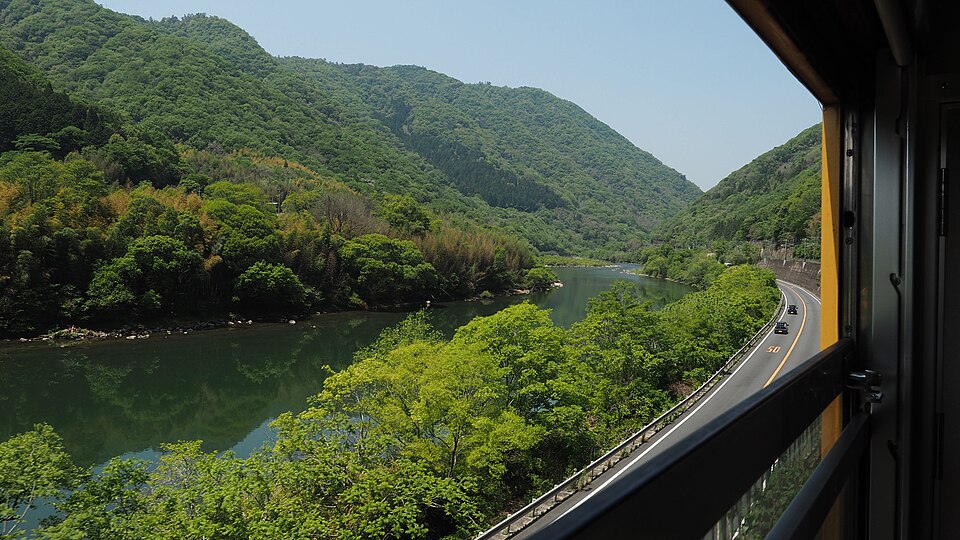
The timing matters. The unkai forms overnight and usually dissipates by 8am to 8:30am. On a successful morning you want to be on the observation deck by 6am at the latest, which in December means arriving in the dark.
Best window: late October to early December for reliability; late September to early April for possibility. The cloud layer needs a calm still night, a large previous-day-to-dawn temperature drop, and clear skies above. Takahashi City’s Tourist Information office posts next-day probability estimates on their website from mid-October onward; the Okayama University of Science Ōhashi Research Group AI forecast is more precise.
If you do not have a car, the Unkai Observatory Tourist Shared Taxi runs two dawn return trips per day from October to March, bookable the previous day at the Takahashi Tourist Information Centre. The fare is ¥3,000 per person for the roughly 70-minute round trip, which includes the observation deck time. Walking from the station is 12 kilometres and three hours uphill; I cannot recommend it as a strategy for a pre-dawn arrival in January weather, and neither does the tourist board.
Raikyū-ji and the Kobori Enshū garden
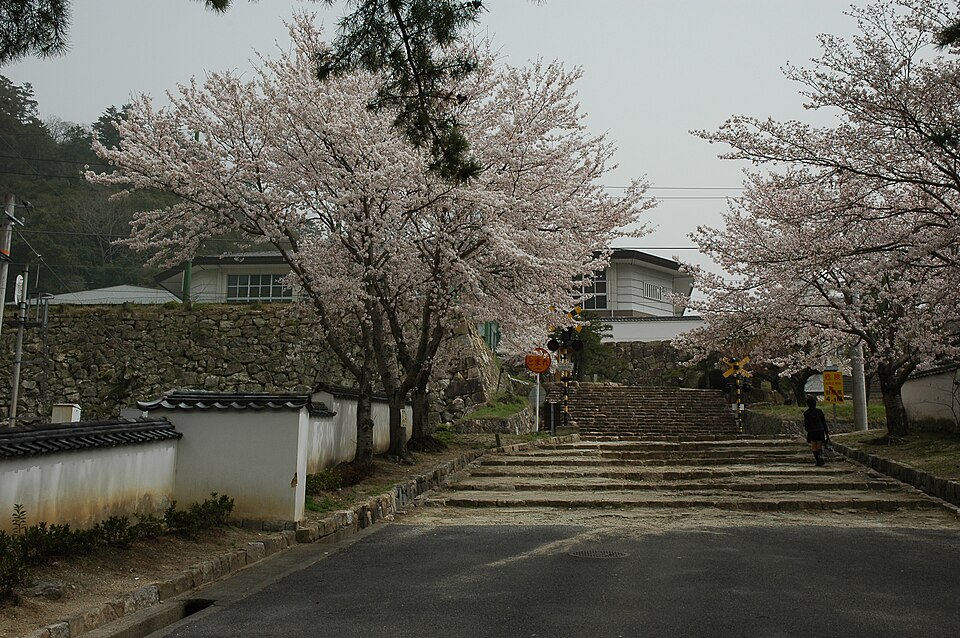
At the foot of Mount Gagyū, ten minutes on foot from the castle mountain trailhead, is Raikyū-ji (頼久寺, Raikyū-ji) — a small Rinzai Zen temple whose garden, laid out by Kobori Enshū around 1604–1610, is the best surviving early-career Enshū design in Japan. This is the other obligatory stop on any Bitchū Matsuyama visit. The temple complex itself is modest; the garden is the reason you are there.
It is a classic karesansui (dry-landscape) composition, with a sazanami (wave-pattern) raked gravel surface representing the sea, punctuated by two rock-and-plant island compositions — a tsuru-shima (crane island) in the northern foreground and a kame-shima (tortoise island) in the southern. The east-side karikomi, clipped azalea hedges, are shaped into a low undulating line that represents a wave-pattern or, arguably, a cloud layer. Enshū is using the same visual vocabulary that would later emerge around the castle unkai, three centuries before anyone knew to connect them.
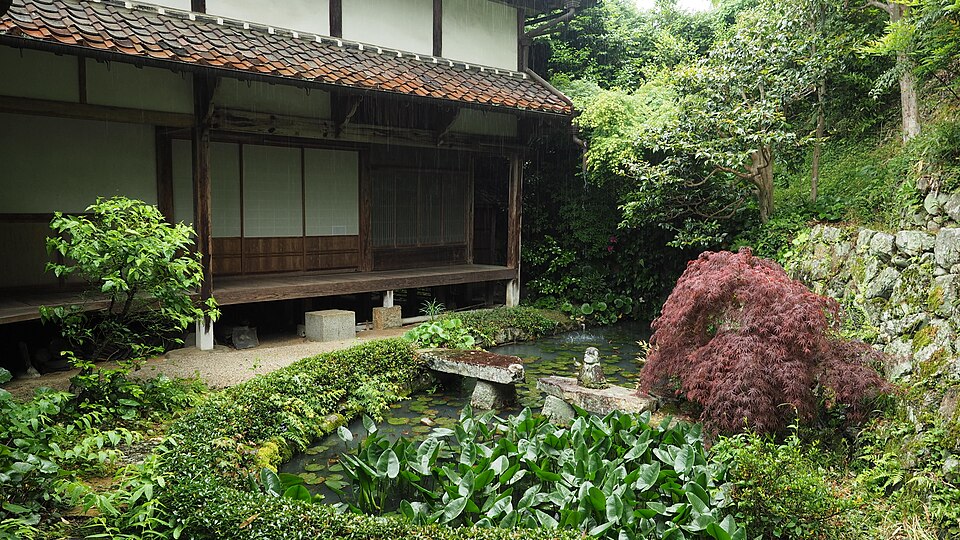
The garden is a designated National Place of Scenic Beauty (meishō). Entry is ¥400 for adults, ¥200 for children, and the temple is open 9am to 5pm all year. The viewing verandah on the south side of the main hall is where Enshū intended the garden to be observed from, and the proportions and sight lines only really work from that position; stand elsewhere and the composition comes apart. Seat yourself on the verandah.
Take twenty minutes. Notice that the hedges are shaped by eye, not by template, and that the proportions shift subtly if you change your head position by thirty centimetres. Enshū was calibrating the garden for a single seated observer; the sight line matters.
The temple has connections to the broader Japanese-garden tradition that I dig into elsewhere — the Three Great Gardens article covers the Kenroku-en / Kōraku-en / Kairaku-en triad, none of which are Enshū work, but all of which grow out of the early-Edo synthesis of Zen-temple karesansui and daimyō-court stroll-garden aesthetics that Enshū himself helped codify. Raikyū-ji is the surviving evidence of that synthesis at one of its originating nodes.
Takahashi old town — the Ishibiya samurai district
The old castle town of Takahashi sits on the valley floor below Mount Gagyū and preserves a working-lived-in Edo-period samurai residential district. The area around Ishibiya-chō, a ten-minute walk south-west from Raikyū-ji, contains eight or ten surviving mid-Edo merchant and retainer houses with their walled earthen gardens intact. Two of these (the Orii residence and the Haibara residence) are open to the public as small museums; the rest are private homes whose exteriors can be viewed from the street.
The streetscape is narrow, unpaved in places, and completely unrebranded for tourism — you walk past delivery vans parked in front of 200-year-old entrance gates. This is what most Edo-period castle-town districts looked like before they were either torn down or converted into shopping arcades.
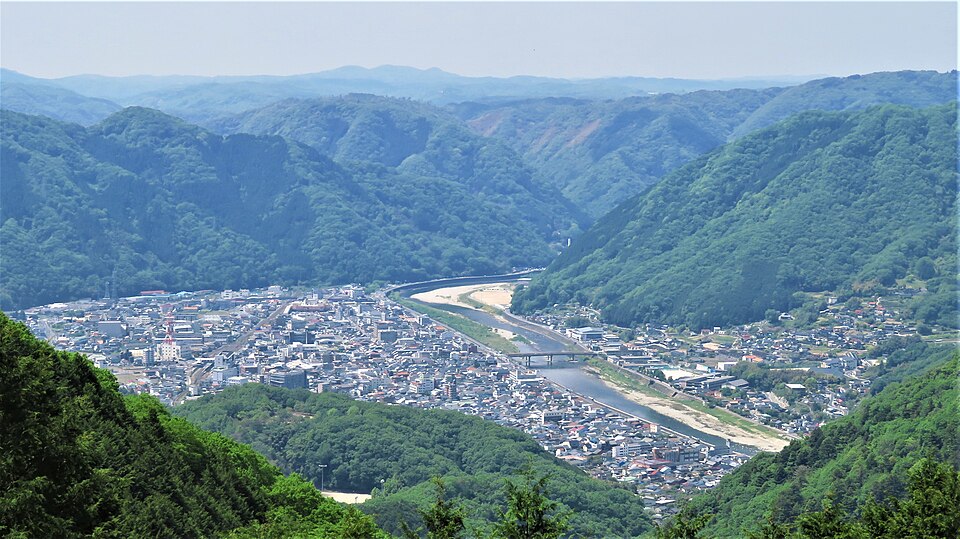
Walk through the district early in the morning, before 8am if possible, and the effect is uncanny. The modern city fades; the roofs are all kawara tile; the rhythm of the walls and gates is unbroken for three or four blocks. For more on how the tile roofs themselves are made, a tradition going back to the Heian court potters and still practised in a handful of kilns in Aichi and Awaji, see the kawara tile piece. The Takahashi district uses the San’yō regional kawara variant, slightly more pronounced in curvature than the Mikawa or Awaji types.
Three practical notes. First, there are no restaurants in the Ishibiya district itself — eat in central Takahashi before coming, or plan to walk fifteen minutes back for lunch. Second, the two private-residence museums open 9am to 5pm with a midday break, and you buy tickets at the door (no advance booking). Third, the walking route from Raikyū-ji through Ishibiya to the castle mountain trailhead takes about forty-five minutes at tourist pace, which is the best use of a half-day in Takahashi — garden, old town, mountain, in one loop.
Meeting Sanjūrō — where and when the castle cat actually appears
Sanjūrō’s duties are formally informal. He typically appears in the honmaru area, around the reconstructed Udegi-mon gate or on the walls below the tenshu, between opening at 9am and early afternoon. The castle staff will tell you at the ticket gate whether he has been sighted that morning; if he has, tracking him down within a few minutes is usually possible.
If he has not, you are out of luck for that day. His rest days are unscheduled and frequent, he is a cat, and the castle does not guarantee his presence on any particular date. Arriving at 9am opening on a weekday maximises your odds; the mid-morning tour-bus crush reduces them considerably, because he does not like crowds.
The Takahashi Tourist Association sells Sanjūrō-branded goshuin stamp sheets, postcards, and souvenirs at a small booth near the Udegi-mon. Do not pick up the cat. Do not offer him food — he is on a veterinarian-supervised diet and random snacks would make him sick.
Photography is permitted at a distance that does not stress him; the staff will move you back if you get too close, politely. Visitors with cat allergies should know he is often in the honmaru area and may brush past.
Seasonal timing — autumn, cherry blossom, and winter
Autumn (late October through late November) is the best single season to visit. The valley maples in Takahashi turn about two weeks after Kyoto and pair with the higher unkai frequency of the late-autumn window. Walk the old town in the morning, climb the mountain around 11am, and if your timing is right the valley below you will be transitioning from dawn cloud into autumn colour by the time you reach the honmaru. This is the combination the NHK drama directors were looking for, and it is the one most worth timing for.
Cherry blossom (early April, shifted later than Tokyo or Kyoto by seven to ten days) is visually lovely but doesn’t produce the unkai. The ridge trail has twenty-odd Somei-yoshino cherries near the Fuigo-tōge approach, and the slow climb under them during peak bloom is quiet compared to the crowds at the major sakura sites. Winter (late December through February) is the coldest window — the tenshu interior is perhaps 2–4°C, and the stone steps on the ridge are icy by late January.
The castle remains open; visitor numbers are minimal; the unkai window shifts to later in the morning but is still possible. If you want the building on its own, without the crowds, mid-February is the single best window.
Getting there
From Okayama, JR Bitchū-Takahashi Station is forty minutes on the JR Hakubi Line limited express or sixty-five on the local train. The limited express (Yakumo) runs every 30–60 minutes through the day and costs ¥2,130 one-way including seat reservation. From Tokyo, take the Sanyō Shinkansen to Okayama (3h10) and change; from Osaka, the Sanyō to Okayama is 45 minutes and the Hakubi connection adds 40–65 minutes.
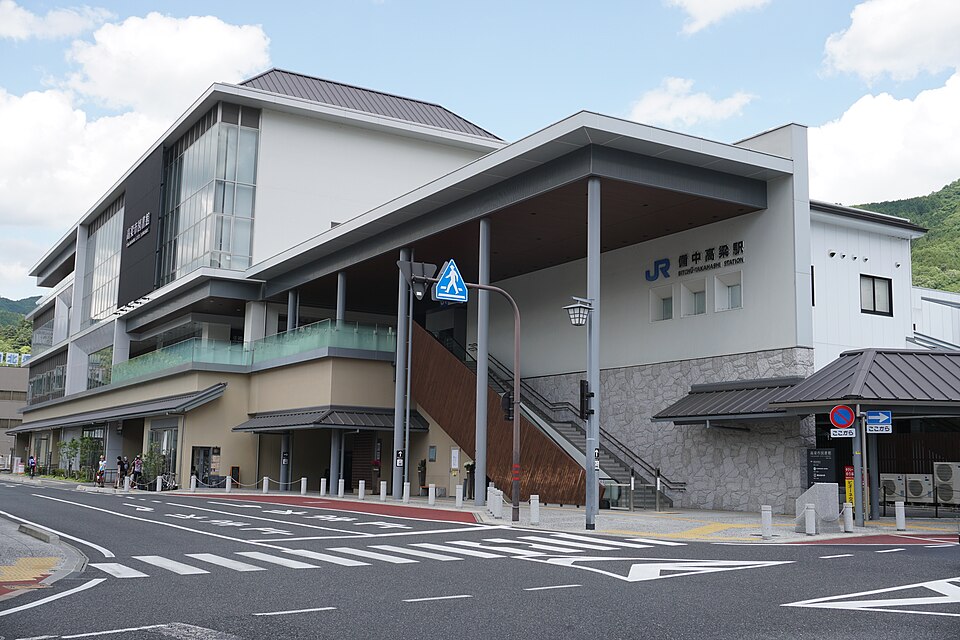
From Bitchū-Takahashi Station, three options to the mountain. One, the Bitchū Matsuyama Castle Shared Taxi (¥1,000 one-way per person, four daily, book by 5pm the previous day at the station tourist office). Two, the Bihoku municipal bus on the Takahashi city-loop route to the Matsuyama-jō-tozan-guchi stop (¥170 one-way, then 50 minutes on foot uphill).
Three, a private taxi directly to Fuigo-tōge (¥2,500–3,000 depending on traffic). The shared taxi is what the tourist office will push, and for good reason — it is the cheapest option that drops you close to the trailhead.
Accommodation is thin in Takahashi itself — there are two business hotels near the station and a handful of ryokan in the old town. Serious unkai photographers often stay in Kurashiki (40 minutes back toward Okayama) and drive in; serious castle enthusiasts with the time stay in Takahashi to get the whole day on-site. If you are combining with Himeji two hours east or Okayama Castle in the prefectural capital, the Bitchū Matsuyama visit is a dedicated full day; it does not pair well with a half-day add-on to either. The mountain trail, the unkai dawn timing, and the Raikyū-ji stop together require their own focus.
The building that should not quite be there
I opened with the unkai and the cloud-floating image, because it is the single marketing hook that has pulled Bitchū Matsuyama into visibility over the past fifteen years. The image is genuine — the phenomenon happens, the castle sits above it, the photographs are not misleading. But standing on the Komatsu peak at 430 metres, looking at an 11-metre two-tier keep that was built in 1683 by a middle-ranking daimyō who had no particular military reason to build it, on a mountain ridge cut by Kamakura-era stewards in the 1240s and walled by Sengoku-era warlords in the 1570s, the oddity of the building is more striking than the cloud above the valley.
The cloud is weather. The building is an argument.
Mizunoya Katsumune’s keep is a 17th-century peacetime building in fortress dress, erected when Japan had not seen serious internal warfare for sixty years and would not see it again for another 180. It survived the Meiji abolition mainly because it was uneconomic to dismantle. It survived the Shōwa decay because one middle-school history teacher wrote a careful book about it in 1929 and convinced a Depression-era town council to put up 18,000 yen.
It survived into the 21st century because the cloud layer below it became a photograph, and because a stray cat took up residence in 2018 and refused to leave. None of these rescues were inevitable. Each of them was contingent, and each of them happened to be the right intervention at the right moment.
If you are travelling to western Honshū anyway — Himeji two hours east, Okayama an hour east, the Seto Inland Sea ferry routes south — add a day for Bitchū-Takahashi. Take the shared taxi up to Fuigo-tōge, climb the forty minutes on foot to the honmaru, walk around the two-tier keep and notice the vertical-lattice windows and the karahafu bay. Come down via Raikyū-ji and sit on the verandah looking at Enshū’s garden for twenty minutes. Eat in the old town.
If there is an unkai forecast for the next dawn, stay overnight and drive to Fukiyama at 5:30am. The cloud either happens or it does not; the castle stays either way. What you are there for is the building on the mountain that, by the ordinary logic of how castles end, should not quite be there at all.


_07_Apr,_2013_-_panoramio.jpg)
