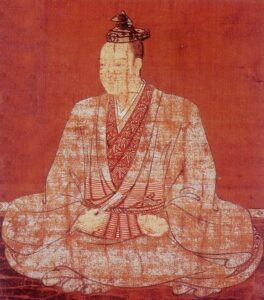
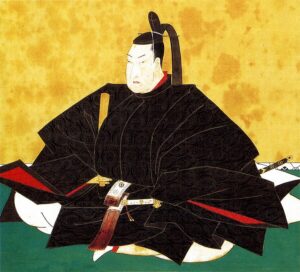
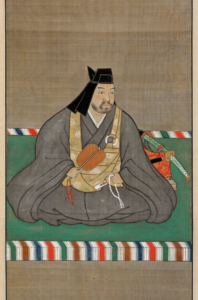
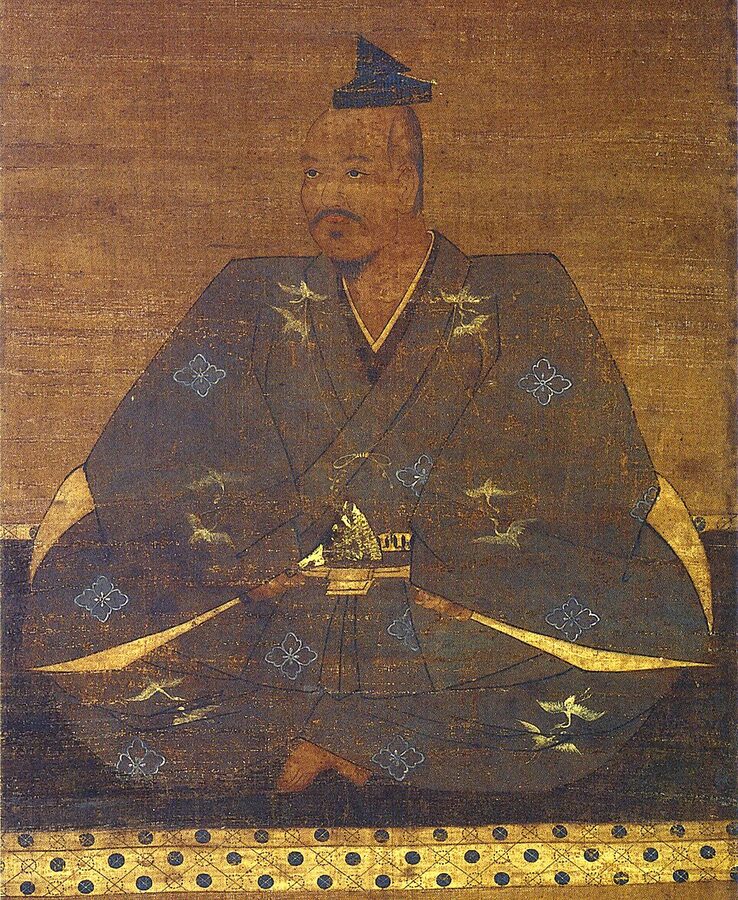
Takeda Shingen was the only man in the warring-states period who beat Tokugawa Ieyasu badly enough that the future shogun dismounted outside the gates of Hamamatsu Castle, ordered a meal of rice and miso, and sat in the main hall waiting for the Takeda cavalry to arrive and finish him. The cavalry did not arrive. Shingen had already pulled up, camped a day’s ride short, and, within four months, died, aged 53, somewhere on the mountain road back to Kai.
The death was kept secret for three years. Ieyasu, who had survived by pure luck and a painted portrait of himself sitting calmly mid-flight, would borrow so heavily from the Takeda military organisation afterwards that the Edo-era bakufu itself runs on bones built in Kōfu in the 1560s.
I have been walking Shingen’s landscape for the better part of a decade now — Kōfu in every season, Erin-ji in two autumns, Kawanakajima once in January when the wind off the Saigawa cut through three layers. The thing that has settled, over all that time, is how consistently the man is underestimated in English-language writing. The short-form treatment tends to file him as “Ieyasu’s scariest rival, died before Nagashino, had a cool banner,” and move on. The actual record is richer and stranger than that.
He ran a landlocked province with no coastline, no port, no direct access to the Sakai trade network, and despite those structural disadvantages he built a field army that humiliated every neighbour in rotation for thirty years. He expelled his own father in a bloodless coup at twenty, fought Uesugi Kenshin to five draws over twelve years, and when he finally did move west against Nobunaga, he did it at 51 years old, with an advanced lung condition, and he still won the battle.
In This Article
- The Tiger of Kai and the Sun Tzu banner
- Kōfu, 1521 — the boy born in a siege
- 1541 — the bloodless expulsion of a father
- The Shinano campaign — twelve years of grinding
- Five battles at Kawanakajima — the long draw with Kenshin
- Sanpō-Dōmei and the Suruga turn
- Nobunaga Encirclement and the westward advance
- Mikatagahara, 25 January 1573 — the defeat Ieyasu survived
- The death at Komaba, April 1573
- Katsuyori, Nagashino, and the Tenmokuzan collapse
- The legacy — what Ieyasu stole
- Where to visit Takeda Shingen today
- Takeda Shrine and the Tsutsujigasaki site, Kōfu
- Erin-ji, Kōshū city, Yamanashi
- Kai Zenkō-ji, Kōfu
- Kawanakajima Battlefield — Hachimanbara Historic Park, Nagano
- The Shingen-zō statue at Kōfu Station
- The Tiger who beat Ieyasu and went home
The Tiger of Kai and the Sun Tzu banner
The nickname “Tiger of Kai” — Kai no Tora (甲斐の虎) — was a contemporary designation, not an Edo invention. Shingen’s rival Uesugi Kenshin was called either “Dragon of Echigo” or “Tiger of Echigo” depending on which chronicle you prefer, which means the two of them either split the beasts or shared the tiger between them; the point is that by the 1550s, Japanese military circles used zoological epithets for the two northern warlords precisely because they were seen as operating in a different weight class from everyone else on the main island. The Takeda were Minamoto-clan descendants through the Kai Genji branch, and Shingen was the nineteenth head of that lineage — a pedigree that mattered enormously in a period when outright usurpers needed to point to older names to justify their authority.
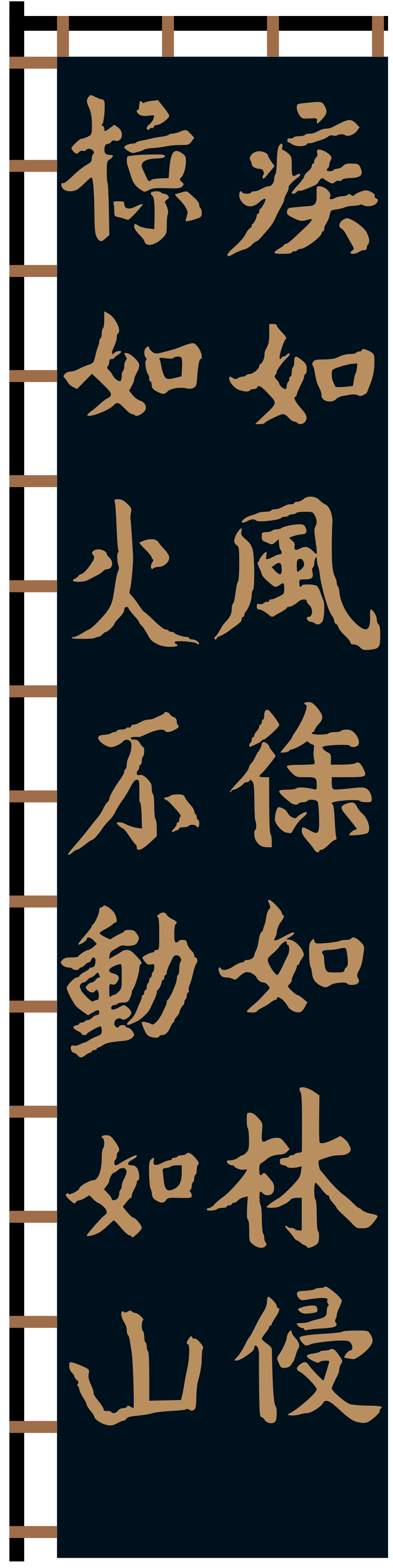
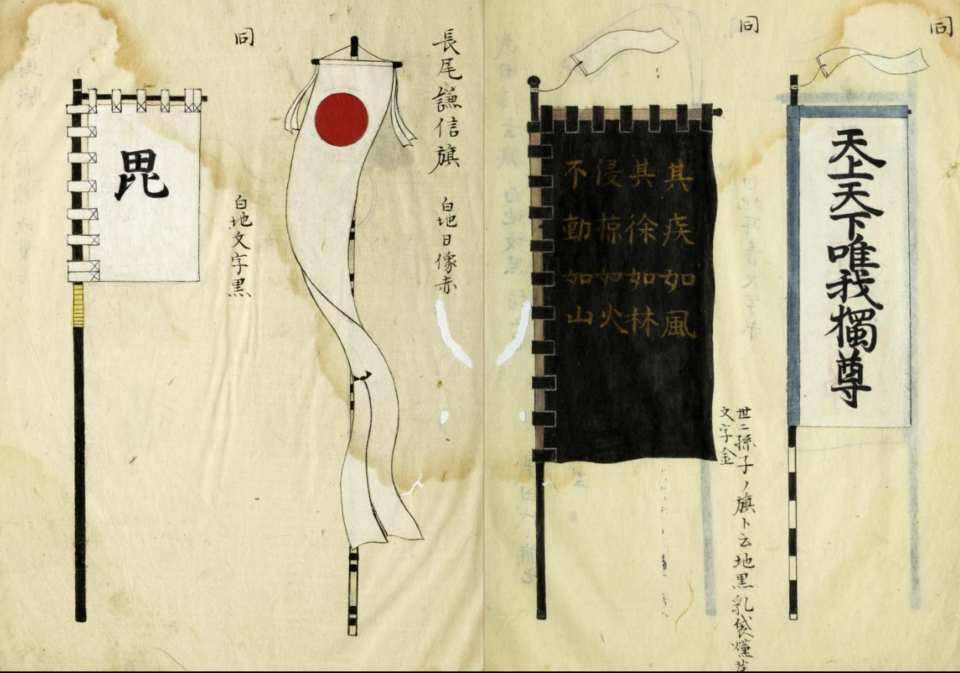
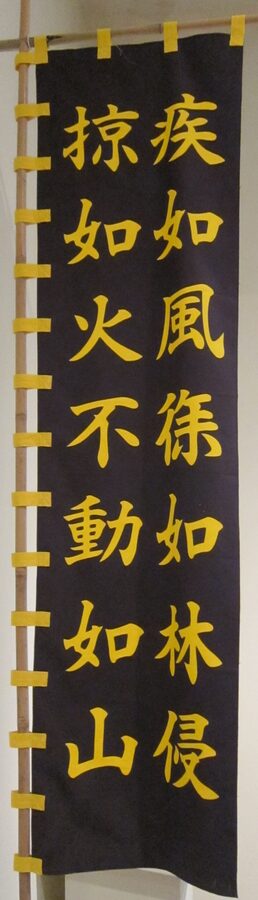
The banner — the Fūrinkazan (風林火山) — was Shingen’s personal choice, lifted from the Army’s Method chapter of Sun Tzu’s Art of War. The full passage reads “swift as wind, silent as forest, aggressive as fire, immovable as mountain,” and Shingen had the four head-characters written out in seventeen-character sections on a vertical silk banner that travelled with his main camp. It is the most recognisable battle-standard in Japanese military history, and its specific military utility was nil — no enemy ever surrendered because they saw four characters on a silk strip.
But it signalled to his own retainers, in Chinese classical vocabulary, that the commander had read the canon and was expecting them to move according to the text. That is a different kind of command culture from the broadsword-and-oath pattern most Sengoku daimyō ran.
The cavalry tradition that attached itself to the Takeda name was not invented in Edo. Kai Province produced horses; the mountainous terrain in Yamanashi is unsuitable for large-scale rice agriculture but good for grazing, and the Kai and adjacent Shinano uplands had been breeding battle-horses since at least the Heian period. What Shingen added was a tactical doctrine — the Kōshū-ryū school of military organisation — that made the cavalry into a coordinated shock arm rather than a prestige retinue.
His retainer Yamamoto Kansuke, the one-eyed strategist (and rōnin whose exact biography is still disputed by Japanese scholars), is traditionally credited with codifying the doctrine, though the provenance of the surviving Kōyō Gunkan text is contested. The point is that when the Takeda horse went in, it went in at speed, in formation, with a front-line designed to break infantry lines by shock rather than by attrition. For thirty years, until Nobunaga’s matchlock volleys at Nagashino in 1575, it worked.
Kōfu, 1521 — the boy born in a siege
Shingen was born on the third day of the eleventh month, Daiei 1, roughly early December 1521 in the Gregorian reckoning, at the Yōgaisan stronghold above Kōfu, which was the emergency retreat for the Takeda household when the Tsutsujigasaki residence below was considered unsafe. His mother, Lady Ōi of the Nishigori Ōi family, had been moved up to the mountain fortress days earlier because an Imagawa-allied force under Fukushima Masanari was advancing on Kōfu; Shingen’s father Nobutora met that force at the Battle of Iidagawara and drove it back, but the birth had happened during the crisis. The childhood name was Tarō (太郎), the standard auspicious name for an eldest surviving son. An older brother named Takematsu had died at seven.
The father-son relationship with Nobutora was the foundational trauma of Shingen’s life, and it is worth understanding because it explains the first thirty years of his political decisions. Nobutora was the warlord who had completed the Takeda unification of Kai in the first two decades of the 1500s — a genuinely impressive achievement given that the province had been fractured among rival kokujin families for most of the preceding century. But according to the Kōyō Gunkan, Nobutora transferred his affection from Tarō to the younger son Jirō (later Takeda Nobushige) around 1525 and progressively alienated the heir. The younger-son-preference was exacerbated by the 1533 marriage of Tarō to an Uesugi daughter, who died in childbirth in 1534 along with the infant; and by the 1536 genpuku coming-of-age ceremony in which Tarō received the “haru” character from the twelfth Ashikaga shōgun Yoshiharu and took the adult name Harunobu.
Harunobu’s military debut came in November 1536, immediately after the genpuku, at the siege of Unnokuchi Castle in Shinano’s Saku district. The chronicle has the 15-year-old taking the castle in a single night, which is almost certainly a later dramatisation, castles were not taken in single nights in 1536 unless the garrison was corrupt, but the timing of the first battle is right.
The problem was that Nobutora continued to push the younger Nobushige forward in domestic-politics terms, and by 1540 the senior Takeda retainers had concluded that the succession needed to be forced. The coup, when it came, was not a dramatic one. It was administrative.
1541 — the bloodless expulsion of a father
In the sixth month of Tenbun 10, summer 1541, Nobutora travelled into Suruga Province to visit his son-in-law Imagawa Yoshimoto, whose wife (Nobutora’s daughter) he had not seen in some years. This was normal diplomacy and Nobutora took a modest retinue. While he was there, his eldest son and the senior Takeda retainers — led by Itagaki Nobukata, Amari Torayasu, and Obu Toramasa — closed the Kai-Suruga border checkpoints, sealed the provincial passes, and sent a formal notification to Imagawa Yoshimoto that Takeda Nobutora’s son Harunobu was now the recognised head of the clan and the province.
Nobutora was to remain at the Imagawa court under comfortable house arrest. His retainers, who had travelled south with him, were politely told to return home or retire; his Kai lands and palaces reverted to the new lord; his personal stipend would be paid in Suruga by Imagawa at Takeda expense.
No blood was spilled. The reason is that Imagawa Yoshimoto cooperated — he had himself only recently inherited the Imagawa leadership from a bitter succession dispute (the Hanakura Rebellion) and had no interest in letting his father-in-law remain active. The arrangement suited everyone except Nobutora.
He would spend the rest of his life, thirty-three further years, as a pensioned exile, first in Suruga, then after the Imagawa collapse in various Kyoto residences; he died in 1574, aged 81, outliving his son Shingen by a year. The two men never reconciled. Shingen did not attend the funeral.
This is the coup that set Shingen’s personal style for everything that followed. When he wanted a political outcome, he set it up first, executed it administratively, and only escalated to force if the paperwork failed. It is the pattern you see in every major Takeda move over the next three decades — the Shinano campaigns, the Suruga invasion, the Hōjō reconciliation, the Oda encirclement. The 1541 exile was his template.
The Shinano campaign — twelve years of grinding
Between 1542 and 1554, Shingen conducted the systematic military conquest of Shinano Province, the enormous mountainous region north of Kai that today forms most of Nagano Prefecture. Shinano was not a single polity; it was a patchwork of minor warlord families — the Suwa, Ogasawara, Murakami, Takatō, Kiso, Sanada among them — who had never unified and who were therefore conquerable one by one if you had the patience. The campaigns were not glamorous.
They were sieges, mountain ambushes, winter marches, and political manoeuvres to turn one minor lord against another. Nothing about this phase of Shingen’s career is the stuff of ukiyo-e. But it was the twelve-year grind that built the economic base — the mixed Kai-Shinano tax area, the silver mines around Yamanashi, the horse-pastures of northern Shinano — that would underwrite everything he did after.
The key victories came at Sezawa (1542), the Suwa-clan sieges (1542-1543), Uchiyama (1546), and Shiojiri-tōge (1548). The key defeat, and the only formal military defeat of Shingen’s life before Mikatagahara, came at Uedahara, also in 1548, when the Murakami lord Murakami Yoshikiyo caught the Takeda army in a valley ambush and killed two senior Shingen generals, Itagaki Nobukata and Amari Torayasu. The same Itagaki who had led the 1541 coup; the same Amari who had been his tutor.
Losing them on a single day, in a battle he had planned himself, broke something in the young warlord. He did not lose again on the field until 1573. And when he did finally defeat Murakami, in 1553, it was by turning Murakami’s own retainers against him rather than by re-fighting the Uedahara battle — the 1541 template again, applied to a man who had beaten him.
By 1554 the pattern of Shinano was set. Murakami Yoshikiyo had fled north to Echigo Province and thrown himself on the protection of the young Nagao Kagetora — the man who would, within a few years, adopt the Uesugi name and the given name Kenshin, and who would shortly become the single most persistent adversary of Shingen’s career.
The Shinano campaign had succeeded, but in the course of succeeding it had produced its own counter-reaction on the northern border. The refugees from Shinano were now camped in Echigo and telling their story. Kenshin was listening.
Five battles at Kawanakajima — the long draw with Kenshin
The Kawanakajima battles — fought between 1553 and 1564 on the alluvial plain where the Sai and Chikuma rivers meet, at the northern edge of what had been Murakami’s former territory — are the most mythologised campaigns of the whole Sengoku period. There were five of them. I have the parallel article on Kenshin himself going up as this one publishes, and it handles the Uesugi side in detail; what matters here is the Takeda angle.
Shingen fought Kenshin five times. He won none of them decisively and lost none of them catastrophically. The aggregate result was a twelve-year standstill in which both armies lost men the province could not afford, and in which the northern Shinano frontier remained fixed at roughly the line it had held since the first campaign.
The first Kawanakajima (1553) and second (1555) were essentially skirmishes — the two warlords felt each other out, posted their banners, fought a few days of indecisive action, and withdrew. The third (1557) was the same, with added monastic drama because Kenshin briefly retreated to Mount Kōya to pray and sulk. None of these settled anything. The fourth — fought on the tenth day of the ninth month, Eiroku 4, which is 18 September 1561 — was the engagement that made the legend.
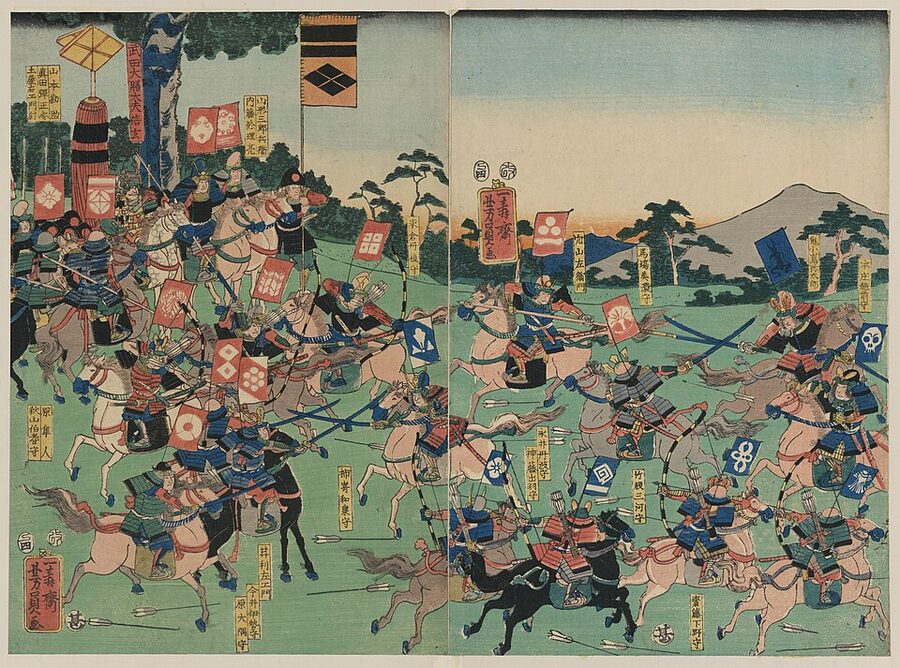
The plan was the Kitsutsuki, “Woodpecker”, strategy, attributed to Yamamoto Kansuke, in which the Takeda army was split at night, with a 12,000-man detachment sent quietly around the Uesugi rear to attack at dawn and drive Kenshin down onto the main Takeda line waiting on the Hachimanbara plain below. What actually happened was that Kenshin’s scouts detected the split, Kenshin pulled his entire army off the mountain in the fog before the detachment could arrive, and at dawn Shingen, with his main force, found 13,000 Uesugi cavalry emerging from the mist and hitting his under-strength front line directly.
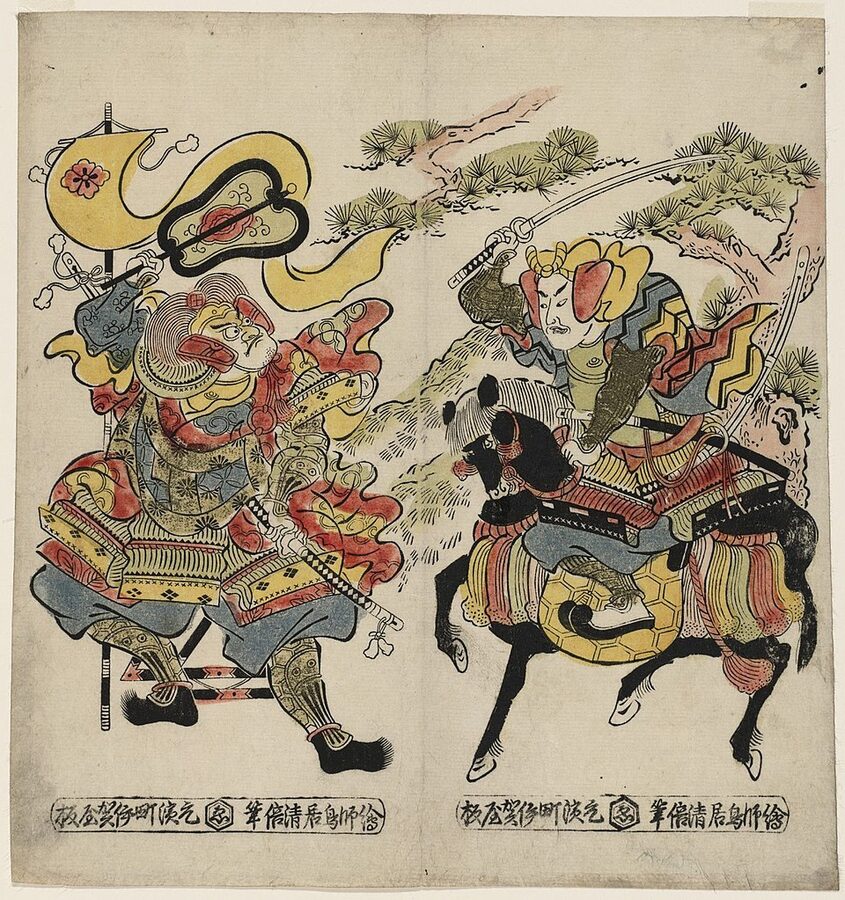
The Takeda casualties in the first hour were catastrophic. Shingen’s younger brother Nobushige was killed defending the command position. Yamamoto Kansuke, whose plan had failed, rode alone into the Uesugi line and died. The standard chronicle is that Kenshin himself, during the chaos, broke through the bodyguard, reached Shingen’s folding stool, and attacked him personally — Shingen parrying the sword-cuts with his iron war fan until a retainer could intervene.
By the time the rear-detachment came down the mountain to join the main action, the morning had already taken a third of Shingen’s army. The detachment’s arrival turned the late-morning fight into a Takeda recovery — the Uesugi, now outnumbered, pulled back across the Chikuma River in good order. The combined casualty figures from the Kōyō Gunkan are 4,000 Takeda dead and 3,000 Uesugi, though Japanese military historians have lowered those estimates by roughly a third in recent scholarship.
Both sides claimed victory. Both sides were correct in their own terms: the Uesugi won the morning, the Takeda won the afternoon, and the battlefield at nightfall was in Takeda hands. Nothing strategic changed. The fifth and final Kawanakajima, in 1564, was a stand-off with no actual combat — both sides were by then too exhausted to do it again.
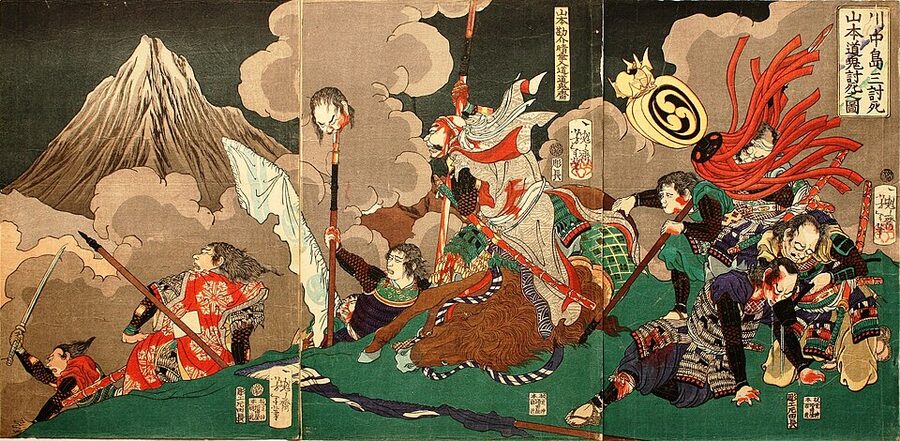
The aggregate lesson of Kawanakajima, from Shingen’s side, was that neither he nor Kenshin could force a decision in the north. The two of them had spent twelve years on a five-kilometre plain and had achieved nothing except a mutual respect so deep that when Shingen died in 1573, Kenshin reportedly wept at the news and pledged not to exploit the succession crisis. He kept that pledge. It is one of the strangest rivalries in Japanese military history, because it was simultaneously completely genuine and completely stationary.
Sanpō-Dōmei and the Suruga turn
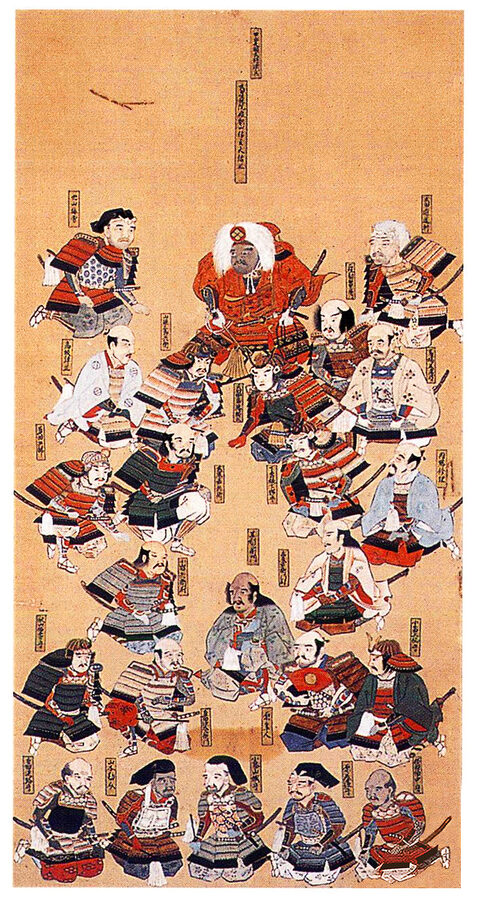
While the Kawanakajima stand-off was draining the northern frontier, Shingen had been quietly building a southern and eastern alliance system that would free up his strategic hand. The instrument was the Kōsō-Sun Sanpō-Dōmei — the Three-Party Pact between Kai (Takeda), Sagami (Hōjō), and Suruga (Imagawa) — formalised in 1554. The three powers agreed to non-aggression and mutual marriage: Shingen’s son Yoshinobu married an Imagawa daughter; an Imagawa son married a Hōjō daughter; a Hōjō daughter married into the Takeda line. The diplomatic architecture was the work of the Zen abbot Taigen Sessai, who was simultaneously advising all three courts, and it was the most sophisticated Sengoku-era multilateral arrangement anyone managed to put together before Nobunaga’s rise.
The pact collapsed in 1568. The triggering event was Imagawa Yoshimoto’s catastrophic 1560 death at Okehazama, which I have covered separately, and the consequent decline of the Imagawa under his weaker son Ujizane; by the mid-1560s, Suruga and Tōtōmi were visibly crumbling, and Shingen decided that the territory was going to be eaten by somebody and that somebody should be him.
He broke the pact, invaded Suruga in the twelfth month of 1568, and drove Imagawa Ujizane out of his own province within a year. The Hōjō, bound to the Imagawa by the treaty, declared war on Takeda in response. Shingen had traded one alliance (the Three Parties) for a direct strategic asset (the Pacific coastline he had previously lacked), and the cost was the new war with Hōjō Ujimasa to his east.
The Hōjō war lasted two seasons. Shingen burned the castle town outside Odawara in 1569 and withdrew in good order; the pursuing Hōjō force was caught at the Battle of Mimasetōge and broken. By 1571, the year Hōjō Ujiyasu died, the new Hōjō lord Ujimasa had negotiated a renewed alliance with Takeda, and Shingen had his rear secured again.
Suruga was integrated into the Takeda holdings, the old Imagawa Sumpu palace was assigned to Takeda retainers, and the Pacific access the Takeda had never had was now delivering revenue and supplies. The trade-off had worked.
But it had angered one specific party: Tokugawa Ieyasu, the young Mikawa warlord who was, by the terms of the Imagawa collapse, supposed to have taken Tōtōmi Province in parallel while Shingen took Suruga. The borders were unsettled. Ieyasu was a Nobunaga ally. The next war was being set up.
Nobunaga Encirclement and the westward advance
By 1571, Oda Nobunaga was the dominant power in central Japan — he had taken Kyoto in 1568, installed the puppet shōgun Ashikaga Yoshiaki, crushed the Asai and Asakura at Anegawa in 1570, and begun the long investment of the Ishiyama Hongan-ji. The countervailing response was the Shingen Nobunaga Hōigō, the Nobunaga Encirclement Plan, a loose coalition assembled by Yoshiaki between 1571 and 1573 that brought together the Asai-Asakura remnants, the Ishiyama Hongan-ji sōhei, the Mōri in the west, the Matsunaga in Yamato, and (most importantly) the Takeda in the east. Shingen’s enrolment in the coalition was the piece that made it militarily credible. With the Kawanakajima front frozen by the 1564 standstill, with Suruga secured by the 1571 Hōjō reconciliation, and with his domestic succession settled by the designation of his fourth son Katsuyori as acting head, Shingen could finally turn west.
The operational plan — the Seijō Sakusen, literally the “Westward Advance Campaign” — envisioned a three-pronged move: a Takeda force under Akiyama Nobutomo through Mino against the Oda’s northern flank; the main Takeda army under Shingen personally through Tōtōmi against the Tokugawa; and a Hōjō supporting column through Kōzuke. The objective was to break the Tokugawa, pin Nobunaga against the Hongan-ji front, and push through to Kyoto by the end of 1573 to install Yoshiaki as a functional rather than puppet shōgun. On paper the plan was sound. In practice there was one thing wrong with it: Shingen was 51 years old, he had an ongoing respiratory illness that Japanese sources variously call rōshō (tuberculosis) or chronic pneumonia, and he had been coughing blood intermittently since 1570.
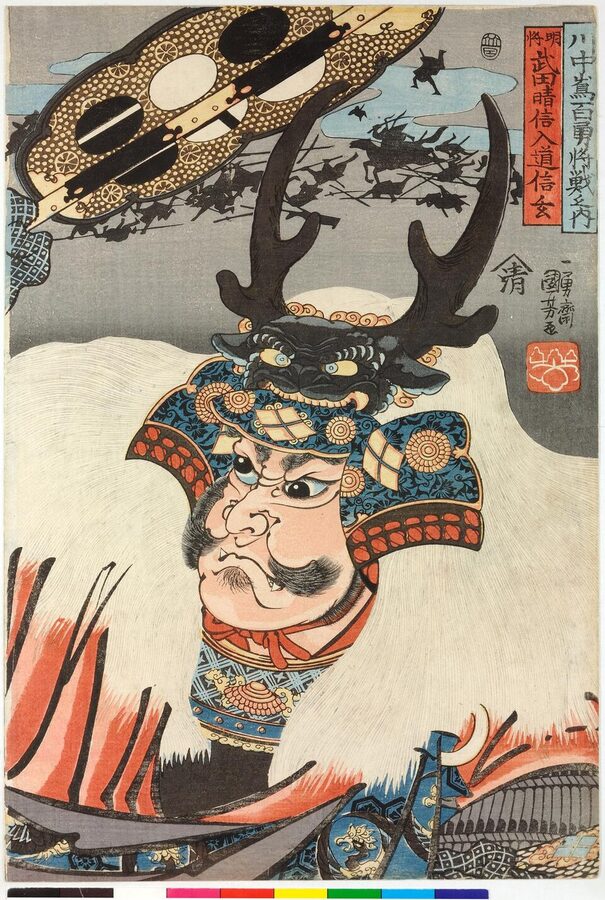
The westward march departed Kōfu in the tenth month of Genki 3 — November 1572 in Gregorian terms. Shingen took 22,000 troops personally, with another 5,000 under Akiyama and 3,000 Hōjō auxiliaries. He moved south into Tōtōmi at speed, reduced the Tokugawa forward castles at Futamata and Iida in sequence, and by the end of December was advancing on Hamamatsu, the Tokugawa headquarters.
Ieyasu — with 8,000 Tokugawa men and 3,000 Nobunaga reinforcements — had gathered his entire available force at Hamamatsu. The stage was set for Mikatagahara.
Mikatagahara, 25 January 1573 — the defeat Ieyasu survived
I have the full Mikatagahara piece elsewhere; this one will summarise only. On the twenty-second day of the twelfth month of Genki 3 (25 January 1573 Gregorian, not 22 January as some sources give) Shingen’s 27,000-man force met Ieyasu’s 11,000 on the uplands northwest of Hamamatsu Castle. Shingen deployed in the gyorin fish-scale formation with the cavalry central; Ieyasu responded with kakuyoku, crane’s wing.
The Takeda central column broke the Tokugawa centre in roughly two hours, the wings collapsed on schedule, and by nightfall Ieyasu was in full rout back to the castle, having lost approximately 2,000 men compared to Takeda losses of perhaps 200. It was the most decisive single-battlefield result of Shingen’s career and one of the worst defeats in Ieyasu’s. The famous portrait Ieyasu commissioned of himself during the subsequent Hamamatsu retreat — the Shikamimi Shōzō, the “grimacing portrait” showing the shogun-to-be looking haggard and scared — was painted, by his own order, as a permanent reminder of the near-miss.
Shingen could, by any military reading, have finished the Tokugawa at Hamamatsu the same night or the following day. The castle was lightly defended, most of its garrison had been destroyed on the field, and Ieyasu’s reported kūjō-kei bluff (ordering the gates left open and braziers lit to simulate a trap) would not have stood against a determined assault. Shingen did not attack. His army camped a day’s ride short, and then, two days later, withdrew to the north.
The Japanese historical consensus, which I share, is that Shingen’s own health had broken, the long winter march and the battlefield exertion had tipped his lung condition into acute decline, and he had made the calculation, privately, that he could not personally run the assault. The strategic window would have needed to be handed to a subordinate, and no subordinate could credibly take Hamamatsu without him.
The death at Komaba, April 1573
Shingen withdrew toward Kai by way of Mikawa and Shinano through February and March. He stopped at Noda Castle on the Mikawa-Tōtōmi border for a brief siege — this is where the sniper-legend attaches, that a Tokugawa matchlockman shot him through the helmet while he was listening to a flute being played at night from inside the castle walls, and that the wound became the proximate cause of his death. The sniper story is almost certainly a later invention. The Japanese sources closer to the event describe a progressive pulmonary illness, with coughing fits in February and March, bed-rest from late March onward, and a final collapse in early April.
He died on the twelfth day of the fourth month, Genki 4 — 13 May 1573 Gregorian by the most common reckoning, though some Japanese chronologies give 12 April by old-style Japanese reckoning which corresponds to 12 May Gregorian. Either way, early May 1573. The place was Komaba in southern Shinano, a small post-station on the Ina road where the army had halted to allow the general to rest. He was 53 years old.
His last instructions to his senior retainers — Yamagata Masakage, Baba Nobuharu, Kōsaka Masanobu, Naitō Masatoyo — were to conceal his death for three years, to let his son Katsuyori take up provisional leadership under the fiction that Shingen was merely ill and in retreat, and to return the army intact to Kōfu without engaging either the Tokugawa or the Oda during the withdrawal.
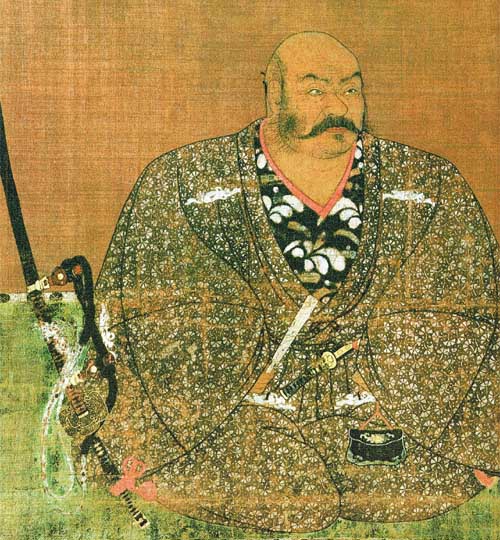
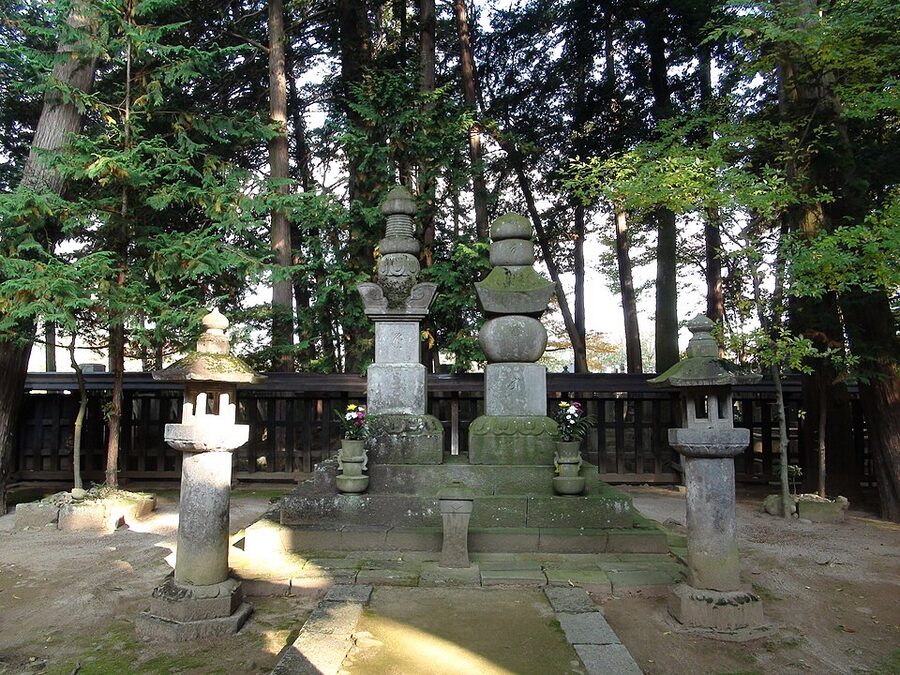
The three-year concealment held. The Takeda body was secretly embalmed and brought back to Kai; the funeral rites were conducted in camera at Erin-ji under the abbot Kaisen Jōki; the retainers continued to send out Shingen-signed correspondence for domestic administration using paper templates the lord had signed in advance.
Contemporary rival intelligence networks suspected the death but could not confirm it, and even Oda Nobunaga, who had the best spy network of any Sengoku daimyō, was not sure until at least 1574 and did not act on the information until 1575. The ploy bought the Takeda two full seasons of diplomatic cover during which Katsuyori consolidated the succession and the army was reorganised. It was, in retrospect, the single most effective secret-death operation in pre-modern Japanese history.
Katsuyori, Nagashino, and the Tenmokuzan collapse
The succession plan was that Katsuyori, Shingen’s fourth son by the Suwa princess, would serve as provisional leader until Katsuyori’s own son Nobukatsu came of age, at which point Nobukatsu would take the formal Takeda headship and Katsuyori would regent. This was not a clean arrangement. Katsuyori was in his late twenties, he had been a reasonably competent field commander, and he did not enjoy being formally described in Takeda documents as merely the interim regent for his own child. Within a year of announcing the death in 1576, he was pushing for aggressive military action partly to consolidate his personal authority against the older retainer corps.
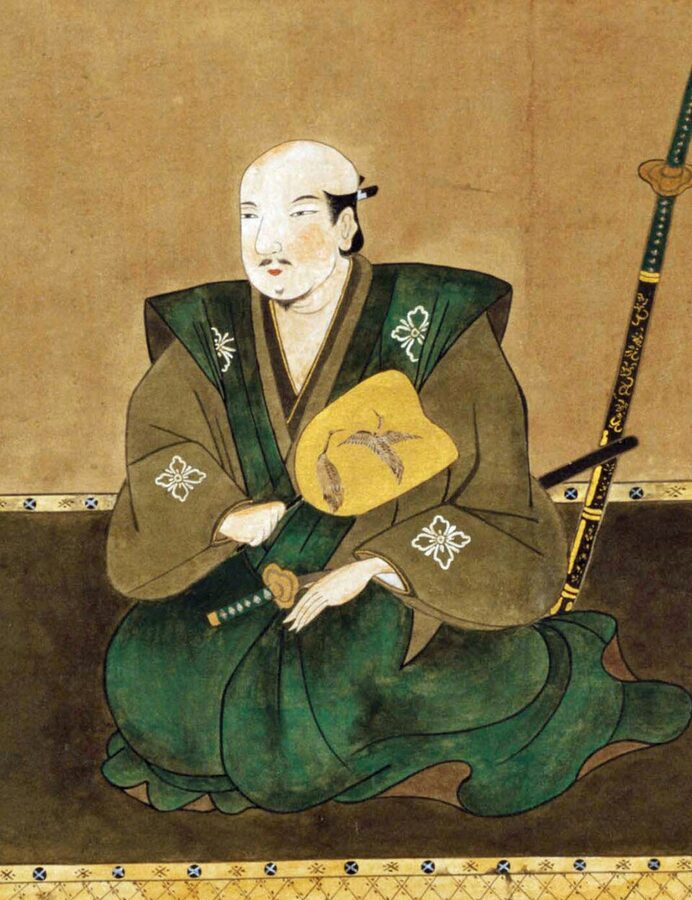
The aggressive action came at Nagashino in 1575 — the battle, covered in its own piece, at which Nobunaga’s 3,000 matchlock-armed infantry deployed behind wooden palisades destroyed the Takeda cavalry in three hours. The senior Takeda commanders killed at Nagashino included Yamagata Masakage, Baba Nobuharu, Naitō Masatoyo, Tsuchiya Masatsugu — essentially the entire group Shingen had instructed to run the three-year concealment. The cavalry doctrine Shingen had built over three decades died on a single afternoon in Mikawa. Katsuyori survived the battle but returned to Kai with a shattered officer corps, and from that point on the Takeda position was structurally unrecoverable.
The seven years from 1575 to 1582 were the slow drain. Former Takeda retainers defected to Nobunaga or Ieyasu individually; outer provinces — western Kōzuke, northern Shinano, eastern Suruga — came off one by one; by late 1581 Katsuyori was holding little more than Kai itself.
In the third month of 1582, Nobunaga launched a coordinated invasion of Kai with 50,000 men. Katsuyori, with perhaps 3,000 remaining loyal retainers, retreated into the Tenmokuzan mountain area above Kōshū in late March, was trapped there by the advancing Oda forces on 3 April 1582, and committed seppuku the same day. His wife and their 16-year-old son Nobukatsu died with him. The Takeda clan — Minamoto-descended, nineteen generations in Kai — ended on a small mountain side 25 km from the Tsutsujigasaki residence where Shingen had been born sixty-one years earlier.
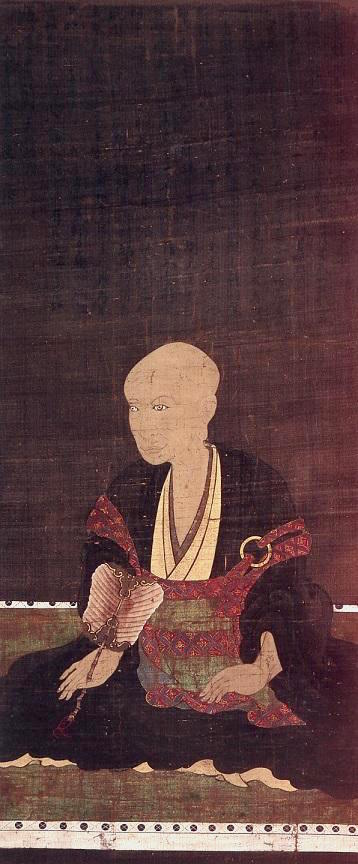
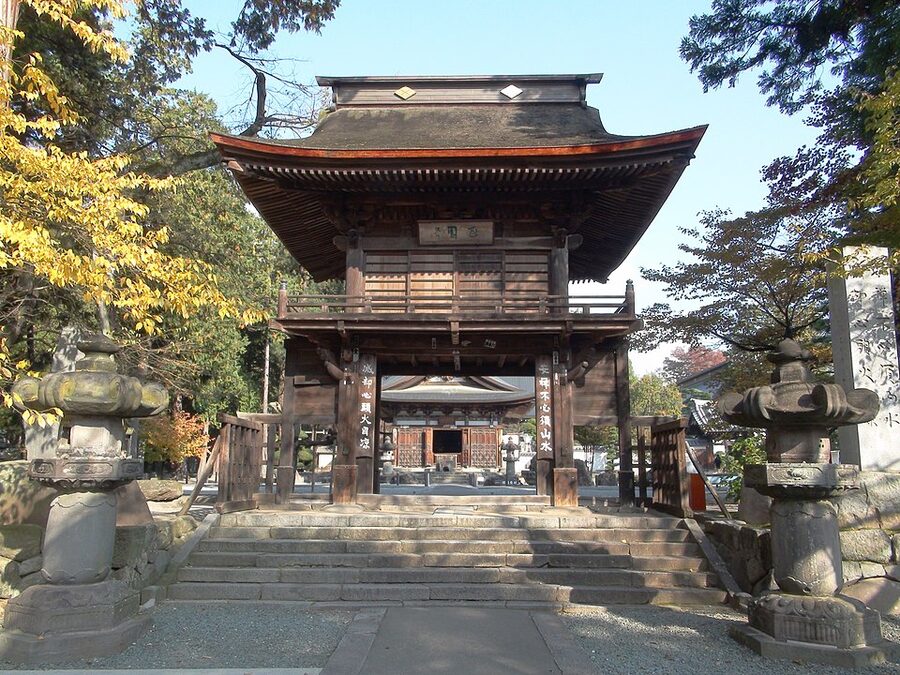
At Erin-ji, where Shingen was buried, the abbot Kaisen Jōki, who had conducted the concealed funeral in 1573, was burned to death with one hundred and fifty monks and refugees on 3 April 1582 when the Oda soldiers fired the temple. The story, preserved in Erin-ji’s own records, is that Kaisen composed a death-poem before the flames reached the main hall: anshin jōji no jōdo, hi no naka ni mo suzushii — “the pure land of peace-of-mind is cool even inside the fire.” The unburnt gate of Erin-ji, which you can still walk through today, survived that 1582 fire and is the one structural relic of the whole Shingen-era establishment that is older than the catastrophe.
The legacy — what Ieyasu stole
The Takeda extinction at Tenmokuzan was physical, not administrative. What Nobunaga and then, after June 1582, Ieyasu inherited was the Takeda apparatus: the retainer roll, the tax-assessment system, the cavalry doctrine, the forward-provincial garrisons, the kenchi land-survey protocols. Ieyasu specifically made the most of this.
When the Oda regime collapsed at Honnō-ji and the Nobunaga-aligned administrators fled Kai, Ieyasu, who was already advancing north from Mikawa, gave immediate protection to approximately 800 former Takeda retainers who had been scheduled for execution by Nobunaga as Takeda loyalists. Those 800 men, sworn into Tokugawa service by a blood oath at the end of the 1582 Tenshō-Jingo war, became the core of the Tokugawa military-administrative class that would run the Kantō and then the whole country.
The intake was not trivial. Ieyasu personally selected seventy former Takeda samurai from the Tsuchiya family alone. The entire Kōshū-ryū military tradition — the cavalry formations, the unit sashimono conventions, the chain-of-command protocols — migrated into the Tokugawa army as a package and remained visible in Tokugawa drill manuals into the early 19th century.
The Edo-era Kaga-han that Maeda Toshiie founded operated under administrative conventions that had been tested in Kai under Shingen two generations earlier. Every major tozama daimyō who adopted the Edo bureaucratic style was, at one remove, running Shingen’s operating system on a different ledger.
The other legacy, the one nobody talks about in English but which Japanese scholars take seriously, is the flood control. The Shingen-zutsumi, the embankment Shingen ordered built along the Kamanashi and Fuji rivers in the 1540s, was the largest civil-engineering project of Sengoku-era Japan and it still stands today; sections of the original stone and timber cribbing remain in situ under modern concrete reinforcement. Kōfu basin had been periodically devastated by flooding for centuries before Shingen; after the embankment, it was not. The agricultural base of Kai doubled within a generation, which is incidentally how the province, previously written off as too mountainous to be seriously wealthy, afforded the 20,000-strong field army that invaded Tōtōmi in 1572.
The military prestige piece stuck as well. Tokugawa Ieyasu was explicit on this. When Ieyasu’s grandson Tokugawa Iemitsu asked him which Sengoku warlord had been the most dangerous opponent, Ieyasu’s answer was Shingen — not Nobunaga (who was his ally for most of the relevant period), not Hideyoshi (whom Ieyasu outlived and outwaited), not Mitsuhide (whom he regarded as a minor treachery).
Shingen. The man who, on the evening of 25 January 1573, had the most powerful army in Japan inside a half-day’s march of Ieyasu’s capital castle and who chose, for reasons Ieyasu could never fully reconstruct, not to finish the job.
Where to visit Takeda Shingen today
Takeda Shrine and the Tsutsujigasaki site, Kōfu
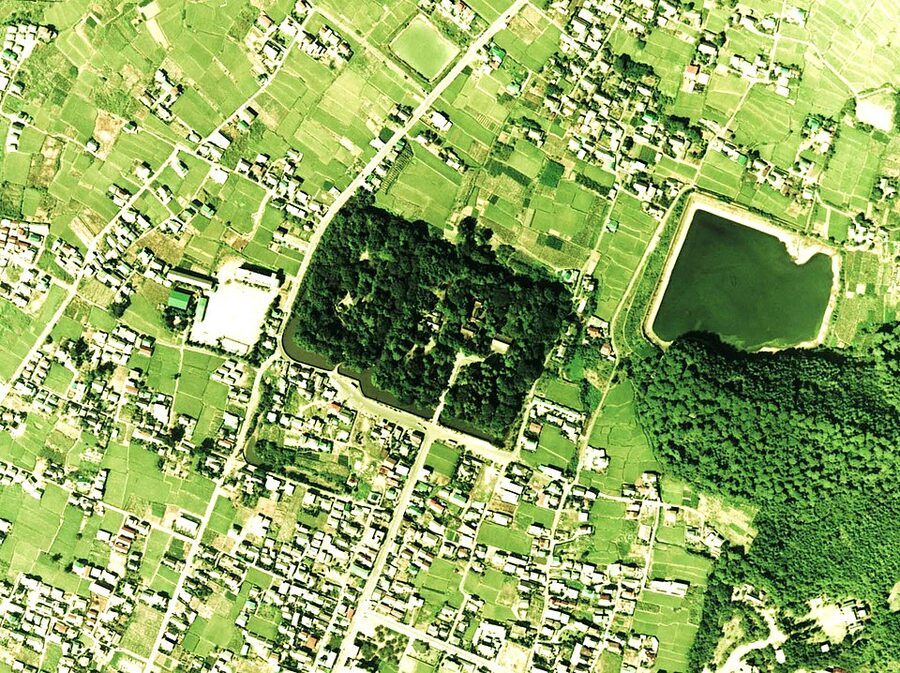
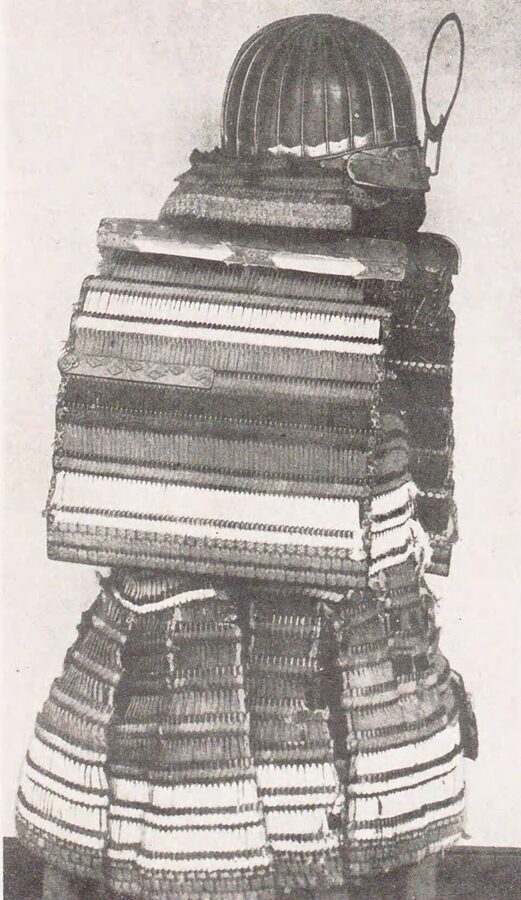
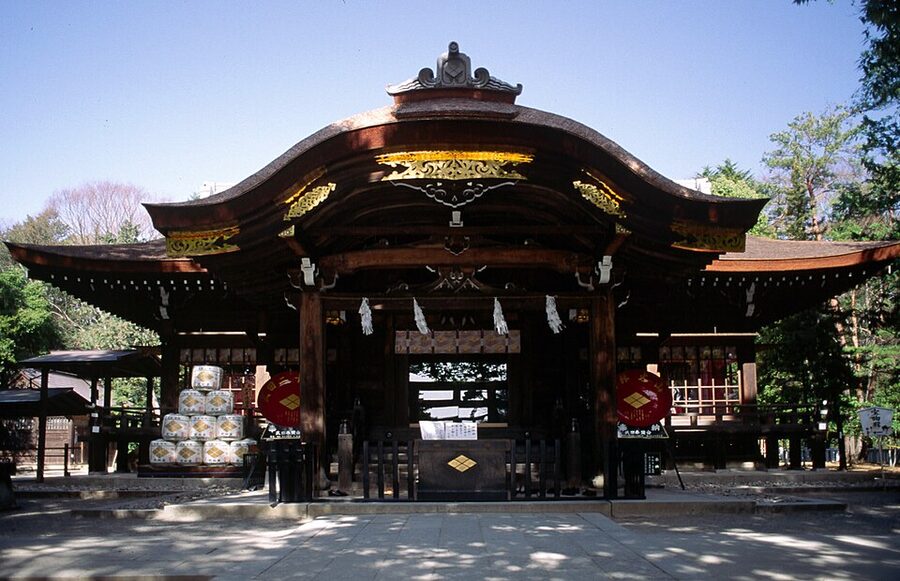
The essential first stop is Takeda Shrine — Takeda-jinja (武田神社) — in northern Kōfu City, Yamanashi Prefecture. The shrine occupies the inner ward of the original Tsutsujigasaki yakata, and although the shrine buildings themselves are Taishō-era construction from 1919, the ground you walk on is where Shingen ran the Takeda clan from his teenage years until his death. The outer moats are visible; the stone foundations of the administrative hall are labelled; and the treasury (the Hōmotsu-den) holds the surviving Shingen armour, a sword attributed to him, several letters in his own hand, and a fragment of the original Furinkazan banner silk.
Access is straightforward from Kōfu Station. Take the north exit, walk about 25 minutes up Takeda-dōri (which is the main shrine-approach road, laid out in the 1530s and still on the same alignment), or pick up a bus from the station’s north terminal — the Kōfu-eki kita-guchi platform. The bus is seven stops, about 15 minutes; the walk up Takeda-dōri is pleasant and takes you past the old yakata outer defensive ditches on the left.
Entry to the shrine grounds is free; the treasury charges ¥300 and is open 09:30-16:00 except Wednesdays. If you can visit in April for the Shingen-kō Festival on the second weekend of the month, do — the festival features the largest samurai costume parade in Japan, with 1,500 participants in full armour re-enacting the 1572 departure of the army for Mikatagahara. It is genuinely impressive, and noisy.
Erin-ji, Kōshū city, Yamanashi
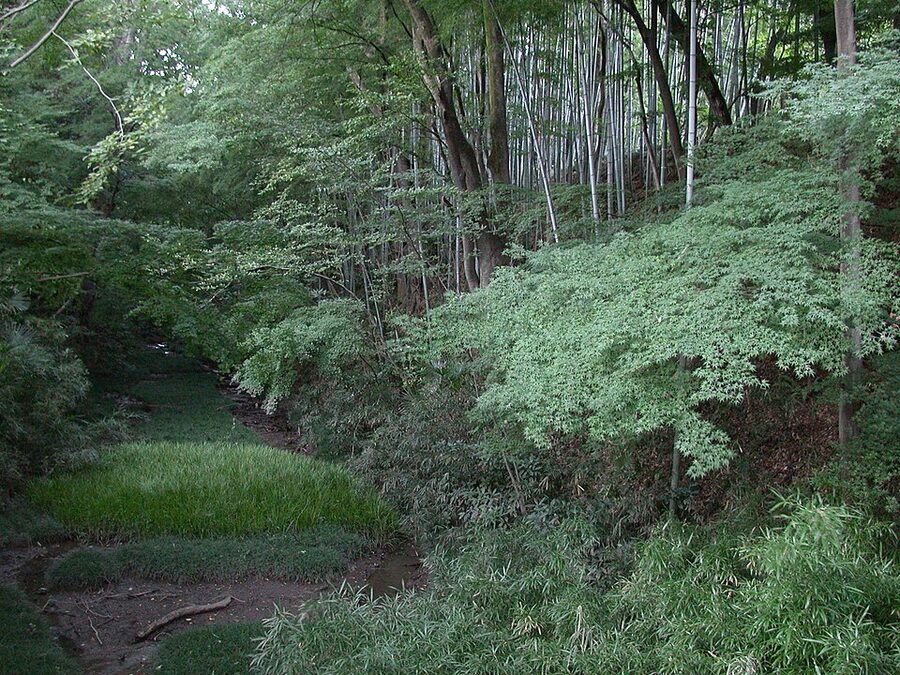
Erin-ji (恵林寺) is the Takeda mortuary temple, 45 minutes by train east of Kōfu on the JR Chūō Main Line to Enzan Station, then a 15-minute bus or taxi to the temple grounds. It is the single most important Shingen site outside Kōfu and the one I would recommend over the Takeda Shrine if you only had time for one. Founded in 1330, the temple was reconstructed and expanded by Shingen personally as his family mortuary in the 1560s; Shingen’s own grave is on the temple grounds; and the San-mon gate you pass through is the one that survived the 1582 Oda burning. The main hall is a rebuild from the 1680s, but the gardens, particularly the dry-stone rock garden attributed to the Zen master Musō Soseki who had designed the original, are an accepted national treasure.
Entry is ¥500. The Buddhist treasures hall charges another ¥300. Open daily 08:30-16:30. Do the gardens first, then the treasure hall (which includes Shingen’s own personal arms cache), then walk the five-minute path to the grave at the back of the compound.
If you arrive in autumn, mid to late November is the peak, the maple-leaf colouration is extraordinary, and the local guides will quietly tell you that this is partly because the temple land was, for three years after 1573, secretly fertilised with ash.
Kai Zenkō-ji, Kōfu
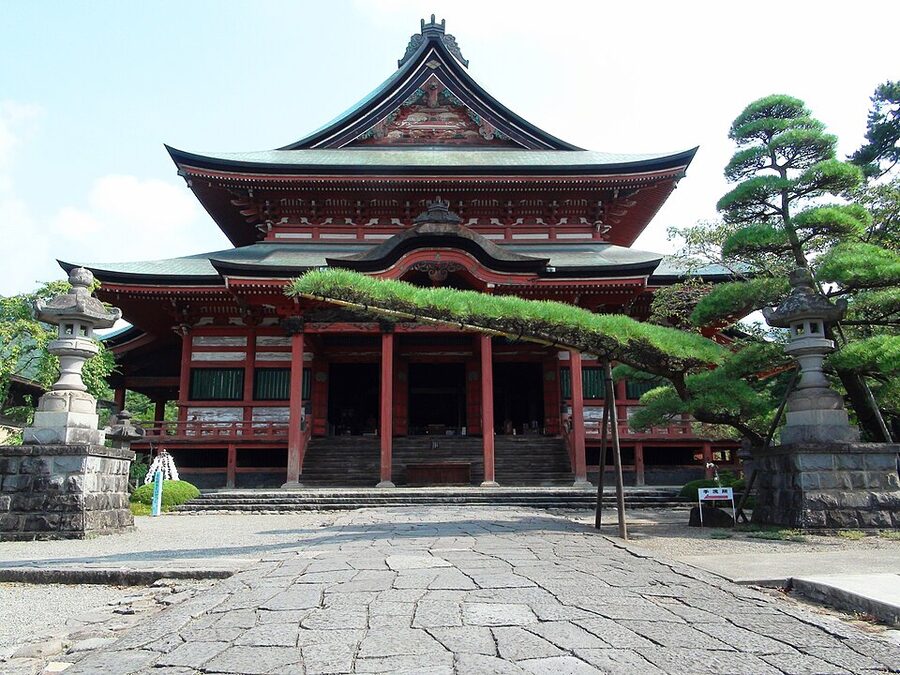
Kai Zenkō-ji (甲斐善光寺) is 10 minutes east of Kōfu Station on the JR Minobu Line, at Zenkōji Station. The story is worth knowing: when Shingen fought Kenshin at Kawanakajima in 1561, the original Zenkō-ji temple in Nagano was directly on the battle line, and Shingen, concerned that the temple’s central Amida Buddha statue would be destroyed in the fighting, physically relocated it to Kai Province for safekeeping. The Kai Zenkō-ji was built in Kōfu specifically to house the evacuated statue, which stayed in Kai until 1598 when the Toyotomi regime ordered it returned to Nagano. The Kōfu temple you visit today is therefore the late-16th-century evacuation facility, and it holds the alternative Shingen grave that was used during the three-year concealment before Erin-ji resumed formal memorial functions.
Entry ¥500. Open 09:00-16:30. The inner sanctuary holds a replica of the Amida Buddha (the original is in Nagano) and the mid-16th-century wood-panel prayer hall is genuine Shingen-period construction, which is unusual — most wood from this period burned during the 1582 invasion. The paintings inside the hall are attributed to the Kanō school and are worth the ¥500 on their own.
Kawanakajima Battlefield — Hachimanbara Historic Park, Nagano
The Kawanakajima battlefield sits north of Nagano City on the Chikuma river plain, and the central memorial is at Hachimanbara Shiseki Kōen (八幡原史跡公園). From Nagano Station, take the Alpico bus bound for Matsushiro from the east exit, get off at Kawanakajima-kōen-mae — the trip takes 30 minutes and costs ¥430 one-way.
The park is free, always open, and centres on the most famous single statue group in Japanese military tourism: the bronze of Kenshin on horseback attacking Shingen on his folding stool, Shingen raising the iron war fan to parry. The pose is exactly the one from the Torii Kiyomasu ukiyo-e. Whether or not the moment historically happened, the statue group has become the visual shorthand for the whole Sengoku period.
The Hachimanbara Hachimansha shrine, inside the park, dates from the late Heian period and was already standing on the battlefield when the Takeda and Uesugi fought over the plain — Shingen’s command position in 1561 was reportedly near the shrine’s eastern fence line. Take a moment in the shrine courtyard, then walk the perimeter to read the bilingual plaques marking the movement of the two armies. The Yamamoto Kansuke grave site, where the strategist fell, is a 15-minute walk south along the Chikuma dyke; it is a small stone marker in a private field, easy to miss, and the one plaque is only in Japanese, but the farmer who owns the field is used to foreigners asking.
The Shingen-zō statue at Kōfu Station
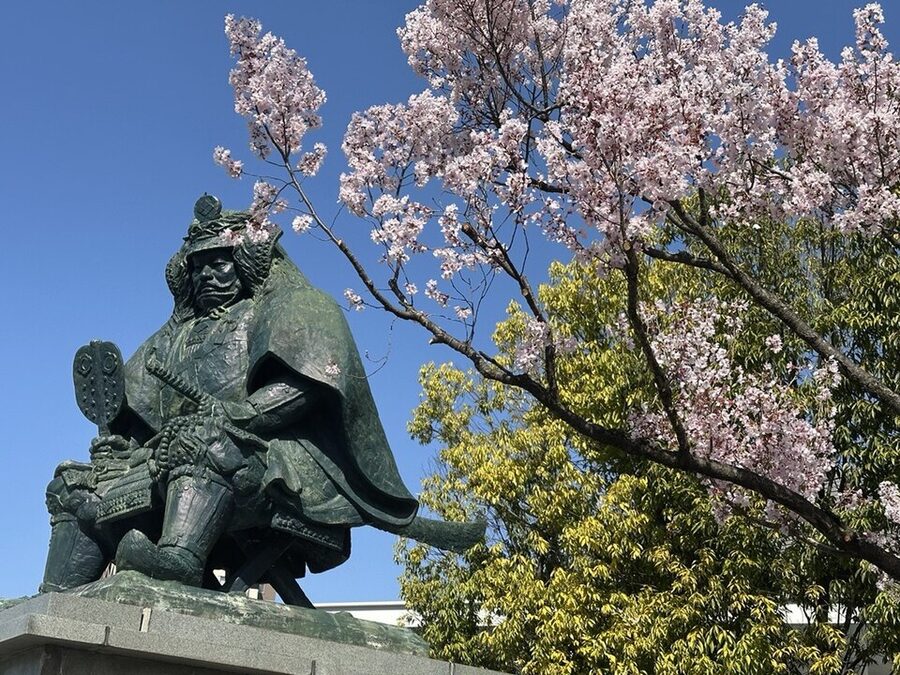
If you are coming into Kōfu by train, you will meet Shingen before you have even left the station. The Shingen-zō bronze — 3.1 metres tall, installed 1969 — sits in the plaza immediately outside the south exit of Kōfu Station, and it is the civic-identity piece for the whole city. The sculptor was Ikeda Kōji; the commission was funded by Yamanashi Prefecture’s centennial; and the pose is the Nyūdō iconography — seated, bearded, iron war fan in the right hand, leaning slightly forward as if listening.
The plinth inscription gives the four characters of the Furinkazan. The statue is lit at night and floodlit during the cherry blossom season in early April, when it photographs well against the Yamanashi hills behind it.
Purists who want “authentic” Shingen often skip it — the statue is modern, the pose is heroic rather than historical, and the commercial use of Shingen’s image in Kōfu signage and souvenir shops is aggressive. I would still recommend a five-minute stop. The statue is the place from which every Yamanashi child has learned, by osmosis, who Takeda Shingen was; it is the civic face of the city’s founder-cult; and its placement, the first thing every arriving traveller sees, is a reasonable modern analogue for the fortified hilltop the Takeda family actually used to dominate the valley from. The modern city of Kōfu, laid out around the station on its 19th-century grid, is still approximately organised around where the Takeda put it.
The Tiger who beat Ieyasu and went home
Shingen is the Sengoku warlord most people have heard of and fewest people have read about. The short-form summary — “Tiger of Kai, Furinkazan banner, lost to Nobunaga’s guns at Nagashino” — compresses three separate lives into one sentence, and it gets two of the three wrong: Shingen personally never faced Nobunaga in the field, and he did not die at Nagashino but two years earlier, in a post-station on the road home after winning the battle that should have ended the Tokugawa cause outright. The reason Ieyasu built the shogunate on Takeda bones is that the Takeda organisation was better than the Oda organisation, and Ieyasu, who had nearly died facing it, knew it.
If you are in Kōfu, go to Takeda Shrine in the morning and Erin-ji in the afternoon; if you have an extra day, take the train north to Kawanakajima and stand on the Hachimanbara plain where the war fan met the sword. If you go in winter, as I have, the wind off the Chikuma will tell you more about what the battle actually felt like than any museum diorama will.
And if you go to Erin-ji in late November, walk up to Shingen’s grave at the back of the compound at dusk — the mossy stones, the maples overhead, the fact that no sign makes a fuss about it — and think about the three years the abbot and the retainers held that secret while Katsuyori ran the province in his father’s name. Shingen’s best trick, in the end, was dying quietly on a mountain road and not telling anyone until it no longer mattered. That is a warlord’s death. Tokugawa Ieyasu, who borrowed most of his military doctrine from the Takeda, never quite pulled off a death that good.