On the morning of 27 May 1467, in the streets north-east of the Imperial Palace in Kyoto, two warlords called Hosokawa Katsumoto and Yamana Sōzen finally turned the eight-year argument over who would inherit the shogunate into a fight, and a third of the wooden capital began to burn. The fire would not stop for ten years. By the time the war was technically over in 1477, the Imperial precincts had been razed twice, the Ashikaga shogunate had lost effective authority outside the city walls, every major temple compound from Tōji in the south to Shōkoku-ji in the north was a smoking foundation, and the country had entered the period historians now call the Sengoku, the warring states. The Ōnin War is the dividing line of the Muromachi era, and the era never recovered from it.
The Muromachi period takes its name from the Muromachi district of Kyoto, where Ashikaga Yoshimitsu (the third shogun) built his administrative palace in the 1370s on the corner where Muromachi-dōri meets Imadegawa-dōri. That siting is the central political fact of the era. The Ashikaga shogunate, unlike the later regime of Oda Nobunaga or the Kamakura shogunate before it, set its capital inside the Imperial capital itself. For 237 years between 1336 and 1573 the warrior government and the Imperial court existed on the same set of streets in Kyoto, sometimes a hundred metres apart, and that proximity produced both the highest cultural flowering Japan had yet seen and the political collapse that followed.
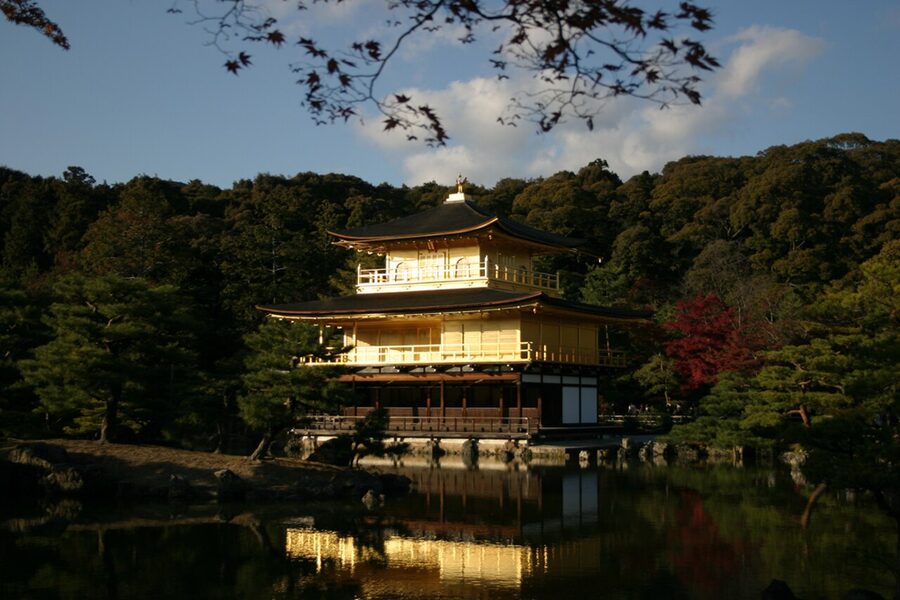
I want to walk you through the era as it actually unfolded, because the standard summary (Ashikaga Takauji founds shogunate 1336, Yoshimitsu builds Golden Pavilion, Yoshimasa builds Silver Pavilion, Ōnin War, end) flattens what is one of the most peculiar centuries in Japanese history. You get the highest aesthetic refinement in pre-modern Japan and you get the institutional collapse that produced a hundred years of civil war, and they happen on the same streets, often in the same decade, often inside the same family. The Ashikaga shoguns who built Kinkaku-ji and Ginkaku-ji also wrote the political failures that produced the Ōnin disaster. That contradiction is the era.
In This Article
- 1336: how a betrayal becomes a shogunate
- Yoshimitsu and the Kitayama summit
- Kitayama bunka: the culture of gold
- The slow decline: 1408 to 1465
- Yoshimasa and the Ōnin War
- Higashiyama bunka: the aesthetic of restraint
- Karesansui: the dry rock garden codifies
- Sengoku: the era inside the era
- What the era left behind
- Where to go today
- Kinkaku-ji and the Kitayama hills
- Daisen-in: Higashiyama in dry stone
- Ginkaku-ji and the Higashiyama villa
- Saihō-ji and Tenryū-ji: the Musō Soseki originals
- Tōfuku-ji: the late-Muromachi synthesis
- The Sesshū paintings: Tokyo and Yamaguchi
- Closing the loop
1336: how a betrayal becomes a shogunate
Ashikaga Takauji, the founder of the dynasty, was a Hōjō-clan vassal in the late Kamakura shogunate who switched sides twice in three years and ended up running Japan. In 1331 Emperor Go-Daigo, an unusually combative monarch with no patience for the regents in Kamakura, declared open rebellion against the Kamakura shogunate from his stronghold at Mount Kasagi south-east of the capital. The Hōjō regency dispatched Takauji at the head of a punitive army to crush him. Takauji took one look at the political situation, decided the Kamakura shogunate was finished, switched to Go-Daigo’s side mid-campaign in May 1333, and helped destroy the regime he had been sent to save. The Kamakura shogunate fell within weeks.
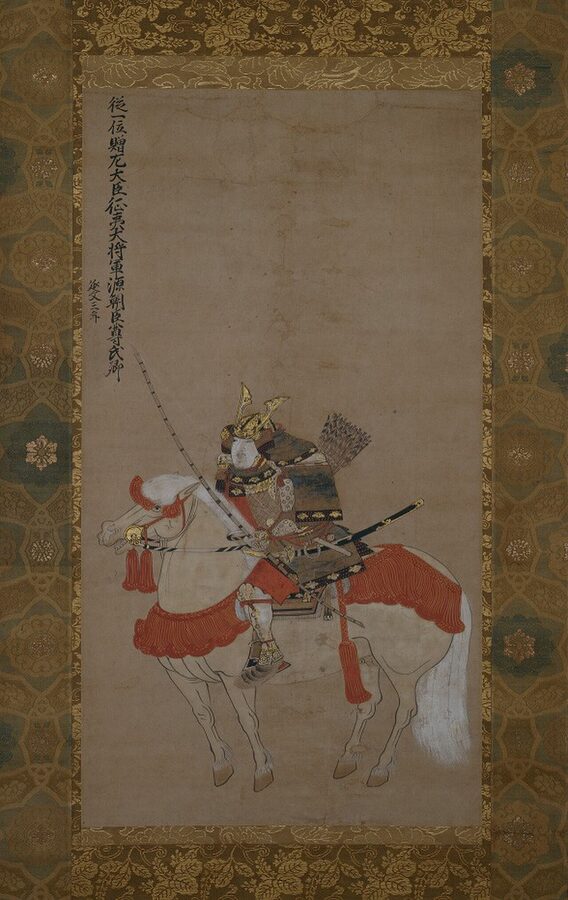
What Go-Daigo wanted next is the moment that produced Takauji’s second betrayal. Go-Daigo’s so-called Kemmu Restoration of 1333 to 1336 attempted to abolish the shogunate entirely and rule directly from the Imperial throne, on a Heian-era model that had not actually functioned for four hundred years. The samurai class who had just helped him take down Kamakura received almost nothing from the restoration, since Go-Daigo distributed the seized Hōjō lands largely to court aristocrats rather than to the warriors who had won the war. Within two years the warrior class was in open opposition. Takauji raised the standard of revolt against Go-Daigo in 1335, defeated the imperial armies at the Battle of Minatogawa near modern Kobe in July 1336, and entered Kyoto.
What he did then is the founding act of the Muromachi era. Takauji could not legally execute Go-Daigo (regicide on a reigning emperor was unthinkable in 14th-century Japan), so he forced him to abdicate, installed a rival emperor of the Northern branch of the imperial family on the throne, and was himself appointed sei-i taishōgun (Barbarian-Subduing Generalissimo) by the new emperor in August 1338. Go-Daigo escaped from Kyoto, retreated to the mountain refuge of Yoshino south of Nara, declared his own court the legitimate one, and the country had two parallel emperors with two parallel courts simultaneously. This is the Nanboku-chō period, the Northern and Southern Courts. It would last for fifty-six years.
The shogunate Takauji founded was institutionally weaker than the one at Kamakura had been, and that weakness shaped everything that came after. The Kamakura system had built its power base in eastern Japan, with the regents and the major warrior houses concentrated in the Kantō plain and a clear chain of vassalage running outward from there. Takauji set up his administration inside Kyoto itself, on the same streets as the imperial bureaucracy, partly because the Northern Court emperor needed military protection and partly because Takauji could not afford to lose visibility in the capital while the Southern Court was still operating. The result was a shogunate whose central administrators were perpetually entangled with court aristocracy, court ceremony, and court patronage. That entanglement is what produced both the cultural achievements of the period and the political instability that came with them.
Yoshimitsu and the Kitayama summit
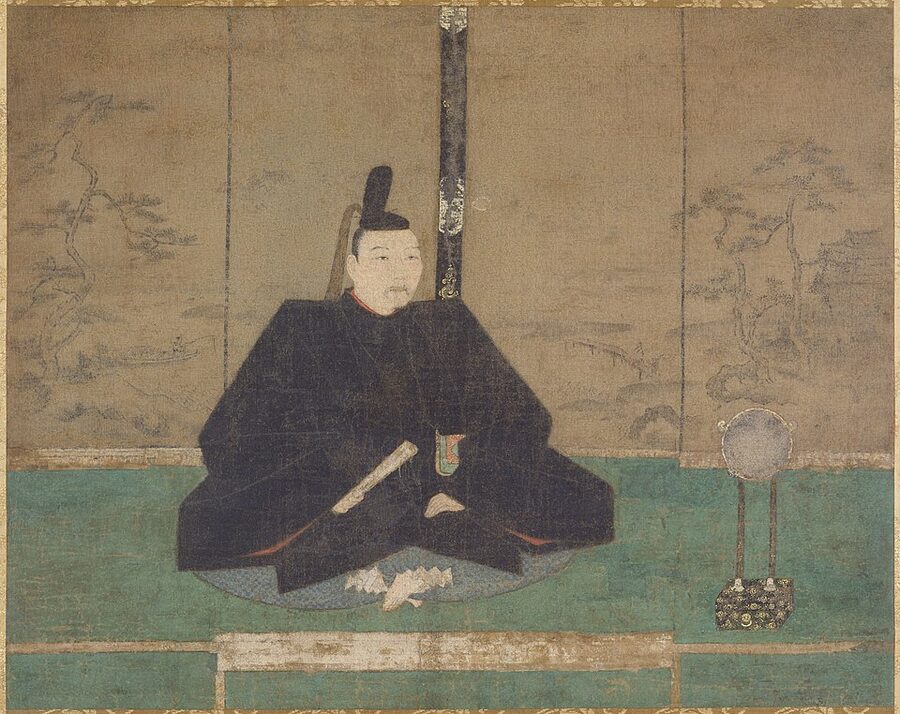
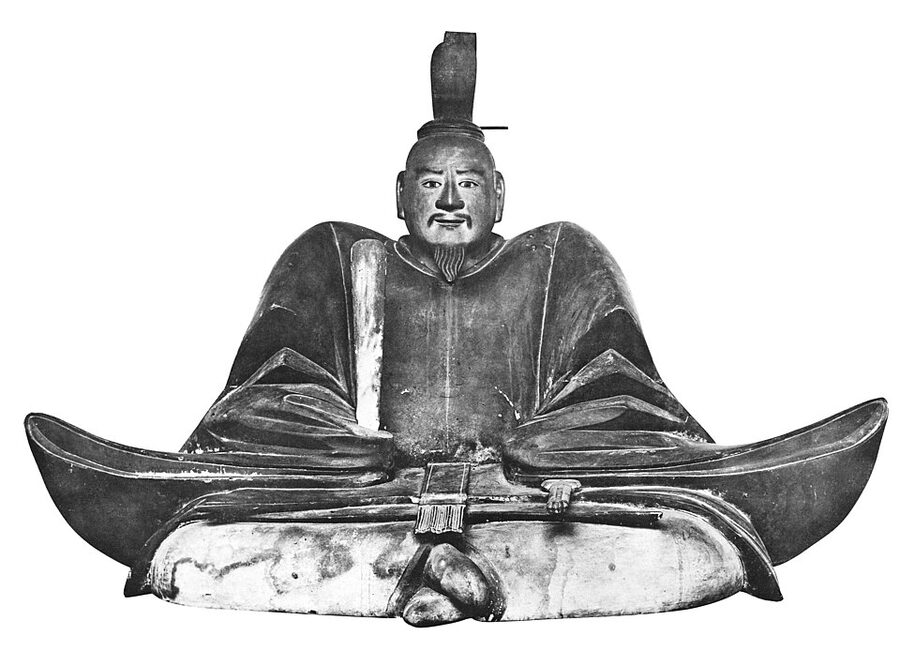
Ashikaga Yoshimitsu, born in 1358 (the year his grandfather died), became the third shogun in 1368 at the age of ten and would for the next forty years be the central political figure of the entire era. He is the man who made the Muromachi shogunate actually function as a national authority, and he did it by combining shogunal command of the warrior houses with a position inside the imperial court that no previous shogun had managed. Yoshimitsu negotiated the reunification of the two imperial courts in 1392, persuading the Southern Court emperor Go-Kameyama to surrender the imperial regalia in exchange for an alternation arrangement that the Ashikaga then quietly ignored. By the late 1390s he held the senior court rank of Daijō-daijin (Grand Chancellor of State), the highest civilian position in the realm, while simultaneously running the warrior government as shogun. No one before him had held both at once.
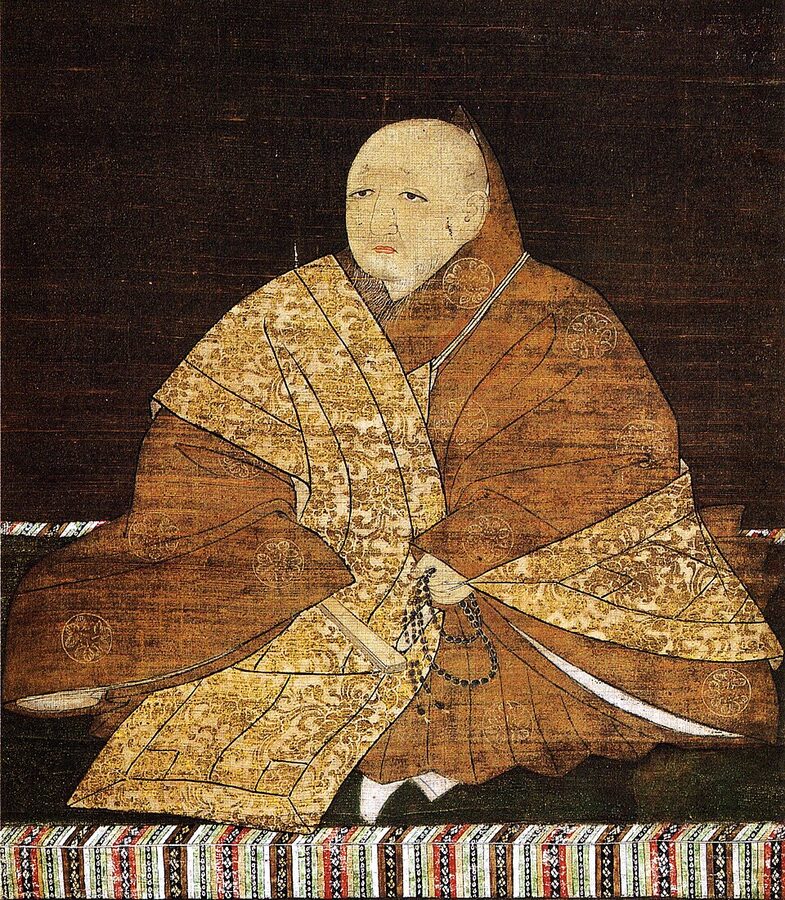
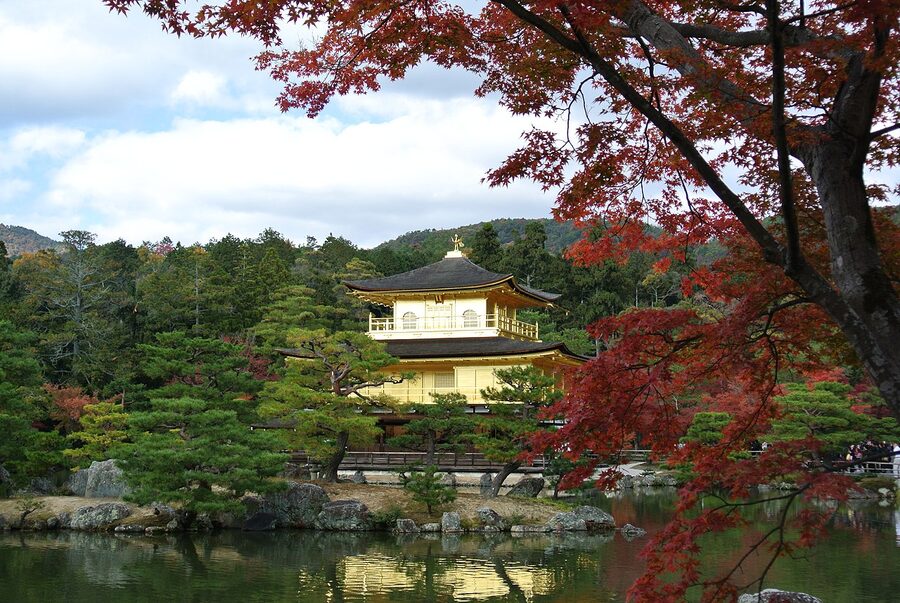
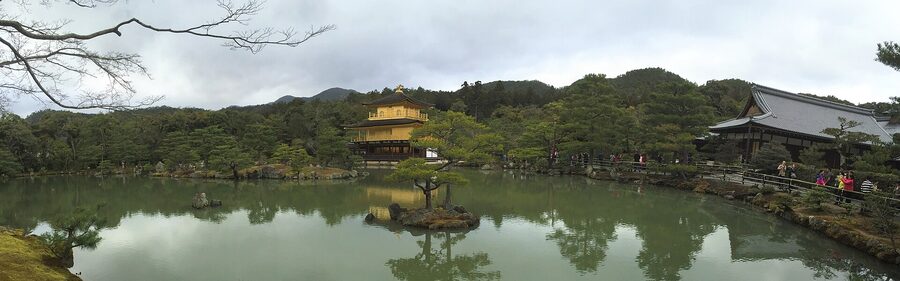
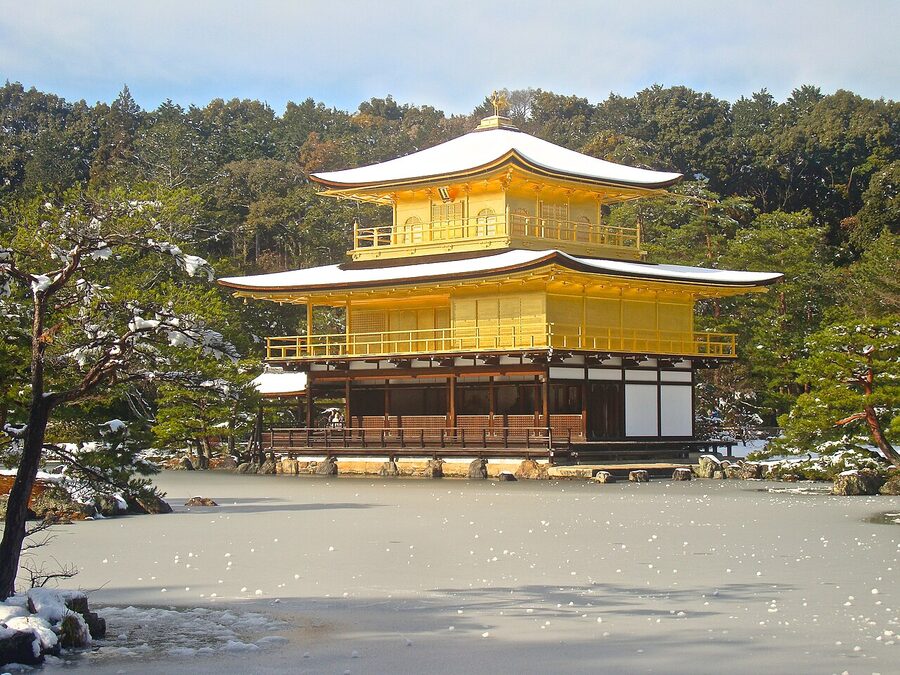
Yoshimitsu retired from the shogunate in 1394, handed the title to his nine-year-old son Yoshimochi, and immediately began to build the cultural and political programme that defines the first half of the Muromachi era. He bought the Kitayama villa from the Saionji family in 1397 and converted the property into a sprawling complex of pavilions on the northern hills of Kyoto, the centerpiece of which was the three-storey gilded pavilion you can still see today. The first floor was built in shinden-zukuri court-aristocrat style, the second in buke-zukuri warrior-residence style, and the third in Chinese Zen temple style. The architectural layering is not accidental: he was making a physical statement about the status he was claiming, with court, warrior, and continental Buddhist traditions stacked literally on top of each other under one roof.
The trade with Ming China that Yoshimitsu reopened in 1404 is what funded all of this. The Ming court had been refusing to deal with Japanese governments for forty years, since Japanese pirates (the wakō) were raiding the Korean and Chinese coasts and the Ming considered the Japanese authorities responsible. Yoshimitsu agreed in 1401 to a tally trade arrangement (kango bōeki) under which Japanese ships sailed only with Ming-issued tally certificates that authenticated them as official, and in exchange Yoshimitsu accepted the title “King of Japan” (Nihon kokuō) from the Ming emperor as a tributary monarch. This was politically explosive at home (the Imperial court hated it), but the kango trade brought in copper coinage, ceramics, silks, books, and Zen monks at a scale that financed two generations of Ashikaga cultural patronage.
Kitayama bunka: the culture of gold
The cultural movement Yoshimitsu hosted at Kitayama, called Kitayama bunka (北山文化, “Kitayama culture”) by later historians, is the first half of the Muromachi aesthetic story. It is everything you associate with Yoshimitsu’s pavilion: gold, Chinese-style splendour, court-aristocratic refinement, and the deliberate fusion of warrior, court, and Zen elements that the building itself exemplifies. The patrons were the shogun and the court aristocracy in Kyoto. The artists they sponsored are the names that defined the next century of Japanese performing arts.
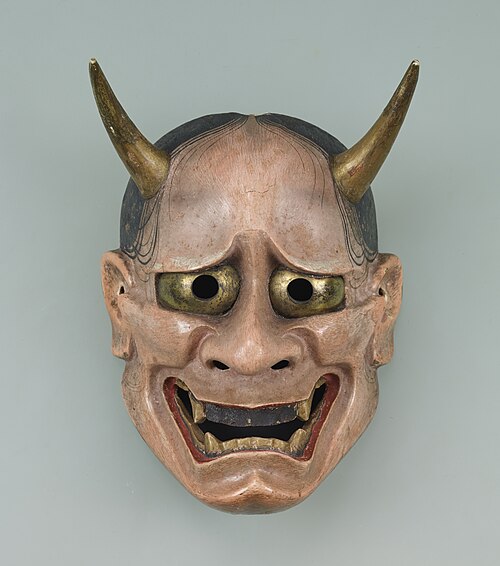
The single most important of those artists was Zeami Motokiyo, born around 1363, the son of the sarugaku performer Kan’ami Kiyotsugu. Yoshimitsu first saw Kan’ami and the boy Zeami perform at the Imakumano shrine in Kyoto around 1374, when Zeami was about twelve. The shogun became personally captivated by the boy actor and his father’s troupe, and within a year had taken Zeami into his household and the troupe under his patronage. Over the next forty years Zeami composed approximately fifty plays (the canonical works of Noh including Atsumori, Takasago, Matsukaze, and Yamanba are his) and authored the foundational treatises on Noh aesthetics, including Fūshikaden (1418) and Kakyō (1424). Without Yoshimitsu’s patronage the entire art form does not exist in the shape you now know.
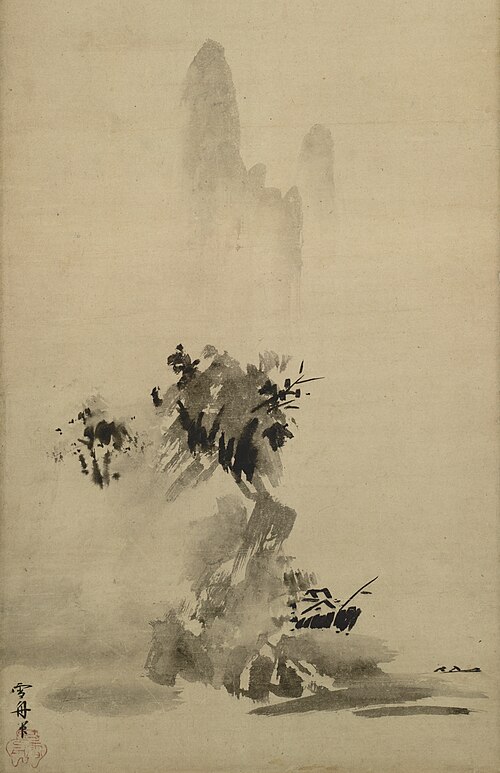
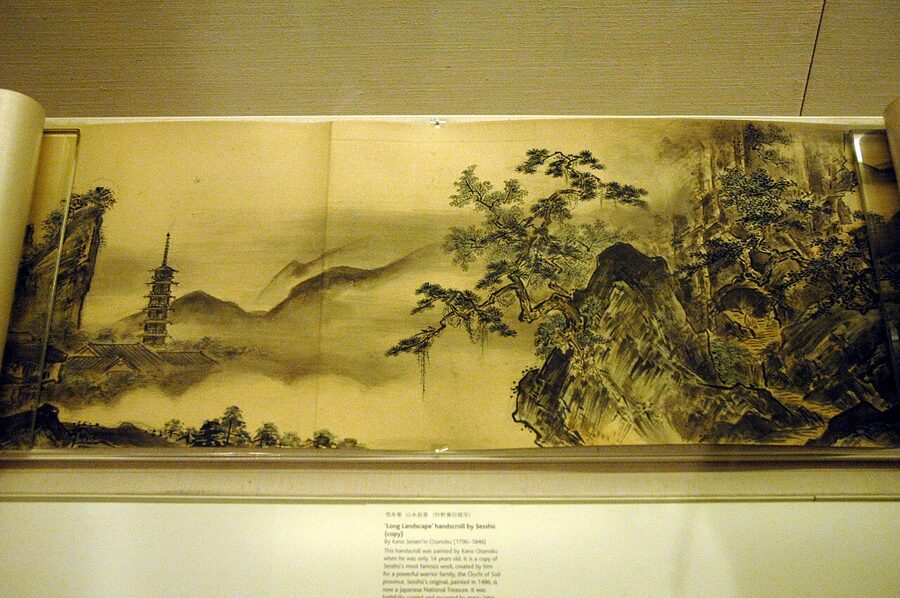
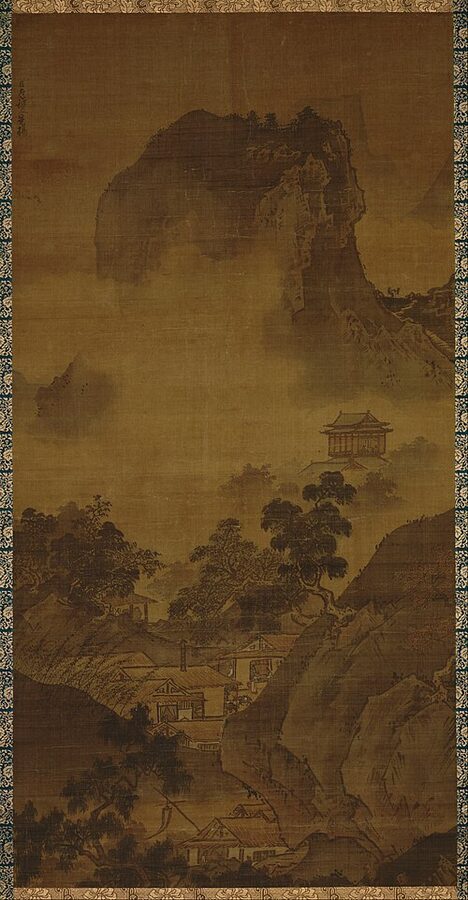
The other major artistic field of the Kitayama period was Chinese-style ink painting, brought into Japan by the Zen monks who travelled the trade routes Yoshimitsu had reopened. The painter who would dominate the next generation, Sesshū Tōyō, was born in 1420 in what is now Okayama Prefecture and trained in Kyoto under the early Kano-school painter Tenshō Shūbun. In 1467 Sesshū sailed for Ming China on one of the trade ships, spent two years studying landscape painting in the southern provinces, and returned to Japan in 1469 just as the Ōnin War was levelling Kyoto. He spent the rest of his life painting in regional centres outside the capital, since Kyoto was unsafe and his patrons had decentralised. His Long Landscape scroll of 1486 is fifteen metres of continuous ink painting and is considered the greatest single work of Japanese ink art ever produced.
I think it is worth pausing to register what happened in this fifty-year stretch from roughly 1380 to 1430. Japan acquired its definitive theatrical form (Noh), its definitive painting tradition (Chinese-style ink landscape), the architectural vocabulary that would dominate temple and palace building for the next four centuries (the layered shinden-buke-Zen synthesis Kinkaku-ji embodies), and the reopened trade route to continental China that brought it all together. All of this happened under the personal patronage of one shogun and his retired-shogun successor son. None of it survives long after Yoshimitsu’s death in 1408 in the same intensity. The gilded mirror at Kitayama is the highest peak the Muromachi era ever reaches.
The slow decline: 1408 to 1465
Yoshimitsu died on 31 May 1408 at Kitayama, age forty-nine, after a sudden illness whose nature contemporaries described only obliquely. His body was cremated and his ashes interred at Tōji-in temple in western Kyoto. The Imperial court, as one of its first acts after his death, attempted to confer on him the posthumous title of Daijō tennō (“retired emperor”), which he had been pushing for in his last year of life. His son Yoshimochi, the new shogun, refused to accept the title on his father’s behalf and had the offer formally declined. That refusal was the first sign that the shogunate after Yoshimitsu would not be the same institution.
Yoshimochi (fourth shogun, 1394 to 1428) reversed almost every policy his father had implemented. He suspended the Ming tally trade in 1411, since he objected to the tributary terminology of Ming-Japan relations on principle. He withdrew shogunal patronage from Zeami, who in old age would eventually be exiled by the sixth shogun Yoshinori to Sado Island in 1434. He moved the shogunal residence away from Kitayama and back into central Kyoto. The institutional weight of the Ashikaga regime continued, but the cultural ambition that had made Yoshimitsu’s court the centre of Japanese artistic life simply evaporated. Yoshimochi died in 1428 of a horse-riding injury without naming an heir.
His successor Yoshinori (the sixth shogun, in office 1429 to 1441) is the figure usually identified as the first sign of the shogunate’s coming collapse. Yoshinori was paranoid, given to executing senior vassals on suspicion, and ruled through a kind of personal terror that alienated the major warrior houses. In June 1441, the daimyō Akamatsu Mitsusuke invited Yoshinori to a banquet at his Kyoto residence and had him assassinated mid-meal, in what became known as the Kakitsu Disturbance (嘉吉の乱). The Ashikaga shogunate had now lost the basic principle on which any warrior government rests: a shogun who can be murdered by his own vassals at dinner is not commanding the loyalty system the office depends on. The shogunate continued to exist for another 132 years after Yoshinori’s death, but the fact of his murder is what every subsequent decline traces back to.
Yoshimasa and the Ōnin War
Ashikaga Yoshimasa became the eighth shogun in 1449 at age thirteen and is the figure who would preside over the institutional collapse. The setup of the Ōnin War is almost grotesquely simple. Yoshimasa was childless into his thirties. In 1464, when he was twenty-eight and growing impatient with the absence of an heir, he persuaded his younger brother Yoshimi (then a Buddhist monk at the Jōdo-ji temple in Kyoto) to leave holy orders and be adopted as Yoshimasa’s heir to the shogunate. Yoshimi reluctantly agreed, conditional on the explicit promise that no later natural son would displace him. In 1465 Yoshimasa’s wife Hino Tomiko gave birth to a son, Yoshihisa, and Tomiko began an immediate political campaign to have her infant son named heir in place of Yoshimi.
Two factions formed inside the shogunate to back the rival heirs. Hosokawa Katsumoto (the senior kanrei deputy-shogun) initially backed Yoshimi and would form what historians now call the Eastern Army. Yamana Sōzen (a powerful warlord whose granddaughter was Yoshihisa’s mother Tomiko’s close ally) backed the infant Yoshihisa and would form the Western Army. The two camps spent two years arming, recruiting allies among the regional warlords, and stockpiling supplies inside Kyoto. By the spring of 1467 there were roughly 160,000 troops under Hosokawa command in the eastern half of the city and 116,000 under Yamana command in the western half, and the city had become a tinderbox.
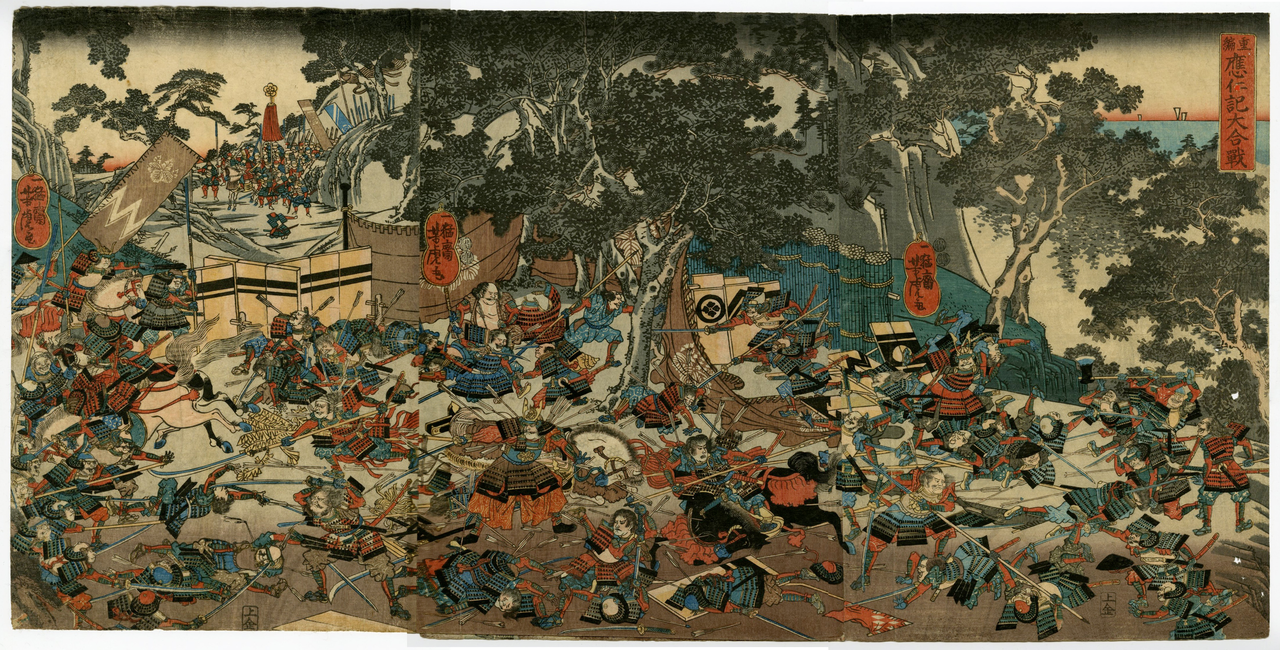
The war started on 27 May 1467 when Yamana forces attacked the residence of Hatakeyama Masanaga (a Hosokawa ally) in the Kamigyō district north of the Imperial Palace. Within a week the burning of central Kyoto had begun. Hosokawa loyalists used fire as a deliberate weapon to deny the Yamana faction the use of the city’s mansions and warehouses, and the Yamana forces returned the favour. By August the Imperial Palace itself had been damaged, and the Imperial regalia were evacuated south to Tōji. The fighting was almost entirely confined to a roughly two-square-kilometre zone in central and northern Kyoto, but inside that zone the destruction was total. Modern excavations have shown a clear stratigraphic burn layer under most of central Kyoto from this five-month period of 1467. Even the city’s annual Gion Matsuri festival, which had run continuously since 869, was suspended for the duration of the war; when it resumed in 1500, the surviving guilds in the burned-out shitamachi neighbourhoods rebuilt the floats from scratch.
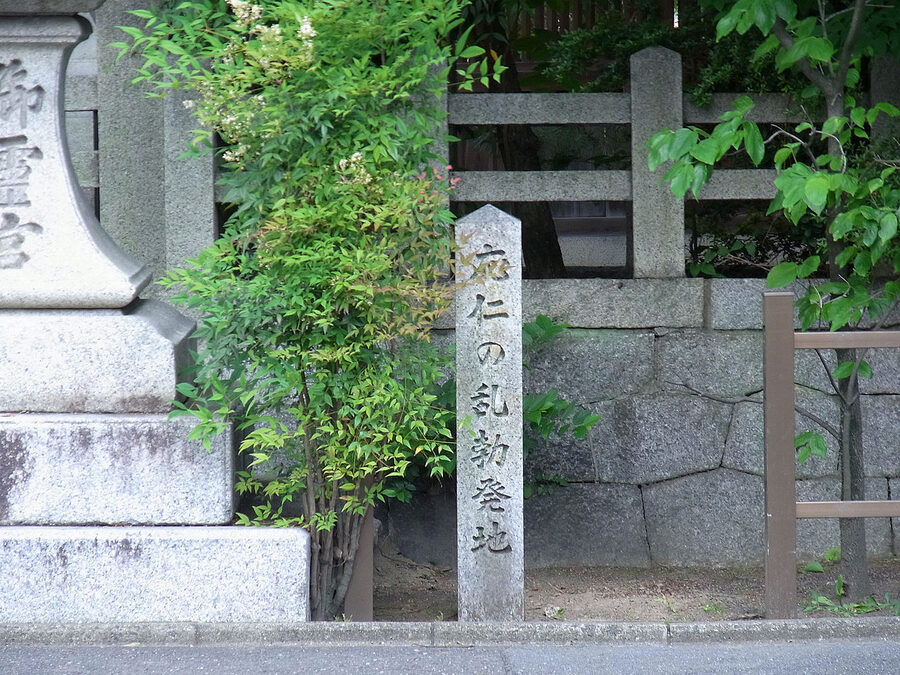
The war ground on for ten years and accomplished essentially nothing in terms of the original succession question. Hosokawa Katsumoto and Yamana Sōzen both died of illness in 1473, within two months of each other, without either side having achieved a decisive military advantage. Yoshihisa was named ninth shogun in 1473 (winning the original succession battle by default), Yoshimasa retired the same year, and the war stumbled on for four more years until both armies, exhausted, drifted out of Kyoto in 1477 to fight in their home provinces instead. The political consequence is clear and irreversible. The shogunate had lost its capacity to enforce decisions outside Kyoto, the regional warlords now operated as independent powers in their own provinces, and the framework historians call the Sengoku period (the warring states) was fully under way.
Higashiyama bunka: the aesthetic of restraint
What Yoshimasa did between the war and his death in 1490 is, for me, the strangest and most moving piece of the Muromachi story. He retired from the shogunate, withdrew from politics almost entirely, and spent the last decades of his life constructing a retirement villa in the eastern hills of Kyoto and patronising a deliberately understated cultural movement that became the foundation of every classical Japanese aesthetic ideal you can still recognise today. The villa is the Silver Pavilion, Ginkaku-ji. The cultural movement is Higashiyama bunka. And the aesthetic principle they embody is wabi-sabi, which is more or less invented in the courtyards of Yoshimasa’s retirement compound between 1480 and 1490.
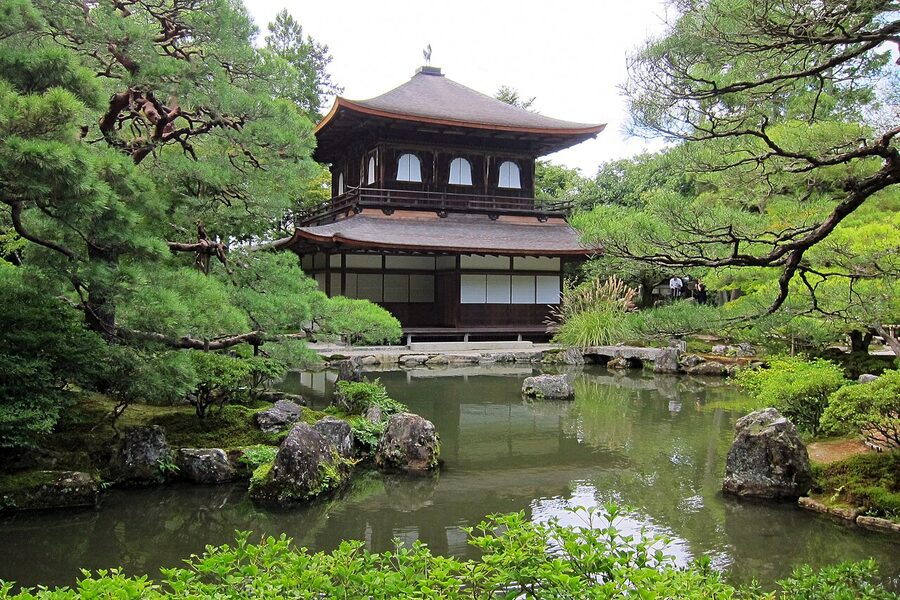
Yoshimasa began work on the Higashiyama villa in February 1482, five years after the formal end of the Ōnin War. The site was a piece of mountainous land at the foot of Higashiyama (the eastern hills of Kyoto), near the Jishō-ji temple grounds, and the project was modeled on Yoshimitsu’s Kitayama-dono with one critical inversion: it was designed not to display power but to renounce it. The Kannon-den (the building you now call Ginkaku-ji proper) was completed in 1486. The Tōgudō residence hall, which contains the prototype shoin-zukuri room called Dōjinsai, was completed in 1485 to 1486. The gardens, attributed in part to the painter and garden-designer Sōami, were laid out by the year of Yoshimasa’s death in 1490.
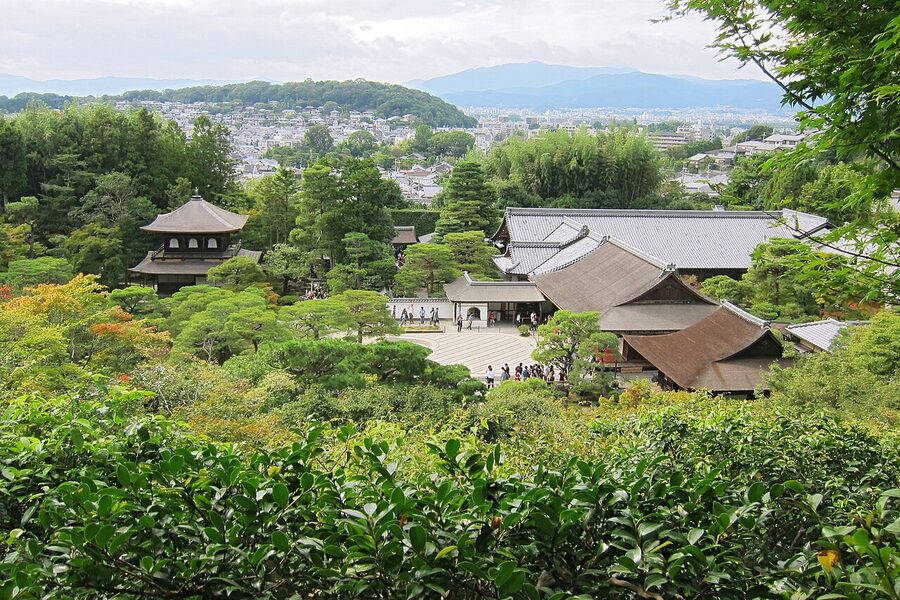
The Tōgudō hall is the building most architectural historians say is the more important of the two. Its Dōjinsai room is a four-and-a-half-mat space with a tokonoma alcove, staggered shelves (chigai-dana), and built-in writing desk (tsukeshoin) (これがもし shoin-zukuri prototype), all in their canonical positions. This is the room from which the standard Japanese formal residential interior of the next four centuries derives. Every shoin-style room you have ever been in (the formal interior of a daimyō palace, the reception room of a merchant house in the Edo period, the tatami-floor room with a tokonoma in your hotel ryokan) traces directly back to Yoshimasa’s four-and-a-half-mat retreat in this hall. The architectural codification I am describing happened over about a decade.
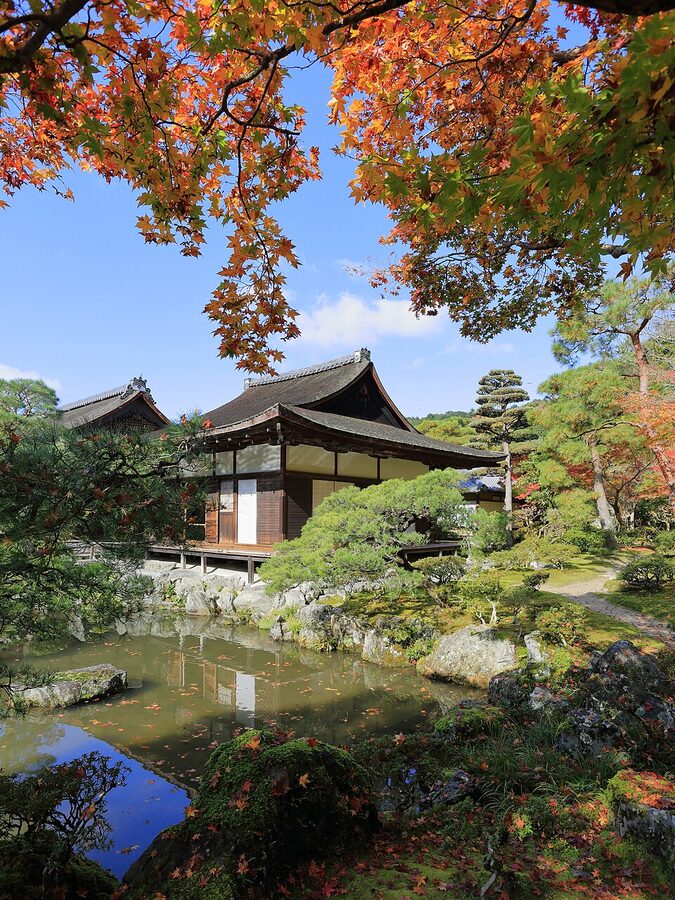
The four arts of Higashiyama bunka, codified by Yoshimasa’s coterie between roughly 1480 and 1500, are the four arts you still associate with classical Japanese culture. These are tea ceremony (chadō), flower arrangement (ikebana), Noh theatre, and ink painting (sumi-e). The tea ceremony you can trace back to the work of Murata Jukō, a Zen monk and tea practitioner whom Yoshimasa employed as his tea master in the 1470s and 1480s. Jukō’s innovation was to strip the tea ritual of the Chinese-import luxury aesthetic that Yoshimitsu’s Kitayama tea sessions had been built on, and replace it with a deliberately rustic vocabulary of small rooms, plain ceramics, and meditative quiet that he called wabi-cha. The full development would happen a hundred years later under Sen no Rikyū, but the foundation Rikyū built on was Jukō’s work in Yoshimasa’s tea rooms at Higashiyama.
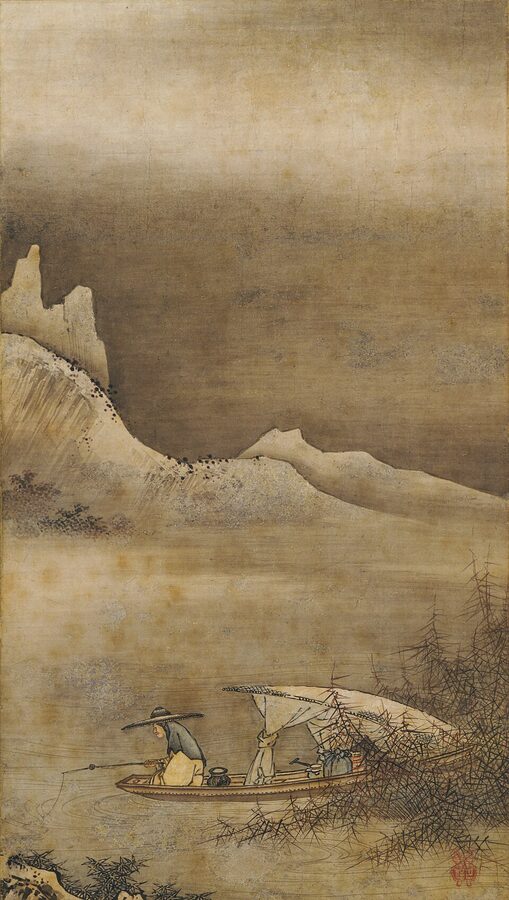
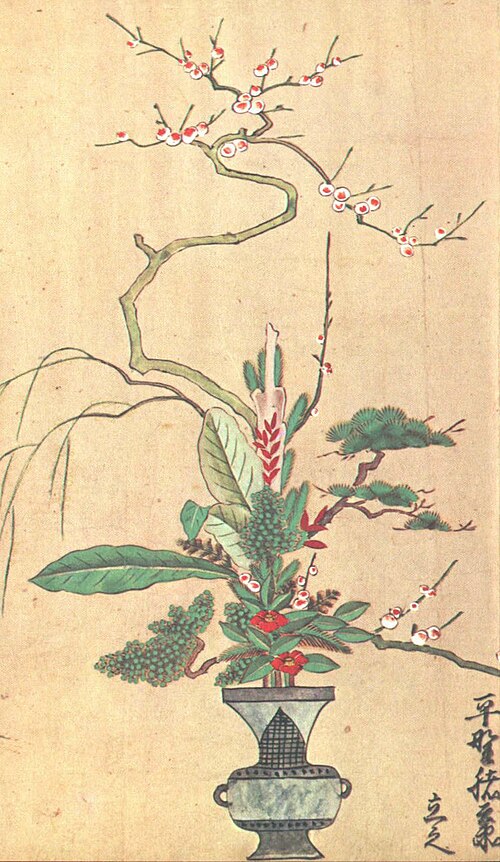
The flower arrangement that codified at Higashiyama was the rikka style, the formal “standing flower” arrangement that the Ikenobō school of priests at the Rokkaku-dō temple in central Kyoto had been developing since the late 14th century. By Yoshimasa’s time the rikka had become the standard arrangement form for shoin-style alcoves, and the manuscript records of formal Yoshimasa-period flower arrangements are the founding documents of the entire ikebana tradition. Noh theatre I have already covered (Zeami died in 1443, but his treatises were copied and recopied through the Higashiyama period and shaped how the next generation of Noh masters trained). And ink painting reached its peak in this exact decade with Sesshū’s late masterpieces, Kanō Masanobu’s establishment of what would become the Kanō school, and Sōami’s hybrid painter-gardener-designer practice.
Karesansui: the dry rock garden codifies
The fifth thing Higashiyama produced is the one I find most striking and that you can still walk into today. The karesansui (枯山水), the dry rock garden, is the Muromachi era’s gift to Japanese garden design, and the canonical example was laid out at the Daisen-in subtemple of Daitoku-ji in 1509, twenty years after Yoshimasa’s death but inside the cultural programme he had set in motion. The designer, traditionally identified as Sōami (the same painter-gardener Yoshimasa had used at Ginkaku-ji), used a small north-east courtyard of the Daisen-in compound to construct what is essentially a three-dimensional ink painting. There is no water in the garden, only stones, raked white gravel, and a few clipped shrubs.
What Sōami did at Daisen-in is a translation of the same compositional principles that governed Sesshū’s ink paintings into a different medium. The two upright stones at the head of the garden read as a waterfall in a vertical Chinese landscape. The long horizontal stone below them reads as the bridge that crosses the stream the waterfall is feeding. The raked gravel reads as the stream itself, flowing south through a small stone-and-gravel “harbour” before opening out into a larger raked area that reads as the open sea. None of this is water; all of it functions, in the perception of the viewer seated on the temple veranda, as if it were. This is the exact perceptual move Sesshū made in his haboku splashed-ink technique, where a few brush splashes are read as a complete landscape.
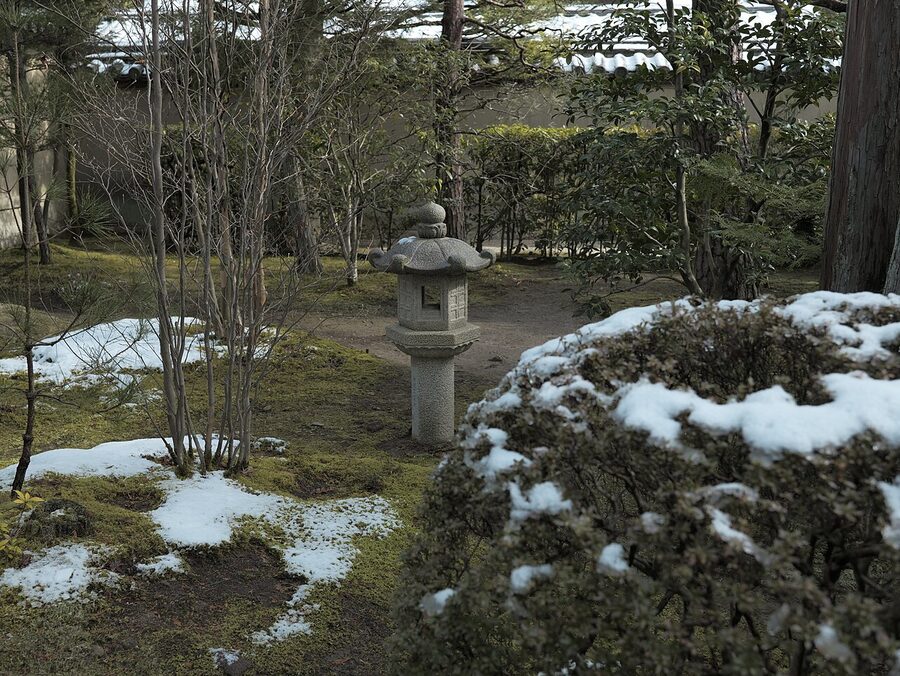
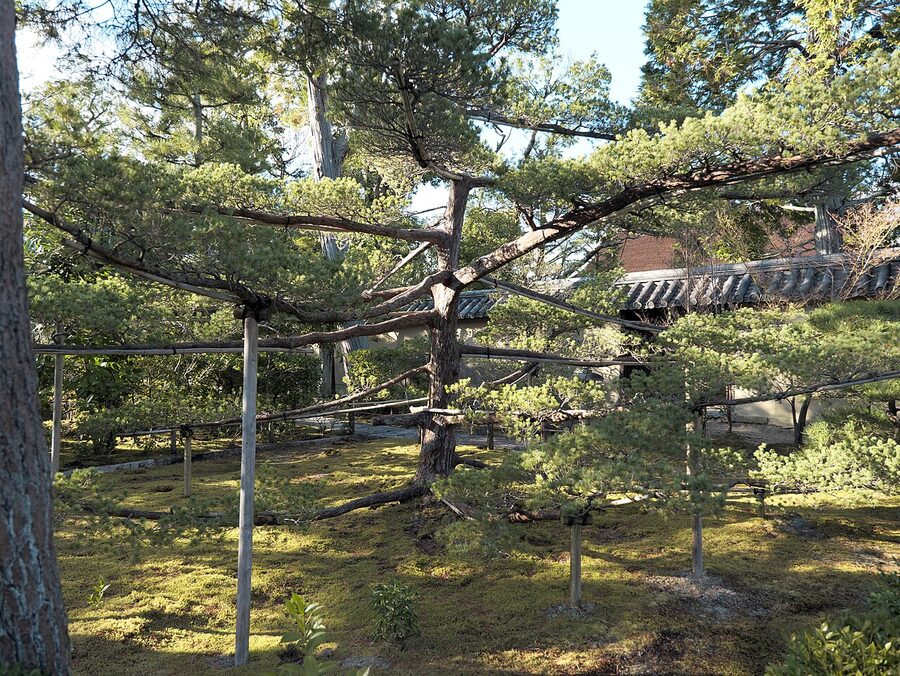
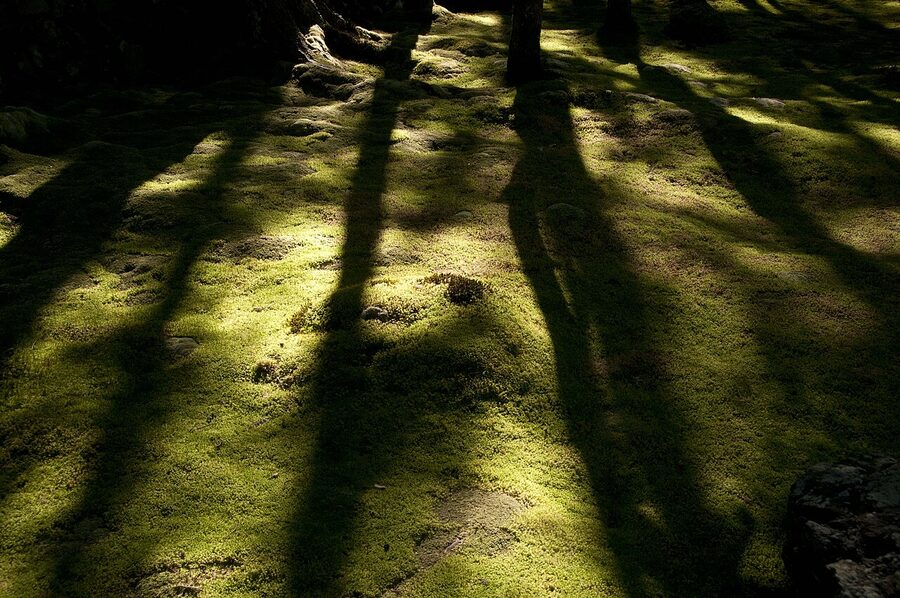
The Higashiyama-era karesansui is descended from an earlier Muromachi garden tradition that had been worked out at the very beginning of the era by the Zen monk and garden-designer Musō Soseki. Musō (1275 to 1351) had been the spiritual advisor to Ashikaga Takauji himself, and the gardens he designed at Saihō-ji (1339, the famous moss garden) and Tenryū-ji (1339 to 1345, the famous pond garden in Arashiyama) are the prototypes of the Muromachi temple garden form. Musō’s gardens still used water and lush planting; they had not yet made the move into the abstract dry-stone vocabulary that Daisen-in would pioneer. But the principle of the garden as a meditation aid, with views composed for a seated viewer on a temple veranda, is established at Saihō-ji 170 years before Daisen-in.
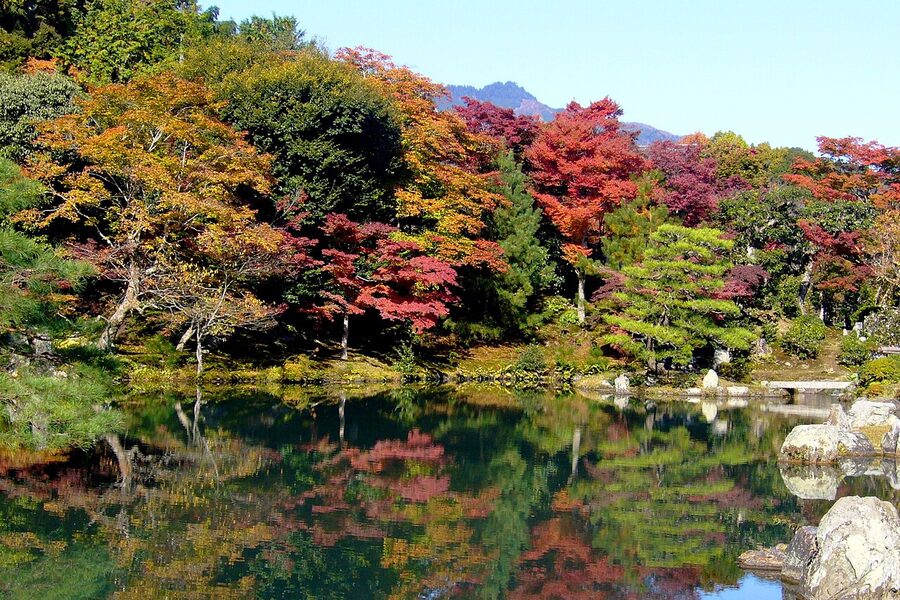
If you want to see how all of this fits together as a single tradition, my Japan’s greatest gardens piece walks the full sequence: from the Heian aristocrats’ pond gardens, through Musō’s late-Kamakura/early-Muromachi temple work at Tenryū-ji and Saihō-ji, to the Daisen-in dry-stone codification, to the Edo-era stroll-garden synthesis. The Muromachi era is the central crucible of all of it. Without these 237 years there is no classical Japanese garden tradition.
Sengoku: the era inside the era
I have been writing as if the cultural programme of Higashiyama and the political collapse of the Ōnin War belong to the same continuous decade, which is roughly true, but the two trajectories then diverge for the next century in a way that is worth tracing. The Higashiyama aesthetic system, once it was codified between 1480 and 1500, propagated outward into provincial Japan even as the central authority of the shogunate dissolved completely. The regional warlords (the sengoku-daimyō who emerged from the Ōnin chaos) all wanted to imitate the cultural prestige of the Higashiyama court, and they hired Kyoto-trained tea masters, Kyoto-trained Noh troupes, and Kyoto-trained painters to bring that prestige into their own castle-towns. The aesthetic culture spreads geographically while the shogunate that produced it shrinks into irrelevance.
The political system that emerged in the post-Ōnin provinces was structured around a principle the Japanese chroniclers called gekokujō (下克上), “the lower overthrowing the higher.” Senior vassals overthrew daimyō. Sub-vassals overthrew senior vassals. Peasant-soldier leagues (ikkō-ikki) overthrew their lords entirely in some provinces, most famously in Kaga where the Ikkō-ikki ran the province as a peasant republic from 1488 to 1580. The Hōjō clan of Sagami, who would dominate the eastern Kantō for the next century, were founded by a man (Hōjō Sōun) who started life as a wandering ronin and ended it as the lord of one of Japan’s wealthiest provinces. This kind of social mobility had been impossible in Kamakura-period Japan and would be impossible again in Tokugawa-period Japan; in the Muromachi-Sengoku interval it was the basic political mechanism. The castle architecture the sengoku-daimyō produced in this century is a separate technical lineage from the keep-style fortifications of the Edo period; the surviving examples I cover in my piece on Japan’s twelve original castles are mostly post-Muromachi rebuilds, but they sit on Muromachi-period sites.
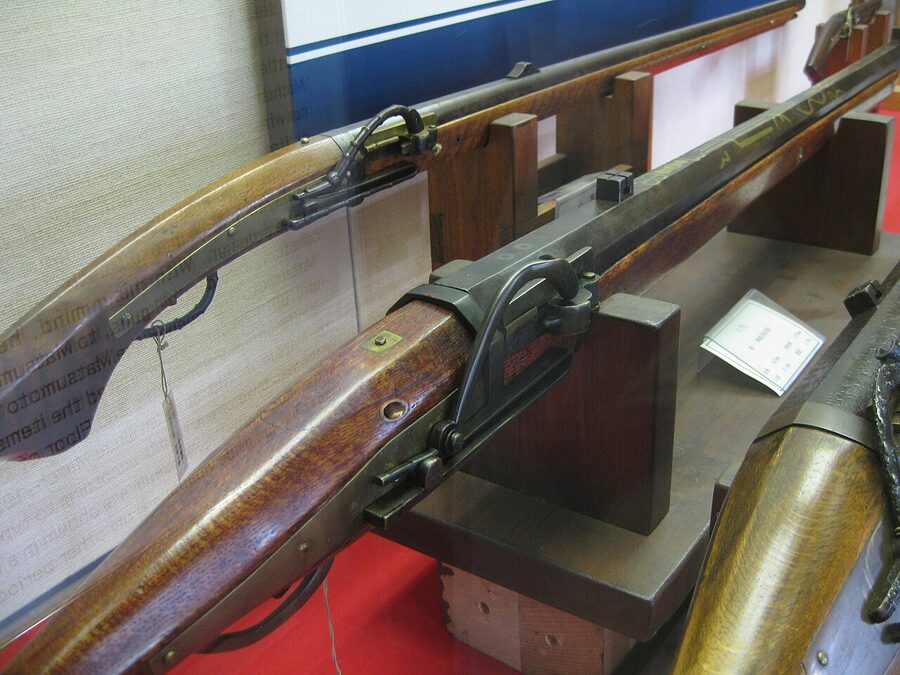
The arrival of the Portuguese in 1543 is the next inflection point. A Chinese pirate ship blown off course by a typhoon ran aground on the small island of Tanegashima off the southern coast of Kyushu in late September 1543. On board were three Portuguese gunsmiths and three matchlock arquebuses, the first European firearms ever to land in Japan. The lord of Tanegashima, Tokitaka, bought all three on the spot for a reportedly enormous price and immediately commissioned his armourers to reverse-engineer the weapons. Within ten years, the matchlock arquebus (which Japanese sources called the tanegashima after the place of its arrival) was being produced in significant quantities at the gunsmith centres of Sakai, Negoro, and Kunitomo. The military balance of the Sengoku period was permanently altered.
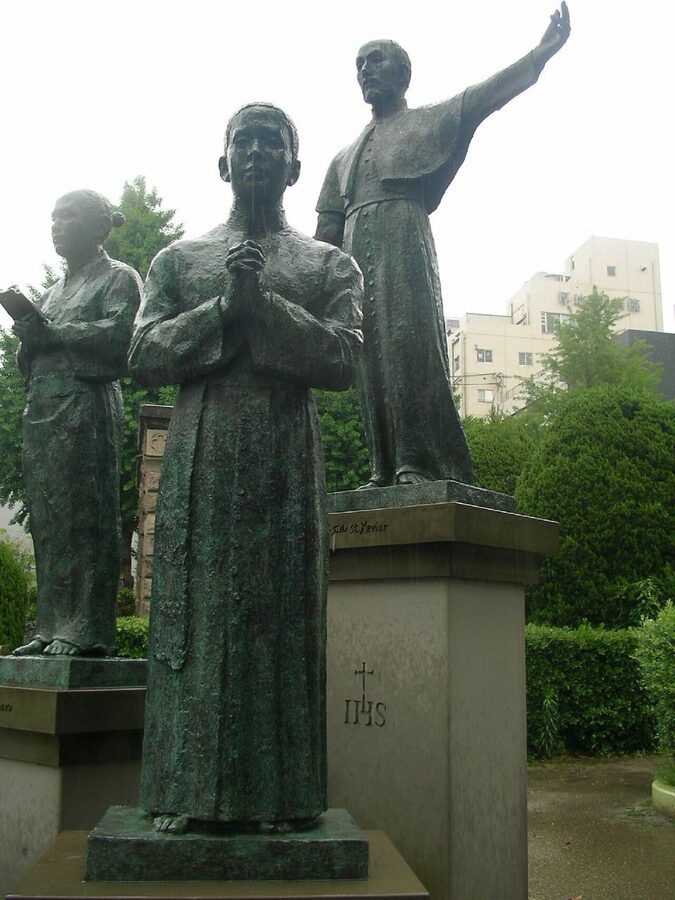
Six years after the arquebus arrived, in 1549, the Jesuit missionary Francis Xavier landed at Kagoshima on the southern coast of Kyushu, and Christianity was introduced to Japan. Xavier had been working in India and Malacca and had been persuaded by a Japanese refugee called Anjirō (whom he had met in Malacca) that Japan was a country whose sophisticated political class would respond well to a doctrinal religion delivered with intellectual rigour. He was correct. By the time of Xavier’s death in 1552, the Japanese Christian community he had founded at Kagoshima, Hirado, and Yamaguchi numbered approximately two thousand converts. By 1582 there would be 150,000 Japanese Christians, including a number of senior daimyō. The Christian century in Japan, which would end in violent suppression in the 1640s, begins with Xavier’s landing.
The end of the Muromachi period is conventionally dated to 1573 and is the work of Oda Nobunaga. Nobunaga had marched into Kyoto in October 1568 with the exiled Ashikaga prince Yoshiaki, installed Yoshiaki as the fifteenth shogun, and operated as Yoshiaki’s nominal kanrei deputy for the next four years (the rebuilt fortress where Nobunaga later based the next regime is the subject of my piece on Azuchi Castle). Yoshiaki, predictably, attempted to organise a coalition against his patron in 1572 to recover real shogunal authority. Nobunaga responded in July 1573 by besieging the shogun at Makishima Castle south of Kyoto, forcing his surrender, and exiling him to the provinces. The Ashikaga shogunate, founded in 1336 by Ashikaga Takauji, formally ended on that day. It had lasted 237 years.
What the era left behind
You can argue, and many Japanese historians of the last fifty years have, that the Muromachi era was a political disaster. The shogunate it produced was unable to control the country it nominally governed, the central authority collapsed within four generations of its founding, and the result was a hundred-year civil war that finally ended only when three successive warlords (Nobunaga, Hideyoshi, Ieyasu) reassembled the country by force. None of those criticisms are wrong. The Ashikaga regime is the most institutionally fragile of the three samurai shogunates Japan would experience, and the Ōnin War is the worst single political failure of pre-modern Japanese history.
And yet what the era left culturally is, by a wide margin, the foundational stratum of classical Japanese aesthetic life. Every art form you would identify as classical Japanese (Noh, ink painting, formal tea ceremony, ikebana, dry rock garden, shoin-style architecture, wabi-sabi as an aesthetic concept) was either invented or codified to its canonical form in this 237-year window. The next four hundred years of Japanese cultural history are largely a long elaboration of what was assembled in Kitayama and Higashiyama. Sen no Rikyū inherited Murata Jukō’s wabi-cha. The Kanō school painters of the Momoyama and Edo periods inherited Kanō Masanobu’s brushwork. The Edo-era stroll gardens elaborate Musō Soseki’s compositional moves at Saihō-ji. None of those traditions exist without the Muromachi era setting them up.
The contradiction at the heart of the Muromachi story is the one I started with. The shogunate that built Kinkaku-ji and Ginkaku-ji also produced the Ōnin War. The patrons of Zeami and Sesshū and Sōami were the same family who could not, between them, manage a competent succession in a single generation. Yoshimasa retreating to his Higashiyama villa in 1482, with central Kyoto still smoking from his own civil war, is the visual image I keep coming back to. He had failed at the political job entirely. He went to the eastern hills and produced, more or less by accident, the founding works of every refined art form Japan would have for the next four hundred years. That paradox is the era.
Where to go today
The physical legacy of the Muromachi era is concentrated in central and northern Kyoto, almost all of it accessible on a two- or three-day walking circuit. I will run you through the sites in the order I would visit them on a first trip, and I will be specific about what to look for in each one (because most of these temples are visually stunning at a glance and most visitors do not actually see the things that make them historically central). Some of the sites are covered in dedicated articles I will link to; the others I will treat in fuller detail here.
Kinkaku-ji and the Kitayama hills
The Golden Pavilion is the obvious place to start. Kinkaku-ji is in northern Kyoto, accessible from JR Kyoto Station via city bus 101 or 205 (around 40 minutes), and the temple gates open at 9am. The visiting trail is one-way, clockwise around Kyōko-chi pond, and takes about thirty-five minutes if you do it at a normal walking pace. What you should look for: the difference in surface treatment between the three storeys (plain wood ground floor, gold-leafed second and third floors), the small bird-of-paradise (hōō) finial on the roof, and the subtle ten-degree tilt of the building toward the pond, which was deliberate (Yoshimitsu’s architects set the pavilion at an angle so the visitor approaching from the south sees three faces rather than one).
From Kinkaku-ji you can walk south-east about twenty minutes to Daitoku-ji, the major Rinzai Zen complex in Kita ward that hosts both the Daisen-in karesansui and a sequence of additional Higashiyama-period subtemples. Daitoku-ji has twenty-two subtemples in total, of which only four or five are open to the public on any given day. The subtemples that rotate openings include Kōtō-in (the burial site of Hosokawa Tadaoki), Ryōgen-in (with one of Japan’s smallest karesansui gardens), and Zuihō-in (with a 1961 Mirei Shigemori garden built on Higashiyama principles). The big one is Daisen-in itself, which is open daily, and which I will treat separately below.
Daisen-in: Higashiyama in dry stone
Daisen-in is the subtemple I would prioritise above any other Daitoku-ji building. The 1509 karesansui in the north-east courtyard is one of the most influential garden compositions ever made in Japan, and unlike the larger and more famous Ryōan-ji rock garden in the western part of Kyoto (Ryōan-ji’s gardens are slightly later, around 1499 to 1525), Daisen-in is intimate enough that you can sit on the veranda and read the entire composition from a single position. The temple is open daily from 9am to 5pm; entry is 500 yen. Photography is not permitted inside, but you can sit on the veranda for as long as you like.
What to do on the veranda: sit. The garden is composed for a viewer at approximately the position of the seated abbot at morning meditation, and you need to give it about fifteen minutes for the spatial relationships I described earlier (waterfall, bridge, stream, harbour, sea) to become visible. The first reading is always too fast. After fifteen minutes the gravel starts to read as moving water and the stones start to read as the architecture of a Chinese landscape painting, and the move from one perceptual mode to the other is the actual point of the garden. You cannot rush this and you cannot photograph it.
Ginkaku-ji and the Higashiyama villa
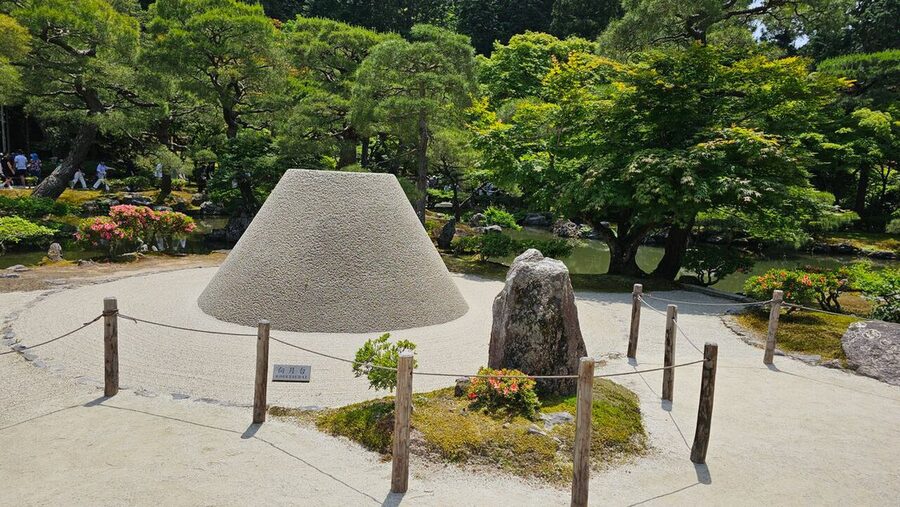
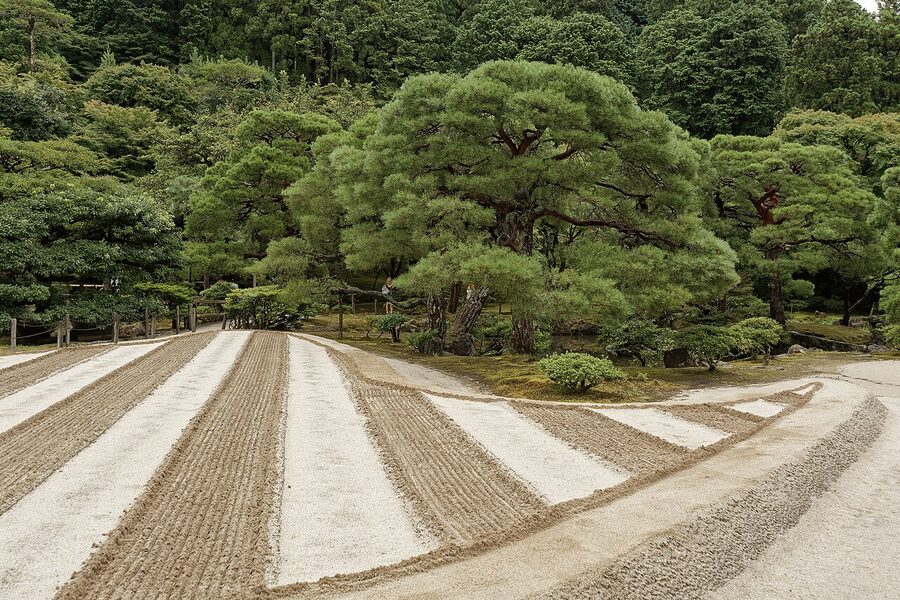
The Silver Pavilion is in the eastern hills (Higashiyama means “eastern mountain”) of Kyoto, accessible from Kyoto Station on bus 5 or 100 (about thirty minutes to the Ginkaku-ji-michi stop). The temple compound is at the foot of Mt. Daimonji, and the visiting trail is a circular walk through the gardens that takes about forty-five minutes. What you should look for: the deliberate plainness of the Kannon-den compared with Kinkaku-ji (this is a building that announces a different aesthetic principle), the Ginshadan and Kōgetsudai sand garden (raked into its current shape every morning by the temple gardeners), and the Tōgudō hall in the south-east corner of the compound (the Tōgudō is occasionally opened to the public for special events, but the exterior is what you can usually see).
From Ginkaku-ji you can walk south down the Philosopher’s Path along the old Lake Biwa Canal aqueduct, which connects Ginkaku-ji at the north end with Nanzen-ji at the south end and passes another half-dozen significant gardens (Hōnen-in, Eikan-dō, Nanzen-ji itself) along the two-kilometre route. This walk is the single best Kyoto-Higashiyama experience I can recommend. Plan for at least two hours if you want to see Hōnen-in (a small early-Edo temple with one of the city’s loveliest moss-and-camellia gardens) and Eikan-dō (a Heian-era temple complex with a Kamakura-period Buddhist sculpture, but whose gardens are heavily Muromachi in their final composition).
Saihō-ji and Tenryū-ji: the Musō Soseki originals
If you want to see what the Muromachi garden tradition looked like at its origin point (1339, sixty years before Yoshimitsu’s Kinkaku-ji), the two surviving Musō Soseki gardens are in western Kyoto. Saihō-ji (the moss garden) is in Nishikyō ward and is the more difficult of the two to visit. The temple has restricted access to small advance-booked groups (you must apply by mail for an entry permit at least seven days in advance), and the visit involves a one-hour seated meditation and sutra-copying session before you are allowed into the garden. The fee is 4,000 yen at time of writing. The booking process is non-trivial, but it is still the best Muromachi-era garden experience available in Kyoto.
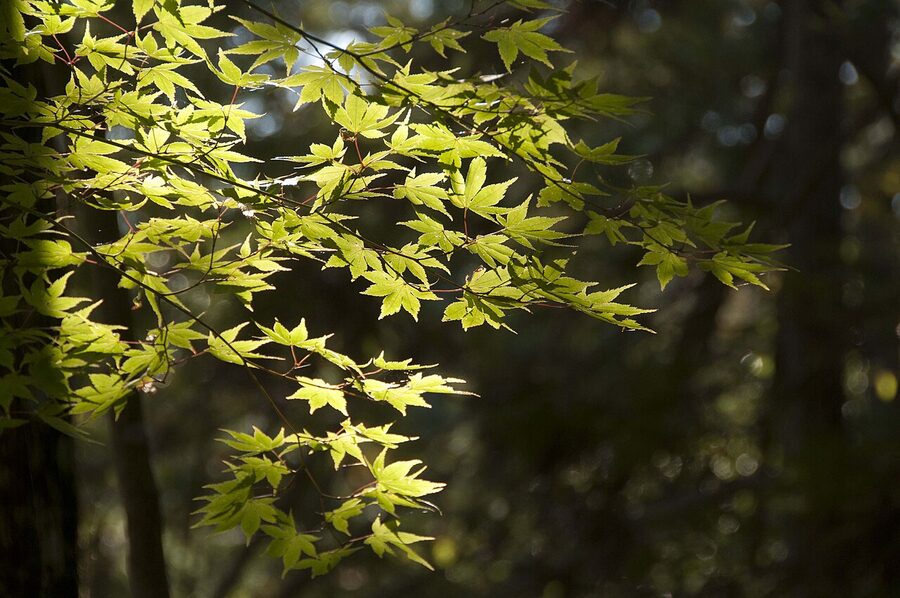
Tenryū-ji, the other major Musō garden, is in Arashiyama in the western suburbs and is much more straightforward to visit. Take the JR Sagano Line from Kyoto Station to Saga-Arashiyama (about fifteen minutes), then walk five minutes south-east to the temple. The Sōgen-chi pond garden at Tenryū-ji is composed for a viewer sitting on the abbot’s quarters veranda, with the pond in the middle ground and Arashiyama mountain functioning as borrowed scenery (shakkei) behind. The garden has not changed materially in seven hundred years, since the temple buildings were destroyed and rebuilt multiple times but the garden is the original 1339 to 1345 Musō layout. Entry is 500 yen.
Tōfuku-ji: the late-Muromachi synthesis
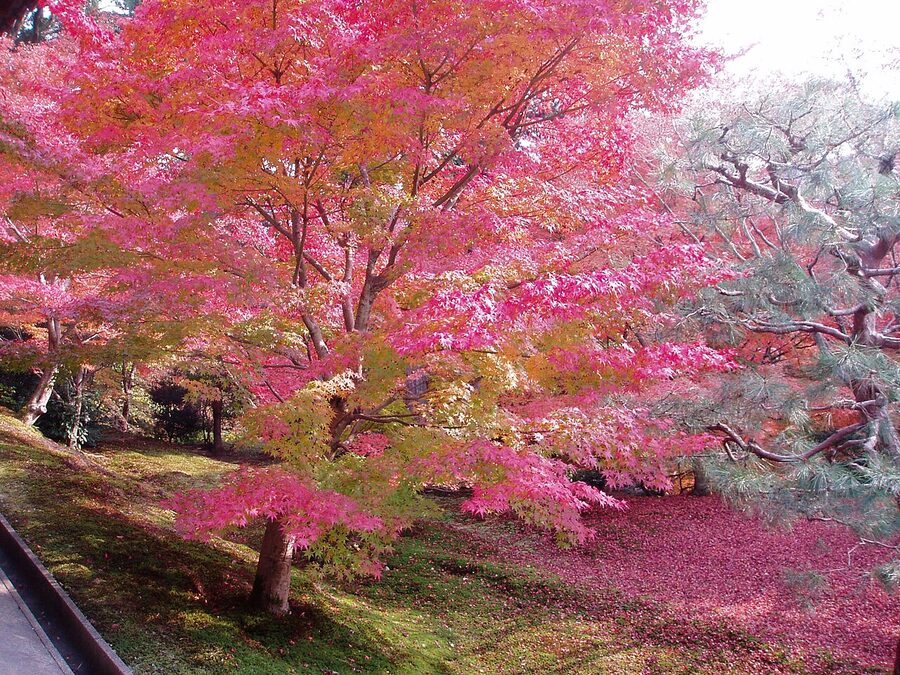
Tōfuku-ji is in southern Kyoto in Higashiyama ward, accessible from JR Tōfukuji Station (one stop south of Kyoto Station on the Nara Line). It is the temple complex you should visit if you want to see the late-Muromachi consolidation of garden, architecture, and Zen practice into a single site. The original 13th-century buildings were burned in the Ōnin War and rebuilt in the late 15th century in essentially the form you see today. The Tsūten-kyō covered bridge (the famous autumn-foliage viewpoint) crosses the Sengyokukan ravine that divides the compound, and the surrounding hillside is planted with hundreds of Japanese maples. Late November is the peak; come at 8am to avoid the worst of the crowds.
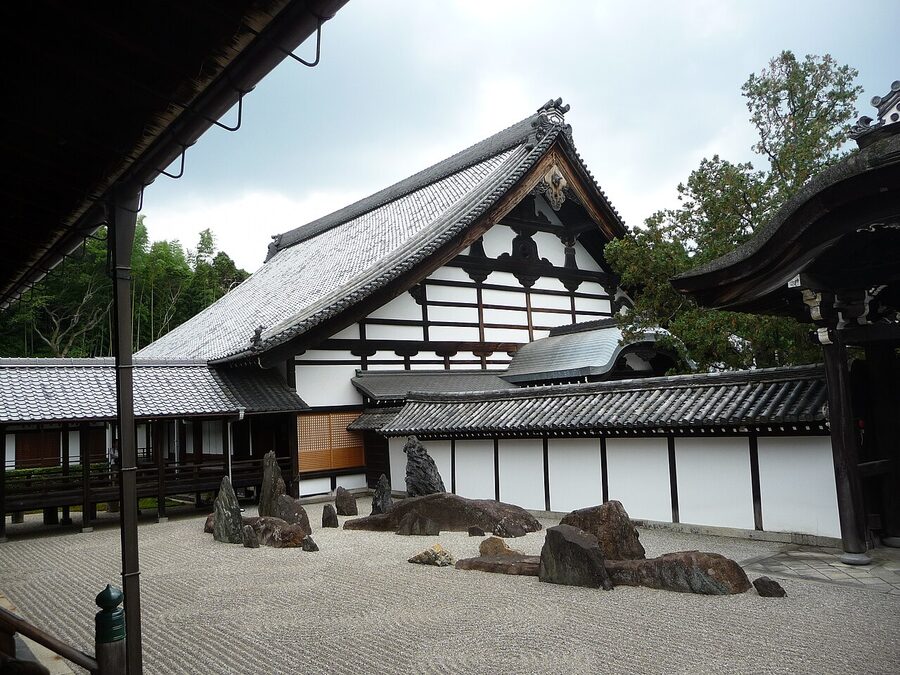
The Honbo (abbot’s quarters) gardens at Tōfuku-ji were redesigned in 1939 by the modern garden designer Mirei Shigemori, working from sketches and notes that Shigemori had developed from his exhaustive 1936-1938 survey of all surviving Muromachi-era temple gardens. The four gardens around the Honbo (north, south, east, west) are accordingly Shigemori’s homage to and synthesis of late-Muromachi garden principles, executed in 20th-century materials and on a 20th-century scale. The southern garden, with its four large stones and the gravel sea, is the most directly Higashiyama in feel. The northern garden, with the moss-and-stone checkerboard, is the most original Shigemori invention, but is built on Higashiyama spatial logic.
The Sesshū paintings: Tokyo and Yamaguchi
To see the Muromachi paintings themselves you need to go to two cities. The Tokyo National Museum, in Ueno Park, holds the largest collection of Sesshū work and rotates pieces through the Honkan Japanese Gallery (second floor, gallery 2). The Haboku Sansui of 1495 and the four-scroll Landscape of Four Seasons are both in the Tokyo collection, though only one or two are typically displayed at any given time on a roughly two-month rotation. The museum is open Tuesday to Sunday 9:30am to 5pm, with extended hours on Friday and Saturday evenings; admission is 1,000 yen.
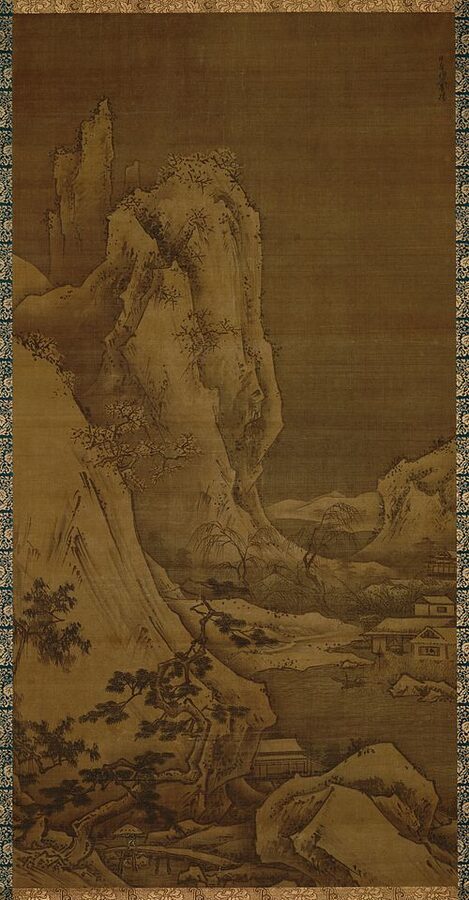
The other Sesshū site is the Mōri Museum in Hōfu (Yamaguchi Prefecture), which holds the original Long Landscape scroll. The fifteen-metre painting is displayed in full only once or twice a year, on rotational display, with the schedule published on the museum website. If you can time a Yamaguchi visit to coincide with the Long Landscape display, you should. The Hōfu connection is direct: Sesshū lived and worked in the Mōri territories in western Honshu for the last two decades of his life, and the painting was commissioned by an early Mōri patron in 1486.
Closing the loop
I want to end where I started, with the burning of Kyoto in 1467 and Yoshimasa’s retreat to Higashiyama in 1482. The two events are fifteen years apart, and you can read them as cause and effect. The man who could not manage his own succession produced the war that destroyed the city, and then retreated from the city to build, almost in silence, the architectural and aesthetic vocabulary that would define Japanese refinement for the next four centuries. Both moves belong to the same person, and you cannot have either without the other.
The Muromachi era is the most paradoxical period in Japanese history. It is the era of the two great pavilions and the era of the Ōnin disaster, the era of Zeami’s Noh and the era of the Akamatsu assassination, the era of Sesshū’s brush and the era of the gekokujō warlords. You can defend the political record or you can defend the cultural one, but you cannot defend both at the same scale. What I find moving about the period is that the people who made it (Takauji, Yoshimitsu, Yoshimasa, Zeami, Sesshū, Murata Jukō, Sōami) were largely aware of the contradiction. They were patronising sublime art on top of a political collapse they could not arrest. The work they made under those conditions is what you still walk into when you step onto the veranda at Daisen-in or stand on the gravel path at Ginkaku-ji.
If you go to Kyoto and you have three days, give one to Kinkaku-ji and Daitoku-ji, one to Ginkaku-ji and the Higashiyama walk down the Philosopher’s Path, and one to Saihō-ji and Tenryū-ji in the western suburbs. Add a half-day for Tōfuku-ji and a museum afternoon at the Kyoto National Museum if you have a fourth day. You will have walked through 237 years of contradiction, and you will have seen the foundation of what classical Japan looks like. It was assembled by an aristocratic family who could not run a country, in a capital that they had themselves accidentally burned. It is still standing.