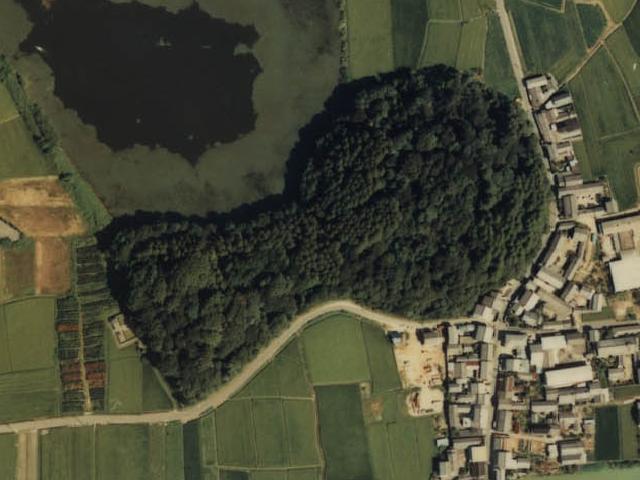
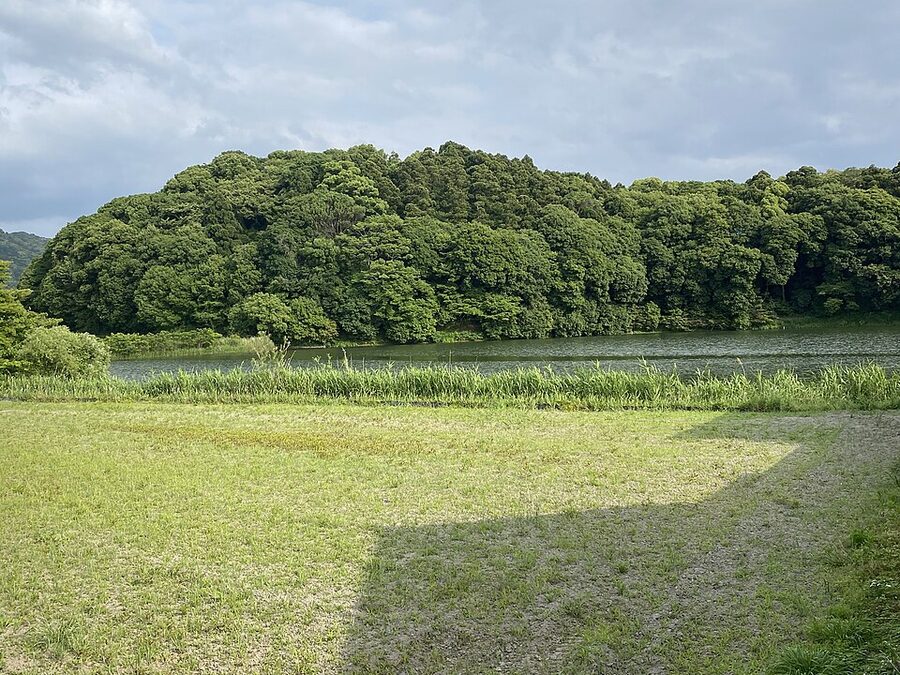
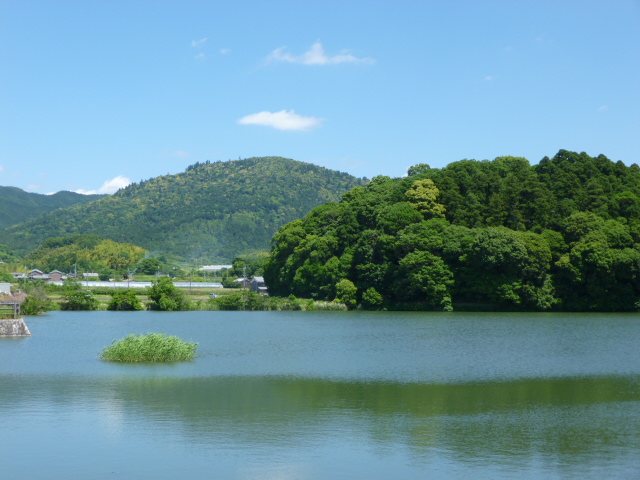
Hashihaka Kofun is a wooded hill on the edge of the Nara basin, about 280 metres long, with a round rear mound some 150 metres across and 30 metres high. It is the oldest of Japan’s giant keyhole-shaped tombs, built around the middle of the 3rd century in what is now Sakurai, and it set the shape that Japanese rulers would be buried in for the next three centuries. It may also be the grave of Himiko, the queen of Wa whose envoys reached the court of Wei China in 238 or 239. Nobody can open it to find out.
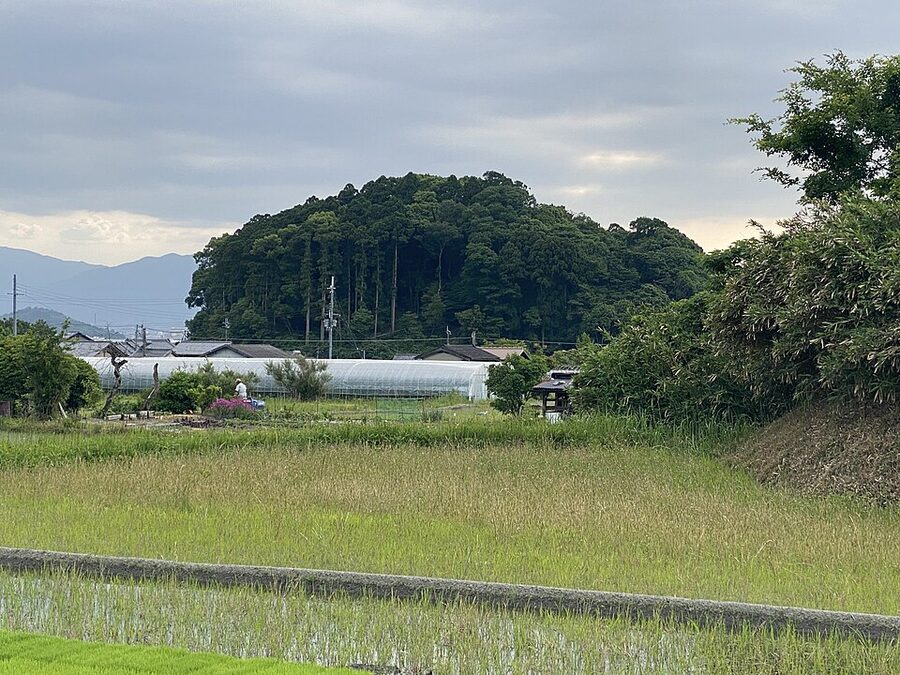
The Imperial Household Agency manages the mound as Ōichi no haka, the grave of Princess Yamatototohimomosohime (倭迹迹日百襲姫命), a daughter of the legendary seventh emperor Kōrei who appears in the Nihon shoki as a seer at the court of Emperor Sujin. That makes it one of about 900 imperial graves and related sites under the Agency’s care, and like the others it is treated as a place of ancestral rites, not an archaeological site. No one may dig it, and almost no one may step onto it. You can walk most of the way round, look at it across the paddies and the pond, and photograph it from the fields around it. That is all.
In This Article
The Chopstick Name
The name Hashihaka (箸墓) means “chopstick grave”, and the Nihon shoki, compiled in 720, explains it with one of the strangest stories in the chronicle. Princess Yamatototohimomosohime married Ōmononushi, the god of Mount Miwa, who came to her only at night. She asked to see his face. He told her he would be in her comb box in the morning and warned her not to be alarmed. When she opened the box she found a small, beautiful snake, and she cried out. The god, shamed, took human form, told her she had shamed him in return, and went up through the sky to Mount Miwa. The princess watched him go, sat down hard in her remorse, and a chopstick pierced her and she died.
She was buried at Ōichi, and the chronicle adds that the tomb was built by men during the day and by gods at night, with stones passed hand to hand from a mountain to the west. The same princess appears earlier in Sujin’s reign possessed by Ōmononushi, telling the emperor that a plague will end only when the god of Miwa is properly worshipped. Both stories tie her to the mountain that rises directly behind the tomb.
None of this says who is actually in the mound. The Nihon shoki was written about four and a half centuries after Hashihaka was built, and its early reigns are a mixture of myth, genealogy and political argument. The chopstick story may be a real memory attached to a real grave, or a tale invented later to explain a place-name. I read it as evidence that by the 8th century people already thought this mound was the grave of a holy woman of the Miwa cult, and that is about as far as it goes.
The Himiko Question
Most people outside Japan who have heard of Hashihaka have heard of it because of Himiko. The Chinese Records of the Three Kingdoms, compiled by Chen Shou in the late 3rd century, includes a short account of the people of Wa (魏志倭人伝). It describes a land of small states that ended years of fighting by agreeing on a queen, Himiko (卑弥呼), who lived at a place called Yamatai (邪馬台国), served the spirits and was rarely seen. Her envoys reached the Wei court in 238 or 239 and again in 243, and Wei officials travelled to Wa in 240 and 247. She died around 248. A man was put on the throne, fighting broke out again, and peace returned only when a thirteen-year-old girl of her family, Iyo, often read Toyo, became queen.
The account says Himiko was buried under a great mound “more than a hundred paces across”. A Wei pace was about 1.45 metres, which makes a hundred paces around 145 metres, close to the size of Hashihaka’s round mound. That coincidence, together with the date and the place, is the core of the case. Where Yamatai stood has been argued over for three centuries, with northern Kyūshū and the Nara basin as the two main candidates, and I go through both sides in the Himiko article. Hashihaka is the strongest physical card the Nara side holds, and it is a card nobody is allowed to turn over.
The idea that the chronicle’s princess and the Chinese queen were the same woman goes back to the historian Kasai Shin’ya in the 1920s. Both are royal women who speak for the gods, neither is given a husband in the ordinary sense, and the rear mound is the right size. For much of the 20th century the dates seemed wrong, because the pottery put Hashihaka in the late 3rd century, a generation or two after Himiko’s death.
The 2009 Radiocarbon Dates
On 30 May 2009 Harunari Hideji, presenting for a team from the National Museum of Japanese History, announced radiocarbon results on soot and food residue on pottery from Hashihaka’s moat. They put the tomb’s construction at about 240 to 260. That is the decade of Himiko’s death, and the newspapers treated it as close to proof.
It was not proof, and the argument did not stop. Critics pointed out that old carbon in food residues, from fish and shellfish for instance, can make a sample look older than it is, and that Japanese tree rings show local carbon drifting from the international calibration curve in this period. Other archaeologists, working from the pottery and from other samples, still prefer dates between about 260 and 300, which would point to Toyo’s generation or to a ruler nobody wrote down. The 2009 result moved many scholars towards the Himiko identification. It did not settle it, and nothing short of opening the burial chamber could.
The Agency has not let anyone do that, but it has moved a little. Since 2008 it has allowed small groups from the academic societies to walk the lower terraces of a few imperial graves and look, with no digging and no collecting. Hashihaka’s turn came on 20 February 2013, when researchers walked its lowest terrace on foot. They could look at what lay on the surface and nothing more. In 2017 parts of the moat outside the Agency’s land were made a National Historic Site, which protects the setting without opening the mound.
Makimuku and the First Kings
Hashihaka sits at the southern end of the Makimuku site (纒向遺跡), a spread of about 3 square kilometres at the foot of Mount Miwa. It was found in 1971 when prefectural archaeologists were called in ahead of a housing estate and a school, and the city of Sakurai has run the excavations since 1977. By the end of 2008 only about five per cent of it had been dug.
What came out did not look like an ordinary Yayoi village. There were no defensive moats and few houses, but there were timber-lined canals about five metres wide, pits full of ritual objects, several small early keyhole tombs and a great deal of pottery made somewhere else. Between a quarter and a third of it came from outside the Nara basin, from the Kantō plain to western Honshū, most of it from the Ise Bay region. Very little came from Kyūshū or Korea, which is awkward for anyone who wants Makimuku to be the hub of Himiko’s trade with China, and is one of the Kyūshū side’s better arguments.
In 2009 the Sakurai excavators announced a row of buildings in the Tsuji district lined up on a single east-west axis, about a kilometre north of Hashihaka. The largest, known as building D, measured 19.2 by 12.4 metres and dated to the first half of the 3rd century. It was the biggest building of its time known anywhere in Japan, it stood behind a fence, and it was taken down around the middle of the century. The newspapers were calling it Himiko’s palace almost at once. Whose hall it was is a separate question, but it is the right size, in the right place, at the right time.
Makimuku faded in the 4th century. The next giant tombs went up a little to the north along the old Yamanobe road, Andon’yama, which the Agency assigns to Sujin, and Shibutani Mukaiyama, assigned to Keikō. In the 5th century the biggest of all were built on the Osaka plain in the Furuichi and Mozu groups, now a World Heritage Site, where the largest, Daisen, is managed as the tomb of Emperor Nintoku. Hashihaka was the first of that line. It also stands in the reign the court later chose for the start of another story: the Nihon shoki says that Sujin moved the worship of Amaterasu out of his palace, the first step on the road that ends at Ise, in the same reign as the princess of the chopstick story.
Visiting Hashihaka and the Sakurai Plain
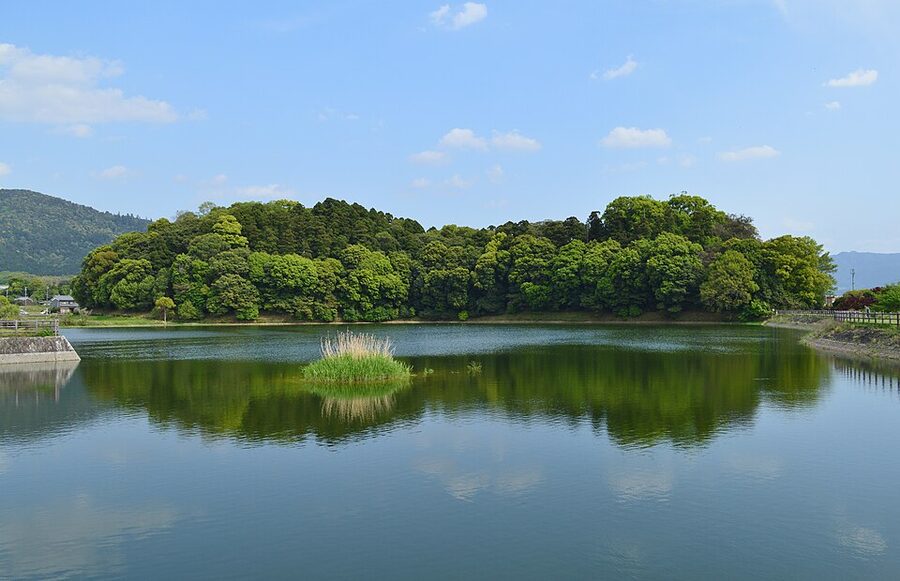
The tomb is in Sakurai city, Nara prefecture. Take the JR Sakurai Line, also signed the Man’yō Mahoroba Line, from Nara to Makimuku Station, about thirty minutes by local train; from Kyoto allow around an hour and a half with a change at Nara. Local trains on this line are not frequent, so check the time of the one back before you set off. You cannot enter the mound, but the three stops below make a good day, and the walking between them is flat and easy.
1. Hashihaka Kofun, Sakurai
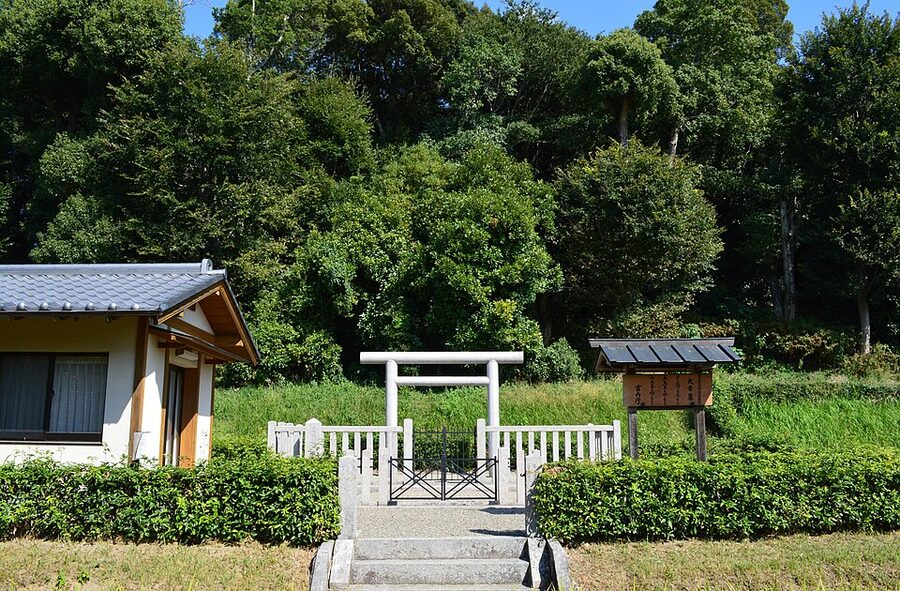
Hashihaka is about fifteen minutes’ walk south of Makimuku Station. You can follow much of its edge on public roads and the bank of the Hashinaka pond, which fills part of the old moat, and stand at the Agency’s worship place in front of the fence. There is no charge and no opening time. Allow an hour to go round slowly, and come on a clear day if you want Mount Miwa behind the mound. On the way from the station, stop at the marked-out post positions of building D in the Tsuji district; there is not much to see, but it is the floor plan of the largest room anyone in Japan is known to have built in the 3rd century.
2. Sakurai City Archaeological Centre
For the finds, go to the Sakurai City Archaeological Centre (桜井市立埋蔵文化財センター), near Ōmiwa Jinja and about ten to fifteen minutes’ walk from JR Miwa Station, one stop south of Makimuku. Its permanent displays run from the area’s earliest settlers and the Jōmon to the Nara period and include material from the Makimuku excavations. Admission is ¥200, free for Sakurai residents and for children of junior high school age and under. It opens 9:00 to 16:30 (last entry 16:00) and is closed on Mondays and Tuesdays unless they are public holidays. It is small, and it is the best place to see what came out of the ground around the tomb.
3. Ōmiwa Jinja and Mount Miwa
Ōmiwa Jinja (大神神社), a few minutes’ walk from Miwa Station, is often called the oldest shrine in Japan, and it is certainly one of the oldest places of worship in the country. It has no main sanctuary building. The god is Ōmononushi, the same god as in the chopstick story, and the mountain itself is treated as his dwelling, so worshippers pray from the hall towards Mount Miwa, through a triple torii set in the sacred ground behind it.
You can climb the mountain as a pilgrimage, but only on its terms. Register at the office of Sai Jinja, a subsidiary shrine a short walk north of the main hall, pay the small fee, take the white sash, and go up on the set path. Photography is forbidden and you may not eat on the mountain, though drinking water is allowed. Registration is in the morning and you must be back down by the afternoon deadline; check the current hours with the shrine before you go, because the mountain closes on some festival days and in bad weather. Allow two to three hours. Most visitors stay at the shrine and look up at the mountain, which is also a perfectly proper way to do it.
The Sealed Tomb
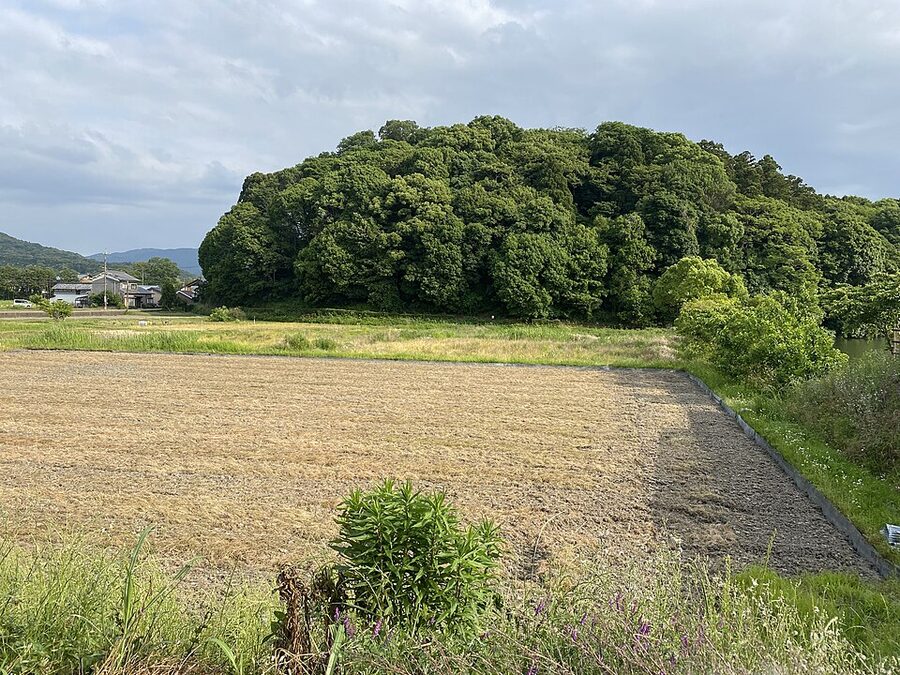
If the burial chamber holds a woman of the mid-3rd century with Wei mirrors and the gifts the Chinese account lists, the Yamatai argument is largely over and the story of the first Yamato kings has a fixed point to start from. If it holds a later king, the Nara side loses its best piece of physical evidence and the Kyūshū case gets a new lease of life. Either way, Japan’s political origins would be read differently, which is why archaeologists keep asking.
The Agency’s answer is that these are graves where rites for the imperial ancestors are still carried out, and that their peace comes first. Archaeologists answer that most of the identifications were fixed in the 18th and 19th centuries from chronicles that cannot bear the weight, and that the mounds are part of everyone’s history. Both positions have hardened over decades. The 2013 walk on the lower terrace was a real step, and it was also the most anyone has been allowed.
I find I do not mind as much as I expected to. Stand at the worship place with the pond behind you and Miwa beyond the trees, and you are looking at the same view the builders chose, at the foot of the same mountain whose god the princess married. The mound has kept its secret for about seventeen and a half centuries. For the longer story of how Japan got from these first kings to the court of the chronicles, see Japan through the ages.