
There is a linguistic problem to sort out before anything else. In English-speaking restaurants since about 1964, “hibachi” has meant the Benihana-style teppanyaki grill — a flat iron plate where a chef in a tall hat juggles shrimp at your table. This is not a hibachi. The Japanese word for a teppanyaki grill is teppan. The word hibachi (火銃, literally “fire-bowl”) refers to something else entirely: a ceramic or wooden container of hot charcoal, used in a traditional Japanese home as the primary source of room heat from about 1700 to 1960. It is about the size of a kitchen wok and holds a small fire of oak or pine charcoal. Families gathered around it. Water boiled over it in an iron kettle. You warmed your hands over the coals and talked to the person next to you. That is the hibachi.
The device dropped out of Japanese domestic use inside a single generation, roughly 1950 to 1975, as gas and electric heating replaced charcoal. By 1980 essentially no ordinary Japanese household used a hibachi as active heating. What you can still find, in ryokan inns and traditional-house tourism sites and the back rooms of antique shops, are the objects themselves: ceramic, wooden, bronze, often 80-120 years old, frequently beautiful, always cold. The hibachi is the piece of Japanese domestic architecture that was most completely displaced by the 20th century. It is also the piece most worth recovering in your mental picture of pre-1950 Japan, because almost every domestic scene in Meiji, Taishō, and Shōwa literature is set around one of these bowls.
In This Article
What a Hibachi Actually Is
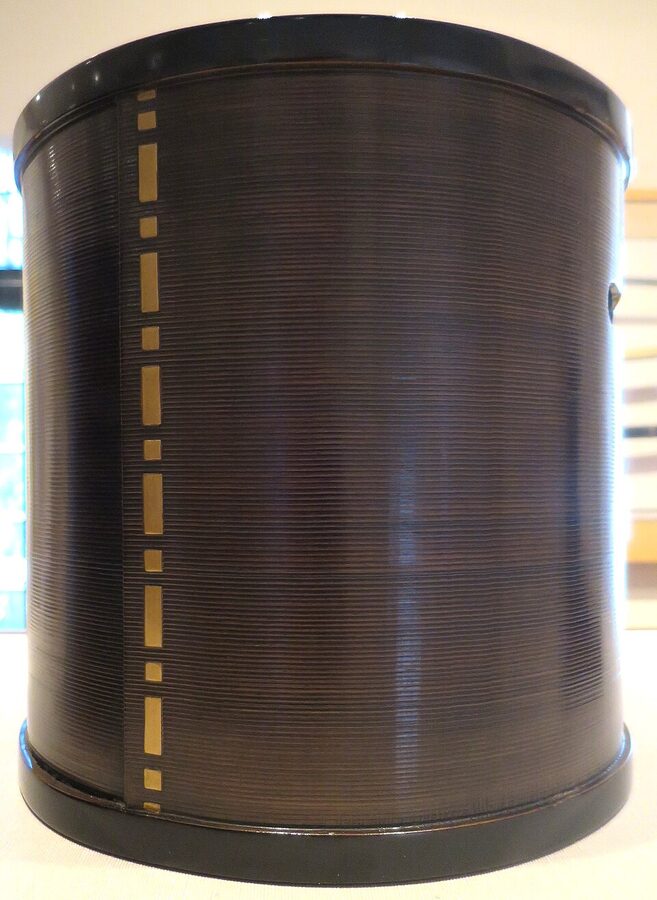
The physical description is specific. A hibachi has three essential elements: a heat-resistant container (ceramic, wood-with-metal-liner, or cast bronze), a filling of ash (hai, 灌) that insulates the base and holds the charcoal in position, and the charcoal itself. A simple hibachi is about 40 centimetres across, 25 centimetres tall, and weighs between 8 and 30 kilograms depending on the construction. A full fire holds between 300 grams and 1 kilogram of burning charcoal and produces usable radiant heat for six to eight hours.
The function is specifically radiant rather than convective heating. The hibachi produces almost no heated air; the heat reaches you via infrared radiation from the glowing charcoal surface plus convection from the container wall. This is why Japanese traditional homes worked despite not being meaningfully insulated: you did not heat the room, you heated the person sitting next to the bowl. The bowl was in the centre of the room, and the room contained whatever activities wanted to be near warmth at that moment — sewing, eating, writing, conversation. A traditional evening in a Meiji-era merchant house ran on the movement of people around the hibachi rather than the movement of heat around the house.
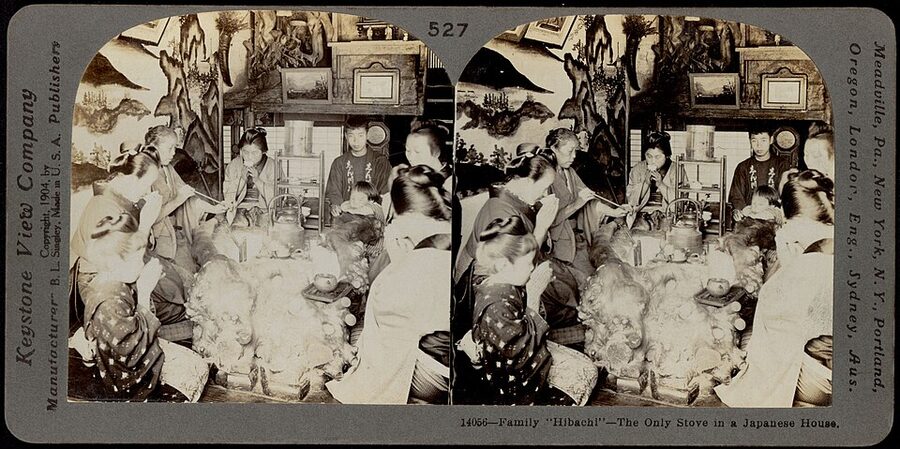
Hibachi also worked as a cooking device, at a limited scale. The standard companion object is the tetsubin (鉄瓶), the cast-iron kettle, which sat on an iron trivet over the charcoal and produced a continuous supply of hot water for tea. A hibachi with a tetsubin on it was the Japanese equivalent of the American always-on coffee machine: the hot water was permanently available for whenever you needed it. Beyond tea, the hibachi could grill small items (mochi rice cakes, dried fish, a few chestnuts) on a wire rack placed over the coals. The heat output was not sufficient for proper cooking; more elaborate meals used a separate kitchen firepit.
The Types
Japanese traditional-craft literature classifies hibachi into dozens of subtypes. Most of them reduce to five main form categories. The distinctions matter because they reflect the household’s status, its primary use case, and often the region the family was from.
Marumahibachi (丸火銃, “round hibachi”) — the baseline form, a ceramic bowl 40-50 cm in diameter, glazed or earthen-finished, unglazed inside to allow ash contact. This was the standard domestic hibachi across all classes. Mid-Edo merchants owned one; Meiji-era farmhouses owned one; Taishō-period urban apartments owned one. The ceramic production was concentrated at pottery centres like Shigaraki, Tokoname, and Bizen.
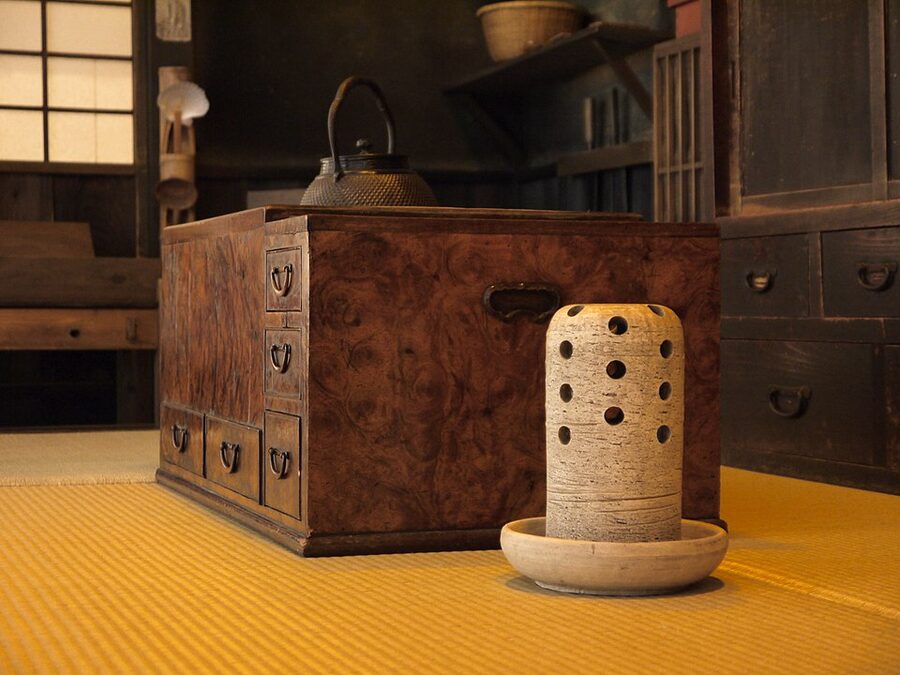
Nagahibachi (長火銃, “long hibachi”) — a rectangular wooden chest, typically 90 cm long by 40 cm deep by 30 cm tall, with a small metal-lined fire-pit at one end and a set of drawers under the main surface. Nagahibachi were the merchant-household standard from about 1700 onward. The owner sat at the short end near the fire-pit, with the drawers within easy reach, and conducted business from the position. They are the furniture object most associated with Edo-period merchant literature.
Kakuhibachi (角火銃, “square hibachi”) — a square-topped wooden variant, typically 45 cm on a side, without drawers. Less common than the other forms; regional-associated with the Kansai. The square form tends to be associated with formal reception-room use rather than daily domestic use.
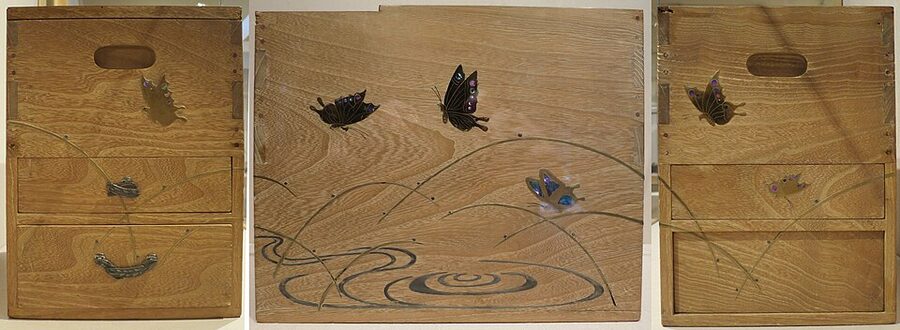
Hibachi-dansu (火銃筞, “hibachi-chest”) — a late-19th-century urban upgrade of the nagahibachi. A proper chest, 120 cm wide, with multiple drawers and compartments integrated around a central firepit. These were status markers in Meiji-era urban households and are probably the most collectable traditional form today; a good Meiji-period hibachi-dansu in working condition sells for ¥200,000-400,000 at current antique-market prices.
Bronze and special-use hibachi — for tea-ceremony use and top-tier formal display. The tea-ceremony version, called a furo (風炉), is a smaller portable brazier used specifically for heating the kettle during a tea-ceremony performance. Cast bronze hibachi were commissioned by high-status households for formal reception rooms; a 17th-century Japanese bronze hibachi in the Metropolitan Museum of Art collection weighs 47 kilograms and was used for about 300 years before entering the collection.
Charcoal and the Binchōtan Market
The hibachi consumes charcoal, and the charcoal requirements are specific. Ordinary low-grade charcoal, the kind made from pine scraps and used for outdoor cooking, produces too much smoke and too many sparks to burn safely inside a wooden-construction Japanese house. The hibachi-grade charcoal standard is the hard-burning, almost smokeless, oak-based product called binchōtan (備長炭).
Binchōtan is produced by slow-kiln firing of Japanese ubame oak (Quercus phillyraeoides) at carefully controlled temperature. The characteristic feature is the extremely high carbon content (up to 98%) and the metallic clang you get when two pieces are struck together — binchōtan is dense enough that it rings. It burns at 800-900°C, produces minimal smoke, and a single 200-gram piece burns for about five hours. The premium production region is Wakayama prefecture, specifically the town of Minabe, where the industry has been continuously active since about 1620. The namesake Binchōya family were the specific Edo-period producers who developed the controlled-fire technique that produced reliable smokeless charcoal.
The binchōtan industry survived the 20th-century decline of the hibachi-as-household-heating market because it had a secondary market in high-end grilling (professional yakitori, unagi, charcoal-grilled eel restaurants all demand binchōtan for the specific heat profile it produces). Current binchōtan production is around 2,000 tonnes per year nationally. Retail prices in 2024 are around ¥3,500 per kilogram at artisan-grade; lower industrial-grade grades are about ¥1,500 per kilogram. If you are trying to run a historically authentic hibachi today, you can buy the charcoal through any Japanese specialty cooking-supply shop.
The 20th Century Decline
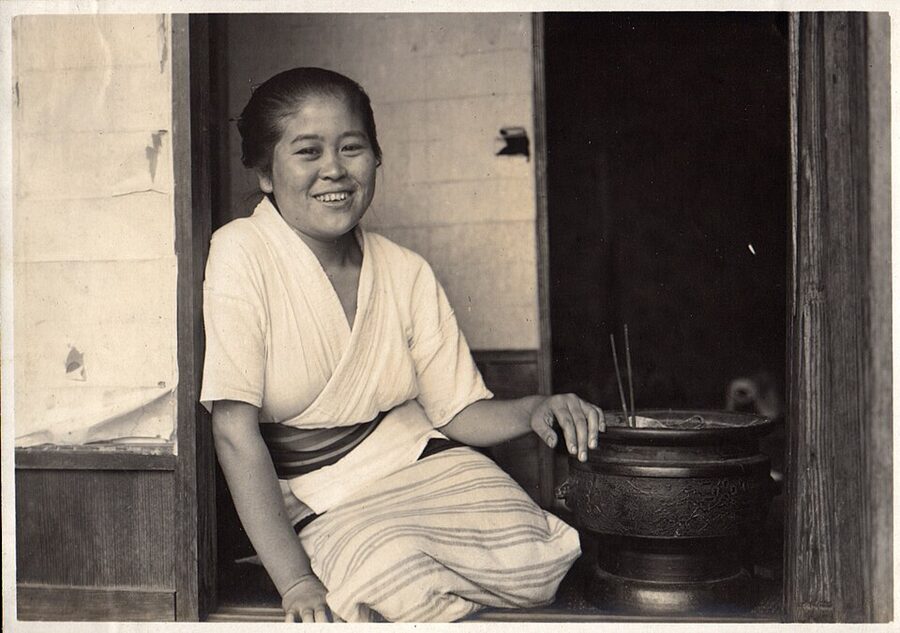
The hibachi was the primary Japanese domestic heating device from the early 18th century through the mid-20th century. The decline was rapid and specific: across the 1950s and 1960s, gas heaters (the kerosene stove, anka, and eventually the modern kotatsu foot-warmer) displaced the hibachi from most homes in roughly fifteen years. By 1975 the hibachi had essentially disappeared from Japanese residential heating outside a handful of traditional-ryokan and rural-farmhouse contexts.
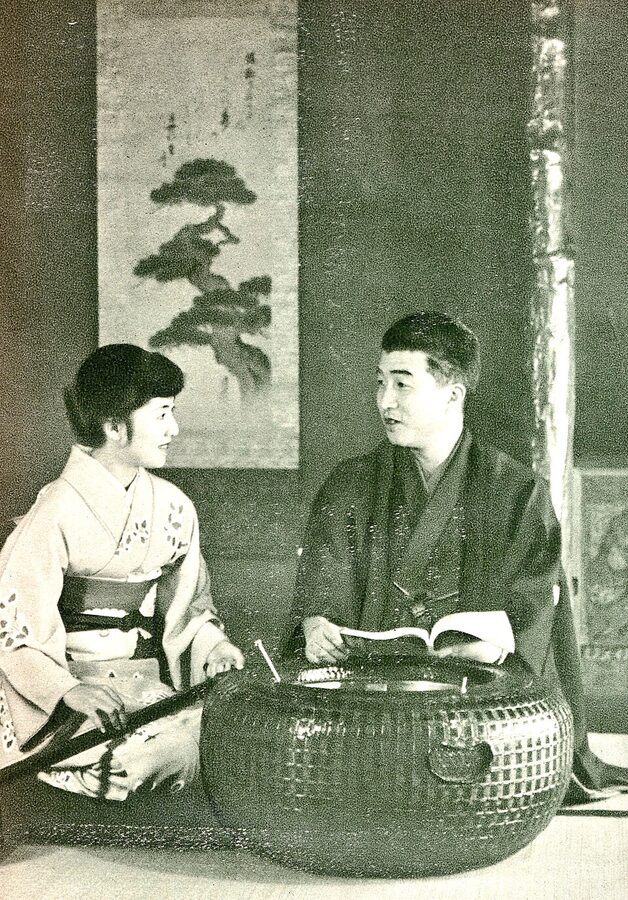
Three factors drove the transition. First, carbon-monoxide safety: the 1950s saw rising awareness of CO poisoning from improperly ventilated charcoal, and the first mass-market warnings from the Japanese government appeared in 1953. Modern gas and kerosene heaters produce less CO per heating hour and have their own ventilation-controlled design. Second, cost: binchōtan retail prices rose sharply in the post-war period, while kerosene (heavily subsidised through the Japanese petroleum industry) was cheap. Third, convenience: a hibachi requires charcoal preparation, ash management, and half an hour of morning firing; a kerosene heater turns on with a switch.
The hibachi is one of the few Japanese traditional-household objects that does not have a strong revival market in the modern artisanal-craft economy. Tatami has ryokan demand; kawara has temple demand; ranma has restoration demand. Hibachi has almost no continuing-use market; the antique trade is the main active channel, and the antiques are essentially all period pieces from 1880-1950. Nobody is making new hibachi at scale.
Where to still find hibachi
Three categories of site: ryokan and heritage houses with preserved hibachi, antique markets, and tea-ceremony venues.
1. Heritage houses — nationwide
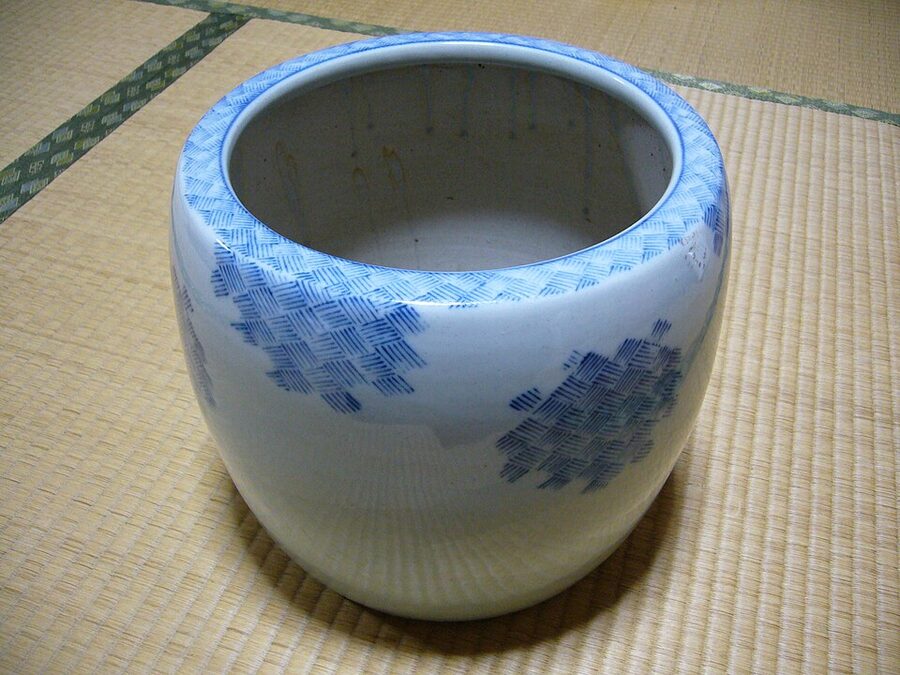
Almost every region-preserved merchant-house museum in Japan has at least one hibachi on display in its main reception room. Good examples include Ishitani House in Chizu (Tottori), Nakamura House in Kurashiki (Okayama), and the Katori-city preserved merchant district in Chiba. These are usually free or low-admission sites and allow you to see the hibachi in its original architectural context. Look for the accompanying tobacco tray (tabako-bon), the tetsubin kettle, and the fire-irons (hibashi) — a hibachi is never alone; it lives inside an ecosystem of small objects.
2. Tea-ceremony sites — Kyoto, Uji, Kanazawa
The furo portable-brazier variant of the hibachi is still used in every formal Japanese tea ceremony. The best way to see one in working context is to attend a tea ceremony at a ryokan or a formal tea school. Urasenke and Omotesenke, the two main historic tea-ceremony schools, both run public-open tea sessions at their Kyoto headquarters; admission is around ¥3,000-5,000 per person and includes a forty-minute formal ceremony. The hibachi-as-furo you will see there is the exact architectural descendant of the domestic hibachi, scaled down for portable-ceremony use.
3. Ohi-Otsu Antique Market — Shiga
If you want to buy one, the traditional Japanese antique market for hibachi-grade goods is at Ohi-Otsu in Shiga prefecture, held the last Sunday of each month. A complete Meiji-era ceramic hibachi in good condition sells for ¥8,000-25,000 depending on provenance; a good Taishō-period nagahibachi runs ¥50,000-150,000; a hibachi-dansu at the top of the market is ¥300,000+. The market is outdoor, runs from about 6 am to 2 pm, and most vendors speak no English; bring a translator app and cash. If you are a collector and cannot reach the Ohi-Otsu market, good secondary markets include the Kōmei-jō antique market in Tokyo (second and fourth Saturdays) and the Toji-ji market in Kyoto (21st of each month).
Foreign visitors should be aware that exporting antique ceramics over 100 years old may require a permit from the Japanese Cultural Affairs Agency; an antique hibachi more than 100 years old technically qualifies. In practice enforcement is lax for items under about ¥500,000 in retail value, but the paperwork is an annoyance worth anticipating.
The Fire-Bowl
The hibachi is the piece of traditional Japanese domestic life most completely displaced by 20th-century modernisation. Tatami is still a module in every Japanese real-estate listing. Kawara is still on every temple roof. Ranma are still carved in Inami. The hibachi is a preserved antique in a museum display case, or the subject of an ink drawing on a postcard, or a decorative corner-piece in a deliberately traditional ryokan parlour. The object is culturally resonant but functionally obsolete. The 20th century did to the hibachi what the 20th century did to the Western fireplace, at roughly the same pace and for roughly the same reasons.
What was lost with the hibachi is not an object but an architectural logic. Traditional Japanese rooms were built around a heat point in the middle. The furniture arrangement, the floor materials, the seasonal layering of cushions and blankets, and the behavioural rhythms of the household, all revolved around the single warming bowl. When the bowl went away, the rooms kept the architectural shell but lost the spatial logic that had organised them. Modern Japanese apartments have central heating, thermostats, and personal electric blankets; they do not have the communal-warmth organising device at the centre of the room. The difference is real, and it is the reason contemporary Japanese apartments feel functionally different from their early-20th-century predecessors even when the surface architecture looks similar.
If you are staying at a traditional ryokan anyway, the inn almost certainly has a hibachi in the main lobby or the dining room. Ask to see it, and ask if they use it. Most do not, but a small minority still light one during the evening meal in winter, and if the ryokan you are at is one of those, sit near it for forty minutes. The radiant heat is a different sensation from convective heating. The charcoal smell is faint, woody, not unpleasant. The tetsubin hisses quietly and provides endless tea. The room is still cold at the edges. You are warm in the specific zone around the bowl. Everyone else in the room is warm in their own specific zone. That is the architectural logic of a Japanese home before 1960. The hibachi is what made it work.

_(1915_by_Elstner_Hilton).jpg)
