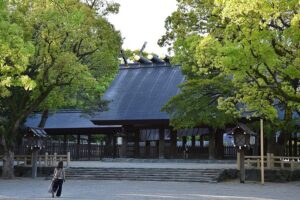
On 27 May 1467 a small private war broke out in Kyoto over which boy would inherit the title of shogunal deputy, and 136 years later the country had a new shogun, a new political class, three folk-hero unifiers, a national firearms industry, a Christian minority of 300,000, a banned sword culture, the world’s first ironclad warships, the seed of the Edo state, and a body count nobody has ever credibly added up. That is the Sengoku era. It is the period this site keeps coming back to, and after writing pieces on every major battle and most of the major warlords, I think it is time I gave you the full arc in one place. So pour the tea, brace yourself for a lot of names, and let me walk you through Japan’s hundred-and-thirty-six years of beautifully organised chaos.
In This Article
- What “Sengoku” actually means
- Why the Ōnin War broke the country
- Gekokujō: the most disruptive idea in pre-modern Japan
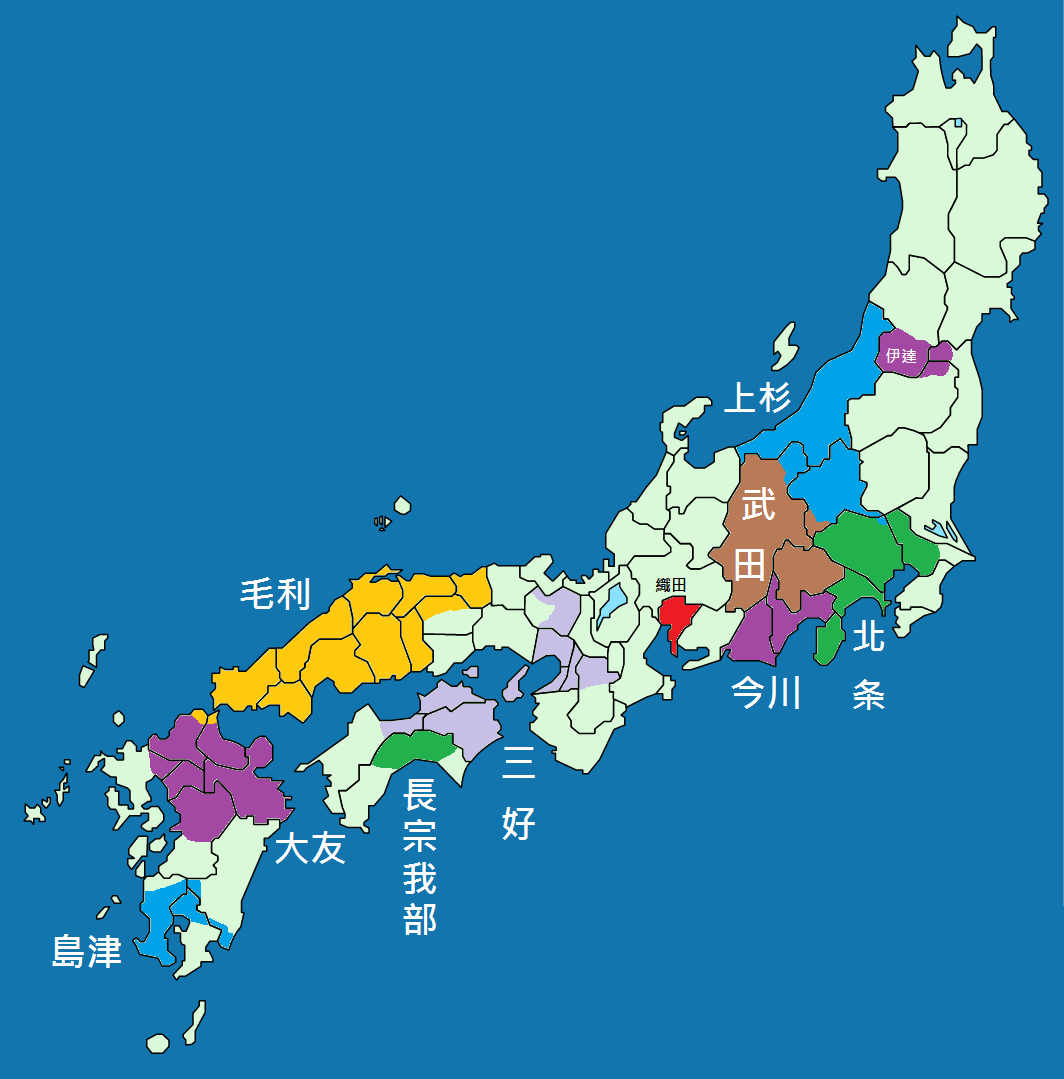
- The clans that mattered, in seven sentences
- Tanegashima and the gun that changed everything
- The Christian century begins
- The Three Unifiers, in short
- Nobunaga: the iconoclast
- Yasuke and the foreigners around Nobunaga
- Okehazama: the upset that started it all
- Mikatagahara and Anegawa: the price of the alliance
- Nagashino, 1575: the day cavalry stopped working
- Azuchi: the castle that invented the modern keep
- Honnō-ji: 21 June 1582
- Mori Ranmaru and the loyalty cult
- Hideyoshi: the operator
- The tea ceremony as politics
- Korea: the disaster
- Sekigahara: the day the era ended
- The other warlords you should know
- The English navigator at the end of it all
- Where to go in modern Japan if you want to walk through this
- What survives, what doesn’t, and what the Sengoku era left behind
- The eras around it: where Sengoku sits in the larger arc
What “Sengoku” actually means
“Sengoku Jidai” (戦国時代) literally translates to “the age of the country at war,” and the Japanese borrowed the phrase wholesale from a much older Chinese label for the Warring States period of the third century BC. The word “Sengoku-daimyō” (戦国大名) referred to a regional warlord whose power rested on his own troops and his own land, not on a delegated title from Kyoto. That last detail is the single most important thing you need to keep in your head when reading any Sengoku narrative. Once you accept that the shogun in Kyoto was, by 1490, mostly a polite hostage of whoever currently controlled the capital, the rest of the period stops looking like dynastic chaos and starts looking like a very long and very thorough rebuild of the Japanese state from the bottom up.
I find the period easiest to think about as three nested stories. The first is the political story: the slow death of the Ashikaga shogunate’s Muromachi-era authority and the rise of regional autocrats to fill the vacuum. The second is the social story: gekokujō (下克上), the lower overthrowing the higher, peasants becoming generals and merchants becoming lords. The third is the technological story: the Portuguese arquebus arrives in 1543 and changes the rules of every battle that follows. All three stories run at the same time. All three end on the morning of 21 October 1600 when Tokugawa Ieyasu wins at Sekigahara.
Why the Ōnin War broke the country
The Ōnin War (応仁の乱, 1467 to 1477) is the official starting gun of the Sengoku era, and you should know up front that it was a stupid war. Two ambitious deputies of the eighth Ashikaga shogun, Hosokawa Katsumoto and Yamana Sōzen, picked opposite sides in a succession dispute that the shogun himself did not particularly care about. They each summoned their allies into Kyoto. The two armies, eventually about 160,000 men each, then proceeded to burn the capital to the ground over the next eleven years.
The interesting thing about the Ōnin War is not the burning of Kyoto, painful as that was. The interesting thing is what happened in the provinces while the lords were away. Junior officers seized their absent masters’ castles. Local strongmen carved out independent territories.
Religious leagues like the Ikkō-ikki took over whole provinces. By the time the war wound down with no winner declared, the central government’s writ had collapsed everywhere outside the immediate suburbs of Kyoto.
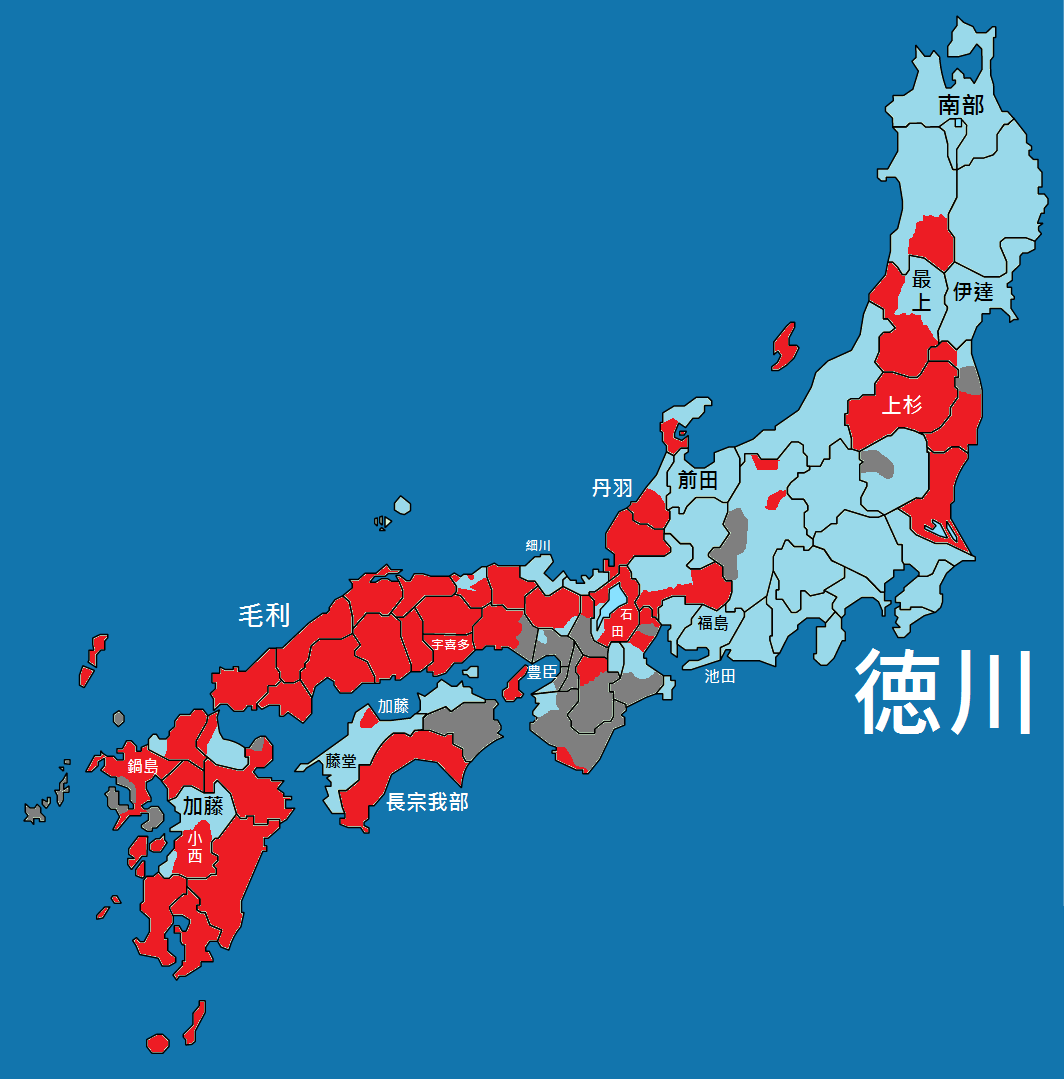
What replaced it was a country of about 250 self-governing warlord states, give or take, with the Ashikaga shogun reduced to a fancy ornament whose seal was useful for legitimacy and not much else. From that day forward, until 1603, you could not legally make anyone in Japan do anything at scale unless you personally had the soldiers to enforce it. That is the political condition the rest of the Sengoku era plays out under, and once you grasp it, everything from Nobunaga’s policies to Hideyoshi’s sword hunts starts to make sense.
Gekokujō: the most disruptive idea in pre-modern Japan
Gekokujō (下克上) is the Sengoku idea I find hardest to explain to a Japanese friend in 2026, because to a modern Japanese reader it almost sounds anachronistic. The phrase translates as “the low overthrows the high,” and it described, with admirable matter-of-factness, the era’s defining social fact: a peasant could become a warlord, a warlord could become a regent, and a regent’s loyal page could one day take the country. In a society that prized hierarchy as deeply as Japan’s does, this was the closest thing to a revolution the country experienced before the Meiji Restoration.
The textbook gekokujō exemplar is Hōjō Sōun, who started life as a minor servant of the Imagawa family in 1432 and ended it as the lord of Odawara Castle and master of much of the Kantō plain. There was also Saitō Dōsan, born a peasant oil merchant in Mino, who you can read about in our Viper of Mino piece. He bluffed, married and assassinated his way to the lordship of Mino province by the 1540s and gave his daughter to a young Oda Nobunaga in marriage. And, of course, there was Toyotomi Hideyoshi, born to a peasant family in Owari around 1537, who would eventually rule Japan as Kanpaku.
I think gekokujō is the single most underappreciated reason the Sengoku era still feels modern to read about. Most pre-1600 European wars were fought between people whose grandfathers had also been royalty. Sengoku Japan, by 1580, was being fought between the descendants of provincial bureaucrats, the children of merchants, and at least one peasant turned regent.
You did not climb that ladder by inheritance; you climbed it by competence and ruthlessness, and if you slipped, you died. It is no accident that the era produced the largest and most varied character cast of any period in Japanese history.
The clans that mattered, in seven sentences
If you are coming to the Sengoku cold, the daimyo lineup can feel impossible to keep track of, so here is the short version. In the Kantō plain you had the Hōjō, ruling from Odawara, building the largest provincial bureaucracy in the country. In Kai and Shinano you had the Takeda, with the legendary Takeda Shingen running the best cavalry in Japan. Across the mountains in Echigo you had the Uesugi, with Uesugi Kenshin, Shingen’s permanent rival.
In Suruga you had the Imagawa, who would matter very briefly in 1560 and then matter not at all afterwards. In western Honshū you had the Mōri, who very nearly unified the country before Nobunaga and Hideyoshi got in their way. In Kyushu you had the Shimazu of Satsuma and a swirl of smaller clans. In the Tōhoku you had the Date, eventually led by the one-eyed dragon, Date Masamune, the subject of our samurai file on Masamune.
And in Owari, mostly ignored by the rest of the country, you had a young hothead called Oda Nobunaga who had inherited about half a province, a small private army and a habit of doing things very fast.
Tanegashima and the gun that changed everything

In late September 1543, a Chinese junk carrying three Portuguese traders blew off course in a storm and limped into the harbour at Nishinomura on Tanegashima island, off southern Kyushu. The Portuguese were carrying matchlock arquebuses. The local lord, fourteen-year-old Tanegashima Tokitaka, bought two of them at what was, even adjusting for currency drift and political flattery, an absurd price. He then handed one to his swordsmith, Yaita Kinbei, with instructions to copy it.
Yaita Kinbei reverse-engineered the matchlock within a year. The piece that stumped him was the screw threading at the breech end, which Japanese metalworking had never needed before. Local legend says he sold his daughter Wakasa to a passing Portuguese sailor in exchange for the threading technique, which is probably an Edo-period romance, but the threading did get cracked. By 1549, six years after first contact, the gunsmiths of Sakai and Negoro were producing matchlocks at industrial scale.
What happened next is the part that always startles me. Within thirty years Japan had more matchlocks per capita than any other country on Earth. By 1575 a Japanese army of 38,000 could field 3,000 of them under disciplined volley fire, which is what Oda Nobunaga did to the Takeda cavalry at Nagashino, breaking the most respected horsemen in the country in a single afternoon. The Sengoku-era arms race was the fastest absorption of a foreign military technology in the early modern world, and you can directly trace the unification of Japan to the production lines of Sakai.

The Christian century begins
The same Portuguese trade that brought the gun also brought the church. In August 1549, six years after the Tanegashima landing, the Jesuit missionary Francis Xavier landed at Kagoshima with two converted Japanese, a Spanish priest and an Indian assistant. Xavier left after two years, but his Society of Jesus stayed. By 1582 there were 200 churches in Japan and around 150,000 Christians; by 1614, when the Tokugawa fully banned the religion, the figure had reached an estimated 300,000.
The thing that surprises most readers is how comfortable many Sengoku warlords were with all of this. Nobunaga openly preferred the Jesuits to the Buddhist clergy, who he hated for political reasons that I will get to in a minute. He gave them land in Azuchi, sat through their sermons, and reportedly wore a black velvet European cloak to a tea ceremony. Several Kyushu daimyo converted outright; Ōtomo Sōrin, Arima Harunobu and Ōmura Sumitada were all baptised, and Ōmura even ceded the port of Nagasaki to the Jesuits in 1580 as a treaty harbour.
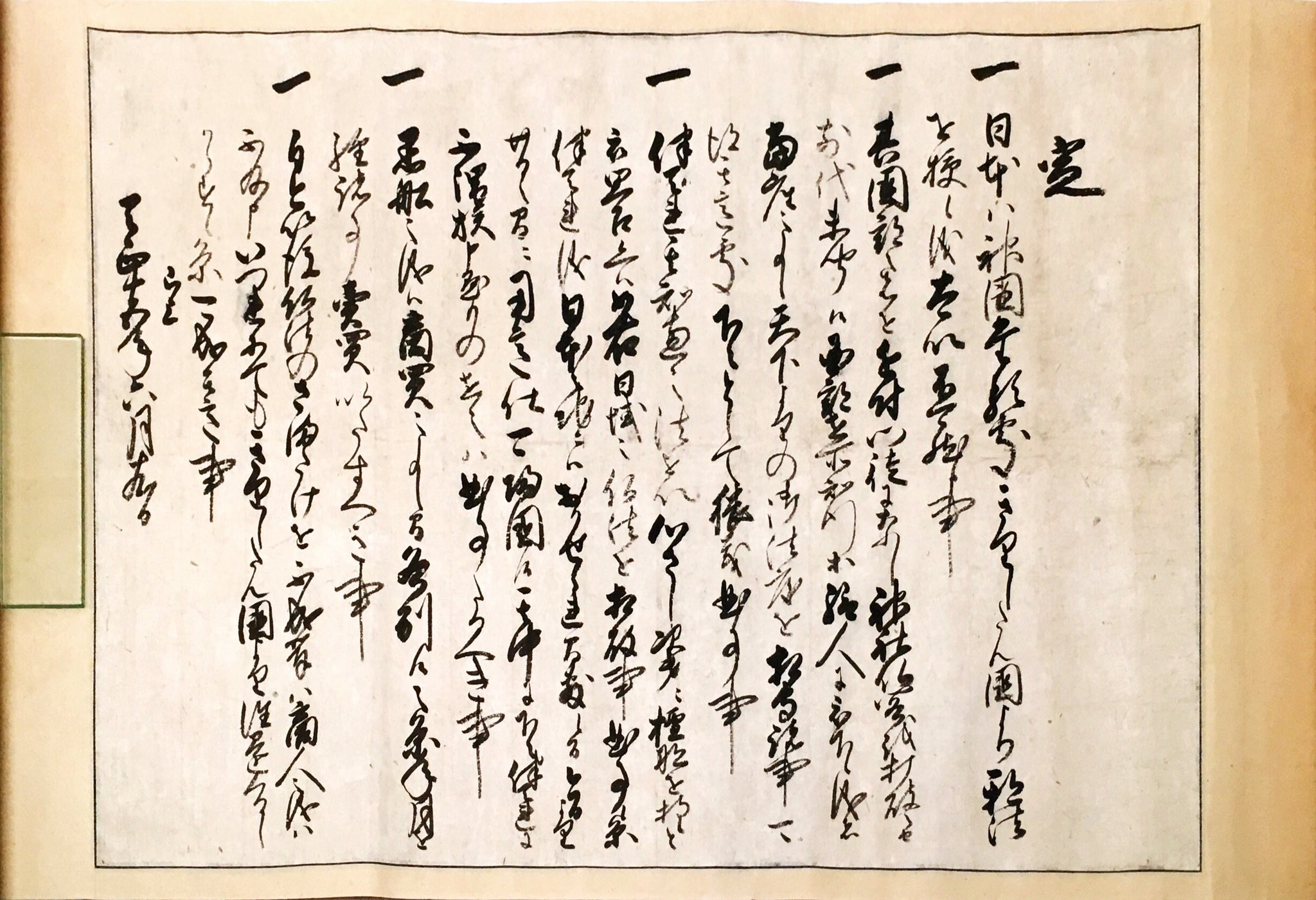
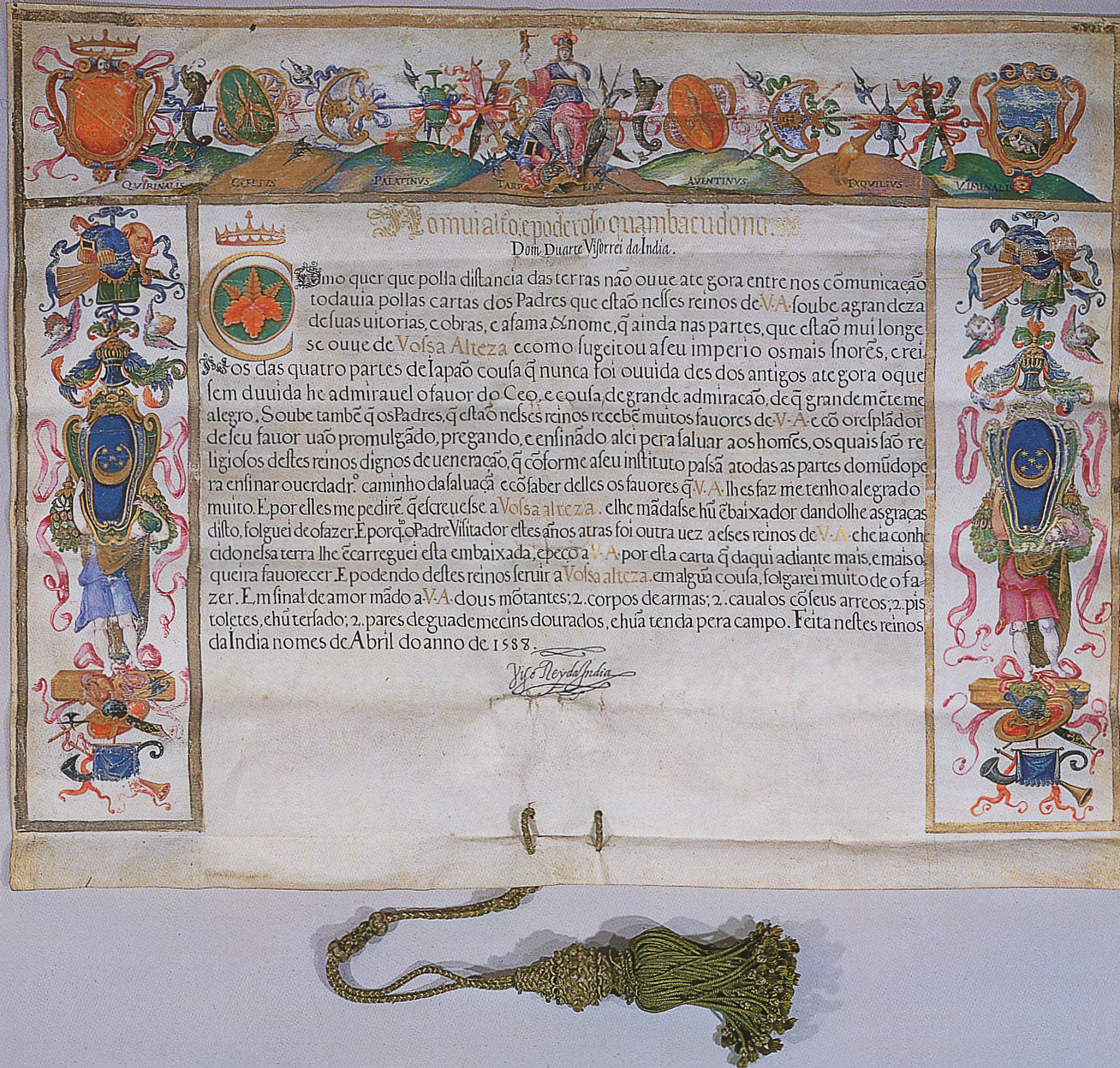
Hideyoshi was warier. In 1587 he issued the Bateren-tsuihō-rei, an expulsion order against the Jesuits, but did almost nothing to enforce it; you can see one surviving copy of that directive in the photo below. The real crackdown came later, under his successor, who watched the Christian community grow and decided that any organisation with foreign loyalties and 300,000 members was a security threat the state could not tolerate. Christianity in Sengoku Japan was, in other words, exactly what every other foreign import was: useful for trade and profitable for the smart, until it became a political problem.
The Three Unifiers, in short
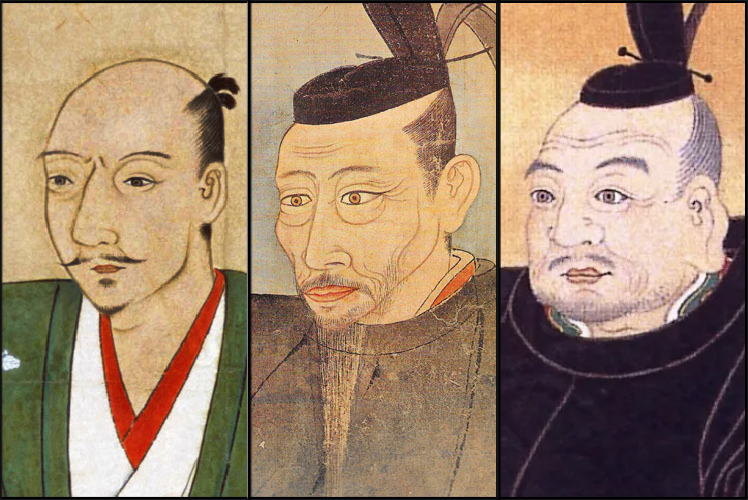
Every Japanese schoolchild can recite the Three Unifiers (三英傑) folk metaphor about the rice cake. Nobunaga pounds the rice. Hideyoshi shapes it into the mochi. Ieyasu eats it.
In four short sentences, that is the unification of Japan. What it leaves out, of course, is forty years, eight major battles, two assassinations, one disastrous invasion of Korea and the entire founding architecture of the Edo state. So let me give you a slightly longer version.
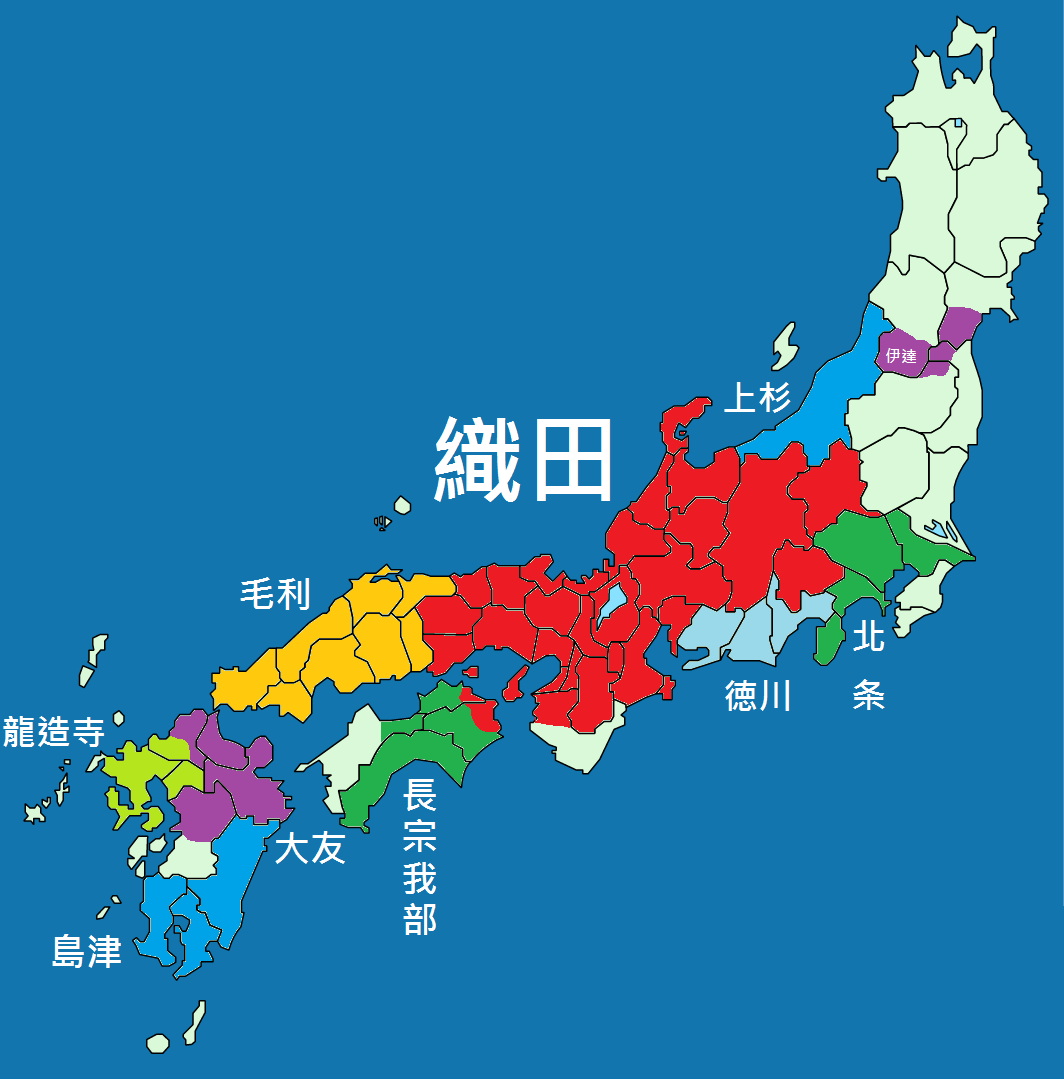
Nobunaga’s career runs from his improbable victory at Okehazama in 1560 to his death at Honnō-ji in 1582. In those twenty-two years he annihilates the Imagawa, conquers Mino, marches into Kyoto with the puppet shogun Ashikaga Yoshiaki under his arm, exiles Yoshiaki when he becomes inconvenient, smashes the Asakura and Asai, breaks the Buddhist temple-states, defeats the Takeda at Nagashino, builds the country’s first modern keep at Azuchi, and brings about half of Japan under his direct or indirect control. Then his most trusted general murders him in a Kyoto temple before sunrise on 21 June 1582.
Hideyoshi’s career runs from that morning to his death in 1598. In sixteen years he avenges Nobunaga at Yamazaki, defeats his rivals among the Oda generals, marches on Kyushu, marches on Odawara, breaks the Hōjō, becomes Kanpaku, runs a massive land survey, disarms the peasantry with the sword hunt of 1591, and then makes the worst foreign-policy decision of his life by invading Korea twice. He dies in Fushimi in September 1598 with a five-year-old heir and a country full of generals waiting to see who would actually run things.
The next twenty-six months are the bloody answer. Tokugawa Ieyasu manoeuvres the Toyotomi loyalist Ishida Mitsunari into open war, wins at Sekigahara on 21 October 1600, accepts the title of shogun on 24 March 1603 and founds the dynasty that runs Japan until 1868. The unification was finished, the Sengoku era was over, and you can read the long arc of how the prize stayed Tokugawa in the dedicated Sekigahara piece.
Nobunaga: the iconoclast
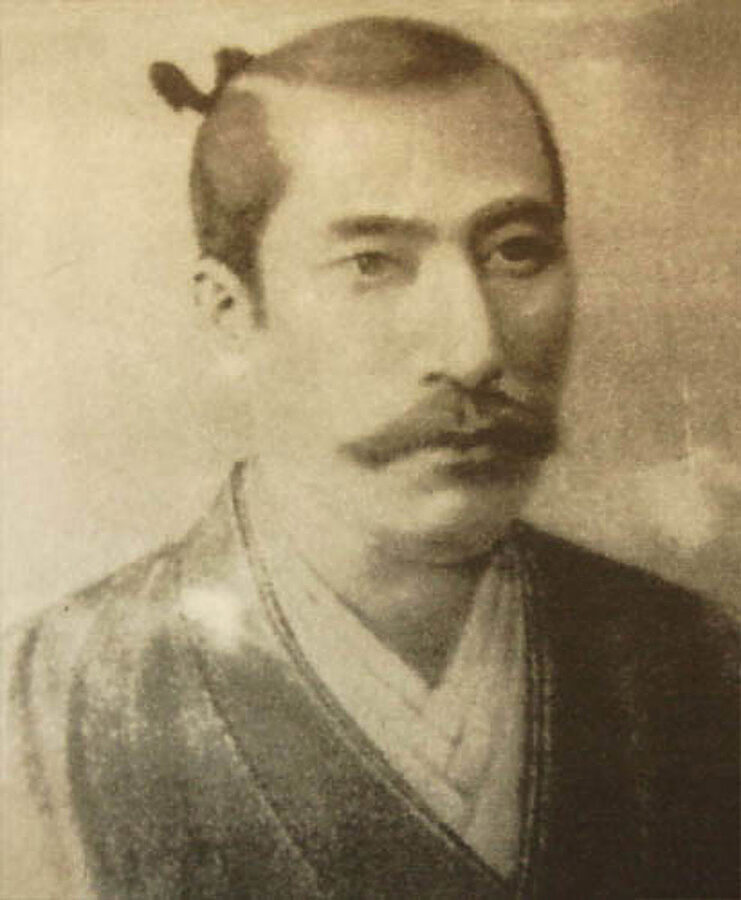
I have written about Oda Nobunaga at length, so I will not retell the full story here. What I want to do is plant a flag on what makes him important to the era as a whole, because every survey of Sengoku Japan has to do this and most of them get it wrong.
Nobunaga was not the best general of the Sengoku era. Takeda Shingen probably was. He was not the most cultured. He was not the most strategic; Hideyoshi outmanoeuvred him in every diplomatic argument they shared. What Nobunaga had, and what nobody else in Japan had at the same scale, was a willingness to break institutions that everybody else assumed were unbreakable. He destroyed the Tendai monastery on Mount Hiei in 1571, killing around 25,000 people including women and children, because the Tendai had been protecting his enemies. He spent ten years grinding down the Ikkō-ikki theocratic communes, finally smashing their headquarters at Ishiyama Hongan-ji in 1580. He drove the puppet shogun Yoshiaki out of Kyoto in 1573, formally ending the Ashikaga shogunate that had stood for 236 years.
His seal said “Tenka Fubu” (天下布武), “the realm under one military rule,” and he meant it as a programme, not a slogan. Whatever institution stood in the way of that programme, he broke. The Tendai, the Hongan-ji, the Ashikaga, the Mōri trade fleet, the Takeda cavalry.
By 1582 the only institutions left standing in his path were the Toyotomi and Tokugawa client states he had built up himself, plus the Mōri in Chūgoku and the Shimazu in Kyushu. He almost certainly would have finished the job in another five years had he not been murdered in his sleep.
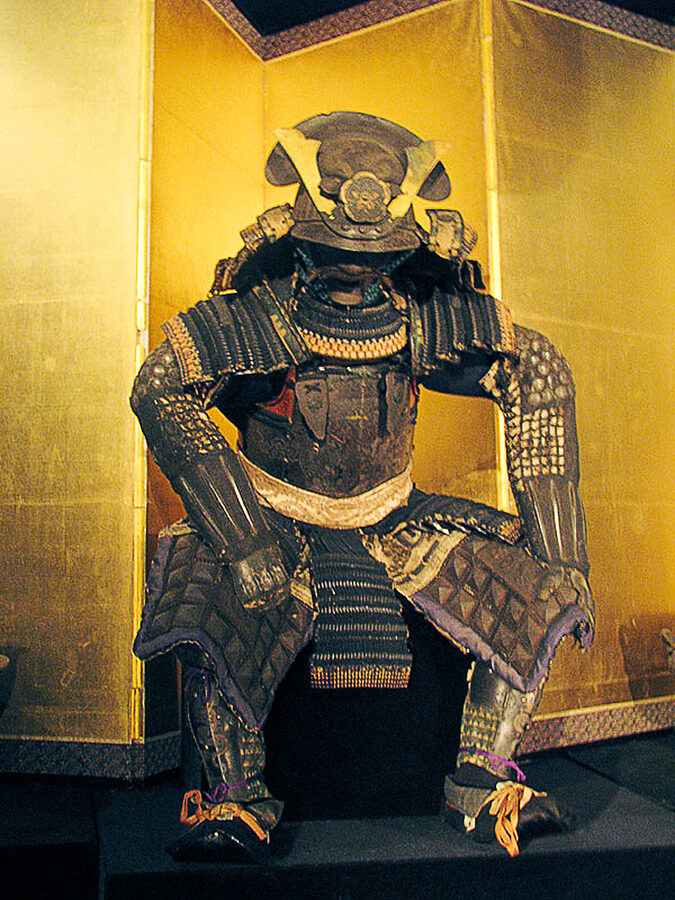
Yasuke and the foreigners around Nobunaga
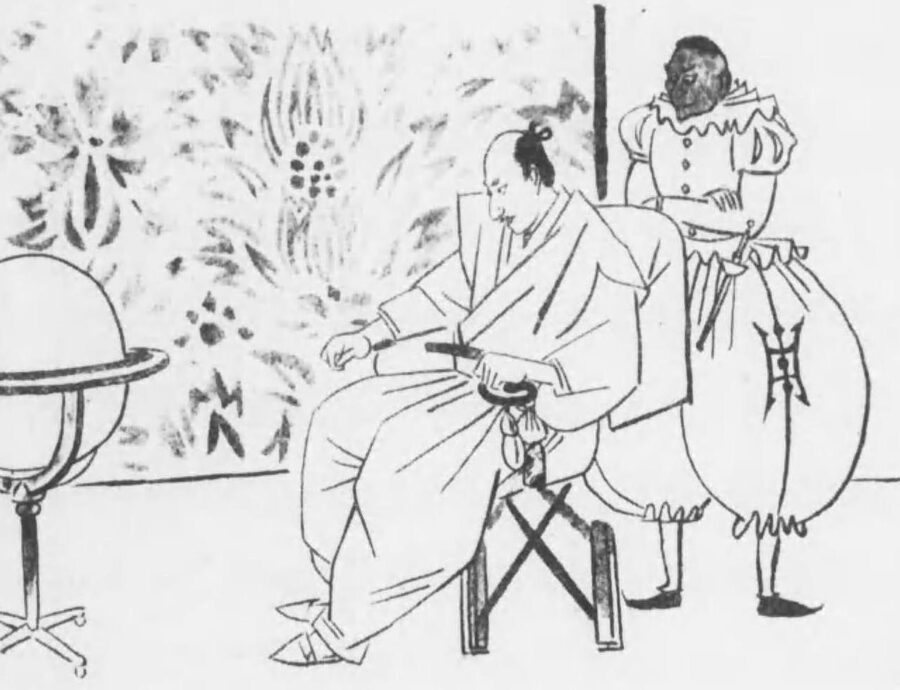
One of my favourite under-told Sengoku stories is the small foreign court that gathered around Nobunaga in his last three years. The Portuguese Jesuits gave him an African retainer in 1581, a man called Yasuke whose original name will probably stay lost forever. Nobunaga, by Jesuit accounts, had Yasuke scrubbed twice in his presence to confirm the colour was not paint. He then promoted him to samurai and gave him a stipend, a sword and a residence.
Yasuke was at Honnō-ji on 21 June 1582, and he survived the attack. The Akechi forces, when they captured him, did not execute him; the chronicles record that Akechi Mitsuhide ordered him handed back to the Jesuits as a “black animal,” which is, depending on how you read it, either an insult or a piece of grim mercy. Yasuke then disappears from the historical record. The story is the cleanest single example I know of how genuinely cosmopolitan Nobunaga’s circle had become by the early 1580s, and how strange it must have been to walk into Azuchi castle and find an African swordsman, a Portuguese priest, an Italian Jesuit and a peasant-born quartermaster all on the same payroll.
Okehazama: the upset that started it all
Let me back up sixteen years from Honnō-ji to the day Nobunaga first becomes a national figure. On 19 June 1560 the Imagawa lord Yoshimoto led 25,000 men out of Suruga and Tōtōmi, intending to march into Kyoto with imperial backing and end the question of who would run the country. The young Oda Nobunaga had at most 3,000 men, and most of his retainers wanted to surrender. He did not.
What he did instead is well-documented in our Okehazama piece, but the short version is that he marched at full speed during a thunderstorm, hit Imagawa’s main camp at Dengaku-hazama while the army was relaxing over a victory feast, killed Imagawa Yoshimoto personally and broke the entire invasion before lunchtime. The Imagawa state collapsed within months. The road to Kyoto opened. And a 26-year-old Owari upstart became the man everyone in Japan suddenly had to take seriously.
It also produced the era’s most consequential alliance. The young Imagawa hostage Matsudaira Motoyasu, who would later change his name to Tokugawa Ieyasu, was campaigning at the front of the Imagawa army when his lord was killed. He returned to his ancestral domain of Mikawa, declared independence, and within months struck an alliance with Nobunaga that would last twenty-two years until Honnō-ji.
Mikatagahara and Anegawa: the price of the alliance
The Oda-Tokugawa alliance survived everything the Sengoku era could throw at it, but the cost in blood for the junior partner was enormous. In 1570 Ieyasu’s troops marched up to support Nobunaga at the Battle of Anegawa, where the combined Oda-Tokugawa army broke the Asakura and Asai. Ieyasu’s contingent took the brunt of the worst fighting on the right flank.
Two years later Takeda Shingen marched south from Kai with 30,000 men, intending to push into Kyoto. He hit the Tokugawa first at Mikatagahara on 25 January 1573. Ieyasu, refusing Nobunaga’s advice to stay behind his castle walls, marched out with 11,000 men and got handed the worst defeat of his career. The story of his retreat is legendary; he reportedly soiled himself in the saddle and was ordered by his retainers to keep going while they died in his place.
You can read the full account in our Mikatagahara piece. The thing I want you to take from it is that Ieyasu, the man who eventually won the country, had to absorb defeats like that for thirty years before his moment came. His talent was patience; the Sengoku era had a way of rewarding patience above almost everything else.
Nagashino, 1575: the day cavalry stopped working
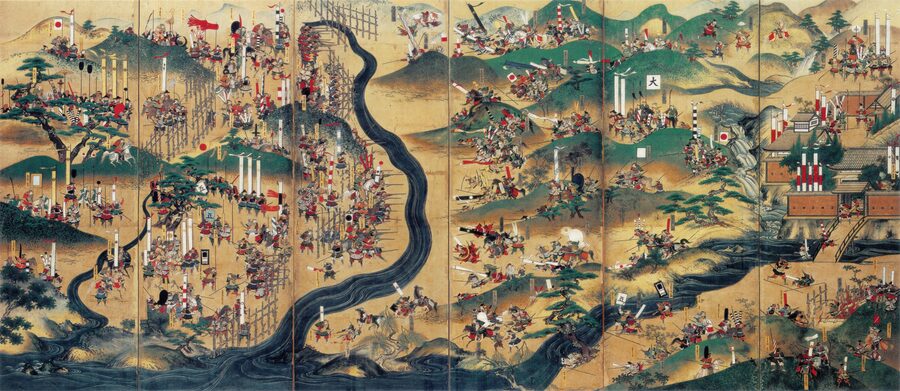
I have written about Nagashino at length, but the short version belongs in any Sengoku overview, because Nagashino is the day everything changed. On 28 June 1575 the combined Oda-Tokugawa army of 38,000, with 3,000 matchlocks under disciplined volley fire, faced Takeda Katsuyori’s 15,000 cavalry at the Shitarabara plain. The Takeda cavalry were the best in Japan; their previous record, against everyone they had charged for forty years, was undefeated.
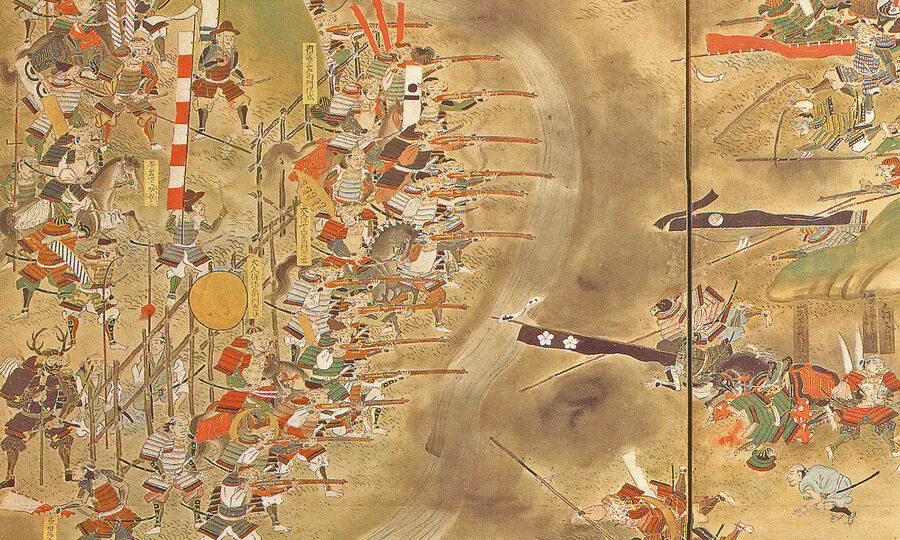
Nobunaga’s tactical answer was an old one in Europe and a new one in Japan. He fortified the front of his army with three lines of palisades. He posted his arquebusiers in three rotating ranks behind the palisades, the front rank firing while the second reloaded and the third stood ready.
He did not move out of position. The Takeda cavalry charged, and the front ranks of the charge were shot off their horses. The second wave was shot off too. The third tried, and most of the Takeda command was dead by mid-afternoon.
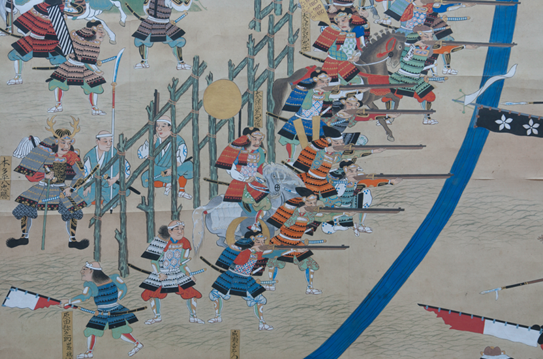
The detail historians like to argue about is whether Nobunaga’s three-rank rotation actually worked the way the Edo-era screens depicted it. Some scholars think the three ranks story is propaganda invented after the fact. What is not in dispute is that 10,000 of Katsuyori’s 15,000 men died on that field, including most of the Takeda senior generals, and that Takeda military power never recovered. Within seven years the Takeda clan had been wiped out.
I think Nagashino matters most for what it implied about who could now win wars. If you needed 3,000 trained matchlock infantry to win, you needed money, manufacturing, and a state that could levy and pay common soldiers at scale. Three or four men in Japan had that.
The rest of the daimyo, no matter how brave or how well-mounted, were now essentially obsolete. Nagashino is the date Sengoku-era warfare went industrial.
Azuchi: the castle that invented the modern keep
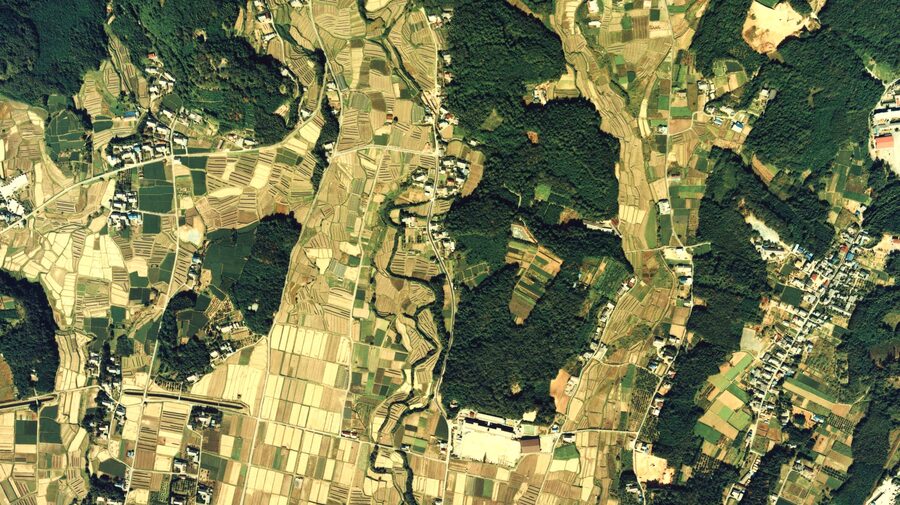
From 1576 to 1579 Nobunaga built a new headquarters on the eastern shore of Lake Biwa, at a site called Azuchi. The castle he raised there was, by the standards of anywhere else in the world, a strange and provocative thing. It was seven storeys tall.
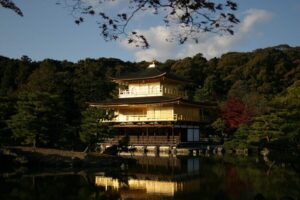
Its top three floors were vermilion and gold leaf. The interior of the keep, built around an octagonal Buddhist hall on the upper floors, contained painted screens by Kanō Eitoku that have since become national treasures.
More to the point, Azuchi was not designed to be defended. It was designed to be seen. Earlier Japanese fortifications, going back to the Yamato period, were essentially mountain hideouts; they sat on top of crags and you reached them along switchback paths.
Azuchi sat on a low hill at the centre of a flat plain, with a town clustered around its base. Its walls were stone, its windows were glazed, and the whole structure was meant to project the dominance of a single man over the country he was unifying.
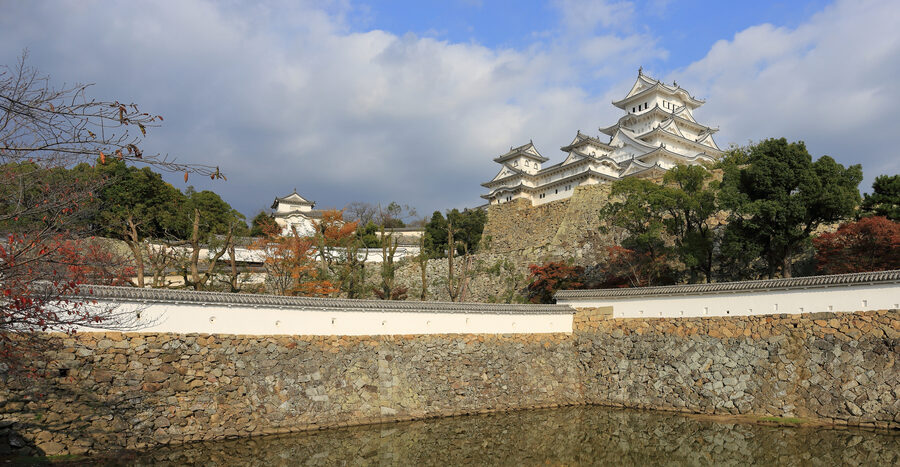
In June 1582, two weeks after Nobunaga’s death at Honnō-ji, Akechi Mitsuhide’s son Akechi Hidemitsu set Azuchi on fire and the whole structure burned to the ground in a few days. You can read the full architectural story in our Azuchi castle piece. What I want you to remember is that every Japanese keep you see today, from the twelve original survivors to the famous reconstructions, is descended from Nobunaga’s experiment at Azuchi. He invented the keep, his successors copied it, and 3,000 castles went up across Japan in the next forty years.
Honnō-ji: 21 June 1582
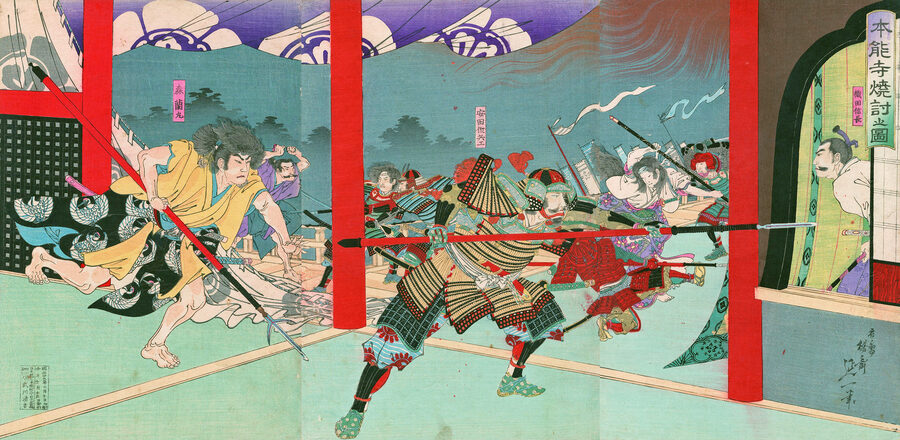
If you want one date out of the entire Sengoku era to pin to your wall, make it 21 June 1582. Nobunaga, age 48, was sleeping in the Honnō-ji temple in central Kyoto with about 100 personal retainers. His best general, Akechi Mitsuhide, had been ordered the day before to march west to support Hideyoshi’s siege of Takamatsu. Akechi instead crossed the Katsura river before dawn, surrounded the temple, and announced to his troops that the enemy was at Honnō-ji.
The fighting lasted maybe an hour. Nobunaga, hit by an arrow in the elbow, retreated into the inner residence with his page Mori Ranmaru and committed seppuku as the building burned around him. His son and heir Nobutada, summoned from the nearby Myōkaku-ji, took refuge in the Nijō palace and died there the same morning. Nobody knows for certain why Akechi did it, and Japanese historians have been arguing about his motive for 444 years. The candidates are personal grudge, political ambition, fear of a coming purge, defence of the imperial court, or some combination of all of the above.
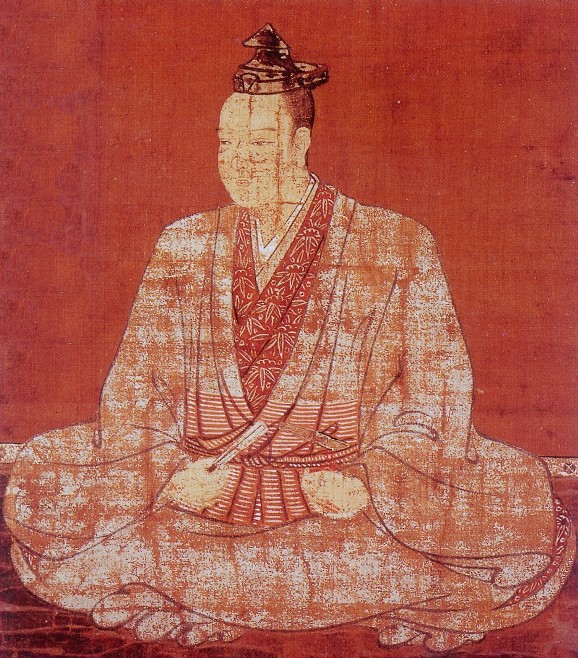
Akechi held the country for thirteen days. He occupied Kyoto, attempted to extract recognition from the imperial court, and tried to rally the other Oda generals to his side. None of them came; the warlord Hosokawa Fujitaka, his old friend and son-in-law to-be, refused him outright. Toyotomi Hideyoshi, on the western front, made a peace deal with the Mōri within forty-eight hours of getting the news and force-marched his army back across Honshū at a pace that became legendary in the Japanese military canon.
On 2 July 1582 Hideyoshi’s army of 30,000 met Akechi’s 16,000 at Yamazaki, between modern-day Osaka and Kyoto. The fighting lasted three hours. Akechi was killed during his retreat, by a peasant with a bamboo spear, after his army disintegrated and he tried to slip away toward the safety of his own castle. The thirteen days have been retold so often in Japanese drama that the phrase “mikka tenka” (三日天下), meaning roughly “three-day rule” though literally referring to his thirteen-day reign, became a permanent expression in the language for any short-lived victory.
Mori Ranmaru and the loyalty cult
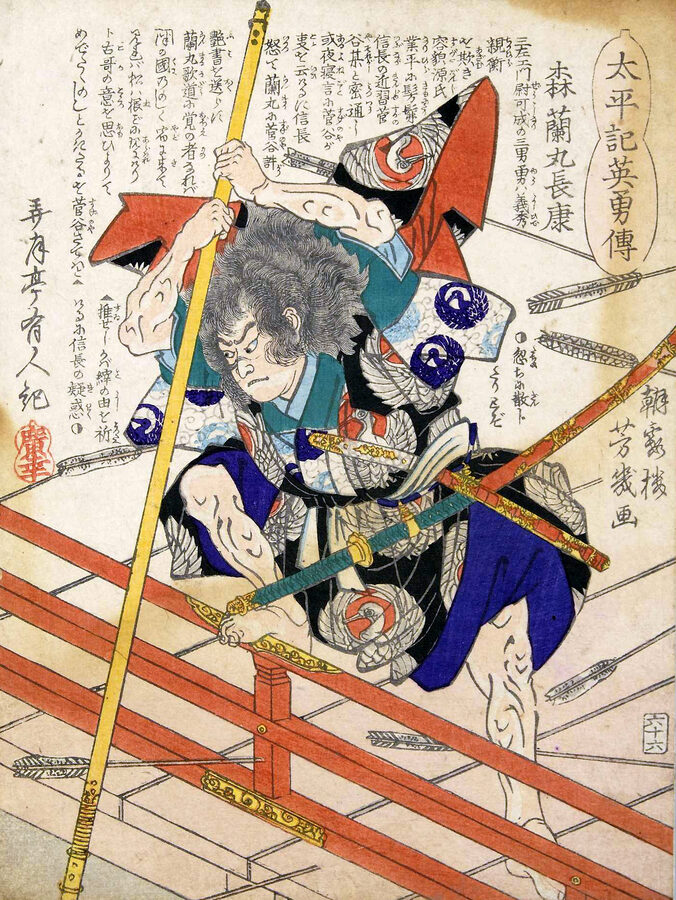
One small character note before I move on. The page who died beside Nobunaga at Honnō-ji was Mori Ranmaru, age seventeen, the most senior of Nobunaga’s personal attendants. He had served as Nobunaga’s secretary, bedfellow and bodyguard for the previous five years, and the relationship was almost certainly intimate, in the way that lord-page relationships often were in the Sengoku samurai class. He was killed defending the inner door of Nobunaga’s residence so that his lord could complete seppuku.
Ranmaru is the patron saint of loyal pages in the Japanese cultural canon. Every NHK historical drama features him; every Sengoku videogame has him as a character; every kabuki play set around Honnō-ji has Ranmaru standing in the burning corridor with a glaive.
The fact that the entire Mori Ranmaru cult exists at all is the clearest evidence I know that the Edo state, looking back at the chaos it had inherited, deliberately reframed the Sengoku era as a story about loyalty and tragedy rather than ambition and betrayal. The reality was probably less tidy. The drama is undeniably more memorable.
Hideyoshi: the operator
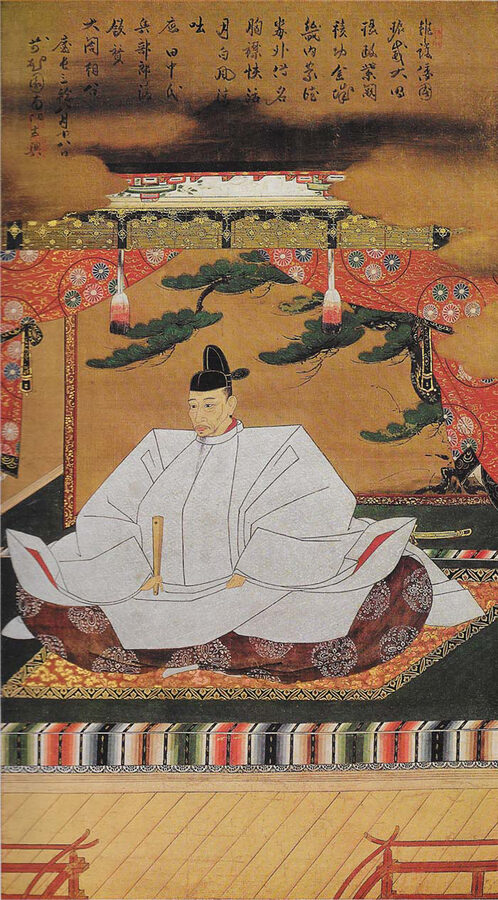
I have written the full Toyotomi Hideyoshi piece, so let me concentrate here on what made him different from Nobunaga. Hideyoshi was a peasant. His father was a foot-soldier in Owari, his original given name was Hiyoshi-maru, and the only reason he ever met Nobunaga at all was that his teenage friend Maeda Toshiie, whom you can read about in our Maeda Toshiie piece, took him along to a horse-fitting. He became Nobunaga’s sandal-bearer at sixteen and his most trusted general by forty.
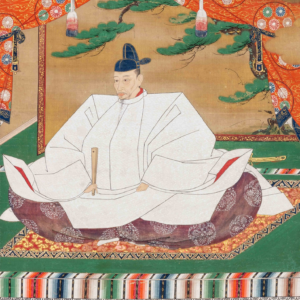
What he did with the country after Yamazaki is what made him historic. He convened the Kiyosu Conference of June 1582, manoeuvred the surviving Oda generals into accepting his guardianship of Nobunaga’s grandson, and within three years had eliminated his rivals one by one. He took the imperial title of Kanpaku in 1585, becoming the first commoner in Japanese history to hold it.
He marched on Shikoku. He marched on Kyushu. In 1590 he marched on the Hōjō and ended the Kantō campaign. By 1591 the country was his.
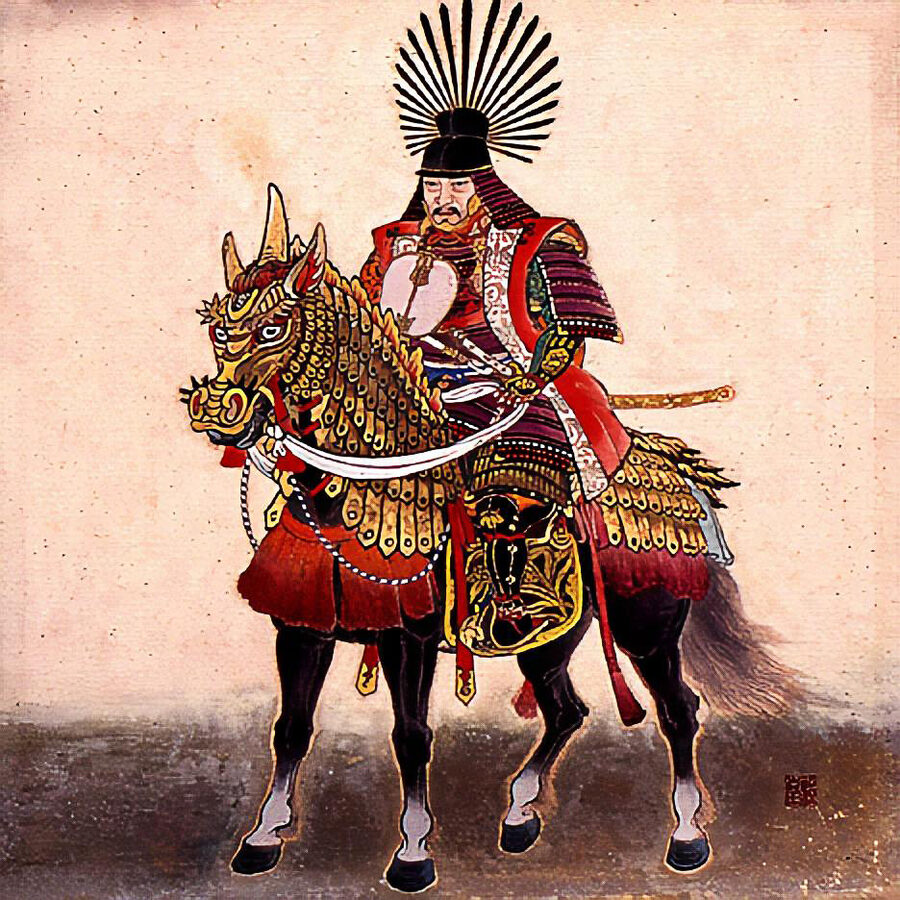
The other thing Hideyoshi did, which historians often skip past in favour of the Korea invasions, was build the administrative skeleton of the Edo state. He ordered a national land survey, the Taikō kenchi, that measured every parcel of land in Japan in koku of rice. He ordered the sword hunt of 1591, the katana-gari, which confiscated weapons from anyone who was not a registered samurai and effectively ended the Sengoku-era social fluidity that had let him rise. He ordered the mibun tōsei-rei, the class-fixing edict, which froze the population into samurai, peasant, artisan and merchant categories that the Tokugawa would inherit.
I find it telling that the man whose entire career proved gekokujō was real was the same man who, the moment he reached the top, slammed the door shut behind him. The peasant boy made it impossible for any other peasant boy to follow him.
The tea ceremony as politics
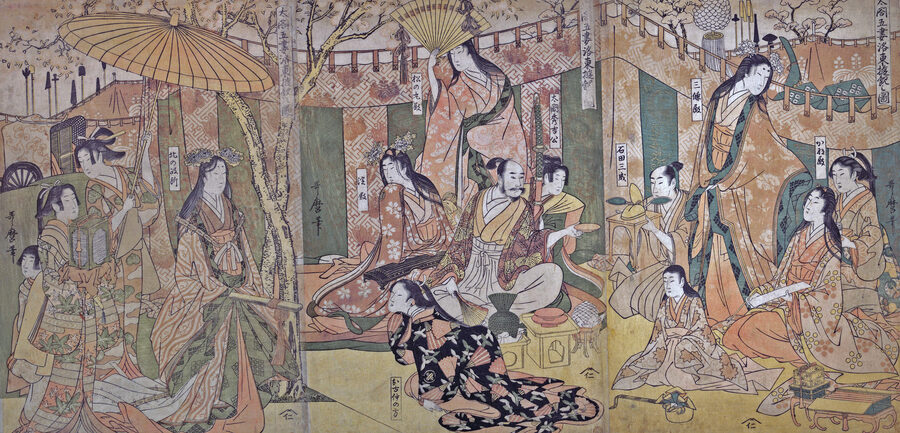
Most travellers think of the Japanese tea ceremony as a Zen meditative practice, which is half right. In the Sengoku era it was also one of the most cynical political instruments in the warlord toolkit. Hideyoshi used it routinely. He gave tea ceremonies to seal alliances, gave tea utensils as battlefield rewards in lieu of land, and held a famous ten-day public tea event at Kitano in October 1587 to symbolise his grip on the country.
The tea master who ran most of these events was Sen no Rikyū, the man who codified what is now called wabi-cha, the austere aesthetic that defines the form. Rikyū’s influence over Hideyoshi was enormous, until in 1591 it stopped being. For reasons that are still debated, Hideyoshi ordered Rikyū to commit seppuku on 28 April 1591. Theories range from a quarrel over the price of tea utensils to suspicions of treason to a personal humiliation involving a wooden statue of Rikyū installed above the gate of a Kyoto temple.
The Rikyū execution is the moment, more than the Korea invasions or the death of Hidetsugu, where Hideyoshi’s late-period paranoia becomes visible to anyone reading the chronicles. He had been a generous and improvisational lord. He became, in his last seven years, a suspicious one. The country, once he took it, was harder to hold than it had been to win.
Korea: the disaster
The single biggest stain on Hideyoshi’s reputation is the two invasions of Korea, in 1592 and 1597. They were a military fiasco, a geopolitical disaster, and the only large-scale foreign war Japan fought between the seventh-century Hakusukinoe campaign and the Meiji-era expansion of the 1890s.
The invasion fleet was 150,000 men. The campaign objectives were the conquest of Korea and the eventual conquest of Ming China. Neither happened.
What did happen was the destruction of Korean civilian life on a scale that Korean historiography has not forgotten. Cities were sacked. Villages were burned.
The Korean potter community was kidnapped wholesale and resettled in Kyushu, which is the foundation of much of modern Arita and Karatsu pottery, but the cost in Korean lives was somewhere between 100,000 and 500,000 dead. The Japanese army eventually withdrew, in 1598, on news of Hideyoshi’s death.
The invasions also wrecked the Toyotomi succession. Veterans returned home embittered. Generals like Katō Kiyomasa and Shimazu Yoshihiro had been on the Korean front. Katō, in particular, returned with a personal grudge against Ishida Mitsunari, the bureaucratic chief of staff Hideyoshi had relied on at home, and that grudge would translate directly into the alignments at Sekigahara two years later.
Sekigahara: the day the era ended
Hideyoshi died on 18 September 1598 in Fushimi castle, leaving a five-year-old heir, Hideyori, and a five-man council of regents to rule until he came of age. The senior member of that council was Tokugawa Ieyasu, then 56 years old, the senior surviving warlord in eastern Japan and the only daimyo with enough land, money and reputation to think about taking the country himself.
The next two years are a slow-motion fracture of the Toyotomi regime into eastern and western factions. The eastern faction, led by Ieyasu, controlled most of the Kantō, Tōkai and northern provinces. The western faction, led nominally by the Mōri but operationally by Ishida Mitsunari, controlled Osaka, the Kinai, parts of Kyushu and the western Inland Sea. On 21 October 1600 they met on the plain of Sekigahara, in modern-day Gifu prefecture, with about 80,000 men on each side.
The battle is described in detail in our Sekigahara piece, so I will keep this short. It was decided by treachery. Kobayakawa Hideaki, ostensibly a western commander, sat motionless on Mount Matsuo for three hours and then attacked Ishida from the rear at midday. The western army collapsed by mid-afternoon. By evening 30,000 men were dead. Ishida Mitsunari was captured three days later and beheaded in Kyoto on 6 November 1600.
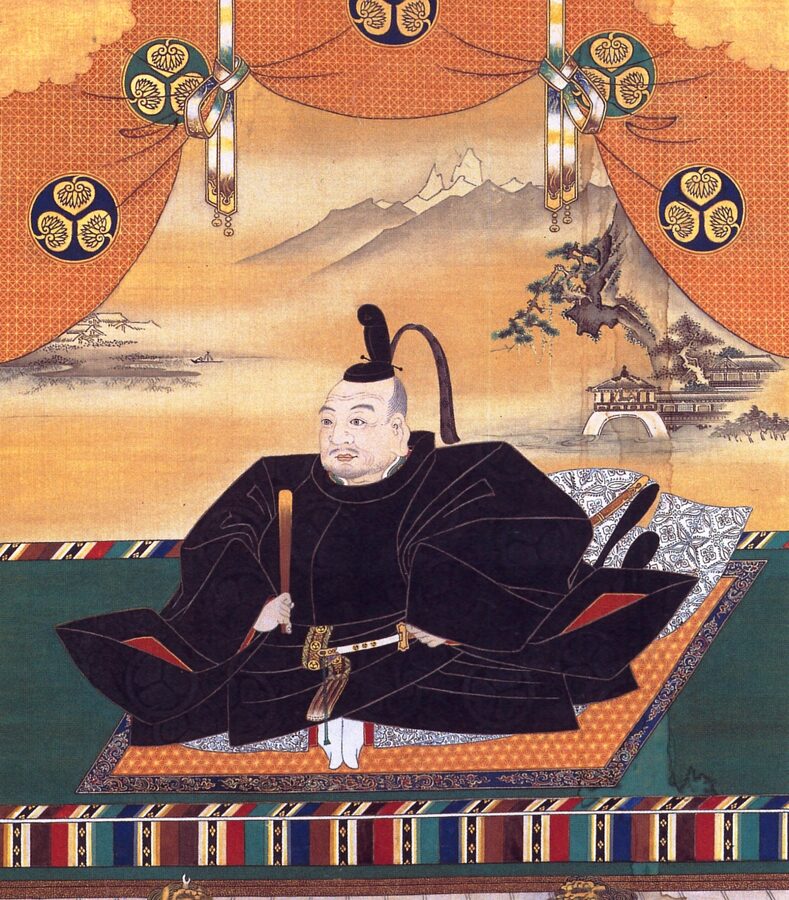
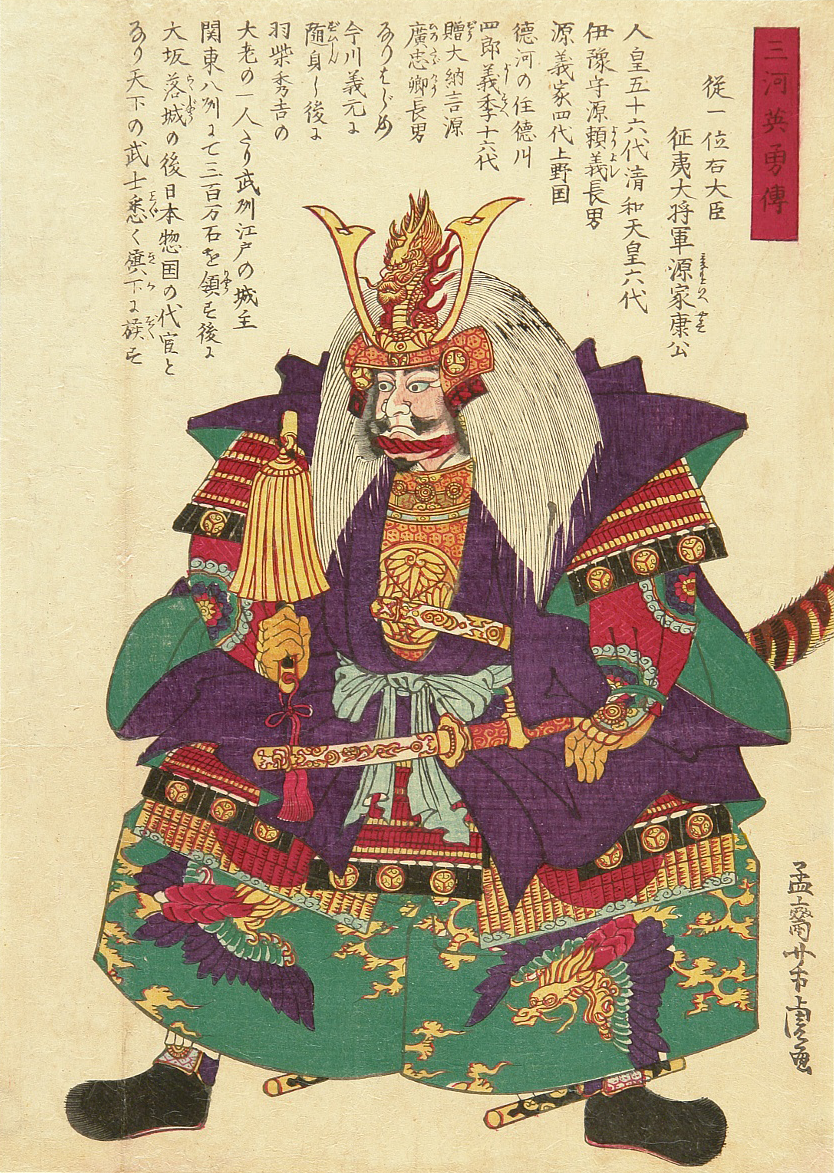
I think of Sekigahara as the single cleanest dividing line in Japanese history. On the morning of 21 October 1600 the country was in the last spasm of the Sengoku era. By the evening of the same day, with Ishida’s head separated from his shoulders and the western coalition dissolved, the country was already, functionally, the early Edo period. Tokugawa Ieyasu was now master of Japan. He took the formal title of shogun two and a half years later, on 24 March 1603, and his great-grandsons would still be holding it 265 years after that.
The other warlords you should know
The Sengoku era is not just the four men I have been describing. It is also a thick cast of supporting figures whose stories I want to flag here briefly, because no overview is complete without them.
The two great northern rivals: Takeda Shingen of Kai, the cavalry tactician, and Uesugi Kenshin of Echigo, the Buddhist warrior-monk who fought him five times at Kawanakajima. You can read the full account of those engagements in our Kawanakajima piece; they are the original Sengoku rivalry. The Tokugawa generals: Honda Tadakatsu, who fought in 57 battles and was never wounded, and Ii Naomasa, the red-armoured shock-troop commander whose Akazonae cavalry was the most feared formation at Sekigahara.
The two famous “last samurai” of the era: Sanada Yukimura, the brilliant defensive tactician who fought for the losing Toyotomi side at Osaka in 1614 and 1615, and Miyamoto Musashi, the duellist and author of the Book of Five Rings, who lived through the very last of the Sengoku-era violence as a young man. The strategists: Takenaka Hanbei, Hideyoshi’s military genius who died at 36 of tuberculosis on the western campaign, and Sassa Narimasa, the Oda loyalist who picked the wrong side after Honnō-ji.
The Christian warlords: Hosokawa Tadaoki, son of one of Akechi Mitsuhide’s allies, and his wife Hosokawa Gracia, the most famous Christian convert of the era, who chose suicide over capture by Ishida’s troops in 1600. The Kyushu hard man: Shimazu Yoshihiro, who led the Satsuma contingent at Sekigahara and got out of the rear of the battlefield with about 80 men still alive after charging directly through the Tokugawa centre.
And the swordsmiths and craftsmen, who do not get statues but who built the cultural artefacts that defined the era. The matchlock smiths of Sakai. The katana smiths whose work I have profiled in our katana and tachi piece. The painters of the Kanō school whose screens decorate every museum room of the period. The garden designers who codified the dry landscape style. The era was a furnace of cultural production at exactly the moment it was also a furnace of war, and that is one of the things that makes it so compelling to read about four centuries later.
The English navigator at the end of it all
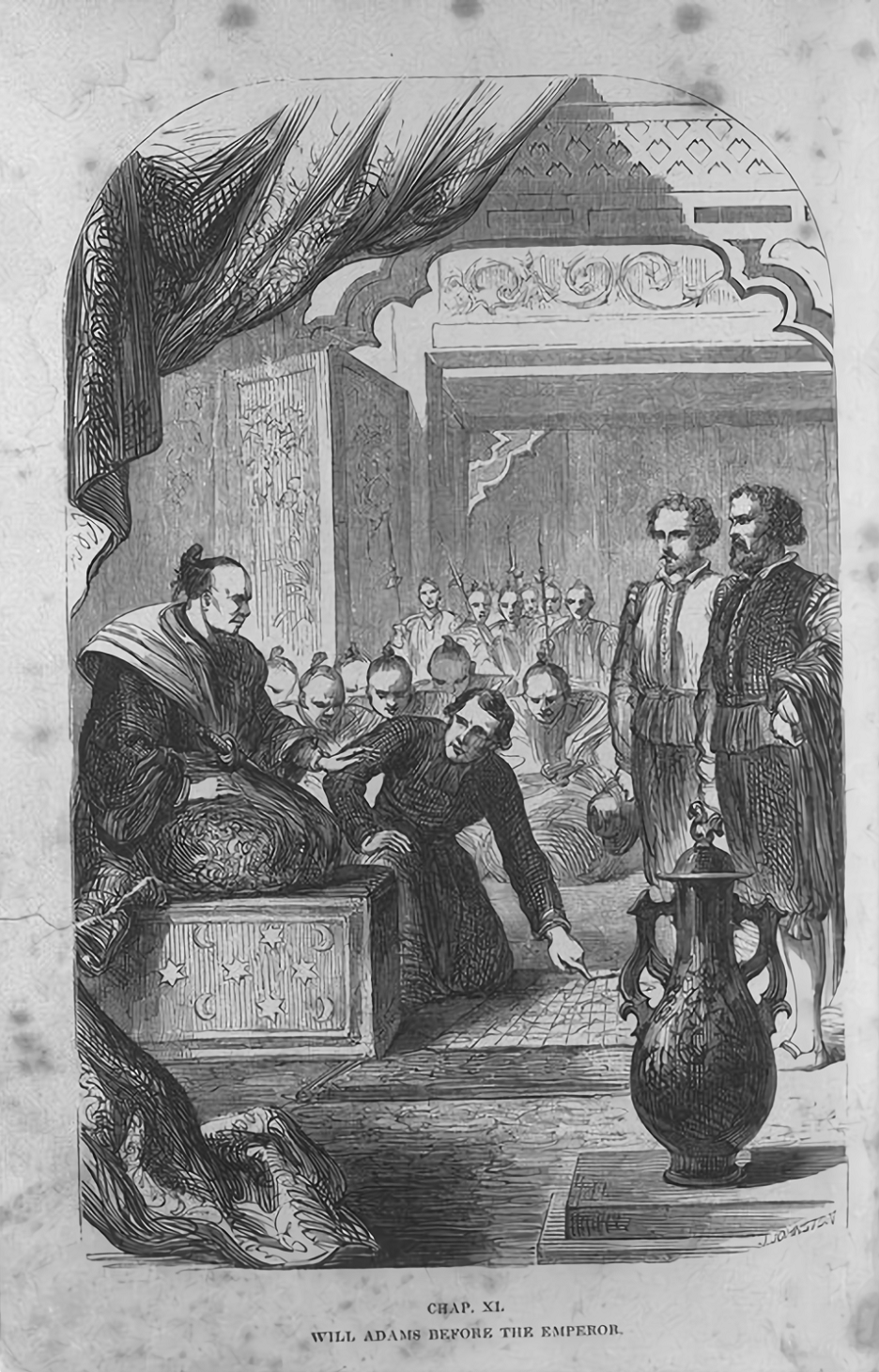
One last person to introduce, because his story is the closing bracket on the Sengoku era’s foreign-contact theme. In April 1600, six months before Sekigahara, the Dutch ship Liefde arrived off the coast of Bungo with 24 dying men aboard. Among them was an English navigator called William Adams. He was the first Englishman to set foot in Japan, and he was hauled before Tokugawa Ieyasu in May for a long interview about who exactly the Protestants were and why the Catholics were so afraid of them.
Adams stayed. Ieyasu made him a samurai, gave him an estate at Hemi near Yokosuka, and used him as a foreign-affairs advisor for the next twenty years. He died in 1620 in his Japanese house with a Japanese wife and two Japanese children, having never seen England again.
James Clavell built the entire novel Shōgun around Adams’ story, and the Anjin character in the recent television adaptation is very directly drawn from him. The Sengoku era ended, in other words, with an Englishman in samurai armour standing in front of the new shogun, which is a fitting closing image for a hundred and thirty-six years of Japanese isolation breaking open and reshaping itself into something the rest of the world would recognise.
Where to go in modern Japan if you want to walk through this
I am a travel writer first and a history nerd second, so let me close with the places you can actually visit if any of this has caught you. There are dozens of Sengoku sites worth your time, but the eight or nine below will give you the through-line of the era in roughly chronological order.
Tanegashima island, the southern Kyushu island where the Portuguese landed in 1543. The Tanegashima Development Centre museum at Nishinoomote has the original Portuguese matchlock plus the Japanese copy that came out of Yaita Kinbei’s forge a year later. The two guns side by side are the cleanest object lesson in technology transfer I have ever seen anywhere.
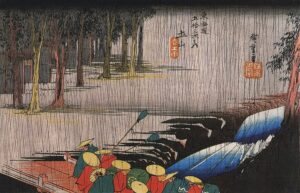
Okehazama Park in Toyoake, just east of central Nagoya, where you can walk the small wooded ridge on which Imagawa Yoshimoto lost his head to a teenage Nobunaga. There is a modest monument and a museum. The site is best in light rain, which is what the weather was doing on 19 June 1560.
Kiyosu castle, the small reconstructed keep in the suburbs of Nagoya from which Nobunaga ran his early career, and the site of the 1582 Kiyosu Conference where Hideyoshi outmanoeuvred his fellow Oda generals. Gifu castle, on top of Mount Kinka, the mountain redoubt Nobunaga took from Saitō Tatsuoki in 1567 and from which he proclaimed Tenka Fubu.
The Azuchi castle ruins on the eastern shore of Lake Biwa. The keep is gone but the stone foundations are preserved, and the on-site museum has a full-size cross-section of the original five interior floors. You can walk the same stone steps Nobunaga walked. Nearby in the same museum complex is the Bunka-kan with the painted-screen reconstructions.
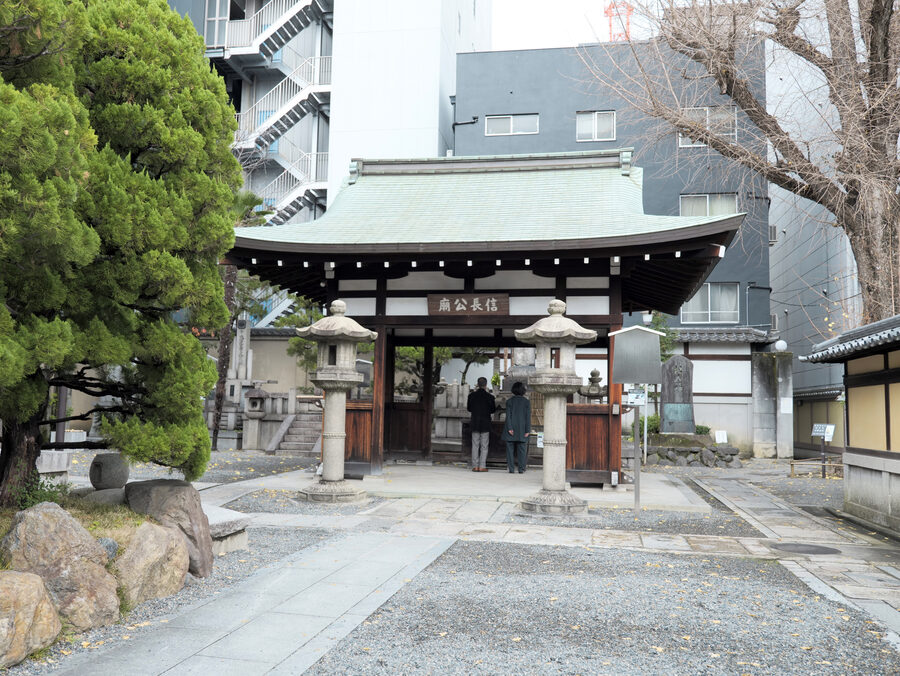
Honnō-ji, the modern temple in Nakagyō-ku, Kyoto, which is not on the original site but does mark the lineage. The original Honnō-ji site, about a kilometre southwest at the corner of Aburakōji-dōri and Rokkaku-dōri, is marked only by a small stone monument set into the pavement.
Yamazaki, where Hideyoshi crushed Akechi Mitsuhide thirteen days after Honnō-ji. The battlefield itself is bisected by the modern Tōkaidō line; the Tennōzan hill, which Hideyoshi seized to win the engagement, is a 30-minute climb from Yamazaki station.
Nagashino, in modern Shinshiro city, eastern Aichi, where the Nobunaga-Tokugawa alliance broke the Takeda cavalry in 1575. The Nagashino Castle Site Museum has been recently rebuilt; the battlefield, with its restored palisades, sits a short walk away. The Rengogawa stream that the Takeda cavalry had to cross to reach Nobunaga’s lines still flows.
The Sekigahara Memorial Museum, opened in 2020 in Gifu prefecture, which now lays out the entire engagement of 21 October 1600 across two floors with a battlefield-walking app. You can walk Ishida’s command position on Sasao-yama and Tokugawa’s command position on Momokubari-yama in the same morning. The whole battle was decided in a 4-kilometre-wide bowl, and walking it gives you a sense of how brutally compressed the action was.
Odawara castle, on the Tōkaidō between Tokyo and Hakone, the Hōjō headquarters Hideyoshi besieged for 100 days in 1590 to end the Kantō campaign. The reconstructed keep is good; the 9-kilometre defensive earthwork around the original castle town, parts of which survive, is better and almost nobody walks it.
If you only have one trip and want to hit the high points, my suggestion is Tanegashima for the gun, Azuchi for the castle, Honnō-ji for the assassination, Sekigahara for the ending. That route covers 1543, 1576, 1582 and 1600, the four pivot dates of the era, in roughly a week of careful travel by shinkansen and local rail.
What survives, what doesn’t, and what the Sengoku era left behind
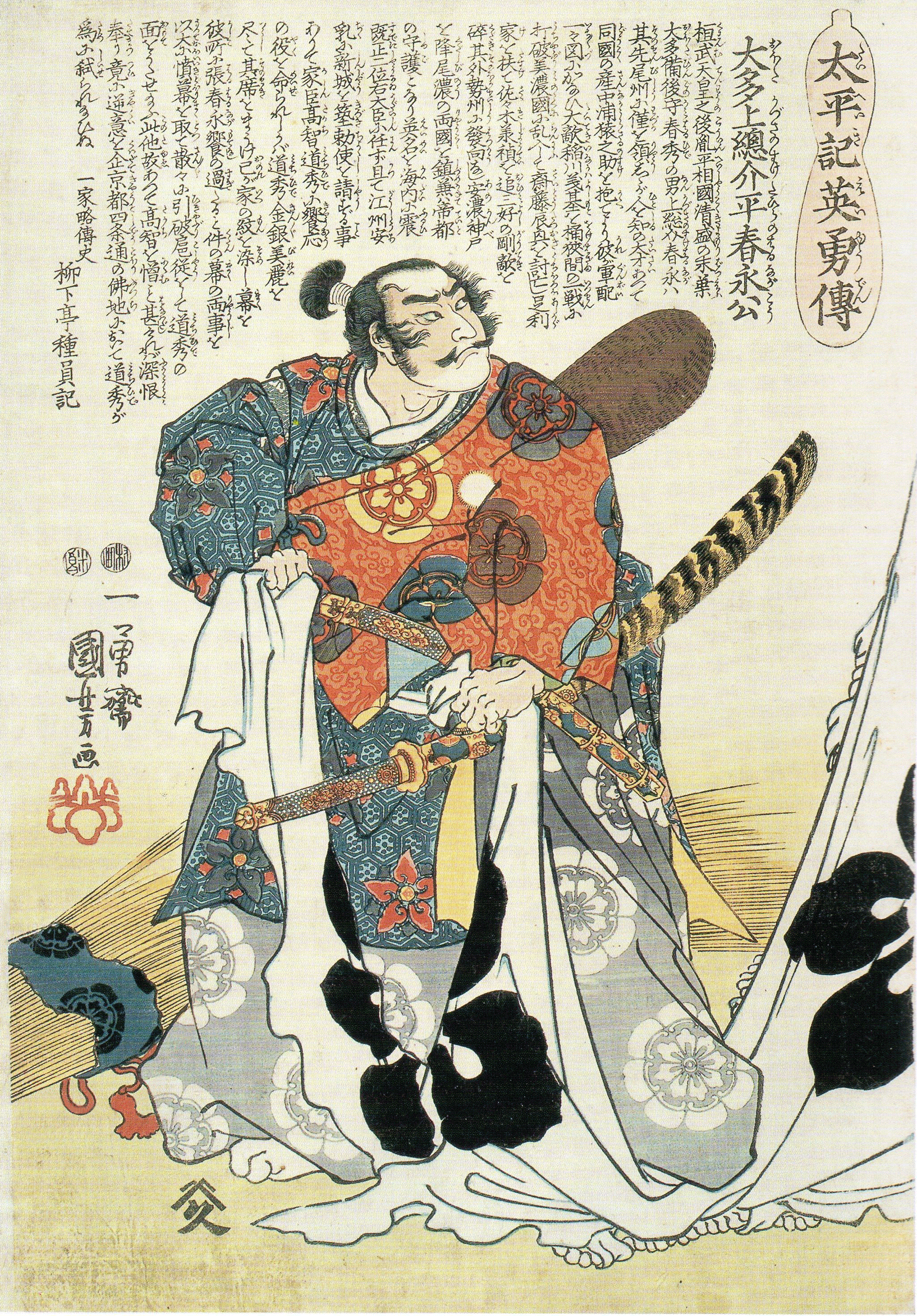
The Sengoku era was the most violent stretch of pre-modern Japanese history, and it left behind less than you might expect. Most of the castles burned. Almost all of the painted screens are reconstructions.
The original Honnō-ji is buried under a Kyoto residential block. Azuchi is a ring of stone foundations on a hill above Lake Biwa. Even the famous matchlocks of Sakai are mostly Edo-period replicas; only a few hundred original Sengoku-era arquebuses survive, and most of them are in private collections.
What did survive is the political architecture. The Tokugawa shogunate the era ended with kept Japan internally peaceful for 265 years, the longest stretch of single-state continuity in any major country before the modern period. The class-fixing that Hideyoshi started and Ieyasu codified produced, by the early eighteenth century, the most rigidly stratified society in pre-modern Asia.
The arms control that Hideyoshi started with the sword hunt evolved into the early Tokugawa firearms regulation that effectively de-industrialised the Sengoku-era gun economy by the 1670s. Japan in 1700 had fewer working firearms than it had in 1600.
Culturally, the era is everywhere. Every major Japanese castle architecturally descends from Azuchi. Every formal tea ceremony descends from Sen no Rikyū.
Every kabuki play with a war setting descends from Sengoku-era source material. Every NHK Taiga drama for sixty-three seasons running has, sooner or later, returned to the Sengoku well, because that is where the country tells the story of how it became what it is. If you want to understand modern Japan, you are eventually going to need to understand Sengoku, and the easiest path in is the door of any one of the people I have linked above.
The eras around it: where Sengoku sits in the larger arc
If you want to place the Sengoku in context with what came before and what followed, our era guides are the cleanest way to walk it. Before Sengoku, the country had spent five centuries under court-and-capital rule, beginning with the Heian era from 794 to 1185. Then came the first samurai government, the Kamakura era from 1185 to 1333, and the long Ashikaga interlude of the Muromachi era from 1336 to 1573, which technically overlaps with the early Sengoku decades. The Sengoku is the back half of Muromachi gone feral.
What followed the Sengoku is the period the era was always pointing at: the Edo era, 1603 to 1868, when the Tokugawa shogunate ran the country from the city now called Tokyo. The Edo period is, in many ways, a 265-year-long argument with the Sengoku era. Every institution the Tokugawa built was designed to make sure another Sengoku could never happen.
The class freezes, the sankin-kōtai alternate-attendance system, the closed-country sakoku policy, the execution of the Christian community. All of it traces back to a deep institutional memory of the chaos of 1467 to 1600.
I find the Sengoku era the single most rewarding period in Japanese history to read about, because it is the one that actually changed everything. The Heian period was a court society. The Kamakura was a regional warrior society.
The Muromachi was a slow collapse. Edo was a closed-system steady state. The Sengoku is the only era where the answer to “what kind of country is Japan?” was genuinely up for grabs, and over 136 years the country argued it out with swords, arquebuses, sermons and tea ceremonies until a new answer emerged.
That answer, signed off on the morning of 21 October 1600 with Ishida Mitsunari’s blood drying on a Gifu hillside, is the country I went to live in seven years ago and still have not figured out.
So go read the warlord profiles. Go visit the castles. Go climb the battlefield hills.
The Sengoku era is the most generous period in Japanese history with what it gives back to the curious traveller, and you do not have to do it in any particular order. Start anywhere. The threads will pull each other through.