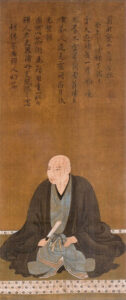
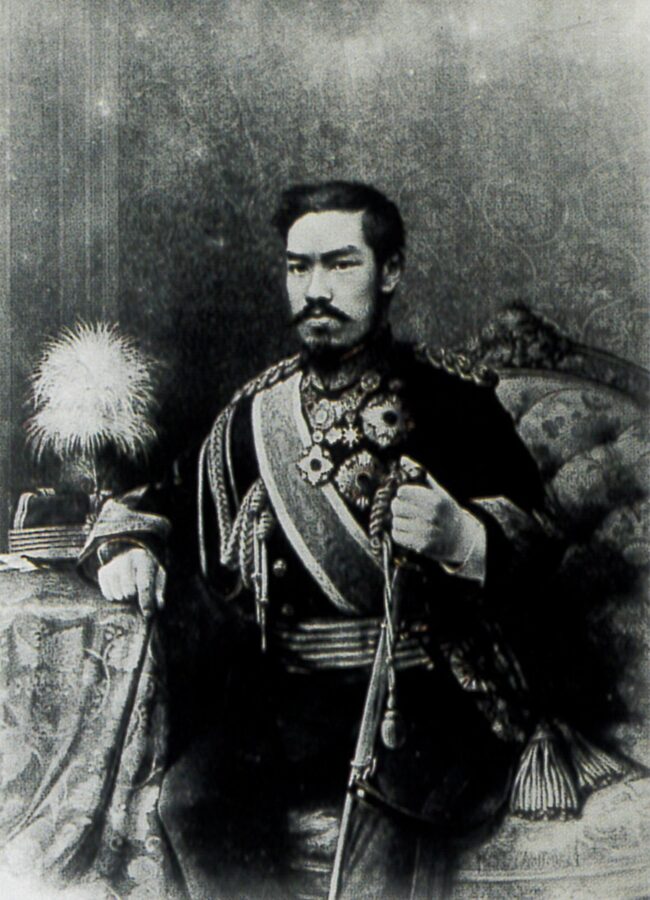
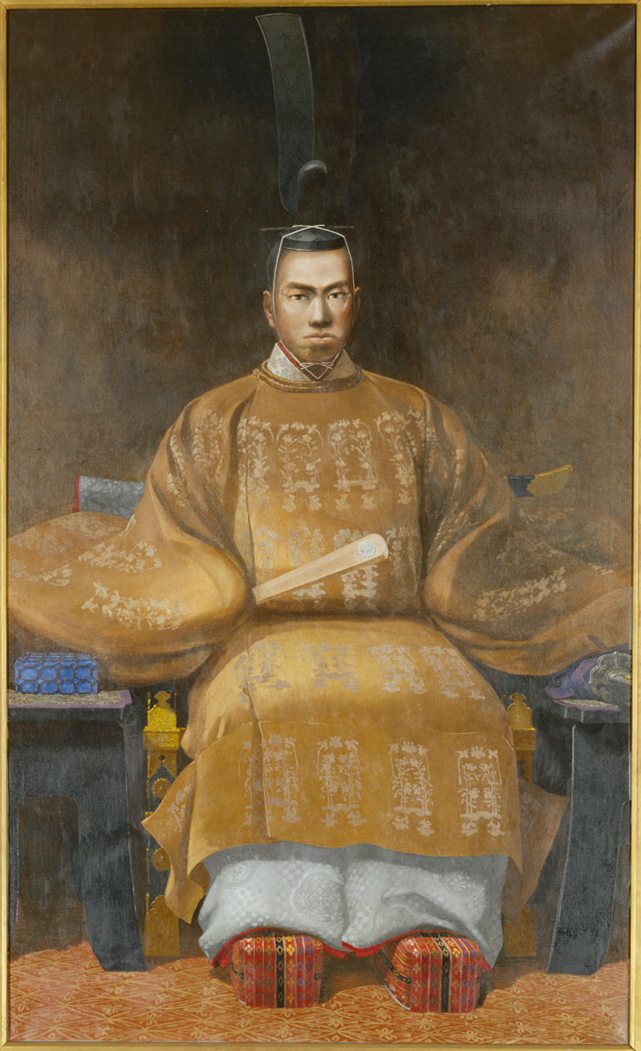
In July 1889 the Imperial Household Minister, Hijikata Hisamoto, laid before Emperor Meiji a portrait of a sitting that had never happened, fully expecting to be punished for it. The face had been sketched the year before by an Italian engraver who had been placed close to the emperor at a public engagement without his knowledge. The body under the face, braid, sword and all, was the Italian’s own: Edoardo Chiossone had put on the uniform, had himself photographed in it, and drawn from that. The emperor looked at the result and said nothing at all.
That silence became the most reproduced face in the empire. Photographed by Maruki Riyō and copied by the thousand, the drawing became the goshin’ei (御真影), the “true image” that schools locked away in fireproof shrines and bowed to on national holidays. The man in it was thirty-five, bearded, unreadable and permanently on parade. The real one, by the accounts of people who served him, hated being photographed, would not touch sashimi, spoke Kyoto dialect at home all his life, and liked to blow out the candles in the women’s quarters to make the ladies-in-waiting shriek.
I find Emperor Meiji (明治天皇) hard to write about for exactly that reason. He kept no diary and wrote almost no letters, and most of the people who knew him wrote what their age wanted to hear. What follows is my attempt to keep the boy, the man and the image apart for as long as the sources allow, and then to show you where each of them can still be found, from a well in a Kyoto park to a forest in the middle of Tokyo.
In This Article
- A wooden horse in the Nakayama garden
- Gunfire, a pot of tooth-black and a fainting boy
- How much did he decide?
- Twenty-two days to Tokyo
- Making an emperor people could see
- Six tours and two rescripts
- Half past ten, or a quarter to one
- Where to find Emperor Meiji today
- Kyoto Imperial Palace and the Gyoen
- Fushimi Momoyama: the tomb on the castle hill
- Meiji Jingū and the Inner Garden
- The Meiji Memorial Picture Gallery
- The face on the wall
A wooden horse in the Nakayama garden
He was born at about one in the afternoon on 3 November 1852, the 22nd day of the ninth month of Kaei 5 by the court’s calendar, and not in the palace. Birth counted as a source of ritual pollution, so imperial children arrived at their mother’s family home, in this case a two-room hut in her father’s garden. The mother was Nakayama Yoshiko, a junior lady-in-waiting to Emperor Kōmei, and her father Nakayama Tadayasu was a court noble whose household lived on 200 koku a year. The hut cost more than the Nakayama could find, and the court lent them 150 ryō to build it.
The baby was named Sachi-no-miya, Prince Sachi, after the childhood name of his great-grandfather Emperor Kōkaku, an emperor remembered at court for standing up to the shogunate. It guaranteed nothing: his mother was not of the rank to become empress, and two elder siblings had already died, a sister at three and a brother on the day he was born. Death in infancy haunted the next generation too. Sources give Meiji himself thirteen or fifteen children; the Japanese genealogies list fifteen, and only five of them lived to grow up.
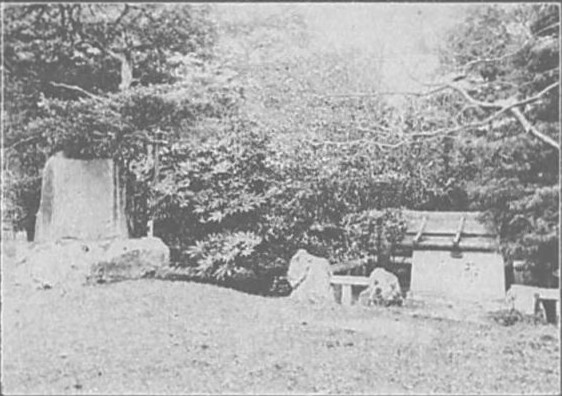
He spent his first four years at the Nakayama house, raised by his grandparents while his mother served at court. A well was dug there and named Sachi-no-i after him, and it is still there. His grandfather gave him a wooden sword, a bamboo sword and a wooden horse on a little wheeled box, and it was the horse he loved; when it broke, the maids and the old man himself got down on all fours and took its place.
He loved that household. When he moved into the palace in October 1856, a palace newly rebuilt after a fire in the manner of the Heian era court, he was miserable for two months. For the rest of his life he had the apricots from the Nakayama garden sent to him every year, which is why, his attendants said, apricots were always his favourite fruit.
Once he settled in, the records describe a headstrong, quick-tempered little boy. Toys presented by daimyo were played with twice and smashed the third time, a clay figure of the poet Kakinomoto no Hitomaro was broken in a temper, and anyone who crossed him got punched with his small fists. When he and a younger playmate went too far, his mother locked them both in the palace library.
His father taught him poetry himself, and paid for every verse in sweets. The first poem that survives, written at five, is about geese flying across the moon and their reflection in the water. Calligraphy went less well: Prince Arisugawa Takahito was appointed to teach him, his mother sat in, and decades later the emperor wrote poems regretting how little effort he had made.
Poetry stuck. By the usual count he composed 93,032 waka in his lifetime, though some Japanese reference works round it up to a hundred thousand; either way it comes to five or six a day for forty-five years.
Outside the walls the country was coming apart. After Perry’s Black Ships broke open two centuries of sakoku in 1853, the Tokugawa shogunate did something it had not done since the Edo era began: it asked the emperor’s opinion. Kōmei loathed foreigners, refused to sanction the 1858 commercial treaty with the United States, and became the figurehead for every young samurai who wanted the barbarians expelled. When Ii Naosuke signed the treaty anyway and purged its critics, the men who cut him down outside the Sakurada Gate in 1860 said they did it for the emperor.
That same year the boy was formally made heir, adopted as the son of Kōmei’s consort Kujō Asako to get round his mother’s rank, and given the adult name Mutsuhito (睦仁). Japanese sources put the naming ceremony on 10 November 1860; English accounts usually say the 11th, a small slip that shows how often the old lunar dates have been converted by hand.
Gunfire, a pot of tooth-black and a fainting boy
The story about the young emperor that every Japanese reader of a certain age knows is that he fainted at the sound of gunfire. It comes from the summer of 1864, when Chōshū troops tried to fight their way back into Kyoto and the battle reached the Hamaguri Gate of the palace itself. Writers who liked to puncture imperial myths, the critic Ōya Sōichi among them, used it to suggest that the future commander-in-chief had been a timid child who keeled over at the first cannon.
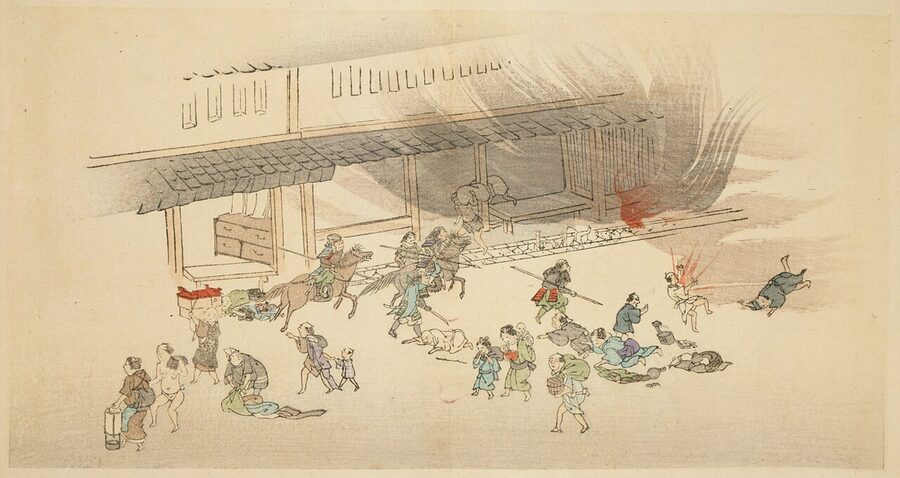
The historian Asukai Masamichi went back to the diary of Nakayama Tadayasu and found that the story had been misread. The boy did faint, but not during the battle. On the following night Tokugawa Yoshinobu, the future last shogun, had the household woken because of a report that rebels were trying to get into the palace, and as the women were hurried across to the Shishinden, a maid dropped a pot of ohaguro, the iron dye used to blacken teeth.
The crash sounded like a shot, the smell was foul, the ladies-in-waiting began to scream, and an eleven-year-old dragged from his bed in the middle of the night passed out. Someone gave him water and he came round. I find that version more believable, and a good deal more sympathetic, than the cannon.
It also tells you something about the sources. Almost every story about Meiji’s character exists in a flattering version and an unflattering one, and both tend to be told by people with a case to make. Kyoto was full of assassins in those years, and of the Shinsengumi who hunted them, and his grandfather was banished from court for siding with Chōshū and not allowed to see him.
Then, in January 1867, Kōmei caught smallpox and died within a fortnight, at thirty-five. His son had been vaccinated, quietly, at his grandfather’s arrangement, so the disease could not touch the boy. The death came at such a convenient moment for the anti-shogunate faction that the British diplomat Ernest Satow heard rumours of poison, and some writers have repeated them since. Most Japanese historians accept the smallpox, and so do I.
Mutsuhito succeeded on the 9th day of the first month of Keiō 3, which was 13 February 1867. He was fourteen, his hair was still tied in a child’s loops, and nobody, including him, expected him to govern. The first act of his reign that looks like a personal wish was an amnesty that let his grandfather come back to the palace.
How much did he decide?
This is the question that matters, and the short answer is that nobody can be sure. The emperor’s name is on everything that happened in the next two years: the shogun’s return of power in November 1867, the decree restoring imperial rule, the war against the Tokugawa, the oath that promised a new kind of government. What a fifteen-year-old actually thought about any of it is mostly guesswork.
The men making the decisions are easier to find. In June 1867 Sakamoto Ryōma and Gotō Shōjirō of Tosa met Saigō Takamori and Ōkubo Toshimichi of Satsuma and agreed to work for a restoration. In the tenth month Yoshinobu announced at Nijō Castle that he would hand power back to the throne, hoping to remain the strongest man in whatever came next.
At almost the same moment a secret decree ordering Satsuma and Chōshū to destroy him was handed to their agents. Whether the emperor ever approved it is still argued: Inoue Isao has called it a forgery issued without his sanction, Haraguchi Kiyoshi thinks it quite probably genuine, and the boy’s grandfather was certainly one of the three nobles behind it.
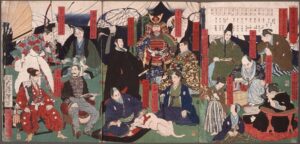
The coup came on the 9th day of the twelfth month. Satsuma and four other domains took over the palace gates without a shot, the restoration of imperial rule was proclaimed in the boy’s presence, and that evening the new government met in the Kogosho to decide what to do about Yoshinobu. Converted from the court calendar, this was 3 January 1868, although English-language histories usually give the 4th.
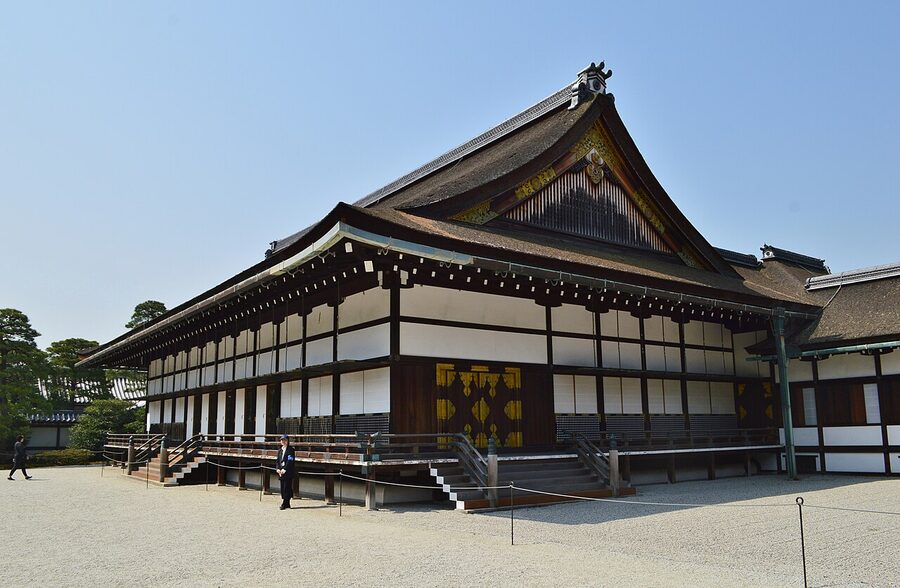
The Kogosho meeting is the nearest you get to watching him at work, and even there he says nothing. According to the later accounts, the former Tosa lord Yamauchi Yōdō protested that a handful of men were using a child emperor to seize power, and Iwakura Tomomi rounded on him for insulting a wise sovereign. Itō Yukio, the most careful of his Japanese biographers, thinks the boy must have been frightened and had neither the will nor the standing to refuse his elders. Donald Keene, whose biography is still the fullest in English, pointed out that a fifteen-year-old is not a small child and may already have held anti-shogunate views of his own.
The war that followed, which I tell in more detail in my piece on the Meiji Restoration, was fought in his name rather than by him. When Yoshinobu’s army lost at Toba-Fushimi at the end of January 1868, the former shogun slipped out of Osaka Castle by night and sailed for Edo. The imperial army marched east under brocade banners with Saigō as chief of staff, and Edo Castle was surrendered without a fight that spring.
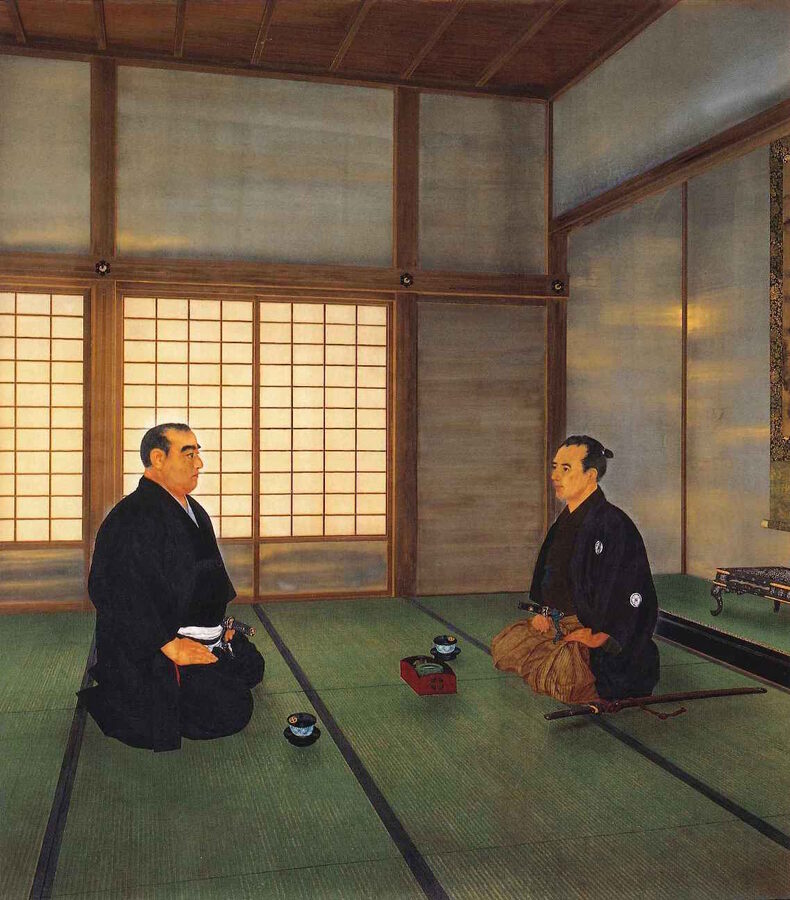
Meanwhile the boy was being let out. On the 3rd day of the second month he left the palace for what the court chronicle describes as the first time since early childhood, and was carried to Nijō Castle to sit behind a blind at a council of war. English accounts usually date his first outing to the Osaka journey later that spring, but the Japanese record is clear that Nijō came first. Then, for the first time ever, foreign ministers were let in to see him, to the horror of the old women of the inner palace.
Algernon Mitford, interpreter to the British minister Sir Harry Parkes, described their audience of March 1868 in his memoirs. The young Mikado was a tall youth with bright eyes, his eyebrows shaved and painted higher on the forehead, his cheeks rouged, his lips painted red and gold and his teeth blackened. Mitford thought it no small feat to keep any dignity under all that, and that the boy managed it. Parkes had been attacked by two swordsmen on his way to the palace three days earlier, and by the Japanese accounts the city’s sympathy lay mostly with the swordsmen.
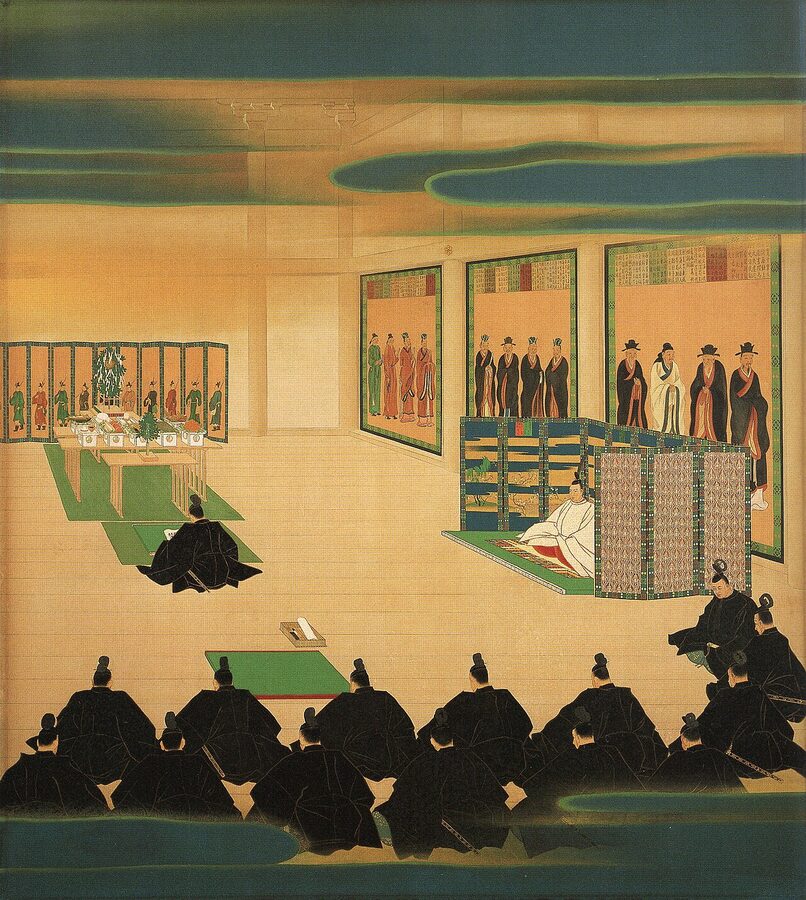
The Charter Oath shows how things were done. Its five articles promised that “deliberative assemblies shall be widely established”, that “evil customs of the past shall be broken off”, and that “knowledge shall be sought throughout the world”. It was drafted by Yuri Kimimasa and Fukuoka Takachika, revised by Kido Takayoshi and read aloud by Sanjō, and 767 nobles and lords eventually signed an undertaking to obey it. The emperor’s part was to worship the gods and to be there.
A week later he was taken to Osaka, nominally to lead the campaign in person, and there the cage seems to have opened. He stayed forty-six days, rode in a boat for the first time and, at Tempōzan, saw the sea; the official chronicle notes that “the imperial countenance was especially fine”. He received Ōkubo and Kido, men with no court rank at all, and Kido wrote in his diary that nothing like it had happened in centuries.
Twenty-two days to Tokyo
Before he left Kyoto he was enthroned properly, on 12 October 1868, in a ceremony stripped of the Chinese-style robes and Buddhist rites that emperors had used for a thousand years. In the courtyard stood a globe about a metre across, a gift to his father from the lord of Mito, so that the officials would have the world in front of them. Eleven days later the era name became Meiji, “enlightened rule”, from a line in the Book of Changes, and from then on each emperor would have one era name and no more.
Edo had been renamed Tokyo, the “eastern capital”, in September. On 4 November he set out to see it, with 3,300 people in the procession and the sacred mirror of the imperial regalia carried under guard. On his sixteenth birthday, at the post town of Tsuchiyama, the townspeople were given three koku of sake and 1,500 dried squid.
The journey was full of firsts that are hard to imagine now. He was the first emperor ever to see the Pacific, near Arai on 14 November, and the first to see Mount Fuji, from the heights above Kanaya three days later, and he told his attendants to have poems about the mountain ready by the time they reached Tokyo.
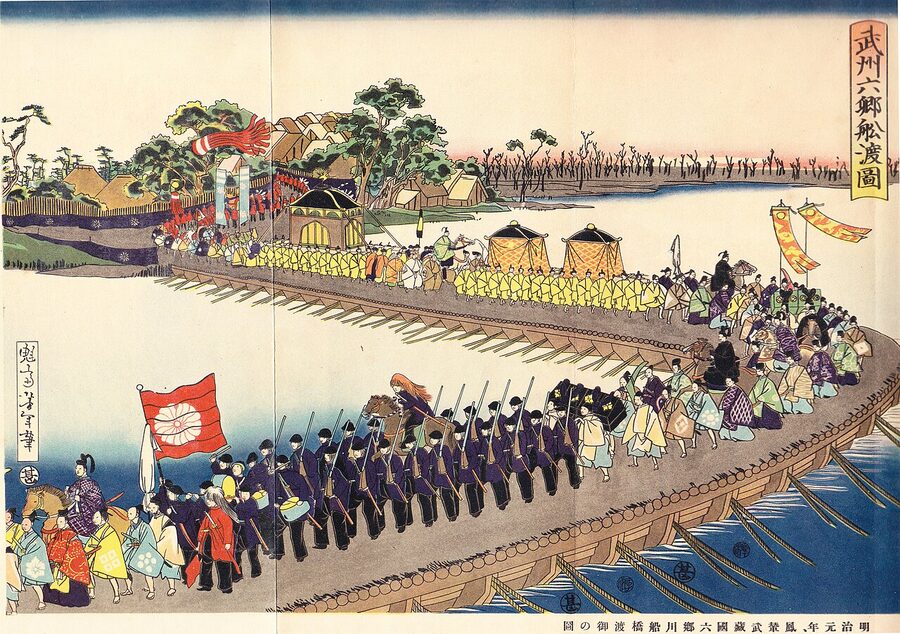
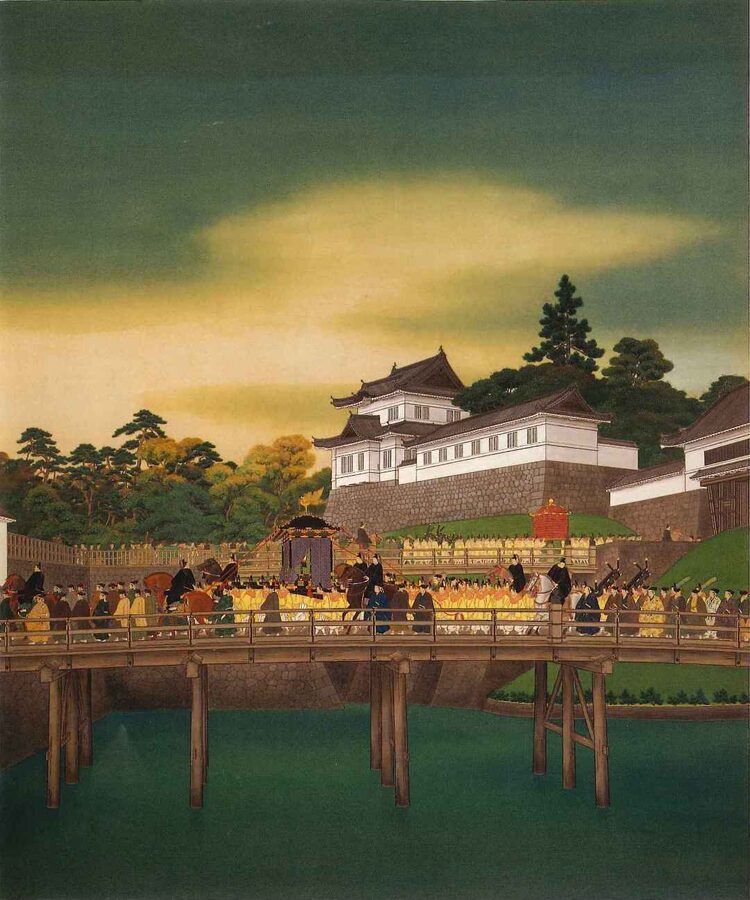
On 26 November, after twenty-two days on the road, the procession changed into full court dress at Shinagawa and entered Edo Castle. Iwakura stage-managed it on purpose: the people of the Kantō, he wrote, had been ruled by the sword for so long that the best way to soften them was to let them see the ceremony of the court. A few days later the emperor gave the city 2,990 barrels of sake, and Tokyo took two days off.
He also sent an envoy to Sengaku-ji with an imperial message for the graves of the 47 rōnin, a pointed thing to do in the shogun’s old city: the most famous loyal retainers in Japan were being enlisted as loyal subjects of the throne.
He went back to Kyoto that winter, married Ichijō Haruko, a court noble’s daughter three years older than him, and set off east again in the spring of 1869, stopping on the way to become the first reigning emperor ever to worship in person at Ise. After that he lived in Tokyo, though no proclamation moving the capital was ever issued. Kyoto people had gathered in their shrines to pray that the empress would not follow him, and the government preferred not to provoke them.
Making an emperor people could see
The men who now ran the country had a problem. They had overthrown the shogun in the name of a ruler almost nobody had seen, who wore make-up, lived among women and spoke the language of the old court, and they needed him to look like a modern head of state, quickly. Ōkubo, Kido and, from 1871, Saigō set about remaking him, and for a while the emperor seems to have enjoyed it.
In 1871 they purged the palace. The senior ladies-in-waiting who had run the inner quarters for generations were dismissed, and samurai from Satsuma, Chōshū, Tosa and Hizen became chamberlains. One of them, Takashima Tomonosuke, remembered a court of hard drinking and heroic stories, and an emperor who once beat him with a wooden sword, shouting “I am Kusunoki Masashige, and I will strike down the traitor Takauji!”, until Takashima looked as if he might hit back and the emperor said they would stop for the day.
Saigō wrote home in early 1872 that the young man now loathed the inner palace, rode every day the weather allowed, and had announced that he would command the army himself. You can read this as a portrait of a young man finding his feet, or as one of the regime’s founders admiring his own handiwork. I think it is both.
The changes came in a rush. He ate Western food for the first time in 1871 and was put on milk twice a day for his health, which he disliked so much that in later years he took it only in coffee. On 20 March 1873 his chamberlains cut off his topknot, and once the newspapers reported it, men across the country followed suit. In 1886 the empress and her ladies were allowed to exchange their court robes and kimono for European dress.
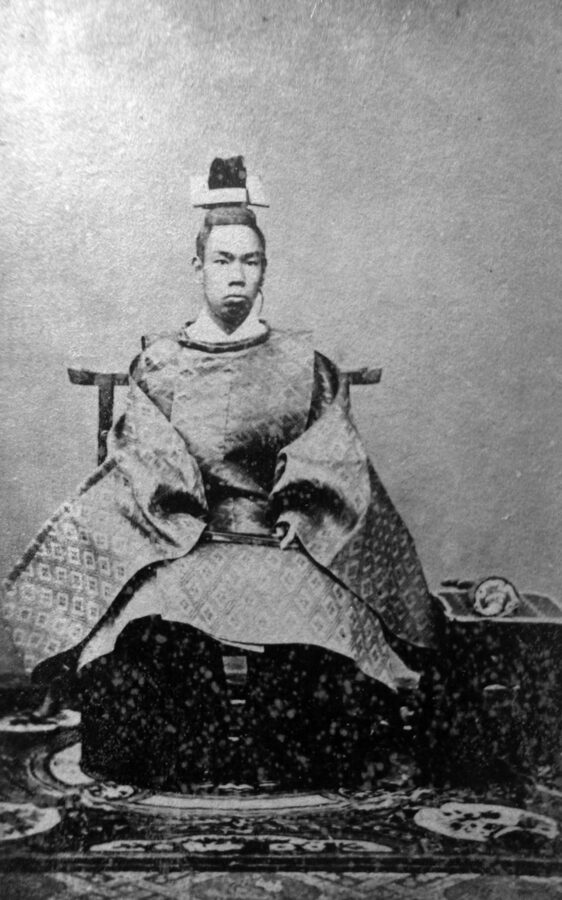
Photographs were the second front. Early in 1872 the Austrian photographer Baron Raimund von Stillfried took a secret picture of the emperor at the Yokosuka shipyard, and the Foreign Ministry was horrified; it had the negative confiscated, but a second one survived and prints were sold abroad. By tradition the emperor’s likeness was not something ordinary people were meant to see at all. Yet the Iwakura Mission, then touring America and Europe, kept being asked for a portrait of its sovereign to exchange, as heads of state did.
So the court photographer Uchida Kuichi was let into the palace. His pictures in court dress were judged too old-fashioned, and within weeks the emperor was photographed again in a new tailcoat-style uniform, his topknot hidden under the hat. In October 1873 Uchida came a third time, the emperor now with short hair and a moustache, in the new army dress uniform.
Leaning in to straighten the imperial head, Uchida touched it, and an attendant shouted that he would be severely punished. The emperor smiled and said that while he was being photographed, even his body was in the photographer’s hands. It is one of the few remarks of his that has the ring of a real person talking.
When one of these photographs reached Miyazaki in December 1873, the road was swept and it was welcomed as if the emperor himself were arriving. Then, in the 1880s, he simply stopped. He had come to dislike the European habit of trading photographs, and no official photograph of him was ever taken again.
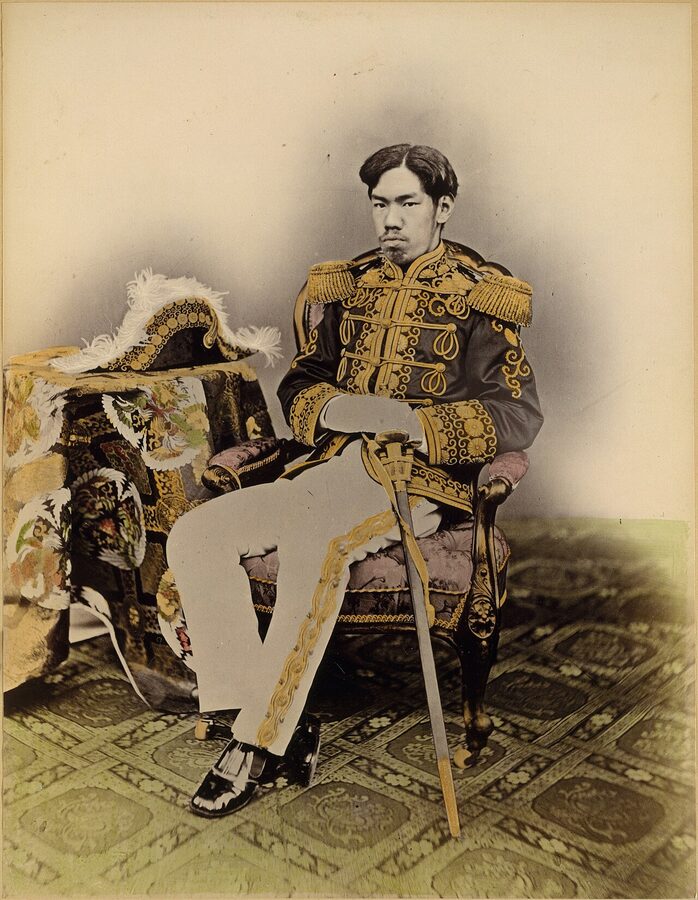
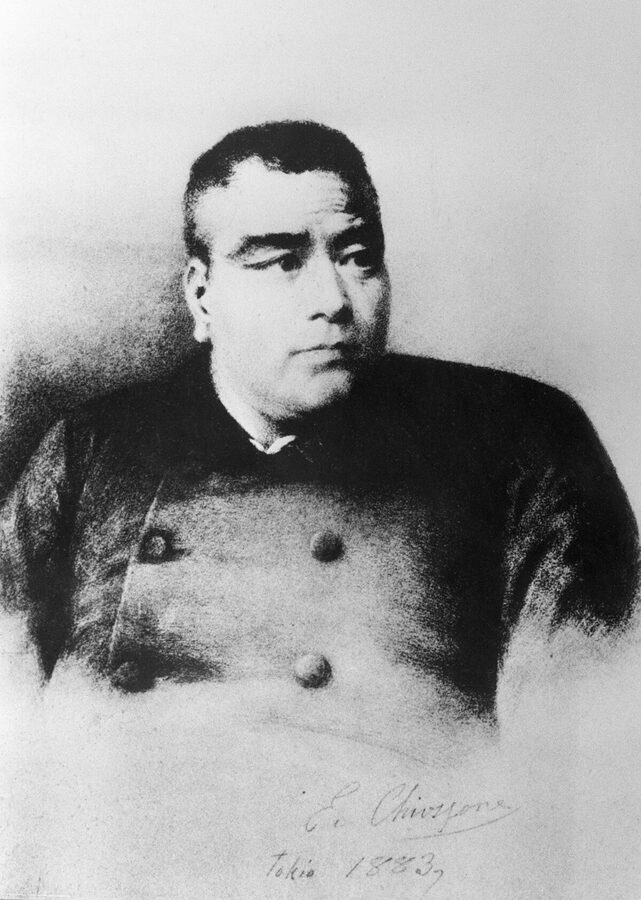
Which brings you back to Chiossone. By the late 1880s there was a new uniform, the emperor was visibly older than the 1873 pictures, and foreign courts expected something current. Itō, as Imperial Household Minister, asked him to sit, and he said “Un” and nothing more. Hijikata Hisamoto, who succeeded Itō in 1887, asked and got the same grunt.
So Hijikata had him drawn instead. On 14 January 1888, when the emperor visited the Yayoisha, a martial-arts hall in Shiba Park, Chiossone was placed where he could sketch him at close range without being noticed. He got the face, but the emperor was not in full dress that day, so Chiossone put on the uniform himself, was photographed, and drew the body from that. Maruki Riyō then photographed the finished drawing, so the goshin’ei was a photograph of a drawing of a face attached to someone else’s body.
When Hijikata presented it, the emperor said nothing. Then a foreign royal house asked for a portrait, Hijikata brought prints of the drawing to be signed, and the emperor signed them at once, which Hijikata took, with enormous relief, as approval. The art historian Taki Kōji, whose book on the imperial portraits is still the best thing on the subject, makes the case that the picture was an instrument of state as much as a likeness, and the longer I look at it, the more I agree.
Six tours and two rescripts
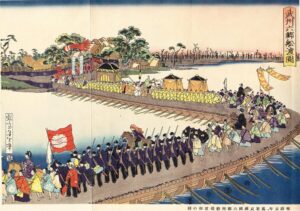
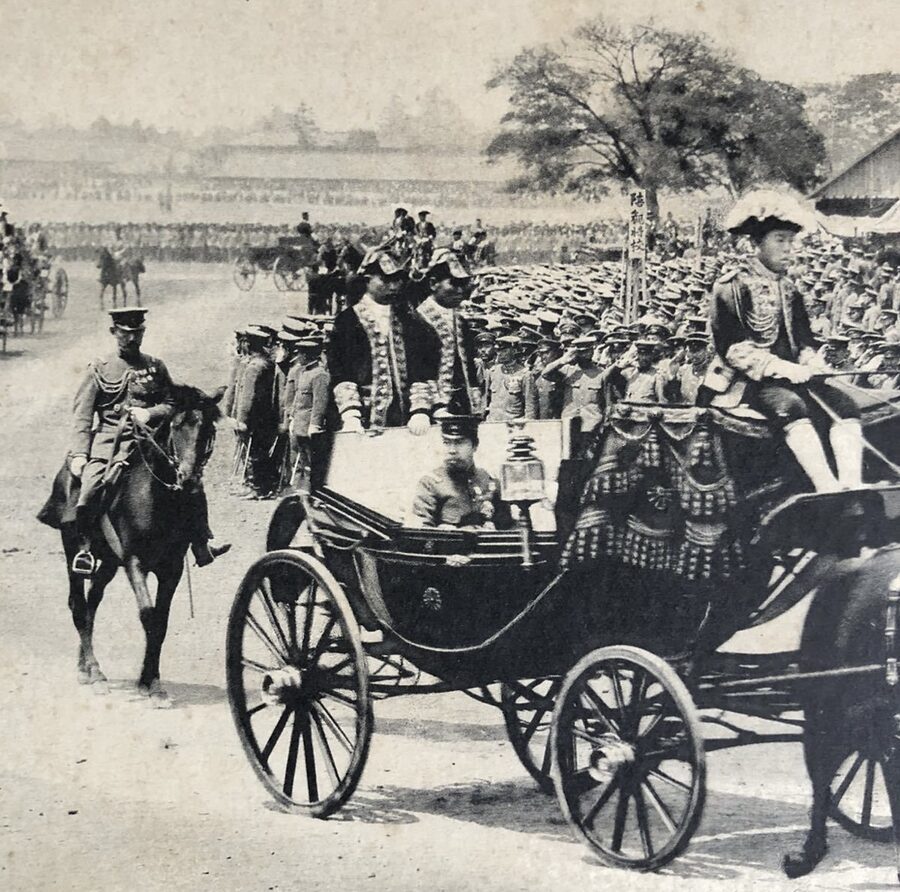
The other way to make an emperor visible was to send him out. Between 1872 and 1885 he made six great progresses, the rokudai junkō (六大巡幸): Kyushu and the west in 1872, Tōhoku and Hokkaido in 1876, Hokuriku and the Tōkaidō in 1878, Yamanashi and the Nakasendō in 1880, Yamagata, Akita and Hokkaido in 1881, and Yamaguchi, Hiroshima and Okayama in 1885. He travelled in Western uniform, on horseback, by carriage and by warship, and the instructions sent ahead were strict: no dressing up the towns, no new local levies to pay for him, no stopping people from working.
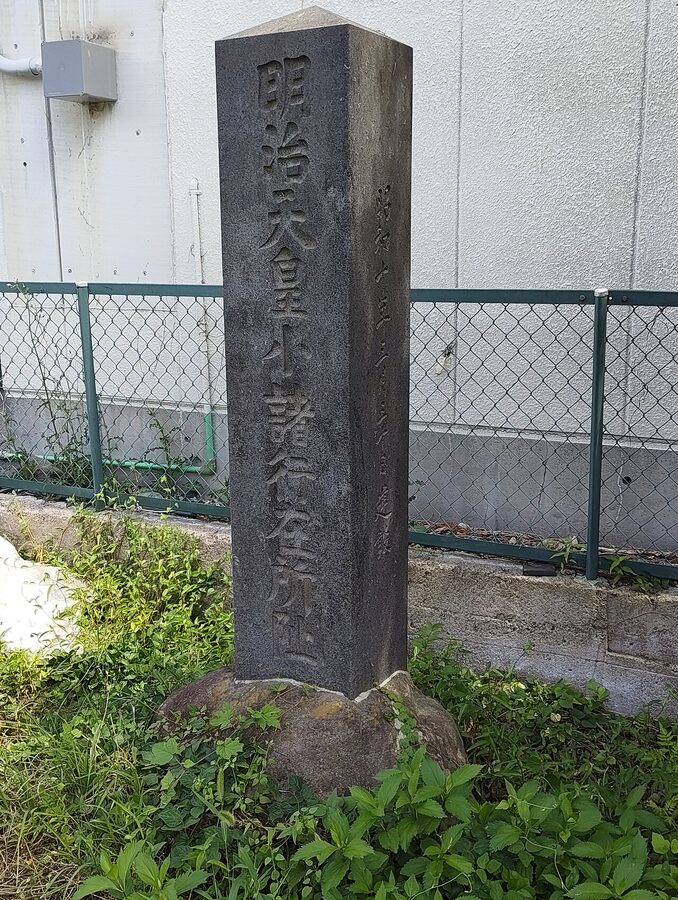
The historian Takashi Fujitani has written about these journeys as pageantry, the regime putting its sovereign on show. But the court chronicle also keeps things that sound like the man himself. At an inn at Izumozaki plagued by mosquitoes, he refused to retire early under the net, saying that the purpose of the tour was to see the hardships of the people, and that he could hardly understand them if he would not put up with a few mosquitoes.
At every stop he inspected local products and sat in on school lessons, and wherever there were soldiers he reviewed them, which is a fair summary of what the Meiji state thought its future depended on. In Yonezawa in 1881 the Uesugi family showed him the swords handed down from Uesugi Kenshin, and he became so absorbed that the next day’s programme was cancelled. He was an obsessive collector of Japanese swords, many now in the Tokyo National Museum. Less happily, he also liked to test-cut with them, and damaged a number.
Passing Hikone in 1878, he is credited with saving Hikone Castle, which was about to go the way of so many others; the usual story is that Ōkuma Shigenobu, travelling with him, saw the demolition beginning and asked for an order to preserve it. I am not sure how much of that is true, but the keep is now a National Treasure.
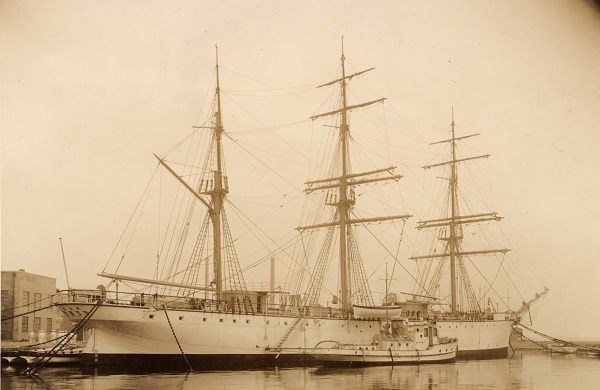
The most lasting thing about the tours is a public holiday. At the end of the 1876 tour he sailed home from Hakodate on the Meiji Maru, a lighthouse tender, and landed at Yokohama on 20 July. That date became Marine Memorial Day in 1941 and a national holiday, Marine Day, in 1996. Very few of the people enjoying the long weekend know they are celebrating an emperor getting off a boat.
He was not, in these years, the remote figure of the later portrait. From 1876 he suffered from beriberi and hid it from his doctors, and when they urged him to move somewhere healthier he answered that beriberi was a disease of the whole nation: he could move house, but the people could not. In 1878 he gave ¥20,000 from his own purse to found a beriberi hospital in Tokyo, where doctors of Chinese and of Western medicine treated patients side by side to see which did better. Neither did, much.
In politics he was more stubborn than either his admirers or his detractors like to allow. In 1873 it was an imperial decision, relayed by Iwakura, that stopped the plan to send Saigō to Korea. In 1884, when Mori Arinori, a Westerniser he distrusted, was brought into the education ministry, the emperor pleaded illness and refused to see Itō or any other minister for almost two months. Itō’s answer, in 1886, was an agreement that the emperor would attend cabinet only when the ministers asked him to, which in practice ended any idea of personal rule.
Historians still argue about what that leaves. James Baxter saw a figurehead who rarely interfered with what the oligarchs had agreed; Herbert Bix saw a strong-willed sovereign they struggled to manage. His ninth daughter remembered that he read every document and marked his queries in red, and that Itō complained he could get nothing past him. My own view is that he was neither puppet nor autocrat: a man whose power was mostly the power to delay, and who used it sparingly.
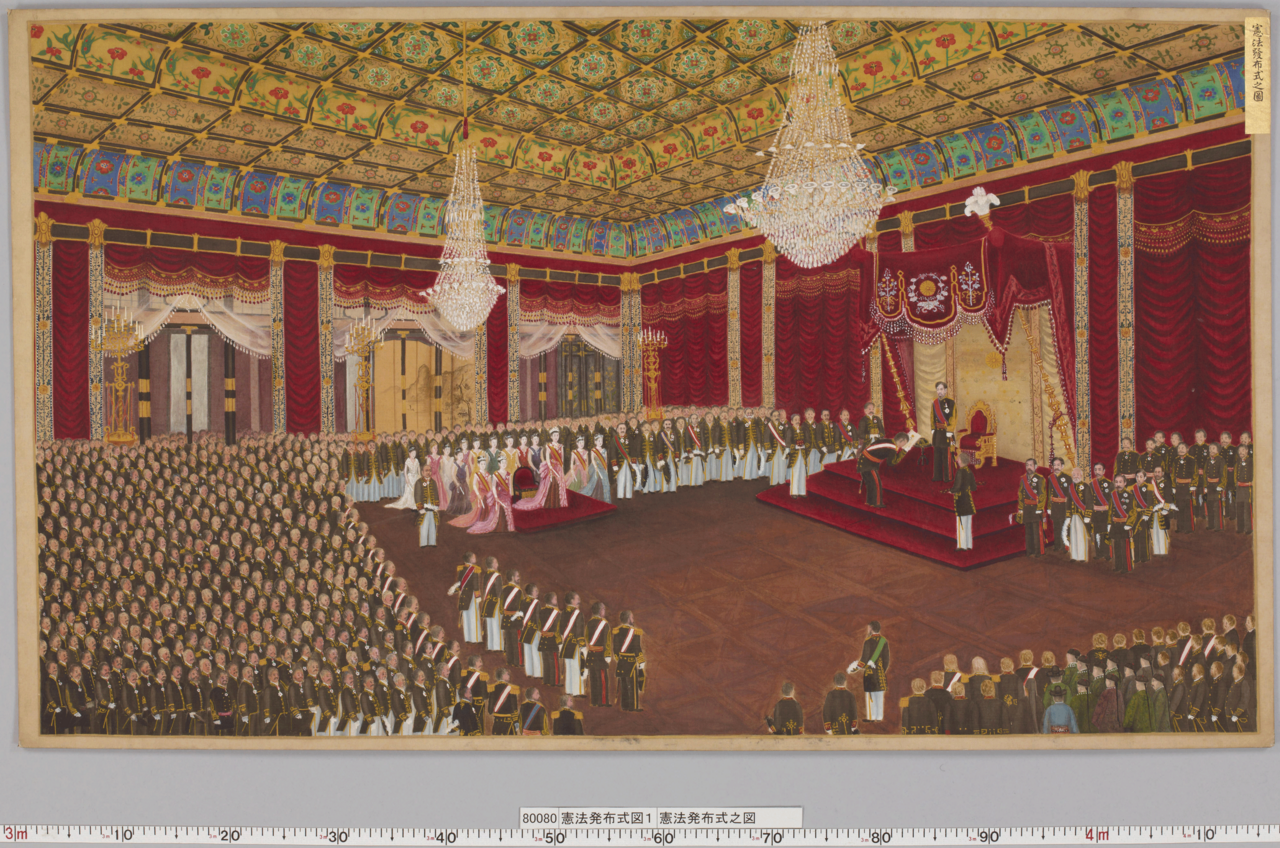
The constitution promulgated on 11 February 1889 wrote the arrangement down. It made him “sacred and inviolable”, with supreme command of the forces and the power to declare war, and left the practice to the ministers who signed for him. When Itō offered to resign in 1901, the emperor told him that ministers could hand in their resignations, but an emperor could not.
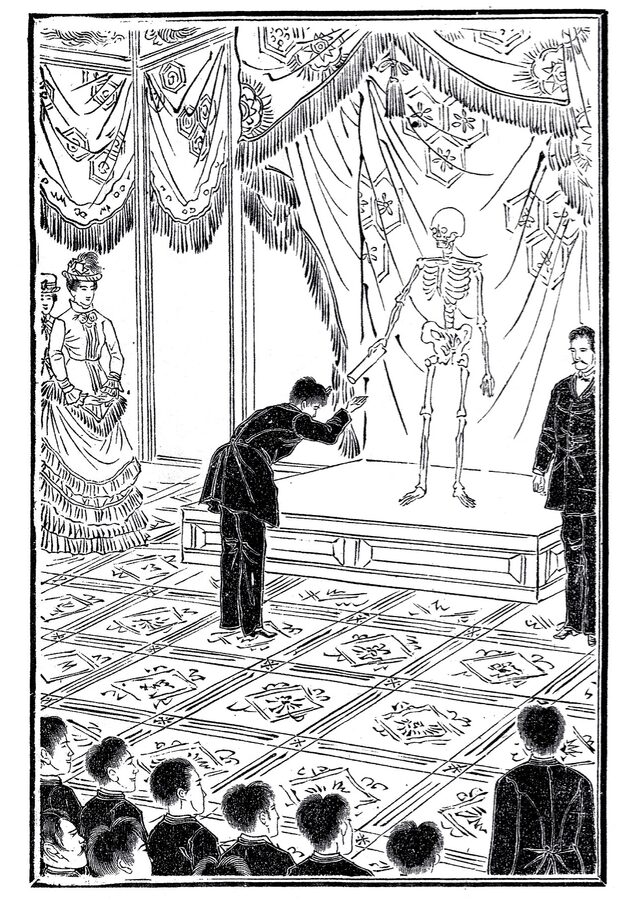
The rescripts were the image put into words. The Imperial Rescript to Soldiers and Sailors of 4 January 1882 opens with a short history in which the seven centuries of warrior government that began in the Kamakura era are a shameful break in the proper order of things. It borrowed the vocabulary of bushidō and turned the samurai’s loyalty to his lord into the conscript’s loyalty to the throne, and generations of soldiers were made to learn it by heart.
The Imperial Rescript on Education followed on 30 October 1890: 315 characters, drafted by the legal official Inoue Kowashi and the emperor’s Confucian tutor Motoda Nagazane, and sent back once by the emperor because he thought its list of virtues incomplete. It tells his subjects to be filial to their parents, harmonious as husbands and wives, to pursue learning and observe the laws, and “should emergency arise, offer yourselves courageously to the State”. It carried no minister’s countersignature, only the imperial name and seal, as if it were his own writing.
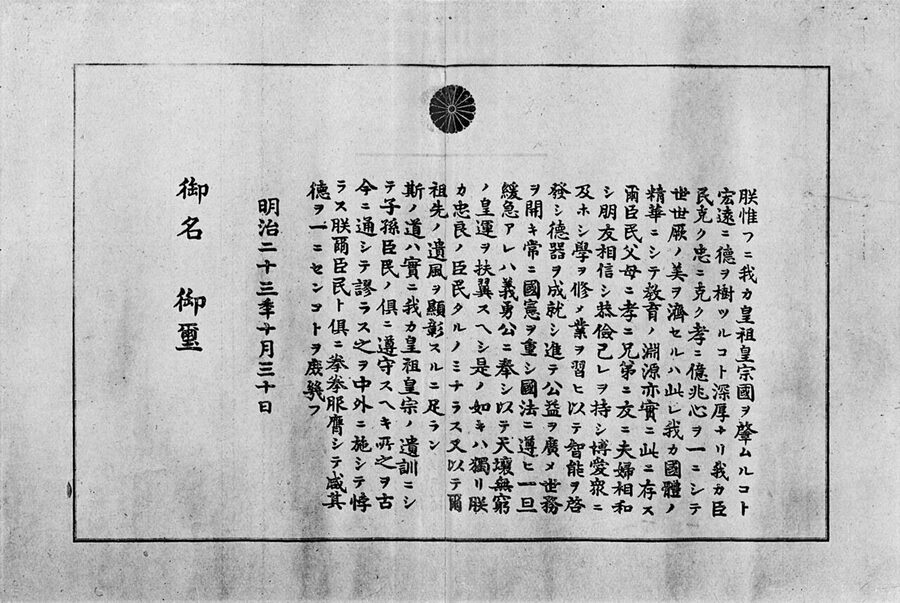
The rescript and the portrait travelled together, to be kept in special cabinets and later in fireproof shrines called hōanden, and brought out on national holidays for the headmaster to read while the children bowed. In January 1891 the Christian teacher Uchimura Kanzō hesitated to bow deeply enough before the emperor’s signature on the rescript at the First Higher Middle School in Tokyo, and the outcry cost him his post. Teachers are on record as having died going back into burning schools for the portrait.
The wars came in the last two decades. During the war with China in 1894–95 he moved to the Imperial Headquarters in Hiroshima and lived for months in a bare room, working without a stove. In 1904, as the war with Russia began, he wrote the poem his grandson would recite to his ministers in September 1941: the seas of the four directions are all one family, so why do the winds and waves rise up? Hirohito used it, in the Shōwa era, to signal that he did not want war with America, and it did not stop one.
By the end of his reign Japan had taken Taiwan and annexed Korea, and both came with his name on the documents. The wider story is in my guide to the Meiji era, and Japan through the ages puts his forty-five years among the rest.
Half past ten, or a quarter to one
By 1912 he was fifty-nine, sixty-one by the Japanese count, and failing. He had diabetes and kidney disease, dozed off three times in a Privy Council meeting, and told those around him that he wished he could die. On 11 July he attended the graduation ceremony at Tokyo Imperial University feeling unwell, and nine days later his doctors diagnosed uraemia and the Imperial Household Ministry announced that he was gravely ill.
Crowds came to kneel in the plaza outside the palace day and night. The city slowed the trams on the line past the moat so that the noise would not disturb him, and laid rags on the rails at the Miyakezaka junction.
The official time of death was 0:43 on 30 July 1912, and that is the date on every monument. Kurihara Kōta, a secretary at the Imperial Household Ministry, later wrote that he actually died at 22:43 on the 29th: the law required the new emperor to succeed on the day of the death, there was barely an hour of that day left, and the time was moved two hours on. The diary of Princess Nashimoto Itsuko has the family called to his bedside at about half past ten on the 29th, and English-language accounts often give 10:40 that evening.
His son Yoshihito succeeded on the 30th, as the law required, and the Taishō era began.
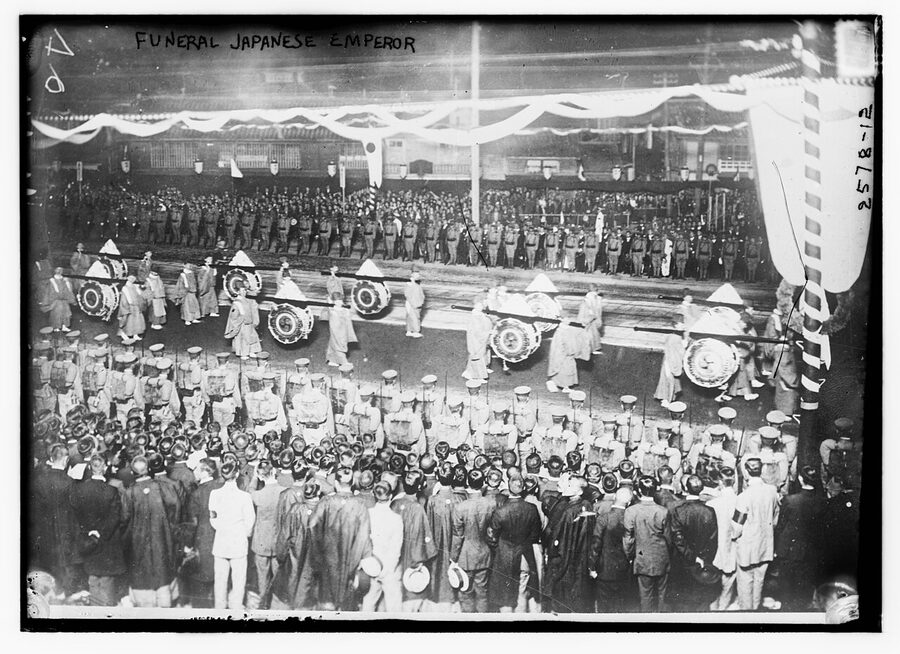
The state funeral was held on the night of 13 September on the army’s Aoyama parade ground, the first imperial funeral ever held in Tokyo. At eight o’clock, as the cortege made ready to leave the palace, a signal gun was fired. In a house at Akasaka, at about the time it sounded, General Nogi Maresuke and his wife Shizuko killed themselves.
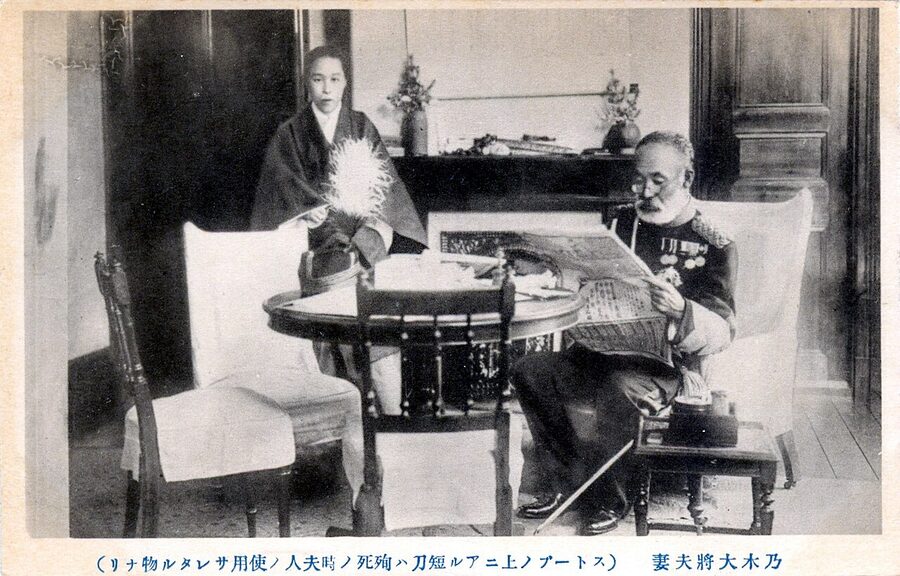
Nogi was the general of Port Arthur, where he had lost tens of thousands of men in a war that also took both his sons, and since 1907 head of the Peers’ School, where he had charge of the emperor’s grandson Hirohito. He died by seppuku, Shizuko by a dagger to the throat. His note went back thirty-five years, to the Satsuma Rebellion, when he had lost his regiment’s colours to Saigō’s rebels; he had wanted to die then, he wrote, and had lived on only by the emperor’s grace.
The reaction shows how far the country had travelled in a single reign. Many people were deeply moved, and the newspapers soon made Nogi a saint of bushidō. But some commentators called junshi, following a lord in death, a relic banned since the 1660s, and the young novelist Shiga Naoya wrote in his diary that his first reaction was the irritation you feel when a maid does something thoughtless. Natsume Sōseki built his novel Kokoro (1914) around the news, and Mori Ōgai, who knew Nogi, began within days to write stories about samurai who followed their lords in death.
The emperor was not buried in Tokyo. The city’s mayor, Sakatani Yoshirō, and the industrialist Shibusawa Eiichi lobbied for a tomb in the capital the very day he died, but on 1 August the ministry announced that it had been his wish to lie at Momoyama in Fushimi, on the site of Toyotomi Hideyoshi‘s Fushimi Castle. The coffin went by special train after the funeral and was buried on 14 September. He was the last emperor laid to rest in Kyoto.
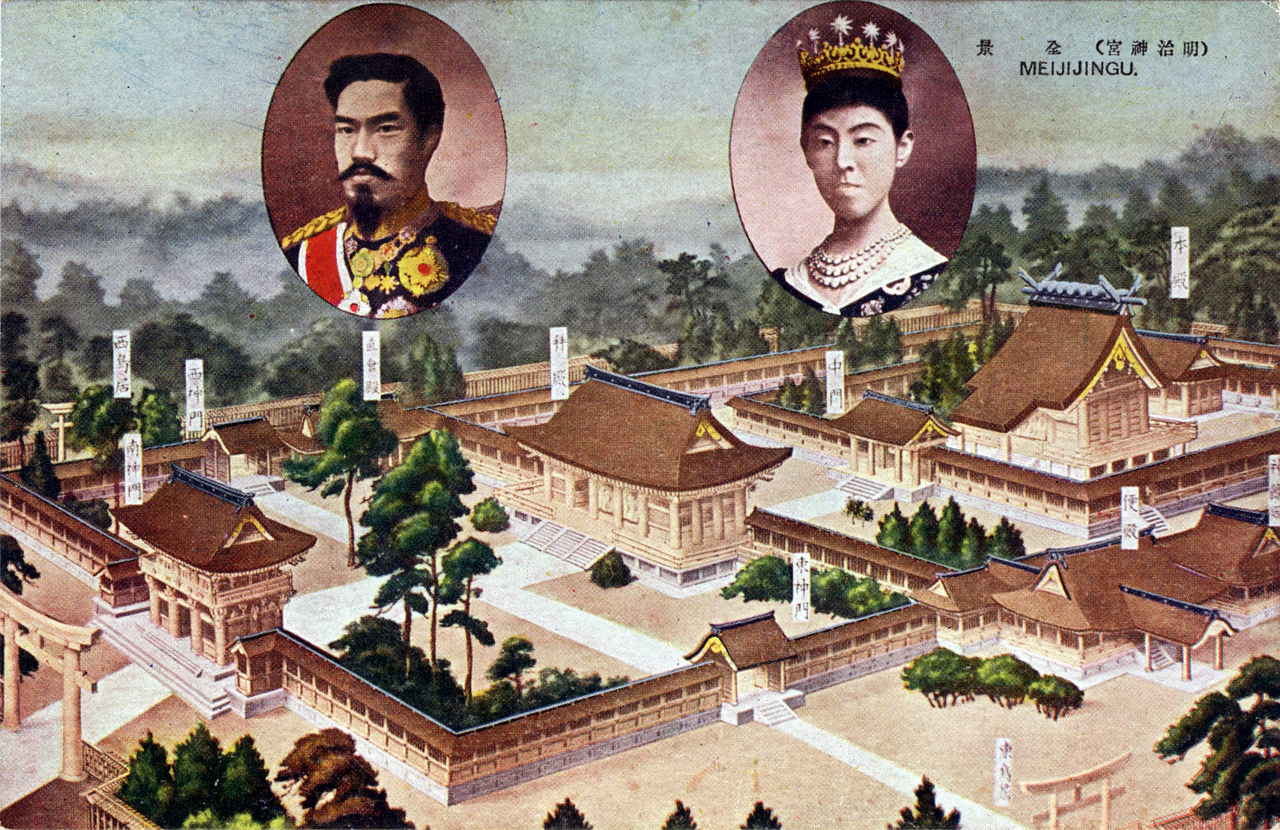
Tokyo got a shrine instead, with an outer garden on the parade ground where the funeral had been held. Meiji Jingū was dedicated on 1 November 1920 on the old Yoyogi imperial estate, its forest made of about 100,000 trees donated from all over the country and planted largely by some 110,000 young volunteers. The shrine buildings burned in the air raids of 1945 and were rebuilt in 1958; the forest came through.
Where to find Emperor Meiji today
The places that matter are in Kyoto and Tokyo, and you can do the Kyoto pair in a day: the palace and the park around it, where he was born and grew up, then the train south to Fushimi for the tomb. In Tokyo, Meiji Jingū and the picture gallery in its outer garden are about half an hour apart on foot.
Kyoto Imperial Palace and the Gyoen
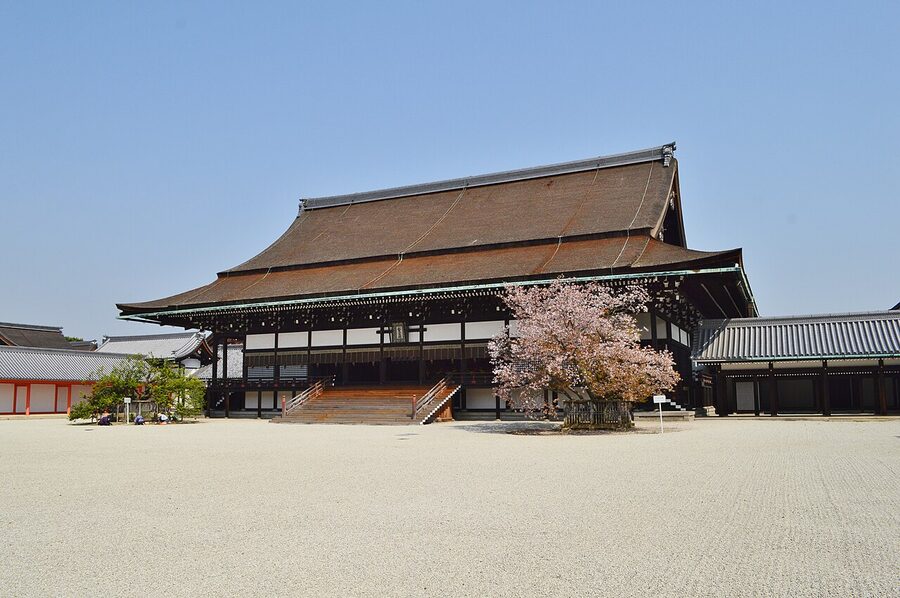
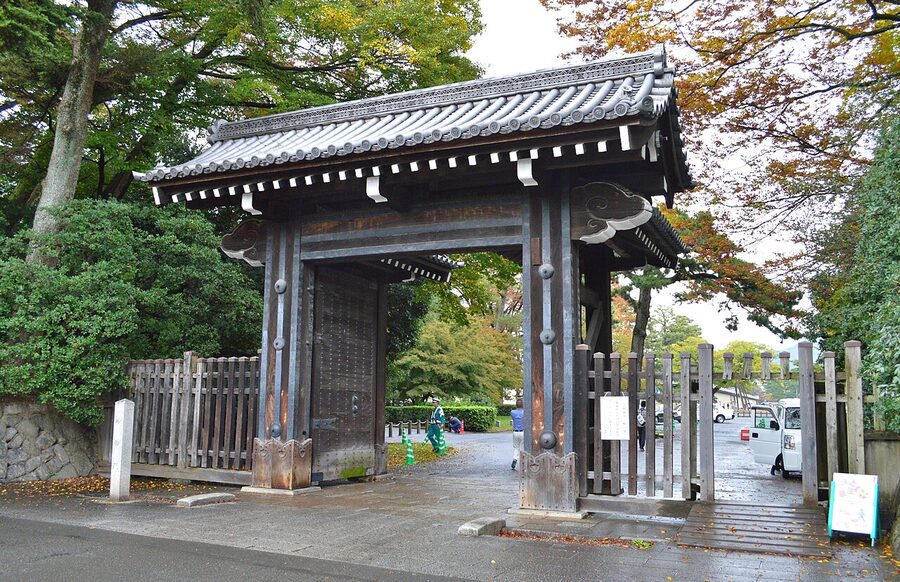
The Kyoto Imperial Palace (Kyoto Gosho) is run by the Imperial Household Agency and has been open all year without reservation since 2016. Entry is free, through the Seishomon gate on the west side, with a bag check; it is closed on Mondays (Tuesdays when the Monday is a holiday) and from 28 December to 4 January. Hours are 9:00–17:00 from April to August, 9:00–16:30 in March and September, and 9:00–16:00 from October to February, with last entry forty minutes before closing.
Free guided tours in English start at 10:00 and 14:00 and take about fifty minutes, past the Shishinden, where he was enthroned, and the Kogosho, where the council of January 1868 argued into the night. The nearest station is Imadegawa on the Karasuma subway line, five minutes’ walk away.
The palace sits inside the Kyoto Gyoen, a public park made from the sites of the court nobles’ mansions after the court left for Tokyo. Walk in through the Ishiyakushi gate on the east side and look for the site of the Nakayama house, where he was born, with the Sachi-no-i well beside it. In early April the weeping cherry on the old Konoe mansion site, near the Imadegawa gate, is one of the finest cherry blossom trees in the city.
If you take the JR Nara line south to Fushimi, Kōmei’s tomb lies on the way, behind Sennyū-ji near Tōfuku-ji Station. His was the first imperial tomb in centuries to be raised as a proper mound rather than a Buddhist stone monument, and his son’s followed the same deliberate return to older custom.
Fushimi Momoyama: the tomb on the castle hill
The tomb, Fushimi Momoyama no Misasagi (伏見桃山陵), stands on the site of the main enclosure of Fushimi Castle, the hilltop fortress that Hideyoshi built and Tokugawa Ieyasu later held. After the castle was pulled down the hill was planted with peach trees, and the Azuchi-Momoyama era takes half its name from them.
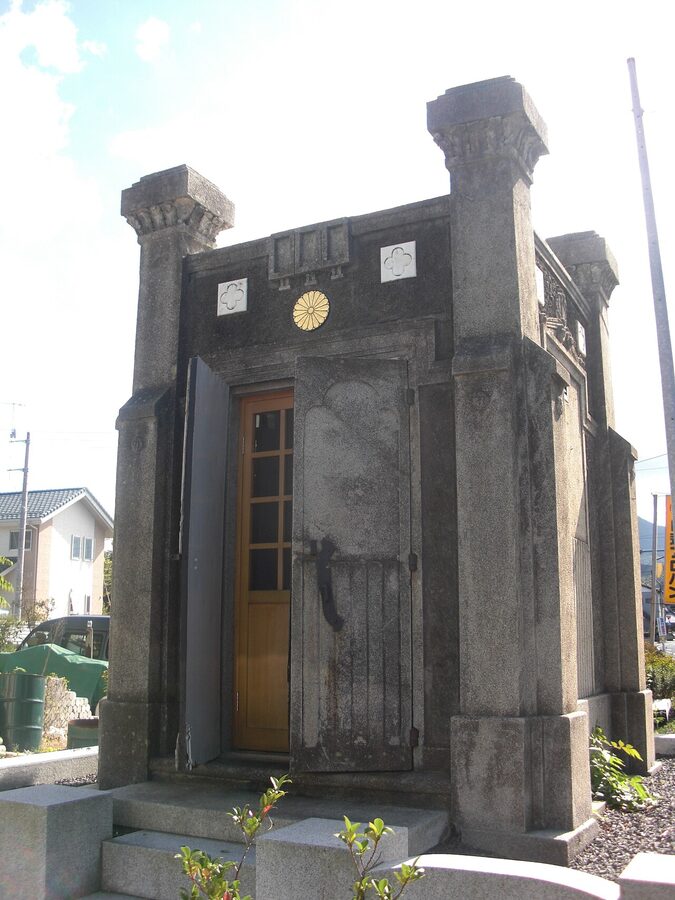
The mound copies the 7th-century tomb of Emperor Tenji, a square base with a round top, because the great keyhole tombs of the ancient emperors were thought too extravagant for a man who prided himself on frugality. Accounts of the burial say clay warrior figures in the old haniwa manner were set at its four corners, the first made for an imperial tomb in well over a thousand years. You see none of this: you worship from a gravel forecourt in front of a torii, and the mound is a dark shape in the trees.
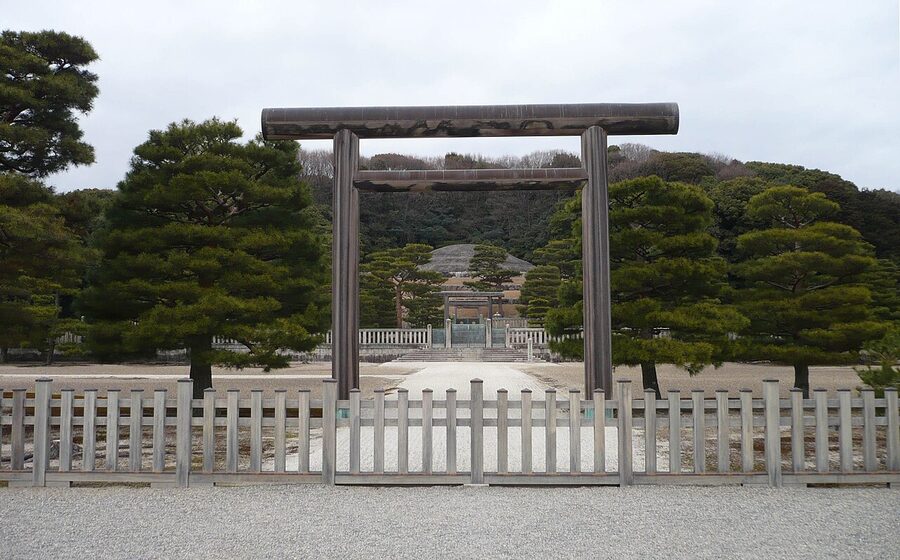
Visiting is free, during daytime hours; check the Imperial Household Agency’s page for the tomb before you go. From JR Momoyama Station on the Nara line it is about fifteen to twenty minutes’ walk uphill through the woods, and Keihan Fushimi-Momoyama and Kintetsu Momoyama-Goryōmae stations are a little further.
The way to arrive is up the front steps, all 230 of them, from the foot of the hill by Nogi Shrine. A story you will hear locally is that the number was fixed as Meiji 23 multiplied by ten, for October of the 23rd year of Meiji, the month the Education Rescript was issued. I have never found anyone who can prove it, but climbing the steps in August makes you willing to believe almost anything.
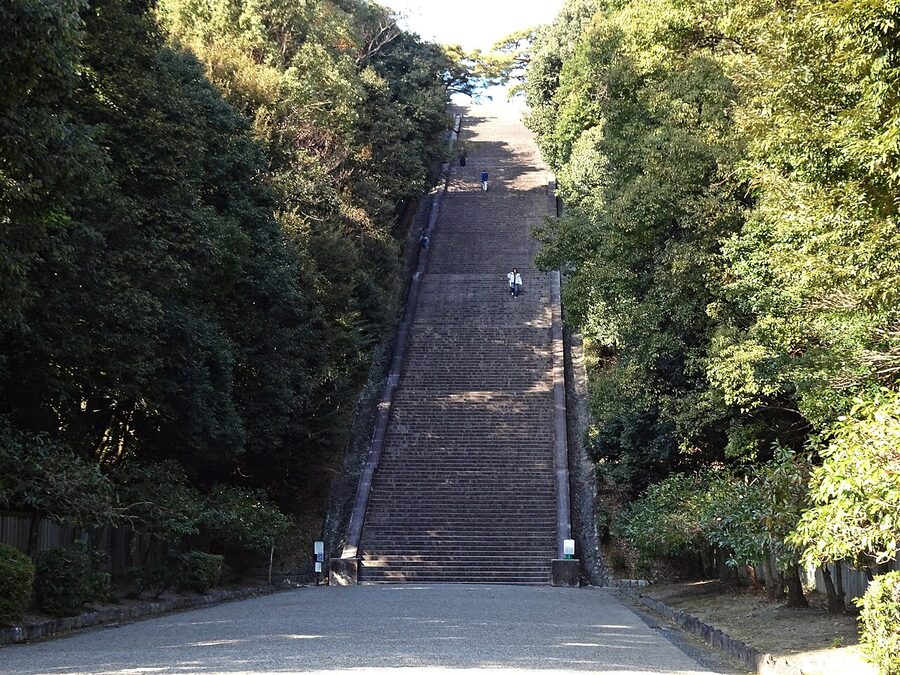
At the bottom is Nogi Shrine, founded on 13 September 1916, the fourth anniversary of his death, by Murano Sanjin, a Satsuma-born railway entrepreneur who gave up his posts and spent his fortune on it. In the grounds are a reconstruction of the house in Chōfu where Nogi grew up and, more surprisingly, the Chinese farmhouse he used as his headquarters during the siege of Port Arthur, bought from its owners and shipped here whole. There is a small treasure house with his calligraphy and belongings, and I found the place more affecting than the tomb.
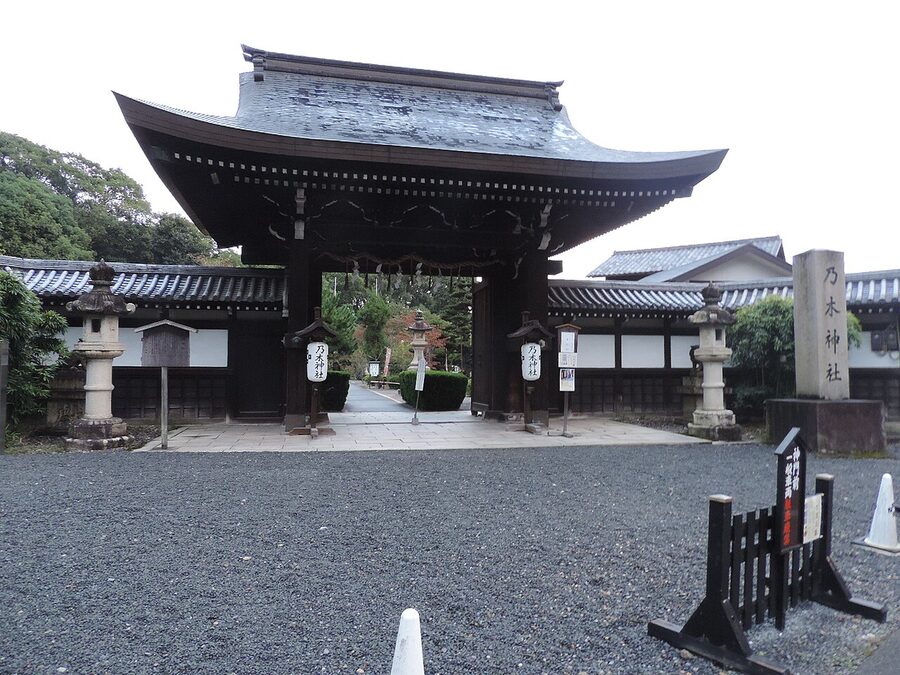
Meiji Jingū and the Inner Garden
Meiji Jingū is a short walk from JR Harajuku Station or Meiji-jingūmae Station on the Chiyoda and Fukutoshin lines. The grounds are free and open from sunrise to sunset, with gate times that change every month: in November the gates open at 6:10 and close at 16:10, and in December at 6:40 and 16:00. Come at opening time on a weekday and the gravel approach under the trees is nearly empty; come at New Year and you are one of about three million.
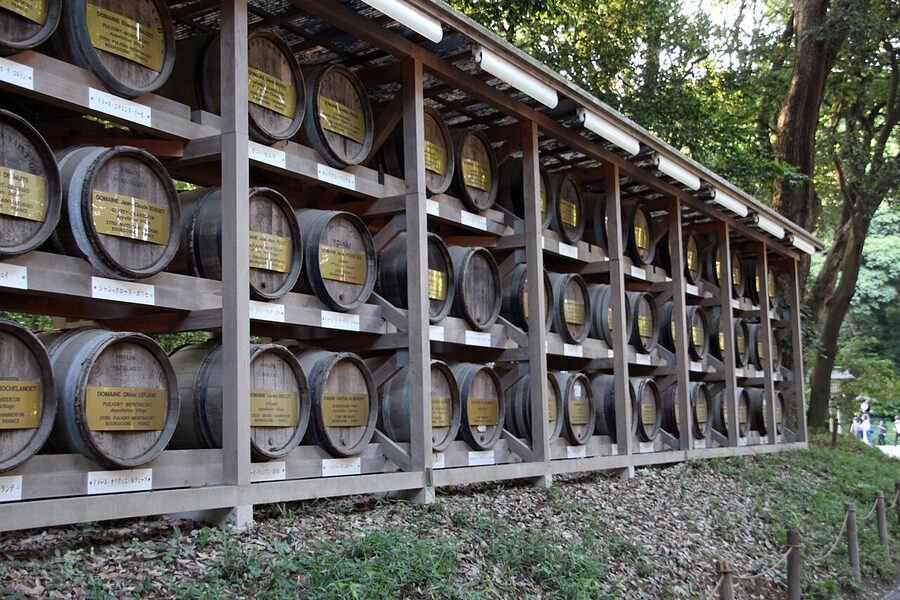
The Inner Garden (Gyoen) is the reason the shrine is here at all. In the early Edo period the land belonged to the Katō family, lords of Higo, and from 1640 it was the lower residence of the Ii, the clan of Ii Naosuke. The government bought it in 1874, and around 1893 the emperor had it laid out for the empress, whose health was poor, as a strolling garden in the manner of the great daimyo Japanese gardens. The shrine’s own account says he visited only once, in January 1886, which is earlier than the date it gives for the garden; the empress came nine times.
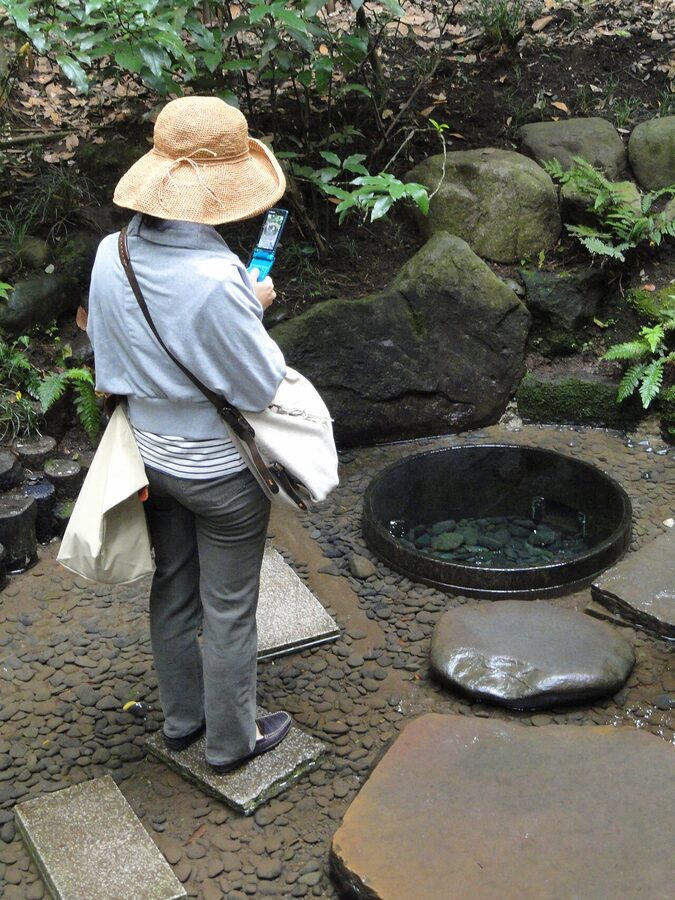
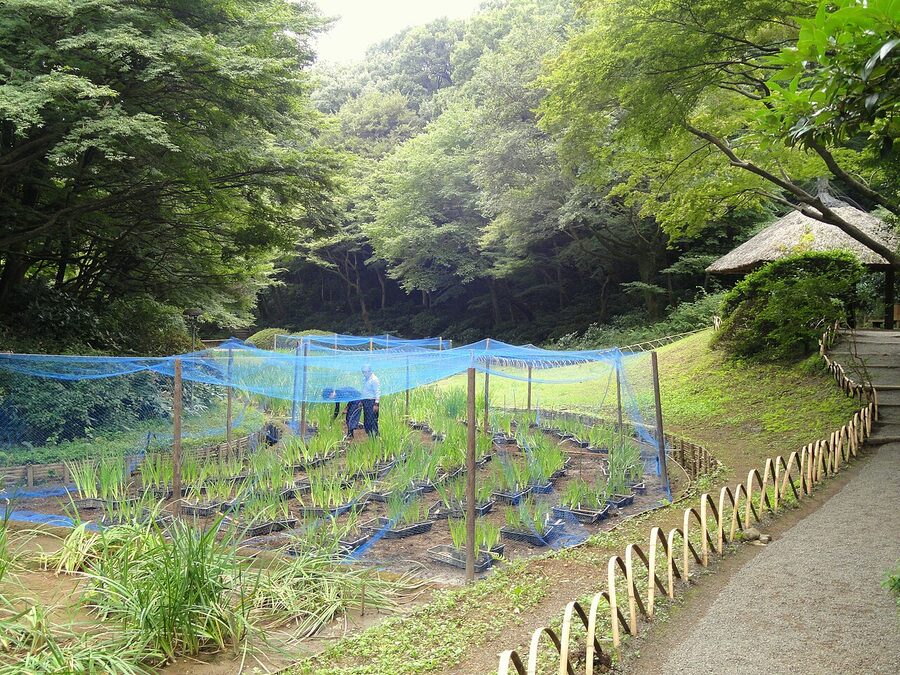
Entry is a ¥500 maintenance fee, and the garden is open from 9:00 to 16:30 from March to October and to 16:00 from November to February, with longer hours in June, when about 1,500 irises of some 150 varieties flower in the field he had planted for her. At the far end is Kiyomasa’s Well, a spring that tradition says Katō Kiyomasa dug; it runs at about 60 litres a minute and stays near 15°C all year. A television programme made it a “power spot” around 2009, and there can be a queue to photograph it, so go early.
The Kakuun-tei teahouse he had built for the empress above the south pond in 1900 burned in the war and was rebuilt in 1958, and it is still used for the tea ceremony.
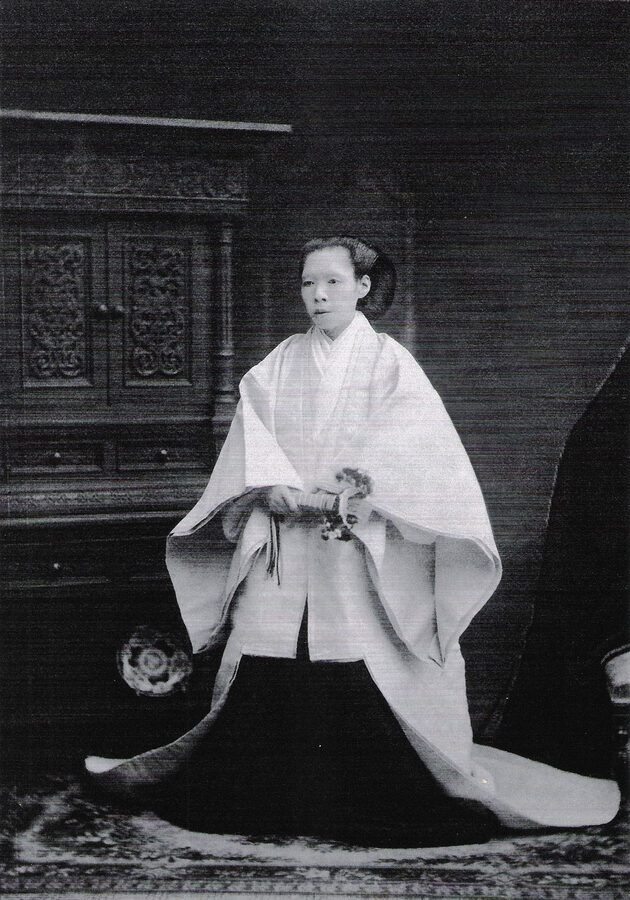
The Meiji Jingū Museum, designed by Kuma Kengo, opened in 2019 near the south approach. It is open 10:00–16:30 (last entry 16:00), closed on Thursdays, and costs ¥1,000. This is where you can see Chiossone’s portraits of the emperor and the empress themselves, along with the restored six-horse state carriage, and until 6 December 2026 a special exhibition is showing six of the original murals from the closed picture gallery, two at a time.
The Meiji Memorial Picture Gallery
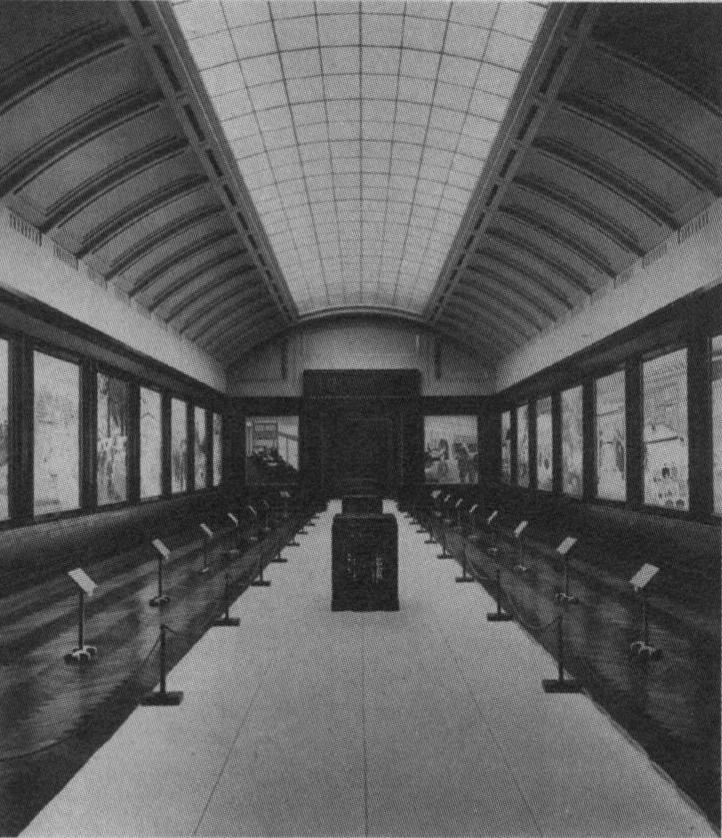
The Seitoku Kinen Kaigakan, the Meiji Memorial Picture Gallery, stands on the site of the funeral hall in the outer garden, at the end of an avenue of 146 ginkgo trees planted in 1923, graded in height so that the dome looks further away than it is. Inside are 80 murals of the emperor’s life, the first forty in Japanese style and the last forty in Western oils. They took until 1936 to complete, and seven of the painters died before their work was done.
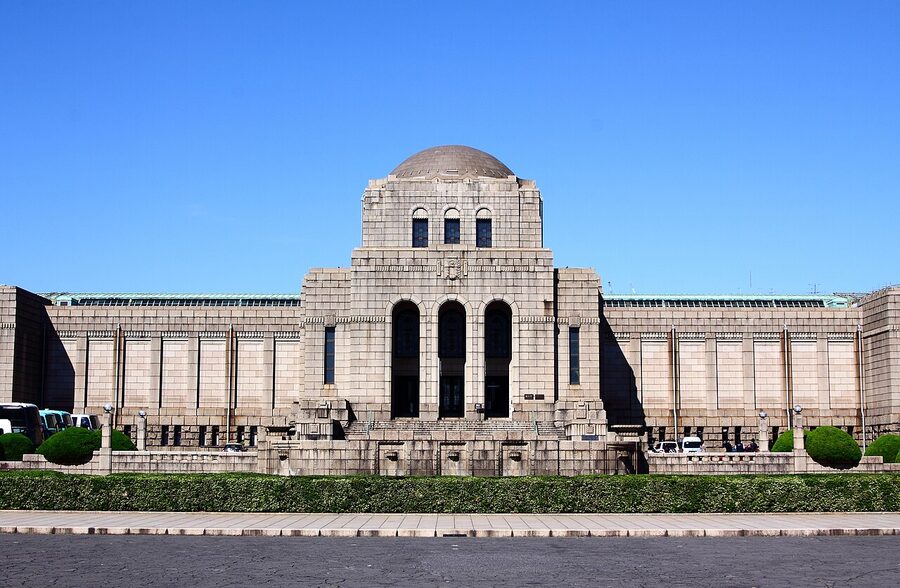
The bad news is that the building, an Important Cultural Property, closed for earthquake strengthening and conservation on 1 April 2025, and the gallery’s latest notice says it will stay shut until the end of August 2027. When it reopens, expect the old terms: ¥500, 10:00–16:30, closed on Wednesdays, about five minutes’ walk from Shinanomachi Station on the JR Chūō-Sōbu line. Until then, the ginkgo avenue turns gold from late November into early December, and walking up it to the shuttered dome is still worth the detour.
If the Nogi story stays with you, Nogi Shrine in Tokyo stands next to the house where he and Shizuko died, a minute from exit 1 of Nogizaka Station on the Chiyoda line. The house is opened inside only on a few days a year, announced by Minato ward, but you can walk round it and look in through the windows.
The face on the wall
I keep coming back to that silence in July 1889: the man looking at a picture of himself that he had refused to sit for, with an Italian’s shoulders under his own face, and saying nothing. It may be the most characteristic thing he ever did. The state needed an image more than it needed a man, and he seems to have understood that better than anyone, and let it have one.
So when you are at the Meiji Jingū Museum, find the Chiossone portrait and stand in front of it for a minute. Then think of the boy on the wooden horse in the Nakayama garden, the one who threw his toys at the wall and passed out when a pot of tooth-black hit the floor. He is in there somewhere, under the braid, wearing a body that was never his.