The shogunate built Goryōkaku to keep foreign warships away from its northern harbour, spent a little over 104,000 ryō doing it, and then struck the line for the guns out of the budget. When the fort was finished in 1866 it is not clear that a single cannon stood on its ramparts. Two years later, when the next tenants arrived, they found four heavy 24-pounders up there, and one of their commanders wrote that the guns were not much use for shooting at anything.
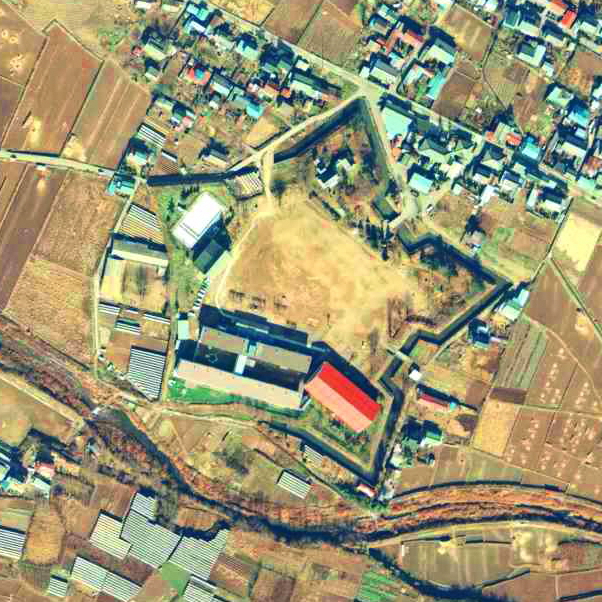
I find that the most useful fact about Goryōkaku, more useful than the star shape everyone photographs from the tower. The fort was designed against an enemy who never came, finished by a government that collapsed two years later, and fought over only once, by Japanese on both sides. The warship that finally shelled it was Japanese too, although it had been built in France for the Confederate navy, which tells you something about the state of the world in 1869.
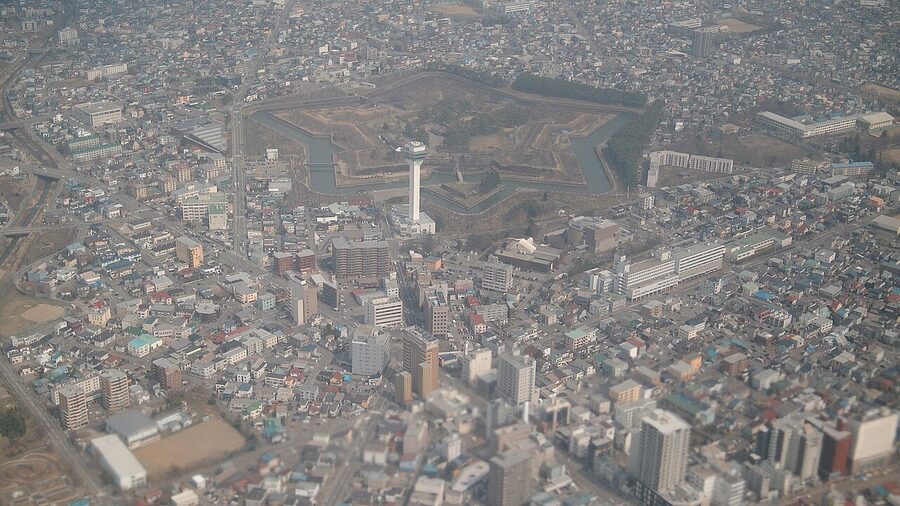
It is also one of the easiest pieces of Japanese history to visit: a free park in the middle of Hakodate, with the rest of the story scattered around the city within reach of a tram.
In This Article
- A magistrate within range
- Takeda Ayasaburō and the book that wasn’t
- Earth, water and a shortage of money
- Enomoto’s island
- An election in the snow
- Seven weeks in spring
- Sake, tuna and a book on maritime law
- The man who buried the dead
- Parade ground, ice pond, park
- Where to see Goryōkaku and 1860s Hakodate today
- Goryōkaku itself
- The Hakodate Bugyōsho
- Goryōkaku Tower
- Shiryōkaku
- Motomachi Park, where the magistrate started
- The Benten Daiba site
- The Hekiketsu-hi
- Kameda Hachimangū
- Further afield: Esashi, Hokuto and a second star in Nagano
- Four guns on the rampart
A magistrate within range
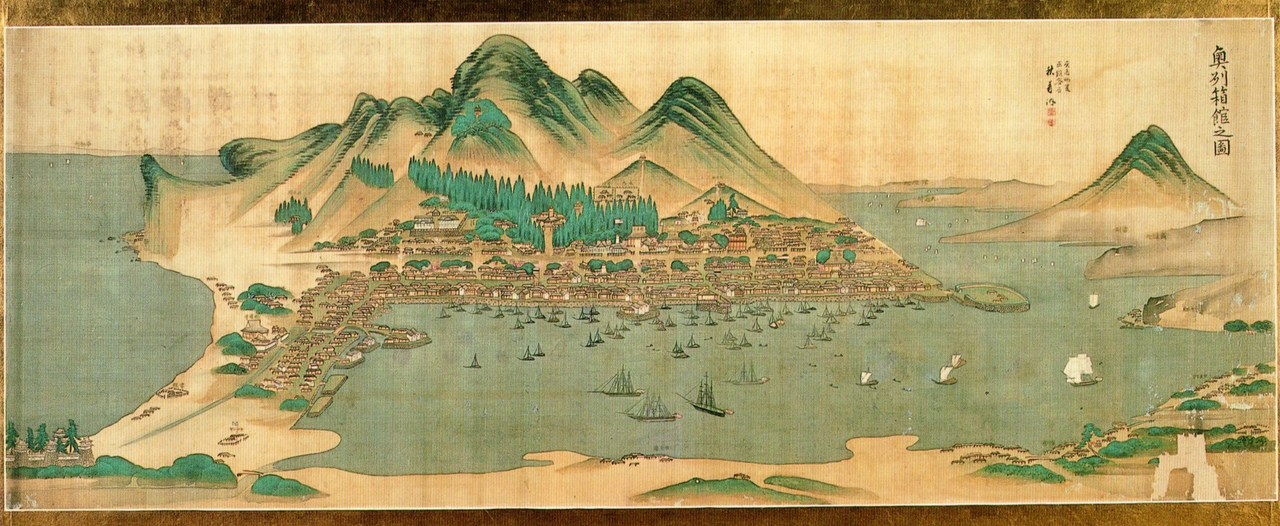
The story starts with a treaty. In March 1854 the shogunate signed the Convention of Kanagawa, the agreement I have written about in my piece on Perry and the Black Ships, and opened two ports to American ships: Shimoda, and Hakodate, a trading town at the southern tip of Ezo, the island now called Hokkaido. Perry sailed into Hakodate himself about seven weeks later to survey the harbour. From 1859, under the commercial treaties pushed through by Ii Naosuke, ships of five nations could trade there.
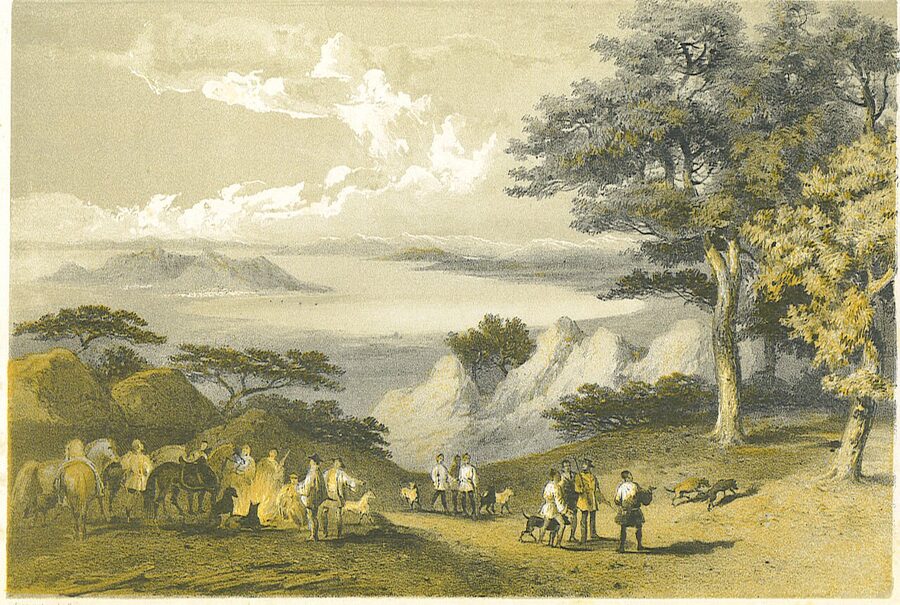
Ezo was not, in the 1850s, quite Japan. The south-west corner belonged to the Matsumae domain, which ran the trade with the Ainu and not much else, and the rest was frontier. The shogunate had governed the island directly once before, from 1802 to 1821, when Russian ships started appearing in the north, through a magistrate, a bugyō, based in Hakodate. In 1854 it took the land around the harbour back from Matsumae and appointed a Hakodate magistrate again.
The new magistrates set up in the old office at the foot of Mount Hakodate, where Motomachi Park is today. One of them, Takenouchi Yasunori, was content to stay; when the herring catch boomed during his term the town nicknamed him the herring magistrate. His colleague Hori Toshihiro was not content at all.
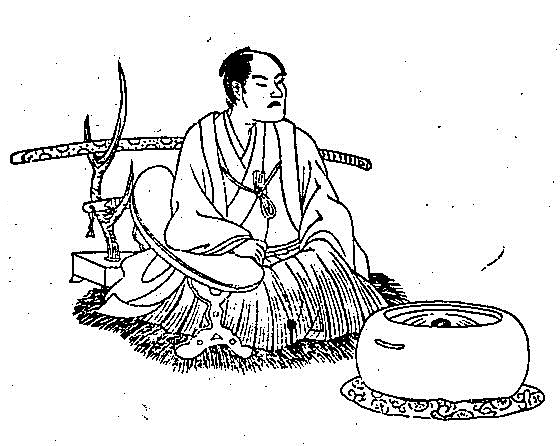
Hori’s objection, which he put in writing, was that the office sat just above the water with nothing between it and a ship’s guns. Worse, foreigners were now allowed to walk on Mount Hakodate, and from the top anyone could look down into the compound and count its buildings. One shot, he wrote, and the place would be ground to powder. He and Takenouchi proposed moving the government inland to Kameda, beyond the reach of the naval guns of the day but close enough to watch both shores of the bay.
The senior councillor Abe Masahiro approved, and the move became the reason for the fort, which the construction records call, modestly, the Kameda Office Earthwork. The plan also included seven batteries around the harbour. The councillor, looking at the cost, trimmed them to two, and in the end only one, Benten Daiba on the point at the harbour mouth, was built.
Takeda Ayasaburō and the book that wasn’t
The man who drew the fort was not a soldier, or had not started out as one. Takeda Ayasaburō was born in 1827 in Ōzu, a small domain in western Shikoku, to a samurai family that claimed descent from the Takeda of Kai, Shingen’s clan. He trained in Chinese medicine, then talked his lord into sending him to Osaka to study Western learning under Ogata Kōan, whose school he ended up running as head student.
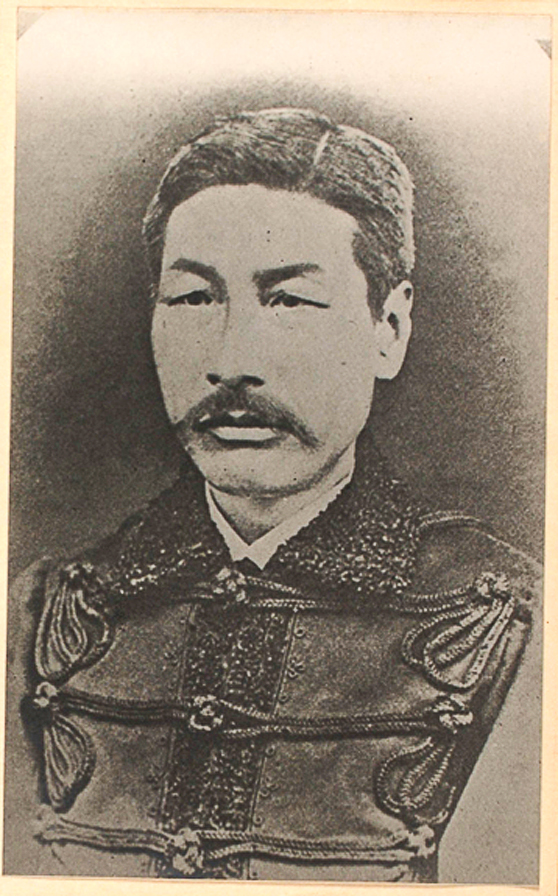
From Osaka he went to Edo to study gunnery with Sakuma Shōzan, and in 1853, when Perry’s ships came into Uraga, Shōzan took him and Yoshida Shōin down the coast to look at them. He served as an interpreter in the talks with the Russian envoy Putyatin at Nagasaki. In 1854 he joined Hori Toshihiro’s tour of inspection of Ezo and Sakhalin, and he stayed in Hakodate for ten years as the magistracy’s expert in machines and ammunition.
There is a story about where the design came from, and it has made its way into some respectable reference books. In 1855 a French warship, the Constantine, put into Hakodate, and her officers supposedly gave Takeda a book on fortification, from which he copied Goryōkaku. The magistracy’s own records are less romantic: the French gave two books on gunnery and something described as an armillary sphere paperweight, and nothing on fortification at all.
What the French did give was an opinion. Asked which nation built the strongest forts, they said France, and the magistrate told Takeda to draw something on French lines. His plan of 1856 shows a five-pointed star ringed with outworks very like the layered system the French engineer Louis de Cormontaigne had worked out in the 18th century, and its detailing matches drawings in a textbook by Nicolas Savart that had reached Japan in Dutch.
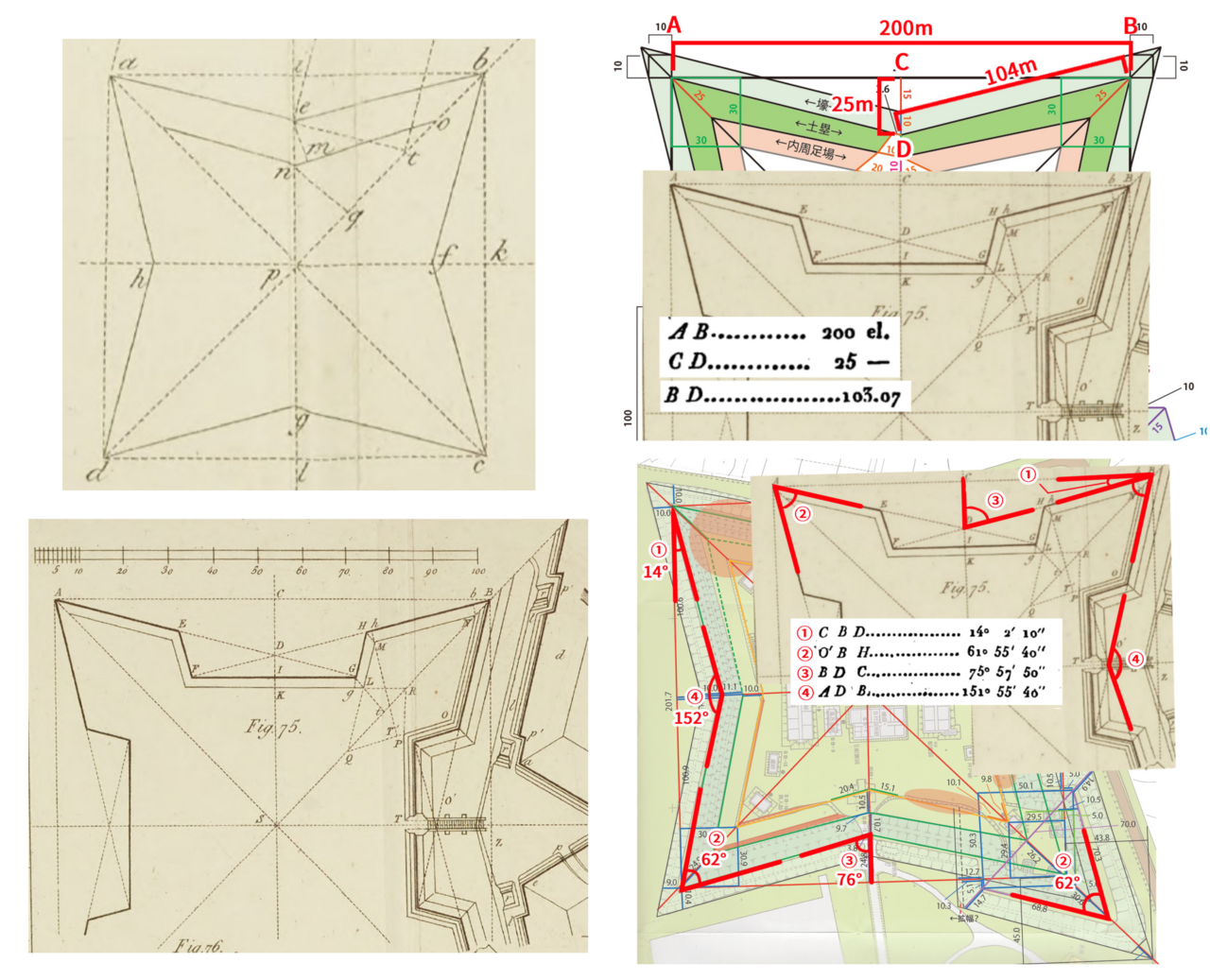
He was not even the first in Ezo to do it. In 1855 Fujiwara Shume, a Matsumae officer who had also studied under Sakuma Shōzan, finished a four-pointed bastion fort at Hekirichi, across the bay. Japanese specialists now argue that Takeda, who had studied Western military science for longer, needed no French book to get started. Goryōkaku is usually called Japan’s first Western-style fort, and as a matter of size and fame it is; as a matter of strict chronology, Hekirichi got there first.
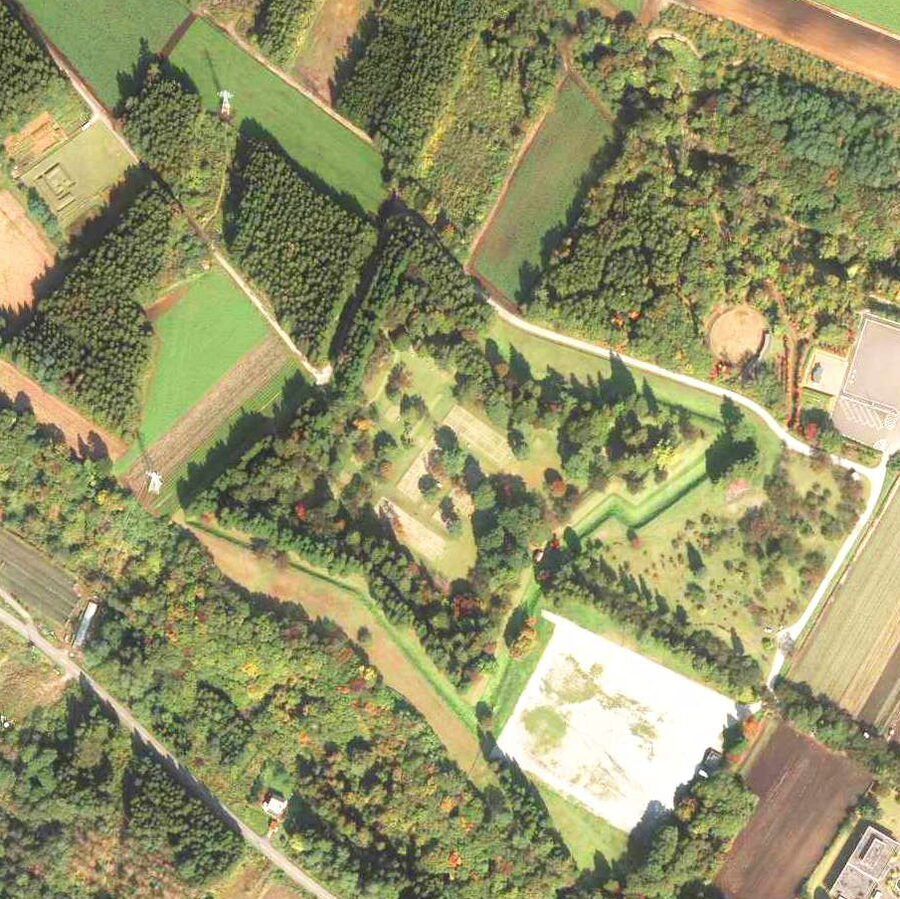
Takeda also disagreed with the site. In 1856 he asked for the fort to be moved to higher ground, arguing that Kameda was a hollow and that an enemy with guns on the slopes above could fire straight into it. The magistrates turned him down, and the hollow is where it stands. I suspect most engineers who have worked for a government will recognise the feeling.
He was a man of many projects. He ran the magistracy’s school, where the future fathers of Japan’s postal service and railways, Maejima Hisoka and Inoue Masaru, studied; he built a blast furnace, sailed a Western-style ship around Japan and took one up the Amur into Russian territory to trade. He is credited with designing Japan’s first stove, for a colleague posted to the cold northern tip of Ezo. And caught in a storm on the way to Sado, he refused the boatman’s plea to cut off his topknot for the sea god and swore off drink instead, then threw a party in port, explaining that a vow made at sea did not count on land.
Earth, water and a shortage of money
Work began in the seventh month of 1857. A contractor named Matsukawa Bennosuke dug the moat and raised the ramparts, a mason named Inoue Kisaburō built the walls, and an Edo builder, Nakagawa Denzō, put up the magistrate’s office. The plan was earthworks first, then buildings, then stone, but the ground was soft and wet, the cut faces of the moat kept slumping, and every winter the frost broke them up again.
So the stonework was brought forward, and the moat was lined in stone cut on Mount Hakodate. The original specification called for stone on every face of the ramparts too, but quarrying took too long and that was dropped. In places, as the money ran out, the masons used rounded stones from the local rivers instead of cut blocks, and you can still see them by the rear gate bridge.
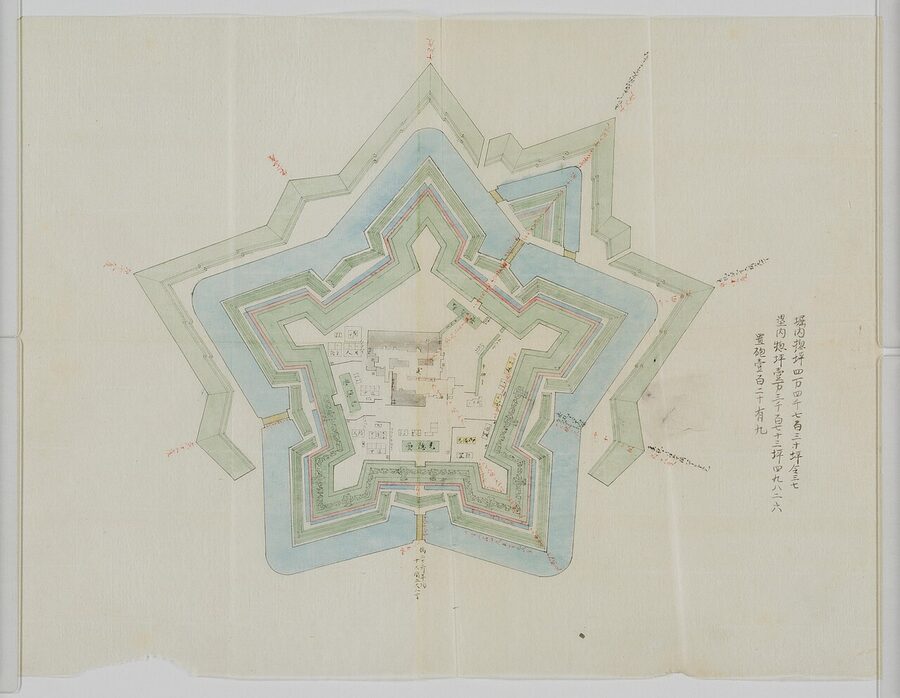
The magistrate, Koide Hozumi, moved in on the fifteenth day of the sixth month of 1864, and the last of the work was finished in 1866. The red pines that still stand around the office were grown from seedlings shipped from Sado, because the species does not grow wild in Hokkaido. At its busiest the project employed five or six thousand labourers, and the town did very well out of it.
The money is precise, because the accounts survive. The fort cost 104,090 ryō against a budget of 143,000; Benten Daiba cost another 107,277. Each was meant to have 40,000 ryō of guns, and that whole allocation was deleted and never spent.
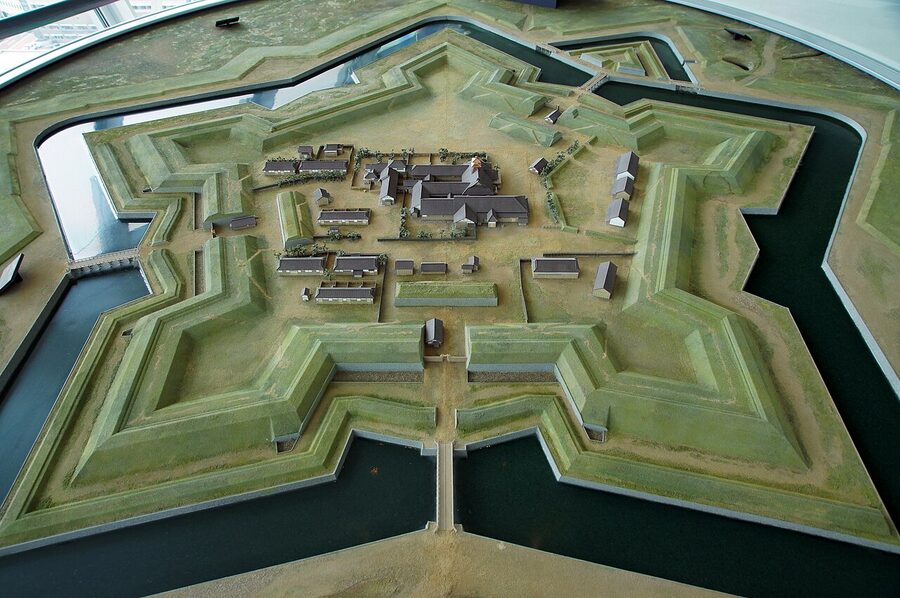
The defences were cut back in the same way, partly to save money and partly because the foreign threat had turned out smaller than feared. Five triangular outworks, the hangetsu-ho or demi-lunes that shield the gates, were planned and one was built, and the low inner wall along the moat went round only three sides. If you know your European star forts, Goryōkaku will look a little undressed.
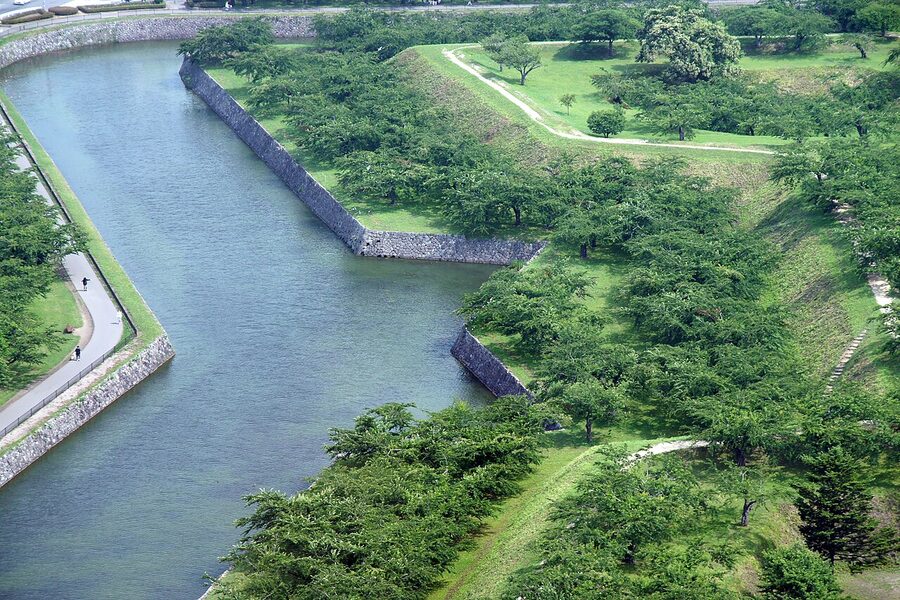
The moat is up to 30 metres wide and four to five metres deep, and runs about 1.8 kilometres around the outside. On the outwork and beside the main gate the top course of stone juts outward in a lip, called hanedashi, to stop anyone climbing over. Inside stood 26 buildings, with timber from northern Honshu, tiles from Noto and Echigo, and nails and tatami shipped up from Edo. The office alone covered about 2,700 square metres, with a drum tower 16.5 metres tall over the entrance.
Compared with the castles in my guide to Japan’s 12 original castles, Goryōkaku is a different animal. It has no keep and no tall walls, because by the 1850s anything tall was simply a target. The Edo-era castles were built to awe people walking up to them; this one was built to be hard to hit, which is why from the ground it looks like a park with a slight hill round the edge.
Takeda was called back to Edo in 1864 to teach and to make cannon, and never saw the fort used. When the fighting came in 1868 he refused to take sides, and a band of twenty-two shogunate soldiers attacked his house for it. He hid, under another name, at Matsushiro, the domain of his old teacher Shōzan.
Enomoto’s island
The man who took Goryōkaku had been to Hakodate before. In 1854 a seventeen-year-old retainer called Enomoto Kamajirō went north as an attendant in Hori’s party, on the same tour as Takeda. He had just finished at the shogunate’s Confucian academy with the lowest pass grade on offer, which is a reassuring thing to know about the man who later ran an entire island.
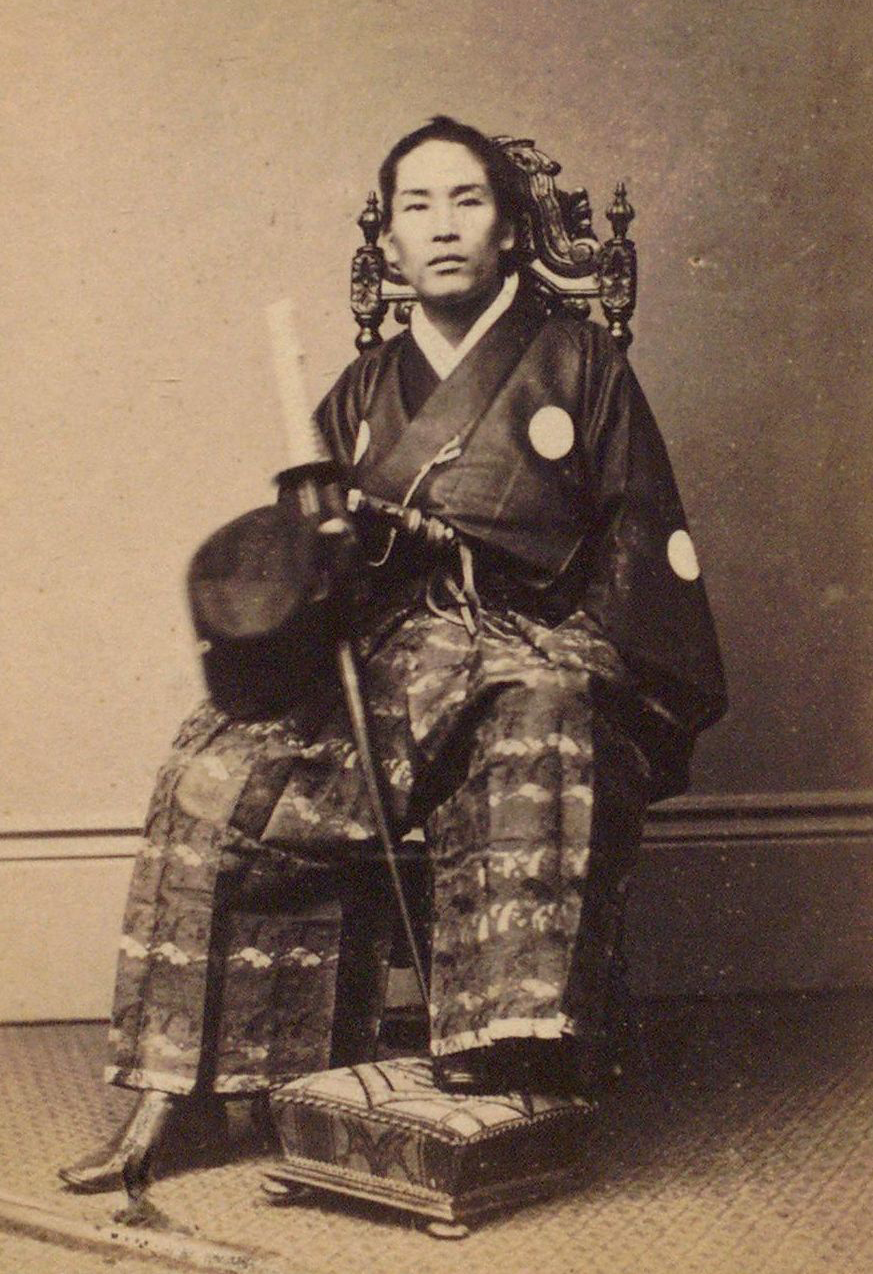
His real education came afterwards, at the shogunate’s naval school in Nagasaki, taught by Dutch officers who had come out by way of Dejima. In 1862 he was sent to the Netherlands to oversee the building of a steam warship for the shogunate. He spent nearly four years there, studying gunnery, steam engines and international law, and watched the Prussians and Austrians fight the Danes in 1864 as an observer.
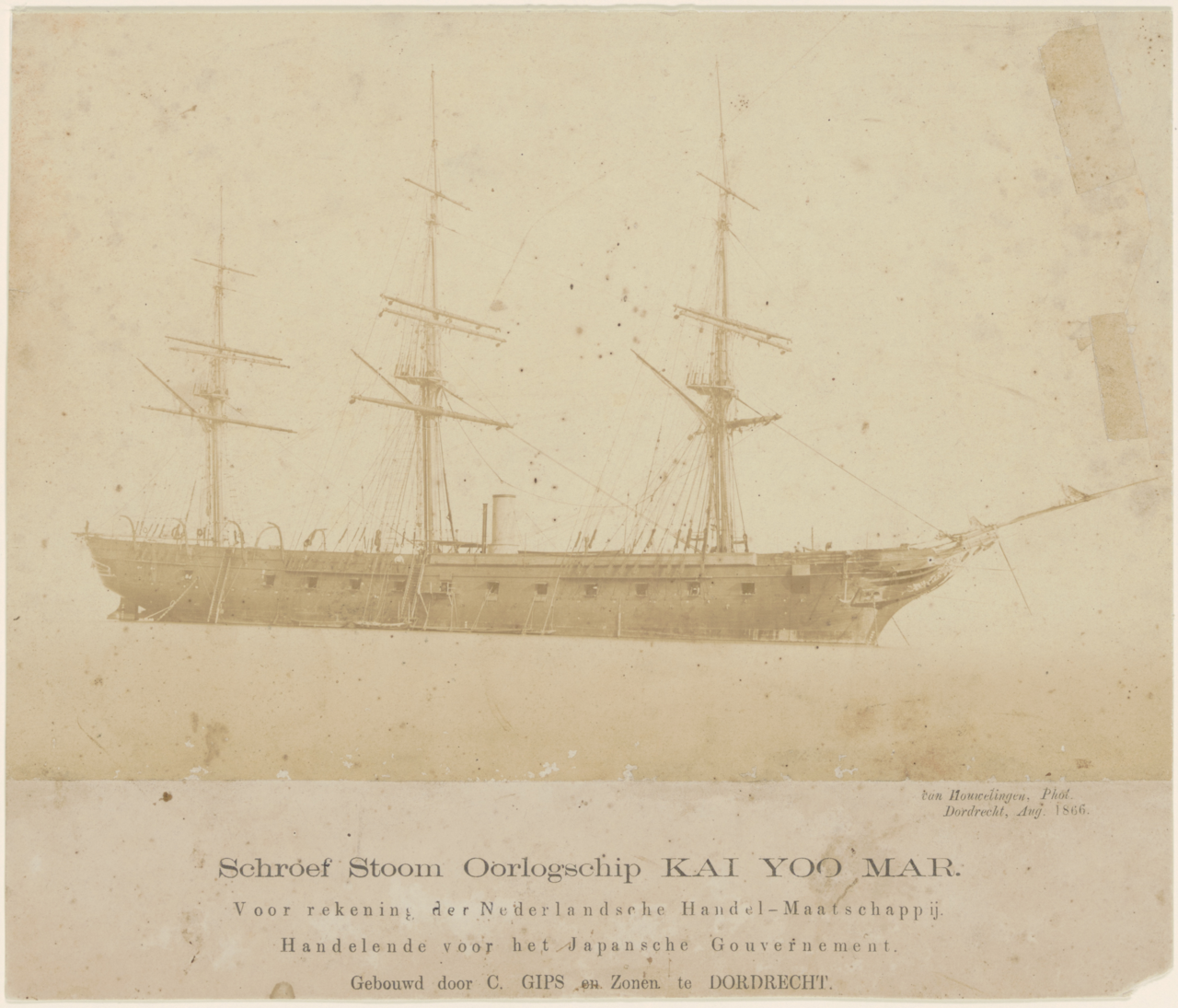
The ship was the Kaiyō Maru, launched at Dordrecht in 1865, a steam frigate of about 2,600 tons and the most powerful warship in Japanese hands when Enomoto brought her home in 1867. He arrived just in time for the end of the Tokugawa shogunate. Within a year he was the senior officer of a navy without a government.
The Boshin War began in January 1868, and the last shogun, Tokugawa Yoshinobu, fled from Osaka Castle by night after the defeat at Toba-Fushimi. Enomoto got there the next morning to find him gone. He emptied the castle of what weapons he could carry, loaded up the 180,000 ryō left in its treasury, and sailed it all to Edo.
When Edo Castle was handed over without a fight in the spring, after the meeting between Katsu Kaishū and Saigō Takamori, the fleet was supposed to be surrendered too. Enomoto gave up four of the older ships and kept the best. The new government then cut the Tokugawa house down to a domain of 700,000 koku, nowhere near enough to feed the tens of thousands of retainers who depended on it.
Enomoto’s answer was Ezo. He proposed to take the unemployed retainers north, farm and mine the island, and guard it against Russia, as a Tokugawa territory under the emperor. On the night of the nineteenth day of the eighth month, 4 October 1868 by the Western calendar, he slipped out of Shinagawa with eight ships and about two thousand men.
At Sendai, where the northern alliance of domains was collapsing, he picked up what was left: French-trained shogunate infantry, the remains of units broken at Aizu, Ōtori Keisuke and his men, and Hijikata Toshizō of the Shinsengumi. Their kit was anything but uniform; some units drilled in French-style coats, and some still went into battle in armour. He also picked up Jules Brunet, an artillery captain from the French military mission, who had resigned his commission rather than go home.
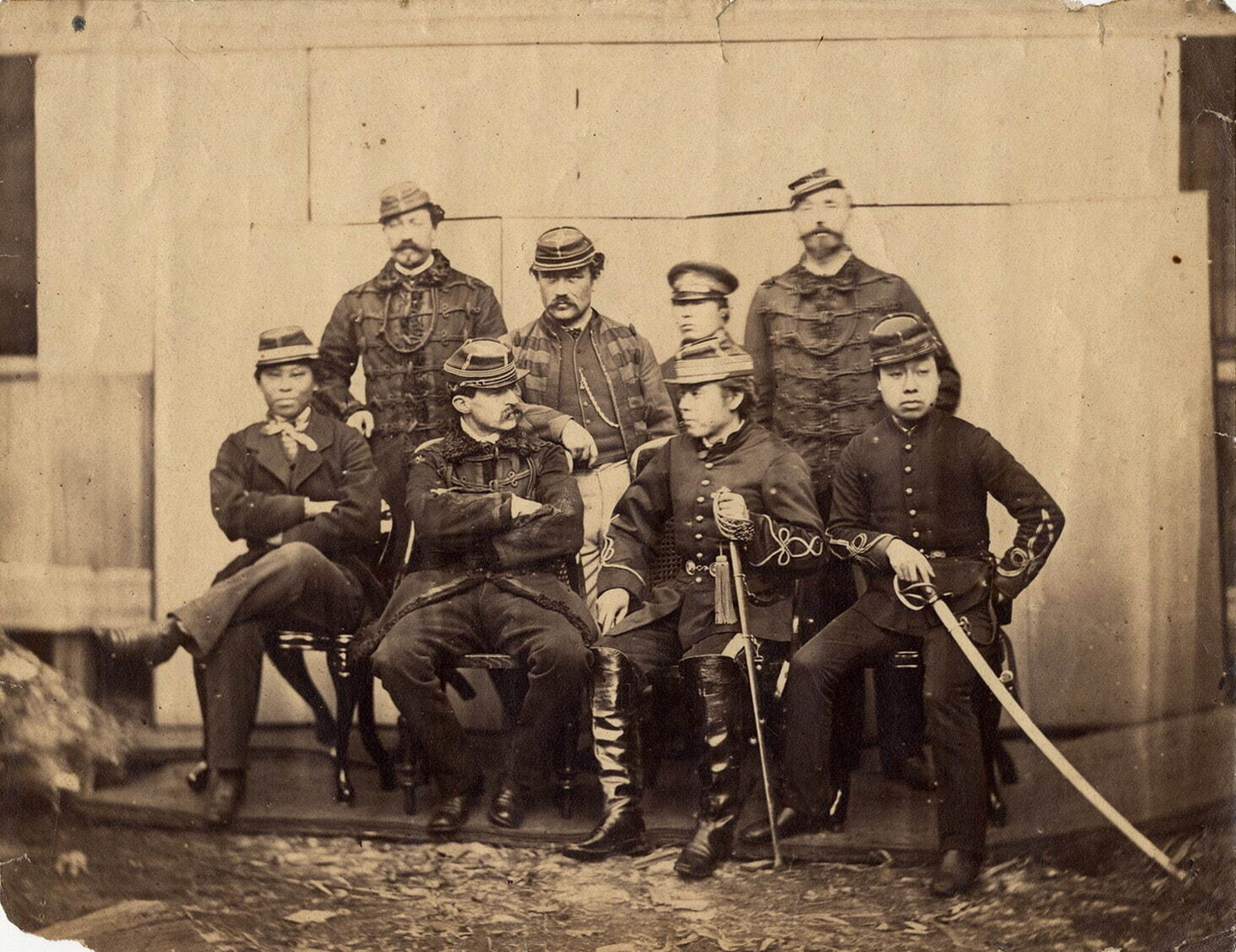
The fleet landed at Washinoki, on the bay north of Hakodate, on the twentieth or twenty-first day of the tenth month (sources disagree by a day; it was early December by the Western calendar). How many came ashore is another moving number: Japanese accounts give about three thousand, some English-language ones four.
The government’s governor in Hakodate, a court noble named Shimizudani Kinnaru, had a few hundred troops. They lost a series of skirmishes on the roads, and he abandoned the fort and took ship for Aomori. On the twenty-sixth day of the tenth month, 9 December 1868, a rebel detachment walked into an empty Goryōkaku.
Ōtori Keisuke, who knew what a fort was supposed to look like, was unimpressed. The 24-pounders on the ramparts, he wrote, were not really fit for shooting, and the works were unfinished and would be little use in a real fight. Over the winter the rebels repaired the ramparts, mounted guns and threw up breastworks outside the gates.
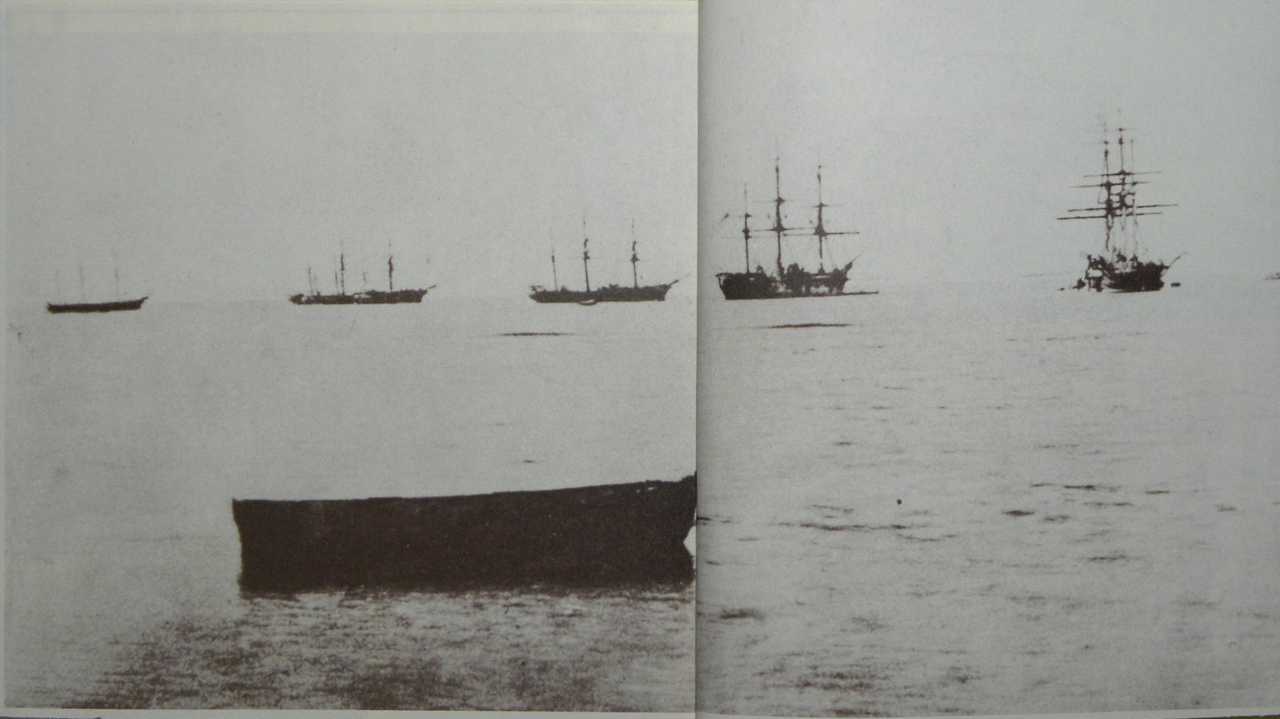
The rest of Ezo went quickly. Hijikata took Matsumae Castle in the eleventh month, and the Matsumae lord fled to the territory of the Tsugaru lords of Hirosaki. But off Esashi, on the night of the fifteenth, a storm drove the Kaiyō Maru onto the rocks, by tradition in sight of Enomoto and Hijikata on the shore, and with her went any real hope of holding the sea.
An election in the snow
On the fifteenth day of the twelfth month, 27 January 1869, the rebels celebrated the conquest of the island and announced a provisional government, with its officers chosen by ballot. It is usually called the first election in Japan, and in a limited sense it was. Only officers voted, about a third of the force, and the people of Hakodate had no say at all.
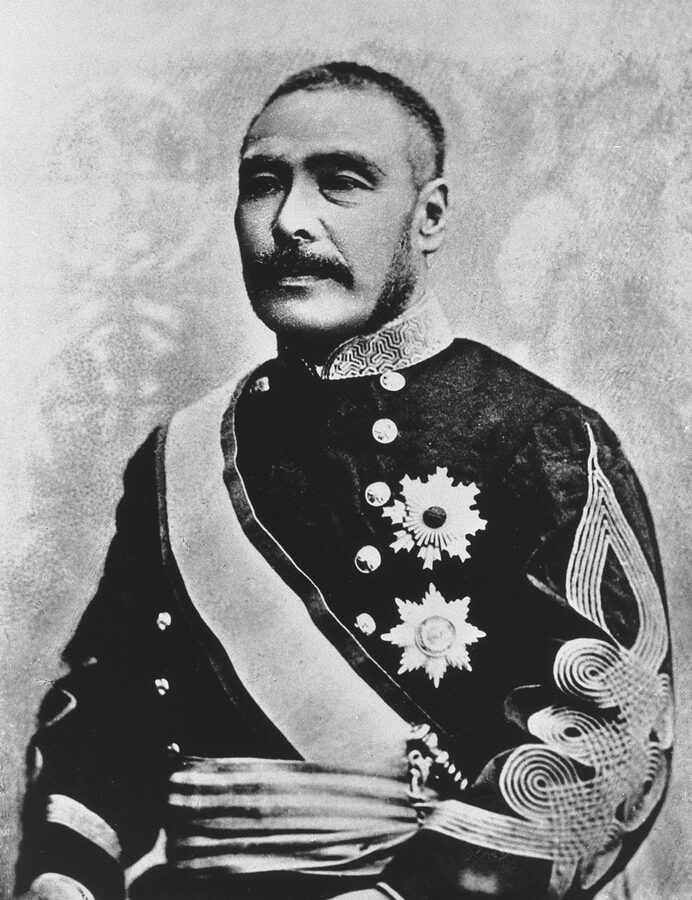
The result survives: 856 votes, with Enomoto top on 156, Matsudaira Tarō on 120 and the old shogunate diplomat Nagai Naoyuki on 116; Hijikata had 73. In the separate vote for president, Enomoto took 155 of 174. Matsudaira became vice-president, Ōtori head of the army with Hijikata as his deputy, and Nagai, appropriately, magistrate of Hakodate.
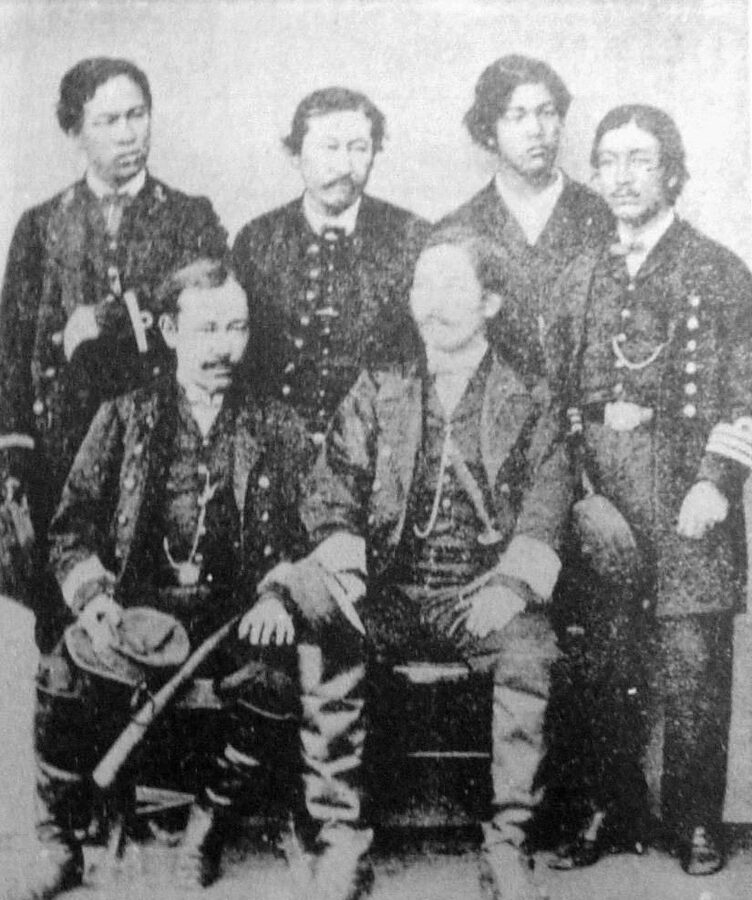
The name it is remembered by was not its own. None of its documents call it a republic; the word came from Francis Adams, a British legation secretary who came up to Hakodate with British and French warships, met Enomoto, and later called it a republic in his history of Japan. The captains gave Enomoto a memorandum recognising his administration as the authority in fact on the island, without treating it as a belligerent.
Enomoto petitioned through them for the island to be granted to a Tokugawa prince, and the government, speaking for the teenage Emperor Meiji, refused within a fortnight. Everyone involved said, and probably believed, that they were loyal to the emperor. They disagreed only about who should be standing next to him.
The administration had its admirable side. Enomoto put Takamatsu Ryōun, a doctor who had studied in Paris, in charge of the Hakodate hospital, and Takamatsu treated the wounded of both sides; his first patients were six government soldiers. Japanese historians count it as the country’s first piece of Red Cross practice, seventeen years before Japan joined the Geneva Convention.
It also had a less admirable side, because the money was running out. The treasurer and the vice-president minted their own coins, which Hakodate learned to call runaway money, and the government took a cut from gambling dens and taxed the prostitutes. It also built a barrier at Ippongi, on the road into town, and charged a toll to everyone who passed, women and children included, and Hakodate remembered all of it.
Seven weeks in spring
The government waited for the snow to melt, gathering around 8,000 men at Aomori by Japanese counts, or 7,000 by some English ones. It also bought the ship that would decide the war. The Kōtetsu was an armoured ram built in France for the Confederacy and delivered too late to fight for it; the shogunate had bought her from the Americans, who held on to her while the Japanese war was undecided, and once they dropped their neutrality she went to the emperor.
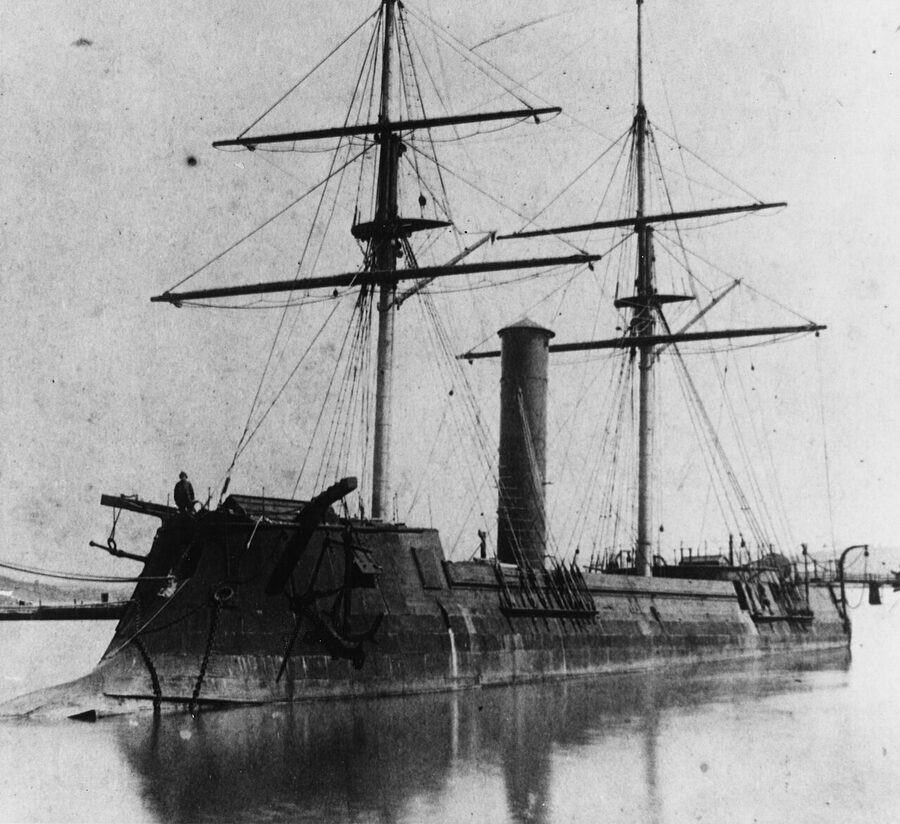
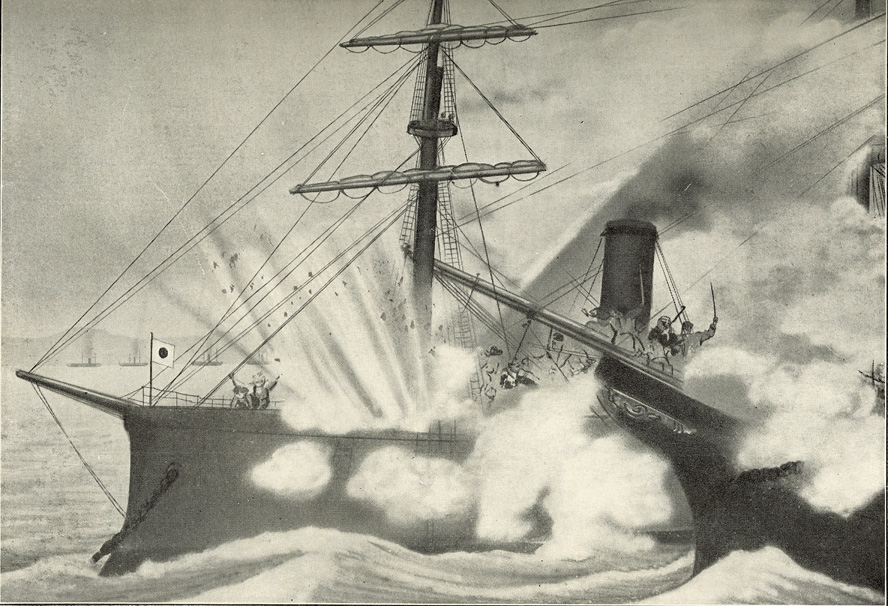
Enomoto’s answer was to steal her. On the twenty-fifth day of the third month, 6 May 1869, the Kaiten came into Miyako Bay on the Iwate coast flying the American flag, ran up the Japanese one at the last moment, and went straight for the Kōtetsu to board. She was a paddle steamer, couldn’t come alongside, and hit at an angle, with her deck three metres above the ironclad’s.
The government landed at Otobe, north of Esashi, on the ninth day of the fourth month and advanced on Hakodate by four roads. At Futamata, Hijikata held a mountain pass for sixteen hours with a few hundred men, firing so much that they cooled the rifle barrels in buckets of water. Elsewhere the rebels were pushed back, and at Yafurai, on the coast road, the naval guns broke them.
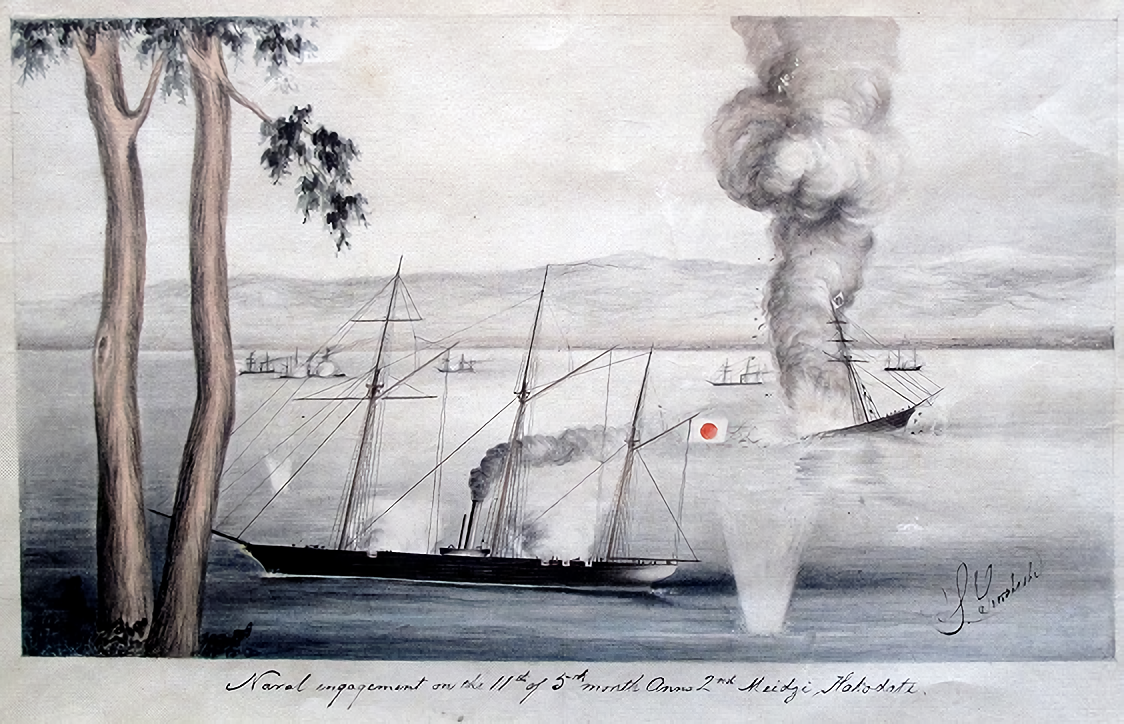
The general assault came on the eleventh day of the fifth month, 20 June 1869. Before dawn a force under Kuroda Kiyotaka, a Satsuma officer not yet thirty, landed behind Mount Hakodate and climbed its cliffs in the fog, and the rebel lookouts on the summit ran. In the bay the last rebel warship, the Banryū, blew up the government’s Chōyō, which was the best moment of the war for Enomoto’s side and very nearly the last.
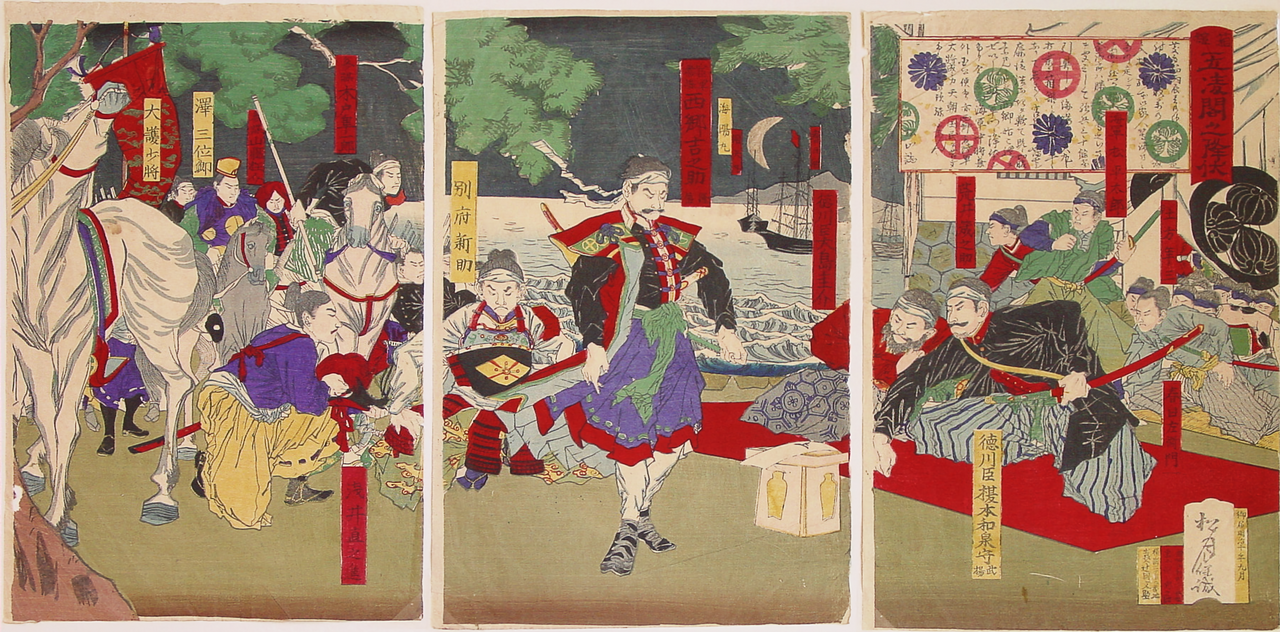
Hijikata rode out from Goryōkaku to relieve the men cut off at Benten Daiba and was shot at the Ippongi barrier, the tollgate the rebels had built themselves. His story is told in my piece on the Shinsengumi, and I won’t repeat it here. By eleven that morning the government held the town, and a fire the Benten Daiba garrison had set at a timber yard burned 872 houses.
Then the Kōtetsu came into the harbour and began to shell the fort. The magistrates had chosen Kameda because it was out of range of a ship’s guns; fifteen years on, it no longer was. A shell hit the office and badly wounded one of the infantry commanders, Koya Sakuzaemon, and the drum tower made such a convenient aiming point that the defenders cut it down themselves.
There was nowhere safe to sleep. Goryōkaku had no bombproof shelters, so the garrison spread tatami mats against the stone and the earth banks, stood folding screens up behind them, and tried to get through the nights like that. For all the theory that went into the star, it is the image of the siege I find hardest to forget.
The outposts fell one by one. Benten Daiba, out of food, surrendered on the fifteenth with Nagai Naoyuki and 240 men. On the sixteenth the outpost at Chiyogadai was stormed in about an hour, and its commander, Nakajima Saburōsuke, the Uraga officer who in 1853 had been the first Japanese official to board Perry’s flagship, died there with his two sons.
Sake, tuna and a book on maritime law
The surrender of Goryōkaku is the most civilised episode of the whole Boshin War. Kuroda sent word through Takamatsu at the hospital proposing surrender, and on the fourteenth Enomoto said no. But he sent Kuroda a present: his own copy of a treatise on maritime law that he had brought back from Holland, with a note to say it would be a pity for it to burn.
Kuroda’s reply came on the sixteenth: a letter of thanks, five casks of sake and five tuna, sent into the fort under a flag of truce. Enomoto accepted and asked for a ceasefire until seven the next morning, which was granted, along with notice of exactly when the final assault would begin. That night his officers agreed to surrender.
Enomoto then tried to kill himself, and was stopped by an officer named Ōtsuka Kakunojō, who either happened to be passing or had been called in to act as his second, depending on the account. The man who had carried a law book across the world still lived in the world of seppuku. Ōtsuka did not oblige him.
On the seventeenth Enomoto and the other leaders met Kuroda at Kameda and asked that they be punished and their men spared. Kuroda refused, because he thought that if the leaders took all the blame he could never save them. Enomoto went back, left a written oath of surrender at Kameda Hachimangū, the local shrine, and on the eighteenth day of the fifth month, 27 June 1869 by the Western calendar, opened the gates; about a thousand men walked out, and the Boshin War was over.
So the fort built against foreign warships was never stormed. It surrendered, by agreement, after a week of being shelled by a Japanese ship, and its most famous defender had died a few kilometres away, defending a tollgate.
The man who buried the dead
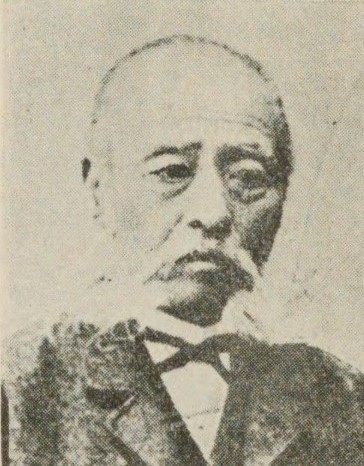
The government did not allow the rebel dead to be buried, and the bodies lay where they fell. The man who did something about it was Yanagawa Kumakichi, an Edo man and follower of the great fireman boss Shinmon Tatsugorō, who had come to Hakodate in 1856 and gone into business supplying labour. Among his contracts, a dozen years before, had been the workforce that built Goryōkaku.
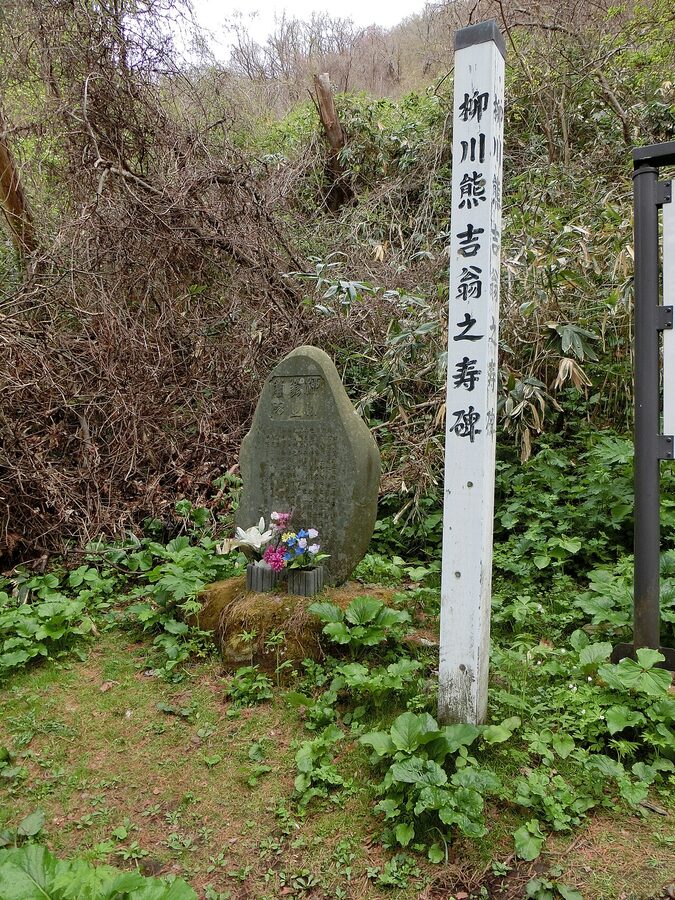
Kumakichi sent his men out to collect the bodies and buried them at three temples in the town. He was arrested, faced the officials without apology, and was condemned to be beheaded. A Satsuma officer, Tajima Keizō, decided that Japan could not afford to lose people like this, and had him released.
In 1871 Kumakichi bought land on the slope of Mount Hakodate and moved the dead there. When the government finally permitted rites for those it had called rebels, Enomoto and Ōtori, both by then serving the Meiji state, joined him in raising a memorial, the Hekiketsu-hi, in 1875, for about 800 men. Its inscription says only that in the second year of Meiji this thing really happened, which is as much as anyone thought it safe to say.
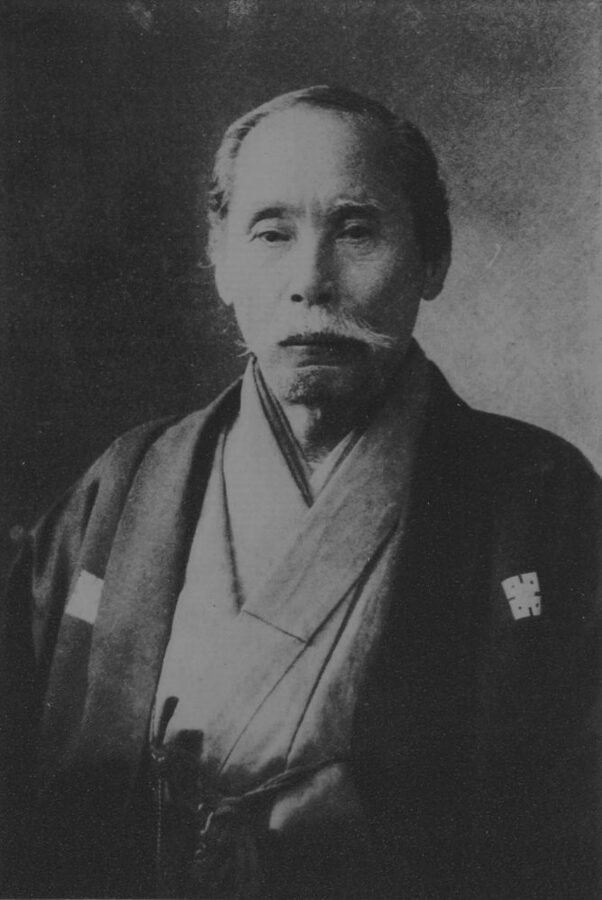
Enomoto spent two and a half years in prison and came out in 1872 to a career no other Tokugawa man came near. He negotiated the treaty that swapped Sakhalin for the Kurils, served as navy, foreign, education and agriculture and commerce minister, and died a viscount in 1908. The losers of the Meiji Restoration did not usually do so well; Enomoto had the luck to be useful.
Takeda did well too, more quietly. He helped open the new army’s officer academy in 1875 and became the first head of its cadet school, and among senior officers drawn almost entirely from Satsuma, Chōshū and Tosa, he was a rare former shogunate man. He died, worn out, in 1880.
Parade ground, ice pond, park
In 1871 the government pulled down nearly every building in Goryōkaku. The timber was supposedly bound for the new colonial headquarters in Sapporo, but most of it went instead into road building and the new licensed quarter at Hōraichō. A fort that had cost the shogunate a fortune was recycled, in part, into brothels, which seems to me a fair summary of how the Meiji era treated the Tokugawa legacy.
The army used the site as a parade ground for forty years. Only one building from the shogunate’s fort survived, a storehouse for provisions, which you can still see.
The most profitable use of the fort in those years was the moat. Nakagawa Kahei, who had already started a butcher’s shop and a dairy in Yokohama for the foreign trade, got permission to cut ice from it. Foreigners in Yokohama were paying high prices for ice shipped from Boston; Nakagawa shipped it from Hakodate instead, and undercut them.
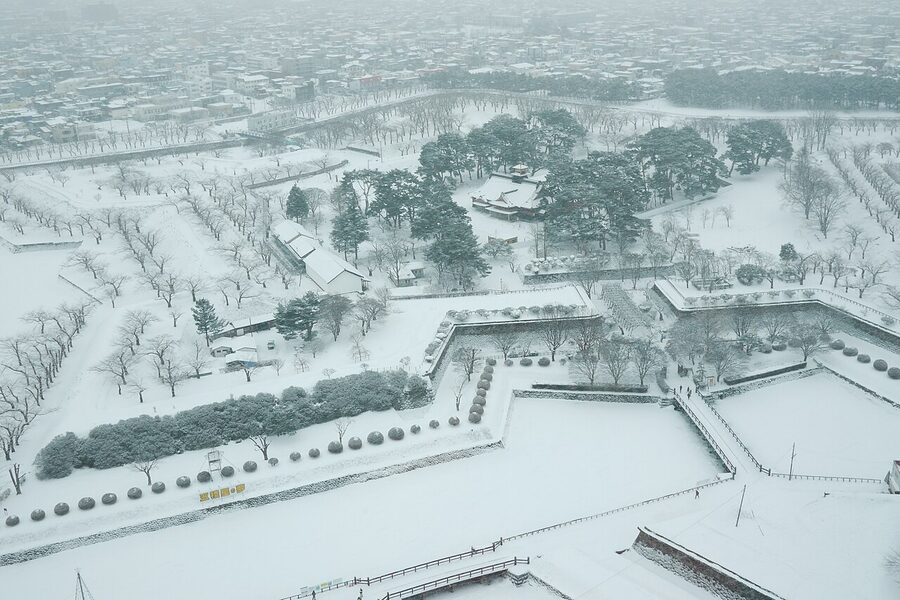
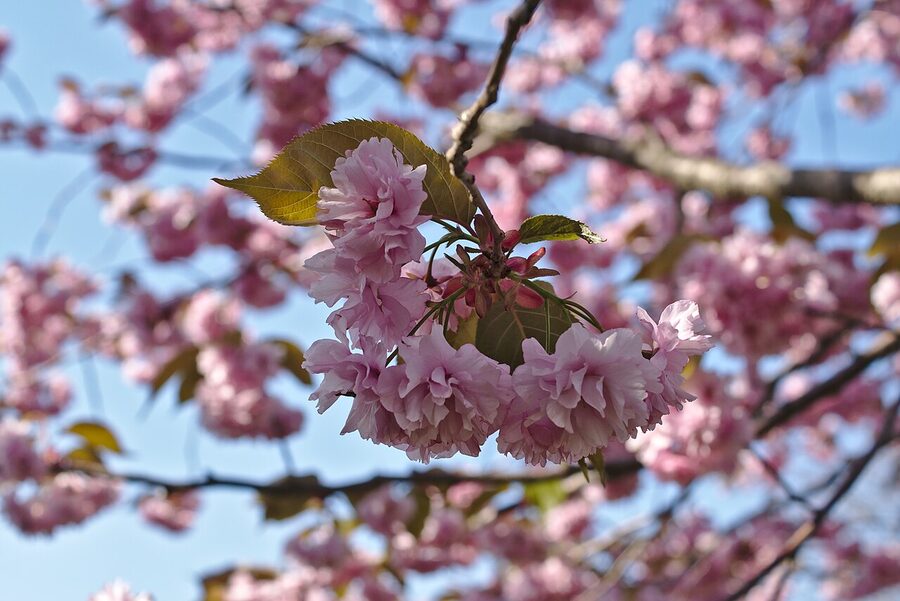
The army let the town open the fort as Goryōkaku Park on 13 June 1914, on condition that nothing was changed. The local newspaper, the Hakodate Mainichi Shimbun, had already begun planting cherry trees along the ramparts to mark its ten-thousandth issue, and kept at it for ten years. About 1,600 survive, and they turn the star pink in late April or early May, a couple of weeks after the cherry blossom in Tokyo.
Goryōkaku became a national historic site in 1922, although at least one Japanese reference gives 1925, and a Special Historic Site in 1952. Since 1970 Hakodate has held a festival here every May, with a parade of men dressed as both armies and a contest to find the best Hijikata Toshizō lookalike, which tells you which side Hakodate has decided it was on.
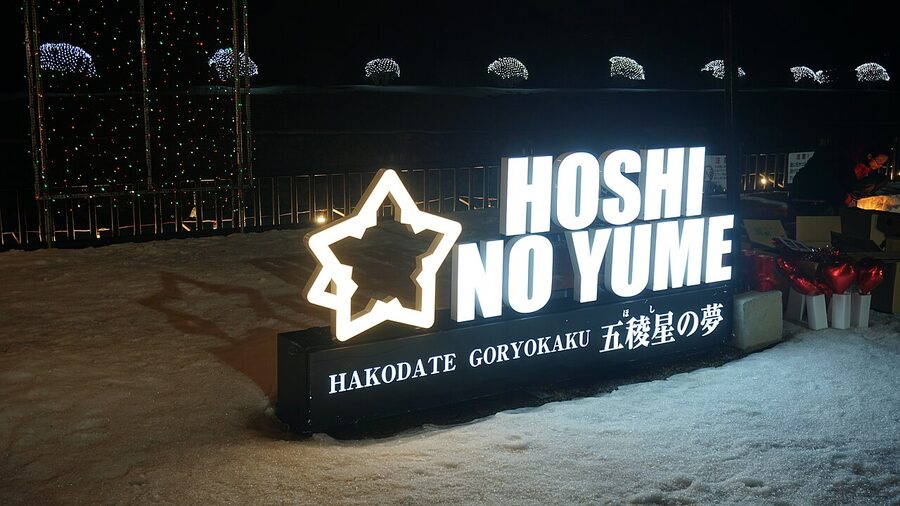
The first Goryōkaku Tower opened in December 1964 for the fort’s centenary. Because of the nearby airport it could be only 60 metres tall, and people complained that they were being charged ¥500 to look at three points. The present tower, 107 metres to the tip, replaced it in 2006, and you can see all five.
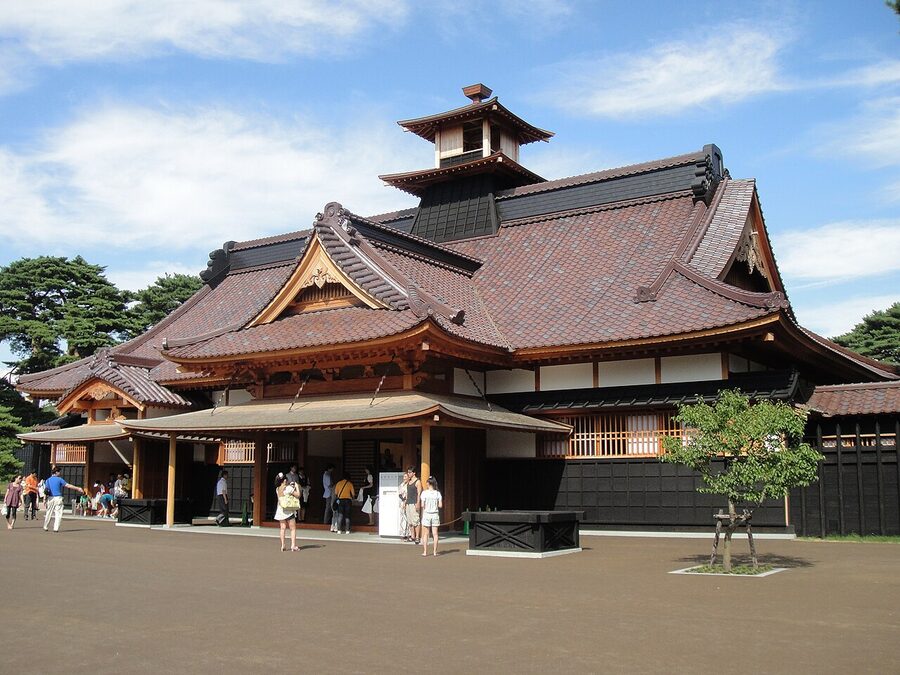
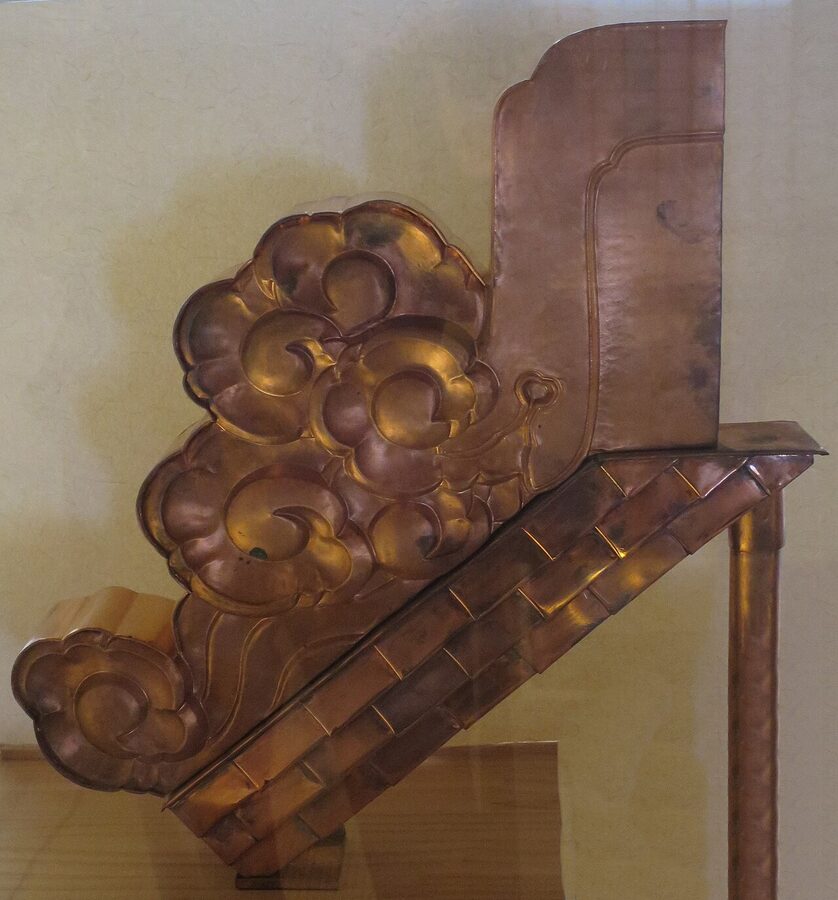
The big project of recent decades has been the magistrate’s office. The city began excavating in 1985, found the foundations in good shape, and rebuilt the office with the same kinds of timber, plaster and hand-made paper as the original; it opened on 29 July 2010.
Where to see Goryōkaku and 1860s Hakodate today
Hakodate is about four hours from Tokyo by Hokkaido Shinkansen to Shin-Hakodate-Hokuto and the Hakodate Liner, or a short flight. Everything below except the last section can be done by tram and on foot in two days. Trams charge by distance, and fares went up in December 2025: from Hakodate-ekimae it is ¥270 to Goryōkaku-kōen-mae and ¥250 to Suehirochō.
Goryōkaku itself
The fort is a free public park, open 5:00–19:00 from April to October and 5:00–18:00 from November to March. The tram from Hakodate-ekimae to Goryōkaku-kōen-mae takes about sixteen minutes, and the walk from there ten to fifteen. Go in from the south-west, the way the magistrate did, over the Ichi-no-hashi bridge, through the outwork, and over the Ni-no-hashi.
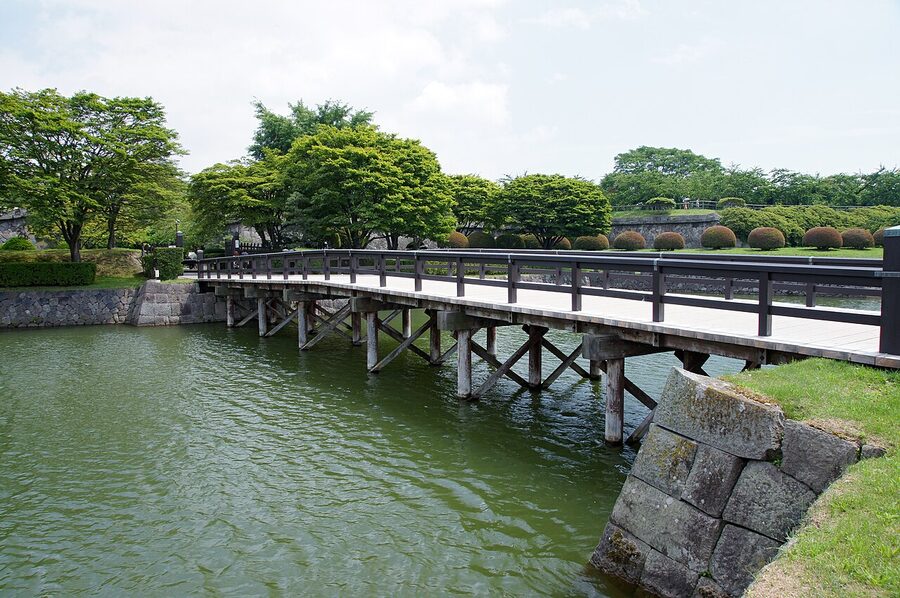
Inside, ignore the office for a moment and walk the ramparts. From the points of the star you can see why the shape matters: every face of the wall can be swept by guns on the neighbouring bastion. By the rear gate bridge on the north side, look for the rounded river stones the masons used when the money ran short.
Near the office is the storehouse, the only building left from the shogunate’s fort. Two cannon stand on display, neither from Goryōkaku: a British gun from a rebel battery in the harbour, and the German-made gun from the Chōyō. Find too the 1963 monument to Takeda Ayasaburō, whose bronze face has been rubbed shiny by people who believe touching it makes them cleverer.
The earth mound inside the fort is said to cover rebel dead found when the ramparts were repaired in 1878, Hijikata possibly among them. Just inside the second bridge is a wisteria trellis planted soon after the park opened; when the office was rebuilt it stood on the site of the old front gate and was due to be moved, and the people of Hakodate objected. The wisteria won, and it flowers in late May and June.
The Hakodate Bugyōsho
The rebuilt magistrate’s office stands in the middle of the fort. Admission is ¥500 for adults, and it is open 9:00–18:00 from April to October and 9:00–17:00 from November to March, with last entry fifteen minutes before closing. It closes from 31 December to 3 January and occasionally for maintenance, so check its own website before you go.
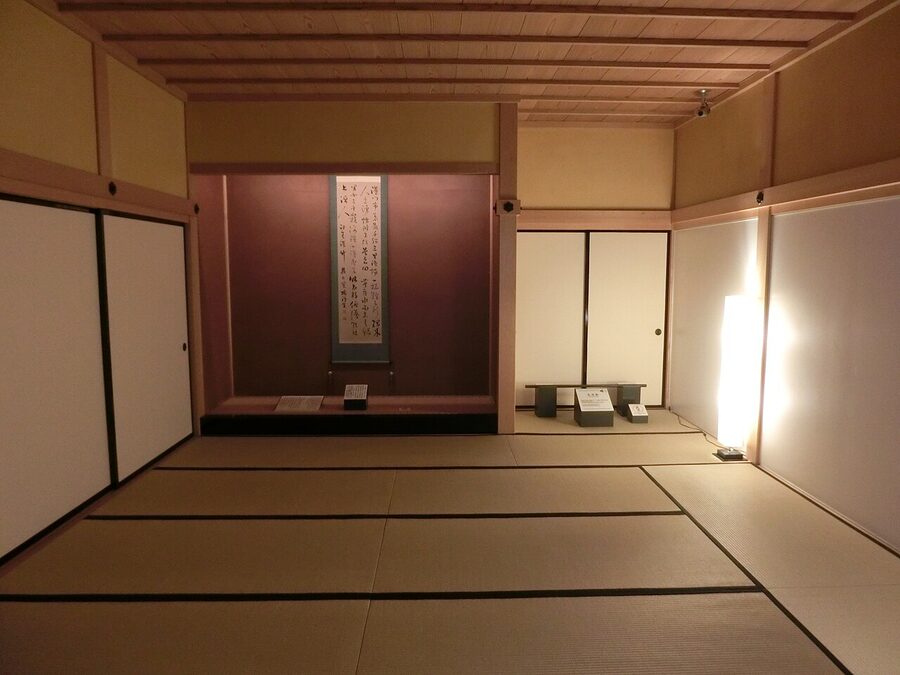
You take your shoes off at the door and carry them in a bag, large luggage is not allowed in (there are lockers in the rest house opposite), and you can’t eat or drink inside. Allow about an hour; the room explaining how the building was put back together is the most interesting part. The office is worth the ¥500, but walk the ramparts first: inside the star, once you understand the moat and the earth bank, it makes sense as the thing the whole fort was built to protect.
Goryōkaku Tower
The tower stands just outside the fort to the south, open every day 9:00–18:00, with the last tickets sold at 17:50. Admission is ¥1,200 for adults, ¥900 for middle- and high-school students and ¥600 for primary-school children, and the tower has announced a price rise from 1 April 2027, so check its site if you are going after that.
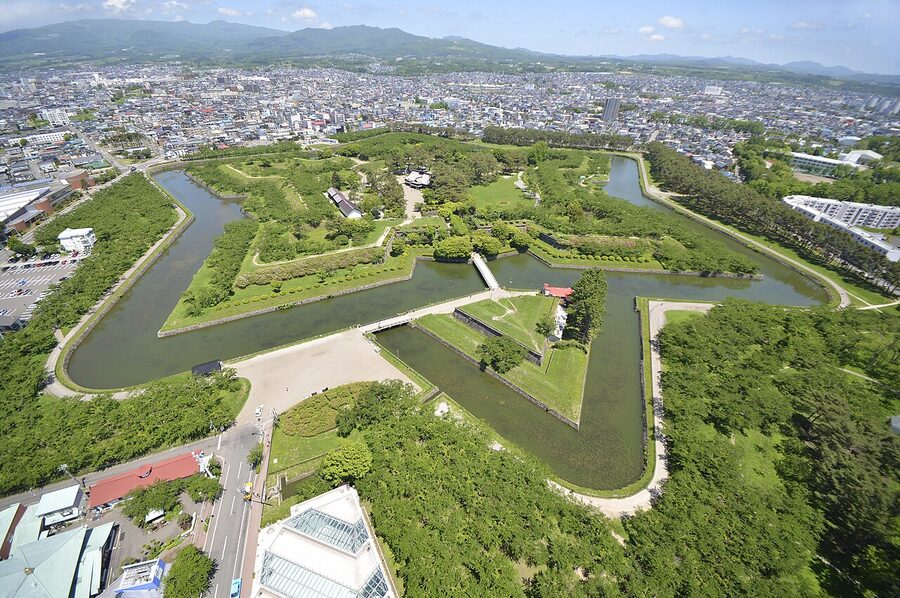
The lower deck, at 86 metres, has a glass floor you can stand on. The upper deck has a history display, a seated bronze of Hijikata in his Western coat, and a 1:250 model of the fort as finished. I think the tower is worth the money for the view and the model together.
Shiryōkaku
Four and a half kilometres north-north-east of Goryōkaku is Shiryōkaku, the four-pointed fort the rebels threw up in late April 1869 to cover the northern approach. About two hundred soldiers and a hundred villagers built it in a few days. A government soldier’s diary says Brunet designed it; nobody really knows.
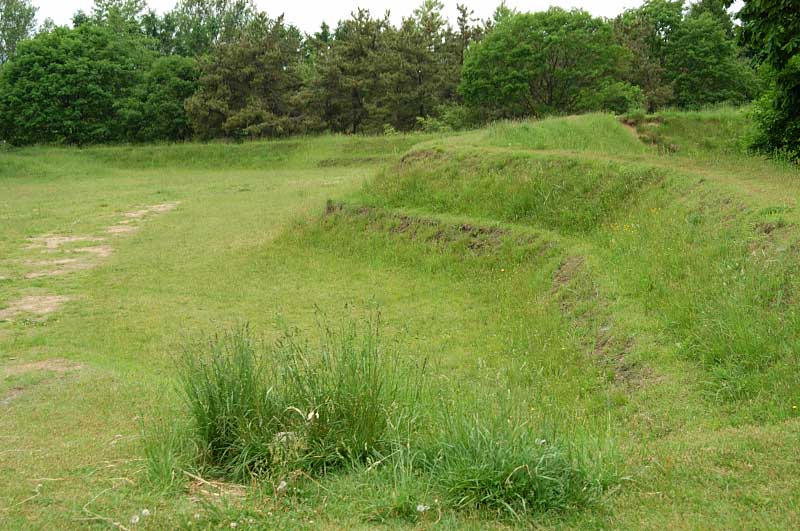
It is a national historic site, free and always open, and almost nobody goes, which is the reason to go: it is the clearest example anywhere of a field fort of 1869. In May the slopes around it are covered in lily of the valley. There are no trams out here; I would take a taxi from Goryōkaku.
Motomachi Park, where the magistrate started
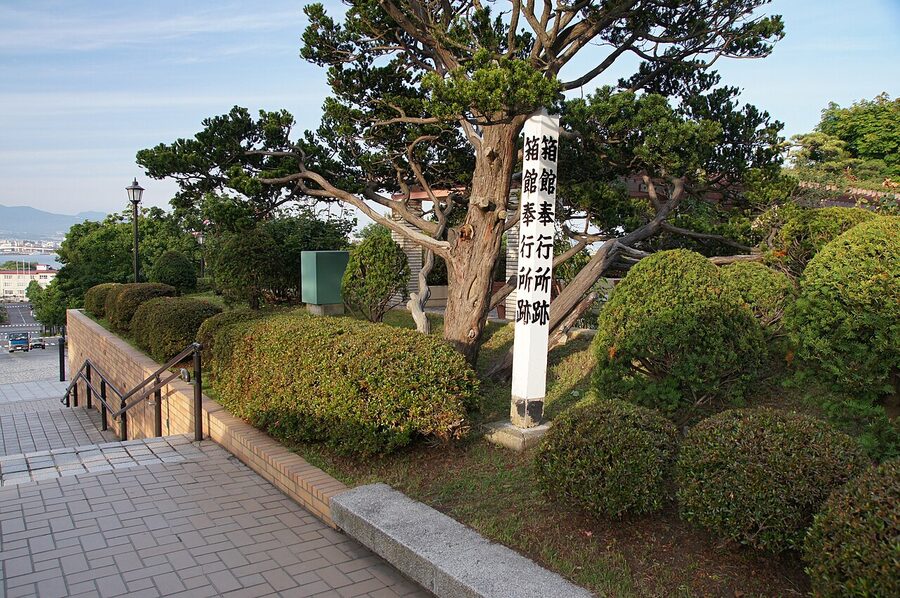
The magistrate’s first office stood in what is now Motomachi Park, at the top of the Motoizaka slope below Mount Hakodate, about ten minutes’ walk uphill from the Suehirochō tram stop. The park is free, and the view down Motoizaka to the harbour is one of the best in the city.
The Benten Daiba site
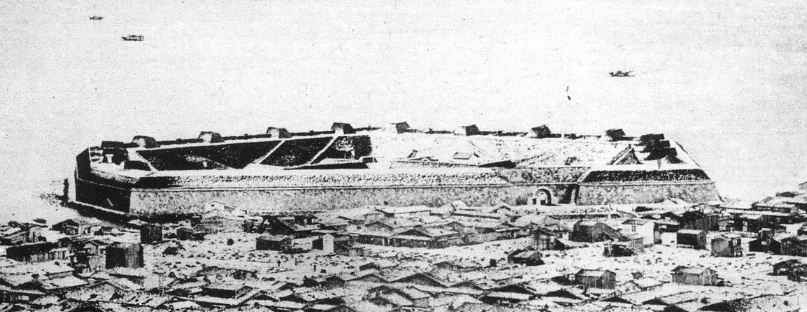
Nothing is left of Benten Daiba. It was filled in during harbour works in 1896, and the site is now part of the shipyard near the Hakodate-dokku-mae tram terminus, where a small monument marks the spot. It is one for completists, but worth knowing about: the battery cost more than the fort and held out until its food ran out, three days before the fort gave up.
The Hekiketsu-hi
The memorial Yanagawa Kumakichi and the survivors raised in 1875 stands in the woods on the slope behind Hakodate Hachimangū, about fifteen minutes’ walk uphill from the Yachigashira tram terminus. It is a single stone about 7.6 metres high, cut from Izu stone in Tokyo and shipped up. Its name refers to an old Chinese story that the blood of a loyal man turns to jade after three years.
A memorial service is held every year on 25 June, the Western date of the day Chiyogadai fell, and Kumakichi’s own stone stands beside it. Go in the afternoon and you will very likely have the place to yourself.
Kameda Hachimangū
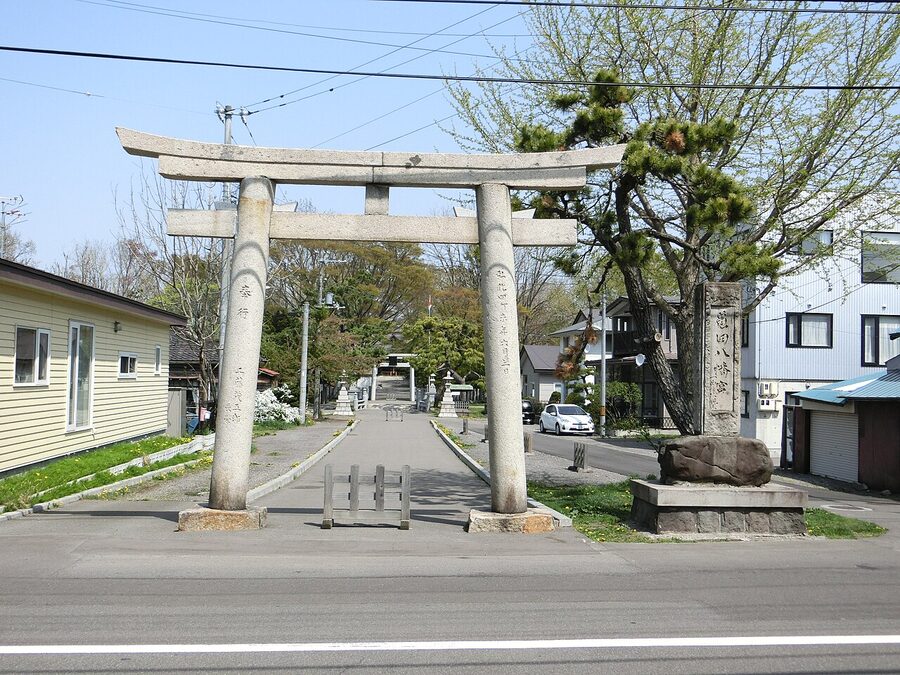
The shrine where Enomoto left his oath of surrender is in Hachiman-chō, north-west of Goryōkaku, a reasonable walk or a short taxi ride from the fort. It is an ordinary local shrine of the kind you find in any Japanese town, and that is what makes it affecting: the last act of the Tokugawa cause was a piece of paper left with a neighbourhood god.
Further afield: Esashi, Hokuto and a second star in Nagano
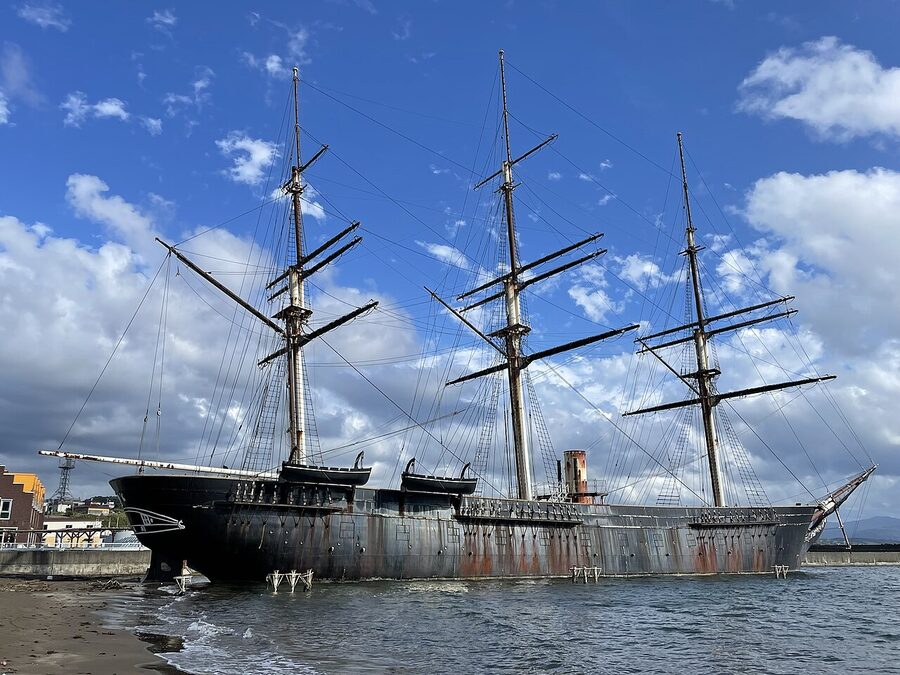
Esashi, two hours or so west of Hakodate by bus, has a full-size replica of the Kaiyō Maru moored as a museum of the wreck. When I last checked, it was closed while the town redeveloped the harbour front around a new roadside station, so check Esashi’s tourism website before you make the trip.
Hekirichi, the earlier bastion fort, is in Hokuto, across the bay, free and open; in late April and early May its cherry tunnel has been lit up in the evenings in recent years. A car or taxi is the practical way to reach it.
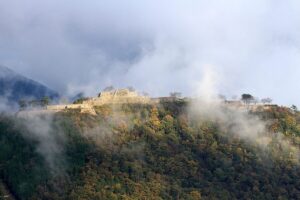
The only other five-pointed star fort in Japan is Tatsuoka Castle, in Saku in Nagano, built between 1864 and 1867 for a small domain whose lord, Matsudaira Norikata, was a keen student of Western military science. It is a quarter to a fifth the size of Goryōkaku, depending on which reference you trust, had one gun platform out of five, and sits in a valley overlooked by hills from which an enemy could fire straight in. Since the elementary school on the site closed in 2023 you can walk in freely, and there is a small museum by the old main gate.
Four guns on the rampart
I keep returning to the guns. The shogunate spent eleven years and over 200,000 ryō on a fort and a battery to keep foreign ships out of Hakodate, and decided along the way that the guns could wait. When Enomoto’s men walked in, they found four 24-pounders that their own commander thought were not much use. The design was French, some of the stones came from river beds when the money ran out, and the one real test came from a Japanese ship built for the Confederacy.
None of that makes it a failure, exactly. Goryōkaku did what the late Tokugawa state often did best, which was to work out the right answer on paper and then not quite pay for it. It has been used ever since for things nobody planned: a parade ground, an ice farm, a swimming pool, a cherry orchard and a stage for a Hijikata lookalike contest. Few places in the long run of Japanese history have had so many second careers.
If you go, climb the tower first and look at the star, then come down and walk it, and find the Chōyō‘s gun by the storehouse. Of all the guns you will see at Goryōkaku, it is the one you can be sure saw action, and it was on the other side.