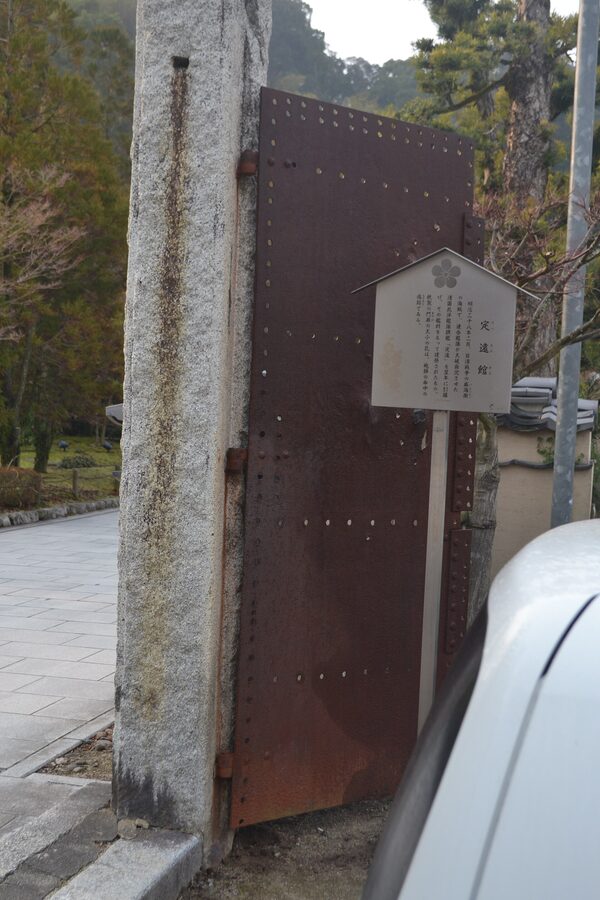
Halfway up the approach to Dazaifu Tenmangū, where students come to ask the god of learning for good exam results, there is a small car park with an iron gate. The gate is armour plate from a Chinese battleship, and if you look closely you can still see the marks where a shell burst against it.
The house behind it is called the Teienkan (定遠館), the Dingyuan Hall, and it was built from the wreck of the Dingyuan, flagship of China’s Beiyang Fleet. A Shinto priest of the Tenmangū who also sat in the Diet, Ono Ryūsuke, asked the army for permission to raise the ship, got it in March 1896, and spent about a year bringing pieces of her up from the harbour at Weihaiwei. The oars of her boats are under the veranda. A decade earlier she had been the most powerful warship in East Asia.
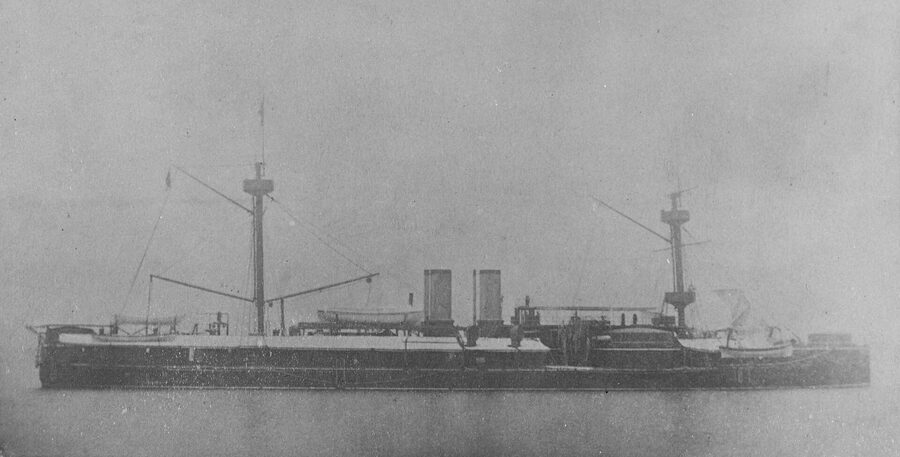
I start with the Teienkan because the whole war passes through that gate. The Dingyuan was built in Germany for the Qing navy, sent on a show-of-force cruise to Nagasaki in 1886, fired the first heavy shot of the biggest sea battle of the war, and was torpedoed and then blown up by her own crew in February 1895 so the Japanese would not get her. What was left became a Japanese trophy and then, rather undramatically, staff housing for a shrine. In between, Japan fought its first modern foreign war, mostly on other people’s soil, and came out of it with Taiwan, an indemnity worth more than four years of its own government spending, and an appetite it would spend the next fifty years feeding.
Japan calls it the Nisshin sensō (日清戦争), the Japan–Qing War; China calls it the Jiawu War, after the cyclical name of the year 1894; Korea, where much of it was fought, calls it the Cheong-il War. I have tried to tell it from all three sides, because the Japanese version on its own, which is the version most monuments in Japan tell, leaves out most of the people it happened to. It sits at the hinge of the long story I tell in Japan Through the Ages, the point where the Meiji era turned outward. And it ends, as everything on this site does, with where you can go and see it: an inn in Shimonoseki, a lawn of foundation stones in Hiroshima, a cemetery on a hill, and this gate.
In This Article
- A dagger pointed at the heart
- Rice, taxes and the Donghak
- Two armies, two navies
- Pungdo, the Kowshing and a bugler at Seonghwan
- Pyongyang and the Yellow Sea
- Port Arthur
- Winter on the Yalu, and Weihaiwei
- Korea in the winter of 1894
- Ten years on, the same two men
- Taiwan, taken by force
- Hiroshima, newsprint and the war at home
- Where to see the First Sino-Japanese War today
- Shunpanrō and the peace memorial hall, Shimonoseki
- The Li Hongzhang path and Injō-ji
- The Imperial Headquarters site, Hiroshima Castle
- Hijiyama Army Cemetery, Hiroshima, and Sanadayama, Osaka
- The Teienkan, Dazaifu
- The gate in the car park
A dagger pointed at the heart
Every Japanese account of 1894 begins with Korea, and so does every Korean one, though they mean different things by it. The Joseon kingdom had sent tribute to Beijing for centuries, and had dealt with Japan through the island domain of Tsushima under the Tokugawa shogunate, a relationship both sides understood as ritual hierarchy rather than rule. Japan forced its way in with the Treaty of Ganghwa in 1876, a gunboat treaty that gave Japanese in Korea extraterritorial rights, the very privilege Japan had resented foreigners holding on its own soil ever since Perry’s Black Ships. Nobody in Tokyo seems to have found the parallel embarrassing.
The idea that Korea mattered to Japan’s survival was older than the treaty. In 1873 Saigō Takamori had wanted to go to Korea as an envoy, half expecting to be killed and so to hand Japan a reason for war, and the government’s refusal split it in two. A German adviser to the army, Major Jakob Meckel, is credited with calling the peninsula a dagger pointed at the heart of Japan. In 1890 the prime minister, Yamagata Aritomo, told the first Diet that Korea lay on Japan’s “line of advantage”, the zone no other power could be allowed to hold.
Inside Korea two camps fought over how to modernise. The royal in-laws of the Min clan, around Queen Min, leaned on China; a group of young reformers led by Kim Okkyun (金玉均) admired Meiji Japan, and on 4 December 1884, at a banquet for the opening of Seoul’s new post office, they tried to seize power with the help of the Japanese legation guard. It lasted three days. About 1,500 Chinese troops under a young officer called Yuan Shikai stormed the palace, the Japanese legation burned, and Kim escaped to Japan.
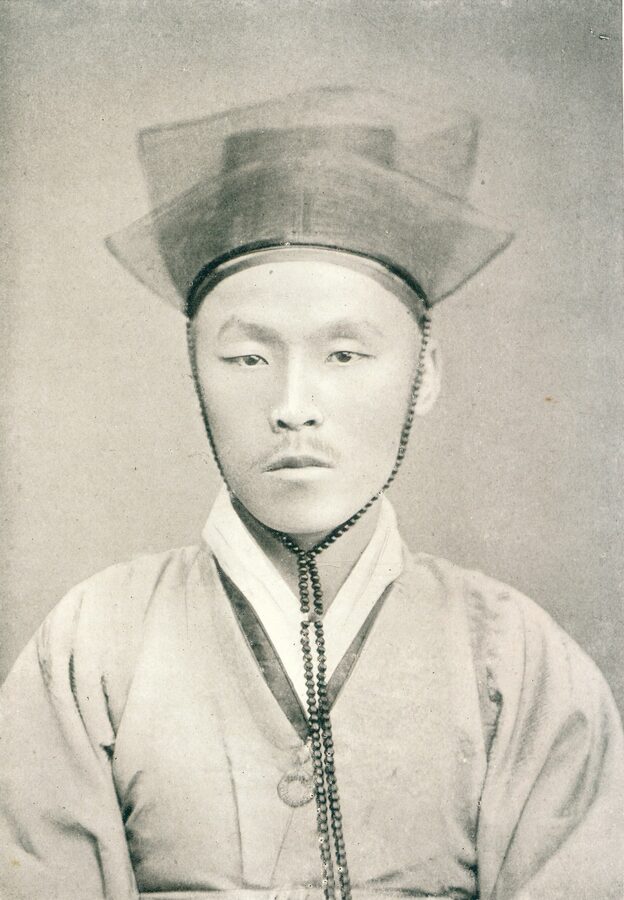
The settlement that followed is the hinge of everything later. In Tianjin on 18 April 1885, Itō Hirobumi, who had gone round the world with the Iwakura Mission, and Li Hongzhang, viceroy of Zhili and in effect China’s foreign minister for Korea, agreed that both countries would pull their troops out of Korea within four months and that neither would send them back without notifying the other. It looked like a balance. In practice it gave Japan the same right to intervene as China, and it put two of the ablest statesmen in East Asia in a room together for the first time; they would meet again ten years later, on very different terms.
China pressed its advantage in the meantime. Yuan Shikai stayed on in Seoul as the Qing resident and behaved like a viceroy, and in the summer of 1886 the Beiyang Fleet sent its new German battleships on a cruise that ended at Nagasaki, where sailors from the squadron rioted on shore leave and several Japanese policemen were killed. Japan’s navy spent the next eight years building cruisers to beat them, three of them designed around a single huge gun meant to outrange the Dingyuan.
Rice, taxes and the Donghak
The crisis began with a murder. On 28 March 1894 Kim Okkyun, lured to Shanghai, was shot dead in his room at a Japanese-run inn by a Korean assassin, Hong Jong-u; the Chinese authorities sent the body home on a warship, and the Korean government had it quartered and displayed as a warning. In Japan the killing was taken as an insult to the country that had sheltered him, and the nationalist papers began calling for war.
The war’s immediate cause came out of the Korean countryside. Through the early 1890s Korean farmers were squeezed by heavy taxes and corrupt magistrates, by drought, and by Japanese merchants buying up rice for export, which drove up the price of food. In February 1894 the farmers of Gobu county in Jeolla province attacked the office of a magistrate, Jo Byeong-gap, who had been collecting illegal levies, and their leader, a village teacher called Jeon Bong-jun (全琫準), turned a local riot into the largest peasant war in Korean history.
Jeon’s movement wrapped itself in Donghak, Eastern Learning, a religion founded in the 1860s that preached human equality, and whose founder the government had executed. Its banners called for driving out the Japanese and destroying the powerful. Older Japanese books call the rising the Tōgakutō no ran, the Donghak rebellion; most Japanese historians now say the Kōgo Peasant War, and in Korea it is the Donghak Peasant Revolution, and the difference between those names is most of the argument.
At the end of May the peasant army took Jeonju, the provincial capital, and the frightened court asked China for troops. About 2,500 Qing soldiers landed at Asan, south of Seoul, in the second week of June. On 2 June, the same day it dissolved a hostile Diet, the Japanese cabinet had decided to send a mixed brigade of about 8,000 men if China moved, and on 5 June it set up an Imperial General Headquarters for the first time in its history, while still technically at peace.
And then the reason disappeared. Faced with two foreign armies, the court and the peasants made a truce at Jeonju around 10 June, and Jeon’s men went home to run their districts through local directorates of their own. The Qing troops stayed put at Asan. The Japanese, with transports at sea and an election to fight at home, did not want to come back empty-handed.
What followed is unusually well documented. Foreign Minister Mutsu Munemitsu proposed that China and Japan reform Korea’s government together, knowing China would refuse, and when it did, Japan announced it would do the job alone. In mid-July he told his minister in Seoul, Ōtori Keisuke, who had fought for the shogun in the Boshin War and held out at Goryōkaku in 1869, that the time had come for decisive action and that he should choose a pretext the world would not condemn. On 16 July, in London, Japan signed a new treaty with Britain abolishing extraterritoriality, the privilege foreigners had held since the treaties Ii Naosuke signed in 1858, and with British goodwill secured, the cabinet decided on war the next day.
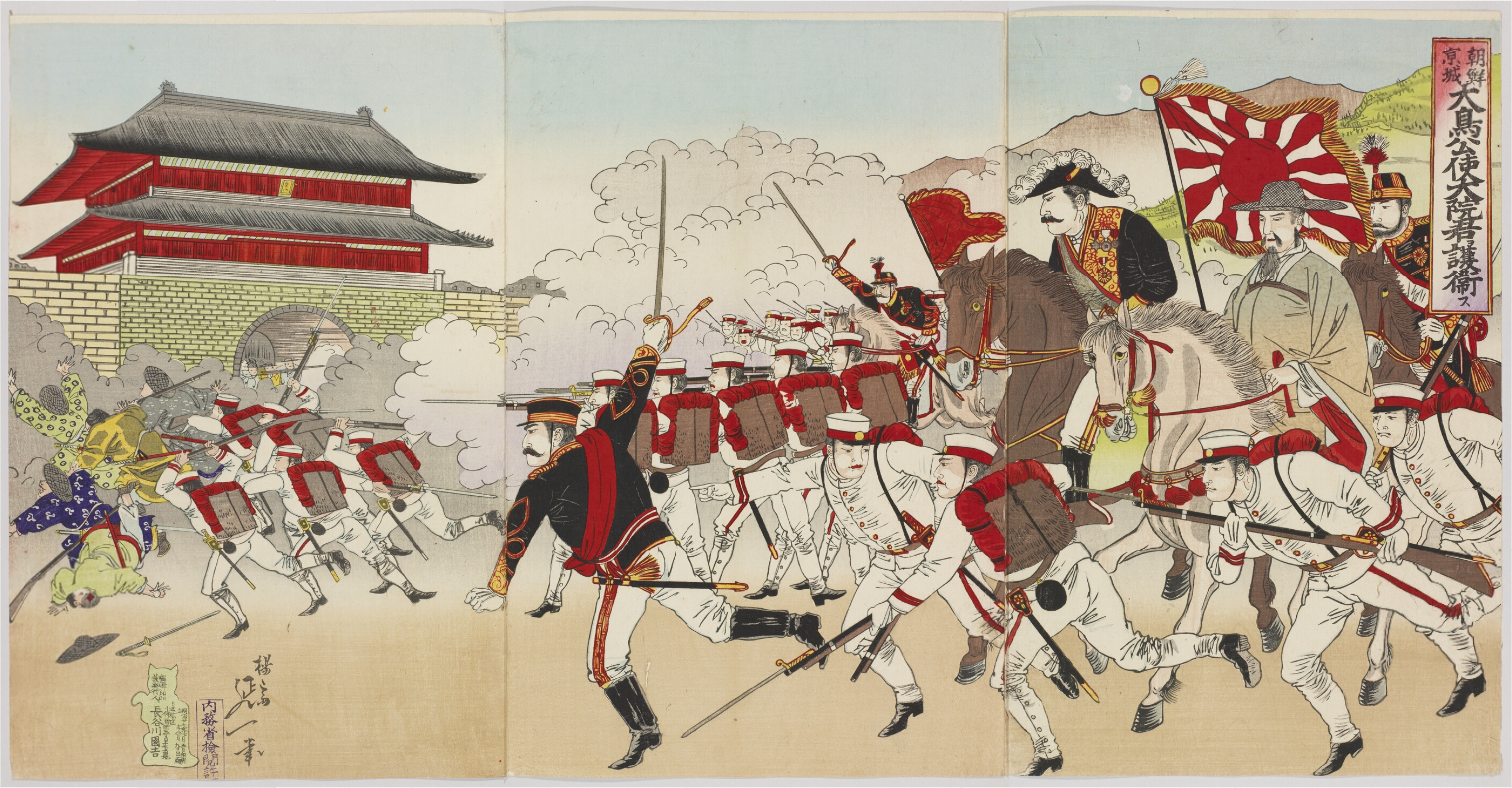
Before dawn on 23 July Japanese troops marched on Gyeongbokgung, the royal palace in Seoul, exchanged fire with the Korean guards for about three hours, and took King Gojong into what they called protective custody. They brought back his father, the Daewongun, to front a new government, and obtained from it a request to expel the Chinese. The official story was that the Koreans had fired first. A draft of the army’s own war history, found by the historian Nakatsuka Akira in 1994, shows that the operation had been planned in detail in advance.
Two armies, two navies
On paper China should have won, and most foreign observers said so. A British adviser to the Chinese navy, William Lang, is quoted as predicting that “in the end, there is no doubt that Japan must be utterly crushed”. They were counting ships, men and the size of the country. They were not counting how those things were organised.
Japan had a single conscript army of seven field divisions on the German model, reorganised in the 1880s under Meckel, armed with the home-made Murata rifle and field guns from the arsenal on the grounds of Osaka Castle. Its officers still carried swords, often old family blades remounted in Western sabre fittings, the last link with the world of the katana, but the fighting was done with rifles and guns. In the course of the war it mobilised 240,616 men, sent 174,017 overseas, and hired more than 100,000 civilian porters, the gunpu, to carry supplies on their backs because it never had enough horses.
Logistics was its weak point. The brigade that first marched south from Seoul had brought no porters at all and tried to press 2,000 Koreans and 700 pack horses into service, and many of them slipped away at night.
China had no national army. It had the old Manchu banners, the Green Standard gendarmerie, provincial forces raised by individual governors, and the Huai Army, which in effect belonged to Li Hongzhang, who also controlled the Beiyang Fleet. For much of 1894 the war was treated in Beijing as Li’s war rather than the empire’s, and the court was split between a war party around the young Guangxu emperor and the Empress Dowager Cixi, who wanted peace for her sixtieth birthday celebrations that winter.
The fleet was the one thing Japan feared. The Dingyuan and her sister the Zhenyuan, German-built battleships of over 7,000 tons with 30.5 cm guns, outclassed anything Japan had, which is why the Japanese navy was much less eager for war than the army. But the Beiyang Fleet had not received a new ship since the small cruiser Pingyuan in 1890, some military historians record shells whose powder had been sold off and replaced with sand, and its signal book was in English, which few of its officers read. The old story that Cixi spent the navy’s money on the Summer Palace is still repeated, though Chinese historians now blame the Guangxu court more; either way, the money did not become ships.
Pungdo, the Kowshing and a bugler at Seonghwan
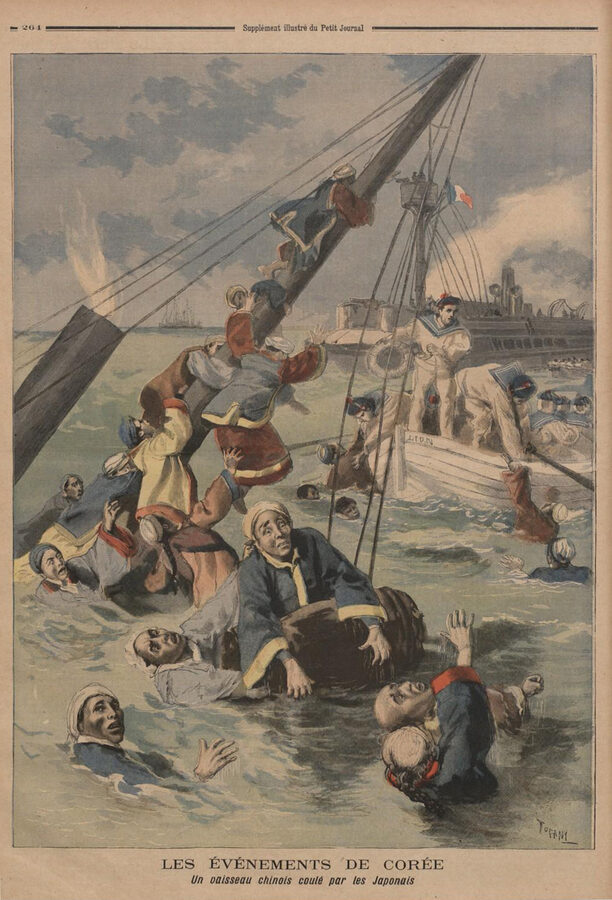
The first shots came at sea. On the morning of 25 July three fast Japanese cruisers, the Yoshino, Naniwa and Akitsushima, met two Chinese warships off Pungdo island near Asan Bay; one escaped damaged, the other was driven aground, and a Chinese gunboat was captured. Then the Naniwa, under Captain Tōgō Heihachirō, stopped a British-flagged steamer, the Kowshing, chartered by China to carry reinforcements to Asan. Japanese sources put the soldiers on board at about 1,100; other accounts give 1,200.
The Chinese officers refused to be taken to Japan as prisoners and would not let the British captain obey Tōgō. After about four hours of argument, Tōgō opened fire and sank her. The Japanese picked up the British captain and two of his officers and about fifty Chinese; French and German warships later pulled out nearly two hundred more, and most of the rest drowned.
Britain was furious, briefly, until two professors of international law, John Westlake and Thomas Erskine Holland, wrote in The Times that the sinking was lawful. Japan had read the rules of the Western game more carefully than the West expected, and it played to that audience for the rest of the war, with mixed success.
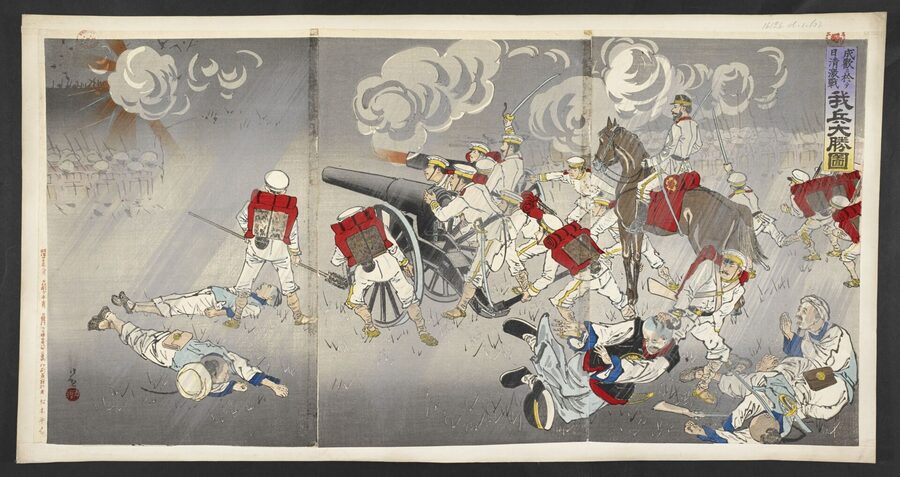
On land, Major General Ōshima Yoshimasa marched south from Seoul against the Chinese position at Seonghwan, east of Asan, and attacked it at night in the early hours of 29 July. The Japanese lost 88 men killed and wounded; the Chinese lost about 500 and fell back north, a month’s march, all the way to Pyongyang. Their commander, Ye Zhichao, reported a great victory to Beijing and was rewarded for it.
Seonghwan also produced the war’s first heroes. Captain Matsuzaki Naoomi, shot in the leg and then in the head, was the first Japanese officer to die. A bugler of the 21st Regiment was found dead with his bugle still at his lips, and the newspapers named him as Shirakami Genjirō, who became famous overnight; after the war the Fifth Division announced that its inquiries showed the bugler had in fact been a private called Kiguchi Kohei (木口小平), killed the same day. Shirakami, it emerged, had not been a bugler when he was called up and had drowned during the fighting, which did not suit the story.
Two days before the battle a battalion commander, Major Koshi Masatsuna, had killed himself because the Korean porters requisitioned to carry his unit’s supplies had run off and his men could not march. His death did not make the textbooks.
War was declared on 1 August. Japan’s rescript spoke of Korean independence and the law of nations; China’s spoke of a dependency of two hundred years and called the Japanese by an old insult, wo, dwarfs. Emperor Meiji, by the account of his household minister Hijikata Hisamoto, at first refused to send envoys to report the war to Ise and to his father’s tomb, saying it had never been his wish and that he had only allowed it because his ministers told him it could not be avoided. He changed his mind the next morning, and after that he never showed a doubt in public.
Pyongyang and the Yellow Sea
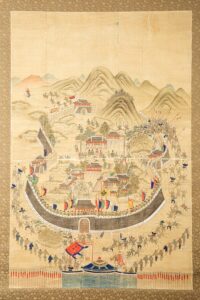
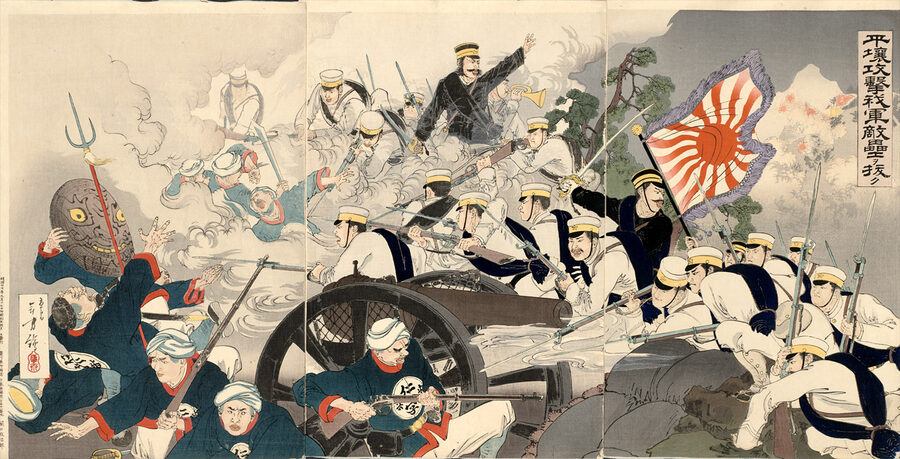
The Chinese gathered about 13,000 men in Pyongyang, a walled city on the Taedong River that Japanese armies had fought over once before, in 1593, during Hideyoshi‘s invasions in the Imjin War. The Japanese converged on it from several directions and attacked on 15 September. The hardest fighting was at the north gate, where the Muslim general Zuo Baogui held his sector until he was killed by a shell; that afternoon a white flag went up, and in heavy rain that night most of the garrison slipped out and away to the north.
The Japanese walked in the next morning and found enough Chinese rice to feed a division for a month, which mattered, because some of their units had gone in with two days’ food. By the end of September there was no Chinese army left in Korea.
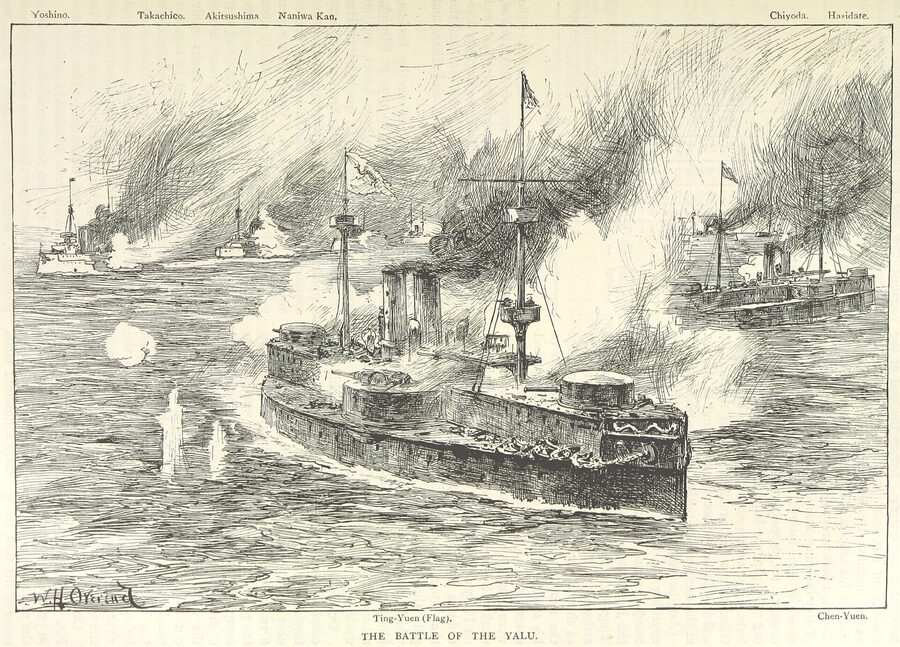
Two days later the navies met. The Beiyang Fleet had just escorted a troop convoy to the mouth of the Yalu River, the border with China, and was lying off Dagushan on the morning of 17 September when the Japanese Combined Fleet under Vice Admiral Itō Sukeyuki found it by its smoke. The Chinese came on in a broad wedge of ten warships abreast, as their bow-firing guns obliged them to; the Japanese steamed across their front in two columns in line ahead, faster, and firing broadsides from quick-firing guns.
The Dingyuan opened fire at 12:50 at about 6,000 metres, and by a well-known account the blast of her own main guns brought down part of her bridge and injured Admiral Ding Ruchang. The battle went on until dusk. Five Chinese ships were lost, among them the cruiser Zhiyuan, whose captain, Deng Shichang, tried to ram a Japanese cruiser and went down with his ship; he is still one of China’s best-known naval heroes. Every Japanese ship was hit, the flagship Matsushima badly, and 90 Japanese sailors were killed, but not one ship sank.
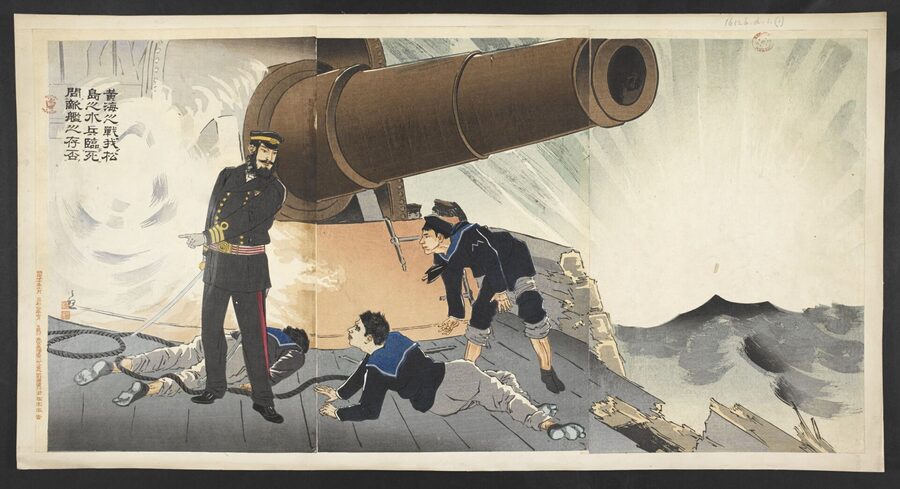
The Dingyuan took 159 hits and lost only seventeen men, which says something about German armour and something about Japanese shells. The Beiyang Fleet limped back to its bases and never again came out to fight. In Japan the battle is the Kōkai kaisen, the Battle of the Yellow Sea; in English it is usually named after the Yalu, a river nobody fought on.
Port Arthur
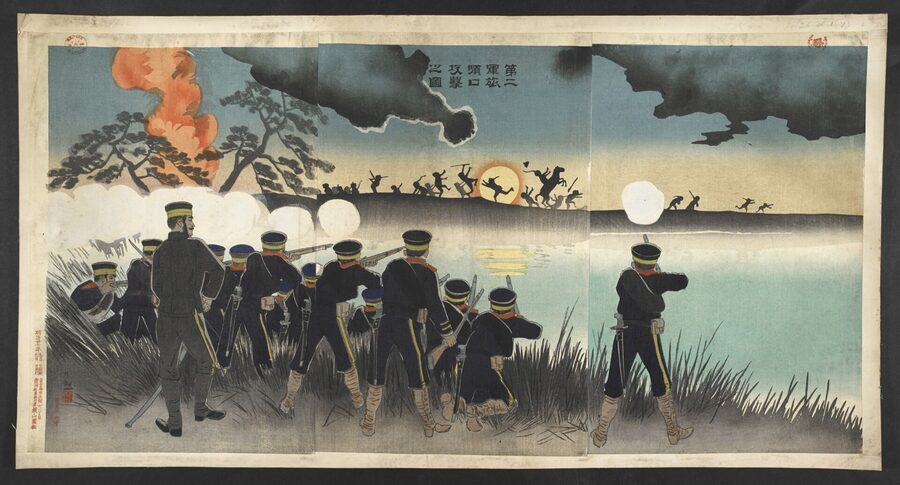
Port Arthur, Lüshunkou, at the tip of the Liaodong peninsula, was China’s main northern naval base, known in the Western press as the Gibraltar of the East. The Second Army under Ōyama Iwao, Saigō Takamori’s cousin, landed on the peninsula on 24 October, took Jinzhou on 6 November, and arrived in front of the forts in the middle of the month.
On 18 November a Japanese patrol was beaten back at Tuchengzi, outside the town, and when the troops returned they found their dead mutilated, heads, noses and ears cut off, some of the heads hung from trees and the eaves of houses. Qing commanders had been paying bounties for Japanese heads. On 21 November the main assault took the forts in a single day, at a cost of 40 Japanese killed; the general staff counted 4,500 Chinese dead between Jinzhou and Port Arthur. By one Japanese estimate about 9,000 of the 12,000 defenders were new recruits.
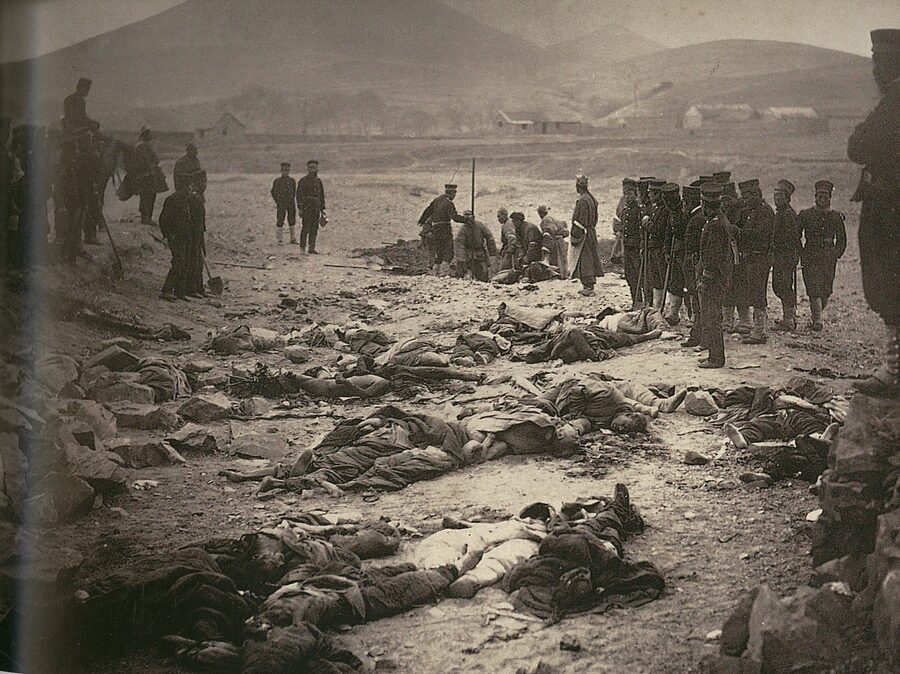
What happened next is called the Port Arthur massacre (旅順虐殺事件), and I will describe it plainly. From the afternoon of 21 November and for three or four days afterwards, Japanese soldiers went through the town killing the people they found, men above all but women and children too, in houses, in the streets and on boats in the harbour. A Japanese soldier wrote in his diary that there was hardly a house without three to six dead, and that the streets were so full of bodies it was hard to get through. Foreign correspondents with the army, James Creelman of the New York World, Thomas Cowan of The Times and the illustrator Frederic Villiers, saw prisoners tied together and shot, and wrote it up as soon as they were out of reach of the censors.
The army’s defence, then and later, was that the town was full of soldiers who had thrown away their uniforms, and that in street fighting it was impossible to tell them apart. There is something in that for the first afternoon: men in plain clothes were fighting, and resistance went on in the streets. It does not account for the following days, when organised resistance had ended and the killing went on, nor for the slips of paper the army began handing out from 24 November, reading “this man is not to be killed”, which presumes that a man without one could be.
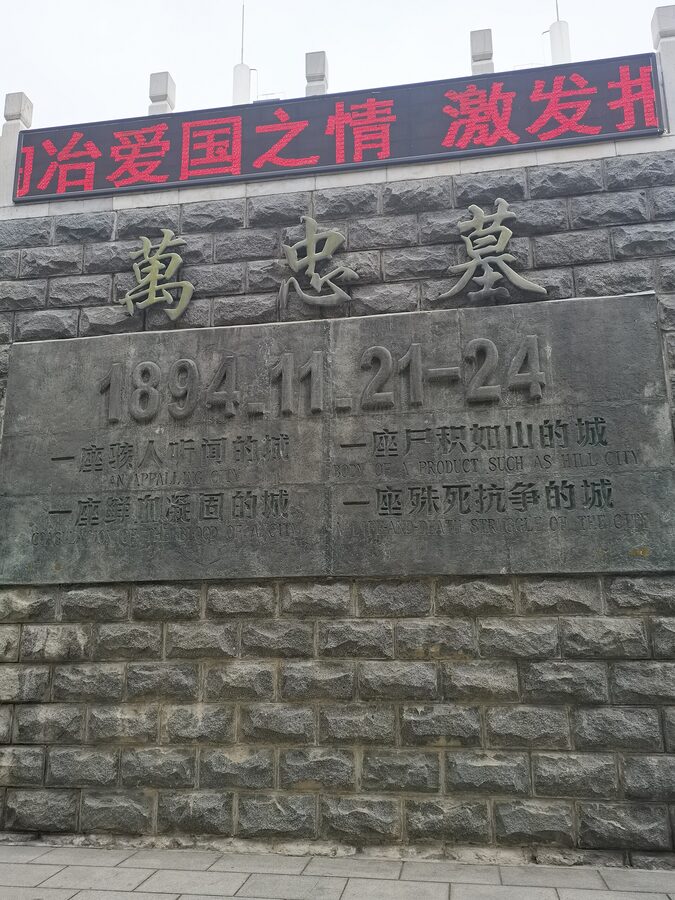
How many died is still argued over. A Qing official, Liu Hanfang, reported to Li Hongzhang soon afterwards that 2,600 to 2,700 civilians had been killed in the town itself, not counting soldiers or the surrounding villages; the stone over the mass grave gives more than 10,800 officials, soldiers, merchants and civilians, men and women; the official Chinese figure today is 20,000; and Creelman claimed 60,000, which almost no historian accepts. Most Japanese historians who have studied it, Inoue Haruki in a 1995 book-length study among them, do not dispute that a massacre took place; the argument is about scale.
The army’s adviser on international law, Ariga Nagao, who was there, later conceded that civilians had been caught up in the killing. Mutsu, afraid the reports would sink the new treaty with the United States that was then before the Senate, gave a statement to the New York World promising an investigation. No one was ever court-martialled for it, and the Senate ratified the treaty in February 1895. At home the newspapers ran the fall of Port Arthur as a triumph, and most Japanese readers met the killings, if at all, as foreign slander.
Winter on the Yalu, and Weihaiwei
While the Second Army took Port Arthur, Yamagata Aritomo’s First Army crossed the Yalu into China on pontoon bridges on the night of 24 October, took the hill at Hushan the next day, and found the main Chinese line at Jiuliancheng abandoned. Then winter came. The army had not been equipped for Manchuria: off duty its men preferred straw sandals to their stiff boots, and the porters were issued none, and in one engagement at Taipingshan in February the First Division recorded 29 killed, 285 wounded and 4,188 cases of frostbite.
The Japanese held on through a winter of counter-attacks around Haicheng, and in March swept the plain of the Liao river. At Tianzhuangtai on 9 March, the biggest action of the war, three Japanese divisions drove off about 20,000 Chinese, and the First Army then ordered the town burned to the ground so it could not be used again.
The last of the Beiyang Fleet lay at Weihaiwei, on the Shandong side of the gulf, behind booms and mines under the island fortress of Liugong. Japanese troops landed east of it at Rongcheng Bay on 20 January 1895, and the Second and Sixth Divisions, the Sixth raised in Kyushu and headquartered at Kumamoto Castle, marched on the forts. They took the south shore batteries on 30 January, where Major General Ōdera Yasuzumi became the only Japanese general killed in action in the war. Then they turned the captured guns on the harbour, while torpedo boats crept in at night through the booms.
On the night of 4 to 5 February a torpedo hit the Dingyuan, and she was run aground and fought on as a fixed battery. On 10 February, with the Japanese about to take her, her crew blew her up, and her captain, Liu Buchan, killed himself. Admiral Ding, whose soldiers and foreign advisers were begging him to give up, had received a letter from Itō Sukeyuki, who knew him personally, urging surrender and offering him asylum in Japan.
By the Japanese account Ding refused to the end, cabled Li Hongzhang, and took poison; many English-language accounts say he first wrote accepting surrender on condition that his men were spared, and then killed himself. Sources also differ on whether he died on 11 or 12 February. Itō insisted that his body be treated with honour, and the surviving crews and foreign advisers were released on 17 February.
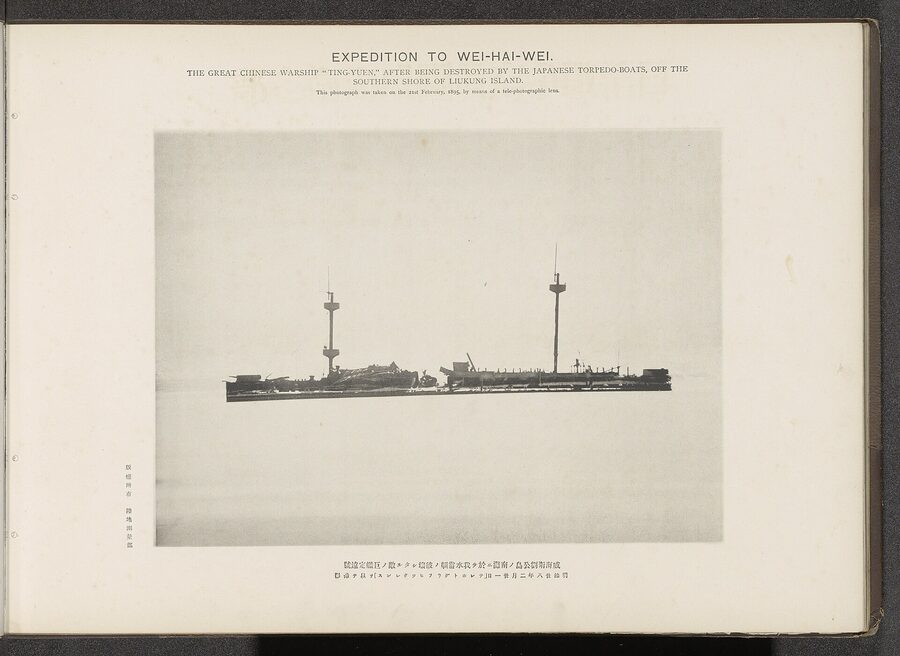
The war at sea was over. The Teienkan’s oars and the plate on the Dazaifu gate came up from that harbour a year later.
Korea in the winter of 1894
In Korea, meanwhile, the war had turned on the Koreans. The Donghak told its followers not to help the Japanese, and through the late summer telegraph wires were cut, supply depots raided and Japanese soldiers taken and killed. In October Jeon Bong-jun raised the peasant armies again, this time against the pro-Japanese government and the Japanese themselves, under a slogan that rejected Japan and its kind of modernisation together.
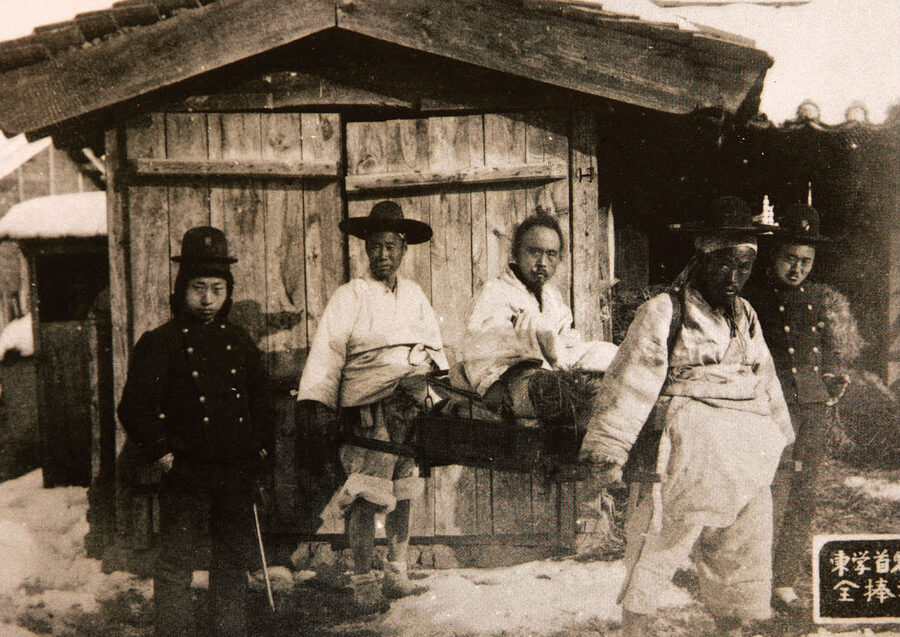
Japan sent a reserve battalion to put the rising down, alongside Korean government troops and gentry militias. The decisive fight came at Ugeumchi, a pass outside Gongju, from late November into December, where peasant armies attacked uphill into rifle and artillery fire for days and were cut to pieces. Kawakami Sōroku, the army’s deputy chief of staff, had telegraphed that the Donghak were to be dealt with severely and all killed from now on, and the hunt that followed went to the far south-west tip of the peninsula and the island of Jindo. Estimates of the peasants killed run from 30,000 to 50,000, though no one counted.
Jeon was captured at the turn of the year, held at the Japanese consulate in Seoul, tried, and hanged in the spring of 1895. In 1995 a skull labelled as that of a Donghak leader, taken from Jindo in 1906 by a Japanese official and sent to his old college in Sapporo, was found in a cardboard box at Hokkaido University. It went home to Korea the following year.
Ten years on, the same two men
China had been trying to make peace since November. Two envoys were received in Hiroshima on 1 February 1895, at the prefectural office, and sent home the next day on the grounds that their credentials were inadequate, which was true and also convenient, since Japan had not yet taken Weihaiwei or anything on the road to Taiwan. In March the Qing court sent the man Japan wanted, Li Hongzhang himself, seventy-two years old and the senior statesman of the empire.
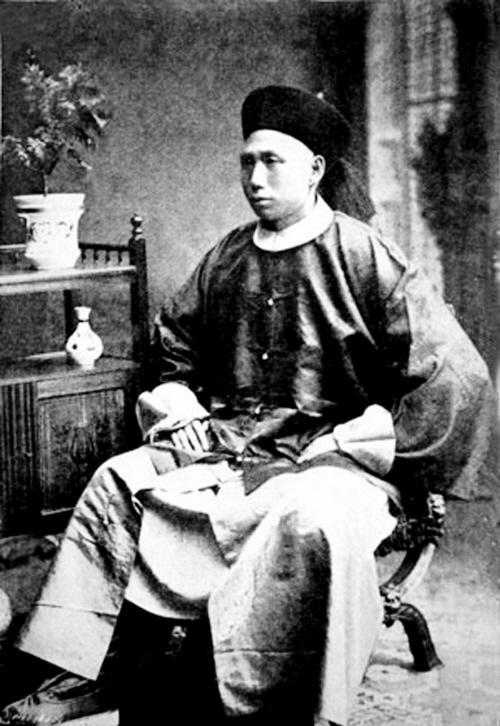
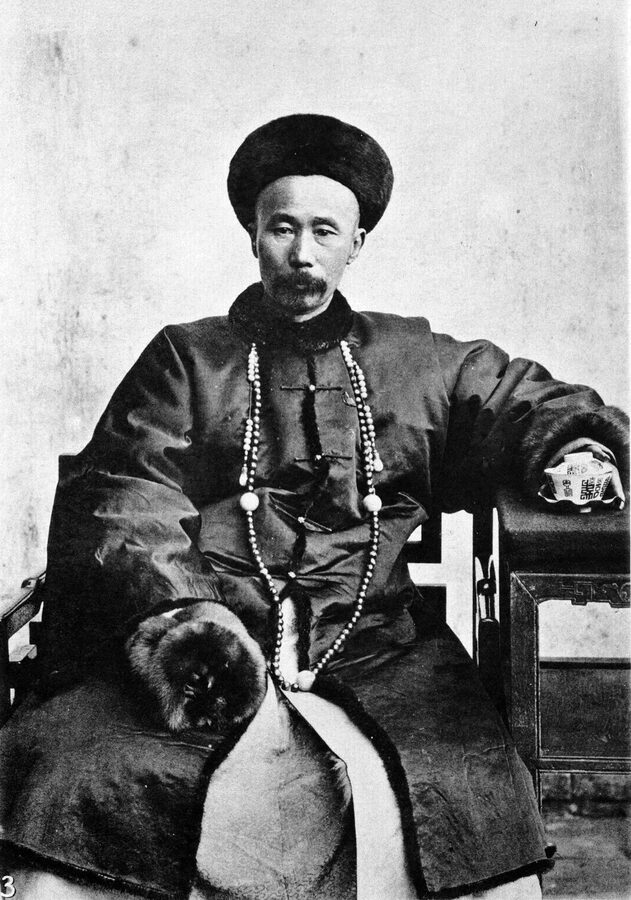
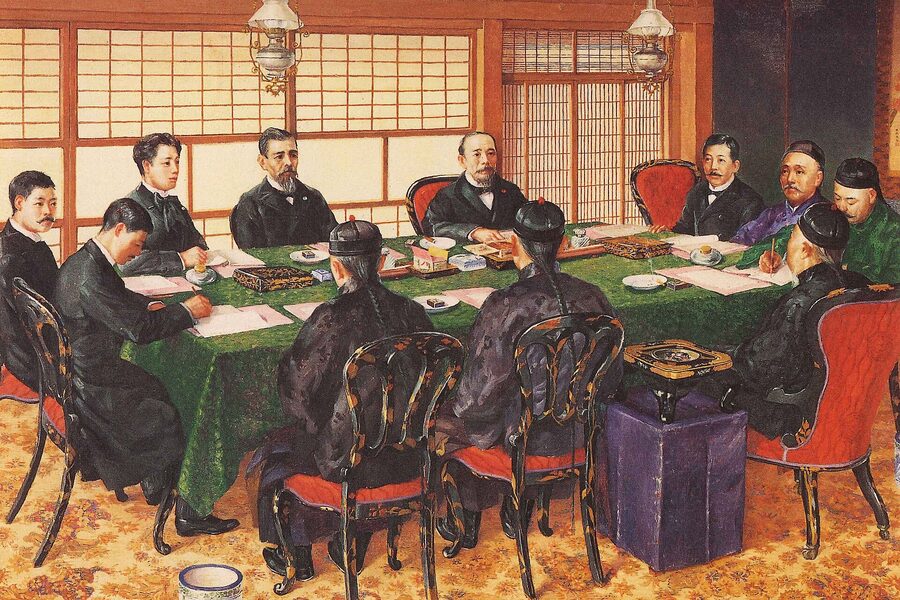
He reached the Kanmon Strait on 19 March, and the talks opened the next day at Shunpanrō (春帆楼), an inn and fugu restaurant above the water at Shimonoseki, with Itō and Mutsu across the table: the same Itō he had faced at Tianjin. Japan refused an armistice and let him know its forces were already on their way to Taiwan. Late in the afternoon of 24 March, as Li went back to his lodgings at the temple of Injō-ji, a young political hanger-on from Gunma called Koyama Toyotarō stepped out of the crowd and shot him in the face with a pistol.
The bullet lodged in his cheek below the eye and, by the usual account, was never removed. Li finished the negotiations with his face bandaged. The Japanese government panicked, quite reasonably. The emperor sent two army surgeons-general and a rescript of regret, the empress sent bandages she had made herself, and within a week Japan granted the armistice it had been refusing, though not for Taiwan or the Pescadores.
The Pescadores, the islands in the Taiwan Strait, were taken in the last week of March, and they show what the war usually cost Japan’s own men. Cholera broke out in the transports before the landing, and of the 6,194 men in the expedition, porters included, 1,257 died of it, more than Japan lost in any battle of the war.
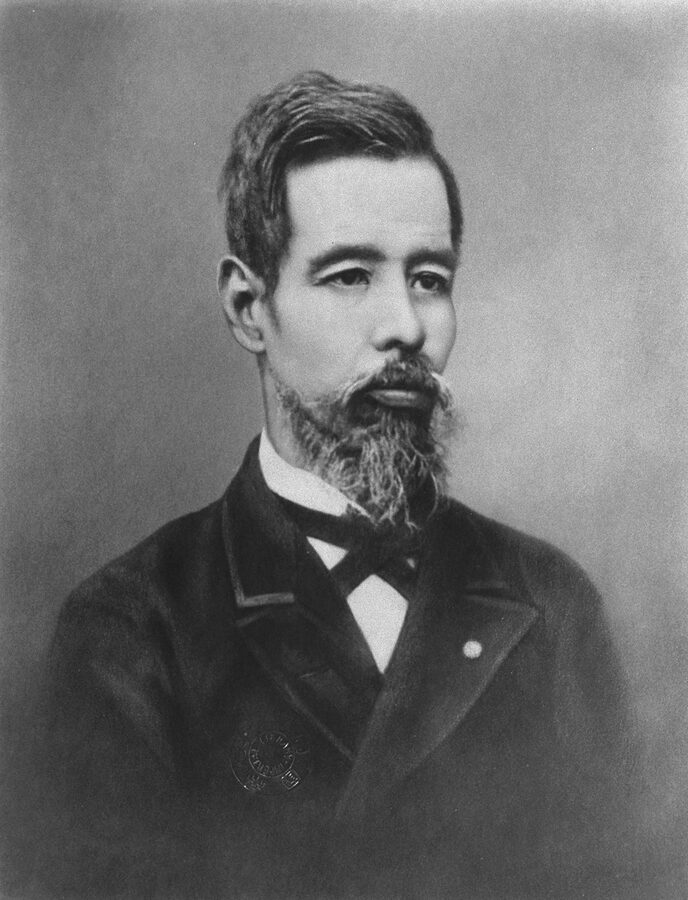
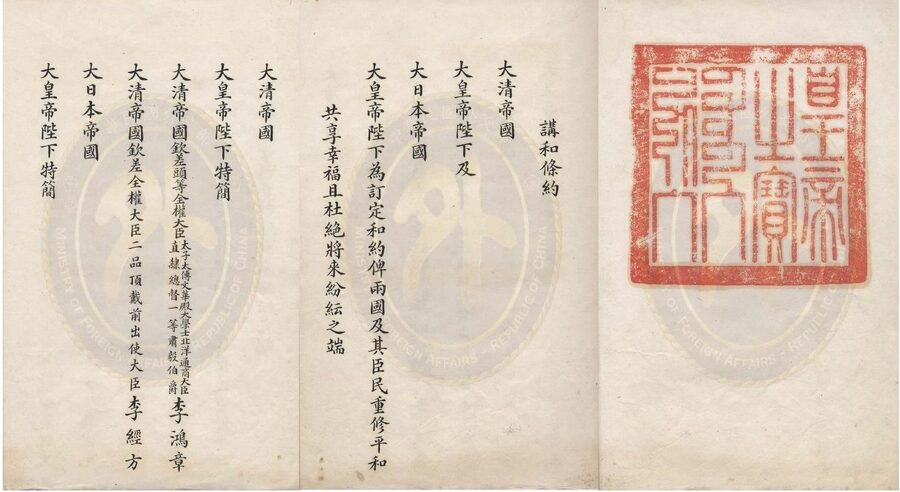
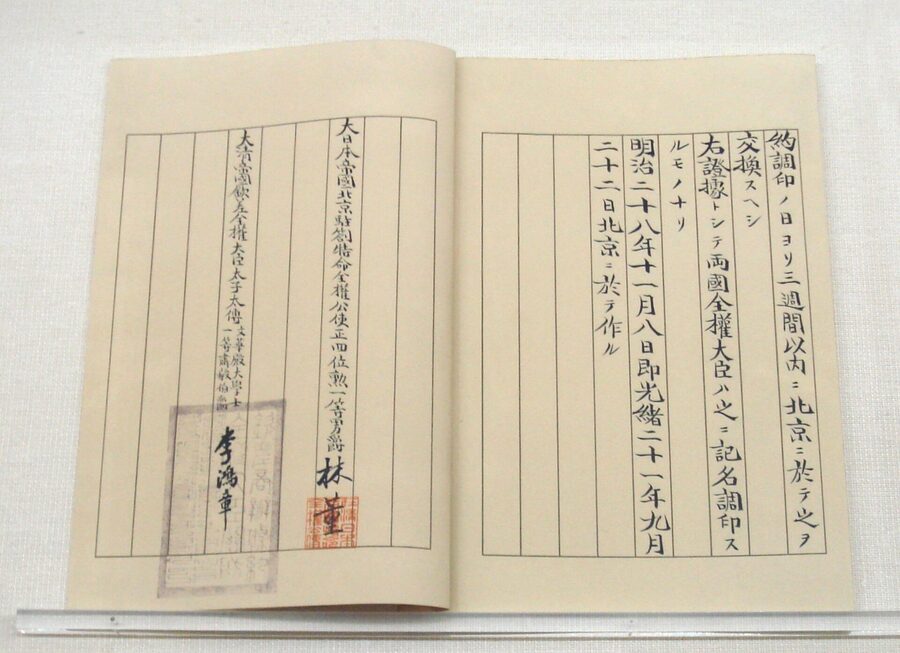
The treaty was signed at Shunpanrō on 17 April. China recognised Korea’s full independence, which in practice meant the end of Chinese protection and the start of Japanese; ceded Taiwan, the Pescadores and the Liaodong peninsula with Port Arthur; agreed to pay 200 million Kuping taels over seven years, about two and a half years of the Qing government’s entire revenue; and opened four more cities to Japanese trade and Japanese factories. Japan would occupy Weihaiwei until the money came in.
Japanese historians also count the treaty as the quiet end of the argument over the Ryukyu kingdom, annexed by Japan in 1879, whose palace at Shuri Castle had received Chinese envoys for nearly five centuries. The treaty did not need to mention it.
Six days later the ministers of Russia, Germany and France called at the Japanese foreign ministry and advised Japan to give the Liaodong peninsula back, on the grounds that holding it would threaten Beijing and make Korean independence meaningless. Russia sent warships to Kobe; Germany joined to keep Russia busy in the east, and France to keep its alliance with Russia. At an imperial conference in Hiroshima on 24 April the government thought of calling an international conference, and Mutsu, in bed with his illness, talked Itō out of it the next morning on the grounds that a conference would only invite more interference. On 5 May Japan gave in.
China paid another 30 million taels, about ¥45 million, for Liaodong under a convention signed on 8 November. In Japan the press and the opposition were furious, and the government put the fury to use with an old Chinese phrase, gashin shōtan, sleeping on brushwood and licking gall, the patience of a man nursing his revenge. Three years later Russia leased Port Arthur for itself, and six years after that Japanese soldiers were dying by the thousand on the same hills in the Russo-Japanese War.
Taiwan, taken by force
Taiwan had not been fought over at all, and nobody had asked its people. When news of the treaty arrived, officials and gentry in Taipei declared a Republic of Formosa on 23 May, with the Qing governor Tang Jingsong as president and a tiger on its flag, and inaugurated it two days later, which is why some books give the 25th. It was meant to hold on until the powers intervened, and the powers did not.
The Imperial Guard Division landed in the north on 29 May, Taipei fell within ten days, and Tang left for the mainland. The south took five months: Hakka militias and village fighters waged a guerrilla war against two Japanese divisions under the old general Liu Yongfu, who took over the republic at Tainan, and the Japanese answered with burned villages and killings meant as punishment and deterrent, a method Japanese historians themselves describe as routine in that campaign. Japanese troops entered Tainan on 21 October and declared the island pacified on 18 November.
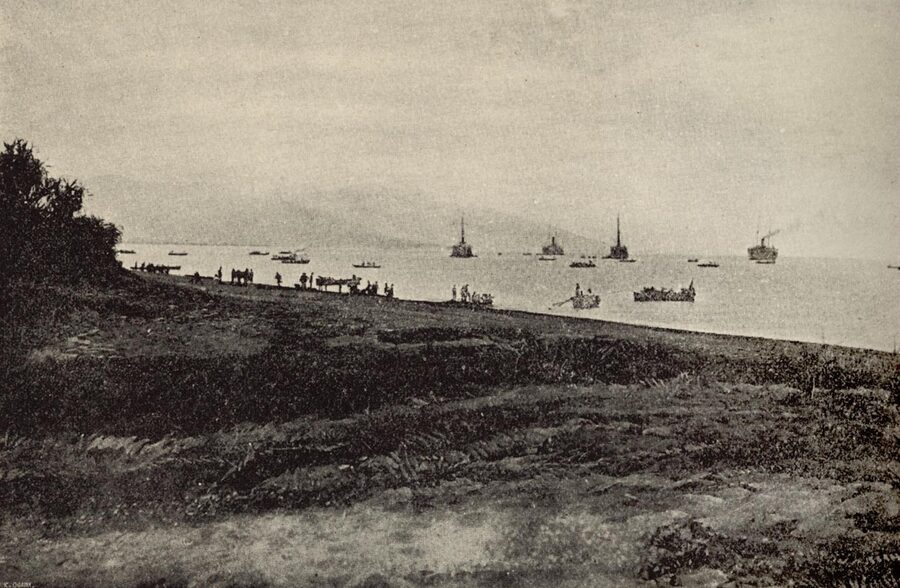
Japan lost 164 men killed in action in Taiwan and 4,642 to disease, mostly malaria, among them the division commander, Prince Kitashirakawa Yoshihisa, who died at Tainan at the end of October and was later enshrined as the god of the Taiwan Grand Shrine in Taipei. Around 14,000 Taiwanese soldiers and civilians are estimated to have died, and armed resistance went on in the hills for years. Taiwan stayed a Japanese colony through the Taishō era and most of the Shōwa era, until 1945, and the Imperial General Headquarters was only dissolved, its war officially over, on 1 April 1896.
Hiroshima, newsprint and the war at home
For seven months the war was run from Hiroshima. The city was the western end of the railway from Tokyo and had the port of Ujina, from which most of the troops sailed, so the Imperial General Headquarters moved into the Fifth Division’s headquarters building inside Hiroshima Castle, and on 15 September 1894 the emperor arrived to live in it. He stayed until late April 1895, 225 days by one count and 227 by another, in a single room on the upper floor that served as office, dining room and bedroom.
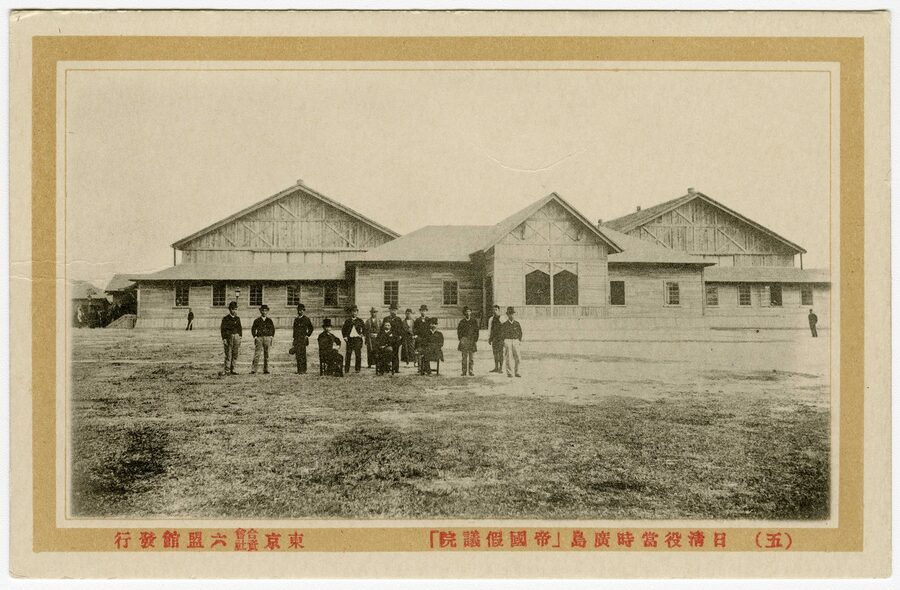
The Diet came too. A temporary timber parliament went up on the West Parade Ground, and on 18 October the Seventh Diet met there for four days and passed a war budget of ¥150 million, nearly twice the government’s entire spending of the year before, without a single vote against. The opposition that had tried to impeach the cabinet in May now could not support it fast enough.
The newspapers had a better war than anyone. The Ōsaka Asahi and the Chūō Shinbun, which sent correspondents to the front, gained readers; papers that covered it badly lost them, and some never recovered. Kunikida Doppo wrote his dispatches from the cruiser Chiyoda as letters to his younger brother, and Masaoka Shiki insisted, against his friends’ advice, on going to the front as a correspondent in April 1895, landed two days before the treaty was signed, called on the army doctor Mori Ōgai, and coughed up blood on the ship home, a relapse of the tuberculosis that killed him in 1902.
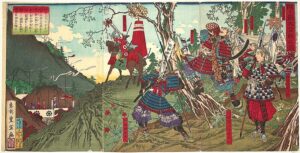
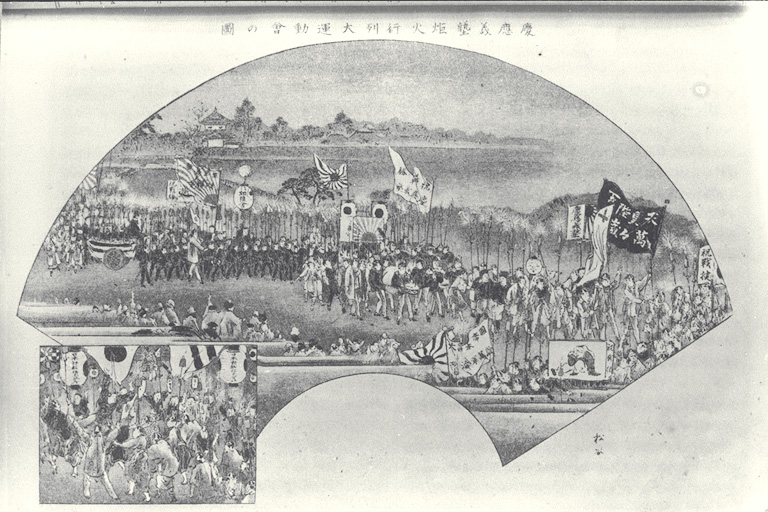
The print publishers had a boom. Kiyochika, Mizuno Toshikata, Ogata Gekkō, Migita Toshihide and dozens of others turned out triptychs of every engagement within days of the news, mostly from imagination, with Japanese soldiers in clean uniforms and Chinese ones drawn as cowards. Fukuzawa Yukichi, the most influential liberal in the country, called it a war between civilisation and barbarism; the Christian Uchimura Kanzō called it a righteous war, and later bitterly regretted saying so. Children played at it in the streets and threw stones at Chinese residents.
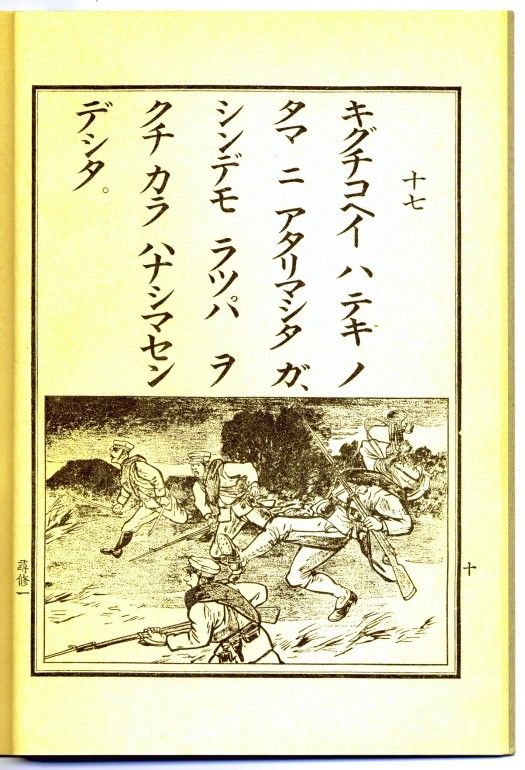
And the army made heroes. Kiguchi Kohei, the bugler of Seonghwan, went into primary-school ethics textbooks in 1902 and stayed there until 1945, as the soldier who did not take the bugle from his lips even in death. The cult of the loyal and brave common soldier, chūyū bidan, was new: before the war bravery had been something samurai were supposed to have, and this was the war in which the newspapers taught a conscript nation that its farm boys had it too, a story the bushidō revival of the next decade made much of.
By the standards of what came later, the war was cheap for Japan. By the general staff’s own count the army lost 1,132 men killed in action, 285 dead of wounds and 11,894 dead of disease, so that cholera, dysentery and beriberi killed eight times as many soldiers as the Chinese did, and the porters’ dead, never counted, are put at more than 7,000 by the historian Harada Keiichi. The returning troops brought cholera home with them, and 40,241 people died of it in Japan in 1895, far more than in the whole war.
The money came in British gold, about ¥364 million in all with the Liaodong payment and interest, more than four times Japan’s government spending in 1893. The war itself had cost about ¥233 million, often rounded up to 250. The fund paid back war costs and then went mostly on armaments for the next war, ¥139 million to the navy and ¥57 million to the army, with ¥20 million to the imperial household, ¥10 million to an education fund and about ¥580,000 to start the Yawata ironworks; and the sterling reserves put Japan on the gold standard in 1897.
Where to see the First Sino-Japanese War today
Most of the places that matter are outside Japan: Pyongyang; Lüshunkou and Weihai, where Chinese memorials and the replica Dingyuan tell the story their own way; Gyeongbokgung in Seoul; and the Donghak sites around Jeongeup and Gongju. In Japan the war has left surprisingly little, some of it deliberately rubbed out after 1945, and you have to look for it. My list of Japan’s most decisive battles stops at Sekigahara, among samurai fighting samurai at home; this was a different kind of decisive, and its traces are quieter.
Shunpanrō and the peace memorial hall, Shimonoseki
Shunpanrō stands on the hill beside Akama Shrine, the shrine to the child emperor Antoku who drowned in the strait in 1185, and looks straight out over the Kanmon Strait to Kyushu. A doctor, Fujino Genyō, opened a clinic on the site in 1877, and after his death his widow, Michi, turned it into an inn, named by Itō Hirobumi, who in 1888 also let it become the first restaurant in Japan licensed to serve fugu. The old building burned in an air raid in 1945, and the inn you see is modern.
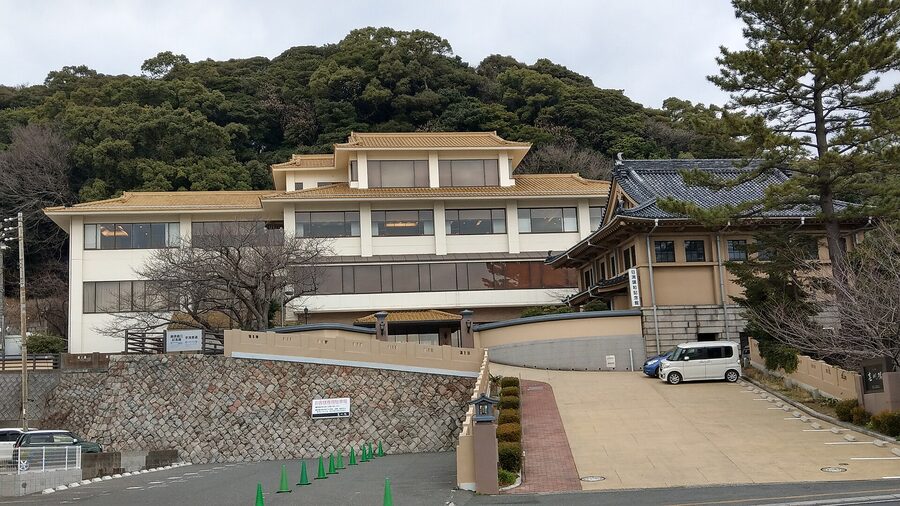
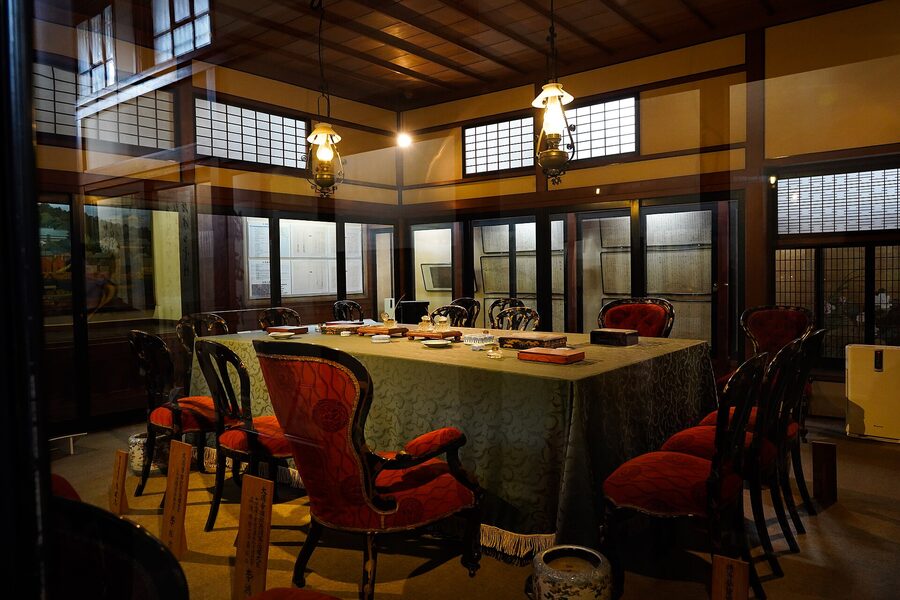
The Nisshin Kōwa Kinenkan (日清講和記念館), the Sino-Japanese Peace Memorial Hall, was built beside it in 1937 to hold the furniture from the conference room, and it came through the 1945 raid that destroyed the inn and most of Akama Shrine. Inside is the room laid out as it was: the long table, the upholstered chairs made in Britain for the Japanese government and set in the delegates’ seating order, and the writing sets and French stove that were actually used. Photographs and documents line the corridor round it.
The hall is open every day from 9:00 to 17:00 and admission is free. From JR Shimonoseki Station a Sanden Kōtsū bus takes about ten minutes to the Akama-jingū-mae stop, and the hall is two minutes’ walk from there. If you want to eat at Shunpanrō itself, book through the inn’s own site; it is a serious fugu house, and priced like one.
The Li Hongzhang path and Injō-ji
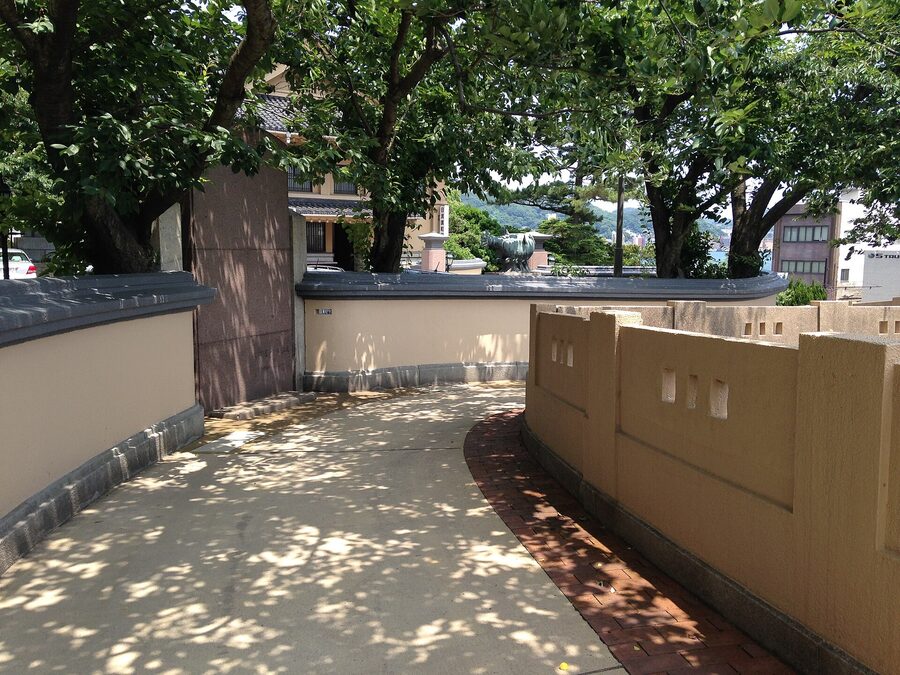
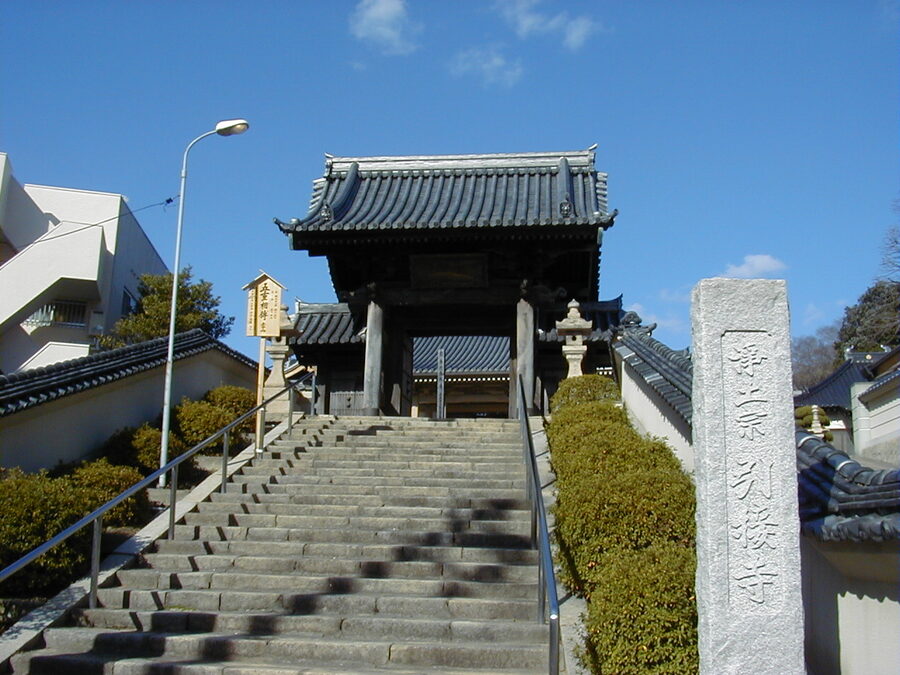
Beside the memorial hall a narrow lane, the Rikōshō-michi or Li Hongzhang path, runs along the hillside towards Injō-ji (引接寺), the temple where the Chinese delegation lodged. Li is said to have used it after the shooting rather than the main road, and it is a short, quiet walk with the strait glimpsed between the walls. Injō-ji is a working temple with nothing about 1895 to see inside; go for the gate and the steps.
The Imperial Headquarters site, Hiroshima Castle
Walk into the honmaru of Hiroshima Castle and, a short way from the keep, you will find a rectangle of foundation stones in the grass. That is the Imperial General Headquarters. The building stood about 900 metres from the hypocentre on 6 August 1945 and was flattened; in 1948, with the military past out of favour, its listing as a historic site was cancelled and part of the inscription on its monument stone was filled in, and you can still see where.
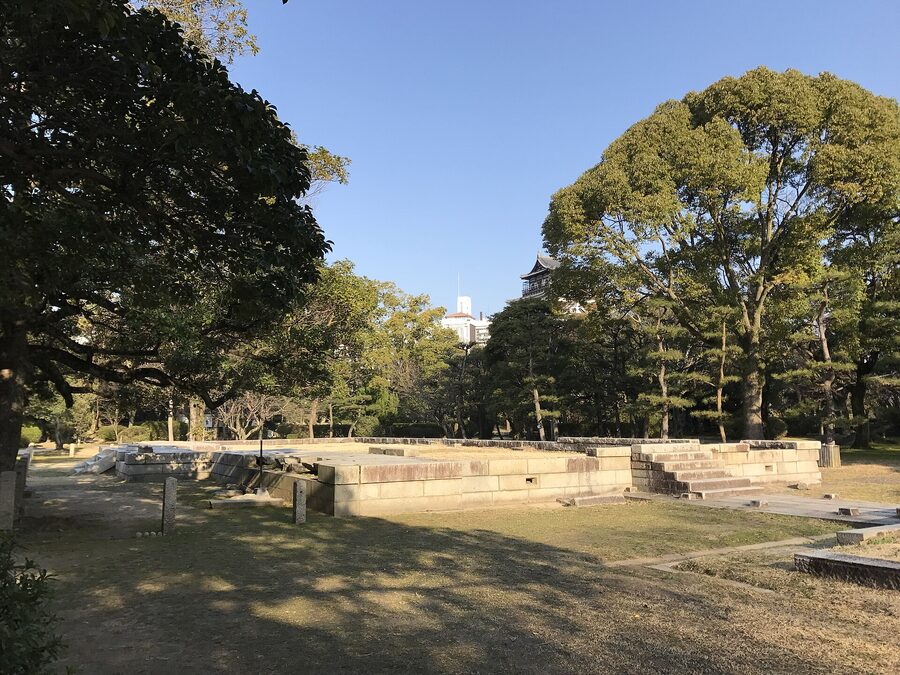
The castle keep, a 1958 concrete reconstruction, closed indefinitely on 22 March 2026 because its concrete was failing, and its collection is moving to the new Sannomaru History Museum, due to open in stages in June and October 2027. The grounds stay open and free, and so do the reconstructed Ninomaru gate and turrets, 9:00–17:30 from April to September and 9:00–16:30 from October to March. The castle is about fifteen minutes’ walk north of the Kamiyachō tram stops.
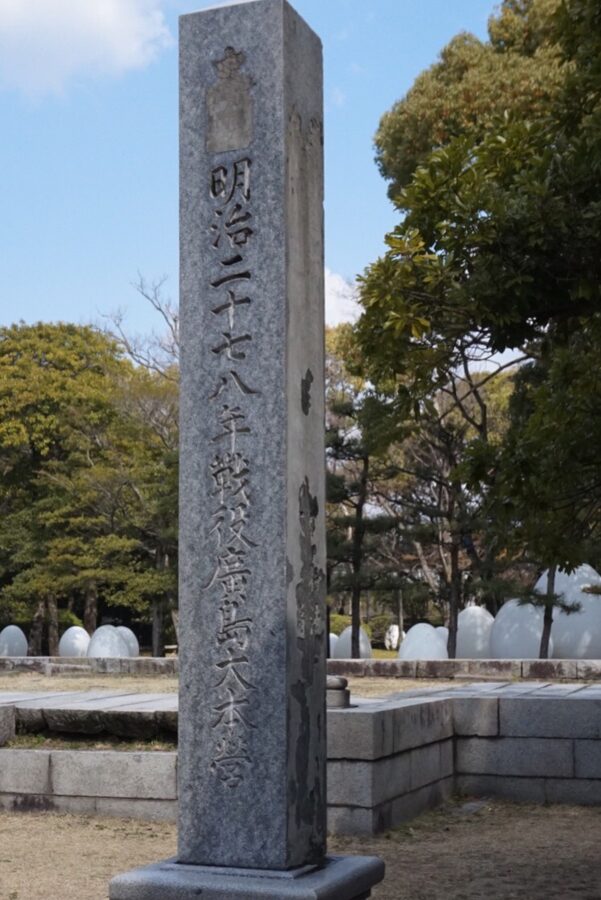
Shukkeien, the Asano lords’ garden a short walk east of the castle, was named a reserve headquarters in October 1894, with one of its pavilions kept ready for the emperor. It is open 9:00–18:00 from 16 March to 15 September and 9:00–17:00 the rest of the year, closed 29–31 December, and costs ¥350.
Hijiyama Army Cemetery, Hiroshima, and Sanadayama, Osaka
The army cemetery on Hijiyama, the hill in the east of Hiroshima, dates from 1872, and about 4,500 soldiers from the Satsuma Rebellion to the Second World War lie there. Its stones were pulled down and buried in the 1940s, the old site went to the American radiation research institute after the war, and what you see is a reconstruction of 1960 on the hill’s southern side. The Sino-Japanese War dead are named on its joint memorials. There are also graves of Chinese soldiers, and it is worth finding them, because very little else in Hiroshima acknowledges the other side of this war.
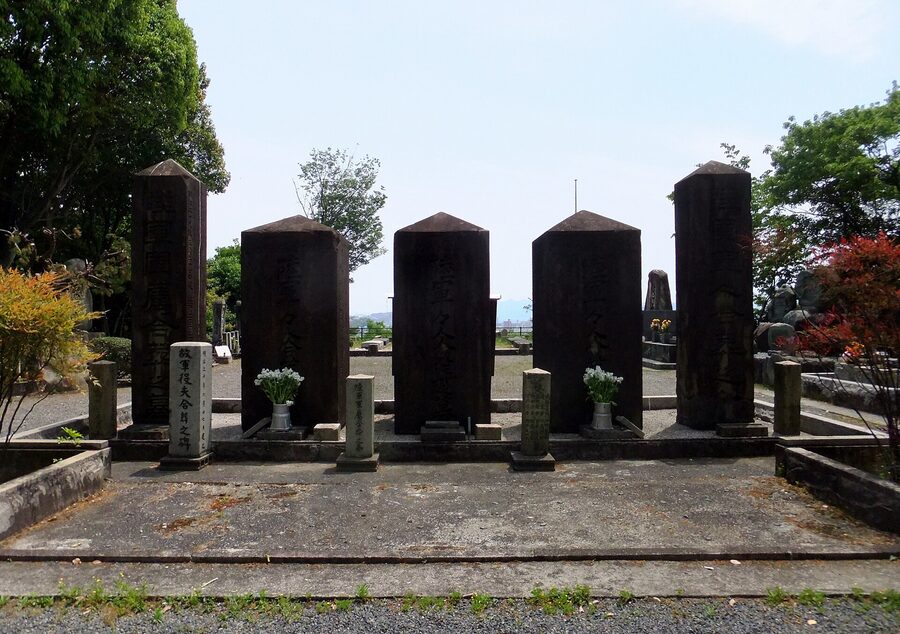
It is an uphill walk from the Hijiyama-shita tram stop, and there is no charge. If you are in Osaka, the Sanadayama Army Cemetery holds the largest group of Sino-Japanese War graves in Japan, about 1,400, including civilian porters and Qing prisoners who died in captivity there.
The Teienkan, Dazaifu
And then there is the gate. From Nishitetsu Dazaifu Station walk up the shopping street towards Dazaifu Tenmangū; the Teienkan is on the right near the information office, its forecourt now a car park. It is not a museum, there is nothing to pay and nothing to buy: look at the gate, and then at the house, where ship’s fittings that look like handrails frame the entrance, a decorated beam from the ship runs across the front, and the oars of the Dingyuan’s boats sit under the veranda on the left.
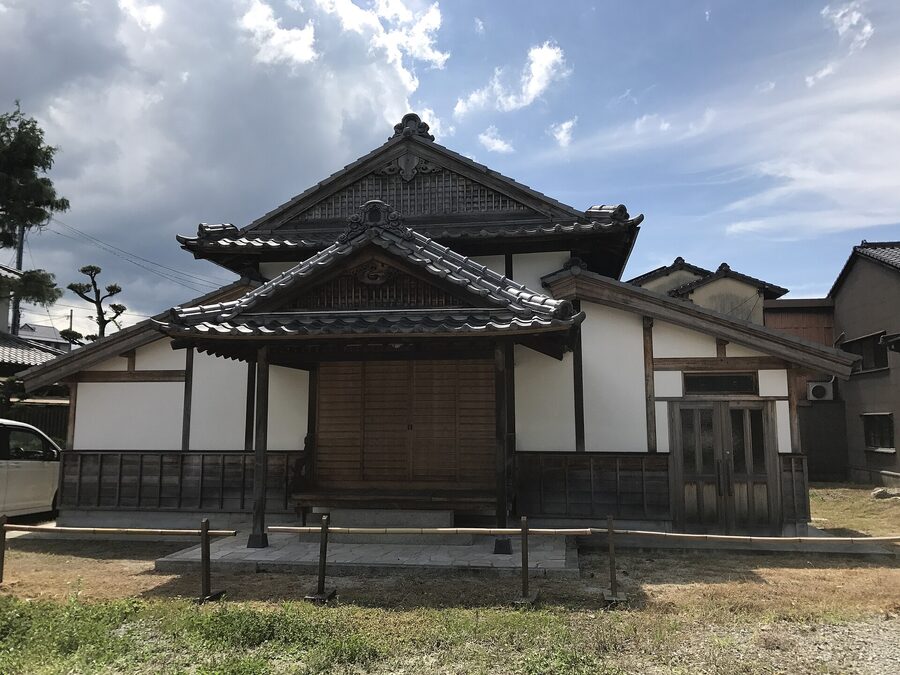
Ono Ryūsuke, who salvaged the ship, belonged to the Genyōsha, the Fukuoka nationalist society that had been agitating for a hard line on Korea since the 1880s. He meant the house as a trophy, and that is how it was read for half a century.
The gate in the car park
I keep going back to that gate because it is the most truthful monument to this war in Japan, and nobody meant it to be. The monuments that were meant, the victory steles and the triumphal stones, were taken down, defaced or simply forgotten after 1945, and the ones that survive are passed without a glance. The gate is just there, a slab of a dead navy’s armour with a shell scar on it, hung on a post where people park on their way to pray for their children’s exam results.
So if you are in Fukuoka, and sooner or later you will be, go to Dazaifu, walk past the plum trees and the exam charms, and find the car park on the right. Look for the scar. Then think about the men on the Dingyuan’s gun decks off Dagushan, who took 159 hits and kept firing, and about the people of Port Arthur and the farmers on the hill at Ugeumchi, who have no monument in Japan that I know of.