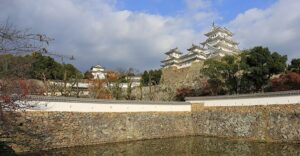
In Japanese, a meeting that goes round in circles all afternoon and decides nothing has a name. It is an Odawara hyōjō (小田原評定), an Odawara council, and the phrase has been an insult for about three hundred years. The men it insults are the Hōjō, who sat inside Odawara Castle in the summer of 1590 arguing about whether to fight or surrender while something like 200,000 of Toyotomi Hideyoshi’s soldiers ate, drank, held tea parties and built a stone castle on the hill opposite.
I think it is one of the great injustices of the language. The real Odawara council met twice a month for most of a century, and it ran the best-governed state in eastern Japan: five generations of lords, tax orders the villages could check for themselves, and almost none of the treachery that ended every other house of the Sengoku era. The castle it met in turned back Uesugi Kenshin in 1561 and Takeda Shingen in 1569, and by 1590 it sat inside nine kilometres of earthworks that enclosed an entire town.
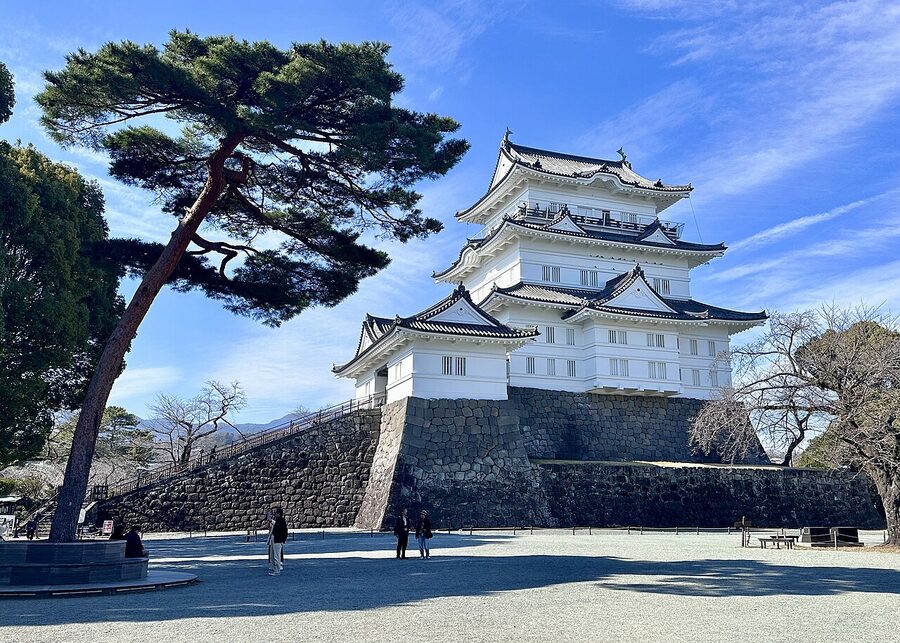
This is the story of how the castle grew, why it held, and why in the end it opened its gates without a real fight. It runs from a shogun’s errand boy in the 1490s to a concrete keep with an elephant in its garden. And it ends, as these things should, with where you can stand today, which at Odawara includes a pastry shop on top of Hideyoshi’s siege camp.
In This Article
- The man who never called himself Hōjō
- The fire oxen
- A tiger on the paperwork
- Ujiyasu, the scarred one
- The walls that sent Kenshin and Shingen home
- Shingen’s four days
- Nine kilometres of earth
- 1590: the siege that was mostly a picnic
- The arithmetic
- Tea, hot springs and a stone castle
- The branch castles fall
- The council that would not end
- After the Hōjō: a smaller castle on a busier road
- Demolition, an elephant and a concrete keep
- Where to see the Hōjō’s Odawara today
- The keep and the castle park
- The SAMURAI and NINJA museums
- Walking the sōgamae
- Ishigakiyama Ichiya Castle
- The Hōjō graves
- The Hōjō Godai Festival
The man who never called himself Hōjō
Start with the founder, because almost everything people used to say about him turns out to be wrong. For three centuries Hōjō Sōun (北条早雲) was the model of the self-made warlord: a masterless nobody from Ise who reached the east coast with six sworn companions, talked his way into a sister’s household and, in his sixties, began conquering provinces. Novelists loved him. Television documentaries still occasionally sell him as proof that it is never too late to start again.
He was nothing of the sort. His real name was Ise Moritoki, he came from the Bitchū branch of the Ise family that ran the shogun’s household administration, and in the 1480s he was a junior official in the service of the Muromachi shoguns in Kyoto. His sister (or possibly half-sister) Kitagawa-dono married Imagawa Yoshitada, the military governor of Suruga, and when Yoshitada was killed in 1476 the family quarrel over his infant son pulled Moritoki east. Whether he first went in 1476 or only in 1487, when he led the coup that put his nephew in charge of Suruga, is still argued over.
He never used the name Hōjō in his life. He signed himself Ise Shinkurō, and later, after taking the tonsure, Sōun-an Sōzui; the “Hōjō” was adopted by his son around 1523, borrowed from the regents of the Kamakura era because it carried weight in the Kantō. Historians now often call him Ise Sōzui, and the latest edition of the Kōjien dictionary has moved his entry under his real name.
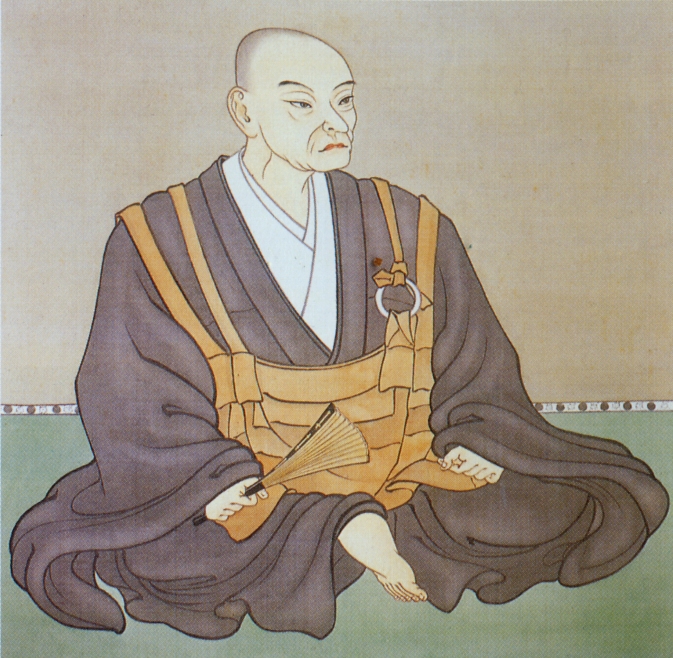
Even his age is in dispute. The traditional birth year is 1432, which makes him 88 when he died at Nirayama in 1519 and leading armies in his eighties. In the 1990s the historian Kuroda Motoki found a retainer family’s death register giving him 64 years, which puts his birth in 1456, and most specialists now accept that. Both years fall in the year of the rat, which is how a 24-year error survived so long.
The fire oxen
The story everyone in Odawara knows is how he took the castle. By the 1490s Sōun held Izu, having driven out Chachamaru, the new shogun’s murderous half-brother, on what was effectively an official commission. Odawara, just over the Hakone hills, belonged to the Ōmori family, and the chronicles say Sōun spent months sending its young lord Ōmori Fujiyori presents until Fujiyori stopped being suspicious.
Then he asked permission to send beaters into the Hakone hills for a deer hunt. Fujiyori said yes. That night, the story goes, Sōun’s men tied burning torches to the horns of a thousand oxen and drove them at the castle while the “beaters” in the hills raised a war cry, and the garrison, believing tens of thousands were coming, ran.
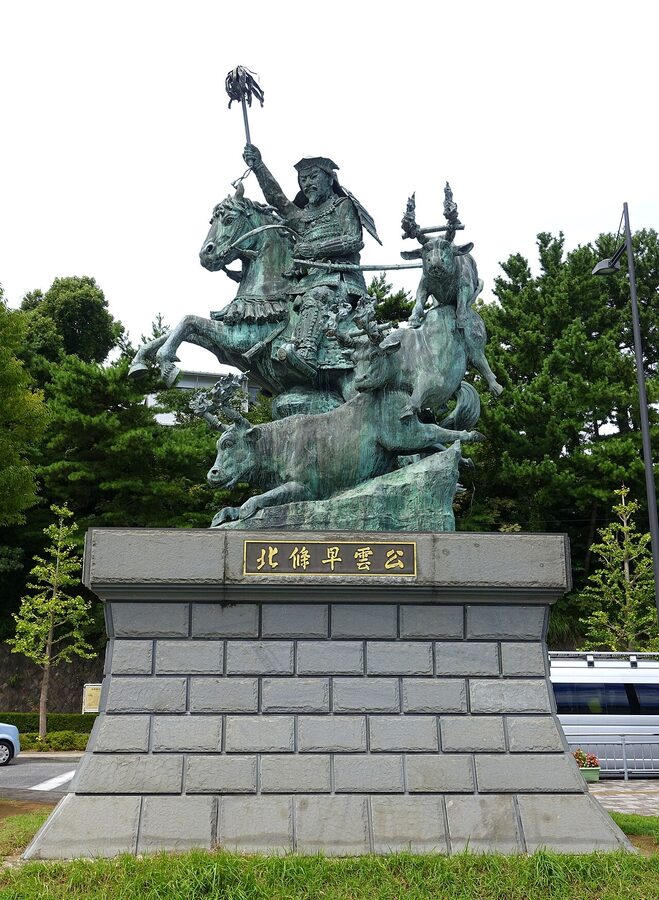
I would not lean on it. Castle-by-trickery stories of exactly this shape are told of Oda Nobuhide and Amago Tsunehisa, and the burning oxen come from Tian Dan, a Chinese general of the third century BC whom any educated samurai had read about. One local historian has suggested the oxen are a folk memory of a tsunami that hit this coast in the 1490s.
The date is wobbly too. The chronicles say 1495; Kuroda found a 1496 letter naming Ōmori Fujiyori among the defenders of what looks like Odawara and puts the capture later, by 1501 at the latest. And Sōun himself never moved in: he kept his seat at Nirayama in Izu until he died, and the first Hōjō to make Odawara the capital was his son.
A tiger on the paperwork
That son was Hōjō Ujitsuna (北条氏綱), and he and his successors built something more interesting than a castle. Ujitsuna took the clan’s name, pushed into Musashi and in 1524 took Edo Castle from the Ōgigayatsu Uesugi, sixty-six years before Tokugawa Ieyasu ever saw it. He also began, in the year his father handed over the headship, to issue orders under a square red seal with a crouching tiger on top.
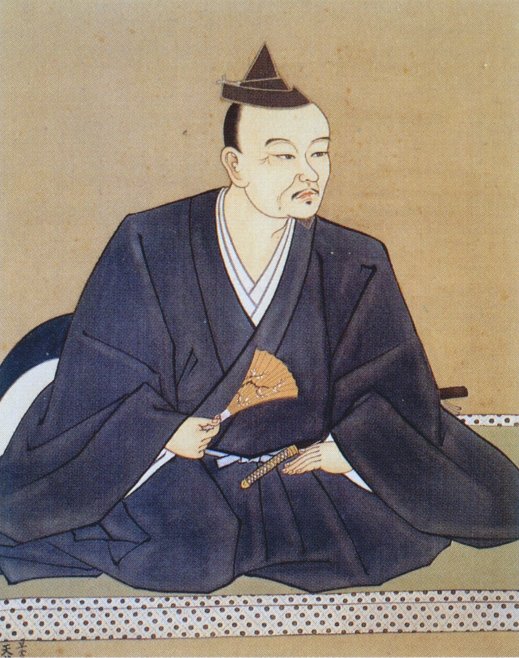
The tiger seal was a small idea with large consequences. Any demand for tax or labour that reached a village without it was void, which meant a local steward could no longer invent a levy and pocket the proceeds. For the first time in the Kantō, a lord was speaking directly to his villages in writing, and the villages could check.
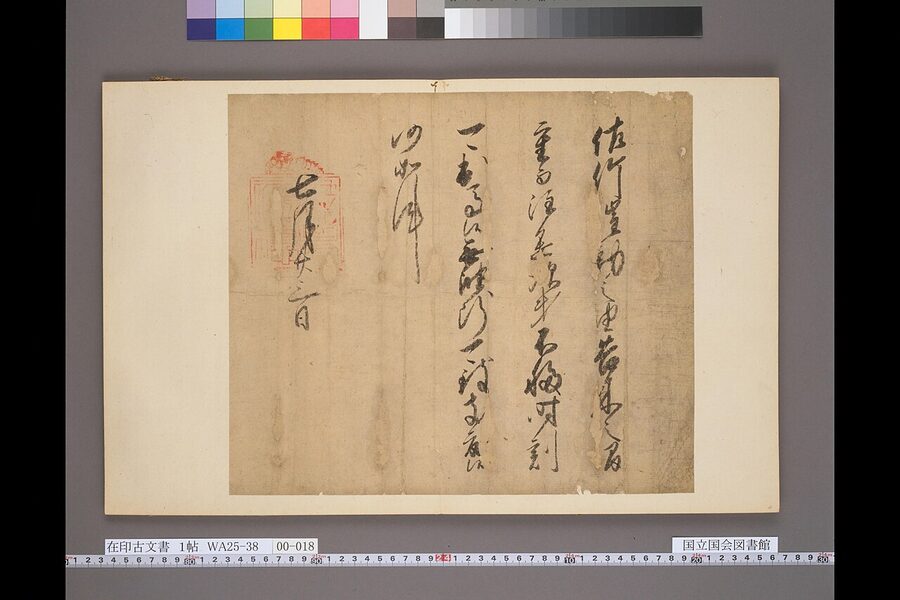
The rest of the system was equally dull and equally effective. Sōun is credited with the earliest surviving land survey by any Sengoku lord, in 1506, and his heirs repeated them, fixing rates in coin per tan of paddy and dry field. In 1559 the clan compiled the Odawara-shū Shoryō Yakuchō, a register of every retainer’s lands and what each owed in men and labour, which survives and which historians still mine.
Policy was argued out in that much-mocked council, the hyōjō, by a rotating group of senior retainers who met twice a month. It worked. Over five generations the Hōjō suffered remarkably few defections among their own retainers, in a century when betrayal was practically a career path.
Ujiyasu, the scarred one
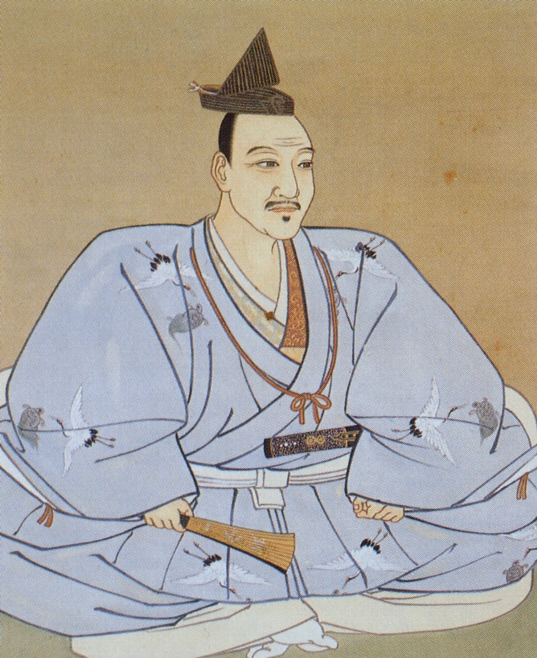
The third lord, Hōjō Ujiyasu (北条氏康), was the best of them. In 1546 he broke a besieging army of both Uesugi houses and the Kantō shogun at Kawagoe with a night attack, a battle the chronicles inflate to 8,000 against 80,000 but which in any version ended the old order in the Kantō. It rarely makes the lists of Japan’s most decisive battles, which I think is an oversight. The story goes that he carried seven wounds, every one on the front of his body, and that “an Ujiyasu scar” became a phrase for a wound taken facing the enemy.
In 1554 he married his children into the Takeda and Imagawa houses, the famous three-way alliance that let each partner turn its back on the others. Ujiyasu’s daughter married Imagawa Yoshimoto’s heir; Takeda Shingen’s daughter married Ujiyasu’s heir, Ujimasa. For a few years the arrangement held, and then Okehazama in 1560 knocked the Imagawa leg away.
The walls that sent Kenshin and Shingen home
The first test came from the north. Uesugi Norimasa, the old Kantō deputy whom Ujiyasu had chased out of his own province, fled to Echigo and handed his title and his grievance to the young lord there, Nagao Kagetora. You know him better as Uesugi Kenshin.
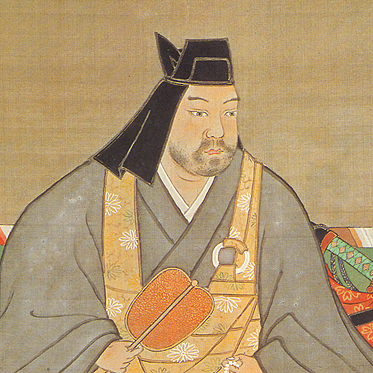
Kenshin crossed the Mikuni Pass in the autumn of 1560 and spent the winter collecting Kantō lords who had never loved the Hōjō. By the third month of 1561 he was at Odawara with an army that the Kanhasshū Kosenroku, a chronicle written a century and a half later, puts at 113,000 men; other accounts give 96,000. Even the smaller figure would have been the largest army anyone in eastern Japan had seen.
Ujiyasu did the thing that frustrated every enemy the Hōjō ever had: nothing. He pulled his men inside, let Kenshin burn the castle town, and refused every invitation to come out. The later chronicles describe a fierce assault by Ōta Sukemasa on the Hasuike Gate, and a story that Kenshin rode up to the moat and calmly drank while the defenders’ bullets missed him; the letters that actually survive from the campaign record no fighting at the walls at all.
The chronicles also say the siege lasted a month. Japanese historians now think it was closer to ten days. Kenshin’s allies were short of food in a famine year, some of them went home without asking, and Takeda Shingen, honouring his side of the alliance, had sent troops to Yoshida and had just finished a new castle at Kaizu facing Kenshin’s own border.
So Kenshin went to Kamakura instead. In the intercalary third month of 1561, at Tsurugaoka Hachimangū, he was installed as Kantō deputy and took the Uesugi name, then marched home to fight Shingen at the fourth and bloodiest of the battles of Kawanakajima that September. He came back to the Kantō almost every year for a decade and never again tried Odawara.
Shingen’s four days
The second test came from the man who had just saved them. In the twelfth month of 1568 Takeda Shingen invaded the crumbling Imagawa state in Suruga, and the Hōjō, whose daughter was married to the Imagawa heir, broke with him and made an alliance with Kenshin instead.
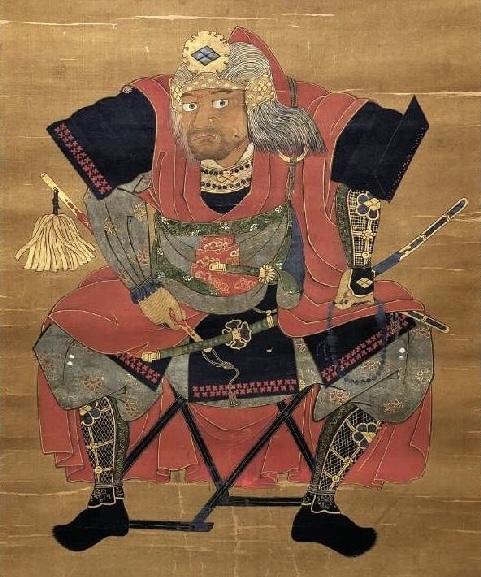
Shingen’s reply came in the autumn of 1569. He left Kōfu with about 20,000 men, swung through Musashi past the Hōjō castles at Takiyama and Hachigata, and arrived outside Odawara on 1 October by the old calendar. He stayed four days, challenged the garrison to come out three times, burned the town, and left.
English-language accounts often call this the second siege of Odawara and give it three days; Japanese historians tend to call it a show of force rather than a siege. I side with them. Shingen had no siege train, no intention of sitting in front of those walls, and every intention of making the Hōjō look helpless in their own capital.
The real fighting came on the way home. Hōjō Ujiteru and Hōjō Ujikuni blocked the Mimase Pass with about 20,000 men, waiting for their brother Ujimasa to come up behind Shingen and close the trap. A few days later Shingen sent Yamagata Masakage over a side ridge onto the Hōjō flank, and by the time Ujimasa’s main army reached Ogino the battle was over.
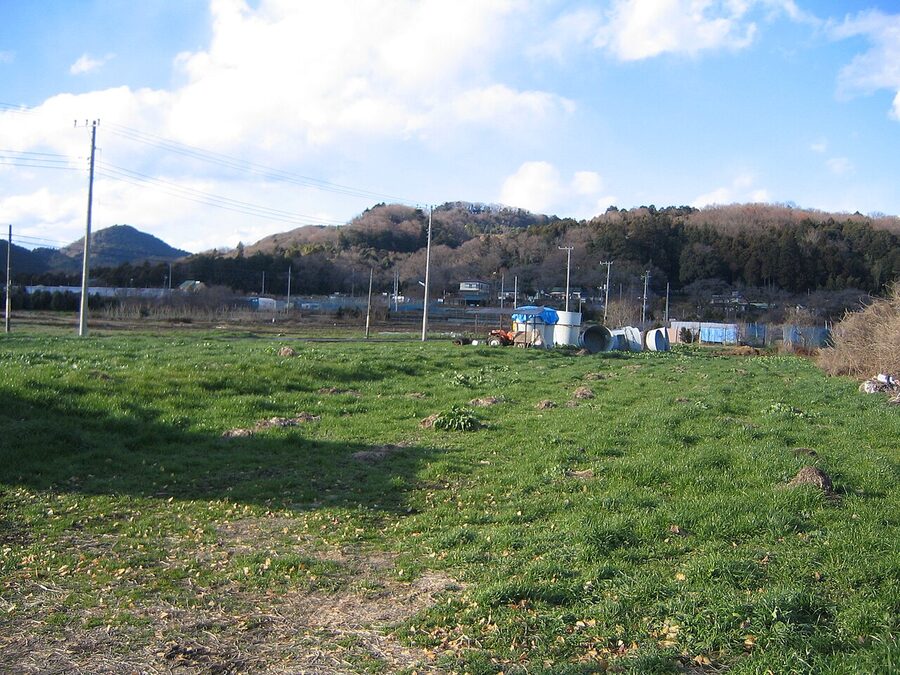
Ujiyasu died in Odawara in October 1571, aged 57, after a stroke that had left him unable, one visitor wrote, to recognise his own children. He is said to have told his sons on his deathbed to drop Kenshin and make peace with Shingen, which they promptly did. The castle had now beaten off the two most famous generals of the age, and I think that was the worst thing that ever happened to it.
Nine kilometres of earth
You can see the lesson the Hōjō drew in the ground. The building orders start in earnest in 1566, before Shingen even arrived, and continue in a series of “great works” (ōbushin) through 1578, 1585, 1587 and the winter of 1589. The last ones were explicitly against Hideyoshi.
The result was the sōgamae (総構), an outer enclosure that wrapped the castle, the town, temples and fields inside a continuous ring of earthen ramparts and ditches roughly nine kilometres long. Some reference works give closer to ten. It ran from Hachimanyama, the old hilltop citadel behind the castle, along the ridges to the highest point at Okane-no-dai and down to the sea, and it was bigger than the outer enclosure Hideyoshi himself later threw around Osaka Castle.
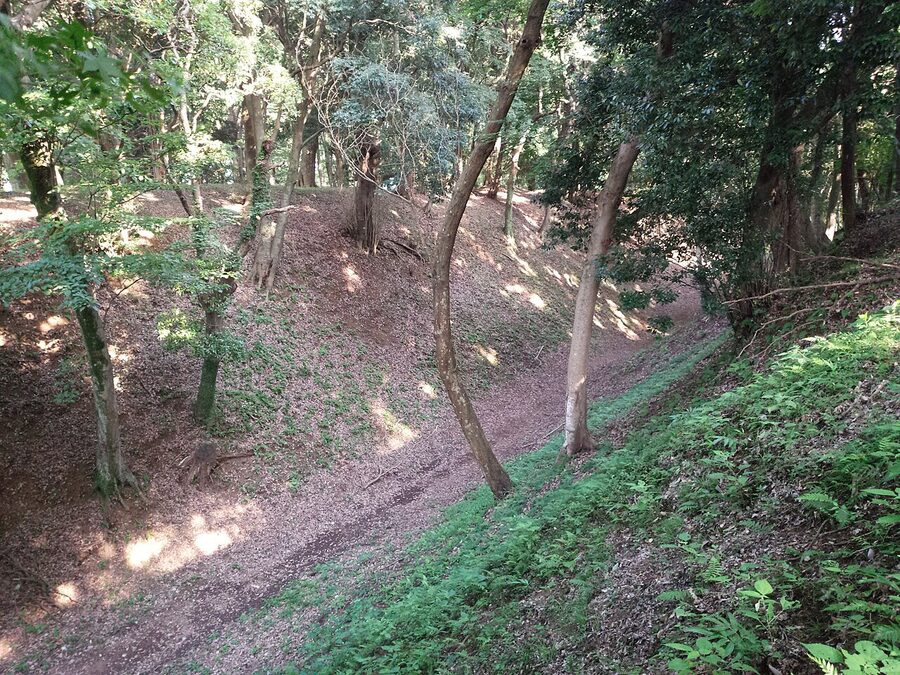
The ditches were not simple trenches either. Hōjō engineers left ridges of earth across the floor of their moats in a grid, the shōji-bori or “paper-screen moat”, so that anyone who jumped in found himself in a series of box-shaped pits, unable to move sideways and easy to shoot. Excavators have found one near the old Kōda-guchi gate that was about 20 metres wide.
By the last winter the Hōjō were drafting every man in their lands between 15 and 70, and melting down temple bells to cast guns. Inside the sōgamae they could feed a town, grow crops and wait. Their entire strategy rested on one assumption: that whoever came would, like Kenshin and Shingen, run out of food first.
1590: the siege that was mostly a picnic
The Hōjō had backed several horses in the 1580s. They submitted to Oda Nobunaga in 1580, turned on his men the moment he died in 1582, fought Tokugawa Ieyasu to a standstill in Kai and then made peace with him, sealed when Ieyasu’s daughter Toku-hime married the young lord Hōjō Ujinao in 1583. Ieyasu was therefore Ujinao’s father-in-law when Toyotomi Hideyoshi began demanding that the Hōjō come to Kyoto and bow.
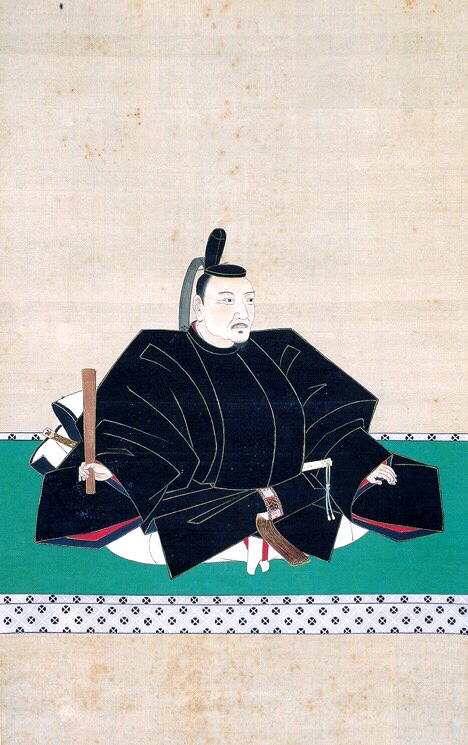
Hōjō Ujimasa (北条氏政), retired in name but still running the house, would not go. He refused to attend the emperor’s visit to Hideyoshi’s Jurakudai palace in 1588, sent his brother Ujinori to Kyoto in his place that summer, and kept promising to come in person later. Hideyoshi tried generosity: in 1589 he settled the Hōjō quarrel with the Sanada family over the Numata district by giving the Hōjō two-thirds of it.
That autumn a Hōjō commander, Inomata Kuninori, seized Nagurumi, a small castle in the third that had gone to Sanada Masayuki, the father of Sanada Yukimura. The Hōjō protested that it was a local misunderstanding and the castle had been handed back. Hideyoshi, who had banned private wars between lords, declared war on the 24th day of the eleventh month of 1589 in a letter that accused Ujinao of defying heaven and the emperor alike. (Dates from here on follow the old Japanese calendar, as the sources do; the Western dates run about a month later.)
The arithmetic
Japanese estimates put Hideyoshi’s army at about 210,000, including a fleet of perhaps a thousand ships and 20,000 men drawn from half the coast of western Japan; some reference works prefer 150,000. He had his commissioners buy 200,000 koku of rice and ship it to a depot on the Suruga coast before he set out. The Hōjō, counting everyone, had perhaps 50,000 men inside Odawara and the rest spread thin across their branch castles.
The Hōjō council met in the first month to choose between holding the castle and fighting in the field. Ujimasa’s brother Ujikuni wanted to meet Hideyoshi on the Fuji River; the old retainer Matsuda Norihide wanted to sit tight. Matsuda won, and Ujikuni went home to Hachigata Castle in a temper to fight his own war.
Hideyoshi’s vanguard went through the Hakone hills like a knife. On the 29th day of the third month his nephew Hidetsugu and Ieyasu stormed Yamanaka Castle, the Hōjō’s main block on the Tōkaidō, and took it before lunch; Hideyoshi wrote afterwards that more than 2,000 heads had been taken from a garrison of about 4,000. The Hōjō outposts at Ashigara and the rest of the Hakone line fell or were abandoned within days.
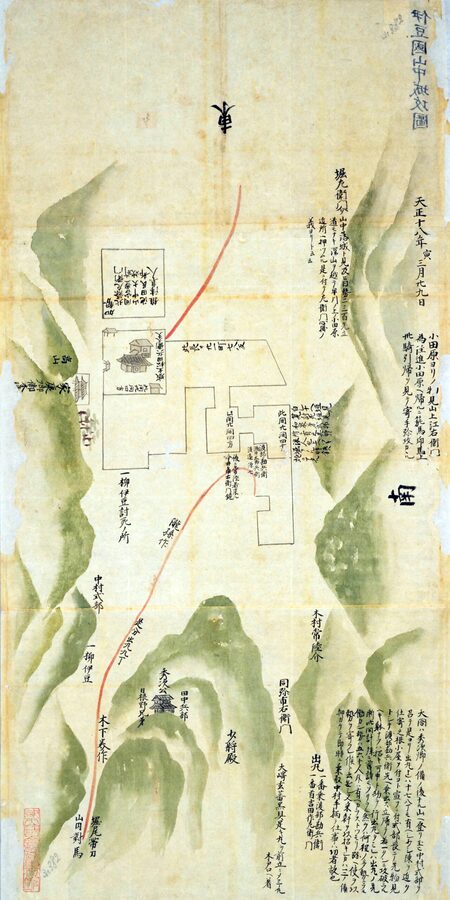
Down in Izu, Nirayama was different. Hōjō Ujinori, the one brother who had argued against war, held it with about 3,640 men against more than 40,000 until late in the sixth month, and only surrendered when Ieyasu and Kuroda Kanbei persuaded him the rest of the house was already finished.
Tea, hot springs and a stone castle
Hideyoshi’s men began closing the ring around Odawara on the 4th day of the fourth month. The next day he moved his headquarters into Sōun-ji, the Hōjō family temple at Hakone-Yumoto, which is the kind of gesture he enjoyed. Then he settled in.
The siege lines became a city. Hideyoshi had his concubine Chacha (the future Yodo-dono) brought from Kyoto, along with his storytellers and his tea master. Sen no Rikyū ran a series of tea gatherings, and the go champion Honinbō Sansa and the artist Hon’ami Kōetsu turned up, and Hideyoshi’s officers took the waters at Hakone. Merchants, entertainers and prostitutes followed the army, and the whole thing ran for the best part of a hundred days.
It had its ugly side. A few days into the siege the tea master Yamanoue Sōji, Rikyū’s senior pupil, slipped out of Odawara, where he had been serving the Hōjō, and Rikyū arranged for Hideyoshi to forgive him. At a tea gathering Sōji said something loyal about his late Hōjō patron, and Hideyoshi had his ears and nose cut off and his head struck off. It is a useful corrective to anyone who thinks the tea ceremony was a peaceful pastime.
The branch castles fall
The siege of Odawara was a sideshow; the war was won in the provinces. A northern army under Maeda Toshiie and Uesugi Kagekatsu came over the Usui Pass and worked through the Hōjō castles one at a time. At Matsuida the veteran Daidōji Masashige surrendered after a month and then, unforgivably in Hōjō eyes, guided his captors to the next castle.
At Tamanawa, Hōjō Ujikatsu opened his gates on the 21st day of the fourth month to a Tokugawa force under Honda Tadakatsu and spent the rest of the war talking other garrisons into surrender. At Oshi, the young Ishida Mitsunari built an embankment to flood the castle in its marsh, the dyke broke, and Oshi held out until after Odawara itself had gone. Hachigata surrendered in the middle of the sixth month, Ujikuni shaving his head.
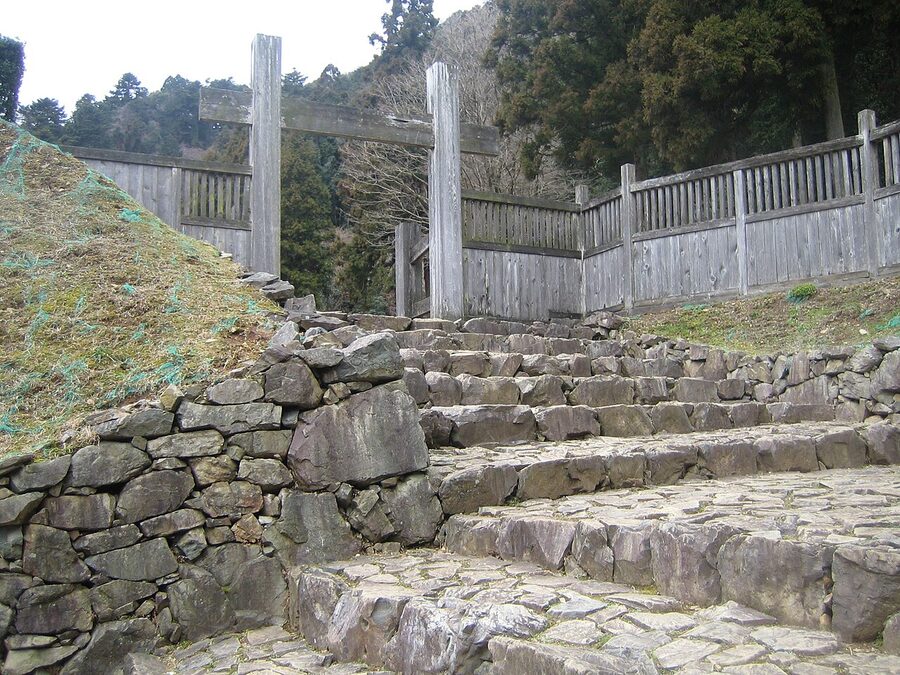
Hachiōji was the worst. Its lord Hōjō Ujiteru was inside Odawara, and on the 23rd day of the sixth month about 15,000 men stormed a castle held by perhaps 3,000, most of them villagers, women and children. By local tradition the women threw themselves into the waterfall by the lord’s residence and the stream ran red for three days. The heads of the garrison were carried to Odawara and floated in boats on the moat where Ujiteru could see them.
There was nobody left to rescue the Hōjō. Their one great hope in the north, Date Masamune, came to Odawara himself early in the sixth month, late and, the story goes, dressed in the white robes of a man ready to die. Hideyoshi let him live. Masamune’s arrival told everyone inside the walls that no army was coming.
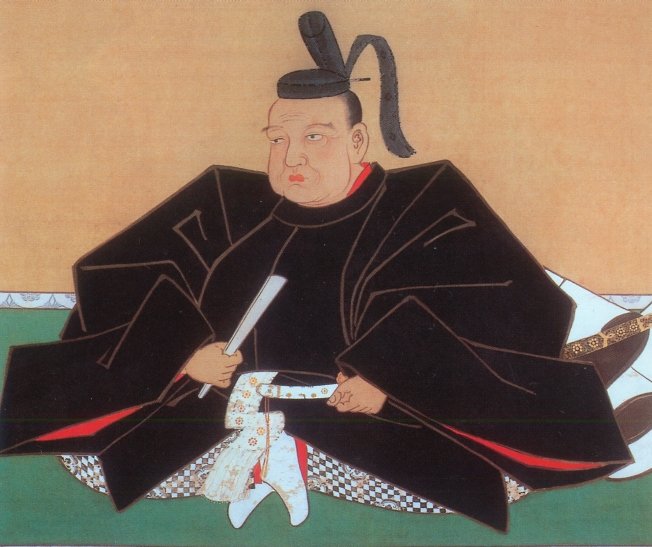
And then there was the hill. Ishigakiyama rises about three kilometres southwest of the keep, across the Haya River, and from the fourth month Hideyoshi had between 30,000 and 40,000 men building a real castle on top of it: stone walls, turrets, a keep, the first castle in the Kantō faced entirely in stone. It took about 80 days and was finished on the 26th day of the sixth month, when Hideyoshi moved his headquarters up from Sōun-ji and burned the Hōjō temple behind him.
The legend says he built it behind a screen of trees and then cut them all down at once, so the Hōjō woke to find a castle that had appeared overnight. Hence its name, Ichiya-jō, the one-night castle. The distance is short enough that the Hōjō must have watched every stone go in, and I suspect Hideyoshi wanted them to; the shock was not the speed, it was the message that he could afford to build a stone castle for a siege he was already winning.
Ishigakiyama is also the setting for a story I like better than it deserves. Hideyoshi and Ieyasu, the tale goes, stood side by side on the hill relieving themselves, looking out over the Hōjō lands, and Hideyoshi told Ieyasu all of it would be his. It is almost certainly invented, but in Japanese it has a name, the “Kantō pee”, and it is the right size for what happened next.
The council that would not end
Inside the castle, everything was coming apart. In the sixth month a plot was uncovered: Kasahara Masaharu, eldest son of the same Matsuda Norihide who had argued for the siege, was arranging to let the enemy in, and his own younger brother turned him in. On the 12th day of the sixth month Ujimasa’s mother and his wife both died on the same day, and a later temple register suggests both took their own lives. Ten days after that, on a rainy night, Tokugawa troops under Ii Naomasa crossed the moat and seized an outer enclosure on the Sannō side, one of the few real fights of the whole siege.
This is the council the proverb remembers, endlessly arguing surrender or battle while the enemy built castles. One Edo-period history, the Kaisei Mikawa Go-fudoki, records two councils, in the first and sixth months, and has each of them reaching a decision. The “council that never ends” comes from the Kanhasshū Kosenroku of 1726 and later miscellanies, which needed a reason a great house had fallen and found it in the character of its last lords.
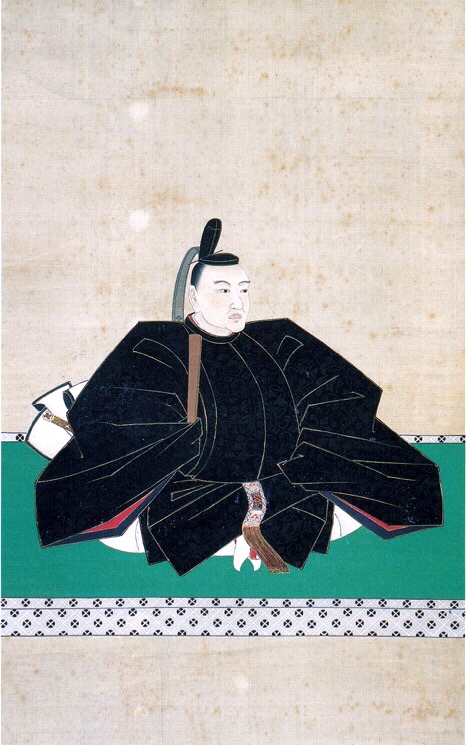
The same Edo writers gave us the soup story. Ujimasa, as a young man, is supposed to have poured broth over his rice, found it was not enough and poured again, and his father Ujiyasu sighed that a man who cannot judge the soup for one bowl of rice cannot judge a province, and the house would end with him. Exactly the same story is told of the Mōri, which is the giveaway.
On the fifth day of the seventh month Ujinao walked out to the camp of Takigawa Katsutoshi and offered to commit seppuku if Hideyoshi would spare the garrison. Hideyoshi spared the garrison and spared Ujinao, whose father-in-law was Ieyasu. Instead he ordered four men to die: Ujimasa, his brother Ujiteru, and the two senior retainers Matsuda Norihide and Daidōji Masashige, whom he held responsible for the war.
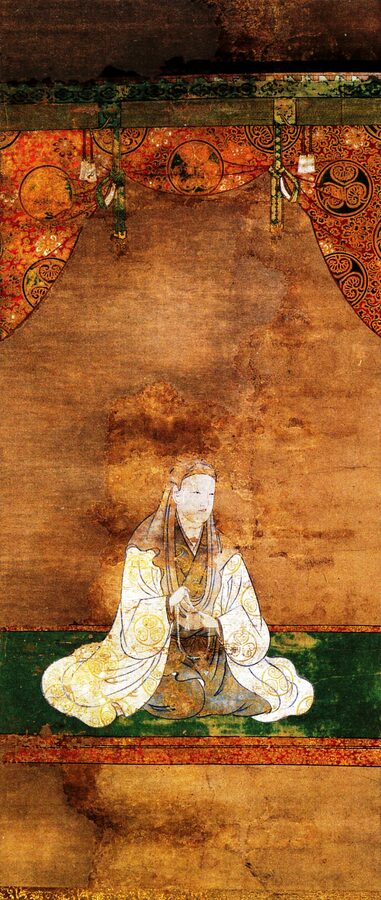
On the 11th day of the seventh month Ujimasa and Ujiteru committed seppuku in the house of a physician named Tamura Ansei, just outside the castle, with their brother Ujinori as their second. Ujinori is said to have tried to follow them and been stopped. Ujimasa was 53, and his death poem is worth translating: “The moon behind the rain clouds, the fog in my heart, swept clean by the autumn evening wind.”
Accounts differ on the two retainers: some Japanese reference works say they were beheaded rather than allowed to cut themselves, and Matsuda’s death is placed before the brothers’ and Daidōji’s after. Ujimasa’s and Ujiteru’s heads were sent to Kyoto and displayed near Hideyoshi’s palace. The siege had lasted a little over a hundred days, almost no one had died at Odawara itself, and most histories of Japan date the end of the Sengoku age and the full arrival of the Azuchi-Momoyama order to that summer.
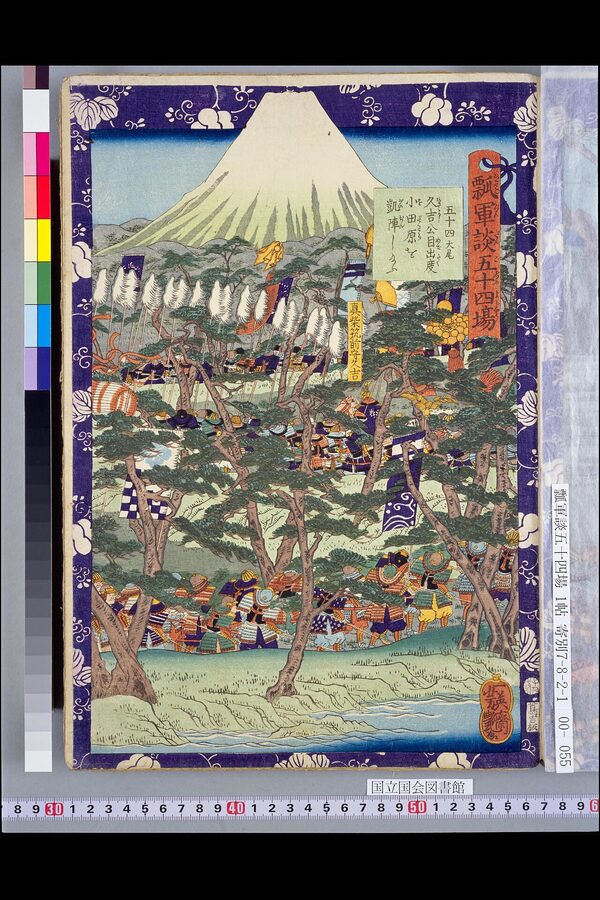
Ujinao went up to Mount Kōya with about thirty men and was pardoned within a year, given 10,000 koku and a house in Osaka. He died of smallpox in the eleventh month of 1591, aged 30. Ujinori’s line kept the name alive as lords of the tiny Sayama domain in Kawachi until the Meiji Restoration, and the Hōjō lands went, almost all of them, to Ieyasu, who moved his capital to Edo that summer and began the long road that ended in the Tokugawa shogunate.
Many of the lords who camped around Odawara went home and built castles of their own in the new style. Mōri Terumoto, whose ships blockaded the bay, had begun Hiroshima Castle the year before; Ukita Hideie, in the main army, rebuilt Okayama Castle through the 1590s; Maeda Toshiie would soon face Kanazawa Castle in stone. What none of them built again was a nine-kilometre ring of earth. Odawara had shown that it did not matter how far round the town your walls went if nobody outside was coming to help.
After the Hōjō: a smaller castle on a busier road
Ieyasu gave Odawara to one of his oldest retainers, Ōkubo Tadayo (大久保忠世), with 40,000 koku. Tadayo lived in a former Hōjō retainer’s house while he rebuilt, and he shrank the castle to roughly the inner Hōjō core, facing it with stone from nearby quarries. The great sōgamae was never systematically levelled; it stayed the boundary between the castle town and the countryside right through the Edo period, which is why so much of it survives.
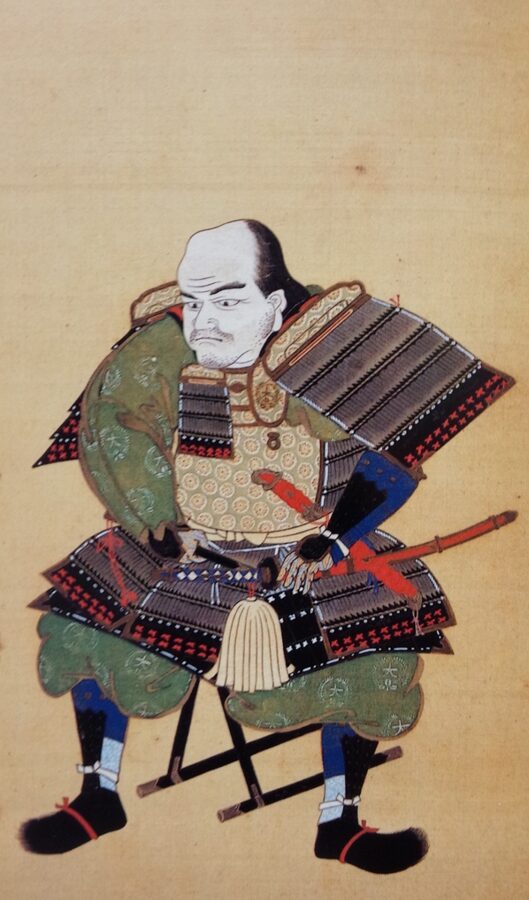
His son Tadachika lost a political struggle at the shogun’s court in 1614 and was stripped of the domain, and Ieyasu had everything but the honmaru pulled down. For a few years the castle had wardens instead of lords, then briefly Abe Masatsugu, and then it was cleared for a famous retirement that never happened: the second shogun, Tokugawa Hidetada, is said to have planned to spend his old age here, and died in 1632 before he could move.
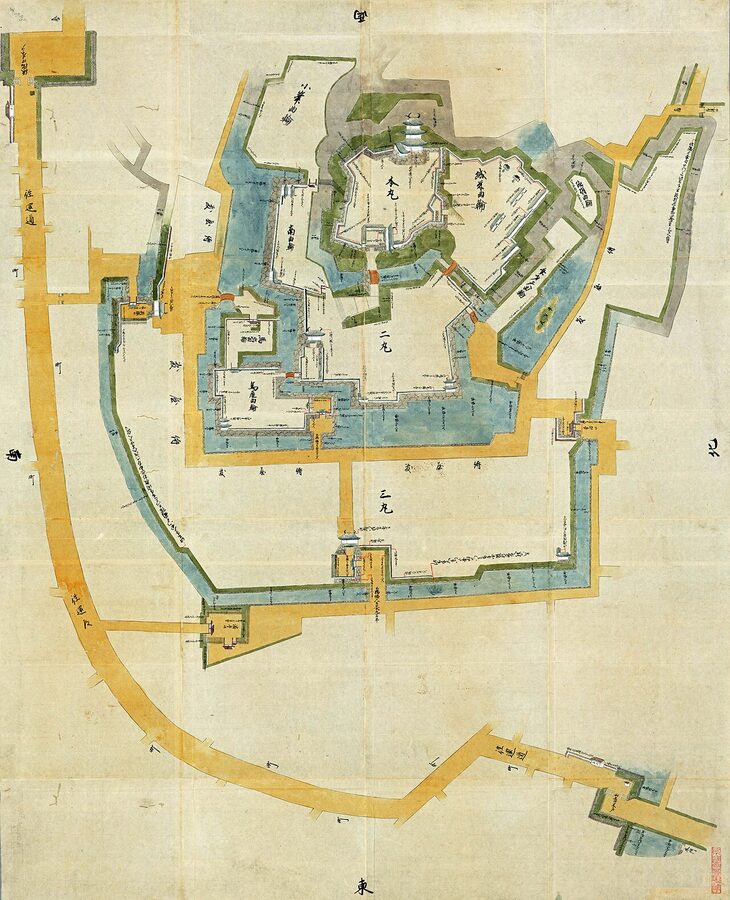
The castle you are looking at in that plan is largely the work of the next lord, Inaba Masakatsu (稲葉正勝), son of Kasuga no Tsubone, the formidable wet nurse of the third shogun, Iemitsu. He arrived in 1632 with 85,000 koku and began rebuilding early in 1633, and on the 21st day of the first month an earthquake of about magnitude seven flattened the town. His own household lost 237 people.
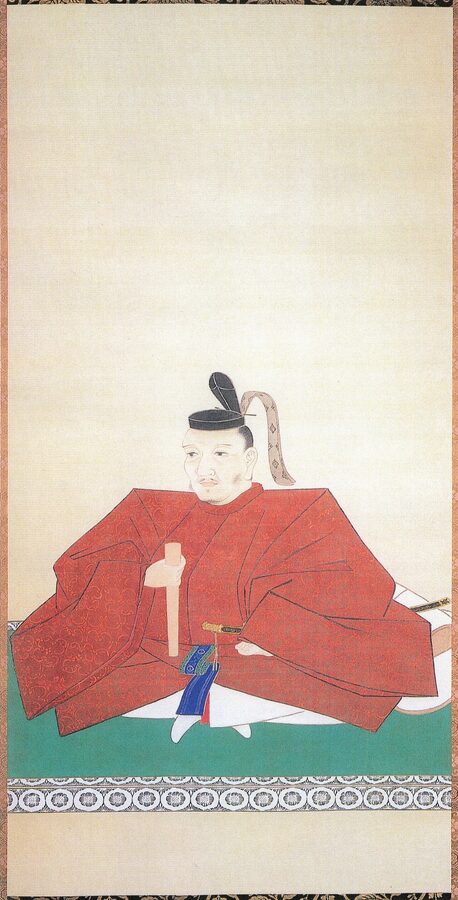
Iemitsu was due to stay in the honmaru on his way to Kyoto in 1634, so the shogunate paid 45,000 ryō to rebuild it at speed. The Inaba spent another 17,000 of their own on the second-enclosure palace. In 1686 the Ōkubo came back with 103,000 koku and held the castle for ten generations, until the end.
Those Edo centuries were about the road rather than the walls. Odawara was the ninth station of the Tōkaidō and the first castle town out of Edo, so every lord heading home under sankin-kōtai rules passed under its walls, and the domain kept the Hakone barrier for the shogunate. That checkpoint was famous for watching two things: guns going into Edo and women coming out.
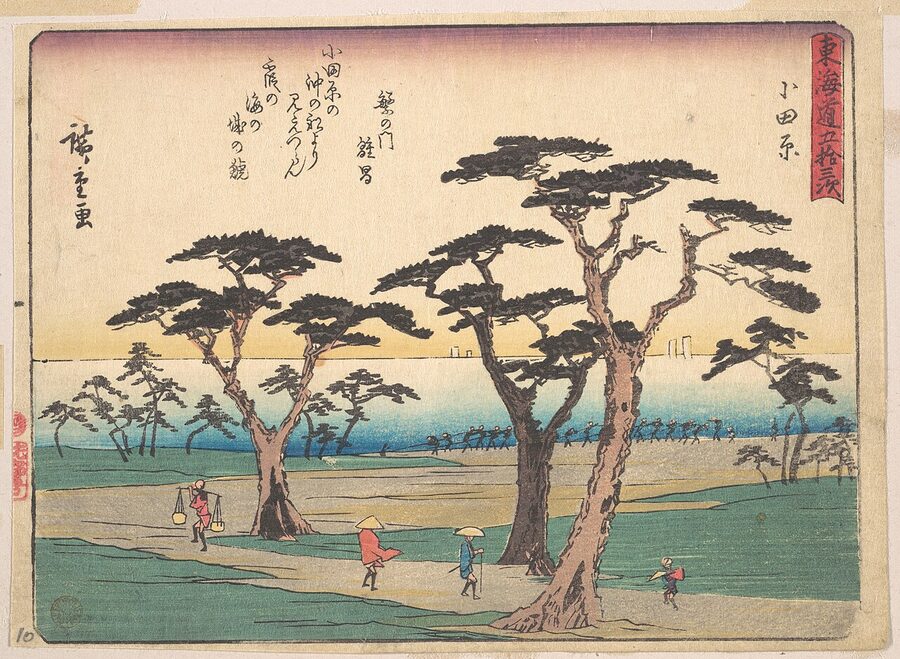
Nature was harder on the castle than any army. The Genroku earthquake of 1703 and the fire that followed destroyed the keep; it was rebuilt in 1706, and the eruption of Mount Fuji the following year buried much of the domain in ash. In 1868, during the Boshin War, Odawara let the imperial army through toward Edo, briefly wavered when a band of shogunate loyalists came through Hakone, and then fought them on the Hakone road to prove which side it was on.
Demolition, an elephant and a concrete keep
The new Meiji government abolished the castle in 1870, and by 1872 almost every building had been pulled down. A shrine to the Ōkubo lords was put on the empty keep base, and in 1901 an imperial villa was built in the old second enclosure.
Then came 1 September 1923. The Great Kantō Earthquake had its epicentre almost under Sagami Bay, and Odawara was among the worst-hit towns in Japan. The villa was wrecked, the one surviving Edo-period turret collapsed, and almost every stone wall in the castle slid into its moat.
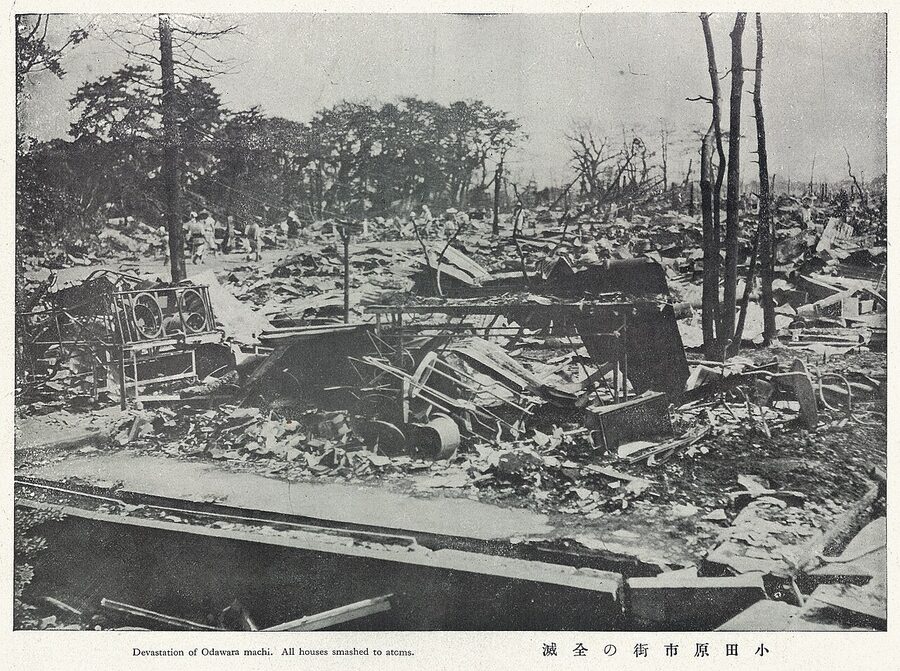
The walls were relaid in 1930 and 1931, lower than they had been and, by general agreement, badly. A corner turret was rebuilt in the mid-1930s at half its original size because the money ran out. In 1950 the castle site became a public park with a library, a small amusement park and a zoo, whose Asian elephant, Umeko, lived there from 1950 until her death in 2009, and for some years before 1960 a ferris wheel stood on the keep base.
The present keep went up in 1960, for the twentieth anniversary of Odawara becoming a city, at a cost of ¥80 million, part of it raised by asking residents to sponsor a roof tile each. It follows the Hōei-era model and drawings made for the 1706 rebuilding, which survive, and it stands 38.7 metres high with three roofs over four storeys. The balcony around the top floor was not on the original and was added because the city wanted an observation deck.
I am not a purist about this. The keep is concrete and a little too tall in the shoulder, but it was built on a real base from real plans, and its gates have since been rebuilt in timber: Tokiwagi Gate in 1971, Akagane Gate in 1997 and Umadashi Gate in 2009. A volunteer group has been pushing since 2013 for a wooden keep. When the earthquake retrofit finished and the keep reopened on 1 May 2016, the city sent that day’s ticket money to help rebuild Kumamoto Castle, which had been shaken apart a few weeks earlier.
Where to see the Hōjō’s Odawara today
Odawara Station is on the Tōkaidō Shinkansen, about 35 minutes from Tokyo on the faster trains, and on the JR Tōkaidō Line and the Odakyū line from Shinjuku. It is also the gateway to Hakone, so most visitors pass through without stopping. Do not make that mistake. You need a full day for the castle, the earthworks and Ishigakiyama, and a second morning if you want the graves at Hakone-Yumoto.
The keep and the castle park
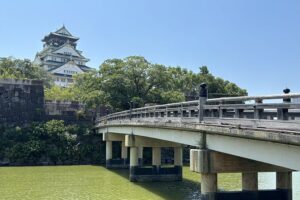
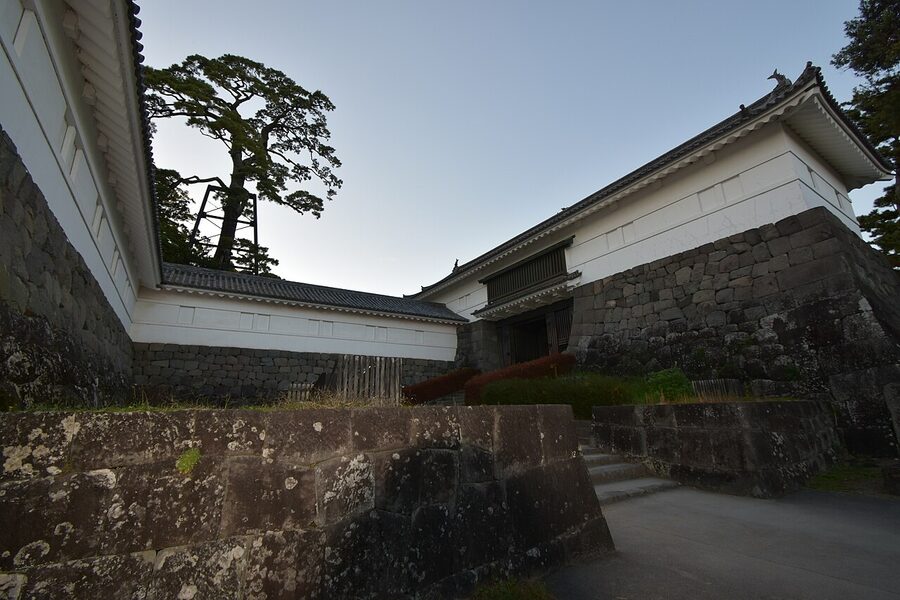
The castle park is about ten minutes’ walk from the station. If you have time, go in the “proper” way through Umadashi Gate, across the Sumiyoshi bridge and through Akagane and Tokiwagi gates into the honmaru, which is the route an Edo-period visitor would have taken. Akagane Gate opens its interior on weekends and holidays, 10:00–15:00.
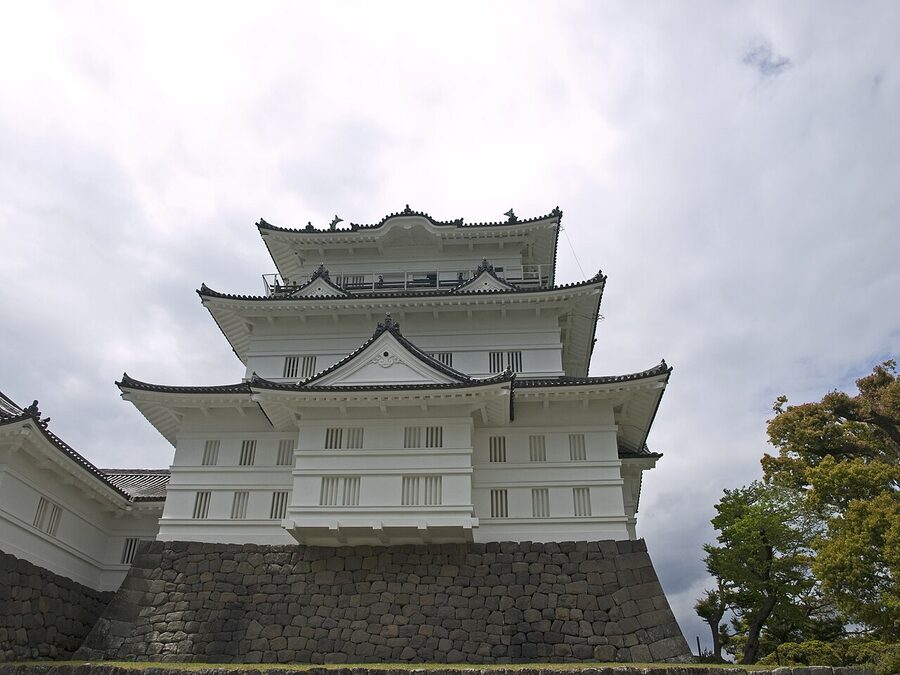
The keep is open 9:00–17:00 (last entry 16:30) and costs ¥1,000 for adults and ¥300 for primary and junior-high pupils; Odawara residents pay ¥500, which is the kind of detail that makes you want to move there. It closes on the second Wednesday of December and from 31 December to 1 January. The exhibits run from the Hōjō to the Ōkubo, and one room recreates the space where the Edo-period keep is said to have enshrined a statue of the war god Marishiten.
The view is the point. From about 60 metres above sea level you can see the whole sweep of Sagami Bay and, on a clear winter day, the Bōsō Peninsula across the water. Look the other way, southwest across the Haya River, and you will find the hill with the trees on top: that is Ishigakiyama. Since 2006 the city has used the keep’s height as the limit for new buildings around it, so it should stay the tallest thing you can see.
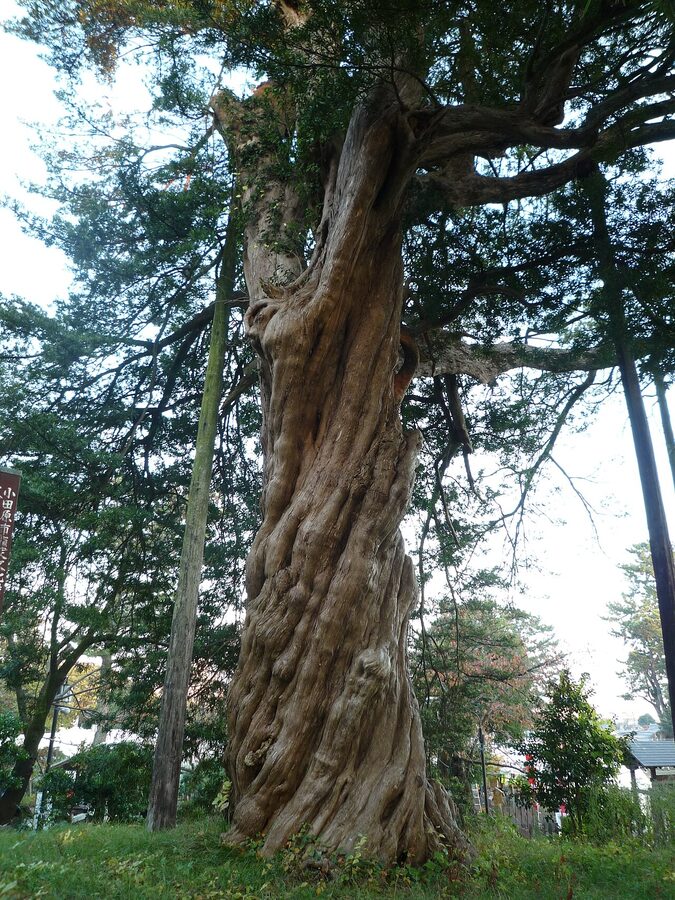
The park has seasons. Plums in February, cherry blossom from late March into April, the Gokan wisteria in late April, irises and hydrangeas along the moat in June and lotus in high summer. Archaeologists in the Goyōmai enclosure found the remains of a Hōjō-period pond and garden in 2013, which is worth knowing if you care about Japanese gardens, since so little of Sengoku gardening survives anywhere.
The SAMURAI and NINJA museums
The keep ticket also gets you into the SAMURAI museum on the upper floor of Tokiwagi Gate (¥300 on its own, open 9:00–17:00). It is small, and it focuses on samurai armour and swords lent by a preservation society, with a projection-mapping show I could take or leave. Downstairs you can be dressed in armour for ¥500 from 9:30 to 16:00.
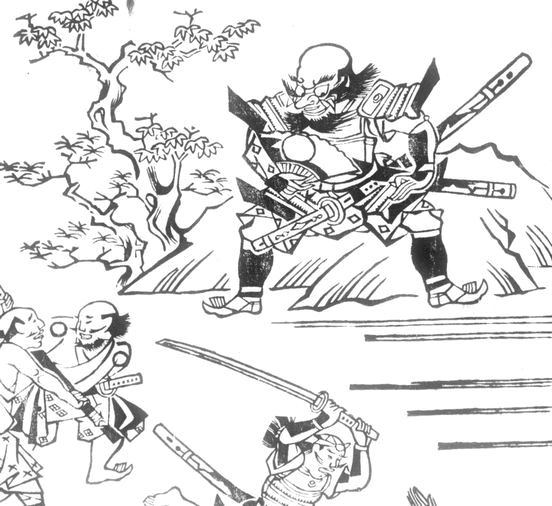
The NINJA museum (¥500, children ¥200, 9:00–17:00) is built around the Fūma, the band of raiders said to have worked for the Hōjō. It is aimed at children and foreign visitors, and you will learn more about the Hōjō from the keep. Still, the Fūma story is a good one.
Almost all of it comes from the Hōjō Godaiki, published in 1641 by Miura Jōshin, who had been inside Odawara during the siege. He describes a raider called Fūma who led 200 men in night attacks on Takeda Katsuyori’s camp in 1581, and says the Takeda soldiers told each other he stood over two metres tall with a split mouth and four fangs. In later fiction he became Fūma Kotarō, a ninja chief and rival to Hattori Hanzō, which is the version the museum sells.
Walking the sōgamae
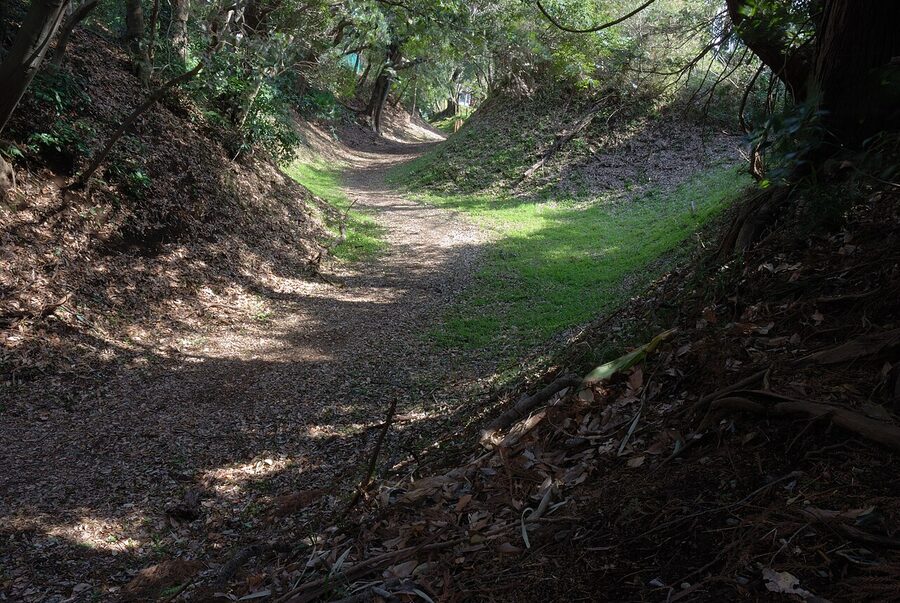
This is the part I would not miss. Large stretches of the Hōjō’s outer earthworks survive in the hills west of the castle, and with a map from the tourist office you can walk most of the circuit in a day. Wear proper shoes: the paths are earth and the slopes are steep.
Start at the Komine Okane-no-dai great trench (小峯御鐘ノ台大堀切), about half an hour’s uphill walk from the station, where three huge parallel ditches cut the ridge at the highest point of the old defences. From there you can follow the line northwest past the Inari-mori ditch, and on the way back look at the Hachimanyama old citadel, part of which is now a small park beside Odawara High School.
Down on the flat, the earthworks mostly vanished under the modern town, but there are fragments: a double earthwork at Hayakawa-guchi near the Haya River, and short sections near Renjō-in temple and the old Kōda-guchi gate, a few minutes from the station. They are easy to walk past, which is half the pleasure of finding them.
Ishigakiyama Ichiya Castle
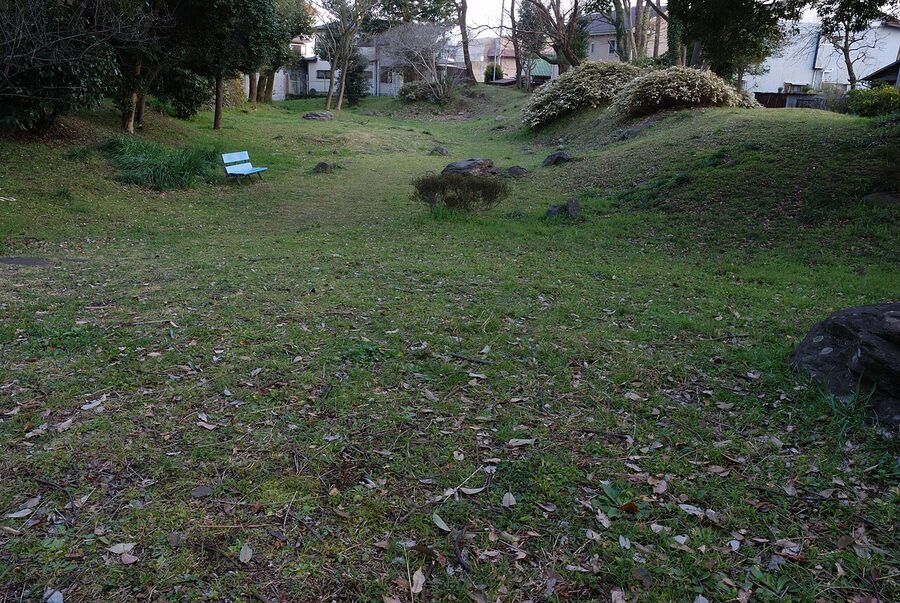
Hideyoshi’s one-night castle is now the Ishigakiyama Ichiya Castle Historical Park, free and open at all hours. It is about 40 minutes uphill on foot from JR Hayakawa Station, one stop west of Odawara, or about 10 minutes by taxi; the city also gives a route from Iriuda Station on the Hakone Tozan line, which takes longer. The walk up through the mikan orchards is pleasant in cool weather and miserable in August.
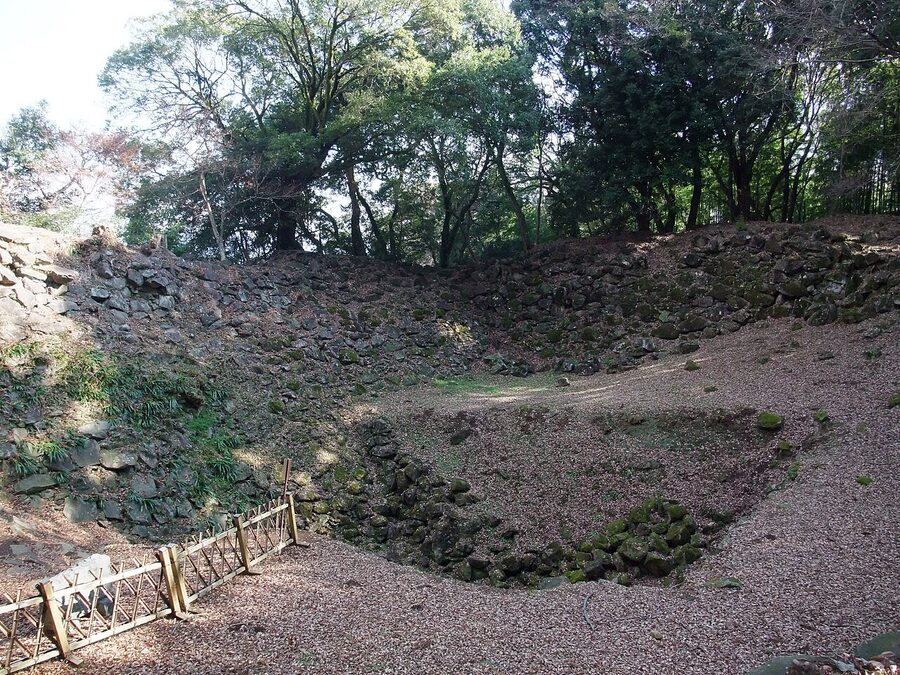
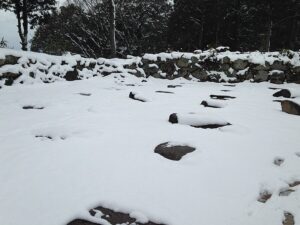
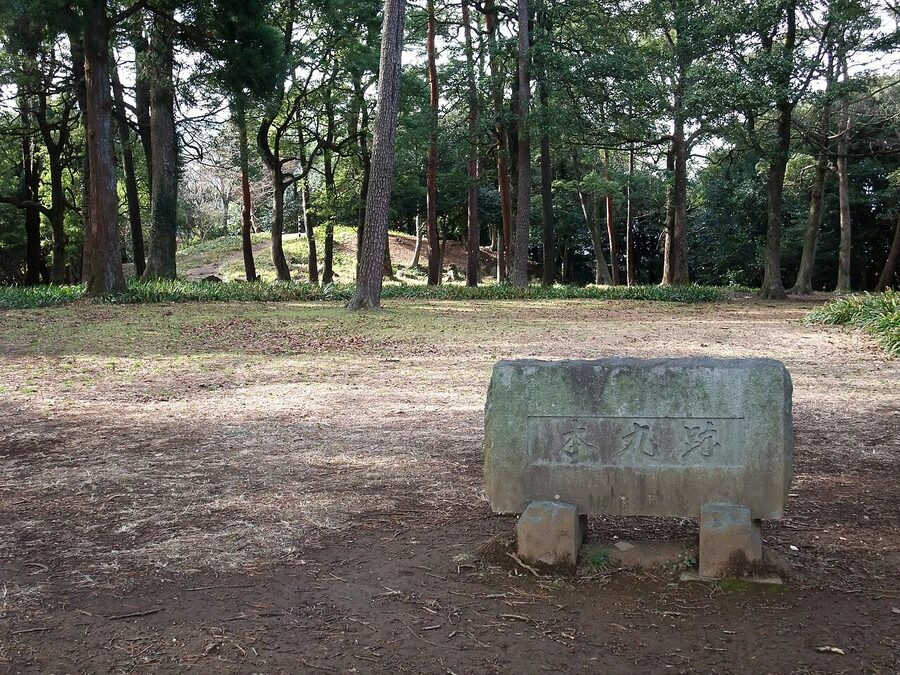
The 1923 earthquake toppled most of the walls, but enough survives to read the plan: the honmaru, the keep base at 261.9 metres, the southern enclosure and the well. Excavations since 1989 have turned up roof tiles dated to 1591, which means work went on after Odawara had surrendered; the castle may have been meant to stay. Some castle historians think the layout is so close to Hizen Nagoya, Hideyoshi’s later base for the invasion of Korea, that the same man, probably Kuroda Kanbei, designed both.
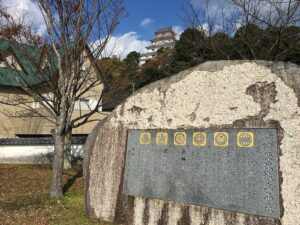
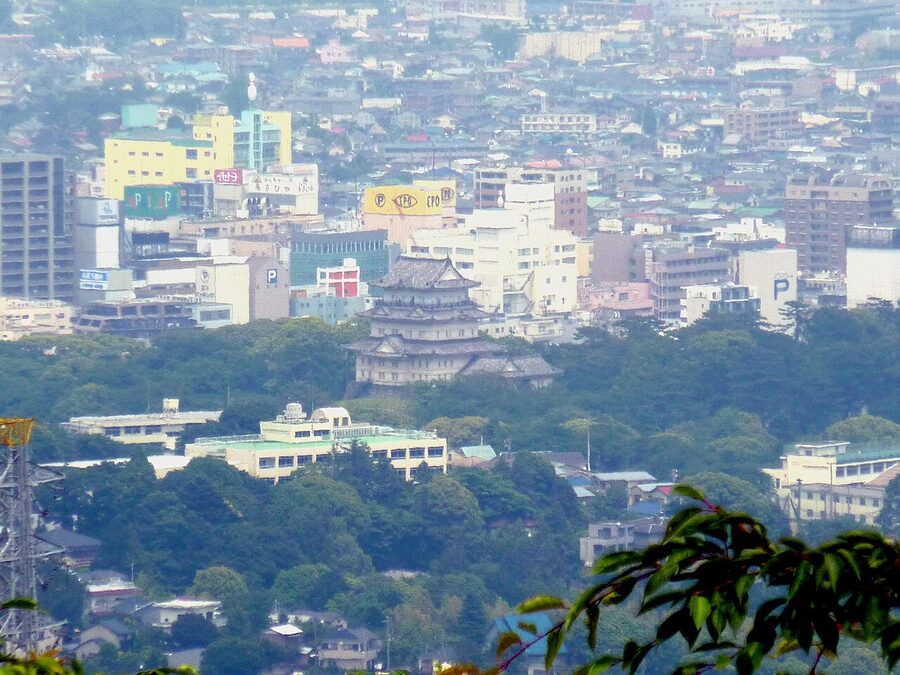
Go to the edge of the main enclosure and look northeast. You will see the white keep of Odawara Castle about three kilometres away, and you will understand at once how little privacy the Hōjō had. Next to the car park is a pastry shop and restaurant, Ichiyajō Yoroizuka Farm (check its hours and closing days on its own site before you go), which means you can now eat a cake on the spot where Hideyoshi ate his. I think he would have approved.
The Hōjō graves
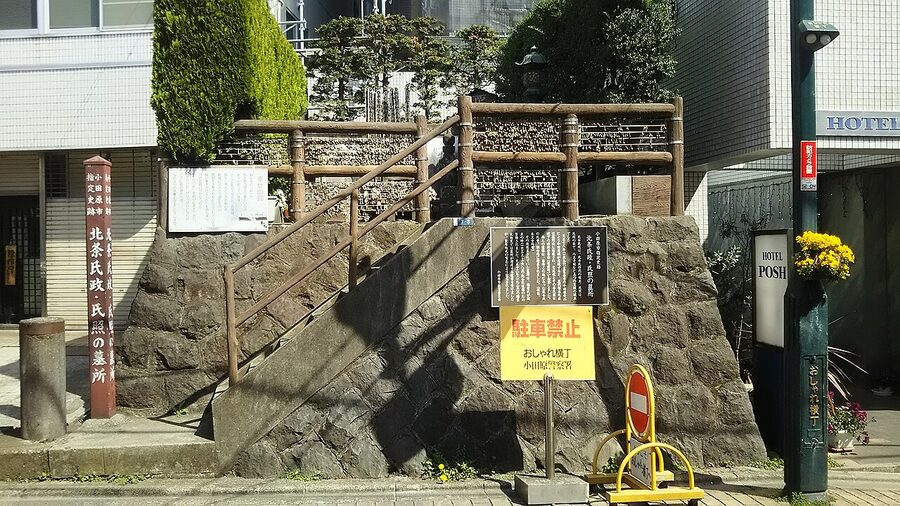
The graves of Ujimasa and Ujiteru are a few minutes’ walk from the east exit of Odawara Station, on a raised plot squeezed between buildings in Sakaechō 2-chome. Tradition places them on the site of the physician’s house where the two brothers died. It is a strange, cramped place, and I always find it more affecting than the grand ones.
The grand ones are at Sōun-ji (早雲寺), the family temple at Hakone-Yumoto, about ten minutes’ walk from Hakone-Yumoto Station. Hideyoshi burned it in 1590; it was rebuilt from 1627, and you can walk the grounds freely. In them stand the five memorial stones of the Hōjō lords, which were put up in 1672 by Hōjō Ujiharu, lord of Sayama and descendant of Ujinori, on the anniversary of Sōun’s death.
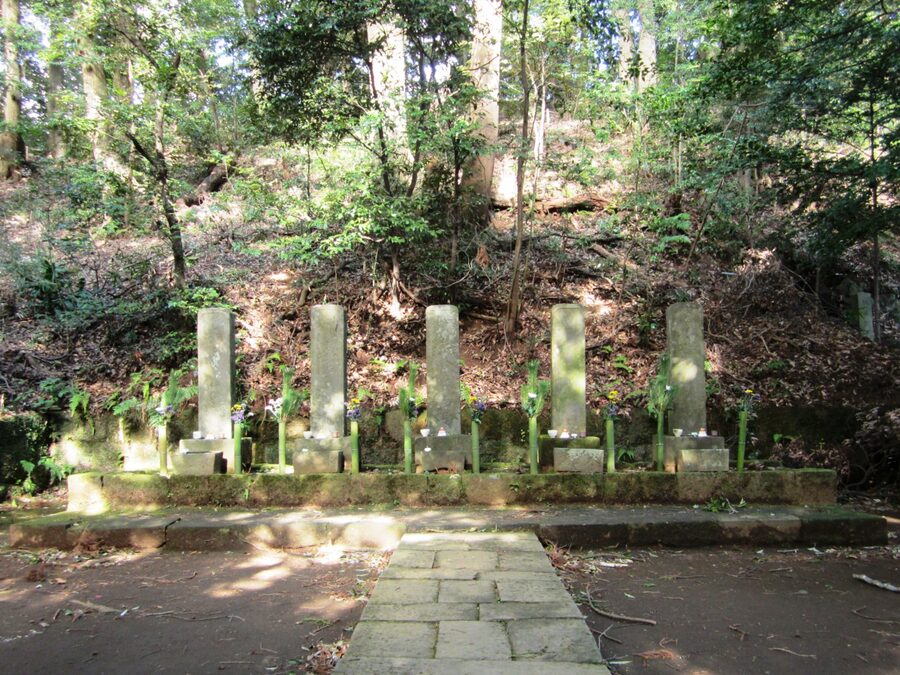
The temple also holds the grave of the linked-verse poet Sōgi, who died at Hakone-Yumoto in 1502, and a memorial to Yamanoue Sōji, who is said to have been killed here on Hideyoshi’s orders during the siege. The main hall is not usually open, but each November the temple shows its sliding-door paintings and its portrait of Sōun for a few days; check the dates before you go.
The Hōjō Godai Festival
If you can choose your date, go on 3 May. The Odawara Hōjō Godai Matsuri fills the streets around the castle with a parade of the five lords in armour, their foot soldiers and their banners, and the town’s affection for its old masters is obvious.
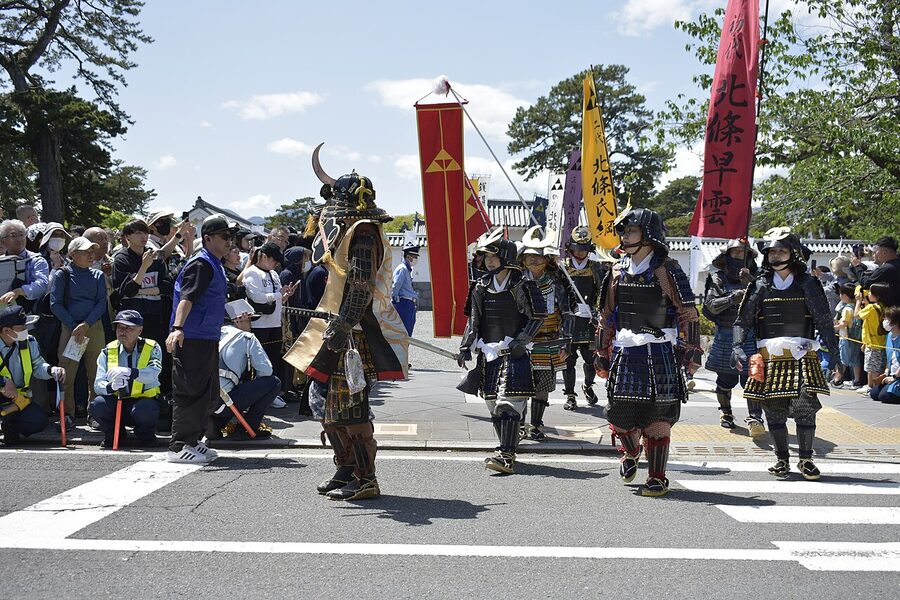
Odawara is good at remembering the Hōjō, better than the proverb is. If you climb Ishigakiyama, stand at the edge of the honmaru and look across at the keep for a while, the way Hideyoshi did. Then think about a council that met twice a month for a hundred years and kept the Kantō fed, and decide for yourself whether it deserves to be a byword for a meeting that never ends.