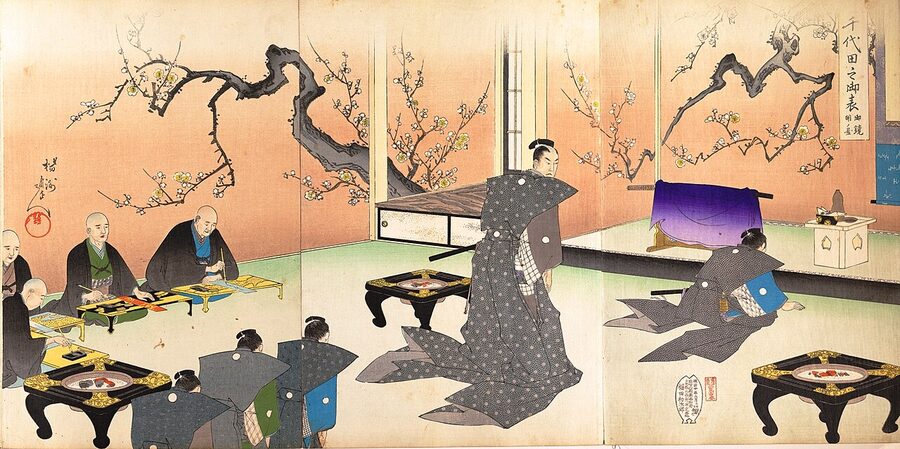
In the council room of Edo Castle there was a sunken hearth, and when the men who ran Japan had something to say that nobody else should hear, they are said to have picked up a pair of fire tongs and written it in the ash. The room was the Goyōbeya, the office of the rōjū (老中), the four or five senior councillors who governed the country in the shogun’s name. There might be a servant under the floor or a guard above the ceiling, so the story goes, and ash keeps no record. One man wrote, the next man read, and somebody smoothed it flat.
I like the story because it is half true about the whole regime. The Tokugawa shogunate kept the peace from 1603 to 1867 with an army it almost never used, and it did it through a machine of councils, monthly rotas, inspectors, permits, seals and countersignatures that produced more paper than any Japanese government before it. Yet the decisions that mattered were made in one small room by a handful of men, and a surprising amount of how the machine really worked was never written down at all.
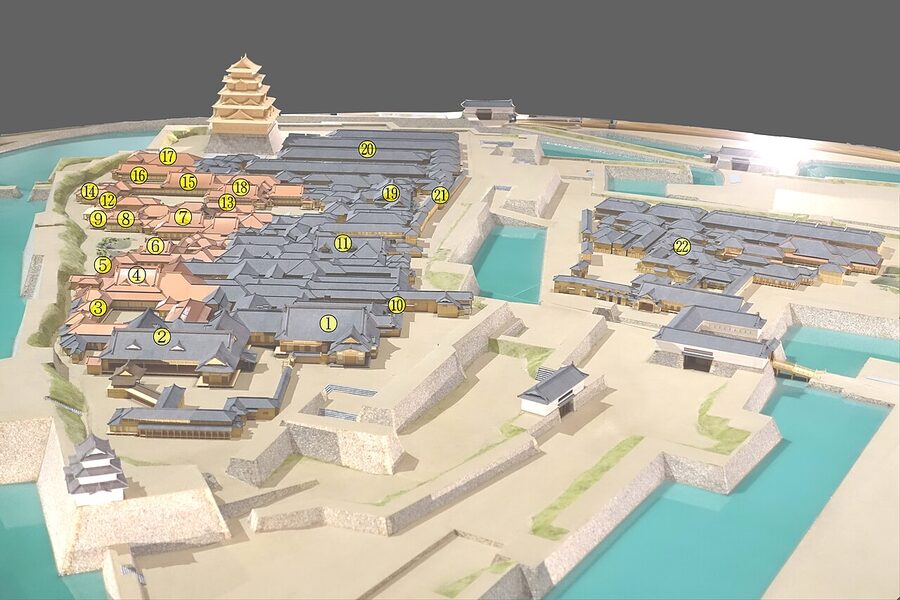
So this is an attempt to take the machine apart. Who sat where, what each office actually did, which tools kept two hundred and sixty-odd lords in line, which of the fifteen shoguns steered and which were steered, and why a system that held for two and a half centuries came apart in about fifteen years. Most of it can still be visited, from the guardhouses of Edo Castle to a lakeside checkpoint whose guns were never loaded.
In This Article
- A government that never called itself a shogunate
- How Ieyasu built it
- The machine inside Edo Castle
- The rōjū, and the great elder
- The junior elders, and the men who watched
- Three magistrates and a court
- Kyoto, Osaka and the outposts
- The shogun’s own men
- Keeping 260 lords on a short leash
- Confiscation as policy
- The laws, rewritten for each shogun
- Alternate attendance
- Guns in, women out
- Sword, plough, workshop and shop
- Fifteen shoguns, and the five who mattered
- Why it came apart
- Where to see the machinery of Tokugawa rule today
- Edo Castle: the East Gardens and Sakuradamon
- The magistrates’ offices in Yūrakuchō and Marunouchi
- Edo-Tokyo Museum, Ryōgoku
- Zōjō-ji and Kan’ei-ji
- Hakone Sekisho
- Arai Sekisho, Lake Hamana
- Takayama Jinya
- Nikkō: Tōshōgū and Taiyūin
- Kunōzan Tōshōgū and Sunpu
- Nijō Castle, Kyoto
- Further afield
- The ash in the hearth
A government that never called itself a shogunate
Start with the name, because the regime would not have recognised it. Almost nobody in the 17th century talked about a bakufu (幕府), the “tent government” of a general in the field, and almost nobody talked about han (藩) either. The shogun’s government called itself kōgi (公儀), “the public authority”, and the lands of a daimyo were his ryō or ryōbun, his holding. Both words, which every textbook now uses, only caught on in the last decades of the period.
The second thing to know is that the shogun was an appointee. Seii taishōgun, “great general who subdues the barbarians”, was an imperial commission, and the emperor in Kyoto handed it to Tokugawa Ieyasu on the twelfth day of the second month of Keichō 8, which works out as 24 March 1603. The appointment was made at Fushimi; the celebration was held at Nijō Castle, where the whole arrangement would be handed back 264 years later.
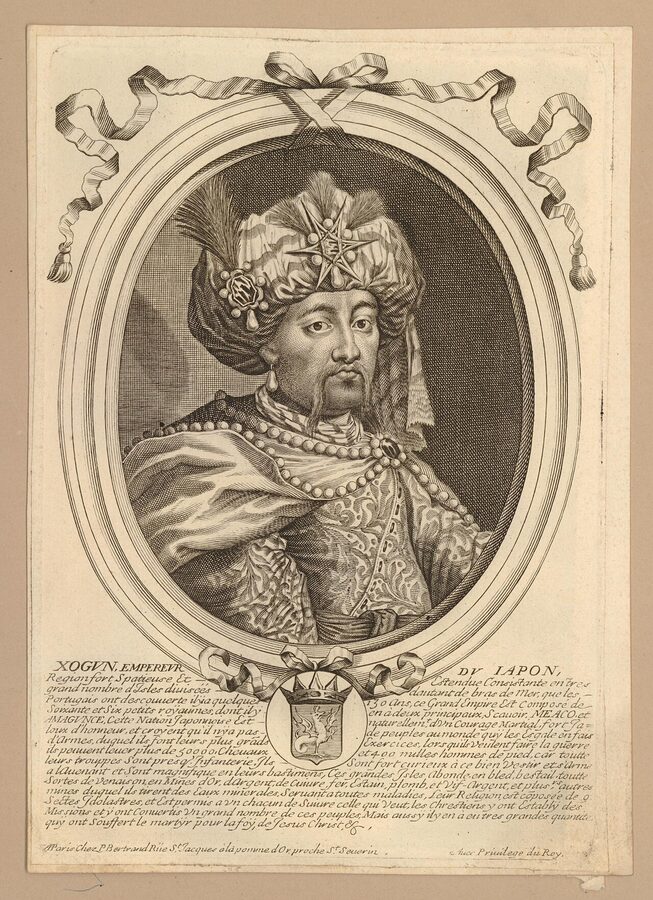
When it ended is a matter of taste. Sources variously give 14 October 1867 by the old calendar, when the last shogun returned the power of government to the court; 9 December 1867, when the court abolished the shogunate outright (3 January 1868 by the Western calendar); or 11 April 1868, when Edo Castle was handed over. Even the standard Japanese reference works disagree about whether the court accepted the return of power on the fourteenth or the fifteenth. I count to the autumn of 1867, when the man at the top said he was done.
The capital itself was something of an accident. Hideyoshi had moved Ieyasu to the Kantō in 1590, and Edo was simply the castle town that came with it. A few Japanese historians, Fujita Tatsuo among them, argue that after 1615 the Tokugawa planned to move the shogun to Osaka, and that the idea died with a run of imperial deaths in the late 1620s; most are not persuaded, but Tokyo may be the capital because Osaka did not happen.
Historians call the result the bakuhan system: one overlord in Edo, bound by oath and paper to about 260 daimyo, each running his own domain with his own laws and tax collectors. The shogun was both the national authority and the biggest landowner in the country, and the trick was to make those two roles reinforce each other without letting anyone else near either.
How Ieyasu built it
The raw material came from a single autumn morning that all but ended the Sengoku wars. After the Battle of Sekigahara in 1600, the victors abolished 87 daimyo houses, with land assessed at more than 4.4 million koku, and cut three more by a further 2 million or so. The figures are the Japanese historian Fujino Tamotsu’s, and the total, about 6.2 million koku, was roughly a third of the productive land in Japan changing hands in a matter of months. A koku was notionally a year’s rice for one adult, and Ieyasu had millions to give away.
He gave them away strategically. Men who had fought for him on the day were rewarded, often hugely, but the biggest winners among the Toyotomi generals were pushed out to the edges of the map, and the land around Edo, the Tōkaidō road and the approaches to Kyoto and Osaka went to Ieyasu’s own retainers. Ii Naomasa went to Sawayama, the site his heirs would replace with Hikone Castle, to watch the road into Kyoto from the east. Honda Tadakatsu went to Kuwana, on the sea crossing of the Tōkaidō; both were among the Four Heavenly Kings of the Tokugawa, and both turn up in any list of Japan’s greatest samurai.
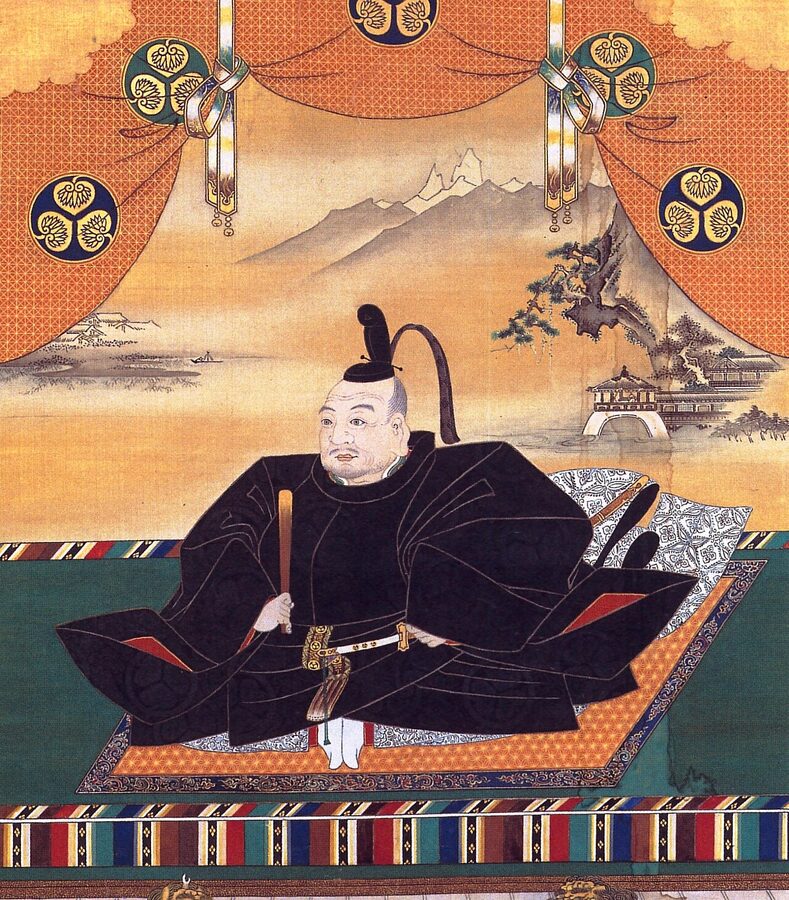
Then Ieyasu did something that looks odd until you see the point. Two years after becoming shogun he resigned, in 1605, and had the title passed to his son Hidetada. It told every daimyo in Japan that the office now belonged to a family, not a man, and it freed Ieyasu to keep running the country from his retirement castle at Sunpu, modern Shizuoka, as ōgosho, the retired shogun.
For eleven years Japan had two governments. Hidetada’s in Edo dealt with the east and the house vassals; Ieyasu’s at Sunpu handled the court, the Toyotomi in Osaka, the western lords and foreign affairs, and its staff was a strange mix: the young Honda Masazumi, the monks Ishin Sūden and Tenkai, the scholar Hayashi Razan, the merchant Gotō Shōzaburō, and two shipwrecked Europeans, the English pilot William Adams and the Dutchman Jan Joosten. That is about as cosmopolitan as the Japanese state would get for two hundred years.
The Osaka campaigns of 1614 and 1615 removed the last rival. Once Osaka Castle had burned and Hideyori was dead, Ieyasu spent the summer of 1615 writing the rules, and the speed of it is still startling. On the thirteenth day of the intercalary sixth month (7 August 1615), an order went out that each daimyo should keep one castle per province and pull down the rest, and something like 400 castles are said to have been demolished within days.
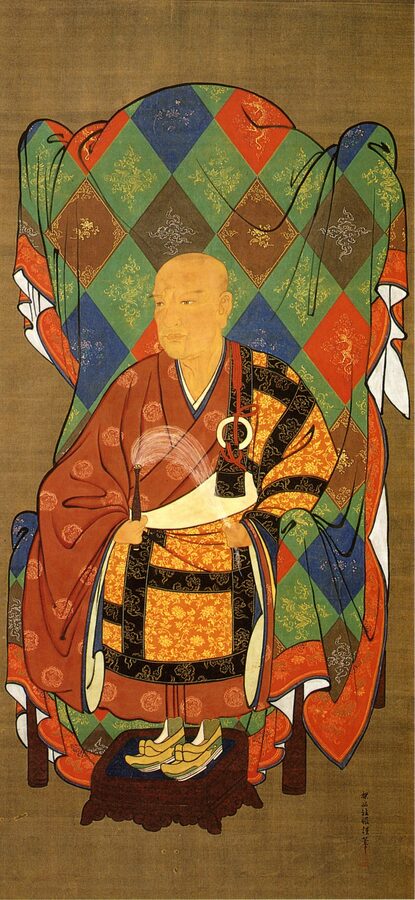
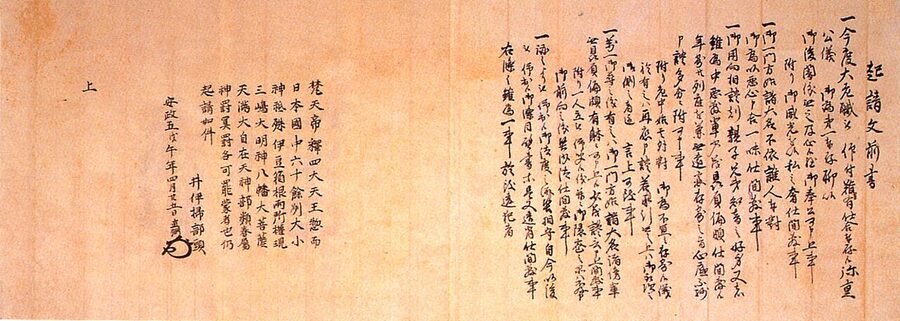
A few weeks later, in the seventh month, the daimyo were summoned to Fushimi Castle and given the Buke shohatto (武家諸法度), the Laws for the Military Houses: thirteen articles, drafted by Sūden, partly built on a three-article oath Ieyasu had made the lords sign in 1611. English-language accounts often have Ieyasu reading them out himself; the Japanese record has them issued in Hidetada’s name, as the reigning shogun, with Ieyasu everywhere assumed to be the author. Either way the content was the same: study and arms, frugality, no harbouring of fugitives, no repairing a castle without reporting it, no new castles at all, and no marriages between daimyo houses without permission.
The same month brought a parallel code for the emperor and the court nobles, the Kinchū narabini kuge shohatto (禁中並公家諸法度), whose first article told the emperor that his first duty was learning. Ieyasu died at Sunpu the following spring, in 1616, at seventy-three; the famous story blames a dish of sea bream fried in oil, and stomach cancer is the likelier culprit. He was deified as Tōshō Daigongen, the Great Avatar Illuminating the East.
For the man himself, see Tokugawa Ieyasu. By 1616 the frame of the system was in place, and his grandson would fill it in.
The machine inside Edo Castle
The Kamakura and Muromachi shogunates had both been run, at the top, by great vassals with great estates, and both had been eaten from the inside by them. The Hōjō regents ruled in the name of Kamakura shoguns who were children or puppets; the Hosokawa and Yamana families fought the Ōnin War over the Ashikaga succession and took the Muromachi order down with them. Even the Azuchi-Momoyama settlement, Hideyoshi’s council of five great lords, had failed to stop one of its own, Ieyasu.
The Tokugawa solution was to separate power from wealth. The top offices went only to fudai, hereditary vassals of the Tokugawa with mostly small domains, never to the great outside lords or even the shogun’s relatives. Every important post was held by several men taking the duty by the month, a system called tsukiban (月番), and anything serious was decided jointly; it was slow and very hard to hijack, which is why the regime ran perfectly well under shoguns who were children, invalids or simply uninterested.
The rōjū, and the great elder
The rōjū grew out of the toshiyori, the “elders” who had run the Tokugawa household in the Mikawa days, and in the castle they were long called by the older name, o-toshiyori-shū. Their other name was kahan no retsu, “the row who add their seal”, because orders to the daimyo went out as rōjū hōsho, letters signed and sealed by each of them. The official chronicle, the Tokugawa jikki, dates the office in its settled form to the tenth month of 1635, when Matsudaira Nobutsuna, Abe Tadaaki and Hotta Masamori were relieved of their guard commands and told to countersign alongside Doi Toshikatsu and Sakai Tadakatsu.
There were normally four or five of them, one on duty each month, and they handled the daimyo, the court, the temples, the inspectors and the city magistrates. The working day, by the usual account, ran from arriving at the castle at about ten to leaving at about two. Four hours.
People like to call the rōjū a cabinet, and it is the wrong picture. Nobody held a portfolio: the duty councillor dealt with whatever came in, and the division of labour happened one level down, among the commissioners.
The qualification was normally a fudai domain of at least 50,000 koku (some Japanese reference works give 25,000), and because councillors had to be near Edo, a lord with a distant domain was effectively barred. Mizuno Tadakuni, lord of rich Karatsu in Kyushu, asked to be moved to smaller, poorer Hamamatsu so that he could climb the ladder, and got both the transfer and, eventually, the top job. I find that the most revealing career move of the period: he gave up money for a seat in a room where the work stopped at two.
Above the rōjū, now and then, sat a tairō (大老), a great elder appointed in emergencies or minorities, almost always from a handful of houses: Ii, Sakai, Doi and Hotta. Historians still argue about who counts, and the title itself first turns up in a printed directory of officials in 1676. The best known are Sakai Tadakiyo, who dominated the government of the fourth shogun so completely that people called him the “dismount-here shogun”, after the sign at the castle gate where his mansion stood, and Ii Naosuke, appointed in 1858, who will come back later with snow on his armour.
The junior elders, and the men who watched
Below the rōjū came the wakadoshiyori (若年寄), the “junior elders”. They began in 1633 as six of the third shogun’s personal attendants given the routine business, the rokuninshū; four of them became rōjū, the group was folded back in, and in 1662 the office was revived under its final name. Where the rōjū dealt with the country, the wakadoshiyori dealt with the Tokugawa household: the shogun’s own vassals, the castle and its staff.
Then there were the watchers. The first four ōmetsuke (大目付), great inspectors, were appointed on the seventeenth day of the twelfth month of 1632, and one of them was Yagyū Munenori, the third shogun’s fencing master. Iemitsu’s written brief to them survives, and it is a list worth reading: daimyo and bannermen who broke the law, men slack in their service, officials from the elders down with something to hide, the state of military readiness, the condition of the retainers, the weariness of the common people and anything that was making people’s lives a misery.
The ōmetsuke were bannermen, so while in office they were given the rank of a 10,000-koku lord, to give them standing with men far grander than themselves. Within a century the job had turned ceremonial, a post for ageing magistrates who passed on orders and stage-managed audiences. Beneath them the metsuke policed the shogun’s own vassals, and every domain had metsuke of its own: inspectors all the way down.
Three magistrates and a court
The working departments were the san-bugyō (三奉行), the three commissions. The jisha bugyō, commissioners of temples and shrines, were daimyo and the grandest of the three. The kanjō bugyō, four commissioners of finance, ran the shogun’s revenues and his directly held lands through district intendants called gundai and daikan. And the machi bugyō, city magistrates, ran Edo: two of them, North and South, bannermen who took the month in turns and were mayor, chief of police, fire chief and criminal judge in one.
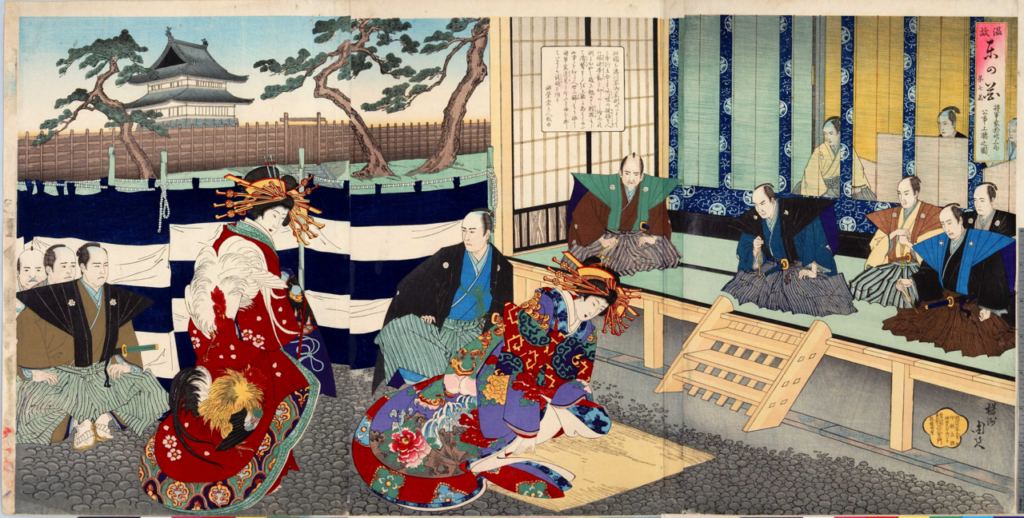
The most famous of them all, Ōoka Tadasuke, was South Magistrate from 1717 to 1736, and his judgements were turned into so many later stories that the real man is hard to find under them.
When a case crossed jurisdictions (a samurai suing a townsman, villagers of the shogun’s land against a daimyo’s peasants) it went to the Hyōjōsho (評定所), the highest court, where the three commissioners sat with a duty rōjū. After the great fire of 1657 it sat at Tatsunokuchi, just outside the castle moat, and the hearings were mostly run by clerks; the great men appeared for the first session and the verdict.
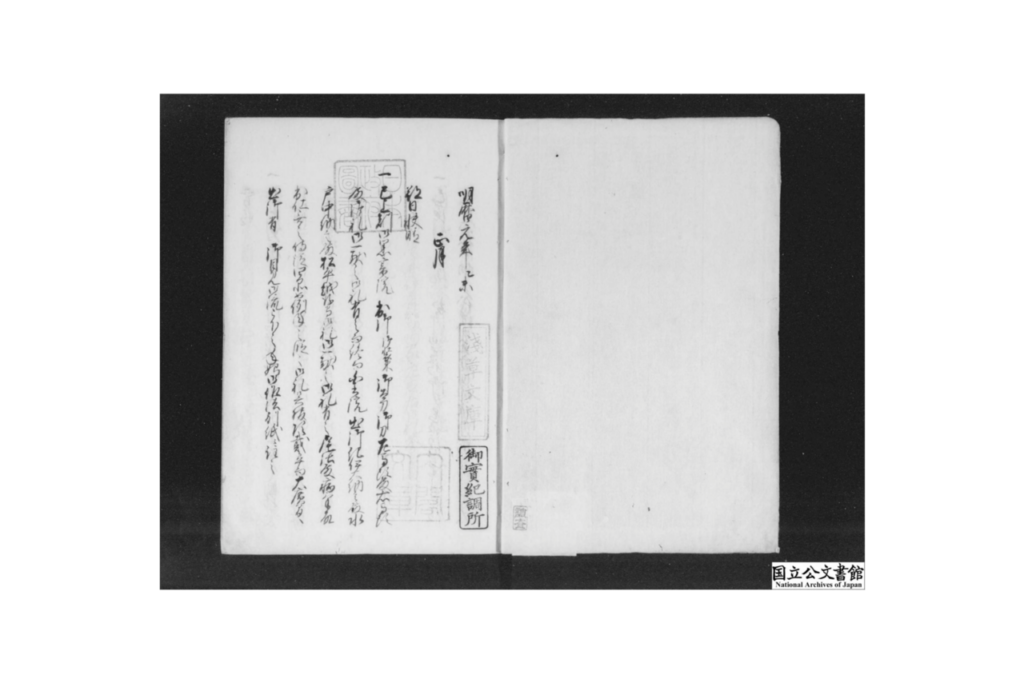
The paperwork grew with the bureaucracy. By the 1720s, policy moved as drafts passed up the chain, and the officials who approved or queried a draft stuck paper slips to it with their comments, so that historians can follow an argument over a decision slip by slip. It is about as far from writing in ash as you can get, and the two habits ran side by side to the end.
Kyoto, Osaka and the outposts
Outside Edo the shogunate ran on a few senior posts. The Kyoto shoshidai (京都所司代), from 1601 the formidable Itakura Katsushige, watched the court and the western daimyo; the Osaka jōdai held Osaka Castle and was allowed, unusually, to act on his own initiative in an emergency. Both were stepping stones to the rōjū.
Under them came the ongoku bugyō, governors of distant places such as Nagasaki, where the governor handled the Dutch at Dejima, and Sado with its gold. In the countryside the shogun’s estates were run by intendants, and by the end of the period there were some sixty of their offices, called jinya; only Takayama’s survives with its main buildings.
The estates themselves are easy to understate. Japanese reference works put the shogun’s direct land at about 4 million koku, with another 3 million or so held by his bannermen, out of a national assessment of about 30 million: roughly a quarter of the country, plus Edo, Kyoto, Osaka, Nagasaki and the mines.
The shogun’s own men
The personal vassals of the shogun came in two ranks. Hatamoto (旗本), bannermen, had the right to an audience with the shogun; gokenin (御家人), housemen, did not. By the early 18th century there were about 22,000 of them in all, and in the 1790s about 5,300 of those were bannermen. Most were paid stipends of rice from the shogun’s granaries rather than given land.
Edo liked to talk about the shogun’s “eighty thousand horsemen”, a number that only works if you add in the 67,500 retainers the bannermen were supposed to keep on paper. In practice a modest bannerman kept a servant or two, wore the hakama and kamishimo his rank required to the castle, and borrowed against next year’s rice. The army was organised much as it had been in the 1630s right up to the 1860s.
Keeping 260 lords on a short leash
A daimyo was a lord with a domain assessed at 10,000 koku or more, and the number of them settled at about 260 to 270. The shogunate sorted them into three kinds, and the sorting mattered more than the size.
The shinpan (親藩) were Tokugawa relatives, above all the gosanke, the three houses founded by Ieyasu’s sons at Owari, Kii and Mito, which could supply a shogun if the main line failed. The fudai (譜代) were the houses that had served the Tokugawa before Sekigahara, mostly small, and they supplied every senior official. The tozama (外様), the outside lords, were the rest: some had fought against Ieyasu, some for him as allies, and they held most of the biggest domains, Kaga, Satsuma, Sendai, Chōshū, and were kept out of government entirely.
I think this split is the cleverest thing about the whole system. The men with the land had no say, and the men with the say had no land to speak of, so nobody had both. The weakness, which took two centuries to show, was precedence: in the seating of the castle the head of the Ii, first of the fudai, ranked below the gosanke and below the Maeda. When the crisis came in the 1850s, the men who ran the government were outranked by the men who wanted to tell them how.
Confiscation as policy
The shogunate’s sharpest tool was kaieki (改易), the removal of a daimyo, by confiscation, reduction or a punitive transfer to somewhere worse. After the Sekigahara settlement and up to 1651, the first three shoguns removed about 130 houses with lands assessed at about 12 million koku, by Fujino Tamotsu’s count. The commonest reasons were a lord dying without an heir, since deathbed adoptions were forbidden, and breaches of the Laws for the Military Houses.
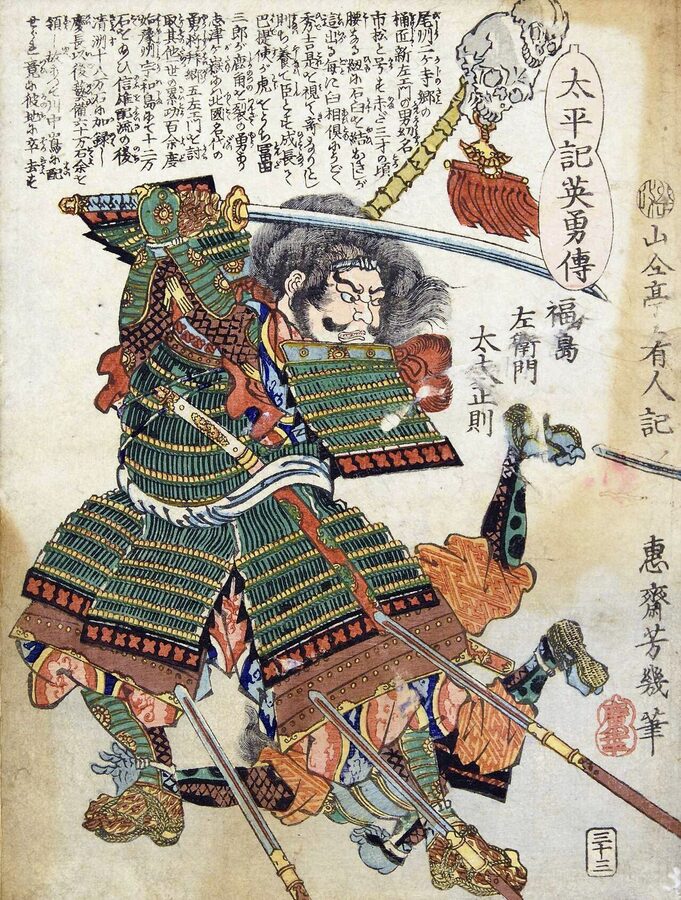
The case everyone knew was Fukushima Masanori’s. One of Hideyoshi’s most famous generals, he had fought for Ieyasu at Sekigahara and been given Aki and Bingo, about half a million koku. In 1619 he repaired Hiroshima Castle after a flood without proper permission, and lost the domain for a holding of 45,000 koku in Shinano; the shogunate planned the handover like a campaign, keeping Masanori in Edo and readying other daimyo in case Hiroshima resisted.
The policy changed in 1651. Iemitsu died, his heir was ten, and weeks later Yui Shōsetsu was caught plotting to burn Edo with a band of rōnin, the masterless samurai the confiscations had been producing by the tens of thousands. The councillors decided unemployed samurai were now a bigger danger than tamed daimyo, eased the ban on deathbed adoption and moved towards government by civil means, and by the time of the eighth shogun confiscation as a policy was over.
The laws, rewritten for each shogun
The Laws for the Military Houses were reissued by each new shogun, and the changes map the regime’s moods. Iemitsu’s version of 1635, drafted by Hayashi Razan, made alternate attendance a legal duty and banned ships over 500 koku; in 1663 a written ban on Christianity was added, and junshi, following one’s lord in death, was banned by word of mouth. Removals for bad behaviour went on, the best known being the lord of Akō in 1701, whose sword in a castle corridor began the story of the 47 Rōnin.
Tsunayoshi’s version of 1683 is the one I find telling. The first article no longer told the samurai to devote themselves to letters and arms, archery and horsemanship; it told them to cultivate letters and arms, loyalty and filial piety, and propriety. The warrior had become a gentleman official on paper, and after a brief rewrite in 1710 that text stayed essentially unchanged to the end. For how the warrior code itself was reinvented in these years, see bushido and seppuku.
Alternate attendance
The tool everyone has heard of is sankin-kōtai, alternate attendance, written into law in 1635 with the line “daimyo great and small are to serve in turns in Edo, coming each year in the fourth month”. In practice a lord spent one year in Edo and the next at home, and his wife and heir lived in Edo permanently. The older hostage system, under which senior retainers also had to send sons to Edo, was dropped in 1665.
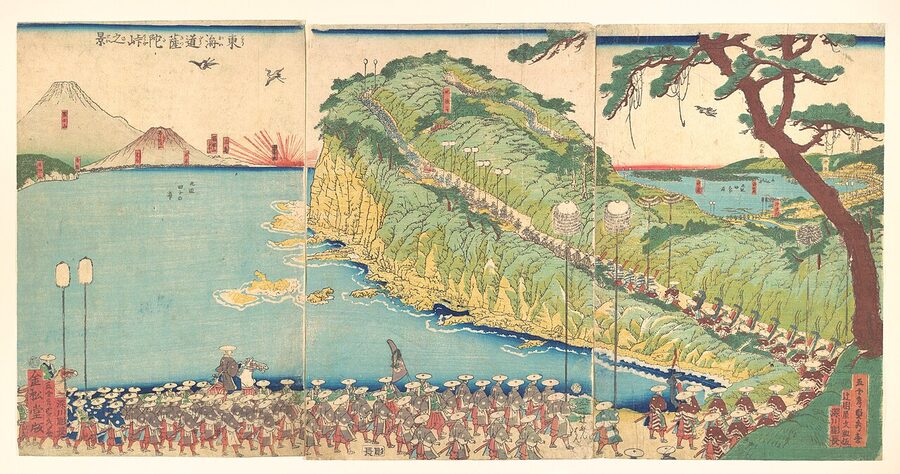
The cost was crippling, and older textbooks said that was the point. Most Japanese historians now think the expense was a consequence rather than the purpose, and that the point was the ritual of service itself, a lord walking to Edo every other year to show whose man he was. By the 1690s most daimyo had been born in Edo, and some had to be nagged to go home.
The rule bent when the shogunate needed money: from 1722 to 1730 Yoshimune halved the time in Edo in exchange for a rice levy, the agemai. A century later the former lord of Hirado, Matsura Seizan, grumbled in his miscellany Kōshi yawa that some lords now never left home at all.
Guns in, women out
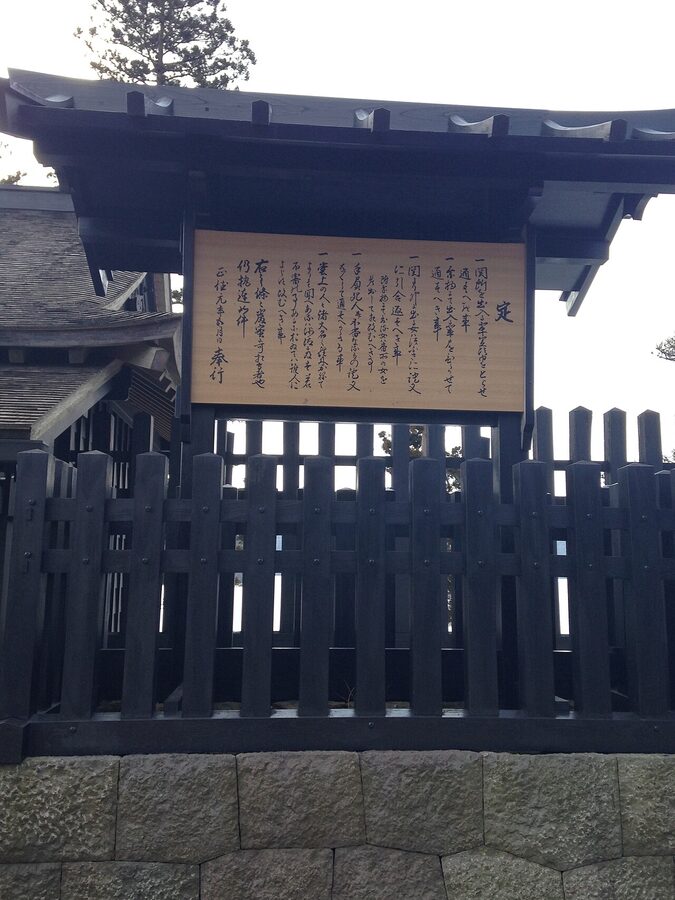
The roads were watched as closely as the lords. The shogunate rebuilt the five great highways out of Edo and put checkpoints, sekisho (関所), on them, and the slogan that summed up their work was iri-deppō ni de-onna, “guns coming in, women going out”. Guns heading for Edo could mean rebellion; a daimyo’s wife heading out of Edo meant a hostage escaping.
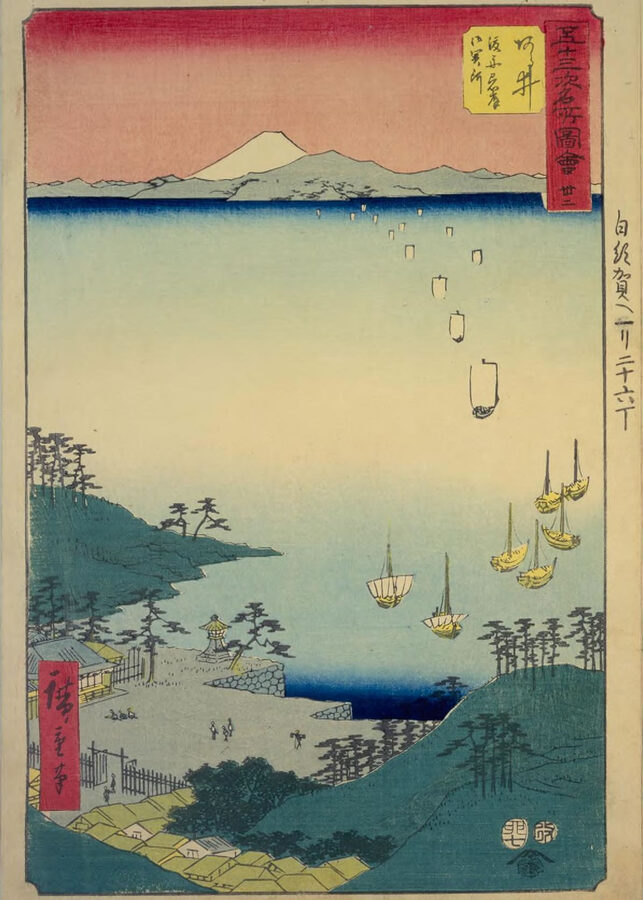
The two great checkpoints of the Tōkaidō divided the work. Hakone, on Lake Ashi and run by the fudai domain of Odawara, came to concentrate on women leaving Edo; Arai, officially Imagire, on Lake Hamana, on guns. A woman leaving Edo needed a pass, an onna tegata, and at Hakone she was examined by a hitomi-onna, a woman inspector who checked her hair and face against the description; going round a checkpoint was a capital crime.
The arsenal was mostly theatre. Hakone was supposed to keep five bows, ten matchlocks and a rack of long spears and capturing poles, and the record suggests the guns were not loaded and the bows had no arrows. That seems to me exactly right for the Tokugawa. The checkpoint did not need to fight anyone; it needed to be there, and to be seen to be there, and for everyone to carry the right piece of paper.
Sword, plough, workshop and shop
The last tool was the status order, and here the textbooks have changed. Generations of schoolchildren learned shi-nō-kō-shō (士農工商), warriors, farmers, artisans, merchants, as a ladder. Research since the 1990s has shown that the phrase, borrowed from Chinese classics where it meant something like “all the people”, did not describe a ranked hierarchy in Edo Japan, and it was dropped from Japanese school textbooks in the 2000s.
What did exist was a sharp line between samurai and everyone else, marked by surnames and the pair of swords; below it, villagers and townspeople with different obligations rather than ranks; and outcaste groups who suffered real, legally enforced discrimination. Every household also had to register with a Buddhist temple and be certified not Christian, the terauke system, which grew out of the persecution described in Christianity in Japan and the Shimabara Rebellion and sits beside the controls covered in sakoku.
Fifteen shoguns, and the five who mattered
Fifteen men held the title, and if you only remember five, make them Ieyasu, Iemitsu, Tsunayoshi, Yoshimune and Yoshinobu.
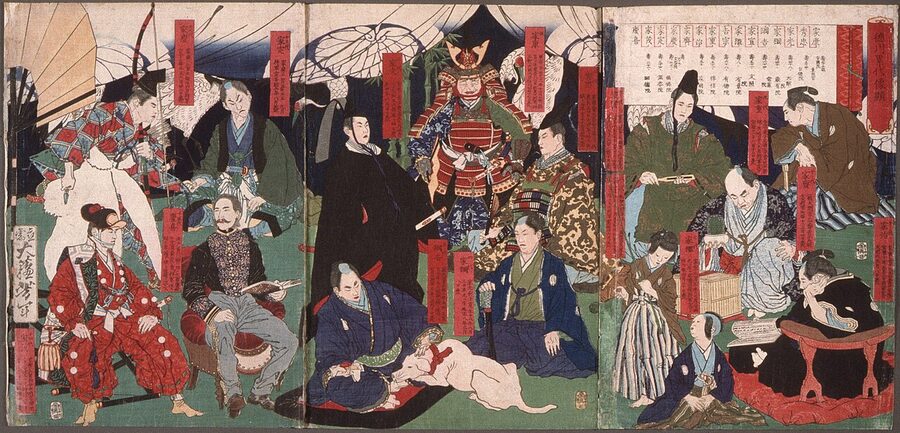
Ieyasu (shogun 1603–1605) built it and then stepped aside to run it from Sunpu. His son Hidetada (1605–1623) is the most underrated of the fifteen: the enforcer who took Fukushima Masanori’s domain, married his daughter Masako to Emperor Go-Mizunoo, and became grandfather of Empress Meishō, the first woman on the throne in almost nine hundred years.
The third shogun, Iemitsu (1623–1651), was the first born to the job, and the speech he is supposed to have made to the daimyo, that his grandfather and father had been their equals but he was a shogun from birth, is probably later embroidery that gets him exactly right. Under him the councils took their final shape, alternate attendance became law, the edicts that closed the country were issued and the Shimabara Rebellion was crushed. If any one person designed the Tokugawa state as it ran for the next two centuries, it was Iemitsu.
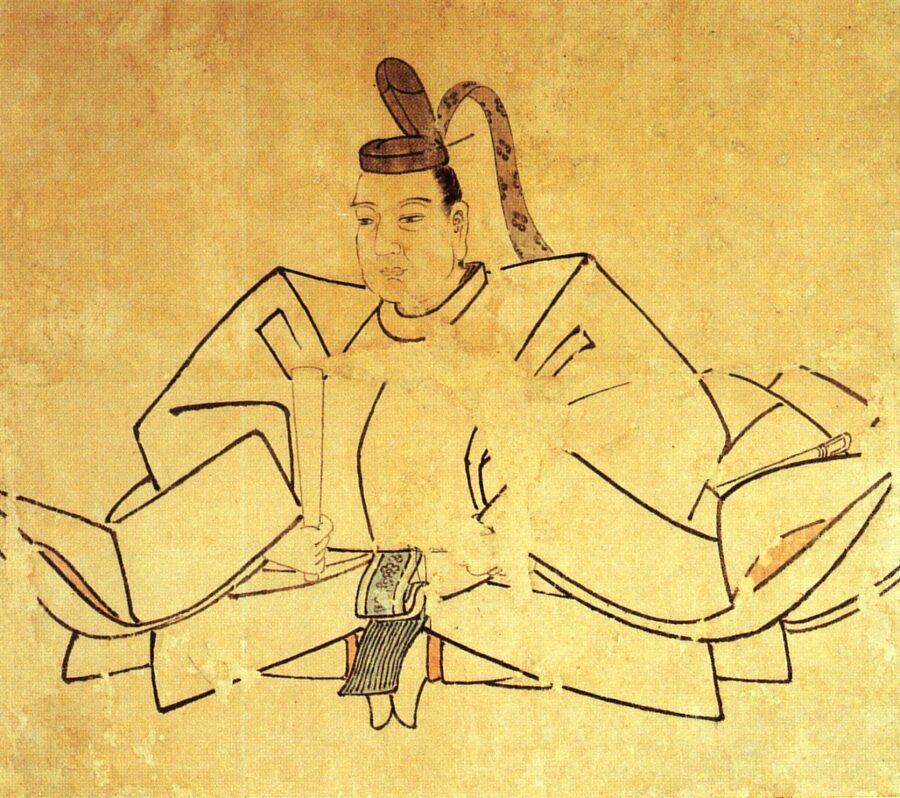
Ietsuna (1651–1680) came to the job at ten, guided by his uncle Hoshina Masayuki; Edo called him Sayōsei-sama, “Lord Let-It-Be-So”, after the phrase he used to approve whatever was put in front of him. After the Meireki fire of 1657 burned the keep of Edo Castle, Hoshina persuaded the government to spend the money on the city instead, and it was never rebuilt.
Tsunayoshi (1680–1709) gets his own article as the Dog Shogun, and he deserves a better reputation than the nickname. His reign also changed how the machine worked. In 1684 the great elder Hotta Masatoshi was stabbed to death inside the castle by a junior elder, Inaba Masayasu; afterwards the councillors’ room was moved further from the shogun’s quarters, and business began to flow through the shogun’s chamberlain, the sobayōnin, above all Yanagisawa Yoshiyasu. Rule by favourite was built into the floor plan.
The sixth and seventh, Ienobu (1709–1712) and the child Ietsugu (1713–1716), are mostly remembered for the scholar Arai Hakuseki and the chamberlain Manabe Akifusa, who governed for them. Ietsugu died at six, eight by the old Japanese count, and the main line died with him.
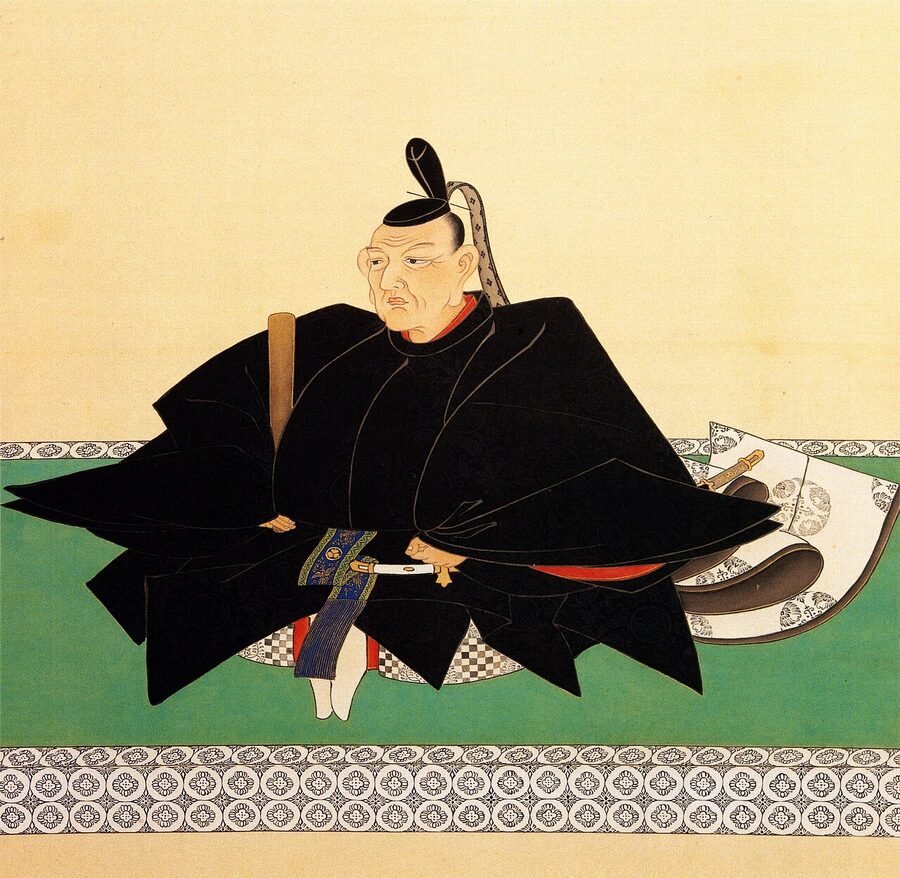
His successor came from the Kii branch, and Yoshimune (1716–1745) is the one I would have wanted to work for: big, frugal, practical, nicknamed the “rice shogun” for his obsession with rice prices. His Kyōhō reforms tried everything, from new fields and a codified criminal law to fire brigades for the commoners of Edo. In 1721 he put a petition box, the meyasubako, outside the Hyōjōsho, and a petition from a town doctor led to the Koishikawa infirmary for the poor; Japanese historians note, a little drily, that the box also kept anonymous criticism off the streets by sending it straight to the shogun.
Ieshige (1745–1760) had a speech impediment so severe that reportedly only his chamberlain could understand him. Ieharu (1760–1786) left government to Tanuma Okitsugu, whose licences and monopolies earned him a reputation for bribery that historians have since softened.
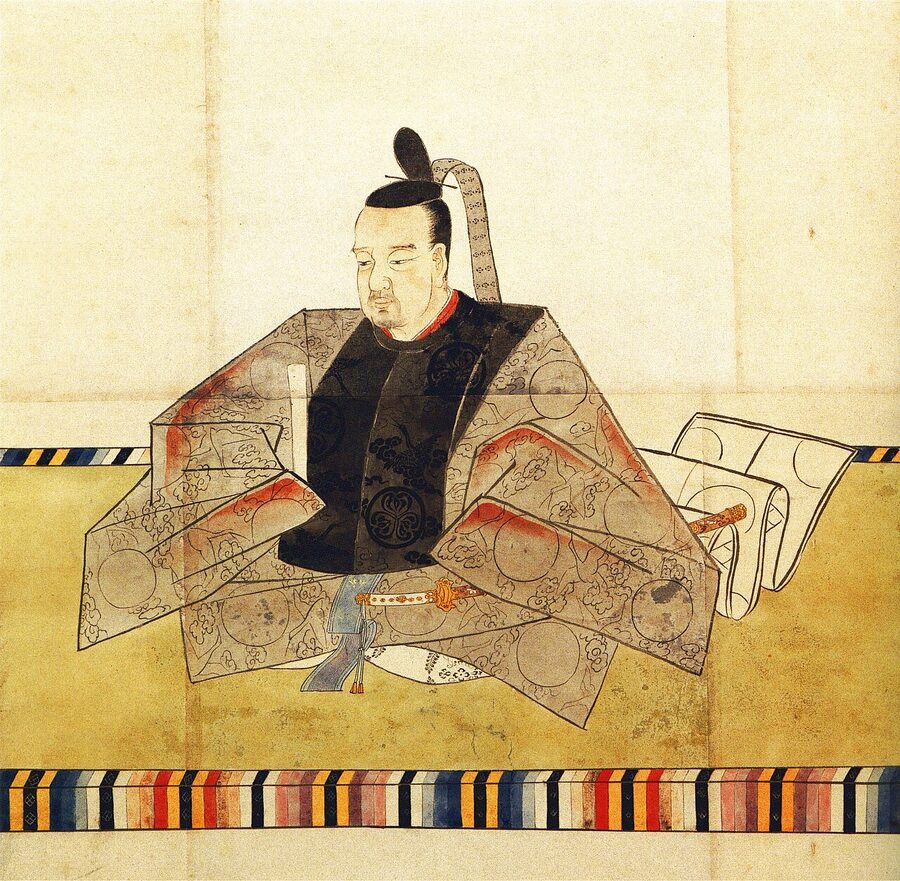
Ienari (1787–1837) reigned for fifty years, longer than anyone, and is said to have fathered 53 children. His daughters were married into daimyo houses all over Japan; the red gate of the University of Tokyo, the Akamon, was built in 1827 for his daughter Yōhime when she married the lord of Kaga.
Ieyoshi (1837–1853) backed Mizuno Tadakuni’s failed Tenpō reforms and died days after Perry’s black ships anchored off Uraga. Iesada (1853–1858) was sickly, and the fight over his successor split the government. Iemochi (1858–1866), chosen at twelve, married the emperor’s sister Kazunomiya in 1862, went up to Kyoto in 1863 as the first shogun to do so since 1634, and died at Osaka Castle at twenty in the middle of a war he was losing.
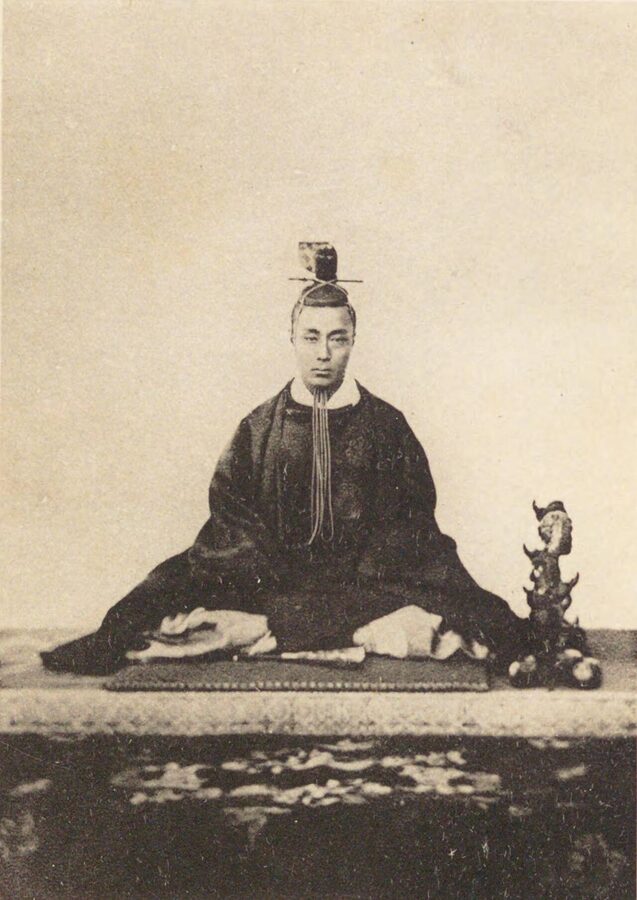
The last, Yoshinobu (1867–1868), a son of the hard-line lord of Mito, was the cleverest of the late Tokugawa. He spent his whole reign in Kyoto and Osaka and never entered Edo Castle as shogun; after the fall he retired to Shizuoka, took up photography and cycling, and lived until 1913.
Why it came apart
The Tokugawa state was built to stop daimyo fighting each other, and at that it was close to perfect. It was not built to run a money economy, and it was not built to face a foreign navy, and by the 1850s it had to do both at once.
Money first. The shogunate lived on rice tax from its own lands, assessed in the 17th century and very hard to raise, plus the profits of mines whose output fell steeply after the first decades. Meanwhile Edo grew to perhaps a million people (the city life of the Edo era is a story of its own), merchants grew rich on the rice trade and samurai stipends bought less each decade. Each of the three great reforms, Kyōhō, Kansei and Tenpō, was at heart an attempt to get back to Ieyasu’s frugality, and each worked for a while and then didn’t.
The countryside paid. Historians have counted roughly three thousand peasant protests over the period, and each of the great famines was followed by riots in the cities. In 1837 Ōshio Heihachirō, a retired police officer of the Osaka magistrate’s own office, led an armed rising in the name of the starving; it lasted a day, and the fact that one of the system’s own men had led it lasted much longer.
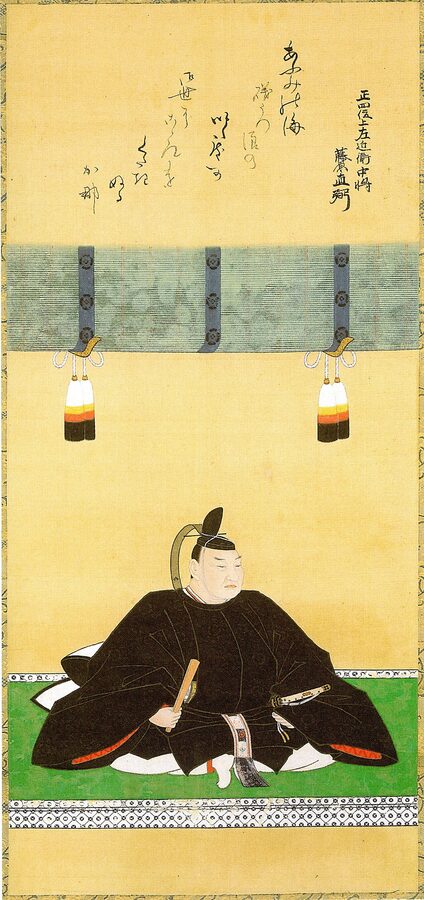
Then the ships. When Commodore Perry arrived in 1853, the senior councillor Abe Masahiro did something no rōjū had done: he circulated the American letter to all the daimyo, and even to bannermen and commoners, and asked for their opinions. It was a sensible thing to do and it ended the fudai monopoly on decisions in a single stroke. The outside lords and the relatives now had a say, and they did not agree.
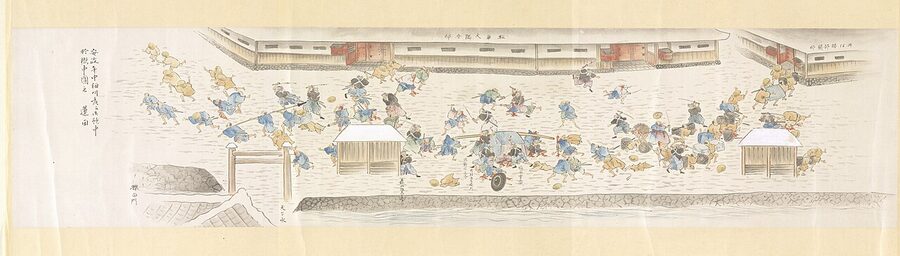
Ii Naosuke, made great elder in 1858, tried to put the lid back on. He signed the commercial treaty with the United States without the emperor’s approval, chose the boy Iemochi as heir over Yoshinobu, and in the Ansei purge punished more than a hundred opponents, from great lords placed under house arrest to the teacher Yoshida Shōin, who was executed. On the morning of the third day of the third month of 1860, in falling snow, eighteen men, all but one of them rōnin from Mito, attacked his procession outside the Sakuradamon gate of Edo Castle and took his head. His guards had covered their sword hilts against the wet.
After that the shogunate negotiated. In 1862, under pressure from the court and from Shimazu Hisamitsu of Satsuma, it cut alternate attendance to one hundred days in three years and let the daimyo families go home, and Edo emptied almost overnight. Political life moved to Kyoto, policed for the shogunate by the lord of Aizu and by hired swordsmen, the most famous of them the Shinsengumi.
A punitive campaign against Chōshū in 1864 ended in Chōshū’s submission; the second, in 1866, ended in defeat, after Satsuma, with Saigō Takamori among its leaders, had secretly allied with Chōshū. Yoshinobu’s Keiō reforms then replaced the monthly rota of councillors with five ministers for home affairs, finance, foreign affairs, army and navy: the first portfolios the regime ever had, two and a half centuries late. In the autumn of 1867, with Satsuma and Chōshū preparing for war, he took the advice of the former lord of Tosa, Yamauchi Yōdō, and gave the government back.
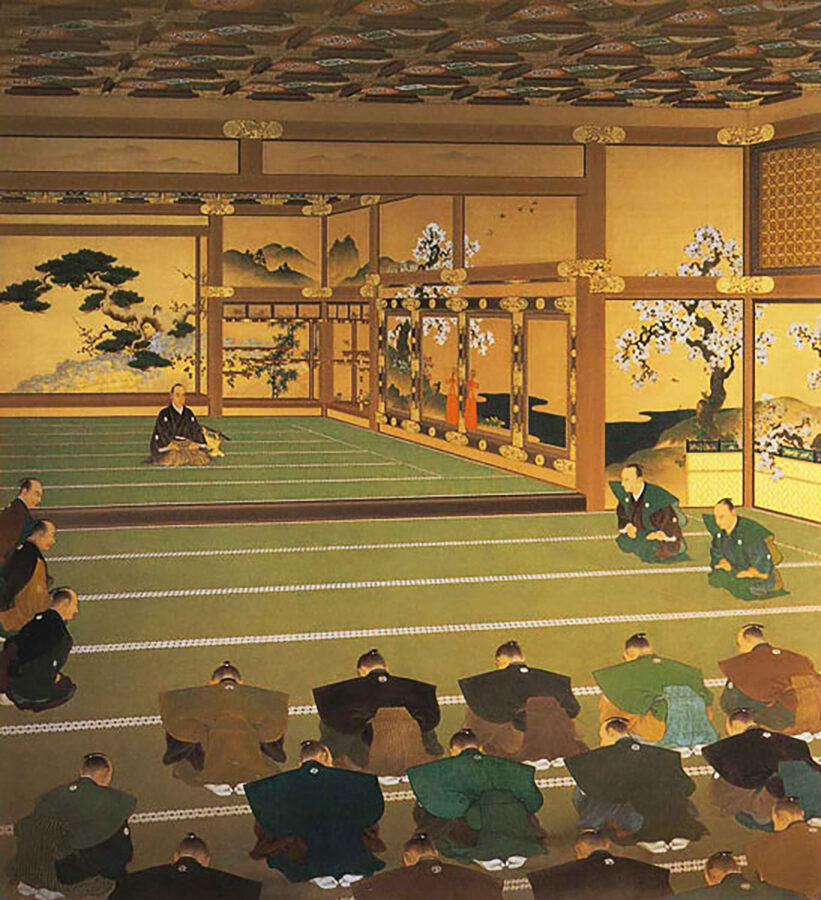
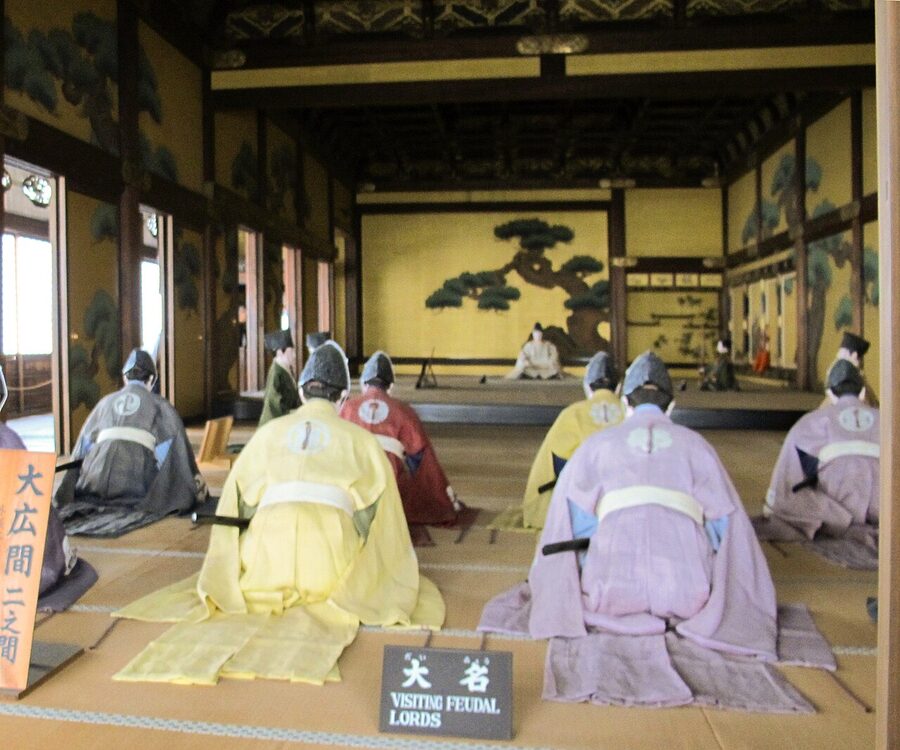
The sequence at Nijō Castle is worth slowing down for. On the thirteenth day of the tenth month he called the senior retainers of the larger domains to the castle and told them; on the fourteenth he submitted the return of the government to the court; and on the fifteenth the court, somewhat alarmed, accepted it. He did not resign as shogun until the twenty-fourth, and his idea was plainly that a council of lords under the emperor would need the biggest lord of all to run it.
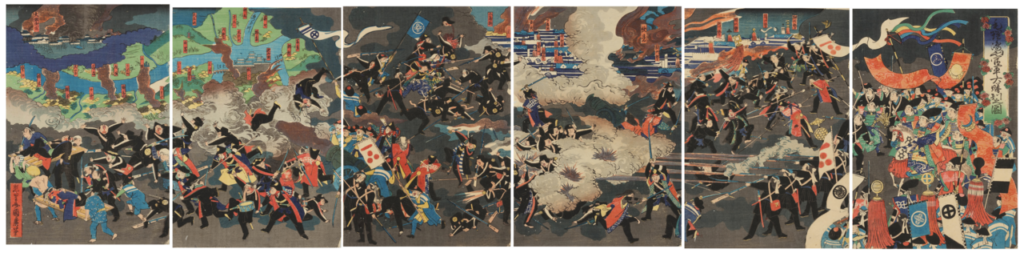
It did not work out that way. On the ninth day of the twelfth month (3 January 1868), Satsuma troops and their allies took the palace gates and the court proclaimed the restoration of imperial rule, abolished the shogunate and the post of shogun, and demanded the Tokugawa lands. Fighting broke out at Toba and Fushimi south of Kyoto at the end of January; the shogunate’s army, larger on paper, broke when the imperial brocade banner appeared on the other side, and Yoshinobu slipped out of Osaka Castle by night and sailed for Edo.
Edo Castle was handed over without a fight on 11 April 1868 by the old calendar, after the talks between Katsu Kaishū and Saigō Takamori described in the article on Edo Castle. Holdouts fought on in the north, and the last of them surrendered at Hakodate in June 1869. In 1871 the new government abolished the domains, the han that the shogunate had never officially called han, and replaced them with prefectures. For what came next, see the Meiji era, and for the whole run from Heian to Heisei, Japan through the ages.
Where to see the machinery of Tokugawa rule today
What survives is scattered: the guardhouses of the castle at the centre, the offices and checkpoints that ran the roads and the countryside, and a ring of mausolea that were the regime’s idea of propaganda. I would give Tokyo two days and then go out along the Tōkaidō.
Edo Castle: the East Gardens and Sakuradamon
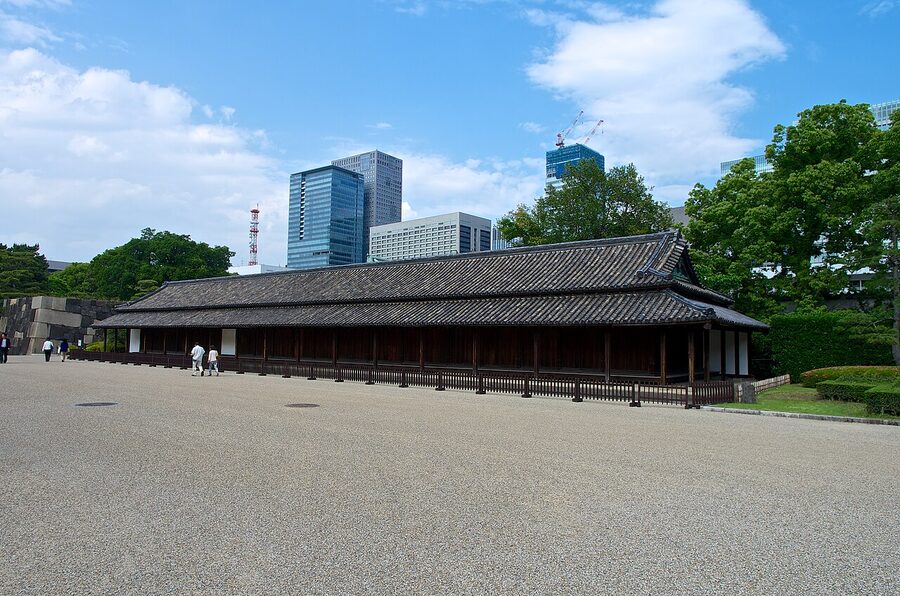
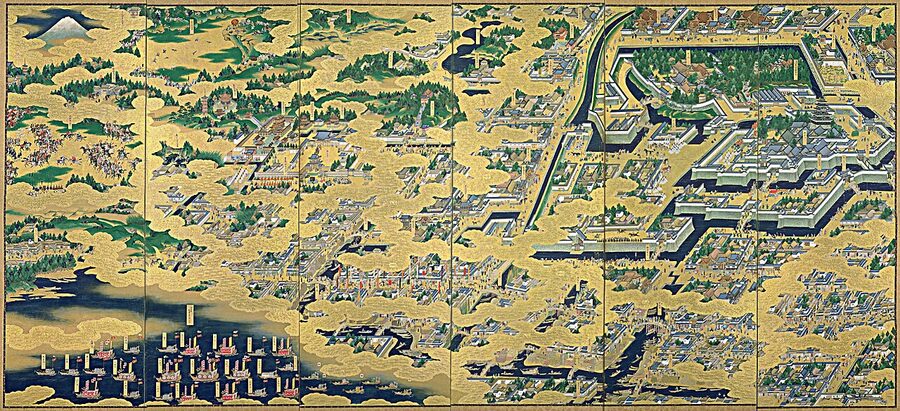
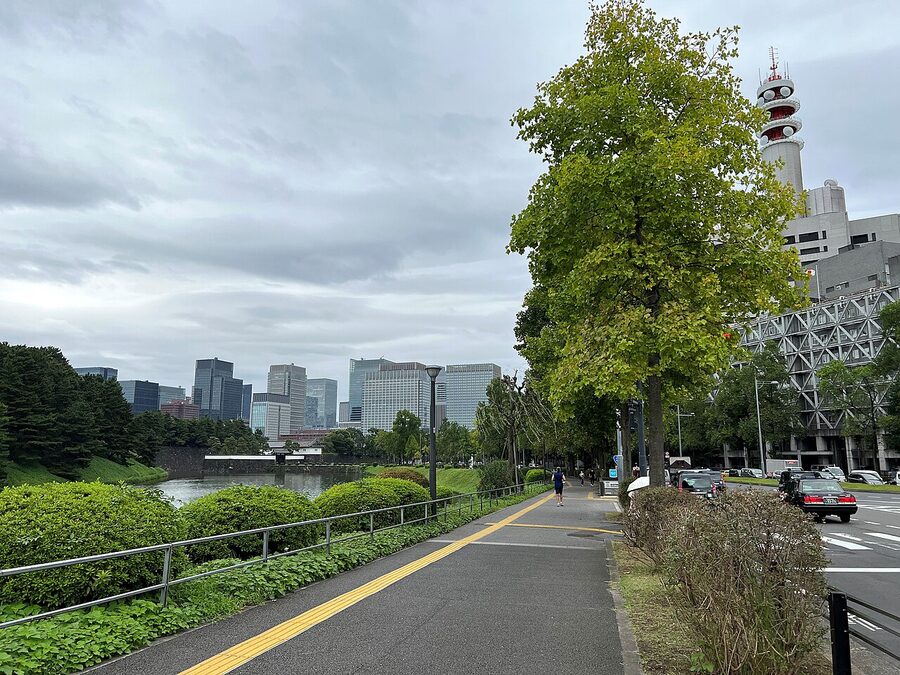
The Imperial Palace East Gardens are the old Honmaru and Ninomaru of Edo Castle, and they are free. Come in through the Ōtemon, a few minutes’ walk from Ōtemachi Station, and you walk the route a daimyo took to an audience: through the Ōbansho guardhouse, past the long Hyakunin-bansho, where the hundred-man guard of Kōga, Iga, Negoro and Nijūgo-kumi gunners worked in rotation, and up to the Honmaru. For the Iga connection, see Hattori Hanzō.
The Honmaru is now a great lawn. The palace that stood on it, with the Goyōbeya and its hearth somewhere inside, burned for the last time in 1863 and was not rebuilt, so you are walking over the rooms where the rōjū wrote in the ash. At the north end the keep platform stands empty, as it has since the keep burned in 1657, and a stone marks the site of the Matsu no Ōrōka, the corridor where the lord of Akō drew his sword in 1701. The floats of the Kanda Matsuri were once paraded into the castle for the shogun to watch.
The gardens are open 9:00–16:00 from November to February (last entry 15:30), longer from spring to autumn (until 18:00 between mid-April and August), and closed on Mondays and Fridays, apart from most national holidays, and from 28 December to 3 January. Afterwards, walk south along the moat to the Sakuradamon, one of the few original gates, where Ii Naosuke died.
The magistrates’ offices in Yūrakuchō and Marunouchi
The South Magistrate’s office stood where Yūrakuchō Station is now, and in the plaza of the Itocia building by the station a stone marks the site, with a stretch of the office’s stone-lined drain re-laid beside it. This is where Ōoka Tadasuke sat in judgement. Five minutes’ walk away, by the Yaesu north exit of Tokyo Station, another marker records the North Magistrate’s office, and the site of the Hyōjōsho lies under the office towers of Marunouchi nearby.
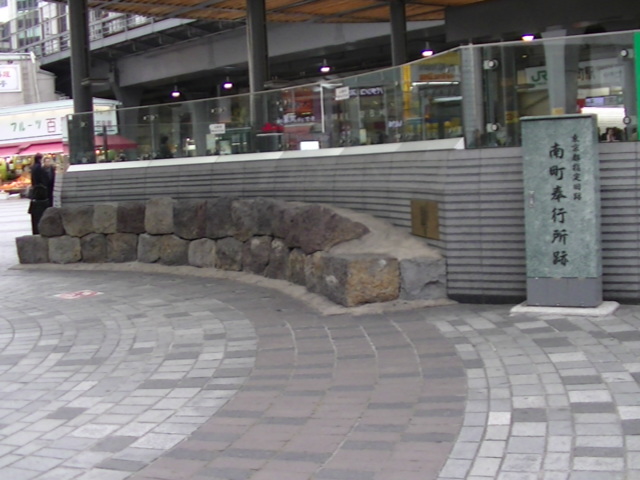
None of these is worth a special trip on its own. But walk from the Sakuradamon to Tokyo Station by way of Yūrakuchō and you cross the legal geography of the shogun’s capital in half an hour.
Edo-Tokyo Museum, Ryōgoku
The Edo-Tokyo Museum in Ryōgoku has reopened after its long renovation, and its Edo Zone on the fifth and sixth floors is still the best place to see how the shogun’s city worked. The life-size half of the Nihonbashi bridge, and the models of the Edo Castle palaces and of a daimyo’s mansion are all here. The permanent exhibition costs ¥800 for adults.
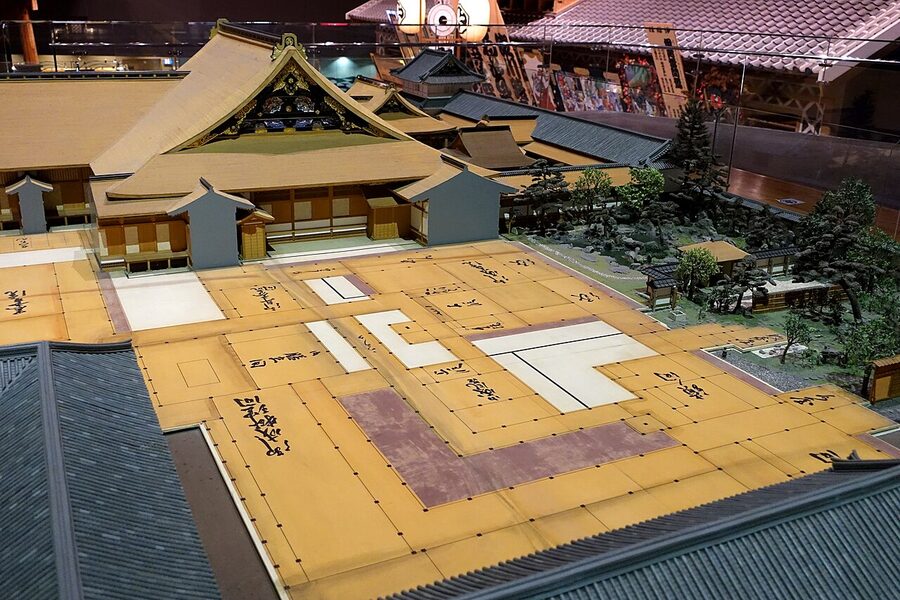
It is open 9:30–17:30 (to 19:30 on Saturdays), last entry thirty minutes before closing, and closed on Mondays (the following weekday if Monday is a holiday) and over New Year. The West Exit of JR Ryōgoku Station on the Sōbu Line is three minutes’ walk, and Exits A3 and A4 of the Toei Ōedo Line’s Ryōgoku Station come up almost at the door.
Zōjō-ji and Kan’ei-ji
The shoguns were buried at two family temples in Edo, six at each. Zōjō-ji at Shiba holds Hidetada, Ienobu, Ietsugu, Ieshige, Ieyoshi and Iemochi, along with Kazunomiya; Kan’ei-ji at Ueno holds Ietsuna, Tsunayoshi, Yoshimune, Ieharu, Ienari and Iesada. Ieyasu and Iemitsu are at Nikkō, and Yoshinobu, who turned Shinto in old age, lies under a plain mound in Yanaka Cemetery.
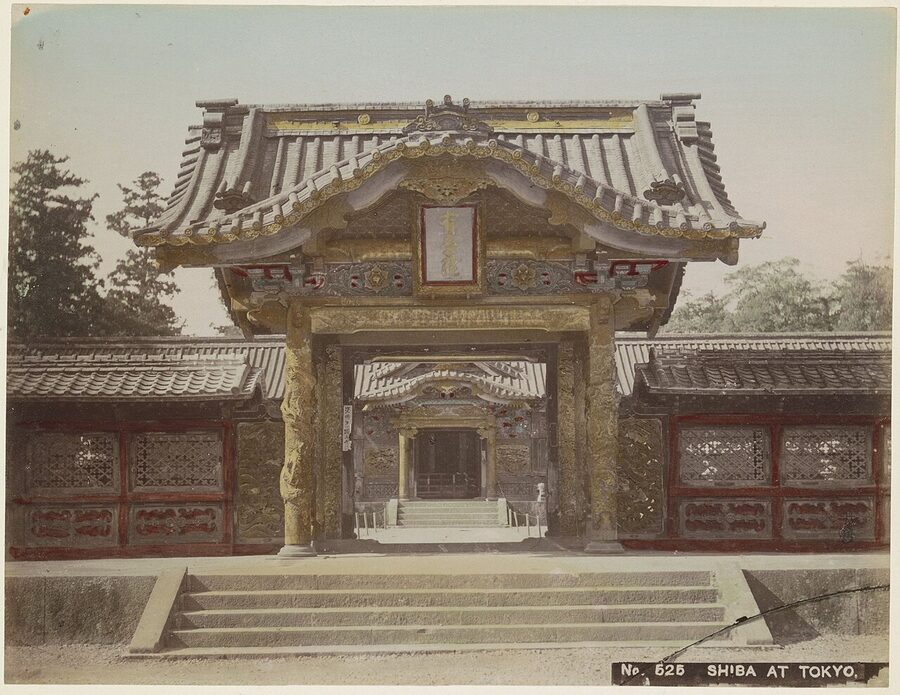
The graves were excavated and consolidated in the late 1950s, and the anthropologist Suzuki Hisashi’s study of the shoguns’ bones, which found among other things that their faces had grown longer and their jaws narrower over the generations, is one of the stranger histories of the dynasty. The graveyard is open weekdays 11:00–15:00 and weekends and holidays 10:00–16:00 for ¥500; it is closed until 1 December 2026 while the ticket booth is rebuilt. The Treasures Gallery under the main hall, with a 1:10 model of Hidetada’s lost mausoleum, costs ¥700 (closed Tuesdays), or ¥1,000 for both.
Kan’ei-ji’s Tokugawa cemetery, behind the Tokyo National Museum, is normally shut and opens only for occasional special tours.
Hakone Sekisho
The Hakone checkpoint on Lake Ashi is a reconstruction, and a good one. A detailed record of a repair carried out in 1865, the Sōshū o-sekisho go-shūfuku dekigata-chō, turned up in the archive of the Egawa family at Nirayama, and the buildings were rebuilt from it and from excavation: the guardhouses opened in 2004, and the whole site, with its stone walls and gates, in 2007.
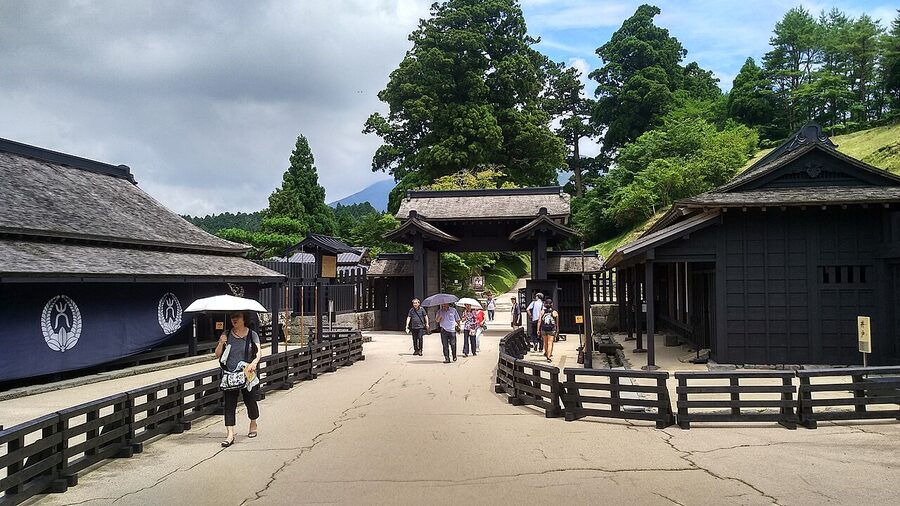
The museum has a reconstruction of a woman being examined and a corner on checkpoint-breakers with montage photographs made by the Kanagawa prefectural police from Edo-period wanted notices, which is the funniest exhibit on the Tōkaidō.
It is open 9:00–17:00 (to 16:30 from December to February), last entry thirty minutes before closing, and costs ¥500 for adults. Buses from Odawara take about 55 minutes and from Hakone-Yumoto about 40; get off at Hakone Sekisho-ato and walk two minutes, or come across the lake by boat to Hakonemachi-kō, five minutes away.
Arai Sekisho, Lake Hamana
If Hakone shows you what a checkpoint looked like, Arai shows you the real thing. Its main guardhouse, rebuilt in 1855 after an earthquake, is the only checkpoint building on any of the great highways to survive, because after checkpoints were abolished in 1869 it was used as a school and then as the town office. It was made a Special Historic Site in 1955.
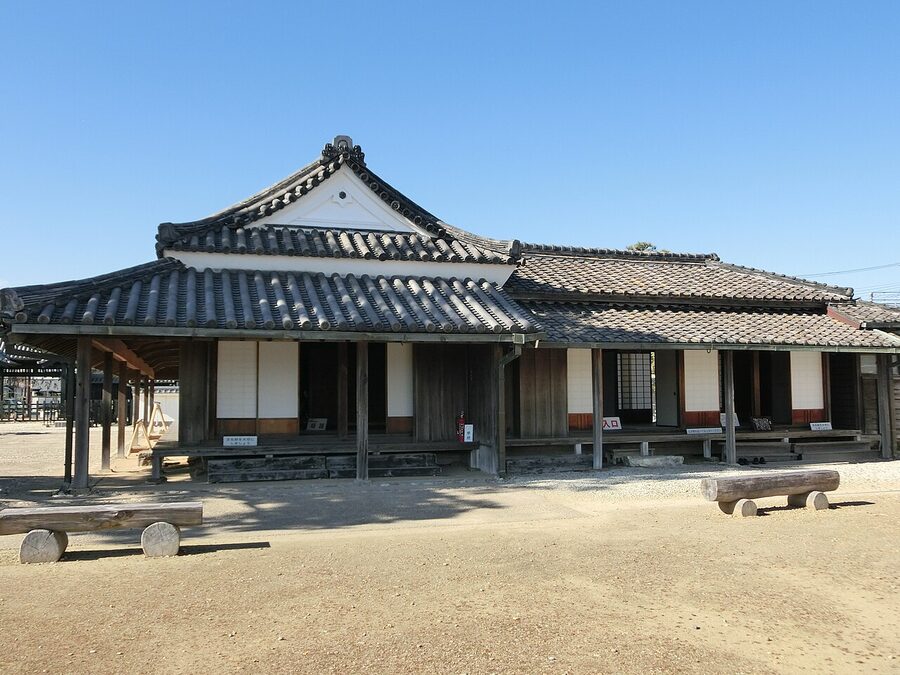
The checkpoint itself moved twice, after a storm surge in 1699 and the Hōei earthquake and tsunami of 1707, which is a reminder that the Tokugawa had enemies their laws could not touch. Admission is ¥400 for adults, 9:00–16:30, closed Mondays (open on holidays, and every day in August) and from 26 December to 2 January; it is eight minutes’ walk west from the south exit of JR Araimachi Station on the Tōkaidō Line.
Takayama Jinya
The shogunate took the province of Hida from the Kanamori family in 1692, for its timber and its mines, and ran it directly through an intendant. By the end of the period there were some sixty such offices across the country, and Takayama’s is the only one whose main buildings survive, because it went on being used as a government office until 1969.
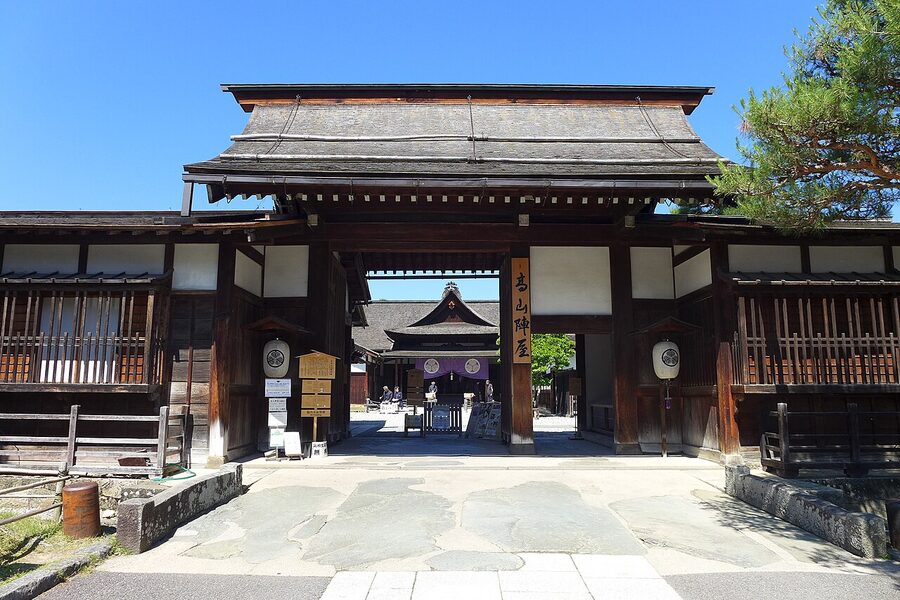
Everything is here: the gate, the reception rooms, the officials’ quarters, the gravel oshirasu where suspects were questioned and sentences read out, and the great rice storehouse, moved from Takayama Castle in 1695 and thought to be among the oldest and largest surviving in Japan. Admission is ¥500; it is open 8:45–17:00 from April to October and 8:45–16:30 from November to March, last entry half an hour before, and closed only over New Year. It is ten minutes’ walk from Takayama Station, and the morning market sets up outside the gate every day, so time it for breakfast. If you can come in April or October, add the Takayama Matsuri.
Nikkō: Tōshōgū and Taiyūin
Ieyasu’s body was moved to Nikkō in 1617 under the terms of his will, and the shrine you see is mostly Iemitsu’s rebuilding of 1636. It is the Tokugawa state as theatre, built for daimyo and foreign envoys who were brought here to be impressed.
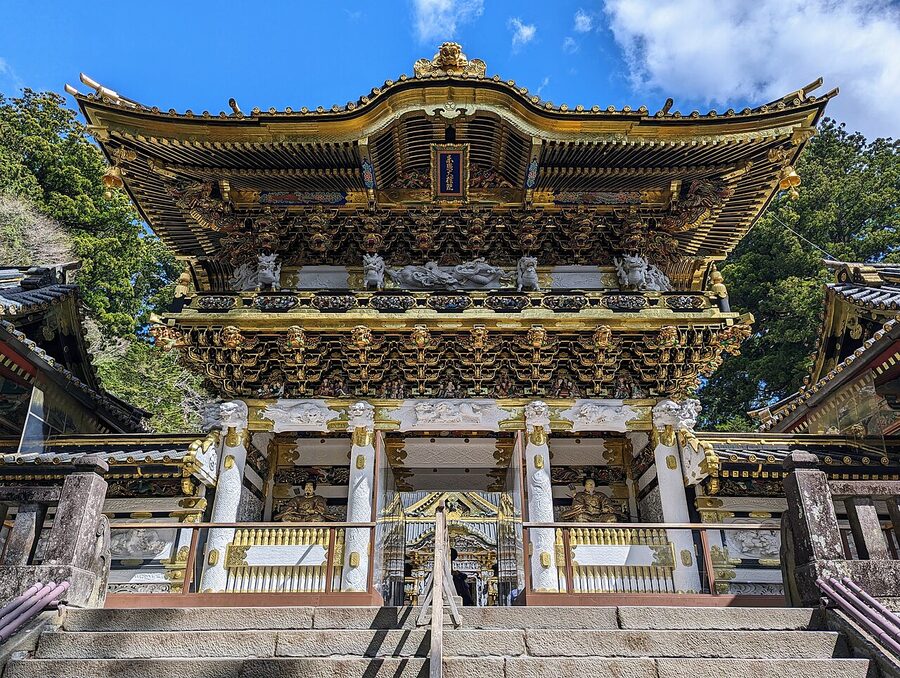
Iemitsu’s own mausoleum, Taiyūin, stands next door in the precinct of Rinnō-ji, and I prefer it: darker, quieter and built, by tradition, so as not to outshine his grandfather’s. Tōshōgū is open 9:00–17:00 from April to October and 9:00–16:00 from November to March, with the gate closing to new entries thirty minutes before; admission is ¥1,600 for adults and covers the inner shrine with Ieyasu’s tomb and the sleeping cat carving on the way up.
Kunōzan Tōshōgū and Sunpu
Ieyasu was first buried on Kunōzan, a hill above the sea near Sunpu, on the night he died in 1616, and moved to Nikkō a year later. Or was he? Kunōzan has always maintained that he never left, Nikkō that he did, and the two shrines have been politely disagreeing for four centuries. The stone tomb at the top of Kunōzan faces west, by tradition so that Ieyasu could keep an eye on the western lords.
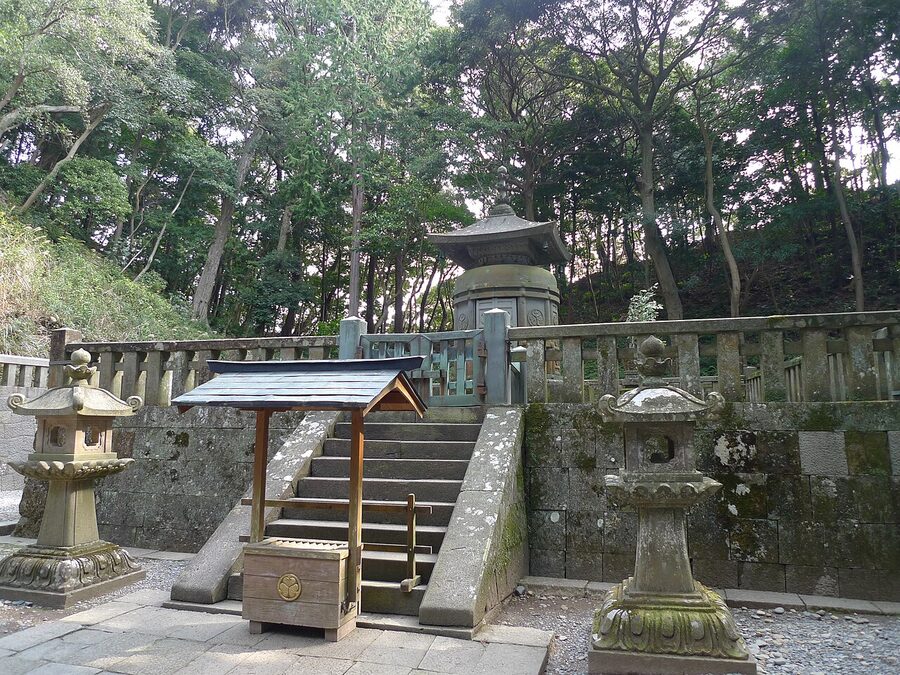
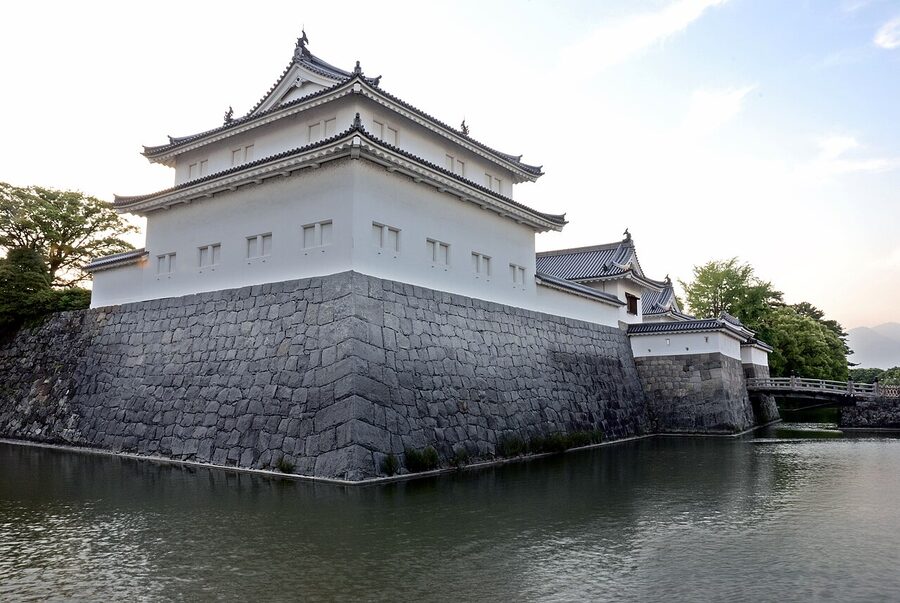
You can reach it by the Nihondaira Ropeway (¥1,250 return, five minutes; the bus from Shizuoka Station to the ropeway takes about 45 minutes) or by climbing the 1,159 stone steps from Kunōzan-shita on the coast, about twenty minutes. The shrine is ¥700, the museum ¥600, or ¥1,200 for both, open 9:00–17:00 every day. Back in Shizuoka, Sunpu Castle Park marks the site of Ieyasu’s retirement castle, where the second government sat.
Nijō Castle, Kyoto
The Tokugawa age opened with a party at Nijō Castle in 1603 and closed with a meeting there in 1867, and the Ōhiroma of the Ninomaru Palace, where Yoshinobu’s retainers were told what he intended, is staged today with figures of the men in the room. Buy the ticket that includes the Ninomaru (¥1,300) and walk the rooms in order, from the outer reception halls to the shogun’s private quarters: the order of rank, built in wood.
Further afield
The rest of the machine is in pieces across the map. Below the walls of Hikone Castle, seat of the Ii, stands Ii Naosuke’s modest early house, the Umoregi-no-ya. Osaka Castle, rebuilt by the shogunate on top of Hideyoshi’s, was where Iemochi died and where Yoshinobu ran from, while Himeji was held through most of the period by fudai houses guarding the western approach; and in Nagasaki the governor ran the shogunate’s one window on the outside world.
The ash in the hearth
I keep coming back to the Goyōbeya and its hearth, even though there is nothing to see. The Tokugawa were bureaucrats of genius: they ran a country of thirty million people for two and a half centuries with a council that worked from ten until two, kept its secrets in ash and its decisions on paper, and almost never had to fight. Then the world arrived, and a system designed so that no one person could change it turned out to be one that no one person could save.
So if you are in Tokyo, walk in through the Ōtemon on a weekday morning, past the guardhouses where the hundred men stood their shifts, and out onto the lawn of the Honmaru. Somewhere under the grass there was a square of ash. Nobody wrote down what was written in it, which was the point.