In 1915 the prime minister of Japan wanted cedars. Ōkuma Shigenobu pictured the new national shrine to the Meiji emperor the way most people pictured a great shrine, with an approach running between trunks as straight and dark as the ones at Ise, and he said so. The foresters told him it would not work. Cedar wants deep, wet soil and clean air, and the site at Yoyogi was a dry, half-bare plain with the Yamanote line along one edge, its locomotives coating everything in soot; plant a cedar grove there, they argued, and within a few decades you would have a shrine surrounded by dying poles.
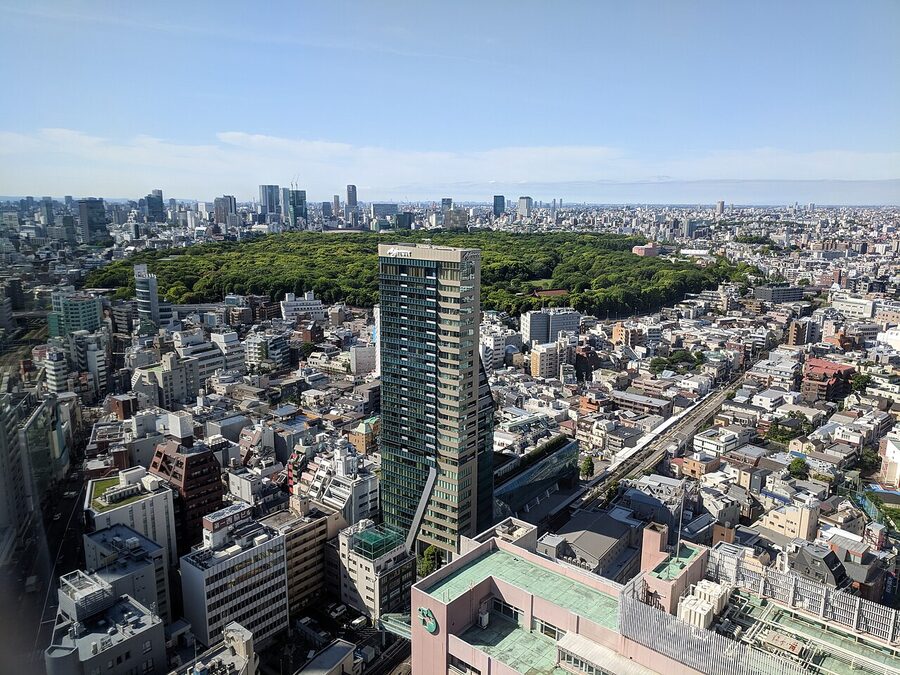
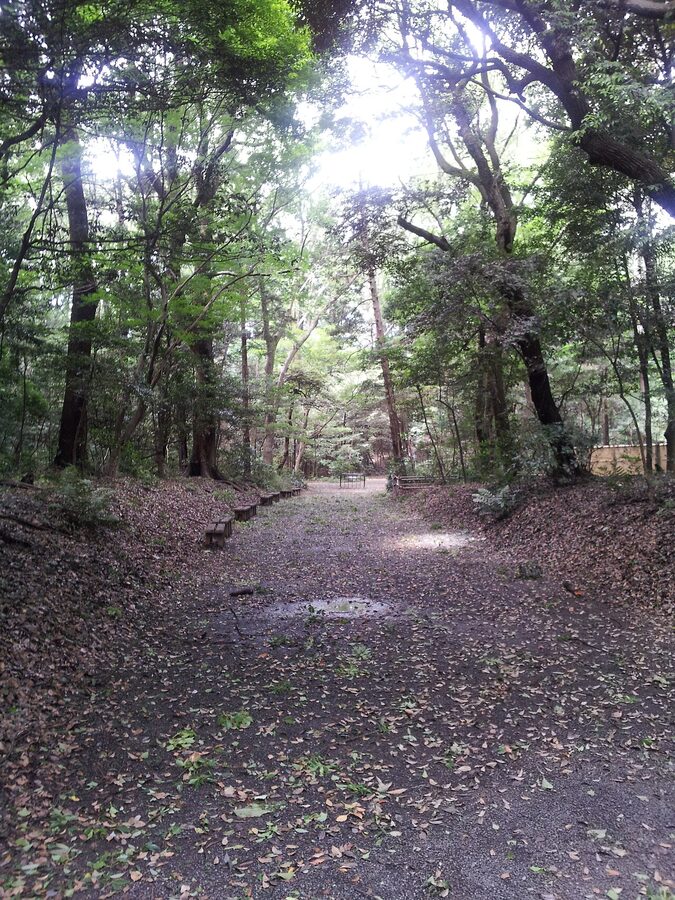
What they planted instead is the forest you walk into from Harajuku Station. It covers about 70 hectares in the middle of the largest city on earth, it was designed on paper to stop needing people within a century or so, and nobody has fed, thinned or tidied it since. I have walked its gravel approaches in every season, and it is still the only place in central Tokyo where the noise of the city goes away inside two minutes. It is also, and the trees hide this well, a monument built by a modern state to a man it had made into a god, burnt in 1945 and rebuilt by public subscription thirteen years later.
In This Article
- An emperor with nowhere to go
- Twenty candidate sites and an empress’s garden
- A forest told to look after itself
- 100,000 trees, or 120,000, or 170,000
- Building by elimination
- A shrine of the state
- The night of 14 April 1945
- Rebuilt without the middle gate
- The busiest shrine in Japan
- The outer garden, built for the living
- Where to see Meiji Jingū today
- The approach and the shrine
- Meiji Jingū Gyoen (the Inner Garden)
- Meiji Jingū Museum and the Treasure House
- The outer garden and the Picture Gallery
- Meiji Kinenkan
- Nogi Shrine, Akasaka
- Fushimi Momoyama, Kyoto
- Back to the cedars
An emperor with nowhere to go
The Meiji emperor died on 30 July 1912, after a reign in which his country had gone from a shogun’s realm to an empire with colonies, a constitution and a navy that had beaten Russia’s. I have written about the man in my piece on Emperor Meiji and about his reign in the Meiji era overview; this piece is about what Tokyo did with him afterwards. Tokyo had a problem. The emperor had asked to be buried near Kyoto, and he was, at Fushimi Momoyama, on the hill where Toyotomi Hideyoshi had built his last castle.
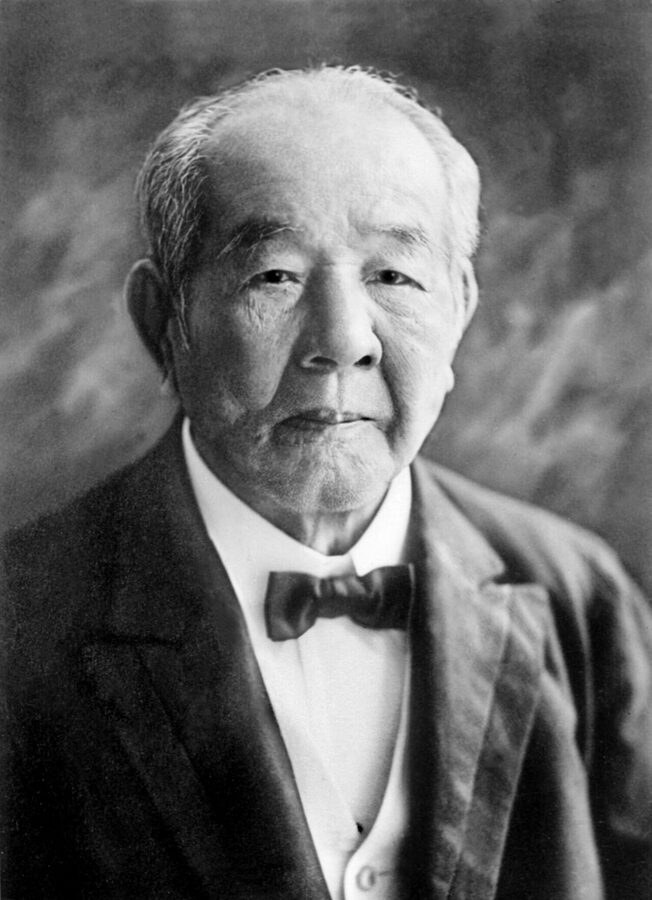
So the capital he had lived in for more than forty years was left without a grave. Within a fortnight a committee led by the industrialist Shibusawa Eiichi and the mayor of Tokyo, Sakatani Yoshirō, had published a memorandum that set out almost exactly what was eventually built: a shrine in an inner precinct paid for by the state, and an outer precinct of memorial buildings and gardens paid for by public donation.
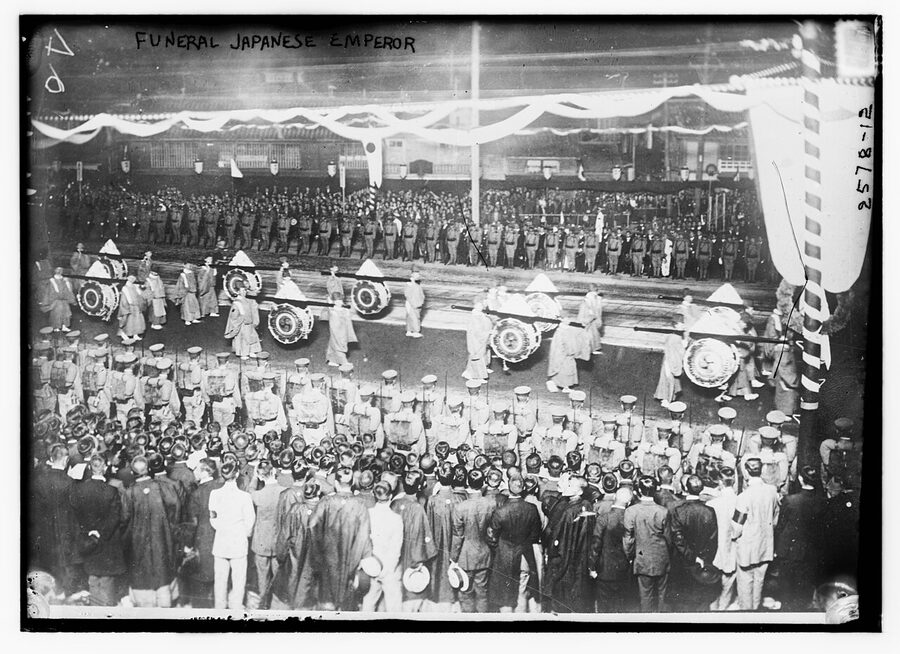
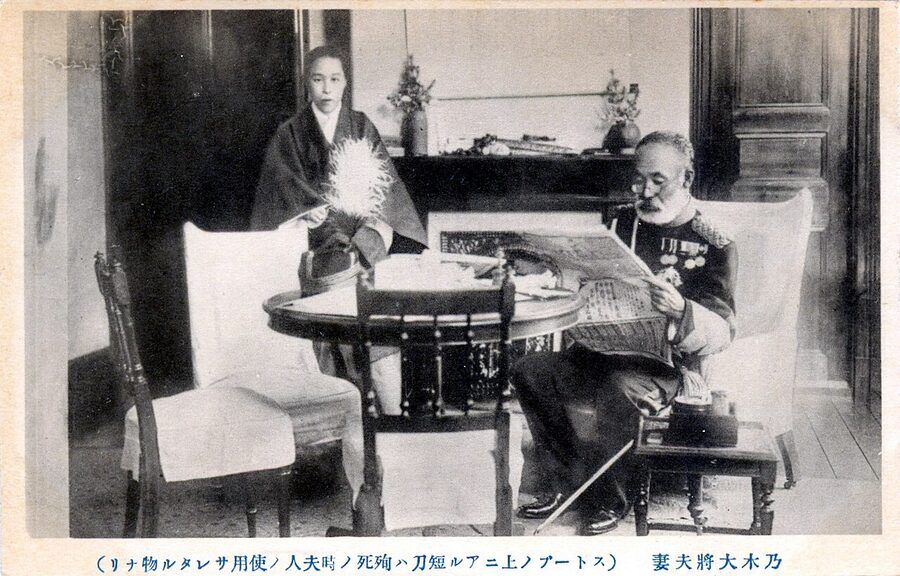
The funeral left a mark on the story that has never quite washed off. On the evening of 13 September 1912, as the guns signalled the departure of the funeral carriage, General Nogi Maresuke and his wife Shizuko killed themselves at their house in Akasaka, a short walk from the parade ground. Nogi chose seppuku, the death the old warrior class had reserved for itself, and left a note saying he was following his lord.
The empress did not outlive her husband by long. Empress Shōken died at the imperial villa at Numazu in the early hours of 9 April 1914, although the announcement put her death on 11 April. The usual explanation is palace politics: the imperial household minister was facing a bribery inquiry and had to be replaced first, so for two days she was officially still alive.
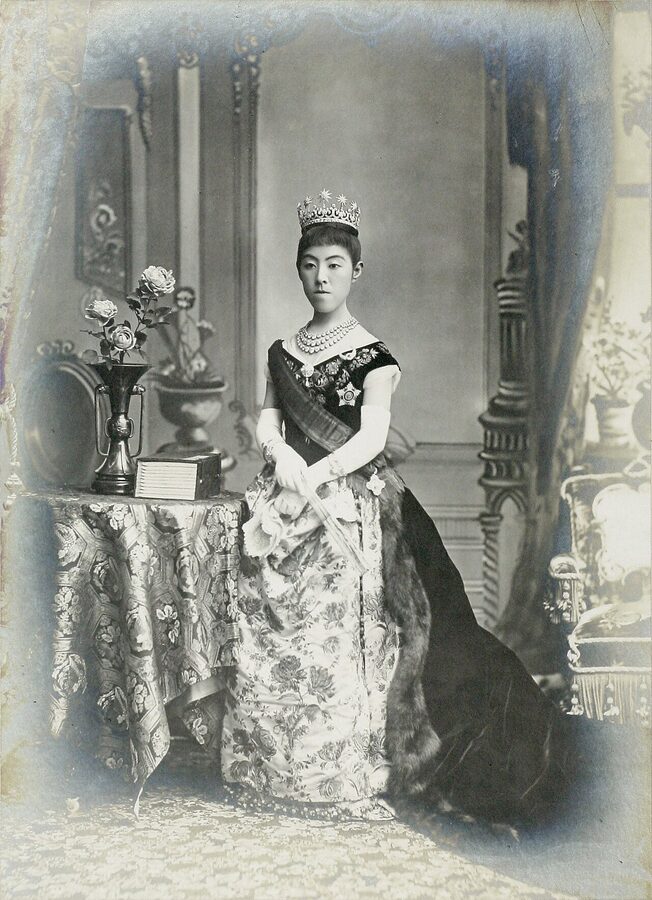
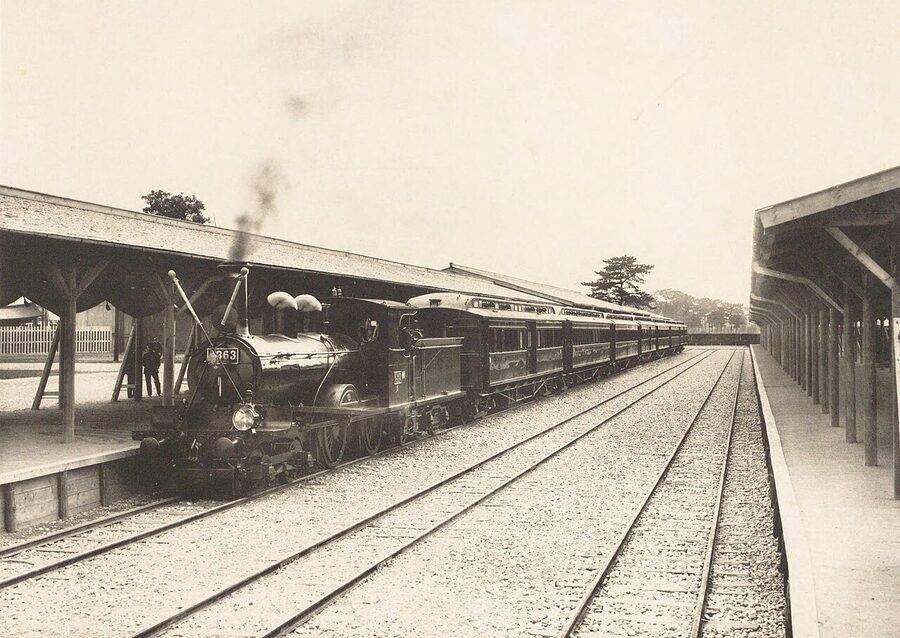
Her funeral was held on the army parade ground at Yoyogi in May 1914, and the railway built a temporary platform on the Yamanote line for her funeral train. By then the site of the shrine had been chosen, on the imperial estate next door. It was decided that she would be enshrined with her husband, and on 1 May 1915 the shrine was formally announced.
Twenty candidate sites and an empress’s garden
The fight over where to put the shrine was less bitter than crowded. Towns and prefectures across eastern Japan sent in petitions, more than twenty by the count of the shrine’s historians, offering mountaintops and hills with an imperial visit somewhere in their past. Mount Fuji was proposed, and so were Mount Tsukuba and Hakone.
Tokyo had two advantages. It was the capital, and it was the city where the emperor had lived and reigned for more than forty years. A committee of inquiry decided in January 1914 that the shrine belonged in Tokyo, and in February chose the imperial estate at Yoyogi over the army grounds at Aoyama and Toyama-ga-hara on grounds of scenery. A proposal to call it Tokyo Jingū lost to the name of the reign.
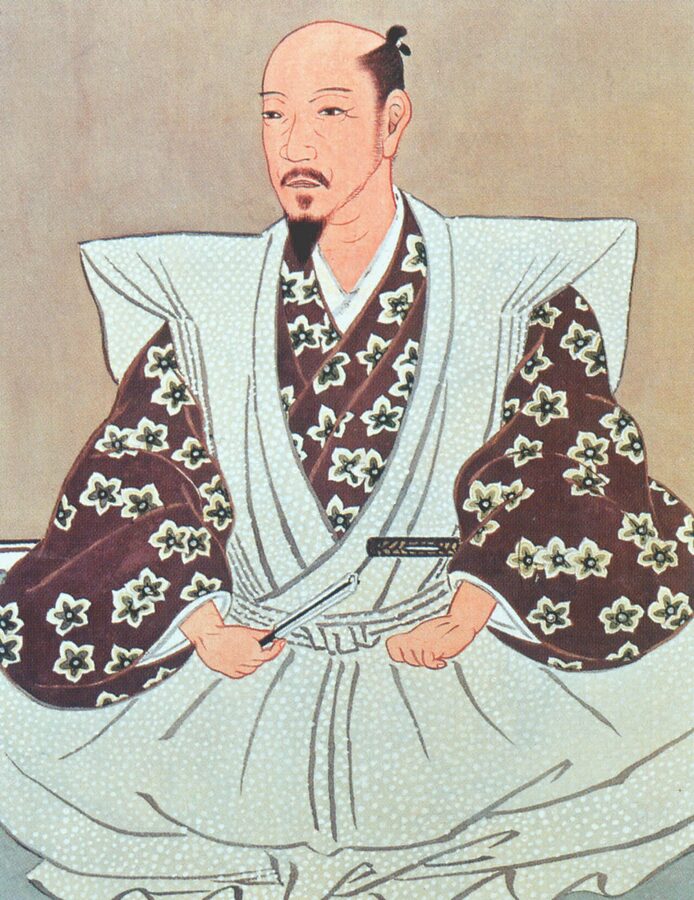
The Yoyogi estate had a longer history than its scrubby look suggested. In the early 17th century it was a villa of the Katō, lords of Higo, whose founder was Katō Kiyomasa, builder of Kumamoto Castle. The Katō lost their domain in 1632, and from 1640 the land was the lower residence of the Ii family of Hikone, the most reliably loyal of the Tokugawa retainer houses.
A lower residence, a shimo-yashiki, was the outermost of the properties every lord kept in Edo under sankin-kōtai, the system that made the daimyō spend alternate years in the capital. Upper residences near Edo Castle did the politics; lower residences out in the fields did the storage and the gardening. The Ii kept theirs at Yoyogi through the years of Ii Naosuke, the regent who signed the treaty with the Americans and was cut down outside Edo Castle in 1860, and whose family seat I cover in Hikone Castle.
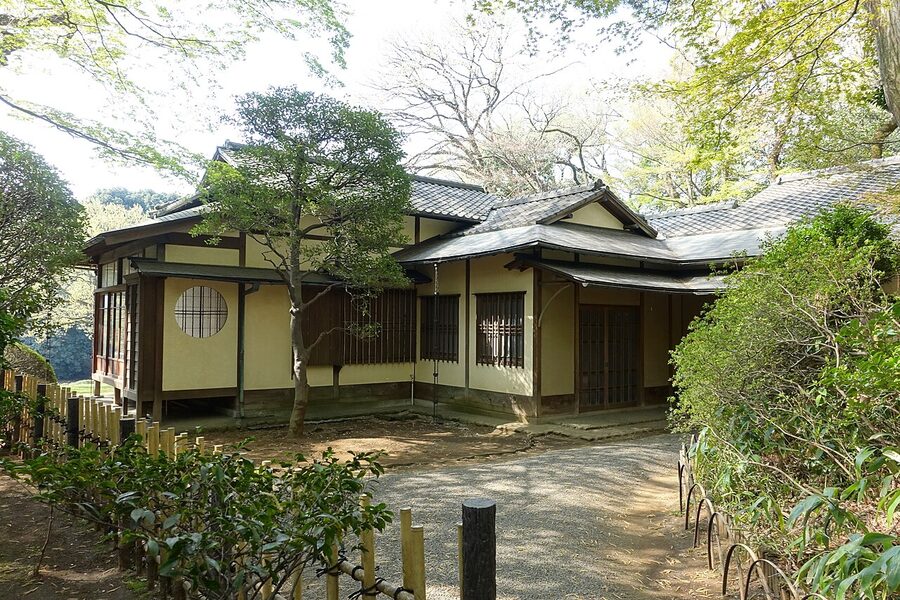
After the Meiji Restoration the government bought the land from the Ii in 1874 and made it an imperial estate. Around 1893 the old daimyō garden was put in order as a place where the empress, who was not strong, could walk. The emperor had a rest house and paths built for her and a paddy turned into an iris bed. By the shrine’s count he went there himself exactly once, in January 1886, while she visited nine times before 1909, and her garden as much as anything decided the site.
A forest told to look after itself
What the estate did not have was a forest. Apart from the garden, the land was mostly open ground, known locally as the Yoyogi moor. A shrine without a sacred grove was unthinkable, and the Home Ministry went to the one man in Japan best equipped to make one from nothing.
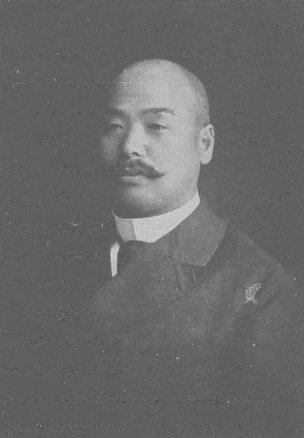
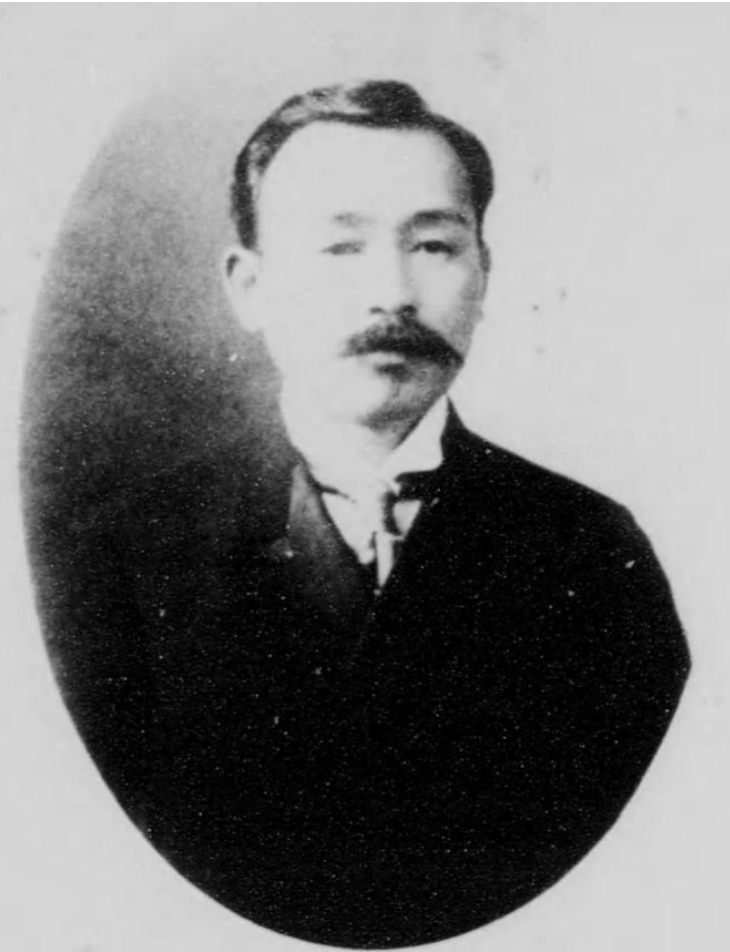
Honda brought two men from his laboratory at the Imperial University’s agricultural college. Hongō Takanori, his former student, wrote the long-range plan. Uehara Keiji, still a graduate student, did not want the job and at first refused; Honda told him research could wait and a chance like this would not come again, and Uehara gave in, then spent years studying shrine groves around the country and arguing with a section chief who did not like hearing the precinct called an experiment.
Their plan, drawn up by 1921, is what makes Meiji Jingū different from every other shrine grove in Japan. It started from the conditions: a warm climate, a dry site and smoke. Conifers would not thrive. The forest Tokyo’s climate grows on its own is broadleaf evergreen, dominated by oaks, chinquapins and camphor trees, and that is what they set out to reach.
The clever part was the timetable. Slow broadleaf saplings on a windy plain would look miserable for decades, and a national shrine could not look miserable. So the top layer was fast-growing red and black pine, with cypress, sawara and even some cedar below as temporary guests, and the broadleaves planted underneath as the long-term crop. Hongō’s drawings show the forest as planted and then at roughly fifty, a hundred and a hundred and fifty years, with the pines dying back, the conifers overtopped and the evergreens forming a forest that regenerates from its own acorns.
No felling, no fertiliser, no replanting. Fallen trees stay where they fall, and even the leaves swept off the gravel approaches each morning are carried back in among the trunks. That is about the extent of the management.
The objections came early. Newspapers and officials complained that a sacred grove ought to look sacred, not like a thicket, and Ōkuma wanted his cedars. The team went to the prime minister in person, pointing out among other things that the ancient imperial burial mounds, the tomb attributed to Emperor Nintoku among them, are covered in exactly this kind of broadleaf forest. Ōkuma came round.
100,000 trees, or 120,000, or 170,000
Ask how many trees were planted and you will get three answers, all in print. The shrine usually says about 100,000 donated from all over Japan. Many English-language accounts, and some Japanese encyclopedias, say about 120,000 of 365 species, and two standard Japanese reference works say 170,000.
They are less contradictory than they look. The shrine’s historians count 95,559 donated trees and another 15,951 already on the site, which were dug up and replanted to the plan; add trees from other sources and you get near 120,000. The 170,000 seems to come from a survey of 1970, by which time the forest had seeded itself, later repeated as if it were the original planting.
The trees came from every prefecture and from the colonies in Korea and Taiwan. The national railways carried them at a discount, and two spur lines ran from the old Harajuku station into the north of the precinct so that wagons could unload near the planting. The shrine asked for oaks, chinquapins and other evergreen broadleaves; many towns sent their local pride instead, which is why parts of the forest came out denser and stranger than planned.
The labour has a similar wrinkle. From 1919, when the post-war boom pushed up wages, youth associations sent volunteers in rotation, and by the end of 1922 more than 100,000 young men had worked on the project. The shrine’s English pages say the forest was planted by 110,000 volunteers; Japanese histories point out that by 1919 the inner precinct was largely finished and most volunteer work went into the outer garden. Both are true, and the shrine prefers the first.
Did it work? In 2010 the shrine commissioned a second full survey of the precinct, involving something like a thousand specialists, and the answer was yes, ahead of schedule. Some 2,000 black pines and 1,000 red pines died in the polluted decades after the war, as they were always meant to give way, while the camphors, chosen for their tolerance of smoke, did particularly well. The forest had reached roughly the stage Hongō sketched for a hundred years.
The tree count tells the same story backwards. Recent counts give about 234 species and some 36,000 trees: far fewer than were planted, but bigger, because the forest is doing what forests do, killing off its weaker members and growing the rest into giants.
The forest has new problems. Heat-island temperatures are thought to be thinning the soil life, and oak wilt, spread by a beetle carrying a fungus, has been killing big oaks. Nobody planned for either in 1921, and the no-intervention rule is being tested by things its authors could not have imagined.
Building by elimination
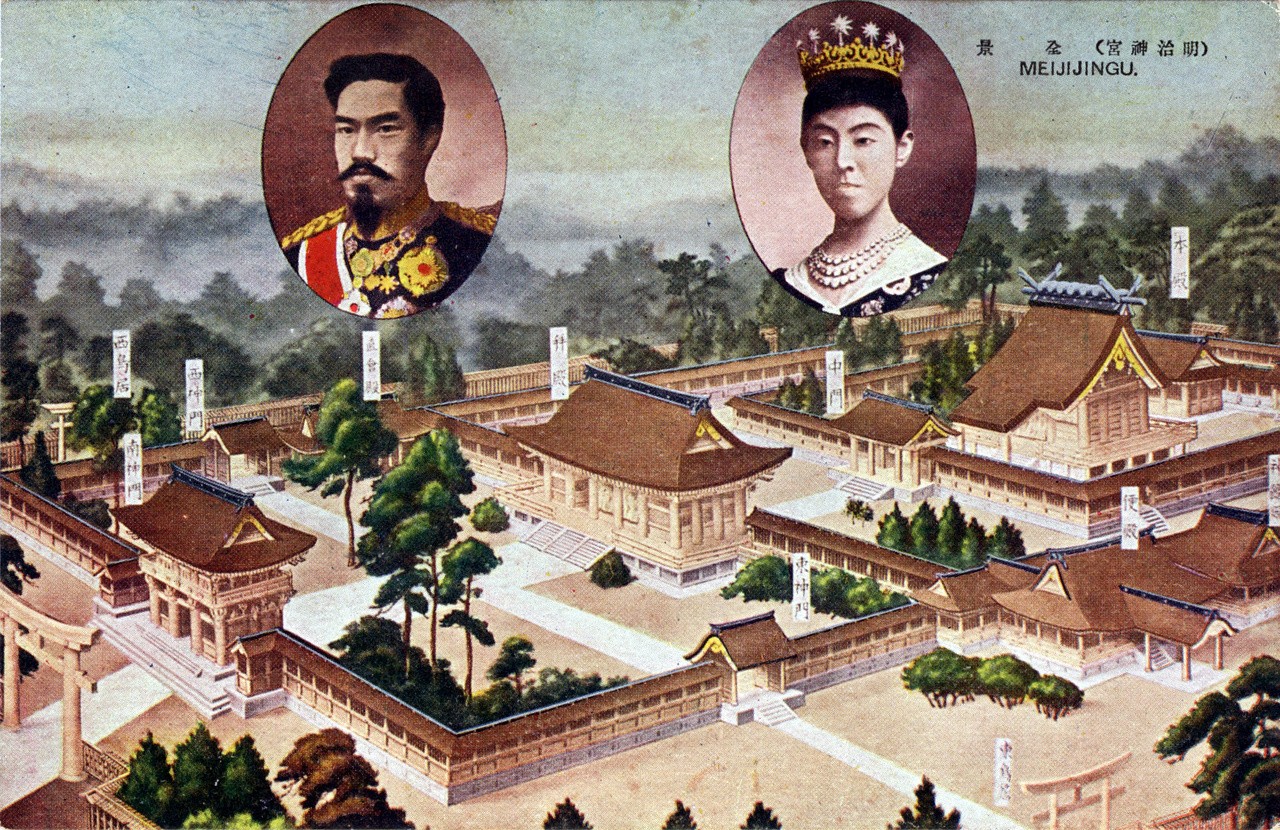
The architecture was decided in a way that tells you a good deal about the period. The architectural historians Itō Chūta and Sekino Tadashi were asked to recommend a style, and agreed there should be no new invention. In Itō’s view a new tradition was possible in theory and very difficult in practice.
So they went through the old styles and ruled them out. The Izumo style was too regional and the Ise style too austere for a shrine without an ancient forest around it. The Nikkō style, with its lacquer and carving, belonged to the old Buddhist-Shinto blend the new state had spent fifty years unpicking. What was left was nagare-zukuri, the commonest shrine style in Japan, with its long front roof sweeping down over the steps, chosen because most Japanese would recognise it.
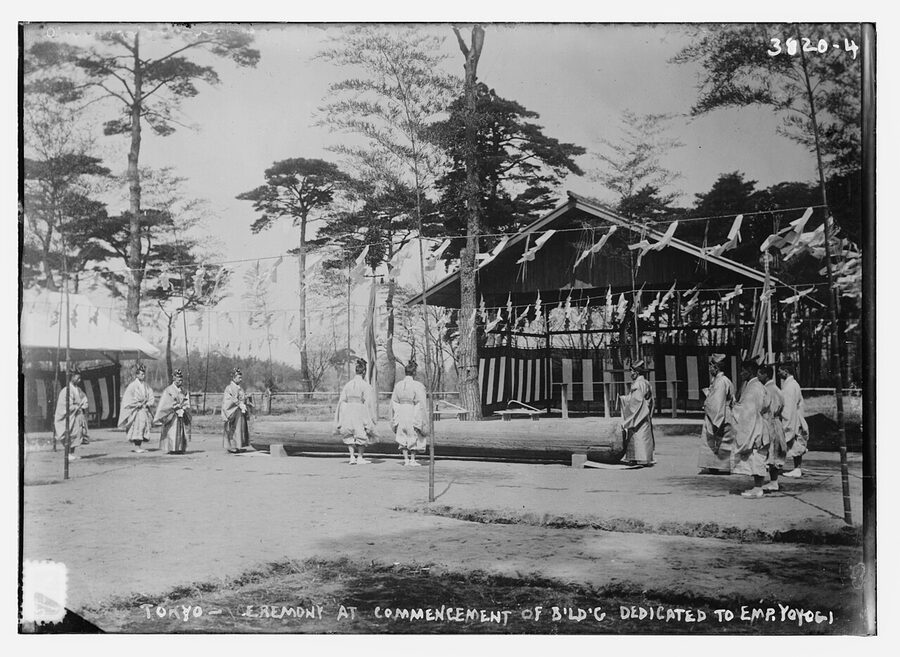
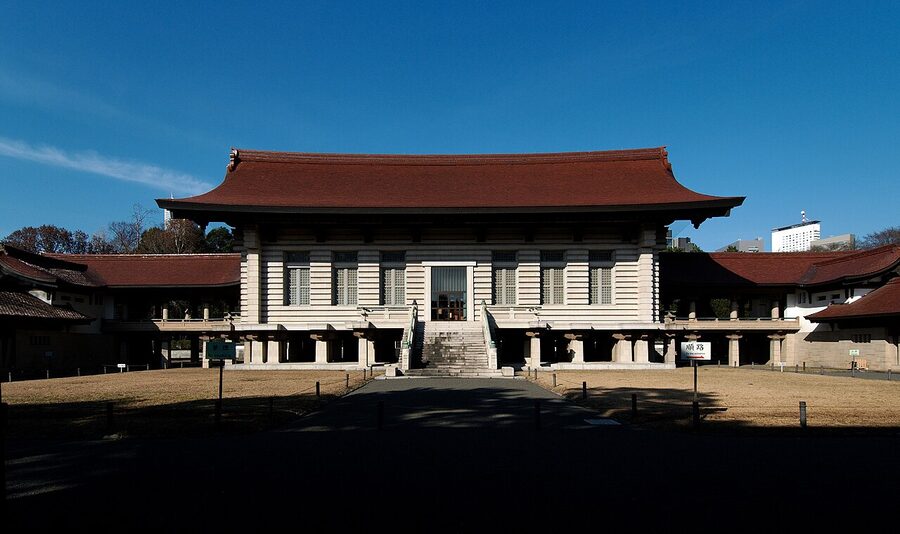
Under Itō the buildings were designed by Andō Tokizō and Ōe Shintarō, in Japanese cypress with roofs of cypress bark, and ground was broken in October 1915. The main timbers came from the Kiso valley and the wood for the torii from Mount Ali in Taiwan, a Japanese colony since 1895. Ōe’s treasure house of 1921, by contrast, imitates the log storehouse of the Shōsō-in at Nara in reinforced concrete and granite, one of the first large concrete buildings in Japan.
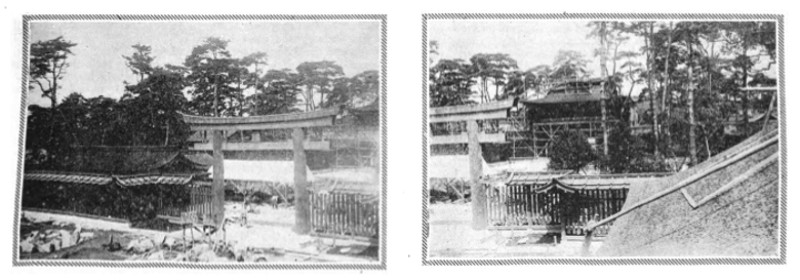
The shrine was consecrated on 1 November 1920, and it counts its founding from that day. English-language accounts often give 3 November, the emperor’s birthday and the day of the annual festival. On the 1st the gates opened at noon, more than half a million people came, the sale of amulets had to be stopped, and 38 people were killed or injured in the crush.
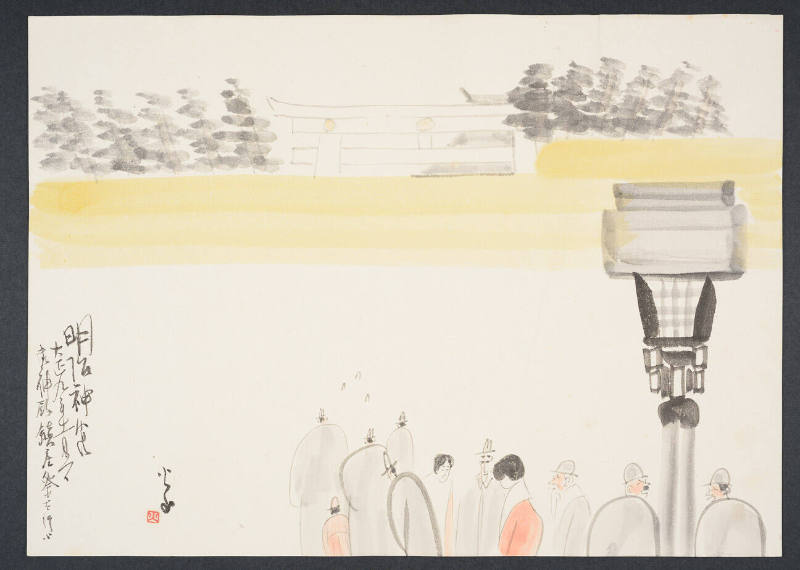
The festival date has a story too. The obvious day for a memorial shrine was the anniversary of the death, 30 July, and there was no precedent for using a birthday; the organisers pointed to Kashihara Shrine, whose festival marks Emperor Jimmu’s legendary accession rather than his death. So the great festival is on 3 November, and 30 July is kept as a quiet rite at nine in the evening.
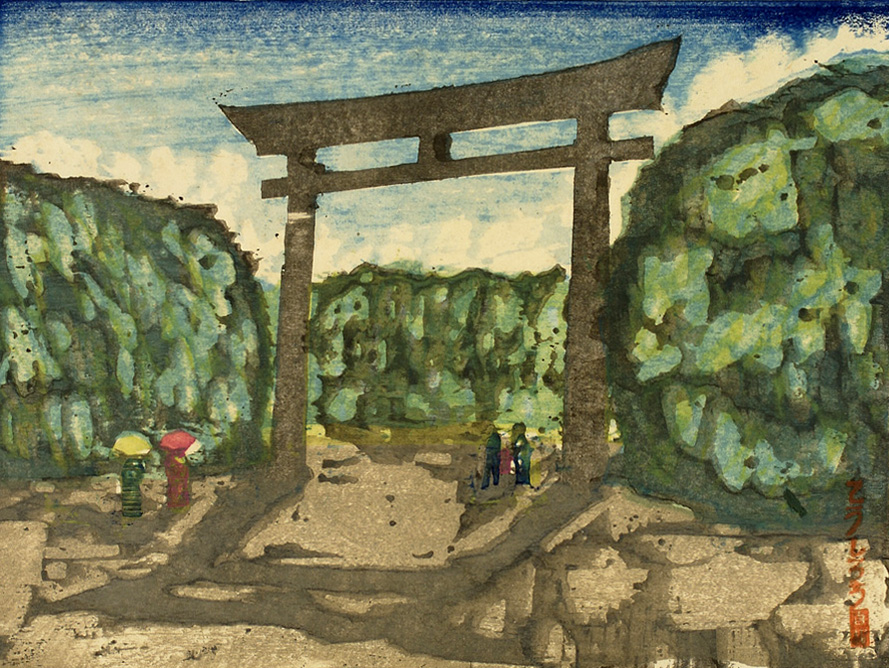
A shrine of the state
It needs saying plainly that Meiji Jingū was built as part of a system. Until 1946 it was a kanpei taisha, a shrine of the first rank supported by the imperial government, with its rites set by state regulation and an imperial envoy at its main festival. Its priests were in effect public servants, and schoolchildren, soldiers and delegations visited it as a civic duty as much as an act of faith.
The Meiji state held that shrine rites were not a religion one could choose but a national observance owed by every subject; historians call the arrangement State Shinto. Meiji Jingū sat near its centre. Its kami is a recent emperor whose line claimed descent from the sun goddess Amaterasu, the claim that the regalia known as the three sacred treasures exist to prove.
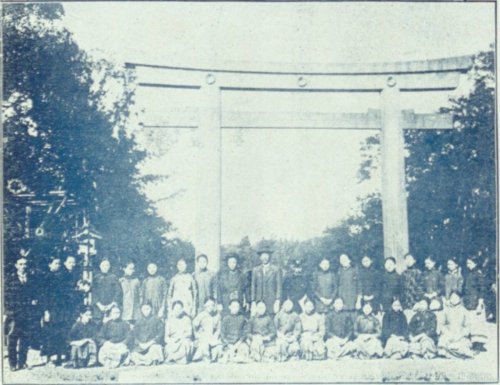
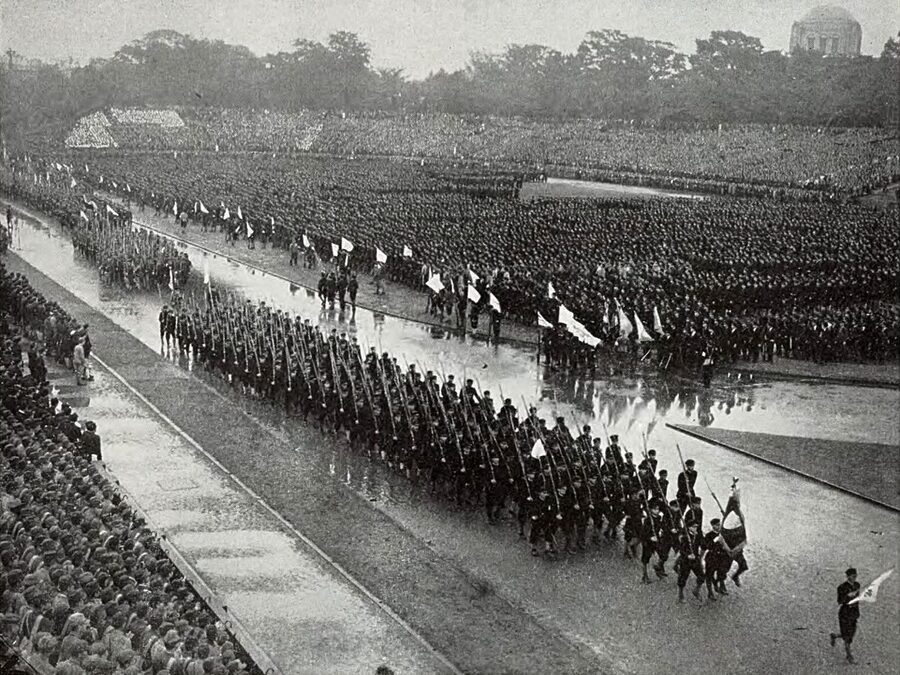
Foreign visitors were brought here too: the King of Siam in 1931, a delegation of the Hitler Youth in 1938, and in December 1942 Wang Jingwei, head of the Japanese-sponsored government in Nanjing. The outer garden’s stadium hosted the Meiji Jingū Games, a national sports meeting held around the emperor’s birthday that grew steadily more military through the 1930s.
The night of 14 April 1945
The priests had seen it coming. As the raids on Tokyo grew heavier, a reinforced concrete vault was dug beside the sanctuary and the sacred objects in which the kami reside were moved into it. On the night of 13 April 1945 the sirens sounded, and in the early hours of the 14th incendiaries fell across the precinct.
The priests on duty fought the fires as long as they could, then decided the kami could not stay in a shelter beside a building about to burn. A group of them carried the sacred objects through the dark forest to the concrete treasure house. The main sanctuary caught fire at about 1:40 in the morning, almost exactly as they arrived, and burned until dawn.
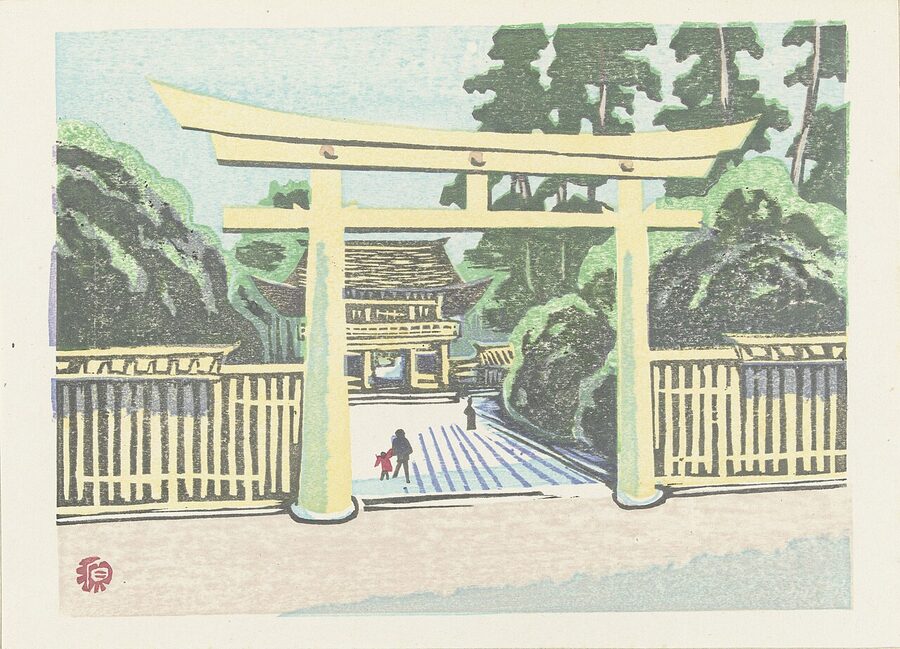
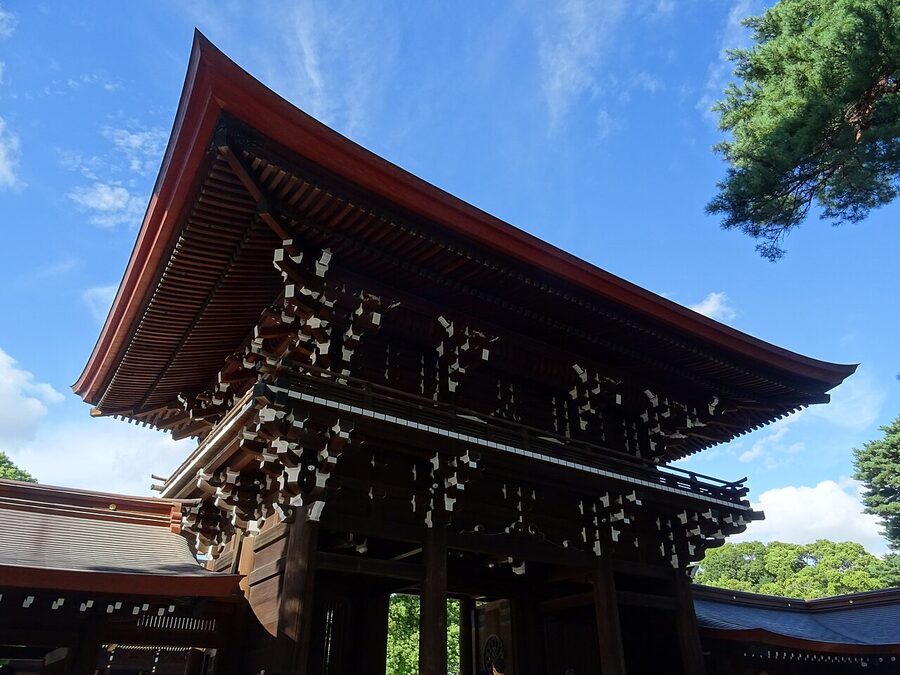
The sanctuary, the worship hall and the middle gate were lost, and the great raid of 25 May finished off the guest hall and several offices and damaged the picture gallery in the outer garden. What survived was the outer ring: the South, East and West Gates, the long corridors and several smaller buildings from 1920, which you walk through today. On 17 April the shrine reopened, using the South Gate as a place of prayer with its doors shut so that nobody could see the ruins.
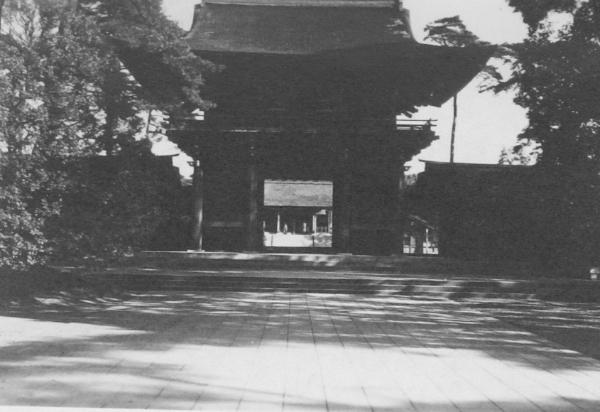
The occupation’s Shinto Directive of December 1945 ended state support for shrines. Meiji Jingū registered as a religious corporation in 1946, finished a temporary sanctuary that May, and set about finding a congregation. Most shrines have local parishioners; this one had none, because it had belonged to the nation, so it created an association of supporters instead. American forces, meanwhile, requisitioned the outer garden, renamed the baseball ground Stateside Park and the athletics stadium Nile Kinnick Stadium, and handed it back in March 1952, a few weeks before the occupation ended.
Rebuilt without the middle gate
The rebuilding was paid for by asking everybody, again. A support association formed in 1953 set a target of 600 million yen from companies, Tokyo districts and every prefecture, reached it in cash alone and received a good deal more in kind. Youth groups came again to work.
The architect, Sunami Takashi, made one change that matters more than it looks. The 1920 shrine had a middle gate between the worship hall and the sanctuary, with ordinary people kept on the far side; the rites had been designed for officials. Sunami took the gate out and split the worship hall into an outer hall for the public and an inner hall behind it, bringing the people in the courtyard closer to the rites.
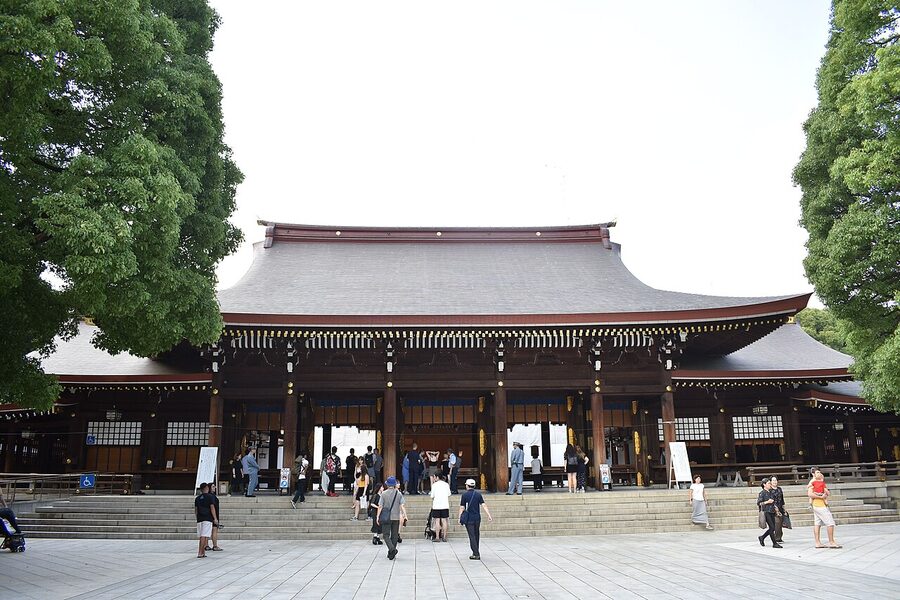
The timber came from a national forest at Hichisō in Gifu Prefecture, felled with full rites in June 1955. In September the logs for the sanctuary came by rail to Shinjuku and were hauled through the streets by supporters, Boy Scouts and sumo wrestlers, a ceremony otherwise seen at the rebuilding of Ise and never before in Tokyo. On the night of 31 October 1958 the kami moved into the new sanctuary, and the emperor of the Shōwa era came with the empress to worship on 4 November. In 2020, the centenary year, 36 buildings old and new were designated Important Cultural Properties.
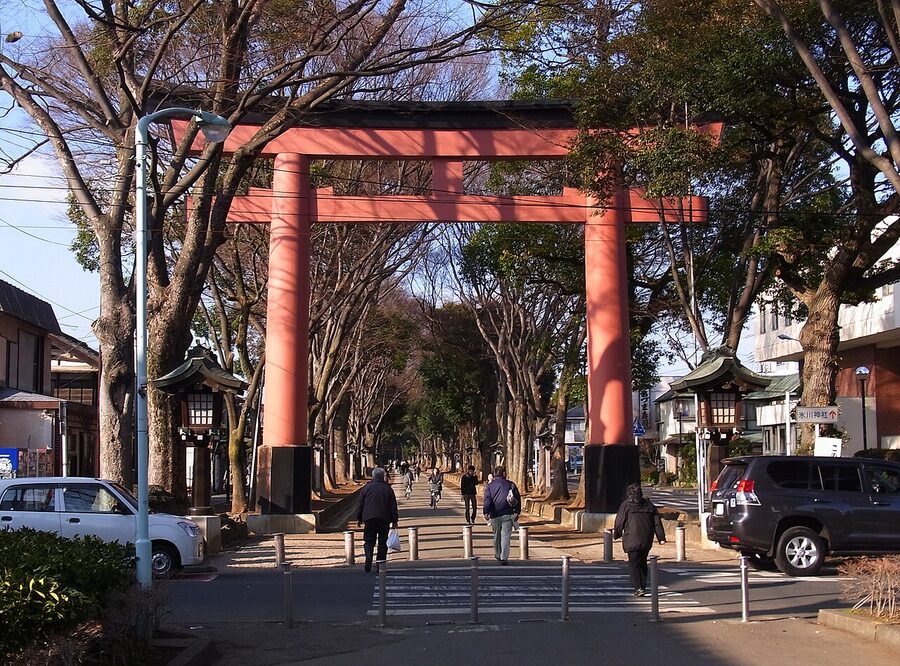
The great torii, where the south and north approaches meet, has its own history of replacement. The first was cut from a Taiwanese cypress more than 1,200 years old. Lightning split it in July 1966, and its successor, raised in December 1975, came from a cypress said to be more than 1,500 years old on Mount Tandai, also in Taiwan. It stands about 12 metres high and is usually described as the largest wooden torii of its type in Japan.
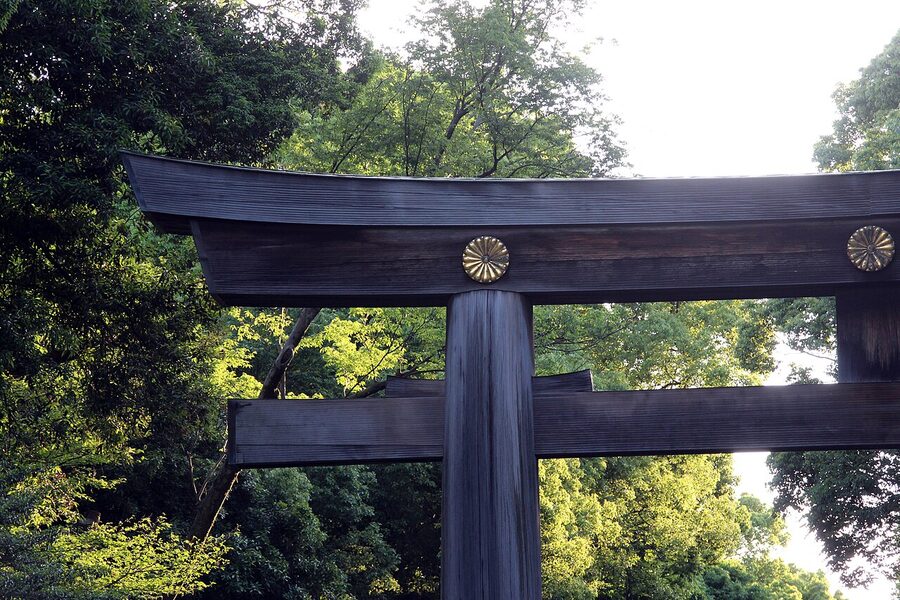
The old torii did not go to waste. It was given to Hikawa Shrine in Ōmiya, Saitama, the senior shrine of old Musashi Province, which the Meiji emperor honoured within weeks of arriving in Tokyo in 1868. It has stood there since 1976 as the second torii on a long avenue of zelkovas, about fifteen minutes’ walk from Ōmiya Station.
The busiest shrine in Japan
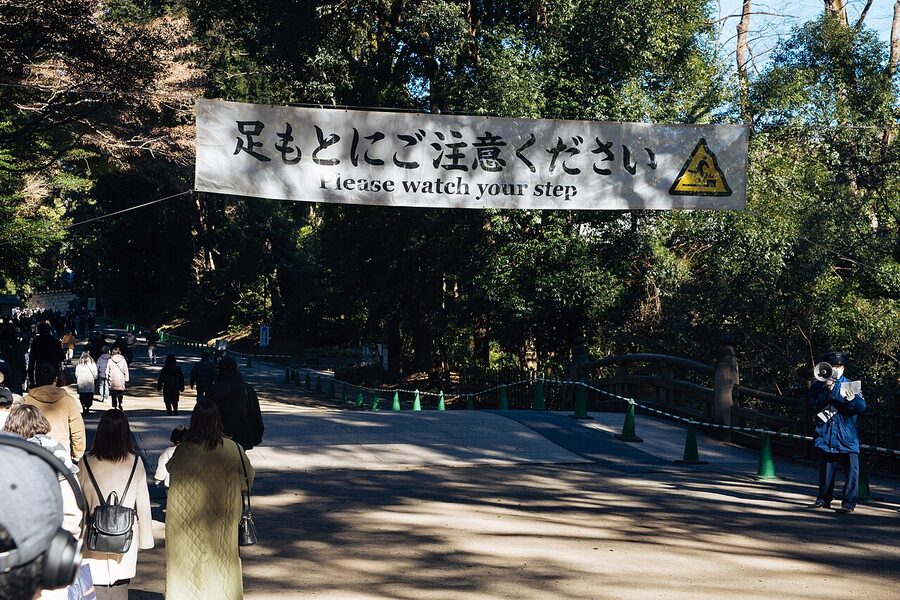
At New Year Meiji Jingū receives more worshippers than any other shrine or temple in Japan, usually put at around three million in the first three days of January. The police stopped publishing official counts years ago, so treat the figure as a tradition rather than a measurement; if you have stood on the approach at ten past midnight on 1 January, you will not argue with it.
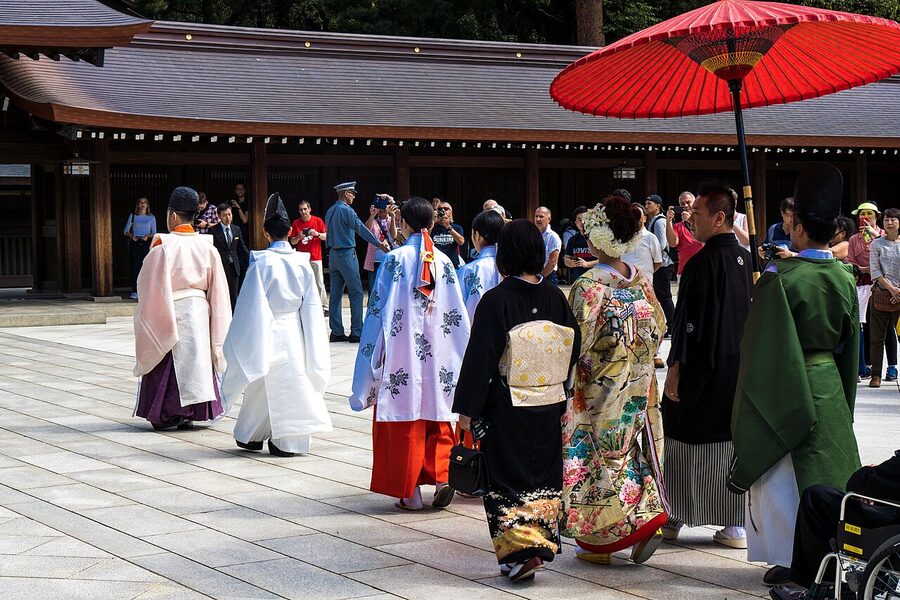
The rest of the year is quieter. Rites are held daily at 8:00 and 14:00, with a fuller ceremony at 9:00 on the 1st and 15th of each month. You may well see a wedding procession: priests in front, the bride in white, the groom in black crested kimono and hakama, and an attendant holding a red parasol over them.
Please do not walk into it for a better photograph. People do.
That last point explains a lot. Reported figures suggest only about 12 per cent of the shrine’s income comes from offerings and rites, and most of the rest from the wedding business at Meiji Kinenkan and the sports grounds in the outer garden. A shrine with no state funding and no parishioners has to pay for 70 hectares of forest somehow, and that is the background to the outer garden arguments below.
Meiji Jingū also prays for things a village shrine would not. Its New Year message says it prays for the prosperity of the imperial house, the flourishing of the nation and peace in the world, and its priests hold rites on the reigning emperor’s birthday and National Foundation Day. It walked out of the national Association of Shinto Shrines in 2004 after a dispute and rejoined in 2010. None of this is hidden or likely to trouble you, but it is a different kind of place from the neighbourhood shrine with its fox statues.
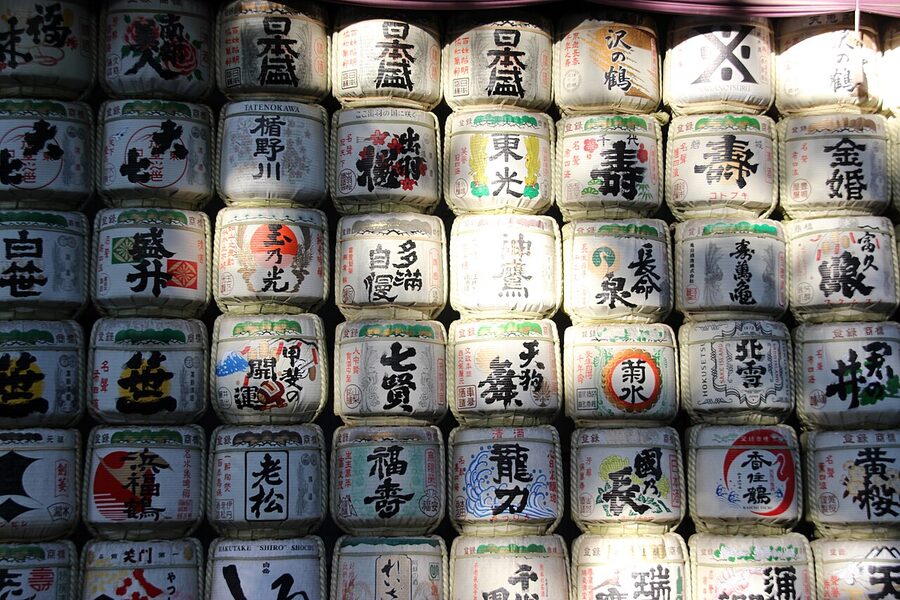
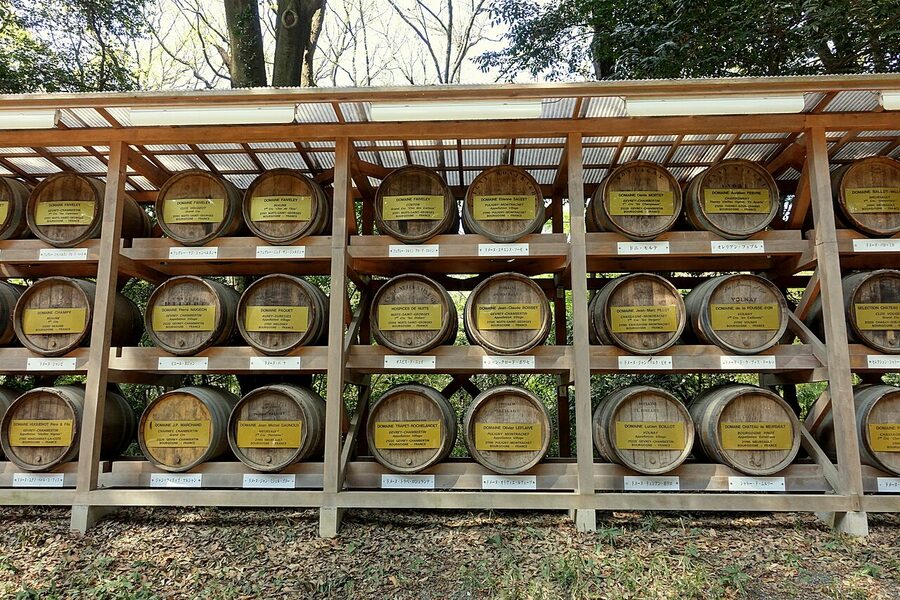
On the walk in from Harajuku you pass a wall of sake casks, painted with the brewers’ names and offered each year by a national association of sake makers, and opposite it a wall of wine barrels from Burgundy. Both are empty, for display. The wine itself has been a gift from Burgundy’s wineries since 2006, on the reasoning that the emperor who put Japan into Western dress also drank French wine.
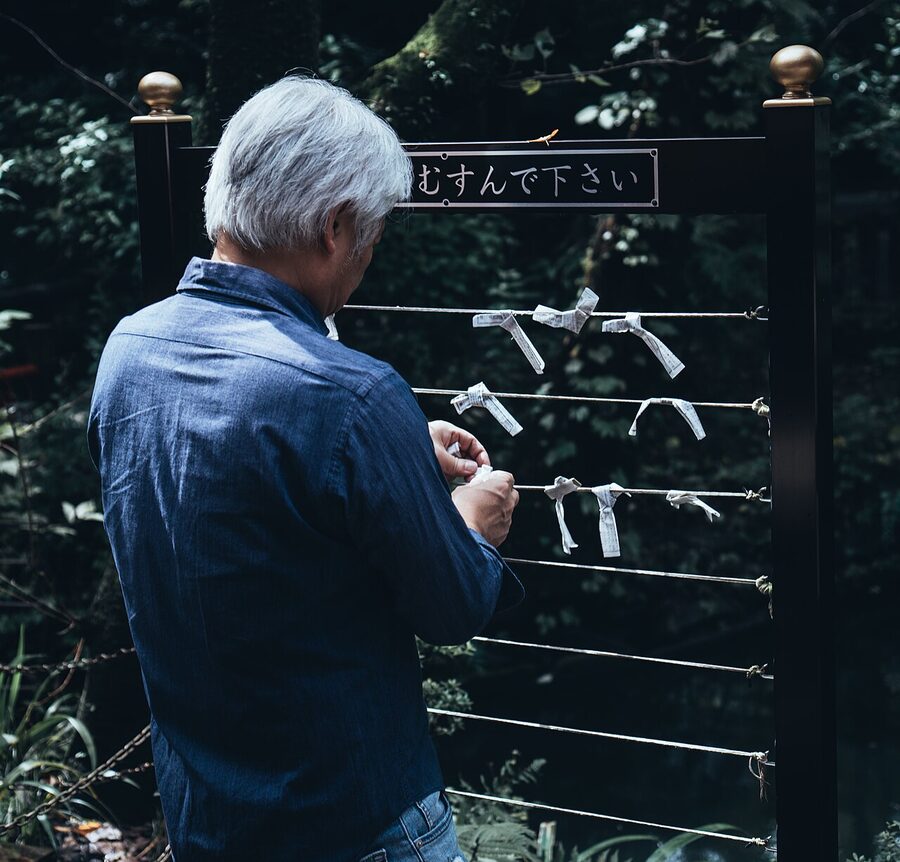
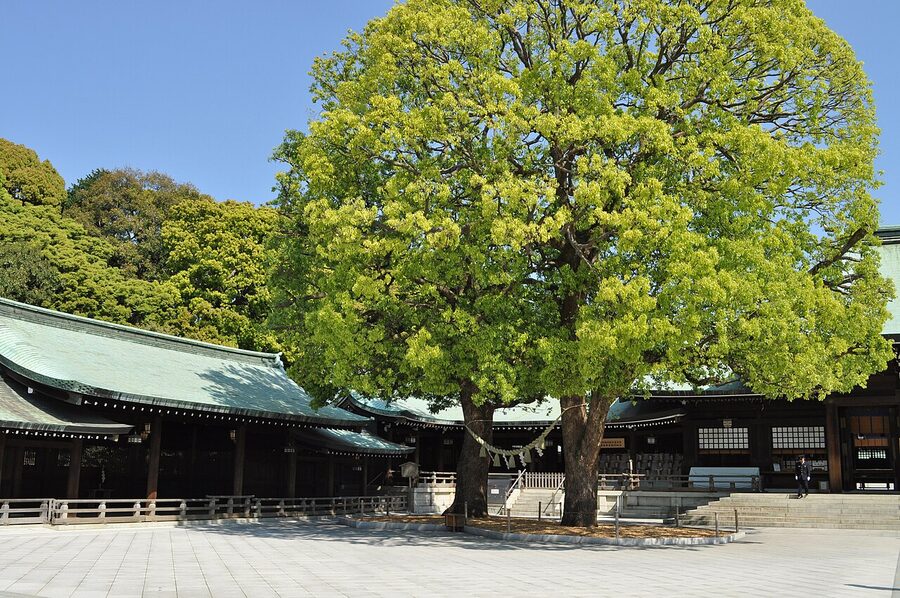
In the courtyard, two camphors planted at the founding have grown so close that they are treated as one, the meotogusu, “husband and wife camphors”, and people pray before them for good marriages. Beside them hang the ema, wooden plaques on which worshippers write their wishes, in more languages than anywhere else I know in Japan.
If you know the great festivals of old Tokyo, Meiji Jingū’s will feel restrained. The Kanda Matsuri and the Sanja Matsuri are loud neighbourhood affairs with portable shrines; the autumn festival here, from 31 October to 3 November, runs to court dance, horseback archery and martial arts displays. The sumo grand champions’ ring-entering ceremony in early January is worth a cold morning.
Then there is Harajuku. The south entrance opens onto Jingū-bashi, the bridge over the Yamanote line, and beyond it Omotesandō, built as the formal approach to the shrine, and Takeshita-dōri with its teenage fashion and crêpes. It is one of the odder pieces of town planning in Tokyo that the country’s most solemn modern shrine and its most cheerfully unserious shopping street share a station.
The outer garden, built for the living
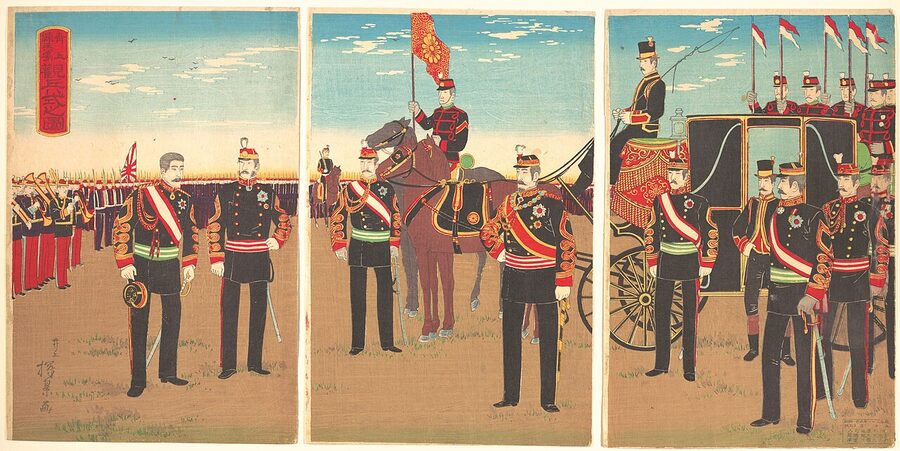
The other half of Shibusawa’s plan lies a couple of kilometres east, on the old Aoyama parade ground, where the emperor had reviewed his troops for the constitution in 1889 and after the war with Russia in 1906, and where his funeral was held. The outer garden, Meiji Jingū Gaien, was meant to be the opposite of the inner precinct: Western in style, open, with no religious buildings and plenty for the living to do.
It was paid for by public donation, with targets for every prefecture, the colonies and Japanese communities abroad. The target was 4.95 million yen and the final total 6.76 million. Work began in 1918, was interrupted by the Great Kantō Earthquake of 1923, when the half-built gallery’s scaffolding became barracks for 6,400 refugees, and finished in October 1926, in the last months of the Taishō era.
The centrepiece is the Meiji Memorial Picture Gallery, the Seitoku Kinen Kaigakan, a domed building faced with Okayama granite, chosen in a competition from 156 entries. It exists to hold eighty paintings of the emperor’s life, each about 3 metres high, hung in order: forty in Japanese style in the east wing for the first half of his life, forty in Western oils in the west wing for the second. It is a strange, solemn place, and one of the best introductions to how the Meiji state wanted to be remembered.
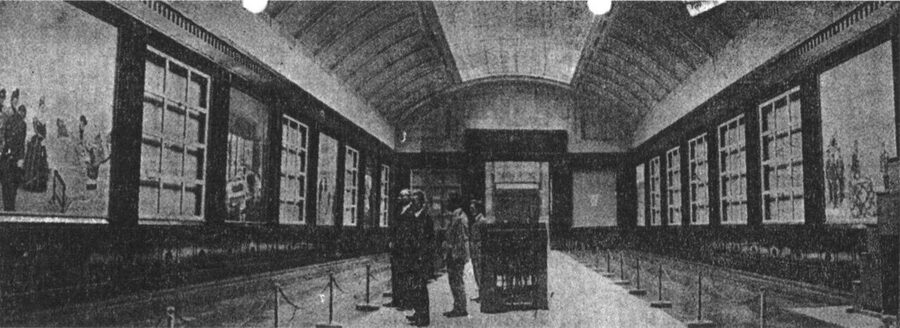
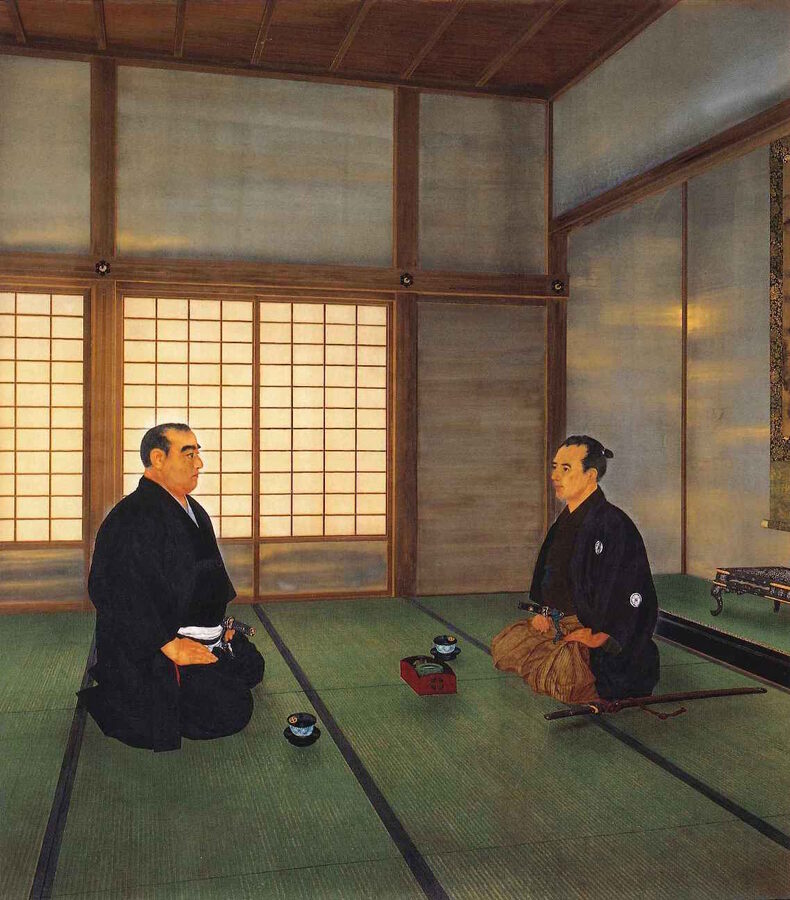
The subjects were chosen by committee after research trips to the places concerned, and each painter worked from a preliminary sketch by Goseda Hōryū. Some topics were dropped, including Commodore Perry’s black ships in 1853, without which the Meiji era makes very little sense. What made the cut is a careful edit: the Charter Oath, the war against the shogunate, the constitution, the wars with China and Russia, model factories and schools, and the empress at the Red Cross and the silk mill. The Japanese-style wing includes Murata Tanryō’s famous scene of Tokugawa Yoshinobu handing power back to the court at Nijō Castle in 1867.
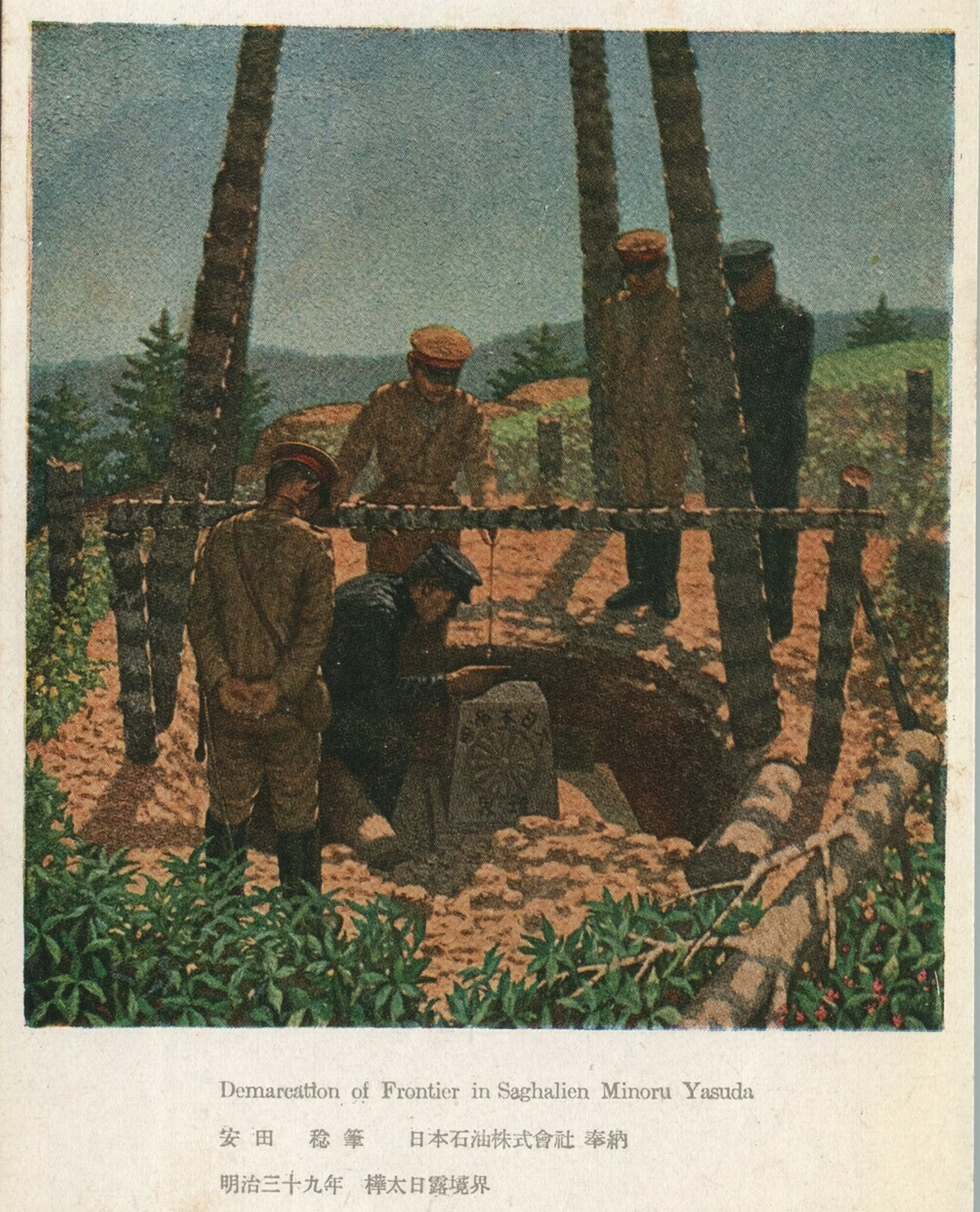
Some paintings now read less as celebration than as evidence: the peace conference at Shimonoseki that took Taiwan from China, Japanese troops entering Taipei in 1895, the setting of a border marker on Sakhalin. When the gallery reopened in 1948 eighteen war paintings were kept out of sight; they went back on show after the occupation ended.
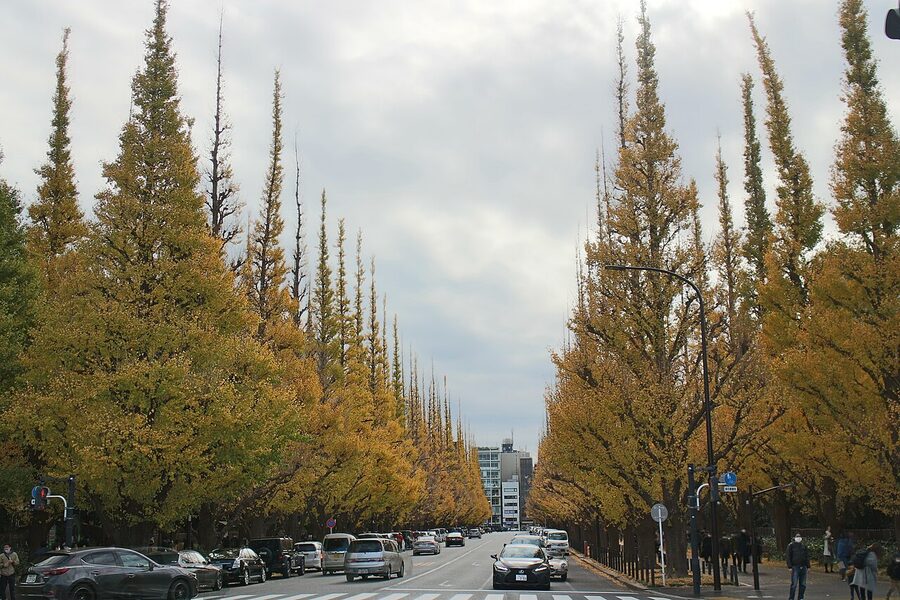
The rest of the outer garden is sport and trees. The athletics stadium of 1924 gave way in 1958 to the National Stadium, the main arena of the 1964 Olympics, and its successor by Kuma Kengo opened in 2019. Jingū Stadium, built in 1926, is home to the Yakult Swallows and the Tokyo Big Six university baseball league. And from Aoyama-dōri four rows of ginkgoes run towards the gallery’s dome.
The outer garden is also where the shrine’s finances meet Tokyo’s planners. In February 2023 the city approved a redevelopment of 28.4 hectares led by Mitsui Fudōsan with the shrine, the national sports council and Itochū, which will rebuild Jingū Stadium and the Chichibunomiya rugby ground in swapped positions and add office and hotel towers. The shrine says it cannot otherwise maintain both precincts and the ageing stadiums. The opponents, among them the composer Sakamoto Ryūichi and the novelist Murakami Haruki, gathered more than 80,000 signatures, objecting above all to the trees that will be felled.
ICOMOS, the UNESCO advisory body, issued a heritage alert in 2023, and the developers’ and critics’ tallies of trees to be cut have never agreed. Work on the new rugby ground has begun; the ginkgo avenue is meant to be kept, and the roots of the trees nearest the works were still being surveyed in December 2025. The scheme runs into the mid-2030s, so I would see the outer garden now rather than later.
Where to see Meiji Jingū today
You can see the shrine and the inner garden in a morning; give the outer garden a separate half-day, fitted to the season. My walk through Japan through the ages places the Meiji reign in the longer story, and my guides to Japanese gardens and Japan’s greatest gardens show how loosely the inner garden fits the tradition.
The approach and the shrine
Admission is free. The gates open at sunrise and close at sunset, so the hours change monthly, from 5:00 to as late as 18:30 in high summer to 6:40 to 16:00 in December; the shrine’s website has the table, and the gates do close. There are three entrances, each about ten minutes’ walk from the main buildings: the south entrance across Jingū-bashi from JR Harajuku Station (Omotesandō exit) or exit 2 of Meiji-jingūmae Station on the Chiyoda and Fukutoshin lines; the north entrance from JR or Ōedo-line Yoyogi Station or Kita-sandō on the Fukutoshin line; and the west entrance from Sangūbashi on the Odakyū line.
I arrive by the quieter north approach and leave by the south, so the forest comes first and Harajuku last. Rinse your hands and mouth at a water basin before the courtyard, bow twice, clap twice and bow once at the hall, and do not photograph people praying directly in front of it or the amulet counters, which the shrine asks you not to. Arrive by 8:00 for the morning rite and an almost empty courtyard.
Meiji Jingū Gyoen (the Inner Garden)
The empress’s garden lies just south of the main buildings, off the main approach. It is open daily from 9:00 to 16:30 from March to October and to 16:00 from November to February, with longer June hours for the irises, 8:00 to 17:00 (18:00 at weekends). Entry is a “maintenance contribution” of 500 yen.
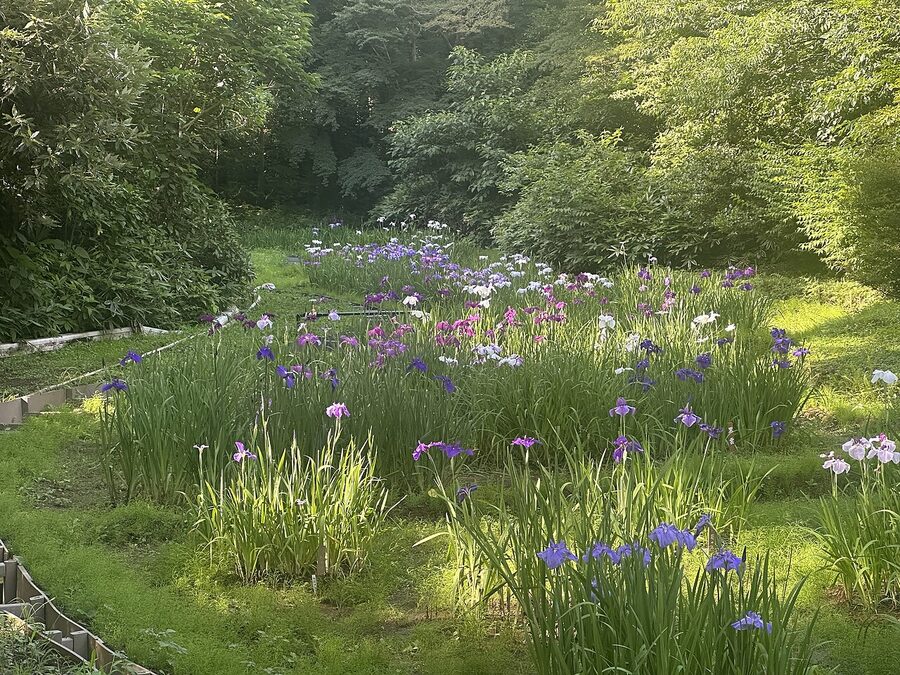
This is not a garden of raked gravel and clipped pines. There are almost no stone arrangements and little topiary: a long wooded valley, a pond and a few small buildings. The South Pond has water lilies in summer and ducks in winter, and on its edge is the fishing platform where, the shrine says, the empress once hooked a red-bellied newt and laughed; hearing of it, the emperor ordered carp put in the pond.
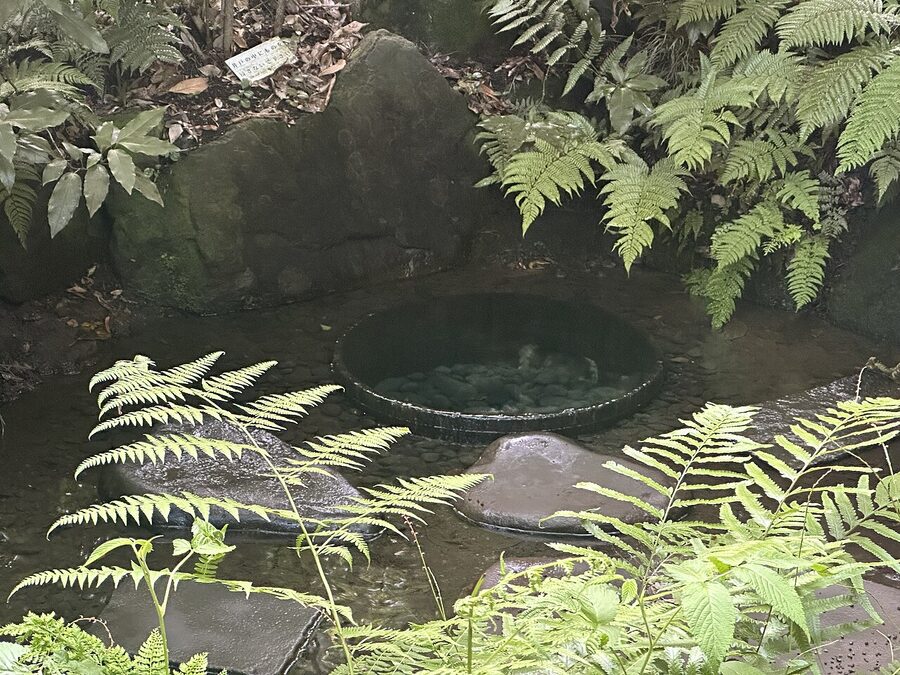
At the far end of the valley is Kiyomasa’s Well, the spring that feeds the pond, producing an average of 60 litres a minute at about 15 degrees all year; its water runs on under the main approach to the Shibuya River. In December 2009 a television programme presented it as a power spot and people queued for hours to photograph it. The queues have shortened, and the polite thing is to look, not touch.
Meiji Jingū Museum and the Treasure House
The museum is just inside the south entrance, five minutes from Harajuku Station. Designed by Kuma Kengo, it opened in October 2019, the same year as his National Stadium, and is open from 10:00 to 16:30 (last entry 16:00), closed on Thursdays unless Thursday is a holiday and between exhibitions. Admission is 1,000 yen, 900 yen for high-school students and younger, free for children below school age.
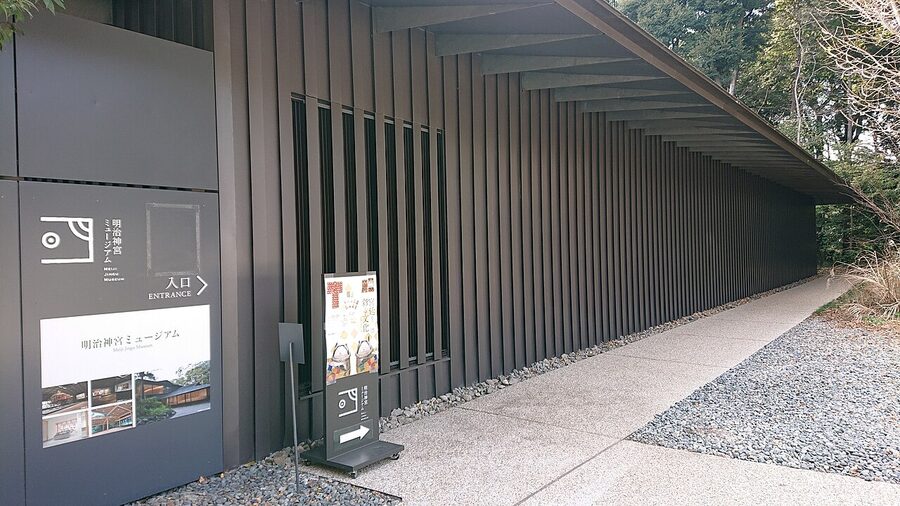
As I write, the museum is showing real paintings from the closed picture gallery for the outer garden’s centenary: six of the giant canvases over the run, two at a time, with the painters’ studies. The final part runs until 6 December 2026. If you miss it, the shrine has put all eighty paintings online with notes on their painters.
The Treasure House of 1921 is in the north of the precinct, a pleasant walk through the forest from the main buildings. The collection has moved to the museum, and the building opens only for limited periods announced on the shrine’s website; if it is open, go, and use the lawn in front for a picnic.
The outer garden and the Picture Gallery
The Picture Gallery has been closed since 1 April 2025 for seismic strengthening and conservation, and the closure has already been extended once; it is now due to reopen at the end of August 2027. Normally it opens 10:00 to 16:30 (last entry 16:00), closes on Wednesdays and charges 500 yen. Check the outer garden’s website before you go.
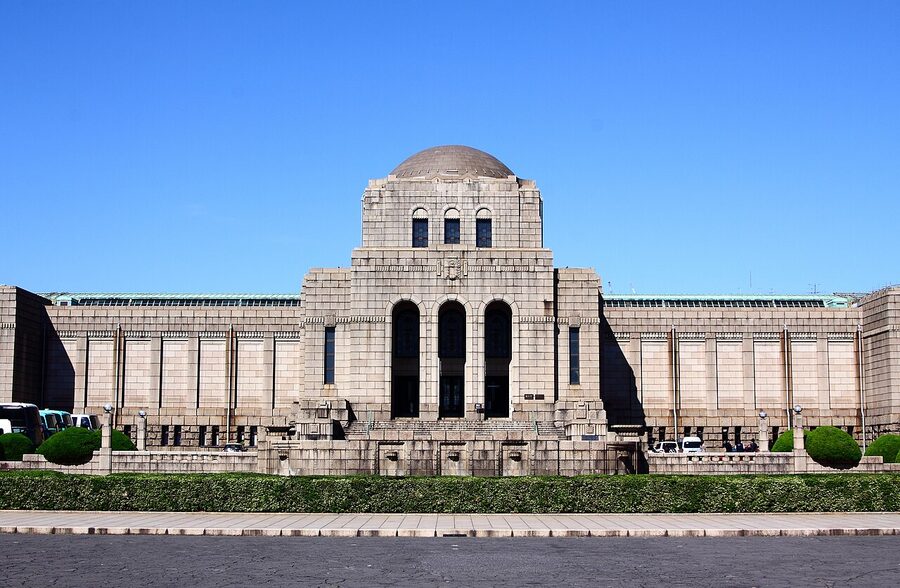
The gallery is five minutes from Shinanomachi Station on the JR Chūō-Sōbu local line or Kokuritsu-Kyōgijō on the Ōedo line. For the ginkgo avenue, start at the Aoyama-dōri end, five minutes from Gaienmae Station on the Ginza line, and walk towards the dome. The leaves usually turn gold in the last week of November and the first of December, and that fortnight is crowded; go early on a weekday.
Near the gallery, look for the stone marking the funeral site, the replica Sakhalin marker on the west side of the front garden, and the review hackberry, a second-generation descendant of the tree beside which the emperor sat to review his troops. If you are in Tokyo between April and October, a night game at Jingū Stadium is one of the city’s pleasures, and possibly one to enjoy while it lasts.
Meiji Kinenkan
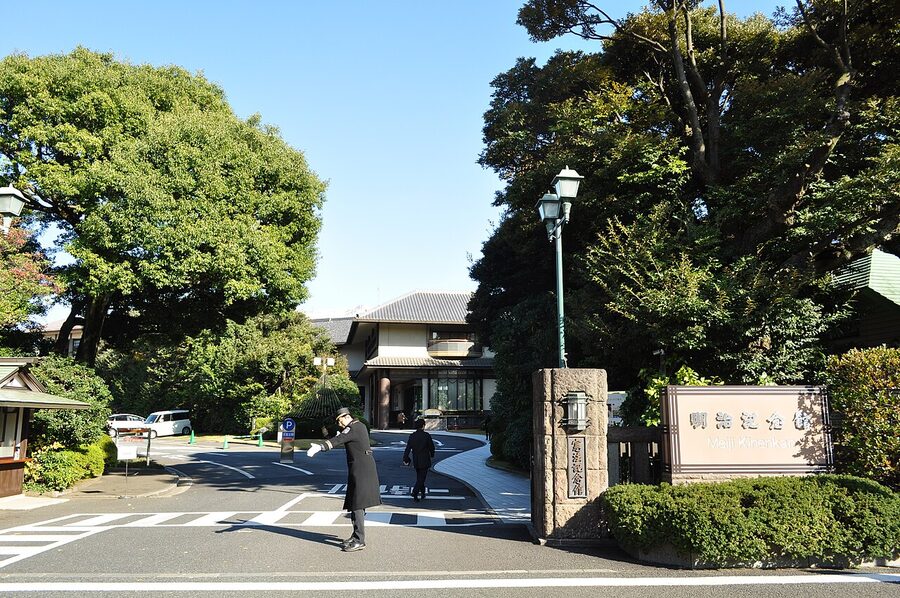
At the eastern edge of the outer garden, in Moto-Akasaka, is Meiji Kinenkan, the shrine’s wedding hall. Its core is a hall from the temporary imperial palace in which the privy council debated the draft constitution in 1888 with the emperor present. It was given to Itō Hirobumi, who drafted the document, and his heir later presented it to be moved here. The restaurants are open to anyone, which is the easiest way to see inside.
Nogi Shrine, Akasaka
For the other side of September 1912, walk twenty minutes from the outer garden to Nogi Shrine, beside Nogizaka Station on the Chiyoda line. Nogi’s plain wooden house and brick stable stand next to it, and the house is normally opened for a couple of days around the anniversary on 13 September. The slope outside was renamed Nogizaka after him and in turn named a pop group, which plays summer concerts at Jingū Stadium; the Meiji state would not have known what to make of that.
Fushimi Momoyama, Kyoto
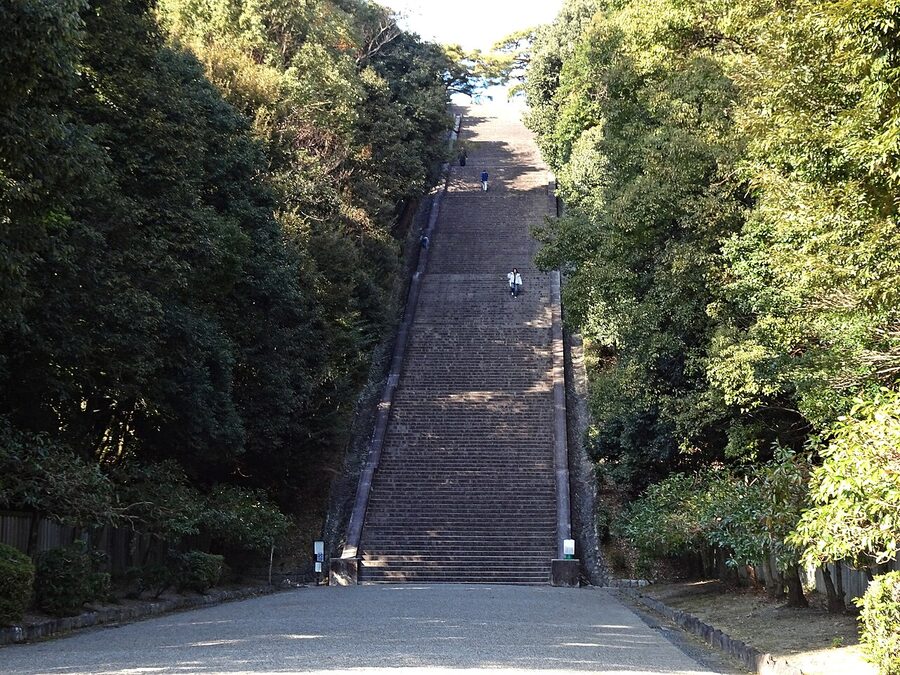
The emperor himself is not at Meiji Jingū. His grave is in southern Kyoto, on the hill of Hideyoshi’s Fushimi Castle, with the empress beside him. Walk up from Momoyama Station on the JR Nara line or Fushimi-Momoyama on the Keihan line, through a wood and up a long flight of stone steps. The Imperial Household Agency administers it, and you can approach the place of worship but go no further.
Back to the cedars
The forest Ōkuma did not want is now more than a hundred years old. It has outlasted the state that commissioned it, the shrine system it was built to crown, everyone who planted it, and the buildings at its centre once already. By its planners’ own timetable it has another stage to go, and the oaks and camphors are getting on with it without asking anybody.
When the reign changed in 2019, people queued for up to eleven hours at Meiji Jingū for a seal marking the last day of the Heisei era, and some sold them online the next day. The trees took no notice. Come in the first hour after the gates open, walk the north approach before the tour groups arrive and stand among the trunks for a minute, and you can hear the argument the foresters won: no cedar grove, no fuss, and nobody in charge.