The oldest versions of the chronicle that taught Japan how to remember the Ōnin War do not open with a battle. They open with a prophecy. A comet appears, the realm falls into disorder, and a dog fights a monkey for mastery of the country, and the dog wins.
Hosokawa Katsumoto was born in 1430, a year of the dog. Yamana Sōzen was born in 1404, a year of the monkey. In the spring of 1473 both men died, Sōzen in the third month and Katsumoto in the fifth, and so the chronicler had his result: the dog had outlived the monkey by two months, and the prophecy was fulfilled.
The war paid no attention. It ground on for four and a half more years without either of them, and when the last armies finally marched out of a burned capital late in 1477, nobody had won anything that anybody could name. A monk in Nara who kept a diary through the whole decade is often quoted as admitting that, however hard he thought about it, he could not work out why the great war of Ōnin and Bunmei had started.
I keep coming back to the Ōnin War because it is the clearest case I know of a catastrophe that nobody quite intended. It burned most of Kyoto, broke the Ashikaga shogunate as a working government and opened the door to a century of civil war, and the standard story of how it happened (a scheming wife, two implacable generals, a weak shogun) comes largely from that prophecy-shaped chronicle, written decades after the event. What follows is the war as the documents have it, the war as the chronicle tells it, and the places in Kyoto where you can still stand on it.
In This Article
- A shogun, a brother and a baby
- Three great houses, each with two heads
- The red monk and the deputy
- A night at Kamigoryō
- Kyoto on fire
- The light-footed men
- Two shogunates and a city of ash
- The dog and the monkey die
- How do you end a war nobody is winning?
- What the fire left behind
- Where to find the Ōnin War in Kyoto today
- Kamigoryō Shrine
- Nishijin, Funaokayama and Sōzen’s house
- The Nishijin Textile Center
- Ginkaku-ji
- The generals’ graves: Ryōan-ji and Nanzen-ji
A shogun, a brother and a baby
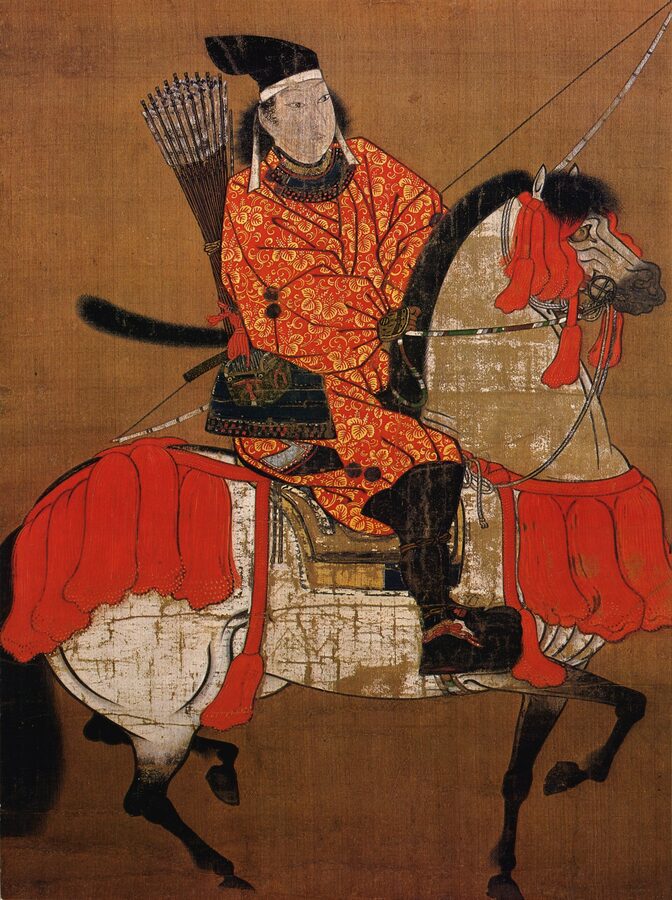
You have to start with Ashikaga Yoshimasa, the eighth shogun of the Muromachi era, because everybody else in this story was reacting to him. He became shogun as a child after his father Yoshinori, a ferocious autocrat, was murdered at a banquet by the Akamatsu in 1441, and after his elder brother died at ten. He was formally appointed in the fourth month of 1449, and he spent the next fifteen years being pulled between his household favourites and the great lords who actually held the provinces.
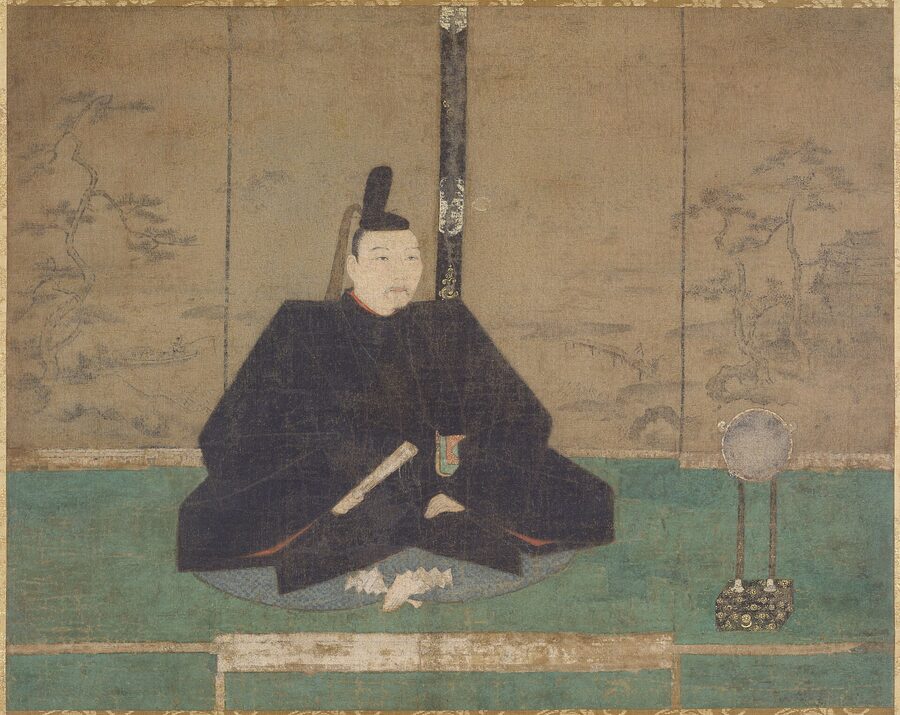
By 1464 Yoshimasa was twenty-eight and had no surviving son. The Ashikaga main line was down to three males, and so he persuaded his younger brother, a monk called Gijin who was abbot of the Jōdo-ji temple in the eastern hills, to return to lay life and become his heir. Gijin refused several times. He gave in only after Yoshimasa wrote out an oath that any son born to him later would be put into a monastery as a child, and named Hosokawa Katsumoto as the witness.
On the 26th day of the eleventh month of 1464 Gijin left holy orders and took the name Ashikaga Yoshimi. Almost exactly a year later, on the 23rd day of the eleventh month of 1465, Yoshimasa’s wife Hino Tomiko gave birth to a boy, Yoshihisa. Nobody took him to a monastery.
Here the standard story arrives. According to the Ōnin-ki (応仁記), the war chronicle, Tomiko was determined that her son should be shogun and asked the powerful Yamana Sōzen to be his protector, while Yoshimi leaned on Katsumoto, and the two great men went to war over the two heirs. It is a good story, and it made Tomiko the villain of every retelling for five centuries. Historians now doubt almost all of it.
The baby was in fact raised in the house of Ise Sadachika, Yoshimasa’s chief steward and closest adviser, who was formally called the boy’s “father” and was the man really pushing for him. Sōzen, so far from being the baby’s champion, seems to have wanted Yoshimasa to retire early and Yoshimi to take over, and the diary of the Nara abbot Jinson shows Yoshimi and Sōzen working together. Yoshimi kept being promoted after 1465 exactly as an heir should be, and the likeliest plan was that he would hold the office until the boy, more than twenty years younger, was grown.
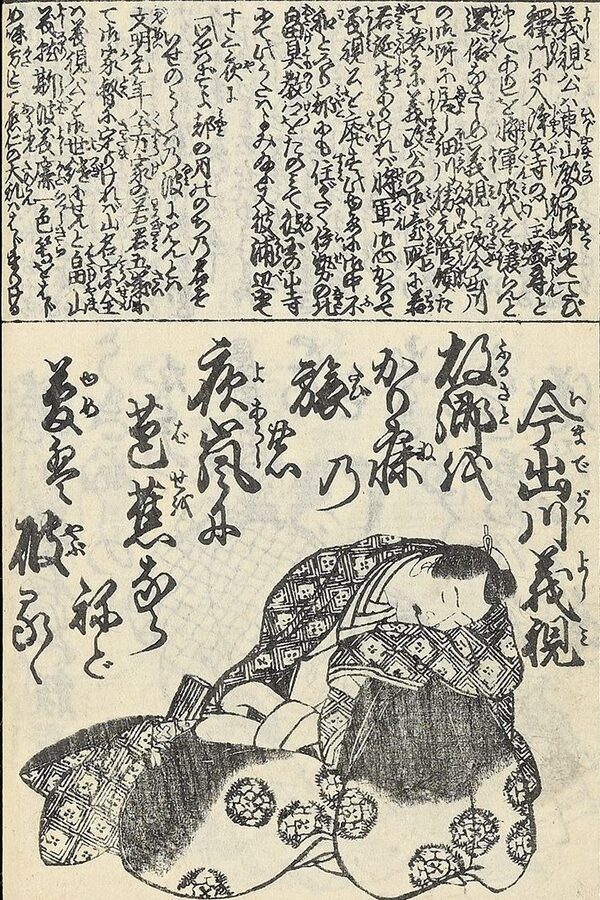
The crisis, when it came, was made by Sadachika. On the 5th day of the ninth month of 1466 he told Yoshimasa that Yoshimi was plotting against him, and Yoshimasa believed him and moved to have his brother killed. Yoshimi slipped out of his residence in the dark, ran to Katsumoto’s mansion and protested his innocence, and the next morning went on to Sōzen’s mansion and did the same.
What happened next tells you more about 1466 than any chronicle. Katsumoto and Sōzen, the two men who would lead the opposing armies a few months later, went to the shogun together and demanded that Sadachika go. Yoshimasa ordered his favourite to commit suicide, Sadachika fled the city, and Yoshimasa was left without the circle of advisers through whom he had ruled. Historians call it the Bunshō coup, and it left the great lords holding the shogunate between them.
Three great houses, each with two heads
The shogun’s family was only one of the families with a succession problem, and it was not the one that started the shooting. The Muromachi shogunate was a coalition, run by the shogun with the great provincial governors, the shugo, most of whom lived in Kyoto and governed their provinces through deputies. If you want the long view of how those men became the territorial lords of the next century, my piece on the daimyo follows it through.
Three houses supplied the kanrei, the shogun’s chief deputy: the Hosokawa, the Shiba and the Hatakeyama. In the 1460s two of the three were split down the middle. Every quarrel inside them ran up to the shogun, and Yoshimasa’s habit of deciding one way, then the other, then the first way again made each split worse.
The Hatakeyama split was the dangerous one. Hatakeyama Mochikuni had named his younger brother as heir, then in 1448 switched to his own son by a concubine, Yoshinari, born in 1437. Much of the family’s retainer band refused to accept the boy and backed a nephew, Yasaburō, and after Yasaburō died in 1459 they backed his younger brother Masanaga.
Yoshinari and Masanaga fought each other for the rest of their lives, and I mean that literally. Yoshinari held out in the mountain fortress of Takeyama in Kawachi until the fourth month of 1463 against the shogun’s own punitive army, and was still fighting Masanaga in the 1480s. If you want one cause of the Ōnin War that every historian accepts, it is these two cousins.
The Shiba were in the same state. Yoshimasa took the headship from Shiba Yoshitoshi in 1459, gave it to his son, then in 1461 gave it to Shiba Yoshikado, the son of an official in the east, as part of a plan to fight the rebel Ashikaga lord in the Kantō. When that plan failed he began to restore Yoshitoshi, and in the seventh month of 1466 he duly did, which is what drove Yoshikado into Sōzen’s arms.
Underneath all of this was a quarrel over three provinces. In 1441, after the Akamatsu murdered the shogun Yoshinori, Sōzen led the army that destroyed them and took their provinces of Harima, Bizen and Mimasaka for his own family. In 1458 Katsumoto helped a surviving Akamatsu heir, Masanori, back into favour. Recent work by the historian Itō Daiki argues that this, more than anything, turned Sōzen against Katsumoto: every time the two came close to a deal, Masanori blocked it.
The red monk and the deputy
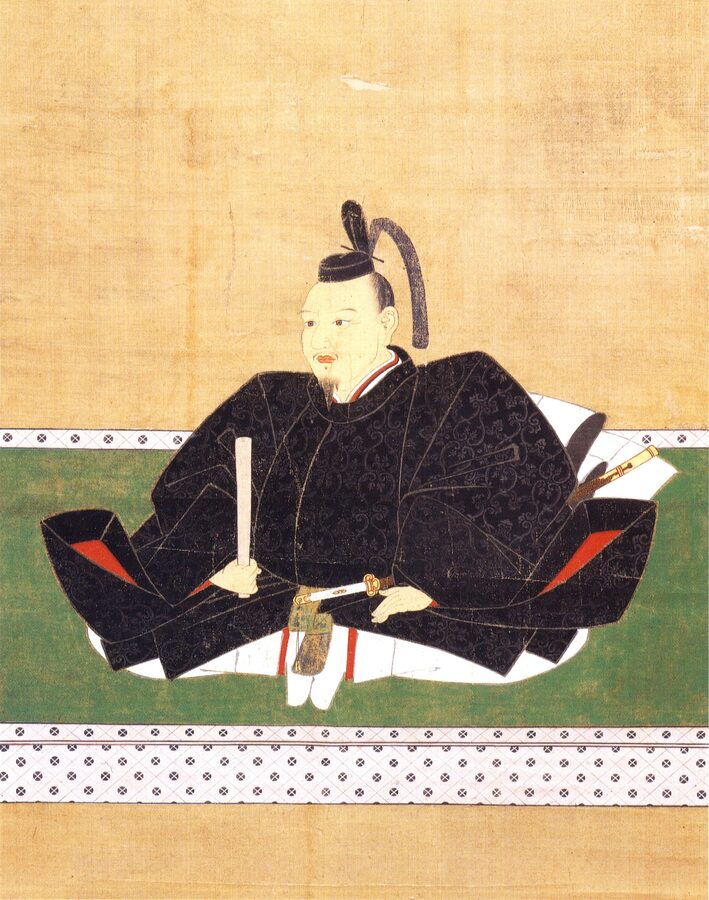
The two men themselves could hardly have been less alike. Hosokawa Katsumoto inherited the headship of the main Hosokawa line at twelve in 1442, became kanrei at fifteen in 1445, and held the office three times for a total of twenty-three years. He was a patron of Zen who founded the temple of Ryōan-ji in 1450, a poet and painter, and an amateur physician who wrote a medical book.
Yamana Mochitoyo, who took the Buddhist name Sōzen in middle life, was twenty-six years older and a different animal. He came from Tajima on the Japan Sea side, won the headship of the Yamana over a brother the shogun had favoured, put down that brother’s rising in 1437, and after 1441 sat at the head of a family that held eight or more provinces. Contemporaries called him the aka-nyūdō, the “red monk”, for his red face and his temper, and the Zen eccentric Ikkyū wrote that he was an incarnation of Bishamonten, the god of war.
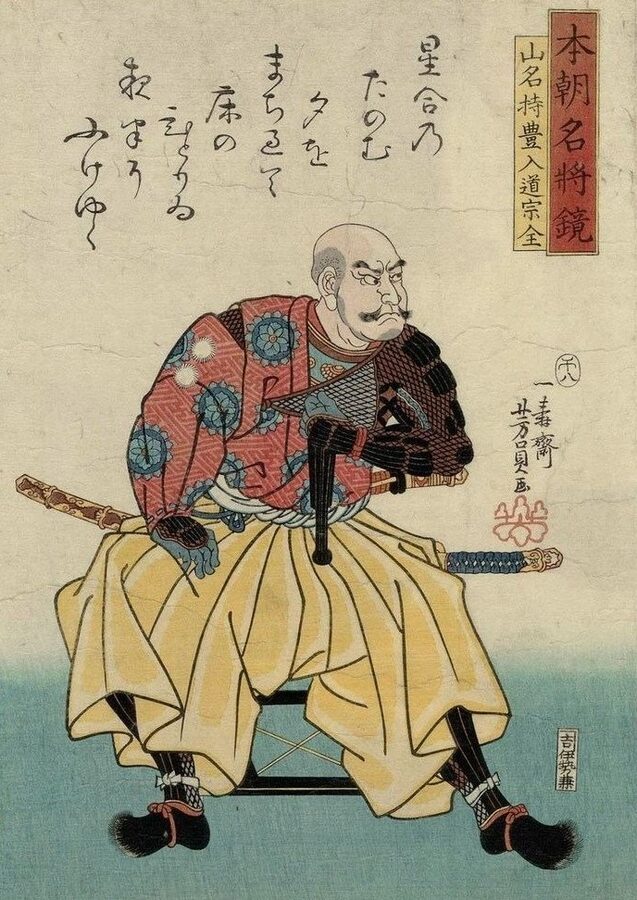
Sōzen preferred results to protocol, and a late-Muromachi collection of tales has him telling a courtier who lectured him on precedent that the character for “precedent” should simply be replaced by the character for “the times”. Nobody knows whether he said it. There is also a local tradition that he ordered the first fort on the mountain at Takeda Castle in Tajima, and that is just as unprovable, though it would suit him.
What the chronicle hides is that for most of their careers these two were allies. In 1447 Katsumoto married Sōzen’s adopted daughter, and in 1454 they acted together to break Hatakeyama Mochikuni. When Yoshimasa ordered Sōzen punished that year, it was Katsumoto who talked him out of it. Some historians now date their real enmity only from 1465, and point out that their heirs made peace within a year of their deaths.
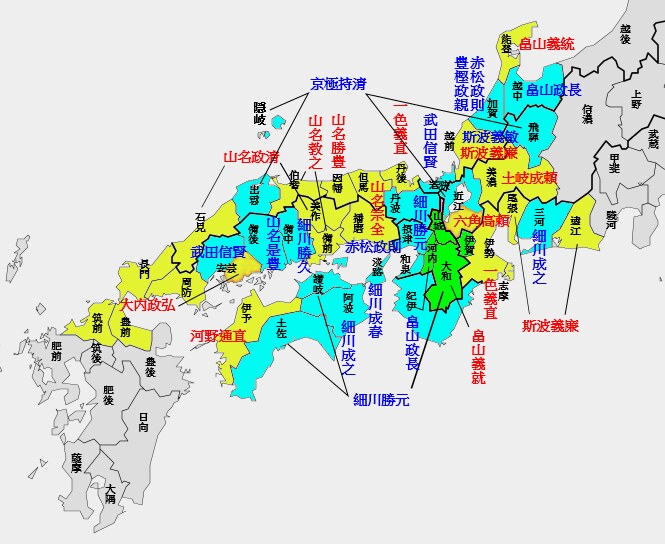
By the end of 1466 the pieces were in place. Shiba Yoshikado had allied himself with Sōzen and with Ōuchi Masahiro, the great lord of western Japan who had his own feud with Katsumoto over trade and Shikoku. In the twelfth month Sōzen invited Hatakeyama Yoshinari, six years an outlaw, back to the capital, and Yoshinari arrived with an army and camped in the Senbon area on the north-western edge of the city.
A night at Kamigoryō
The first month of 1467 went badly for Hatakeyama Masanaga very quickly. On the 2nd day Yoshimasa cancelled his customary New Year visit to Masanaga’s mansion and received Yoshinari instead; on the 5th the shogun went to a banquet that Yoshinari gave at Sōzen’s house; on the 6th he ordered Masanaga to hand his mansion over to his cousin. On the 8th Masanaga was dismissed as kanrei and replaced by Shiba Yoshikado.
Katsumoto planned to answer with a show of force, surrounding the shogun’s palace and extracting an order against Yoshinari, a manoeuvre known as gosho-maki. The plan leaked, the story goes through Katsumoto’s own wife, Sōzen’s adopted daughter, and Sōzen and his allies occupied the palace first. On the 17th Yoshimasa ordered Katsumoto to stay out of the Hatakeyama quarrel, and Katsumoto, having lost the shogun, agreed.
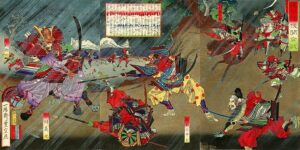
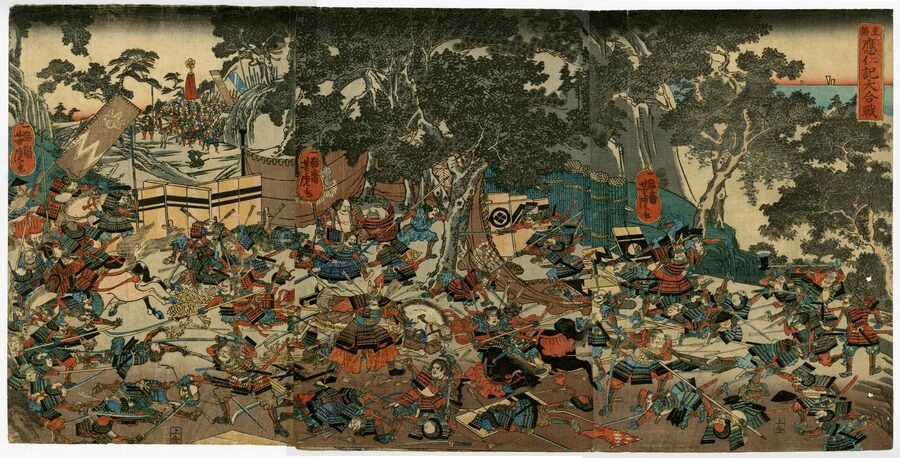
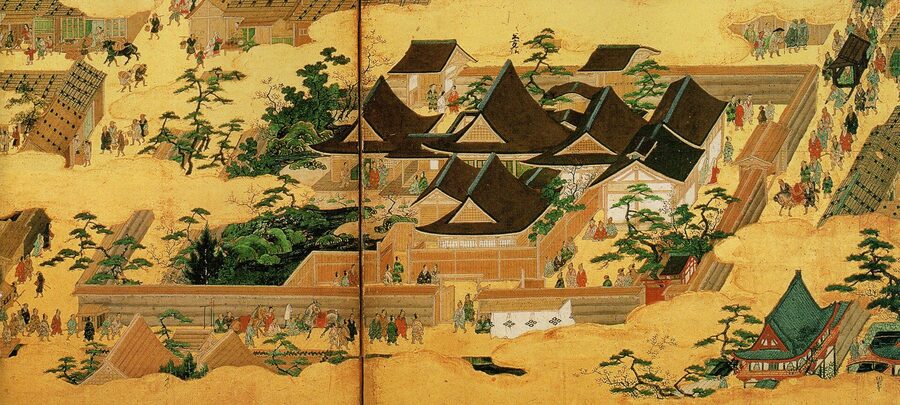
Masanaga did not wait. Before dawn on the 18th day of the first month of 1467 he set fire to his own mansion and marched north to the woods of the Kamigoryō Shrine, just outside the city, where he dug in. That afternoon Sōzen moved the emperor Go-Tsuchimikado and the retired emperor Go-Hanazono into the shogun’s palace, and in the late afternoon Yoshinari attacked.
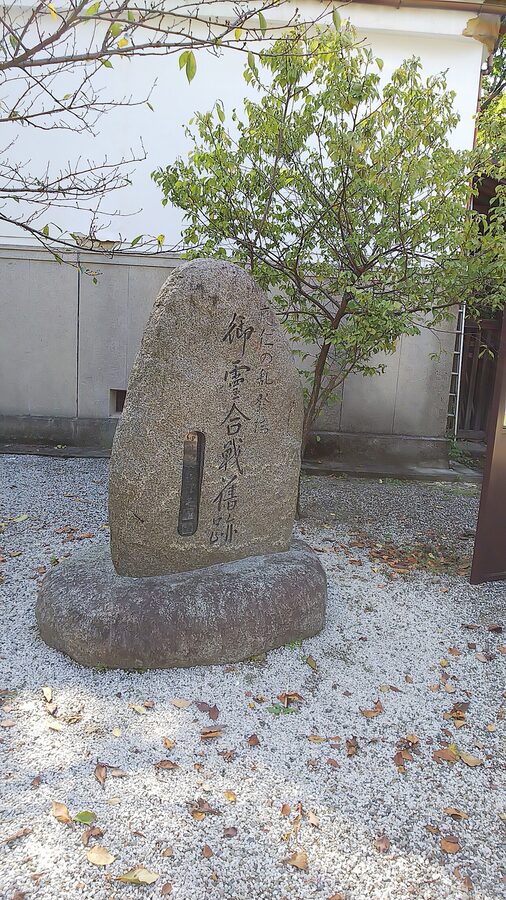
It was a good position. A stream covered the west side of the shrine and the great moat of the Shōkoku-ji temple the south, so Yoshinari could only come at it from the east and north. Masanaga and his men held through the night, and at around four the next morning he set fire to the shrine’s worship hall and slipped away, leaving behind the impression that he had killed himself in the flames, and turned up hidden in Katsumoto’s mansion.
Sōzen’s grandson Masatoyo and the Shiba commander Asakura Takakage were later said to have fought alongside Yoshinari; other accounts say they arrived in the morning to find it over. Either way, Katsumoto had sat on his hands while his ally was beaten. Contemporaries said he had broken “the way of the bow and arrow”, the warrior’s code that a man stood by those who relied on him, and you can find a much later and more polished version of that ideal in my piece on bushido.
For a few weeks it looked as if that was the end of it. Yoshimasa’s ban had kept the rest of the lords out, the New Year ceremonies went ahead, and in the third month the era name was changed to Ōnin, partly in the hope of better luck. But neither camp sent its troops home, and through the spring both sides kept calling men into the city.
Kyoto on fire
On the 20th day of the fifth month Sōzen held a council of war and made his headquarters at his own mansion west of the Horikawa river. Katsumoto made his at his mansion in the north-east of the city beside the shogun’s palace. From the positions of the two headquarters the armies became the East and the West, the names they carry in every Japanese textbook.
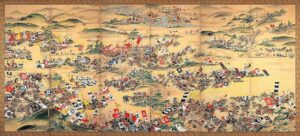
How many men they had is anybody’s guess. The Ōnin-ki gives the East 160,000 and the West more than 110,000, figures most Japanese historians regard as inflated; English-language histories often give something nearer 85,000 against 80,000, and those are not better grounded. What is certain is that the armies were large enough to fill a medieval city of wooden houses and paper doors, and that they were going to fight inside it.
Katsumoto struck first. Before dawn on the 26th day of the fifth month of 1467 his allies seized two temples beside the mansion of the Western lord Isshiki Yoshinao, which stood right next to the shogun’s palace, then stormed the mansion. Isshiki got out; his house burned; and with it the East secured the palace and the shogun inside it.
That day and the next the fighting spread across the upper city. The Shiba retainers under Asakura Takakage attacked an isolated Hosokawa mansion near Sōzen’s headquarters and drove off the force sent to relieve it, temples were fired as the fighting moved east, and by the time both sides pulled back on the 27th the fires had burned everything from Funaokayama in the north down to Nijō. Yoshimasa ordered a ceasefire on the 28th, and then, on the 3rd day of the sixth month, gave Katsumoto the shogun’s banner, which made the East the government’s army and the West rebels.
On the 8th day of the sixth month the East attacked again and another huge area went up, by one account from Nijō north to the Goryō crossroads and from Ōtoneri-chō east to Muromachi. That western edge matters for the end of this article. Ōtoneri-chō was where the city’s silk weavers lived and worked.
The West’s answer was coming from the far end of Honshū. Ōuchi Masahiro had left his capital at Yamaguchi in the fifth month, and on the 20th day of the seventh month he landed at Hyōgo with troops from eight western provinces. Japanese accounts give him five or six hundred ships; a monk of Tōdai-ji wrote down seven hundred ships and 250,000 men, which nobody believes, and modern estimates run from 500 to 2,000 boats.
Masahiro entered Kyoto on the 23rd day of the eighth month and made camp at Tō-ji. The same day Katsumoto had the emperor and the retired emperor moved into the shogun’s palace, and they brought the sacred regalia with them; the three sacred treasures of the throne spent the next decade as house guests of the Ashikaga. Also the same day, Ashikaga Yoshimi, the commander of the East, quietly left the city and fled to Ise.
With the Ōuchi in the city the West went on the attack. On the 13th day of the ninth month Hatakeyama Yoshinari occupied the imperial palace itself, and in the fighting in the hills to the east later that month the great Zen temple of Nanzen-ji and the Shōren-in were burned. Then, on the 3rd and 4th days of the tenth month of 1467, came the battle the Japanese sources call the fiercest of the war, for the temple of Shōkoku-ji.
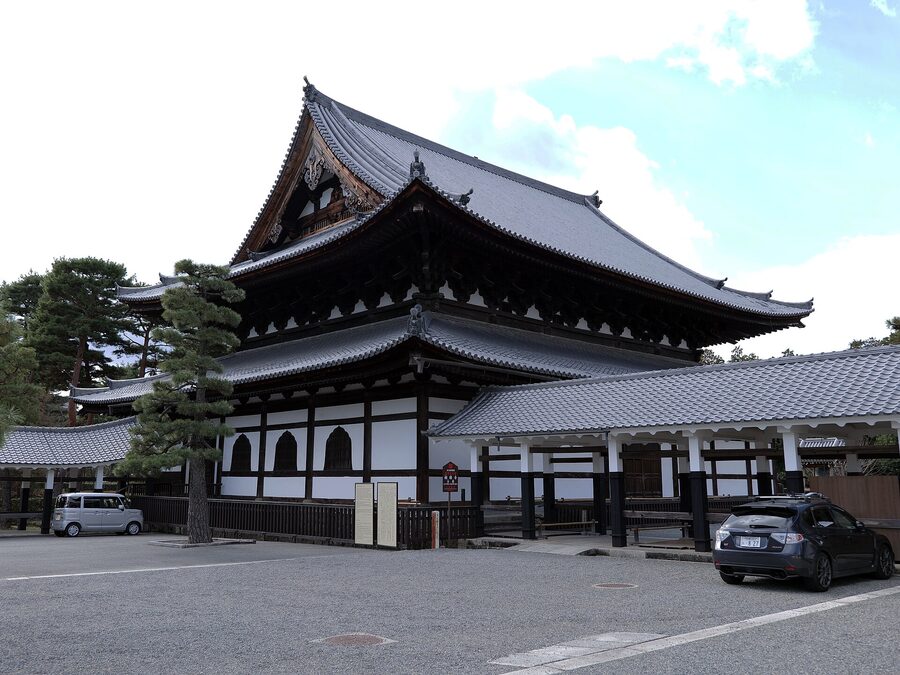
Shōkoku-ji was the Ashikaga family temple, founded by Yoshimitsu, and the East had turned it into a fortress. Yoshinari and Asakura Takakage stormed it and it burned, by one account because a monk in the pay of the West set the fire. The East counter-attacked and took the ruins back, the West took them again, the shogun’s palace next door half burned, and both sides were so badly mauled that they never fought a battle of that size inside the city again.
After that the war in Kyoto turned into something closer to a siege on both sides. The armies fortified their sectors with walls, gates and watchtowers, and English-language histories describe a trench three metres deep and six metres wide running between the camps. Ryōan-ji, Katsumoto’s own temple, burned in 1468, Kiyomizu-dera the year after, and dozens of others in between.
The light-footed men
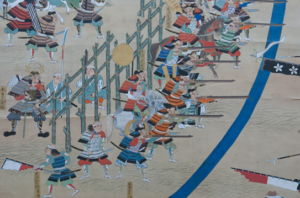
The thing contemporaries hated most about this war was not the lords but the ashigaru (足軽), “light feet”. Foot soldiers had always followed armies as porters and diggers; what was new in 1467 was that both sides hired them by the hundred as fighting troops, recruited from the city’s thieves and day labourers, and let them loose.
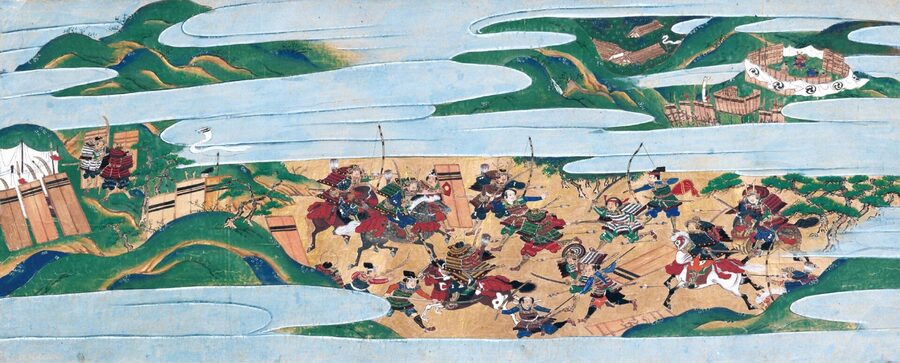
A Zen monk recorded the East’s famous corps: three hundred picked men called ashigaru, who wore no helmets, carried no spears, and charged into the enemy with nothing but a sword. Another witness watched three hundred of them on their way to a shrine at Uji with long spears and strong bows, gold helmets or bamboo-sheath hats on their heads, hair dyed red, and their skin bare though it was winter. Neither description suggests an army in uniform, and that is exactly the point.
Their most famous captain was Honekawa Dōken, whose surname means something like “bone and skin”, a former thief-taker who had worked for the city police. Katsumoto paid him to raise around three hundred men, and from a base at the Inari shrine in Fushimi he burned and raided behind the Western lines. On the 21st day of the third month of 1468 the West surrounded Inari; Dōken tried to escape dressed as a woman, was recognised, and was killed by Asakura’s men, and his head was displayed outside the gate of Tō-ji.
The monk’s diary that records Dōken mentions him only for six days, from the 15th to the 21st of that month. A satirical verse went round the city that played on his name: yesterday Dōken was strutting about Inari, and today he is bone and skin. The Inari shrine burned to the ground in the fighting.
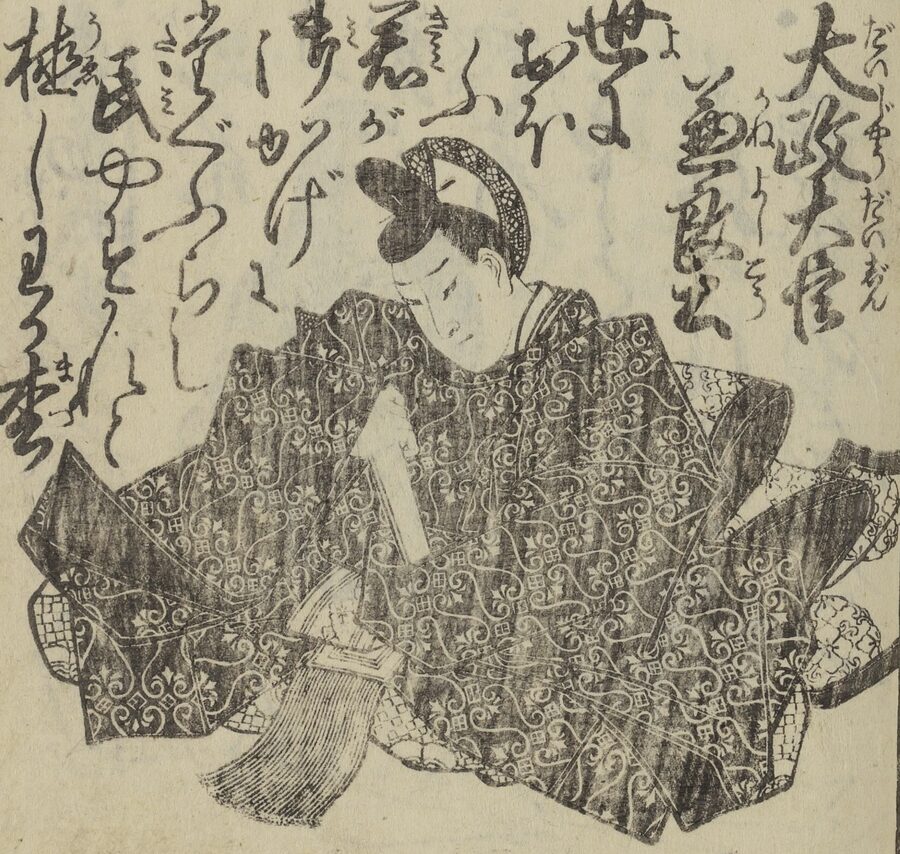
It was Kaneyoshi who wrote the epitaph. In a book of advice he wrote for the young shogun Yoshihisa in 1480, he gave a whole article the heading “the people called ashigaru should be stopped for ever”, and said flatly that the ruin of the shrines and temples, the great Zen monasteries and the mansions of the court nobility inside and outside the capital was their doing. Great temples like Tō-ji, meanwhile, had started hiring ashigaru of their own for protection, which tells you how much choice anyone had.
The ashigaru did not go away. Over the next century they were drilled, armed with long spears and then guns, and turned into the backbone of every Sengoku army, which is why my piece on samurai armour spends so long on the cheap munition armour made for them. The rabble of 1467 is where that story begins.
Two shogunates and a city of ash
In the ninth month of 1468 Yoshimi came back from Ise and rejoined the East, and within weeks he had quarrelled with his brother again, this time over Tomiko’s brother Hino Katsumitsu. Yoshimasa recalled Ise Sadachika, the man who had accused Yoshimi of treason in 1466, and on the 13th day of the eleventh month Yoshimi fled once more, to Mount Hiei. Ten days later Sōzen’s men brought him down into the Western camp.
So the two armies swapped heirs. The East, which had started out as Yoshimi’s party, now stood for Yoshihisa; the West, supposedly the party of the baby, now had Yoshimi, and treated him as shogun. On the 5th day of the twelfth month of 1468 Yoshimasa had his brother stripped of his court ranks and declared an enemy of the throne.
From then on Kyoto had two governments. The “Western shogunate” had its own shogun in Yoshimi and its own kanrei in Shiba Yoshikado, a handful of court nobles who had fallen out with the Hino, and issued its own orders and even its own court ranks. In 1471 it went one better and set up its own emperor, a prince descended from the old Southern Court, whom people called the Nishijin Nantei, the “Southern Emperor of the Western camp”.
By then the fighting had largely left the city. The Ōuchi army overran most of Yamashiro, the war spread to Settsu, Yamato, Ōmi, Echizen, Harima and the Ōuchi lands themselves, and the lords in Kyoto found that the provinces they had left in the hands of deputies were being fought over without them. A war that had begun over who would control the shogunate was being lost province by province by everyone who had come to the capital to win it.
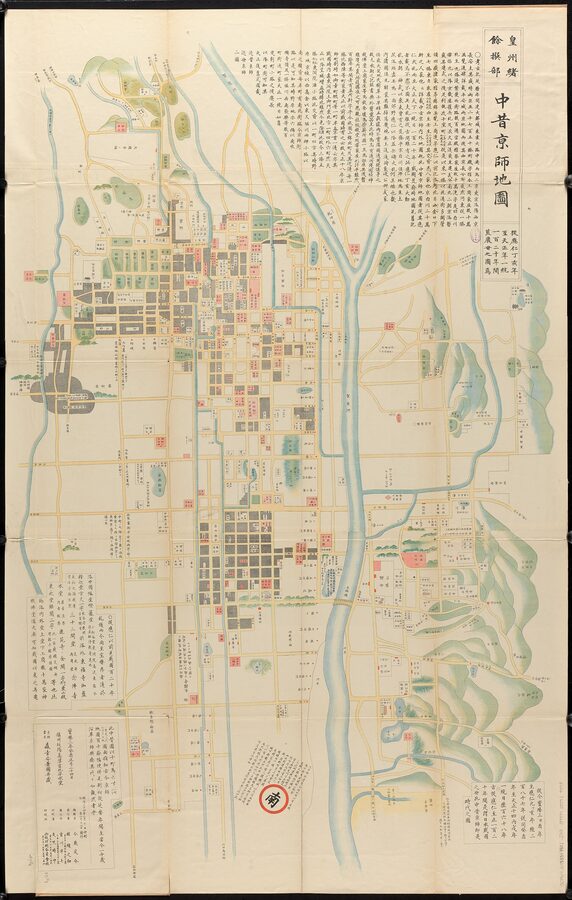
Inside Kyoto, the city simply wore away. Most of the temples, shrines, court mansions and warrior mansions of the upper city were ash by around 1470; the commercial lower city, Shimogyō, survived better. A poem in the Ōnin-ki, attributed to a shogunal official named Iio Tsunefusa, became the war’s best-known line: “Do you know it now? The capital is open fields, and watching the evening lark rise up, my tears fall.”
The court suffered with everyone else. Emperor Go-Tsuchimikado lived in the shogun’s palace for most of the decade, and he is recorded joining Yoshimasa’s drinking parties, which did the dignity of the throne no good at all. Hino Tomiko, meanwhile, lent money to commanders on both sides and speculated in rice, and she stayed in touch with Ōuchi Masahiro, the enemy general, to keep the imperial palace from being burned. You can call that greed, or you can call it the only competent management anybody in the shogun’s household was doing.
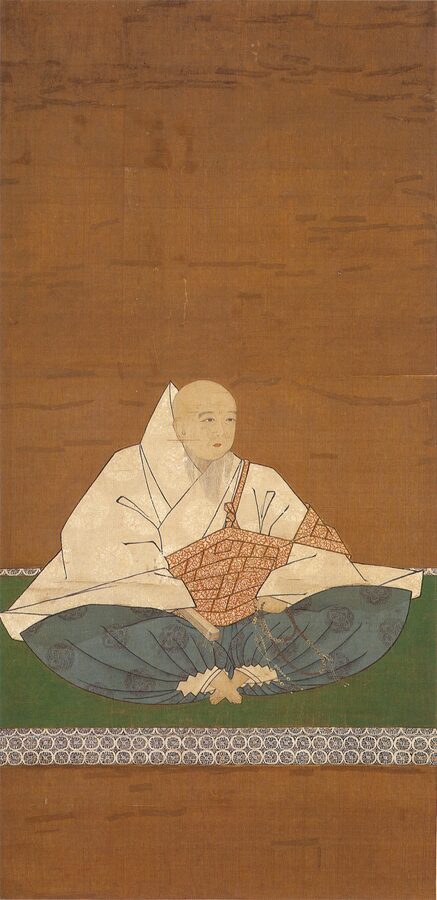
Jinson’s summary of the capital in 1474 is the best sentence anyone wrote about the war. The affairs of the realm, he wrote, were in the hands of the women, the shogun was drinking, and the great lords were busy shooting at dogs and hat targets from horseback, “just as if the realm were at peace”. He had a point about the shogun. In 1474 Yoshimasa moved out of the Muromachi palace to a new house of his own and left it to Tomiko and the boy.
The single most important event of these middle years happened in Echizen. On the 21st day of the fifth month of 1471 Asakura Takakage, the West’s best general, changed sides after the shogun and Katsumoto promised to make him governor of Echizen, a province his own lords the Shiba were supposed to hold. A retainer had just been handed his master’s province by the shogun himself, and everybody understood what that meant.
The dog and the monkey die
By 1472 both old men wanted out. Talks began in the first month, and broke down when Akamatsu Masanori, who had retaken all three of his family’s provinces from the Yamana, refused to give any of them back. In the third month Katsumoto disinherited his adopted son and named as his heir his own small son, Masamoto, who was, through Katsumoto’s wife, Sōzen’s grandson; then he shaved his head.
In the fifth month of 1472 Sōzen tried to kill himself and was stopped. The historian Sakurai Eiji reads the attempted seppuku as a public signal that he was ready to settle; Itō Daiki adds that Sōzen’s own family, who had lost their lands in the Akamatsu provinces, were by then blaming him for the whole disaster. He handed the headship of the Yamana to his grandson Masatoyo and retired.
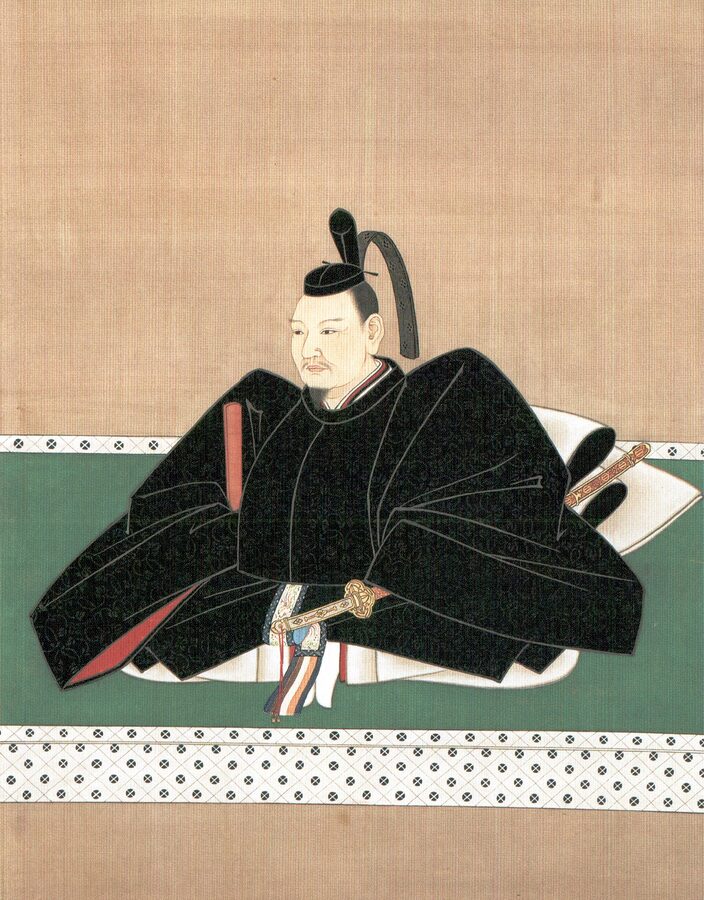
Sōzen died on the 18th day of the third month of 1473, at sixty-nine, seventy by the Japanese count. Some said the wound from his suicide attempt had never healed; nobody knows. Katsumoto fell ill early in the fifth month and died on the 11th, at forty-three, and one theory has it that he was poisoned by the Yamana side, which is the kind of story a sudden death in wartime always produces.
There was an epidemic in Kyoto that year as well, and it may be all the explanation either death needs. The dog had outlived the monkey by less than two months. On the 19th day of the twelfth month of 1473 Yoshimasa handed the title of shogun to Yoshihisa, a boy of eight, and kept the actual power for himself.
How do you end a war nobody is winning?
The heirs made peace almost at once. On the 3rd day of the fourth month of 1474 Yamana Masatoyo and Hosokawa Masamoto came to terms, and the Yamana, the family that had led the West, went over and began fighting alongside the East against their former allies. The rest of the West refused to follow: Ōuchi Masahiro and the others said there could be no peace until Yoshimasa and Yoshimi were reconciled.
So the war carried on for three more years without its two founders or the family that had started it, kept going by Hatakeyama Yoshinari, Ōuchi Masahiro, the Toki of Mino and Toki’s formidable deputy Saitō Myōchin. In 1476 the Muromachi palace itself burned down in a fire that started at a sake brewer’s near its gate, which was as decisive as anything the armies managed that year. Yoshimasa finally wrote to Masahiro in the ninth month of 1476 proposing peace, and at the end of the year he accepted Yoshimi’s assurance of loyalty.
The settlement was conducted, like everything else in Kyoto, with money. In the first month of 1477 Yoshimi asked Hino Tomiko to mediate with her husband and promised her 3,000 hiki for her trouble. He could not pay, so in the fifth month Ōuchi Masahiro paid it for him, and gave Tomiko another 5,000 hiki of his own as a fee.
On the 22nd day of the ninth month of 1477 Hatakeyama Yoshinari, who had no intention of making peace with anybody, marched out of Kyoto for Kawachi. On the 3rd day of the eleventh month Masahiro formally submitted, and was confirmed as governor of four provinces in Yoshihisa’s name. On the 11th his army left the city, the Toki and the Noto Hatakeyama burned their mansions behind them and went home, and Yoshimi and his son left with the Toki for Mino.
English-language accounts give the Ōuchi departure as 17 December 1477, a conversion to the Western calendar. The Western camp’s emperor was simply left behind; one account says the lords all went home and abandoned him in the capital, and he disappears from the record. On the 20th day of the eleventh month the shogunate held a banquet to celebrate “peace in the realm”.
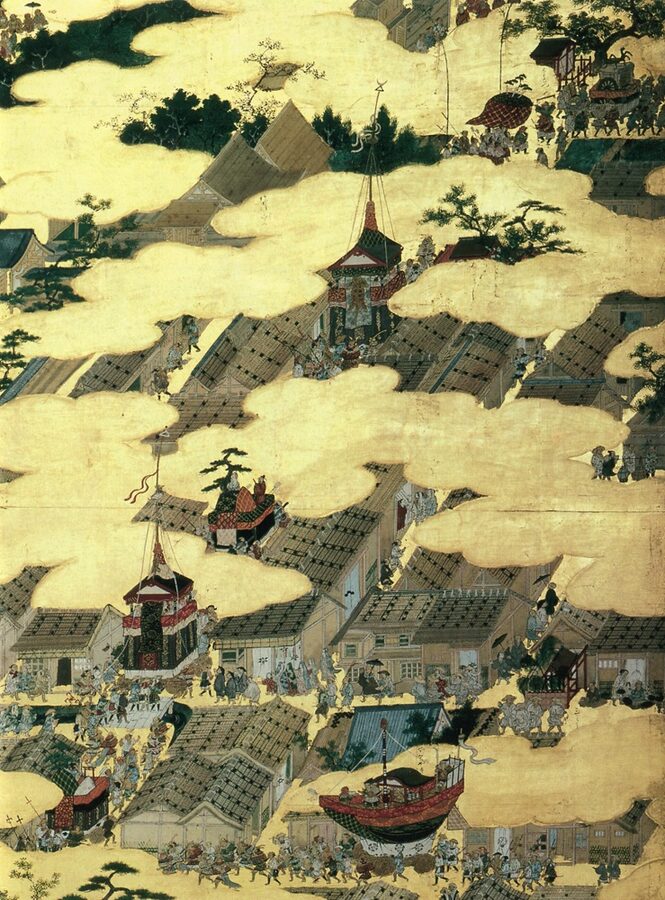
Nothing was settled. Yoshinari went on fighting Masanaga in Kawachi and Yamato and by 1482 held southern Yamashiro, almost at the city’s edge. In 1485 the local warriors and villagers of southern Yamashiro joined together, told both Hatakeyama armies to leave or be attacked, and then governed the district themselves for eight years in what is known as the Yamashiro ikki. Only in 1486 did Yoshimasa and Yoshihisa formally pardon Yoshinari, and that pardon is as close as the Ōnin War comes to having an end.
What the fire left behind
The war’s most important result was not in Kyoto at all. Before 1467 the great shugo had lived in the capital and ruled their provinces through deputies; during the war they discovered that the deputies, and the local warrior families under them, were the ones who actually held the land. After 1477 the lords went home to take it back, and many of them found they could not.
By 1486, one count has it, the only governors left living in Kyoto were the Hosokawa. The rest were in their provinces fighting their own retainers, and the retainers were often winning. Asakura Takakage held Echizen in his own right; Saitō Myōchin ran Mino in his lord’s name; and a generation or two later a man who had started out in Myōchin’s world, Saitō Dōsan, would throw out the Toki altogether, as my piece on the Viper of Mino tells.
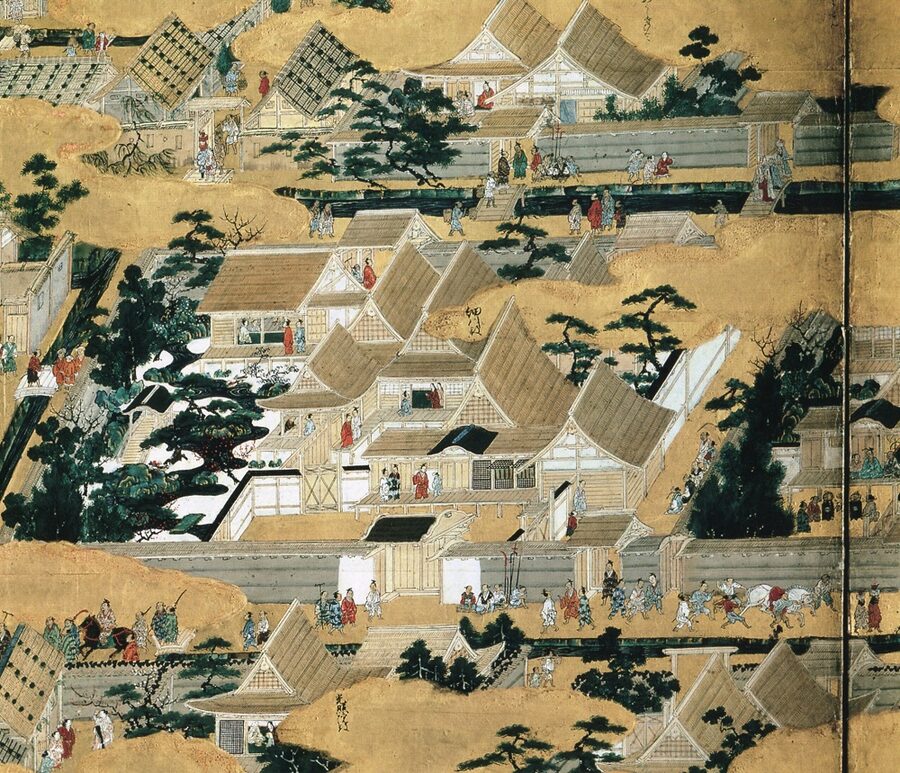
The Japanese name for this is gekokujō (下剋上), “the low overthrowing the high”, and Yoshimasa himself, asked in 1475 to stop one governor seizing another’s province, more or less accepted it, remarking that matters in the provinces now went by strength. The Sengoku era, the age of the warring states, is usually dated from the Ōnin War, though some historians prefer 1493, when Hosokawa Masamoto threw out a shogun and installed another. Either way the age that began here ended only with Oda Nobunaga, whose own career ended in the Honnō-ji Incident of 1582, and with his successors, and the stretch of history between them is laid out in my tour of Japan through the ages.
Some threads run surprisingly straight. The Imagawa governor of Suruga, Imagawa Yoshitada, died fighting in Tōtōmi in 1476 in one of the war’s side quarrels; his grandson was the Imagawa Yoshimoto who died at Okehazama. The Hosokawa line survived too, through cadet branches, all the way down to Hosokawa Tadaoki, who fought for Tokugawa Ieyasu at Sekigahara.
The court was ruined. With its estates seized by local warriors, it could no longer afford its own ceremonies: no emperor was able to afford to abdicate for more than a century, and when Go-Tsuchimikado died in 1500 his body lay in the palace for forty-three days before the money for his funeral could be found. The nobleman Kanroji Chikanaga wrote in his diary that high office was useless, and some families gave up and left; Kaneyoshi’s eldest son, Ichijō Norifusa, settled in his estates in Tosa and founded a provincial branch of the family there.
And yet this is the period of Yoshimasa’s great retreat. In 1482 he began building a villa in the eastern hills on the burned site of the Jōdo-ji, the very temple where his brother Yoshimi had been abbot before all this began, and around it grew what the Japanese call Higashiyama culture: the shoin room with its alcove and tatami, ink painting, the early tea gatherings that led in the end to Sen no Rikyū and the tea ceremony, and a new kind of garden. My history of Japanese gardens picks up that thread.
The historian of China Naitō Konan, in a lecture in 1921, said that to understand the Japan of his day you hardly needed to study ancient history at all; history after the Ōnin War was quite enough. It caused an uproar among the ancient historians, which may have been the idea. There is also a well-worn Kyoto joke that when an old resident says “the last war”, he means Ōnin. I have heard the joke told far more often than I have heard anyone mean it, but it gets the scale right, and the war belongs on any list of Japan’s decisive conflicts even though it never had a decisive battle.
Where to find the Ōnin War in Kyoto today
The war left almost nothing standing, which makes it an odd thing to go and see. What it left instead are names, graves, markers and one or two buildings put up by the survivors. All of what follows sits in the northern half of the city and the eastern hills, and you can do the first three in a morning on foot.
Kamigoryō Shrine
The Kamigoryō Shrine (上御霊神社, officially the Goryō Jinja) is where the war began, and it is the one place where you can stand on the ground of the opening fight. It is a few minutes’ walk from Kuramaguchi station on the Karasuma subway line. The grounds are free to enter, and the shrine does not run a proper website of its own, so if you want to time a visit to an event, the Kyoto city tourism pages are your best bet.
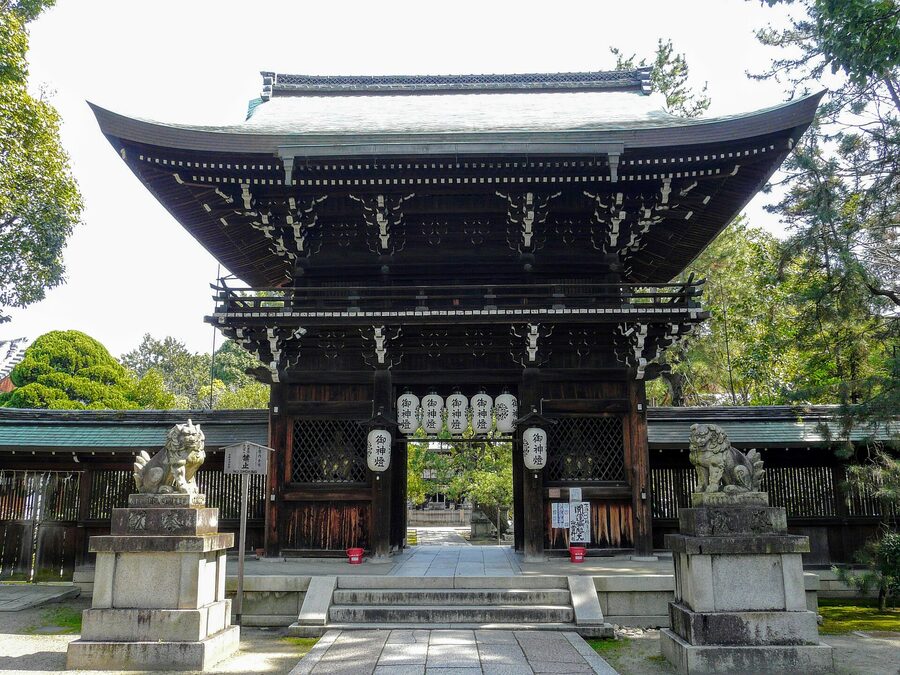
The shrine is older than the capital in its own telling: it says its first rites were held in 794 to calm the angry spirit of Prince Sawara, a brother of Emperor Kanmu who died protesting his innocence. It enshrines eight such restless spirits, most of them people who died in political disgrace in the Heian era and were thought to cause plague and fire, which makes it, I think, an appropriate place for this war to have started. It also has a small sub-shrine called the Hana-no-Gosho Hachimangū, traditionally the guardian shrine of the shogun’s palace that Masanaga lost.
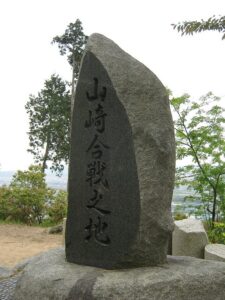
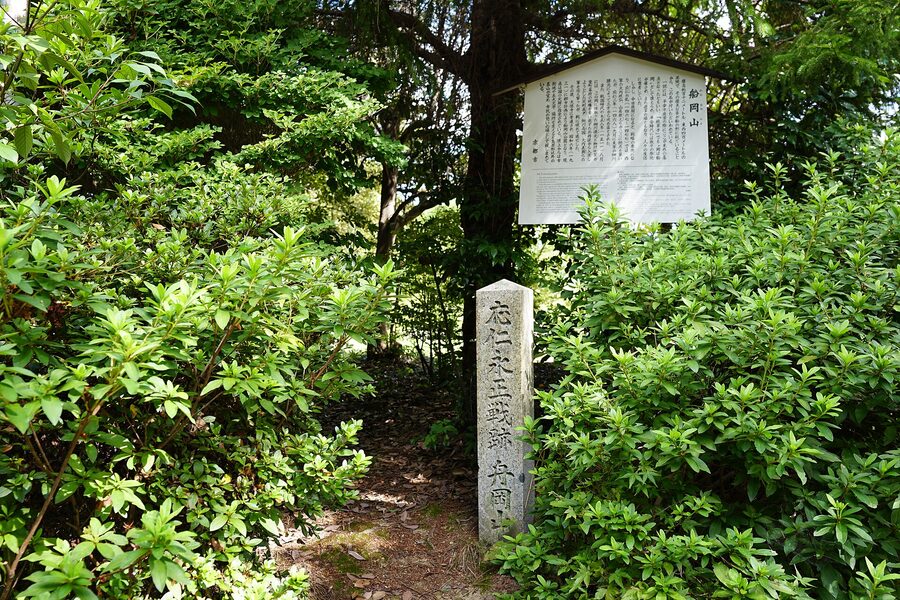
There are two markers to find. A stone post near the western entrance reads “site of the outbreak of the Ōnin War”, and inside the precinct a larger stone marks the old battlefield of the Goryō fight; there is also a stone with a haiku by Matsuo Bashō, who came here in the twelfth month of 1690. On the 18th of every month except May there is a small morning market in the grounds.
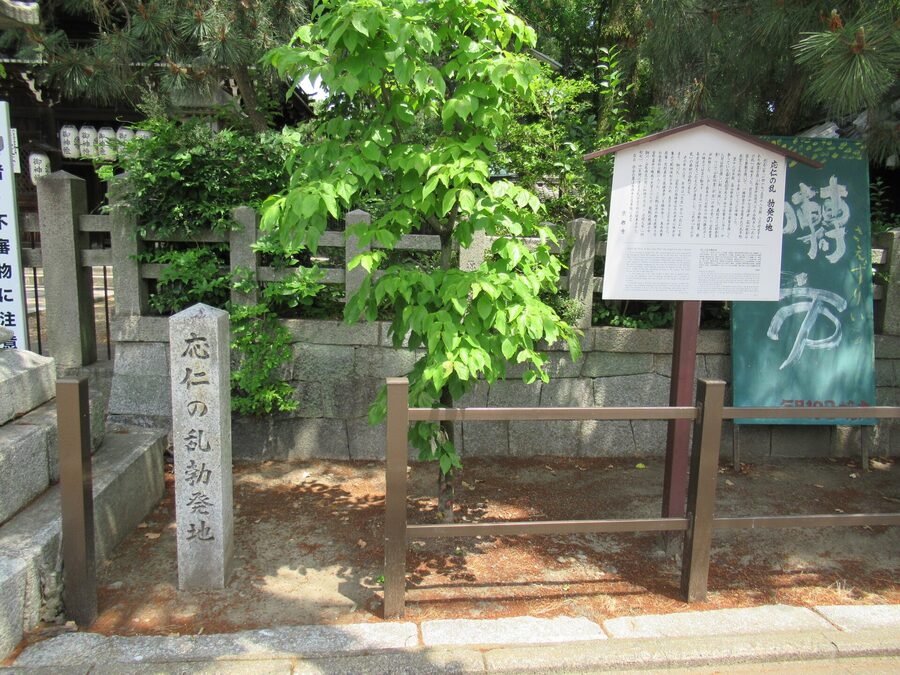
The shrine’s own festival, the Goryō Matsuri, runs through the first part of May, with portable shrines and a procession on 18 May. It claims to be the oldest festival in the old city, which is a contested title in Kyoto, but it is worth seeing if you are in town, and far less crowded than the Gion Matsuri two months later.
Nishijin, Funaokayama and Sōzen’s house
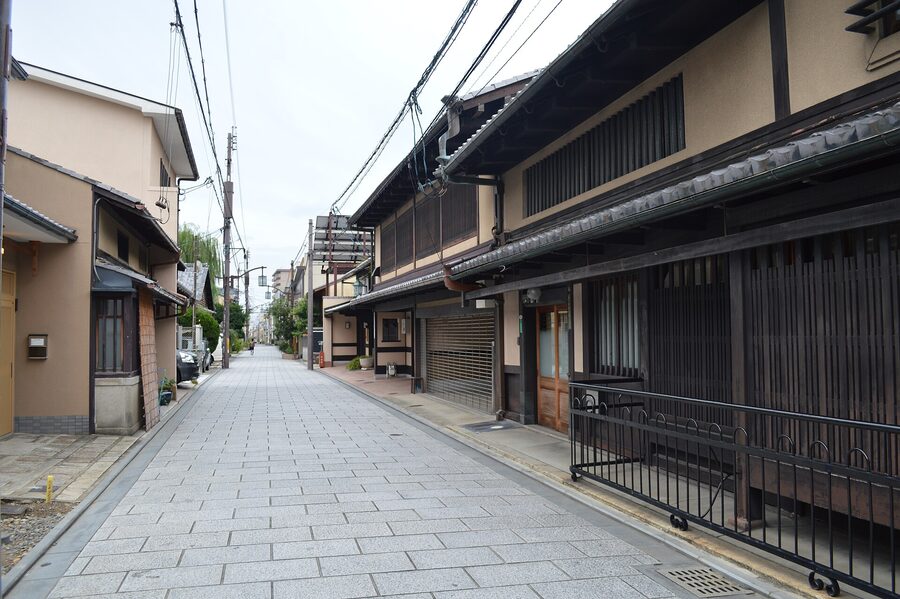
Walk west from Kamigoryō and you cross the Horikawa into the district that the war named. Nishijin (西陣) means “Western camp”, and it is called that because Sōzen’s headquarters stood here; the name came into use after the war, when the weavers who had scattered during the fighting came back and set up their looms on the old camp ground. The quarter they had worked in before 1467, Ōtoneri-chō, had burned in the sixth month of that first year.
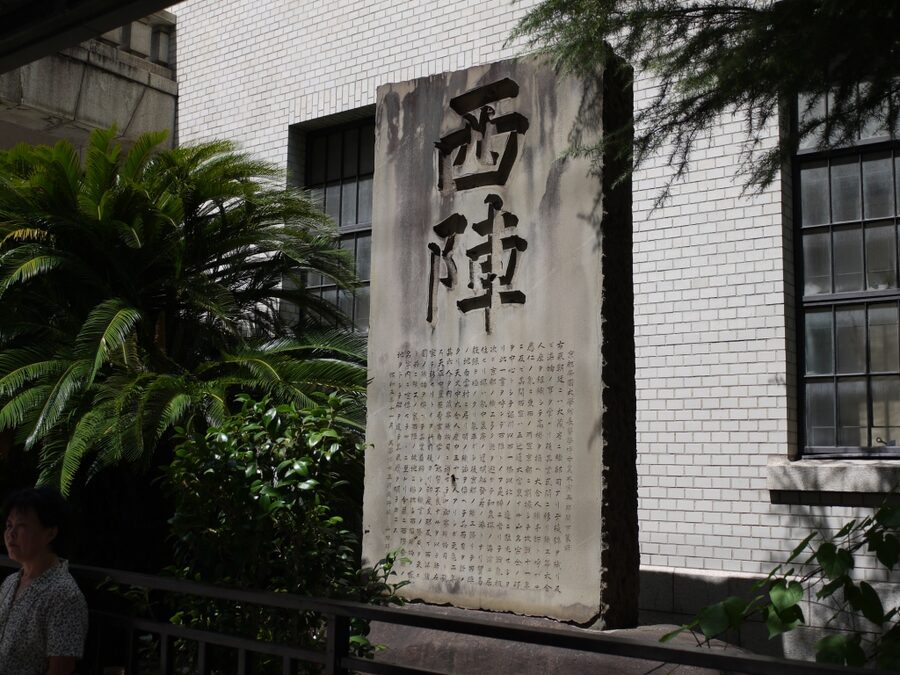
The site of Sōzen’s mansion is a short walk north-east of there, just west of Horikawa-dōri on Itsutsuji-dōri, in a neighbourhood still called Yamana-chō. There is nothing to see but a stone post saying so, and people regularly report walking past it twice. I like it for exactly that reason: the headquarters of half the warring lords of Japan is now a marker on an ordinary residential street.
If you have an hour more, walk north to Funaokayama, the low wooded hill where Ōuchi Masahiro made his camp in 1467. It is a free public park, twenty minutes or so on foot north of the Textile Center, and from the top you get a view across the whole northern city to Mount Hiei. The battlefield marker sits on the path up.
The Nishijin Textile Center
The Nishijin Textile Center (西陣織会館) is the practical place to see what grew in the war’s ashes. It stands on Horikawa-dōri just south of Imadegawa, a minute or two from the Horikawa Imadegawa bus stop; bus 9 from Kyoto Station takes about thirty minutes, and it is about ten minutes’ walk west of Imadegawa station on the Karasuma subway line.
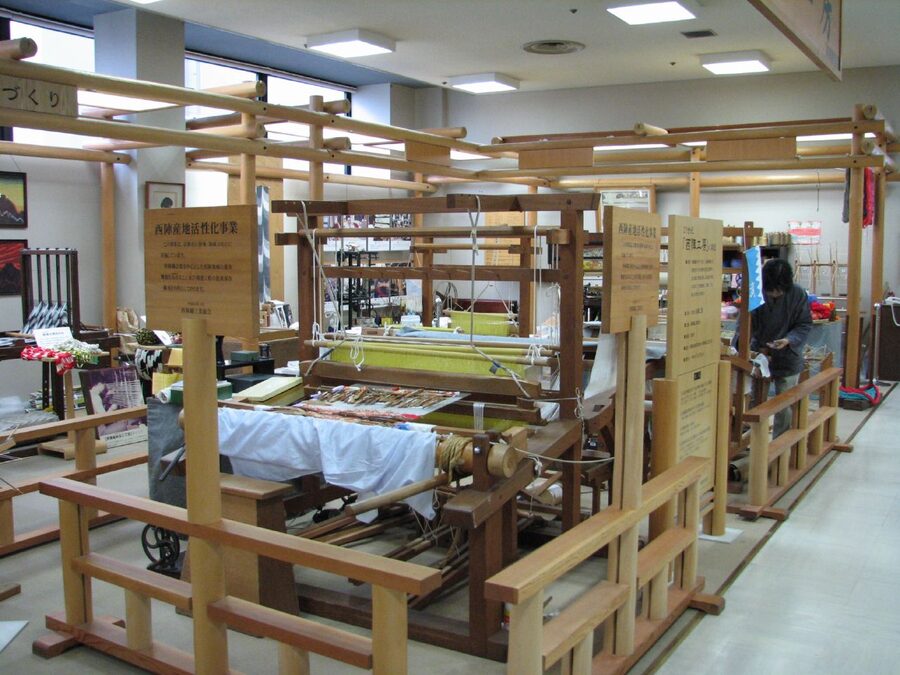
Entry is free. It opens 10:00–17:00 from April to September and 10:00–16:00 from October to March, and closes on Mondays (Tuesday when Monday is a holiday) and from 29 December to 3 January. There are demonstrations by artisans, a history room on the third floor, and a hand-weaving session on small looms in which you make a table runner about 20 by 30 centimetres in roughly forty minutes, for ¥2,750 (¥2,530 for students), booked in advance and open to children from the fifth year of primary school.
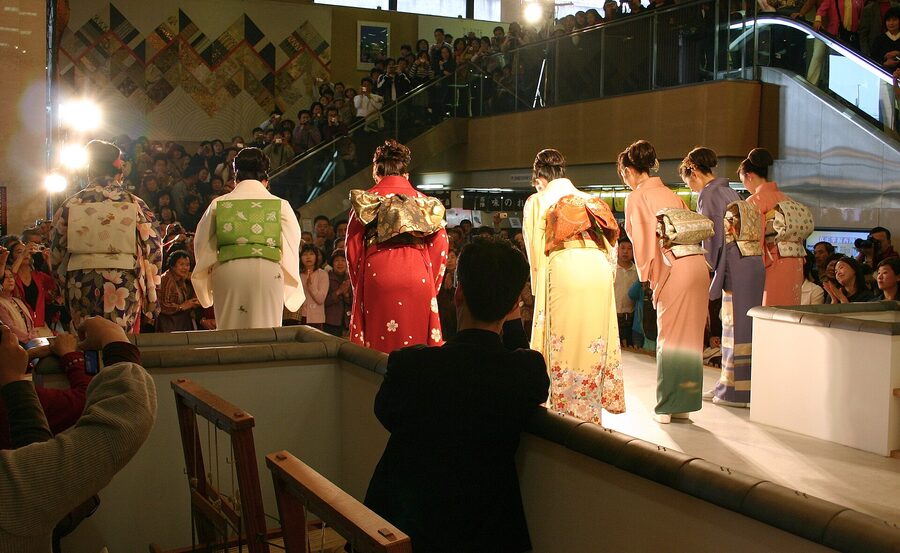
The sales floors are aimed squarely at tour groups and you can skip them. The demonstrations and the history room are the reason to come, along with the simple fact that the building stands a few minutes’ walk from the site of Sōzen’s headquarters. If you want the textile story beyond the war, my pieces on the kimono and on Japan’s greatest crafts carry it on.
Ginkaku-ji
Ginkaku-ji (銀閣寺), properly Jishō-ji, is Yoshimasa’s retirement villa, and it is the war’s strangest monument: the house a shogun built while his capital lay in ruins, on the ashes of his brother’s old temple. Building began in 1482. Yoshimasa moved in in 1483, his private chapel the Tōgudō was finished in 1486, and the ridgepole of the two-storey Kannon-den, the building everyone now calls the Silver Pavilion, went up in the third month of 1489.
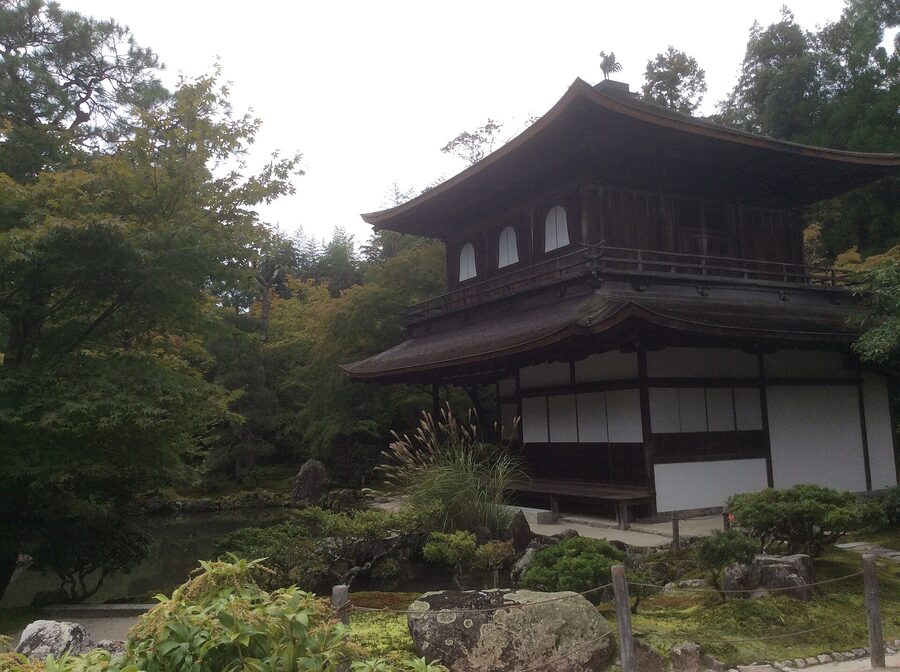
Yoshimasa never saw it finished. He died on the 7th day of the first month of 1490, and the villa became a Zen temple, first called Jishō-in after his posthumous name and then Jishō-ji. He had asked to be buried in his villa, but Enryaku-ji on Mount Hiei, which resented a shogun building over one of its Tendai temples, objected, and his grave is at the Jishō-in, a sub-temple of Shōkoku-ji, instead. Yoshimi died a year to the day after him, on the 7th day of the first month of 1491.
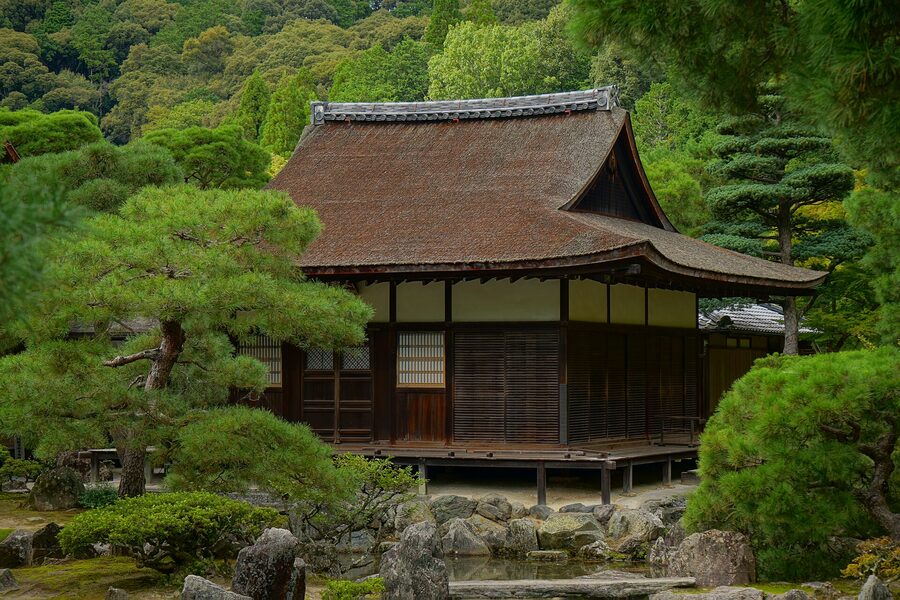
Be clear about what you are looking at. Only the Kannon-den and the Tōgudō survive from Yoshimasa’s day; the rest burned in fighting in 1550. The garden is largely an early-Edo remodelling, with only the area around the Sengetsusen waterfall thought to keep its original design, and the white sand heaps of the Ginshadan and the Kōgetsudai are later still.
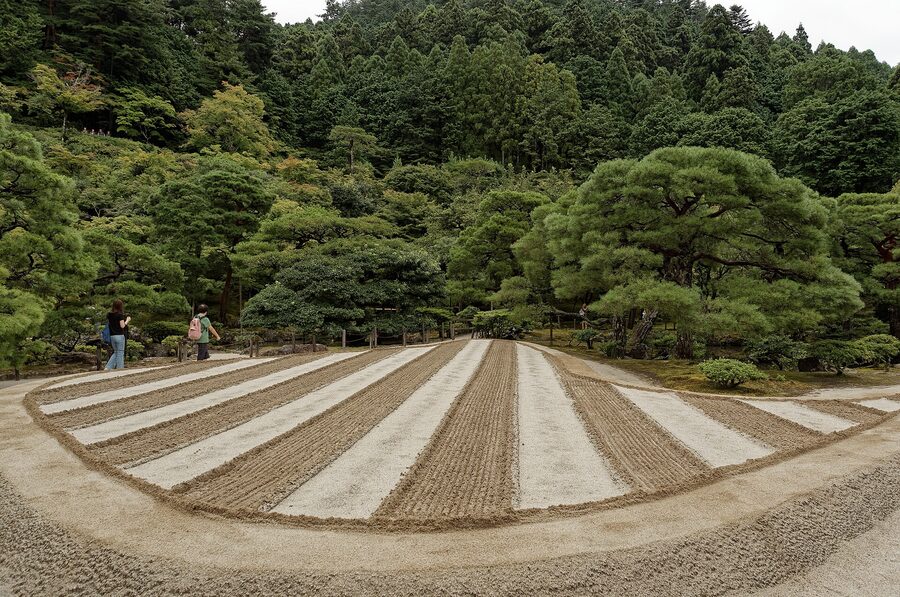
Since 1 April 2026 entry has been ¥1,000 for adults and ¥500 for primary and junior high school children. It is open 8:30–17:00 from March to November and 9:00–16:30 from December to February. From Kyoto Station take city bus 5, 7, 32, 102, 203 or 204 to Ginkakuji-michi, or the EX100 or 105 to Ginkakuji-mae; the temple suggests half an hour for the circuit, and if you arrive at opening time you will share the Kannon-den with far fewer people than at noon.
You can walk south from the gate along the canal path towards Nanzen-ji, which burned in the fighting of the ninth month of 1467. My guide to Japan’s greatest gardens covers more of what lies along that route.
The generals’ graves: Ryōan-ji and Nanzen-ji
The two men who gave their names to the war are buried at opposite ends of the city. Katsumoto lies at Ryōan-ji, the temple he founded in 1450, which the West burned in 1468 and his son Masamoto rebuilt from 1488. Most visitors come for the rock garden, which temple tradition dates to around 1499, though nobody really knows who made it or when.
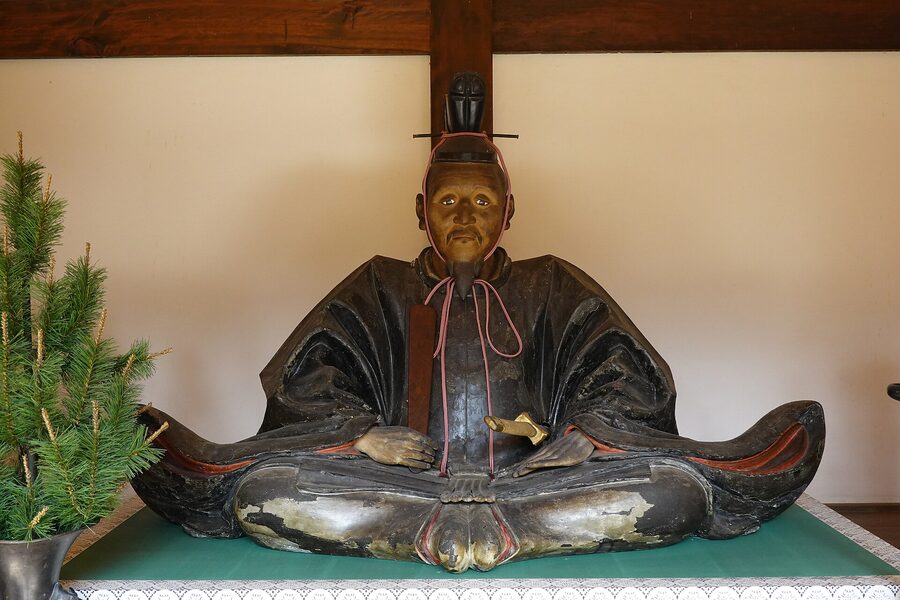
Entry to Ryōan-ji is ¥600 for adults, ¥500 for high school students and ¥300 for younger children; check the temple’s own site for its current opening hours. It is about seven minutes’ walk from Ryōanji station on the Keifuku Kitano line.
Sōzen lies at the Shinjō-in, a sub-temple of Nanzen-ji in the eastern hills, a temple that burned in the fighting of 1467. As far as I know it keeps no regular public opening, so you will mostly see it from the gate, which suits a man of whom no true likeness survives.
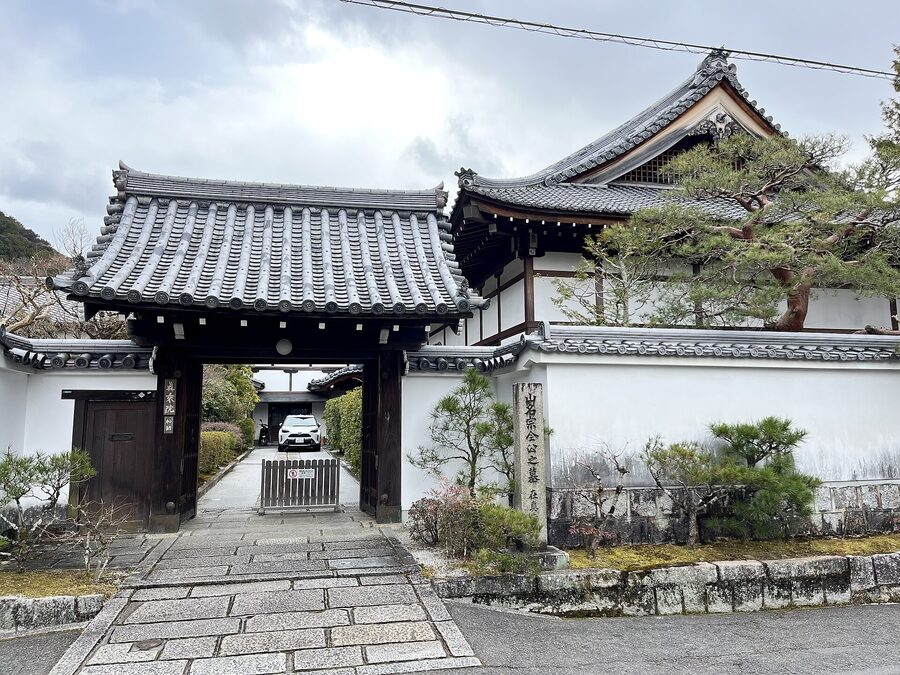
If you are in Kyoto anyway, do the whole thing in a day: Kamigoryō in the morning, then the walk west through Nishijin past Sōzen’s corner to the Textile Center, then the bus across town to Ginkaku-ji in the afternoon. You will have walked from the first fight to the dog’s last refuge to the shogun’s retreat. Stop for a minute at the outbreak stone on the way in, and remember that the man who stood his ground there, Hatakeyama Masanaga, survived the dog and the monkey both and was still fighting the same cousin twenty years later.