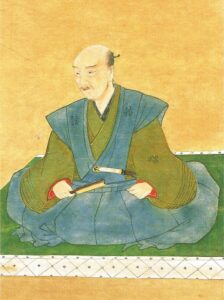
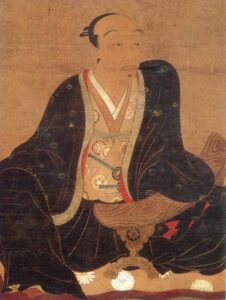
On the evening he got back to Edo Castle, a week after walking out on his own army, the last Tokugawa shogun sent out for grilled eel. It was the wrong time of year, and the two bu he handed over did not cover it; eel in the middle of winter cost a full ryō, so he made up the difference out of his own pocket. He also asked for raw tuna, which nobody in the castle kitchens would risk serving a shogun, so his sashimi came up pickled in miso instead.
I like the story because it is so ordinary. Tokugawa Yoshinobu (徳川慶喜) had just lost the Battle of Toba-Fushimi, slipped out of Osaka Castle by night and left the captain of his own flagship standing on the shore, and two and a half centuries of his family’s rule were over. He had been shogun for about a year and had never once entered Edo Castle as shogun. He would live another forty-five years, take up photography, oil painting and the bicycle, father twenty-one children in Shizuoka alone and die a prince in the reign of the Taishō emperor, and he never seems to have lost his interest in lunch.
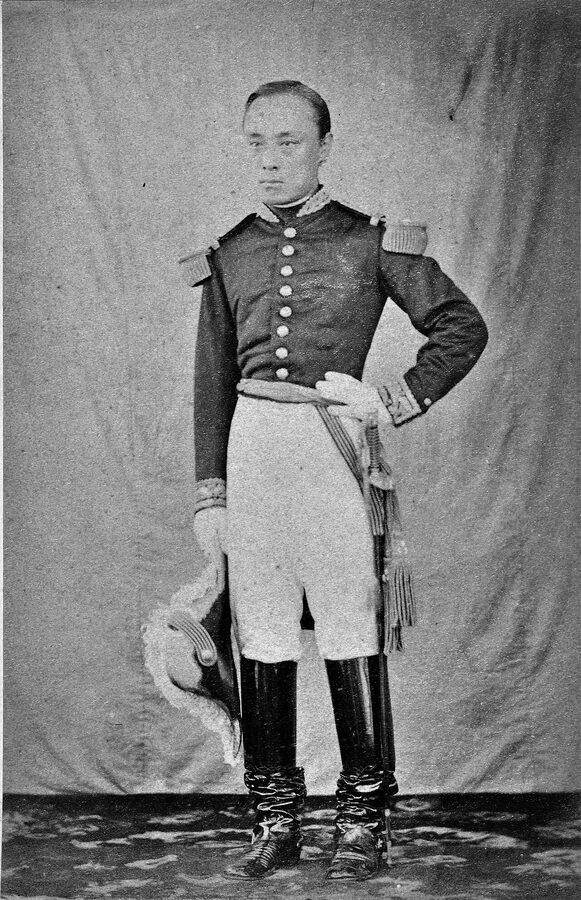
He was the most capable man the Tokugawa produced in two hundred years, and his enemies said so before his friends did. He gave the government away before it could be taken from him, then lost his nerve at the one moment nerve was required. Most of the places that tell his story can still be visited, from his school in Mito to a restaurant garden in Shizuoka where he spent his long retirement.
In This Article
- A seventh son in Mito
- The name nobody agreed on
- The succession fight
- Guardian, general and difficult guest
- Shogun, reluctantly
- The return of power at Nijō
- Toba-Fushimi and the night boat
- Eels, Edo and surrender
- Forty-five years of hobbies
- The late return to honour
- Coward, patriot, or something else
- Where to see Tokugawa Yoshinobu today
- Mito: the Kōdōkan
- Kyoto and Osaka
- Shizuoka
- Matsudo: Tojo-tei
- Tokyo
- Further afield
A seventh son in Mito
He was born on the twenty-ninth day of the ninth month of Tenpō 8, 28 October 1837 by the Western calendar, in the Edo mansion of the Mito domain at Koishikawa. His childhood name was Shichirōmaro, “seventh son”, which tells you roughly where he started in the queue. His father was Tokugawa Nariaki (徳川斉昭), lord of Mito, and his mother was Princess Yoshiko of the Arisugawa-no-miya, one of the princely houses of the imperial family. That made the boy a distant cousin of the emperor in Kyoto, a detail that mattered far more than anyone could have guessed in 1837.
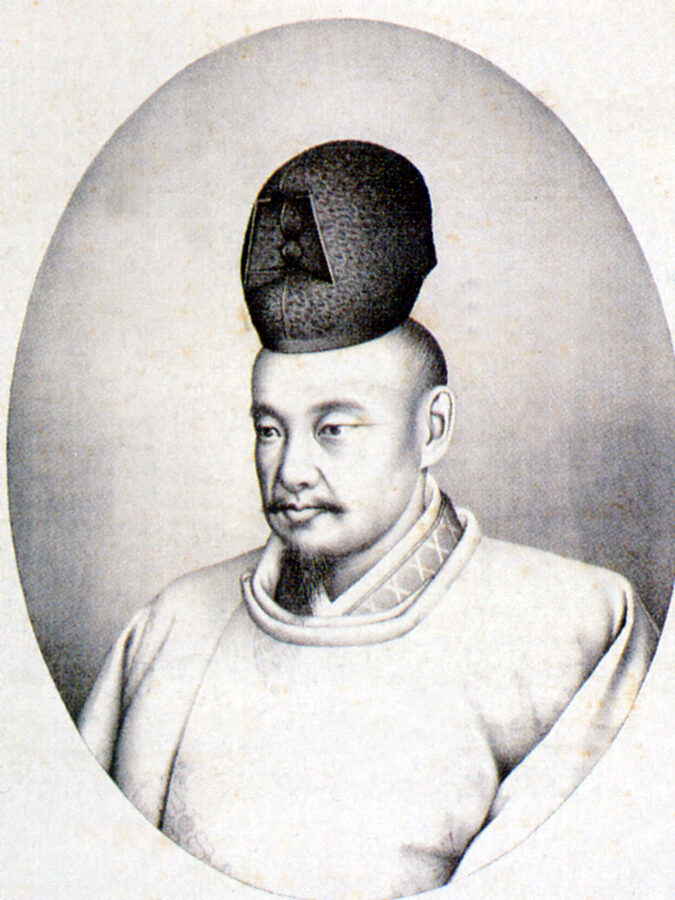
Mito was one of the gosanke (御三家), the three senior branch houses founded by sons of Tokugawa Ieyasu. Its second lord, Mitsukuni, had begun a history of Japan that took about 250 years to finish, and out of it grew the Mito school, which put loyalty to the emperor at the centre of everything. The house also kept a rule from Mitsukuni’s time: if court and shogunate ever came to blows, a Mito man might turn against the shogunate, but must never draw a bow against the court. Keep that in mind.
Nariaki believed that boys brought up in Edo went soft, so his son was sent to Mito at seven months old, in the fourth month of 1838, and stayed nine years. He studied at the Kōdōkan (弘道館), the domain school his father opened in 1841, under the scholar Aizawa Seishisai, and he was trained in the military arts alongside the classics. His favourite turned out to be the shuriken, the throwing blade, and Japanese accounts claim he was still practising with it every day long after he had stopped being shogun.
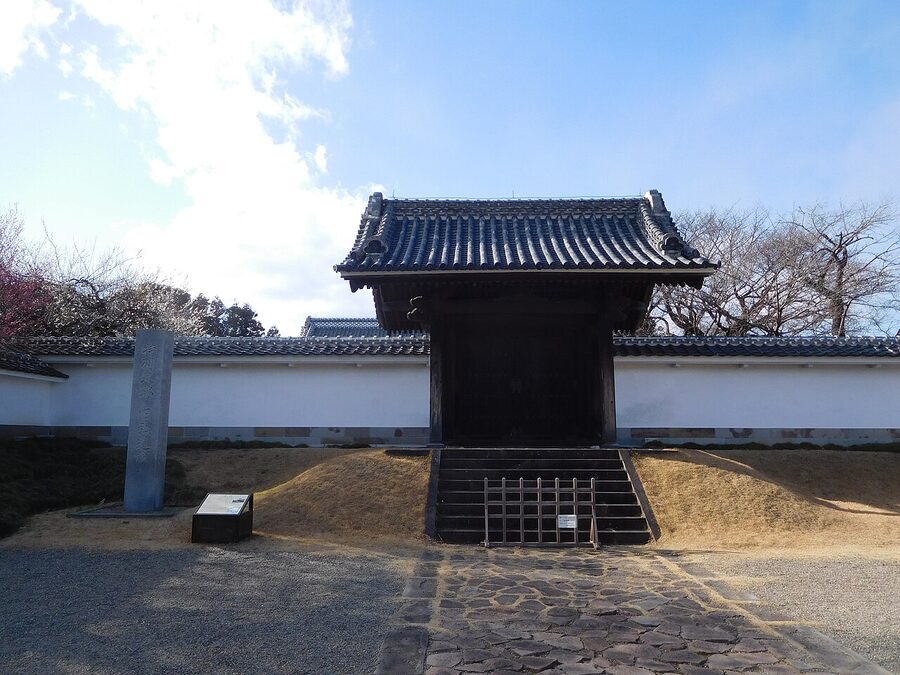
The discipline was personal. Nariaki thought his son slept untidily, so he had razors stood upright on either side of the boy’s pillow. Yoshinobu later told his old retainer Shibusawa Eiichi that he had guessed the blades would be taken away once he was asleep, but that they were uncomfortable enough to cure him anyway. Japanese accounts add that he kept sleeping that way as shogun, to stay sharp.
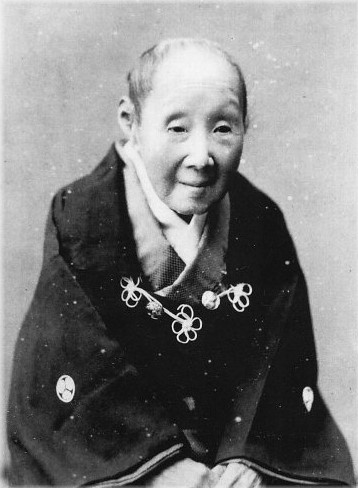
In 1847 the twelfth shogun, Ieyoshi, wanted the bright Mito boy as heir to the Hitotsubashi, one of the three gosankyō (御三卿) houses kept in Edo as a reserve of possible shoguns, and gave him the character “yoshi” from his own name. So Shichirōmaro, briefly Matsudaira Akimune, became Tokugawa Yoshinobu at ten. Ieyoshi visited so often that people assumed the boy was being lined up for the succession, and it seems Ieyoshi thought so too, until his chief councillor Abe Masahiro talked him out of it.
The name nobody agreed on
Even his name is an argument. The characters 慶喜 are usually read Yoshinobu, but in 1867, three months into his reign, the government announced that the correct reading was Yoshihisa, possibly because “Yoshinobu” sounds like yo shinobu, “hiding from the world”, and his own signature in Latin letters says Yoshihisa. His family, his old retainers and the people of Shizuoka called him Keiki, the Chinese reading, and he signed telegrams to his brother that way. I have used Yoshinobu because the history books settled on it, but I suspect he would have found it a little stiff.
The succession fight
The quarrel that shaped his life began in 1853, the year of Perry’s black ships. Ieyoshi died within weeks of the Americans’ departure, and the new shogun, Iesada, was sickly and not expected to have children. The Hitotsubashi party wanted Yoshinobu, an able adult from a reforming house, and its backers included his father, Abe, Matsudaira Shungaku of Echizen and the Satsuma lord Shimazu Nariakira.
The Nanki party wanted Tokugawa Yoshitomi, the boy lord of Kii, closer in blood to the shogunal line and twelve years old, which some of his supporters considered a recommendation. Its leader was the lord of Hikone, Ii Naosuke, and its most useful ally was the women’s quarters of Edo Castle, the Ōoku, which had no wish to see Nariaki’s son, or Nariaki, anywhere near the inner palace.
The candidate himself was not keen. He wrote to his father that it was far better never to become shogun at all than to become shogun and fail. That is either admirable self-knowledge or a well-judged display of reluctance, and with Yoshinobu you can never quite tell which.
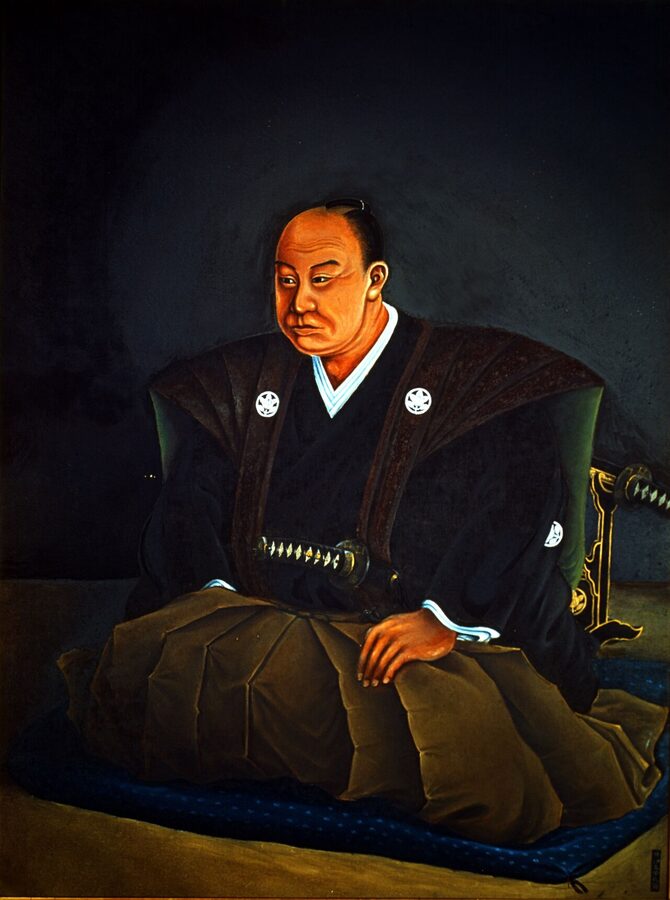
Abe died in 1857 and Nariakira in 1858, and the Hitotsubashi party fell apart. Ii became great elder, tairō, in the fourth month of 1858, settled the succession on Yoshitomi, who became the fourteenth shogun Iemochi, and signed the commercial treaty with the United States without the emperor’s consent. Yoshinobu went up to the castle and told Ii to his face what he thought of that, and within a fortnight he was banned from attending the castle. In the eighth month of 1859, in the purge named after the Ansei era, he was forced into retirement and confinement, and the Hitotsubashi house was left with nobody at its head.
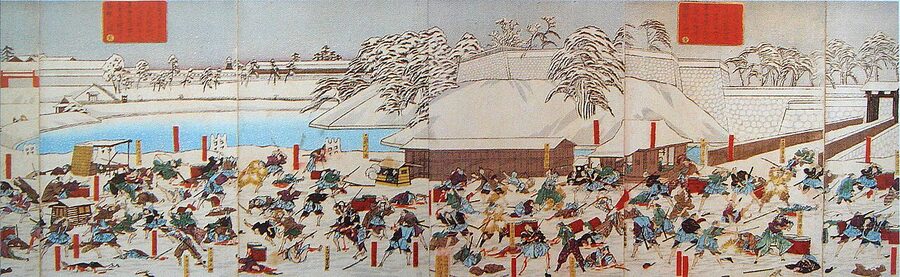
Then, on a snowy morning in the third month of 1860, a band of Mito men cut Ii down outside the Sakurada Gate of Edo Castle. Six months later the shogunate, thoroughly frightened, let Yoshinobu out.
Guardian, general and difficult guest
He came back to politics in 1862 on the end of a Satsuma sword, or near enough. Shimazu Hisamitsu marched to Edo with an imperial envoy and a large escort of troops and made the shogunate appoint Yoshinobu guardian to the young shogun (shōgun kōken-shoku) and Matsudaira Shungaku its chief of political affairs. Between them they relaxed sankin-kōtai, the system that had kept every daimyo shuttling to Edo for two centuries, and created a military governorship of Kyoto, which went to Matsudaira Katamori of Aizu.
Kyoto was where things were happening now. The court, a decorative institution for the whole of the Edo era, had become the focus of every faction that wanted to expel the foreigners, bring down the shogunate, or both, and the streets were dangerous enough that Aizu took on the Shinsengumi to police them. Yoshinobu went up early in 1863 and spent most of the next five years there, coming to know the court better than any Tokugawa had for generations, and Edo distrusted him for it.
He was also, by several accounts, impossible company. In the second month of 1864, at a drinking party given by Prince Nakagawa to patch up the council of great lords then advising the court, Yoshinobu got drunk, apparently on purpose, and pointed at Shimazu Hisamitsu, Matsudaira Shungaku and Date Munenari of Uwajima, calling them the three greatest fools and villains in the realm. The council collapsed within weeks. Another story, which I would not swear to, has him downing five bowls of cold sake, riding to the prince’s house with his sword, announcing he had come to kill him, and then, when offered tea, replying that he would buy his own.
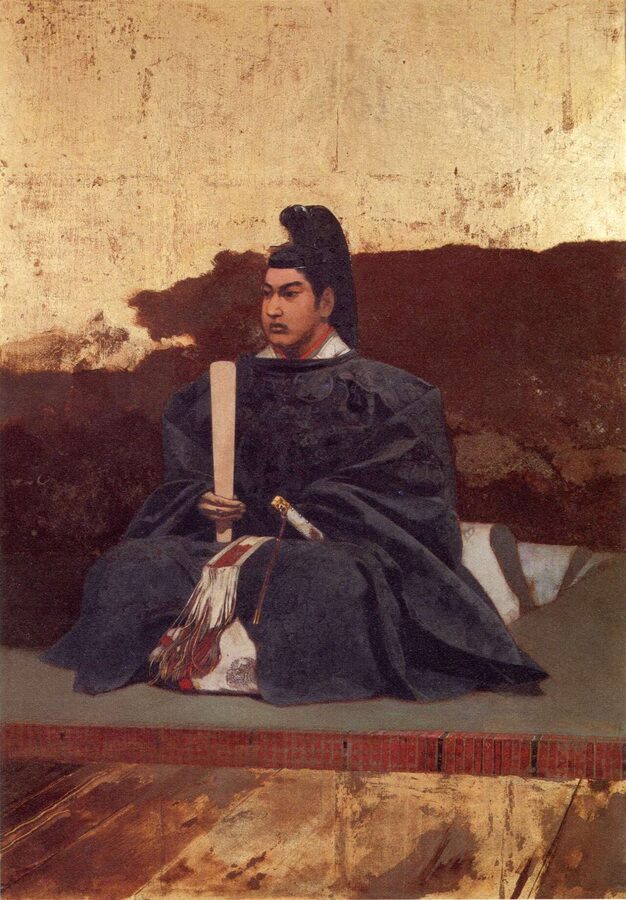
The fighting reached the palace that summer. In the seventh month of 1864 Chōshū troops tried to force their way into the imperial enclosure at the Hamaguri Gate, and Yoshinobu, now commander of the palace guard, directed the defence in person. Japanese accounts make a point of saying that he fought in the thick of it without even mounting a horse. In the autumn of 1865 he argued at court for a day and a night for imperial sanction of the foreign treaties, finally saying that if the court refused he would commit seppuku, and he got his sanction.
The other side noticed. Kido Takayoshi of Chōshū warned that Hitotsubashi’s nerve was not to be underestimated, and that if the court lost its chance, “it will be like seeing Ieyasu born again”.
Shogun, reluctantly
Iemochi died at Osaka Castle on the twentieth day of the seventh month of 1866, aged twenty, in the middle of a failing war against Chōshū. He left no son, and the senior councillors in the west, Itakura Katsukiyo and Ogasawara Nagamichi above all, overrode doubts in Edo and asked Yoshinobu to take over. He accepted the headship of the Tokugawa house in the eighth month and then refused the title of shogun for nearly four months, which had the useful effect of making everyone beg.
He gave in on the fifth day of the twelfth month, 10 January 1867, and received the appointment at Nijō Castle, aged twenty-nine. He was the only one of the fifteen to take office without the court rank of palace minister, and he was the only one who never entered Edo Castle as shogun. In effect, the government of the Tokugawa shogunate moved to Kyoto and Osaka with him.
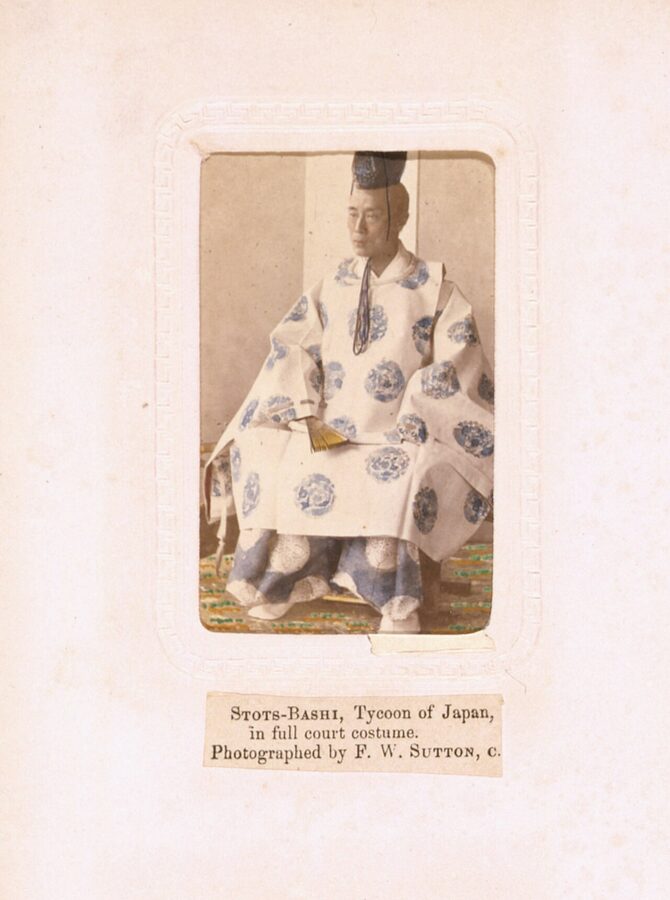
The year that followed was the most interesting of his life, and the shortest. He abolished the monthly rota by which the senior councillors had run business since the 17th century and put in something closer to a cabinet, with ministers for the army, the navy, finance, home affairs and foreign affairs, and brought in reformers he had spent years quarrelling with, Oguri Tadamasa among them. He also started French lessons with the scholar Nishi Amane and gave up when work got too busy, which I find very sympathetic.
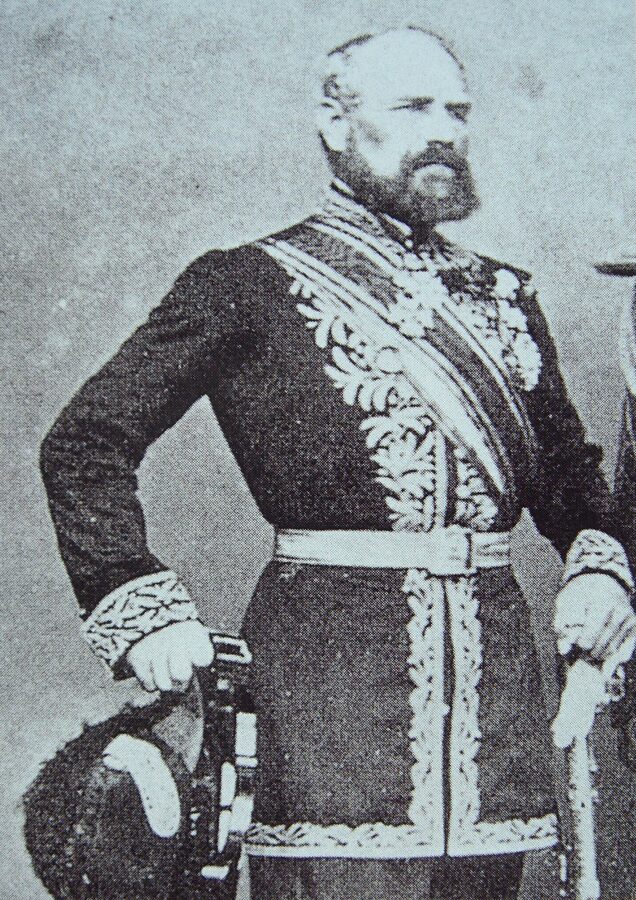
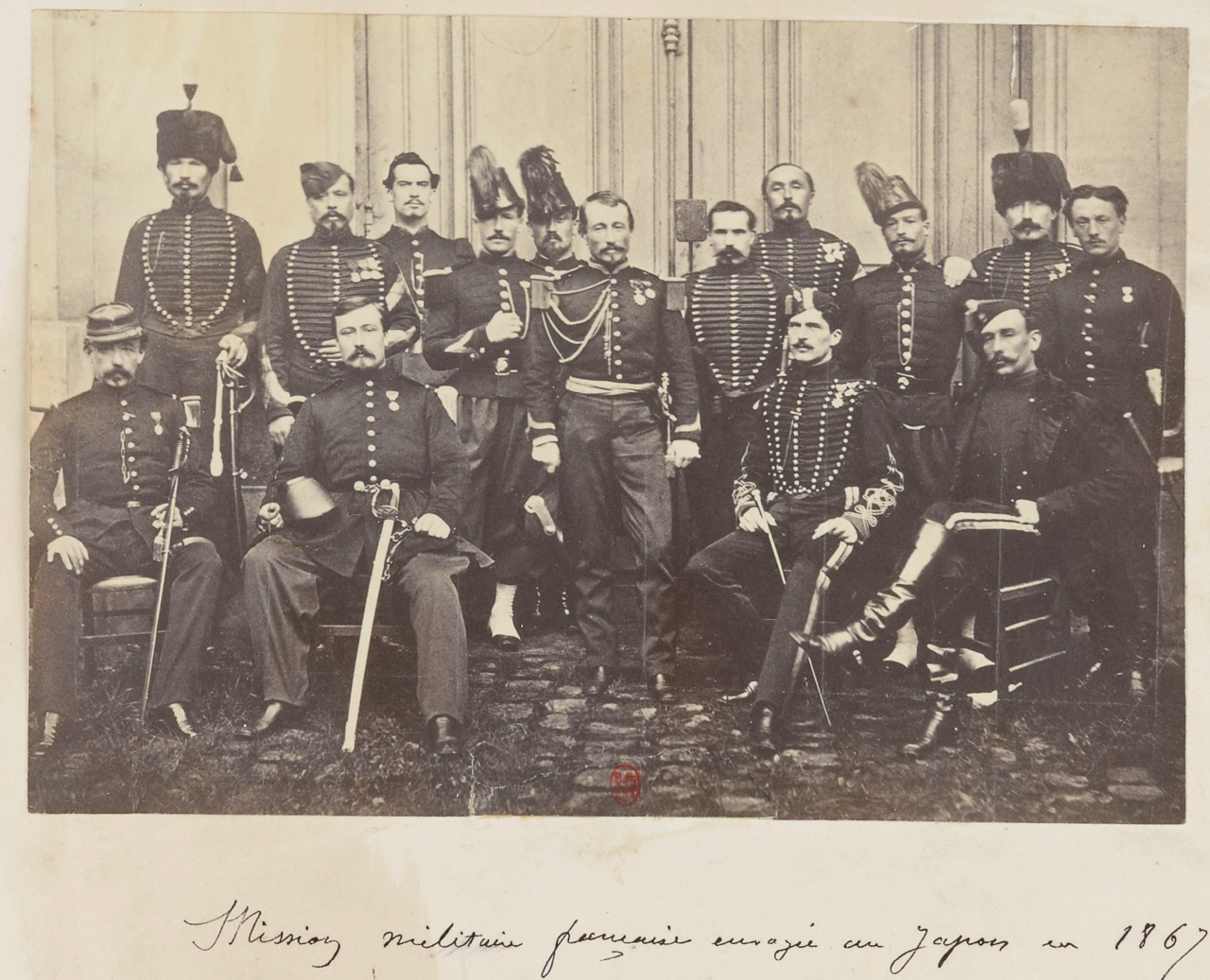
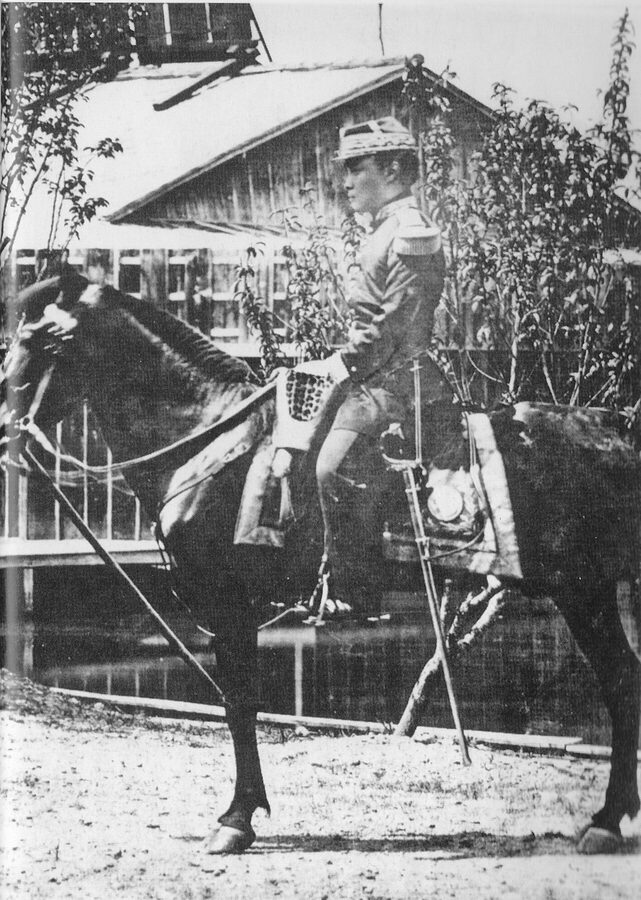
The French were the heart of it. Léon Roches, the minister of France, had decided his country’s interest lay in a strong shogunate, and he supplied advice, credit and, early in 1867, a military mission to train a modern army, with a young artillery officer named Jules Brunet among its members. French engineers under Léonce Verny were already building a shipyard at Yokosuka. Japanese accounts put French aid at 2.4 million dollars; a much larger loan was discussed and never came.
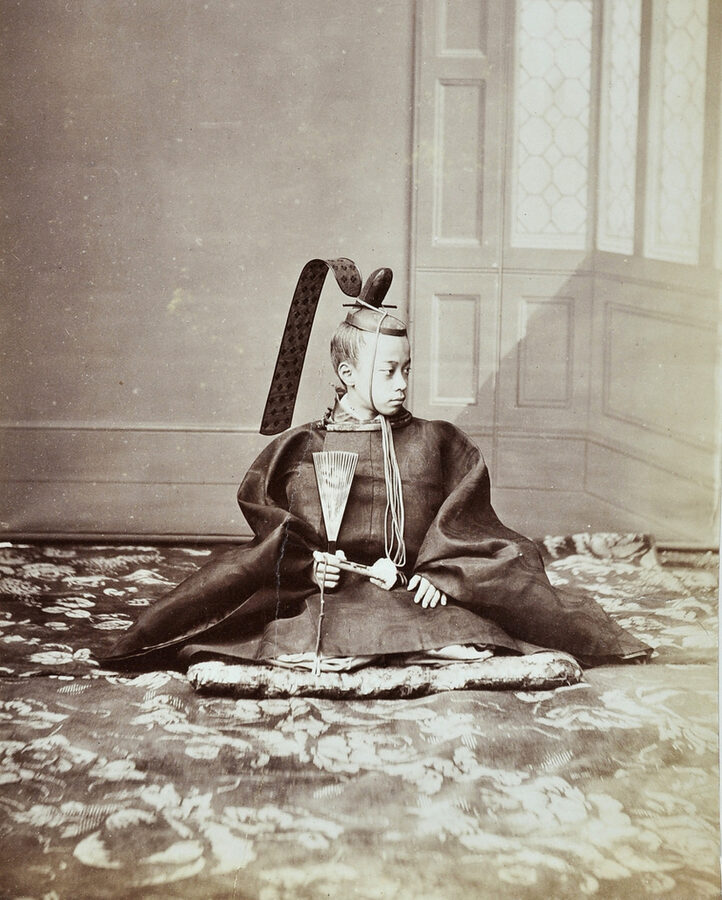
He sent his half-brother Akitake, thirteen, to the Paris Exposition of 1867 at the head of a delegation, with orders to stay on and study. A junior Hitotsubashi retainer from a Saitama farming family went along to keep the accounts: Shibusawa Eiichi, later the founder of modern Japanese business and his old lord’s biographer.
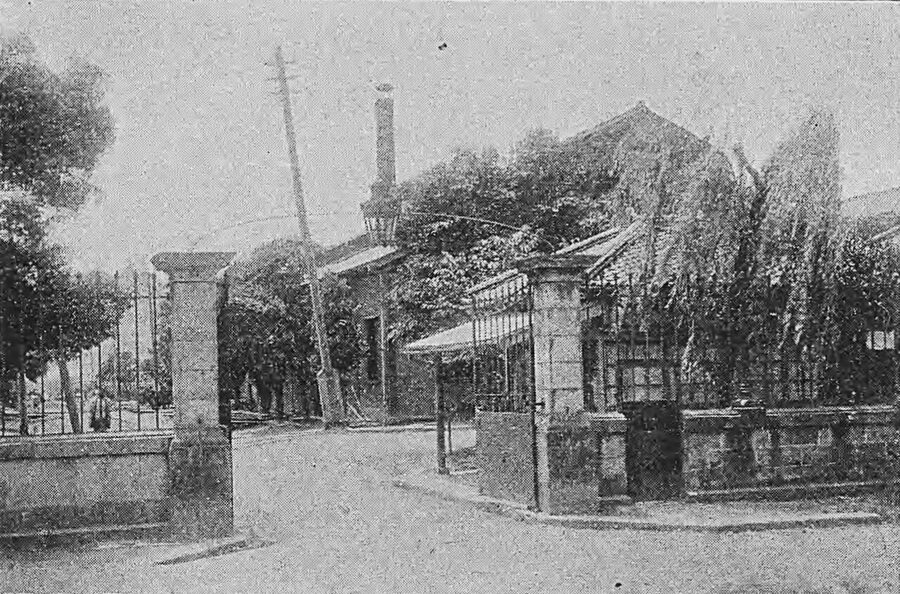
Foreigners were impressed. Ernest Satow, the British legation’s interpreter, met him at Osaka that spring and thought him “one of the most aristocratic-looking Japanese I have ever seen”. At home he pushed the court into sanctioning the opening of Hyōgo, the port near modern Kobe, and broke up a council of four great lords who had been brought to Kyoto to embarrass him over it. In doing so he convinced Satsuma that he could not be beaten by politics, and from the summer of 1867 Satsuma was planning a war.
The return of power at Nijō
The idea that held them off for a few weeks came from Tosa. Gotō Shōjirō, a senior retainer of the retired Tosa lord Yamauchi Yōdō, whose seat is the subject of the piece on Kōchi Castle, proposed that the shogun should hand the government back to the emperor and take his place in a council of lords. The scheme is often traced to Sakamoto Ryōma. For Yoshinobu it was a way to take away Satsuma’s excuse for war while keeping the reality of power, since a court with no money, no army and no administration would have to come to the Tokugawa to get anything done.
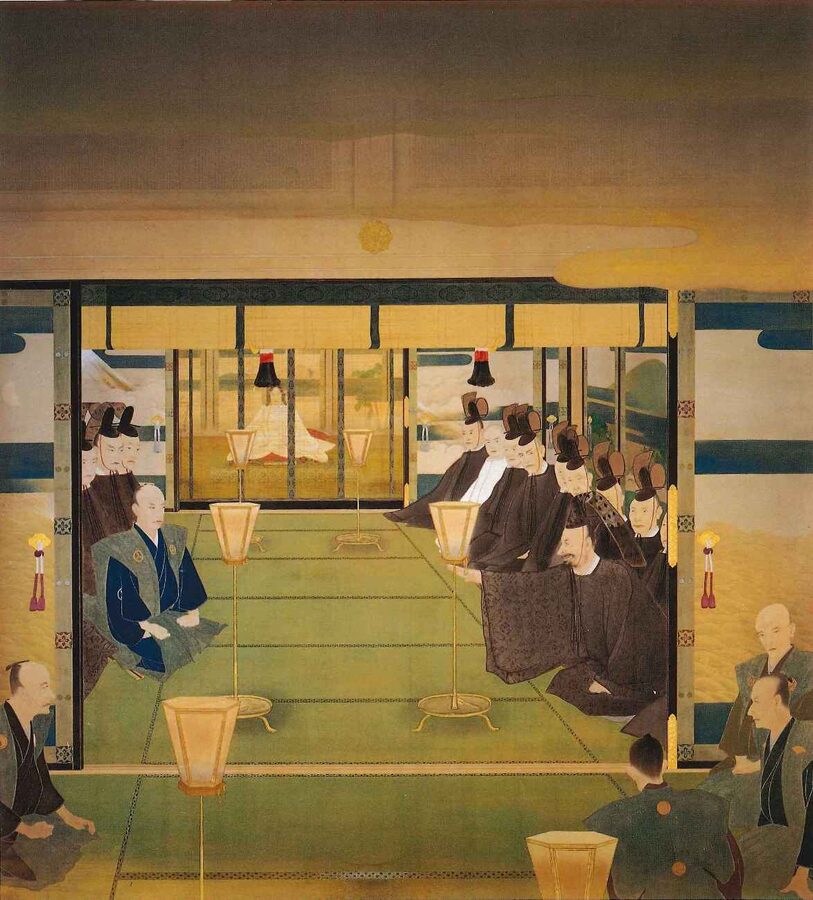
On the thirteenth day of the tenth month of 1867 he called the senior retainers of about forty domains to the Ōhiroma at Nijō and showed them the draft. On the fourteenth he sent the memorial to the court, and on the fifteenth it was accepted. This was the Taisei Hōkan (大政奉還), the return of government to the emperor; English-language accounts often date it to 9 November 1867, the Western date of the memorial, while Japanese reference works date it from the court’s acceptance the next day.
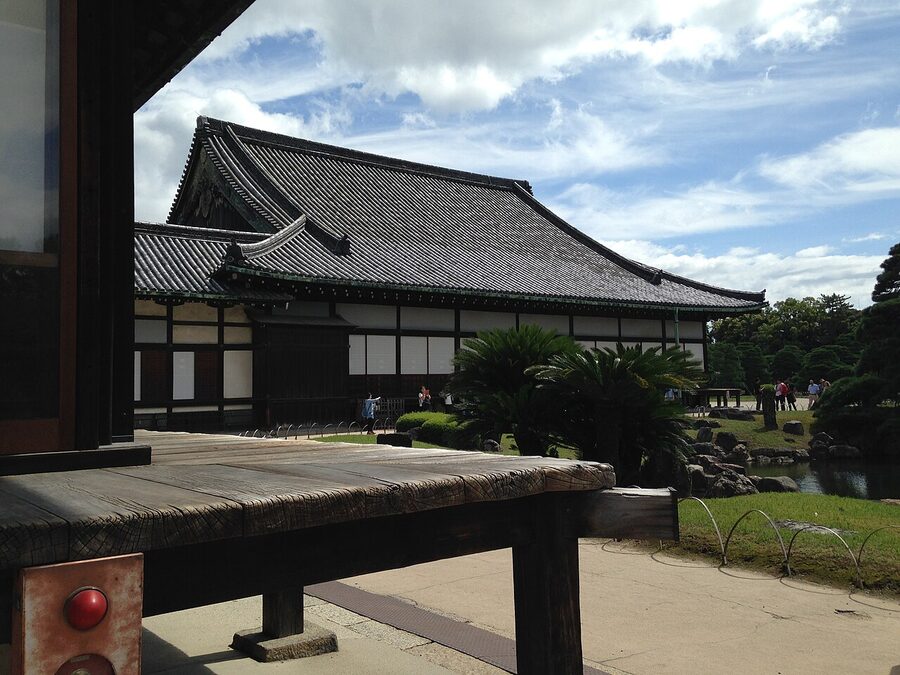
It very nearly worked. The court had to reply that ordinary business should carry on “as before, for the time being”, so Yoshinobu’s officials went on running the country. Ryōma is supposed to have said on hearing the news that he would gladly die for such a lord; the line comes from biographies written decades later, and Yoshinobu is said to have learned only in the Meiji years that Ryōma had existed. But on the very day the memorial went in, Satsuma and Chōshū obtained a secret imperial order to overthrow the shogunate, a document whose irregular form has led many historians to call it a forgery.
On the ninth day of the twelfth month, 3 January 1868, troops of Satsuma and four other domains took over the palace gates, and a council held that evening in the Kogosho proclaimed the restoration of imperial rule. The office of shogun was abolished outright, and the council demanded that Yoshinobu give up his court post and his family’s lands. Japanese sources usually date the end of his time as shogun to that day, though one standard historical dictionary gives the twelfth. Either way, the coup that became the Meiji Restoration left him a private man with an army.
Toba-Fushimi and the night boat
Even then he was winning, slowly. He withdrew to Osaka to keep Aizu and Kuwana from starting a fight in the capital, told the foreign ministers that he still spoke for Japan, and through the moderates of Echizen and Tosa got the demand for his lands softened. By the end of the twelfth month it was all but settled that he would join the new government’s council. Then news arrived from Edo.
After months of arson and robbery by Satsuma-backed gangs, the shogunate’s men in Edo had burned down the Satsuma mansion, and when the report reached Osaka Castle on the twenty-eighth the garrison could no longer be held. Yoshinobu gave way and sent an army north towards Kyoto with a denunciation of Satsuma, perhaps fifteen thousand men against something like five thousand from Satsuma and Chōshū, though estimates vary a good deal. On the third day of the first month of 1868, 27 January by the Western calendar, the column on the Toba road was refused passage on the southern edge of the city and fired on.
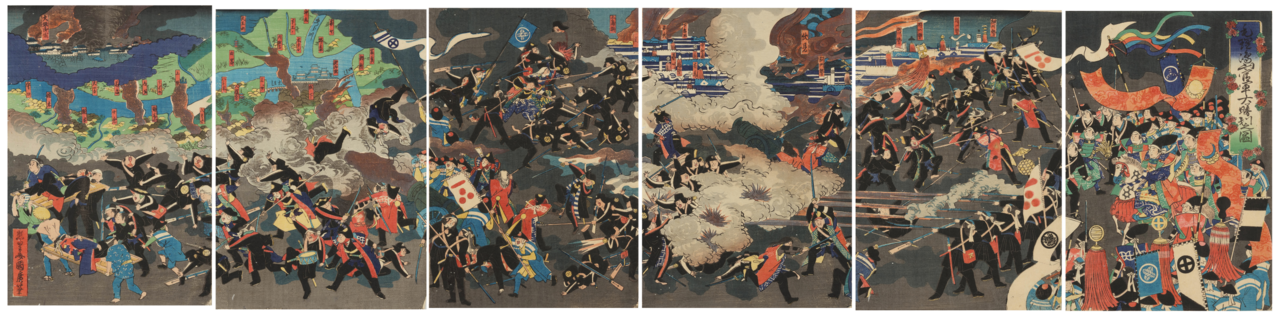
The shogunal army had the numbers and lost anyway. Its commanders were poor and its columns were strung out along narrow roads, while the Satsuma guns, with Saigō Takamori directing the war from behind the lines, were well handled. Aizu men in samurai armour fought beside French-drilled infantry who had never been under fire. On the fourth the government side raised the nishiki no mihata, the brocade banner of an imperial army, and from that moment the shogunal troops were formally rebels against the throne.
The neutrals read the signal. Yodo Castle, whose lord was one of the shogun’s own senior councillors, shut its gates on the retreating army, and on the sixth the Tsu domain’s guns at Yamazaki fired on the men they had been posted to support.
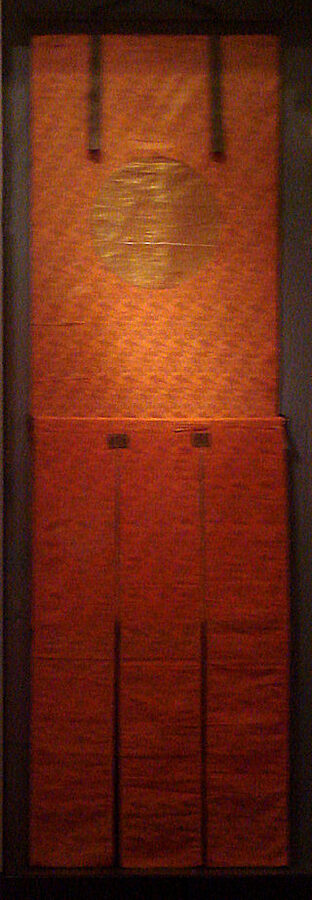
On the night of the sixth, Yoshinobu did the thing he is remembered for. Telling almost nobody, he slipped out of Osaka Castle with a handful of companions, among them Matsudaira Katamori of Aizu, his brother Matsudaira Sadaaki of Kuwana and the senior councillors Itakura Katsukiyo and Sakai Tadato, and was taken out to the warship Kaiyō Maru at the mouth of the river. Her captain, Enomoto Takeaki, was ashore, and nobody told him; the ship sailed without him. Yoshinobu’s enemies made sure the whole country heard that he left behind the golden fan standard that had gone to war with the Tokugawa since Ieyasu’s day, but remembered to bring his favourite concubine.
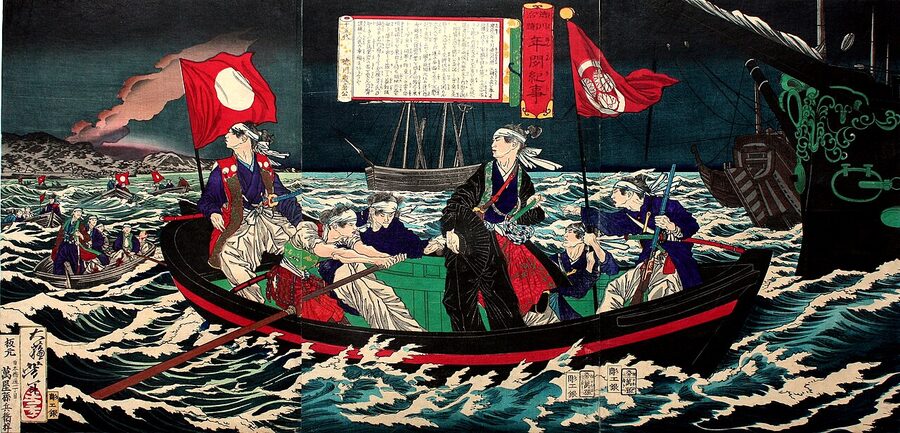
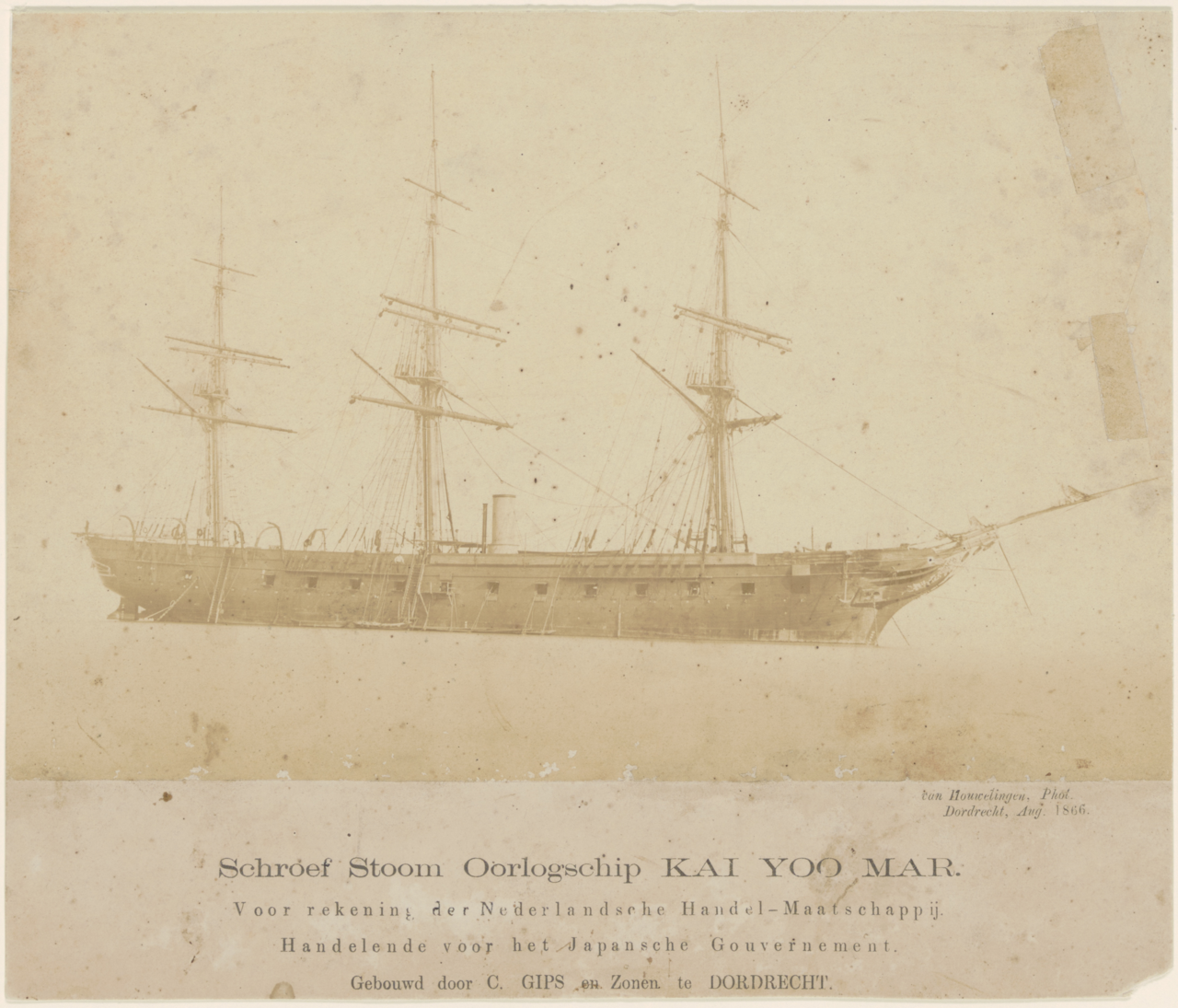
Why he ran is still argued about. In old age he said he had never wanted to send the army to Kyoto at all; others think he panicked, or meant to regroup in Edo; some recent historians argue that his government had rested entirely on holding the emperor’s authority, and once he lost it there was nothing left to fight for. The explanation I find most convincing goes back to Mito. Once the brocade banner went up, a son of Nariaki brought up on Mitsukuni’s house rule could fight Satsuma all day but could not take up arms against the throne, and when Itō Hirobumi later asked him why, he said he had merely kept the teaching he was given at home.
Eels, Edo and surrender
The Kaiyō Maru reached Edo on the twelfth, and this is where the eels come in. The court had already declared him an enemy of the throne and stripped him of his ranks, and the castle was full of men who wanted to fight on, Oguri loudest among them, with Roches offering French help. Yoshinobu refused, dismissed Oguri, and on the twelfth day of the second month moved into the Daiji-in, a sub-temple of Kan’ei-ji in Ueno, to sit in confinement and wait for the emperor’s judgement.
He left the negotiating to two old shogunal officials, Katsu Kaishū and Ōkubo Ichiō. The government army was marching up the Tōkaidō with orders to storm Edo on the fifteenth day of the third month, and on the thirteenth and fourteenth Katsu met its chief of staff, Saigō, at the Satsuma residences in the city. The castle, the warships and the arms would be handed over, Yoshinobu’s life would be spared, and Katsu got his place of confinement changed from Okayama to Mito.
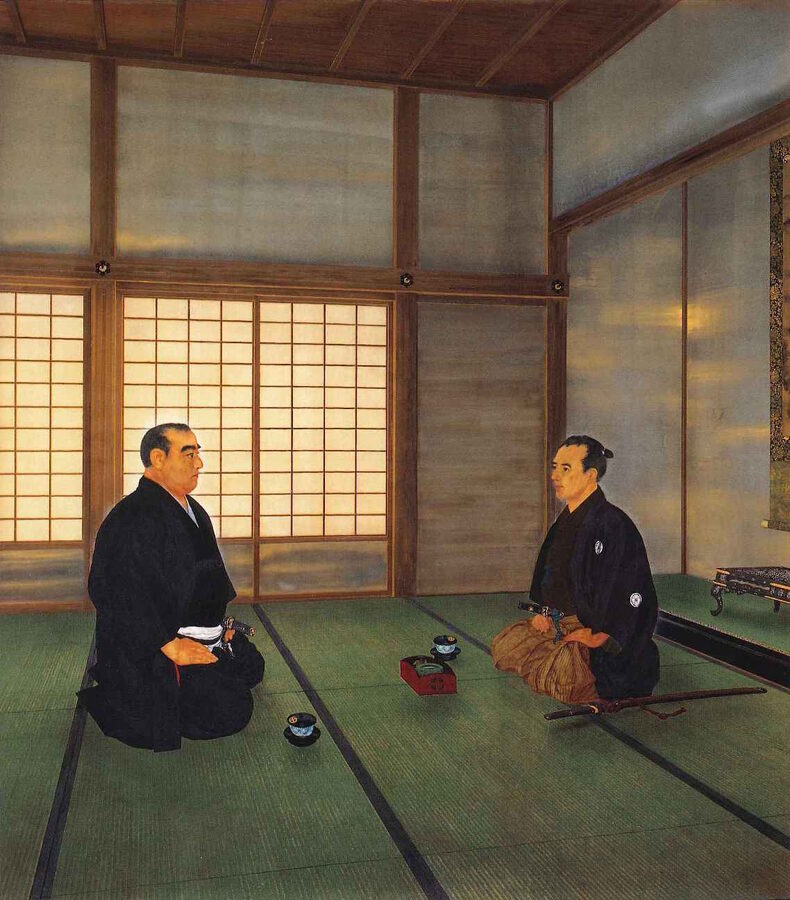
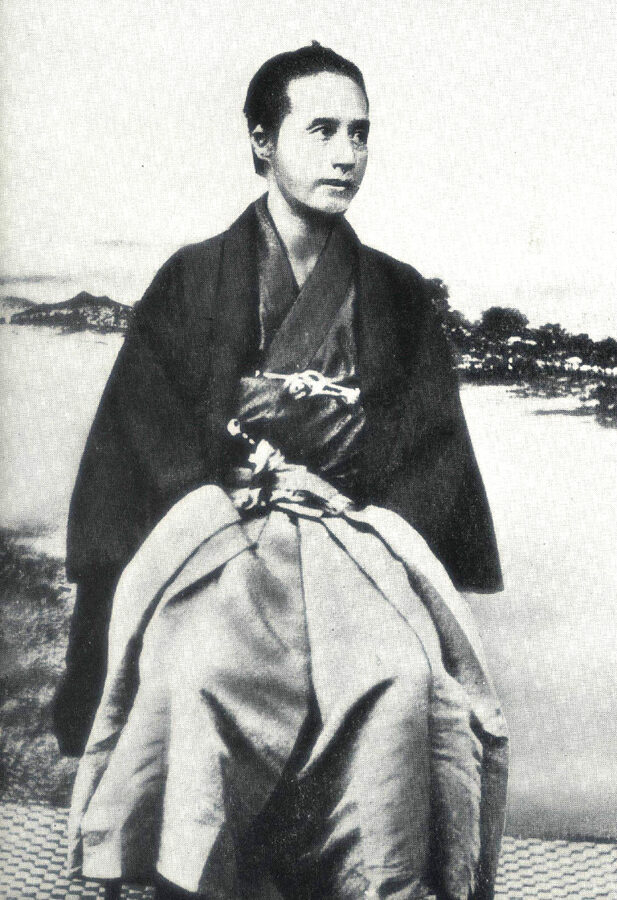
Edo Castle was handed over on the eleventh day of the fourth month, 3 May 1868 by the Western calendar, though English-language accounts often give the lunar date, 11 April, as though it were the Western one. Yoshinobu was meant to leave Edo on the tenth but had an attack of diarrhoea and went at dawn on the eleventh instead, walking out of Kan’ei-ji as the government’s troops walked into the castle. He reached Mito on the fifteenth and was shut up in the Shizendō, the lord’s wing of his childhood school. Two hundred and sixty-five years after Ieyasu was made shogun, his successor was a prisoner in a schoolhouse.
He did not stay long. Mito was in the middle of a vicious feud between its own factions, and the government decided it was no place for him; in the seventh month he was moved again, by sea and road by way of Nakaminato and Chōshi, and landed at Shimizu on the twenty-third. That evening he walked into Hōdai-in, a temple in Sunpu, the castle town where Ieyasu had retired two and a half centuries before. His heir had already been chosen: Tayasu Kamenosuke, a small boy born in 1863, renamed Tokugawa Iesato, was given the Tokugawa headship and a domain of 700,000 koku around Sunpu, which was renamed Shizuoka the next year.
Forty-five years of hobbies
He spent fourteen months in a room in the temple’s kitchen wing. Shibusawa, back from France, came to see him there late in 1868 and found that the former shogun wanted to hear about Europe and would not say a word against the new government; there was no point, he said, in going over it now. Released in the autumn of 1869, he moved into the old magistrate’s residence in Kon’yamachi, a few minutes from what is now Shizuoka Station. He was thirty-two.
Then he stopped. For thirty years Yoshinobu took no part in public life and avoided anyone who might drag him back into it; when Nagai Naoyuki, who had held office in Enomoto’s breakaway regime in Hokkaido, called in 1878, he refused to see him. Katsu wanted the former shogun quiet and out of Tokyo, and Yoshinobu let himself be kept. Shibusawa later remarked, with heavy irony, that some said Katsu feared his gilding as the saviour of Edo would peel off if Yoshinobu ever explained what had really happened, but that of course a man like Katsu could never have had so mean a motive.
What he did instead was everything else. The household stewards’ diary for 1872 alone records shooting, falconry, go, net-fishing and cormorant fishing, with noh chanting, the hand drum, Western painting, embroidery and shogi added from the next year. He hunted ducks and boar as far afield as the Amagi mountains of Izu, and when farmers complained that he was charging through their crops after birds, he is said to have replied, “Ah, is that so. Then buy the lot.”
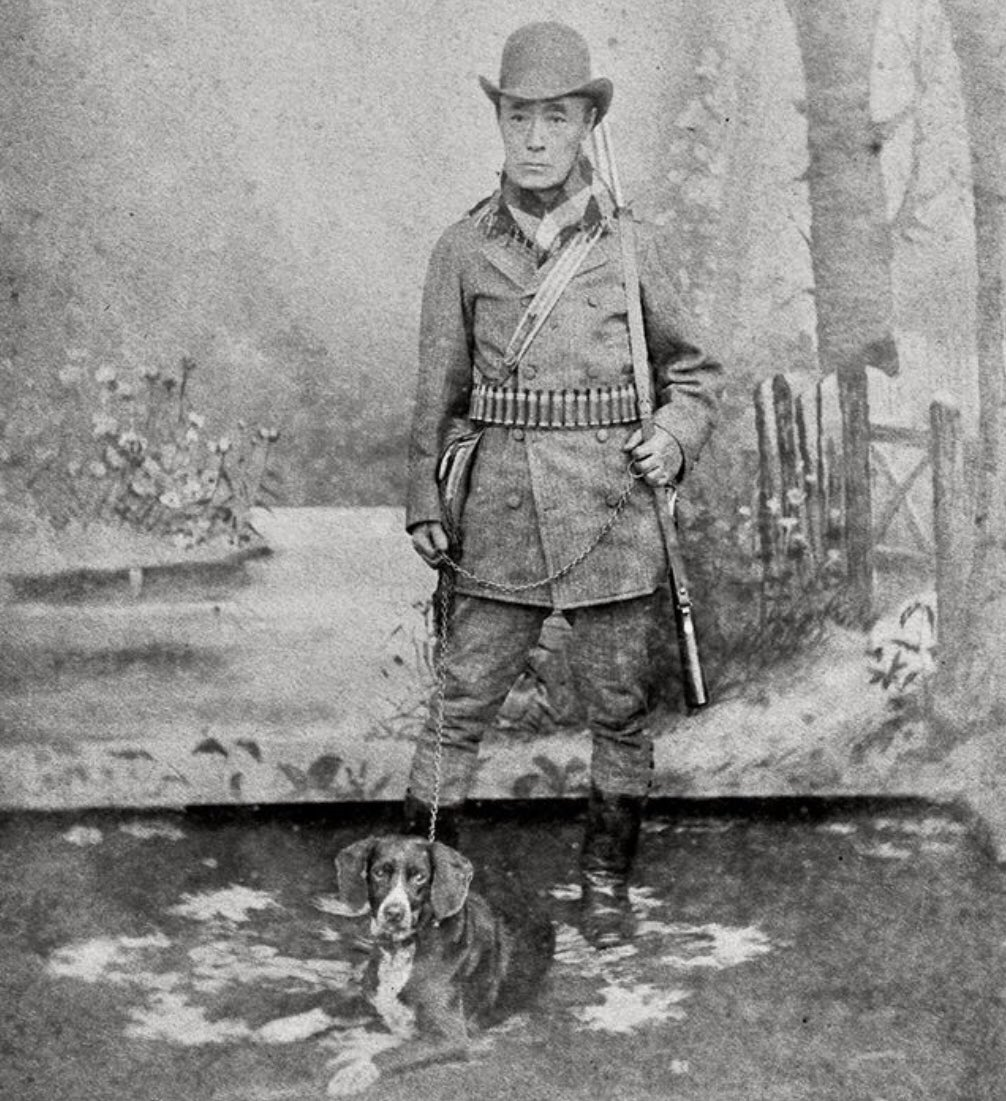
He took up the bicycle when there were hardly any in the country. Western bicycles are said to have reached Japan around 1881 or 1882, and he had one early, riding round Shizuoka while his retainers ran alongside; he gave four of them three yen each to buy proper shoes. He bought bicycles for his fourth and fifth sons as well, and they rode better than he did. There is a story that he once rode into a telegraph pole while admiring a pretty girl, which I mention only because it is the most human thing anyone ever said about a shogun.
He painted in oils, which he had started at Hōdai-in under Nakajima Kinjirō, a former shogunal retainer trained in Western drawing at the shogunate’s institute for foreign learning. Fewer than ten of his paintings are known. He built them up from several model pictures at once, so the perspective wanders and the shadows disagree, but the branches, rocks and folds of cloth are done with great care, and almost every landscape has a bridge in it. Japanese critics like to point out what a neat symbol that is for the man who carried the country from the old world to the new; I think he just liked bridges.
He played go well enough for one modern professional to put him at amateur four or five dan. The photographs came later, in the 1890s, when his legs were less willing to follow the hunt and dry plates had made cameras easier to carry. He learned from a Shizuoka photographer, Tokuda Takakichi, and took his camera to the river, the coast, the streets and his own garden, and because most of what he photographed was ordinary, his pictures are now one of the best records of Meiji Shizuoka there is.
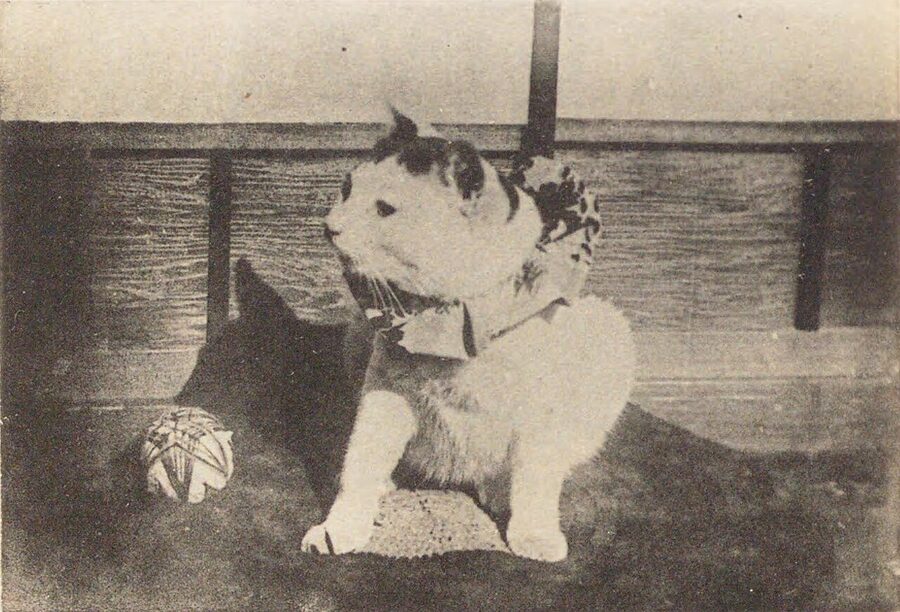
Was he any good? One of his pictures took second prize in a photographic magazine for the peerage. When a television programme showed it, unattributed, to the professional photographer Kanō Tenmei, he dismissed it as a pastoral scene with nothing in it to feel. I think that is about right and beside the point: a picture diary of Meiji Shizuoka, kept by its most famous resident, is worth more than another good photograph.
The household was large. Japanese accounts say he cut something like thirty concubines to two, Shinmura Nobu and Nakane Sachi, when he moved to Shizuoka, and between them they gave him ten sons and eleven daughters there. The first three boys died as babies, so from 1873 every child was sent out for three or four years to a commoner family, a gardener’s, a rice dealer’s, a stonemason’s, on the theory that a rough upbringing made strong children, and far more of them lived. His wife Mikako joined him in 1869, but the marriage went cold, and when she died in Tokyo in 1894 he was away in Yaizu taking photographs.
In 1888 the new Tōkaidō railway was routed through his house, and he moved to Nishikusabuka, cycling out often to watch the new house being built. In the spring of 1889, soon after the line opened, he took the train to visit his brother Akitake at Matsudo, and the two keen photographers saw each other every year after that. In the 1890s he also took to coffee.
The late return to honour
He moved to Tokyo in November 1897, first to Sugamo and in 1901 to a hilltop house at Kobinata in Koishikawa, not far from where he was born, because the railway was making a noise again. Katsu was old and failing, Yoshinobu’s health was no longer good, his youngest sons had gone to school in the capital, and the house at Nishikusabuka had been burgled; any of those would have done.
On 2 March 1898 he went to the palace and was received by Emperor Meiji, for the first time since the return of the government thirty years before. The next day he called on Katsu to thank him, and the old man, by his own account, wept with happiness. Katsu died the following January, and Yoshinobu, released from his keeper, began to enjoy himself. He cycled to Ginza to go shopping.
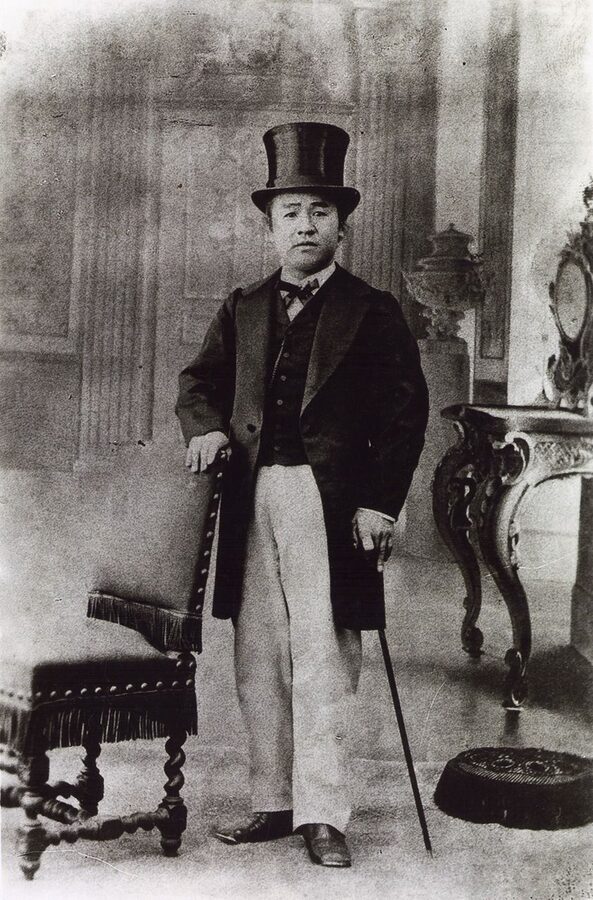
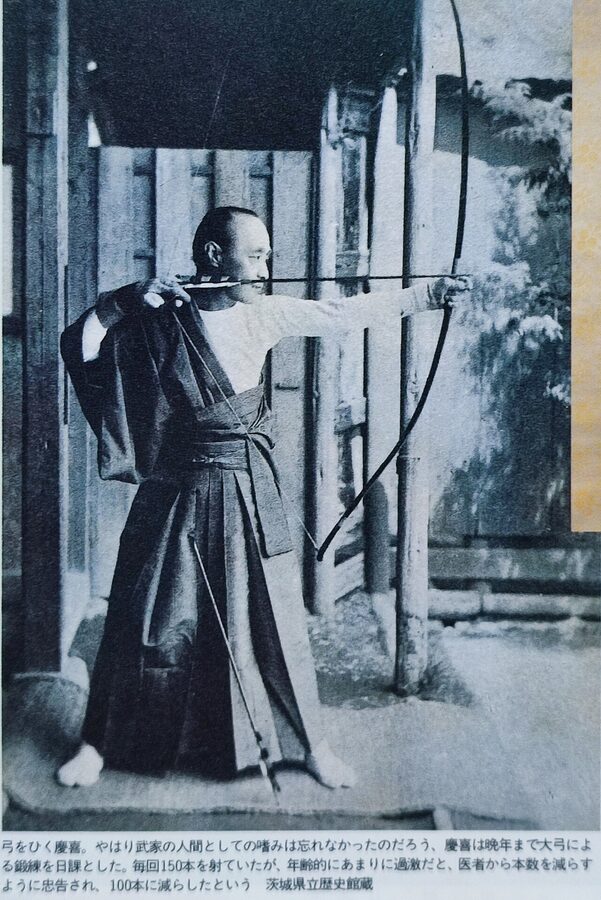
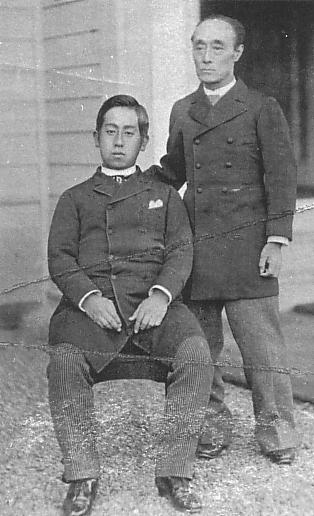
He made friends with the crown prince, Yoshihito, the future Taishō emperor, and the two of them called each other “Keiki-san” and “Your Highness”. The stewards’ diary shows him visiting the crown prince about ten times a year from 1900 onward, roughly every month or six weeks, which is more access to the imperial family than almost anyone outside it enjoyed. The former enemy of the throne had become the heir’s favourite old gentleman.
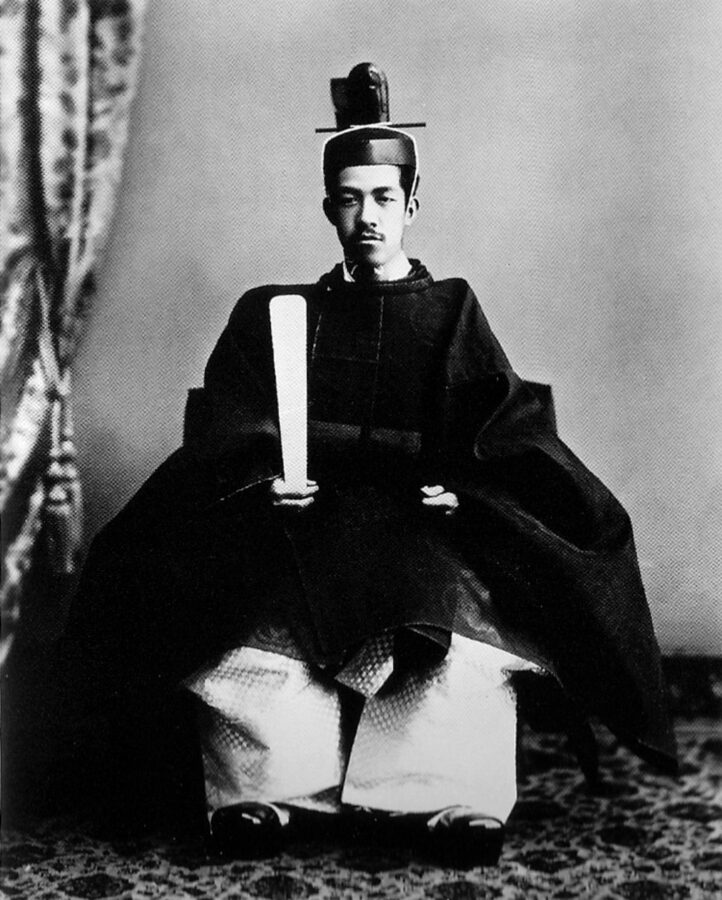
Tokyo fed his taste for new things. He had a telephone by February 1899, a month before the main Tokugawa house; a princely family gave him an ice-cream machine; and in June 1899 he went to the Kinkikan hall in Kanda to see moving pictures of the Spanish-American War, often called the first newsreel shown in Japan. In 1912 he acquired a Daimler, said to be a present from Prince Arisugawa Takehito, when only about 150 people in Tokyo owned a car.
The honours came in a rush. On 3 June 1902 he was made a prince, kōshaku, the highest rank of the peerage, and allowed to found a branch of the family separate from Iesato’s; under the rules a branch house should have been made a baron, so this was a deliberate favour, and his household kept 3 June every year afterwards as the anniversary of his rehabilitation. He took his seat in the House of Peers. In 1908 he received the Grand Cordon of the Rising Sun, explicitly for having returned the government in 1867, which was the Meiji state’s way of announcing that it had decided to count him on its side.
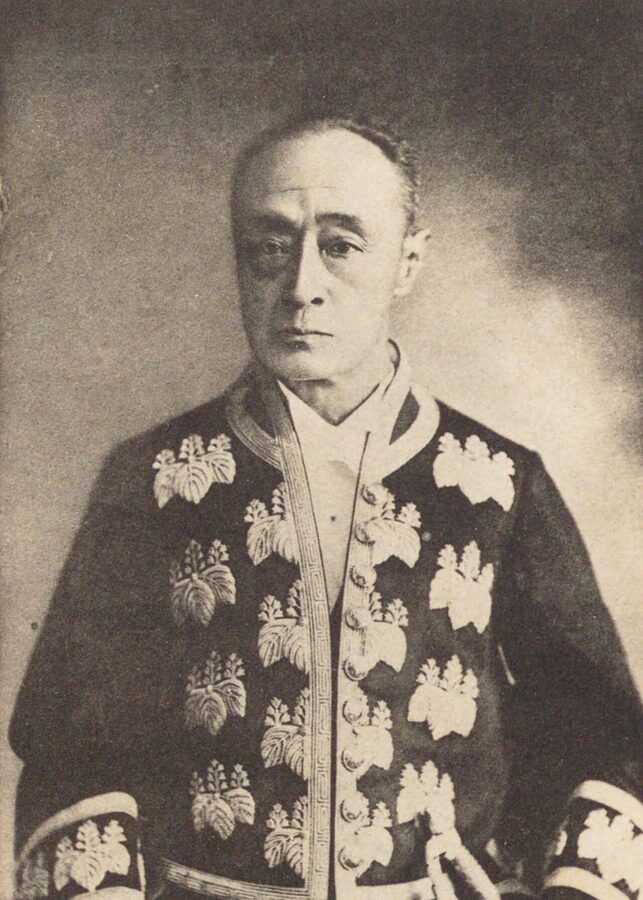
In his last years Shibusawa persuaded him, against some resistance, to sit for a series of interviews, the Sekimukai, in which he was surprisingly frank: he had not much liked Shimazu Hisamitsu, he thought Nabeshima Naomasa sly, and he could forgive Chōshū, an open enemy from the start, but not Satsuma, which had betrayed him. The eight-volume biography built on them came out in 1918. When Itō Hirobumi was assassinated at Harbin in 1909, Yoshinobu was on the platform at Shimbashi to meet the coffin.
He retired in December 1910 and passed the title to his seventh son, Yoshihisa. He outlived Emperor Meiji, who was fifteen years younger, and saw the Taishō era begin; he was alive when the Qing dynasty fell and when the Titanic sank. He died of pneumonia brought on by a cold at ten past four in the morning of 22 November 1913, aged seventy-six, or seventy-seven by the Japanese count, though some English-language accounts give the date as the 21st.
He had asked for a Shinto funeral rather than a Buddhist one, as thanks to the emperor who had pardoned him and made him a prince. So he was buried not with his predecessors at Zōjō-ji or Kan’ei-ji but in a plot at Yanaka, under a round mound modelled on the plain imperial tombs he had seen in Kyoto.
Coward, patriot, or something else
He has never been easy to like. His own side called the flight from Osaka desertion in the face of the enemy, and the line about the forgotten fan standard and the remembered concubine is the kind of thing that sticks. Saigō thought him able but short of decision. The patriotic literature of late Meiji, which wanted its heroes to die well and filled books on bushido with them, had little use for a shogun who lived to ride a bicycle, and you will not find him near the top of any list of Japan’s greatest samurai.
The case for him rests on what did not happen. A full civil war, with France behind one side and Britain leaning towards the other, could have burned Edo and Kyoto and invited foreign intervention, and it did not happen, because the man at the head of the bigger army refused to fight it. Shibusawa counted him among the greatest contributors to the Restoration for exactly that reason. Itō, who had expected little, told Shibusawa after a long evening’s talk that he was won over, because Yoshinobu explained why he had returned the government without once making himself the hero of the story.
My own view is that both sides are right, and that the two halves of his life explain each other. The young Yoshinobu was too clever, too sure of himself and too used to being begged, and the politician who outmanoeuvred Satsuma for a year had no answer to an enemy who simply brought out a banner. But once the game was lost he played the losing hand better than almost anyone in Japanese history, then had the sense, which hardly anyone in his position ever has, to go home and take up hobbies. In the long walk through Japan through the ages, he is the hinge between the Edo era and the Meiji era.
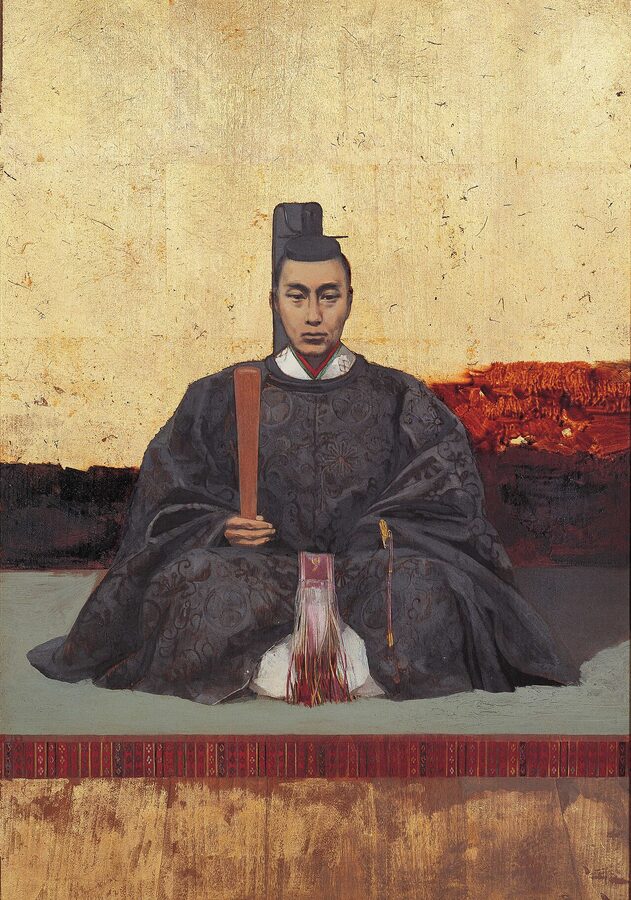
Where to see Tokugawa Yoshinobu today
His life left a trail from Mito to Kyoto, Shizuoka and back to Tokyo, and you can follow almost all of it by train. The places that repay the trip are the Kōdōkan, Nijō Castle and the Shizuoka sites; Tokyo has the grave and a scatter of smaller places that make a good half-day.
Mito: the Kōdōkan
The Kōdōkan is about eight minutes’ walk from JR Mito Station, and it is the one place where you can stand in rooms Yoshinobu actually lived in. Nariaki founded it in 1841 as the largest domain school in the country, and its main gate, the Seichō (the formal hall) and the Shizendō survived the bombing of 1945 and are Important Cultural Properties. The Shizendō was the wing kept for the lord’s own use, and its principal room is where the former shogun spent about four months of 1868 in confinement.
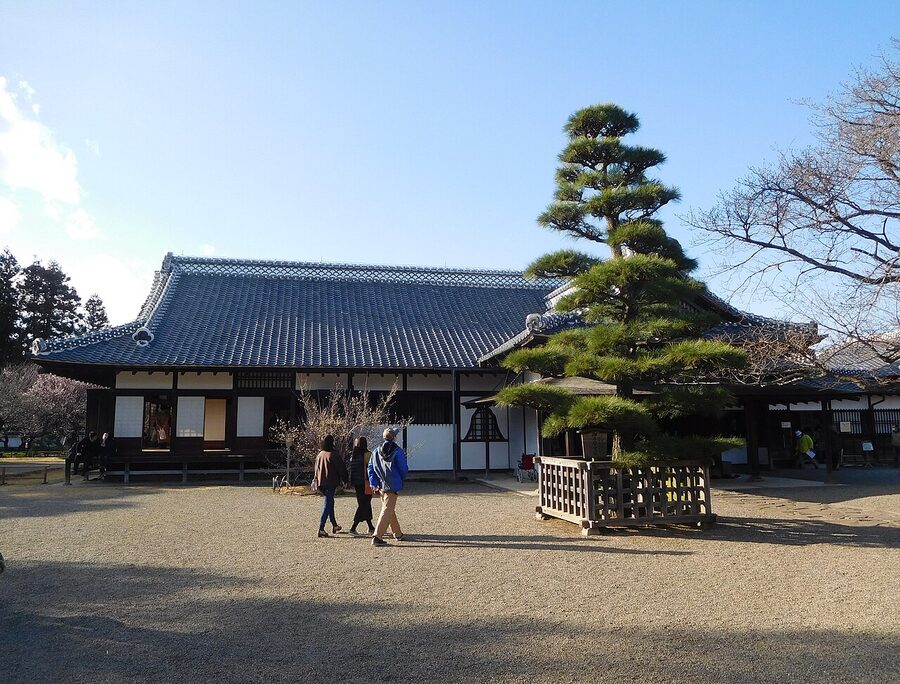
Admission is ¥420 for adults and ¥210 for children and for anyone over seventy. It opens at 9:00 and closes at 17:00 from mid-February to the end of September and at 16:30 for the rest of the year, and the only days it shuts are 29 to 31 December. Kairakuen, the garden Nariaki made as the school’s partner, a place for rest as the Kōdōkan was for study, is a short bus ride west and appears in the guide to Japan’s greatest gardens.
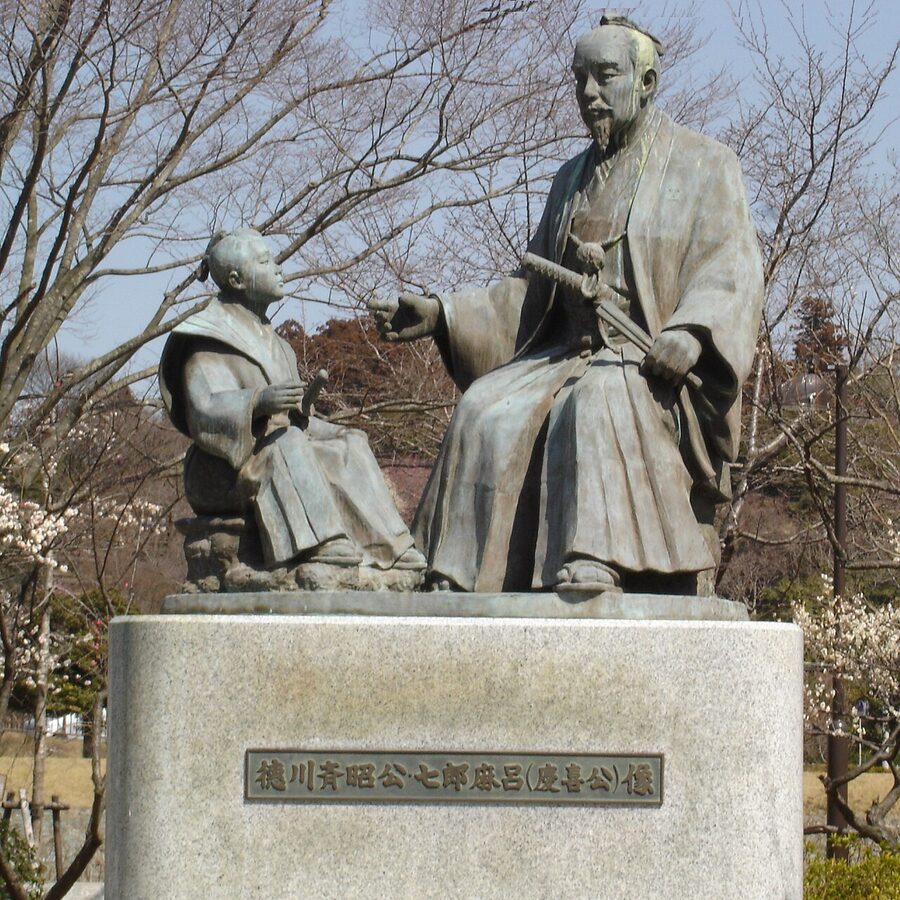
Down by Lake Senba, in Senba Park, there is a statue of Nariaki seated with the boy Shichirōmaro beside him. It is not great art, but it is the only statue I know of that shows the last shogun as a small boy being told what to do, and I think that is worth a short walk.
Kyoto and Osaka
Nijō Castle has its own article; read it before you go. The one-way route through the Ninomaru Palace, where Yoshinobu was appointed and where he gave the government back, takes you past the Ōhiroma. Entry is ¥1,300 for the grounds and the Ninomaru Palace together, or ¥800 for the grounds alone; the castle opens at 8:45, takes its last visitors at 16:00 and closes at 17:00, and it shuts only from 29 to 31 December, though the palace has extra closures in winter and summer. Nijōjō-mae Station on the Tōzai subway line is a two-minute walk from the east gate.
Osaka Castle has nothing of his left: the palace and almost all its turrets burned three days after he sailed, and the keep is the city’s 1931 reconstruction. Stand on the stone walls anyway and look west towards the sea, the way he went. South of Kyoto, the battle is marked by a stone monument in Toba Rikyū Park, near where the first shots were fired, and you will very likely have it to yourself.
Shizuoka
Shizuoka is where you understand the second half of his life, and it is compact. Fugetsuro (浮月楼), the restaurant and banqueting house that now occupies his Kon’yamachi residence, is three minutes’ walk from the north exit of JR Shizuoka Station, and the pond garden is the one he made. The house says he lived here for about twenty years and that the garden was laid out by Ogawa Jihei; since the famous seventh Ogawa Jihei was nine years old in 1869, I suspect a different generation or a later hand, but the bones of the garden are Yoshinobu’s, and the site is registered as a Place of Scenic Beauty.
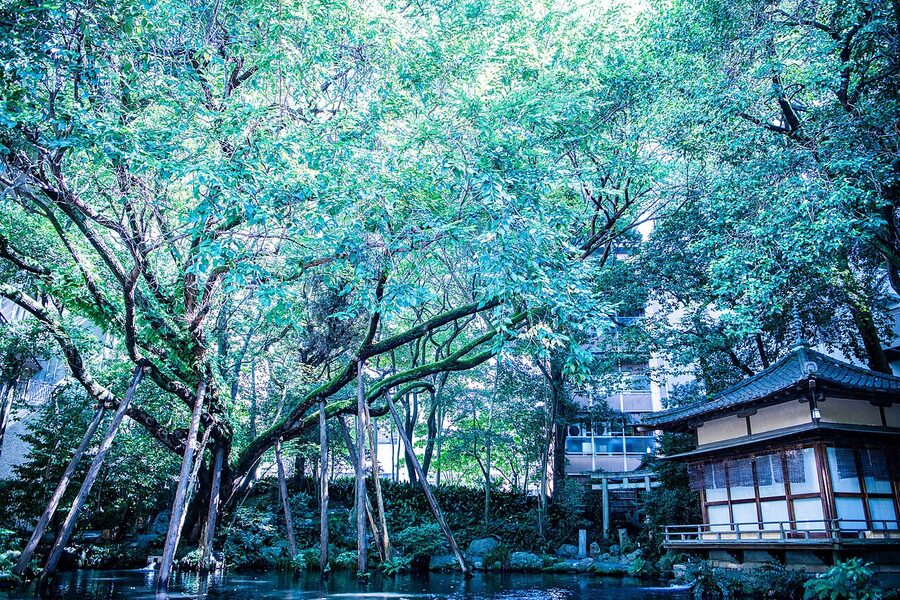
Fugetsuro is a working restaurant and wedding venue, so check its website first. The easiest way in is the café, which takes orders from 11:00 to 16:30 on weekdays, usually Tuesday to Friday; Shogun coffee is ¥990, and an afternoon tea set ¥4,500 a head for two or more. Given that he took to coffee in the 1890s, the name is less silly than it sounds, and the tea house by the pond keeps the older habit, the tea ceremony, in view.
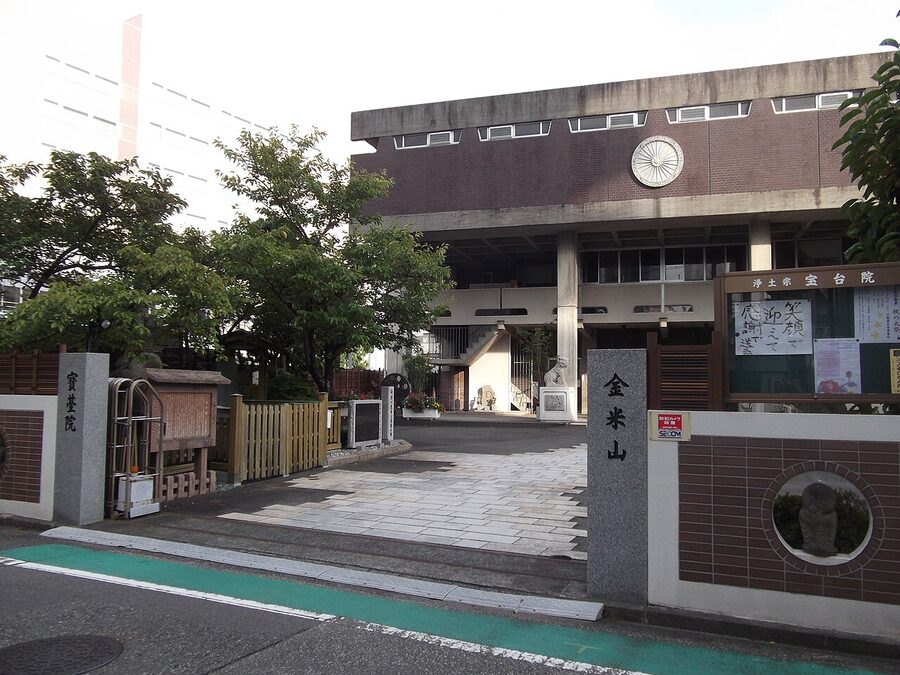
Hōdai-in (宝台院), where he was confined on arrival, is in Tokiwachō in the city centre. It was the family temple of Saigō no Tsubone, mother of the second shogun Hidetada, whose grave is here, and it keeps a white Amida said to have been Ieyasu’s own devotional image, an Important Cultural Property. At the time of writing it was open for viewing from 9:00 to 16:00, last entry 15:40, closed on Mondays, at ¥500 for adults; it is a working temple, so check before you go.
The second house at Nishikusabuka, where he lived from 1888 to 1897, became a hotel and is now covered by a church and a girls’ school, so there is nothing to see.
Matsudo: Tojo-tei
Tojo-tei (戸定邸), Akitake’s house in Matsudo, is the only Meiji residence of the Tokugawa family to survive almost complete: nine buildings, twenty-three rooms, opened in 1884 and now an Important Cultural Property. It is about ten minutes’ walk from the east exit of Matsudo Station, around seventeen minutes from Ueno by JR. The Tojo Museum (戸定歴史館) beside it shows, in rotation, Akitake’s belongings, material from the Paris mission, old photographs and objects Yoshinobu kept with him until he died.
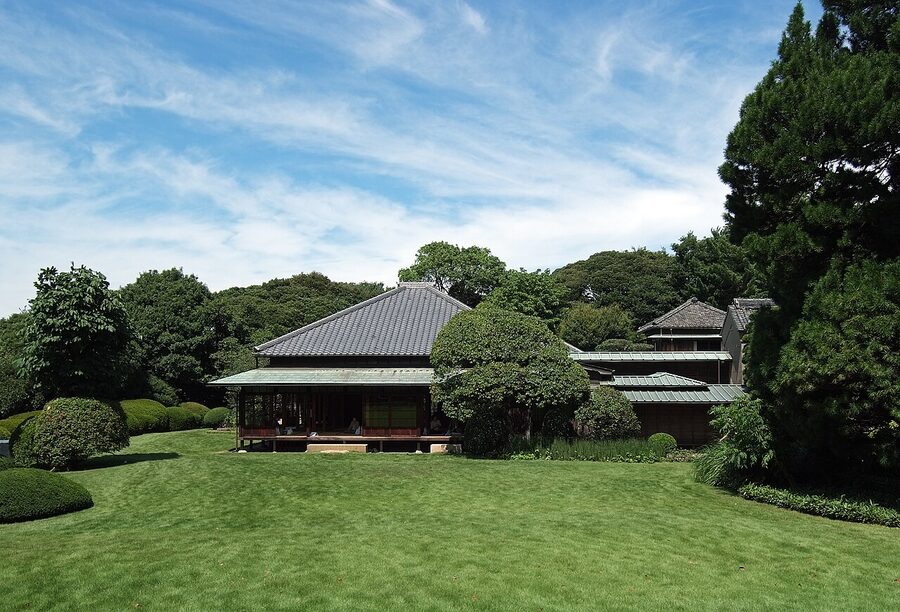
Entry is ¥250 for the house, ¥150 for the museum or ¥320 for both. Both open 9:30 to 17:00, with last entry at 16:30, and close on Mondays (the following weekday if Monday is a holiday) and from 28 December to 4 January. The house has no air conditioning, so in August go early.
Tokyo
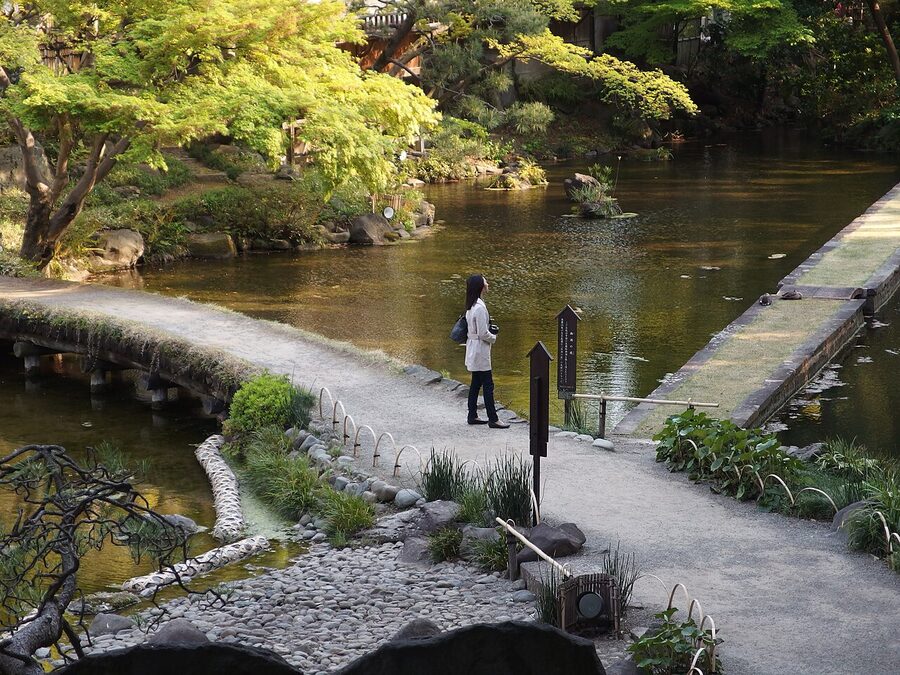
Start at Koishikawa Kōrakuen, the garden of the Mito mansion where he was born. The house has gone and the noise from next door is the Tokyo Dome, but the garden is a good introduction to the principles of Japanese garden design. Entry is ¥300, or ¥150 if you are over sixty-five; it opens 9:00 to 17:00 with last entry at 16:30, closes from 29 December to 1 January, and the west gate is three minutes from exit C3 of Iidabashi Station on the Ōedo line.
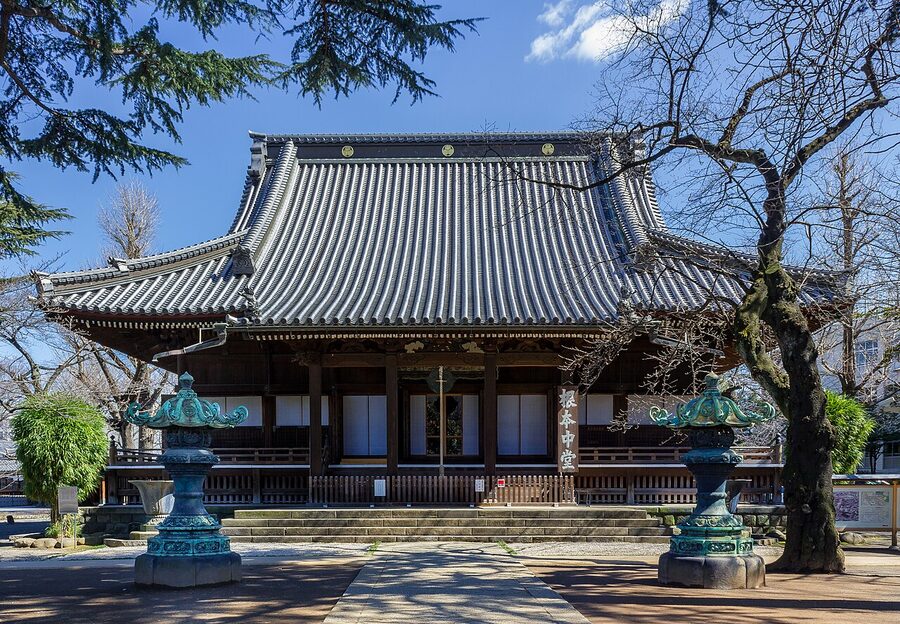
At Kan’ei-ji in Ueno, the Aoi-no-ma, the room in the former Daiji-in where he sat in confinement, survives inside the temple’s present head office with some of his belongings, but it opens only on special occasions announced on the temple’s website. The mausoleums of six shoguns, among them Tsunayoshi, the dog shogun, are also normally closed. The temple grounds are open from 9:00 to 17:00, a pleasant walk through Ueno Park from the station.
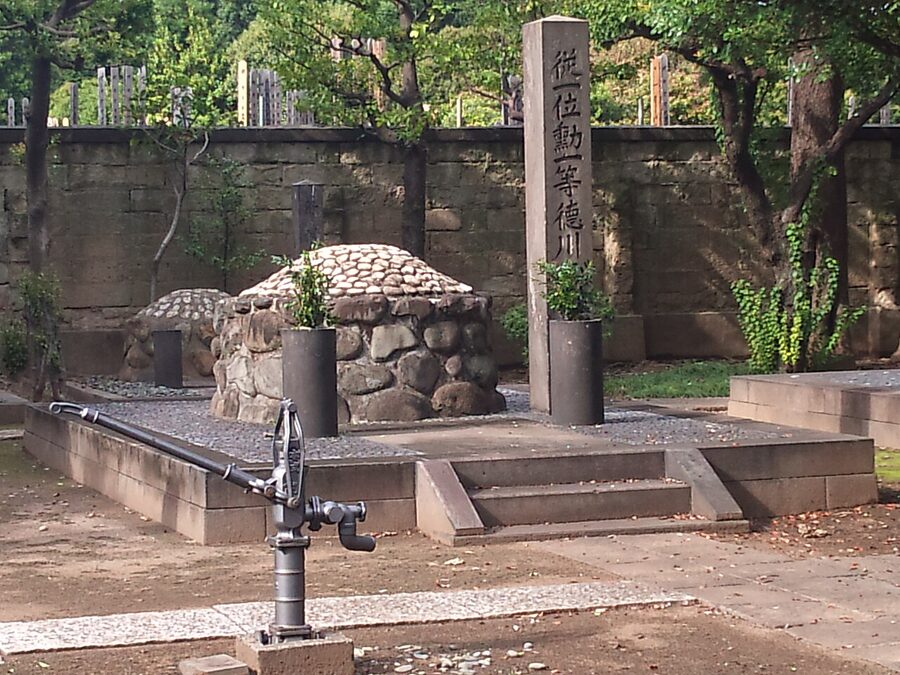
His grave is in the part of Yanaka Cemetery that belongs to Kan’ei-ji, about six minutes’ walk from Nippori Station. It is a Tokyo-designated historic site, kept locked, so you look through the railings; his wife Mikako lies in the same plot. His great-great-granddaughter, fifth head of the Yoshinobu house, has announced that the line will end with her, and Japanese reports say care of the grave is to pass to Ueno Tōshōgū. Shibusawa is buried in Yanaka too, which seems right.
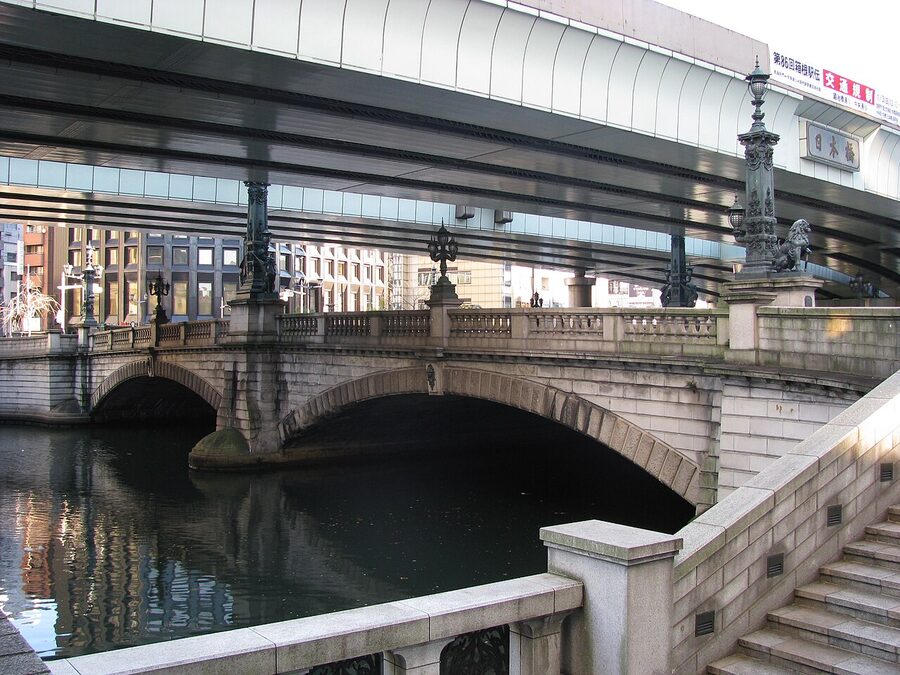
The site of his last house, in Kasuga 2-chōme in Bunkyō ward, is now occupied by a Buddhist graduate school, but a great ginkgo from his day still stands; it is about fifteen minutes’ walk from Myōgadani Station on the Marunouchi line. On the way back into town, stop at Nihonbashi. The bridge-name plates on the stone bridge of 1911 carry the characters 日本橋 in his hand, and Japanese accounts say a pillar from the earlier bridge, also bearing his calligraphy, is kept at Mukōjima Hyakkaen garden.
Further afield
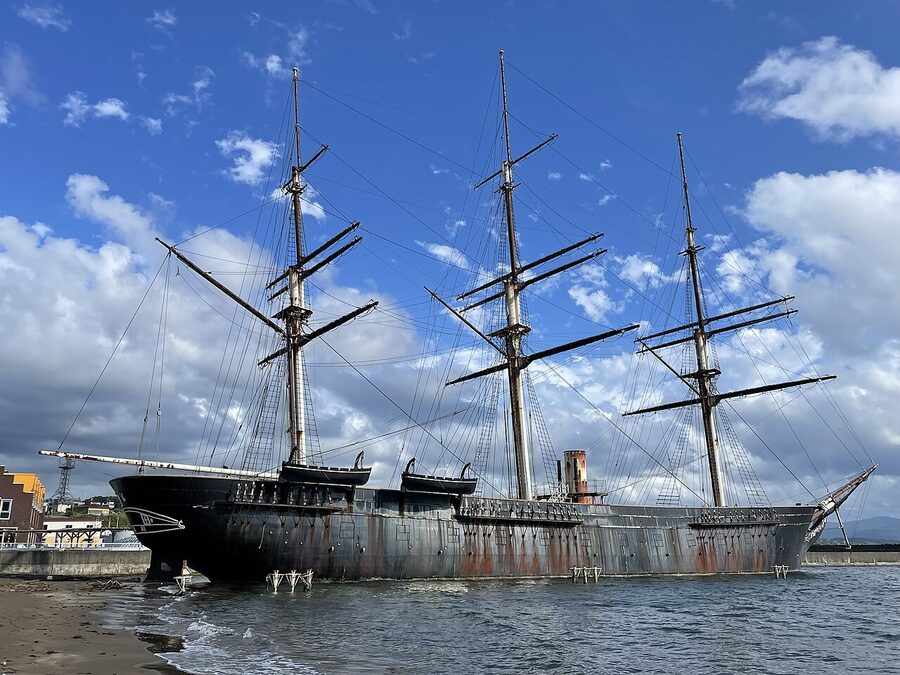
If you are in Hokkaido, the town of Esashi has a full-size replica of the Kaiyō Maru, moored where the original went down in 1868. In Yokosuka, the waterfront park named after Léonce Verny looks across at the docks his engineers began for the shogunate.
If you are in Shizuoka at lunchtime, Fugetsuro will feed you within sight of the garden he made, and that seems the right way to remember him: not in a castle or on a battlefield, but sitting down to eat in a garden he chose to stay in. I have never seen eel on the café menu. He would have sent out for it anyway.