The most famous picture of the Mongol invasions of Japan shows a samurai about to die. His horse is pouring blood from two wounds, arrows are flying past his helmet, and directly above him a black iron ball is bursting into flame. Facing him are three Mongol foot soldiers with bows drawn, and those three men were very probably painted in by somebody else, centuries after the battle.
The samurai is Takezaki Suenaga, a landless warrior from Higo who survived that afternoon on the beach at Hakata in 1274 and then did something much braver. Nobody paid him for being shot, so he sold his horse and saddle, rode the length of Japan to Kamakura and asked the government in person for his reward. The scroll he later commissioned is the only picture of the invasions made by someone who was there, and it has been touched up, rearranged and argued over ever since.
I keep coming back to the Mongol invasions because almost everything people think they know about them works like that picture. There is a documented core (letters, diaries, wrecks on the seabed, a stone wall you can still walk along) and a thick later coat of paint: the bombs that frightened every horse, the samurai who only knew single combat, and above all the divine wind. What follows is Kublai Khan’s two attempts on Japan as close to the record as I can get, with the paint marked as paint, and the places where you can stand on both today.
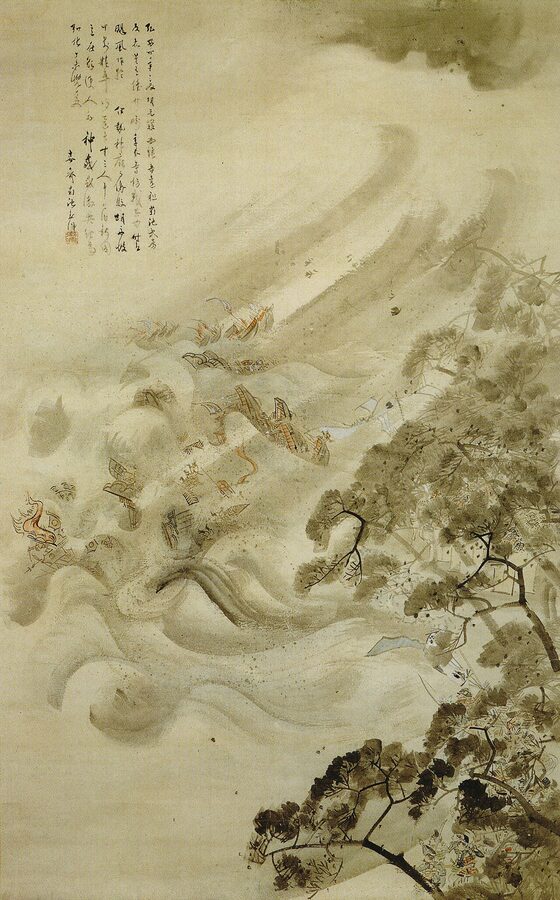
If you have arrived from my run-down of Japan’s most decisive battles, this is the one where the decisive party was supposedly the weather. It sits in the middle of the Kamakura era, and it is the only serious attempt by a foreign power to conquer Japan before the 20th century. For the wider frame, see my walk through Japan through the ages.
In This Article
- Letters from the Great Khan
- Bun’ei, 1274: one day on the beach
- Tsushima and Iki
- Hakata Bay
- Bombs, drums and a laughing army
- Why the fleet left
- Seven years of waiting
- Kōan, 1281: the two fleets
- The wall holds
- Shikanoshima and the night raids
- The Southern fleet arrives late
- The storm
- Takashima
- What the seabed says
- Takezaki Suenaga rides to Kamakura
- The bill for winning
- How a wind became divine
- Where to see the Mongol invasions today
- The Genkō bōrui, Fukuoka
- Hakozaki-gu
- Higashi Park: Kameyama, Nichiren and the Genkō Shiryōkan
- Shikanoshima and the Mōkozuka
- Tsushima: Komodahama
- Iki: Shinjo and the thousand-man mounds
- Takashima
- Kamakura: Engaku-ji, Jōryū-ji and Tatsunokuchi
Letters from the Great Khan
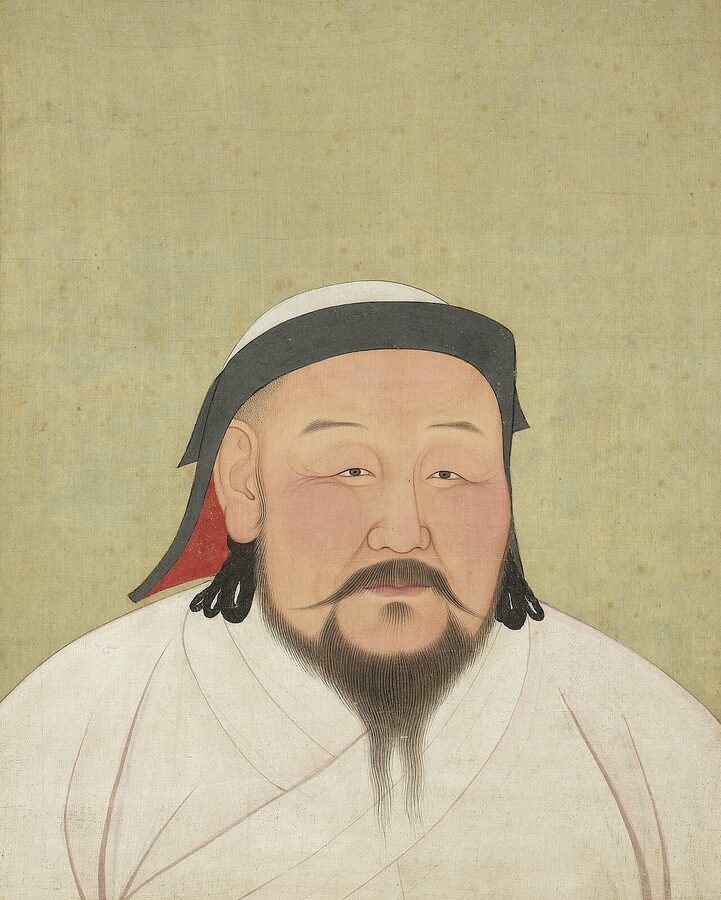
The trouble began with a Korean. In 1265 a Goryeo-born official at the Mongol court, Zhao Yi, told Kublai Khan that Japan lay next door to Korea, had sound laws and had sent envoys to China since the Han and Tang. Kublai, who already held Korea and was grinding his way into Song China, decided that Japan ought to send envoys again, this time to him.
His letter is dated the eighth month of 1266 and it is a masterpiece of the velvet glove. It addresses the “King of Japan”, calls Korea “our eastern tributary”, and observes that Japan has not yet sent anyone to his court. It closes by asking who would wish to resort to arms, which is the kind of question that answers itself.
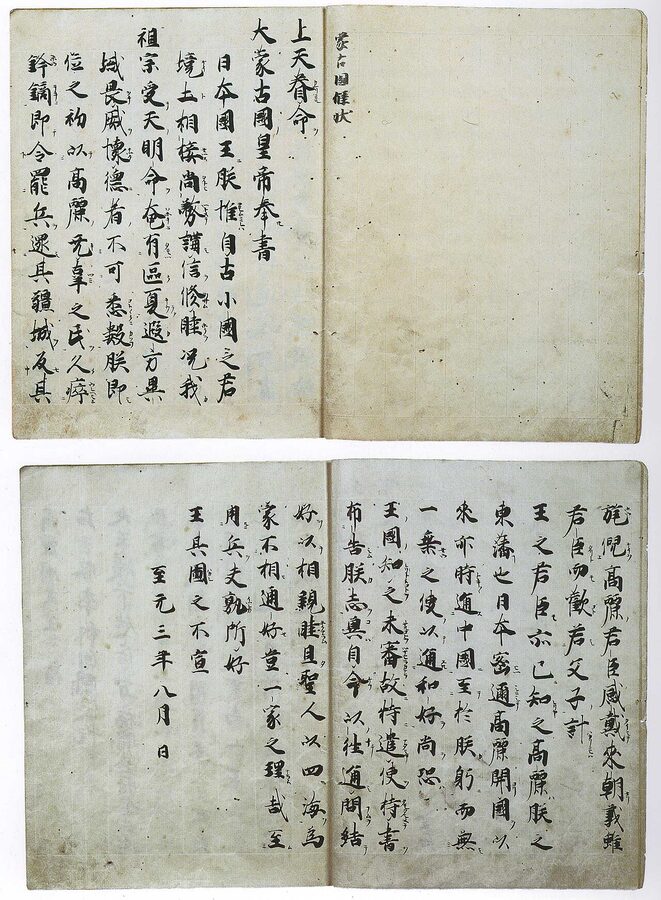
The first envoys got only as far as Geoje Island off the Korean coast, where their Goryeo guides pointed at the rough strait and told them the Japanese of Tsushima were violent and the trip was not worth it. Kublai was not amused. In the first month of 1268 a Korean envoy, Pan Bu, finally delivered the letter to Dazaifu, the government headquarters for Kyushu.
The man who had to answer it was Hōjō Tokimune. He became regent in the third month of 1268, at sixteen by Western reckoning, and from then until his death the Mongols were the defining fact of his life. The shogun in Kamakura was a figurehead and the emperor in Kyoto handled foreign letters by tradition, but real power sat with the Hōjō, who had run the warrior government founded after the Genpei War since the death of its founder, Minamoto no Yoritomo.
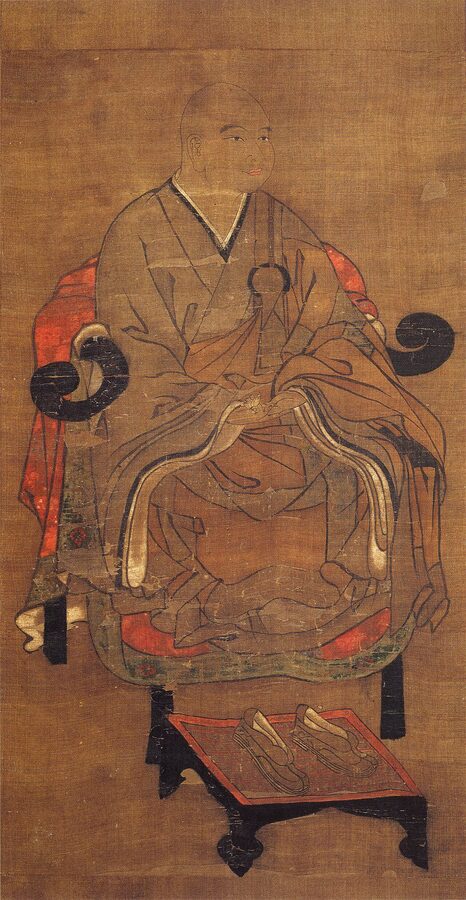
What he did was nothing, very firmly. Kamakura passed the letter to the court, the court debated it for days, and the warrior government told the vassals of the west to be on guard. Song Chinese monks, who had fled to Kamakura ahead of the Mongol armies and knew what a Mongol conquest looked like, are said to have pressed the same point.
The court did draft a reply. Its scholar Sugawara no Nagashige wrote that nobody in Japan had heard of the Mongols, and that Japan, ruled by the line of the sun goddess Amaterasu, had long been called the land of the gods, which could be neither outwitted nor overpowered. Kamakura decided that no reply should be sent at all, and the court gave way. Hold on to that phrase about the land of the gods, and the throne whose regalia I describe in Japan’s three sacred treasures: it comes back.
The last of the pre-war envoys was Zhao Liangbi, a Jurchen official who landed on Hakata Bay late in 1271 with about a hundred men. Refused passage beyond Dazaifu, he spent most of a year there, quietly noting ranks, provinces, customs and products. His report is the most candid Mongol document in the story: the Japanese were fierce and fond of killing, the country was all mountains and poor farmland, and invading it would be like using good men to fill a bottomless ravine.
Kublai listened, for about a year. In 1273 his armies took Xiangyang after a five-year siege, Song China began to crumble, and in the first month of 1274 Goryeo was ordered to build three hundred large warships at speed. Korean records say the demands came like thunder and lightning and the people suffered greatly.
Japan was not quite the Mongols’ first sea crossing. From 1264 Mongol forces had crossed to Sakhalin to fight the Ainu, so somebody at Kublai’s court already knew what a cold strait could do to a plan.
Bun’ei, 1274: one day on the beach
The fleet sailed from Happo, near modern Masan in Korea, on the 3rd day of the tenth month of 1274, the 11th year of the Bun’ei era. Japanese reference works give about 20,000 Mongol, Chinese and Jurchen troops and about 8,000 Koreans, some 28,000 fighting men in all, with Korean sailors on top, in 726 to 900 ships. Among the commanders were the Chinese general Liu Fuheng, the Korean-born Hong Dagu, whose family had gone over to the Mongols a generation earlier, and Kim Bang-gyeong at the head of the Korean contingent.
Tsushima and Iki
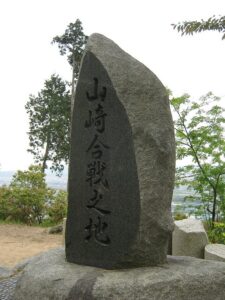
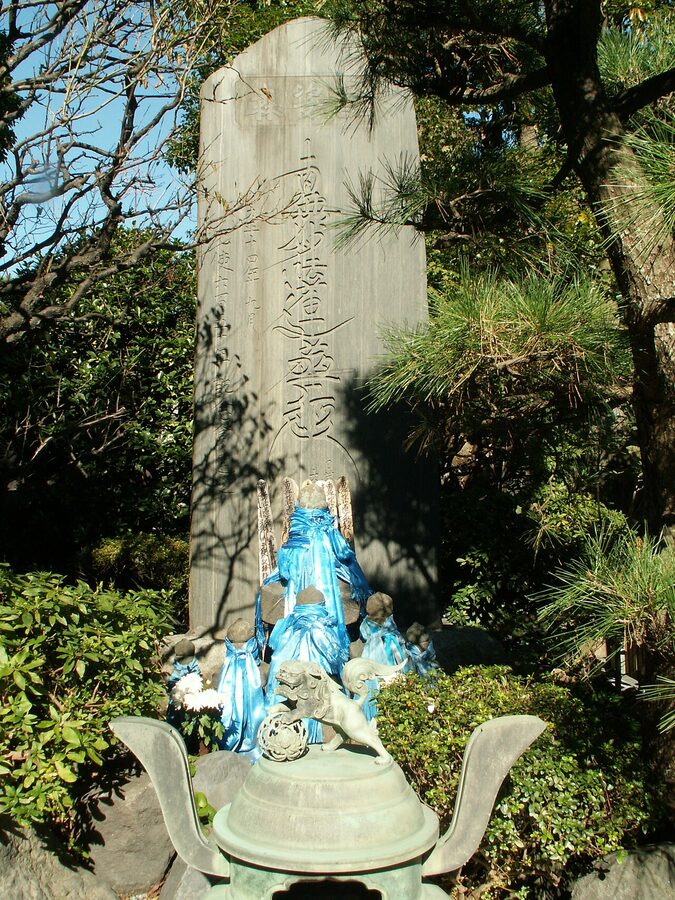
They reached Tsushima on the 5th day of the month, at the beach of Komoda on the island’s south-west coast. The deputy governor, Sō Sukekuni, rode over the mountains overnight with about eighty horsemen, sent an interpreter to ask the strangers their business, and got arrows by way of an answer. He, his son and every man with him were killed, and the village of Sasuura was burned.
What happened to the islanders is told mainly by Nichiren, the firebrand monk, in a letter written two years later from hearsay. He says the men were killed or taken and the women had their hands pierced and were strung along the sides of the ships. Japanese historians have argued since the 1890s whether that means pierced palms or bound wrists; either way, Korean records confirm that many captives were taken, and two hundred Japanese children were later presented to the Korean king and his Mongol queen.
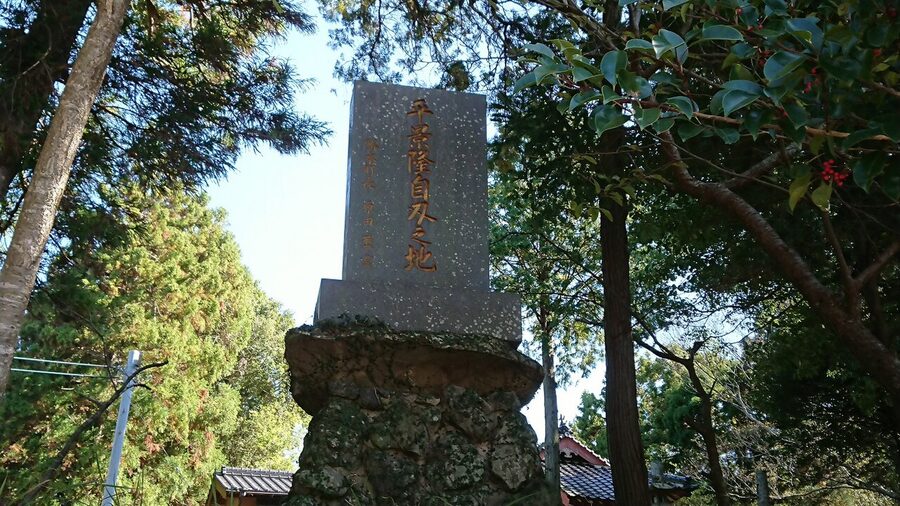
Iki came next, on the 14th. The deputy governor, Taira no Kagetaka, met the landing with about a hundred riders, fell back to his castle at Hizume, and the next day killed himself with his family as it fell. This was a long way from the choreographed ritual described in my piece on seppuku; it was what a cornered commander did when the walls were going.
Neither island was a stranger to this. In 1019, in the Heian era, Jurchen pirates had raided Tsushima, Iki and the Hakata coast, and the coastal families of north Kyushu had long memories.
Hakata Bay
After raiding the Hizen coast, where a whole family of the Matsura sea lords was wiped out, the fleet entered Hakata Bay and on the 20th day of the tenth month put its army ashore in the west of the bay, around Momochi and Sawara. English-language accounts, converting to the Western calendar, put the landing in the third week of November. Hakata was the richest port in Japan, full of Song Chinese merchants, a trade Taira no Kiyomori had pushed hard a century earlier.
The Japanese commander in the field, Shōni Kagesuke, had a sensible plan: hold Hakata, wait for the invaders to advance across the open beach, and shoot them from horseback as they came. It did not survive contact with his own side. Kikuchi Takefusa of Higo attacked the invaders on the pine-covered hill of Akasaka, where Fukuoka Castle would later stand, and drove them back towards their camp on the low hill of Sohara.
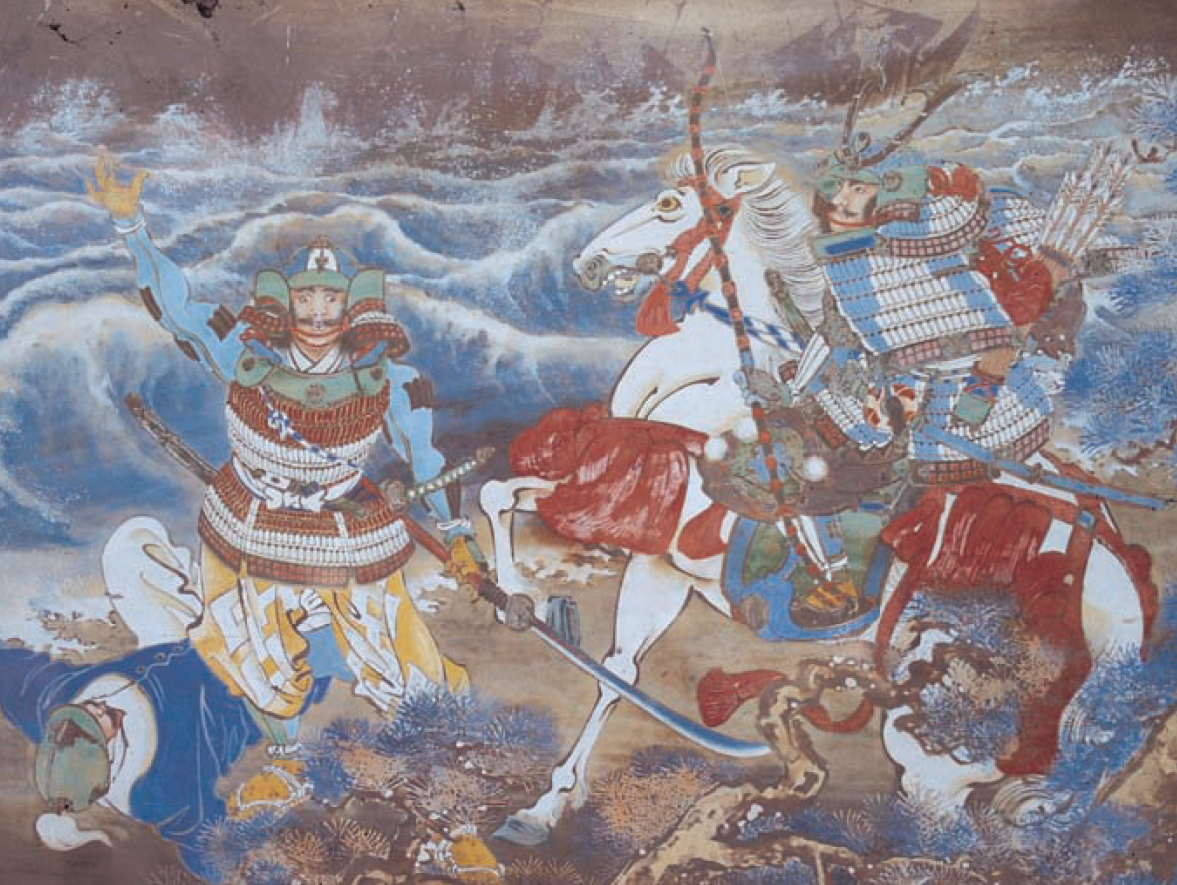
Takezaki Suenaga, riding with four companions, met Kikuchi’s men coming back with heads on their saddles and pressed on. Told by his own retainer to wait for witnesses, he answered that in the way of the bow, the first to charge is the one rewarded, and charged.
Suenaga’s horse floundered on the mudflats of Torikai, he and his companions were hit, and he was saved only when Shiraishi Michiyasu of Hizen came up behind with a hundred-odd riders. The fighting ran, by one Buddhist chronicle’s account, from about eight in the morning until dusk. Nobody recorded how many Japanese fought; the historian Thomas Conlan, reading the Yuan account closely, thinks the two armies on the beach were of similar size, a few thousand each.
Bombs, drums and a laughing army
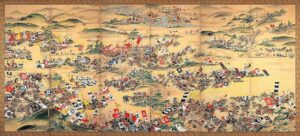
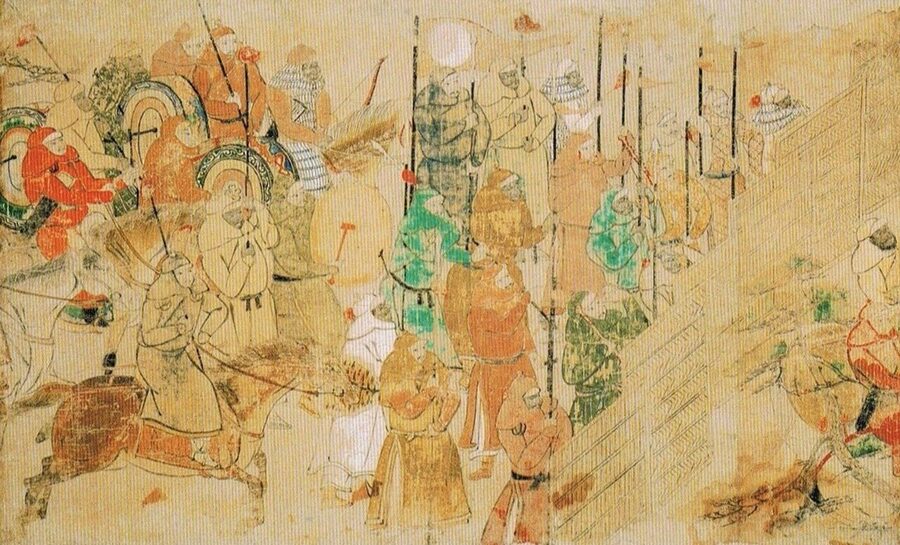
The story most people know comes from the Hachiman Gudōkun, written by the priests of the war god Hachiman in the following decades to show that their god had saved Japan. It says the battle opened with a whistling arrow at which the Mongols roared with laughter, that their gongs and drums made the Japanese horses bolt, and that they threw iron bombs, tetsuhau, whose thunder left men blind and deaf. Warriors who rode out to announce their names and fight one-on-one were surrounded and cut down.
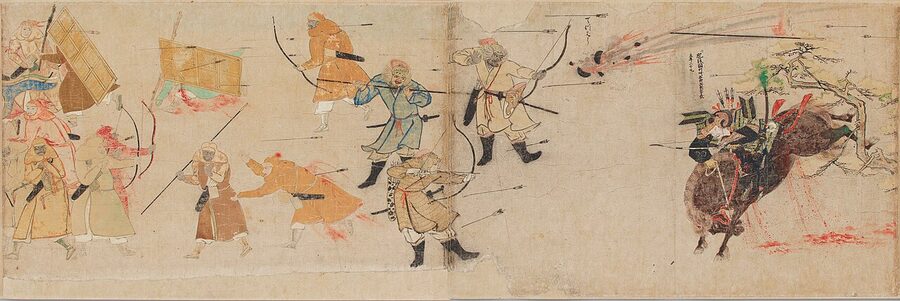
Some of this is documented. Mongol armies did fight in close formation under drum signals, and the bombs were real: ceramic shells packed with gunpowder and scrap iron, more frightening than lethal at Hakata, judging by the Japanese accounts. The single-combat samurai, though, are largely a creation of the Hachiman Gudōkun, which needed the warriors to fail so that the god could succeed.
The best evidence against it is Suenaga’s own scroll, which shows Japanese horsemen charging in a tight group, not dueling. A Yuan official, Wang Yun, wrote that the Japanese horsemen fought bunched together and did not fear death, and their long swords impressed the enemy enough that sword histories commonly credit the invasions with changing how Japanese smiths forged blades, a story I follow in Japanese swords.
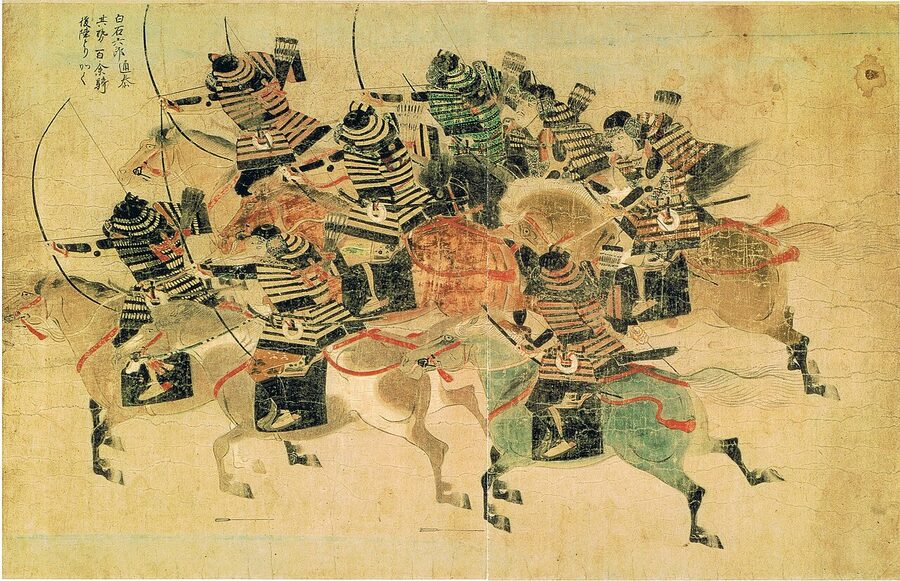
The image of warriors bound by a code of fair single combat belongs to the same much later age that popularised the word in my piece on bushidō. Suenaga’s scroll records a man obsessed with being first and being seen to be first, because that was what got you paid. It is a less romantic motive and a much better-documented one.
Why the fleet left
By nightfall the invaders held the beach and had burned Hakata, and the Japanese had pulled back towards Dazaifu. In the Hachiman Gudōkun they flee in panic to the old earthwork at Mizuki and are saved only when thirty white-clad warriors, Hachiman in disguise, burst out of the burning Hakozaki shrine and drive the invaders into the sea.
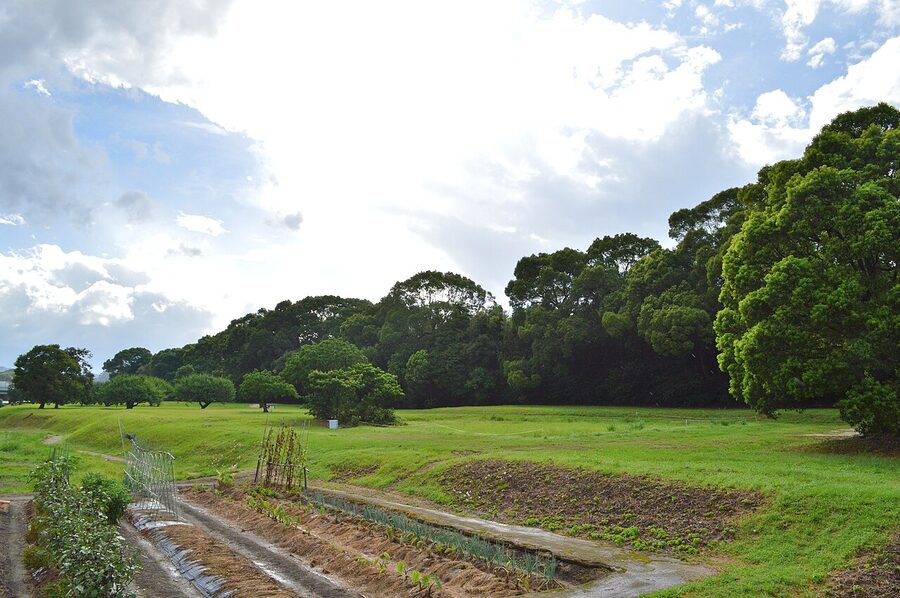
The Korean side tells it differently. According to the official History of Goryeo, the commanders met on board that night, Liu Fuheng having been put out of action by an arrow (Shōni family records say Kagesuke shot him). Kim Bang-gyeong wanted to fight on: an army deep in enemy land, with its boats burned behind it, fights best. The Mongol commander quoted Sun Tzu back at him, that a small force fighting stubbornly ends as the captive of a large one, and the Japanese were growing by the hour.
So they sailed, at night, which no sane pilot did in those waters. They ran into a storm, ships were smashed against the cliffs, and a Korean general drowned. By the morning of the 21st Hakata Bay was empty, and Korean records later counted 13,500 men who never came home.
The court diarist Hirohashi Kanenaka heard that “a contrary wind” had blown the fleet home, and thanked the gods for it. But the courier reports from Kyushu simply say the enemy was beaten and went away, and the monk Eison noted that they reached Hakata on the 20th and promptly scattered. Typhoons do not reach Kyushu in late November, so whatever caught the fleet was a hard winter blow, not the great storm of legend.
My reading is the one most Japanese specialists now share. The invaders fought a hard day, did not like what they found, decided to leave, and were caught by bad weather on the way out. The wind turned a defeat into a disaster; it did not turn a Japanese defeat into a victory, because there had not been one.
One ship ran aground on Shikanoshima, at the mouth of the bay, and its crew were taken and beheaded. Sources variously give their number as about 130 or about 220, and the place is still called the Mōkozuka, the Mongol mound.
Seven years of waiting
Kublai tried words again. In the fourth month of 1275 an embassy led by a Mongol official, Du Shizhong, landed at Murotsu in Nagato. Tokimune had them brought to Kamakura and, on the 7th day of the ninth month, beheaded at Tatsunokuchi near Enoshima: Du, aged 34, a Chinese deputy, two Uighur officials and a Korean interpreter.
Du’s death poem survives, and it is not the poem of a spy. He remembers his wife and children handing him warm clothes at the door and asking how many days he would be gone, and reflects on how differently he would have been greeted had he come home with a gold seal of office. His deputy, He Wenzhu, wrote that the people of two countries suffered, and that today he was cut down by the autumn wind.
Nichiren condemned the executions; Edo-period nationalists held them up as a model of resolve. A second embassy, sent in 1279, was beheaded at Hakata without the courtesy of a trip to Kamakura.
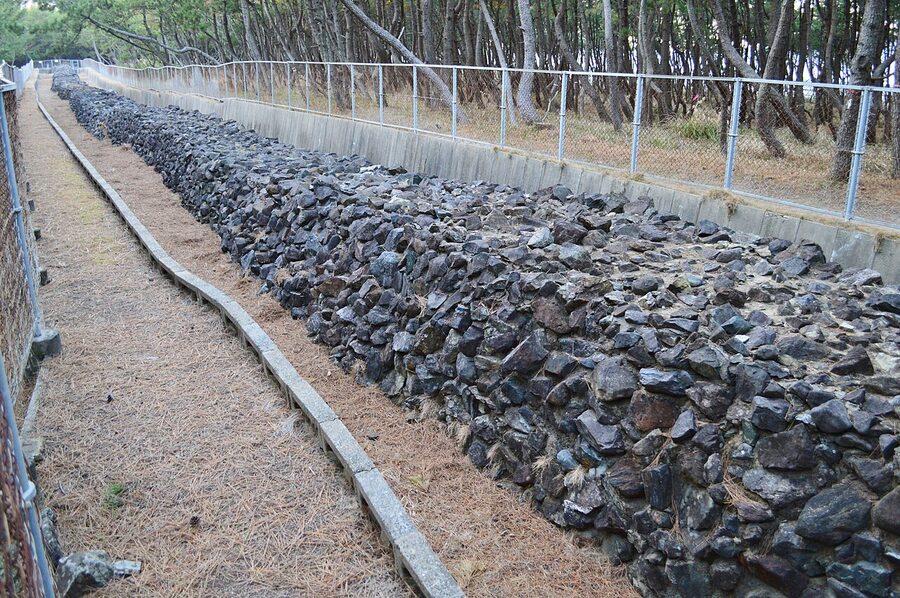
In the third month of 1276 Kamakura ordered a stone wall built along Hakata Bay, from Imazu in the west to Kashii in the east, about twenty kilometres. Every landholder in Kyushu was assessed one sun of wall, about three centimetres, for every tan of rice land, whoever’s estate it was. For the warriors, the work came on top of a rota of coastal guard duty divided among the Kyushu provinces by season.
Kamakura also planned to strike first, gathering ships and oarsmen at Hakata early in 1276 for a counter-invasion of Korea, and then quietly called it off. The wall, it seems, was all the country could afford.
Kōan, 1281: the two fleets
Song China fell in 1279, and with it came a defeated navy and a surplus of unemployed soldiers. This time Kublai sent two fleets: the Eastern Route fleet from Korea, about 900 ships with some 40,000 Mongol, Chinese and Korean troops, and the Southern fleet from Ningbo, about 100,000 men in 3,500 ships. They would meet off Iki by the 15th day of the sixth month and descend on Dazaifu together.
Those are the figures in the Chinese and Korean records, and they are almost certainly too large. Thomas Conlan has argued the real numbers were a tenth of that, Morris Rossabi suggests about 70,000, and Japanese reference works mostly still print 140,000 with a caveat. I lean towards Rossabi; either way the Southern fleet carried farm tools, which has led some historians to suggest it was meant to settle as well as conquer.
The wall holds
The Eastern Route fleet left Happo on the 3rd day of the fifth month of 1281, the fourth year of Kōan. It attacked Tsushima and Iki again, raided Nagato on the Honshu coast, and early in the sixth month appeared in Hakata Bay, its commanders having decided not to wait for the Southern fleet.
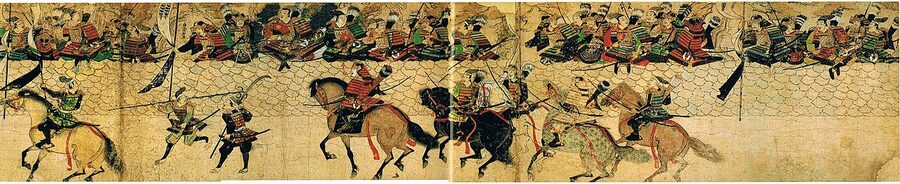
They found the wall. In its strongest stretches it stood up to three metres high and over two metres thick, with stakes on the beach in front, and a Japanese chronicle says that from the sea it looked like cliffs rising from a river. The invaders never landed on the mainland at all. Kawano Michiari of Iyo made a point of camping on the seaward side with his back to the wall, and was celebrated for it.
Shikanoshima and the night raids
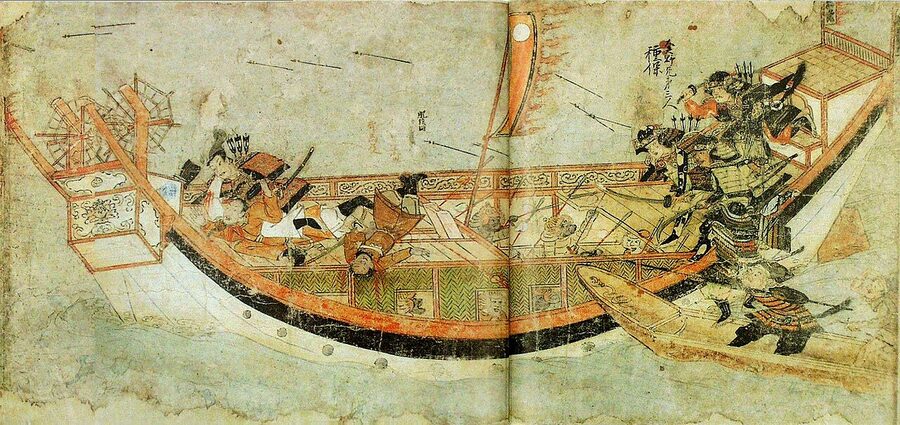
Instead the fleet seized Shikanoshima, the island at the mouth of the bay joined to the mainland by the long sand spit of Umi-no-nakamichi, and anchored around it on the 6th day of the sixth month. That night small Japanese boats rowed out and attacked. On the 8th the Japanese came by sea and along the spit at once, and Hong Dagu, unhorsed and running, was nearly killed before a relief force rescued him.
Kawano Michiari went out in two small boats, lost his uncle to an arrow at the first exchange, was wounded, boarded anyway and came back with a captured officer. Suenaga was out on the water too. After two days of this the Eastern Route fleet fell back on Iki, where disease killed some three thousand men in the summer heat.
The Southern fleet arrives late
The Southern fleet was late from the start. Its commander fell ill and was replaced, and it sailed around the middle of the sixth month, a month behind. Its commanders had also changed the plan: a Japanese ship’s captain, blown off course to China, had drawn them a map showing that Hirado, off north-west Kyushu, was sheltered, lightly defended and close to Dazaifu.
So they went to Hirado. Meanwhile the Japanese attacked the Eastern Route fleet on Iki on the 29th day of the sixth month and the 2nd of the seventh. The old Kyushu chief Shōni Sukeyoshi, past eighty, was wounded and later died of it, and his grandson Suketoki, by one account the boy whose whistling arrow had opened the battle of 1274, was killed in the fighting off the island.
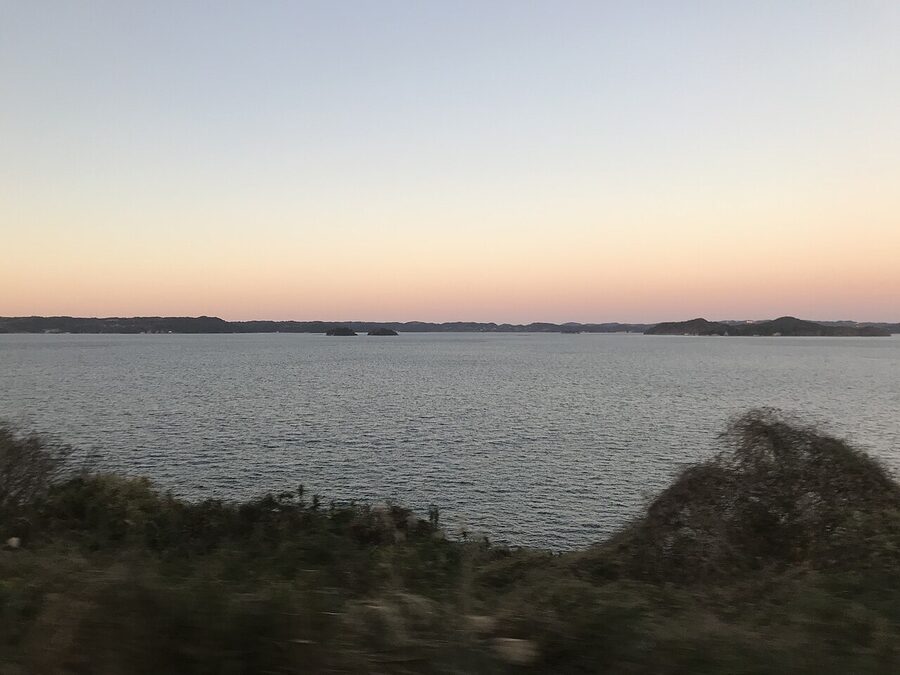
By late in the seventh month the two fleets had joined in the Imari Bay area, and on the 27th day they moved their main anchorage to Takashima, an island at the mouth of the bay. Japanese boats attacked them there that same day and fought into the night. The invaders stayed put, threw up earth ramparts on the island, and chained their great ships together into floating forts.
The storm
On the night of the 30th day of the seventh month, a typhoon came in. English-language histories, converting to the Western calendar, usually put it in mid-August 1281. By the 1st day of the intercalary seventh month the fleet at Takashima had been smashed.
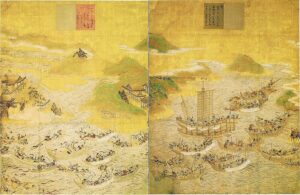
This time the storm is documented from every side. A Chinese tomb inscription describes waves like mountains and ships breaking against each other while their crews drowned shouting; the Song loyalist poet Zheng Sixiao describes hailstones as big as fists; the writer Zhou Mi claimed that of about four thousand ships, only two hundred survived. That last figure is probably an exaggeration, because not every squadron was caught.
The general Zhang Xi, camped on Hirado, had made his ships anchor fifty paces apart, and lost nothing. The Korean-built ships also came through comparatively well; of 26,989 Korean troops and sailors, Korean records say 19,397 came home. A Yuan minister later complained that the big southern ships were huge but broke apart the moment they touched, a remarkably candid thing to tell an emperor.
Takashima
On the 5th day of the intercalary month the Southern fleet’s commander, Fan Wenhu, held a council. Zhang Xi argued that the survivors were the toughest men of the lot and should live off the land and fight. Fan replied that if they were punished for going home he would take the blame, and that settled it: the senior officers took the soundest ships and sailed from the west side of Takashima, leaving more than 100,000 men behind. Zhang Xi put seventy horses ashore on Hirado to take all four thousand of his own men home, and was the one commander not punished afterwards.
The same day Japanese forces attacked the remaining ships, and Suenaga was there again. Where is now disputed: the fight has long been placed in Imari Bay, but the historian Hattori Hideo points out that Suenaga set out from the Hakata Bay shore at midday and reported back at dawn, which puts the battle in Hakata Bay, against ships still anchored off Shikanoshima. On the 7th the Japanese landed on Takashima itself.
What followed was a massacre. By the usual reckoning twenty to thirty thousand prisoners were taken, and the official Yuan history says the Mongols, Koreans and northern Chinese among them were killed while the southern Chinese, whose country had long traded with Japan, were spared as slaves. It adds that of the hundred thousand left on Takashima, three men eventually made it home.
The island remembers. Its place names include Kubi-no-ki, where the heads came off, Chizaki and Chiura, blood point and blood bay, and Jigokudani, hell valley. One of the spared southern soldiers turns up in 1286 in a temple in Izumi, near Osaka, helping to repair a copy of the Great Wisdom Sutra.
What the seabed says
For centuries the fishermen of Takashima pulled up pots, swords and anchor stones in their nets. In 1974 a resident found a bronze seal near Kōzaki harbour on the island’s south coast, engraved in the ‘Phags-pa script that Kublai had commissioned for his empire. Its back says it was issued by the Ministry of Rites in the ninth month of 1277 to a company commander, who presumably did not survive to hand it back.
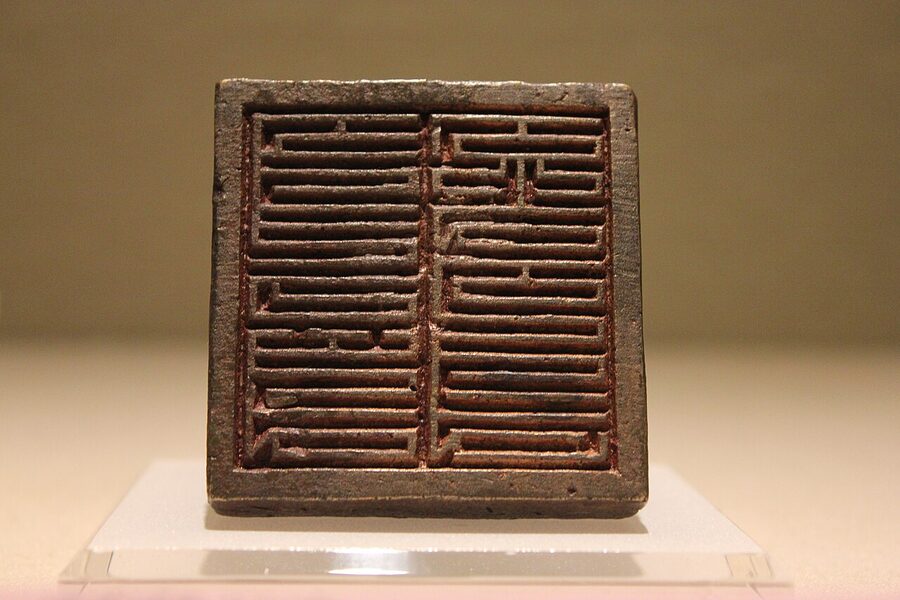
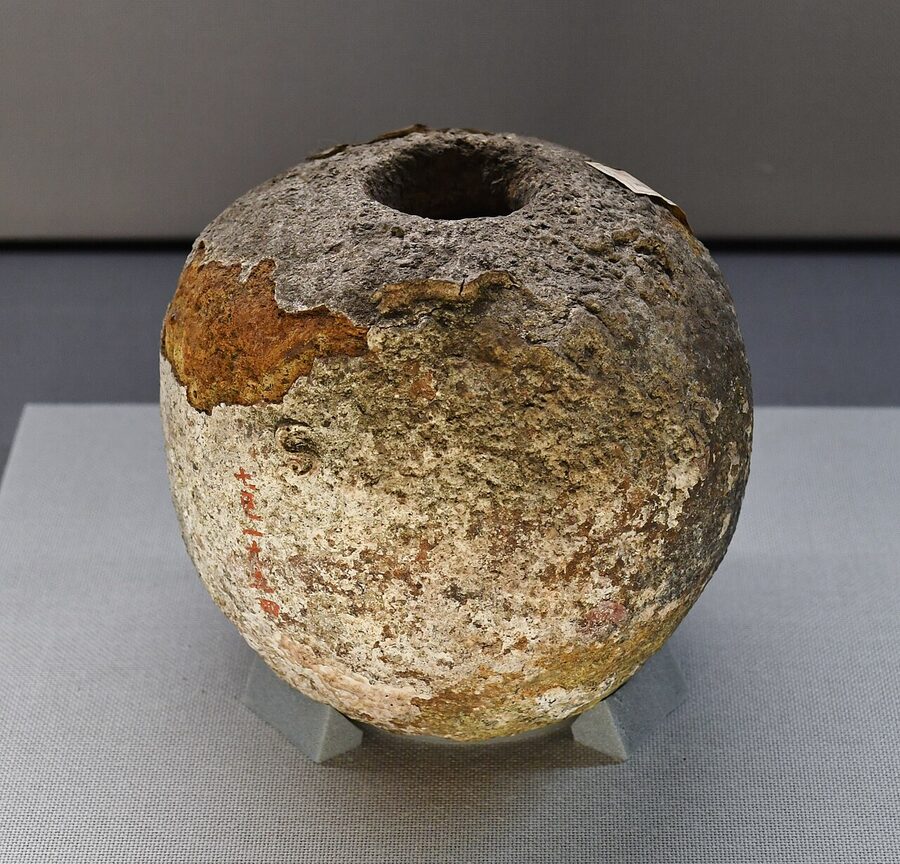
Surveys began in 1980, and in 1981 a strip of seabed 7.5 kilometres long was registered as an archaeological site. Teams from the town and, later, the Kyushu Okinawa Society for Underwater Archaeology raised helmets, weapons, ceramics, timbers and stone anchors, and in 2001 they brought up two tetsuhau, which settled the question of whether the bombs on the scroll were real.
In 2011 a team led by Ikeda Yoshifumi of the University of the Ryukyus announced that a hull in the bay was one of the invasion ships, and on 27 March 2012 the waters off Kōzaki became Japan’s first underwater National Historic Site. A second ship was found in 2015, a third was confirmed in 2024, and work on it in 2026 has brought up its stern with cooking pots, knives, a grinding bowl, dice and gaming tiles.
The ships have demolished a favourite explanation for the disaster. A popular story, repeated in English and Japanese alike, held that the fleet was thrown together by resentful conquered shipwrights. The first hull turned out to have a carefully built double-planked bottom and a length estimated at 25 to 27 metres, and the second shows the bulkhead construction of a southern Chinese seagoing ship.
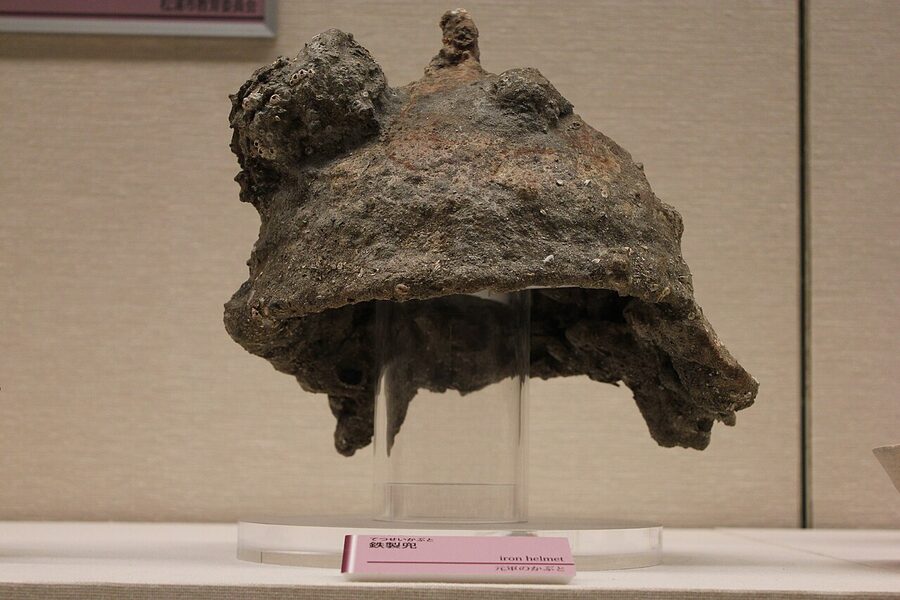
The other telling detail is what has not been found. Almost all the ceramics come from southern China and nothing so far is identifiably Korean, which fits the written record that the Southern fleet bore the brunt of the storm. Ships at anchor for weeks, chained together, in the one season when typhoons were all but certain: what destroyed the fleet was less bad carpentry than bad timing.
Takezaki Suenaga rides to Kamakura
Takezaki Suenaga was born in 1246 into a minor branch of a Higo warrior family, probably the Kikuchi, and by 1274 had lost his lands in a family dispute. He went to Hakata with a brother-in-law, a banner-bearer and two retainers, which is not an army but is a very good way of being noticed.
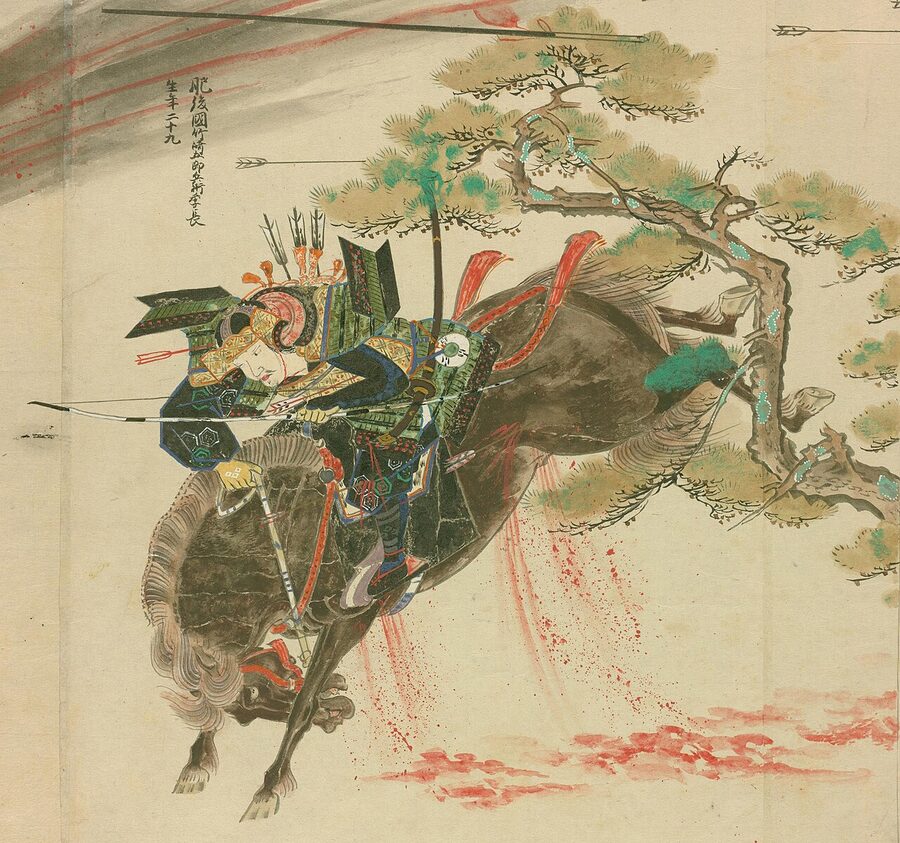
To be paid, a warrior had to be named in the commander’s report to Kamakura, and Suenaga’s name did not get there. In the sixth month of 1275 he sold his horse and its gear to pay for the journey and set off on a ride of more than a thousand kilometres, stopping at shrines along the way to pray for success. In Kamakura, officials told him politely that he had no evidence.
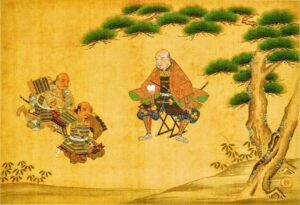
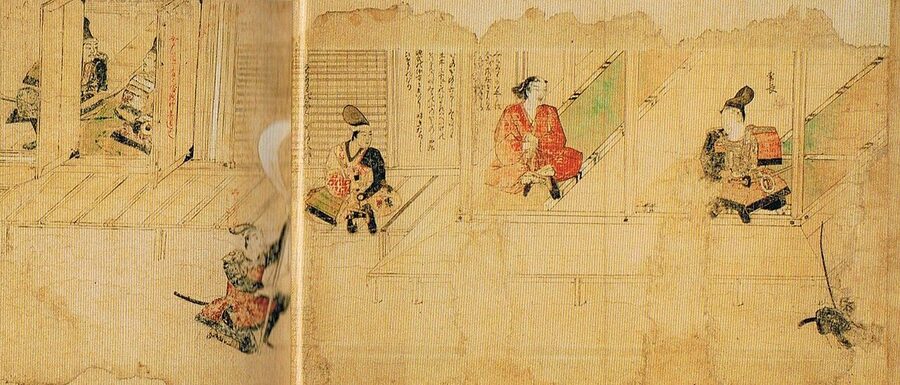
In the eighth month he got in to see Adachi Yasumori, the official in charge of rewards and one of the most powerful men in Kamakura, and argued his case to his face. The scroll records their exchange at length: Suenaga admitted that he had taken no heads and lost none of his men, and asked that Shōni Kagesuke be questioned to confirm that he had led the charge.
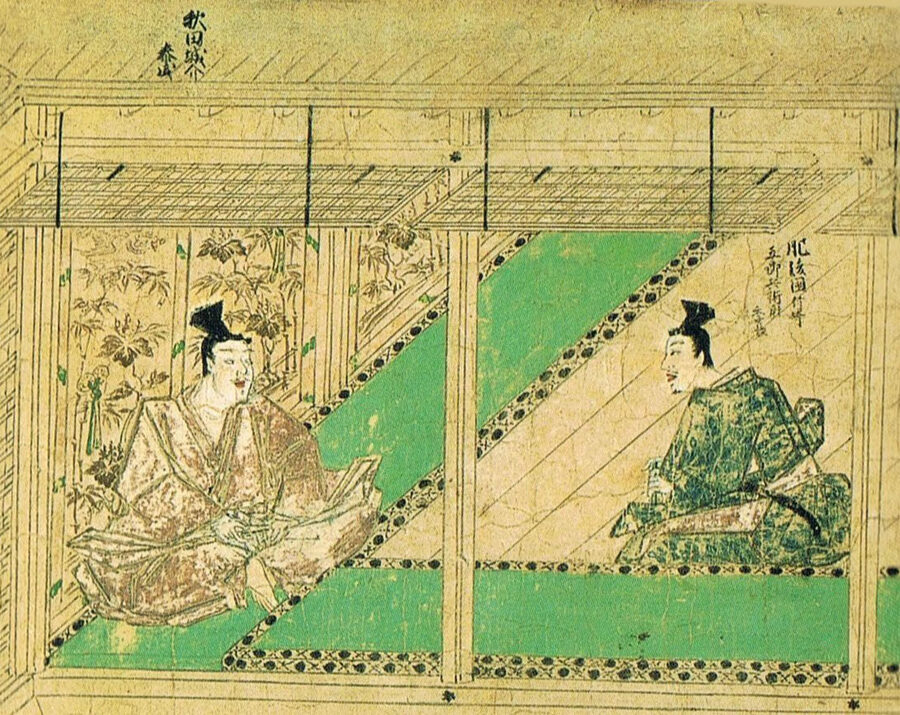
He won. Yasumori made him steward, jitō, of Kaitō in Higo and gave him a horse in person, and Suenaga noted that of the 120-odd men rewarded for 1274, he alone received his grant and a horse directly. He would not appear in anyone’s list of the greatest samurai, but nobody in Japanese history has made a better case for himself.
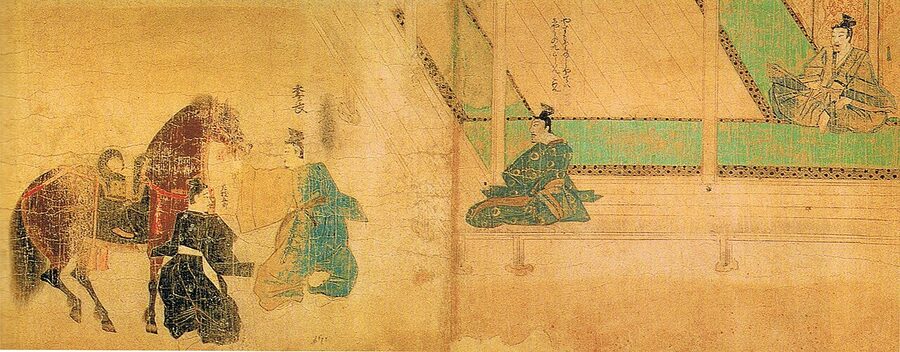
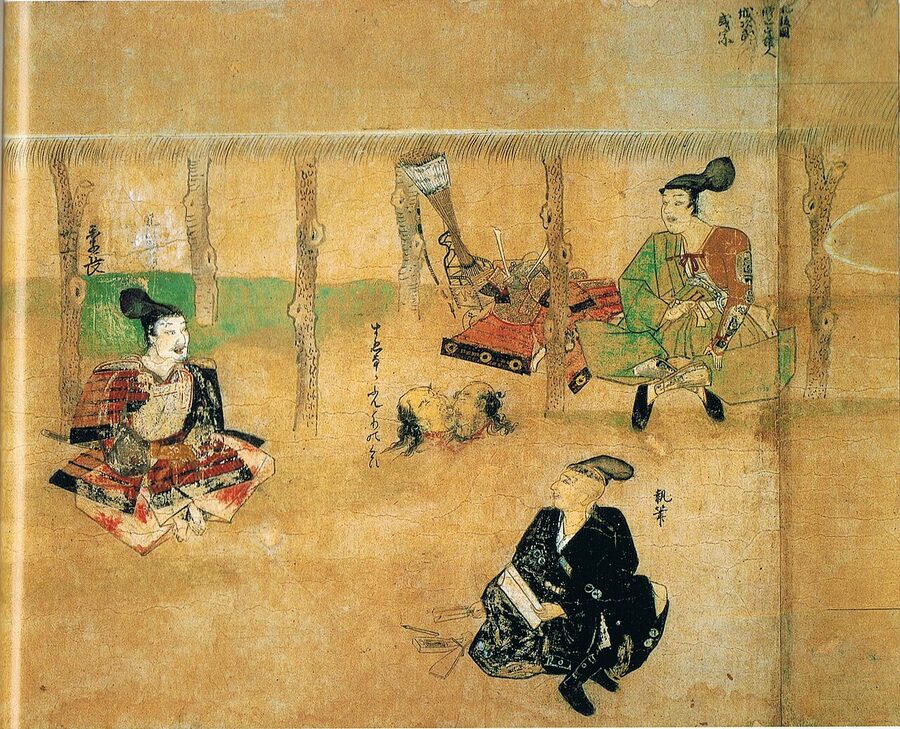
In 1281 he fought again and this time made sure of his evidence. The second scroll ends with him reporting to Adachi Morimune, Yasumori’s son and the commander of the Higo warriors, with two enemy heads laid out in front of him.
Then the Adachi fell. In the eleventh month of 1285 Yasumori was destroyed with most of his family in a Kamakura power struggle, the Shimotsuki incident, and Suenaga’s patron became a non-person. The scroll, completed some years later, honours him anyway, and one long-standing theory is that it was made partly to remember him.
Its closing text dates it to the 9th day of the second month of the first year of Einin, 1293, but the era name Einin was only adopted in the eighth month of that year, so the date must have been written later, and some scholars think the whole closing section was added by another hand. Suenaga took the tonsure that year, founded a family temple at Kaitō, and was still alive in the third month of 1324, giving money to the local shrine.
The scrolls passed to the Ōyano family of Amakusa, were pieced back together by Edo-period scholars, not always in the right order, and in 1890 went to the imperial household. They are now a National Treasure in the Museum of the Imperial Collections, Sannomaru Shōzōkan, at the Imperial Palace in Tokyo.
The bill for winning
Japan won, and gained nothing: no land, no tribute, no plunder worth the name. The warrior government ran on a simple contract, service in return for land, and after 1281 it had thousands of warriors expecting payment and nothing to give them.
The wall had to be kept up and manned until 1332, because nobody knew the Mongols had given up. They had not, quite: Kublai ordered a third invasion in 1283 and again in 1285, and only revolts in southern China, wars in Vietnam and finally his death in 1294 ended the plans. The last Yuan envoy, the Zen monk Yishan Yining, arrived in 1299 and stayed to become an abbot in Kamakura and Kyoto.
Shrines and temples were among the loudest claimants. Takeo shrine in Hizen claimed that in 1274 a whistling arrow had flown from its sanctuary towards the enemy fleet, and that in 1281 a purple banner had flown off towards the ships and raised the wind. Kamakura paid such claims by ordering lands sold or pawned away from shrines to be handed back, at the expense of whoever had bought them.
For the Kyushu warriors the cost was ruinous. They paid for the wall, the guard duty and the fighting out of their own pockets, borrowed against their lands, and lost them. In the third month of 1297 the regent Hōjō Sadatoki ordered pawned and sold warrior lands returned in the Einin edict of grace; lenders simply stopped lending to warriors, and things got worse.
Meanwhile the Hōjō drew power to themselves, taking over most of the provincial governorships, the shugo posts that would eventually turn into the daimyō of later centuries. In 1333 the Kamakura shogunate fell. The invasions did not cause that by themselves, but they left a government that had won a war and could not afford the victory, and the age that followed is the subject of my piece on the Muromachi era.
There was a sting in the tail for the mainland too. Goryeo had stripped its forests to build two fleets and the Yuan navy was crippled, and within a few decades Japanese raiders, the wakō, were plundering the coasts of Korea and China. When Japanese, Korean and Chinese armies next met in war, three centuries later, it was in the story I tell in my piece on the Imjin War.
How a wind became divine
Nobody needed to invent the storms. What later ages added was the adjective, and it was added remarkably fast. A court document issued within a year or two of 1274 already says that “a divine wind blew fiercely”, the enemy lost their lives and their ships were sunk or cast on the shore, and calls it the punishment of the gods and the protection of Kannon.
For years the court, the shogunate and every major temple and shrine in Japan had been praying for the destruction of the enemy, at Iwashimizu, Ise and Usa, at Tōdai-ji, Enryaku-ji and Tō-ji. The Yuan official history reports that the Japanese ruler offered his own life at the shrine of the sun goddess for the country’s safety; Japanese scholars fought a long battle in the Taishō period over whether that prayer was the retired emperor Kameyama’s or his son Emperor Go-Uda’s, and never settled it.
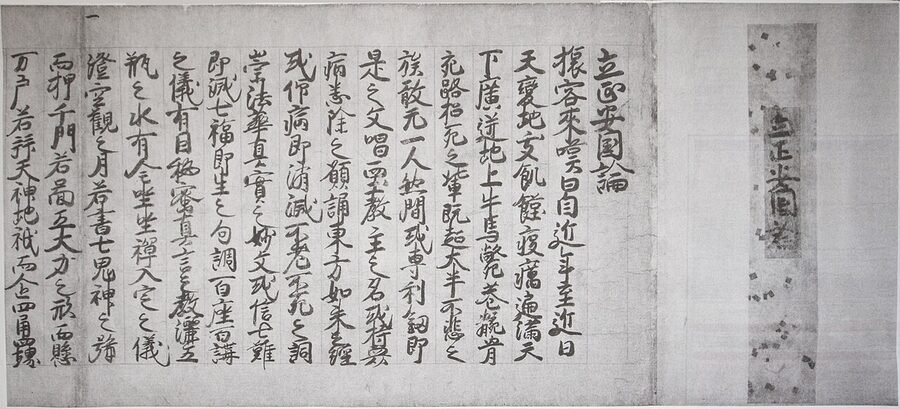
Nichiren had his own claim. His treatise of 1260 predicted foreign invasion as the punishment for false teachings, and he took the Mongols as proof. He had himself been taken to Tatsunokuchi for execution in 1271 and reprieved, his followers say by a ball of light in the sky, and his followers later made him one of the heroes of the invasion story.
When the storm came in 1281, the temples and shrines took the credit, because that was how they would be paid, and the Hachiman Gudōkun‘s version of 1274, panicking warriors and white-robed god included, became the popular history of the war for six hundred years.
The Edo era gave the invasions their modern name. Contemporaries had called them the Mongol attacks; the word Genkō, roughly “the Yuan raiders”, first appears in the Mito domain’s History of Great Japan, and caught on in the 19th century, when, as the historian Kawazoe Shōji pointed out, the Opium War and foreign ships off the coast made the old invasion feel suddenly topical.
The Meiji era made it national. In 1886 sailors from the Chinese warship Dingyuan rioted in Nagasaki, and the Fukuoka police chief Yuchi Takeo began a campaign for a monument to the defenders of 1274 and 1281, touring the country with lantern-slide lectures and huge battle paintings by Yada Isshō. In 1892 the army bandmaster Nagai Kenshi wrote the hugely popular military song Genkō.
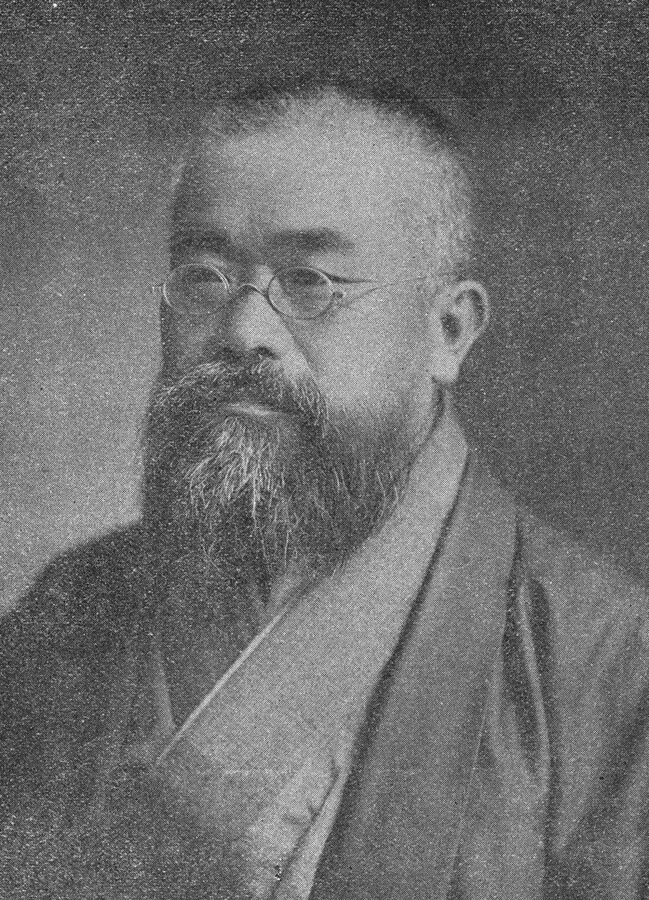
The statue of Kameyama was unveiled in 1904, as Japan fought the Russo-Japanese War. The schoolbooks are telling, if one Japanese study of them is right: the first state primary history to cover 1274, in 1910, credited the warriors and never mentioned a wind, and the storm only entered that story in the textbook of 1943, when the state needed miracles. After the war the miracle stayed in and the warriors, now politically awkward, were edged out.
The rest you know. In October 1944, as American forces landed in the Philippines, the navy formed the first shinpū tokubetsu kōgekitai, special attack units named for the divine wind; the navy’s own reading was shinpū, but the other reading of the same characters, kamikaze, is the one the world remembers. Several thousand young men were sent to fly their aircraft into ships, a story that belongs to the Shōwa era and not to the 13th century, but which could not have been told without it.
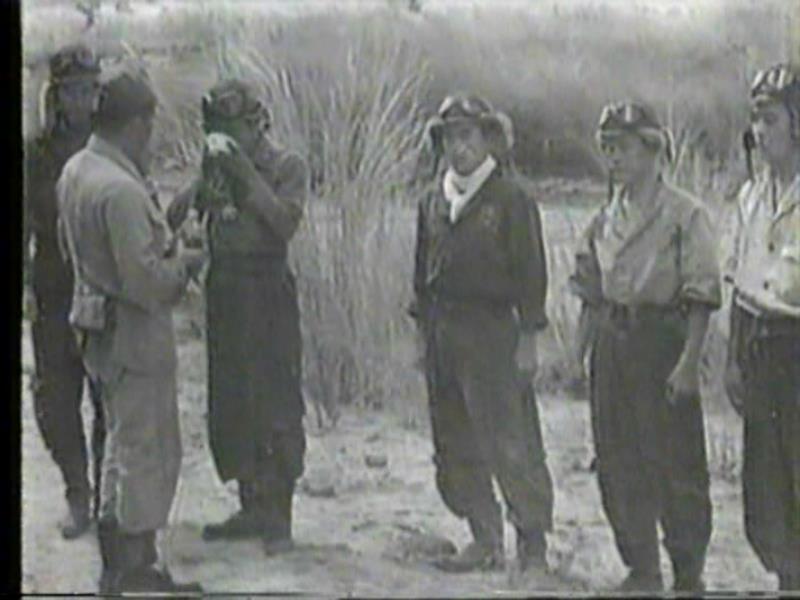
The plain summary is this. The storm of 1281 was real and decisive; it wrecked a fleet that had already been fought to a standstill for two months and had found the beaches walled against it. The wind of 1274 was ordinary bad weather that caught an army already going home. Calling either of them divine was a choice, made by people who had prayed for exactly that and were paid for it, and whose version lasted longer than anyone’s.
Folk memory kept something rawer. Parents across Japan once frightened children with mukuri kokuri, the Mongols and the Koreans, coming to get them, and as far north as Aomori there are lullabies about the “mokko” coming down from the hills. That is the invasion as remembered by people with no shrine to promote: a fear, not a miracle.
Where to see the Mongol invasions today
Fukuoka has the wall, the shrine, the statues and the island, all doable in a day without a car. Tsushima, Iki and Takashima take more planning and reward it, and Kamakura has the other end of the story.
The Genkō bōrui, Fukuoka
The wall has been a National Historic Site since 1931. It got its modern name, Genkō bōrui, from the physician and archaeologist Nakayama Heijirō in 1913; to its builders it was simply the ishi-tsuiji, the stone wall. Most of it has gone, buried by sand or carted off to build Fukuoka Castle in the Edo period, but stretches survive in about nine places across the city, and the sea is now well beyond most of them.
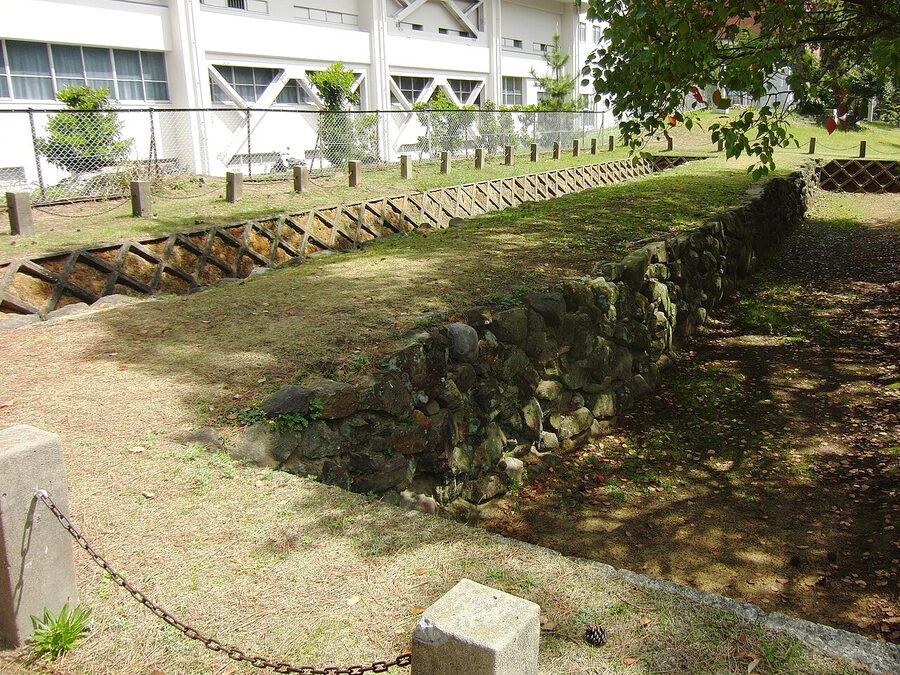
Three stretches are set up for walking, and all are free. Nishijin is about five minutes’ walk from the Bōrui-mae stop on the Nishitetsu bus. Ikinomatsubara, in a long pine grove on the west of the bay, was refurbished in 2023 so you can walk right up to the stones; it is about fifteen minutes from Shimoyamato station on the JR Chikuhi Line, and its small car park charges ¥100 an hour.
Imazu, at the far western end, is the best. Here the wall ran about 3.9 kilometres between two hills, of which about 2.7 kilometres survives under the pines, and the restored section shows the stone face and rubble core clearly. It is the hardest to reach without a car (there are 20 parking spaces), but it is the one place where you can stand on the line and look out to sea the way the defenders did.
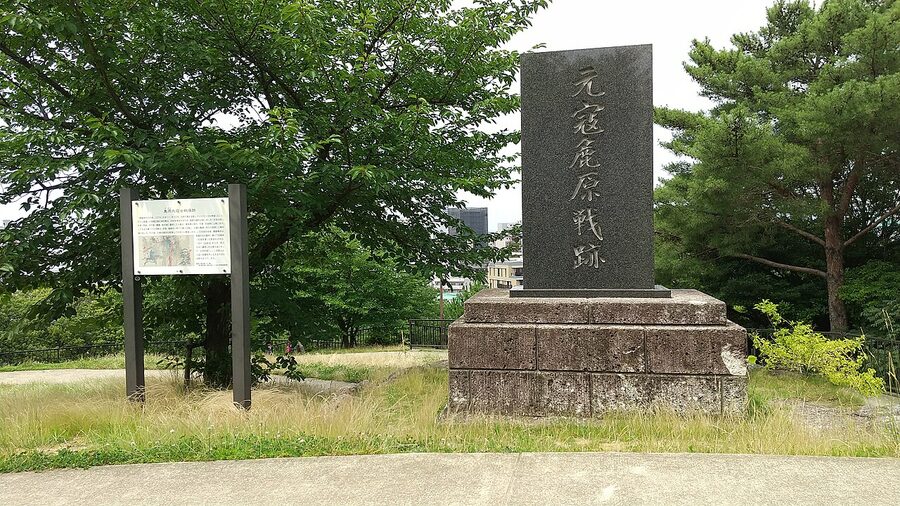
Hakozaki-gu
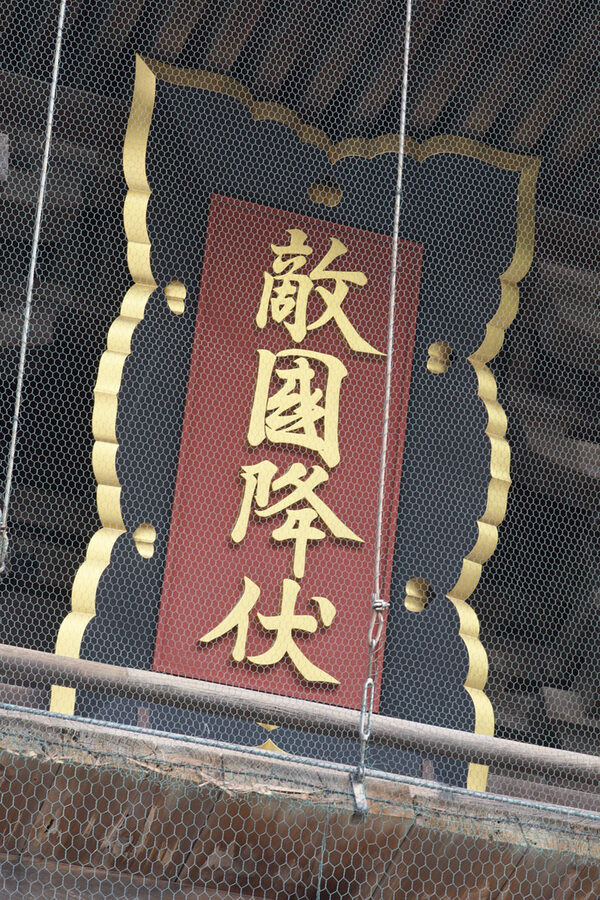
Hakozaki-gu, one of the three great Hachiman shrines of Japan, is the one most bound up with the invasions. It was burned in 1274, it is where the Hachiman Gudōkun has the god’s white-robed warriors burst out to save the day, and its tower gate, built in 1594 by Kobayakawa Takakage in the Azuchi-Momoyama era, still carries the tekikoku kōfuku plaque.
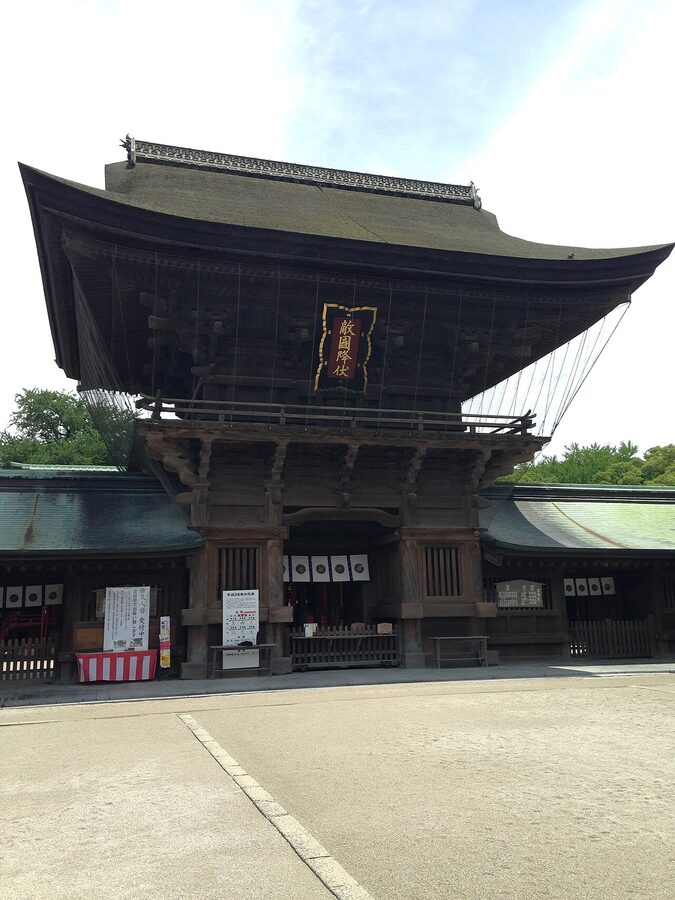
The grounds are open from 6:00 to 19:00 and entry is free. Look for the anchor stone of a Mongol ship among the monuments, and a stone carved for the military song of 1892. The shrine is three minutes’ walk from exit 1 of Hakozaki-miyamae station on the Fukuoka subway, or about eight minutes from JR Hakozaki; come during the Hōjōya festival in mid-September if you can.
Higashi Park: Kameyama, Nichiren and the Genkō Shiryōkan
A few minutes’ walk away, Higashi Park holds the Meiji version of the story in bronze. The statue of Kameyama, raised in 1904 by Yuchi Takeo’s campaign, stands on a tall stone plinth, and nearby stands an even bigger statue of Nichiren, more than ten metres high, put up by his followers in the same years.
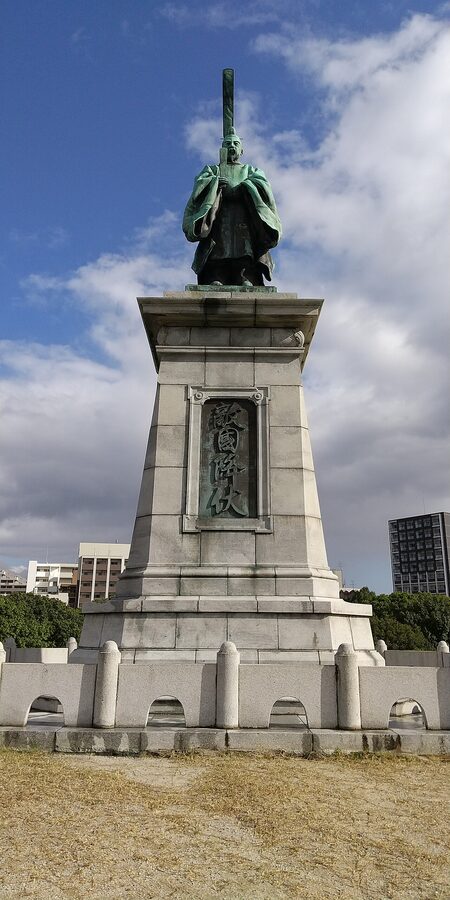
Beside the Nichiren statue, the small Genkō Shiryōkan holds Mongol-style armour, a short bow, models and Yada Isshō’s paintings from Yuchi’s lecture tours. It also displays a talisman from the Chinese battleship Dingyuan, sunk in the First Sino-Japanese War; you could not design a better exhibit for showing how the Meiji state read 1274 and 1281.
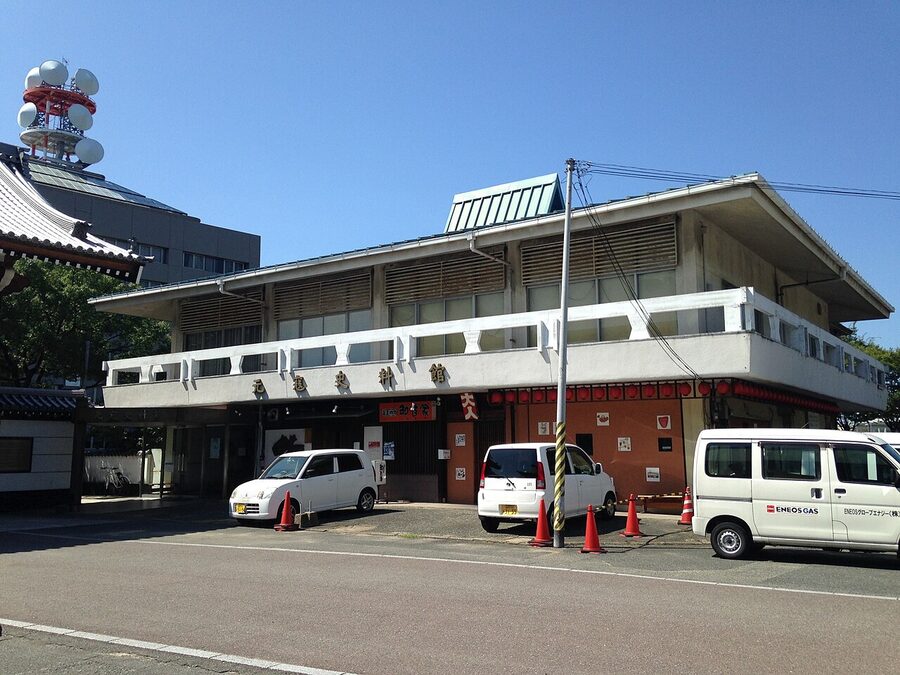
The museum opens only by advance reservation, 10:00 to 16:00 (last entry 15:30), and at last report on weekends and holidays only, so check with it before you go. Admission is ¥500 for adults and ¥200 for elementary and junior high students. It is three minutes’ walk from JR Yoshizuka station, or about five from Maidashi-kyūdaibyōin-mae on the subway.
Shikanoshima and the Mōkozuka
Shikanoshima is where the Eastern Route fleet anchored in 1281 and where, by tradition, the men from the stranded ship of 1274 were beheaded. The Mōkozuka is a memorial to the invaders put up in 1927, at a spot also called the Kubikirizuka, the mound of the beheaded, right by the Mōkozuka bus stop.
The nicest way there is the Fukuoka city ferry from the Bayside Place terminal at Hakata port, about half an hour across the bay, at ¥680 for adults by the city’s latest published figure. You can also come by road along Umi-no-nakamichi, the sand spit the Japanese charged along on the 8th day of the sixth month of 1281.
Tsushima: Komodahama
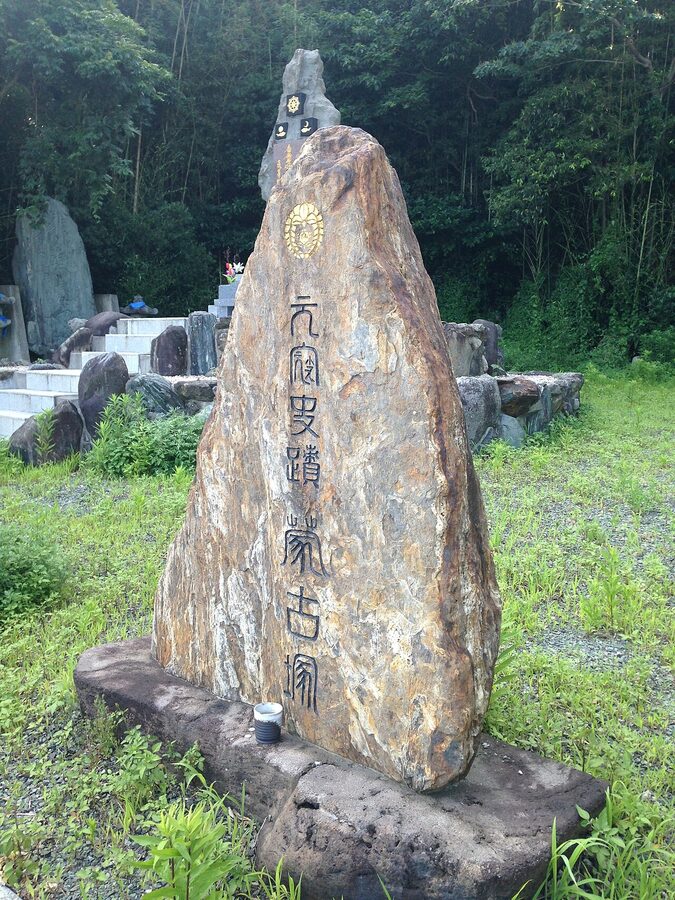
On Tsushima, Komodahama Shrine stands at the beach where Sō Sukekuni and his riders died on the 5th day of the tenth month of 1274. Founded on the battlefield and moved to its present site in the 14th century, it now has monuments from the 650th and 700th anniversaries and an equestrian statue put up in 2020 for the 750th; nearby are mounds said to hold Sukekuni’s head and body.
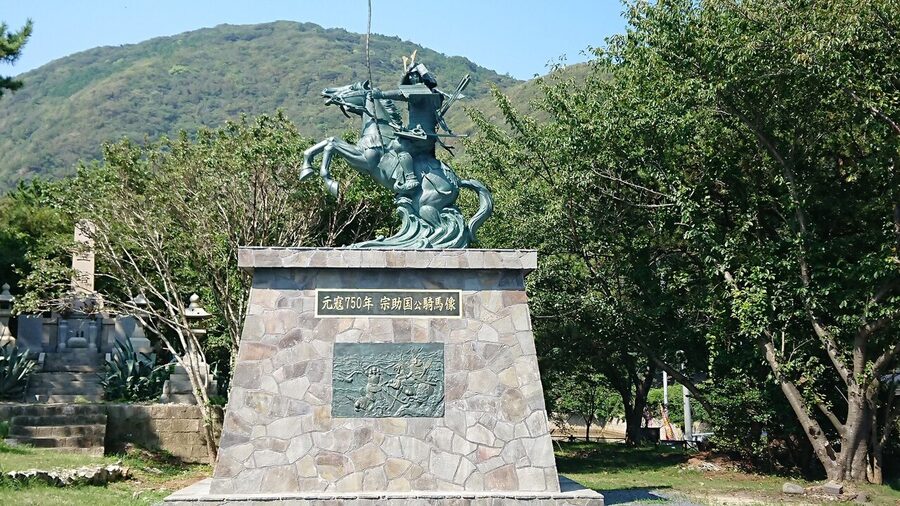
The time to go is the shrine’s main festival over the second weekend of November, when a procession in armour walks down to the beach and archers pluck their bowstrings towards the sea in the meigen rite, as if the fleet were still offshore. Komodahama is about half an hour by car from Izuhara, where the ferries and flights arrive; buses are infrequent, so check them with the Tsushima tourist association first.
Iki: Shinjo and the thousand-man mounds
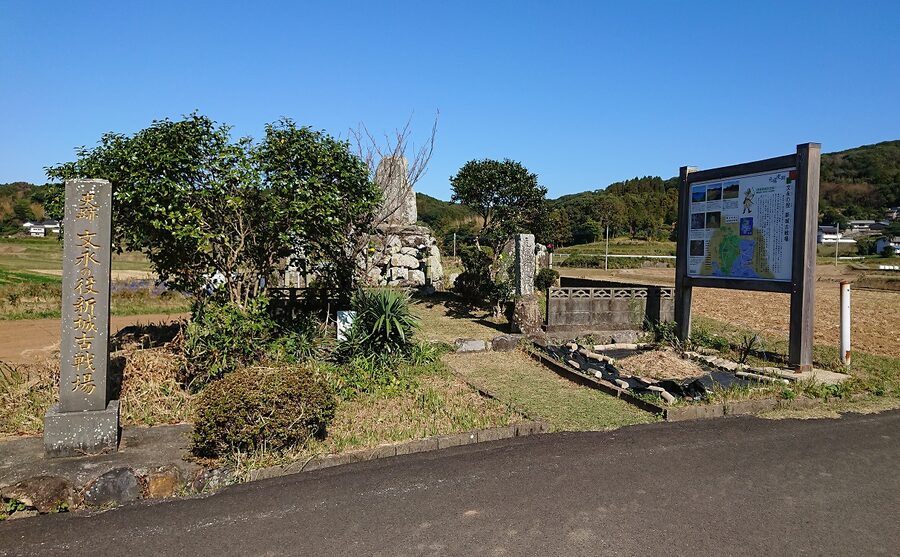
On Iki, 1274 is remembered around Shinjo, in the north of the island, where Taira no Kagetaka made his last stand. Shinjo Shrine enshrines him, and in the fields nearby are the Senninzuka, the thousand-man mounds where the dead are said to have been buried; there are half a dozen across the island.
On the east coast at Setoura, Iki Shrine enshrines Kameyama, Go-Uda and the young Shōni Suketoki, who died off the island in 1281; it was founded in 1944, a date that tells you what it was for. Iki is about an hour from Hakata by jetfoil.
Takashima
Takashima is the end of the story and, for me, the place that makes it real. The Matsuura City Buried Cultural Property Center at Kōzaki, on the south coast, displays the commander’s seal, the tetsuhau, weapons, helmets and timbers from the ships, including a bulkhead plank from one of the wrecks.
It is open from 9:00 to 17:00, closed on Mondays (the following weekday when Monday is a holiday) and from 29 December to 3 January. Since April 2026 admission has been ¥440 for adults and ¥220 for school pupils, including the conservation building next door, and you can look down on the underwater site from the hill above the harbour.
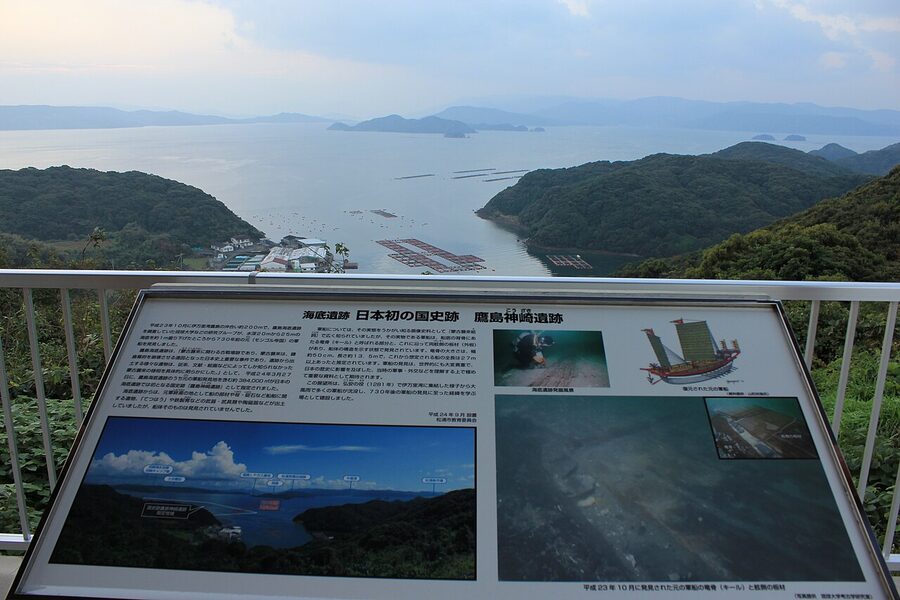
Getting there takes thought. The Takashima Hizen Bridge has linked the island to the Saga side since 2009, but the bus across it was withdrawn at the end of September 2024, so without a car you come by ferry from Imafuku port, near Takashimaguchi station on the Matsuura Railway, or from Mikuriya, with a reservation-only shared taxi on the island. Spend an extra hour walking: Kubi-no-ki and Chizaki are still on the map.
Kamakura: Engaku-ji, Jōryū-ji and Tatsunokuchi
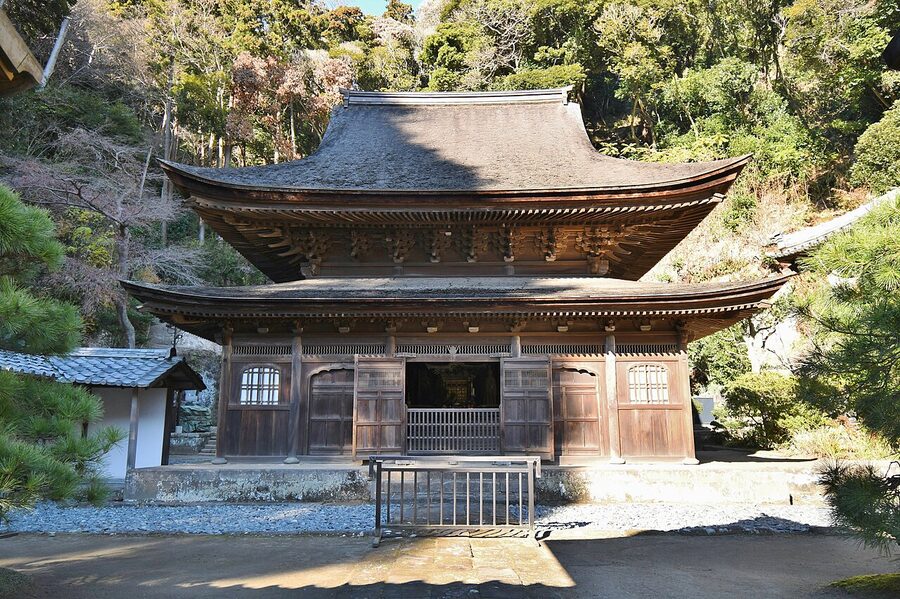
Engaku-ji, in Kita-Kamakura, was founded by Tokimune in 1282, with the Song monk Mugaku Sogen as its first abbot, to spread Zen and to pray for the dead of both sides. Tokimune is enshrined in the Butsunichi-an, a small hall within the precinct.
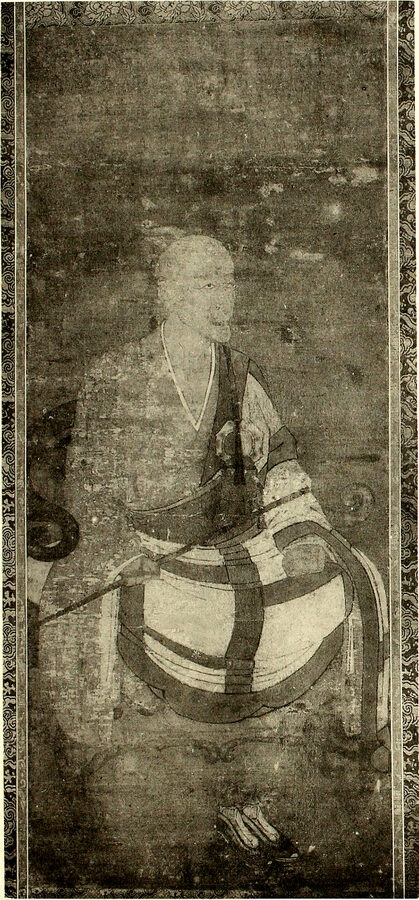
The temple is open from 8:30 to 16:30 (to 16:00 from December to February), and admission is ¥500 for adults and ¥200 for children. It is one minute from Kita-Kamakura station on the JR Yokosuka Line. The Shariden, the relic hall, is a National Treasure opened only a few days a year, so check the temple’s site if you want to see it.
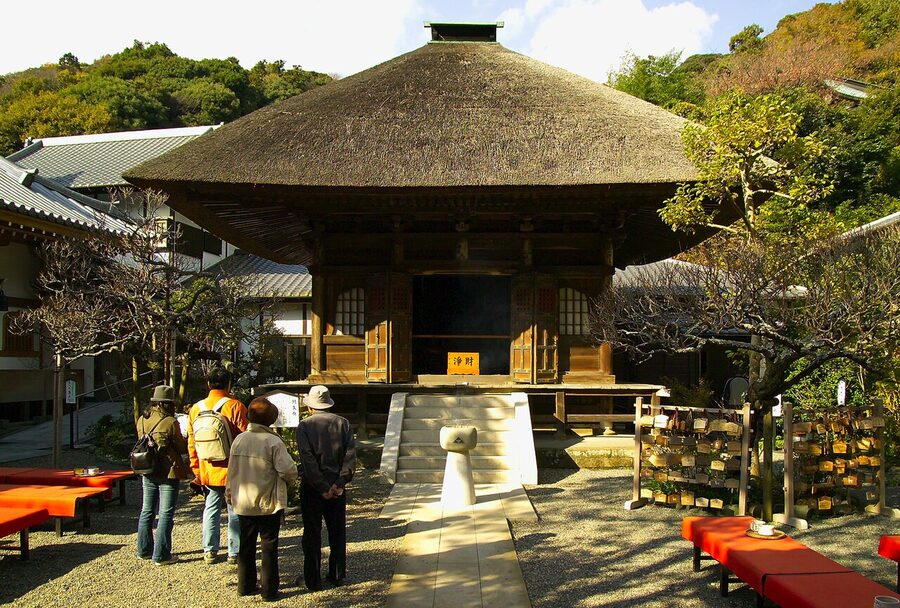
For the darker end, take the Enoden line to Enoshima. The old execution ground at Tatsunokuchi is now the site of Ryūkō-ji, the Nichiren temple founded where Nichiren was reprieved, and a few minutes’ walk away the small temple of Jōryū-ji keeps the mound of the five envoys of 1275. There is no charge to stand there, and I think you should.
I said at the start that the most famous picture of the invasions shows a man about to die, and that part of it was painted later by someone else. That is the whole story in miniature. The wall at Imazu, the wrecks off Takashima, the dead on Tsushima and Iki and the wind of 1281 are real; the god who sent the wind was added afterwards, by people who had a use for him.
So go to Imazu and stand on the wall, and take the ferry to Takashima and look down at the bay. And if you are ever in Kamakura, find Jōryū-ji and spare a thought for Du Shizhong, who left home with warm clothes from his wife and never came back. Suenaga sold his horse to make sure his part was remembered. Du had nobody to do that for him.