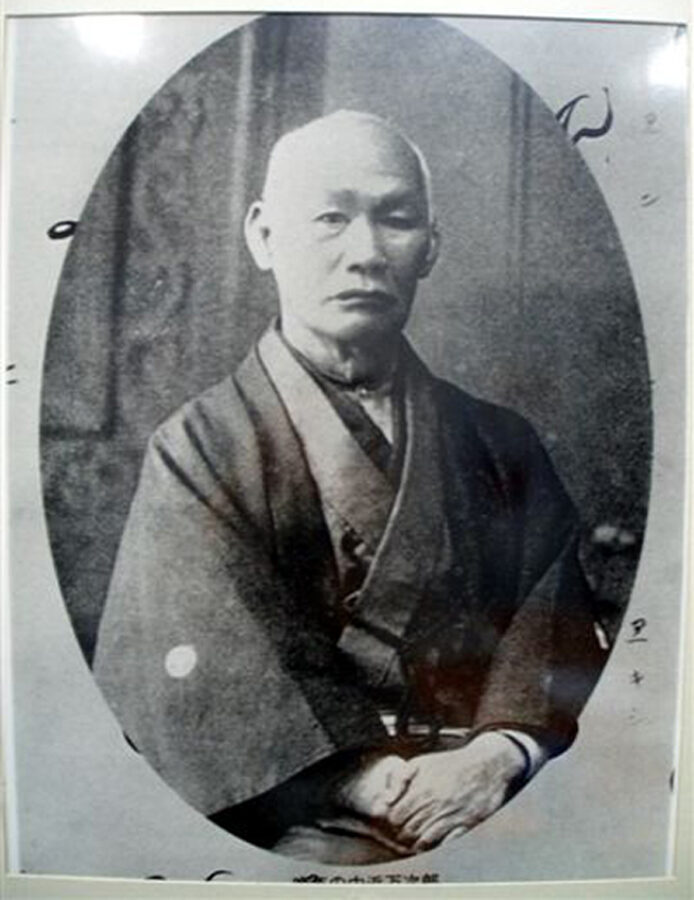
The man who named Japan’s “closed country” also gave the Japanese language its word for gravity. Shizuki Tadao (志筑忠雄) was a sickly former Dutch interpreter in Nagasaki who gave up his post young, moved back into his family’s merchant house and spent the rest of his short life translating European books. His version of John Keill’s lectures on Newton handed Japanese the terms inryoku (引力, gravitational attraction) and enshinryoku (遠心力, centrifugal force), and both are still in every school textbook.
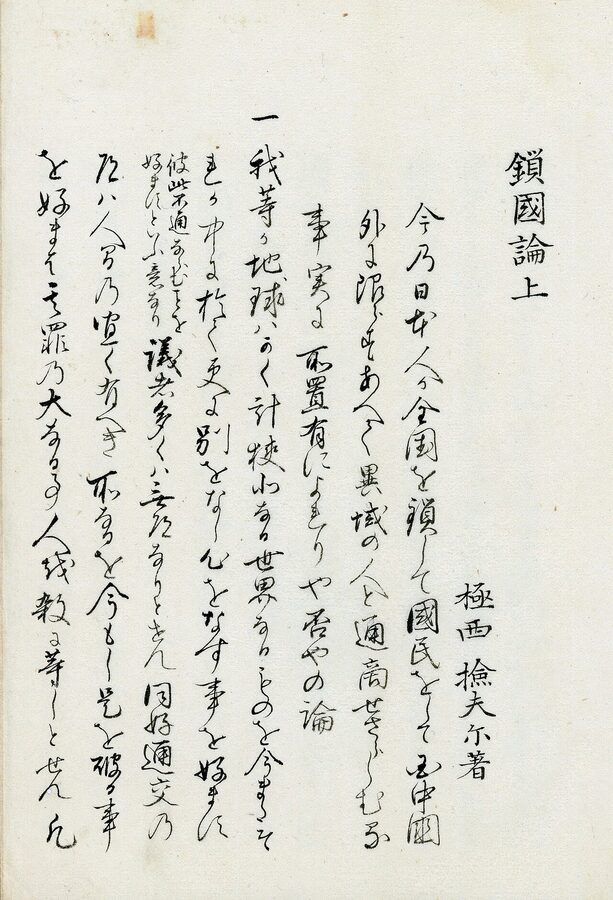
In 1801 he finished a translation of one chapter of Engelbert Kaempfer’s History of Japan, the appendix in which the German doctor asked whether Japan did well to keep itself shut. The chapter heading in the Dutch edition he worked from ran to some forty words, so Shizuki went looking through his own text for something shorter and settled on two characters: 鎖, a chain or a lock, and 国, a country. He called the manuscript Sakokuron (鎖国論), “On the Locked Country”.
It was never printed in his lifetime, and the word seems not to turn up in the shogunate’s own papers until 1853, the year the American warships came. So the policy every Japanese schoolchild learns as sakoku ran for two centuries without a name, and the name it got came from a foreigner who admired it. I find that gap between the thing and the word the best way into the subject, because once you look at what the Tokugawa actually did, “closed” turns out to be the least accurate part of it.
In This Article
- Before the locks: a country that was everywhere
- What the edicts actually said
- Four mouths: the doors that stayed open
- Nagasaki: the Dutch, and the much bigger Chinese trade
- Tsushima and Korea: a forged letter and a Japanese town in Busan
- Satsuma and the Ryukyus: a kingdom with two masters
- Matsumae and the Ainu: a domain without rice
- A word invented in 1801, and the argument it started
- Living inside the fence: ordinary people, castaways and Dutch learning
- Knocking on the locked doors
- Where to see the four mouths today
- Hirado: the warehouse torn down for its date
- Nagasaki: Dejima, the Chinese quarter and the magistrate’s hill
- Tsushima: the Sō clan’s island
- Tomonoura: where the Korean envoys looked at the sea
- Okinawa: Shuri Castle, rebuilt once more
- Hokkaido: Matsumae Castle and Upopoy
- Tokyo: an execution ground and a new anatomy
Before the locks: a country that was everywhere
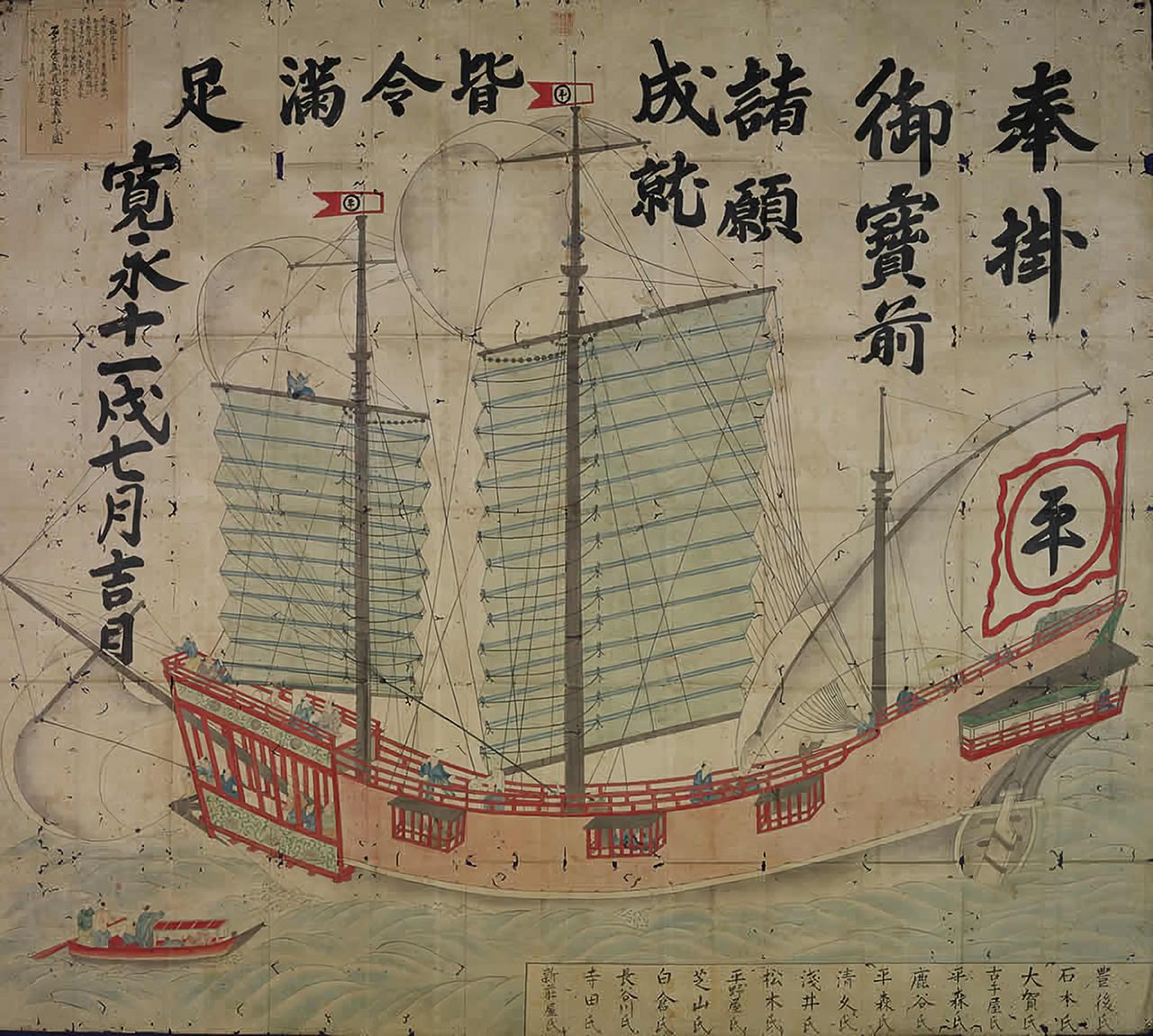
In the early 17th century you could meet Japanese almost anywhere a ship could reach in maritime Asia. The shogunate licensed more than 350 voyages by shuinsen (朱印船), “red seal ships”, to Vietnam, Siam, Cambodia, Luzon and Taiwan, and Japanese towns grew up at Ayutthaya, at Hội An and outside the walls of Manila. Japanese mercenaries fought for the Siamese king and the Dutch East India Company, and Japanese swords went out by the crate. In 1621 the shogunate felt obliged to ban the export of weapons and fighting men altogether.
The money underneath all of this was silver for silk. Japan’s mines, Iwami above all, were producing a large share of the world’s silver, and China wanted silver more than anything else. Because the Ming would not trade with Japan directly, the Portuguese at Macau made fortunes carrying Chinese raw silk, the stuff of the age’s kimono, to Nagasaki and taking silver back. With the carracks came the Jesuits, and a Christian community of several hundred thousand, mostly in Kyushu, which I cover in my piece on Christianity in Japan.
The pattern that matters for this story was set by Toyotomi Hideyoshi. He expelled the missionaries in 1587 and crucified the Twenty-Six Martyrs at Nagasaki in 1597, yet he never stopped the Portuguese trade, because he wanted the silk. The same Portuguese trade had brought Yasuke to Japan in 1579. Every ruler of Japan from Hideyoshi onward was trying to solve the same puzzle: how to keep the goods and lose the priests.
Tokugawa Ieyasu was, if anything, more eager for foreign trade than Hideyoshi. He wrote to Manila, Siam and Annam, took the shipwrecked English pilot William Adams into his service, let the Dutch open a factory at Hirado in 1609 and the English in 1613, and spent years failing to restore official relations with Ming China. When the Ming made their refusal clear in 1615, the same year Ieyasu destroyed the Toyotomi at Osaka Castle, he had already banned Christianity across the country, and his son Hidetada began closing the gaps.
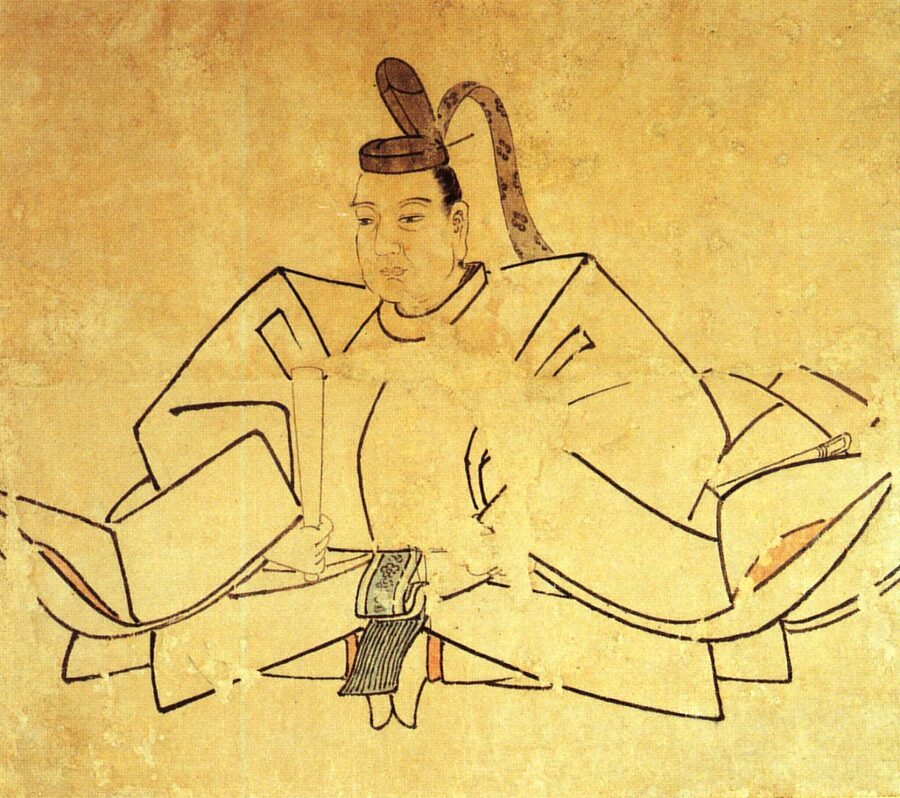
In 1616 Hidetada confined all European ships to Nagasaki and Hirado; the English gave up and left in 1623, and in 1624 relations with Spain were broken off. None of this was yet a system. It was a run of decisions by men who had come out of the Sengoku era knowing exactly how western daimyo had paid for their armies: with foreign trade, foreign guns and foreign silver.
What the edicts actually said
The first thing to know about the “sakoku edicts” is that nobody at the time called them that. The label sakoku-rei (鎖国令), and the habit of numbering them First to Fifth, belong to historians writing after the Meiji Restoration. The second thing is that most of them were not public proclamations at all. They were letters of instruction from the shogun’s senior councillors, the rōjū, to the two officials who governed Nagasaki.
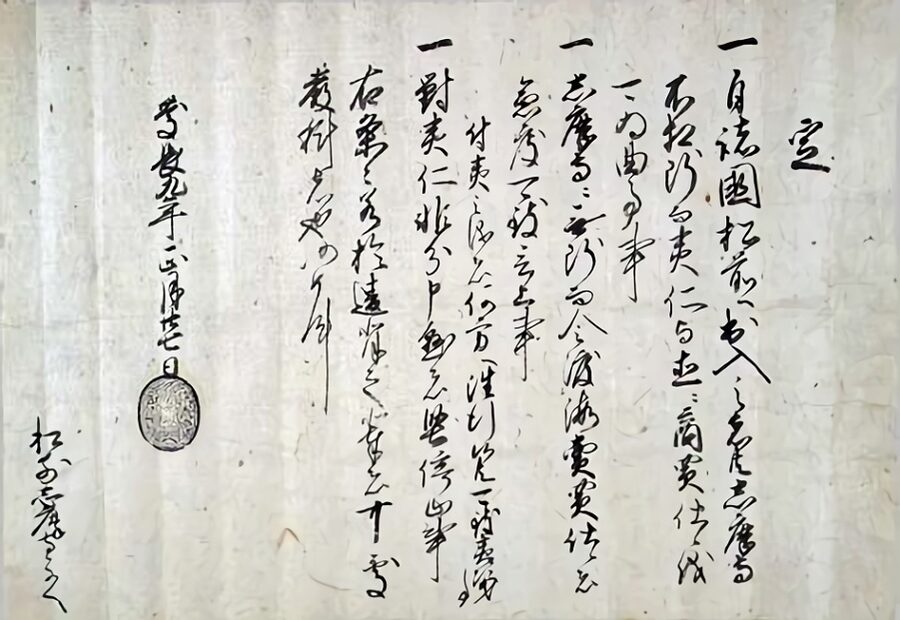
The instruction of the 28th day of the second month of 1633, signed by four councillors including Doi Toshikatsu and Sakai Tadakatsu, runs to seventeen articles. The first three deal with Japanese going abroad: no ship may leave except a hōshobune (奉書船), anyone who slips out on another ship is to be executed, and Japanese who have settled overseas are to be executed if they come back, unless they were stranded and return within five years. Articles four to eight mostly concern Christians, with a reward of a hundred pieces of silver for anyone who informs on a priest. The remaining nine are about silk prices, cargo registers and the date by which foreign ships must leave (the 20th day of the ninth month).
So the most famous “closing” document in Japanese history is, by article count, mostly a trade manual. That is not a debating point. It is the clearest evidence you could want that the shogunate’s aim was control, not absence.
The hōshobune clause needs explaining. Ieyasu had issued the red seal licences himself, and no successor could decently cancel a document bearing his seal, so from 1631 the councillors added a second requirement, a letter (hōsho) from the rōjū, and then stopped issuing the letters. It is about as Tokugawa a solution as you will find: nothing was revoked, everything was stopped.
The instructions of 1634 repeated those of 1633, and work began that year on Dejima, a fan-shaped artificial island in Nagasaki harbour built to hold the Portuguese. In 1635 the rules hardened: every Japanese voyage abroad was forbidden, any Japanese returning from overseas was to die, and Chinese ships were confined to Nagasaki. In 1636 the Portuguese were moved onto Dejima, and 287 people of Portuguese descent, including the Japanese wives and mixed-race children of Portuguese men, were shipped off to Macau.
Then came the Shimabara Rebellion of 1637–38, a peasant rising in the old Christian heartland of Arima and Amakusa, crushed at Hara Castle by an army the shogunate put at around 120,000 men. A Dutch ship was asked to bombard the castle from the sea, and did. For the councillors, Shimabara was proof that Christianity could still raise an army, and the Portuguese were the only remaining channel through which priests could arrive.
The last instruction, dated the fifth day of the seventh month of 1639, is short. Three articles recite the crimes of the Christian sect, and then the conclusion: from now on, the kareuta (the Portuguese galliot) may not come; if one does, the ship is to be destroyed and everyone aboard beheaded. It was signed by seven men, among them Matsudaira Nobutsuna, who had commanded at Shimabara, and Ii Naotaka of Hikone.
Why the two-year wait after Shimabara? Because the shogunate first made sure the Dutch could supply the silk and medicines the Portuguese had carried, and because Nagasaki merchants had lent the Portuguese large sums of silver that they wanted back first. Even the decisive act of the closing was a credit calculation.
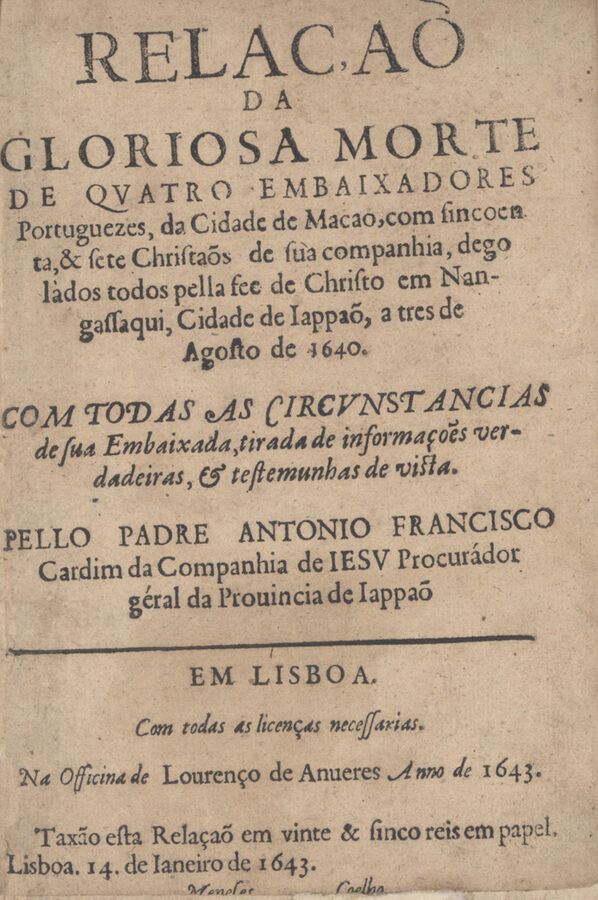
Macau did not believe it. In 1640 the city sent an embassy of four envoys and their crew to plead for the trade. The shogunate burned their ship and executed sixty-one of them at Nagasaki in early August (Portuguese and English accounts differ by a day on the date), sending thirteen sailors home to report what they had seen.
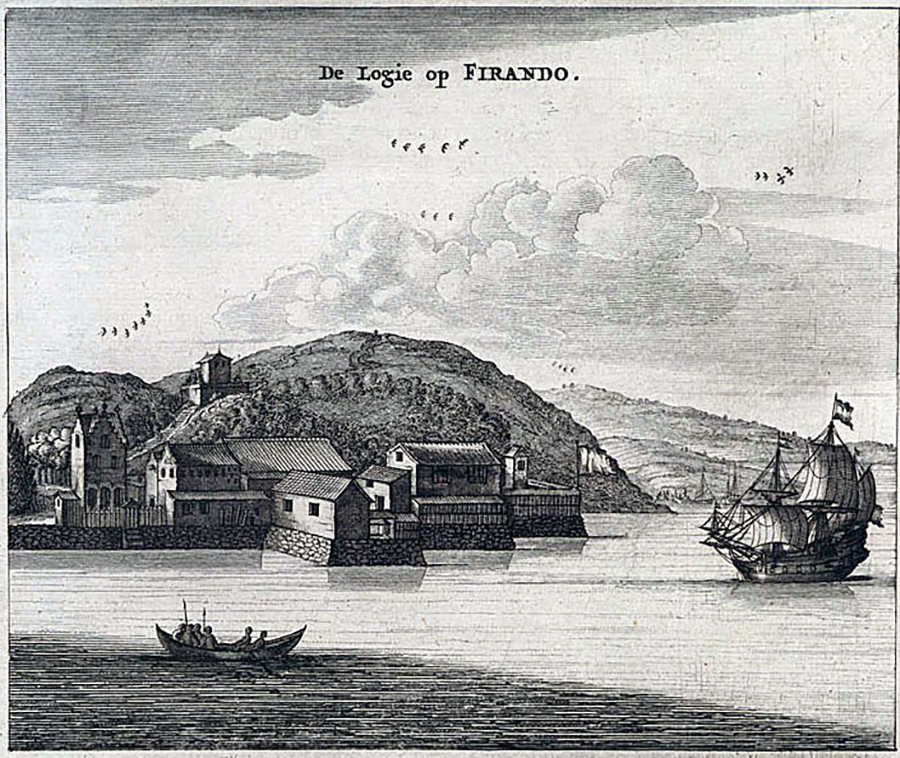
The Dutch did not escape lightly either. In 1640 the shogunate ordered the demolition of their stone warehouses at Hirado on the pretext that the gables carried Christian-era dates, and in 1641 the whole factory was moved to the now-empty Dejima. The Nagasaki merchants who had paid to build the island had been petitioning for a new tenant, and they got one. The Portuguese had paid 80 kanme of silver a year in rent; the first Dutch chief negotiated it down to 55.
One more myth deserves to go. The 1635 revision of the samurai house laws did forbid daimyo to own vessels over 500 koku, but that was aimed at daimyo navies, and in 1638 the rule was clarified to exclude merchant ships altogether. Japan kept building large freighters for two more centuries; what it lost was the permission to point them abroad.
A last note on dates, because you will meet both versions. English-language accounts usually run sakoku from the first instruction of 1633 to Perry’s arrival in 1853. Japanese reference works more often count from the Portuguese ban of 1639 to the Kanagawa treaty of 1854, and arrive at 215 years.
Four mouths: the doors that stayed open
In 1797 an ambitious young shogunal official named Kondō Jūzō, drafting a memorandum about Russian activity in the north, wrote that Japan’s points of passage with foreign lands were limited to four: Nagasaki, Satsuma, Tsushima and Matsumae. It is the earliest clear statement of what modern historians call the yottsu no kuchi (四つの口), the “four mouths”. The phrase itself was put into circulation by the historian Arano Yasunori; Japanese sources variously date it to 1978, 1980 or 1981, and Arano himself traces the idea to 1978.
Each mouth was run by a different hand. Nagasaki belonged to the shogunate and its magistrates; the other three belonged to daimyo for whom foreign contact was a hereditary duty and a substitute for the rice land they lacked: the Sō of Tsushima for Korea, the Shimazu of Satsuma for the Ryukyu Kingdom, and the Matsumae for the Ainu of Ezo.
The shogunate also sorted its partners into two kinds. Korea and Ryukyu were tsūshin (通信) countries, with formal diplomacy; China and the Dutch were tsūshō (通商), trade without diplomacy. The Ainu were neither, which tells its own story.
Nagasaki: the Dutch, and the much bigger Chinese trade
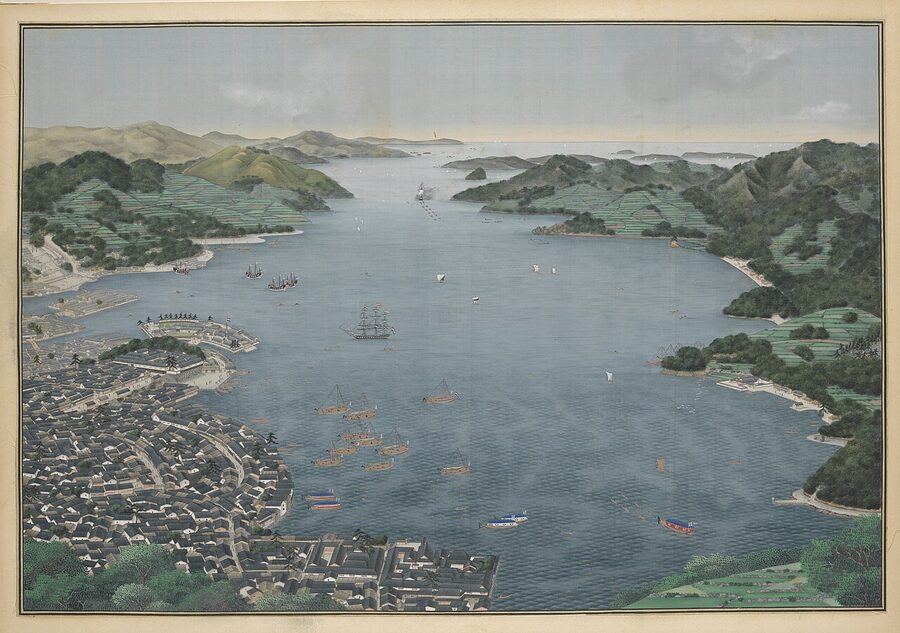
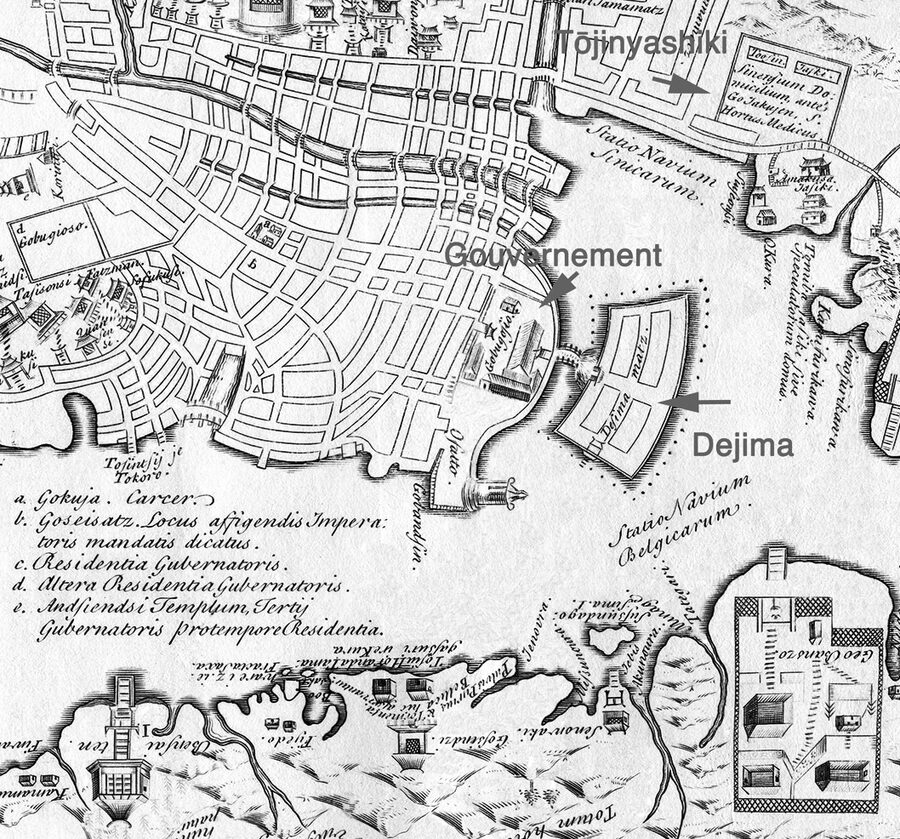
Dejima is the image everyone carries of sakoku: a fan-shaped island of about 1.5 hectares, joined to the city by one guarded bridge, holding a few dozen Dutch East India Company men (about twenty by the 18th century, plus enslaved servants from Asia and Africa whose names rarely survive). A notice at the gate banned all women except courtesans, all monks except the wandering priests of Kōyasan, beggars and alms-collectors, boats inside the ring of stakes, and any Dutchman leaving without permission. I have covered the island in its own article on Dejima, so here I want to correct its proportions.
The Chinese trade at Nagasaki was always bigger than the Dutch. Japanese reference works put the Dutch share at about half the Chinese; Arano, who has looked harder at the figures than most, puts it nearer a third. After the Qing lifted their own coastal ban in 1684, more than a hundred junks a year were arriving, and the shogunate responded with quotas and, in 1689, with the Tōjin yashiki (唐人屋敷), a walled Chinese compound of about 9,400 tsubo that could house two thousand people. It was guarded, but far less strictly than Dejima, and its residents built their own temples to Mazu and the earth god.
The rules kept tightening because Japan’s silver was running out. A cap on the annual value of trade came in 1685, and in 1715 Arai Hakuseki’s Shōtoku shinrei (正徳新例) cut the Chinese to thirty junks a year, each needing a licence, and the Dutch to two ships. By then the exports had changed from silver to copper and to tawaramono, sacks of dried sea cucumber, abalone and shark fin for Chinese kitchens, much of it sourced from Ezo through the Matsumae mouth.
The Dutch paid for their place in information as much as in goods. From 1641 every arriving ship had to deliver a fūsetsugaki (風説書), a digest of world news translated for the shogun’s eyes. From 1840 Batavia added a longer “special” report compiled from British newspapers, and the one delivered in 1852 warned that an American squadron under Commodore Perry was on its way. The Black Ships were, in other words, the best-advertised surprise in Japanese history.
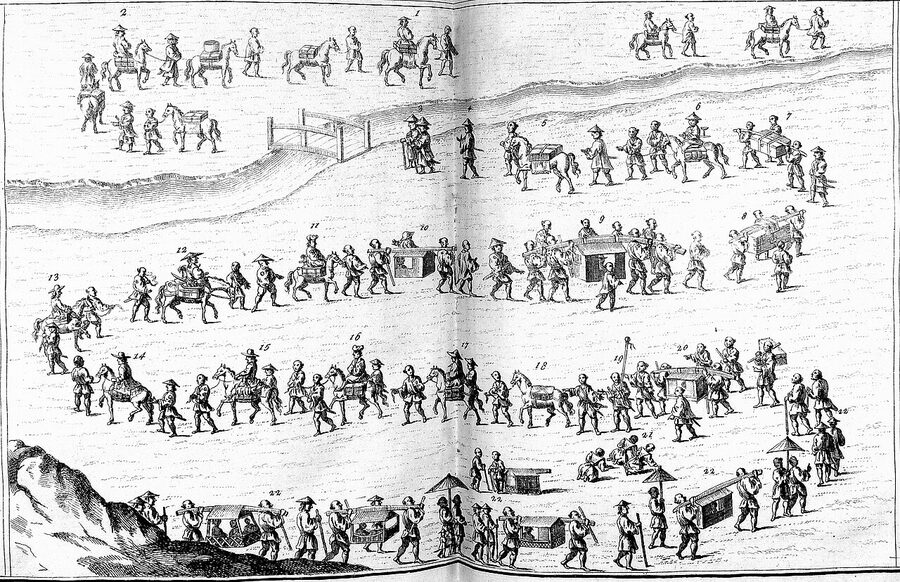
The other price was the annual journey to Edo to thank the shogun for the privilege of trading. Kaempfer made it twice, in 1691 and 1692, and found himself in front of the fifth shogun, Tokugawa Tsunayoshi, behind a screen of ladies, being asked to walk, turn, pretend to be drunk and sing. Kaempfer obliged with a German love song. It is a scene worth remembering whenever someone tells you the Tokugawa were incurious about the outside world.
Tsushima and Korea: a forged letter and a Japanese town in Busan
Tsushima is a mountainous island halfway between Kyushu and Korea with almost no rice land, and the Sō clan had lived off trade with Korea for centuries. Hideyoshi‘s invasions of the 1590s, in which men like Katō Kiyomasa fought their way to the Tumen River on the Manchurian border, wrecked that living. Sō Yoshitoshi, who had been forced to guide the invasion, spent the years after it sending back Korean captives by the hundred and begging Seoul to talk.
To get the two governments to the table, Tsushima did something astonishing: it forged and doctored the state letters. Korea wanted a letter from the “King of Japan” apologising first; Edo had no intention of apologising or of calling its shogun anyone’s equal, so Tsushima wrote the letters each side needed to receive. It worked. The first Korean embassy came in 1607, and a trade agreement of 1609 allowed Tsushima twenty ships a year to Busan.
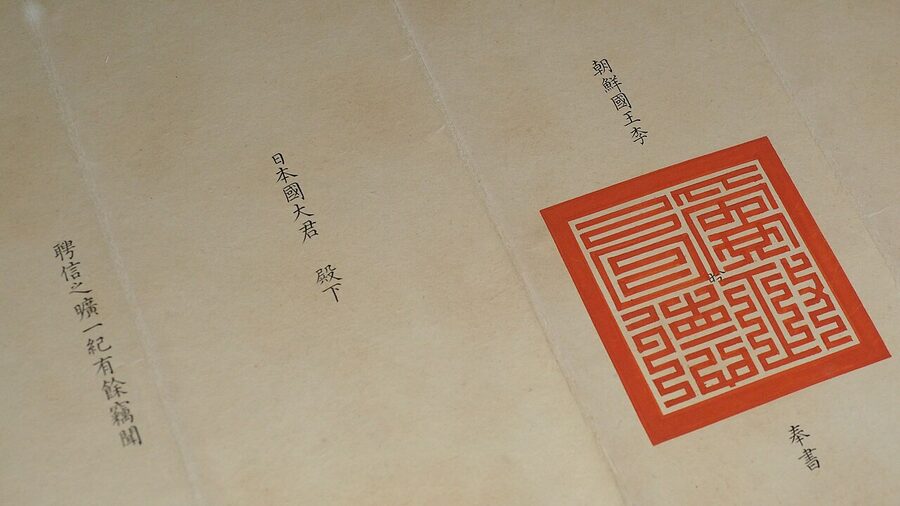
The scheme came out in the 1630s when Sō Yoshinari’s chief retainer, Yanagawa Shigeoki, who hoped to become a direct vassal of the shogun, laid it before Edo. Iemitsu judged the case in person at Edo Castle in 1635. Yoshinari was cleared, Yanagawa was exiled to Tsugaru, and the Zen monk who had done the actual forging went to the far north as well. The shogunate then tidied up the paperwork: from 1636 Korean letters addressed the shogun as Nihon-koku Taikun (日本国大君), “Great Prince of Japan”, a title invented to avoid “king”, and monks from Kyoto’s great Zen temples were posted to Tsushima in rotation to check every letter.
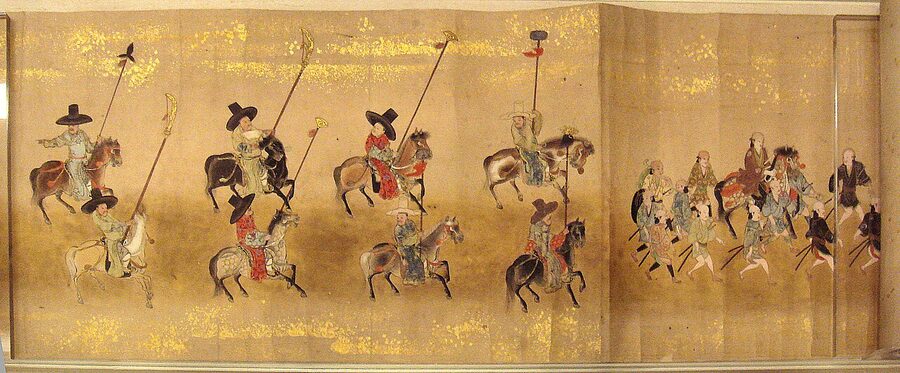
Twelve Korean embassies came to Japan between 1607 and 1811. A typical mission was 400 to 500 people, musicians, painters and doctors among them, with something like 1,500 Tsushima escorts. They sailed up the Inland Sea, changed to river barges at Osaka and walked to Edo, near Hikone along the road Ieyasu had used after his victory at Sekigahara, still called the Chōsenjin Kaidō, the “Korean road”. A round trip took eight to ten months, and villages along the route paid for much of it in labour and levies.
The diplomacy was never comfortable. In 1711 Arai Hakuseki slashed the cost of the embassy and changed the shogun’s title back to “king”, which brought him into open conflict with his old classmate Amenomori Hōshū, Tsushima’s Korea specialist, who had learned Korean in Busan and preached “sincere and trusting relations”. The eighth shogun, Yoshimune, quietly restored “Taikun” for the next embassy in 1719. The last mission, in 1811, got no further than Tsushima, where the formalities were performed to save money.
The trade happened in Korea, not Japan. In 1678 the Japanese compound at Busan moved to a new site at Choryang, a walled town of about 100,000 tsubo, roughly 25 times the size of Dejima and ten times the Chinese quarter at Nagasaki, where 400 to 500 Tsushima men lived permanently and no women of either nation were allowed. Japanese silver went out; Korean ginseng and, above all, Chinese silk came in, and in the late 17th century the silk coming through Tsushima rivalled or surpassed Nagasaki’s. So much for a single locked door.
Satsuma and the Ryukyus: a kingdom with two masters
In the spring of 1609, with Ieyasu’s permission, a Satsuma army of about 3,000 men under Shimazu Tadatsune, son of the famous Shimazu Yoshihiro, sailed south through the Amami islands and took Shuri, the capital of the Ryukyu Kingdom, in a matter of weeks. King Shō Nei was carried off to Kagoshima, Sunpu and Edo, and sent home in 1611 only after swearing loyalty to the Shimazu, who kept the Amami islands for themselves.
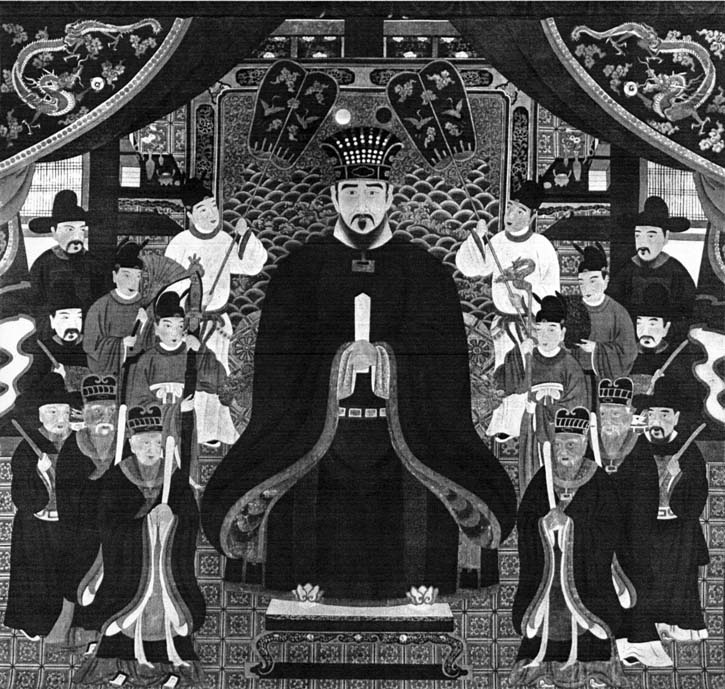
What happened next is the oddest arrangement of the whole system. The shogunate did not want Ryukyu absorbed into Japan, because a “foreign” Ryukyu could keep sending tribute to China and so keep a Chinese trade route open. Satsuma’s early plans to make the islands Japanese were reversed, and Ryukyu became a kingdom paying tribute to two overlords at once. Satsuma officials in Naha were expected to keep out of sight when Chinese investiture envoys came, and the Ryukyuan court described its position, with a certain dry pride, as taming both Yamato and China.
Through this mouth went Japanese silver, from 1739 in specially re-minted coin of the old fineness because the debased silver of the day was no good in China, and back came Chinese silk and medicines and, later, Ryukyuan and Amami sugar. Satsuma’s debts were enormous and the sugar mattered: the domain that eventually helped overthrow the shogunate was paid for, in part, by cane grown on islands it had seized in 1609. The island culture of Okinawa, which would later give the world karate, grew up inside this double bind.
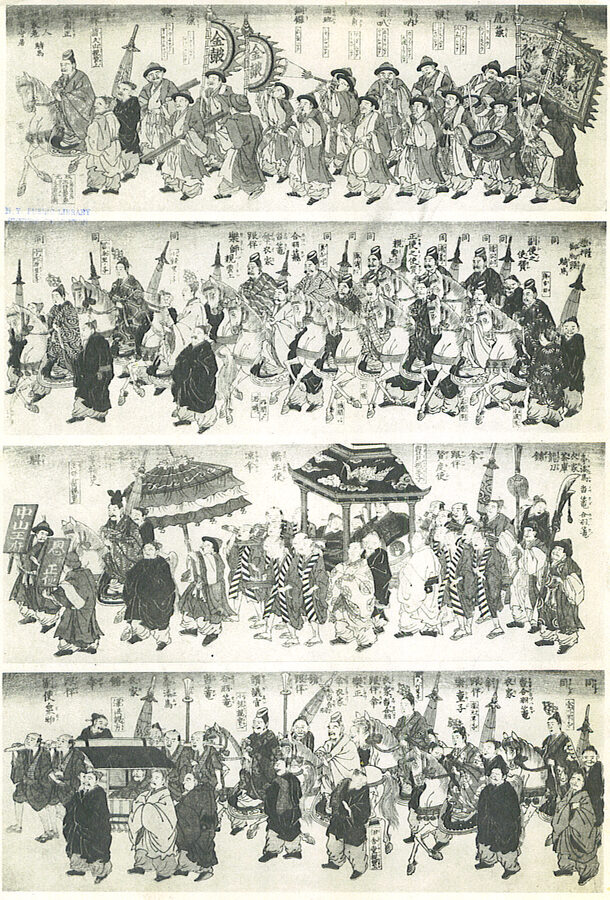
Eighteen Ryukyuan missions went up to Edo between 1634 and 1850, travelling with Satsuma’s own alternate attendance trains and lodging in the Shimazu mansions, on a round trip of most of a year. In 1714 the Ryukyuan scholar Tei Junsoku talked long enough with Arai Hakuseki for Hakuseki to write a history of the southern islands from their conversations.
Matsumae and the Ainu: a domain without rice
The Matsumae clan sat on the southern tip of Ezo, the island now called Hokkaido, where rice would not grow. Ieyasu confirmed their monopoly on trade with the Ainu in a black-seal letter of 1604, and because they had no rice yield at all they were almost unique: a daimyo house with no real kokudaka, given a nominal rank of 10,000 koku only later. Their samurai were paid not in rice but in trading posts, akinaiba (商場), each carrying the right to send one ship a year to barter with the Ainu.
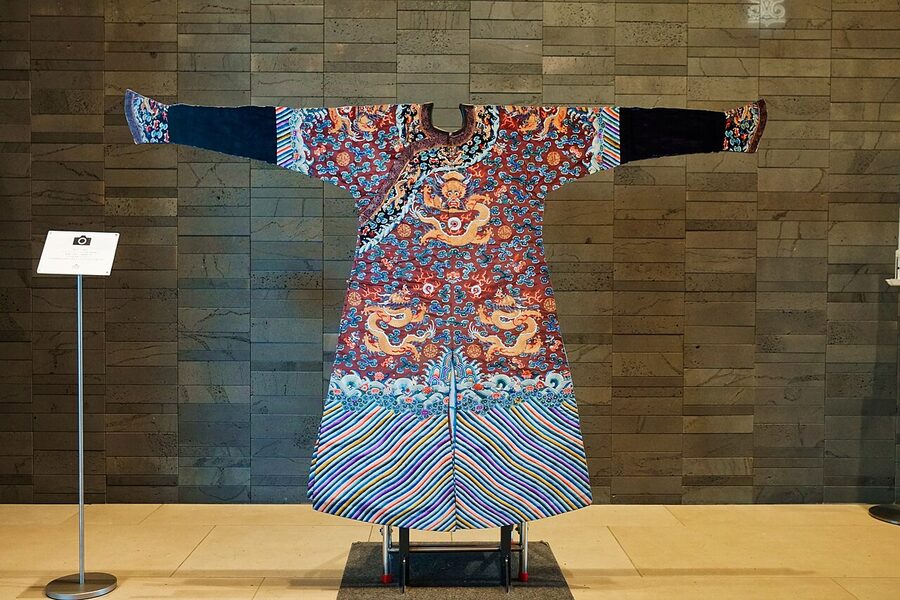
The Ainu were not a sealed people at the edge of a sealed country. They traded north through Sakhalin with the peoples of the Amur, and through them with the Qing, and Chinese silk dragon robes came down that chain into Japan as Ezo-nishiki (蝦夷錦), “Ezo brocade”. Matsumae lords wore them before the shogun and presented them as gifts, while keeping quiet about where they came from.
Monopoly did what monopoly does. In 1665 Matsumae imposed a much worse rate of exchange, and in 1669 the chief Shakushain turned a long feud between Ainu groups into a general rising: 213 Japanese were killed on the eastern coasts and 143 on the western, most of them traders, sailors and miners rather than soldiers. Late that year Matsumae offered peace, and Shakushain was murdered at the banquet held to celebrate it. The shogunate did not punish the domain.
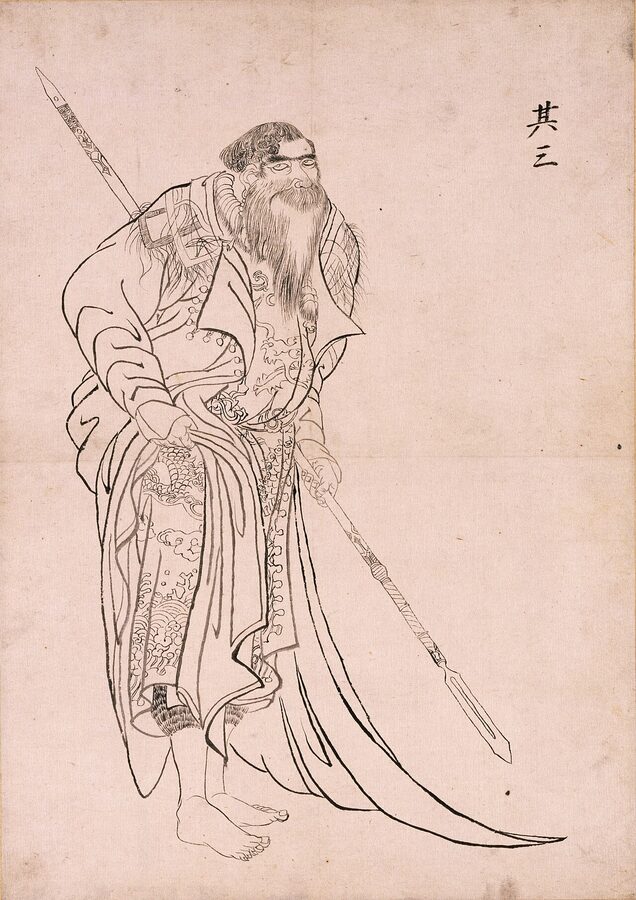
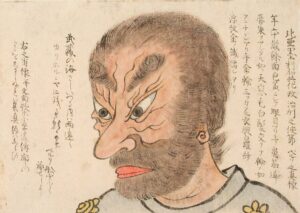
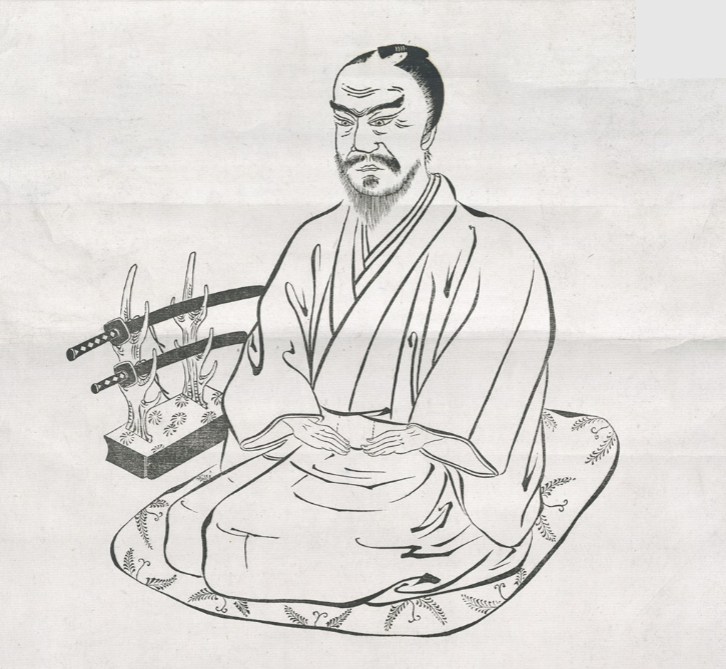
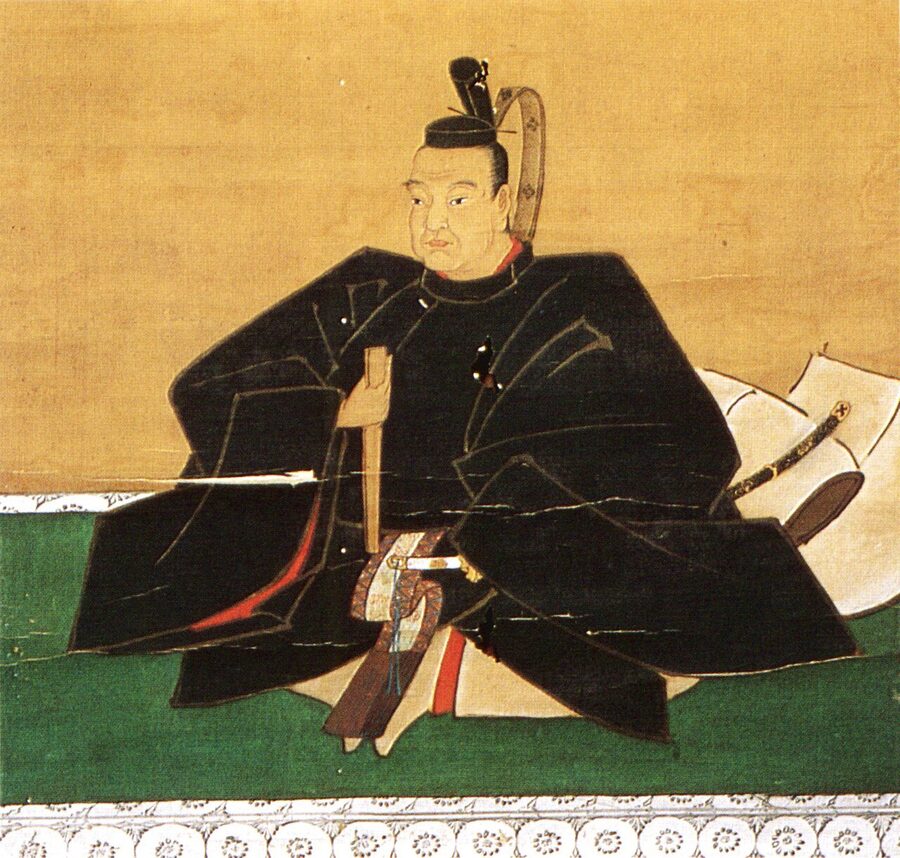
Through the 18th century the trading posts passed to merchants under the basho ukeoi (場所請負) system, and the Ainu went from trading partners to labourers in other men’s fisheries. In 1789 Ainu on Kunashiri and the Menashi coast rose and killed some seventy Japanese. Ikotoi, the chief in the portrait above, had been trading with Russians since 1773, which tells you how porous the “closed” north was; he helped broker the ceasefire and was left a collaborator to one side and a traitor to the other.
A word invented in 1801, and the argument it started
Engelbert Kaempfer spent two years at Dejima, from 1690 to 1692, as the company surgeon, and died in 1716 with his Japan book unpublished. Hans Sloane bought his papers and had them translated into English, and the result, published in London in 1727, supplied nearly all of Diderot’s Encyclopédie entries on Japan. Its appendix argued that Japan, peaceful and self-sufficient, was right to keep the world out.
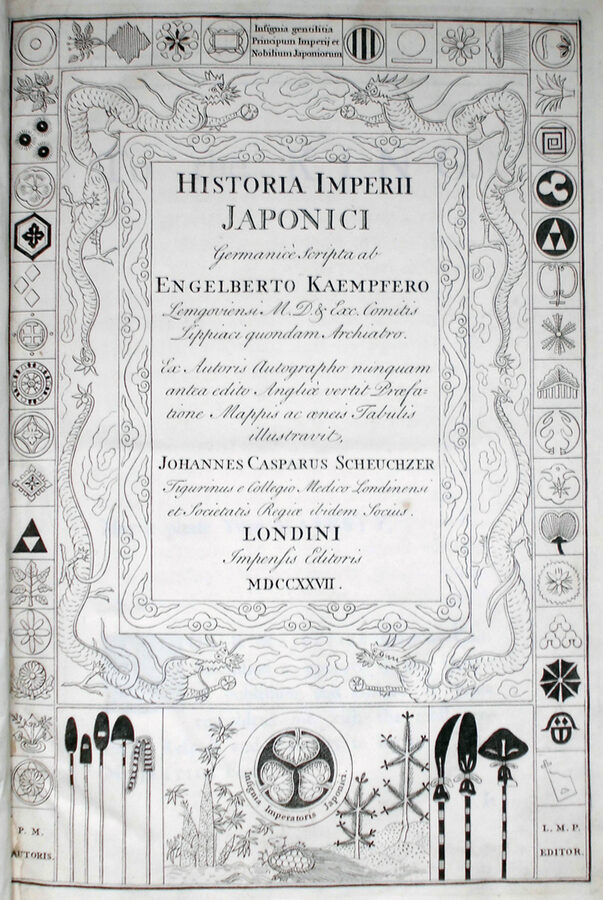
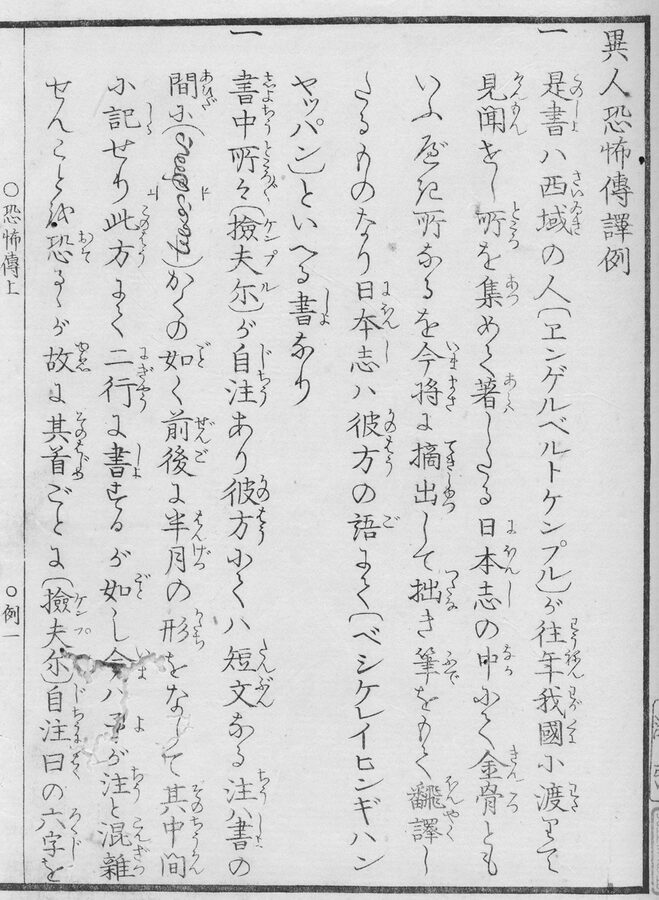
Shizuki translated that appendix from the Dutch edition of 1733, and he had his own reasons. Ōshima Akihide has shown that he wrote it hoping for an official post, in the language of civilisation versus barbarians, just as Russian ships had begun appearing in the north. The Sakokuron circulated in hand copies, the nativist Hirata Atsutane quoted it, and in 1850 Kurosawa Okimaro printed it under a new title as an anti-foreign tract.
The policy itself was turning into a doctrine at about the same time. When the Russian envoy Adam Laxman came to Nemuro in 1792, the councillor Matsudaira Sadanobu cited the country’s law against new relations but gave him a permit to call at Nagasaki. When Nikolai Rezanov arrived there with it in 1804, he was kept waiting six months and then refused. Several Japanese historians date the idea of sakoku as sohō (祖法), an ancestral law never to be changed, to that refusal.
So by the time the shogunate first used the word sakoku in its own documents, in 1853, it was defending a 17th-century arrangement as if Ieyasu had handed it down on tablets. Ii Naosuke, the lord of Hikone who pushed through the commercial treaty with America in 1858, called the old policy “the law of closing out the ocean” and compared it to holding out in a besieged castle. Any castle lord knew how a siege ends when no relief is coming.
Historians have argued about the word ever since. For most of the 20th century sakoku was the frame for everything: the philosopher Watsuji Tetsurō subtitled his 1950 book on it “Japan’s tragedy”, and Iwao Seiichi’s standard study of 1963 described a country fallen into international isolation. From the 1970s, Asao Naohiro, Ronald Toby in English and above all Arano Yasunori took that picture apart. Arano proposed replacing sakoku with kaikin (海禁), “maritime prohibitions”, the term the Ming had used for their own controls, inside a “Japanese-style civilised-and-barbarian order” with the shogun at its centre.
The argument reached the classroom. In 2017 the education ministry published draft curriculum guidelines that dropped the word sakoku from primary and middle-school history in favour of “the shogunate’s foreign policy”. The public comments were so hostile that the final version settled on “sakoku and other foreign policies of the shogunate”, which is the kind of compromise that satisfies nobody and is therefore probably correct.
My own view is that both camps are describing something real. On goods and information, “closed” is simply wrong: silk, sugar, ginseng, medicines, books and news kept arriving through four channels the shogunate watched closely. On people it is close to right, because a Japanese could not leave and a foreigner who was not Dutch, Chinese, Korean or Ryukyuan could not come in, on pain of death. It was a closed country for human beings and a managed market for everything else.
Living inside the fence: ordinary people, castaways and Dutch learning
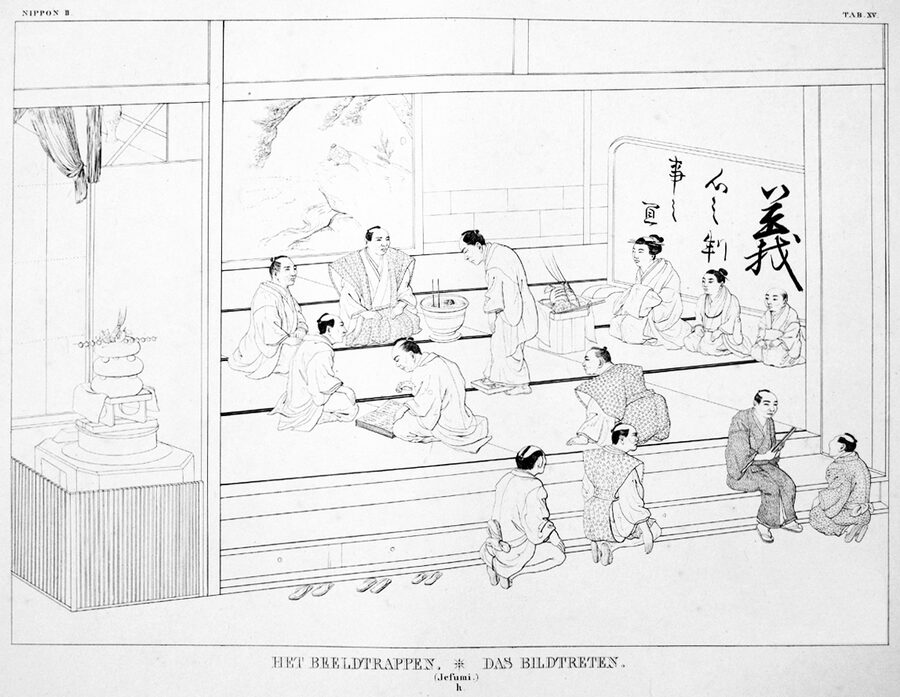
For most people the edicts were invisible, because they would never have gone abroad anyway. What they felt was the machinery built to root out Christianity. Every household had to be registered at a Buddhist temple, which vouched each year that its members were not Christians, and village notice boards offered rewards for informers. In Nagasaki and parts of Kyushu, everyone, from small children upward, stepped on a Christian image at the New Year inspection.
The edicts hit hardest at those caught on the wrong side of them. The Japanese towns of Southeast Asia dissolved into the local population, and in 1639 the mixed-race families of Europeans in Nagasaki were deported to Batavia, among them a girl of about fourteen called Oharu. For two centuries she was remembered through the Jagatara-bumi, a heartbreaking letter of homesickness supposedly sent from Java, which first appeared some seventy-five years later in a book by the Nagasaki scholar Nishikawa Joken and is now generally regarded as his invention. Her real will, in the Jakarta archives, shows a well-off merchant’s wife who owned slaves.
Then there were the castaways. Japan’s coastal freighters were built for short hops between harbours, with one great sail and a huge rudder that tended to snap in heavy seas, and every year some were blown out into the Pacific. In the last month of 1782 by the old calendar (January 1783 by ours) the Shinshō-maru left Shiroko in Ise for Edo with a cargo of rice under its captain, Daikokuya Kōdayū, and was driven onto Amchitka in the Aleutians after seven months adrift.
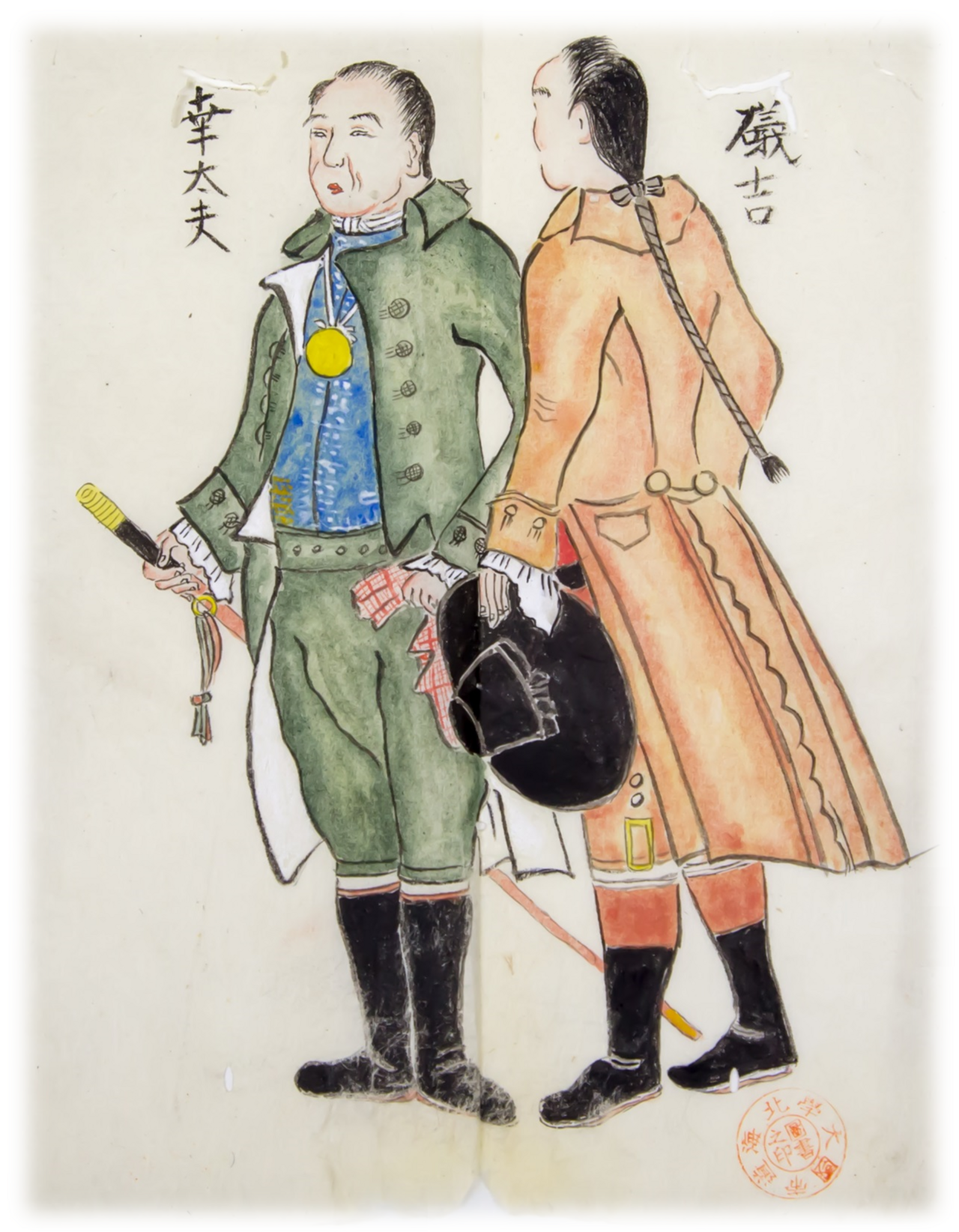
Kōdayū learned Russian, crossed Siberia, met Catherine the Great at Tsarskoye Selo in 1791, and was brought home the following year by Adam Laxman, whose real purpose was to open trade. The physician Katsuragawa Hoshū turned his testimony into the study Hokusa bunryaku, and he lived out his life in a house in the shogun’s herb garden in Edo, consulted by scholars. The popular novel about him has him under house arrest; documents found in Suzuka in 1986 show he was allowed to visit home.
Others never got back. Otokichi, a teenage deckhand from the Chita peninsula, drifted across the Pacific for fourteen months aboard the Hōjun-maru, one of three survivors out of thirteen, and was passed from the Makah people near Cape Flattery to the Hudson’s Bay Company and on, by way of London, to Macau. In 1837 he was aboard the American merchant ship Morrison when it tried to return him and six other castaways, and the shore batteries at Uraga and then Kagoshima opened fire. He died in Singapore in 1867.
Nakahama Manjirō had better luck. Wrecked on the uninhabited island of Torishima at fourteen in 1841, he survived 143 days before an American whaler picked him up, and grew up in Fairhaven, Massachusetts, with its captain, William Whitfield. In 1851 he landed himself in Ryukyu, was questioned for months by Satsuma and the Nagasaki magistrate, and reached home in Tosa in 1852. A year later Perry came, the shogunate suddenly needed someone who knew America, and Manjirō was made a hatamoto.
The scholars, meanwhile, were reading. English-language accounts usually say that the eighth shogun, Yoshimune, lifted a ban on Dutch books in 1720. Japanese scholarship is more precise: what had been banned since 1630 were Chinese translations of European works touching on Christianity, and Yoshimune relaxed that ban. Either way, from the 1720s the trickle of Dutch books became a steady flow, and rangaku (蘭学), “Dutch learning”, took shape around them.
Its founding scene is grisly. On the fourth day of the third month of 1771, the Obama domain physician Sugita Genpaku and the Nakatsu domain physician Maeno Ryōtaku watched the dissection of an executed woman at the Kotsukappara execution ground in Edo, each carrying his own copy of the same Dutch anatomy atlas, the Ontleedkundige Tafelen. The organs matched the Dutch plates and not the Chinese medical charts. They went home and began to translate, with almost no Dutch between them, and in 1774 published Kaitai shinsho (解体新書), the “New Text of Anatomy”.
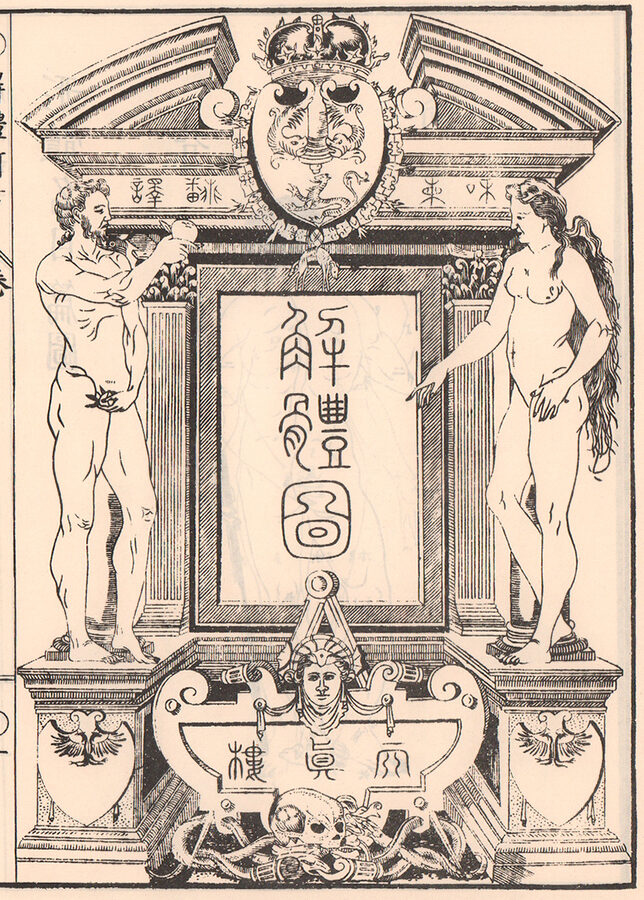
In his memoir, written more than forty years later, Sugita compared those first days to setting out on a great sea in a boat with neither oar nor rudder. Shizuki, alone in Nagasaki, was going further, analysing Dutch grammar into parts of speech for the first time in Japan. Later, Philipp Franz von Siebold ran a medical school outside Nagasaki from 1824 until he was caught with forbidden maps in 1828 and expelled.
And when the Dutch scholars turned to politics, the shogunate struck. After the Morrison affair became known, Takano Chōei and Watanabe Kazan criticised the order to fire on foreign ships, and in 1839 both were arrested in the purge called the Bansha no goku (蛮社の獄). Kazan, confined in his domain and accused of embarrassing his lord, committed seppuku in 1841. Takano broke out of prison, burned his face with acid to avoid recognition, and died in 1850 when officers cornered him in Edo.
Knocking on the locked doors
The outside world had been testing the edges for decades. In 1808 the British frigate Phaeton sailed into Nagasaki flying Dutch colours, seized two Dutchmen from Dejima, and demanded water and food under threat of burning the shipping in the harbour. The magistrate, Matsudaira Yasuhide, had no troops to stop it, because the Saga domain guard had quietly been cut to a fraction of strength. He provided the supplies, the ship left, and he committed seppuku that night; several Saga elders followed him.
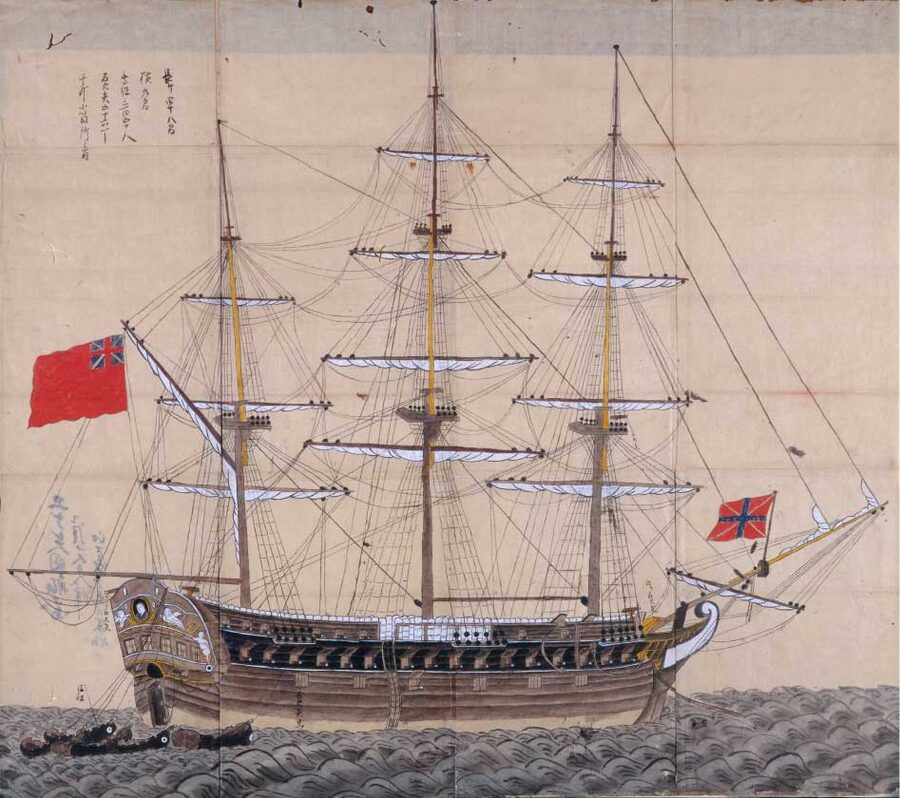
Russian raids on Sakhalin and Etorofu followed Rezanov’s rebuff, and in 1825 the shogunate issued the Ikokusen uchiharai-rei (異国船打払令), ordering coastal domains to drive off any foreign ship “without a second thought”. It was under that order that the Morrison was fired on in 1837. News of China’s defeat in the Opium War changed minds, and in 1842 the shogunate allowed distressed foreign ships firewood and water. In 1844 the Dutch king Willem II sent a personal letter urging Japan to open before it was forced to, and the shogunate declined to accept it.
Perry’s four ships arrived off Uraga in July 1853, the Convention of Kanagawa was signed in March 1854, the commercial treaties followed in 1858, and within fifteen years the Tokugawa shogunate itself was gone. If you want to see how short the distance was between the “closed country” and modern Japan, open Japan Through the Ages at the Edo era and read on into the Meiji.
Where to see the four mouths today
The four mouths sit at the four corners of Japan, so following them is also a tour of places most travellers never reach. If you only have time for one, go to Nagasaki; if you have a week and like ferries, add Hirado and Tsushima.
Hirado: the warehouse torn down for its date
Hirado, an island town off the northwest tip of Kyushu reached by bus from Sasebo or from Tabira-Hiradoguchi station on the Matsuura Railway, was Japan’s international port before Nagasaki. The Hirado Dutch Trading Post (平戸オランダ商館) is a reconstruction, opened in 2011, of the stone warehouse the Dutch finished in 1639: about 46 metres long and 13 wide, built of some 20,000 sandstone blocks, and generally described as the first Western-style building in Japan. It is the building the shogunate ordered demolished because of the date on its gable.
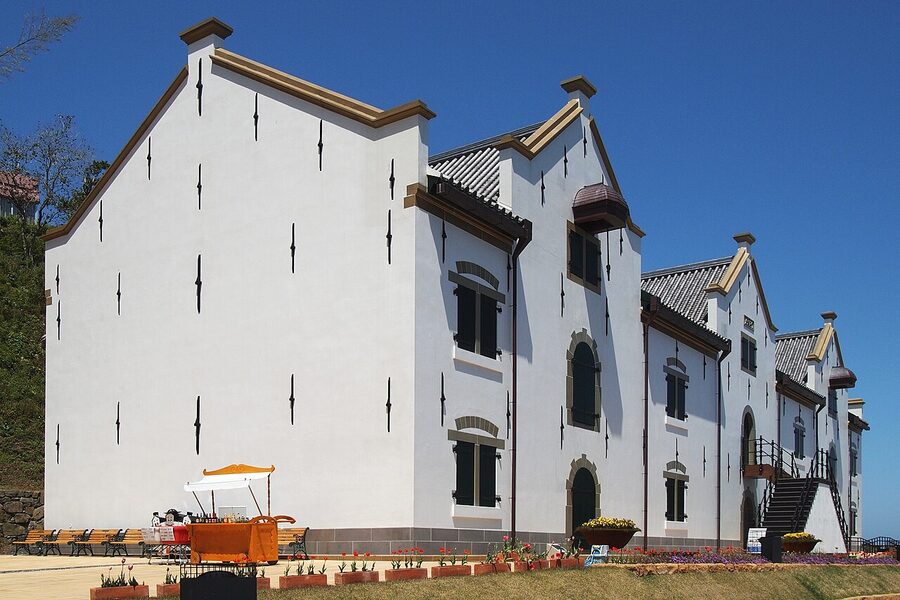
It opens 8:30–17:30, closing only for three days in the third week of June, and adult admission is ¥310. Combine it with the Matsura Historical Museum, the old residence of the Hirado lords, a short walk away; a joint ticket is ¥880. Hirado deserves a night, not an afternoon.
Nagasaki: Dejima, the Chinese quarter and the magistrate’s hill
The reconstructed Dejima is about five minutes by tram from Nagasaki Station: get off at the Dejima stop. Sixteen buildings have been rebuilt to their early 19th-century state, and the city plans to make it an island again by around 2050. It opens 8:00–21:00 every day of the year, and adult admission is ¥1,100. The evening hours are the best time to go, after the tour groups have left.
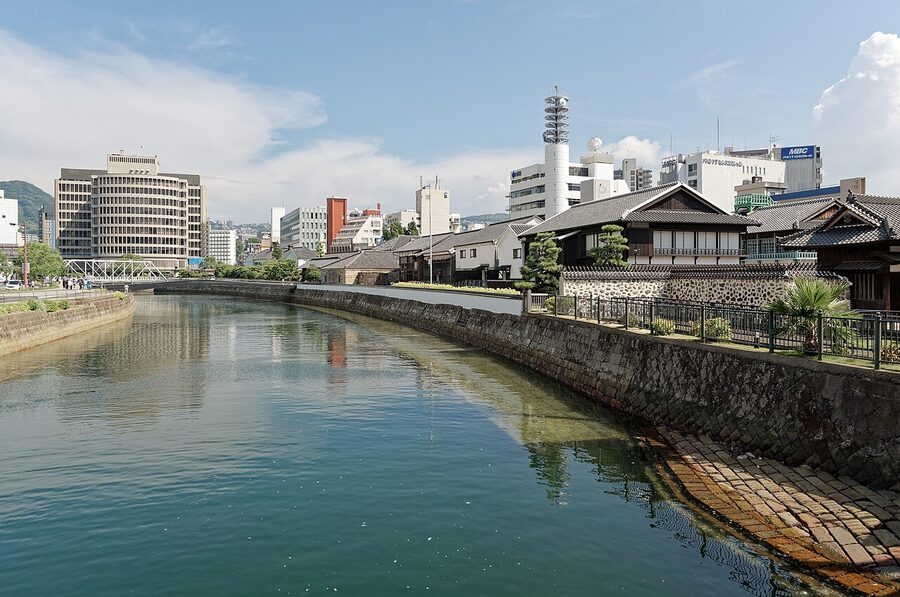
The Chinese quarter is a short walk south of Shinchi Chinatown (tram to Shinchi Chūkagai). Almost nothing of the 17th-century compound survives above ground, but four halls do: the Dojindō (earth god), Tenkōdō (Mazu, the sea goddess), Kannondō and the Fukken Kaikan gate, all restored in the Meiji era and free to wander. The street plan on the slope behind Chinatown is the old compound’s footprint.
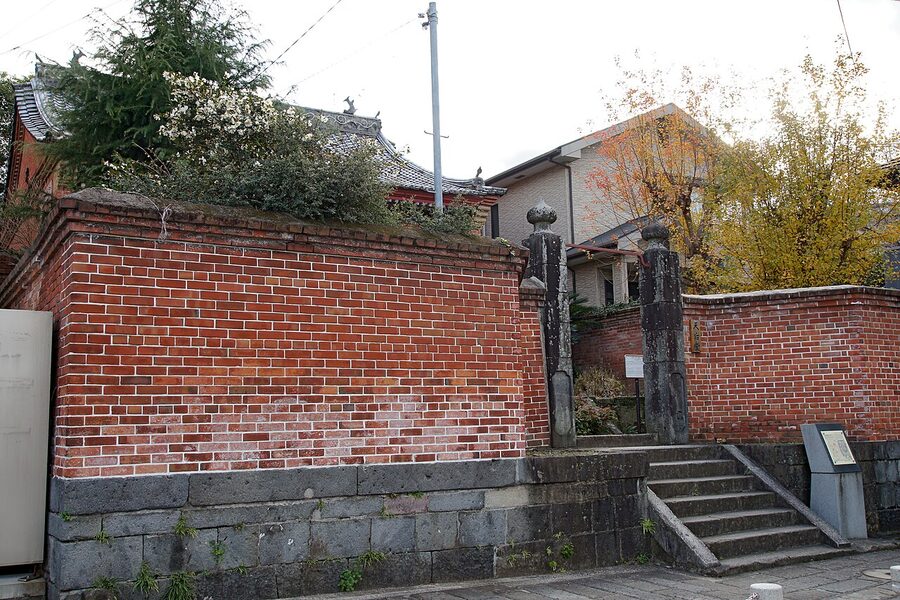
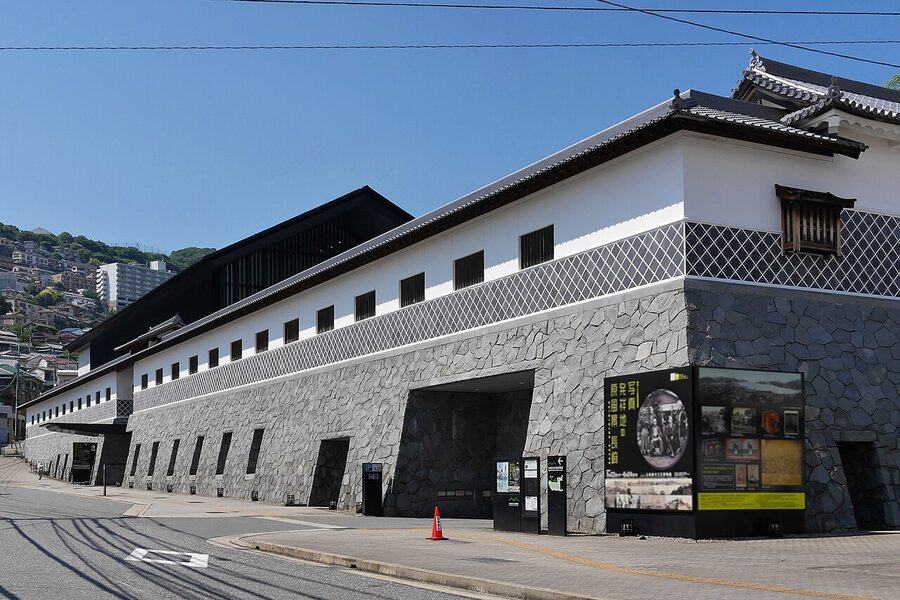
Then walk up to the Nagasaki Museum of History and Culture (長崎歴史文化博物館), about five minutes from the Sakuramachi tram stop. It stands on the site of the Tateyama office of the Nagasaki magistrate, part of which has been rebuilt as a wing of the museum, and its trade documents, Dutch reports and Kawahara Keiga paintings make it the best single place to understand how the Nagasaki mouth worked. It opens 8:30–19:00 from April to November (to 18:00 in winter), closes on the first and third Monday of each month, and charges ¥630 for the permanent exhibition.
My piece on Nagasaki covers the rest of the city, and the churches and sites associated with the Hidden Christians explain why the fumie was still in use there in the 1850s.
Tsushima: the Sō clan’s island
Tsushima is reached by jetfoil or ferry from Hakata in Fukuoka, or by a short flight, and the island’s capital, Izuhara, was the Sō castle town. Start at the Tsushima Museum (対馬博物館), which opened in April 2022 near the old castle site; fittingly, its opening exhibition was devoted to the Iteian, the office where Kyoto monks vetted the Korea correspondence. It opens 9:30–17:00 (last entry 16:30), closes on Thursdays and over the New Year, and adult admission is ¥550.
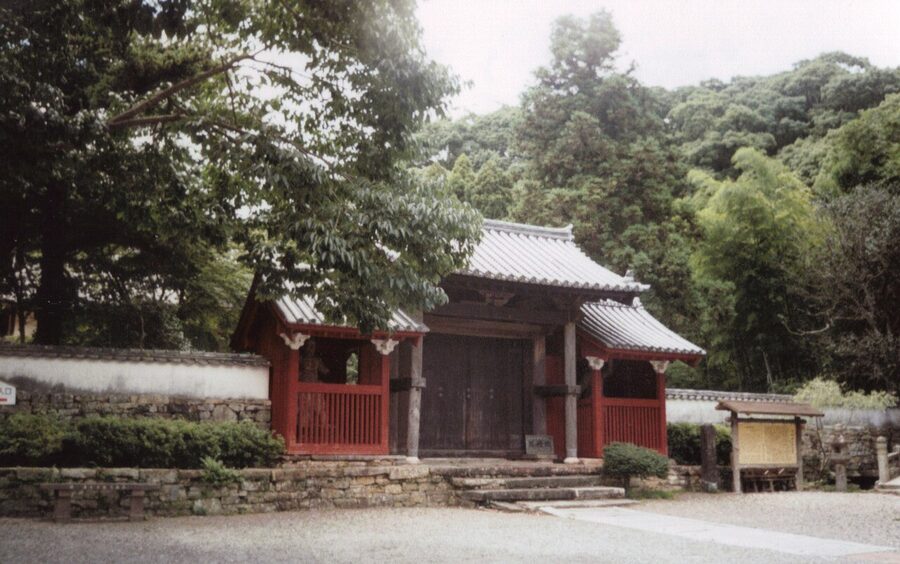
From the museum it is a short walk to Banshōin (万松院), whose cemetery of the Sō lords is the most atmospheric place on the island. On a clear day from the island’s north end you can see the hills around Busan, which explains Tsushima’s history better than any museum panel. Busan itself has kept almost nothing of the Japanese compound except the hill now called Yongdusan Park, which stood in the middle of it.
Tomonoura: where the Korean envoys looked at the sea
Tomonoura, a port town about half an hour by bus from Fukuyama Station on the Sanyo Shinkansen, was a regular overnight stop for the Korean embassies on their way up the Inland Sea. The envoys lodged at Fukuzenji temple, in the hall called Taichōrō (対潮楼), and in 1711 one of the embassy’s officials, looking out from it across the water to the islands, called the view “the finest scenery east of Korea”, 日東第一形勝. The phrase hangs inside on a board.
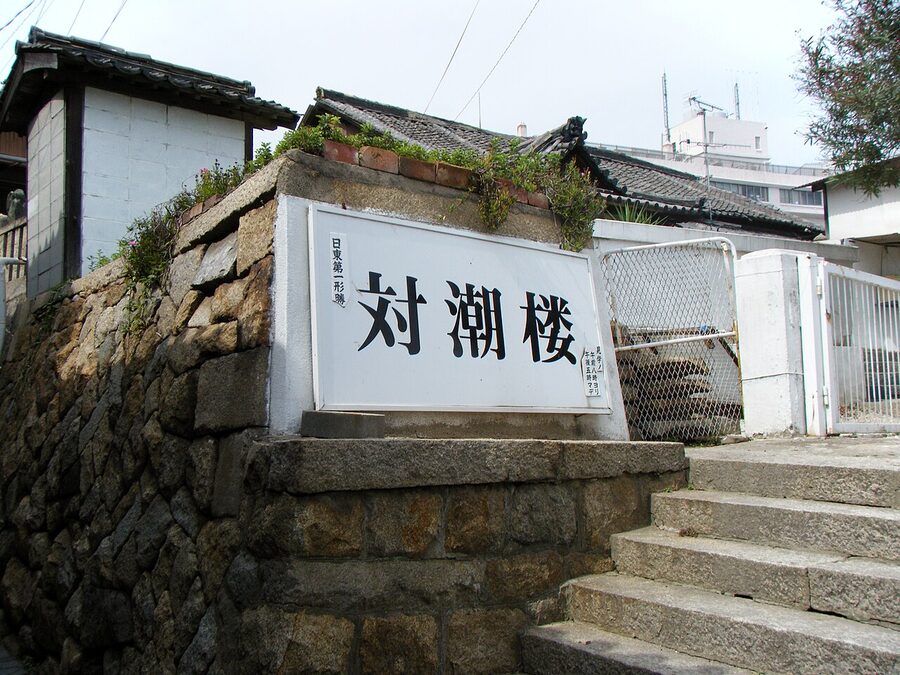
The hall opens daily from 9:00 (8:00 at weekends) to 17:00. Admission is ¥300 for adults, though some listings still give ¥200, so take a few coins. Tomonoura itself is one of the best-preserved Edo-period harbour towns on the Inland Sea.
Okinawa: Shuri Castle, rebuilt once more
Shuri Castle in Naha was the palace of the kings who paid tribute to both Beijing and Kagoshima, and it has been destroyed several times, most recently by a fire on 31 October 2019 that took the main hall, the Seiden. The rebuilt Seiden reopens to the public on 23 November 2026, with viewing of the interior by advance booking only.
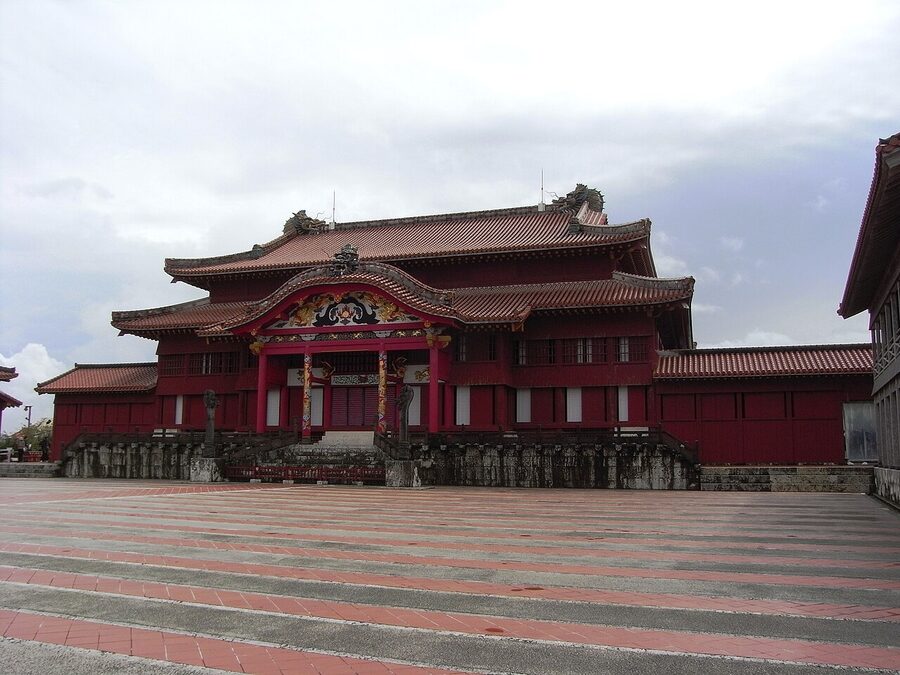
The paid area of Shuri Castle Park opens 8:30–19:00 in summer and autumn, with ticket sales stopping half an hour earlier, and the adult fee is rising from ¥400 to ¥1,000 with the Seiden’s opening. Check the park’s own site before you go, because the booking system is brand new. Shuri station on the Yui Rail monorail is a fifteen-minute walk away.
Hokkaido: Matsumae Castle and Upopoy
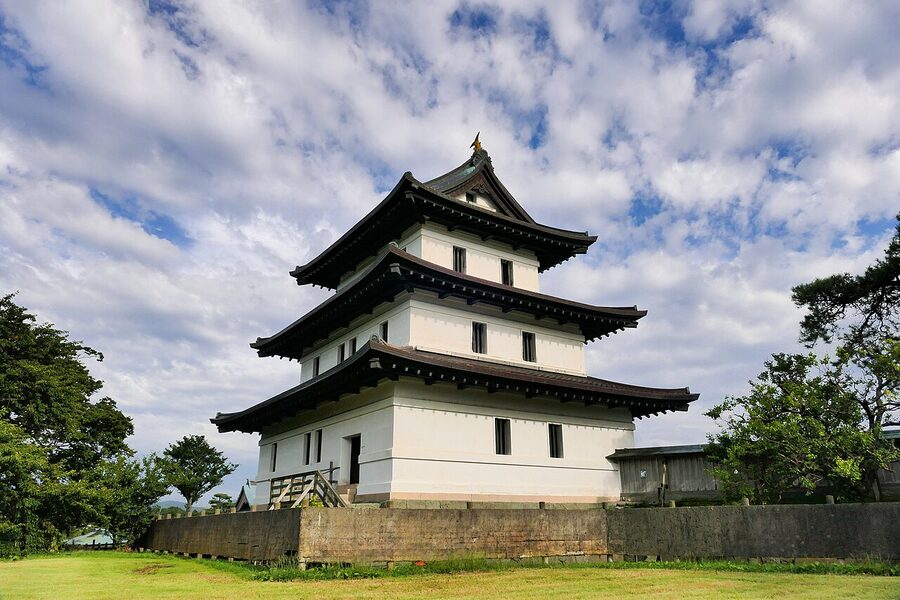
Matsumae is at the southern tip of Hokkaido and awkward to reach: take the Hokkaido Shinkansen to Kikonai, then a bus of about an hour and a half along the coast. The keep is a 1961 concrete reconstruction (the original survived until a fire in 1949) housing a modest museum of Matsumae and Ainu material; admission is ¥360, 9:00–17:00, and it closes for the winter. Go in late April or early May, when the grounds have some of the finest cherry blossom in Hokkaido.
For the Ainu side of the story, go to Upopoy (ウポポイ), the National Ainu Museum and Park, which opened in 2020 at Shiraoi, about ten minutes’ walk from JR Shiraoi Station between Sapporo and Hakodate. It is Japan’s first national museum devoted to the Ainu, with labels in Ainu first, and its displays cover the Matsumae trade and the Qing robes that came through Sakhalin. It opens 9:00–18:00 from April to October and 9:00–17:00 in winter, closes on Mondays, and adult admission is ¥1,200.
Tokyo: an execution ground and a new anatomy
Two short stops in Tokyo close the Rangaku story. Beside Minami-Senju Station on the Hibiya and JR Jōban lines is Kotsukappara Ekōin (小塚原回向院), the temple that served the old execution ground. On its wall is a monument to the 1771 dissection, and its cemetery holds the first grave of the loyalist Yoshida Shōin, executed in 1859.
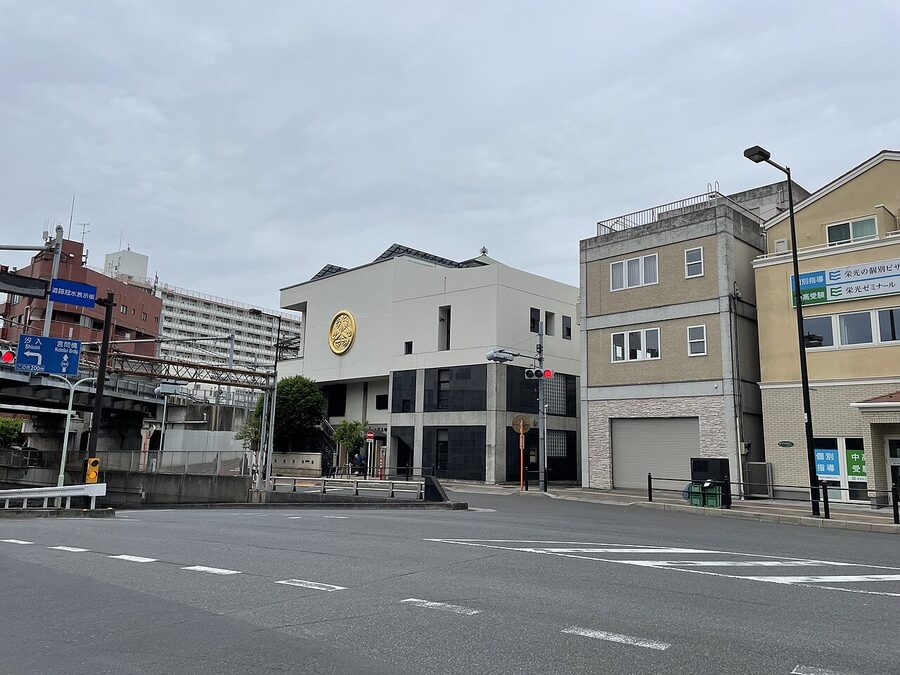
Then take the Hibiya line to Tsukiji and walk to St Luke’s International Hospital, where a monument marks the site of the Nakatsu domain mansion in which Maeno and Sugita did much of the translating. You will very likely be the only person looking at it.
Wherever you stand on this trail, keep Shizuki’s other word in mind. The Tokugawa did not shut Japan so much as give it a gravity of its own, pulling every ship, letter and bale of silk towards four points the shogunate could watch. Shizuki named both forces. Only one of his names was accurate.