The last meal was always the same, and it was meant to be. A bowl of rice with hot water poured over it, a dab of miso, a pinch of salt and three slices of pickle, set on a tray in front of a man who had perhaps an hour to live. Three, because mi-kire (三切れ), “three slices”, sounds exactly like mi-kire (身切れ), “cutting the body”. The chopsticks were laid the wrong way round, the sake was poured left-handed, and he got two cups in four sips and no more, because a drunk man spoils a ceremony.
I keep coming back to those pickles because they tell you what seppuku (切腹) had become by the 18th century. Every gesture had been worked out in advance by somebody with a rulebook, and almost every rule existed to stop anything unexpected happening. By then the man in front of the tray was often not expected to cut anything at all. He reached for a fan on a stand, and the swordsman behind him did the rest.
This is the story of how a desperate battlefield improvisation of the late Heian period became the most choreographed death in the world, then something close to a beheading with good manners, and finally the white-robed image of the films. The real thing was messier and, in its way, more human than the legend.
In This Article
- A thief in 988, a poet on a fan in 1180
- Kamakura, 1333: eight hundred and seventy at Tōshō-ji
- The Sengoku bargain
- Hideyoshi’s sentences
- Following the lord into death
- How the Edo ritual actually worked
- Asano in a garden, Ōishi at the Hosokawa house
- The Bakumatsu: the real thing returns
- Abolition, and the picture that outlived it
- Where to stand where it happened
- Sengaku-ji and the Hosokawa garden, Takanawa (Tokyo)
- Ōgi no Shiba at Byōdō-in, Uji
- Kongōbu-ji and the Willow Room, Kōyasan
- Bitchū Takamatsu Castle, Okayama
- Osaka Castle
- Myōkoku-ji, Sakai
- Iimoriyama, Aizu-Wakamatsu
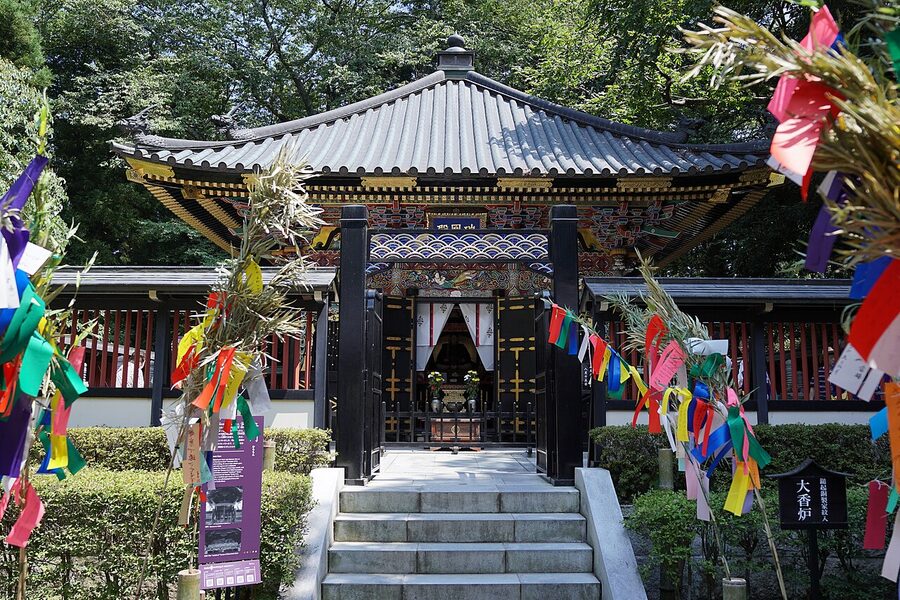
- Zuihōden, Sendai
- Kamakura: Tōshō-ji and the Harakiri Yagura
- Three slices
A thief in 988, a poet on a fan in 1180
Nobody agrees on who did it first. English-language accounts usually start with Minamoto no Tametomo, the giant archer of the Hōgen war, who is supposed to have cut his belly on Ōshima island around 1170 when troops came ashore to take him. The Japanese record goes much further back and finds a far less heroic pioneer: Fujiwara no Yasusuke, a minor court official who moonlighted as the capital’s most wanted robber. Cornered in 988, he slashed open his own abdomen and died in prison the next day.
Sources variously give one of these two, or Minamoto no Yorimasa in 1180, as the first, and the official guide text for Byōdō-in calls Yorimasa’s the first recorded seppuku. I think all three are right in different senses. Yasusuke is the first recorded case, Tametomo the first with a legend attached, and Yorimasa the first that later samurai treated as a model.
The word took longer to settle. The earliest written “seppuku” the big Japanese historical dictionary can find is in a courtier’s diary, the Entairyaku, in 1351. Before that, a warrior who would rather die than be taken had a whole menu of methods, and the war tales of the Heian era are almost cheerful in their variety.
In the Heike Monogatari, men put a sword point in their mouths and dive from horseback, or put on two suits of armour and walk into the sea at Dan-no-ura. Belly-cutting appears often, but it had no special prestige. Captured warriors, however senior, were simply beheaded, and nobody thought that dishonourable.
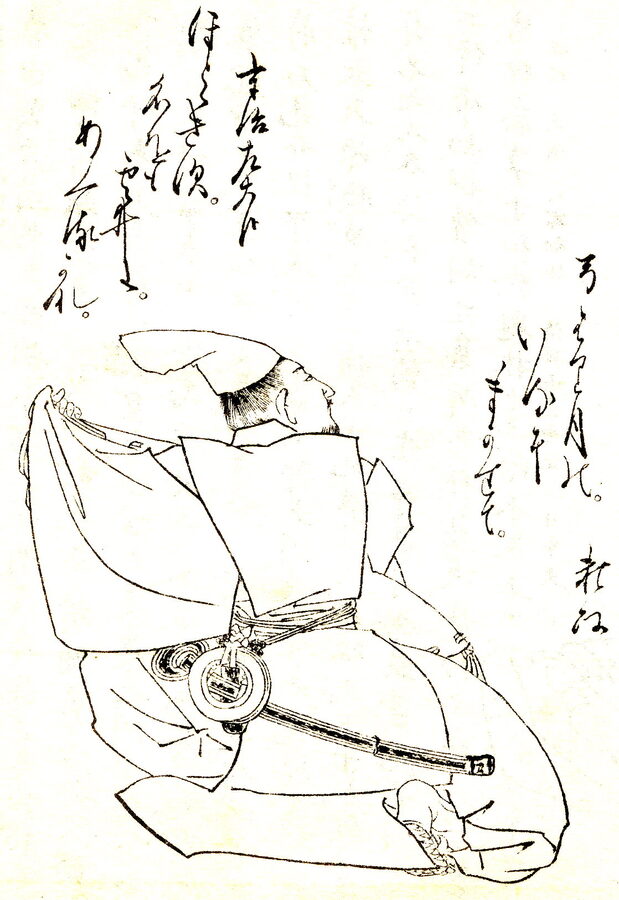
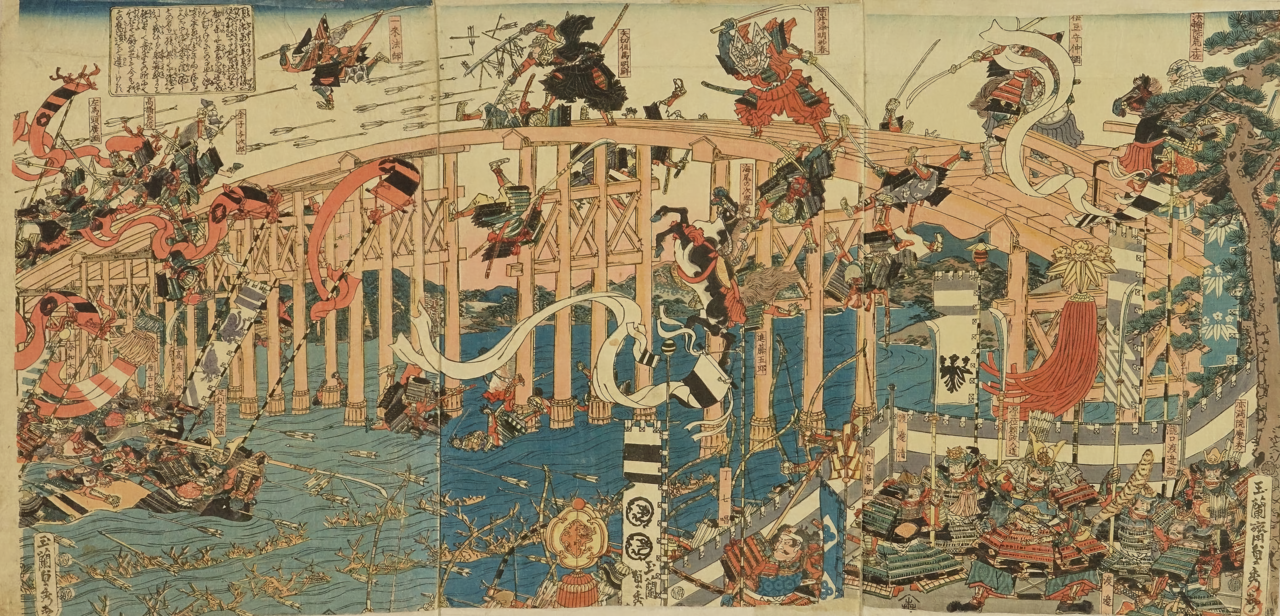
Yorimasa’s death is the scene everyone remembers. In 1180 he backed Prince Mochihito’s call to arms against the Taira, the plot leaked, and the old man found himself retreating with the prince towards Nara. The exhausted prince kept falling off his horse, so they stopped at Byōdō-in, the great Amida temple at Uji, and the Taira caught them there on the 26th day of the fifth month.
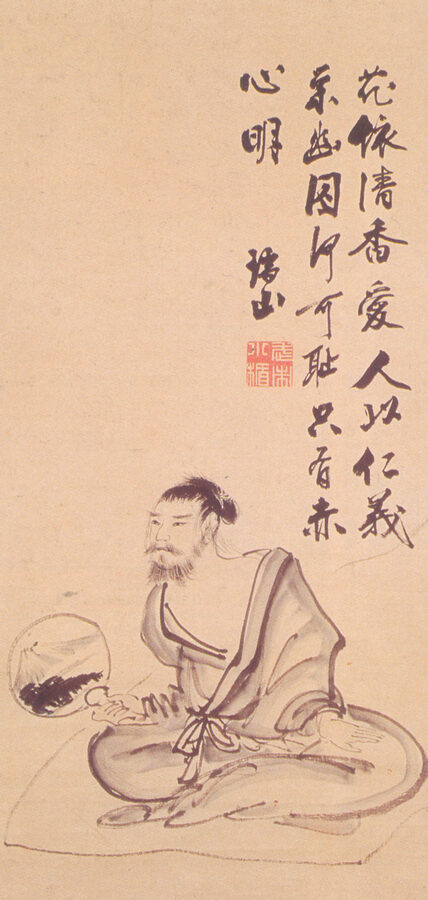
His men tore up the planks of the Uji bridge and held the river for a while, but the Taira forced the crossing and two of his sons died covering him. Yorimasa withdrew into the temple grounds and spread a war fan on the grass, facing west towards the Pure Land. He wrote a short poem about a buried log that never got the chance to flower, and cut his belly while a retainer, Watanabe Tonau, took his head.
What makes Yorimasa matter is not that he was first but that he was literary. A death poem, a fan pointed at paradise, a loyal man standing by to end it quickly: the later ritual is already there in embryo. When Edo samurai thought about dying well, this was the scene in their heads, filtered through the Noh play Yorimasa.
Kamakura, 1333: eight hundred and seventy at Tōshō-ji
The Kamakura era ended with the largest collective seppuku anyone recorded. In the fifth month of 1333, Nitta Yoshisada’s army broke into Kamakura, and on the 22nd day the regent Hōjō Takatoki, thirty-one and by most accounts fonder of dog fights than of government, fell back to the family temple of Tōshō-ji (東勝寺) in a narrow valley behind Tsurugaoka Hachimangū. The temple had probably been built partly as a fortress. The Hōjō set it alight and killed themselves inside.
The Taiheiki lists the dead branch by branch: thirty-four of the Nagoe, forty-six of the Akahashi, Tokiwa and Sasuke houses, two hundred and eighty-three retainers, “each trying to be first”. With the soldiers who followed, it puts the total at more than eight hundred and seventy. I distrust medieval round numbers, as you should, but the archaeology backs the core of the story.
This is the moment when belly-cutting stopped being one option among many and became what a defeated warrior of rank was expected to do. The same chronicle gave later readers Murakami Yoshiteru, who put on his prince’s armour at Yoshino, announced himself from a tower as the prince, and cut himself open to buy the real one time to escape. The lesson every later samurai took from it was that the belly was where a man showed his sincerity.
That idea has an argued-over history. In Bushidō: The Soul of Japan, published in English in 1899 or 1900 (sources give both), Nitobe Inazō explained that the ancient Japanese located the soul and the affections in the abdomen. It is a tidy explanation and probably partly right, but it was written for American readers by a Christian educator, and Japanese scholars have picked at it ever since.
The Sengoku bargain
The Muromachi era added two things. By the 15th century at the latest, a condemned samurai could be allowed to die by his own hand rather than the executioner’s. And in 1392 a man called Mishima Geki cut his belly when his lord, Hosokawa Yoriyuki, died of illness, which the chronicle that records it calls unheard of: dying with a lord killed in battle was normal, following one who died in bed was new.
Then came the Sengoku era, in which seppuku became a negotiating tool. A besieged commander could offer his life for his garrison’s, and a besieger could demand it as the price of peace. The case that changed how people saw the act happened on a boat in the middle of an artificial lake in 1582.
Shimizu Muneharu held Takamatsu Castle (備中高松城), a low castle on marshy ground in what is now Okayama city, for the Mōri clan against Toyotomi Hideyoshi, then still working for Oda Nobunaga. Hideyoshi offered him two provinces to change sides, and Muneharu sent the written offer straight to his own lord. So Hideyoshi built a dyke some three kilometres long, diverted the Ashimori river and drowned the castle.
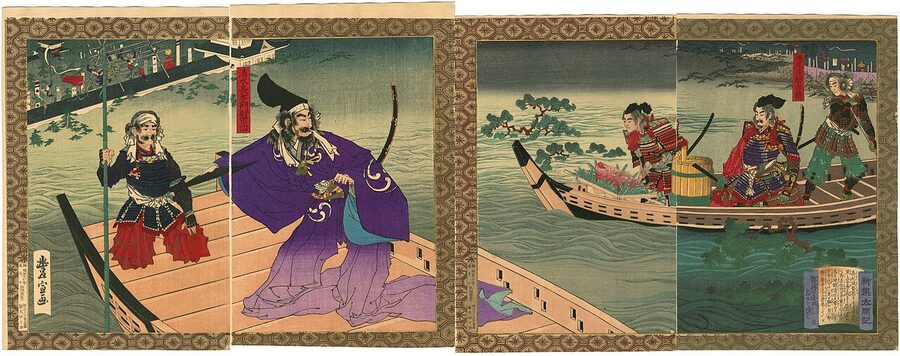
On the 2nd day of the sixth month, Nobunaga was killed at Honnō-ji. Hideyoshi heard the next night, kept it secret, and offered the Mōri a quick peace: the garrison would live if Muneharu died. Muneharu, who did not know Nobunaga was dead, offered his own life and those of his two brothers and an allied commander.
On the 4th day he was rowed out into the flood, danced (so the tradition says), recited his death poem in front of both armies and cut his belly. He was forty-six. The poem leaves “the name of a warrior on the moss of Takamatsu”, a pun on the castle’s name, and Hideyoshi by every account was impressed. The Japanese tradition credits that afternoon with fixing the idea that seppuku done well was honourable in itself, and I think that is broadly right.
There is a cruel irony in the timing. Wrapping up Takamatsu quickly is what let Hideyoshi race east and destroy Akechi Mitsuhide at the Battle of Yamazaki nine days later. Had Muneharu held out another week, Japanese history would look different.
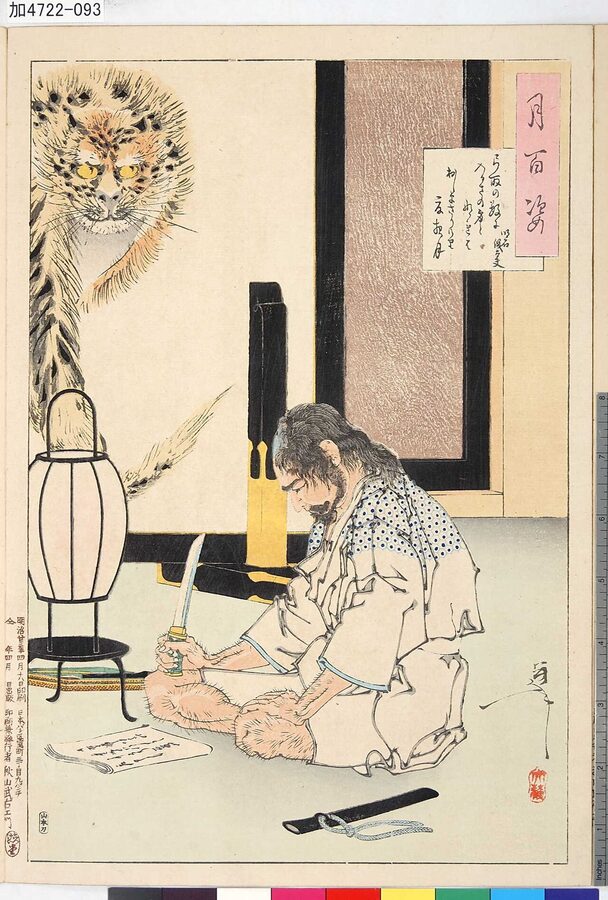
Nobunaga’s own end is the most famous unconfirmed case. Tradition says he cut his belly in an inner room of the burning Honnō-ji, but his body was never found. One of the few people who saw that night through and lived to be questioned was his African retainer Yasuke, captured fighting at the nearby Nijō palace, who left no account of his own.
Tokugawa Ieyasu, caught in Sakai by the news, is supposed to have announced he would go to Kyoto and cut his belly. Honda Tadakatsu talked him out of it and Hattori Hanzō guided him home over the Iga mountains. Three years earlier Hanzō had been named second to Ieyasu’s own son Nobuyasu, ordered to die at Futamata Castle in 1579, and one Edo account says he could not bring himself to strike, so the inspecting officer did it instead.
The next spring Shizugatake finished Shibata Katsuie, who killed himself with his wife Oichi, Nobunaga’s sister, as Kitanoshō Castle burned in 1583. In 1590 Hideyoshi ended the siege of Odawara by requiring the death of the retired Hōjō lord Ujimasa. By then the pattern was fixed: the defeated great man died by his own hand, and his people were spared.
Hideyoshi’s sentences
Hideyoshi also used seppuku as punishment for men he no longer wanted. The best known is Sen no Rikyū, the master who gave the tea ceremony the form it still takes, ordered to cut his belly at his Kyoto house in the second month of 1591 with three thousand of Uesugi Kagekatsu’s troops posted outside. Why is still argued over, and the Rikyū article covers it properly.
Hideyoshi’s last decade, the heart of what textbooks call the Azuchi-Momoyama era, was full of such orders. The one that shows how arbitrary the system could be is his nephew Toyotomi Hidetsugu, made adopted heir and imperial regent after Hideyoshi’s infant son died in 1591. In 1593 Hideyoshi had another son, the future Hideyori, and Hidetsugu became a problem.
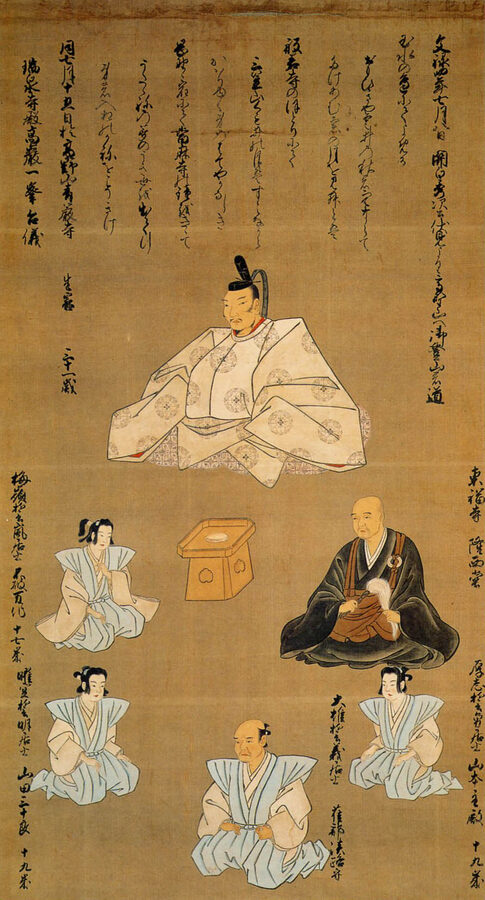
In 1595 rumours spread that Hidetsugu was plotting on hunting trips. He was refused an audience, sent up Mount Kōya with his head shaved, and lodged at Seigan-ji (青巌寺), a temple Hideyoshi had built there in memory of his mother. On the 15th day of the seventh month inspectors arrived with soldiers and the order to die.
The monks protested that the mountain was sanctuary, and for a few hours there was a real chance of fighting, until Fukushima Masanori made it plain that Hideyoshi would destroy Kōya if it resisted. Three of Hidetsugu’s young pages died first, each with a fine short sword from his collection, and Hidetsugu acted as second for all three himself. A monk who had followed him went fourth, and then Hidetsugu died, with his retainer Sasabe Shigemasa as second.
What followed was massacre. Hidetsugu’s head was displayed at the Sanjō riverbank in Kyoto, and his wives, concubines and children, more than thirty people including a girl of nine and a baby of one, were executed in front of it. Hideyoshi then forbade anyone to follow Hidetsugu in death on pain of death for their whole family.
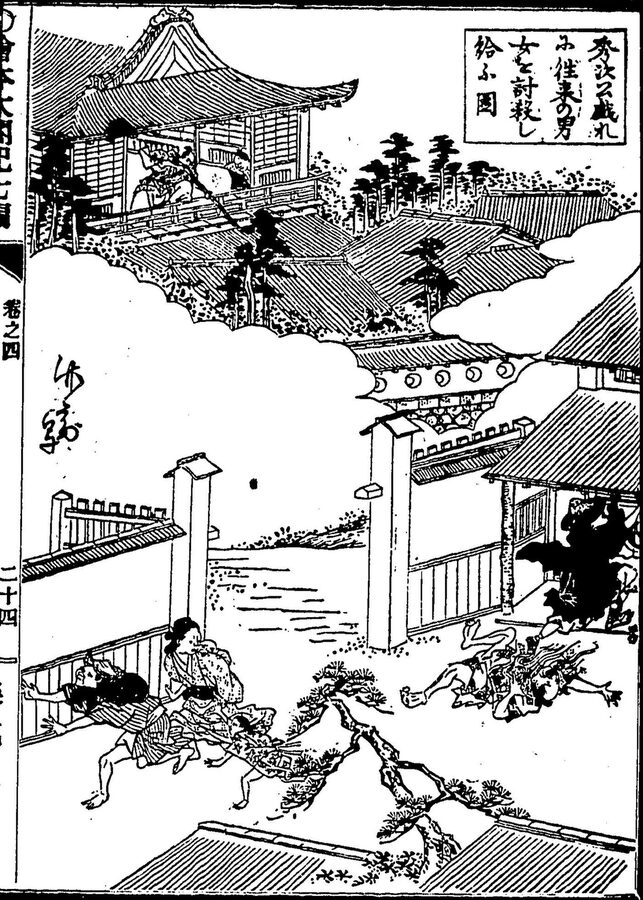
Which death you got was a statement about who you were. After Sekigahara in 1600, Ishida Mitsunari, Konishi Yukinaga and Ankokuji Ekei were paraded through Osaka and Sakai and beheaded at the Rokujō riverbank in Kyoto, marked as criminals rather than defeated equals. In 1615 the tea master Furuta Oribe, suspected of Toyotomi sympathies, was allowed to cut his belly.
As Osaka Castle fell that same year, Hideyori and his mother Yodo-dono waited in a storehouse in the Yamazato enclosure for an answer to their plea for mercy, and killed themselves when none came. Fifteen years earlier, Hosokawa Gracia, the Christian wife of Hosokawa Tadaoki, had faced capture by Ishida’s men in Osaka. Her faith forbade suicide, so a retainer killed her, set fire to the mansion and cut his own belly. Even the exceptions ran through the same machinery.
Following the lord into death
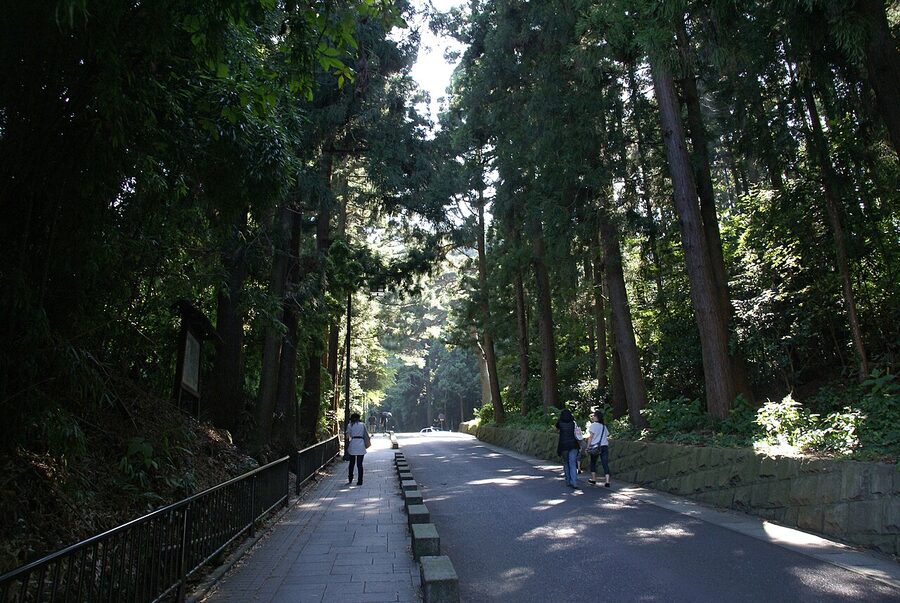
Peace created a new problem: warriors with no battles to die in began dying for their lords at home. The first well-known case of this junshi (殉死) in the new era came in 1607, when Ieyasu’s son Matsudaira Tadayoshi died of illness and retainers followed him. Within a generation it was fashionable, and the numbers became a kind of status symbol for the dead lord.
When Date Masamune died in 1636, fifteen retainers followed him and five more men followed them, which is why sources variously give fifteen or twenty. Eighteen followed Hosokawa Tadatoshi, Tadaoki’s son, in 1641. When Shimazu Yoshihiro died at Kajiki in 1619, aged eighty-four, thirteen did.
A late 17th-century anecdote collection, the Meiryō Kōhan, sorted junshi with a cynic’s eye. Gibara, “duty belly”, was the real thing; ronbara, “argument belly”, meant dying because a rival of equal rank was dying; akinaibara, “merchant belly”, meant dying so your sons would be promoted. Historians who went looking for families that actually gained from a junshi found essentially none.
What did exist was pressure. When the shogun Iemitsu died in 1651 and the senior councillor Matsudaira Nobutsuna chose to live, somebody pinned up a mocking poem telling him to hurry after his master. The government decided it was losing too many good administrators.
Tokugawa Mitsukuni of Mito refused his retainers leave to follow his father in 1661, and Hoshina Masayuki banned the practice in Aizu the same year. In 1663 the shogunate told every daimyo that following a lord in death was “wrong and unprofitable”. In 1668 it made an example: a retainer of the Okudaira house of Utsunomiya followed his late lord, the new lord lost twenty thousand koku and was moved, and the dead man’s sons were executed.
The ban went formally into the Laws for Military Houses in 1683. The last junshi of the period is usually given as the former daimyo Hotta Masanobu, who killed himself on hearing of the shogun Ietsuna’s death in 1680. It was already illegal.
How the Edo ritual actually worked
Through the Edo era the samurai stopped being soldiers and became salaried administrators, and seppuku moved from the battlefield into the legal system. The great samurai of the Sengoku age had cut their bellies in the open with their enemies watching; their great-grandsons were sentenced to it by magistrates.
Strictly, it was the heaviest punishment a samurai could receive, the equivalent of plain death for a commoner. But nobody was “sentenced” to seppuku in the language of the time: he was “permitted” it. A samurai whose crime was too disgraceful got the beheading commoners got.
Rank decided the place. A man of five hundred koku or more died inside the residence of the daimyo or official who held him in custody; a lesser man died in prison, usually Kodenmachō in Edo. Kodenmachō saw only about twenty seppuku from the early 1700s to the end of the shogunate, and half of those came out of the Ansei purge and the Sakuradamon assassination of 1858 to 1860.
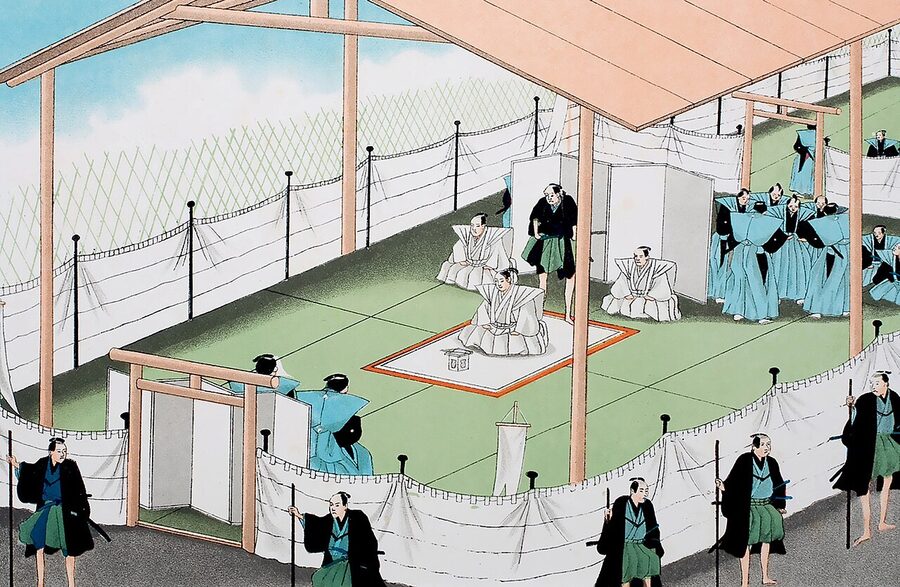
The usual time was evening, the usual place a garden. The enclosure was a square of curtain on bamboo posts, six ken (about eleven metres) a side for high rank and two for middling, with a Gate of Practice on the south and a Gate of Nirvana on the north. The condemned man came in through Nirvana, his second through Practice. Two tatami were laid in a T and turned upside down, covered with cloth, with a folding screen set behind them inside out.
Everything was reversed because it was a funeral. The man was washed in water to which hot water had been added, the way a corpse is washed rather than the way the living bathe. His topknot was tied high and bent the wrong way, and his plain white undergarment, its back collar stitched down to keep it out of the second’s way, was closed left over right, as a body is dressed for the coffin.
Over it, the manuals specify a kamishimo (the stiff winged outfit in the article on hakama and kamishimo) in plain, crestless hemp of asagi, a pale blue-green. The Japanese literature explains the colour through an old Chinese story of a loyal official’s blood turning blue-green. More practically, red on asagi shocked less than red on white.
Then came the meal: the rice, the three slices of pickle, salt and miso, the reversed chopsticks, and two sake cups stacked one on the other, unglazed earthenware above lacquer. The blade was a short sword nine sun five bu long, about twenty-nine centimetres, closer to a tantō than to the long blades in the article on Japanese swords. The hilt was removed, the tang wrapped twenty-eight turns in paper, and only the last centimetre and a half of edge left showing.
It came on a sanbō, the low wooden offering stand you see in Shinto shrines. The man was supposed to take it up in his left hand, raise it respectfully, pass it to the right and stroke his belly three times with his left before doing anything else. The second, the kaishakunin (介錯人), gave his name, bowed, poured water from a ladle over his own blade and took up his stance behind.
A full ceremony had three seconds: one to strike, one to bring in the stand, one to show the head to the inspectors. Kaishaku manuals list “three rules” of timing, neither early nor late: when the man takes up the blade, when he looks at his left side, when he brings the blade to his belly. The cut aimed to leave a strip of skin at the throat so that the head fell forward rather than rolling into the sand.
That was called dakikubi, the “embraced head”, and it survives in a modern idiom. Kubi no kawa ichimai, “by one piece of neck skin”, now means a narrow escape, which reads rather differently once you know the original man did not escape at all. In Tosa they cut the head clean off, and some men asked for that.
The Hagakure, a Saga samurai’s table talk recorded around 1716, says being asked to act as second had always been thought bad luck: do it well and nobody remembers you, do it badly and you are disgraced for life. Japanese historians generally date the fully formed procedure to the early 18th century, by which time it was built around a cut that no longer happened.
The man reached for the blade, or for a fan set on the stand in its place, and the second struck as his hand moved. The Japanese called it ōgi-bara, “fan belly”. At that point, as the Japanese sources put it with some bluntness, the difference between seppuku and beheading was largely a matter of name.
Asano in a garden, Ōishi at the Hosokawa house
The best-documented seppuku of the period came out of the Akō incident, the story the world knows as the 47 Ronin. The vendetta itself has its own article; what matters here is how the deaths were carried out, because they show the system working and failing at once.
On the 14th day of the third month of 1701 (21 April by the Western calendar), Asano Naganori, lord of Akō, drew his short sword in the Pine Corridor of Edo Castle and cut the ceremonial official Kira Yoshinaka on the forehead and back before he was pinned. The shogun Tsunayoshi, furious that a ceremony for the imperial envoys had been ruined, ordered him to die that day. Nobody had been made to die the same day for drawing steel in the castle before.
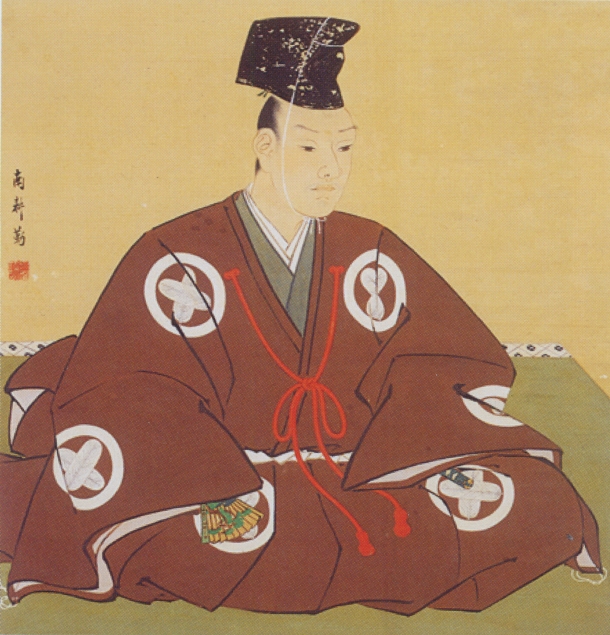
Asano was carried in a net-covered palanquin through the castle’s “unclean gate” to the mansion of Tamura Takeaki at Shiba Atagoshita. The household, expecting to hold him for weeks, had nailed the sliding doors shut. He was offered a formal meal of one soup and five dishes and asked instead for two bowls of hot-water rice.
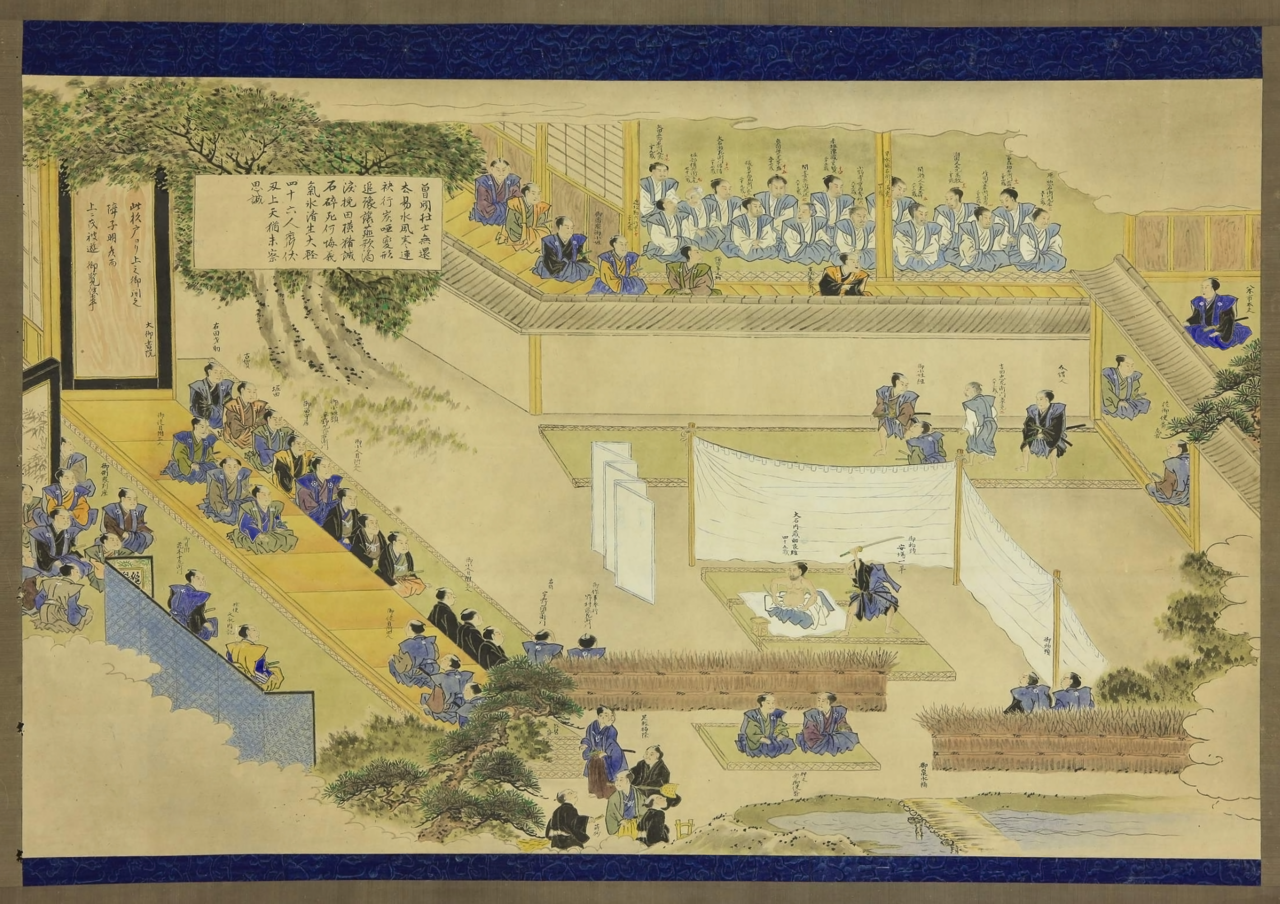
At about six in the evening the inspectors read the sentence, and Asano thanked them for being permitted seppuku. He was taken out to the garden, where felt had been laid over a straw mat. A daimyo would normally have been given a room, and the garden was read at the time as a deliberate slight; when his retainers collected the body, they found that the head had taken two strokes.
After the night raid on Kira’s mansion in the twelfth month of 1702, forty-six of the forty-seven were divided among four daimyo houses in Edo: seventeen including the leader Ōishi Yoshio to Hosokawa Tsunatoshi of Kumamoto, ten to Matsudaira Sadanao, ten to Mōri Tsunamoto and nine to Mizuno Tadayuki. Every one of those lords kept a large Edo residence with a permanent staff, because sankin-kōtai required it, so the shogunate always had somewhere to hold prisoners of rank.
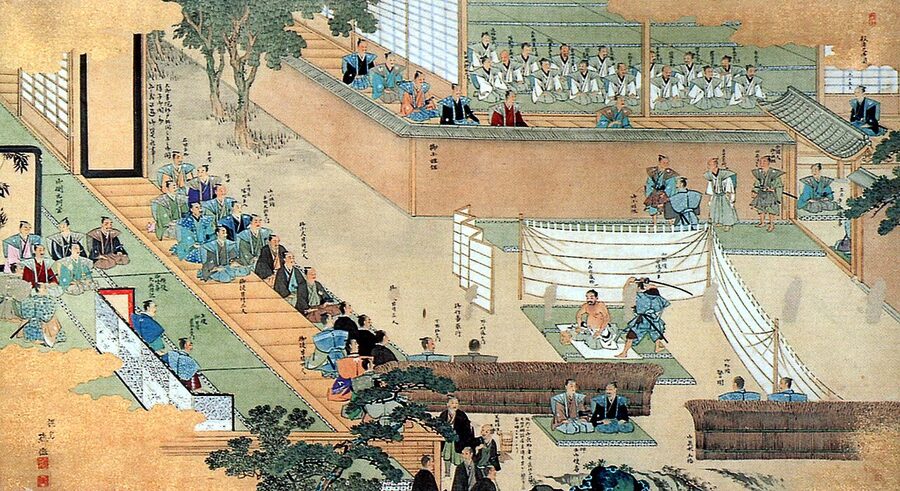
The order came on the 4th day of the second month of 1703 (20 March). Most of the forty-six died with fans or with short swords wrapped in white cloth so that only the tip showed, and the second struck as they reached. One of the older men, Okuda Shigemori, is supposed to have asked the officials plainly how it was done, since nobody had ever shown him.
The Hosokawa, descended from Tadaoki and Gracia and ruling from Kumamoto Castle, treated their seventeen with real respect, and Lord Tsunatoshi insisted on men of rank as seconds. Ōishi’s was a household retainer called Yasuba Ippei. A Kumamoto record says Ōishi shook throughout (some put it down to the cold) and that it took a long while; another source says the first stroke failed and he cried out.
Yasuba’s sword survives in his family, and it is nicked. A recent head of the house, who also chaired the national federation of Akō gishi societies, said plainly that the damage came from striking Ōishi’s neck bone more than once. A modern historian looking at the paintings noted that the faces show men in pain, nothing like the serene warrior of the stories.
I do not say this to diminish Ōishi. It is the most human moment in a story that three centuries of kabuki have polished smooth. A man of forty-four who had planned for two years and won sat on three mats in a cold garden and was frightened, and the man behind him had the hardest job in Edo.
Eighty years later the fan was routine enough that a samurai could be refused a blade. In 1784 Sano Masakoto, a shogunal guard who had cut down the junior councillor Tanuma Okitomo, asked for a real blade instead of the wooden one; it was set out of his reach, and when he leaned forward for it, the second took his head. In 1840 a Numata domain retainer, Kudō Yukihiro, wrote Jijinroku, a manual of correct procedure, because he thought his generation had forgotten how to die.
The Bakumatsu: the real thing returns
In the violent last years of the shogunate, the old rawness came back. Political prisoners chose to cut properly, partly to insist they were real samurai while the class itself came apart. The Shinsengumi, the shogunate’s police in Kyoto, made its own members cut their bellies for breaches of its code, and its vice-commander Yamanami Keisuke died that way in 1865.
The most extreme case on record is Takechi Hanpeita, leader of the Tosa loyalists, jailed by the retired lord Yamauchi Yōdō after the murder of Yoshida Tōyō. Ordered to die in the summer of 1865, he made three horizontal cuts in the courtyard of the Minami-kaisho in Kōchi, something it was said nobody had ever managed, then leaned forward while two seconds stabbed him through the heart. He was thirty-five.
In 1868, the year of the Restoration, foreigners finally saw it. Bizen domain troops marching through Kobe clashed with French sailors who had cut across their column, then fired on the foreign envoys inspecting the new settlement. Nobody died, but the powers occupied the town and demanded the officer responsible, and on 2 March Taki Zenzaburō cut his belly at night in front of seven foreign witnesses.
One was Algernon Mitford of the British legation, whose account in Tales of Old Japan (1871) became the standard Western description for half a century. Mitford names the temple “Seifukuji”; Japanese sources give it as Eifuku-ji. He records the single stroke and the formal witnessing, and does not pretend he enjoyed it.
Six days later, on 8 March 1868, Tosa troops guarding Sakai fired on sailors from the French corvette Dupleix who had come ashore, and eleven Frenchmen died, all in their twenties. France demanded executions. With its armies away fighting the Boshin War, the new government could not refuse.
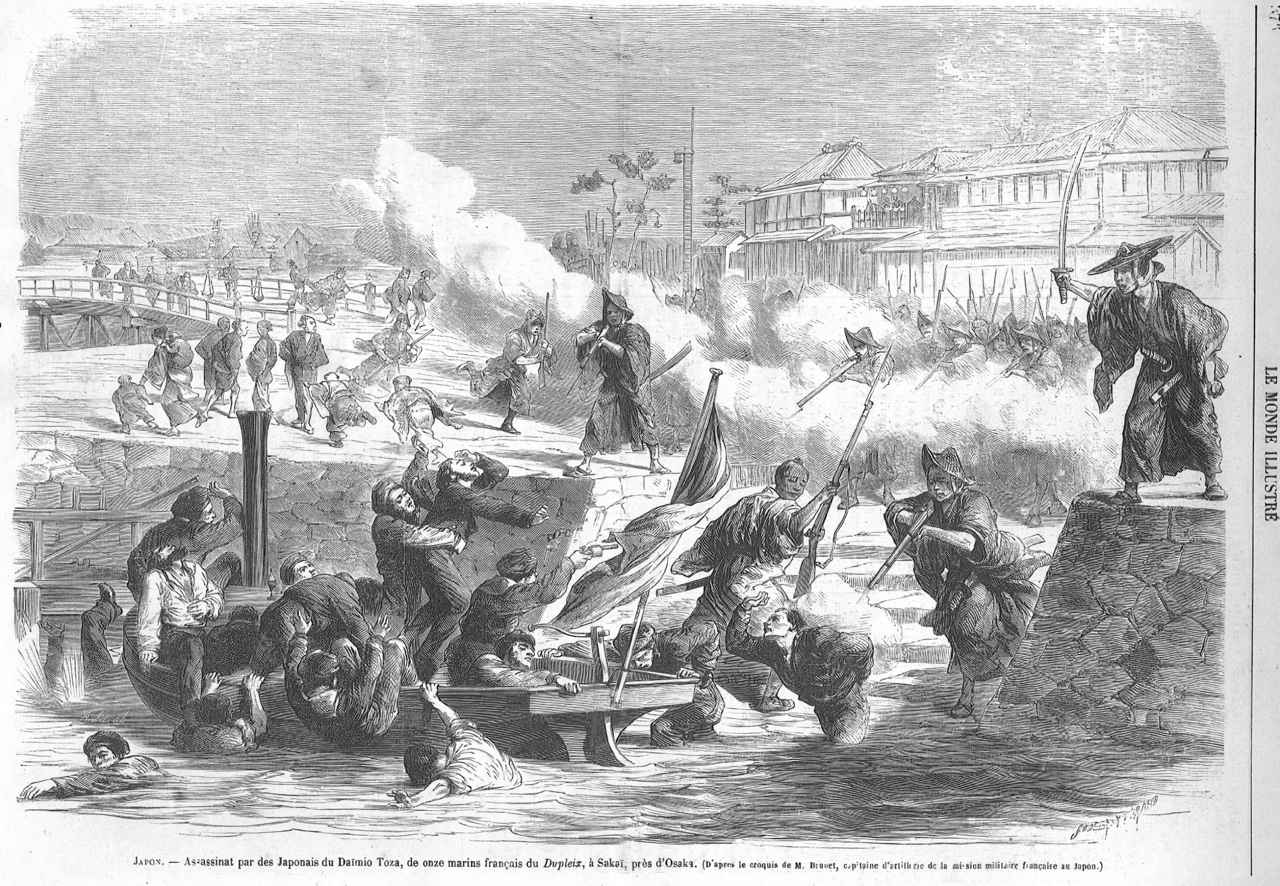
Twenty-nine Tosa men admitted firing, and the number was negotiated down to twenty: four officers and sixteen men chosen by lot at the Tosa Inari shrine in Osaka. On 16 March they began to die, one by one, at Myōkoku-ji in Sakai, in front of the French captain Abel-Nicolas Bergasse du Petit-Thouars. When the eleventh had died, the same number as the French dead, he asked for it to stop, and nine were spared.
The Boshin War also gave seppuku its most sentimental episode. On the 23rd day of the eighth month of 1868, a squad of the Byakkotai, Aizu’s “White Tiger” unit of sixteen- and seventeen-year-olds, killed themselves on Iimoriyama hill above Aizu-Wakamatsu. The long-told version says they saw smoke over Tsuruga Castle and thought it had fallen, but a memoir by the one survivor, Iinuma Sadakichi, found in 2008, records a furious argument about whether to go back or charge.
Even the number moved: the schoolbooks spoke of sixteen boys until a re-count before the graves were built in 1890 settled on nineteen. Nine years later, at Shiroyama above Kagoshima, Saigō Takamori was shot through the hip and asked his lieutenant to take his head. Tokyo woodblock artists printed him performing a perfect seppuku within weeks, because that was the death the public wanted.
Abolition, and the picture that outlived it
The Meiji era government did not abolish seppuku at once. Its first criminal code, in 1870, kept a punishment called jisai, “self-judgement”, for the former samurai class. The last such sentence came in 1872, on twelve former retainers of the Honda house of Kaga who had avenged their murdered master in what is usually called Japan’s last vendetta. On 13 June 1873 a revised code abolished it, and from 1882 every death sentence in Japan was carried out by hanging.
Abolition did not end the image; it freed it. Europe had been fascinated since 1669, when Arnoldus Montanus published in Amsterdam an illustrated account of Japan assembled from Dutch reports, soon out in German, English and French. Engravers copied it and copied the copies.
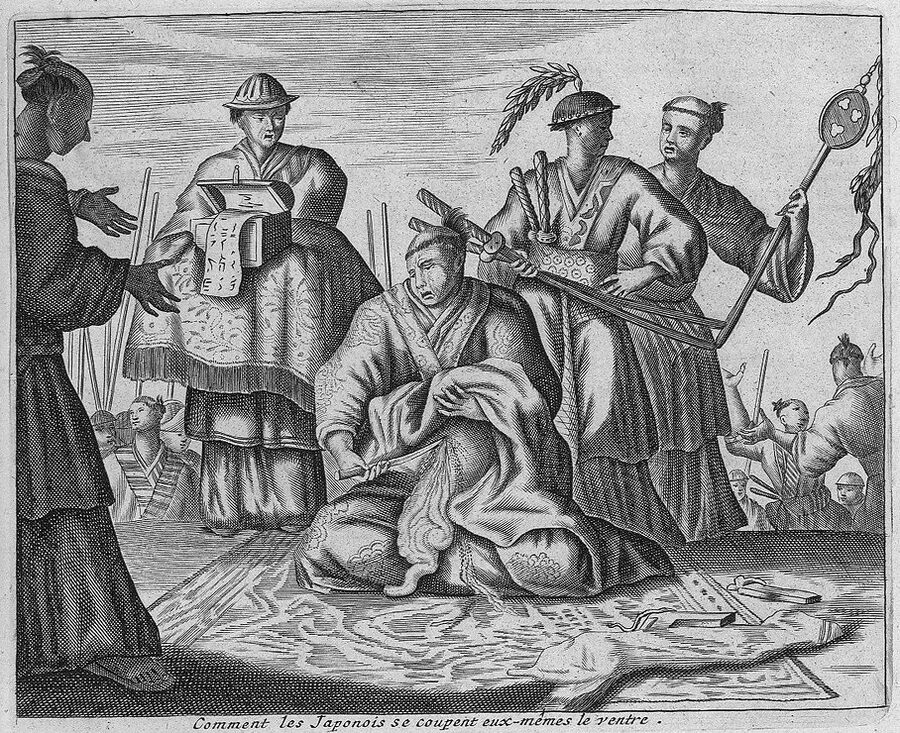
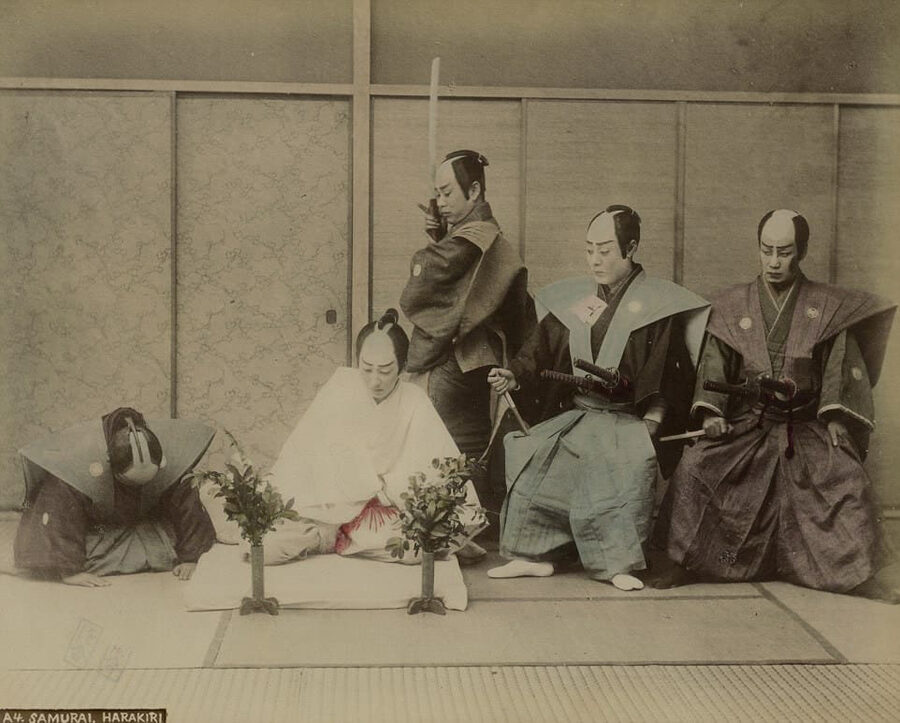
Mitford replaced fantasy with eyewitness, and Nitobe gave the West a philosophy to hang it on. Then theatre and film took over. Kabuki dressed its doomed heroes in white, and the cinema kept the white, dropped the asagi kamishimo and wrapped the blade in a sheet of plain paper that would have slipped in a real hand.
The Japanese encyclopaedia entry on the subject is blunt about this. Nothing in the historical record matches the all-white set exactly, and white kamishimo were mourning dress, worn to someone else’s funeral. Kobayashi Masaki’s 1962 film Seppuku, which won the jury prize at Cannes, is one of the few that makes the gap between ideal and reality its subject, and it is grim and very good.
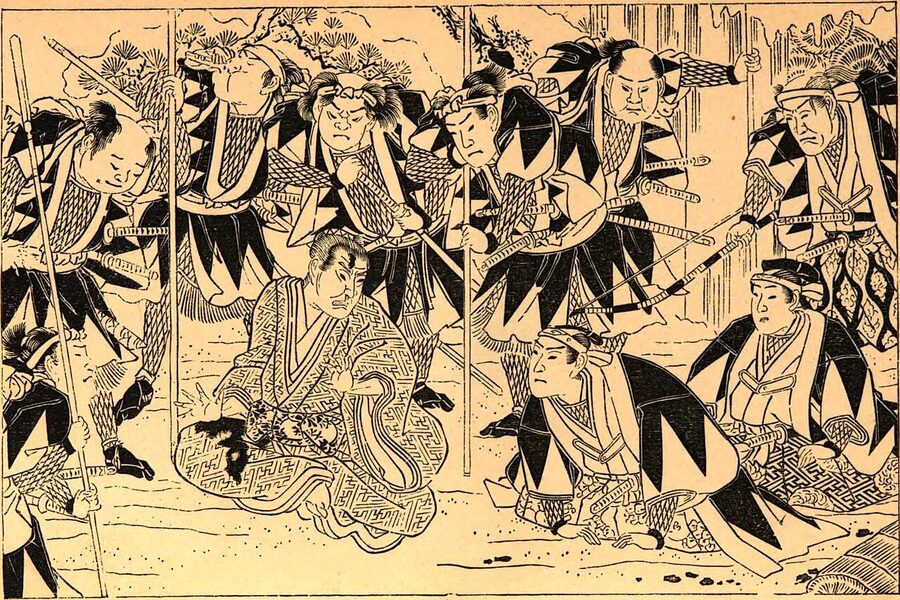
The last great echo of the old practice was General Nogi Maresuke, who followed the Meiji emperor in death with his wife in 1912, two and a half centuries after the shogunate banned exactly that. Mori Ōgai, who knew him, answered with The Abe Family, about the eighteen men who followed Hosokawa Tadatoshi, and later wrote up the Sakai incident. Much of the literature of seppuku was written after the practice was gone.
The word has travelled. Japanese still says hara wo waru, “to split the belly”, for speaking frankly, and jibara wo kiru, “to cut your own belly”, for paying out of your own pocket. Biologists have named a gene involved in the death of nerve cells Harakiri, which would have puzzled the Edo magistrates.
My favourite survival is in sumo. The highest-ranking referees carry a short sword in their belts, supposedly to show they are ready to cut their bellies if they call a bout wrongly. No referee has ever done so: when one gets a big decision wrong he submits his resignation, and it is never accepted.
Where to stand where it happened
The places tied to named cases run from Sendai to Okayama, and they are an odd set: two of the most visited temples in Japan, a pavement in Shinbashi, a cave you cannot enter and a hill with an escalator. I have put them roughly in order of how much they repay the trip. For the wider frame, Japan Through the Ages sets every period mentioned here in sequence.
Sengaku-ji and the Hosokawa garden, Takanawa (Tokyo)
Sengaku-ji (泉岳寺) is three minutes from Exit A2 of Sengakuji Station on the Toei Asakusa and Keikyū lines, or about five from the north exit of Takanawa Gateway on the JR Yamanote line. The grounds are open 07:00–16:00 and free. Asano is buried here with the men who died for him: forty-eight stones in all, counting one for a man who died before the raid and one for Terasaka Kichiemon, the only raider not ordered to die.
Look at the names on the stones. Apart from Terasaka’s, every one of the ronin’s Buddhist names begins with the character for “blade”. The Gishi Kinenkan museum (09:00–15:30) holds their belongings, and the joint ticket with the hall of wooden statues has been ¥500 in recent years; the temple does not publish the price, so take cash.
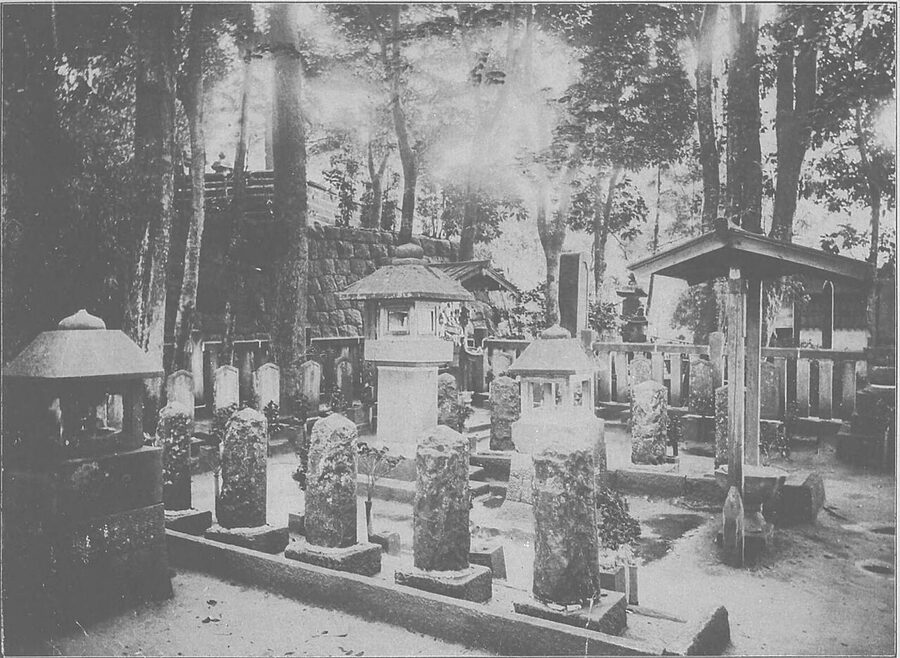
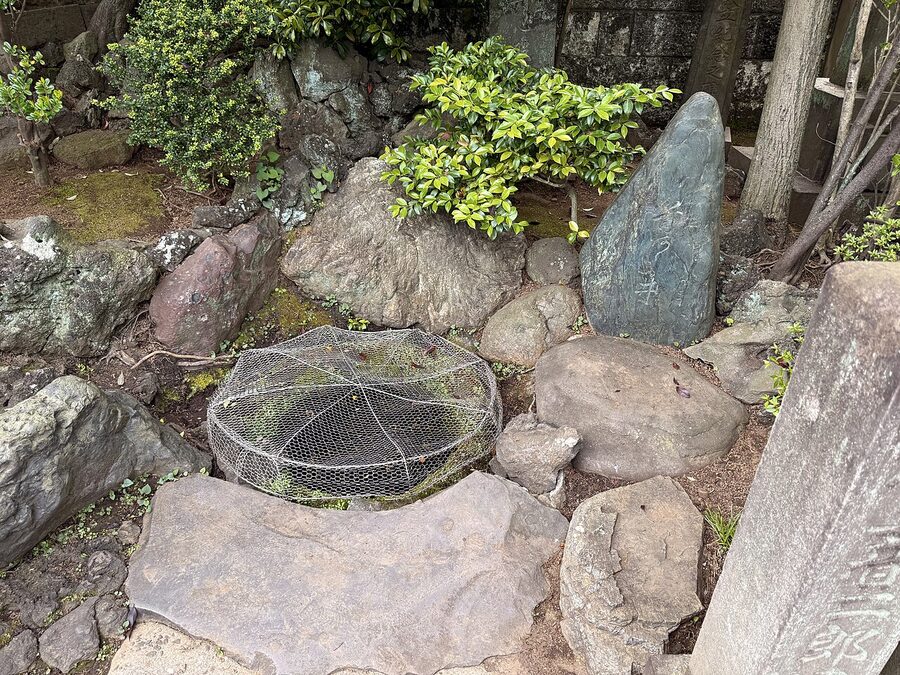
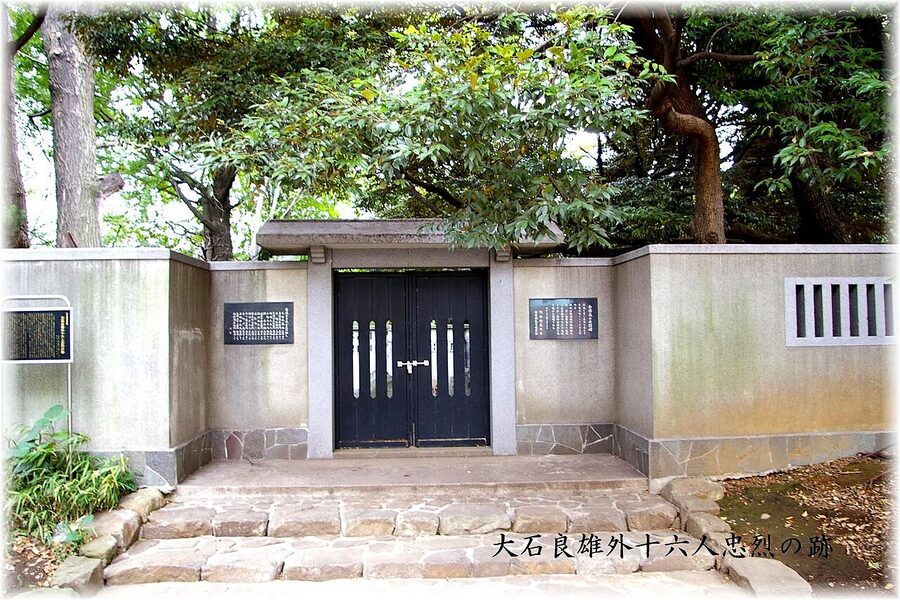
The Hosokawa garden where Ōishi and sixteen others died is a short walk north, at Takanawa 1-chōme, inside the grounds of a municipal apartment block. It is private, so you see the stone and the gate from the street. Next to the Minato ward Takanawa office stands a chinquapin more than eight metres round, said to have grown in the Hosokawa garden in 1703, and I find it more affecting than the monument.
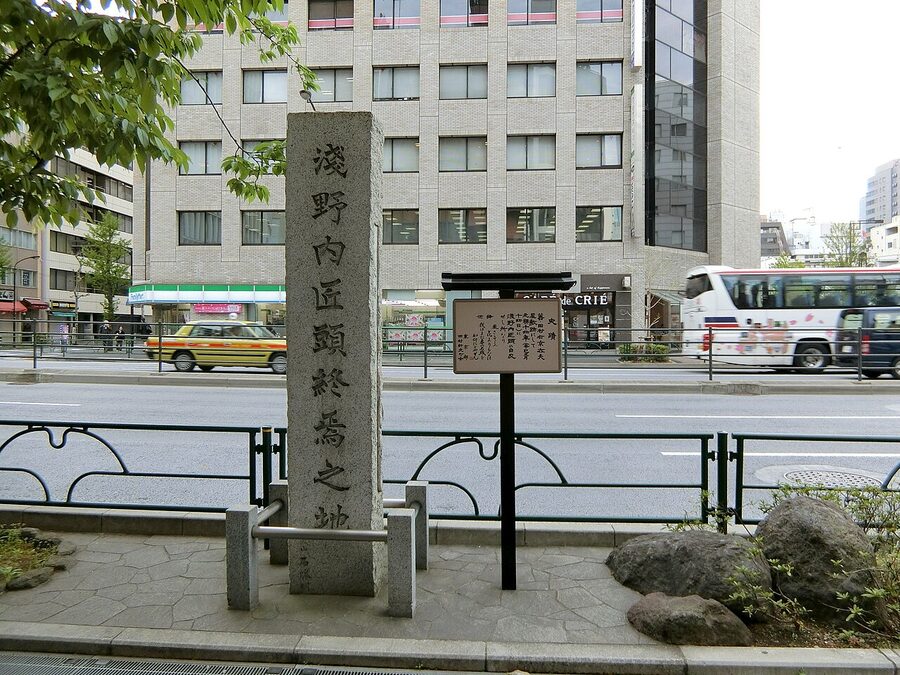
Asano’s own death place is a stone on a pavement in Shinbashi 4-chōme, marking the Tamura mansion, about five minutes’ walk from the Karasumori exit of Shinbashi Station. It takes thirty seconds to see. Go anyway, because a concrete side street where a daimyo was made to kneel in a garden is a fair measure of how completely Edo has gone.
Ōgi no Shiba at Byōdō-in, Uji
The fan-shaped lawn where Yorimasa died is a small triangle of grass inside the main gate of Byōdō-in (平等院), the temple on the ¥10 coin. It appears in records from the Muromachi period, and the Noh play made it a place people came to see. It is easy to walk past on the way to the Phoenix Hall, so look for the stone marker close to the main gate.
Byōdō-in is about ten minutes on foot from JR Uji or Keihan Uji. The garden is open 08:45–17:30 (last entry 17:15) and the Hōshōkan museum 09:00–17:00, both on one ¥700 adult ticket. The Phoenix Hall interior costs ¥300 more, in timed groups of up to thirty-five every twenty minutes from 09:30, and on busy weekends the slots can be gone by early afternoon.
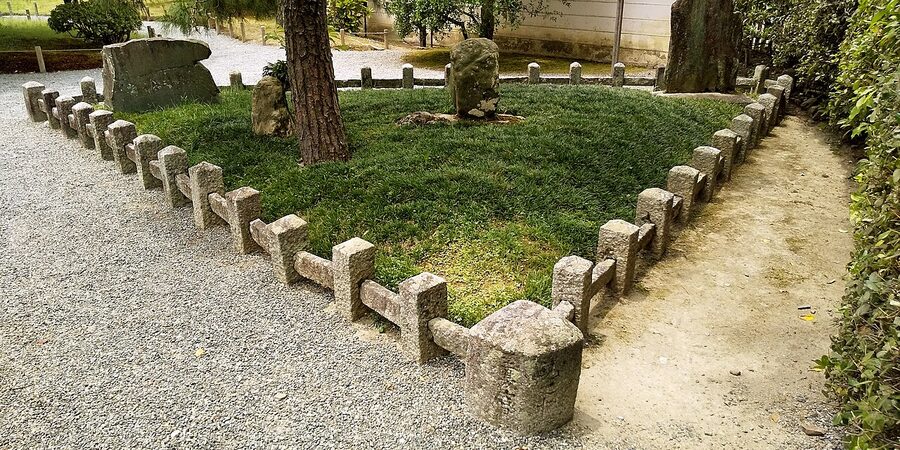
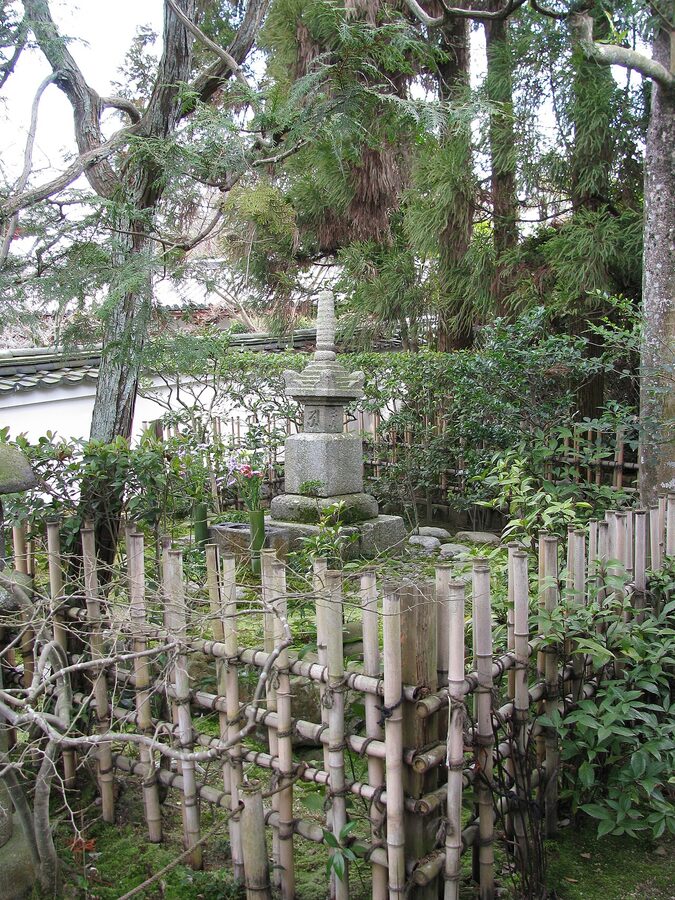
Yorimasa’s grave is a small stone monument in a corner of the precinct. I like Byōdō-in best on a weekday in late spring, when the wisteria by the pond is out, and it is the one place on this list where the setting is genuinely beautiful. An old poet chose to die looking at it.
Kongōbu-ji and the Willow Room, Kōyasan
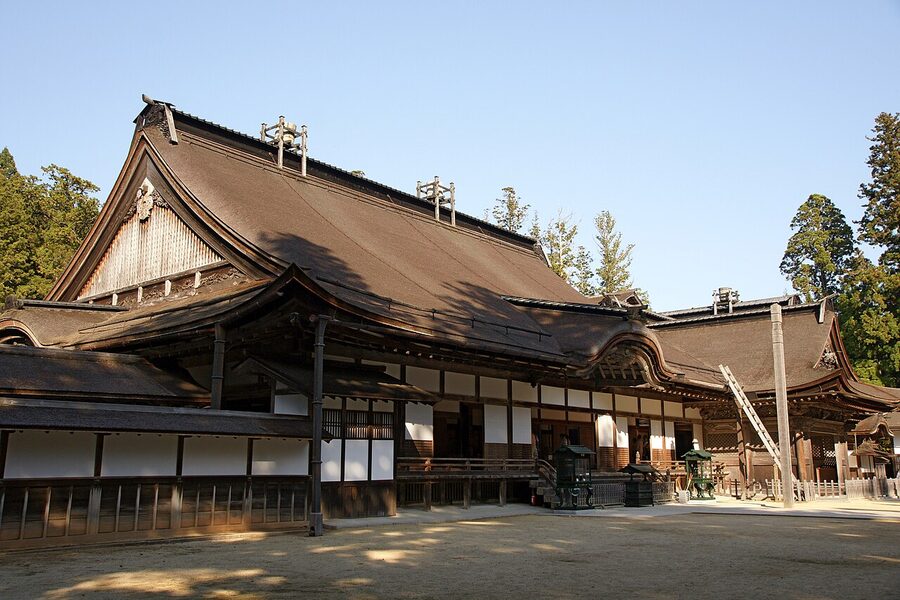
Seigan-ji, where Hidetsugu died, became part of Kongōbu-ji (金剛峯寺), the head temple of Shingon Buddhism on Mount Kōya. The room, the Yanagi-no-ma, is named for Yamamoto Tansai’s willows and herons on its sliding doors, and is also called “the room where Hidetsugu died by his own hand”. It is on the standard route through the main building.
Entry is ¥1,000, and the temple is open 08:30–17:00 (last entry 16:30), though ceremonies close parts of it on some days. Take the Nankai Kōya line to Gokurakubashi, the cable car up, and a bus to Kongōbuji-mae, allowing two hours from central Osaka. Stay the night in a temple lodging if you can, because the mountain empties after the last cable car.
The blade Sasabe Shigemasa used as Hidetsugu’s second, by Kanabō Masatsugu of Nara, stayed in his family and was eventually given to the museum in Osaka Castle’s main tower. It is not always on display, so check before you plan around it.
Bitchū Takamatsu Castle, Okayama
Takamatsu Castle is now a small, flat park of lotus ponds about ten minutes’ walk from JR Bitchū-Takamatsu station on the Kibi line. The ponds are deliberate, a reminder of the marsh the castle sat in, and in summer the local lotus variety called Muneharu-hasu flowers. The little site museum (10:00–15:00, closed Mondays and at New Year) is free and has a model of the flood.
Muneharu’s head mound and a stone carrying his death poem stand in the park, moved here in 1910 from Jihō-in on Ishii hill, which had been Hideyoshi’s headquarters during the siege. Ishii hill is close enough to see from the park, which tells you how near the two men were that day.
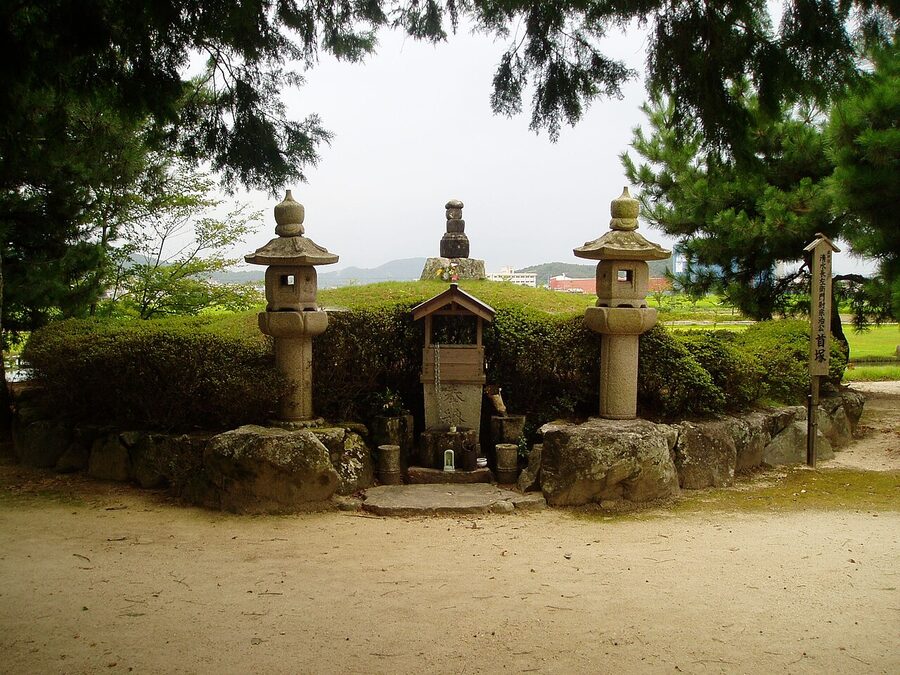
Osaka Castle
The stone marking where Hideyori and Yodo-dono died stands in the Yamazato enclosure on the north side of Osaka Castle, below the main tower and away from most of the crowds. The park is free. The main tower has cost ¥1,200 for adults since April 2025 and is open 09:00–18:00 (last entry 17:30).
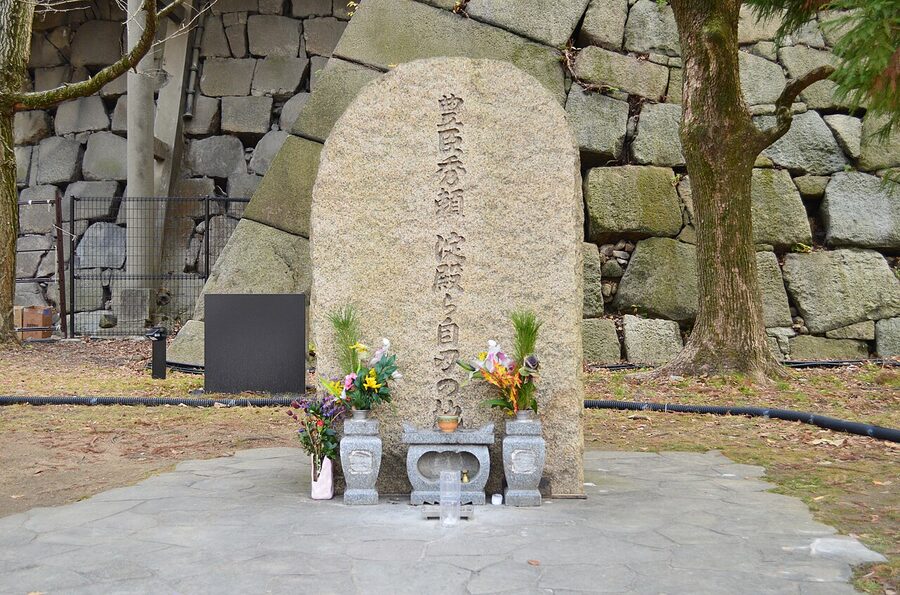
Myōkoku-ji, Sakai
Myōkoku-ji (妙國寺), where the Tosa men died, is better known locally for its cycad. The great sago palm in its dry garden is a national natural monument, and legend says Nobunaga had it moved to Azuchi Castle, where it wept every night to go home until he sent it back. The temple is a short walk from Myōkokuji-mae on the Hankai tramway.
Entry is ¥400, 09:00–16:00, but you must book in advance by phone; the number is on the temple’s own site. The eleven are not buried here: Date Munenari objected to burying executed men at a temple with imperial patronage, so their graves, now a national historic site, are at Hōshu-in nearby.
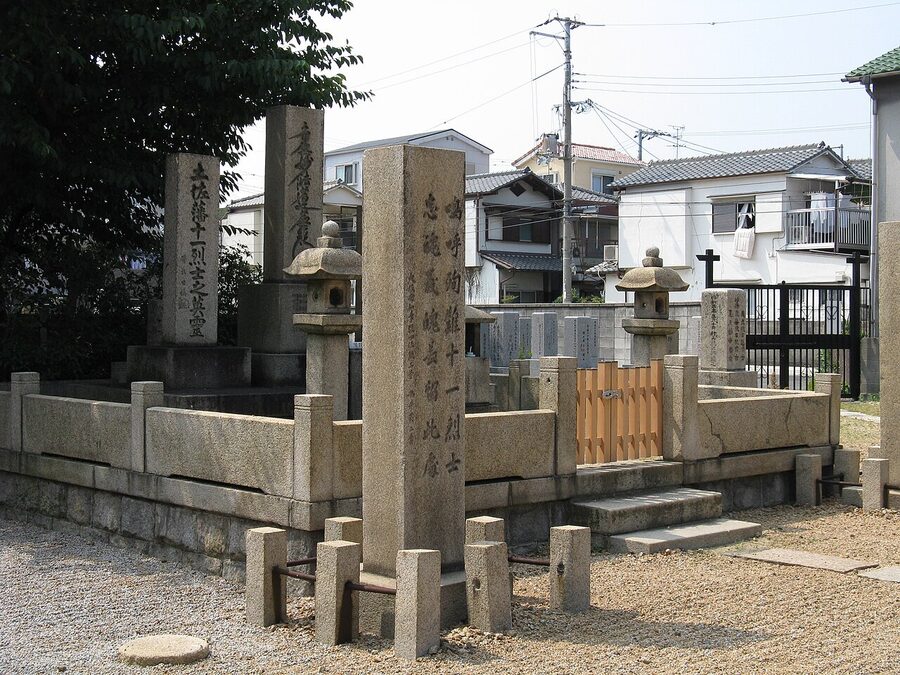
Iimoriyama, Aizu-Wakamatsu
Iimoriyama, a 314-metre hill on the north-east edge of Aizu-Wakamatsu, is the most visited site on this list by a distance. The Akabē loop bus from JR Aizu-Wakamatsu station takes about five minutes to Iimoriyama-shita. Climb the steps or take the slope conveyor (¥250) to the nineteen graves and the spot where the boys looked across at the town.
The privately run Byakkotai Memorial Hall at the foot of the hill (¥400) is old-fashioned and partisan, and I would not rush to it. Spend the time instead at the Sazae-dō beside the steps, a 1796 wooden hall with a double-spiral ramp in which you never meet anyone coming the other way. It has nothing to do with seppuku and is one of the strangest buildings in Japan.
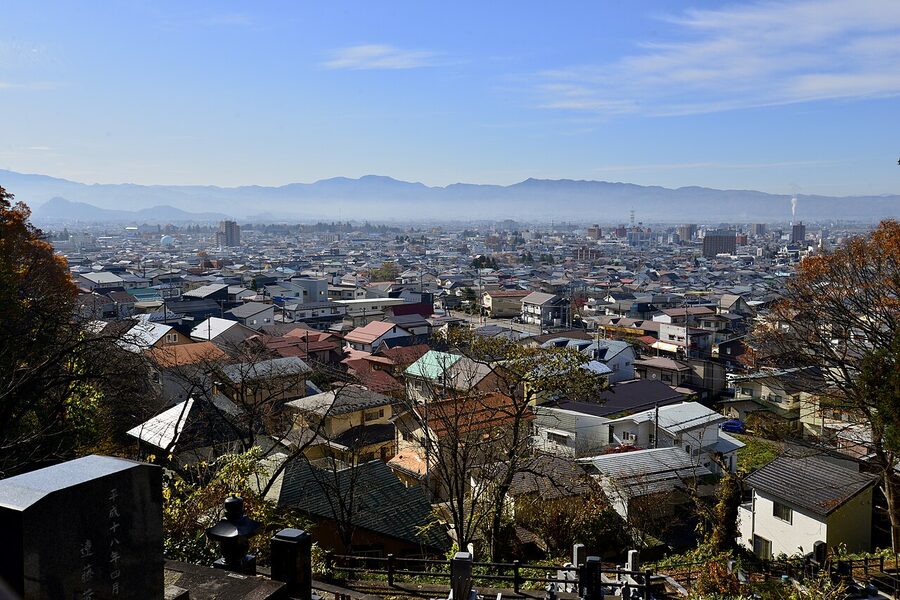
Zuihōden, Sendai
Masamune’s mausoleum stands on Kyōgamine hill across the Hirose river from the Sendai Castle site, a seven-minute uphill walk from the Zuihōden-mae stop on the Loople Sendai bus. It is open 09:00–16:50 from February to November and 09:00–16:20 in December and January, closed 31 December. Admission was ¥570 at the last listing I saw; confirm before you go.
Kamakura: Tōshō-ji and the Harakiri Yagura
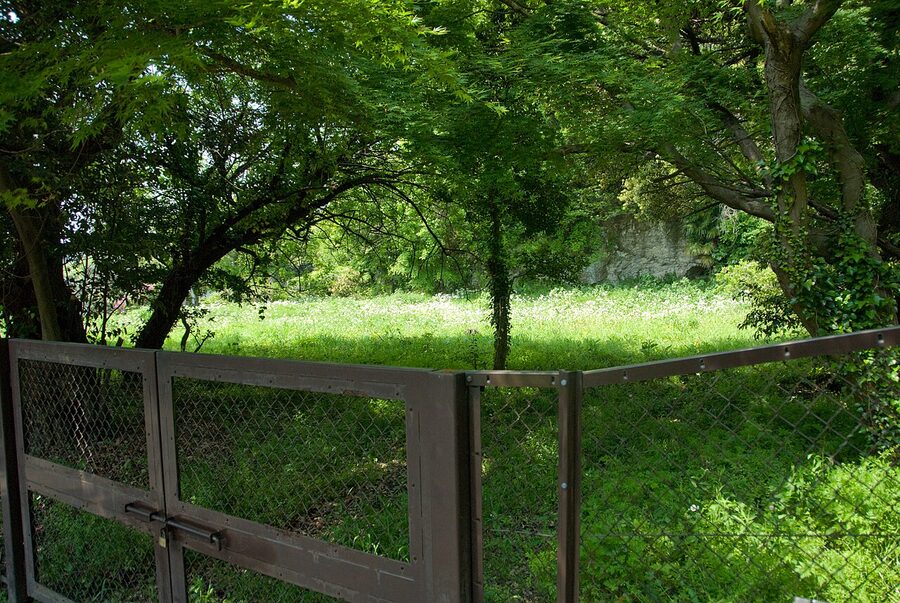
Last, because you will see the least. The Tōshō-ji site is about twenty minutes’ walk east of Kamakura Station: past Tsurugaoka Hachimangū, past Hōkai-ji (founded by Ashikaga Takauji on the site of the Hōjō residence to calm their ghosts), across the Nameri river and up a quiet lane into the valley of Kasai-ga-yatsu. The temple ground is a national historic site, open and free.
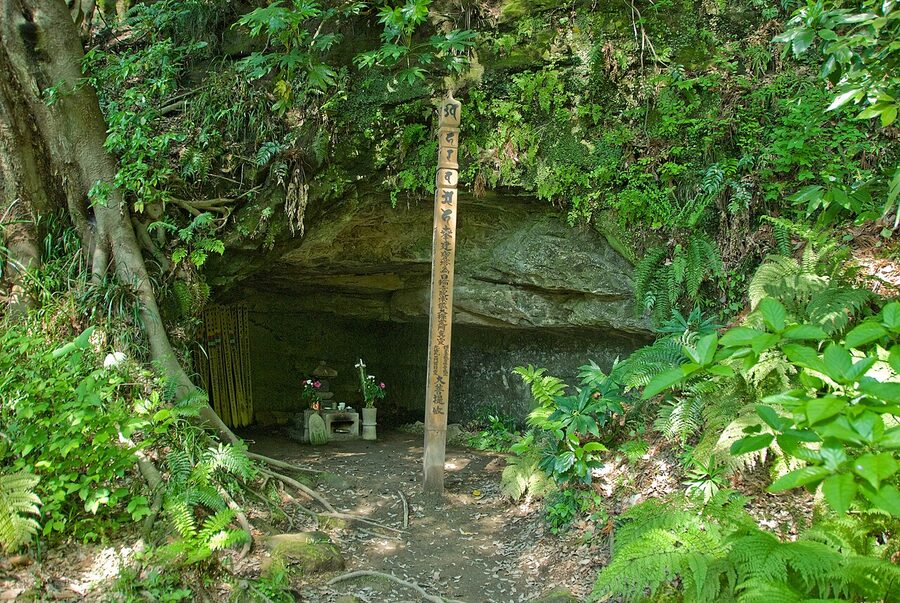
Beyond it is the yagura itself, the cave in the cliff linked by tradition to Takatoki, with a Taishō-era stone at the spot. Because of falling rock it has been closed to entry for some years, so you look from the approach. It is the bleakest place on this list and, on a grey winter afternoon, the one that stays with you.
Three slices
Go back to the tray and the three slices of pickle. Some anxious household official presumably devised them to make a condemned man’s last hour go without a hitch, and for a century and a half they did their job: everyone knew their part, and often nobody had to cut anything at all.
What the rulebook could not control was the man on the mats. Yorimasa chose the lawn, the fan and the poem himself. Muneharu danced on his boat because he wanted to, and Ōishi shook. They were people long before they were legends, and the legend is the only part they had no hand in.