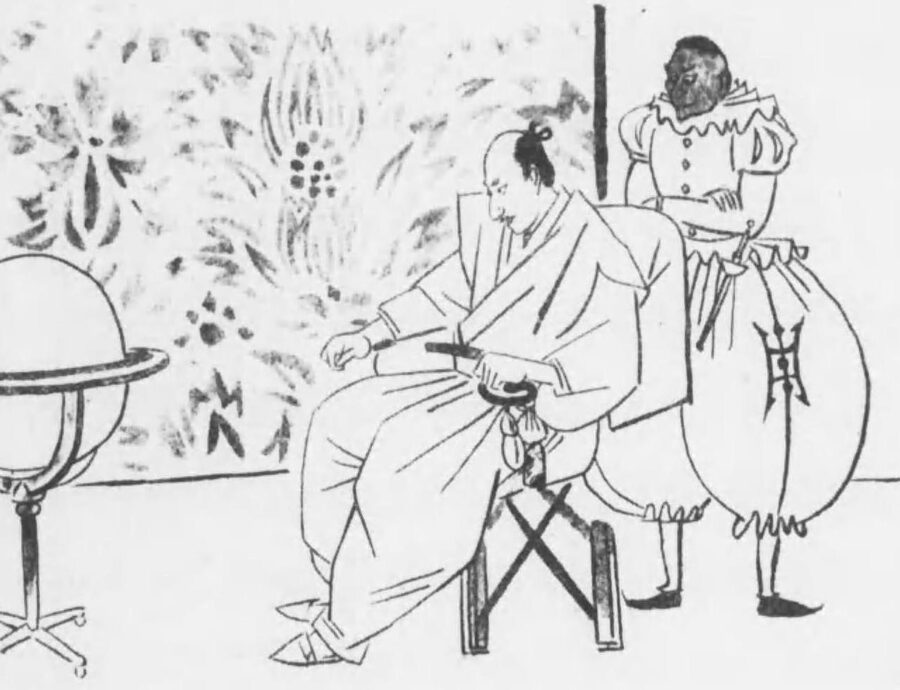
The crowd outside the Jesuit house in Kyoto broke down the gate, threw stones, and left several people injured, all to get a look at one man. The padres reckoned afterwards that if they had charged admission they could have made eight to ten thousand cruzados in a matter of days. Then Oda Nobunaga sent for him, refused to believe that his skin was not painted on, and had him stripped to the waist to check.
That scene in the spring of 1581 is the most vivid moment in a life that otherwise survives in scraps.
Everything Japanese writers of the period set down about the man Nobunaga named Yasuke comes to roughly two hundred characters of Japanese. Translated into English, it would run to about one paragraph. The rest is a handful of Jesuit letters, written by men who mostly called him by a word for his skin colour, and four centuries of people filling the gaps. I want to walk you through the scraps, say plainly which ones bear weight, and then send you to the places in Kyoto, Azuchi and Sakai where you can still stand inside the story.
In This Article
- Every word the record holds
- From “the Indies”
- Kyoto, the Monday after Easter
- Fifteen months in the household
- Honnō-ji, and the house of the heir
- After 1582, nothing
- Samurai, servant, or a word the period did not need
- Where to find Yasuke’s Japan today
- Honnō-ji, Teramachi
- The original Honnō-ji site, Aburanokōji
- The Nanbanji site and its bell
- The Nijō Shin-gosho site
- Azuchi
- Sakai City Museum
- Kobe City Museum
- Kuchinotsu
Every word the record holds
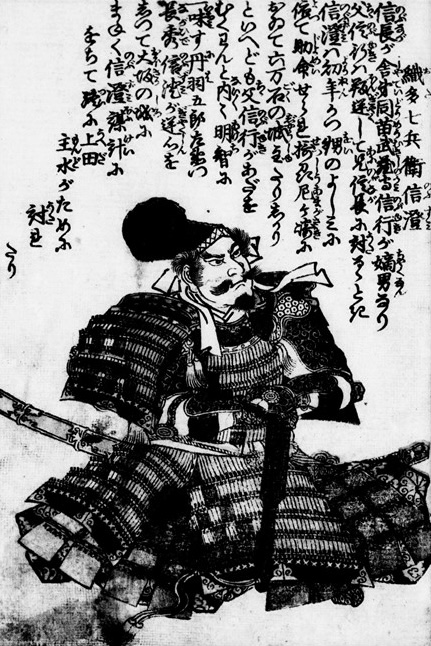
Start with the Japanese side, because it is short enough to read in full. Ōta Gyūichi, an archer in Nobunaga’s household who later wrote the Shinchō Kōki (信長公記), the chronicle of his lord’s life, records under the 23rd day of the second month of Tenshō 9 that a kurobōzu (黒坊主) came from the Christian countries, using a word whose second half normally meant a shaven-headed monk. He looked twenty-six or twenty-seven, his whole body was black “like an ox”, he was well built and handsome, and his strength surpassed that of ten men. The padres brought him to pay their respects.
Then comes a sentence most retellings skip. Gyūichi says that thanks to Nobunaga’s glory, famous things from the Three Countries and rare curiosities like this one were seen again and again. In the only Japanese description written by a man inside the household, Yasuke enters the record in a list of marvels, a living exhibit alongside the imported treasures. You do not have to like that framing, but you do have to know it is there.
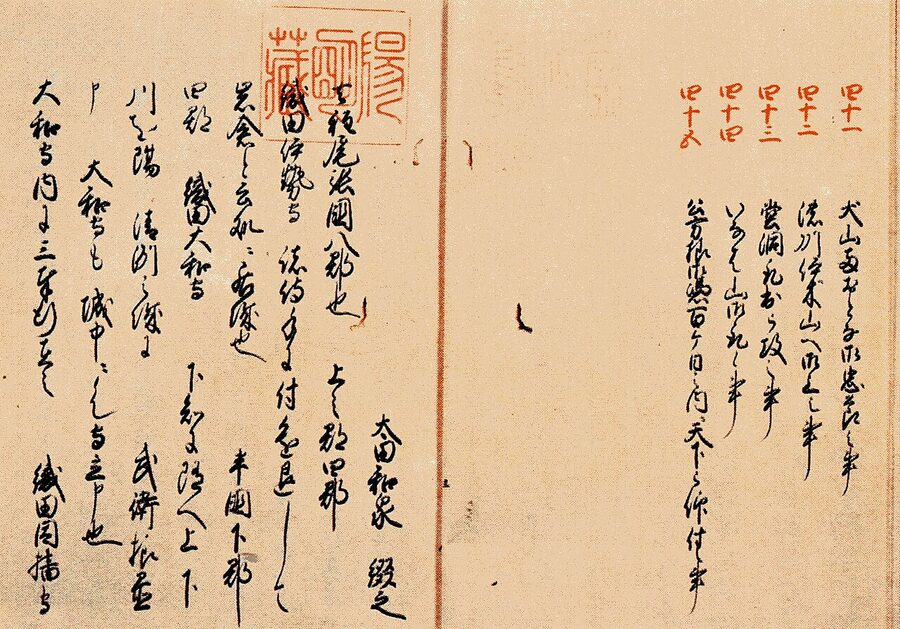
That sentence comes from a single manuscript held by the Sonkeikaku Bunko, the library of the Maeda family, the lords of Kaga whose founder Maeda Toshiie had served Nobunaga himself. After the passage above, the Sonkeikaku copy adds that Nobunaga gave the black man a stipend, named him Yasuke, granted him a sayamaki (a short sword without a guard, a humbler thing than the blades in my piece on katana and tachi) mounted in gold or silver foil, and a private residence, and that at times he was made to carry Nobunaga’s dōgu, his personal gear or weapons. No other copy of the chronicle contains these lines. The Sonkeikaku text was copied in 1719 by a descendant of Gyūichi four generations on, from a family autograph that has since been lost to fire.
The second Japanese source is better, because nobody had a reason to embellish it. Matsudaira Ietada, a minor Tokugawa vassal who kept a terse daily diary, the Ietada nikki (家忠日記), wrote on the 19th day of the fourth month of Tenshō 10 (11 May 1582) that Nobunaga was travelling with a black man the padres had presented to him and to whom he paid a stipend. “His body was black like ink, his height six shaku two bu, and his name was Yasuke.” Ietada writes the name 弥介, the Sonkeikaku copy 弥助; the sound is the same.
Six shaku two bu works out at about 182 centimetres. A lot of English writing gives “six foot two”, which is what you get if you read the last unit as sun rather than bu (a tenth of a sun), and it adds six centimetres he probably never had. He was still a head taller than most of the men around him, which is presumably why Ietada bothered to note it.
The European side is longer but stranger than it looks. Luís Fróis wrote from Kyoto in April 1581 about the crowds and the audience; his colleague Lourenço Mexia added detail in a letter of October that year; and Fróis’s annual report of 5 November 1582 describes the night of Honnō-ji. Two French church histories, by François Solier in 1627 and Jean Crasset in 1689, retell the 1581 meeting from those letters. That is the whole file.
From “the Indies”
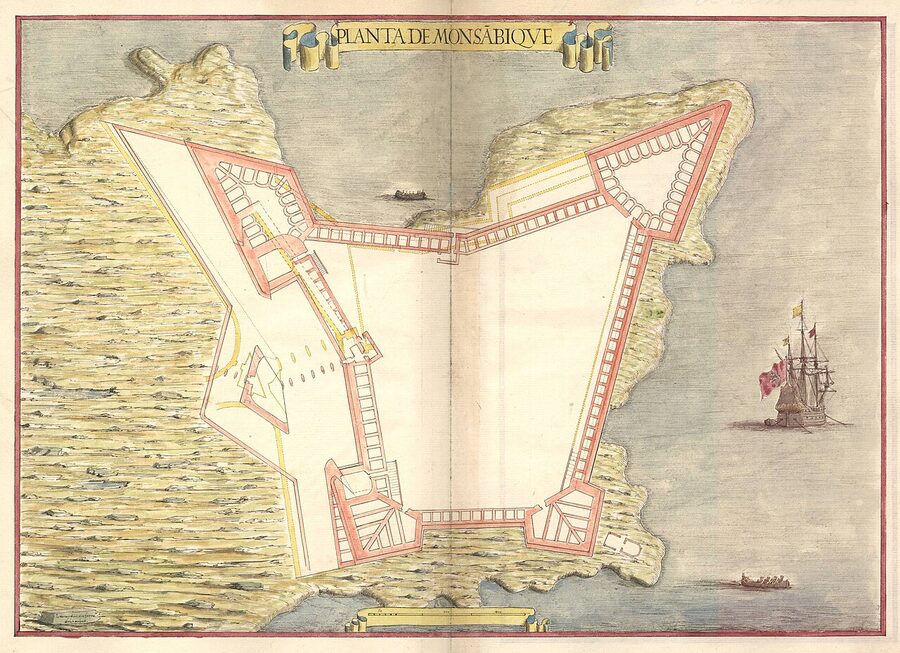
Nobody knows where Yasuke was born or what he was called before Nobunaga renamed him. The Jesuit letters call him a cafre, the Portuguese term for a black African, and say only that the Visitor brought him from the Indies, which in Jesuit usage meant the whole of Portuguese Asia and East Africa. Solier, writing in France forty-five years later, is the first to say he was a native of Mozambique.
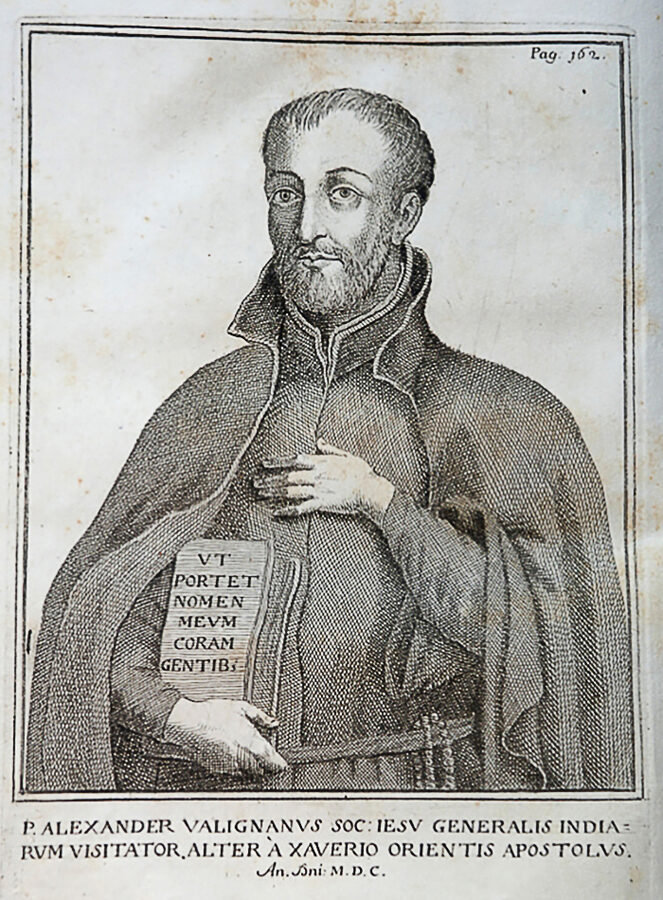
The route makes Mozambique plausible. Alessandro Valignano sailed from Lisbon in March 1574, called at Mozambique Island that summer, and reached Goa in September, then spent three years inspecting India before moving on through Malacca and Macau.
From Mozambique he wrote that the Portuguese commander had given the Jesuits enslaved men to serve the fathers, and that he kept some of them. The historian Oka Mihoko has suggested Yasuke may have been among them. No document connects the two.
Other origins circulate. Thomas Lockley, the Nihon University lecturer whose books did more than anyone to make Yasuke famous, has proposed that he was Dinka, from what is now South Sudan, partly on the grounds of his height. Others have read Solier’s phrase More Cafre as a hint that he was Muslim. These are reasonable guesses, but they are guesses.
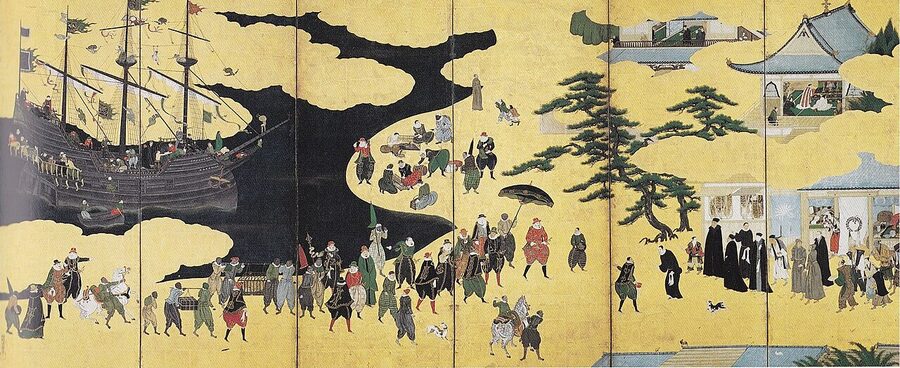
He was not, in fact, the first African in Sengoku Japan. The Portuguese captain Jorge Álvares, who wrote the first European report on the country for Francis Xavier in the 1540s, said that people came from the better part of a hundred kilometres away to look at the black men on his ship. What makes Yasuke different is that Japanese writers noticed him, by name.
Valignano landed at Kuchinotsu, the Portuguese trading port at the tip of the Shimabara Peninsula, on 25 July 1579. Whether Yasuke was with him from that day is an inference; the first time a black man is mentioned in the Visitor’s party is when it left Bungo for the capital in March 1581, with Fróis, Mexia and several brothers. Most historians accept that this was Yasuke, and I see no reason to doubt it.
Kyoto, the Monday after Easter
At Sakai the crowds were already waiting. Fróis wrote that countless people lined the streets to see the very tall Visitor and the colour of the cafre travelling with them, that shops along the narrow lanes were damaged in the crush without anyone complaining, and that the black man was repeatedly urged to ride a horse. Sakai, the self-governing merchant port where Sen no Rikyū and his fellow merchants were turning tea into an art, was used to foreigners. It had never seen this.
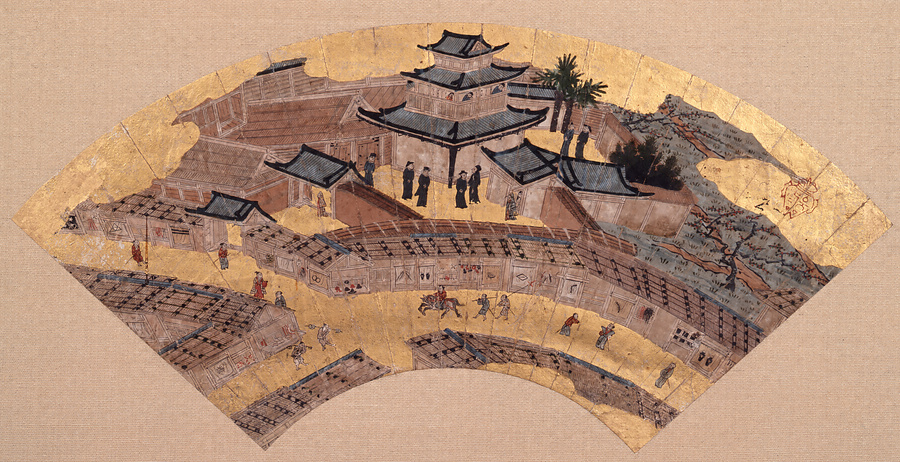
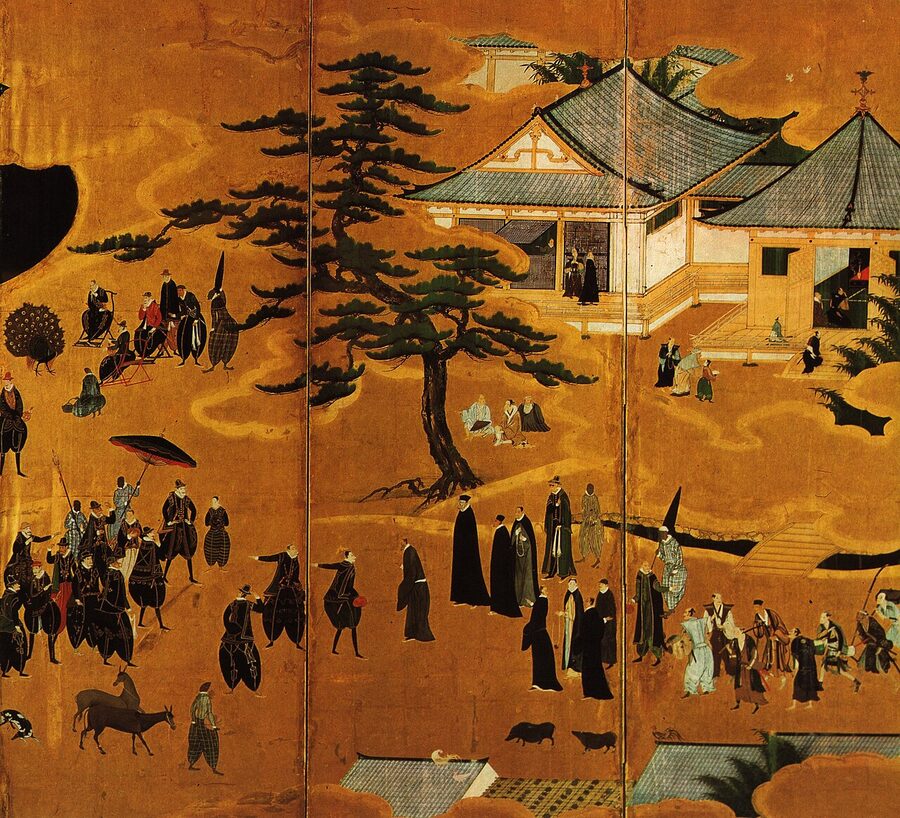
In Kyoto it got worse. The Jesuits reached the capital in late March, and the house they occupied, the Nanbanji on what is now Takoyakushi-dōri, was mobbed. Fróis describes stones thrown and people hurt, some badly, and a gate that the guards could barely hold. The cruzado estimate in my opening comes from the same letter, put in the mouths of the onlookers.
Then Nobunaga asked to see him. On the Monday after Easter, which the Jesuit calendar makes 27 March 1581 and the Japanese one the 23rd day of the second month, Father Organtino took the black man to Honnō-ji, where Nobunaga was staying. Nobunaga would not believe the colour was natural and had him strip from the belt up; some Jesuit tellings add that he was made to wash, and that the scrubbing only made his skin look darker. Nobunaga’s sons were called in to see, and a nephew who commanded at Osaka, usually identified as Tsuda Nobusumi, was so pleased that he handed over ten thousand sen, ten strings of cash.
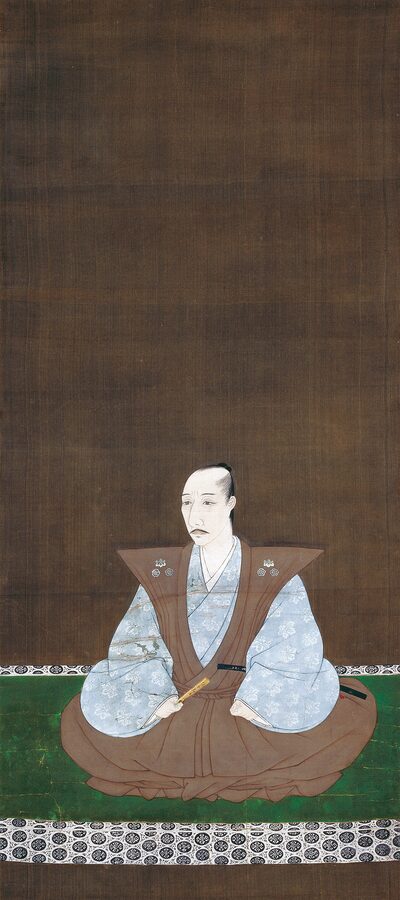
Notice who is doing the looking in all these accounts. The Jesuits describe crowds, the crowds describe a spectacle, Nobunaga inspects, the nephew pays. The man at the centre says nothing in any surviving source, not one recorded word. Everything you have ever read about what Yasuke thought or felt is invention, however well meant.
Mexia’s letter of 8 October 1581 adds the most interesting line in the European file. The black man, he wrote, understood Japanese moderately, Nobunaga never tired of talking with him, and because he was strong and had some skills, Nobunaga took pleasure in protecting him and had him taken round the city with an escort. Some people were saying Nobunaga would make him a tono, a lord. Whether that was street gossip, Jesuit gossip or a joke is impossible to tell, but it is the only contemporary hint that anyone imagined him rising.
Fifteen months in the household
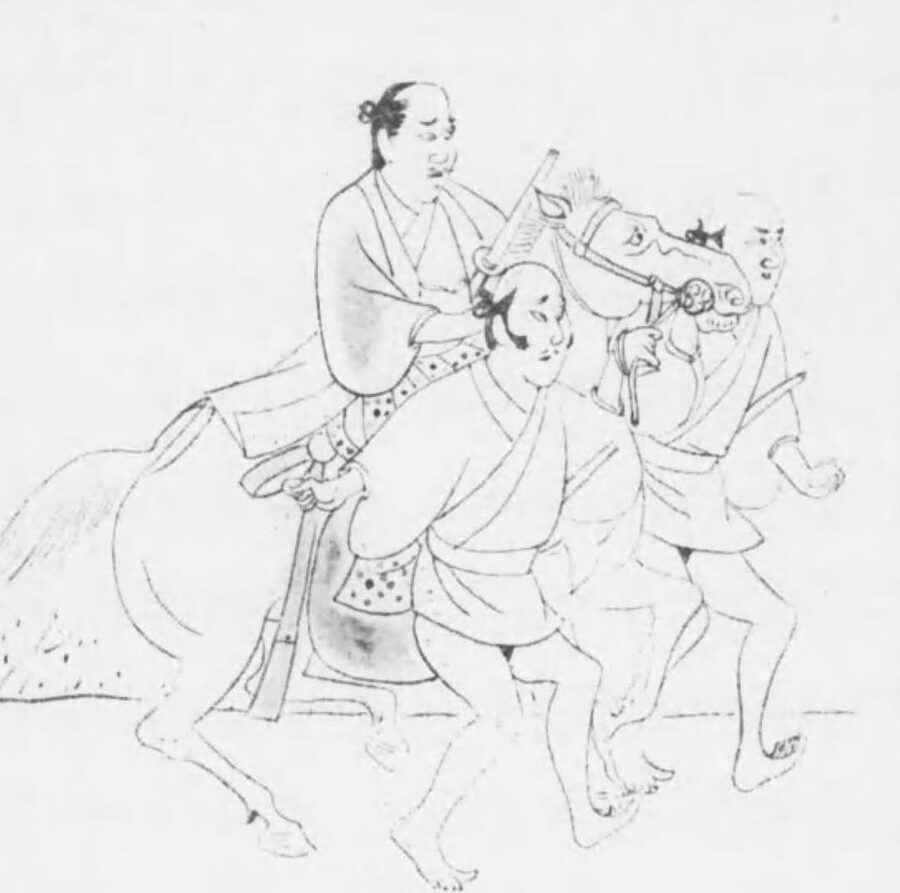
From here the record thins to almost nothing. If the Sonkeikaku sentence is right, Yasuke was given his name, a house, a stipend and a decorated short sword soon after the audience, and served close to Nobunaga as an attendant who sometimes carried his weapons. Five days after the meeting, on the 28th day of the second month, Nobunaga staged the great horse parade in Kyoto, the umazoroe, in front of the court and the whole city. Nobody records whether Yasuke rode in it, watched it, or was anywhere near.
There is one puzzle in the spring of 1581 that the tidy versions leave out. In May Fróis travelled north to Kitanoshō in Echizen, Shibata Katsuie’s castle town, and his letters say a black man went with him; at Nagahama the crowd broke into their lodging three or four times. The Japanese scholar Fujita Midori identified this man as Yasuke, and the identification is now widely repeated. If it was him, Nobunaga either lent him back to the Jesuits for a fortnight or had not yet taken him, and both possibilities muddy the neat story of an instant appointment.
Where Yasuke lived is not recorded either, but Nobunaga’s household lived at Azuchi Castle on the shore of Lake Biwa, and the presumption is that he did too. Valignano visited Azuchi that year, and Nobunaga gave him a pair of folding screens painted with the castle and town, which the Visitor took to Rome as a present for Pope Gregory XIII. The screens were lost in the Vatican long ago. The Jesuits also ran a seminary at Azuchi, the Seminario, below the castle, where Japanese boys studied Latin and music.
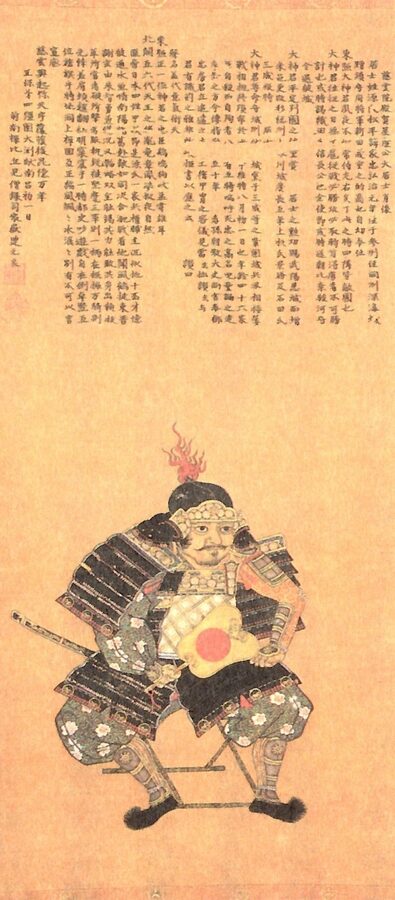
The only firm sighting comes in the spring of 1582. In the third month Nobunaga’s armies destroyed the Takeda of Kai in a campaign of a few weeks, the house that Takeda Shingen had made the most feared in eastern Japan. Takeda Katsuyori, Shingen’s son, died on the slopes of Tenmokuzan, and Nobunaga came home slowly, sightseeing at the foot of Mount Fuji and down the Tōkaidō through the provinces of his ally Tokugawa Ieyasu. That is when Ietada saw a very tall black man in Nobunaga’s train and wrote down his name.
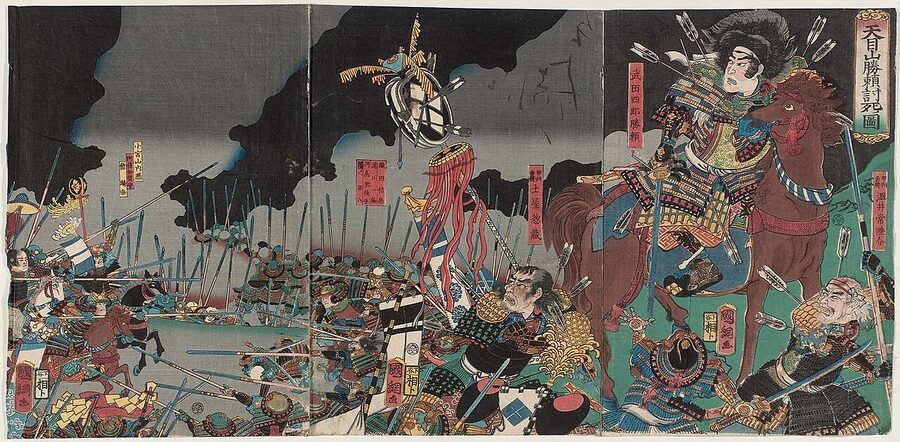
Ietada’s entry is worth reading slowly. Nobunaga is “travelling with” him; he was “presented by the padres”; Nobunaga “gives him a stipend”. The vocabulary is that of a retainer, but it says nothing about rank, and Ietada did not choose to say more.
Honnō-ji, and the house of the heir
Five weeks after Ietada’s entry, Nobunaga went up to Kyoto with a small escort and lodged at Honnō-ji. Before dawn on the second day of the sixth month of Tenshō 10, 21 June 1582 by the Julian calendar the Jesuits were still using, Akechi Mitsuhide’s army surrounded the temple. Sources variously give Nobunaga’s escort as a few dozen or around a hundred; the Shinchō Kōki lists the pages and attendants who died, and Yasuke is not among them. By mid-morning the temple was burning and Nobunaga had taken his own life inside it.
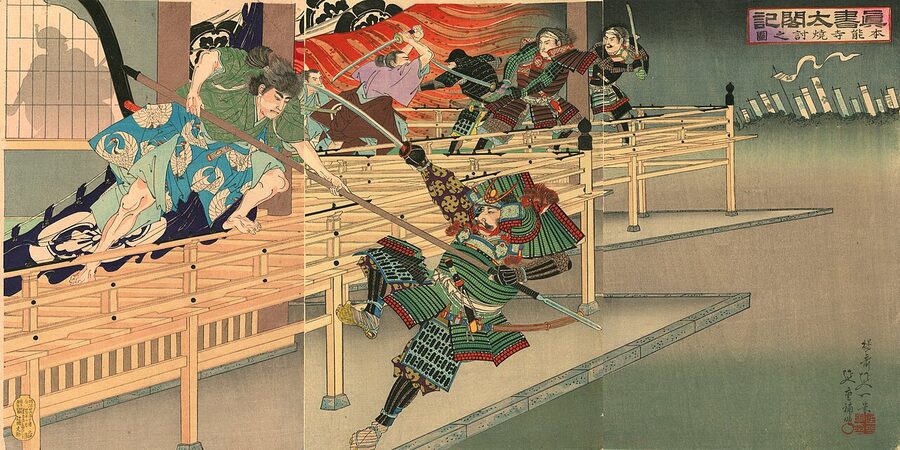
The only account of Yasuke that night is a few lines in Fróis’s report of 5 November 1582. After Nobunaga’s death, the cafre the Visitor had given him went to the house of the heir and fought there for a considerable time. An Akechi retainer came up and told him to hand over his sword without fear, and he did. Asked what to do with him, Mitsuhide said that the cafre was an animal who knew nothing and was not Japanese, so he should not be killed, but taken to the church of the padres.
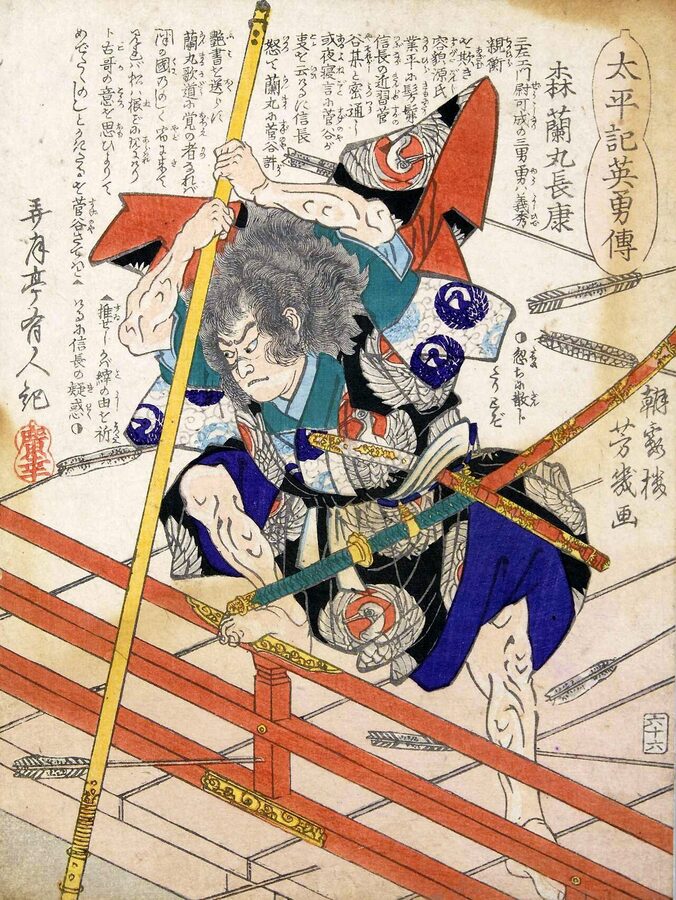
The heir was Oda Nobutada, Nobunaga’s eldest son, lodged a short distance away at Myōkaku-ji. When he heard what was happening he moved with his guard into the Nijō Shin-gosho, the residence of Prince Sanehito, sent the prince and his family out, and fought until he too committed seppuku. If the Jesuit account is right, Yasuke covered more than a kilometre through streets full of Akechi troops to join the last Oda force in the city. That is either an act of considerable loyalty or the most sensible thing an unmistakable man could do once his lord was dead, and quite possibly both.
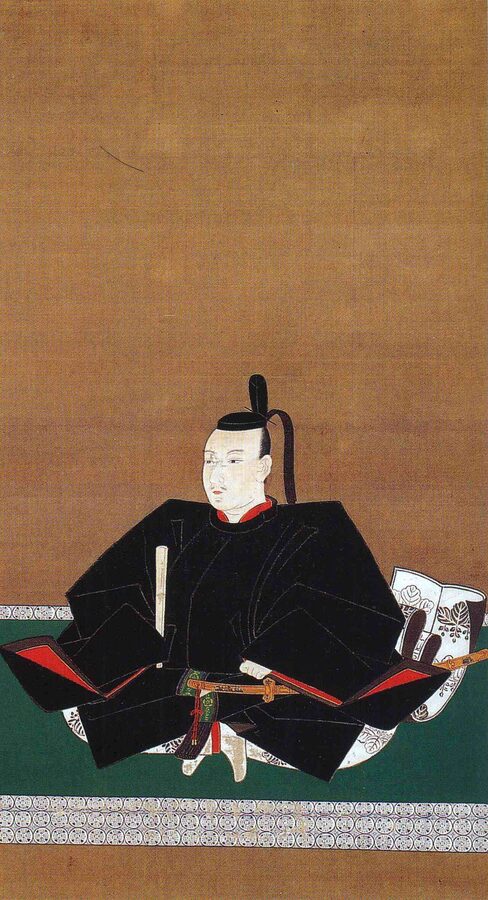
Now the caveats, and they are real. Fróis was not in Kyoto; he was at Kuchinotsu in Kyushu, writing from a letter sent by Francisco Carrião, the priest in the capital. Carrião should have met Yasuke if Yasuke really was delivered to the church, so the information is not worthless, but it is secondhand, and what survives is Fróis’s digest rather than Carrião’s own letter. The historian Goza Yūichi has pointed out something more troubling: when Fróis later wrote his great Historia de Japam, he reused this report for his account of Honnō-ji and dropped the passage about the black man entirely.
The French historians did the same. Solier and Crasset both tell the story of the 1581 audience, and neither says a word about Yasuke fighting. To the Jesuits, the episode was apparently either unimportant or not quite credible, and it is an odd feeling to realise that the scene modern retellings are built around was left out of every later Jesuit history.
Mitsuhide’s words deserve the same scrutiny. The Portuguese reads, more or less, “this cafre is a beast who knows nothing, nor is he Japanese; do not kill him, deposit him at the church.” The historians Fujita Midori and Ōwada Yasutsune read mercy into it; Lockley reads a gesture to keep the Christians onside; it is also plainly contempt. Whatever Mitsuhide meant, and his own daughter would be baptised five years later as Hosokawa Gracia, he spoke of Yasuke as something other than a warrior, on a morning when warriors all around were being cut down.
After 1582, nothing
Fróis’s report ends the trail. The Akechi men took Yasuke to the church, the Jesuits were relieved, and then the record goes silent. Within two weeks Mitsuhide’s son-in-law Hosokawa Tadaoki had refused to join him, Mitsuhide was dead after Yamazaki, and Azuchi’s keep had burned.
Ieyasu, who had hosted Nobunaga’s train on the way home from Kai, was at Sakai that morning and got home only by the dash through the Iga hills that made Hattori Hanzō‘s name. Everyone who had known Yasuke was running, fighting or dead. The Jesuits in Kyoto had more pressing problems than one former attendant of a dead lord, and nobody wrote him down again.
Two later glimpses of Africans in Japan get pulled into his story. At Okitanawate in 1584, according to Fróis, the Arima side had cannon but nobody who could work them, until an African loaded the guns and a man from Malabar fired them. Some English writing suggests this might have been Yasuke, and even that he might have died there; the Japanese literature notes the episode and, sensibly, leaves him out of it. In 1593 the Portuguese captain-major who came to see Hideyoshi at Nagoya in Hizen brought African attendants who danced for him, and Hideyoshi handed each of them a white summer robe.
The point is not that any of these men was Yasuke. The point is that Africans moved through Japan in the 1580s and 1590s in the households of Portuguese captains and Jesuits, mostly unnamed, and Yasuke is the one who happened to cross Nobunaga’s path. It is the same Portuguese trade that carried enslaved Japanese out of the country, a practice Hideyoshi complained about when he moved against the missionaries in 1587.
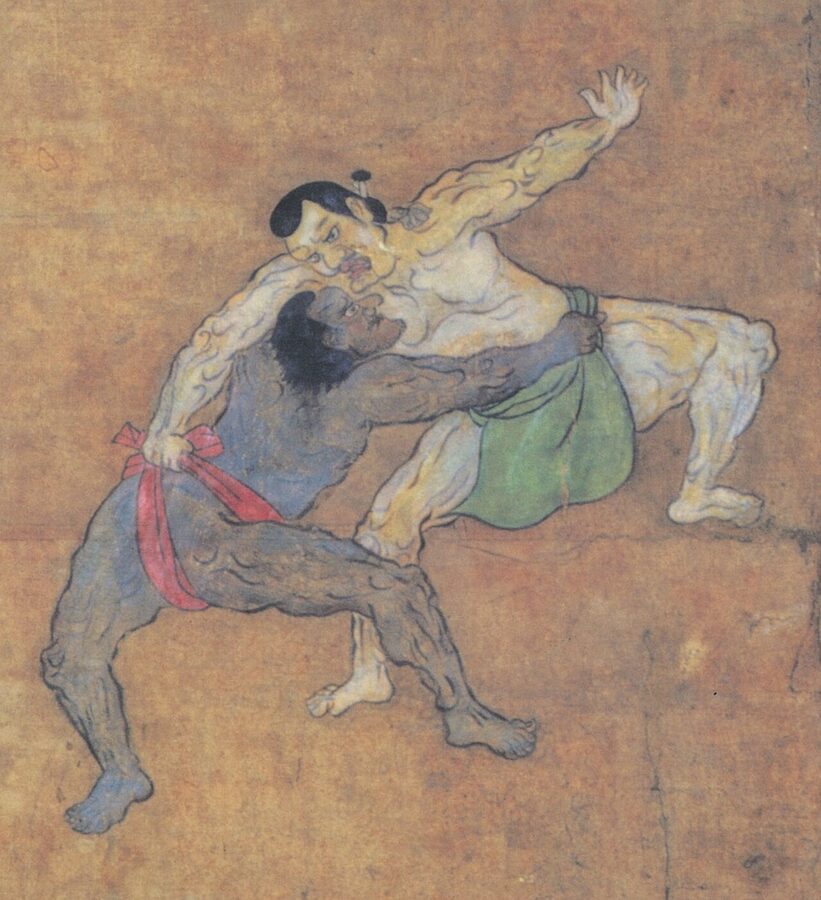
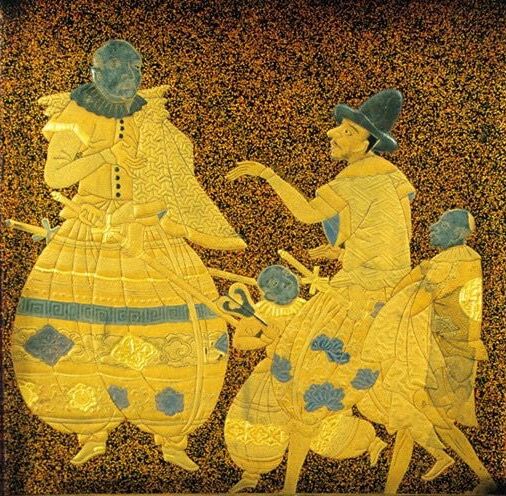
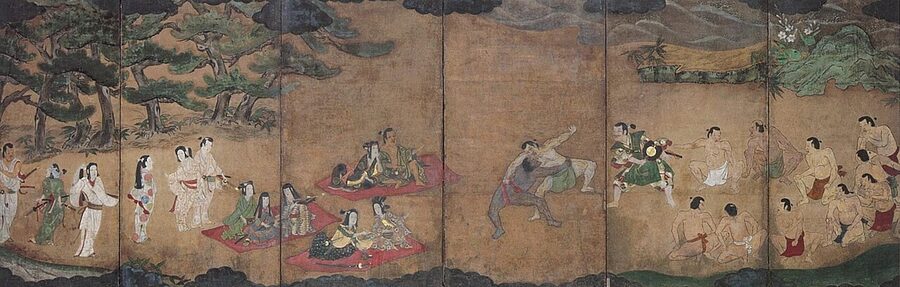
Two objects are often offered as portraits. The sumo screen in Sakai shows a black wrestler, but it was painted, by the usual dating, two decades after Yasuke vanishes. A lacquer ink-stone box from the 1590s, now in the Museu do Caramulo in Portugal, shows a dark-skinned man in fine Portuguese clothes who is not obviously anyone’s servant, and Lockley has suggested it could be Yasuke. I like both pictures, and I would not bet on either.
Samurai, servant, or a word the period did not need
The word causes trouble because in English “samurai” has come to mean the lords and generals of a field guide like Japan’s greatest samurai, while in the 1580s it could also mean a fairly modest household rank. This is where the arguments start, and you should know what each side actually stands on.
The case that Yasuke was a samurai rests on the Sonkeikaku sentence: a stipend, a name, a decorated sword, a house, and service carrying his lord’s weapons. Read at face value, that is how a lord took a man into his household as a retainer, and Goza, no enthusiast, accepts that if you follow this text Yasuke was treated as a warrior in Nobunaga’s service. Lockley and other English-language writers go further and call him plainly a samurai.
The case for caution is just as specific. The decisive sentence survives in one copy, made in 1719, and the historian Kaneko Hiraku, who knows the chronicle’s manuscripts better than almost anyone, has noted that it could have been added in copying. Ietada, the one witness everybody trusts, mentions a stipend and nothing else, and stipends were paid to household servants of every grade, from mounted retainers to grooms. In the 16th century samurai was itself a rank within a warrior household, above the chūgen and the komono, so “he was paid by Nobunaga” and “he was a samurai” are not the same claim.
Translation has pushed both ways. The standard Japanese version of the Jesuit letters, made by Murakami Naojirō in the 1940s, renders cafre as 黒奴, “black slave”, a choice later translators have dropped for the neutral 黒人, “black person”. Lockley’s books, a Japanese one in 2017 and African Samurai in English in 2019 with the novelist Geoffrey Girard, are popular narratives that reconstruct scenes and conversations, a legitimate choice for that kind of book and a confusing one when its details are quoted back as fact. Over the last decade Yasuke has also carried an anime series, several video games and a string of film projects, and most of the heat in the argument comes from those rather than from anything new in the sources.
My own reading is unexciting. Yasuke was a real man, almost certainly African, brought to Japan by the Jesuits, given to Nobunaga in 1581, named, paid and kept close for about fifteen months. He may well have been raised to something like a retainer’s position, and he probably fought for Nobutada at the end, but both claims rest on single sources, written at second hand or copied a century later. “Retainer” is the word the evidence supports without argument; whether to call him a samurai depends on how much weight you put on one manuscript, and serious historians disagree.
What I would ask of you is the habit that Mitsuhide’s own story drums into anyone who reads it closely: keep the source next to the claim. If someone tells you Yasuke owned land, led troops, or fought in named battles, ask which document says so. None of them does.
Where to find Yasuke’s Japan today
There is no grave, no memorial, and nothing he is known to have touched. What you can visit are the stages he stood on, and in Kyoto they are closer together than most people realise. The original Honnō-ji, the Jesuit church and the residence where Nobutada died all lay within about a kilometre and a half of each other, and you can walk the whole triangle in an afternoon. If you want the wider frame first, my walk through Japanese history puts these years in sequence, and Japan’s most decisive battles covers what Honnō-ji set in motion.
Honnō-ji, Teramachi
The temple you can visit is not the one that burned. Hideyoshi had Honnō-ji rebuilt on its present site on Teramachi in 1592, as part of his reorganisation of Kyoto’s temples, and it has burned twice more since; the present main hall dates from 1928. The temple still writes its name with a variant of the character 能 that drops the two strokes resembling 火, “fire”, and after this history you can see why.
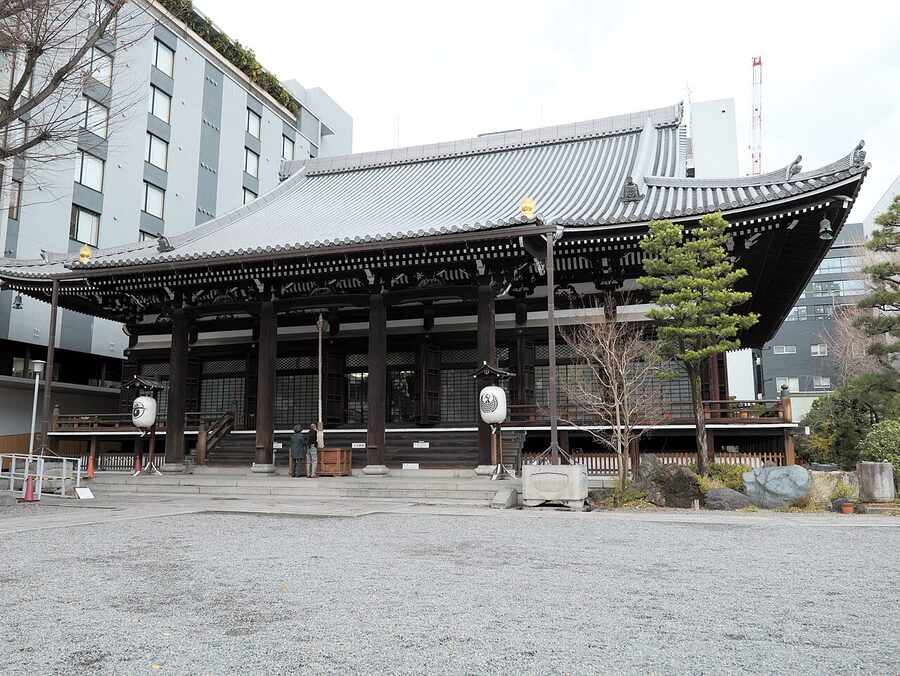
The grounds are open 6:00–17:00 and free. The treasure house, the Daihōden, opens 9:00–17:00 (last entry 16:30) and costs ¥700 for adults, ¥500 for junior and senior high school students, ¥300 for elementary pupils; it closes at New Year and between exhibitions. Kyoto Shiyakusho-mae Station on the Tōzai Line is right outside, and Keihan Sanjō Station is five minutes’ walk east.
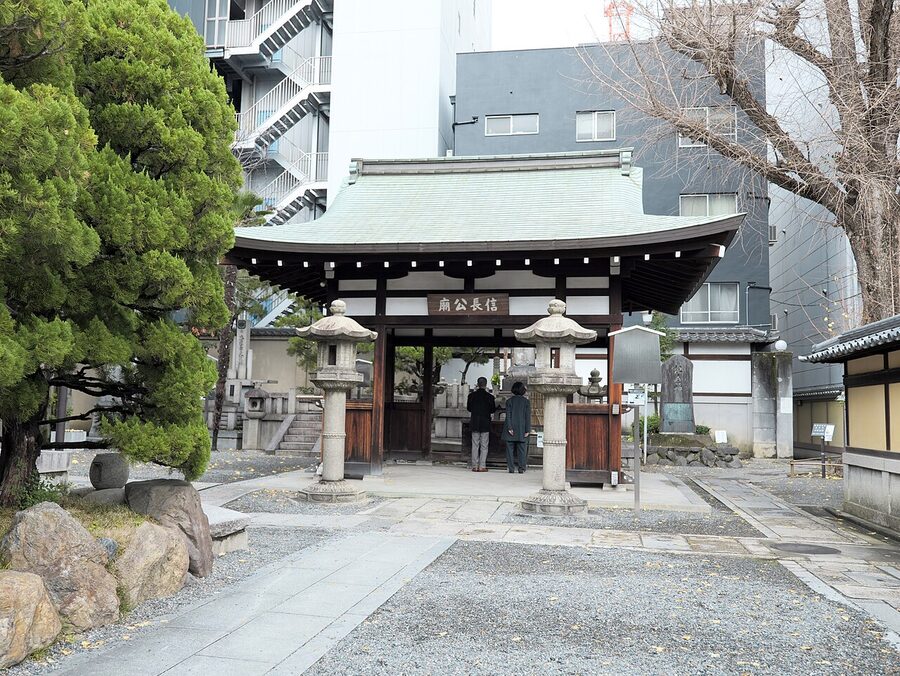
The original Honnō-ji site, Aburanokōji
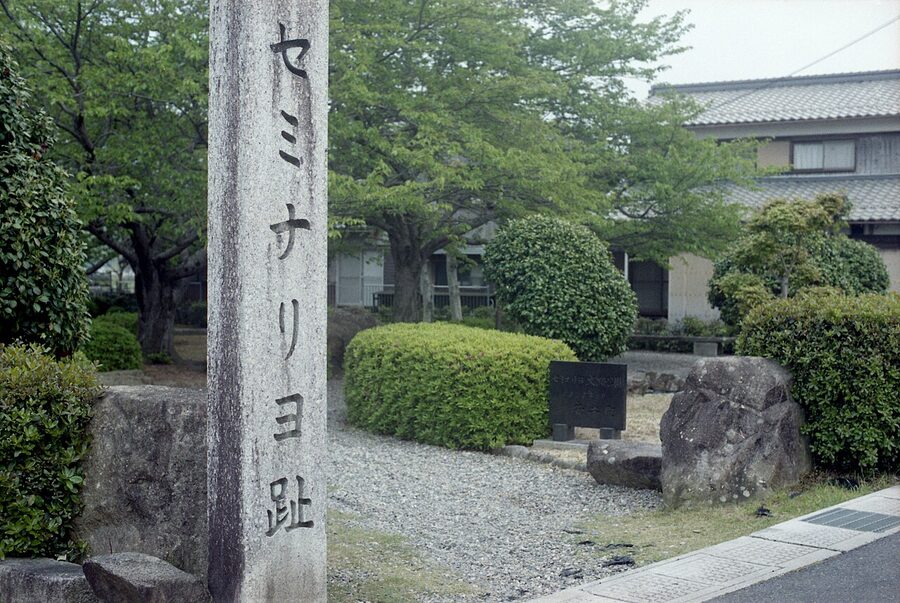
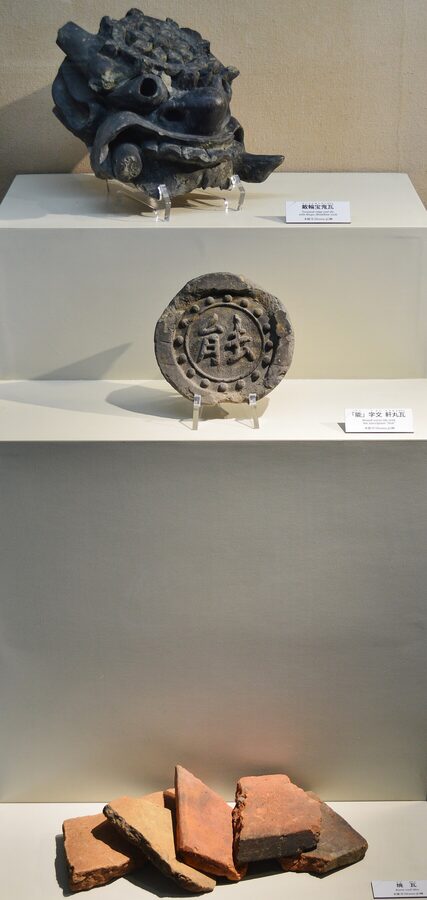
The temple Yasuke knew stood a little under two kilometres southwest, between Nishinotōin and Aburanokōji. A stone monument and an older post reading “around here, the site of Honnō-ji” stand on the east side of Aburanokōji at Takoyakushi, in front of a care home, roughly fifteen minutes on foot west of Shijō Station on the Karasuma Line. Excavations in the area have turned up burnt roof tiles and traces of a moat, and suggest the temple proper lay a little north of the markers.
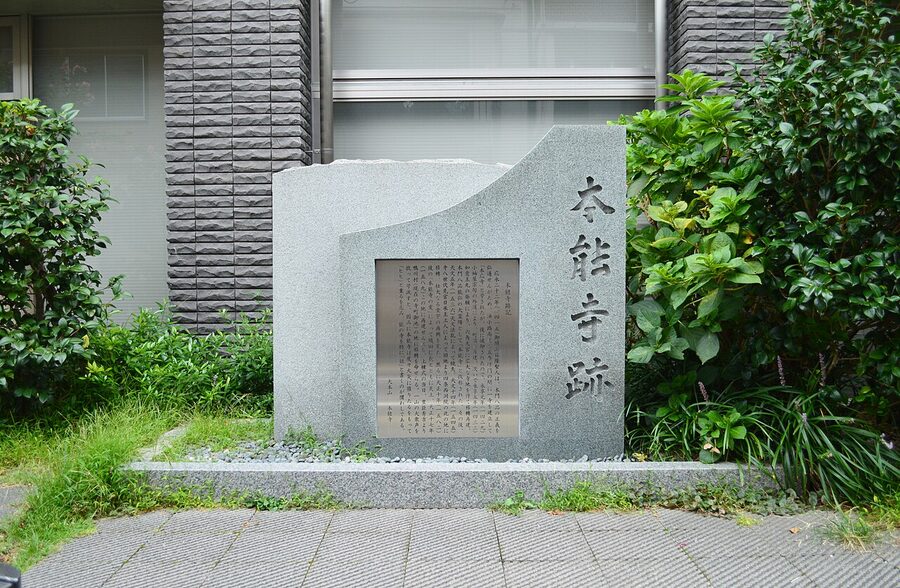
There is nothing else to see, and I would still not skip it. Stand by the stone and look east along Takoyakushi-dōri: the Jesuit church was on the same street, about six hundred metres away. The padres could hardly have missed the smoke.
The Nanbanji site and its bell
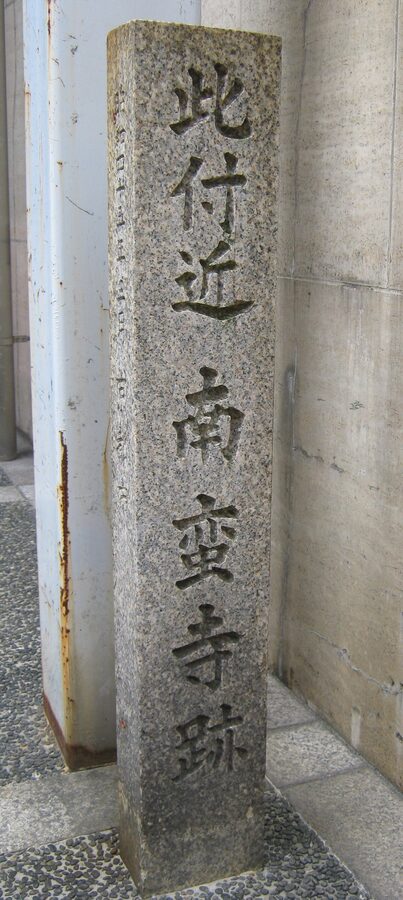
Walk east along Takoyakushi-dōri to just west of Muromachi and you reach a stone post reading “around here, the site of the Nanbanji”. This was the three-storey Church of the Assumption, built between 1576 and 1578, the house the crowds broke into in 1581, and presumably the church where Akechi’s men delivered Yasuke after Nijō. Hideyoshi had it destroyed in 1587.
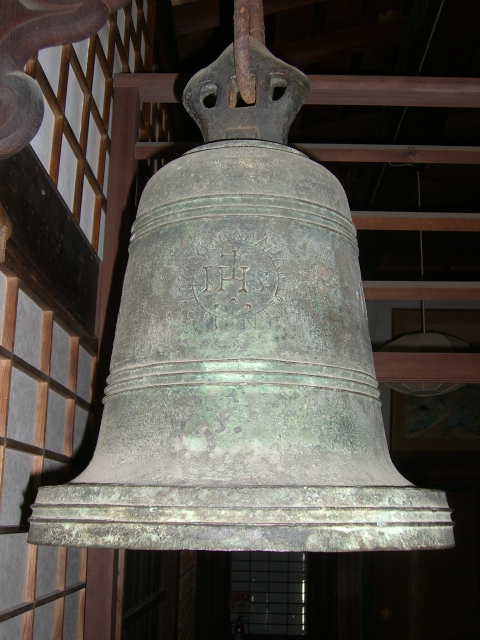
The church’s bell survived. It hangs at Shunkō-in, a subtemple of Myōshin-ji in northwest Kyoto, cast with the date 1577 and the Jesuit monogram IHS. Shunkō-in is not a casual walk-in temple, so contact it well in advance, or settle for knowing the bell is there.
The Nijō Shin-gosho site
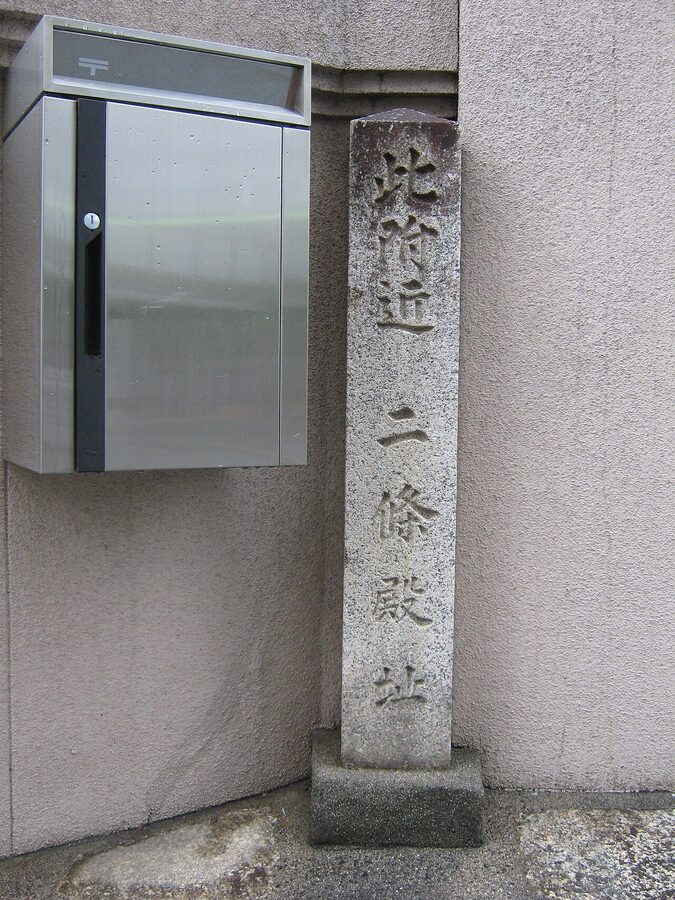
The residence where Nobutada made his stand stood at the southwest corner of Oshikōji and Karasuma, a few minutes from Karasuma-Oike Station. A stone post reading “around here, the site of Nijō-dono” stands nearby, close to the Kyoto International Manga Museum, and there is nothing else. In 1587 the emperor had a temple, Daiun-in, founded on the site to pray for Nobunaga and Nobutada; it has since moved to Higashiyama.
Azuchi
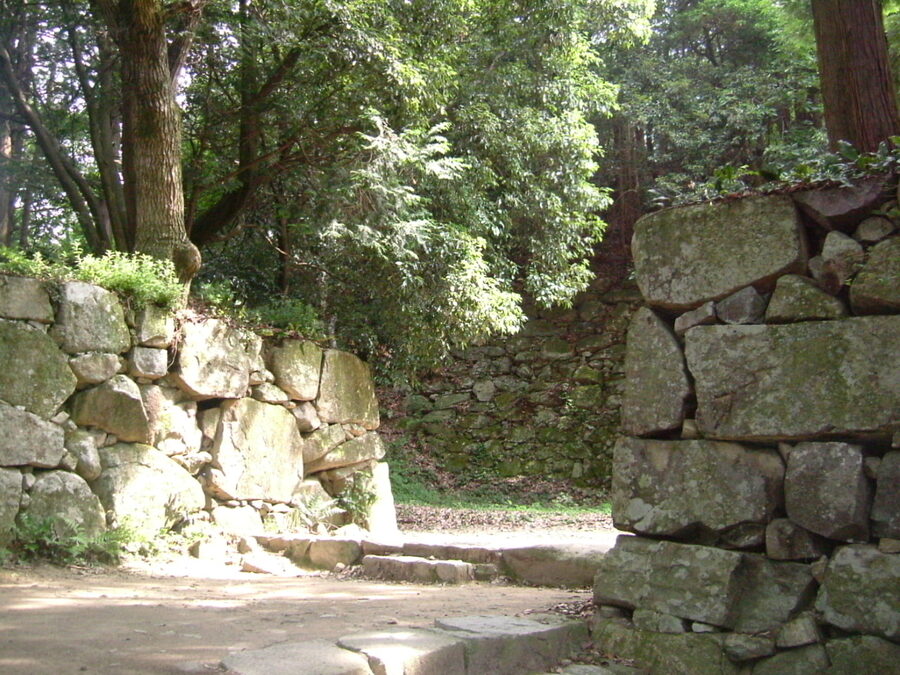
Azuchi is an easy half day from Kyoto: JR Biwako Line to Azuchi Station, then on foot or by rented bicycle. Sōken-ji, the temple that owns the castle hill, charges the entry fee to the ruins, reported at ¥700 for adults; the climb up the stone Ōte-michi to the keep platform takes about half an hour. My Azuchi Castle piece covers the hill itself, and the period around it is in Azuchi-Momoyama.
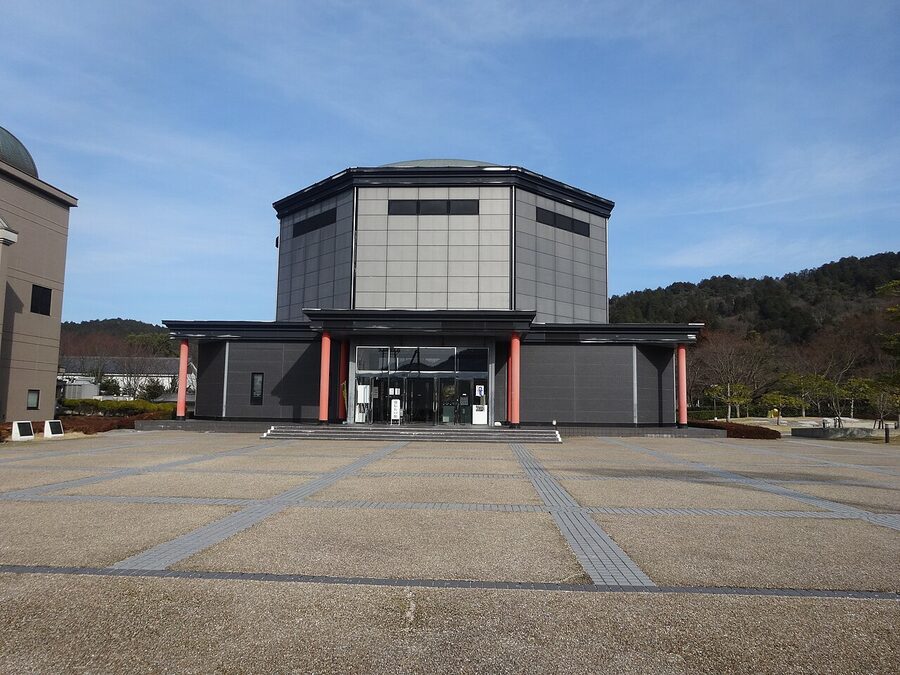
Below the hill, the Seminario site is a small garden with a stone post, the Jesuit footprint in Nobunaga’s capital. The Shiga Prefectural Museum of Azuchi Castle Archaeology, next to Nobunaga no Yakata, opens 9:00–17:00 (last entry 16:30), closes on Mondays, and charges ¥200 for the permanent galleries; special exhibitions cost more. If you only have the energy for one, climb the hill.
Sakai City Museum
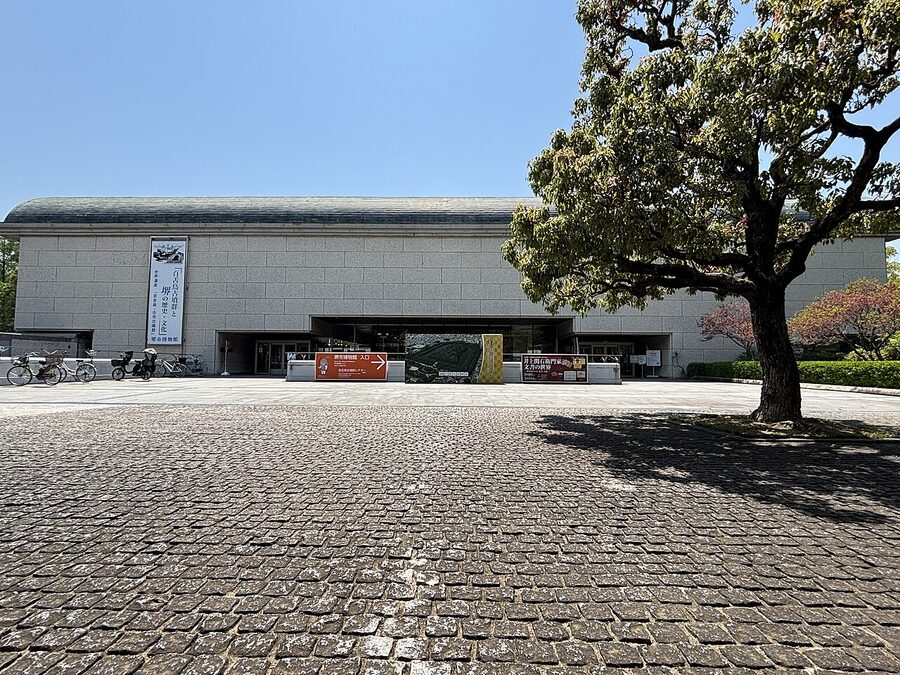
The Sumō Yūrakuzu screen belongs to the Sakai City Museum, in Daisen Park beside the great Nintoku tomb. It is not permanently on show, so check the exhibition list before you go. The museum opens 9:30–17:15 (last entry 16:30), closes on Mondays (opening when Monday is a holiday) and over New Year, and charges ¥200 for adults, ¥100 for high school and university students, ¥50 for younger children.
Kobe City Museum
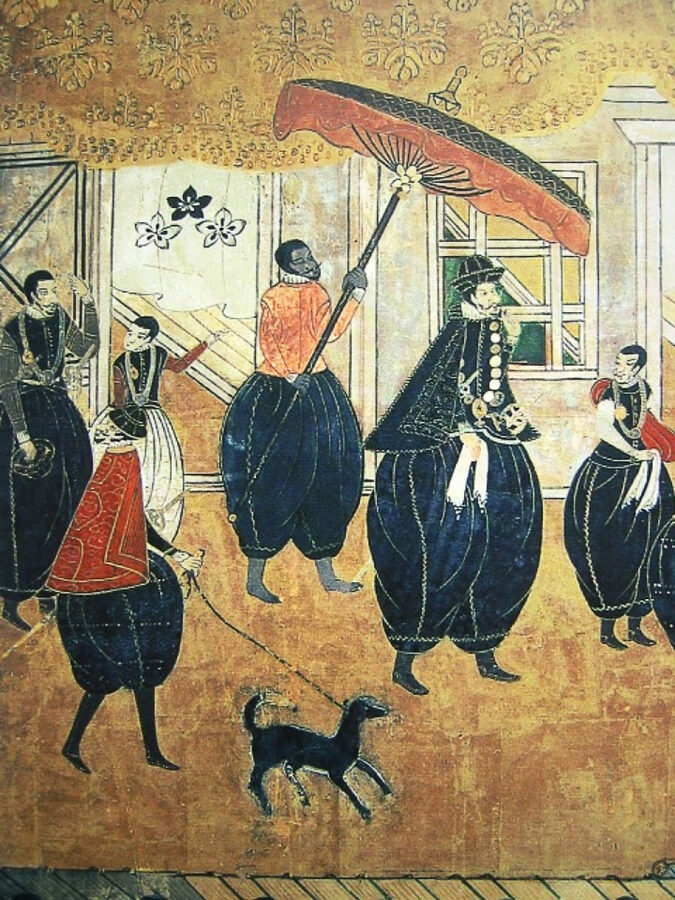
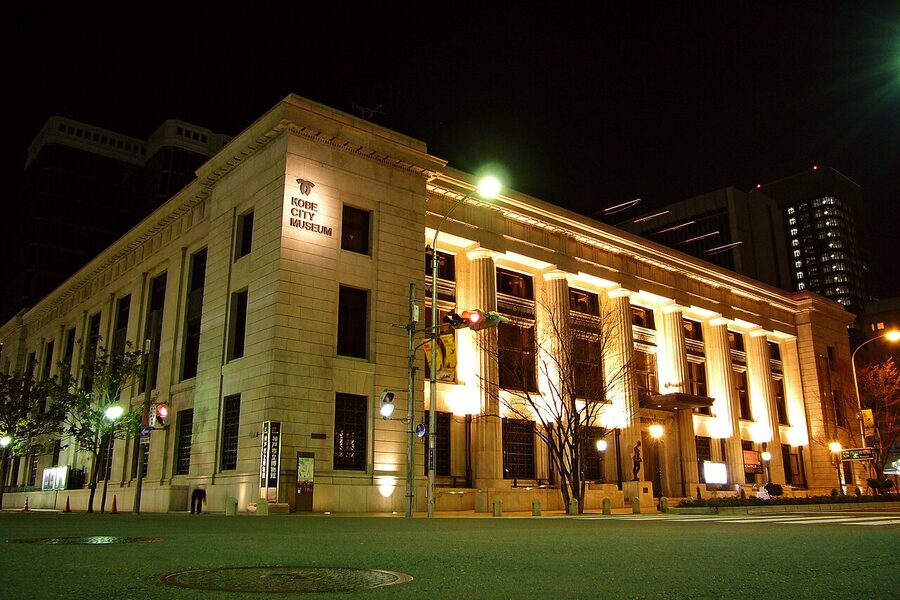
The Kobe City Museum on Kyōmachi holds the best-known collection of Nanban art in Japan, including Kanō Naizen’s screens and Kanō Sōshū’s fan of the Kyoto Nanbanji. The screens are an Important Cultural Property and are shown only for limited periods, so plan around the schedule rather than turning up on spec. It opens 9:30–17:30, until 20:00 on Fridays and Saturdays, closes on Mondays (or the following weekday after a holiday Monday), and is about ten minutes’ walk from Sannomiya.
Kuchinotsu
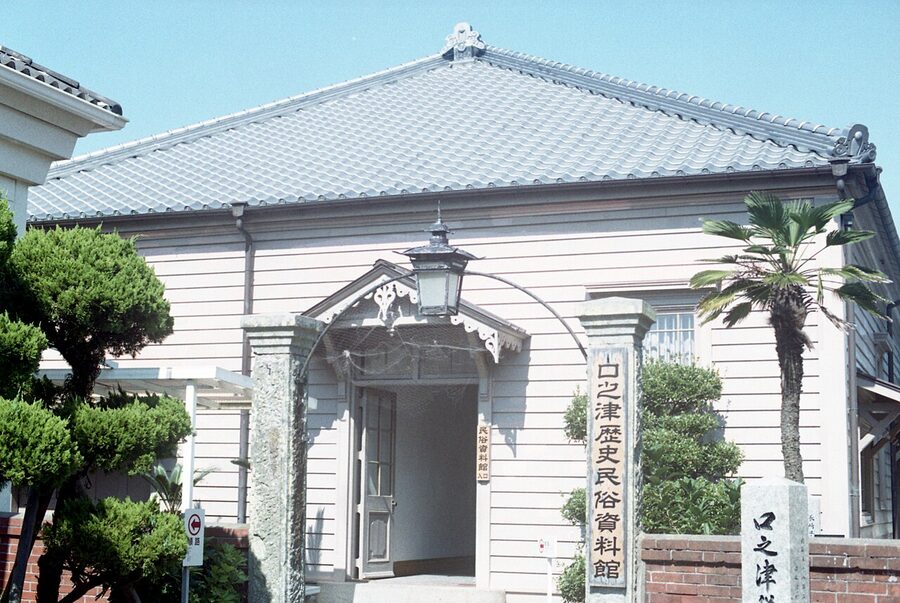
If you are in Shimabara anyway, Kuchinotsu at the southern tip of the peninsula is where Valignano stepped ashore in 1579, and where Fróis was writing when the news of Honnō-ji came in. The Kuchinotsu History and Folklore Museum by the port, which includes the old Meiji-era customs office, covers the Nanban trade years. I could not find an official page with current hours; travel listings give 9:00–17:00, closed Mondays, ¥200, so confirm with Minamishimabara city before you make the trip.
The Kyoto crowd broke the Jesuits’ gate to look at him, and four hundred years later people are still shoving at that gate, each crowd sure it knows what is behind it. Stand by the stone on Aburanokōji, look down Takoyakushi-dōri towards the church, and give the man the courtesy the sources do: a name, a height, a stipend, a sword handed over, and silence.