In the ninth month of 1817 a daimyo did something his own household thought was madness. Mizuno Tadakuni, lord of Karatsu in Kyushu, asked the shogunate to move him to a domain whose real yield was about 100,000 koku a year smaller than the one he already had. One of his senior retainers, Nihonmatsu Yoshikado, killed himself in protest, which is what a samurai did when his lord would not listen to reason. The domain Mizuno wanted so badly was Hamamatsu, on the Tokaido road in Tōtōmi Province, and its castle had a nickname the whole country knew: the shusse-jō (出世城), the castle of promotion.
He was right about it, too. Eleven years after moving in, Mizuno was one of the senior councillors who ran the Tokugawa shogunate, and by 1839 he was the most senior of them all. The castle’s reputation rested on the seventeen years a young Tokugawa Ieyasu had lived in it, the years in which he lost the worst battle of his life a few kilometres up the road and still came out, in the end, as the founder of a dynasty. Two centuries later, ambitious men were still trading income for the chance to sleep where he had slept.
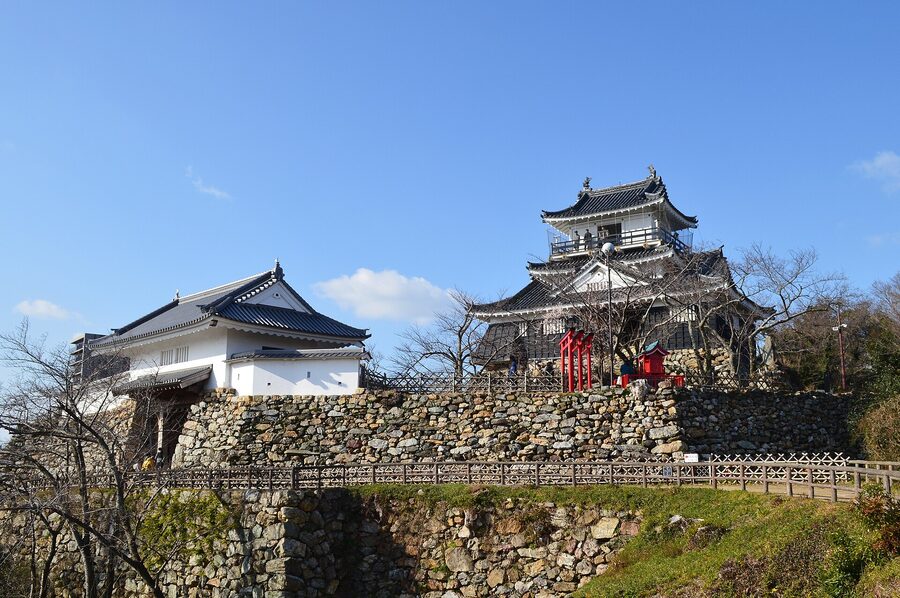
This is the story of that castle, from the small Imagawa fort that stood here first to the keep you can climb today, which is concrete, too small for its base, and modelled on a castle some 200 kilometres away. Along the way there is a night of open gates and lit braziers, a portrait whose famous story turns out to date from a newspaper report of 1936, and a Toyotomi general who built most of what is actually left. It ends, as these pieces always do, with where you can stand today.
In This Article
- Hikuma, the castle before the castle
- Why Ieyasu left Okazaki
- The twenty-second day of the twelfth month
- Open gates and a bowl of rice
- The frown that came later
- Seventeen years on the front line
- Horio Yoshiharu’s stone castle
- The castle of promotion
- Concrete, stone and fifteen years of digging
- Where to see Ieyasu’s Hamamatsu today
- Hamamatsu Castle Park
- Motoshiro-chō Tōshōgū and the other Ieyasus
- Saigagake and the Mikatagahara stone
- Inasa: Iinoya and Ryōtan-ji
- The Hamamatsu Museum of Musical Instruments
Hikuma, the castle before the castle
Before there was a Hamamatsu Castle there was Hikuma Castle (引馬城, also written 曳馬城 and 引間城), a fort on the eastern lip of the Mikatagahara plateau where it drops toward the plain of the Tenryū River. Nobody knows for certain who built it. Tradition credits a member of the Imagawa family, records show the Kira of Mikawa holding the land in the middle of the Muromachi period, and what is beyond dispute is that it sat on the Tokaido, the main road between Kyoto and the east, so whoever held it held a toll gate on the country’s busiest highway.
In the early 16th century the Imagawa of Suruga drove their rivals the Shiba out of Tōtōmi, and in 1514 Imagawa Ujichika gave Hikuma to the Iio family. The Iio held it for half a century and fell with their masters. After Imagawa Yoshimoto was killed at Okehazama in 1560, the Sengoku vultures circled, and Iio Tsuratatsu was suspected of talking to the Tokugawa; he was lured to Sunpu with the promise of a pardon and killed there, in 1565 or 1566 depending on which chronicle you trust.
What happened next depends on which Edo-period account you open. The version Hamamatsu tells is about his widow, Otazu no Kata, who refused Ieyasu’s offer to look after her and her household if she handed over the castle, and who, when his troops broke into the outer baileys in the twelfth month of 1568, led eighteen armed maids out of the gate and died with them. Other accounts make the defenders two quarrelling retainers, one leaning to the Tokugawa and one to the Takeda, who killed each other before Ieyasu arrived, and a local history of 1713 wonders aloud whether the widow was even in the castle. Ieyasu took Hikuma either way, and a small hall to her, the Tsubakihime Kannon in Motohama-chō, still draws women to pray.
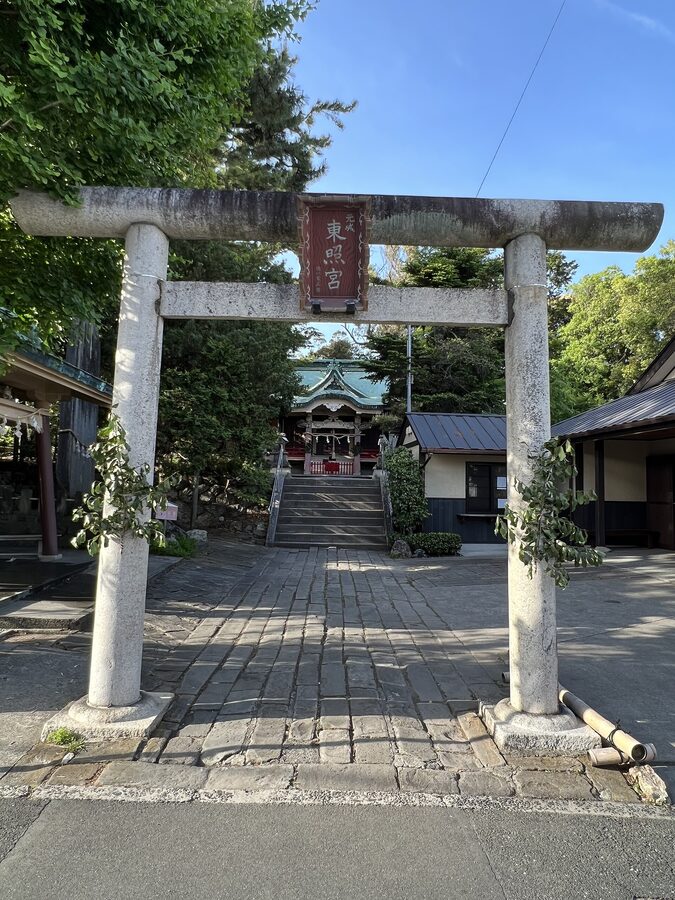
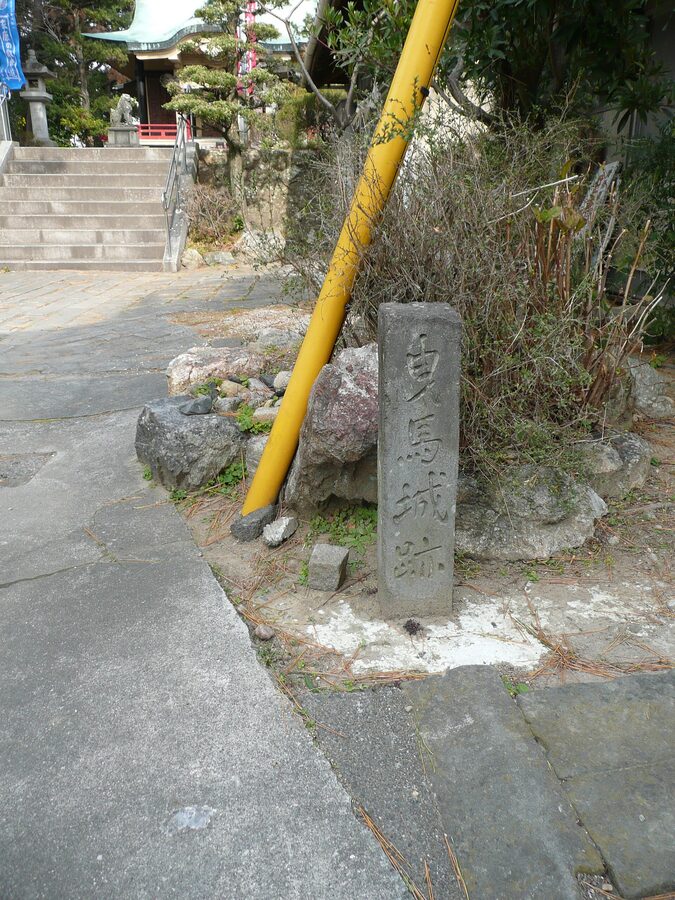
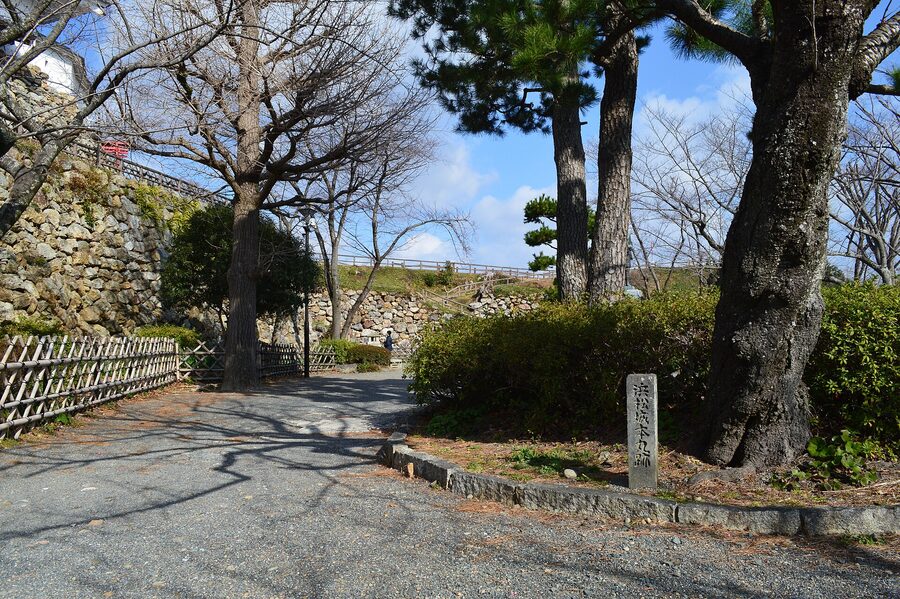
The site of the old fort is now a shrine to Ieyasu, Motoshiro-chō Tōshōgū, a few minutes’ walk east of the keep. In the Edo period the plot was marked simply “old castle” on plans and used for rice stores, and a former shogunal retainer, Inoue Enryō, raised the shrine there in the Meiji period, after the shogunate he had served had gone.
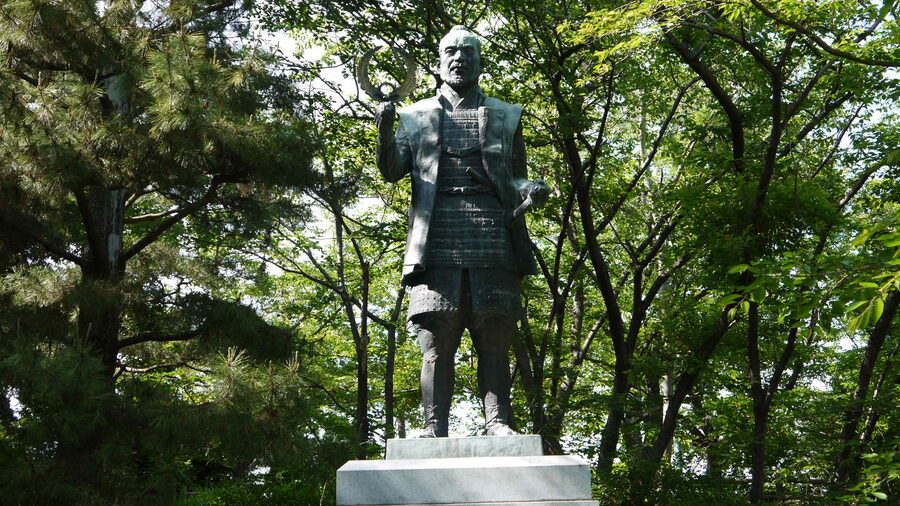
The shrine has a second unifier to sell. As a teenager the future Toyotomi Hideyoshi spent about three years in the service of the Matsushita, a family under the Iio, and the shrine leans on the connection with some enthusiasm. Since 2015 a bronze Ieyasu and a bronze Hideyoshi have stood in the precinct, and the place markets itself as somewhere to pray for promotion.
Why Ieyasu left Okazaki
In 1568 Ieyasu and Takeda Shingen agreed to carve up the dying Imagawa domain between them, Tōtōmi to the Tokugawa and Suruga to the Takeda. It was the kind of arrangement that lasts exactly as long as both parties find it useful. Within two years it was obvious that Shingen’s men did not intend to stay on their side of the line, and Ieyasu, twenty-nine by the Japanese count, moved his headquarters east from Okazaki, the castle where he was born, to the new front.
He left Okazaki to his eldest son, Nobuyasu, and first planned a new castle at Mitsuke, on the far bank of the Tenryū near modern Iwata. Japanese accounts say it was his ally Oda Nobunaga who talked him out of it: a castle with a large river at its back, Nobunaga pointed out, is a castle with nowhere to go if it is besieged. So Ieyasu extended the old Hikuma fort to the south-west instead. He had already marched west that summer to fight beside Nobunaga at the Anegawa, which tells you how thin he was stretched.
He also changed the name. The reason usually given is a pun: Hikuma can be read as “pulling the horse”, which sounds like retreat, and no lord facing Shingen wanted to live in a castle named for running away. The new name came from Hamamatsu-no-shō, a medieval estate that had once covered the district.
When he did it is less clear than the story. Japanese reference works mostly put the move and the new name in 1570, while English-language accounts often date the renaming to 1577. One Japanese dictionary has the new castle finished in 1578 and another has it built in 1577, and one account has the expansion largely complete only around 1582, which probably means the name came first and the building went on for most of the decade.
What the castle looked like in Ieyasu’s day is the great unknown. Japanese archaeologists generally describe it as a castle of earth, with ramparts, dry moats and timber buildings but neither stone walls nor tiled roofs, although an early chronicle, the Tōdaiki, and some old-fashioned stonework under the site of the Fujimi Turret have led a few to argue that stone came earlier than usually thought. The only feature excavators have so far dated firmly to his years is a moat, about 11 metres wide and 2 metres deep, found south of the main bailey in 2014.
The twenty-second day of the twelfth month
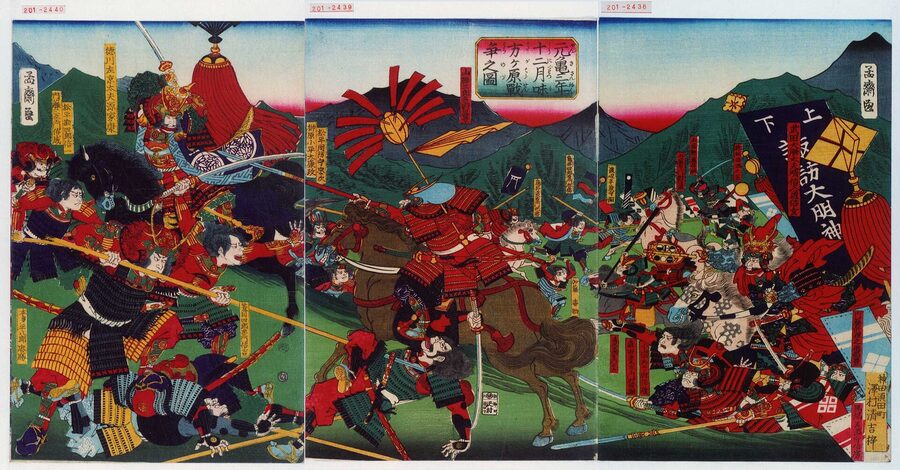
Shingen came at the end of 1572. His army took the Tokugawa outposts one after another, Futamata Castle surrendered on the nineteenth day of the twelfth month, and three days later the Takeda marched across the plateau north of Hamamatsu as if the castle did not exist. Ieyasu, against the advice of some of his own men and with about 3,000 reinforcements from Nobunaga, went out after them. Late on the 22nd day of the twelfth month of Genki 3 (25 January 1573 by the Western calendar) he caught them at Mikatagahara and was beaten in about two hours.
The battle has its own article on this site, so I will not refight it here. What matters for the castle is the arithmetic: Japanese accounts give the Takeda about 200 killed and wounded against some 2,000 on the Tokugawa side, including retainers who had served Ieyasu’s father. One chronicle sympathetic to the Oda, the Oda Gunki, makes the losses nearly even, which mostly tells you that casualty figures depend on whose side the writer was on.
Ieyasu got back to Hamamatsu that night with a handful of riders. Natsume Yoshinobu, the elderly retainer left in charge of the castle, had ridden out with twenty-odd horsemen to find him, and by the usual account took his lord’s place in the fighting, shouting that he was Ieyasu, and was cut down; another retainer, Suzuki Kyūzaburō, is said to have done the same. The men named as reaching the castle with Ieyasu, Naruse Kichiemon, Kusakabe Hyōemon, Oguri Chūzō and Shimada Jihei, are a reminder of how thin the line was that evening between a rout and the end of the house of Tokugawa.
Open gates and a bowl of rice
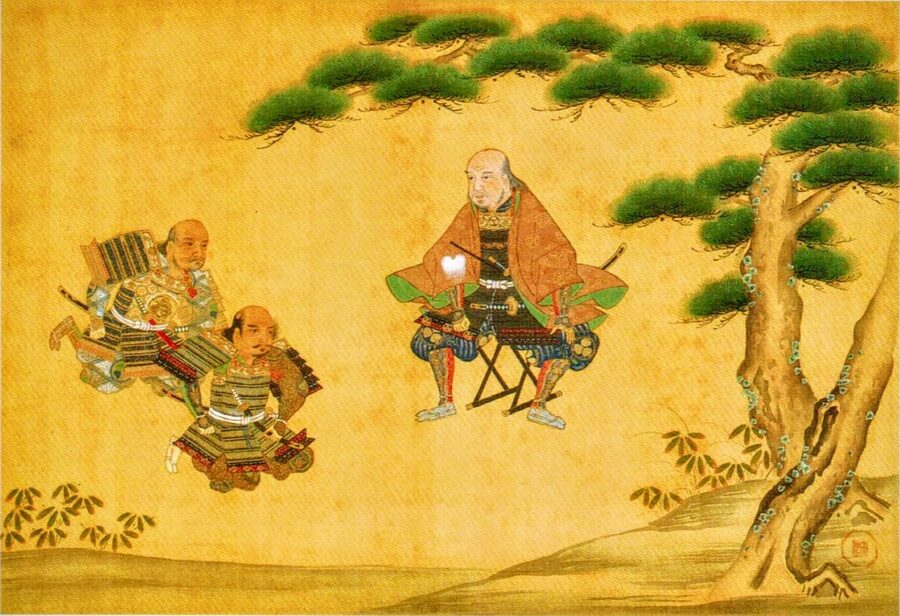
Then comes the scene every Japanese schoolchild knows. Ieyasu ordered the gates left open and the braziers lit, the old Chinese “empty fort” trick of making a helpless place look like a trap; he ate a bowl of rice with hot water poured over it, lay down and began to snore, and his men, seeing their lord asleep, stopped panicking. Yamagata Masakage’s Takeda vanguard reached the walls, took one look at the open gates and the firelight, and went back to the plateau.
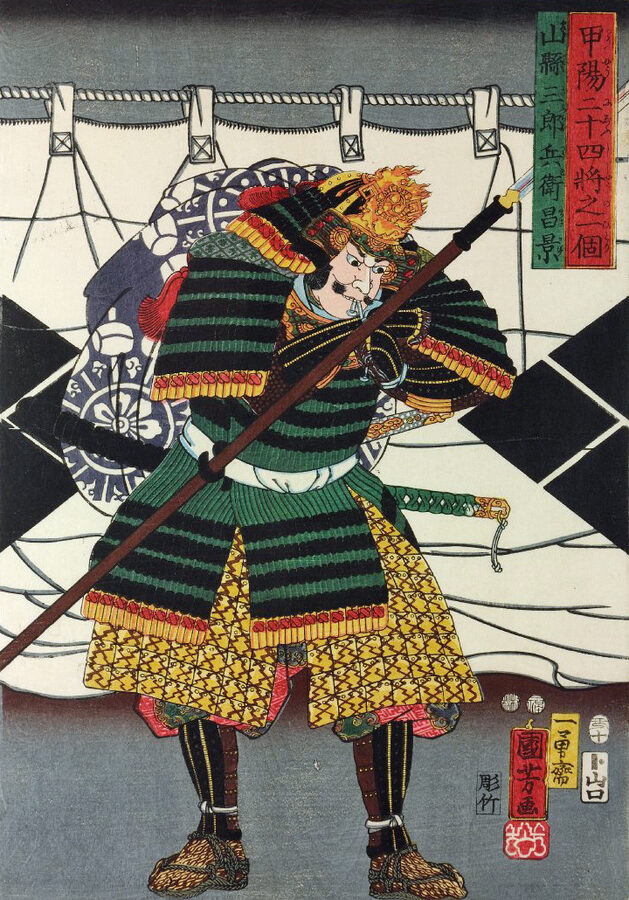
How much of this is true is hard to say. The open gates and the snoring come from later Tokugawa tradition, which had every reason to make the founder look calm, but Ieyasu did keep his castle, and Shingen did not attack it. Instead the Takeda spent the following days attacking Horie Castle on Lake Hamana and gave up after four of them. One recent reading turns the whole campaign round: Shingen never meant to storm Hamamatsu, only to cut its supply line across the lake, and Ieyasu came out because losing Horie would have starved him.
Two other famous details do not survive inspection. The story that Sakai Tadatsugu beat a great war drum from the turret to steady the garrison and frighten the Takeda appears in no early record; it became famous through Kawatake Mokuami’s kabuki play Taiko no Oto Chiyū no Sanryaku, which opened at the Murayama-za in Tokyo in March 1873 and was a hit. And the tale that Ieyasu soiled himself in the saddle and insisted to his men that the stain was miso has no identified source at all, while a similar story in the Edo-period Mikawa Go-fudoki is set after a different skirmish, at Hitokotozaka.
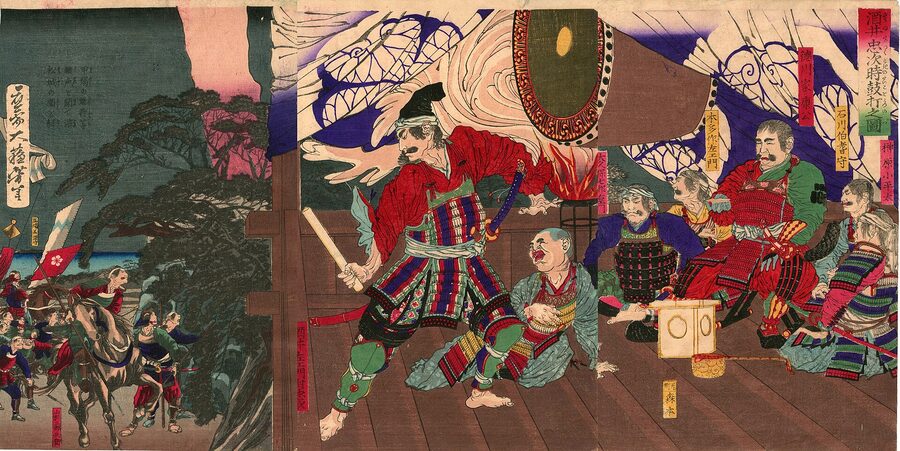
The Tokugawa did hit back that night, according to their own histories. Ōkubo Tadayo and Amano Yasukage are said to have raided the Takeda camp near Saigagake, a steep ravine about a kilometre north of the castle, and Takeda men are said to have fallen to their deaths in the dark, some of them tricked onto a bridge of cloth stretched across the gap. The story first appears in histories compiled under the shogunate, and a cloth bridge over a gorge some 100 metres wide is the kind of detail that ought to make you smile. It has left a district name, Nunohashi (“cloth bridge”), and a festival I come back to below.
Some smaller legends cling to the retreat, and they are the kind I like best. North of the castle are districts called Azukimochi (“bean cake”) and Zenitori (“taking the money”), named, it is said, for a tea-house woman who sold Ieyasu a rice cake, watched him bolt without paying when the Takeda came into view, and chased him down the road for the money. Nobody can find that one in an early source either, but as a portrait of the Tokugawa relationship with their subjects it has never been bettered.
The frown that came later
Which brings me to the picture. The Tokugawa Art Museum in Nagoya owns a small painting on silk, 37.8 by 21.8 centimetres, of Ieyasu sitting on a stool with one leg drawn up and his hand against his cheek, his eyes sunken and his mouth dragged down. It is called the Shikami-zō (顰像), the frown portrait, and its story is one of the best known in Japanese history: Ieyasu had it painted when he got back to Hamamatsu from Mikatagahara and kept it by him for the rest of his life, as a warning against overconfidence.
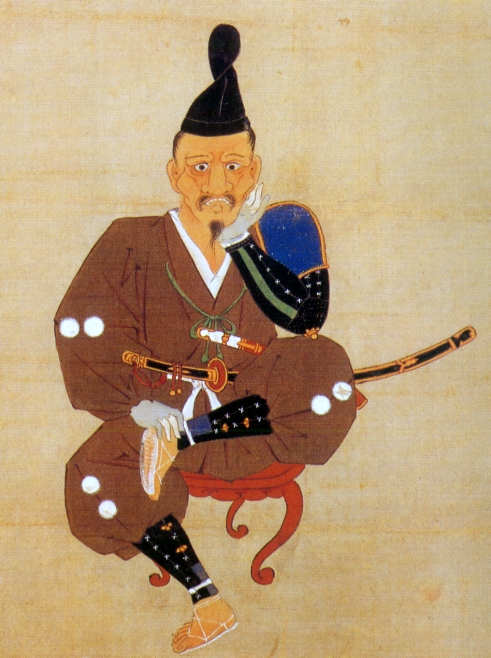
The story is younger than the painting. In 2015 Hara Fumihiko, then deputy head of the museum’s curatorial department, went back through the inventories of the Owari Tokugawa, the branch of the family that ruled from Nagoya Castle, and published what he found the following year. The painting entered their collection in 1805, among the effects of a daughter-in-law who had come from the Kii branch, and the inventory called it simply a likeness of Ieyasu. By 1880 a cataloguer had labelled it as Ieyasu on campaign at Nagashino, and in 1910 the family exhibited it as a picture of “the Nagashino defeat”, ordered by the first Owari lord, Yoshinao, so that he would not forget hard times; nobody seems to have minded that the Tokugawa won at Nagashino.
Mikatagahara first appears in January 1936, in two newspaper reports of an exhibition at the newly opened museum, which also credited the painting to Kanō Tan’yū and said Yoshinao had commissioned it. The last piece arrived in the museum’s own catalogue of 1972: Ieyasu himself had ordered it, and kept it at his side all his life as a guard against pride. Hara could find no box inscription, inventory or Edo-period text tying the picture to Mikatagahara before 1936, and the historian Fujimoto Masayuki had already pointed out in 1984 that the armour and dress in it belong to a later age than the 1570s.
Fujimoto, and the art historian Matsushima Jin after him, read it instead as a devotional image: Ieyasu after his deification, posed like a meditating bodhisattva, his face not exhausted but wrathful, the expression of a guardian god. The museum now says plainly, in its notes for a 2023 exhibition, that the Mikatagahara tradition has no documentary basis.
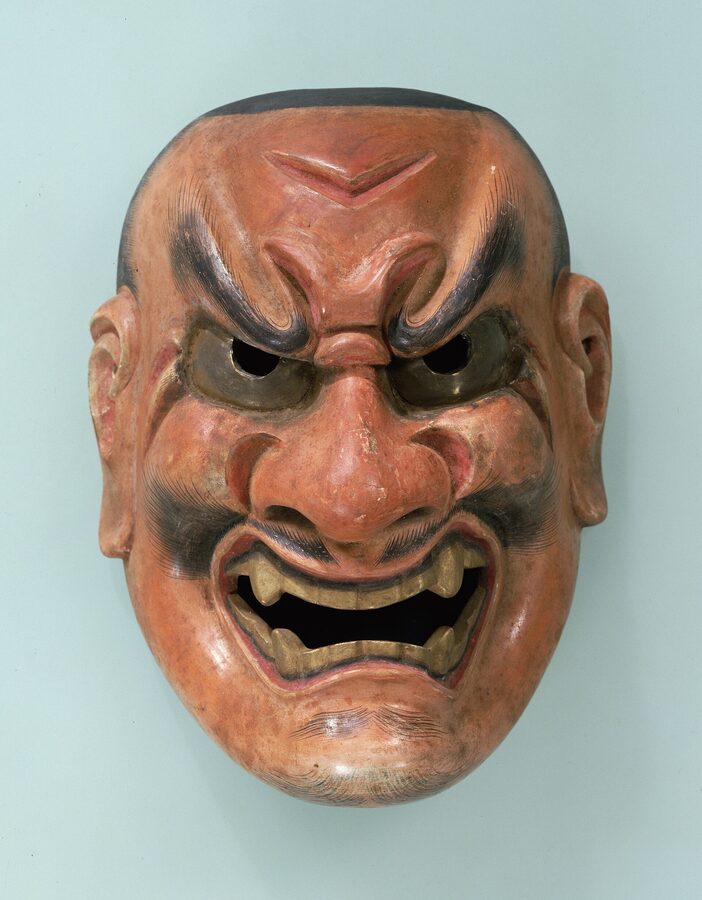
I admit to some sympathy for the old story. A ruler who keeps a picture of his own humiliation by the bed is a better parable than a ruler who had himself painted as a god, and Hamamatsu has invested in it: for the 400th anniversary of Ieyasu’s death in 2015 the city spent about ¥2.5 million on a life-size figure of the portrait for its museum, and the mayor called it the symbol of Ieyasu’s starting point. But the evidence is what it is. If you want the lesson of Mikatagahara, you can find it in the next forty years of Ieyasu’s career without help from a 17th-century devotional picture.
Seventeen years on the front line
For the next decade Hamamatsu was a frontier fortress. Shingen died in the fourth month of 1573, a few months after Mikatagahara, but his son Katsuyori kept up the pressure. It was from Hamamatsu that Ieyasu marched to join Nobunaga at Nagashino in 1575, and from Hamamatsu that he spent six more years grinding his way back through Tōtōmi castle by castle, until Takatenjin fell in 1581.
It was also where he gathered the men who would carry his house. Honda Tadakatsu was already his best fighting man. In 1575 a fifteen-year-old from Iinoya, in the hills north of Hamamatsu, was taken into his service, allowed to take back his family name and called Ii Manchiyo; he would become Ii Naomasa. And it was at Hamamatsu Castle, on the seventh day of the fourth month of 1579, that Ieyasu’s third son was born, the boy who would grow up to be the second Tokugawa shogun, Hidetada.
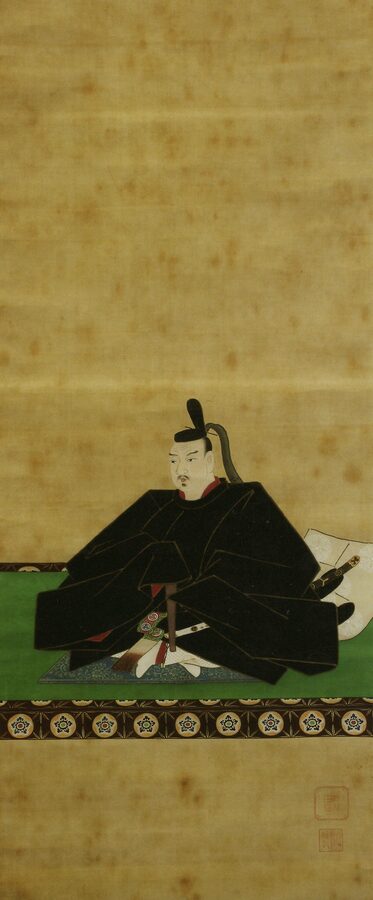
The same years produced the worst thing Ieyasu ever did. In 1579, under pressure from Nobunaga and for reasons still argued over, he had his wife Tsukiyama-dono killed beside Lake Sanaru, a short ride from the castle, and ordered Nobuyasu, the son he had left at Okazaki, to commit seppuku at Futamata. One theory sees a rift behind it between a “Hamamatsu faction” of front-line commanders and an “Okazaki faction” around the young lord. Whatever the cause, Ieyasu later founded a temple for his son, Seiryū-ji at Futamata.
Then the world changed again. When Nobunaga was killed at Honnō-ji in the sixth month of 1582, Ieyasu was sightseeing near Sakai with a small escort, and the dash home across the mountains of Iga, the episode later tradition hangs on Hattori Hanzō, brought him not to Hamamatsu but to Okazaki. Two years later he fought Hideyoshi to a standstill at Komaki and Nagakute, and that winter Sassa Narimasa crossed the snowbound Japanese Alps to Hamamatsu to beg him to keep fighting. Ieyasu, whose ally Oda Nobukatsu had already made his peace, said no.
Hamamatsu was where a Tokugawa lord could still be a soldier. The Tokugawa Jikki has him shooting a crane off a turret roof at fifty or sixty ken, roughly 100 metres, with a long-barrelled matchlock during these years. In 1585 his most trusted diplomat, Ishikawa Kazumasa, defected to Hideyoshi, taking with him everything he knew about the castle’s defences, and one theory holds that this is why Ieyasu decided to move. On the fourth day of the twelfth month of Tenshō 14 (the Japanese year 1586) he shifted his headquarters to Sunpu, seventeen years after he had arrived.
Horio Yoshiharu’s stone castle
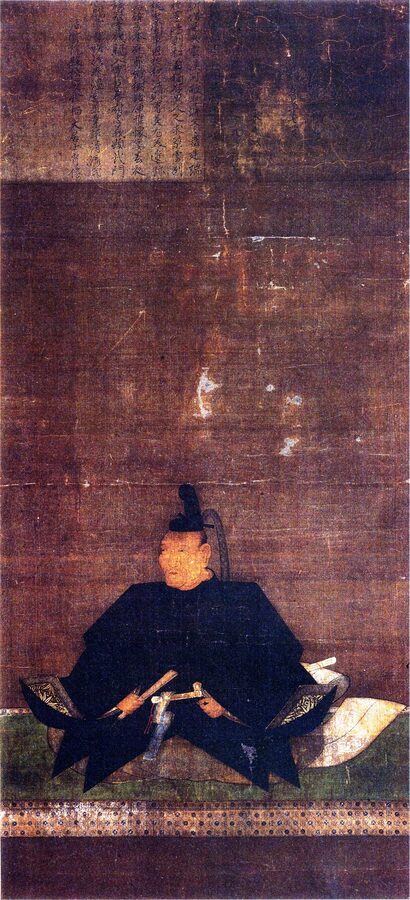
Ieyasu did not keep Hamamatsu long after leaving it. A Tokugawa castellan, Suganuma Sadamasa, minded it for a few years, but in 1590, when Hideyoshi had finished off the Hōjō at Odawara, he moved Ieyasu wholesale to the Kantō and a marshy castle town called Edo, and filled his old provinces with men he trusted. Hamamatsu, rated at 120,000 koku, went to Horio Yoshiharu, a soldier from Owari who had been with Hideyoshi since Hideyoshi was a junior Oda officer.
Horio had earned it. By tradition he guided Hideyoshi’s men up a back path to take Inabayama in 1567, and he fought at Yamazaki and in the Shizugatake campaign; during the Odawara campaign his eldest son, Kinsuke, died of wounds taken at the siege of Yamanaka. He was a builder as well as a fighter, and most of what you can see at Hamamatsu today is his.
Under Horio the castle was rebuilt in stone. The walls are nozura-zumi (野面積み), “field-face” masonry: unworked or barely worked boulders stacked with smaller stones packed into the gaps, the technique of the late 16th century before masons learned to cut and fit. They look haphazard and are not; walls of this kind drain well and have a good record in earthquakes. English-language accounts often credit the stonework to Ieyasu, but the city’s archaeologists date it to the Horio decade, and on top of it Horio seems to have raised Hamamatsu’s first real keep.
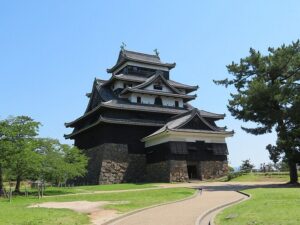
Nobody knows what that keep looked like. No drawing of it survives, and it was gone so early that 17th-century plans show the stone base empty. The city’s archaeologists, working from the size of the base, think it was a lookout-type keep of four roofs and five floors, larger than the one there now, and because Horio went on to build Matsue Castle, whose original keep still stands, researchers have long looked to Matsue for clues to the lost tower at Hamamatsu. English-language accounts sometimes say the castle never had a keep at all and that a two-storey turret did the job instead; Japanese sources agree about the substitute turret, but only for the Edo period, after the Horio keep had gone.
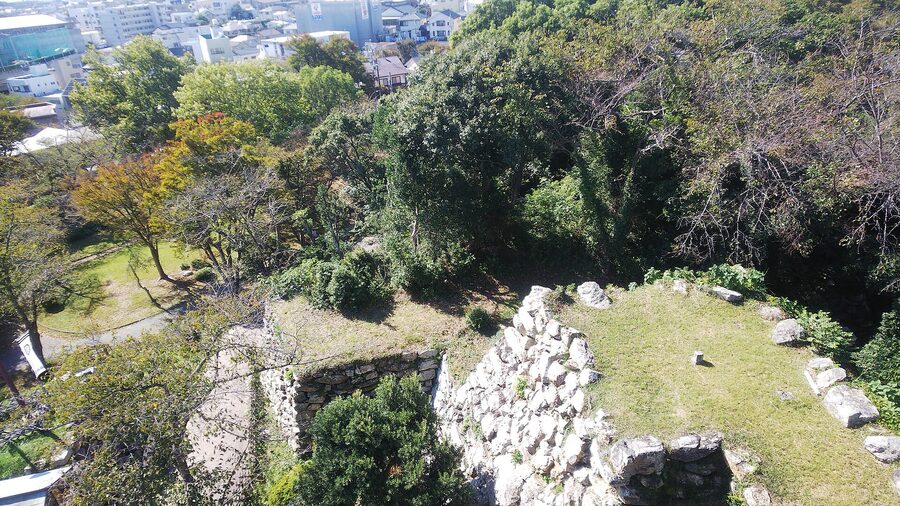
There is a twin. Futamata Castle, about 20 kilometres up the Tenryū and also held by the Horio, has a keep base of the same stone laid in the same way, and the city’s archaeologists think the same gang of masons built both. Hamamatsu’s is the bigger: its south face is 14.1 metres across the top and 19.1 metres at the foot, against Futamata’s 11.2 and 13.8, and it stands 5.7 metres above today’s ground against Futamata’s 4.0.
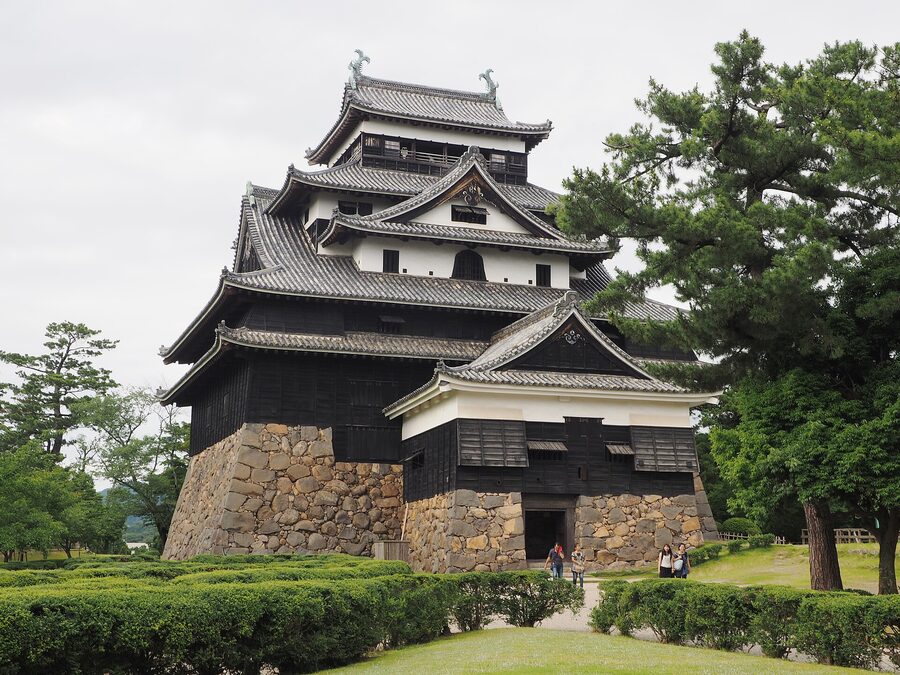
Horio did not stay to enjoy it. In 1599 he retired in favour of his second son, Tadauji, and when Ieyasu marched east against the Uesugi in the summer of 1600 the Horio entertained him at Hamamatsu on his way. Tadauji fought on the Tokugawa side at Sekigahara and was rewarded with 240,000 koku in Izumo, where his father, still very much in charge, built Matsue. Hamamatsu went back to the Tokugawa camp, and the Toyotomi decade was quietly painted over.
The castle of promotion
For the rest of the Edo period Hamamatsu belonged to the fudai, the hereditary Tokugawa vassal houses, apart from a short spell under Ieyasu’s tenth son, Tokugawa Yorinobu. It was never a large domain. But it had two things a careerist wanted: it sat on the Tokaido, so every lord travelling to and from Edo under sankin-kōtai passed its gate, and it was the castle of the founder’s youth.
Counts of its lords vary. Japanese sources give twenty-two from nine or ten families, an average of a little under twelve years each, and one English-language reference counts twenty-five. What everyone agrees on is the pattern: lords arrived, did well and left for something bigger, and by one tally the castle produced five senior councillors (rōjū), two Kyoto deputies, two keepers of Osaka Castle and four magistrates of temples and shrines. Hence shusse-jō.
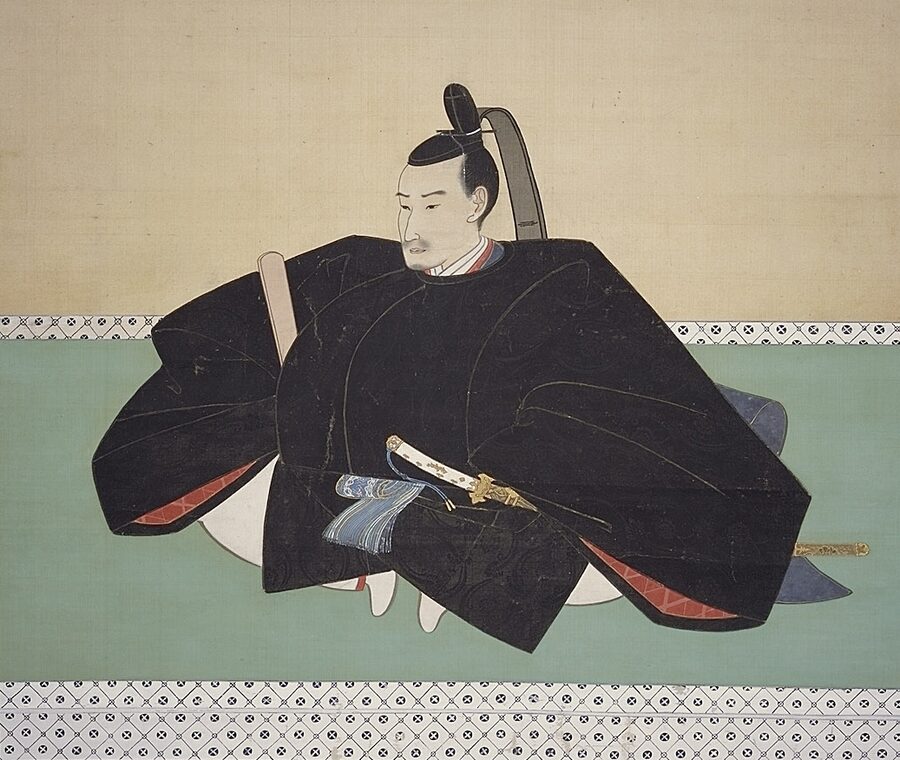
Mizuno is both the proof and the warning. He wanted out of Karatsu because its lords were responsible for the defence of Nagasaki, a duty that kept them out of high office, and he got Hamamatsu through a three-way exchange of domains that sent its previous lord, Inoue Masamoto, off to the north after a scandal. Mizuno became head of the senior councillors in 1839, launched the Tenpō reforms, failed badly and fell; his son was moved on to Yamagata, and an Inoue came back to Hamamatsu. Promotion, it turned out, worked in both directions.
The nickname stuck so firmly that the city still trades on it. The Meiji haiku poet Matsushima Jūkō wrote Hamamatsu wa / shusse-jō nari / hatsu-gatsuo, roughly “Hamamatsu: the castle of promotion, and the first bonito of the year”. A local brewery named a sake after it, and the city’s mascot is a cartoon Ieyasu called Shusse Daimyō Ieyasu-kun, the promoted daimyo.
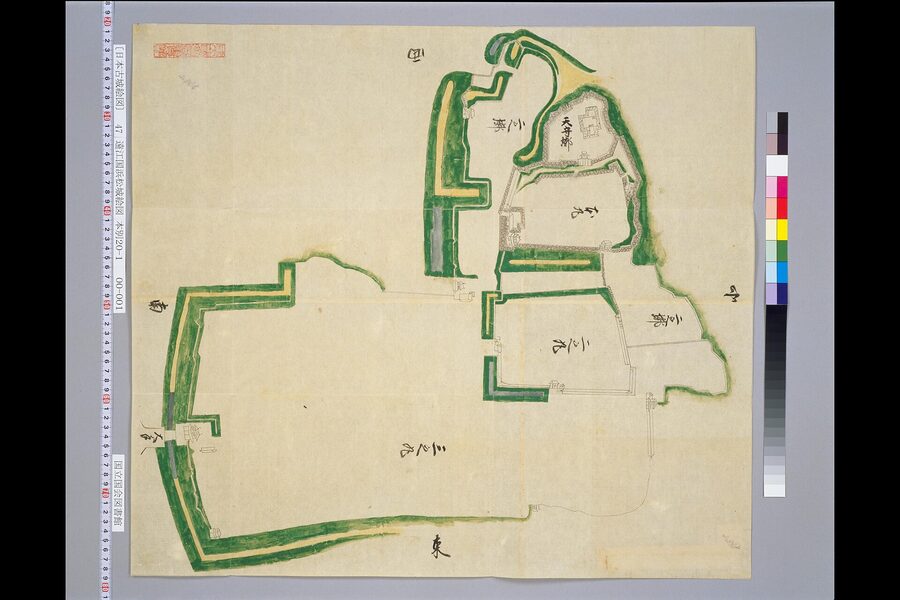
The castle the Edo-period lords knew was an administrative seat more than a fortress. With the keep gone, the building on the highest ground was the two-storey Tenshumon, the gate into the keep enclosure, which was repaired and rebuilt through the period and became the castle’s symbol. On the north edge of the main bailey stood the Fujimi Turret, “the turret for viewing Fuji”, and excavation in 2009 showed it was built not as a storehouse-style fighting tower but like a residence, with a strip of decorative gravel laid along its open north side.
Among the finds was a tenmoku tea bowl, and the city’s archaeologists say cheerfully that they think the lords used the turret for tea with a view of the mountain. I find it the most likeable fact about the whole castle. Somewhere in the 17th century a Tokugawa vassal climbed to the corner of his walls, not to watch for enemies, but to drink tea and look at Fuji.
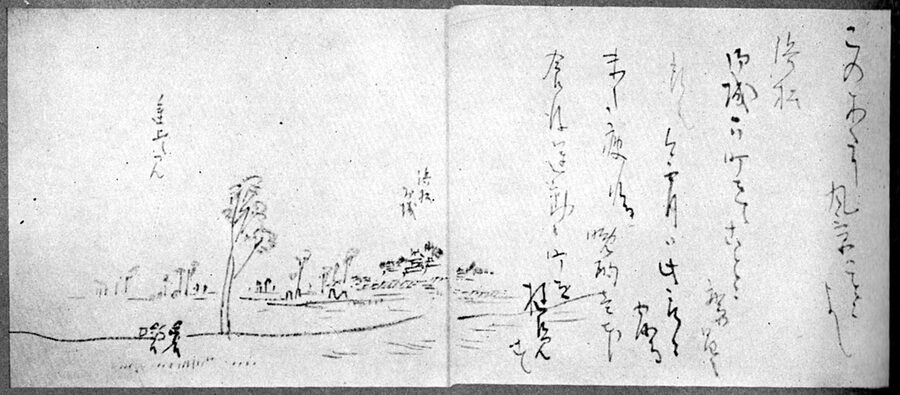
Hiroshige came back to Hamamatsu a few years later in his famous Tokaido series, and chose to draw not the castle but a group of porters warming themselves at a fire in the winter fields. That seems about right. The castle mattered to the shogunate and to the men who wanted its keys; to the people on the road it was a landmark, and the fire was more important.
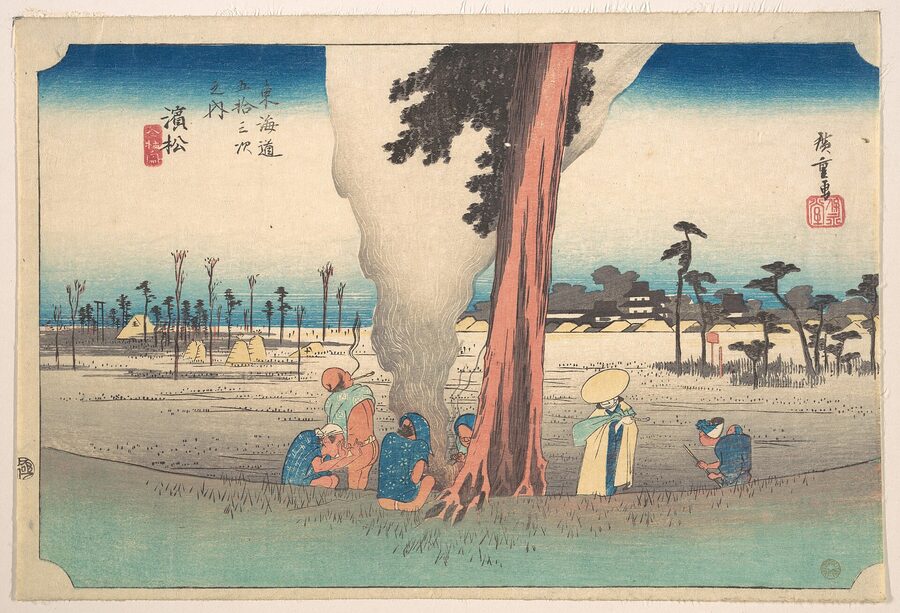
The end came quickly. The great Ansei earthquake of 1854 damaged the walls, and after the castle-abolition order of 1873 the buildings were sold off, the moats filled in and the second and third baileys turned into house plots. The keep enclosure and part of the main bailey escaped the worst of the Meiji clearances, and in 1950, prompted by a children’s exposition in the city, they became a public park.
Concrete, stone and fifteen years of digging
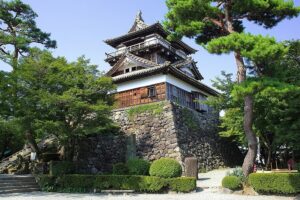
The keep you climb today was a civic project. In January 1956 local people formed an association to rebuild it, raised ¥13,956,000, and on 26 April 1958 a three-storey reinforced-concrete keep with a basement opened on the old base. It was designed by Kido Hisashi, an architectural historian who taught at the Nagoya Institute of Technology, and he modelled it on the original keep of Maruoka Castle in Fukui, one of the oldest in the country.
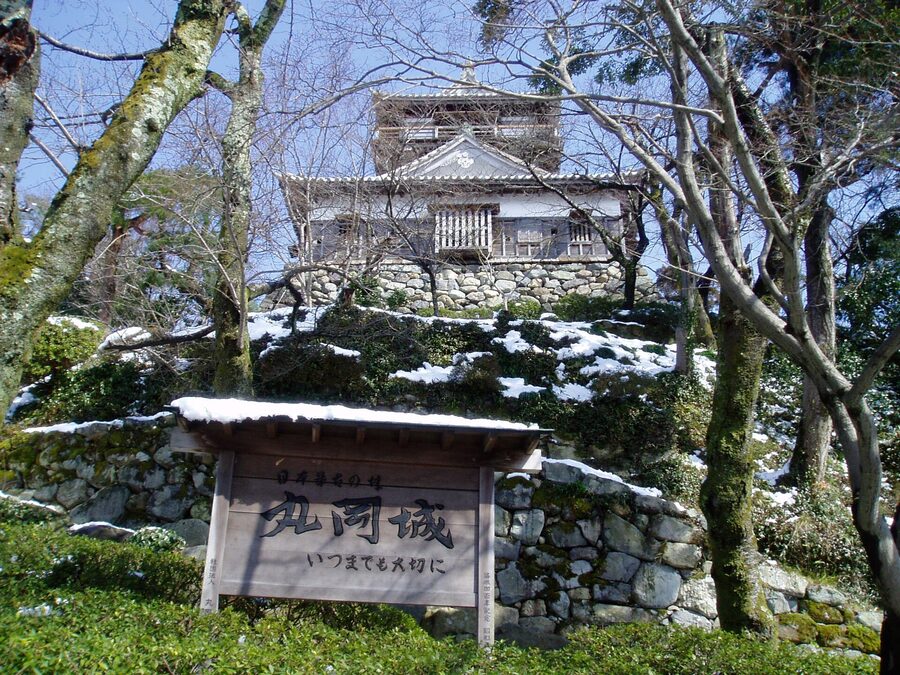
I have mixed feelings about it. It is a respectable piece of Shōwa civic architecture and it puts a recognisable castle back on the skyline, but it is a guess modelled on a building 200 kilometres away, and it was built at roughly two-thirds the scale of the base, so it sits on the old stones like a small hat on a large head. If you have seen any of Japan’s 12 original castles, the keep itself will not keep you long.
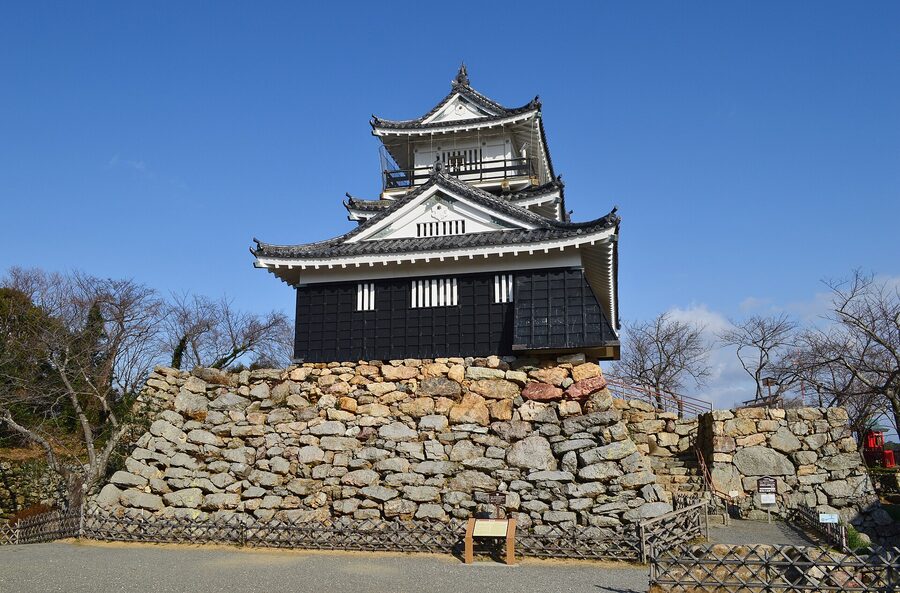
The stone is the real thing, and since 2009 the city has been finding out how much more of it there is. The keep base is about 21 metres a side and slightly out of square, with the Hachimandai platform on its west side and a smaller projection on the east, the tsuke-yagura, which now serves as the entrance to the keep. Under the ground around it, the digs have been more interesting than anything on top.
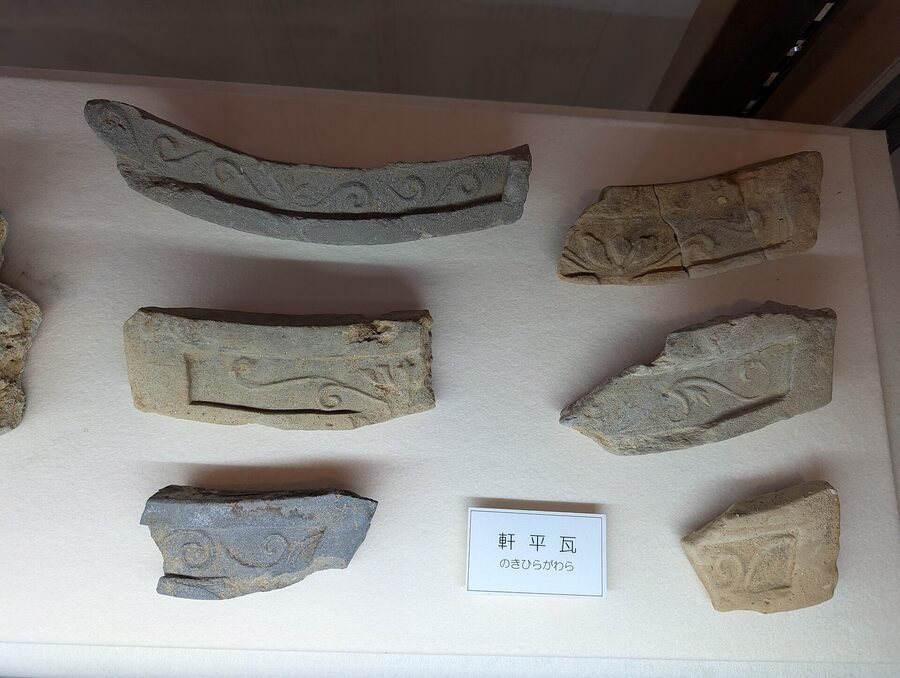
The first target was the Tenshumon. Digs between 2009 and 2012 found four of its foundation stones, each 1.0 to 1.4 metres long, and the pits where two more had been prised out; the main posts had stood more than four metres apart, which meant very large doors. On the walls above, excavators found the footings of the upper storey, a gatehouse 11.82 metres long, exactly six bays of the kyōma measure of 1.97 metres, along with roof tiles, wall plaster and pieces of the shachi, the fish-tailed ridge ornaments. The tiles dated the gate to the late 16th century: Horio’s work, kept in repair right through the Edo period until it was pulled down in 1873.
On that evidence the city rebuilt the gate in timber from local forests, borrowing its outward details from surviving Edo-period gates elsewhere in Tōtōmi, and opened it in 2014. No drawing or photograph of the original has ever been found, so it is an informed reconstruction rather than a copy, and nobody pretends otherwise. It is the best building on the site.
The digging has not stopped. In 2014 workers found a stretch of Horio-period wall hidden inside the retaining wall of a park path, and it has been on show since 2020 in the newly laid-out south plaza of the main bailey. The same year produced the Ieyasu-era moat, whose layers the excavators peeled off as a soil-section specimen so that they can be studied whenever anyone likes. And in 2018 a trench on the south side of the keep enclosure found a buried Horio wall 3.2 metres high, counting the lost upper courses, with about two metres of earth piled against it early in the 17th century; plans of that period show only a metre of it above ground.
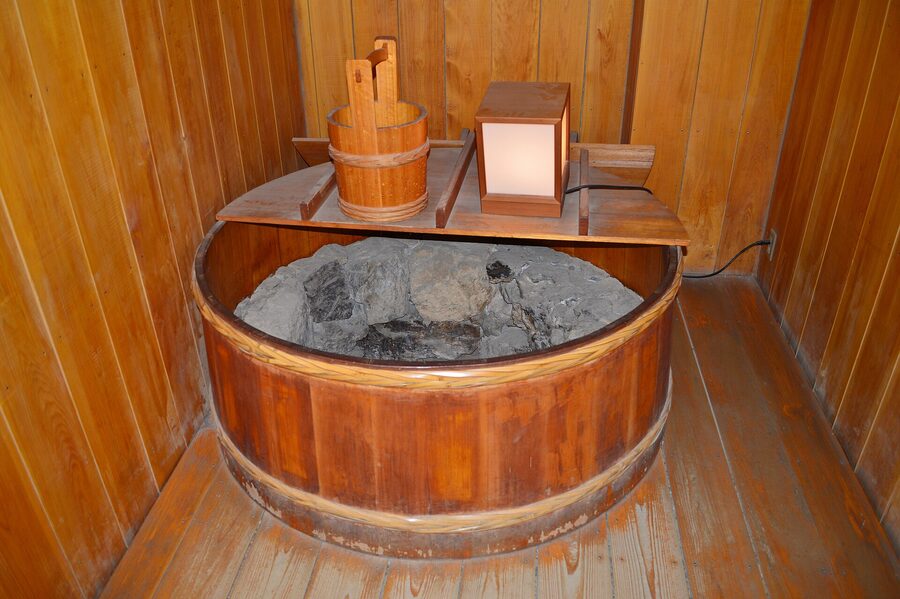
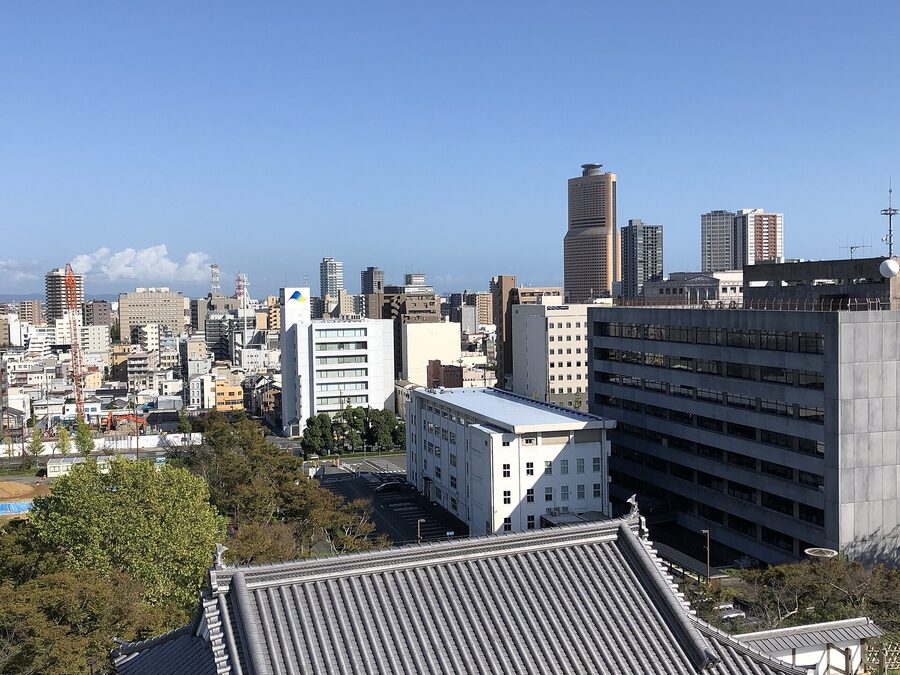
Inside the keep, the lowest gallery is given over to Ieyasu and the next to the castle’s own history, with excavated finds and a 1:600 model of the castle and town; the top floor is an observation deck. The best thing in the building is in the basement: an old well, left in place when the concrete went up. On a clear day the deck shows you the Mikatagahara plateau to the north, the Enshū Sea to the south, Lake Hamana to the west and, if you are lucky in winter, Fuji.
Where to see Ieyasu’s Hamamatsu today
Hamamatsu is on the Tokaido Shinkansen between Tokyo and Nagoya, about an hour and a half from Tokyo on a Hikari and half an hour from Nagoya. Everything below except Iinoya can be done in a day from the station by bus and on foot, and the castle and the instrument museum are walkable from each other.
Hamamatsu Castle Park
The castle is about 20 minutes on foot from JR Hamamatsu Station, or a few minutes by Entetsu bus: any bus from stands 13 or 14 at the bus terminal goes to Hamamatsu-jō Kōen Iriguchi (Castle Park Entrance) or Shiyakusho-mae (City Hall). The keep is open 8:30–16:30 (last entry 16:20) and closed 29–31 December; admission is ¥200 for adults and free for junior high school pupils and younger. Hours change for events and bad weather, so check the castle park’s own site before you make a special trip.
Give the park more time than the keep. Walk the circuit of the keep enclosure and the main bailey to see the walls and the footings of the Fujimi Turret, find the Horio wall in the south plaza, and then go down into the eastern part of the park, where there is a pond garden with a waterfall and a tea house, Shōintei, that serves matcha with a seasonal sweet. In late March and early April the cherry trees make this the busiest spot in the city, and you will share the walls with a great many picnics.
Motoshiro-chō Tōshōgū and the other Ieyasus
Hikuma’s site is a short walk east of the park, past the city hall, and it takes ten minutes to see: the marker stone, the shrine and the two bronzes. There is no charge. If you like your history layered, stand in the precinct and work out that you are on the Imagawa fort, inside Ieyasu’s castle, in the Edo-period rice stores, at a Meiji shrine rebuilt after an American air raid, all at once.
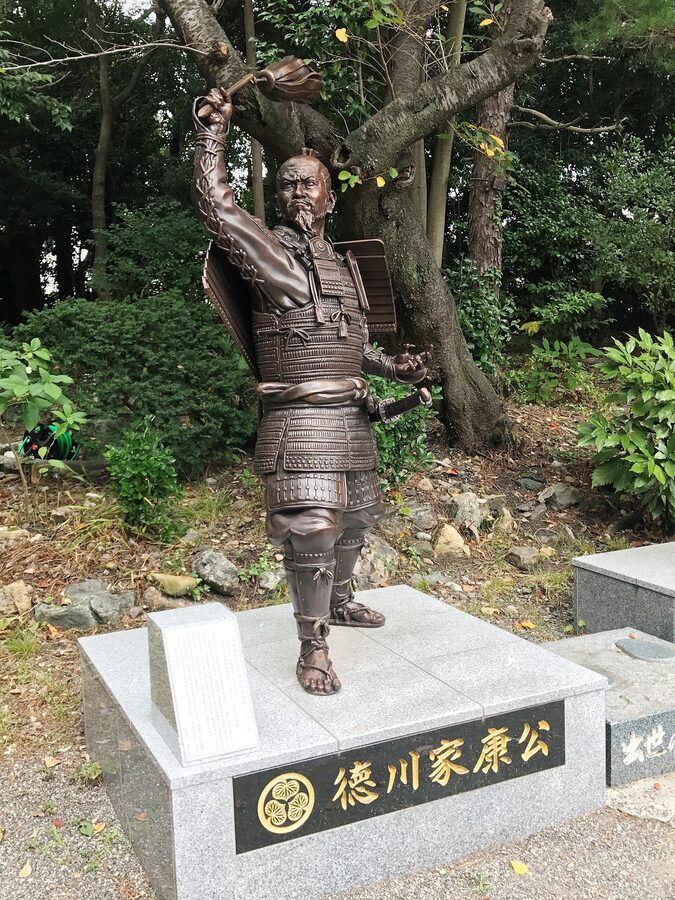
The third Ieyasu is the frown. The life-size figure of the Shikami-zō was unveiled in 2015 at the Hamamatsu City Museum in Shijimizuka, about 15 minutes by bus from stand 2 at the station (get off at Hakubutsukan); ask at the desk whether it is on show. The museum is open 9:00–17:00 and closed on Mondays (the next day if Monday is a holiday), the day after public holidays and 29 December–3 January, with admission at ¥310 for adults and ¥150 for high school students. Its galleries cover the region from prehistory on, and the Jōmon shell mound beside it, Shijimizuka, is a national historic site.
Saigagake and the Mikatagahara stone
Saigagake is about a kilometre north of the castle, a pleasant walk or a short ride on Entetsu buses from the station: stand 1 toward Kanzanji to the Hamamatsu Kita Kōkō stop, or stand 15 to the Saigagake stop. What is left of the ravine is a wooded gully among houses, and on its edge is the Saigagake Museum, which began life as the Sōen-dō, a hall for the souls of the battle’s dead, became a museum in 1983 and was rebuilt in 2015.
Admission is free, and the museum is open 9:00–17:00, closed Mondays (or the following day if Monday is a holiday), the day after public holidays and 29 December–3 January. Inside is material on the battle and on the Enshū Dainenbutsu, the processional chanting that local tradition traces to services held by the monk Sōen for the Takeda men who went over the edge. The groups still visit families holding their first Obon after a death, with lantern, flute, drum and gongs, and every 15 July they perform at Saigagake itself for the dead of Mikatagahara, usually from about 19:00.
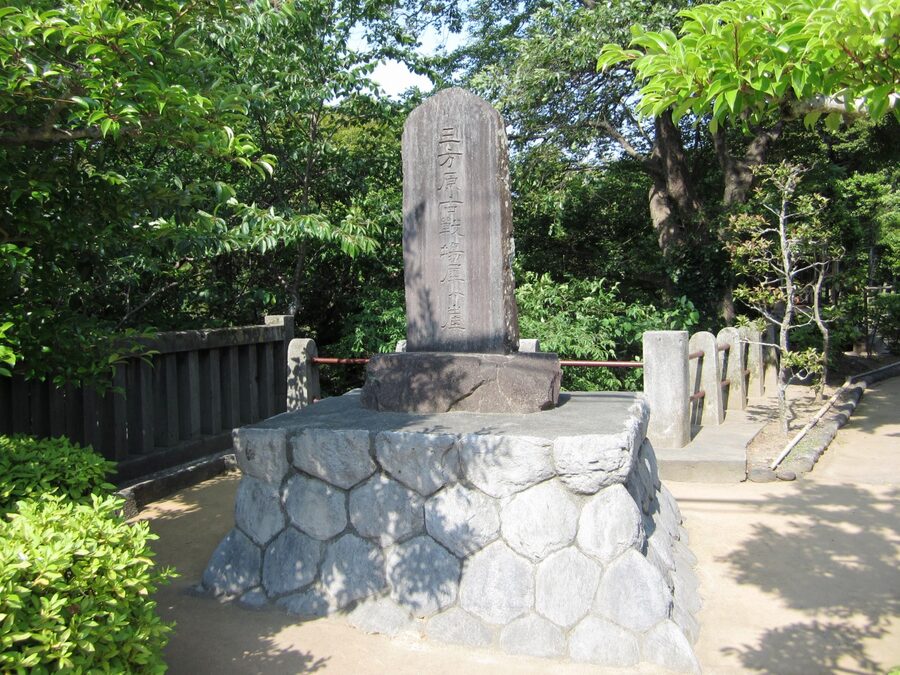
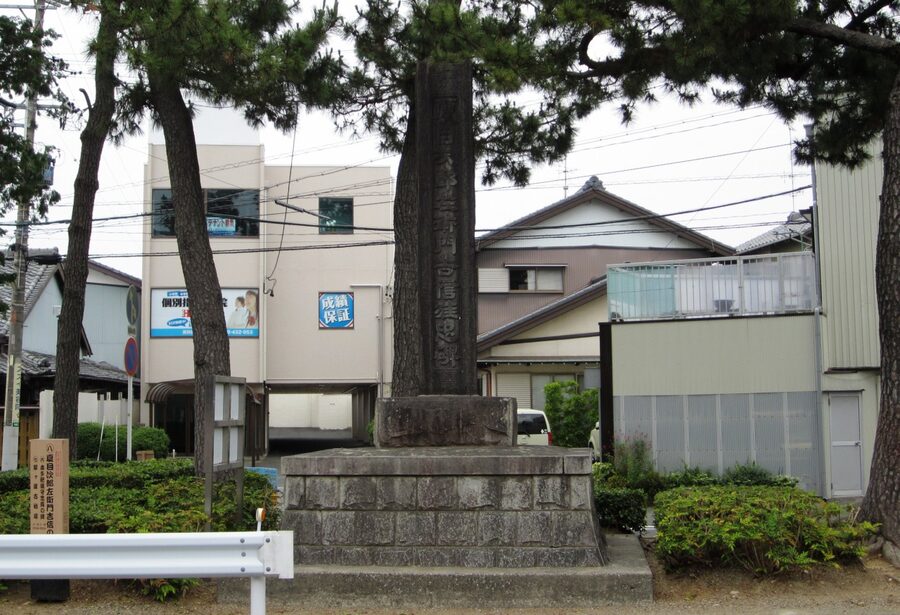
Two monuments nearby are for the Tokugawa dead. In the museum grounds is a stone the Honda family put up in 1891 for Honda Tadazane, Tadakatsu’s uncle, who died commanding the rearguard. And on Route 257, the old Himekaidō road, in the Nunohashi district, stands the monument to Natsume Yoshinobu, the castle-keeper who rode out and died in his lord’s place.
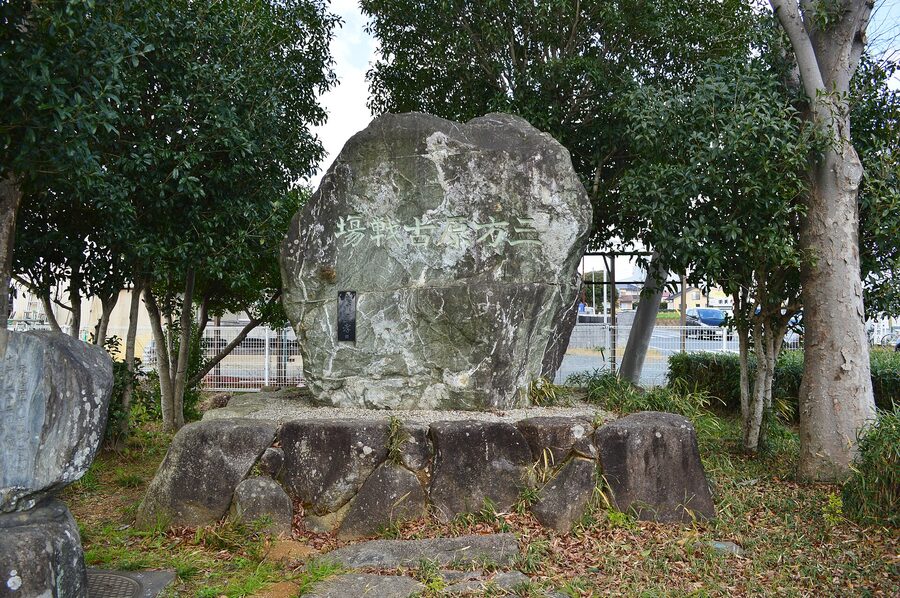
The battlefield itself is a harder proposition, because nobody knows exactly where it was. The memorial stone for the battle stands in the Mikatahara Cemetery in Neharai-chō, north of the city, but the historian Hirayama Yū lists four serious candidates for the main fighting, at Azukimochi, Neharai, Ōshibahara and Ōtani, and the evidence will not settle it. Go if you want to stand on the plateau and see how flat and open it is; that, more than any stone, explains what happened to Ieyasu’s army.
Inasa: Iinoya and Ryōtan-ji
If you have a spare half-day, go north into the hills to Iinoya, in Inasa, the home valley of the Ii family, about an hour by Entetsu bus from the station (the Okuyama line to the Jingūji stop, then a ten-minute walk). This is where the boy who became Ii Naomasa came from before Ieyasu took him into service at Hamamatsu, and where his family claimed roots going back to the 11th century.
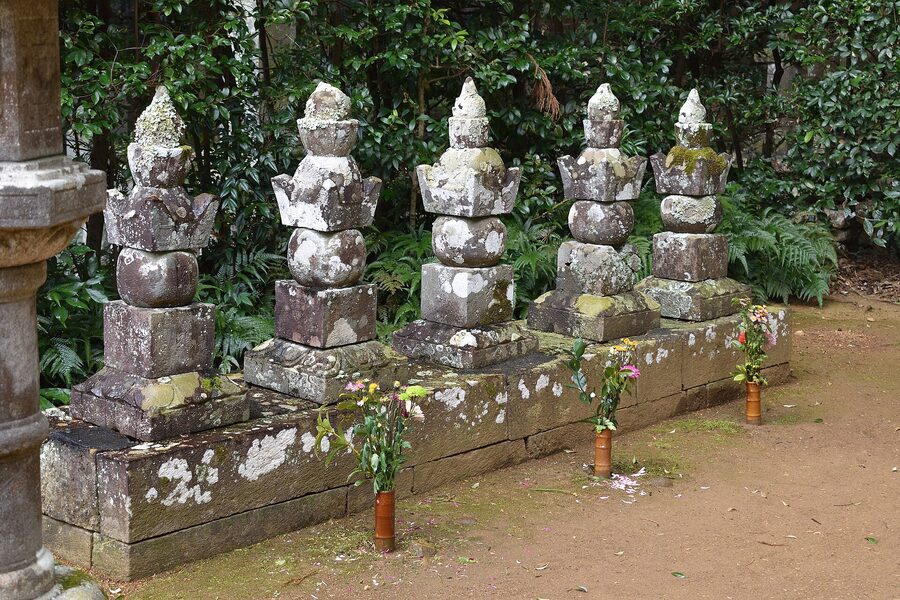
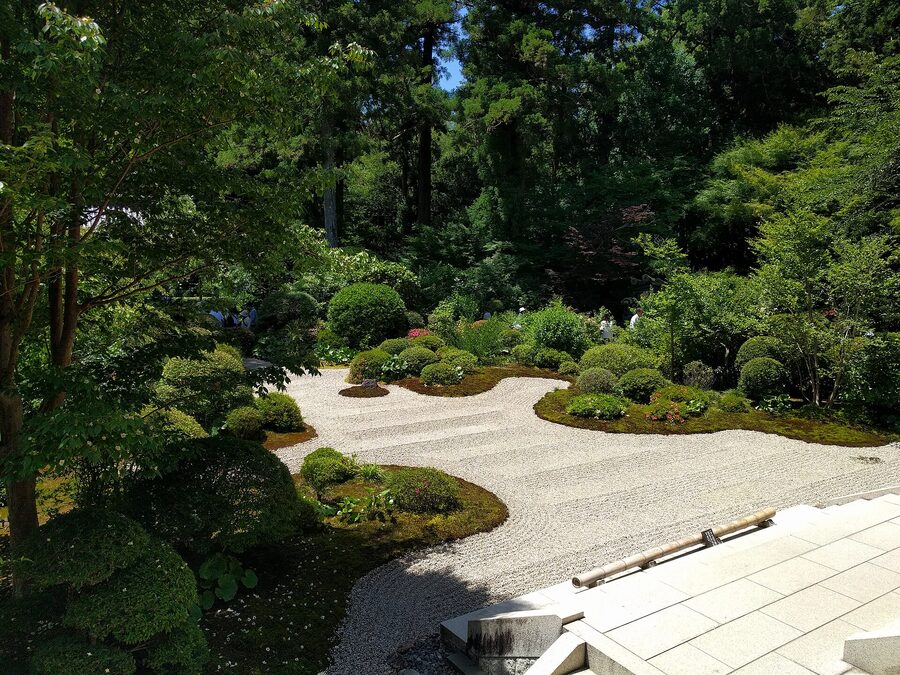
Ryōtan-ji, the family temple, has the Ii graves, a memorial hall for the family, and a garden designated a national Place of Scenic Beauty and attributed by the temple to Kobori Enshū. It is usually open from about 9:00 to 16:30 and closed on 15 August and for several days in late December, and its entrance fee has risen more than once in recent years, so check the temple’s own site before you go. Next door is Iinoya-gū, the shrine to Prince Munenaga, a son of Emperor Go-Daigo who held out for the Southern Court from this valley in the 14th century.
The Hamamatsu Museum of Musical Instruments
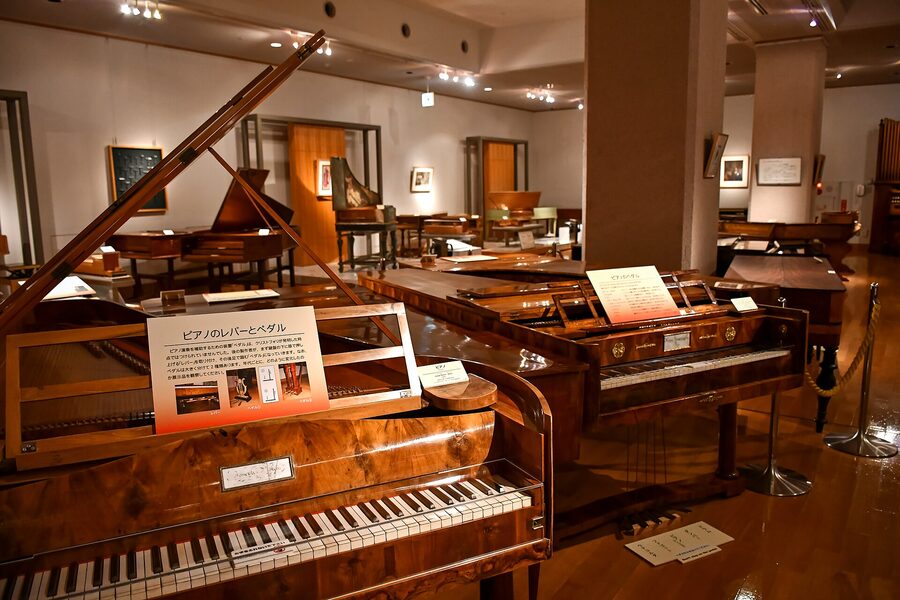
Back in town, by the station, is the city’s best museum, and it has nothing to do with Ieyasu. Hamamatsu is the home town of Yamaha and Kawai, and the municipal Museum of Musical Instruments holds about 1,500 instruments from around the world, arranged by region, type and era, with daily demonstrations that include a reproduction of the oldest surviving design of piano, Cristofori’s. It is open 9:30–17:00 and closed on the second and fourth Wednesdays (the next day if the Wednesday is a holiday, and never in August); admission is ¥800 for adults, ¥400 for high school students and free for younger children and over-70s.
Mizuno Tadakuni gave up a hundred thousand koku a year, and lost a loyal retainer, for the privilege of living in Ieyasu’s castle. By the time he moved in it had no keep, its founder had been dead for two centuries, and the famous picture of the founder’s worst night had not yet been given the story it is famous for. It worked anyway.
If you are passing on the Shinkansen, get off for an afternoon. Walk past the concrete keep to the walls, find the well and the footings of the Fujimi Turret, then go up to the deck and look north toward the plateau where it all went wrong. Ieyasu lost there, came home in the dark and was promoted anyway, and the castle has been offering the same deal ever since.