The architect who designed the keep of Kokura Castle said afterwards, on the record, that he wished he had not. Fujioka Michio was a historian of Japanese building, and in the late 1950s he worked from the old domain records to draw a tower with almost no gables, plain white walls and a black top storey that sat out wider than the floor beneath it. The local businessmen who were paying for it told him a castle without gables did not look like a castle and would never pull in a tourist. So he stuck the gables on, and then admitted that it really would have been better without them.
I have a soft spot for Kokura Castle because of that confession, and because the building under those borrowed roofs has had a stranger life than almost any castle in Japan. A tea master built it. A clan of Tokugawa watchmen held it for 234 years and set it on fire themselves. Its grounds became barracks, then an arsenal, and on the morning of 9 August 1945 they were the aiming point for the second atomic bomb.
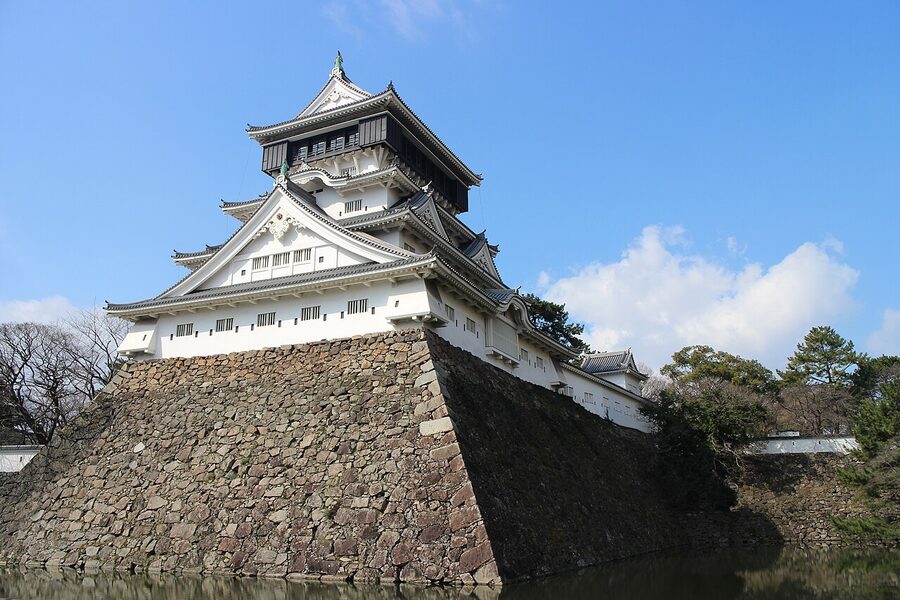
This is the story of the castle from the Mōri to the Meiji army, of the summer of 1866 when Kokura burned its own keep rather than hand it over, and of the morning in August 1945 when cloud and smoke over Kokura sent the second atomic bomb to Nagasaki instead. It ends, as everything on this site does, with where you can stand today, which in Kokura includes a park with a bell from Nagasaki in it.
In This Article
- Before the Hosokawa: a borrowed name
- Hosokawa Tadaoki builds a castle
- A castle wider at the top
- A town to go with it
- Watchmen on the strait: the Ogasawara
- Musashi’s son and Musashi’s island
- Prosperity, quarrels and a fire
- The summer of 1866
- Chōshū crosses the strait
- The domain burns its castle
- Barracks, an arsenal and a novelist
- 9 August 1945
- The castle that came back
- Where to see Kokura Castle’s story today
- The keep
- Kokura Castle Garden
- Yasaka Shrine
- Matsumoto Seichō Memorial Museum
- The Nagasaki memorial in Katsuyama Park
- Tamukeyama and the Kokura hibun
- Ganryūjima by ferry
- Fukuju-ji
- Mori Ōgai’s house
- The drum in Shimonoseki
Before the Hosokawa: a borrowed name
Kokura sits where Kyushu almost touches Honshu, on the south shore of the Kanmon Strait, and anyone who wanted to move an army between the two islands had to think about it. A fortified post of some kind stood at the mouth of the Murasaki River for centuries, and a domain chronicle of the mid-Edo period lists a long and unconvincing parade of medieval lords who were supposed to have held it. The first castle anyone can pin down was built in 1569 by the Mōri, the great warlords of western Honshu, during their long war with the Ōtomo of Bungo.
What followed is a good example of how Toyotomi Hideyoshi handed out Kyushu after he conquered it in 1587. One of his oldest retainers, a man called Mori Yoshinari, was given two districts of Buzen and the castle at Kokura, worth 60,000 koku by most counts (some say 100,000). Hideyoshi also told him to change his surname from Mori to Mōri, the name of the powerful clan across the strait, and Yoshinari became Mōri Katsunobu. It was a compliment, and it was also a way of tying a useful vassal to a family Hideyoshi wanted on side.
Katsunobu rebuilt the castle on the old site and then spent much of the 1590s in Korea, leading Shimazu Yoshihiro’s southern Kyushu men in the first invasion of the Imjin War and holding Busan in the second. In 1600 he picked the wrong side. While his son fought for Ishida Mitsunari’s western army, Katsunobu was talked into surrendering Kokura by Kuroda Josui, an old friend who neglected to mention that he had already been promised Buzen for himself.
Hosokawa Tadaoki builds a castle
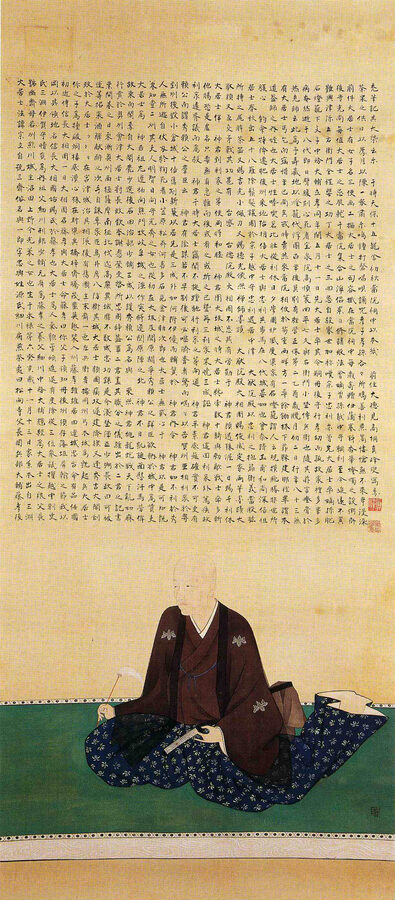
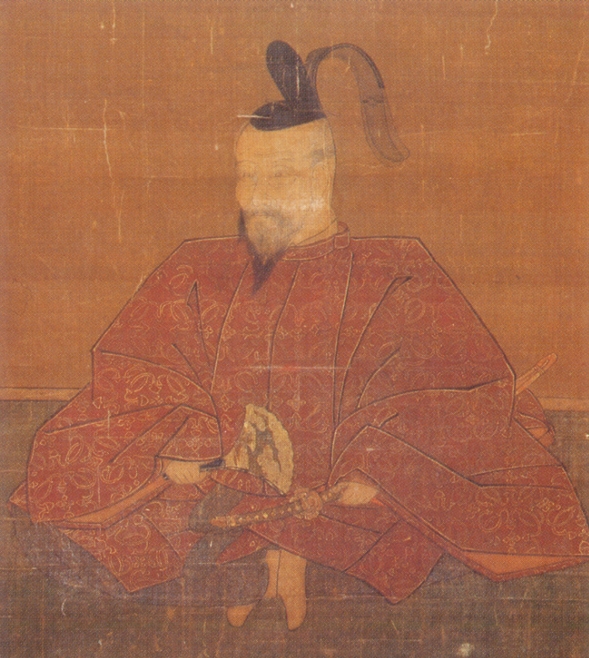
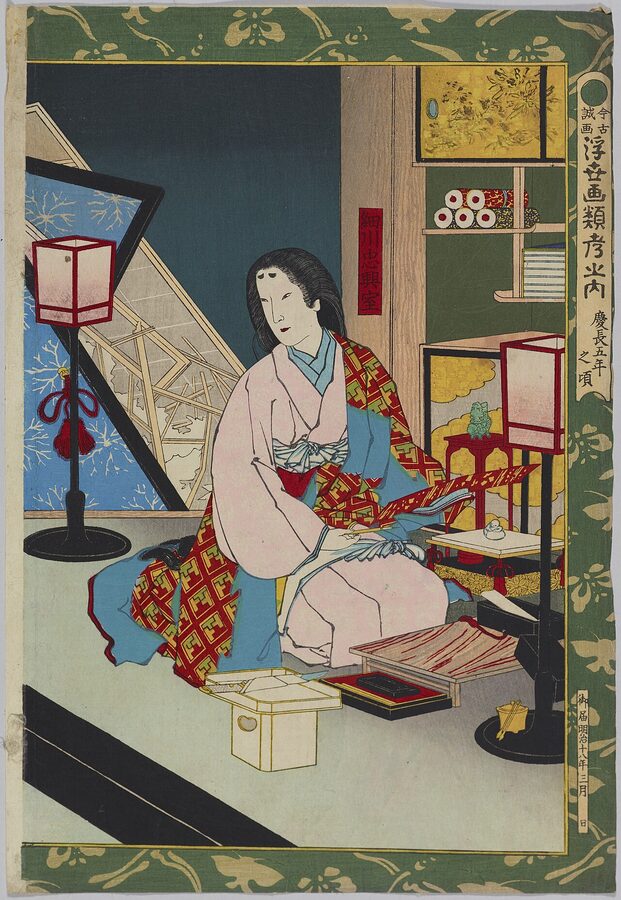
The man who got Buzen in the end was Hosokawa Tadaoki, and he got it the hard way. His wife Gracia had died in the burning of their Osaka mansion rather than be taken hostage, and his father had held Tanabe Castle against a western army for weeks while Tadaoki marched with Tokugawa Ieyasu to Sekigahara. Ieyasu paid the debt. The Hosokawa went from 180,000 koku in Tango to the whole of Buzen and two districts of Bungo, 399,000 koku, which put them among the great houses of the west.
Tadaoki first moved into Nakatsu, the old Kuroda castle further down the coast, and left his younger brother Okimoto to hold Kokura. Okimoto quarrelled with him and ran off in 1601. Tadaoki took that as his cue, and from 1602 he spent about seven years turning Kokura into the castle of a great lord, moving the domain’s government there as soon as it was habitable.
A castle wider at the top
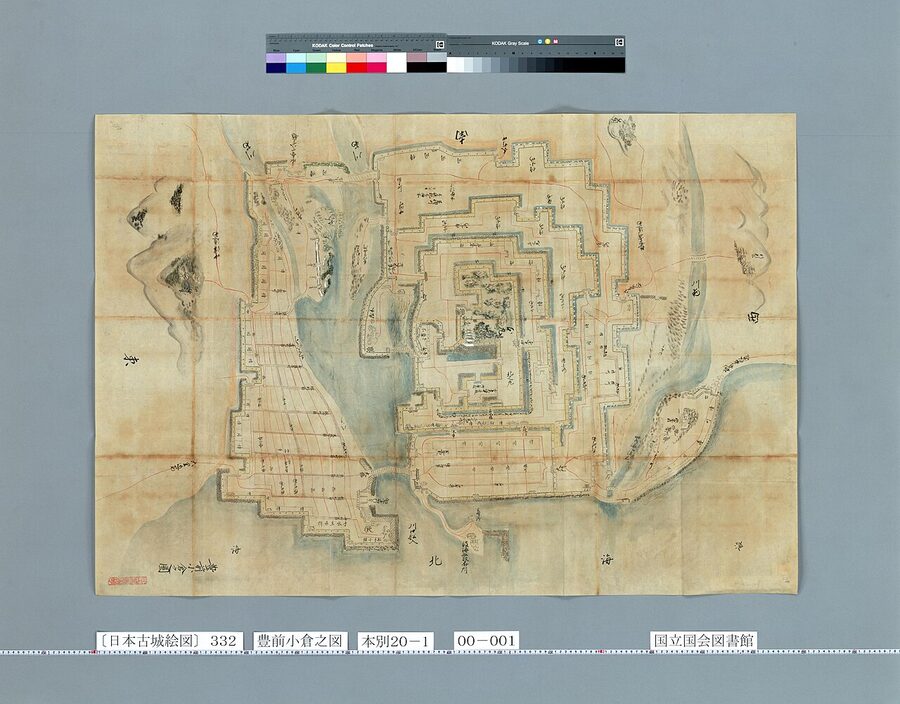
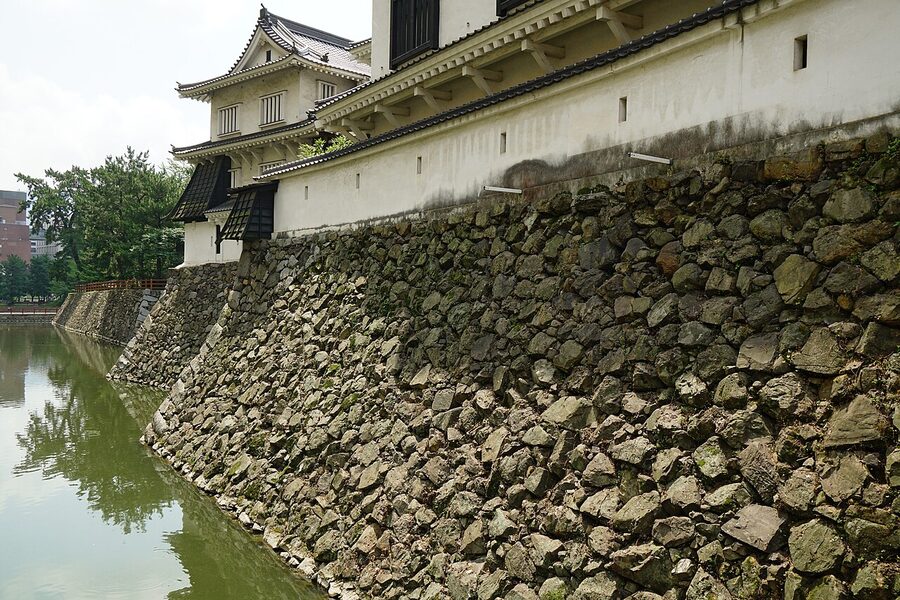
What he built was big. The city likes to say the complex was the fifth largest in Japan, second only to Himeji in the west, and the outer defences enclosed the whole town on both banks of the Murasaki River, the samurai quarter to the west and the merchants and lesser retainers to the east. Excavations in 2004 found ridged moat floors in the outer ditches, the kind of trap that slows a man wading through the water, which archaeologists date to Tadaoki’s time. The walls were nozura-zumi (野面積み), rough fieldstone stacked without much dressing, and that is what you can still put your hand on today.
The keep was the oddity. It had four roofs and five floors, with a small attached tower, and almost no ornamental gables at all; the only one sat at the very top. The fifth floor was wider than the fourth and jutted out on every side without a roof between them, its outer gallery boarded in black-lacquered panels that stood out against the white plaster below. Contemporaries called it karazukuri (唐造り), “Chinese style”, or nanban-zukuri, “southern-barbarian style”, which is what Japanese of the period called anything that arrived on a Portuguese ship.
Where the idea came from is a matter for argument. One standard Japanese encyclopedia repeats the old line that Tadaoki borrowed the technique from European missionaries, and it is not absurd: his wife had been a Catholic, and the Hosokawa household had Christian retainers. An Edo-period account of the town, the Kurafu kenmonshū, gives its own explanation, and people travelled to Kokura to look at the thing because nothing else in Japan resembled it. The keeps later built at Tsuyama and at Takamatsu are said to have taken Kokura as their model.
I think the simplest explanation is the man. Tadaoki was one of the seven senior pupils of Sen no Rikyū, a ferociously exacting judge of a tea bowl, and a building with one bold line and nothing else on it is exactly what a student of the tea ceremony would want to look at. The tower also had a bathroom on its first floor, which almost no keep in Japan did. He meant to live with it.
A town to go with it
Tadaoki built a town as well as a castle, like Date Masamune at Sendai in the same years. He protected trade, encouraged foreign commerce through the port, and in 1618, by the reckoning of the shrine itself, founded the festival of the Gion shrine in imitation of the Gion Matsuri of Kyoto, the city he grew up in. Four centuries later the drummers are still at it every July.
His senior retainer Matsui Yasuyuki took a plot just below the keep for his own house, and the garden on that site, rebuilt and much changed, is one of the places you will want to visit. Matsui was the sort of retainer every Sengoku family needed and few got: he had been offered a fief directly by Hideyoshi, turned it down, and stayed with the Hosokawa.
In 1620 Tadaoki handed the domain to his son Tadatoshi. Twelve years later the shogunate dispossessed Katō Tadahiro, son of Katō Kiyomasa, and the Hosokawa were moved south to Kumamoto Castle and a domain of 540,000 koku. They never came back to Kokura as lords. They did come back once as soldiers, in 1866, and it did not go well for anyone.
Watchmen on the strait: the Ogasawara
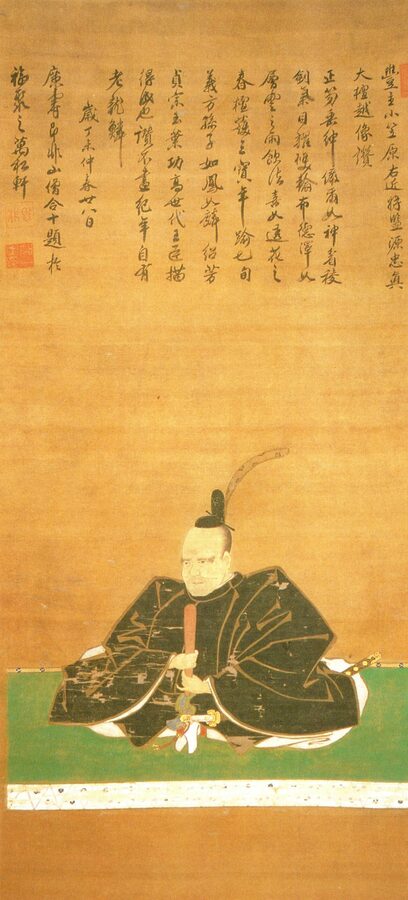
The new lord of Kokura in 1632 was Ogasawara Tadazane, and his appointment was a political statement. His mother was a daughter of Matsudaira Nobuyasu, Ieyasu’s eldest son, which made him a great-grandson of the founding shogun. His father and elder brother had both died fighting for the Tokugawa in the summer campaign at Osaka in 1615, and he had held Matsumoto and then Akashi before he was sent west.
He was also Tadatoshi’s brother-in-law, which made the handover a family affair. Kokura and its 150,000 koku went to Tadazane, his nephew Nagatsugu got Nakatsu, and his younger brother Tadatomo got Kitsuki in Bungo. Three Ogasawara castles, all held by hereditary Tokugawa vassals, now sat on the coast facing a Kyushu full of great outside lords: the Shimazu, the Kuroda, the Nabeshima and the Hosokawa themselves.
The Ogasawara job was to watch. Japanese historians sometimes call the house the unofficial Kyūshū tandai, the shogunate’s eye on the island, and the family took it seriously for the rest of the Edo era. They sent troops to the Shimabara Rebellion in 1638 and took their turns guarding Nagasaki, the one port where the Tokugawa shogunate let the Dutch and Chinese trade. It was a dull, important posting, and dull suited them.
Musashi’s son and Musashi’s island
Kokura’s most famous visitor in these years was Miyamoto Musashi. His adopted son Iori served the Ogasawara and rose very high, to a stipend of 4,000 koku and the post of senior house elder after Shimabara, by Japanese accounts. Musashi spent part of the 1630s in Kokura as a guest of the house, went with the Ogasawara forces to Shimabara, and left in 1640 for Kumamoto and the Hosokawa, where he wrote his Book of Five Rings and died.
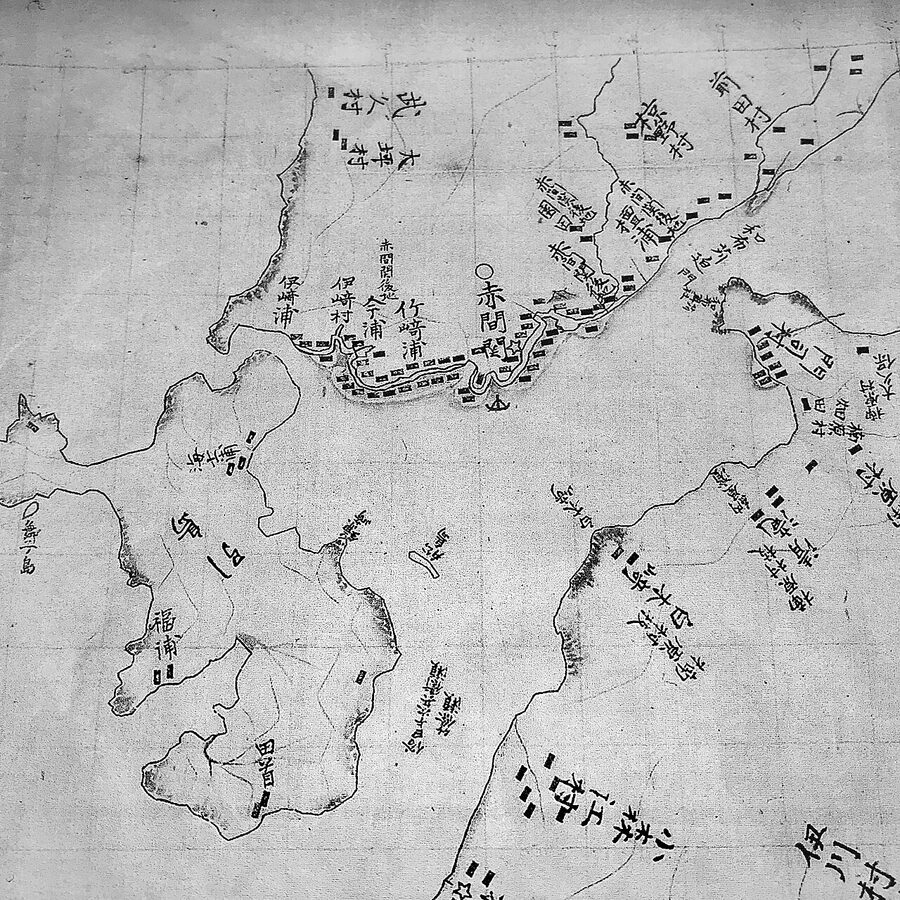
The duel that made Musashi famous had already happened in Kokura’s waters, under the Hosokawa. Ganryūjima, properly called Funashima, is a flat islet in the strait that then belonged to the Kokura domain. The Nitenki, a biography compiled in 1776, puts the fight with Sasaki Kojirō on the 13th day of the fourth month of 1612 (13 May by the Western calendar); an earlier account of 1727 says Musashi was nineteen, which would put it a decade sooner. Nobody really knows, and I would not trust any precise date you see on a souvenir towel.
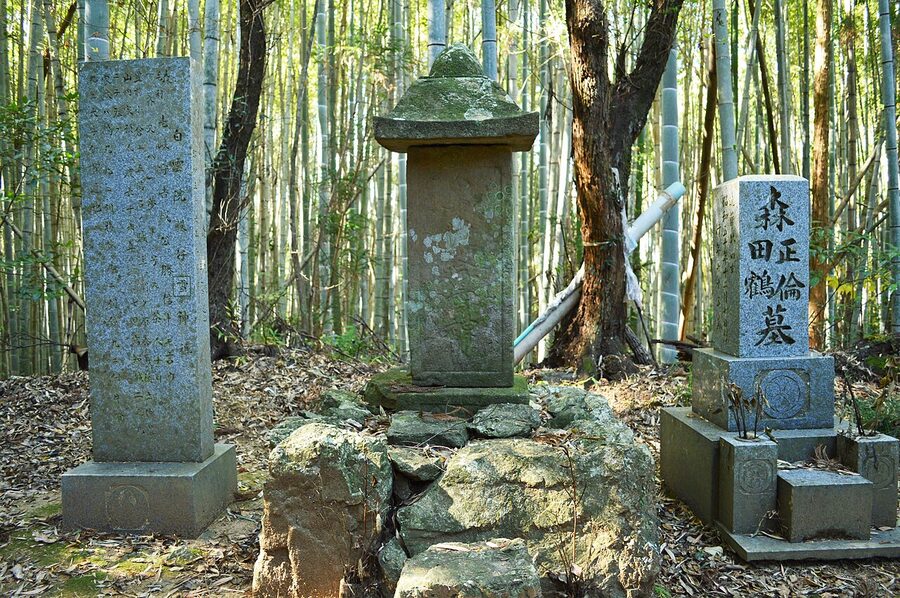
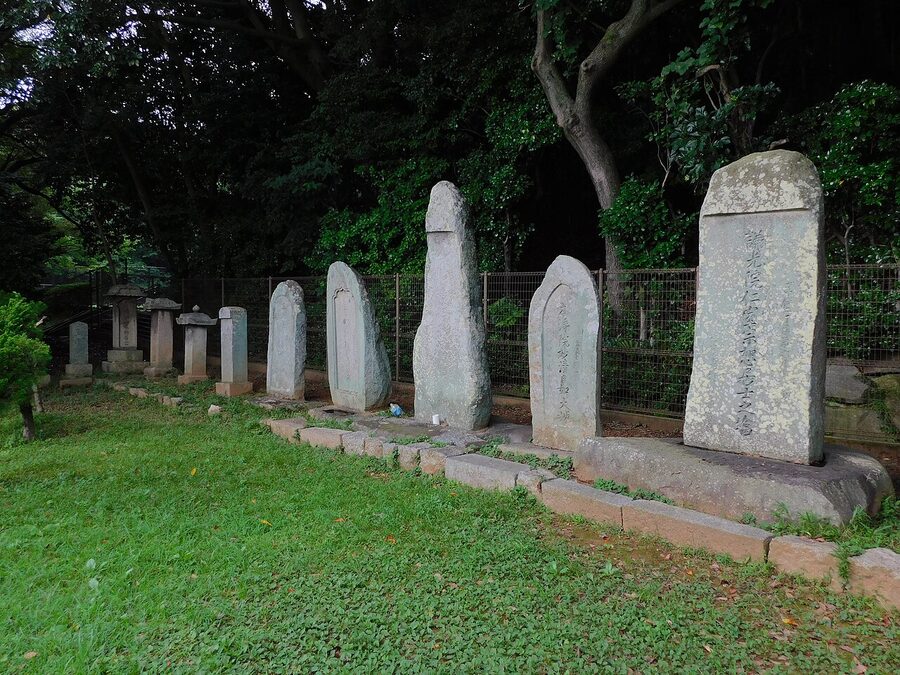
Most of what people think they know about that duel goes back to one stone in Kokura. In 1654, nine years after Musashi died, Iori raised a natural boulder 4.5 metres high on Tamukeyama, a hill above the strait that the Miyamoto family records say the lord gave him for a graveyard, and had about 1,100 characters carved into it in praise of his father. The Kokura hibun is the source behind the Edo-period Musashi biographies, the Ganryūjima story included, and it is still there.
Prosperity, quarrels and a fire
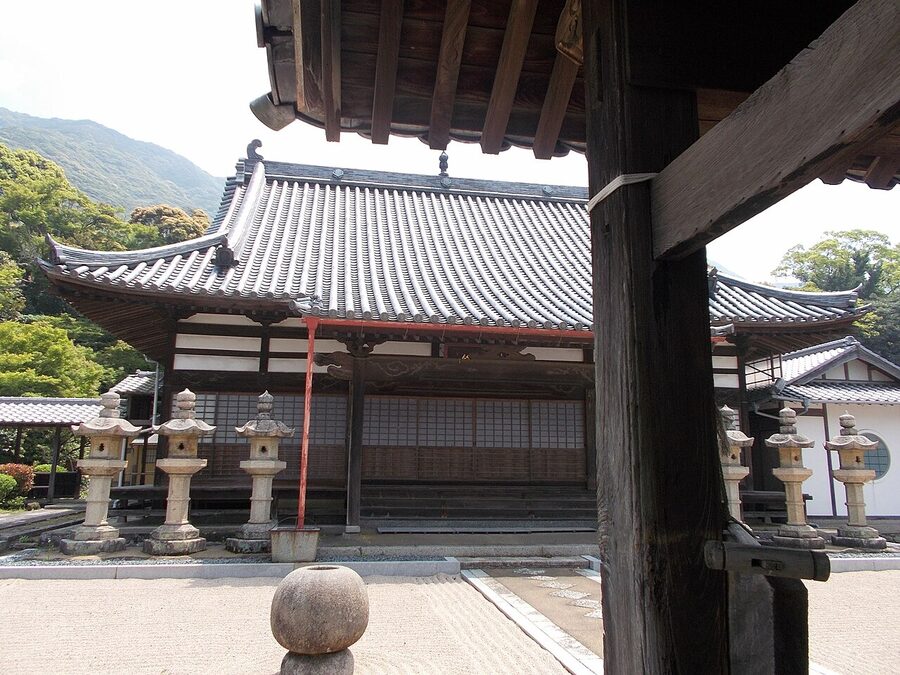
Tadazane founded the Ōbaku Zen temple of Fukuju-ji in 1665 as his family temple, two years before he died, with Sokuhi, a Chinese monk and senior disciple of the Ōbaku founder Ingen, as its first abbot. The temple’s Chinese-style halls are one of the less visited treats of modern Kokura, and the Ogasawara lords lie there in their mausoleum.
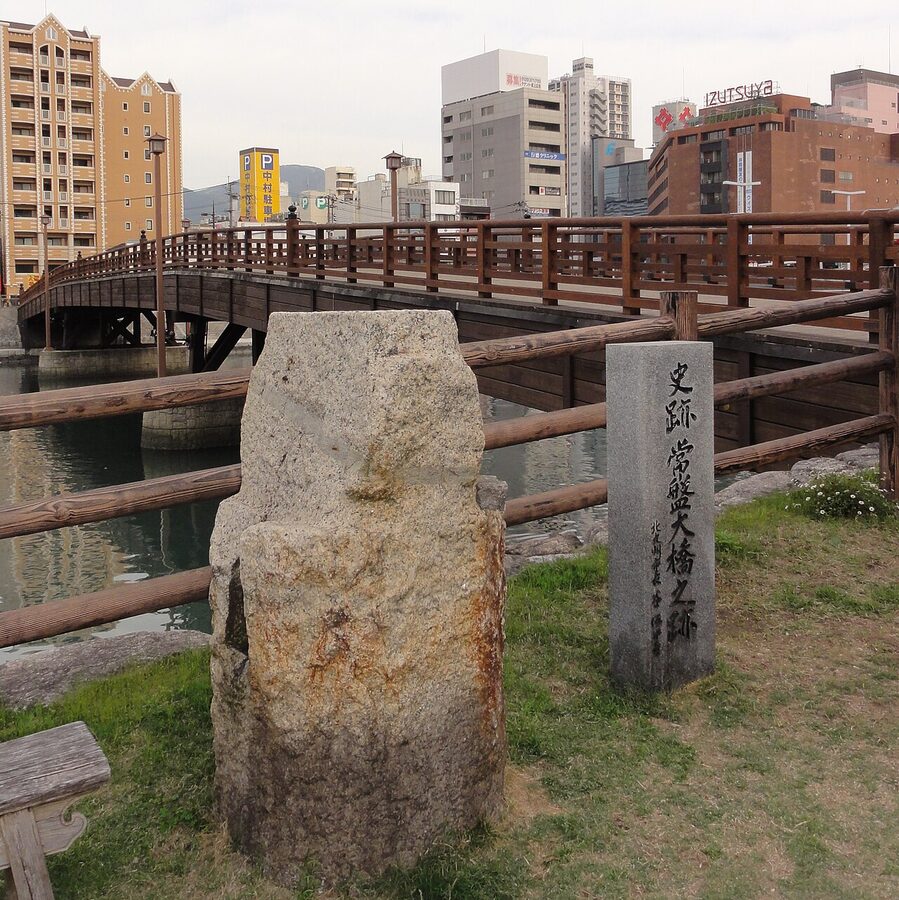
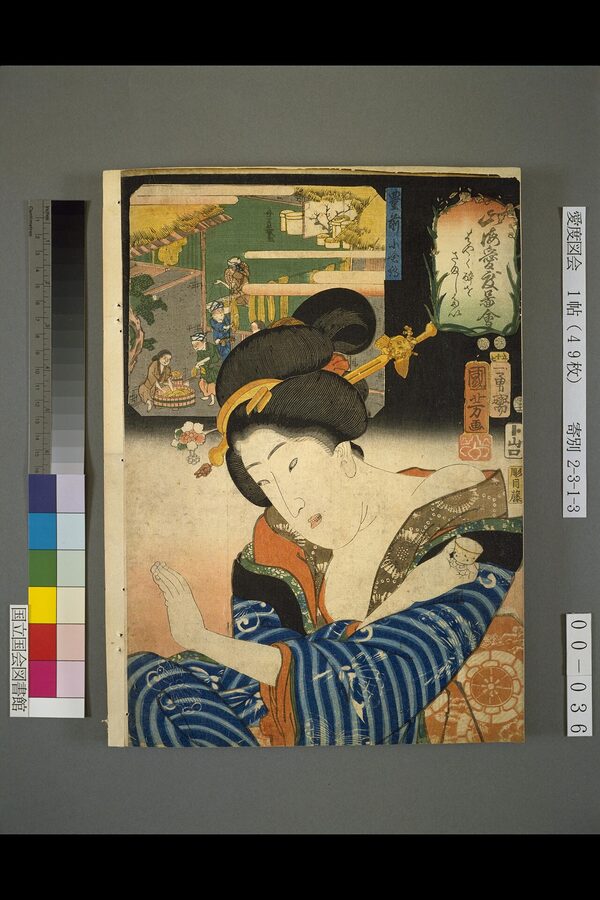
The town did well out of the roads. Kokura was the northern end of the Nagasaki Kaidō, the highway that carried the Dutch from Dejima to Edo and half the lords of Kyushu on their journeys under sankin-kōtai, and it sold the world a hard-wearing striped cotton. Kokura-ori was good enough to be name-checked on Edo woodblock prints, and in the Meiji period it was widely used for students’ uniforms.
The domain’s politics were less tidy. A long feud among the senior retainers in the early 19th century, remembered as the Shirokuro sōdō, the “white and black dispute”, split the house and drained its money.
Then in 1837 a fire broke out inside the castle and burned the lord’s palace and the keep. The palace was rebuilt by 1839, but the keep was never replaced. A three-storey building stood in for it on the old base, and Kokura went into the last decades of the shogunate with a hole where its tower had been.
The summer of 1866
The trouble came from across the water. Chōshū, the great domain on the Honshu side of the strait, had turned against the shogunate, and in 1863 it began firing on foreign ships passing through the Kanmon Strait. The Kokura domain, under orders from Edo not to start a war, manned its own batteries and did not shoot. Chōshū troops crossed and occupied Tanoura on the Kokura shore to build guns of their own, and for a while the two neighbours glared at each other across less than a kilometre of water.
In 1864 the shogunate sent its first expedition against Chōshū and Chōshū backed down without a fight. In 1866 it sent a second, and this time Chōshū, now in the hands of its radicals and quietly allied to Satsuma through the good offices of Sakamoto Ryōma, did not back down at all. Kokura was the shogunate’s main base on the Kyushu front, with Ogasawara Nagamichi, a senior councillor from the Karatsu branch of the family, as overall commander.
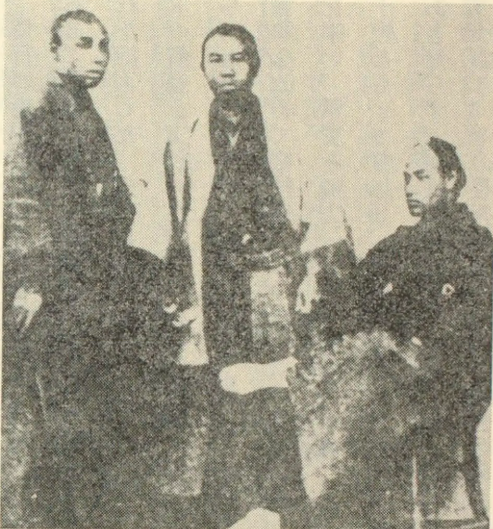
Kokura went into the war with a secret. Its lord, Ogasawara Tadahiro, had died on the 6th day of the ninth month of 1865, and his heir, Toyochiyomaru, was four years old by the Japanese count. With a war coming, the house elders hid the death and ran the domain in the dead man’s name.
Chōshū crosses the strait
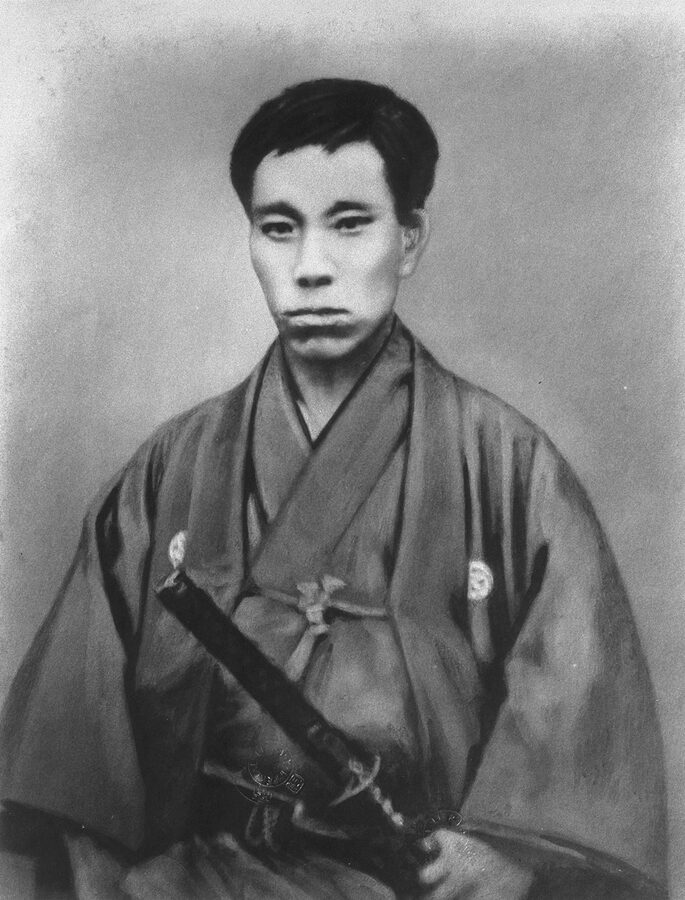
Chōshū moved first. On the 17th day of the sixth month of 1866, Takasugi Shinsaku took his troops across the strait in a dawn attack and landed at Tanoura; one of the steamers covering them, the Union, was commanded by Ryōma himself, the only battle of his life. On the 2nd day of the seventh month they landed again at Dairi. The shogunate had the bigger navy and dithered about using it, and the troops of the other Kyushu domains mostly watched.
There was one real fight on the Kokura side. On the 27th day of the seventh month, at Akasaka and Torigoe on the coast road east of the castle, the troops of the Higo domain stood and drove the Chōshū men back. Higo was Kumamoto, and Kumamoto was the Hosokawa, so the best fighting done in defence of Kokura that summer came from the family that had built it.
It did not last. The other domains had lost patience with Nagamichi, and after Akasaka they packed up and went home, Higo included. News arrived that the shogun Iemochi had died in Osaka on the 20th day of the seventh month, and Nagamichi took it as his excuse. He boarded a warship and left.
The domain burns its castle
Kokura was now alone. On the first day of the eighth month of 1866 its men set fire to the castle themselves and fell back into the hills, so that Chōshū would not have it. English-language accounts often turn this into “1 August 1866”, which is the old-calendar date read as if it were a Western one; the Western date was more than a month later. The little lord was carried south to safety in Hosokawa Kumamoto, and the domain’s leaders set up their headquarters at Kawara, in the mountains of Tagawa.
They burned Fukuju-ji as well, on the principle that the enemy should not get a ready-made strongpoint on the hill. The temple’s own story is that the main hall was set alight and would not burn. The graveyard holds a memorial to the domain’s war dead of 1866.
What came next is the part the textbooks skip. The house elder Shimamura Shizuma regrouped the domain’s men at the Kanabe pass, made a forward base at Takatsuo, and fought a guerrilla war through the autumn, at one point getting back into the ruins of the castle. In Kyoto, Hitotsubashi Yoshinobu, about to become shogun as Tokugawa Yoshinobu, had announced that he would lead a grand counter-attack in person; when he heard that Kokura had fallen he called it off.
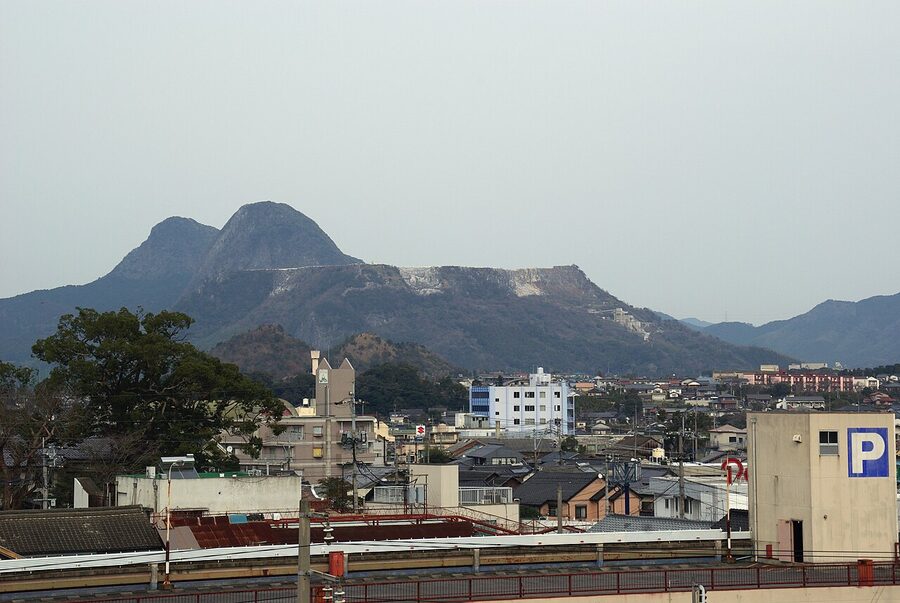
The shogunate agreed a ceasefire with Chōshū on the other fronts in the ninth month, but the fighting around Kokura went on regardless, and Edo could do nothing about it. Kokura finally made its own peace early in 1867. Chōshū kept the Kiku district, the castle’s home ground, “in trust”, and never gave it back; it passed to the new government in 1869. The domain moved its seat again, to Toyotsu, and disappeared with the rest of them when the Meiji Restoration abolished the domains in 1871.
I find it hard not to feel for Kokura in all this. It did what the shogunate asked, did not fire when told not to fire, and fought when the others went home. Its reward was the loss of its castle and its heartland, and a reputation in Chōshū-written histories as the losing side of a war most Japanese have never heard of.
Barracks, an arsenal and a novelist
The new army moved into the ruins. In 1875 the 14th Infantry Regiment was formed in Kokura and quartered in the castle grounds, and by 1877 its acting commander was a young major called Nogi Maresuke. When Saigō Takamori marched north in 1877, the 14th was ordered to force its way into besieged Kumamoto. On 22 February, at Ueki, the Satsuma army ambushed it and took its regimental colours.
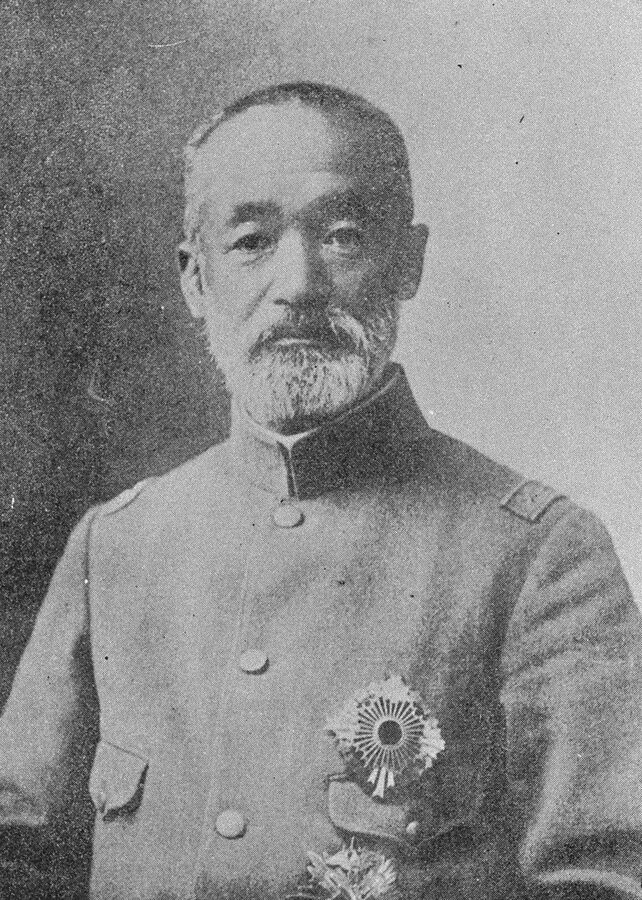
The regiment fought in the First Sino-Japanese War and against Russia, and in 1898 the headquarters of the new 12th Division went up on the castle’s inner enclosure. The following year the army sent its new chief medical officer for the division, a 37-year-old surgeon better known in Tokyo as the novelist Mori Ōgai. He regarded the posting as exile, and for nearly three years he made the best of it.
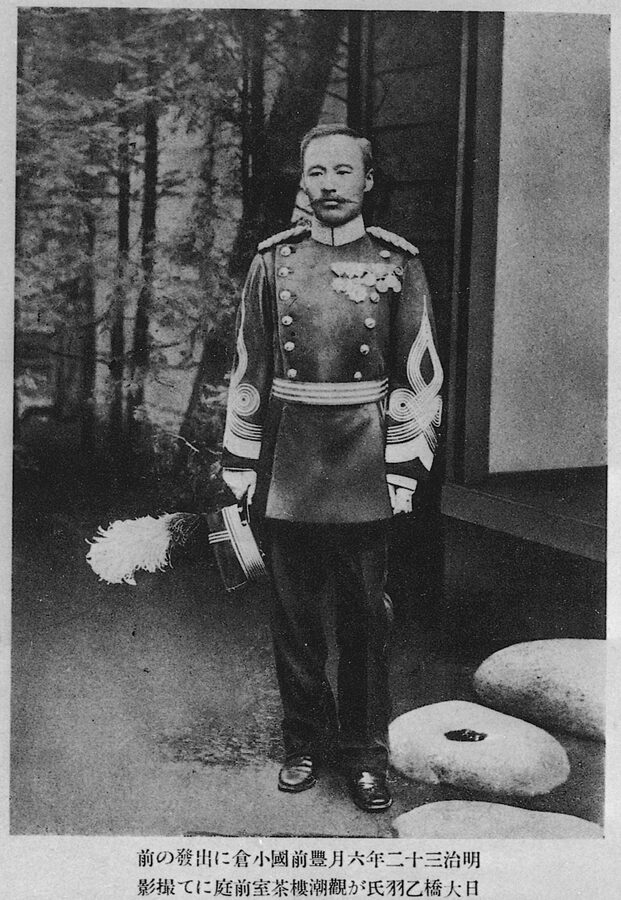
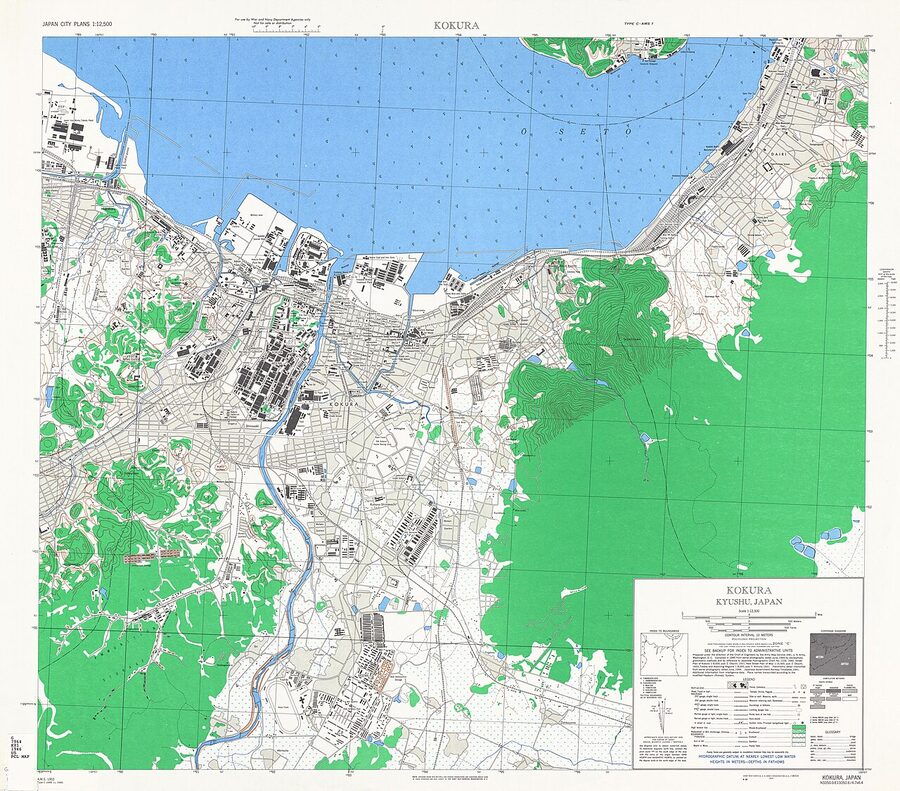
The Meiji era army stayed until the 1920s. Then the great earthquake of 1923 wrecked the army arsenal in Tokyo, and the government decided to rebuild it in Kokura, on the castle grounds. The regiment moved out, and by 1933 the Kokura Arsenal covered almost everything except the old inner enclosure: about 176,000 tsubo, nearly 60 hectares, with its headquarters roughly where the city’s central library stands now.
By the end of 1943 around 40,000 people worked there, many of them students drafted from their schools. They made rifles, machine guns, light tanks, anti-aircraft guns, shells and chemical munitions, and the arsenal was the country’s biggest maker of the paper balloon bombs that were floated across the Pacific towards North America. In the Shōwa era the old castle of the Hosokawa had become one of the largest weapons factories in Japan.
9 August 1945
The arsenal put Kokura on the American target list. In late July 1945 the orders for the atomic bombs named four cities: Hiroshima, Kokura, Niigata and Nagasaki. On 6 August, when the first bomb was dropped on Hiroshima, Kokura was the first alternative target.
On 9 August Kokura was the primary target. The B-29 Bockscar, flown by Major Charles Sweeney, took off from Tinian before dawn with the plutonium bomb on board and Nagasaki as the secondary target. The aircraft lost time waiting for a missing escort at the rendezvous over Yakushima, and by the time it reached the city the weather had changed.
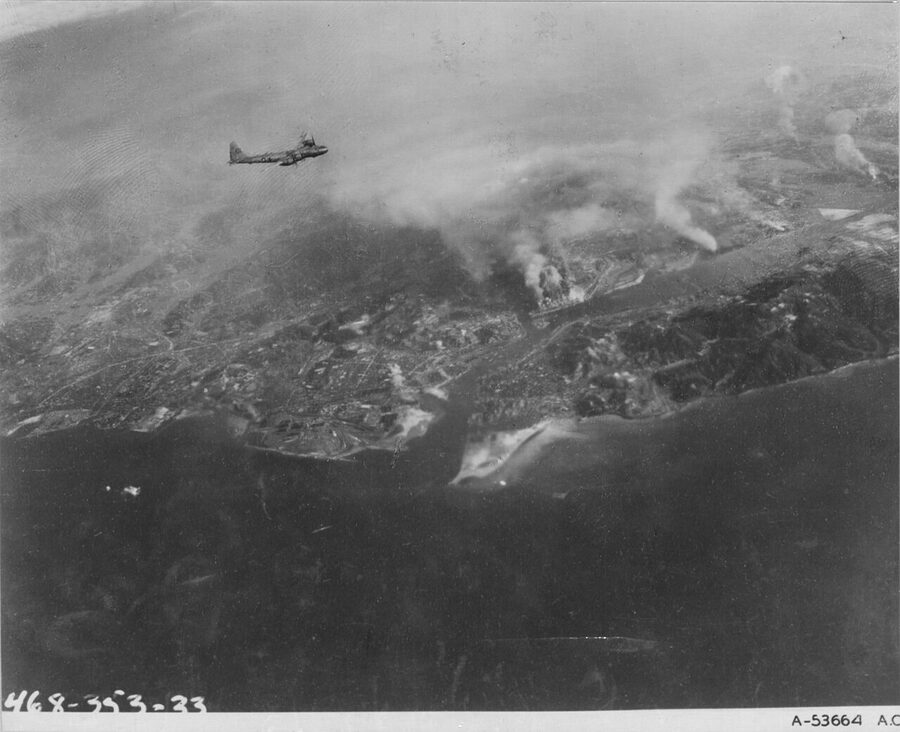
According to Japanese accounts, Bockscar began its run at about 9:40 and reached the arsenal at 9:44. The bombardier could not see the aiming point. Smoke from the previous day’s raid on Yawata and haze lay over the city, and workers at the Yawata steelworks later said that they had lit coal tar that morning to make a smokescreen when they heard aircraft were coming. American accounts estimate the cover at about 70 percent.
The crew made three runs over the city. Anti-aircraft fire grew heavier, and Japanese fighters took off from the airfields at Ashiya and Tsuiki. After about 45 minutes by Japanese accounts, or 50 by American ones, with fuel running low, the aircraft left the Kokura area at about 10:30 and turned south-west for Nagasaki.
Nagasaki was also under cloud. A gap opened over the Urakami valley, and the bomb exploded there at 11:02, about three kilometres from its planned aiming point. Nagasaki City gives 73,884 dead and 74,909 injured by the end of 1945. They included Mitsubishi workers, schoolchildren, conscripted Korean and Chinese labourers, Allied prisoners of war and the Catholic community of Urakami, whose cathedral was destroyed.
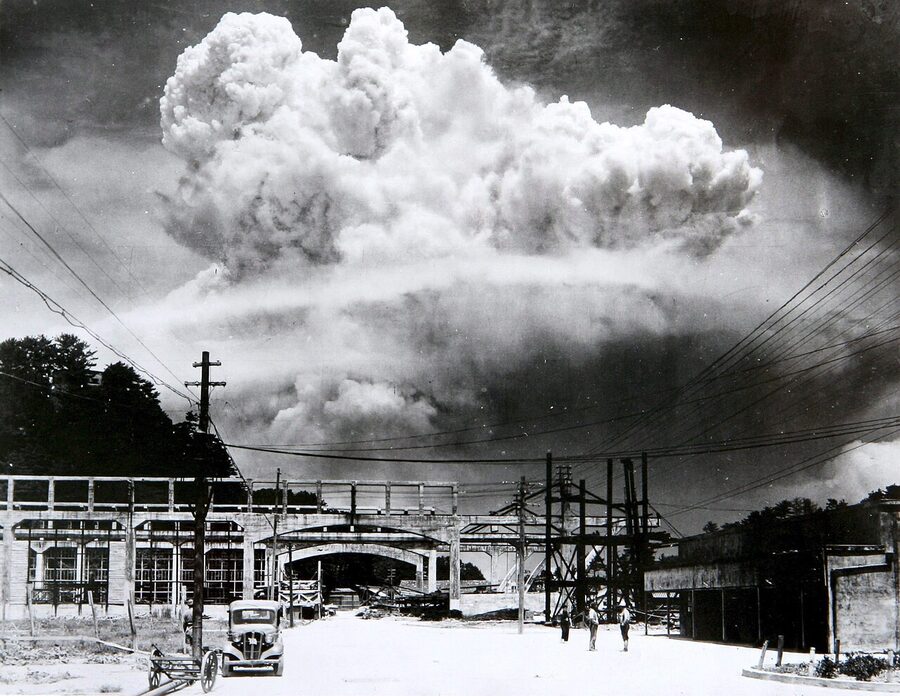
The people of Kokura did not know any of this at the time. Most learned after the war that the aircraft heard over the city that morning had been carrying the bomb. Japanese estimates suggest that a bomb on the arsenal would have caused damage across what is now Kitakyushu and over the strait into Shimonoseki.
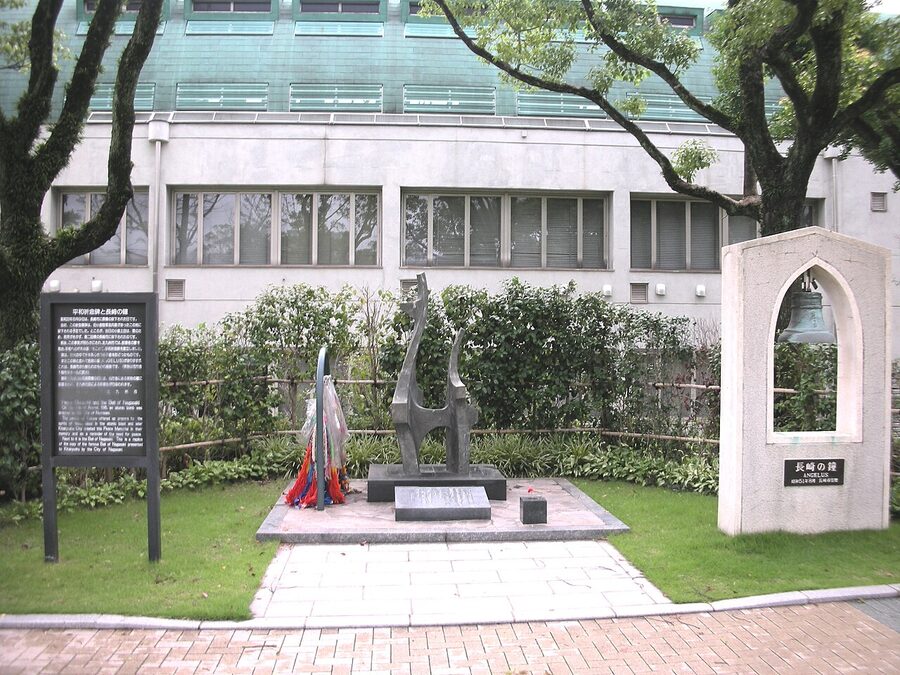
Since 1973 Kitakyushu’s own association of atomic bomb survivors has held a memorial ceremony every 9 August. It takes place beside a monument in Katsuyama Park, on part of the arsenal site. The city has been a co-host since 2008. At 11:02 they stand in silence, and the ceremony includes the ringing of a bell that Nagasaki gave to Kokura.
The castle that came back
The Americans took over the castle grounds in 1945 and stayed until 1957. When they left, the city set about rebuilding the keep, and that is where Fujioka Michio and the gables come in. The new keep opened in 1959, a concrete tower with a local history museum inside it, built on Tadaoki’s stone base.
The novelist Ryū Kankichi, a Kokura man, wrote that a gable-less keep would have been not only more accurate but better for tourism. He was right, and nobody listened.
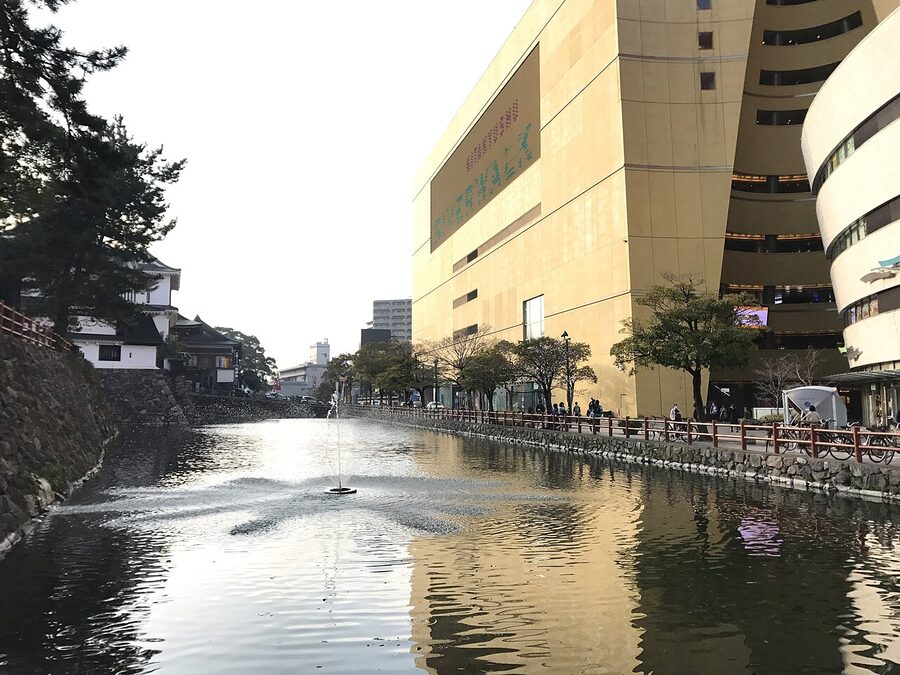
Since then the castle has been renovated repeatedly. In 1990 the interior became a hands-on museum, in 1998 the garden and the Matsumoto Seichō Memorial Museum opened alongside it, and in 2007 the roof was relaid with about 90,000 new tiles. The 2019 refit added a lift and turned the top floor into a café. It is now run as an entertainment venue as much as a museum, and the managers are cheerfully frank about it: they hold wrestling shows, staff in armour play Tadaoki, Gracia and Musashi, and the official English slogan is “Japan’s most exciting castle”.
It is not one of Japan’s 12 original castles and it has never pretended to be. Few sites in the long run of Japanese history have passed through so many hands: warlord, tea master, Tokugawa watchman, rebel army, Imperial army, arms factory, occupying force and city council. I think it is better than its reputation. The walls are real, the moats are real, and the story attached to the ground is one of the most remarkable in the country, which is more than you can say for a few keeps that are older.
Where to see Kokura Castle’s story today
Everything in central Kokura is walkable from the station, and you can see the castle, the garden, the shrine, the museums and the memorial in a long day. Tamukeyama and Fukuju-ji need a short taxi ride, and Ganryūjima needs a boat. If you want the whole sweep, give Kokura a day and Ganryūjima a morning.
The keep
The keep is a 15-minute walk from the south exit of JR Kokura Station, or about 10 from JR Nishi-Kokura. It is open every day, 9:00–20:00 from April to October and 9:00–19:00 from November to March, with last entry 30 minutes before closing; events sometimes change the hours, so check the castle’s own website the week you go. Admission is ¥500 for adults. A combined ticket for the keep and garden costs ¥700, and ¥900 adds the Matsumoto Seichō Memorial Museum, which is the ticket I would buy.
Start with the film on the first floor, about ten minutes long and subtitled. The second floor covers the Hosokawa and the Ogasawara, with a reconstruction of Tadaoki’s armour, a model of the original keep and a short film on the war of 1866. The third floor belongs to Musashi and Kojirō, the fourth hosts an escape game set in the fire of 1837, and the fifth has the view and the café.
From the top floor, on a clear day, you can see the strait and the hills of Shimonoseki where the Chōshū troops waited in 1866. On Saturday nights, outside winter, the café becomes a bar. I am not sure Tadaoki would have approved, but I suspect Tadazane, with his pickles, would have.
Kokura Castle Garden
The garden sits just below the keep on the site of Matsui Yasuyuki’s house and the later Ogasawara retreat. It is a stroll garden laid around a pond set unusually low, so you look down into the water, and a reconstructed samurai shoin hall hangs out over it. Admission is ¥500, or use the combined ticket, and the hours broadly follow the keep’s.
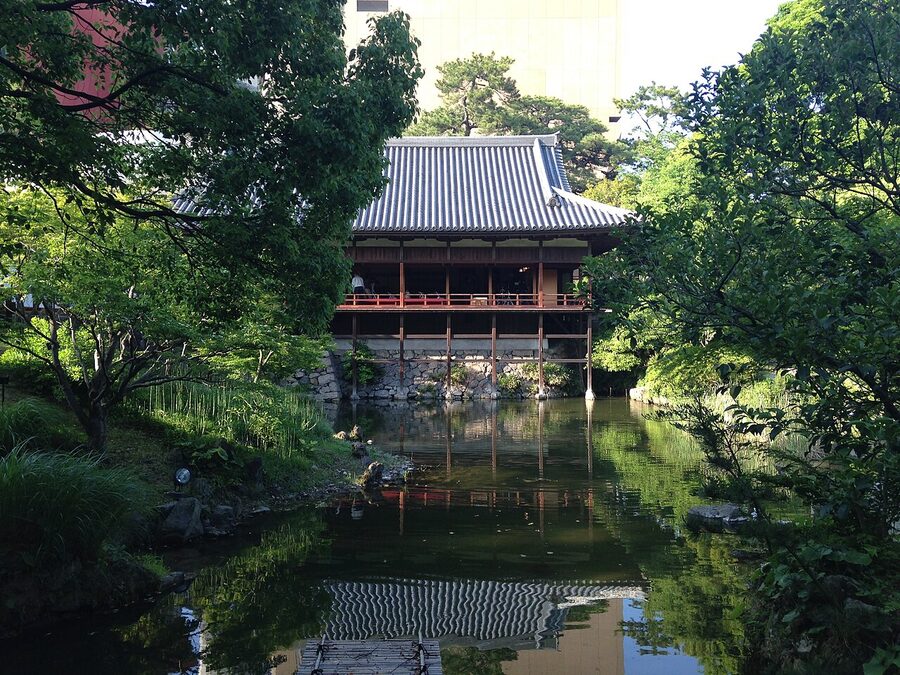
The garden is also the home of the Ogasawara school of etiquette, the house’s other legacy, with a small exhibition about it. Tea and a seasonal sweet are served almost every day, 10:00–16:00, without a booking, at a table-and-chairs tea room where a teacher makes the tea in front of you; the garden listed it at ¥2,000 when I checked, with a seat on the shoin veranda at ¥1,500. By the standards of my piece on Japanese gardens this is a modern reconstruction rather than a survivor, and it is better than that sounds.
Yasaka Shrine
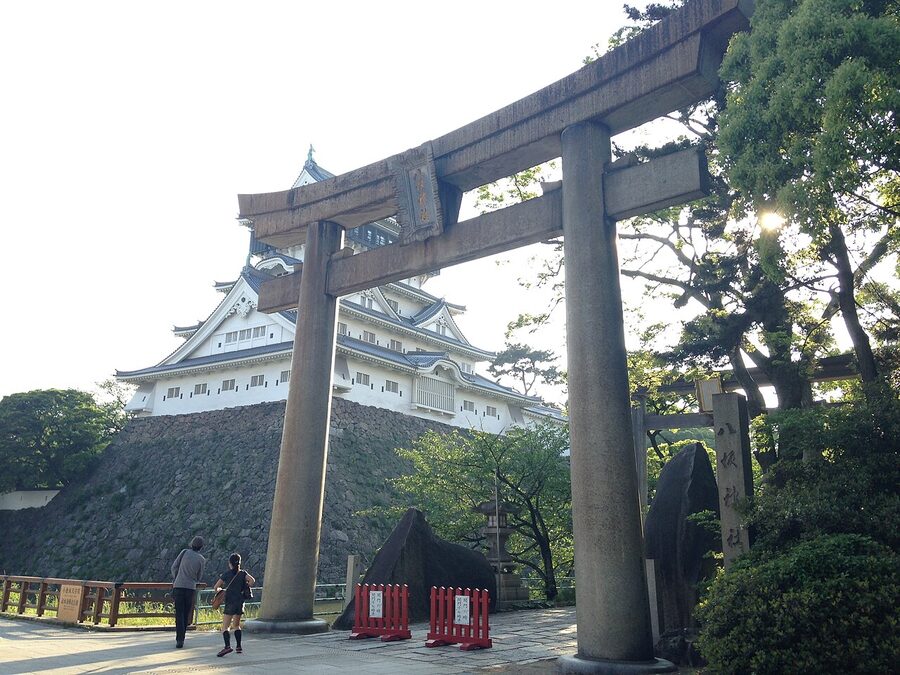
The shrine moved into the castle grounds in 1934 from its old site in the town. It is free and always open. Stand at the right spot by the stone torii and the keep sits inside the frame; the castle’s managers call it one of the few places in Japan where you get a castle and a torii in one photograph, which I doubt, but it is a good photograph.
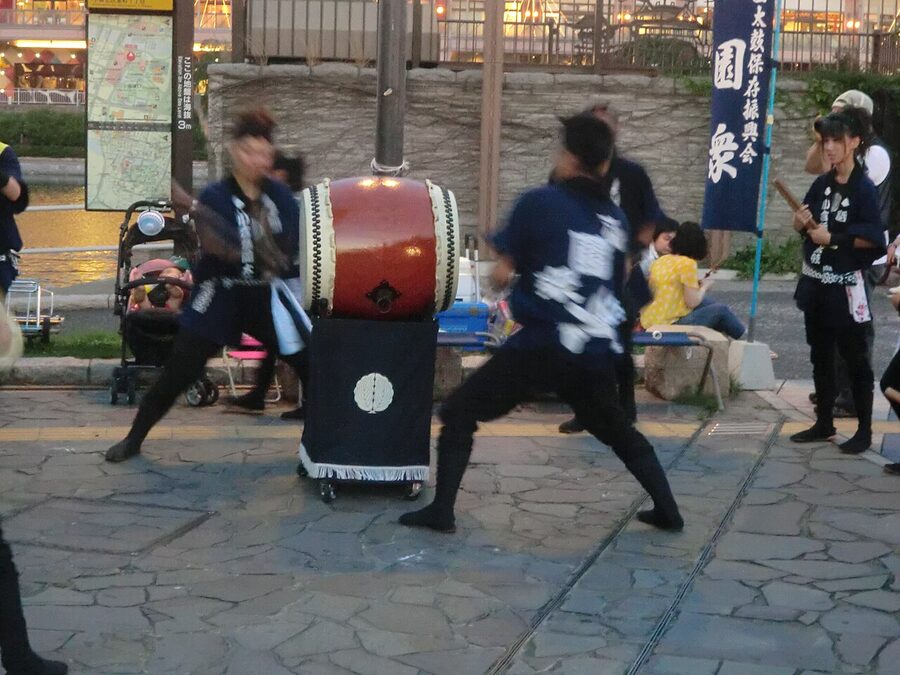
This is the shrine whose festival Tadaoki founded, and on the third weekend of July it hosts the Kokura Gion Daiko. The drums are mounted on carts and struck on both faces at once by two drummers, with hand cymbals keeping the rhythm. The festival was made famous by Muhōmatsu no isshō, the story of a Kokura rickshaw man, filmed in 1943 and again in 1958 with Mifune Toshirō, when it won the Golden Lion at Venice.
Matsumoto Seichō Memorial Museum
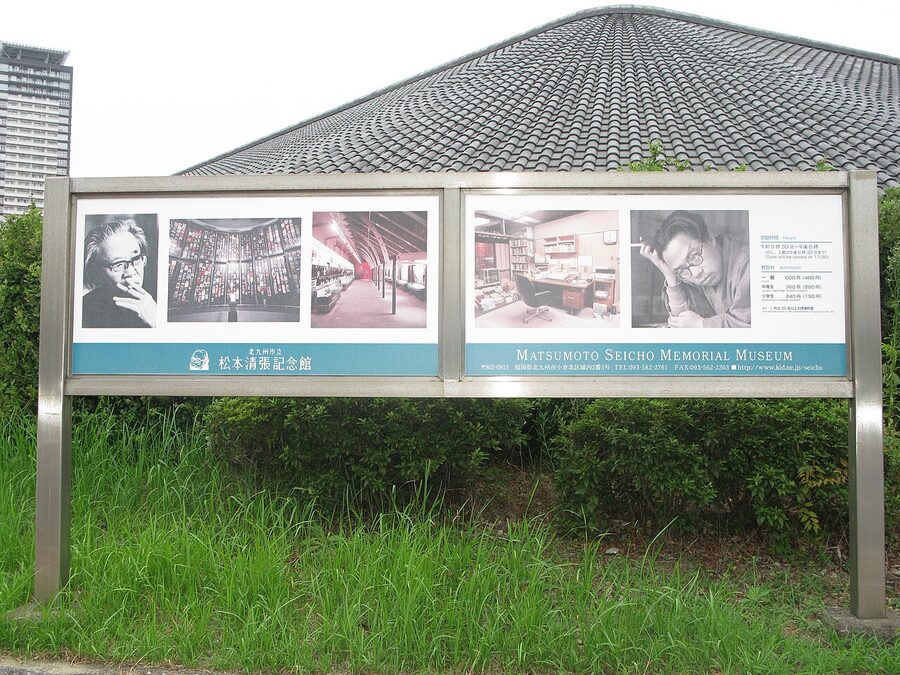
At the south-west corner of the castle grounds stands the museum of Matsumoto Seichō, who grew up in Kokura and became one of Japan’s most widely read crime writers. Its centrepiece is a faithful recreation of his Tokyo study, library and reception room, furnished with his own things. Admission is ¥600 (or the combined ticket), and it is open 9:30–18:00 with last entry at 17:30; check its site for closing days.
The Nagasaki memorial in Katsuyama Park
Katsuyama Park lies along the castle’s south and west sides, on part of the arsenal site. The memorial to the victims of the atomic bomb stands in the plaza on the south side of the Central Library. It is free and open at all hours. The ceremony on 9 August starts at 10:40 and anyone may attend; the silence is at 11:02.
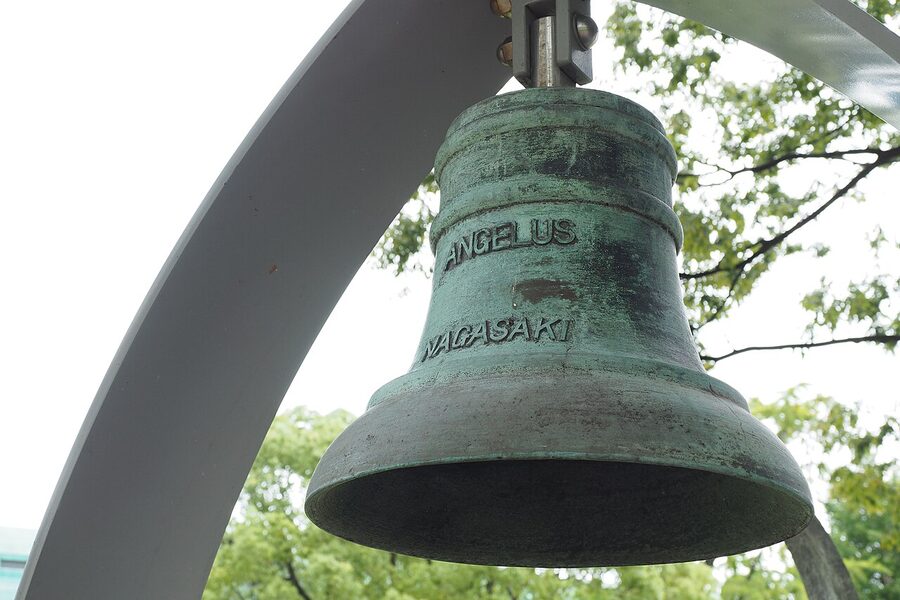
A few minutes’ walk away is the Kitakyushu City Peace Museum, opened in 2022, which covers the city’s war: the arsenal, the air raids on Yawata, the morning of 8 and 9 August 1945 and the years of rebuilding. It is open 9:30–18:00 (last entry 17:30), closed on Mondays (Tuesday when Monday is a holiday), and costs ¥200 for adults. I would go there before the memorial rather than after.
Tamukeyama and the Kokura hibun
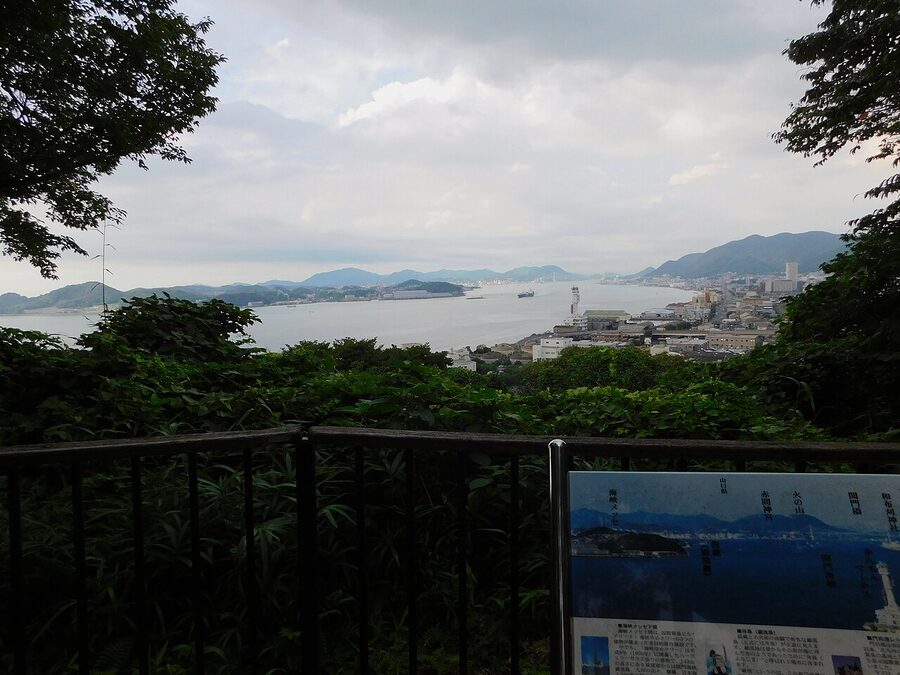
Tamukeyama is a wooded hill 76 metres high in Akasaka, east of the centre on the road towards Moji, about ten minutes from Kokura Station by taxi. This is also the Akasaka of the 1866 fighting. The park is free, and the walk up is short.
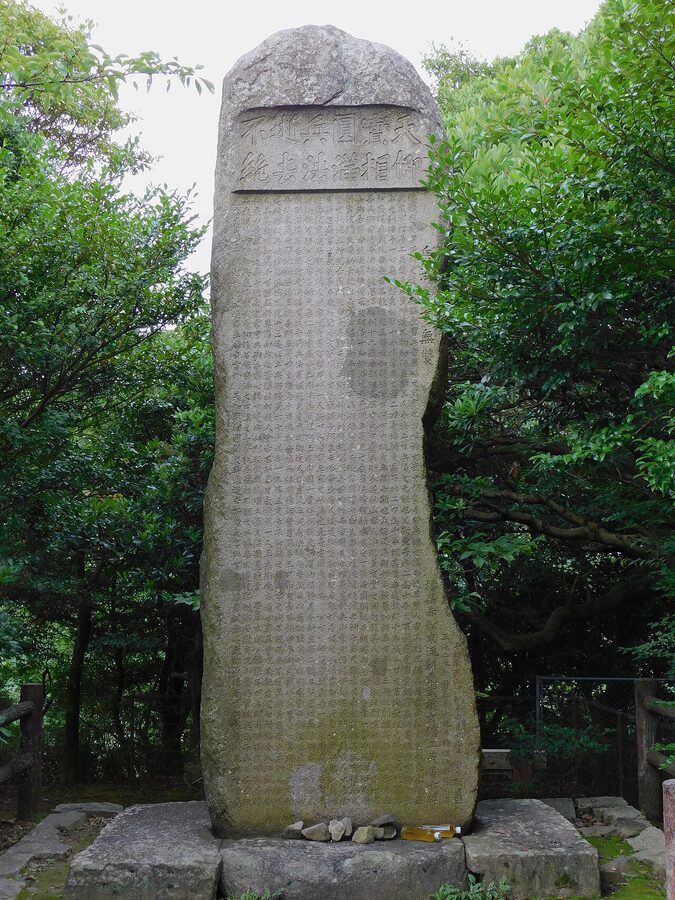
At the top are Iori’s stone to Musashi, a smaller memorial to Kojirō, and the graves of Iori and his descendants. From the lookout you can see down the strait to Ganryūjima, the flat island with the shipyard cranes beyond it, which is the reason Iori chose the hill.
Ganryūjima by ferry
The island is reached by the Kanmon Kisen ferry, about ten minutes from Karato pier in Shimonoseki, with some sailings from Moji-kō on the Kokura side. Boats run through the day, roughly 9:00 to the mid-afternoon; the Shimonoseki tourist office lists the return fare from Karato at ¥800 for adults, but check the operator’s own timetable before you go. There are toilets on the island, and nothing else: no shop, no vending machine, no bin.
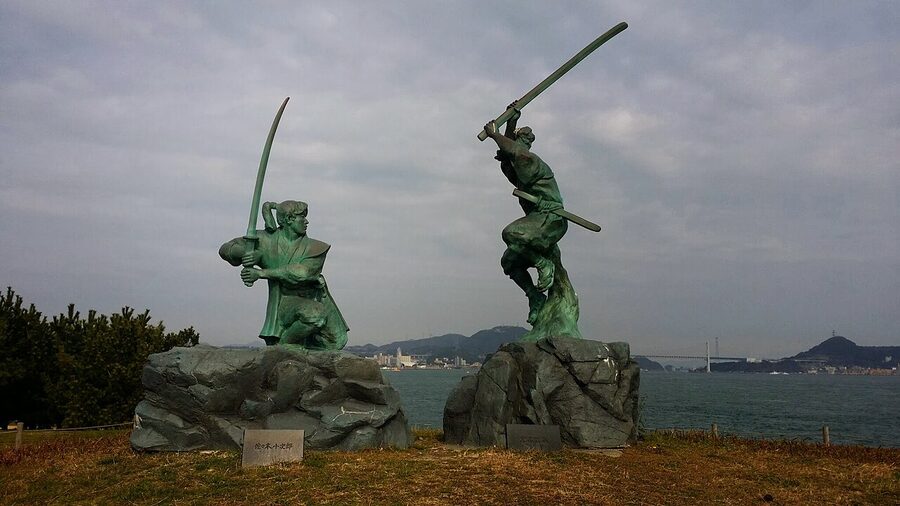
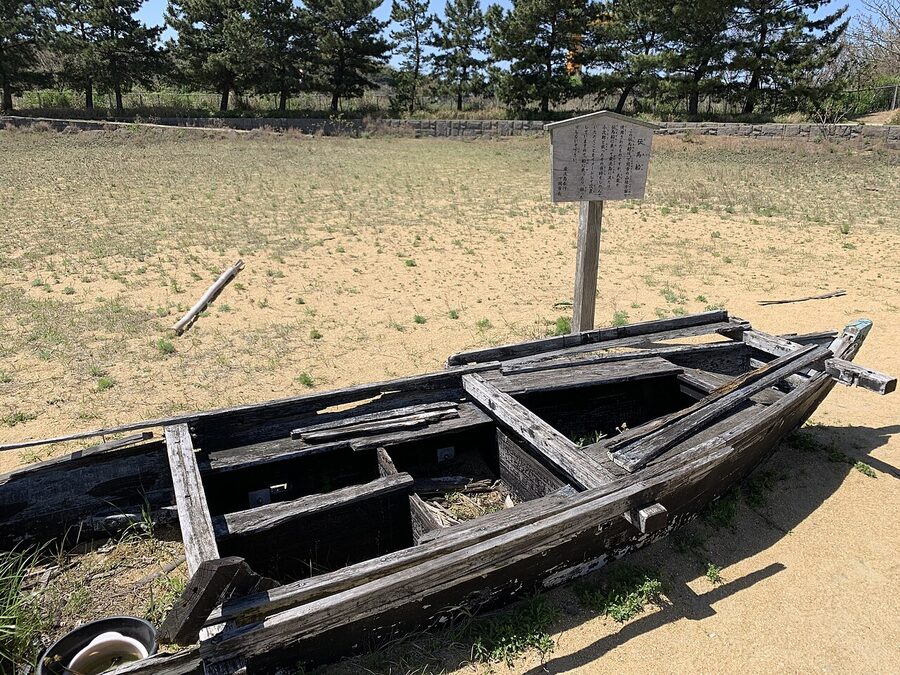
Part of the island still belongs to the shipyard and is fenced off, and you can walk the rest in under an hour. Go early or late, when the ferries are less full and the strait is busy with ships. For the duel itself and everything else in Musashi’s life, see my piece on Musashi.
Fukuju-ji
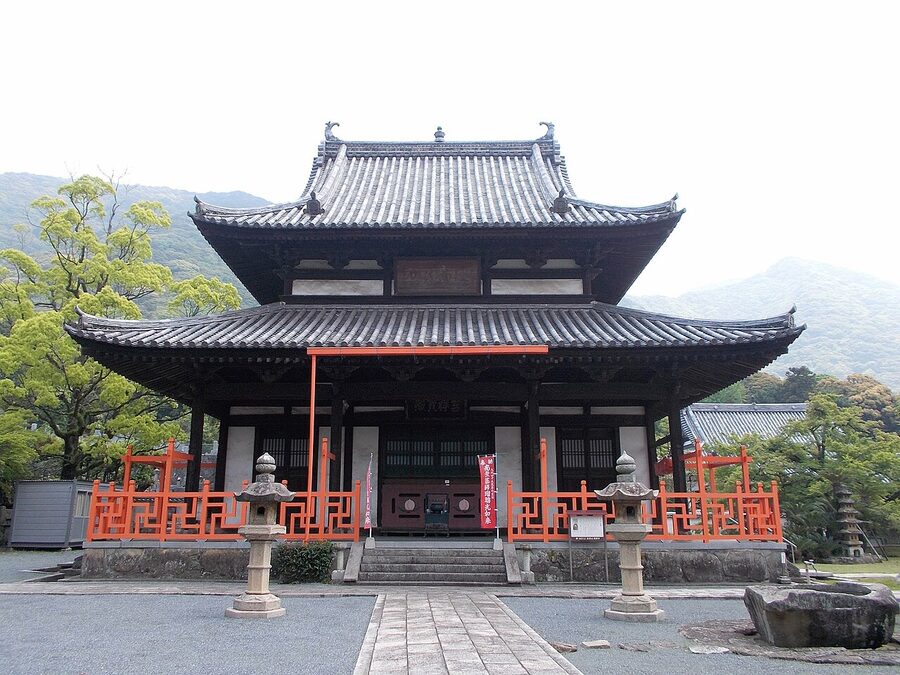
The Ogasawara family temple is on the slope of Adachi-yama in Jusan-machi, east of the centre, and a taxi from Kokura Station takes about ten minutes. The Chinese-style halls, gates and bell tower are among the finest Ōbaku buildings in Kyushu, and the place is almost empty on most days. Opening arrangements vary, so check with the temple before you set out.
Mori Ōgai’s house
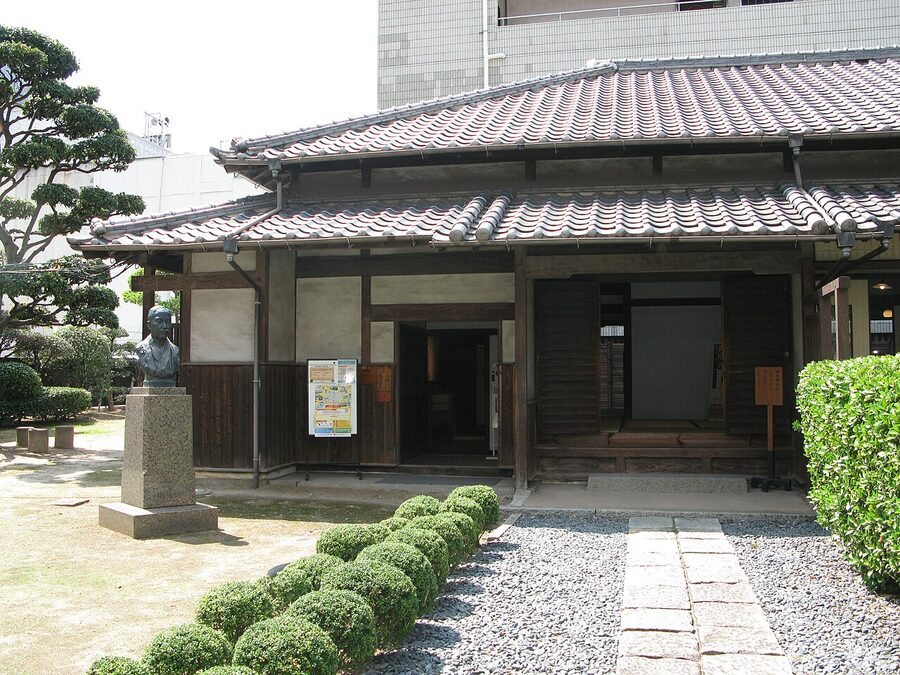
Ōgai’s first Kokura house is a ten-minute walk from Kokura Station, in Kajimachi. It is a plain single-storey house with a small garden, restored by the city in the 1980s and free to enter. It is generally open 10:00–16:00 and closed on Mondays; the city publishes the other closing days. It takes 15 minutes, and it is the best place I know to imagine the Meiji army’s Kokura.
The drum in Shimonoseki
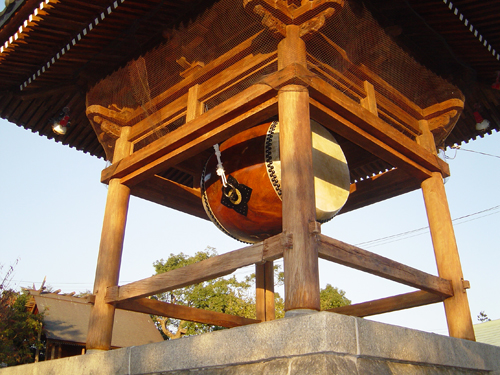
If you are crossing to Ganryūjima from Karato anyway, the Itsukushima Shrine in Shimonoseki is within walking distance, and its drum hall holds the great drum of Kokura Castle. The hall is built so the drum can be seen from outside, and the shrine charges nothing to walk in. Go and look at it, then look back across the water at the castle it came from.
I keep coming back to the gables because they are such a Kokura sort of compromise. The city got its tower back, roughly, with features the original never had, because someone thought tourists needed them.
The real castle is in the walls and the moats, in a drum across the strait and a hill full of Miyamoto graves, and in a quiet plaza beside a library where, once a year at two minutes past eleven, a bell is rung for people who died in another city. Go and see the keep. Then walk round the corner to the bell, and stand there for a minute.