Philipp Franz von Siebold got past the interpreters at Dejima in August 1823 by telling them he came from the mountains of Holland. His Dutch had a German accent, because he was German, and the men whose hereditary job was to speak Dutch better than anyone else in Japan had noticed. So he explained that he was a yama-oranda-jin, a mountain Dutchman, and that the upland dialect sounded a little strange down on the coast. The Netherlands has no mountains, and the interpreters, who had never been allowed to go and look, let it pass.
I think about that exchange every time I cross the bridge onto Dejima, because it is the whole island in one conversation. For more than two centuries a fan of reclaimed mud in Nagasaki harbour held the only Europeans Japan was prepared to tolerate, and the arrangement ran on fictions that everyone agreed not to examine. The “Dutch” factory’s three most famous doctors were a German, a Swede and another German. American ships came in flying the Dutch flag, a British frigate did the same with worse intentions, and every year or so the chief of the island crawled across the floor of Edo Castle on his hands and knees to thank the shogun for the privilege of being locked up.
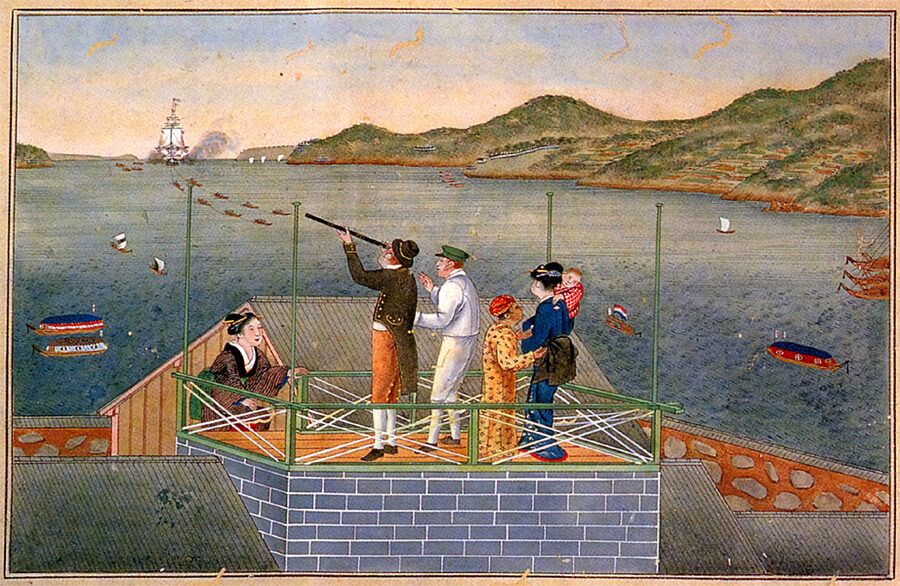
In This Article
- A fan built for someone else
- Moving day from Hirado
- Inside the fence
- The men who spoke Dutch
- Crawling like a crayfish
- Three doctors, none of them Dutch
- Engelbert Kaempfer
- Carl Peter Thunberg
- Philipp Franz von Siebold
- The maps
- What went in and what came out
- A flag with no country
- The island stops being an island
- Where to see Dejima today
- Dejima itself
- Siebold Memorial Museum, Narutaki
- Nagasaki Museum of History and Culture
- Suwa Shrine and Kunchi
- Kōtai-ji
- Hirado Dutch Trading Post
- The Nagasakiya site in Tokyo
- Back to the mountains of Holland
A fan built for someone else
Dejima was not made for the Dutch. It was made for the Portuguese, who had been trading at Nagasaki since the early 1570s, carrying Chinese silk from Macau and taking Japanese silver back. The trade was too profitable to give up, and the priests who travelled with it were another matter. Toyotomi Hideyoshi had expelled the missionaries in 1587 and crucified the twenty-six martyrs on a Nagasaki hillside ten years later, and the Tokugawa shogunate had been tightening the rules on Christianity ever since Tokugawa Ieyasu banned it nationwide in 1614.
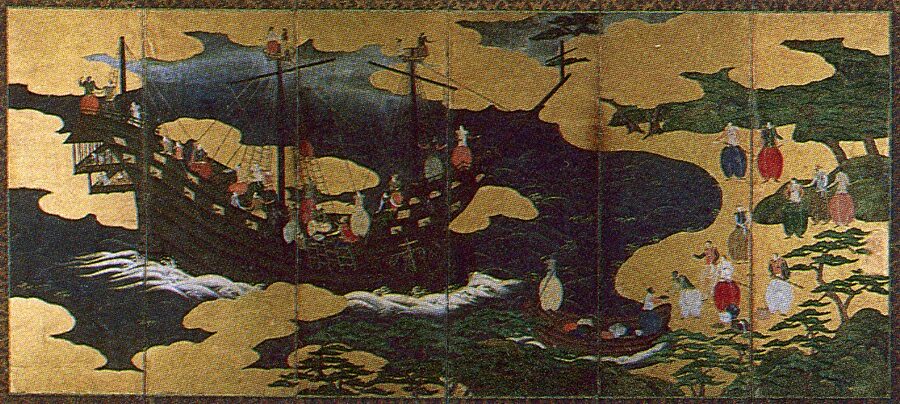
The order to build came in 1634, under the third shogun, Iemitsu, and the work was paid for by about twenty-five wealthy Nagasaki merchants. Japanese accounts say the shogunate covered the gate, the bridge and the walls, and the merchants everything else, in return for the rent the foreigners would be made to pay. Most reference works give 1634 for the start and 1636 for completion, though respectable Japanese dictionaries also give 1635, or even 1636, as the start. The Portuguese were moved in during 1636.
The shape has its own small controversy. Siebold repeated a story that when officials asked Iemitsu what form the island should take, the shogun simply held out his folding fan. Japanese scholars prefer a curved sandbar at the mouth of the Nakashima River that the builders used as a foundation, or a seaward wall bent to take the waves. The sandbar is almost certainly right; the fan is the better story, and Siebold, as you will see, knew the value of a good story.
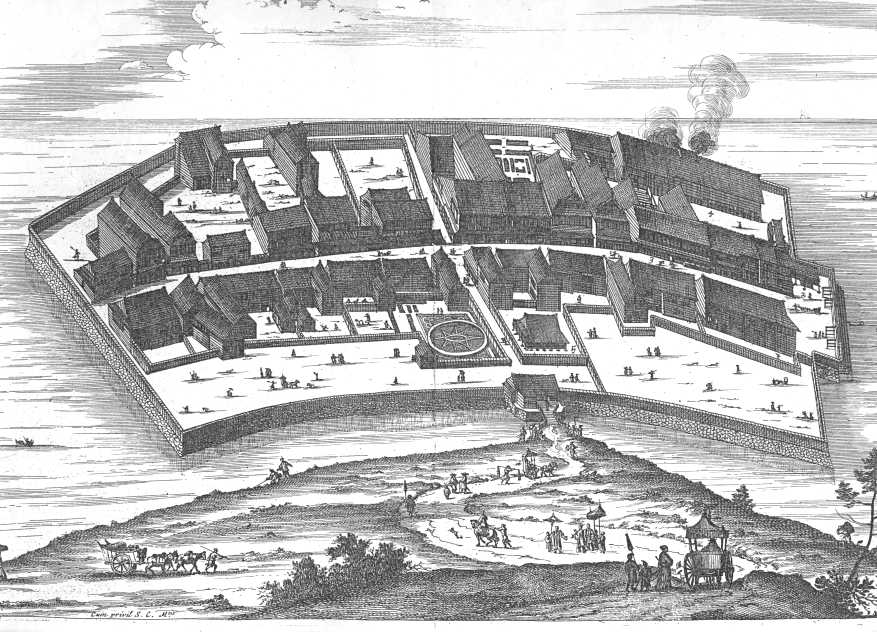
How small it was depends on whom you ask. Japanese sources most often give 3,969 tsubo, which converts to about 1.3 hectares, though 1.5 hectares and 14,000 square metres are also quoted, and English-language accounts usually give about 120 metres by 75. Any way you count it, you could walk the long side in two minutes, which tells you something about the Edo era attitude to foreigners.
The Portuguese had barely three years in it. In December 1637 the peasants of Shimabara and Amakusa rose in the largest revolt of the period, over taxes and famine as much as faith, but under Christian banners. The Shimabara Rebellion was crushed in the spring of 1638, the surviving faithful went underground as the Hidden Christians, and the shogunate drew its conclusion about the people who had brought the religion.
In 1639 the Portuguese were ordered out. When a delegation came from Macau the following year to plead for the trade, sixty-one of its members were executed and the rest sent home to report it. Dejima stood empty, the merchants who had built it were holding an expensive island with no tenants, and that, more than any grand policy, is how the Dutch ended up living there.
Moving day from Hirado
The Dutch had been in Japan for forty years by then, and had been comparatively free. Their ship the Liefde had drifted into Bungo in the spring of 1600, half a year before Sekigahara, with an English pilot aboard, William Adams, who became a confidant of Ieyasu. The Dutch East India Company, the VOC, received a trading licence in 1609 and set up its factory on Hirado, an island off the north-west tip of Kyushu, under the protection of the Matsura lords. Its first chief, Jacques Specx, had seventy-two houses cleared to make room.
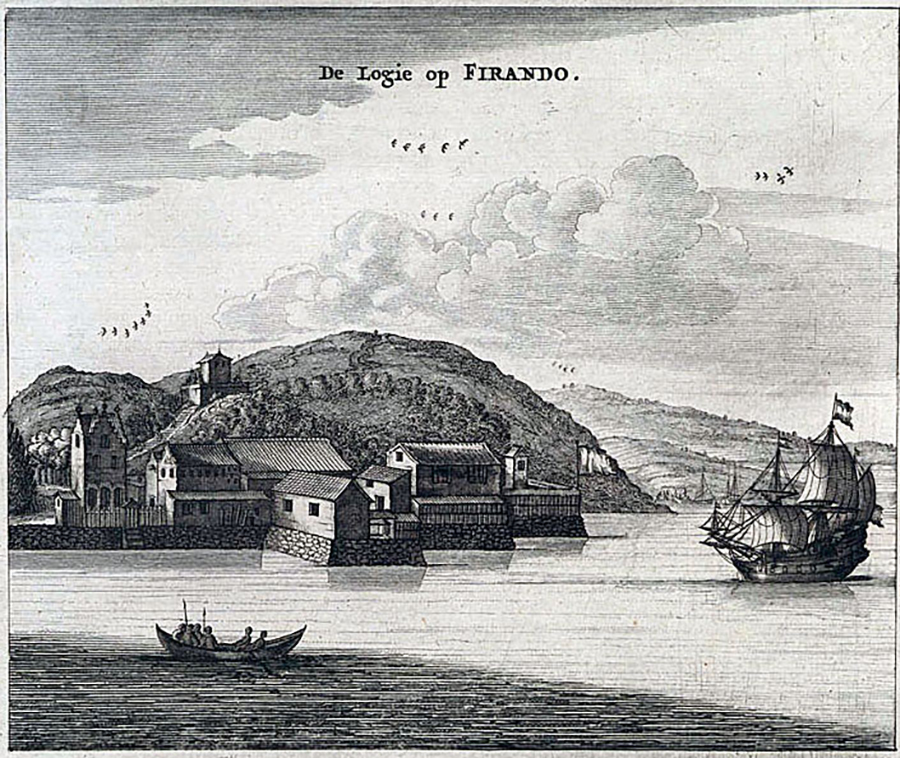
What ended Hirado was a date. In 1637 and 1639 the company built handsome stone warehouses and carved the year on the gables in the Christian reckoning. In 1640 the shogunate seized on this and ordered the buildings pulled down, which the chief, François Caron, accepted without argument.
There was more behind it than a carved date. Japanese historians point out that Matsudaira Nobutsuna, the senior councillor who had commanded at Shimabara, noticed that the Hirado domain was growing rich and well armed on the Dutch trade, and the shogunate did not like any daimyo getting rich and well armed. Moving the Dutch to Nagasaki put the trade under a magistrate answerable to Edo, and gave the Nagasaki merchants their rent back.
The move came in 1641. English-language lists usually name Caron as the first chief on Dejima, but Japanese reference works give the honour to his successor Maximiliaan le Maire, who supervised the actual move. Le Maire noted on 10 June 1641 that the warehouses were small but that seven houses and eight storehouses would do, and he talked the rent down from the eighty kan of silver the Portuguese had paid to fifty-five.
Inside the fence
From then until the 1850s, the Dutch could not leave the island without permission, and Japanese could not enter it without business there. Engelbert Kaempfer, who lived on Dejima in the 1690s, called it a national prison, and the phrase stuck. It is not quite fair: prisoners do not generally have servants, a billiard table and a cook.
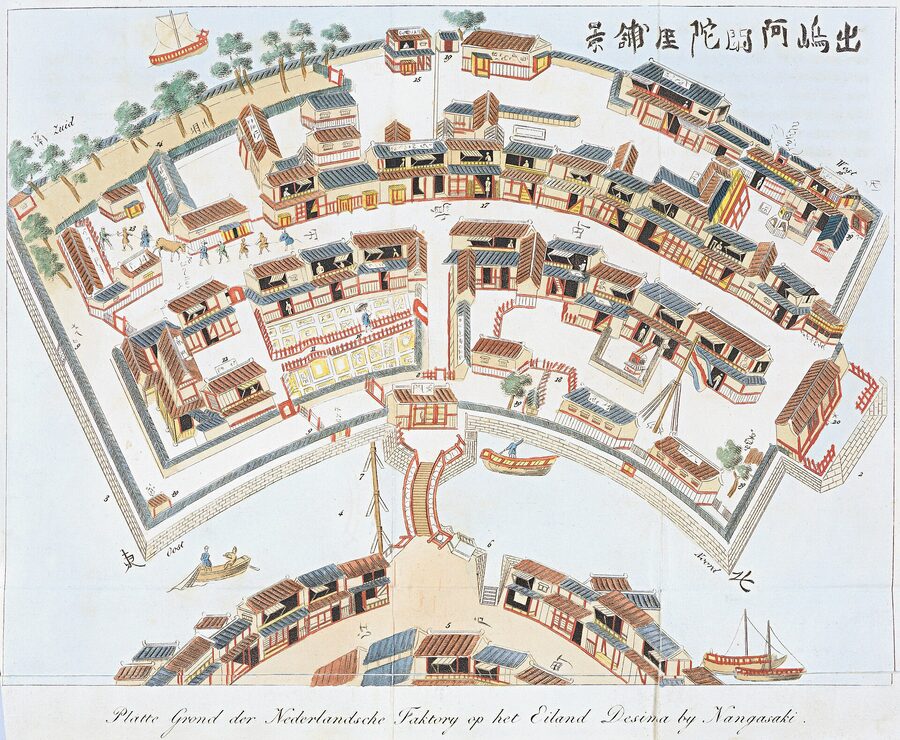
By the end of the Edo period about sixty-five buildings stood on the island: the chief’s residence, houses for his deputy and clerks, a kitchen, the interpreters’ office, the Japanese officials’ quarters, a garden and a long run of numbered warehouses. Japanese carpenters built them in Japanese style, with plaster walls, tiled roofs and tatami on the floors, and the Dutch carried in chairs, tables and beds. The mixture is the first thing you notice inside the rebuilt houses.
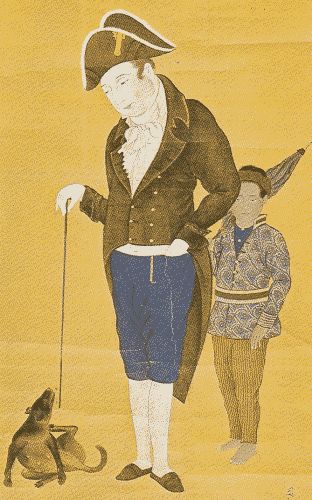
Outside the trading season the Europeans numbered about fifteen: the chief, whom the Japanese called the kapitan after the Portuguese word, a deputy, a warehouse master, a few clerks, a doctor, assistants, a cook and a carpenter, plus Javanese and Malay servants who were often in practice enslaved. The chief was supposed to be replaced every year so that no Dutchman put down roots. Like most Dejima rules, this one bent whenever events in Europe made it impossible to keep.
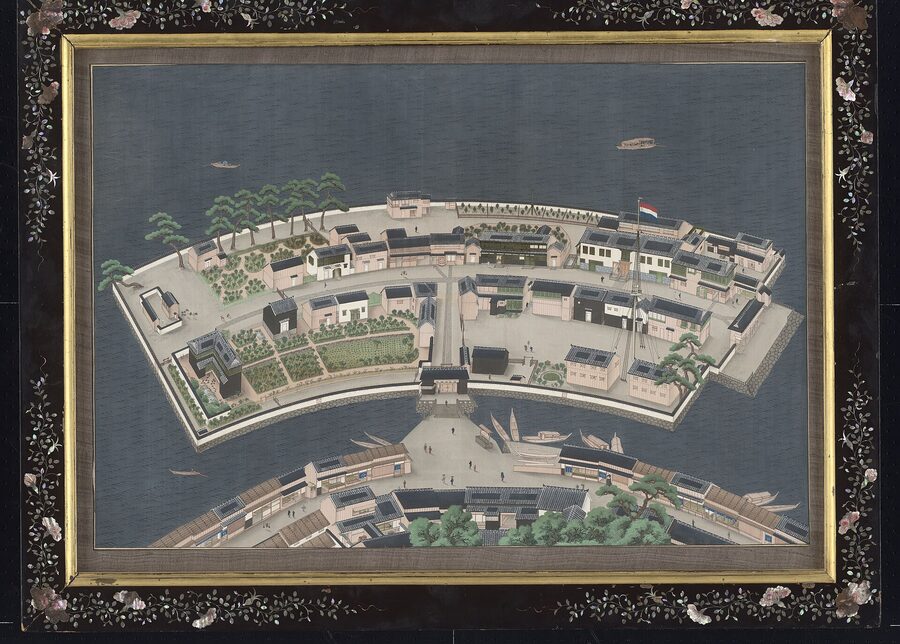
The Japanese side of the island was far larger. A resident headman, the Dejima otona, supervised the trade, the staff and the passes for the gate, with about forty men under him, and on top of that came the interpreters, gatekeepers, night watchmen, fire wardens, buyers, cooks and boatmen. The Dutch paid for every one of them. The notice board at the gate kept out women other than courtesans, monks, beggars and boats, which meant the courtesans of Maruyama, Nagasaki’s licensed quarter, were the only Japanese women who could stay.
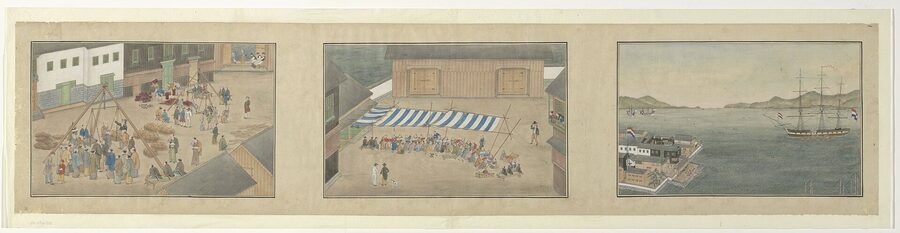
The ships came with the summer monsoon from Batavia, arriving in July or August. Officials took their guns, their sails and anything that looked like a religious book, and kept them until the ships were cleared to leave about four months later. In all, 606 Dutch ships reached Dejima between 1641 and 1847, from seven or so a year at first to two a year after 1715, and in 1790 just one.
They brought in Chinese silk, Indian cottons and medicines at first, and later sugar, sappanwood for dye, cloves, deer hides and rayskin for sword grips, as well as the books, instruments and curiosities that made Dejima famous. They took out Japanese copper above all, cast into bars and weighed and packed on the island, with camphor, lacquer and porcelain. On top of the company’s business, each employee had a private allowance to trade on his own account, with the interpreters as brokers. That side trade moved most of the more than 10,000 Western books sold into Japan between the late 18th and early 19th centuries.
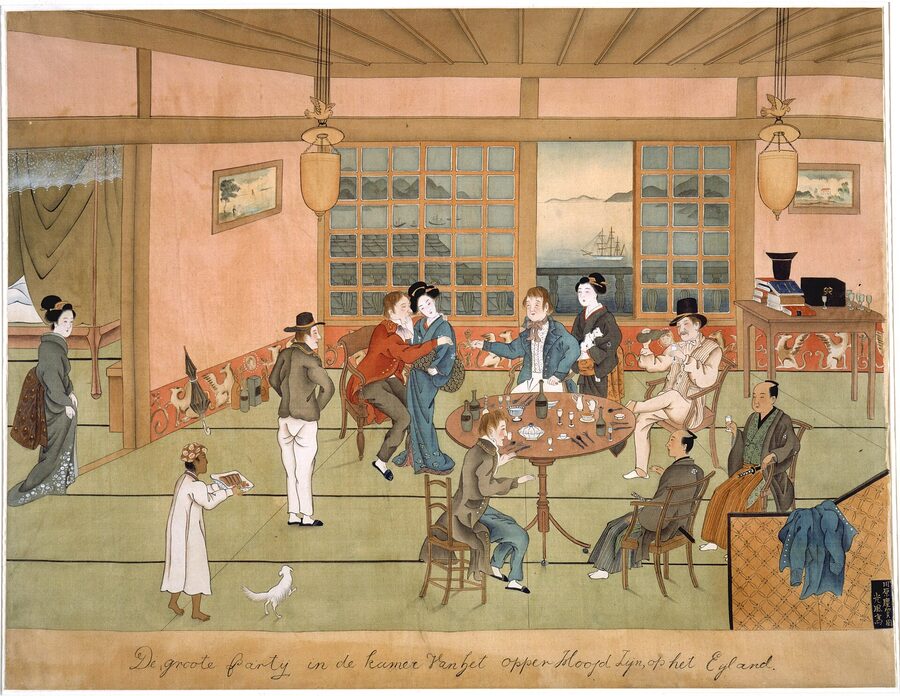
That New Year dinner, held by the Western calendar, became known as Oranda shōgatsu, Dutch New Year. By the 1790s the Dutch-studies scholar Ōtsuki Gentaku was hosting his own version in Edo, a Western-style banquet to welcome a year in a calendar his government did not use.
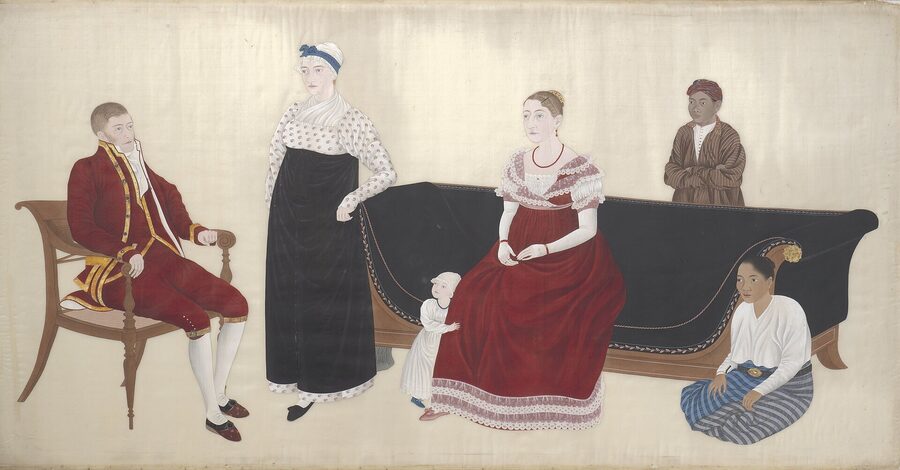
The rules on women had one celebrated test. In 1817 the new chief, Jan Cock Blomhoff, arrived with his wife Titia, their infant son Johannes and a Dutch nursemaid, hoping the shogunate would make an exception. It did not, and the family was sent home after sixteen weeks. In that time, every painter and doll-maker in Nagasaki seems to have taken Titia as a subject.
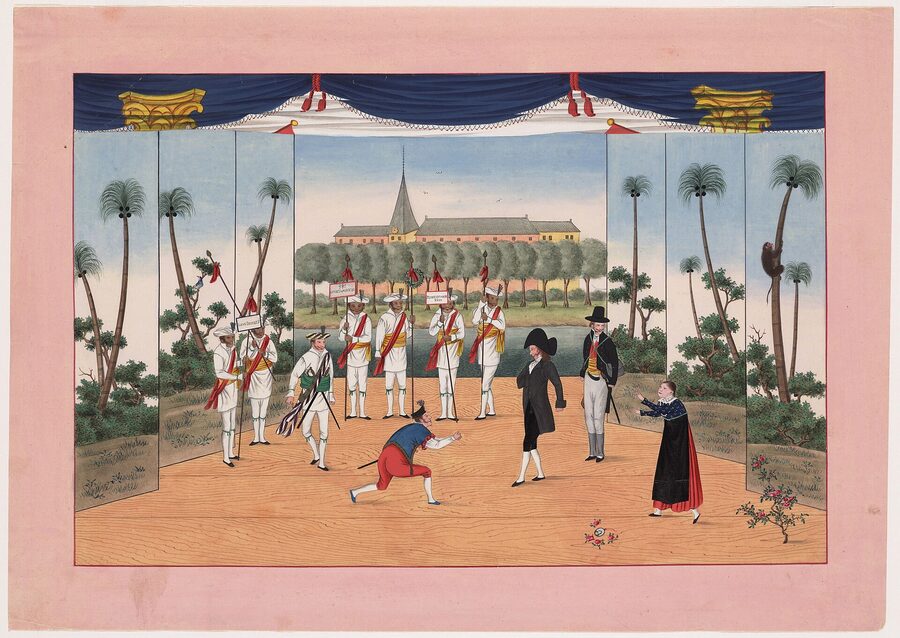
Blomhoff found other ways to pass the time. In October 1820 he staged two evenings of theatre for the outgoing Nagasaki magistrate, Tsutsui Masanori, and after the interval the Dutch residents performed Egidio Duni’s comic opera Les Deux Chasseurs et la Laitière. These are generally counted as the first opera performances in Japan. They took place, I would like you to remember, in a prison.
The men who spoke Dutch
None of it worked without the interpreters, the Oranda tsūji. They began as Portuguese interpreters, followed the trade to Dejima in 1641, and became a hereditary corps of about thirty families, the Motoki, Yoshio, Nishi, Narabayashi, Shizuki and Namura among them. By the end of the period there were about 140, ranked in thirteen or fourteen grades from apprentice to senior interpreter. Their salaries were modest, their brokerage income was not, and the families held on to the job for two hundred years.
At first they were not supposed to read Dutch books at all. That changed in the 1720s, when the eighth shogun, Yoshimune, allowed Western books that had nothing to do with Christianity, and the interpreters became the first generation of Japanese scholars of Western science. Yoshio Kōgyū learned surgery from the factory doctors and ran a large school of his own; Motoki Ryōei put the Copernican system into Japanese.
One of them gave Japan a word. In 1801 a retired interpreter, Shizuki Tadao, translated a chapter of Kaempfer’s book defending Japan’s policy of keeping foreigners out, and needing a short title, he settled on sakoku-ron, “on closing the country.” The word sakoku, which everyone now uses for the whole policy, was coined by a Nagasaki interpreter translating a German doctor more than 160 years after the policy began.
The other great product was news. Each year the chief had to give the magistrate a report on the state of the world, which the senior interpreters translated and sent to Edo. These fūsetsugaki, reports of rumours, were for two centuries the shogunate’s main source on European wars and foreign fleets, so the Tokugawa knew more about the outside world than they are given credit for. They knew what the Dutch wanted them to know, which is not the same thing.
Crawling like a crayfish
Once a year from 1633, the chief went to Edo to thank the shogun for the trade and bring presents. After 1790, when the trade was cut by half, the journey was made every four years; some Japanese reference works say every five, which may be the same interval counted the Japanese way, including both ends. Japanese sources count 166 journeys by 1850, while one widely used Japanese encyclopedia gives 116, and I have not been able to establish which is the misprint.
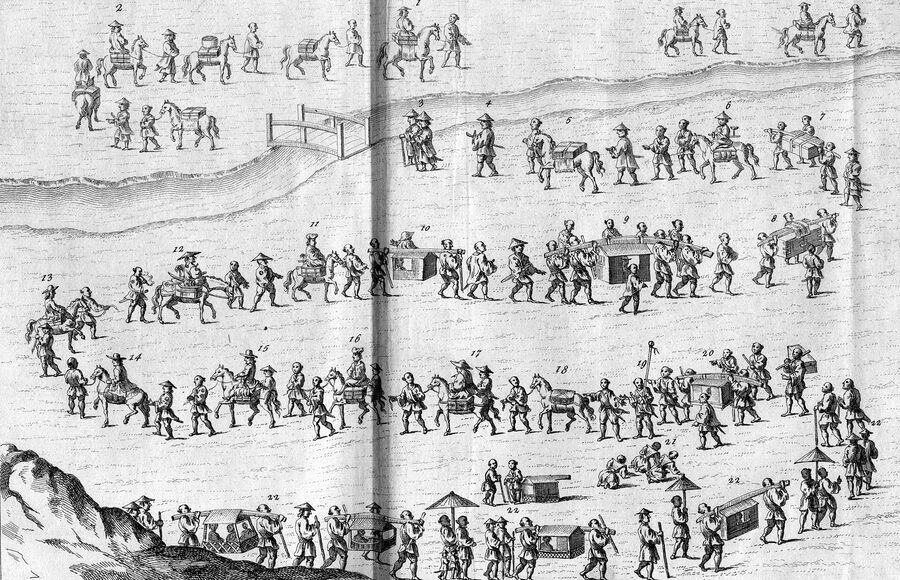
The round trip took about ninety days: overland to Shimonoseki, by sea through the Inland Sea to Muro or Hyōgo, and along the Tōkaidō from Osaka and Kyoto, staying in the official inns the daimyo used. The comparison is not idle. The court journey was a foreign version of sankin-kōtai, the alternate attendance that tied every daimyo to Edo, and the shogunate used both processions to show the roadside crowds who was in charge.
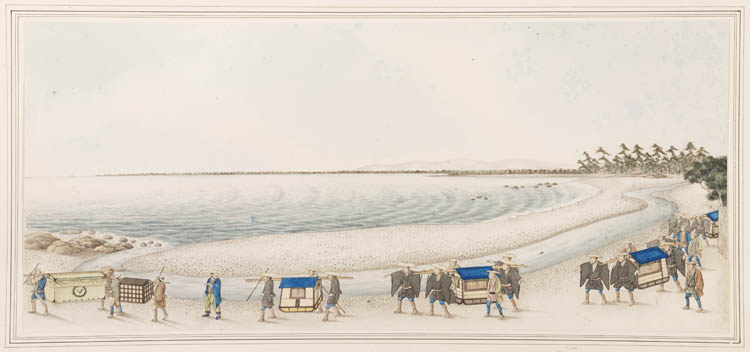
The party was never alone. Two inspectors from the magistrate’s office led it, the senior interpreter handled the money, and the scribes, cooks and porters were every one of them a pair of eyes. In Kyoto, though, the Dutch stayed at an inn called the Ebiya, too small to hold officials as well, where they reportedly called in geisha and behaved badly. The innkeepers’ complaints survive.
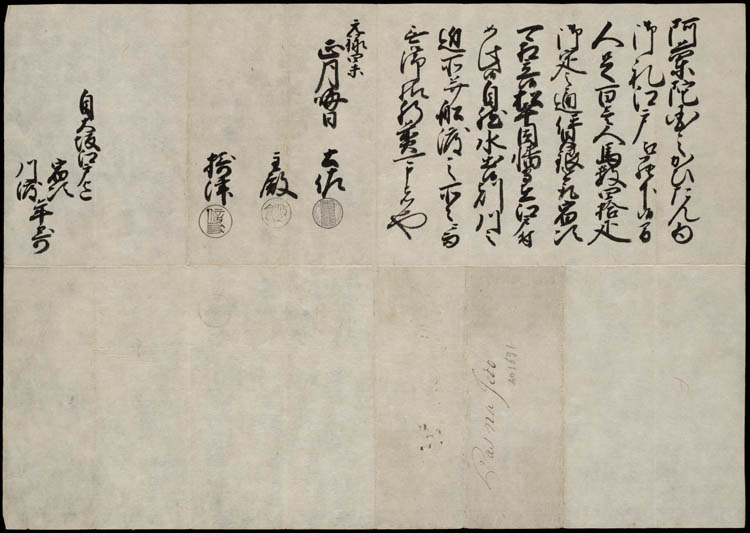
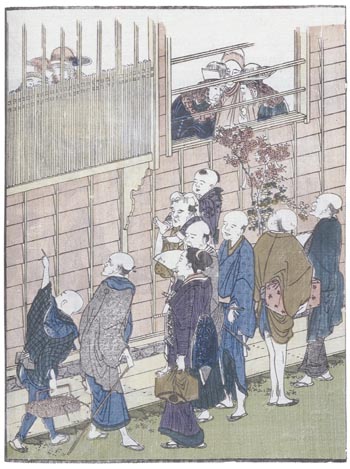
In Edo the Dutch lodged at the Nagasakiya, a pharmacy at Nihonbashi whose owners held the shogun’s monopoly on imported ginseng, and which was known as the Dejima of Edo. Officials sat in the house day and night. Scholars queued at the door anyway: Hiraga Gennai, Sugita Genpaku, Maeno Ryōtaku, the explorer Mogami Tokunai, and the astronomer Takahashi Kageyasu, who would come to regret it.
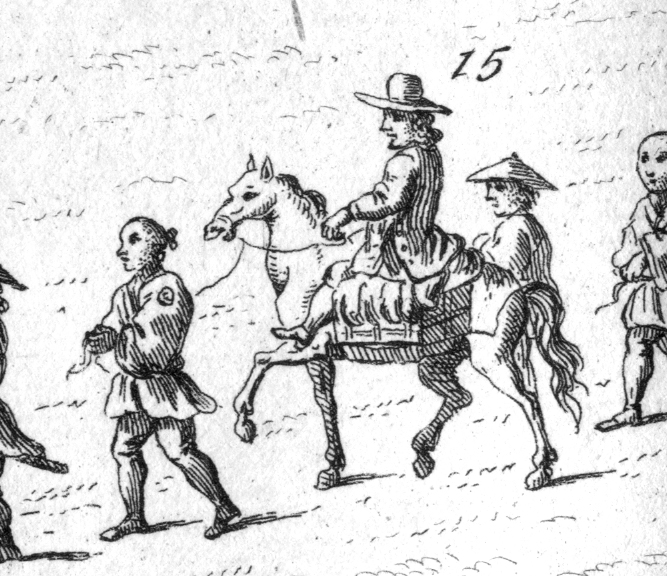
The audience was a ritual of humiliation, carefully done. In the great hall of Edo Castle an official called out “Oranda Kapitan!”, and the chief advanced on hands and knees between the presents and the shogun’s seat, pressed his forehead to the tatami, and withdrew backwards without a word, “like a crayfish,” as Kaempfer put it. The shogun, if he was there at all, sat behind a screen.
Then came the second act. The Dutch were taken deeper into the palace to be looked at through blinds by the shogun’s women, and Kaempfer recorded being made to take off his coat, walk, dance, jump, pretend to be drunk and speak Dutch and German for the court of the fifth shogun, Tokugawa Tsunayoshi. The Dutch privately called it the monkey show. By his own account Kaempfer sang a German love song.
They got something back. The shogun gave thirty padded silk robes, the kosode you would recognise as kimono, and his heir twenty more. The Dutch also brought far more cloth than the presents needed and sold the surplus to the inns and the officials, who bought at a premium and resold at three times the price. The shogunate called it a courtesy; everyone else called it trade.
Three doctors, none of them Dutch
What made Dejima matter far beyond its size was the post of company physician. Three of the men who held it, Kaempfer in the 1690s, Carl Peter Thunberg in the 1770s and Siebold in the 1820s, are known in Japan as the three scholars of Dejima. Not one of them was Dutch, a fiction the company was happy to keep up and the Japanese, mostly, happy to believe.
Engelbert Kaempfer
Kaempfer was a pastor’s son from Lemgo in north Germany, born in 1651, who had spent twenty months in Persia with a Swedish embassy before joining the VOC as a ship’s surgeon. He reached Dejima in 1690, stayed two years, and went to Edo twice. He spoke little Japanese, so he worked through a young interpreter, Imamura Gen’emon Eisei, whom he taught Dutch and medicine in exchange for everything Imamura could tell him.
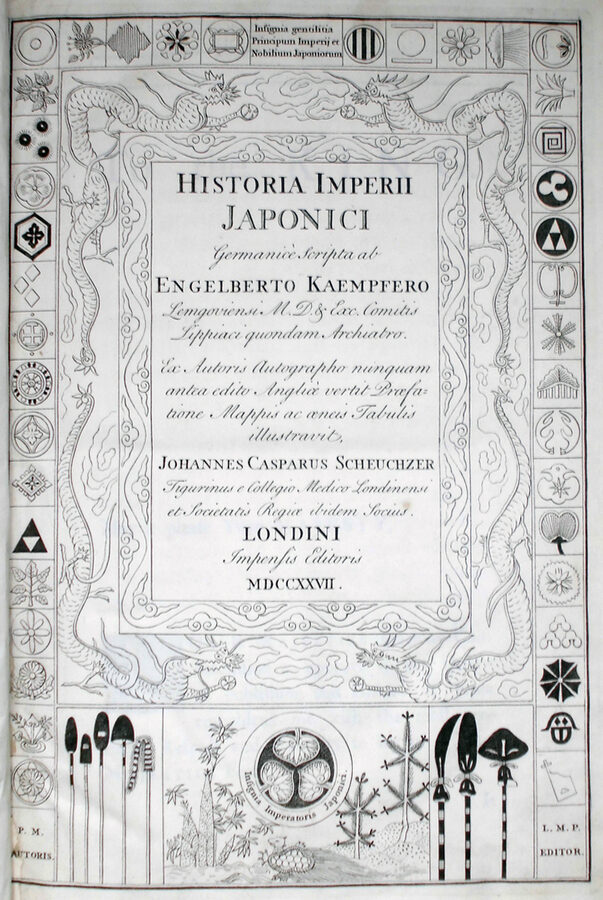
Kaempfer died in 1716 before he could publish. The English collector Hans Sloane bought his papers and published them in London in 1727 as The History of Japan, and Kant, Voltaire and Montesquieu read it; Diderot’s Encyclopédie took nearly all its Japan entries from it. His description of a living ginkgo, a tree Europeans knew only from fossils, made him famous among botanists for a century.
Carl Peter Thunberg
Thunberg was a Swede from Jönköping and one of the travelling students of Carl Linnaeus. He spent three years at the Cape learning Dutch before he reached Dejima in August 1775, and at first he was not allowed off the island at all. So he went through the fodder brought in for the factory’s animals and picked out the plants and insects.
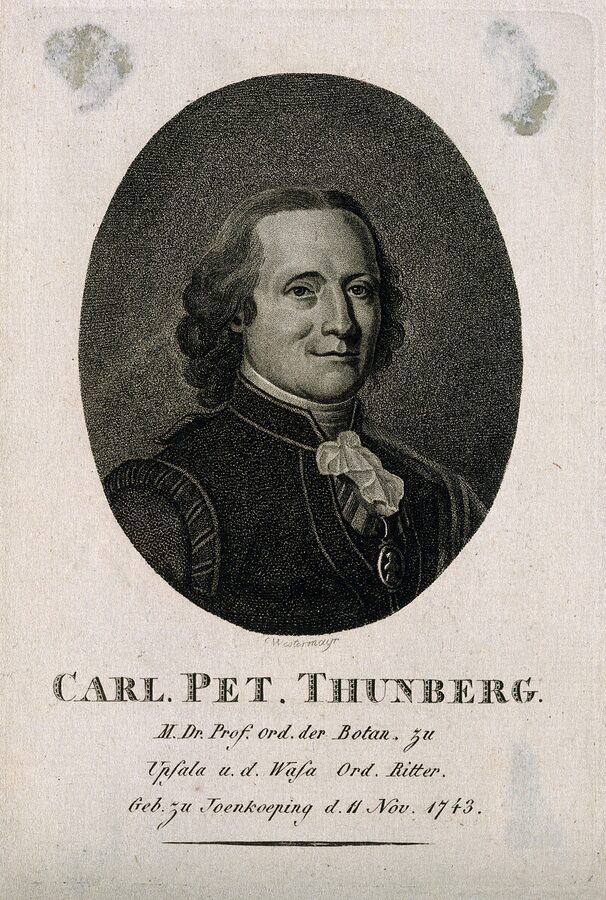
Medicine got him out. His treatment of syphilis with a measured dose of mercury worked well enough that he was allowed to visit patients in the town and make collecting trips into the hills, and he taught the method to the interpreter Yoshio Kōgyū. In 1776 he went to Edo, met the shogun Ieharu, and spent his evenings teaching the physicians Katsuragawa Hoshū and Nakagawa Jun’an.
He left the same year, apparently tired of being watched, and his Flora Japonica of 1784 was the first proper scientific account of Japanese plants. When Siebold arrived forty-seven years later, he carried Thunberg’s notes with him as a guide.
Philipp Franz von Siebold
Siebold is the one everybody remembers, and I suspect he would have wanted it that way. He came from a family of physicians at Würzburg, fought thirty-three duels as a student, and joined the Dutch colonial army as a medical officer in 1822 specifically to get to Japan. He arrived in August 1823, aged twenty-seven, with a German accent and a story about the mountains of Holland.
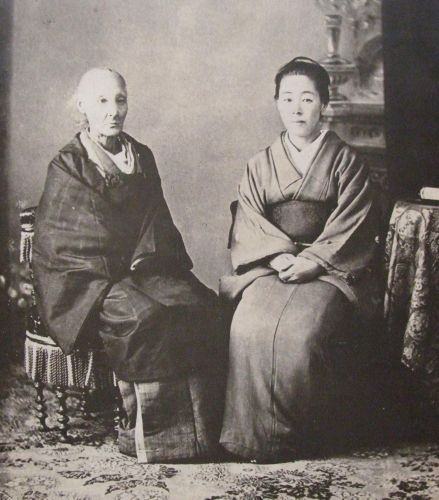
He was the first factory doctor allowed to teach outside the island. In 1824 he opened a school at Narutaki, in the hills behind Nagasaki, where students from all over the country, among them Takano Chōei, Itō Genboku and Ninomiya Keisaku, learned Western medicine. He asked them for essays in Dutch on Japanese plants, customs and history and gave the best a diploma, which made it one of the more efficient research operations of the 19th century.
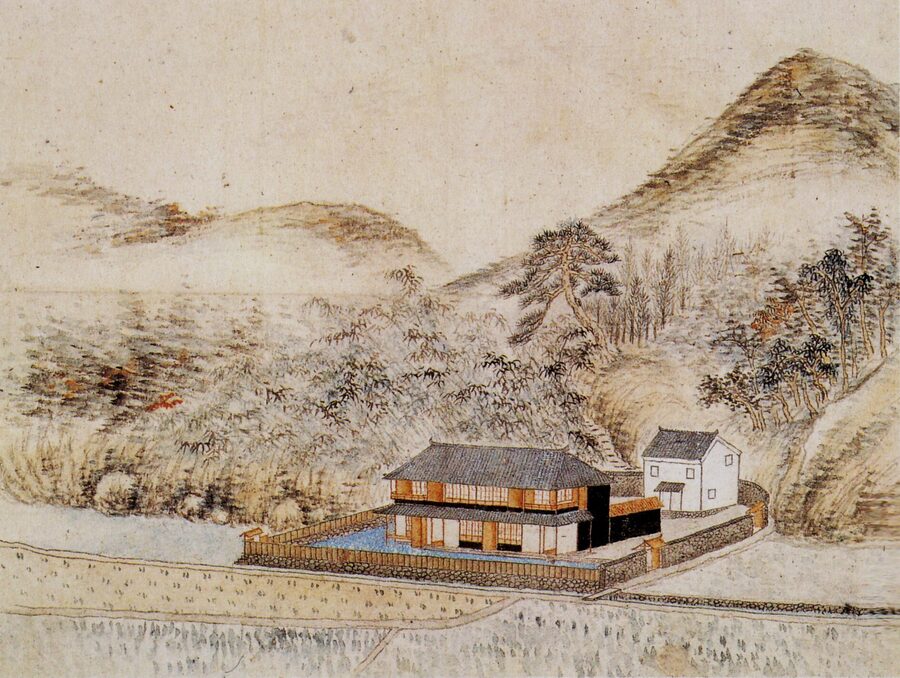
On Dejima he laid out a garden in 1825 and grew more than 1,400 kinds of plant before he left, many of them bound for Europe. A good share of the shrubs you meet in the great Japanese gardens reached European nurseries through his shipments, and he is usually credited with introducing Japanese knotweed as well, which British homeowners have not forgiven. He also sent seeds of the plant behind the tea ceremony to Java, which is how tea growing started there.
In 1826 he went to Edo with the chief, Johan Willem de Sturler, whom he had at one point challenged to a duel for not supporting his research. He met the eleventh shogun, Ienari, the explorer Mogami Tokunai and the shogunate’s chief astronomer, Takahashi Kageyasu, and he is said to have met Hokusai and ordered paintings from him.
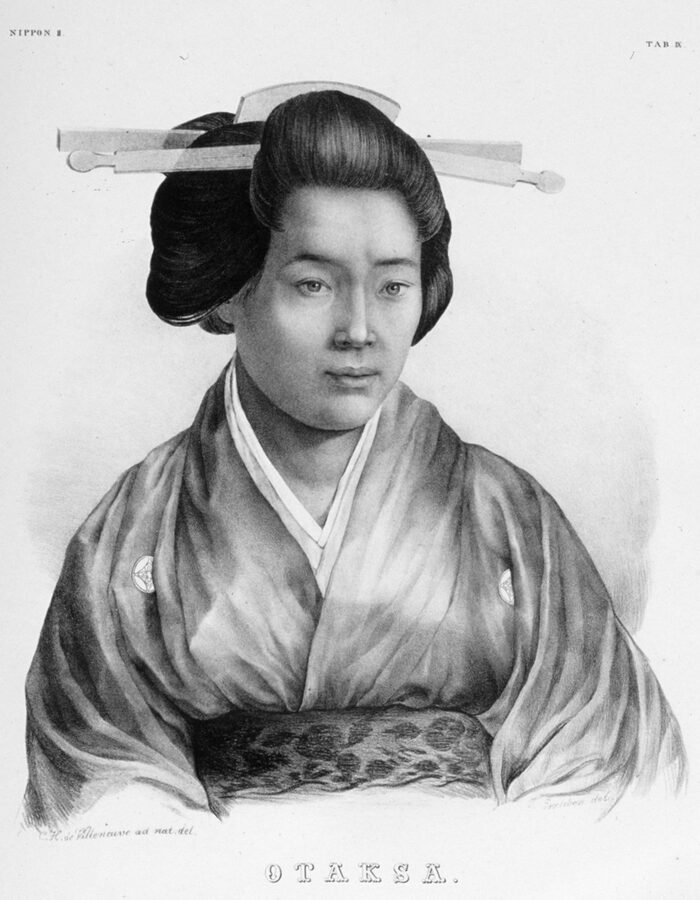
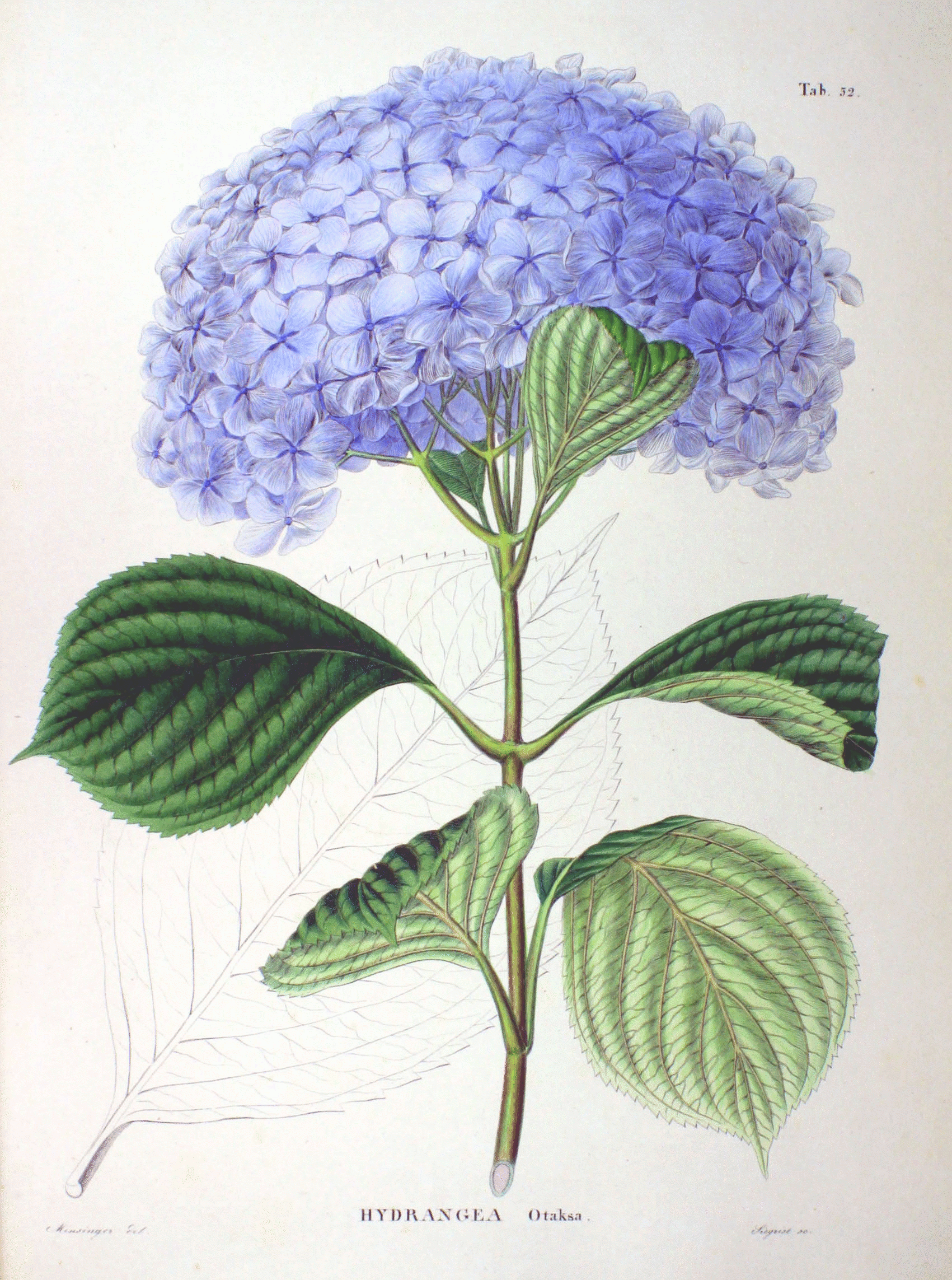
Soon after he arrived, Siebold took up with Kusumoto Taki, the daughter of a Nagasaki merchant family, who is generally said to have been registered as a Maruyama courtesan under the name Sonogi because that was the only way the rules would let her live with him. Their daughter Ine was born in 1827. When Siebold later named a hydrangea Hydrangea otaksa, the botanist Makino Tomitarō was surely right that it was a version of “O-Taki-san.”
The maps
It ended badly, and the story of how it ended has itself been rewritten. In 1826 Takahashi Kageyasu let Siebold have a copy of the coastal maps made by Inō Tadataka, the most accurate survey of Japan in existence and a state secret, in exchange for a Russian account of a voyage round the world. In 1828, as Siebold’s term ended, the maps were discovered, Takahashi was arrested, and Siebold’s house on Dejima was searched.
Most English accounts say a typhoon drove Siebold’s ship, the Cornelis Houtman, aground in September 1828 and officials found the maps in the cargo. Japanese historians now call that a later invention. In 1996 Kaji Teruyuki showed from the chief’s diary that the grounded ship held nothing but copper ballast, and that the affair began in Edo, when Siebold sent a letter and a gift of cloth to the explorer Mamiya Rinzō, who handed it unopened to his superiors. A Nagasaki merchant’s report found in 2019 confirms that the alarm came from Edo.
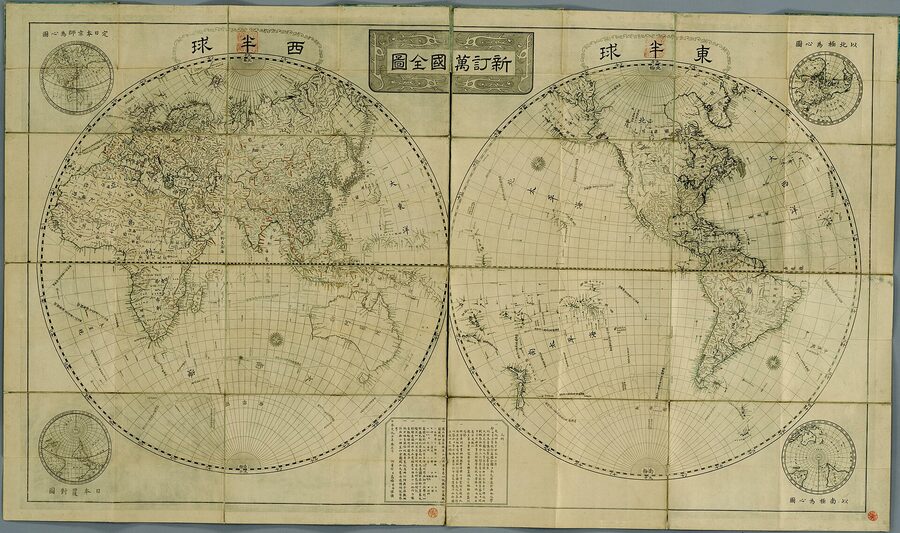
The punishments were savage. Takahashi died in prison in 1829, and his body was kept in salt until it could be formally condemned and beheaded. More than fifty others were punished, among them the shogun’s eye doctor, students, interpreters, the owner of the Nagasakiya and the painter Kawahara Keiga, while Siebold refused to name his friends, offered to stay in Japan for life as a hostage, and was banished in 1829 for good.
He had made copies, of course, and the map appeared in Europe in 1840. His collection went to Leiden, and plans of Edo Castle among his papers have kept alive a theory that he was a spy. The shogunate apparently did not think so: when the ban was lifted in 1858 he came back, in 1861 he was hired as an adviser on foreign affairs, and when he left in 1862 the shogun Iemochi gave him a sword and 700 ryō.
What went in and what came out
It is easy to overstate what Dejima did. One small island and a dozen foreigners did not modernise Japan, but it was the only door, and the people who came through it built a body of learning, rangaku or Dutch studies, that meant Japan was not starting from nothing when the Americans arrived in 1853. By one count about 2,000 students came to Nagasaki to study with the interpreters and the factory doctors.
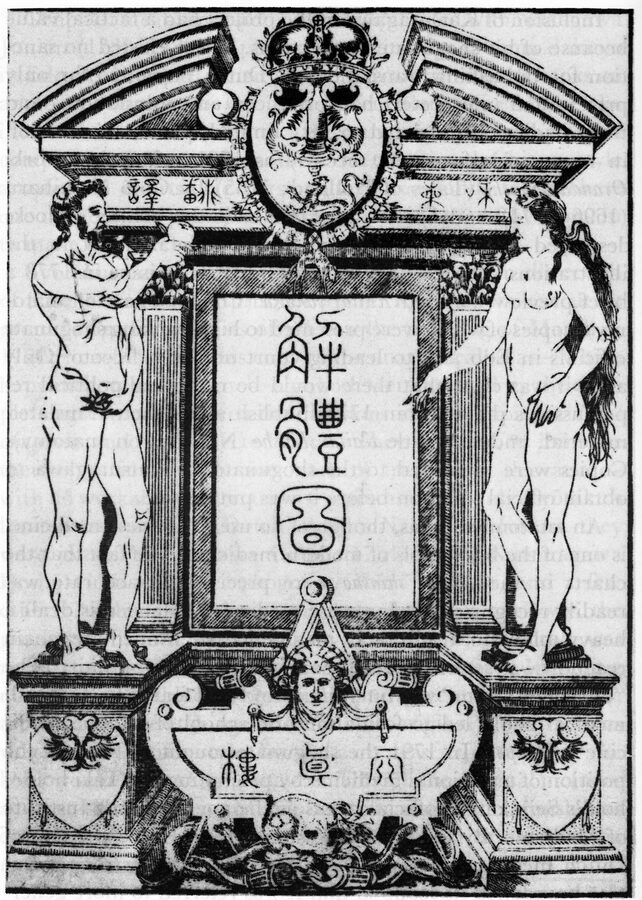
The founding moment came in Edo. In 1771 Sugita Genpaku and Maeno Ryōtaku watched the dissection of an executed criminal at the Kotsukappara execution ground with a Dutch anatomy book in their hands, found that the organs matched the plates and not the Chinese texts, and spent three years translating it. The result, Kaitai Shinsho, appeared in 1774, and both men had met the Dutch at the Nagasakiya.
Things came in too, and some of the words stayed. Coffee, billiards, cabbage and chocolate came through Dejima, and so did beer, which Hendrik Doeff brewed himself when the war cut off supplies. Japanese still calls paint penki, from the Dutch pek, and white clover, which the Dutch used as packing for glassware, is shirotsumekusa, “white packing grass.” Siebold’s piano of 1823 survives at the Kumaya Art Museum in Hagi.
What went out mattered as much. For two centuries the books of the three doctors were almost the only serious European writing on Japan, and their collections in London, Uppsala and Leiden still underpin European Japanese studies. One myth needs clearing up while I am at it: the story that the Dutch had to trample on images of Christ, the fumi-e, to keep their trade comes from pamphlets of the Anglo-Dutch wars, and modern scholars treat it as propaganda.
A flag with no country
The strangest years came when the Netherlands ceased to exist. French armies overran the Dutch Republic in 1795, the VOC was wound up at the end of 1799, and Napoleon annexed what was left in 1810. With the Royal Navy hunting Dutch shipping, Batavia hired neutral American ships for the Nagasaki run, and between 1797 and 1809 Japanese records note thirteen such voyages, every one flying the Dutch flag.
The chief through most of it was Hendrik Doeff, who ran the factory from 1803 to 1817, an unheard-of fourteen years. No ship came from Batavia at all between 1810 and 1813, and the island lived on credit from the Nagasaki trade office, which by 1812 had advanced more than 80,200 ryō. Doeff sold his books to Japanese buyers, who paid over the odds out of sympathy, and brewed his beer from a recipe in Noel Chomel’s household encyclopedia.
In October 1808 the British frigate Phaeton sailed in under Dutch colours, seized two Dutch clerks who rowed out to greet her, and extracted supplies under threat; the magistrate, Matsudaira Yasuhide, killed himself afterwards. I have told that story in my piece on Nagasaki. Its lasting effect here was that the interpreters were ordered to learn English and Russian, and in 1814 Motoki Shōzaemon produced the first English-Japanese dictionary.
In 1813 Thomas Stamford Raffles, governing a captured Java, sent two ships under Dutch colours with Doeff’s predecessor Willem Wardenaar aboard to take Dejima over for Britain. Doeff refused, and refused again in 1814, on the reasonable grounds that the Japanese would end the trade the moment they found out who was behind it. The usual line is that Dejima was then the only place on earth flying the Dutch flag; Japanese reference works add Elmina Castle on the Gold Coast.
Doeff is also the first Westerner known to have written haiku, two of which turned up in Japanese collections of the period. He began a Dutch-Japanese dictionary based on François Halma’s Dutch-French one, which the interpreters finished in 1833, and the Doeff Halma served every serious student of Dutch until the country opened.
The island stops being an island
The end came quickly. After Commodore Perry forced a treaty on the shogunate in 1854, the story of my piece on Perry’s Black Ships, the Dutch moved fast to stay useful. In 1855 a naval training school opened beside Dejima with Dutch instructors, and the Dutch king presented the paddle steamer Soembing, which became Japan’s first steam warship as the Kankō Maru. Among the students were Katsu Kaishū and Enomoto Takeaki, who would one day command the shogun’s navy.
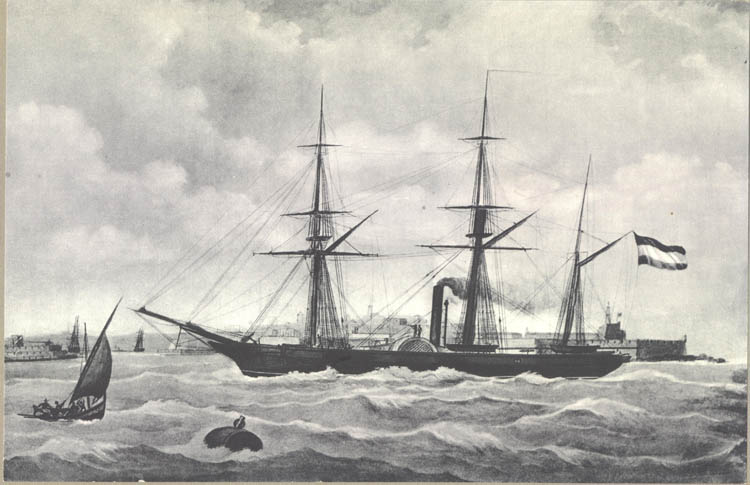
The Dutch were released from confinement in 1856 (some Japanese dictionaries say 1855), and the 1858 commercial treaty let Japanese come and go freely. The factory doubled as a consulate, a consulate-general from 1860, and in 1866 the island was folded into the Nagasaki foreign settlement. Its monopoly, its rules and its reason for existing were all gone within ten years.
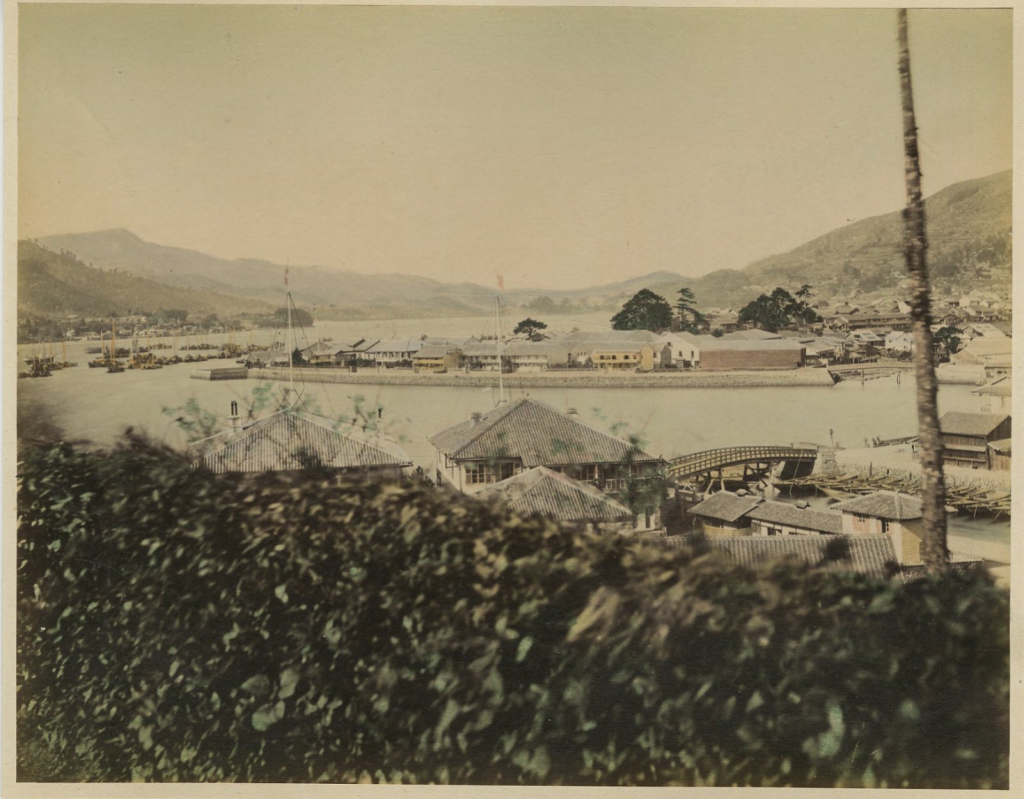
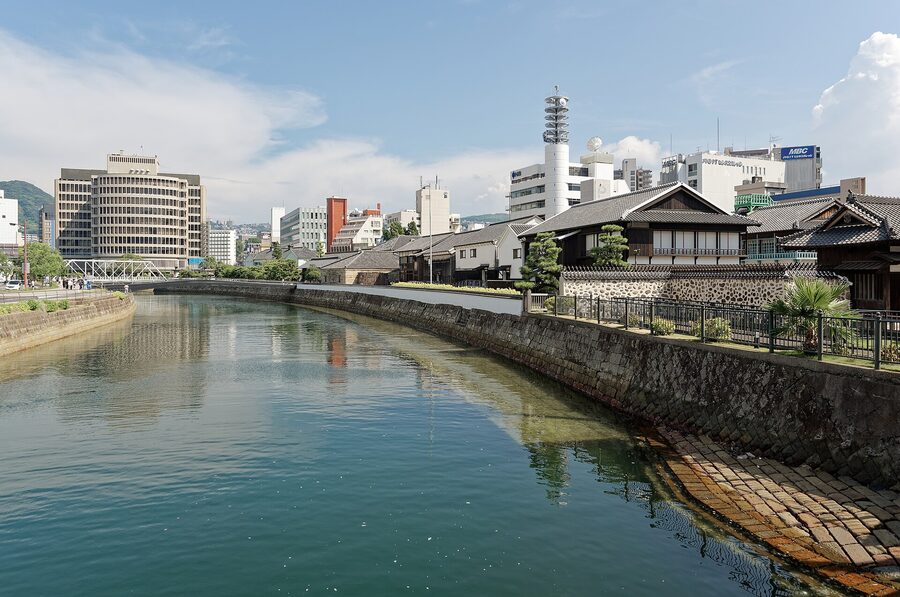
Then the Meiji engineers arrived. A river diversion begun in 1886 widened the Nakashima along the island’s north side and sliced off about a quarter of it, including the old main gate; in 1888 the eastern channel was filled and Dejima joined to the land; and the harbour works completed in 1904 buried the south side. By then it was a district of houses, clinics and shops on reclaimed ground.
When it was made a national historic site in 1922, along with the Hirado factory and Siebold’s Narutaki house, Dejima had not even been on the original list, and every square metre except the roads was in private hands. In 1937 the city drove a line of metal studs into the streets to mark the old shoreline. After the war, the Dutch government is said to have pressed Prime Minister Yoshida Shigeru to restore it, and the city began buying up the land in 1952, finishing only in 2001.
Rebuilding to show the island as it was in the early 19th century began in earnest in 1996. Five buildings opened in 2000, five more and 131 metres of the south wall in 2006, and another six, with two late Edo stone warehouses, in 2016. In November 2017 a new bridge opened on the line of the old one, about 130 years after it disappeared, with Princess Laurentien of the Netherlands and Prince and Princess Akishino in attendance. The city’s aim, with a target of 2050, is to make Dejima an island again, which will mean moving a river and part of a national highway.
Where to see Dejima today
Nagasaki is the obvious base, and my piece on the city covers the rest of it, from the Chinese temples to the Urakami valley; my walk through Japan’s eras gives the wider frame. You can see the rebuilt Dejima in a morning, but I would give it a long afternoon and stay into the evening, when the tour groups have gone and the island is at its most convincing.
Dejima itself
The site is at 6-1 Dejima-machi, open every day from 08:00 to 21:00, last entry 20:40. Admission is ¥1,100 for adults and ¥550 for school-age children, with no group discounts and no re-entry. The tram from Nagasaki Station to the Dejima stop takes about five minutes, and Shinchi Chūkagai stop is also close; check the official site for maintenance closures, as individual buildings shut from time to time.
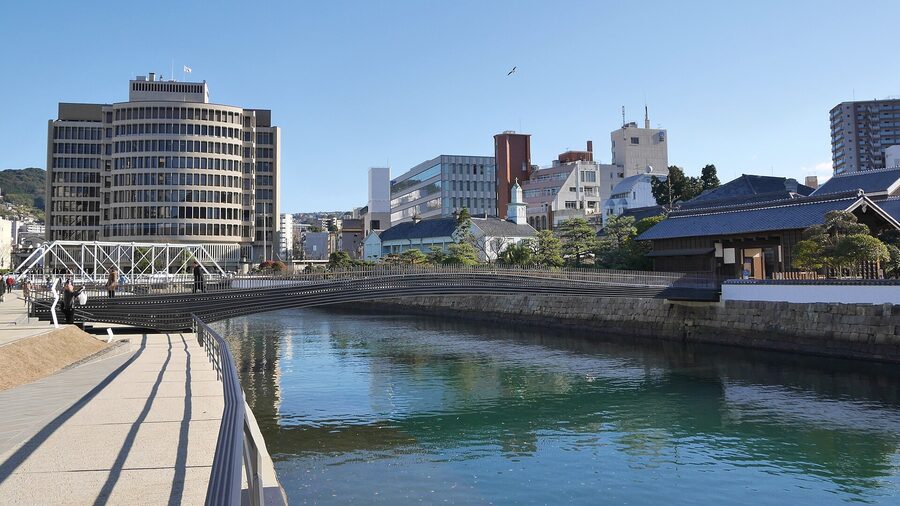
Go in over the bridge and through the main gate, rebuilt in 1990. Close by are the Japanese officials’ office where passes were checked, the room where copper bars were weighed and packed for export, and the copper warehouse, so you start where every Dutchman’s day started: being watched.
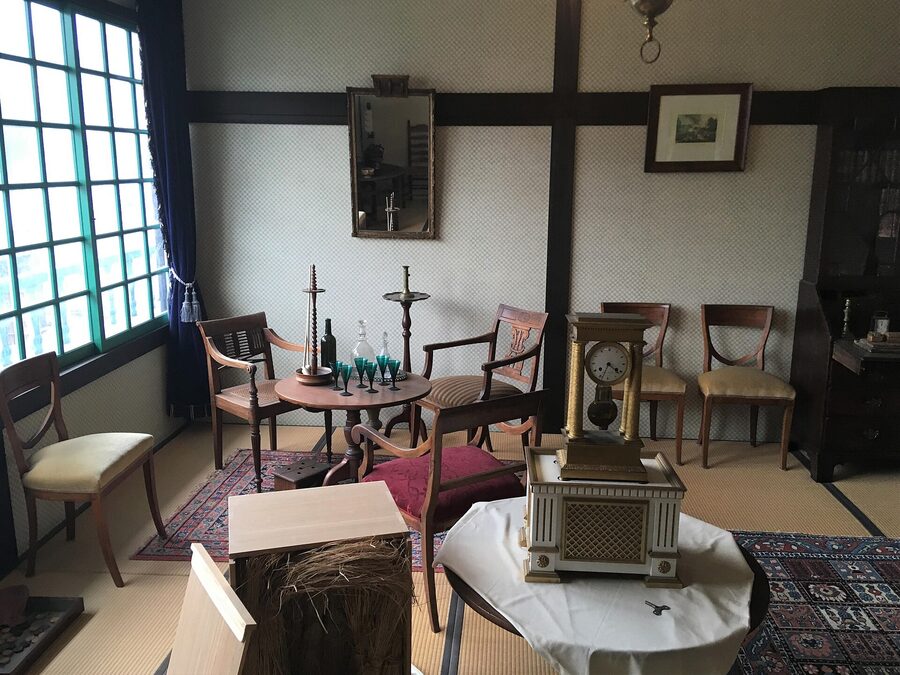
The Chief Factor’s Residence is the centrepiece, modelled on the house Doeff finished in 1809 after a fire had burned out the western half of the island in 1798. Allow time for its ground floor, which covers daily life on the island in more detail than any book I know. The kitchen explains that the Dutch ate twice a day in the chief’s house, and that visiting officials took European dishes home with them.
The numbered warehouses deserve more time than they look. No. 14, a former sugar store, shows the excavation under its floor and the story of how the island was built, No. 2 holds trade goods, and the Dutch Clerk’s Quarters, also called the Western Studies Pavilion, covers the science that came in. If you have read this far, that last one is your building.
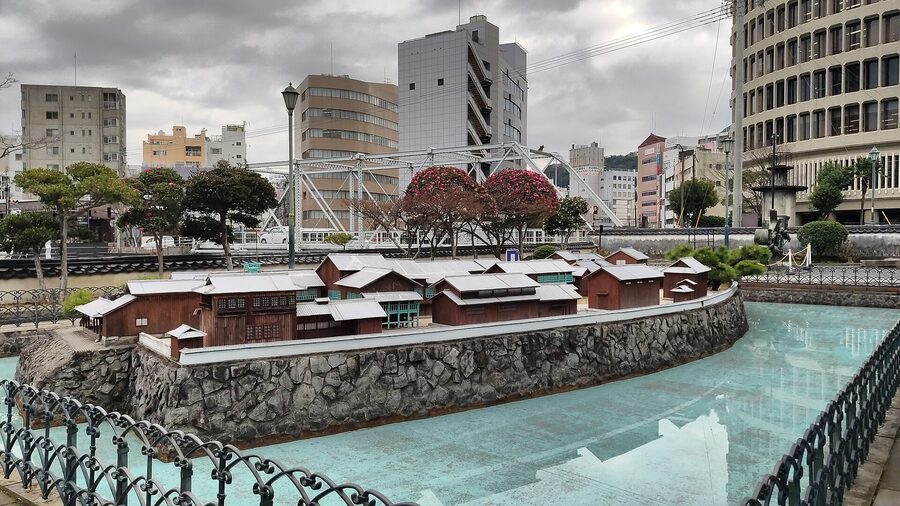
Outside, find the stone Siebold put up in 1826 for Kaempfer and Thunberg, the replica of the sundial installed by the chief Herman Kastens in the 1760s, and the site of the flagpole in front of No. 2 warehouse. Then walk the outer edge along the street, where the studs of 1937 still mark the old waterline in the tarmac. It is the best way to understand how small the place was.
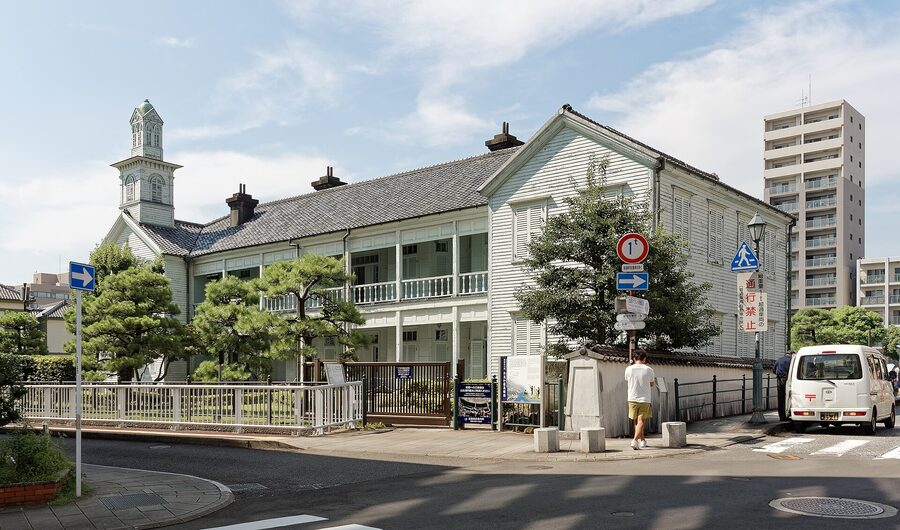
The site also includes buildings from after the Dutch, and I have mixed feelings about them. The Former Dejima Protestant Seminary of 1878 is the oldest Protestant seminary building in Japan, and the Former Nagasaki International Club of 1903 has a restaurant on the ground floor, open 10:00 to 18:00. Both are handsome and both break the spell of 1820 rather thoroughly, so I would see them last.
Siebold Memorial Museum, Narutaki
The museum stands beside the site of Siebold’s house and school at Narutaki 2-7-40, and covers his life in six sections, from Würzburg to his death in Munich. It is open 09:00 to 17:00, last entry 16:30, closed on Mondays (open if Monday is a public holiday) and from 29 December to 3 January, and admission is ¥210 for adults and ¥100 for children. From Dejima take a tram towards Hotarujaya, get off at Shin-Nakagawamachi after about fifteen minutes, and walk uphill for seven.
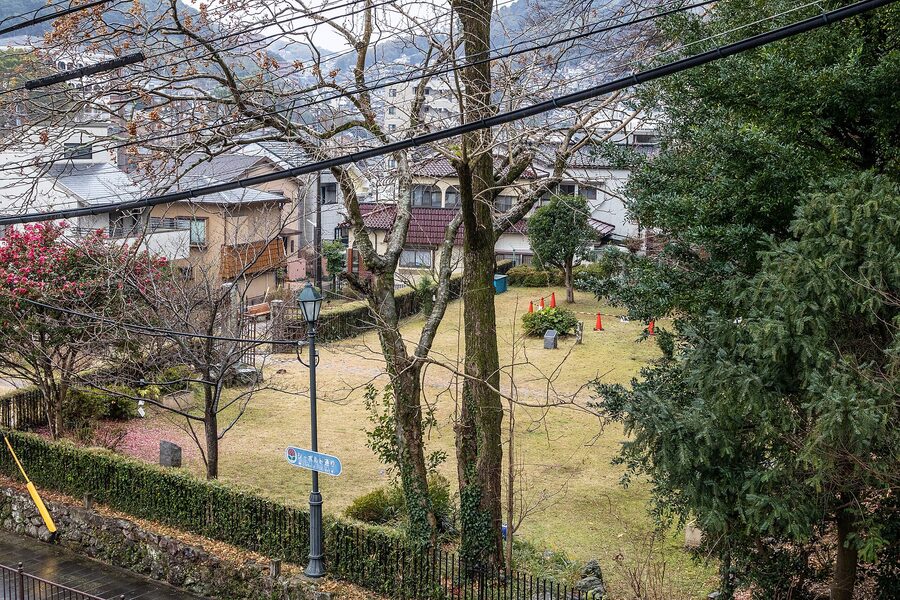
Give it an hour, and come for the documents and the material on his students and his Japanese family rather than for big set pieces. The major collections went to Europe; if you ever find yourself in Leiden, the SieboldHuis there is the other half of this visit.
Nagasaki Museum of History and Culture
The museum stands on the site of the magistrate’s Tateyama office, part of which has been reconstructed, and its permanent displays cover the city’s foreign trade and the magistracy that ran Dejima. It is open 08:30 to 19:00 from April to November and 08:30 to 18:00 from December to March, last entry thirty minutes before closing. It closes on the first and third Monday of each month (the following day if that Monday is a holiday) and from 28 to 31 December, and the permanent exhibition costs ¥630 for adults and ¥310 for school-age children.
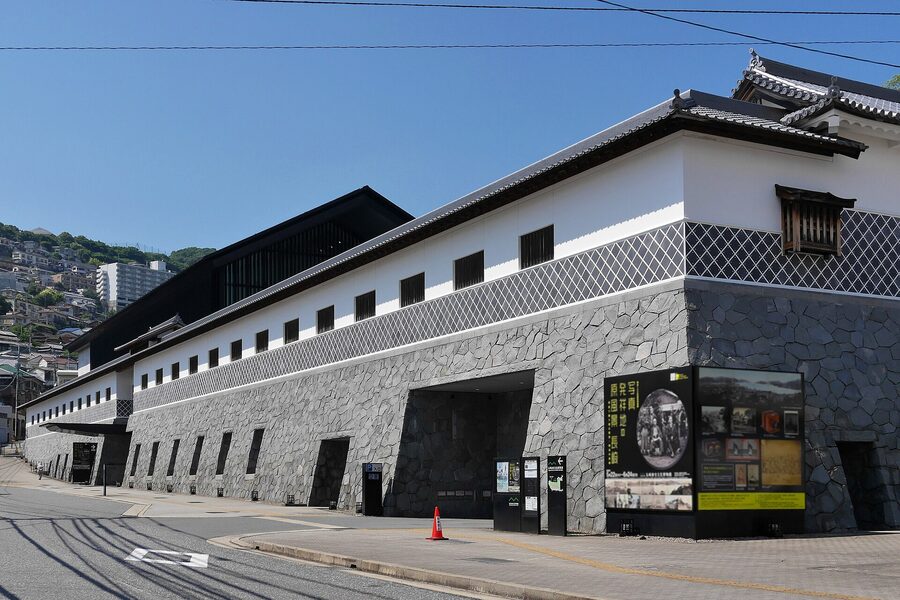
The nearest tram stop is Sakuramachi, five minutes away, or it is a fourteen-minute walk from Nagasaki Station.
Suwa Shrine and Kunchi
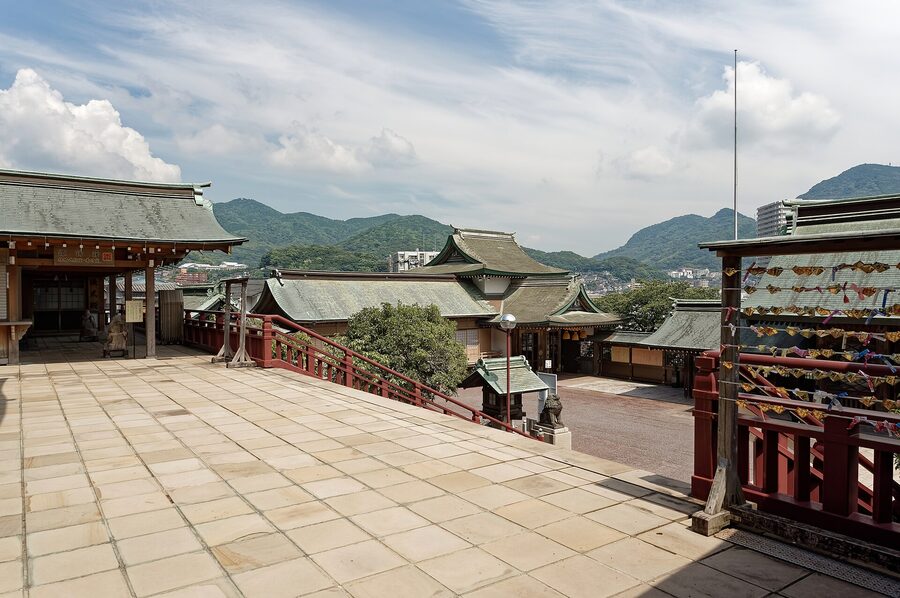
Suwa Shrine, Nagasaki’s principal shrine, sits at the top of a long flight of steps about five minutes from the Suwa-jinja tram stop, and entry is free. Its festival, Kunchi, held from 7 to 9 October, was one of the few occasions when the Dutch were allowed off the island, escorted to seats from which they and the Chinese traders could watch. It is still one of the great festivals of Japan, and some of the districts’ performances still carry Dutch and Chinese themes.
Kōtai-ji
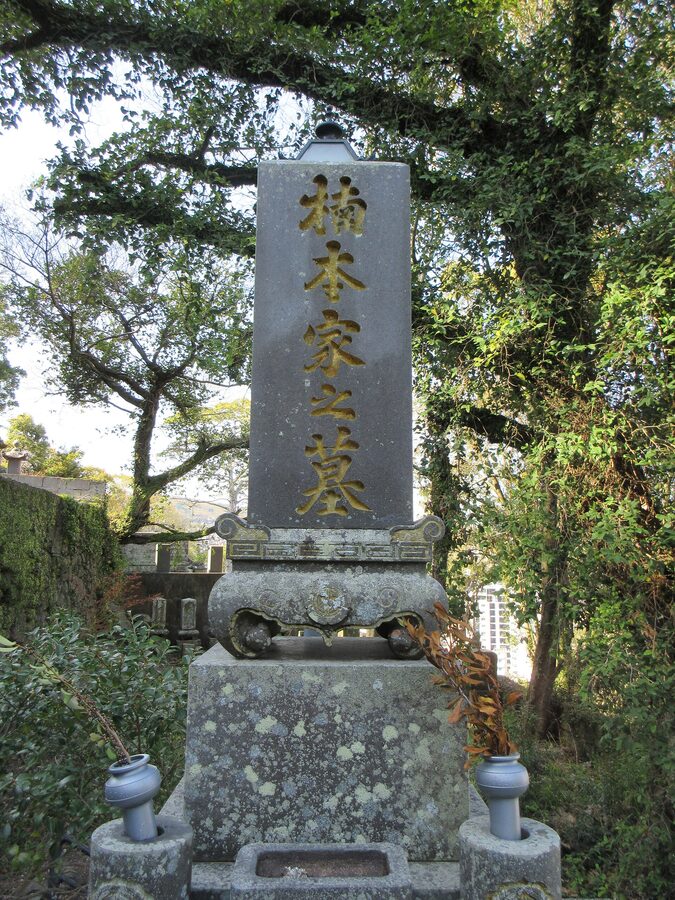
Kusumoto Ine is buried at Kōtai-ji, a Sōtō Zen temple about five minutes’ walk from the Shianbashi or Megane-bashi tram stops. Its gate is said to date from 1680, the oldest temple or shrine gate in the prefecture, and the graveyard also holds magistrates who died in office and families of the interpreters and town elders. It is a working temple, so keep to the paths.
Hirado Dutch Trading Post
If you have a spare day, go to Hirado. The company’s stone warehouse of 1639, the one with the Christian date on its gable, was rebuilt in 2011 on its original site at Ōkubo-chō 2477: two storeys, about 46 metres long, built of some 20,000 sandstone blocks, and generally described as the first Western-style building in Japan. Inside are the trading post’s documents, charts and trade goods, including a red-seal licence from Tokugawa Ieyasu.
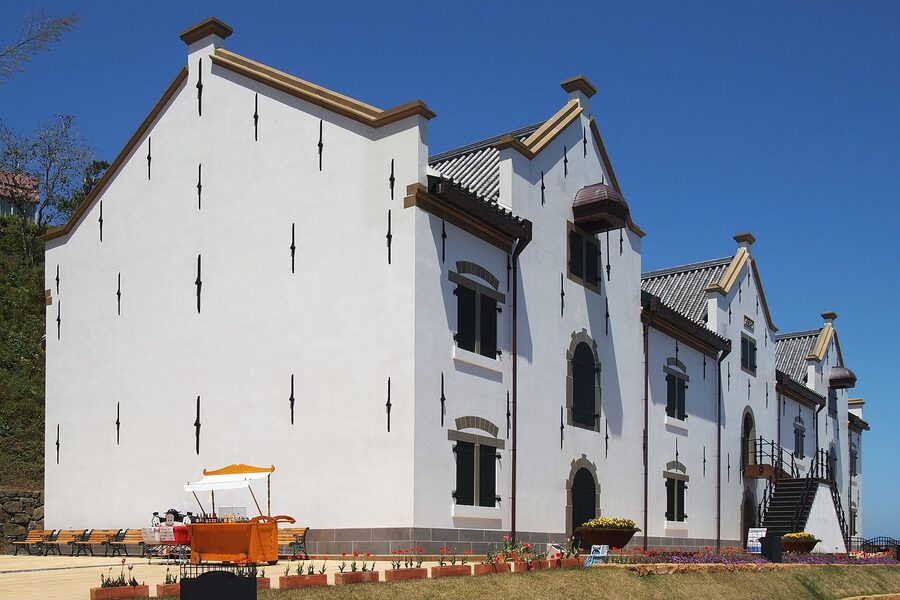
It is open 08:30 to 17:30, last entry 17:00, closing only on the Tuesday, Wednesday and Thursday of the third week of June. Admission is ¥310 for adults and ¥210 for school students, or ¥880 for adults with the Matsura Historical Museum included, which I would recommend. Hirado is a long way from Nagasaki by public transport, usually by way of Sasebo and a bus, so treat it as a day out rather than an add-on.
The Nagasakiya site in Tokyo
In Tokyo, the site of the Nagasakiya is marked by a board near an exit of Shin-Nihombashi Station, at Nihonbashi Muromachi 4-chome; Chūō Ward made it a ward historic site in 2001. There is nothing else to see, but stand there a minute and imagine Hokusai’s crowd at the windows. The East Gardens of Edo Castle, where the audience hall stood, are about twenty minutes away on foot.
Back to the mountains of Holland
When Siebold came back to Japan in 1859, aged sixty-three and no longer in need of a story about mountains, he settled at Narutaki again and taught his daughter, who was thirty-two and already practising medicine. The island he had been banished from was no longer a prison, and within thirty years it would no longer be an island.
The rebuilt Dejima is careful, scholarly and in places very beautiful, and it shows you a year that never quite existed, about 1820, with the Meiji buildings standing round the edge like guests who stayed on after the party. I do not mind. The original ran on agreed fictions from the start, and a reconstruction that asks you to imagine water where there is a road and an island where there is a city is keeping up the tradition rather well.
So cross the bridge the proper way, look at the chairs on the tatami, find Siebold’s stone for his two predecessors, and walk the line of studs in the street. Then look up at the green hills that climb out of the harbour behind the town, the ones Siebold could see from Narutaki, and spare a thought for the interpreters who took a German at his word that Holland had a few of its own.