The man who built Okayama Castle spent the last fifty years of his life on Hachijōjima, a volcanic island nearly 300 kilometres south of Tokyo, and the story the island still tells about him is a story about rice. Invited to eat by the island’s magistrate, the Edo-period anecdote collections say, he asked for a second bowl, and then a third, and wrapped the third as a rice ball to carry home to his family. Some versions make the host a passing ship’s crew and the gift a cup of sake. All of them agree that he was hungry.
Fifty years earlier, the same man had roofed a six-storey black keep on the Asahi River with tiles leafed in gold. Ukita Hideie was a son-in-law of Toyotomi Hideyoshi, one of the five regents of Japan, the commander of the largest army on the losing side at Sekigahara, and, for a few years in the 1590s, about as close to the sun as a man of his generation could stand. Okayama still calls his castle U-jō, the crow castle, and the gilded version Kin’u-jō, the golden crow. (Matsumoto has a crow castle too, but that one is Karasu-jō, and its story is in my piece on Matsumoto Castle.)
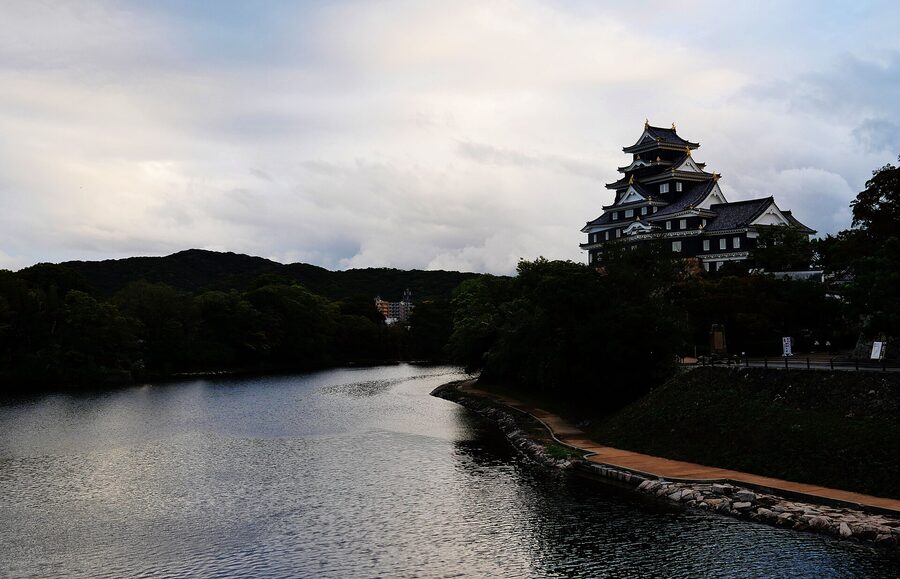
I like Okayama Castle more than its reputation suggests I should. The keep is concrete, the moats are mostly roads, and the ruler of its best decade lost everything before he was thirty. But the hill carries three ideas of what a lord was for, one after another: Ukita Naoie’s, which was to survive by any means; Hideie’s, which was to shine; and Ikeda Mitsumasa’s, which was to teach.
Across the river sits the garden Mitsumasa’s son built, one of the three great gardens of Japan, half pleasure ground and half, if you believe the sources, a spare bailey. Between them, these men cover a long stretch of Japan through the ages, and the bombers of 1945 wrote the last chapter.
In This Article
- Three hills in a river delta
- The schemer from Bizen
- Ishiyama, 1573
- Hideyoshi’s favourite son-in-law
- A boy and a betrothal
- Korea and the Five Elders
- The black keep
- Sekigahara and fifty years on Hachijō
- The Ukita disturbance
- The longest-lived man of Sekigahara
- Two years of Kobayakawa Hideaki
- The Ikeda
- A five-year-old lord and a poisoned bun
- Ikeda Mitsumasa, the model lord
- Kōrakuen: the garden that was also a bailey
- Fire, concrete and a coat of black paint
- Where to visit Okayama Castle and Kōrakuen today
- Okayama Castle
- Okayama Kōrakuen
- The Okayama Prefectural Museum and the Hayashibara
- Zuiun-ji and the town
- The Shizutani School
- Hachijōjima, if you are serious
Three hills in a river delta
Before the castle there were three low hills on a flat, marshy delta where the Asahi River met the sea: Tenjinyama to the north-west, Ishiyama in the middle and, to the east, a rise called Okayama. The Bizen Gunki, an Edo-period chronicle, says a castle stood here as early as the mid-14th century, built by a member of the Nawa clan. Nobody knows who held it for the next century and a half. By the 1520s it belonged to the Kanemitsu, a minor house serving the Matsuda of Kanagawa Castle, and it was from the Kanemitsu that the Ukita took it.
The schemer from Bizen
Ukita Naoie was born in 1529, by one account at Toishi Castle in what is now Setouchi, into a family that had just lost almost everything. His grandfather Yoshiie had been a senior retainer of the Uragami, the deputy governors of Bizen province, and was killed in the early 1530s; the boy grew up, the chronicles say, as a fugitive dependent on the charity of merchants in Bizen Fukuoka. Recent Japanese scholarship has unpicked a good deal of this story, including the name of his father. What nobody disputes is how he got back.
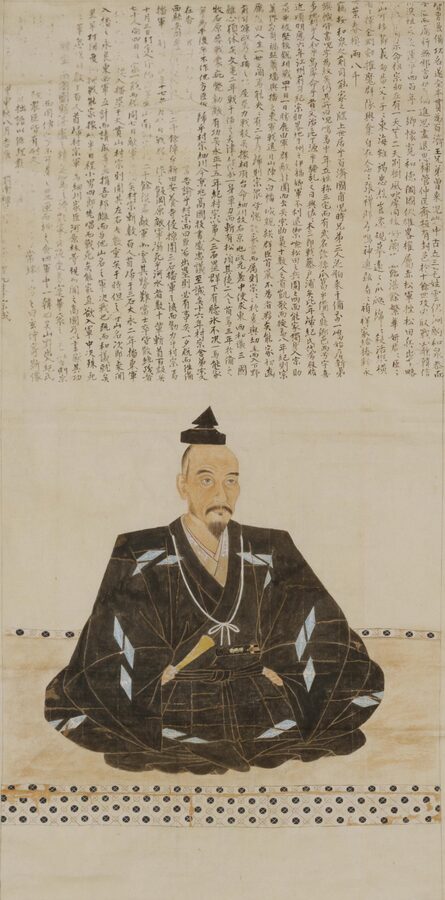
He killed people. Naoie served Uragami Munekage as a kind of junior ally, and in the 1550s and 1560s, according to the chronicles, he disposed of his grandfather’s enemy Shimamura Morizane, his own father-in-law Nakayama Katsumasa (invited, in one version, to a teahouse Naoie had built beside Numa Castle for the purpose), and the lord of Tatsunokuchi Castle. In 1566 he had Mimura Iechika, the lord of Bitchū, shot by two hired ronin from Awa, which is often said to be the first assassination with a firearm in Japanese history. He took Numa, also called Kameyama, as his base.
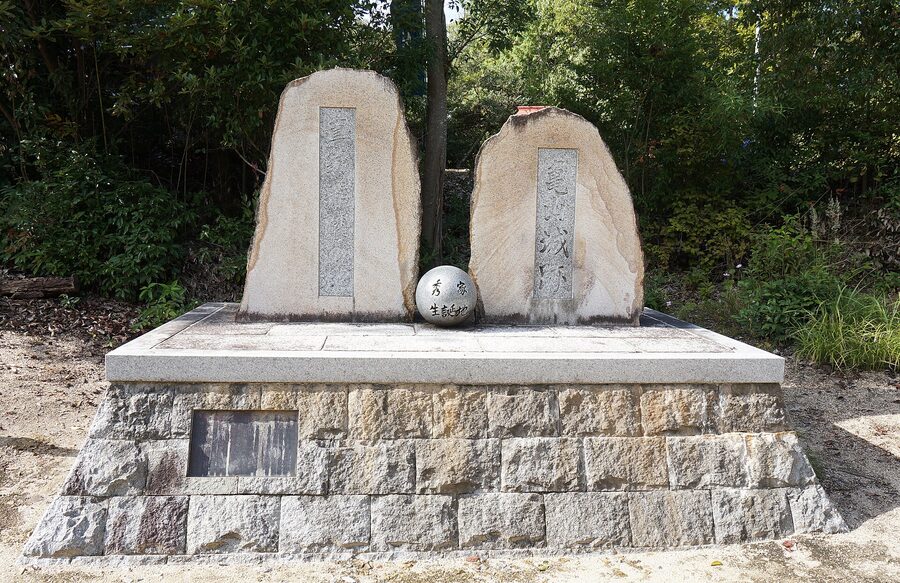
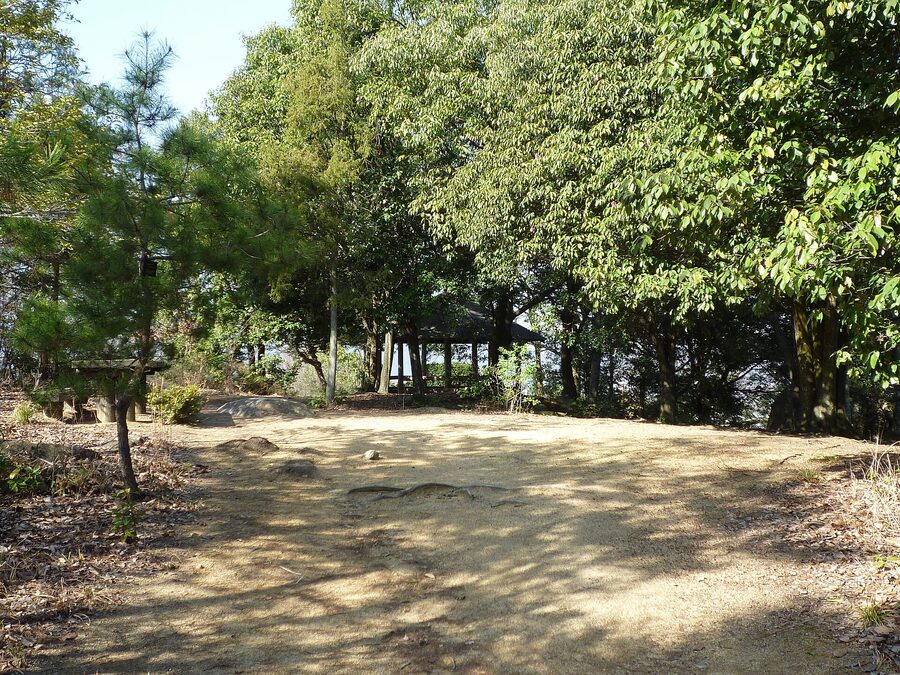
In 1567 he beat the Bitchū army that came west to avenge Mimura at the battle of Myōzenji, on a hill just east of the later castle. That fight made him the strongest man in the Uragami camp. From there he worked steadily upward, through alliances with the Mōri, then against them, then with them again, until in 1575 (one Japanese reference work says 1577) he drove Munekage himself out of Tenjinyama Castle and into Harima. Bizen had a new master, and the master had started life as a refugee.
Japanese popular history lists Naoie with Saitō Dōsan and Matsunaga Hisahide as one of the “three great villains” of the age. I think the label says more about the Edo-period storytellers than about him. Several of the killings the chronicles pin on his ambition turn out, on the surviving letters, to have been done on his lord’s orders or in his lord’s wars, and the Bizen Gunki was written more than a century after his death by men who knew how the story ended. He was no worse than the rest of the Sengoku era; he was simply better at it.
Ishiyama, 1573
In 1570 Naoie had Kanemitsu Munetaka, the lord of Ishiyama, killed and took his castle. Three years later (Japanese reference works give both dates for “the founding”, which is why you will see either) he moved in, rebuilt it and began the town. He did something unusual for a warlord who had grown up on hilltops: he chose a low hill by the water, re-routed the San’yō highway so that it ran past the castle’s southern flank, and invited merchants from Bizen Fukuoka and Saidaiji to come and trade beneath his walls. That was three years before Oda Nobunaga began Azuchi Castle.
Then he changed sides one last time. In 1579, as Hideyoshi pushed west for Nobunaga, Naoie broke with the Mōri and went over to the Oda; it took Nobunaga a month to accept him, which tells you what his reputation was worth. He spent his last two years fighting the Mōri while his health failed, and died at Okayama.
His death was kept quiet for a time. The chronicles say 1581, but letters show him alive later than that, so Japanese historians now place it between late 1581 and early 1582; English-language accounts mostly give February 1582.
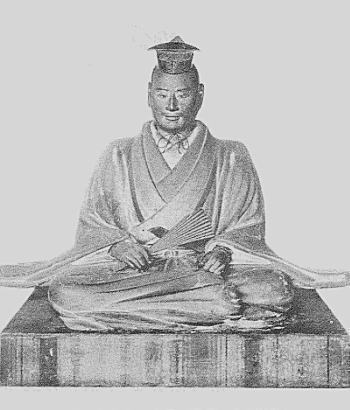
Hideyoshi’s favourite son-in-law
Naoie’s heir was a boy of about ten called Hachirō. In the first month of 1582, Hideyoshi took the senior Ukita retainers to Azuchi and had Nobunaga confirm the child as head of the house. Four months later the Ukita army was helping Hideyoshi besiege Takamatsu Castle in Bitchū when the news came from Kyoto that Nobunaga was dead at the Honnō-ji. Hideyoshi made peace with the Mōri overnight and raced east to destroy Akechi Mitsuhide at Yamazaki.
A boy and a betrothal
On the way, according to a later Ukita family chronicle, Hideyoshi stopped at Okayama Castle and arranged for the boy to marry his adopted daughter Gō, the fourth daughter of Maeda Toshiie, whom Hideyoshi and his wife Nene had taken in as a two-year-old. Hachirō took the character hide from Hideyoshi’s name and became Hideie. English-language accounts usually say Hideyoshi adopted him; Japanese historians now prefer to say he was treated as a member of the Toyotomi family by marriage, which in practice came to the same thing.
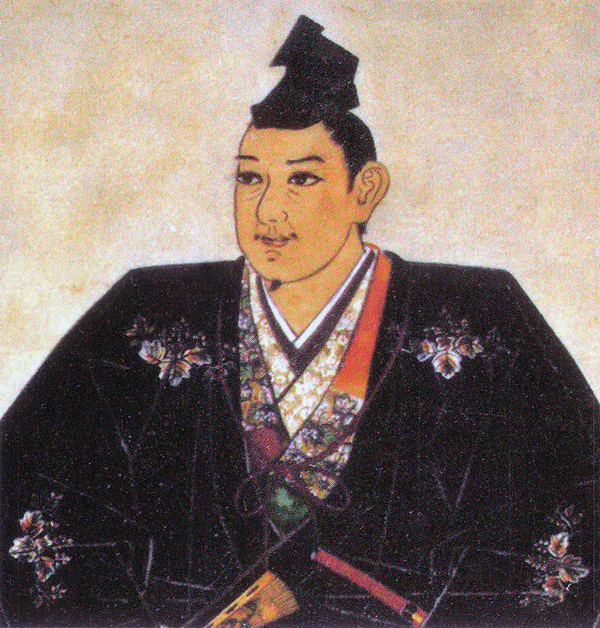
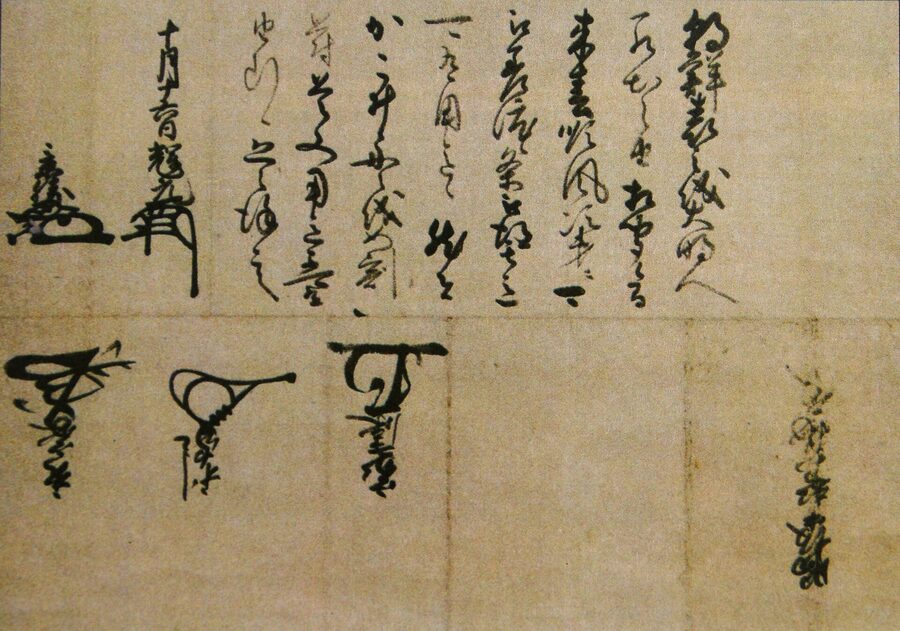
A small, satisfying fact: the name “Ukita Hideie” never appears in any document he signed. In his lifetime he was Hashiba Hachirō, then Toyotomi Hideie for court purposes, and to everyone else the Bizen Councillor or the Bizen Middle Counsellor, after his court ranks. The family name is a historian’s convenience. He was, in his own eyes, a Toyotomi.
Korea and the Five Elders
He grew up fast. Hideie fought in Hideyoshi’s campaigns in Kii, Shikoku and Kyushu, led 8,500 men to the siege of Odawara in 1590, and at twenty commanded the first invasion of Korea. In 1592 he entered Hanseong, and Hideyoshi talked of making him regent of Japan, or ruler of Korea, once China had fallen.
In 1593 he helped beat a Ming army at Byeokjegwan, took an arrow in the failed attack on Haengju, and took Jinju before coming home; in 1597 he went back to command the left army and took Namwon. The campaigns have their own article, on the Imjin War.
When Hideyoshi was dying in 1598 he gave keepsakes to his great lords. Hideie received Hatsuhana, a small Chinese tea caddy that had once belonged to Nobunaga and was among the most famous objects in the world of the tea ceremony. He was also named one of the Five Elders, the council of great lords meant to govern for Hideyoshi’s infant son, alongside Tokugawa Ieyasu, Maeda Toshiie, Mōri Terumoto and Uesugi Kagekatsu. He was twenty-six, and the youngest of the other four was sixteen years older.
The black keep
Hideie was building while he was fighting, as every great lord of the Azuchi-Momoyama era seemed to be. From 1590 he rebuilt his father’s castle on a much bigger scale, and a letter from his retainer Hanabusa Hidenari about collecting large stones for work at Okayama shows the walls were under way two years earlier. He moved the heart of the castle from Ishiyama onto the Okayama hill, put up a keep on its summit, and turned the old Ishiyama citadel into a secondary bailey. Edo-period records say Hideyoshi himself directed the plan, and given whose son-in-law Hideie was, I believe it.
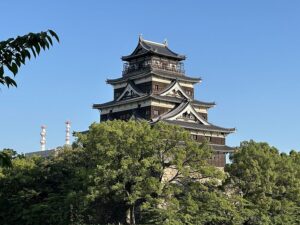
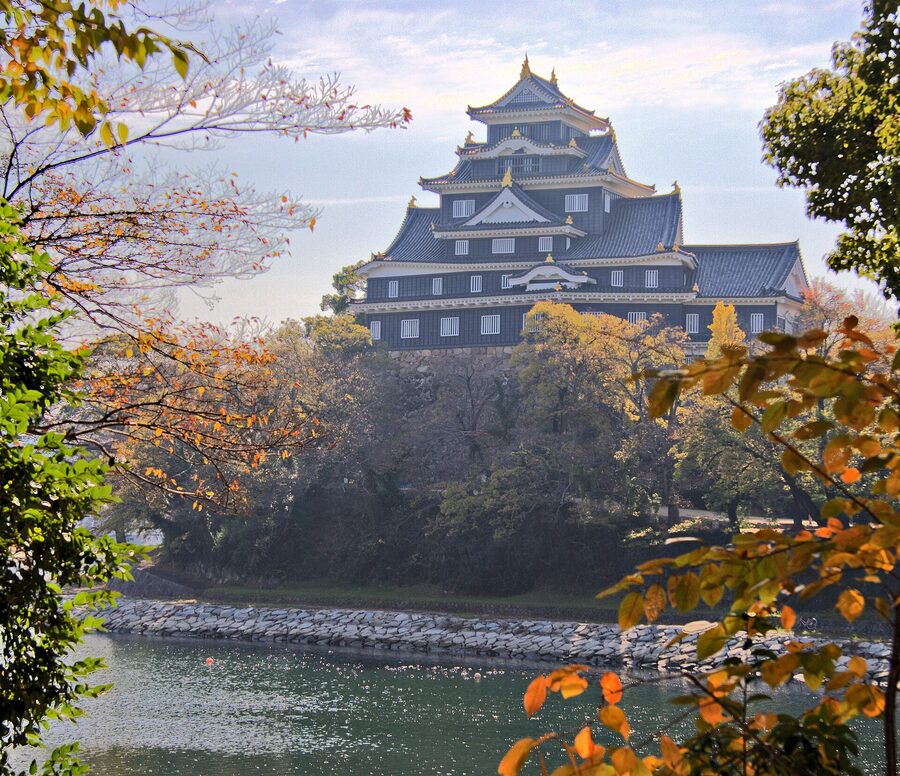
The keep was finished in 1597, the date the castle uses as its founding. Its stone base, and so its ground floor, is an irregular pentagon, said to follow the shape of the rock it stands on; some Japanese historians think it was modelled on the equally lopsided keep at Azuchi, others on Hideyoshi’s keep at Osaka Castle. It was clad in black weatherboard and roofed, at key points, with gold. Japanese sources describe it as three, four or five tiers over six floors, depending on how you count the roofs, which is a nice illustration of how little the tier count of a Japanese keep actually tells you.
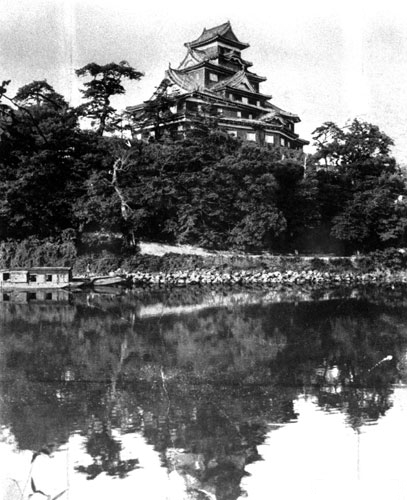
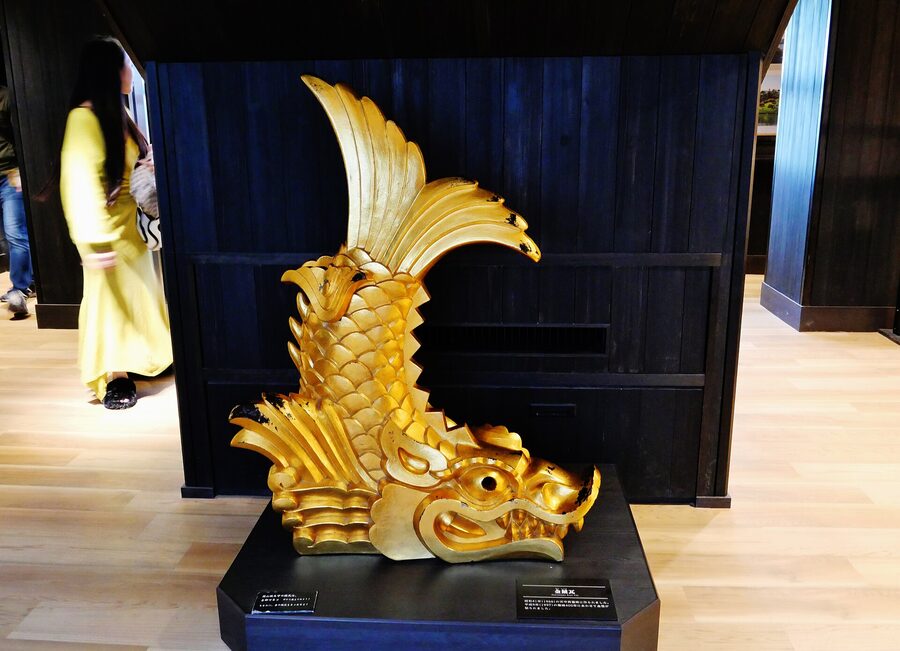
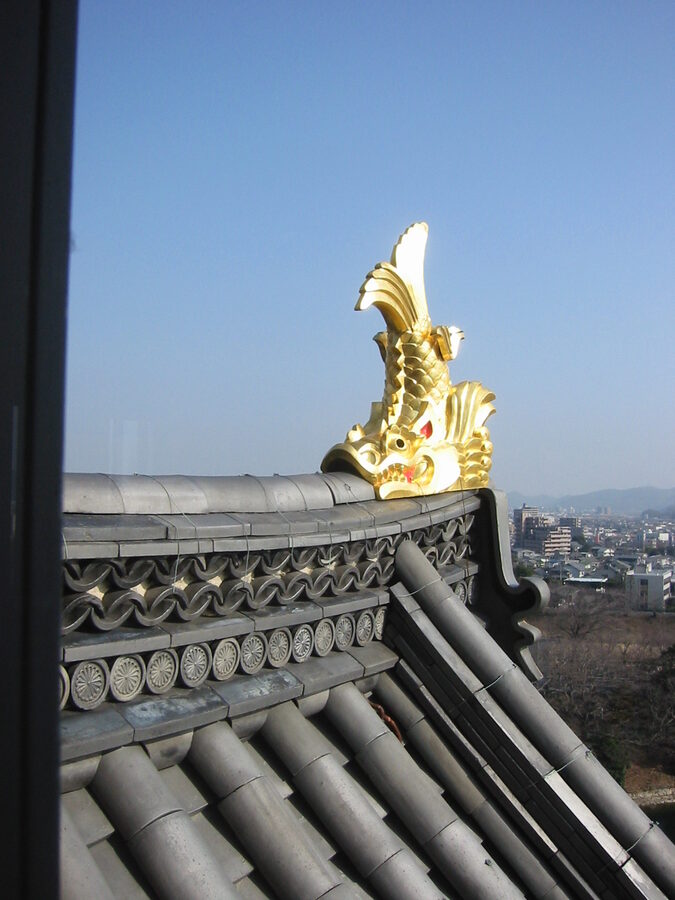
Excavations have turned up gold-leafed roof tiles from Hideie’s time, which is where the name Kin’u-jō comes from. Remarkably little is recorded about the exact finish, however: the black is certain, the gold leaf was on tiles at key points of the roof, and the rest is inference. The tiles themselves are covered in my piece on kawara roof tiles; gold leaf on them was a Toyotomi signature, and you see it wherever Hideyoshi’s favourites built.
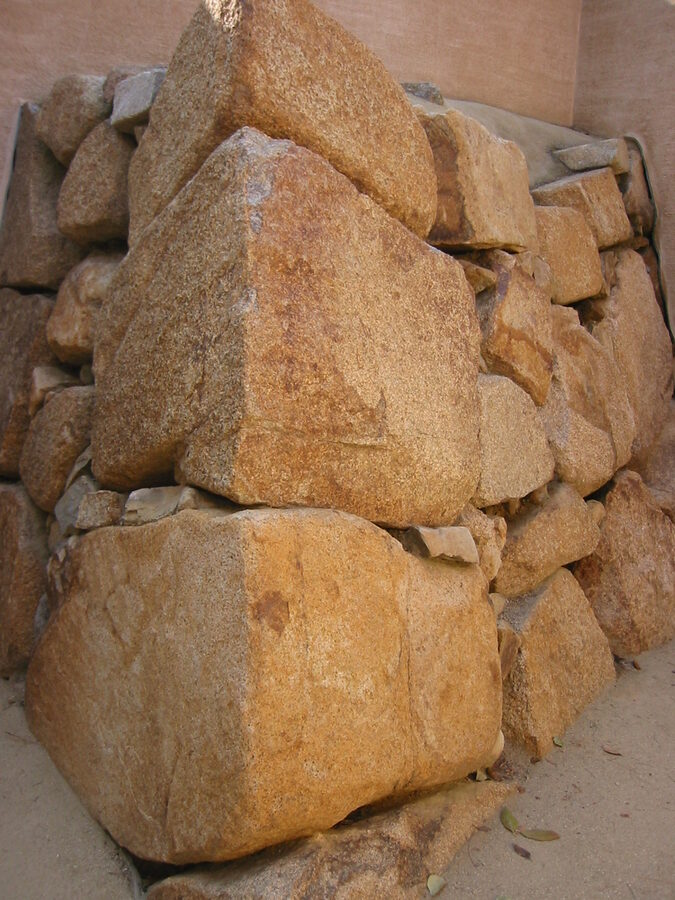
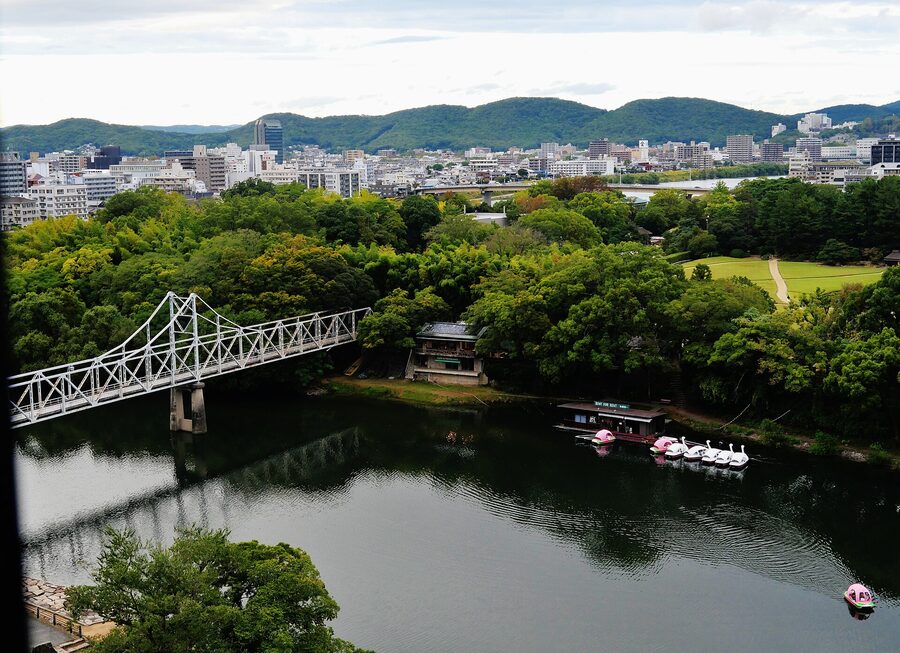
The castle had one serious flaw: its plan stepped down westward in three tiers, leaving the north and east of the honmaru almost unprotected. Hideie’s answer was to move the river, bending the main channel of the Asahi so that it hugged those two faces as a natural moat. It worked, militarily. It also gave Okayama a river with an unnatural kink in it and a century of floods, and that kink, as it happens, is where the garden came from.
Sekigahara and fifty years on Hachijō
Hideyoshi died in 1598 and Toshiie the next spring. In the vacuum, the Ukita house came apart.
The Ukita disturbance
Late in 1599, a group of senior Ukita retainers, among them Togawa Tatsuyasu, Oka Echizen-no-kami and Hanabusa Hidenari, plotted to kill Hideie’s favourite administrator, Nakamura Jirobei, who had carried out a land survey they hated. The plot leaked, Nakamura escaped, and a furious Hideie tried to have Togawa killed. The rebels shaved their heads and barricaded themselves into an Osaka mansion. The only contemporary record of the affair is a few lines in a Kyoto temple diary, but between the lines you can see a twenty-seven-year-old lord who had grown up as a prince and had never had to manage men who remembered his father.
Ieyasu settled the dispute, and several of the rebels ended up in his service. The Ukita lost something like seventy samurai, many of them senior commanders, months before the biggest battle in Japanese history. The Bizen Gunki later blamed a quarrel between Christian and Nichiren Buddhist retainers, and it is true that Gō was later baptised (her Christian name was Maria) and that Hideie’s brother-in-law Akashi Takenori was a famous Christian commander; but the evidence does not support the religious explanation, and most Japanese historians now put it down to a clash between old retainers and new administrators. The broader story is in Christianity in Japan.
The longest-lived man of Sekigahara
In 1600 Hideie went with Ishida Mitsunari against Ieyasu, and some Japanese historians think he was among the first to commit; he held a departure ceremony at the Toyotomi shrine in Kyoto before Mitsunari had even asked Ōtani Yoshitsugu to join. On the 15th day of the ninth month of 1600 (21 October by the Western calendar) he brought around 17,000 men to the field, the largest Western contingent, and fought Fukushima Masanori in the centre for most of the morning. His officers included pages commanding gun units, because the men who should have commanded them had left. Then Kobayakawa Hideaki came down off Mount Matsuo on the wrong side, the Western line broke, and Hideie ran.
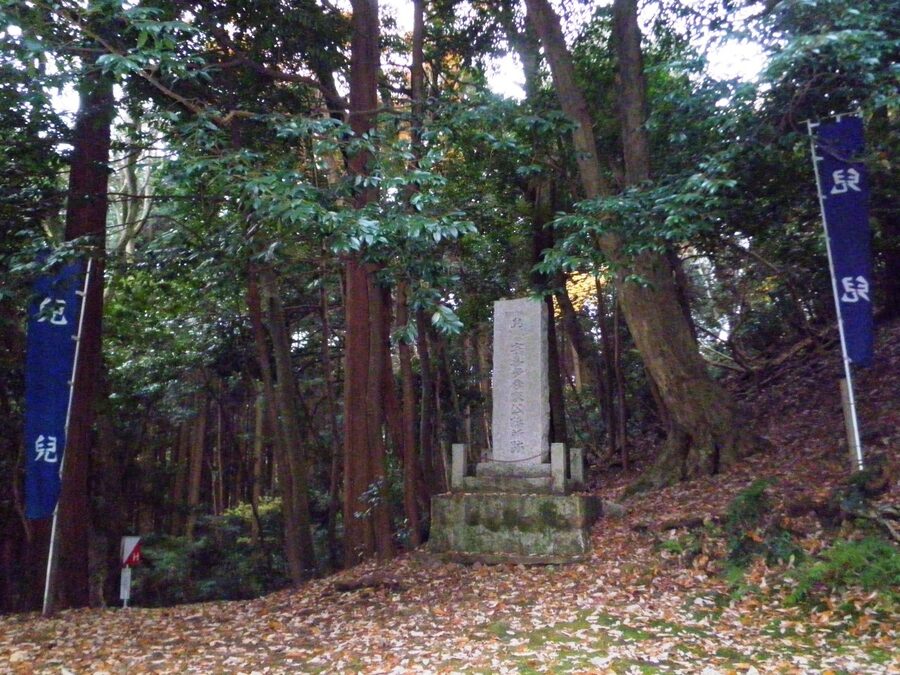
He hid first in a farmhouse in the mountains near Sekigahara, then made his way to Osaka and in 1601 sailed for Satsuma, where Shimazu Yoshihiro, another Western general who had escaped, took him in. He shaved his head and called himself Kyūfuku. The Shimazu kept him for two years, until their own peace with Ieyasu was settled; in 1603 they handed him over and asked for his life. The Shimazu asked, his wife’s mother Hōshun-in may have worked behind the scenes, and Ieyasu, who had no reason to be generous to the man who had raised an army against him, spared him.
He was held at Kunō in Suruga and then, in 1606, sent to Hachijōjima with his two sons and a household of ten. He is counted as the island’s first official exile. Gō went home to her family in Kanazawa, where her brothers ruled from Kanazawa Castle, and the Maeda sent rice, money and paper to Hachijō for the rest of his life and long after. They never stopped.
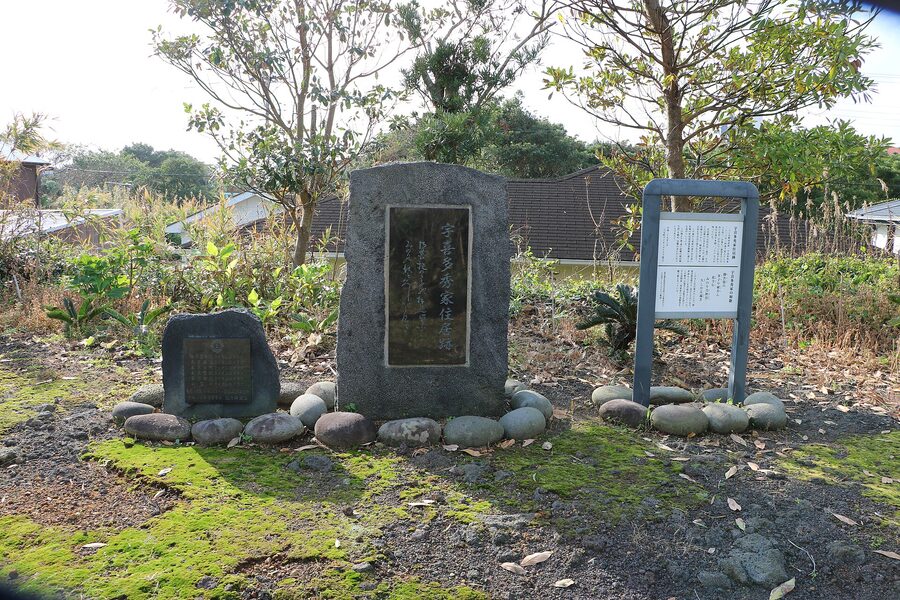
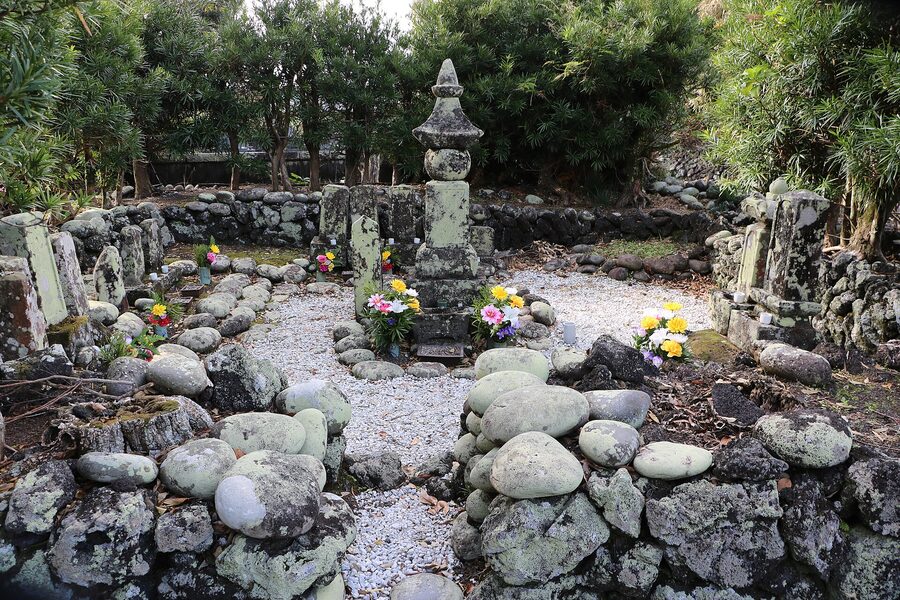
There is a story that in 1616 he was offered a pardon and 100,000 koku from the Maeda to become a lord again, and refused; it is attested late and I am not sure I believe it. What is certain is that he lived until 1655, into the reign of the fourth shogun, and outlived every other daimyo who fought at Sekigahara. Gō had died in Kanazawa in 1634. His descendants stayed on the island in seven households and were pardoned only after the Meiji Restoration.
Two years of Kobayakawa Hideaki
The man who took Okayama was the man who had broken Hideie’s army. Kobayakawa Hideaki was born in 1582 by the Japanese reference works (English-language accounts often give 1577), a nephew of Hideyoshi’s wife Nene, adopted first by Hideyoshi and then by Kobayakawa Takakage, the uncle of Mōri Terumoto, and he was eighteen at Sekigahara. Whether he changed sides at noon after Ieyasu’s guns fired warning shots into his camp, or came down the mountain at the start as he had always intended, historians still argue. Either way, his reward was the Ukita domain.
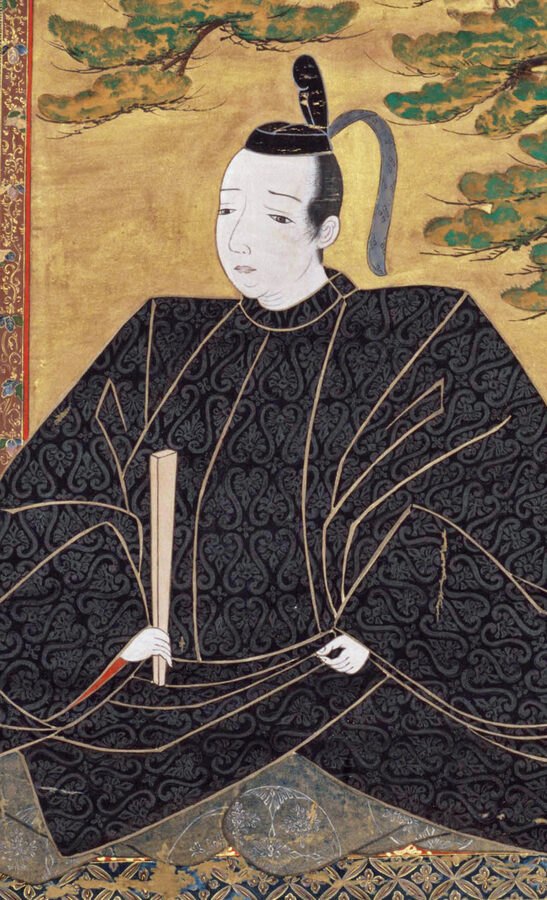
How big a domain is a matter of opinion: Japanese reference works give 500,000 koku, 510,000 or 520,000, and the commonly repeated English figure is 550,000. He took the castle in the autumn of 1600 without a fight, and set about making it his.
He widened the middle terrace of the honmaru and dug a new outer moat round the town in twenty days, putting samurai to work beside the farmers; Okayama still calls it the Hatsuka-bori, the “twenty-day moat”. Tradition says he also brought the old keep of Numa Castle here as the Ōnando-yagura.
He also purged his household. In 1601 he had his senior retainer Sugihara Kii-no-kami killed and drove his chief councillor Inaba Masanari into retirement, and most of the old leadership walked out. Masanari’s wife, as it happens, was the woman later known as Kasuga no Tsubone, wet nurse to the third shogun and one of the most powerful women of the Edo era.
Some historians think Hideaki, at nineteen, was removing the men who had pushed him into the defection at Sekigahara; others see a young lord taking control of his own domain.
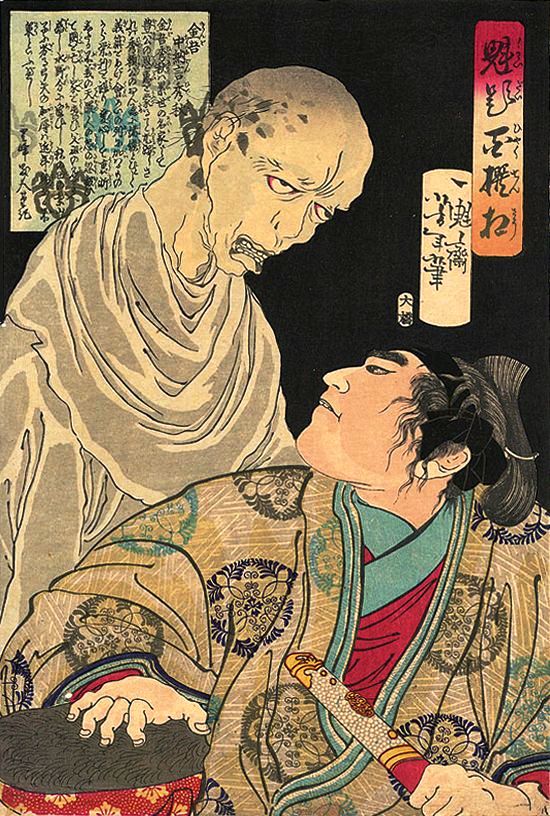
On the 15th day of the tenth month of 1602 he went hawking, came back to the castle at dusk feeling unwell, and took to his bed; he died three days later at about four in the morning, aged twenty by Western count. The chronicles said he went mad, haunted by Ōtani Yoshitsugu. The physician Manase Gensaku, in his casebook, recorded a year earlier that Hideaki was suffering from severe jaundice brought on by drink, and noted vomiting, a hard mass below the ribs and an inability to eat. He had no heir, and the Kobayakawa house was abolished, the first great house the new Tokugawa shogunate extinguished for want of a son.
The Ikeda
In 1603 Okayama went to the Ikeda, and it stayed with them for 266 years.
A five-year-old lord and a poisoned bun
The first Ikeda lord was Tadatsugu, son of Ikeda Terumasa of Himeji Castle and of Ieyasu’s daughter Tokuhime. He was given Bizen at 280,000 koku at the age of five, and his half-brother Toshitaka governed for him from Okayama while the boy stayed in Himeji. Tadatsugu came to his own castle in 1613, fought for his grandfather in the winter campaign at Osaka in 1614, and died at Okayama in 1615 at sixteen.
Okayama has a story for this too: that his mother tried to poison Toshitaka with a sweet bun so her own son could inherit Himeji, that Tadatsugu saw the plot and ate the bun himself, and that his mother ate one in shame. Tokuhime in fact died in Kyoto three weeks before her son, and when his remains were examined during a temple move in 1978 there was nothing to suggest poison.
His full brother Tadao succeeded him and finished the castle. Tadao pushed the middle terrace of the honmaru north, burying Hideie’s original wall (the stones you can now walk down to), added a formal reception hall, and remade the southern main gate. He had just come back from building at Osaka, where the shogunate had made him haul the three largest stones in the castle walls, the Tako-ishi among them, and he brought the new technique of tightly fitted cut stone home with him.
Ikeda Mitsumasa, the model lord
When Tadao died in 1632, his heir was three, and Okayama was too important a post on the San’yō road to leave to a child. The shogunate swapped the two branches of the family. Tadao’s son went to Tottori; Toshitaka’s son, who had been born in Okayama Castle in 1609, came the other way with 315,000 koku. His name was Ikeda Mitsumasa, and Okayama has been arguing about him ever since.
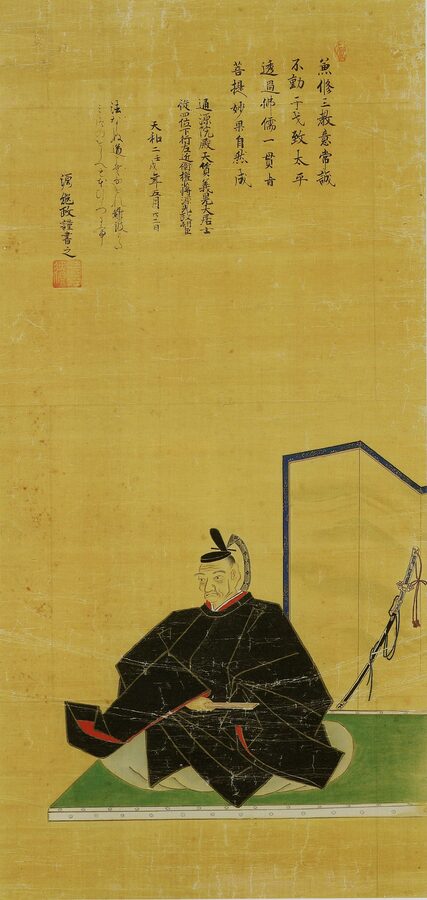
There is a story that at four he was taken to meet Ieyasu, was given a short sword, drew it on the spot and studied it before announcing, “This is a real one.” Ieyasu laughed, put it back in its sheath himself and said something about the look in the boy’s eyes. As a teenager in Tottori, the story goes on, Mitsumasa could not sleep for worrying how to govern a great domain until he read the Analects of Confucius and decided the answer was to educate people. Then he slept.
He brought in the Confucian scholar Kumazawa Banzan, a follower of the Wang Yangming school that put action before theory, and in 1641 opened the Hanabatake Kyōjō, often called the first domain school in Japan. By the late 1660s the domain was running 123 writing schools for commoners across its villages. When money ran short in 1675 he closed them and folded them into a single school in the hills of Wake district: the Shizutani School, begun in 1670 and still standing.
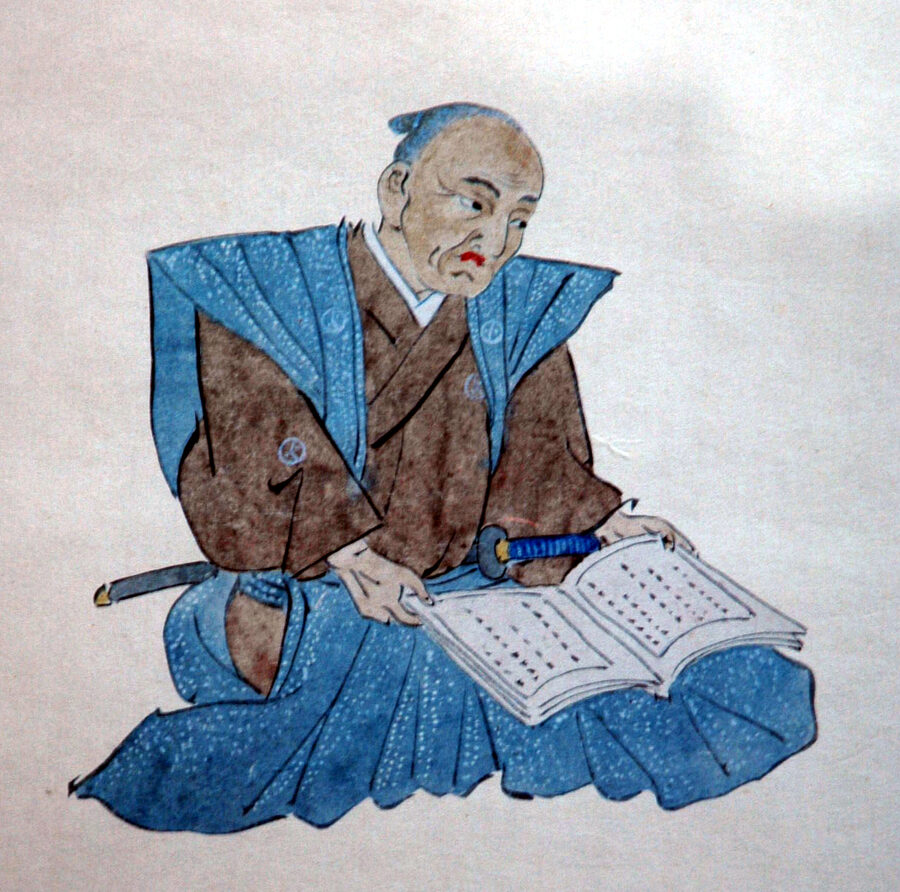
He was not a gentle man. Mitsumasa replaced Buddhist temple registration with Shinto registration in parts of his domain, closed many small temples and merged shrines, crushed the Fujufuse sect of Nichiren Buddhism, banned showy festivals and forbade drinking except on holidays. Okayama’s tradition says the local barazushi, sushi rice crowded with fish and vegetables, began as a way round his rule of one soup and one side dish: put everything in the rice and call it one dish. In 1645 he founded a branch of the Nikkō Tōshōgū, now Tamai-gū Tōshōgū, as the castle’s guardian shrine; the castle calls it the first founded by an outside lord, and some Japanese sources the first anywhere.
He retired in 1672 but went on running the domain from the Nishinomaru until he died there in 1682, aged 74. In Japan he is remembered with Tokugawa Mitsukuni of Mito and Hoshina Masayuki of Aizu as one of the three model lords of the early Edo period. The Dokai Kōshūki, a notoriously catty survey of the daimyo compiled around 1690, gave him top marks.
Kōrakuen: the garden that was also a bailey
It gave his son very low ones. Ikeda Tsunamasa was, according to that survey, a fool without discernment who could not keep his hands off women and fathered more than seventy children. Isoda Michifumi, the Okayama-born historian who supervised the new displays in the keep, points out that Tsunamasa was also a fine calligrapher and poet, a Noh dancer good enough to perform for his own retainers, and a lord who loved Kyoto culture so much that he asked to be buried in court dress. He was the wrong kind of lord for a Confucian, and the right kind to build a garden.
He also had the money, which Okayama had not had for years. Hideie’s diverted river kept flooding the town, and in the late 1660s Mitsumasa’s engineer Tsuda Nagatada began cutting the Hyakken-gawa, a floodway that took the overflow away east; it was finished around 1686, together with new reclamation on Kojima Bay that eventually added well over two thousand hectares of rice land. With the floods tamed and the treasury recovering, in the twelfth month of 1687 Tsunamasa had Nagatada start work on a garden on the river flats north of the castle, on land where Hideie’s pages had once lived.
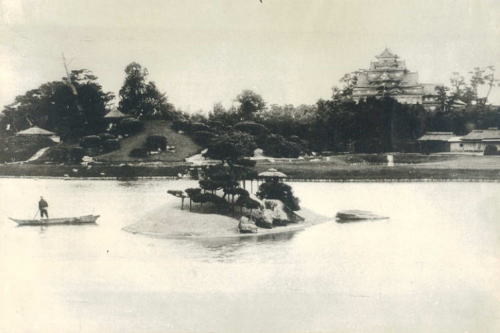
It was called simply the Go-kōen, the “garden behind”, because it lay behind the castle. Construction went on until 1700, and at first about three-quarters of it was rice paddies and fields, because Tsunamasa liked a country view. The Japanese sources add that it was walled with earth banks and bamboo fences to serve as an outer bailey on the castle’s weakest side, a use nobody ever had to test. The paddies became lawn in 1771 to save money, and in 1871 the garden was renamed Kōrakuen after a line by the Song statesman Fan Zhongyan: a ruler should be first to worry about the world’s troubles and last to enjoy its pleasures.
Nagatada is the hidden hero of this story. He built the Ikeda family cemetery at Waidani, the Shizutani School, the Hyakken-gawa, the reclamation and the garden, and he retired to Shizutani in 1704 and died there in 1707. If you take one name away from Okayama other than Hideie’s, take his. The best introduction to how Kōrakuen fits into Japanese garden-making is my history of Japanese gardens.
Fire, concrete and a coat of black paint
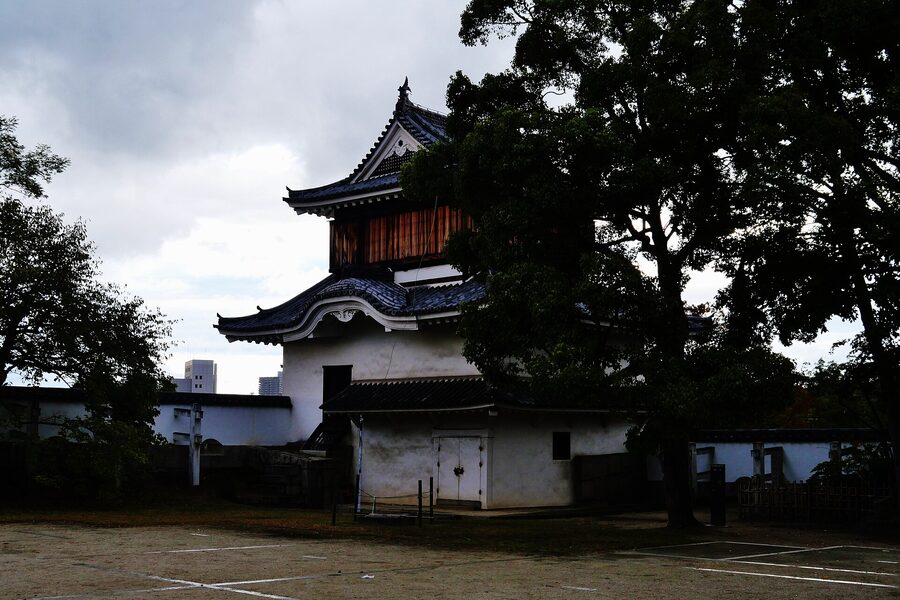
The Meiji era came for the castle slowly. In 1869 the last lord, Ikeda Akimasa, became governor of his own former domain, and four years later the castle was condemned. By about 1882 almost everything had gone: the palaces, the gates, the turrets, all but the keep, the Tsukimi-yagura, the Nishinomaru Nishite-yagura and the Ishiyama gate. In 1890 the site was sold back to Akimasa, who gave it to the prefecture, and from 1896 a prefectural middle school stood on the honmaru.
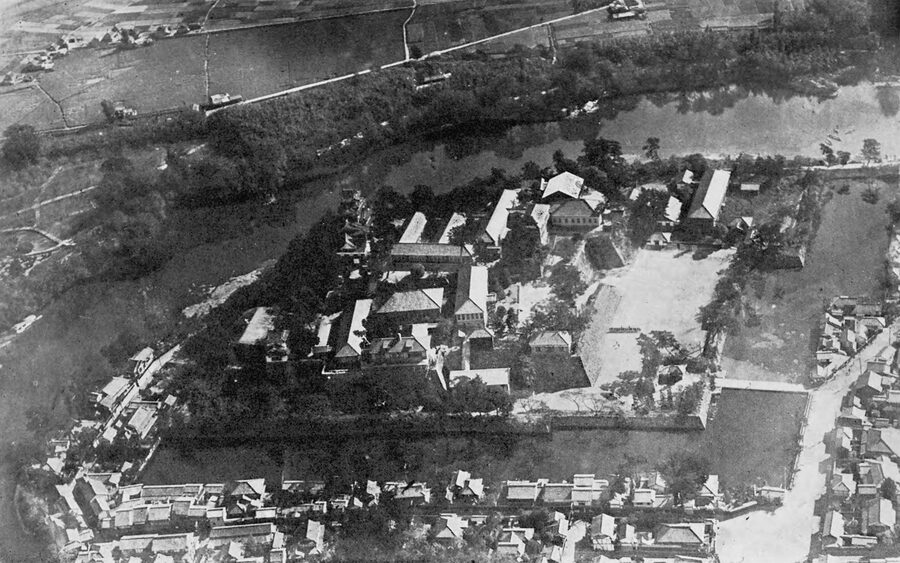
The keep was listed as a National Treasure on 19 January 1931, and the two surviving turrets and the Ishiyama gate in 1933. Shortly before the war, a student of architecture at Waseda University who came from Okayama made a full measured survey of the keep for his graduation thesis. Nobody can have thought it would matter.
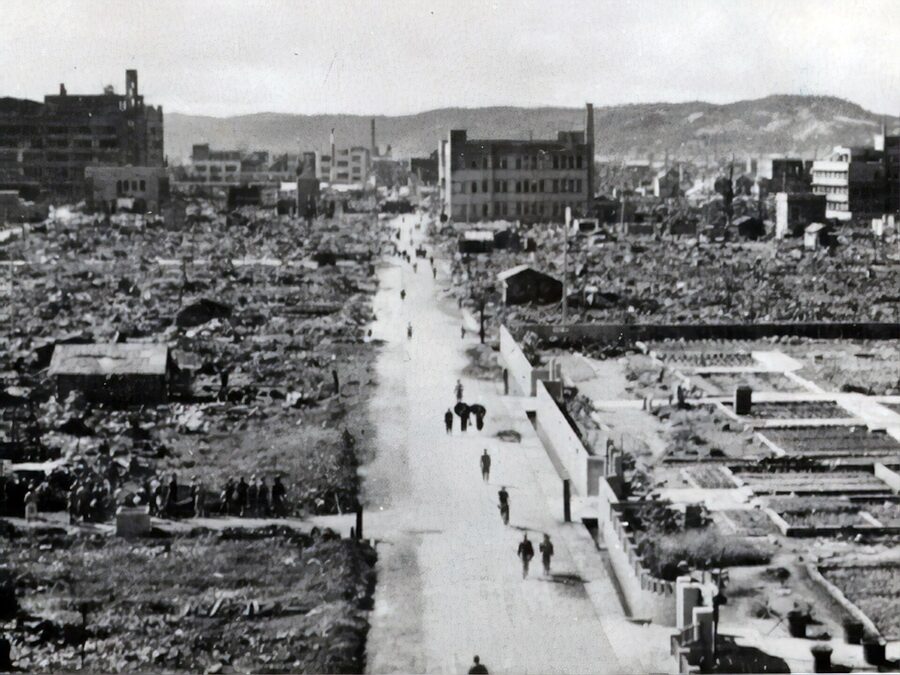
At 2:43 in the morning of 29 June 1945, about 140 B-29 bombers came in from the Seto Inland Sea and began dropping incendiaries on Okayama. There was no air-raid warning. In less than an hour and a half the centre of the city burned, more than 1,700 people died, and the keep and the Ishiyama gate went with it; most of the buildings in Kōrakuen across the river burned too. The American target sheets had marked the castle and the school buildings on its honmaru as one of the aiming areas, listed as barracks.
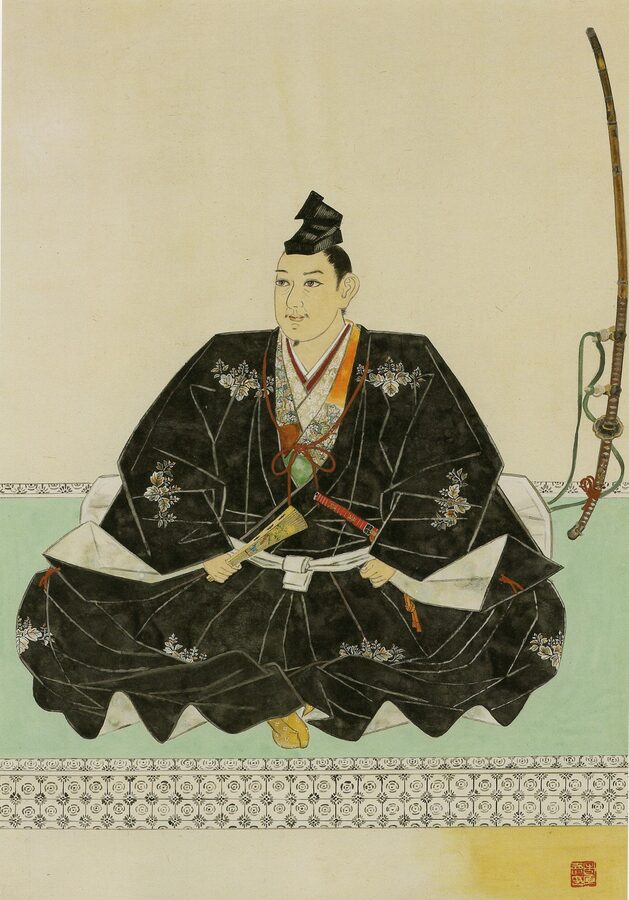
The Showa city rebuilt the keep in reinforced concrete between 1964 and 1966, working from that student’s drawings and pre-war photographs. It copied the outside closely, put the Toyotomi paulownia crest on the tiles to point back to Hideie, and cut a second entrance into the stone base that the original never had. When it opened, a commemorative song called simply “Okayama-jō” sold more than 100,000 copies. That November the castle was given a portrait of Hideie by the Tottori-born painter Ichihara Juichi, which did more than any document to give the city its idea of the man.
It is a concrete castle, and like every concrete castle it has a lift and a gift shop where the floors used to be. Like Hiroshima and Nagoya, it lost its keep in 1945 and got a concrete one back from the post-war city. But it is a better rebuild than most: the survey drawings back its outline, and the stone base under it is Hideie’s own. Bitchū Matsuyama, one of the survivors in my guide to Japan’s 12 original castles, is about an hour away by train; Okayama would have been on that list but for one night in 1945.
The Reiwa renovation of 2021 and 2022 closed the keep for about seventeen months and reopened it on 3 November 2022, 4,399 people going through on the first day. The outside was repainted a deeper black after the city had studied the finishes at Matsumoto and Kumamoto, partly because a glossy black can catch the sun and look white. The inside was gutted and redone, with the displays now supervised by Isoda Michifumi.
Where to visit Okayama Castle and Kōrakuen today
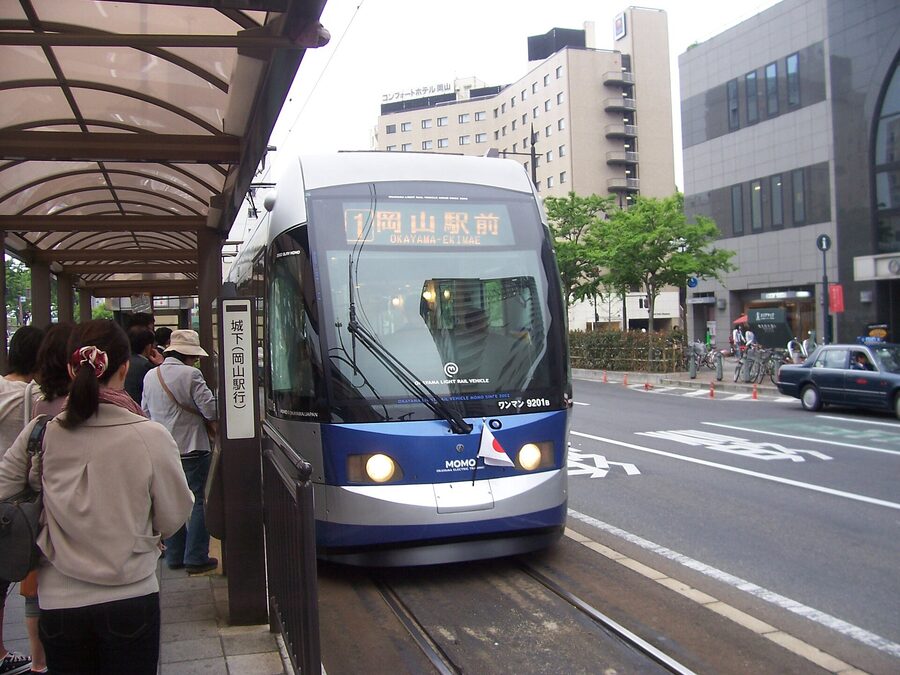
Okayama is on the San’yō Shinkansen, about forty-five minutes from Shin-Osaka on the fastest trains and twenty from Himeji, and the castle and Kōrakuen are close enough together to do on foot in one day. From the East Exit of Okayama Station, take the Okayama Electric Tramway’s Higashiyama line four or five minutes to the Shiroshita stop, then walk about ten minutes east. Do the castle first, cross the Tsukimi-bashi footbridge to the garden, and then decide whether you have the energy for a museum.
Okayama Castle
The keep opens from 9:00 to 17:30 every day (last entry 17:00) and closes only from 29 to 31 December. Entry is ¥500 for adults and free for children of junior-high age and under. A combined ticket with Kōrakuen costs ¥800, and one that adds the Hayashibara Museum of Art ¥1,280; buy the first, at least. The grounds are free and open all the time.
Walk up rather than taking the shortest path. You come in past the Kagami-ishi, the huge upright mirror stones at the entrance to the honmaru, one of which carries a line showing the height of the Muroto typhoon flood of 1934. Then look for the tallest of Hideie’s walls, built by 1597 of unworked stone and 15.6 metres high, one of the tallest pre-Sekigahara walls in Japan; and the corner where Kobayakawa Hideaki’s rounder stones meet Hideie’s bigger ones in a straight extension. The castle’s own site map numbers all of these, and some of the stones carry masons’ marks, circles and crosses and right angles.
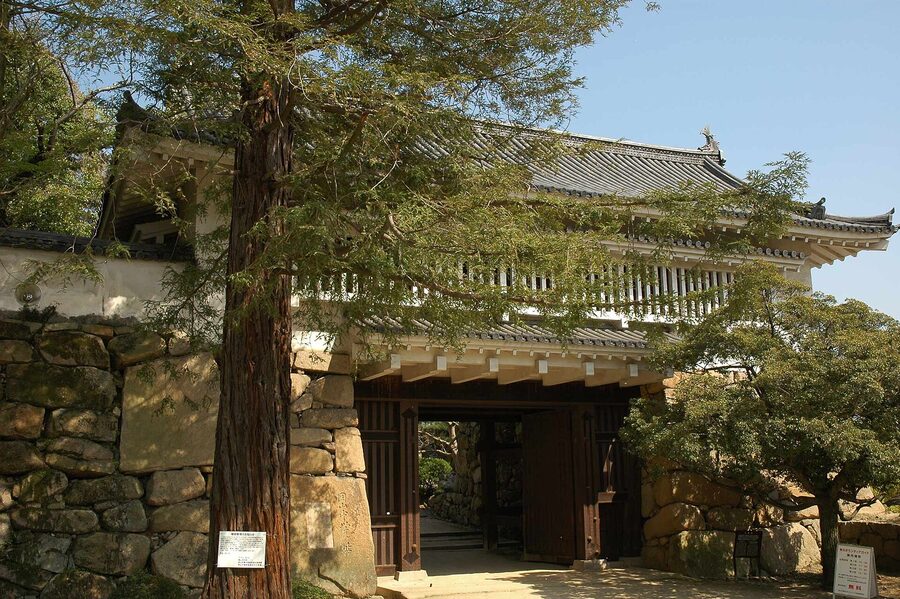
Go down to Hideie’s buried wall at the north side of the middle terrace: it is the oldest thing in the castle and it is underground. Then find the Tsukimi-yagura on the north-west corner and the Rōka-mon, the corridor gate where the lord walked between his residence and his offices. Inside the keep, start at the top and work down: the fourth floor covers Naoie and Hideie, the third Sekigahara (Hideie, Hideaki and Ikeda Terumasa, each from his own side), the second Mitsumasa and Tsunamasa, and the first is a hands-on floor for children. The castle also runs a Bizen-ware workshop where you can make a piece in the local clay.
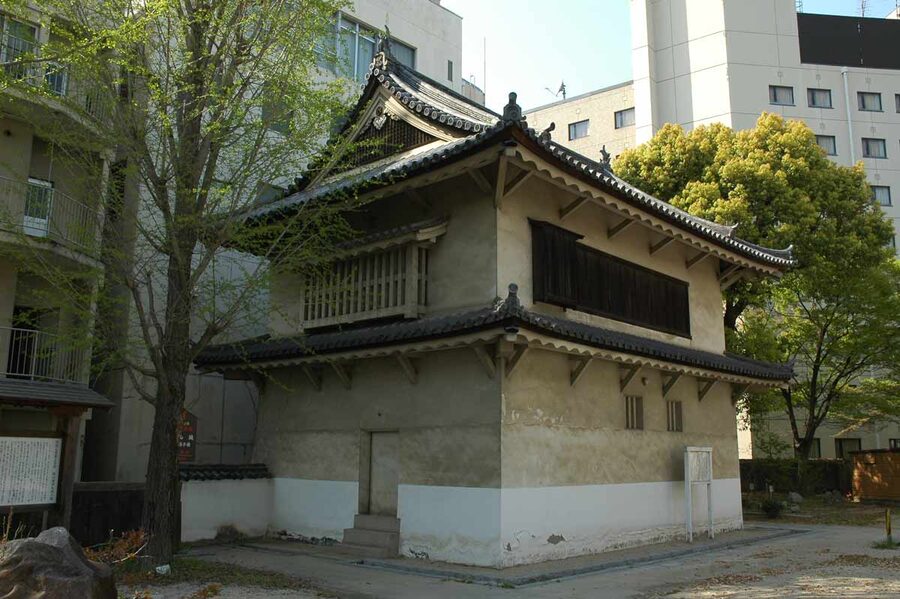
The other surviving turret, the Nishinomaru Nishite-yagura, stands about 400 metres west, on the former grounds of an elementary school, with office buildings crowding it on two sides. It is an Important Cultural Property and almost nobody goes to look at it. Ten minutes on foot will take you there from the keep.
Okayama Kōrakuen
Kōrakuen is open from 7:30 to 18:00 between 20 March and 30 September and from 8:00 to 17:00 the rest of the year, last entry fifteen minutes before closing. Adults pay ¥500, over-65s ¥200, and high-school students and younger get in free (until March 2027, at least). The south gate is the one by the Tsukimi-bashi footbridge from the castle; the main gate faces north towards the Prefectural Museum.
It is a stroll garden built for a lord who did not have to walk far, so it is flatter and more open than you expect: wide lawns, a big central pond (the Sawa-no-ike), and one artificial hill, the Yuishin-zan, built by Tsunamasa’s son and only about six metres high. Walk the full circuit of the stream, about 640 metres of it. The rice paddy called the Seiden is a remnant of Tsunamasa’s farmland and is still planted each year, and there is a tea field that is still picked.
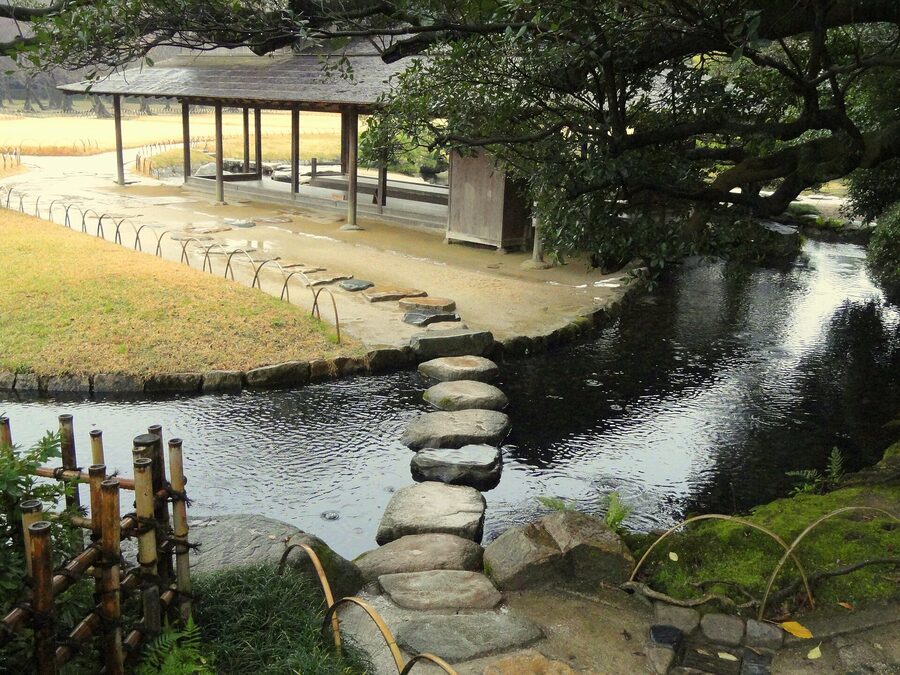
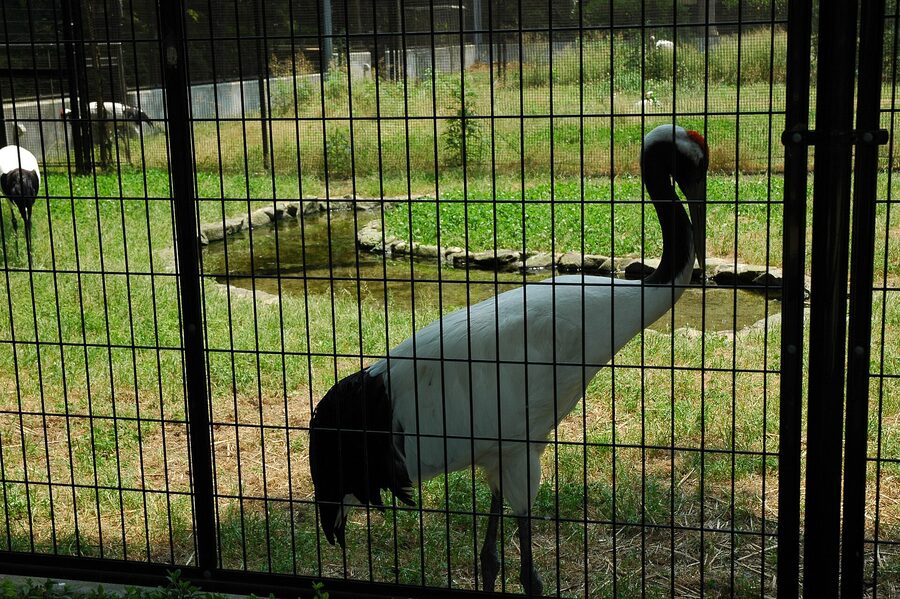
The Enyō-tei, the lord’s main pavilion, burned in 1945 and was rebuilt in 1960, and it looks across the lawn to the pond exactly as Tsunamasa intended. The Noh stage, rebuilt in 1958, is a reminder of his tastes. The lords used the garden only in the years they were home from Edo under sankin-kōtai, and until the shogunate weakened in the 1830s they entertained their guests in the castle instead. In 1956 the Chinese writer and politician Guo Moruo, who had studied in Okayama as a young man, sent the garden a pair of red-crowned cranes, and Kōrakuen has kept cranes ever since; on New Year’s Day they are let out to walk on the lawn.
How does it compare? I would put it below Kenrokuen in Kanazawa, the Maeda garden that is the most dramatic of the three, and well above Kairakuen in Mito, which is mostly a plum orchard. That puts Gō’s family’s garden above her husband’s, which feels right somehow; my guide to Japan’s greatest gardens has all three. Go early on a weekday, when the light is low across the pond.
The Okayama Prefectural Museum and the Hayashibara
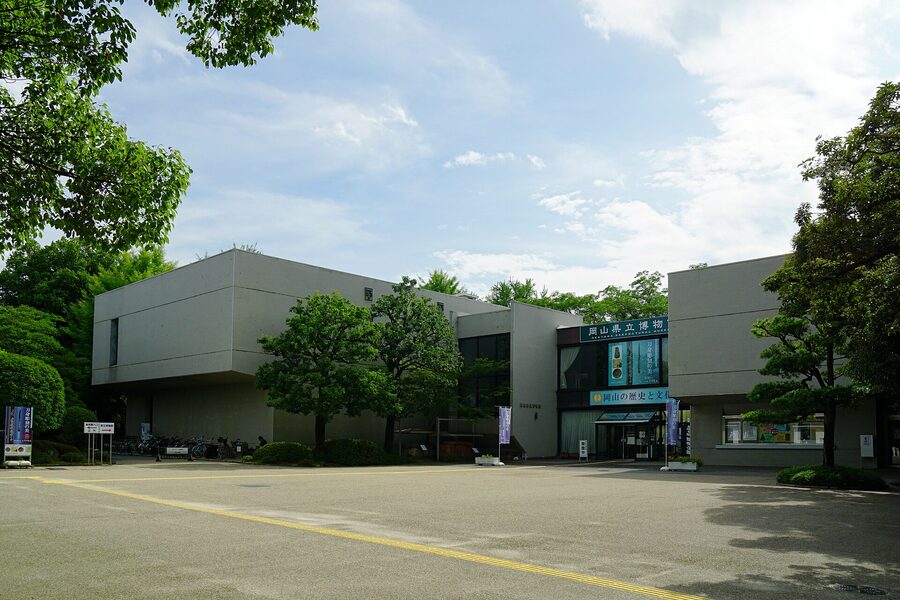
The Okayama Prefectural Museum stands just outside Kōrakuen’s main gate. It is open from 9:00 to 18:00 between April and September and 9:30 to 17:00 the rest of the year, closed on Mondays (or the next weekday after a Monday holiday) and between exhibitions. The permanent galleries cost a few hundred yen, special exhibitions more, and high-school students and younger get in free. Check the museum’s site before you go: in autumn 2026 it gave Naoie and Hideie a special exhibition all to themselves, which tells you where local sympathies lie.
The armour is one of the oldest in Japan, laced in dyed leather rather than silk cord, and my piece on samurai armour explains why that matters; National Treasures are not always on show, so check. If the Yoshiie portrait is out, stand in front of it for a minute: it is the only face of an Ukita you can trust.
Back across the river, on the site of the castle’s second bailey, the Hayashibara Museum of Art holds the collection of the industrialist Hayashibara Ichirō together with much of the Ikeda family’s own heritage: Noh costumes, swords and screens, including a National Treasure tachi signed by Yoshifusa and the Ikeda version of the Rakuchū Rakugai-zu screens of Kyoto. It is open from 10:00 to 17:00, closed on Mondays, and charges around ¥500 for most exhibitions. For background on the blades, see my guide to Japanese swords.
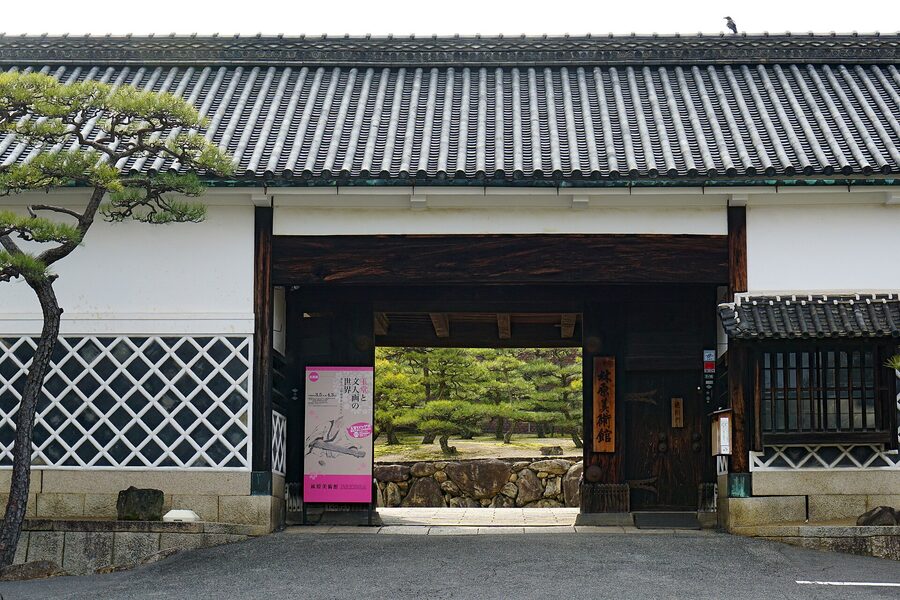
Zuiun-ji and the town
Hideaki’s grave is at Zuiun-ji in Banchō 2-chōme, about fifteen minutes’ walk north-west of the castle. It is a small working temple and the grave a modest stone pagoda, so go quietly. It is worth it for the odd feeling of standing over the man who decided Sekigahara, a short walk from the castle he took from the man he beat.
The Shizutani School
The Shizutani School is the reason I would tell anyone with a second day in Okayama to leave the city. It sits in a quiet valley in Bizen, about 40 minutes east of Okayama on the JR San’yō Line to Yoshinaga Station and then a short taxi ride or a small Bizen city bus (the timetable is thin, so check it before you go). It opens from 9:00 to 17:00 and closes from 29 to 31 December, and entry is ¥450 for adults and ¥100 for children.
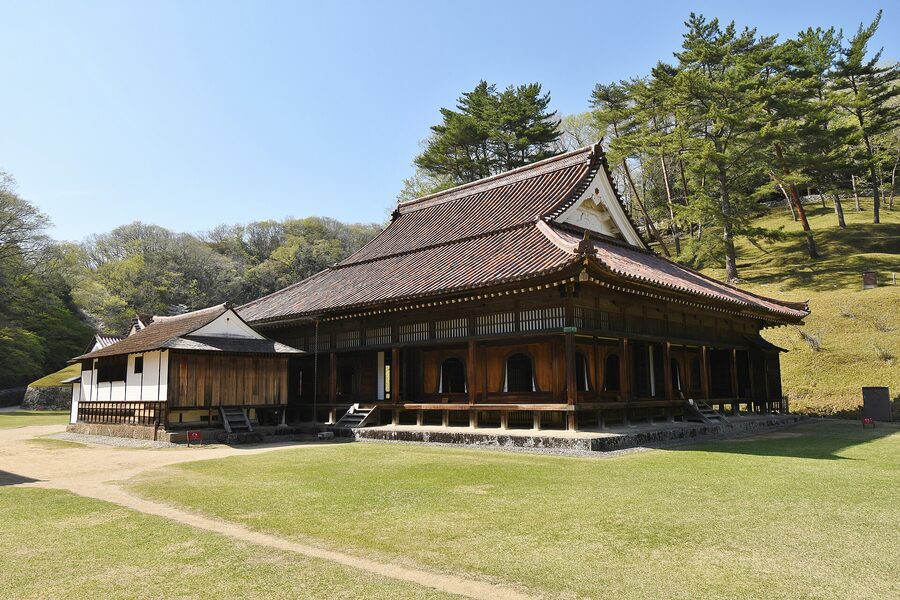
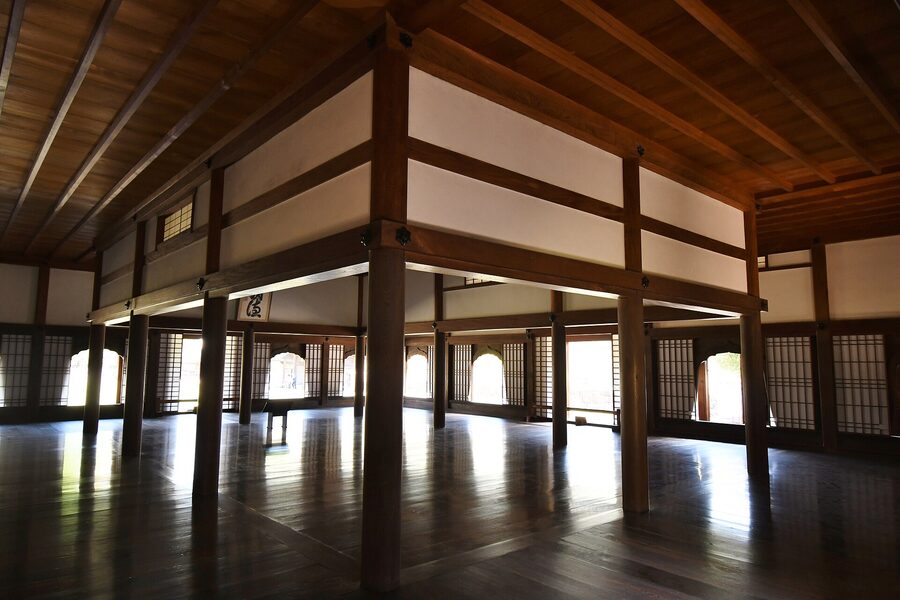
Mitsumasa ordered it in 1670, and the domain gave it its own lands so it could survive any change of lord; it took commoners’ sons from about the age of eight, and boys from other domains too. Lectures on Confucian texts were held on days ending in one and six, and days ending in five and ten were holidays. The hall is a single great room, its floor lacquered so deeply that the windows reflect in it. You may not touch the floor with your hands, because the oil from your skin wears the lacquer.
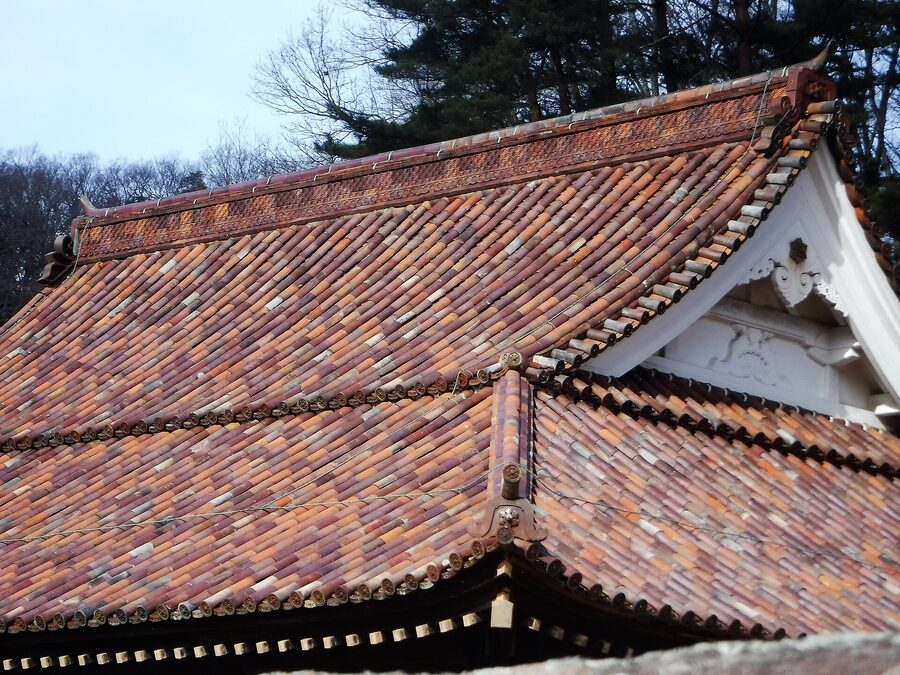
The roofs are the thing you will remember. They are covered in unglazed tiles fired at very high temperature, each one a slightly different shade of brown and red, and three hundred years on most of them are still unbroken where ordinary tiles last about sixty. Many accounts call them Bizen ware, the local unglazed stoneware; Japanese sources point out they were fired in the school’s own kilns, with potters brought from Kyoto, not in the Bizen kilns at Imbe. I think they are the most beautiful roofs in western Japan.
Walk round the long, rounded stone wall that encloses the school, look at the Confucian shrine and the shrine to Mitsumasa beside it, and find the two huge Chinese pistache trees in front of the hall, grown from seed brought from the tomb of Confucius at Qufu. They turn red in mid-November, which is the best time to go. Then climb to the Tsubakiyama.
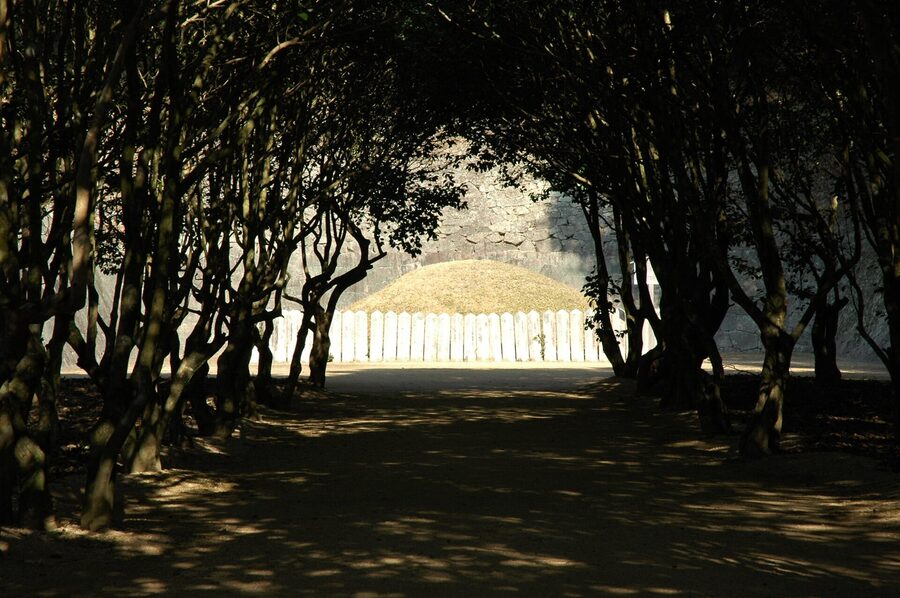
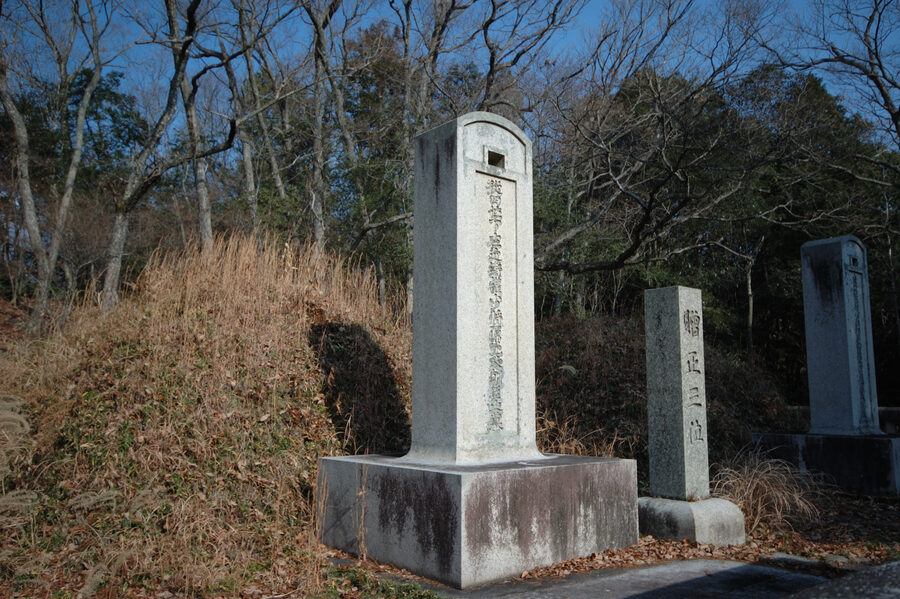
Mitsumasa himself is buried about twenty minutes’ drive north at Waidani, in Yoshinaga, in a family cemetery laid out on Confucian rather than Buddhist lines: earth mounds and stone steles on a forested mountain, reached by a long walk uphill. Tsuda Nagatada’s own grave, built in the same style, is about fifteen minutes from Shizutani by car. You will need a car or a taxi for both, and you will very likely have them to yourself.
Hachijōjima, if you are serious
To stand where Hideie ended, fly from Haneda (about fifty-five minutes) or take the overnight ferry from Takeshiba pier in Tokyo, which takes about ten hours. His grave is at the Inaba cemetery in Ōkagō, the site of his house is nearby, and the statue of him with Gō stands on the Nanbara coast, looking west at the sea he never crossed again. You can see all three in an afternoon.
I am not sure it is a trip I would make only for Hideie. But if you are going to Hachijō anyway for the hot springs and the island’s volcano, take an afternoon, buy a rice ball in Ōkagō, and eat it on the coast in front of the statue. He would have understood. Then think about the black keep with gold tiles on the Asahi, nearly six hundred kilometres to the west, which he built and never saw again after 1600.