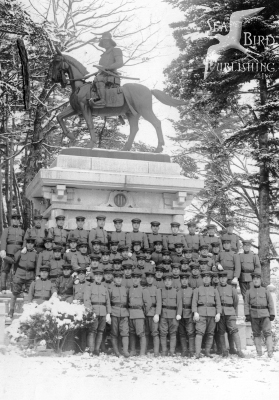
In November 1945 a local historian picking through a scrap-metal yard in Shiogama, on the coast north-east of Sendai, found Date Masamune. More exactly, he found what was left of him: the bronze lord who had ridden a bronze horse along the edge of the Sendai Castle ridge since 1935, taken down in 1944 so that he could be melted into something more useful to the war, and somehow never melted. The historian did not have the money to buy him back. It took him until the following September to raise ¥1,700, and by then the horse was gone and Masamune was, more or less, a bust.
That is the story of Sendai Castle in miniature. For 344 years after Masamune laid it out, no army ever attacked it; it saw out the samurai, a civil war in which its own lord led the losing side, and seven decades as an army base without a shot fired at its walls. Then it lost nearly everything to fire, scrap drives, B-29s and earthquakes, and what it has now is stone, a view and a second-generation statue. I think it is still one of the best castle sites in Japan, and this is my case for it.
It runs from the hilltop where the last of the Sengoku warlords settled in 1601 to the Date domain at its fattest, the galleon he sent to Rome, the northern alliance of 1868 and the long, undignified century that followed. And it ends, as these things should, with where you can stand today: on the ridge beside the statue, at the mausoleum across the river, and in front of a shrine Masamune built that is still standing after four hundred years, which is more than his castle can say.
In This Article
- A hermit’s platform above the Hirose
- A castle with a keep base and no keep
- What Vizcaíno saw
- Six hundred and twenty thousand koku, give or take a million
- Moving downstairs: the ninomaru
- Walls that were never finished
- A galleon for Rome
- 1868: the castle that led the north and never fired
- Barracks, a dud firework and the wrong shrine
- The night of 10 July 1945
- Two Masamunes
- Stone that keeps coming down
- Where to see the Date of Sendai today
- The honmaru and the statue
- Down the hill: the Ōtemon site and the moats
- The Sendai City Museum
- Zuihōden
- Ōsaki Hachimangū
- Further out
A hermit’s platform above the Hirose
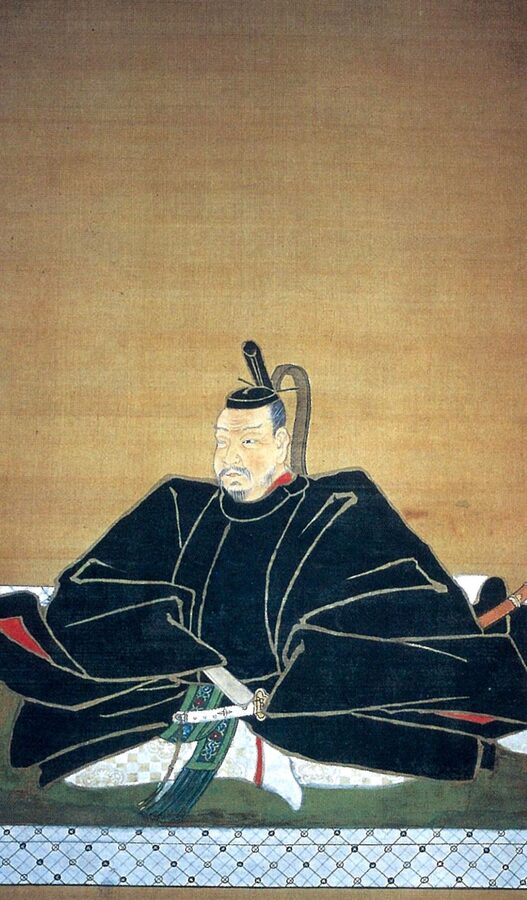
Masamune did not choose the castle he lived in before Sendai. In 1591, after a rising in the old Kasai and Ōsaki lands that he was strongly suspected of encouraging, Toyotomi Hideyoshi took the Date home districts around Yonezawa and moved him north to a hill fort called Iwatezawa, renamed Iwadeyama. The irony is that the man said to have refitted it for him, spending about forty days on the job while he surveyed the north, was Tokugawa Ieyasu. Masamune lived there for twelve years, calling himself the Ōsaki Shōshō, and he never liked it.
(His own life, from the white robes at Odawara onwards, is in the Date Masamune file; this is the story of his house.)
Iwadeyama had three problems. It sat off the main road north, it had been chosen for him by a regime that wanted the Date boxed in, and if the deal Ieyasu offered in 1600 had come good it would have stood at the wrong end of his territory.
That deal, the so-called “million-koku pledge”, promised to give back the districts Hideyoshi had confiscated if Masamune held the Uesugi in check during the Sekigahara campaign. He did hold them, and he also quietly backed a rising in a neighbour’s lands that Ieyasu found out about, and the pledge was paid out as one extra district. Ieyasu also kept him away from home for the best part of two years after the battle, some of it spent labouring on the shogun’s building works at Edo.
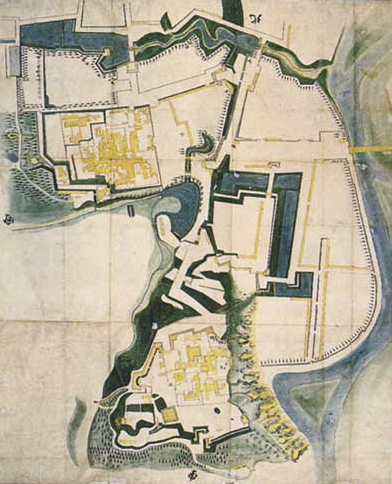
So he went looking for a better hill. The one he chose was at Chiyo, where the Kokubun family had kept a small castle on the south-eastern spur of Aobayama, with cliffs on two sides and the Hirose River curling round below. It stood where the coast road and the inland road from the south met, and the Hirose and Natori rivers gave it a way down to the Pacific. For a while he also weighed rebuilding Kitame Castle on the plain nearby, but that would have taken longer, and in the autumn of 1600 time was the one thing nobody had.
He climbed the hill to lay out the plan on the 24th day of the twelfth month of Keichō 5, which works out to 28 January 1601 by the Western calendar. That is why some books say the castle was begun in 1600 and others in 1601; both are right, depending on which calendar you are standing in. Part of the building costs came out of gold dug at the Miya mine in what is now Zaō. The temples on the site, among them a Kokūzō hall and a Hall of a Thousand Buddhas whose name may be the origin of Chiyo, were moved across the river to the hill called Kyōgamine.
Masamune also changed the name. Chiyo, “a thousand generations”, became Sendai (仙臺), written with characters meaning roughly “the terrace of the immortals”, lifted by the usual account from a line by the Tang poet Han Hong in which a traveller at an immortals’ terrace first catches sight of “the towers of five cities”. English-language accounts sometimes credit Ieyasu with the renaming; the Japanese sources, including the city’s own history of the castle, give it to Masamune, and I believe them. It sounds like him.
Ieyasu did not go in for Tang poetry about immortals.
A castle with a keep base and no keep
The thing everyone notices first is what is missing. The honmaru, the inner enclosure on top of the plateau, had a stone base for a tenshu (天守), a keep, and nobody ever put a keep on it. Instead the walls carried a ring of turrets, by most counts four of three storeys and one of two, and the castle picked up a literary nickname, Gojōrō (五城楼), from the second half of that same line of Han Hong’s. By 1601 even mid-sized lords were putting up keeps, so a lord of Masamune’s size going without was a choice.
My reading is that it was a message to Ieyasu, written in timber that was not there. A great white keep on a cliff above the new road north would have been read in Edo as a statement, and Masamune had spent ten years being suspected of things. What he built instead was a mountain castle of the old kind, when the fashion was moving down to the plains, and a very hard one to take: one way in, a river below, sheer drops on the south and east, and a guarded forest behind called the Oura-bayashi, which also hid the castle’s water supply.
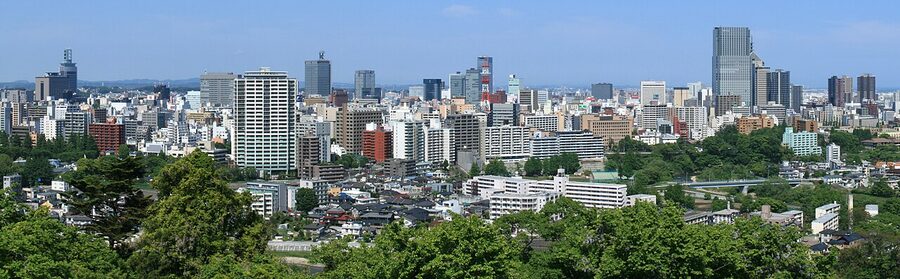
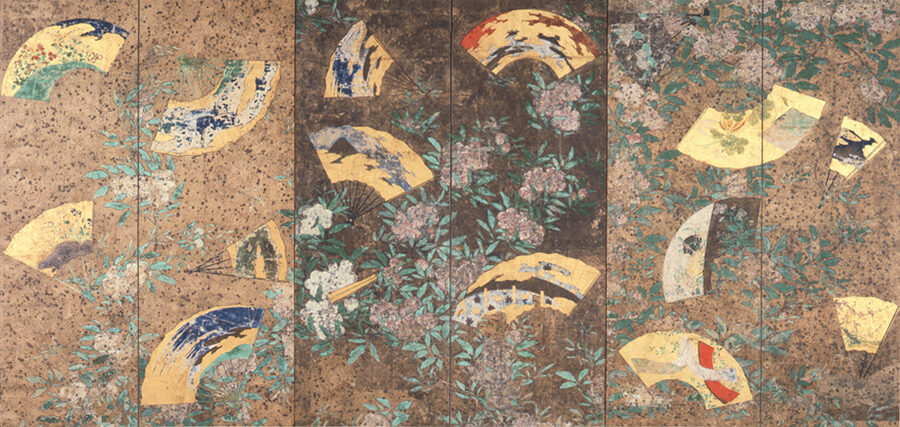
What he spent money on was the inside. The honmaru’s great hall, the Ōhiroma (大広間), was finished in 1610: 430 mats of floor, walls of gold-leaf screen painting by the Kanō school, and a plan that contemporaries compared with Hideyoshi’s Jurakudai palace in Kyoto. Above the dais where the lord sat there was a second, higher dais, the jōjōdan no ma, reserved for the shogun, with its own gate opened only for a shogunal visit. No shogun ever came, so far as anyone knows.
Off the east side of the hall, a pavilion called the Chōeikaku was built out over the cliff on timber stilts, the way the stage of Kiyomizu-dera hangs over its ravine in Kyoto. From it the lord could look down on the whole of his new town and out to the sea. Castle builders almost never did this; the only other examples that come up in the Japanese literature are a bathhouse at Fukuyama and the keep at Naegi.
That is the comparison I would make, in fact. The Nijō Castle palace is roughly contemporary, built for the same kind of ceremonial theatre in the Momoyama manner, and it still has its walls and its rooms. At Sendai you get the floor plan marked out on the grass and the sliding screens in a museum, and you have to assemble the room in your head.
What Vizcaíno saw
The best outside witness is a Spaniard. Sebastián Vizcaíno came to Japan in 1611 as envoy from New Spain, partly to thank Ieyasu for rescuing the crew of a galleon wrecked on the Bōsō coast two years earlier and sending them home in a ship built by William Adams, and partly to look for a pair of islands of gold and silver that Spanish geographers believed lay somewhere east of Japan. He reached Sendai on 8 November 1611 by his own, Western calendar and was received by Masamune two days later.
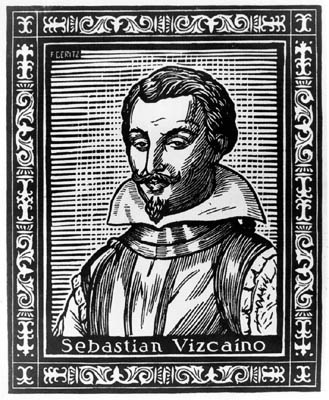
His report calls the castle “one of the best and strongest in Japan”, built on a rock above a deep river with cliffs more than a hundred men high and a single way in. Below it, he says, was a town as big as Edo with better houses. One curator at the castle’s exhibition hall has argued that the shogun’s gate and dais in the Ōhiroma were opened exactly once, for Vizcaíno, as the representative of the King of Spain, with Masamune sitting below him. It is a lovely theory and I have no idea whether it is true.
Vizcaíno then went north to survey the coast, and on the 28th day of the tenth month of 1611 (2 December by the Western calendar) his ship was off Okirai, in what is now Ōfunato, when the Keichō Sanriku tsunami came in. Because he was at sea he came through unharmed, and he wrote it down. Four centuries later, on the same coast, that account was read with a good deal more attention than it had been in years.
Six hundred and twenty thousand koku, give or take a million
The domain Masamune built around the castle was rated at 620,056 koku, in the precise style of the Tokugawa registers, which made it the third largest in Japan after Kaga and Satsuma. The number was a formality. The Date held almost all of present-day Miyagi Prefecture, the south of Iwate and a corner of Fukushima as one block, and as their farmers drained the marshes of the Kitakami basin the real yield climbed past a million koku by the early 18th century.
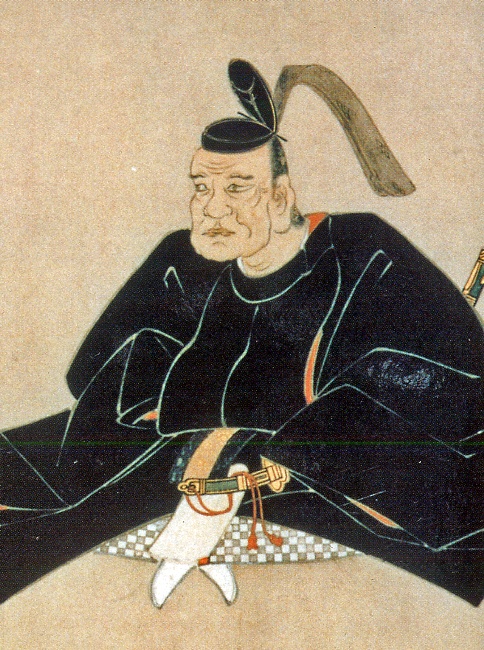
Most of the surplus went to Edo by sea. Under a system called kaimai, buying rice, the domain bought its farmers’ rice at a fixed price, shipped it down the Kitakami to Ishinomaki and on to the capital, and pocketed the difference. Exports began in 1632, and a book written in 1770 claimed that a third of the rice eaten in Edo came from Ōshū. Sendai rice fed the city the shogun lived in, which is a kind of power that does not need a keep.
You will sometimes read that the true yield of Sendai was two million koku, or two and a half. Those figures come from late Edo writers who were guessing, and the Japanese scholarship treats them as exaggeration. A careful survey of the old domain in the late 1870s put the yield, all crops converted into rice, at about 1.3 million.
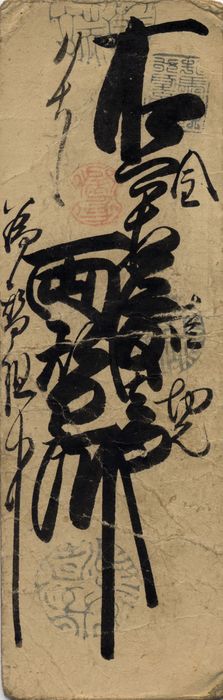
The trouble with a rice economy is the weather. When the harvest failed, the buying-rice system collapsed with it, and the Tenmei famine of the 1780s was a catastrophe: the farming population of the domain’s Mutsu districts fell from 502,124 in 1781 to 409,632 in 1789, mostly to the epidemics that followed hunger. The domain’s chroniclers recorded that in Sendai even samurai starved to death, which is said to have happened almost nowhere else. In a bad year the third-richest domain in Japan could not feed itself.
Moving downstairs: the ninomaru
The honmaru was magnificent and also a long walk up a steep hill every morning. On the fourth day of the fifth month of 1638 Date Tadamune began a new compound, the ninomaru (二の丸), on the flat ground at the foot of Aobayama but still inside the river’s bend, and he moved into it the following year. It covered about 310 by 200 metres, with the lord’s residence, offices, a Noh stage and gardens, and from then on it was the real seat of government. The honmaru was kept for ceremonies, which is to say it was mostly empty.
Around the same time a third enclosure, the sannomaru, went up by the main gate with the domain’s rice stores in it. It is where the Sendai City Museum stands now, between two old moats.
Tadamune had inherited because his elder half-brother Hidemune, born to a concubine, had been sent off to found the Date line at Uwajima in Shikoku. He married a granddaughter of Ieyasu, kept the mansions and processions that sankin-kōtai demanded, raised a shogunate-pleasing Tōshōgū shrine to the first shogun on the north-eastern edge of town in 1654, and generally did everything a second-generation tozama lord could do to look reassuring. Masamune had made the Date formidable; Tadamune’s job was to make them safe.
It did not keep them out of trouble. Tadamune’s son Tsunamune was forced to retire in 1660 at the age of 21, officially for dissipation, and the regency that followed produced the Date Disturbance, one of the three great house feuds of the Edo era, which ended in 1671 with a sword fight in a senior councillor’s mansion in Edo. Its villain in the kabuki versions, Harada Kai, had earlier been the official in charge of building Tadamune’s mausoleum. The stories about Tsunamune buying out a famous Yoshiwara courtesan are, by the best Japanese accounts, invented.
Walls that were never finished
The castle’s real enemy for 270 years was the ground. Earthquakes knocked down walls and turrets in 1616, 1646 (when three turrets came down), 1668, 1710 and on through the 18th and 19th centuries, and each time the domain rebuilt. When the north wall of the honmaru was taken apart and rebuilt between 1997 and 2004, the archaeologists found two older walls buried inside it.
The oldest, Masamune’s, was rough fieldstone stacked without much shaping. The second came from a later rebuilding, and the third, the one you see, went up after the Kanbun-era quake of 1668, set further forward in cut and dressed stone with neatly finished corners. Each rebuilding used a better technique rather than restoring the old one, which tells you what the masons thought of the original.
There is a story that Masamune, near the end of his life, told Tadamune and his senior retainers that the castle was not built for a time of peace and should be rebuilt once he was dead. It comes down as an anecdote rather than a document, and I would treat it as a legend about a man who generated a lot of them. It is true in spirit, though. He had built a fortress for a war that never came, and his heirs spent two centuries turning it into an office.
A galleon for Rome
The strangest thing the castle ever sent out was a ship. In 1613, with Ieyasu’s knowledge and approval, Masamune had a Western-style galleon, the San Juan Bautista, built on his own coast at Ogatsu and sent across the Pacific to Acapulco with a Franciscan friar, Luis Sotelo, and one of his own retainers, Hasekura Tsunenaga. The aim was trade with New Spain and, through it, with the Spanish empire, plus friars for the Date lands; some historians have suspected a military alliance against the shogunate, which I find hard to believe of a man who had spent thirteen years watching Ieyasu very carefully.
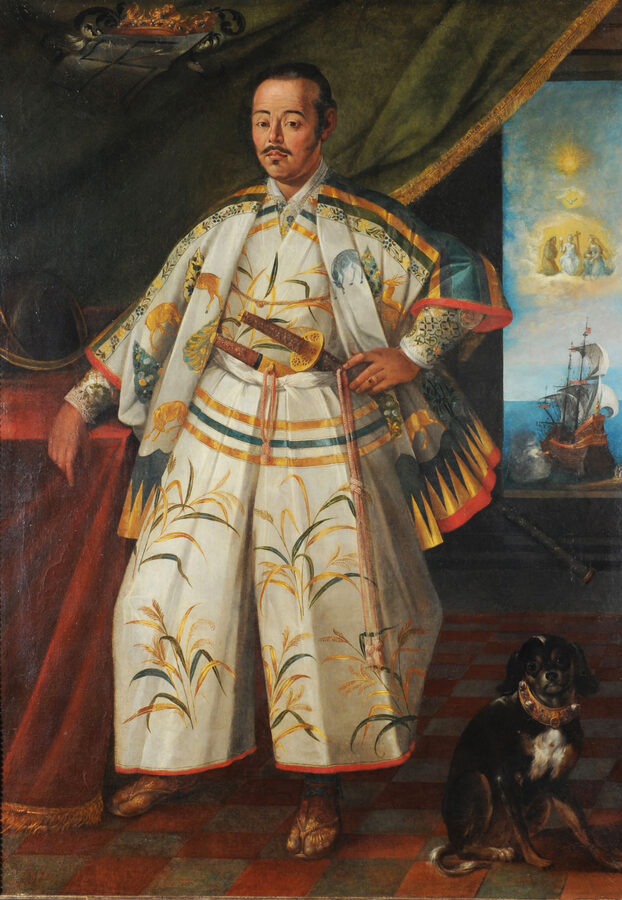
It sailed from Tsukinoura on the 15th day of the ninth month of 1613 (28 October by the Western calendar) with more than 180 people aboard. Hasekura, a samurai of 600 koku who had served in the Imjin War, went on by land across Mexico and by sea to Spain, was received by Philip III in January 1615, was baptised in Madrid, and reached Rome, where Pope Paul V gave him an audience on 3 November 1615 (the 12th day of the ninth month, back home in Sendai). The city made him a Roman citizen and a patrician.
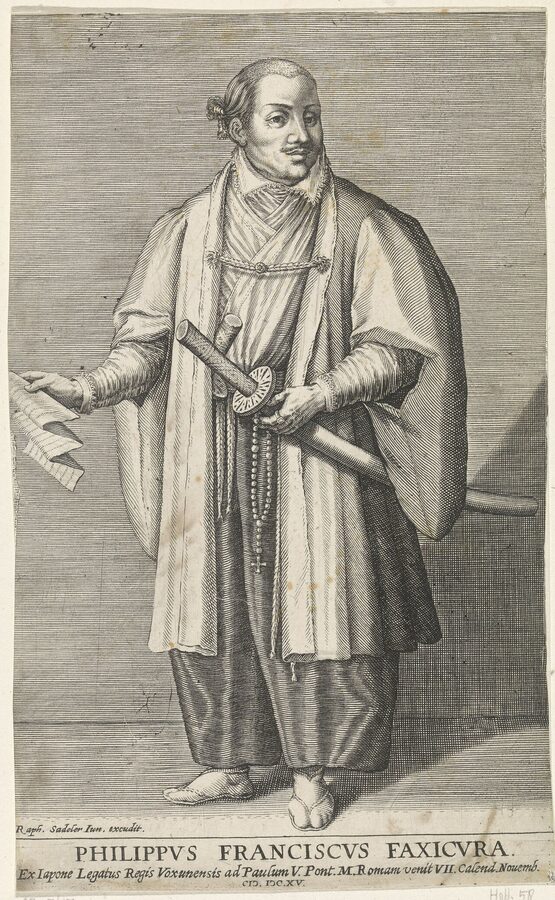
He never called himself Tsunenaga. His letters are signed Rokuemon or Rokuemon Nagatsune, and one Japanese theory is that his descendants reversed the characters of his name in the family records so that nobody would connect them with a Christian. It is the kind of detail that tells you how the story ended.
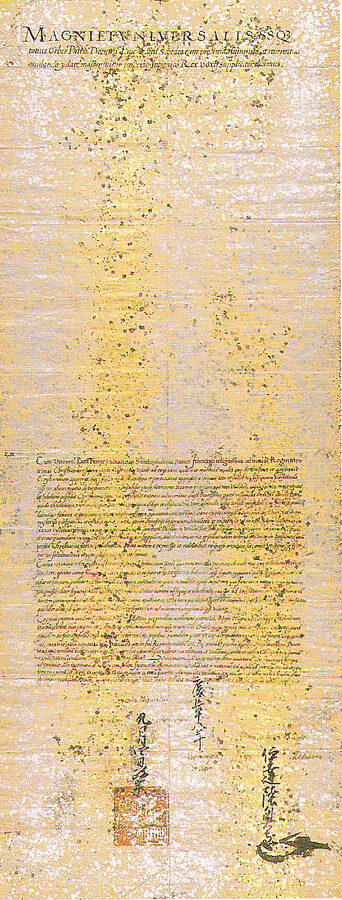
By the time Hasekura was standing in front of the Pope, the shogunate had already banned Christianity, in 1614, and the news reached Madrid before any treaty could be signed. He spent years waiting for an answer that did not come, and when he finally got home, on the 24th day of the eighth month of 1620, Masamune had posted the ban in his own lands and expelled the friars. Sotelo went back to Japan illegally and was burned at Ōmura in 1624.
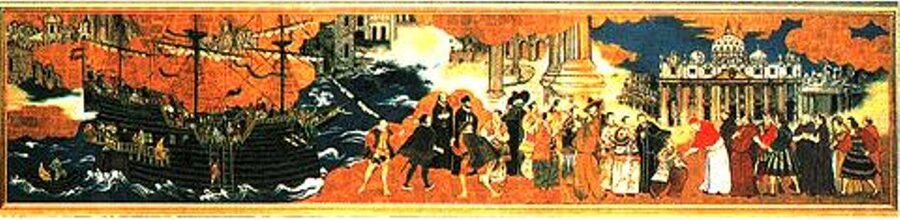
Hasekura died on the first day of the seventh month of 1622, if you believe one of his graves. There are three, and they disagree: a grave at Enpuku-ji in the town of Kawasaki, south-west of Sendai, gives 1622, one at Kōmyō-ji in Sendai gives 1621 at the age of 51, and one in Ōsato gives 1654 at the age of 84, which would mean the domain hid him away for three decades. In 1640 his son was executed because a retainer of the house had been found to be Christian, and the family was abolished until 1668. The north had Christians of its own, among them the Date retainer Gotō Juan, whose lands were put under watch soon after Hasekura came home, and their story belongs with that of the Hidden Christians more than most accounts allow.
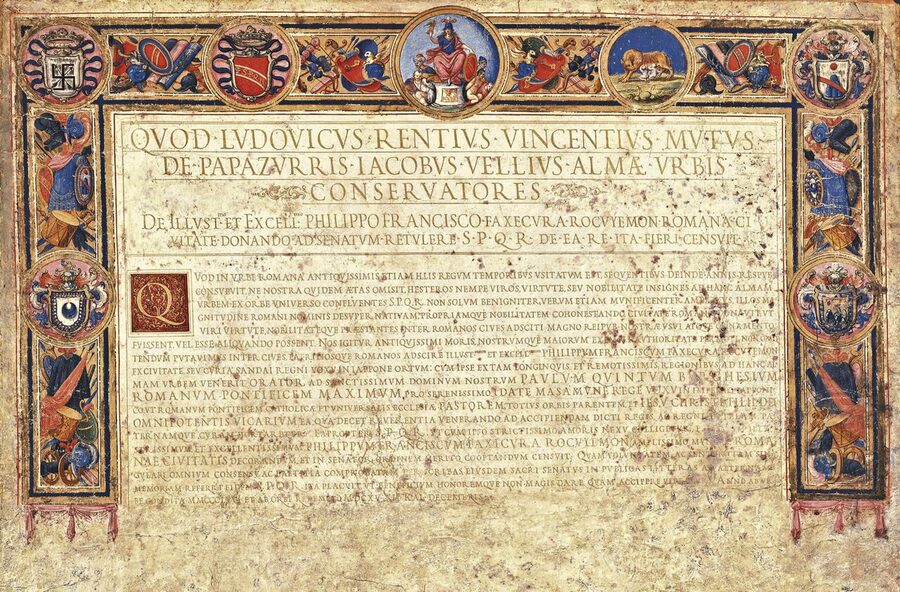
The confiscated objects are now in the Sendai City Museum, on the castle grounds, as a National Treasure. In 2013 the citizenship patent and two portraits, of Hasekura and of Paul V, were added to UNESCO’s Memory of the World register. The embassy changed nothing about Japan’s closing. It did produce the best document of the whole period, and it is kept almost exactly where it was launched.
1868: the castle that led the north and never fired
Two hundred and fifty years later the castle came close to its first real war. When the Boshin War began in the first month of 1868, the new government ordered Sendai to punish Aizu, whose lord had been the shogunate’s enforcer in Kyoto. Sendai marched to the border and did nothing. Its leading councillor, Tadaki Tosa, had no intention of fighting a fellow northern domain for the benefit of Satsuma and Chōshū.
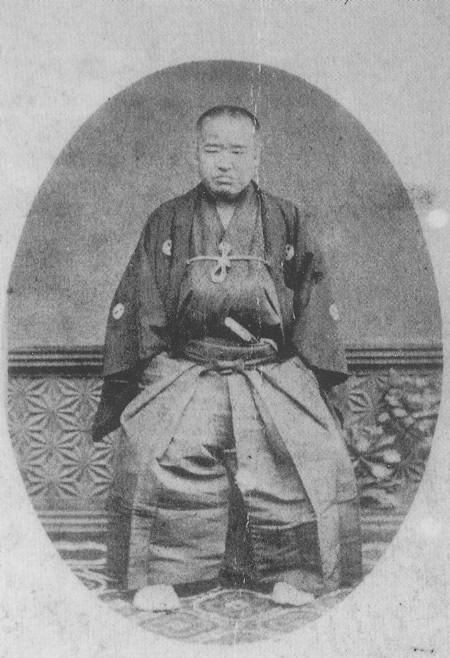
Sendai and Yonezawa then brokered a surrender for Aizu, which Aizu accepted and then withdrew. The government’s staff officer in the north, a Chōshū man named Sera Shūzō, had been treating the Sendai samurai with open contempt since he set up his headquarters in their domain school. On the 19th day of the intercalary fourth month he wrote to a colleague that the plan should be to “regard all of Ōu as enemies” and strike first. Sendai men got hold of the letter, and before dawn the next day they attacked him at his lodgings in Fukushima and killed him.
After that there was no way back. The domains of the north signed up to the Ōuetsu Reppan Dōmei, the alliance of Mutsu, Dewa and Echigo, with Sendai as its head and the castle as one of its nerve centres. It was the largest military coalition the north had ever put together, and it fell apart within a few months.
The Sendai army was badly armed and worse led. It lost at Shirakawa, lost three times at Komagamine on its own southern border, and at Hatamaki Pass lost 46 dead against the government’s seven. As defeats mounted, the war party lost its grip, and on the 10th day of the ninth month of 1868 (25 October by the Western calendar) Yoshikuni chose surrender, before the government army reached his castle. The castle had led the north and never fired a shot in its own defence.
The punishment was heavy and not the worst. Sendai was cut from 620,000 koku to 280,000, Tadaki was beheaded in Tokyo as the chief rebel, and the great retainer families lost almost all their land. Many of them took their people to Hokkaido at their own expense: the Watari Date founded what is now the city of Date, and the retainers of the Katakura of Shiroishi gave their name to Shiroishi ward in Sapporo. Next door, Aizu got a month of artillery, and Tsuruga Castle is the place to understand what Sendai avoided by giving up.
The war did pass through Sendai’s waters on its way north. That autumn the runaway shogunate fleet of Enomoto Takeaki put in at Matsushima Bay, took on Hijikata Toshizō and what was left of the Shinsengumi along with men from the beaten domains, and sailed on to Hokkaido and Goryōkaku. Some of the Sendai men who refused the surrender went with it.
Barracks, a dud firework and the wrong shrine
What followed the war, in the early Meiji era, was slow erosion rather than violence. In 1869 the ninomaru became a prefectural office, and in the summer of 1871, when the domains were abolished, the army moved in: the Tōhoku garrison, later the Sendai garrison and from 1888 the Second Division. The castle was kept on the army’s books when the government sorted the country’s castles in 1873, which spared it from auction and did not spare its buildings.
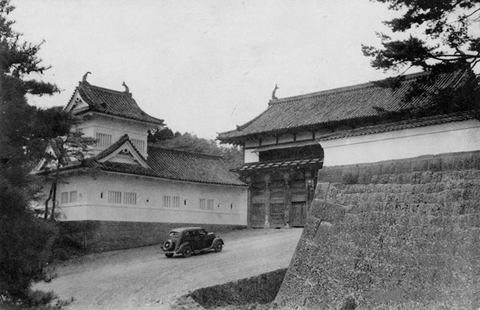
The honmaru buildings had gone by about 1874, and by the time Emperor Meiji came through on his northern tour in 1876 the great hall was probably already demolished. On 7 September 1882 the army held a memorial service on the riverside for the dead of the Satsuma Rebellion, the war against Saigō Takamori, and a firework failed to go off in the air, came down on the ninomaru and set it alight. Everything in it burned except the dressing room of the Noh stage.
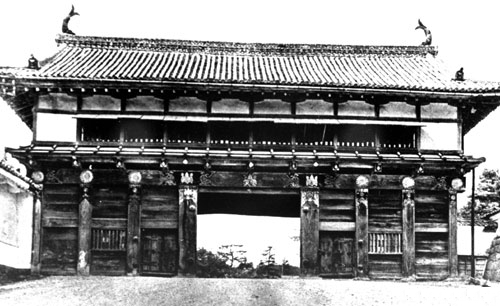
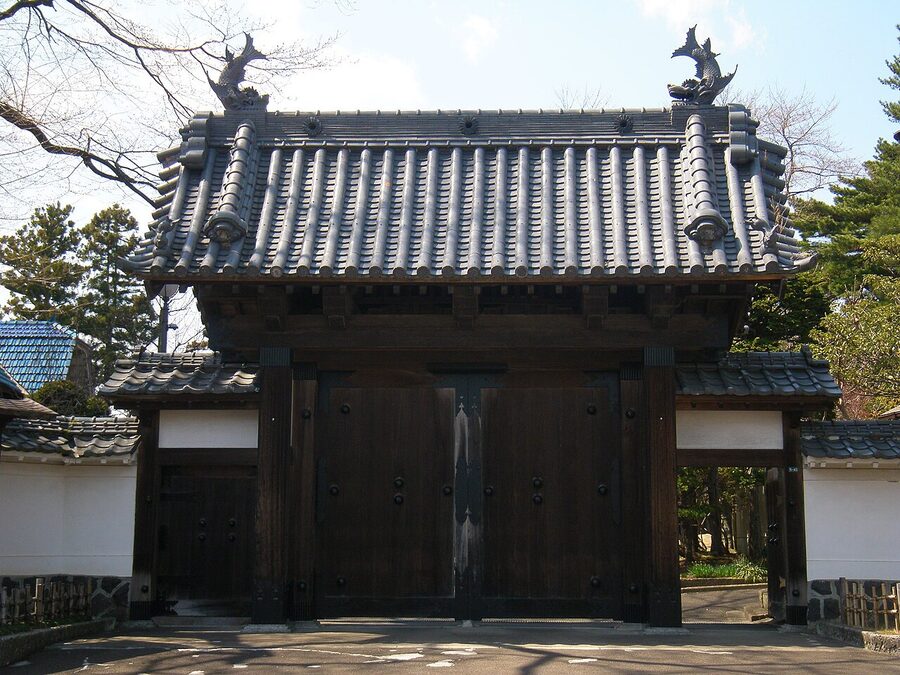
So by the 20th century the castle had been reduced, more or less, to its gate. The Ōtemon, a two-storey gatehouse with paulownia and chrysanthemum fittings, and its corner tower were designated National Treasures in 1931, along with the Tatsumi gate. The inner Tora gate had been taken down in 1920 and re-erected as the gate of the divisional commander’s residence, a decision that turned out to be the luckiest thing that happened to any part of the castle.
Up on the honmaru, a memorial to the region’s war dead, raised by an association formed after the First Sino-Japanese War, went up in 1902, followed, during the Russo-Japanese War in 1904, by a shōkonsha, a shrine for the war dead, which became the Miyagi Gokoku Shrine in 1939. That shrine still owns a large part of the honmaru. It enshrines those who died for the imperial government in every war since the Restoration, which means the Sendai men who died fighting it in 1868 are not there.
The 1,260 Sendai dead of the Boshin War have their own memorial, a cast-iron monument nearly seven metres tall put up in 1877 in the grounds of Zuihōden, across the river. I find the arrangement eloquent. The government’s dead sit on top of Masamune’s castle, and Masamune’s men lie down by his grave.
The night of 10 July 1945
The first time anyone attacked Sendai Castle, they came by air. In the weeks before, American planes reportedly dropped leaflets with a rhyme that went, roughly, “Sendai, nice town, town of trees; on 10 July a town of ashes.” At three minutes past midnight on 10 July, 123 B-29s from Tinian began to come over in 25 waves, and for about two hours they dropped incendiaries on the centre of the city.
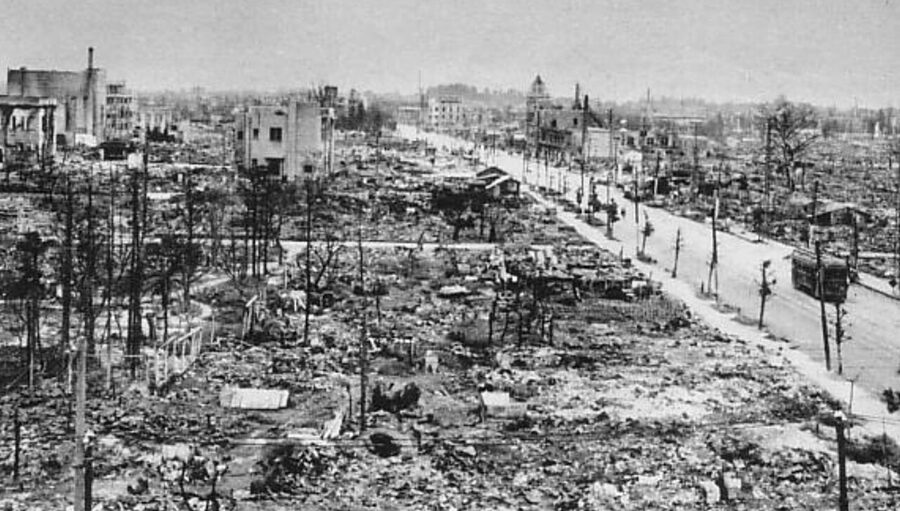
The city’s own count, made that month, was 987 dead and about 57,000 people burned out. A citizens’ group that went back through the records in the 1990s put the dead at 1,064, with another 335 missing or unidentified, and that is the figure I would trust. Some of the bodies were cremated on the bank of the Hirose, below the castle.
The castle lost everything it had left: the Ōtemon, the corner tower, the Tatsumi gate, the Gokoku Shrine, the army buildings. Across the river the incendiaries also took Zuihōden, Masamune’s mausoleum, which had been a National Treasure since 1931. In one night the Shōwa era undid what three centuries of earthquakes had not managed.
After the surrender the American army took over the ninomaru as Camp Sendai and bulldozed what it found; a road was cut through the site of the Ōtemon and a garden pond was filled in. The ninomaru came back in 1957 and is now the Kawauchi campus of Tōhoku University. The honmaru became a city park in 1953, though most of it belongs to the shrine.
Two Masamunes
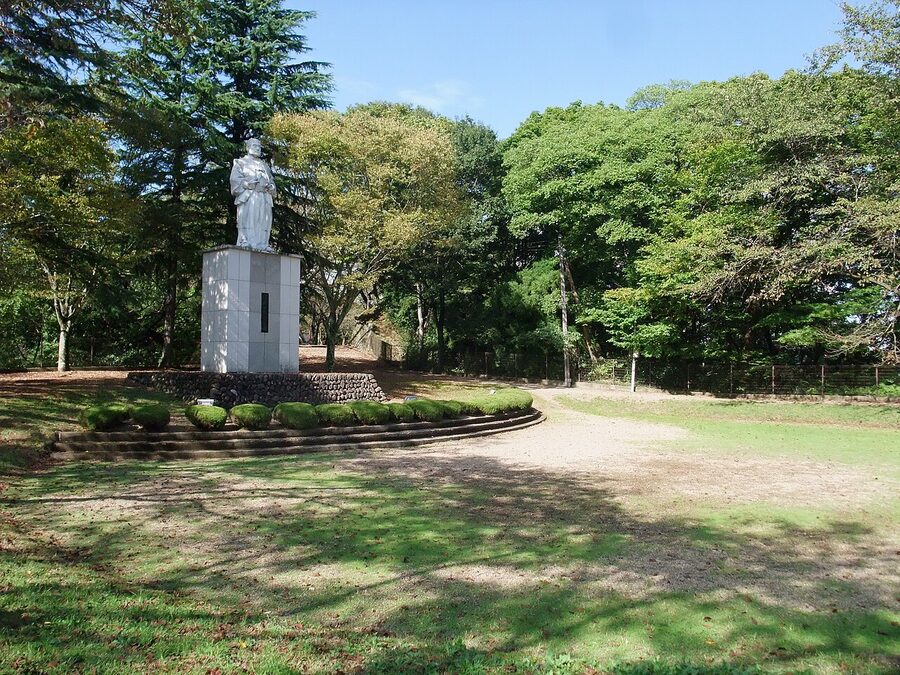
The bronze from Shiogama, meanwhile, was given to Aoba Shrine, which enshrines Masamune, and later to the city museum, where it stood in the courtyard as a bust for decades; in 2023 it moved to the new Ryokusaikan visitor centre in Aobayama Park. On the ridge, in 1953, a standing Masamune in concrete went up instead, made with cement donated by the Onoda company and known as the Peace Statue. It was a placeholder, and Sendai treated it as one.
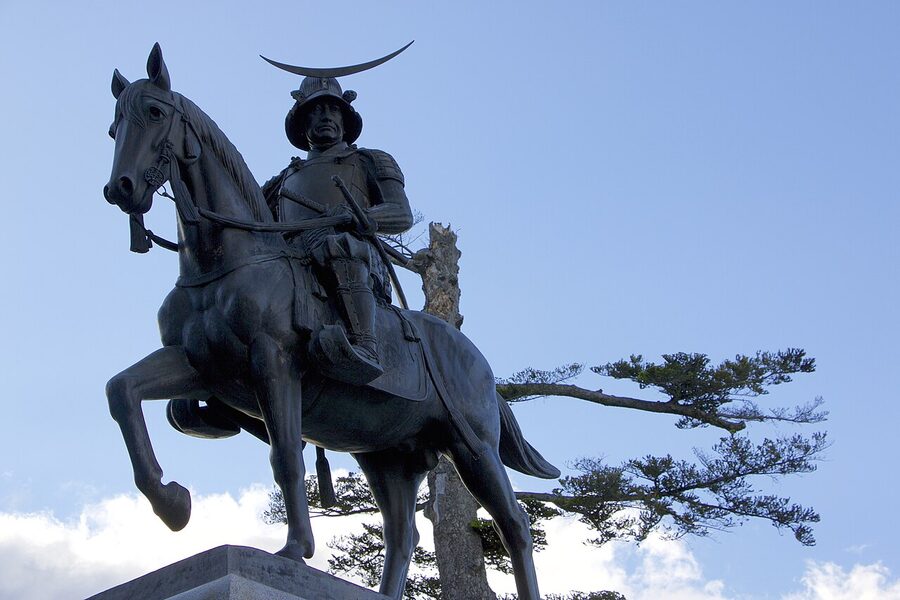
In the early 1960s people began to ask for the horse back, and when Komuro’s original model was found in Shibata the city tourist association paid for a new casting. The rider went back up in 1964, and the concrete Masamune went to Iwadeyama, which seems right to me: back to the castle he had moved out of, as a lord in retirement. (Japanese sources disagree about whether the move happened in 1962 or 1964, and about whether the concrete figure went up in 1953 or 1954.)
Stone that keeps coming down
The castle has spent the postwar years fighting the same enemy it fought in the Edo period. The Miyagi-ken-oki earthquake of 1978 damaged walls and earthen ramparts, and in the 1990s sensors went onto the north wall of the honmaru because it was bulging. Between 1997 and 2004 the city took that wall apart stone by numbered stone and put it back, which is when the two older walls turned up inside.
The plan had been to finish by rebuilding the Ushitora turret, the three-storey tower on the north-east corner, in wood. The excavation killed it. The dig showed that the turret had stood on the third, outermost wall, so a rebuilt tower would sit on top of the evidence and its foundations would destroy the older walls beneath; in May 2003 the city cancelled it, and in August that year the castle became a National Historic Site. I think that was the right call, and an unusual one in a country that likes its castles rebuilt.
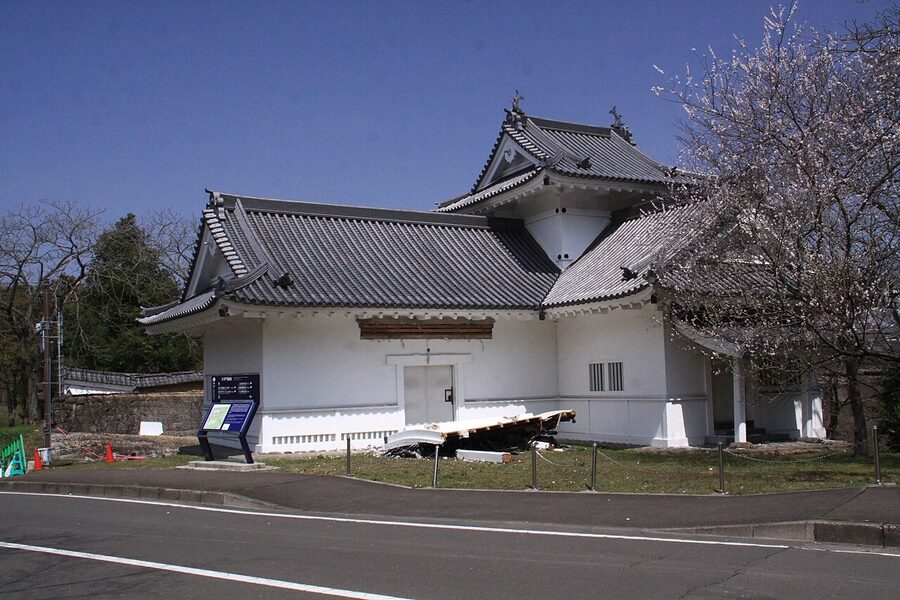
The rebuilt north wall held in March 2011. The road beneath it was jammed with cars and people in the chaos after the earthquake, through aftershock after aftershock, and nobody below it was hurt. Other walls did not hold: the north-west wall of the honmaru, about 200 metres long and five to seven high, came down in three places, and the earthen wall north of the Ōtemon site collapsed.
The repairs ran from 2012 to 2015 and re-laid about 5,000 stones by traditional methods, putting fallen stones back where they had come from wherever possible. In 2015 the city reopened its small guidance hall on the honmaru and marked out the Ōhiroma on the ground, and that might have been the end of it. Then in February 2021, and again on the night of 16 March 2022, two strong earthquakes off Fukushima brought the north-west wall down again.
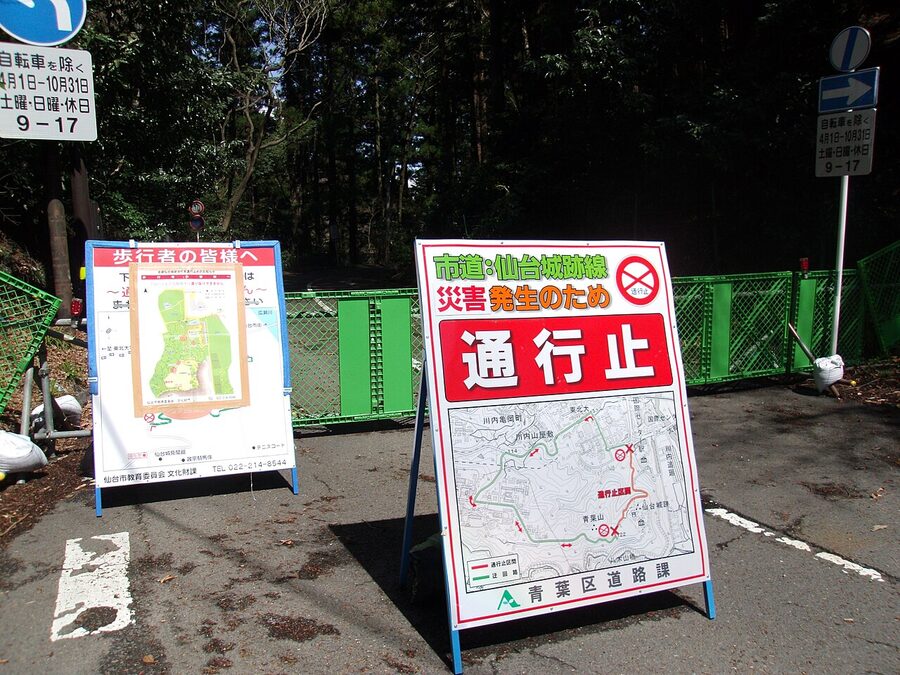
This time about 16 metres fell and about 105 metres bulged, and 10 metres of the wall at the Tori gate collapsed. The 2022 shock also tipped the Masamune statue to one side and cracked the horse’s legs, the first time it had tilted since it went up in 1964. The city raised part of the cost of the repairs by crowdfunding in 2023. Kumamoto Castle, wrecked by the 2016 earthquakes, is going through the same process on a far larger scale, and it is worth seeing both if you care how stone walls are put back.
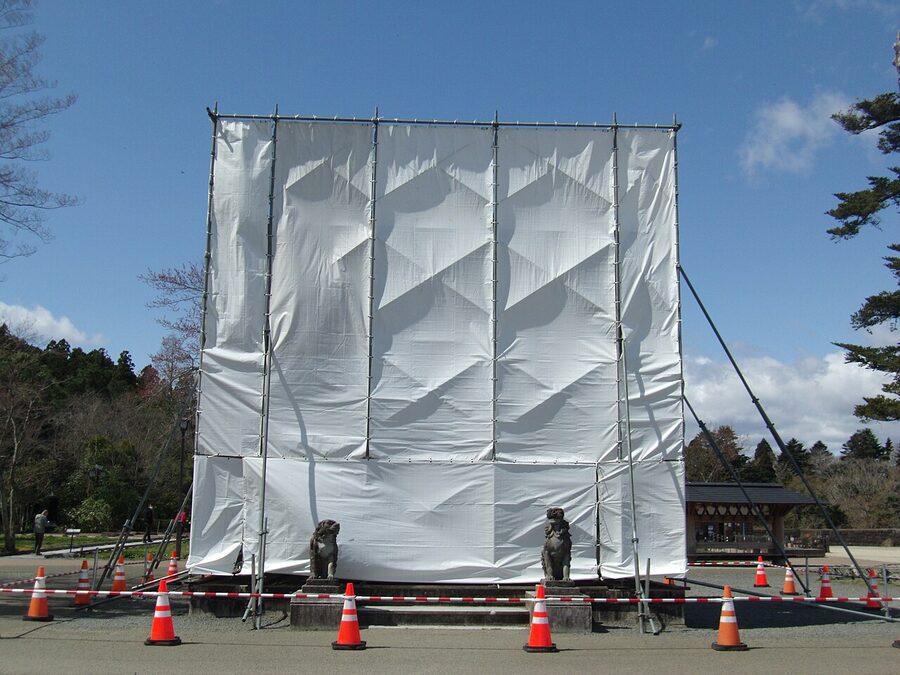
The second repair re-laid 4,596 stones in the north-west wall and 598 at the Tori gate. The masons still built the face by hand, the traditional way, but this time behind the face the city used modern engineering, aiming for a wall that a quake on the scale of 2011 would not bring down. The road reopened on 1 August 2025, and the city’s own documents differ on whether the work was finished in July or October that year.
The next plan is the biggest. Under a programme that runs until 2038, the city intends to rebuild the Ōtemon itself, in wood, from the prewar survey drawings and photographs, and to rebuild the corner tower in its correct shape alongside it. If it happens, Sendai will have its gate back about ninety-three years after the night it burned. I hope I am still walking when it opens.
Where to see the Date of Sendai today
Everything below is on the Loople Sendai bus, the red retro-style loop bus that leaves from bay 16 of the West Exit bus terminal at Sendai Station. From 1 October 2026 a single ride costs ¥300, a Loople day pass ¥700 and a combined Loople and subway day pass ¥1,000. The first bus leaves the station at 9:00 and the last at 16:00, every 20 minutes on weekdays and every 15 at weekends and through August.
The catch is that the loop runs one way and takes about 70 minutes. If you want to get back to the station quickly from the castle, take the Loople one stop on to Aobayama Station and ride the Tōzai subway line in. With a day pass, my order is Zuihōden first, then the museum, the castle, and Ōsaki Hachimangū last, which is how the bus runs anyway.
The honmaru and the statue
Get off at Sendai-jō Ato and you are on the honmaru, with the statue at the eastern edge and the city spread out below it. Go early or at the end of the afternoon. At midday the space in front of the statue is full of coach parties taking the same photograph, and in the evening the view of the lights is the best free thing in Sendai.
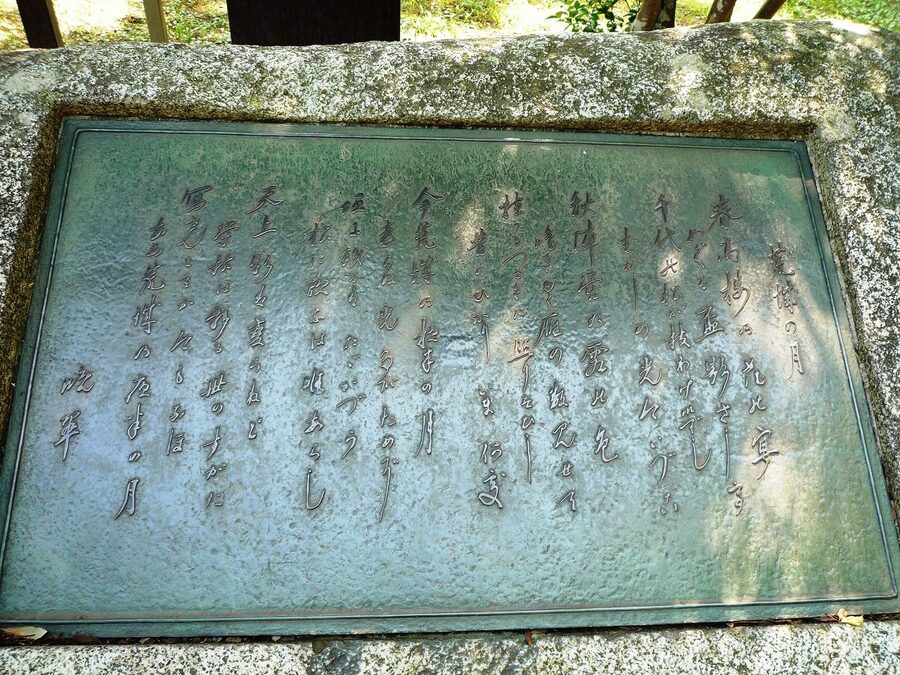
West of the statue is the Sendai-jō Kenbunkan, the city’s guidance hall: free, open 9:00 to 17:00 every day, with a 1:50 model of the Ōhiroma and a full-size reconstruction of part of the lord’s dais floor. It is small and good. Outside it, the room plan of the great hall is marked out on the ground. Find the lord’s end of it and you are standing, more or less, where the shogun was supposed to sit and never did.
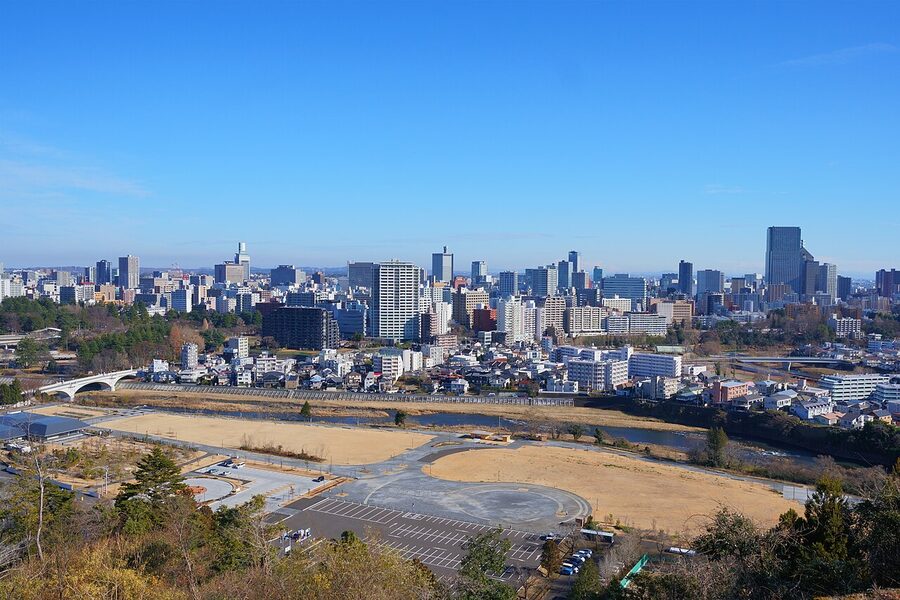
The commercial building across the honmaru, the Aoba Castle Honmaru Kaikan, runs a museum with a VR and CG show for ¥700. I would skip it unless you have children with you, and spend the money on the City Museum instead. The north side of the honmaru, with the rebuilt walls dropping away below the road, is where you get a sense of the height; the Gokoku Shrine, on the site of the Tsume-mon gate, is a quick look.
Down the hill: the Ōtemon site and the moats
If you have legs and an hour, walk down rather than ride. The path from the honmaru drops past the walls to the corner tower at the Ōtemon site, about 25 minutes on foot from Kokusai Center Station on the Tōzai line if you do it the other way round. It is the best way to understand why Vizcaíno called this a hard castle to attack.
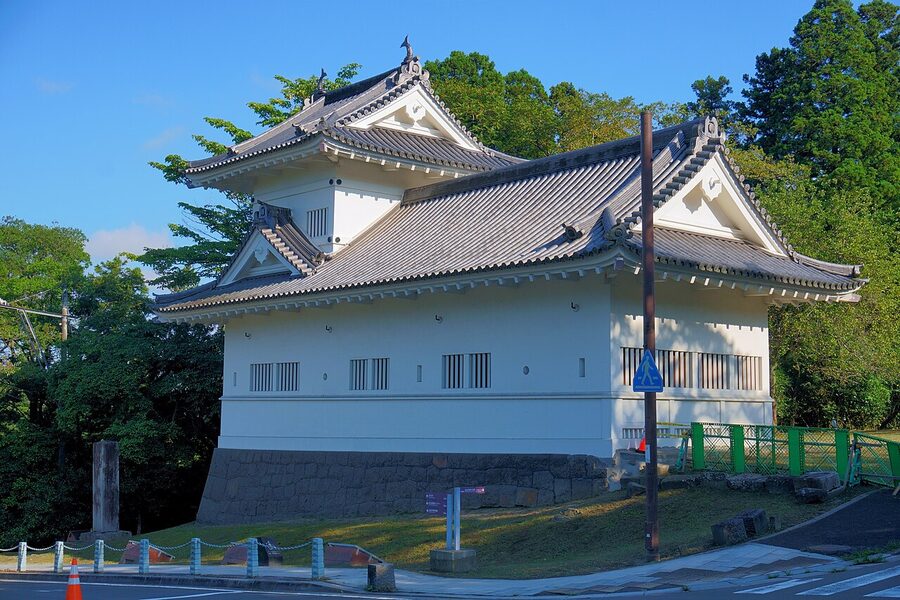
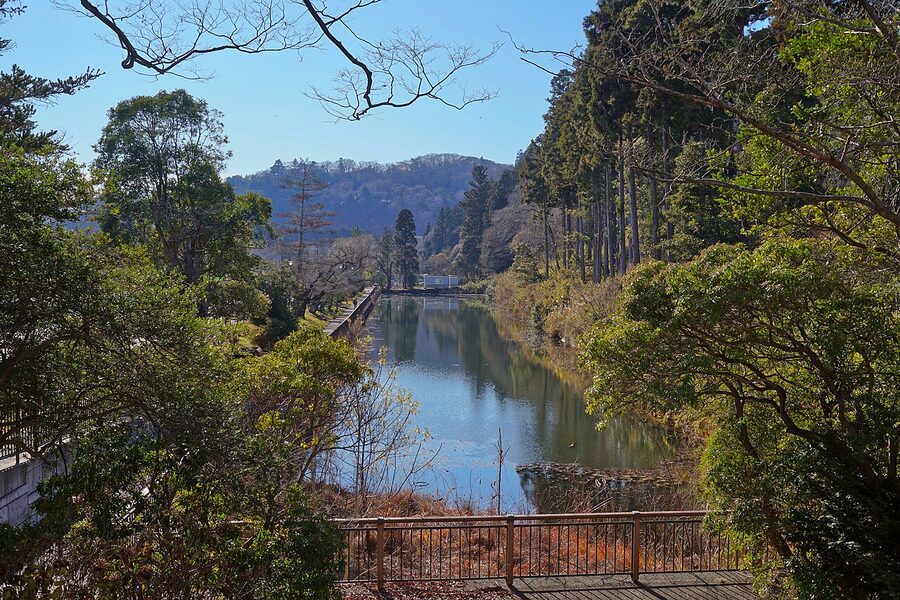
The ninomaru is now the Tōhoku University campus, open and walkable, with nothing of the castle on it. Below the museum the two surviving moats, Goshikinuma and Naganuma, are the castle’s quietest corner. Goshikinuma is also, by local tradition, where figure skating started in Japan, which is why there is a little skating monument by the water.
The Sendai City Museum
The Sendai City Museum stands on the sannomaru and was founded in 1961 to hold about 8,000 objects the Date family gave the city in 1951; it now holds about 97,000. The permanent galleries cost ¥460 for adults, and the museum opens 9:00 to 16:45, last entry 16:15, closed on Mondays (unless Monday is a public holiday) and on the day after a holiday. The Loople stop is Hakubutsukan, Kokusai Center-mae.
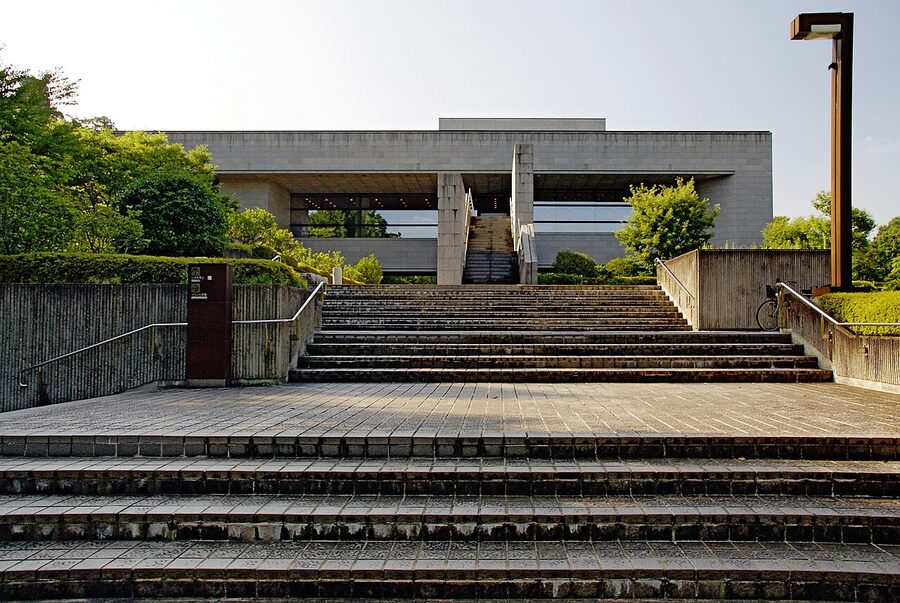
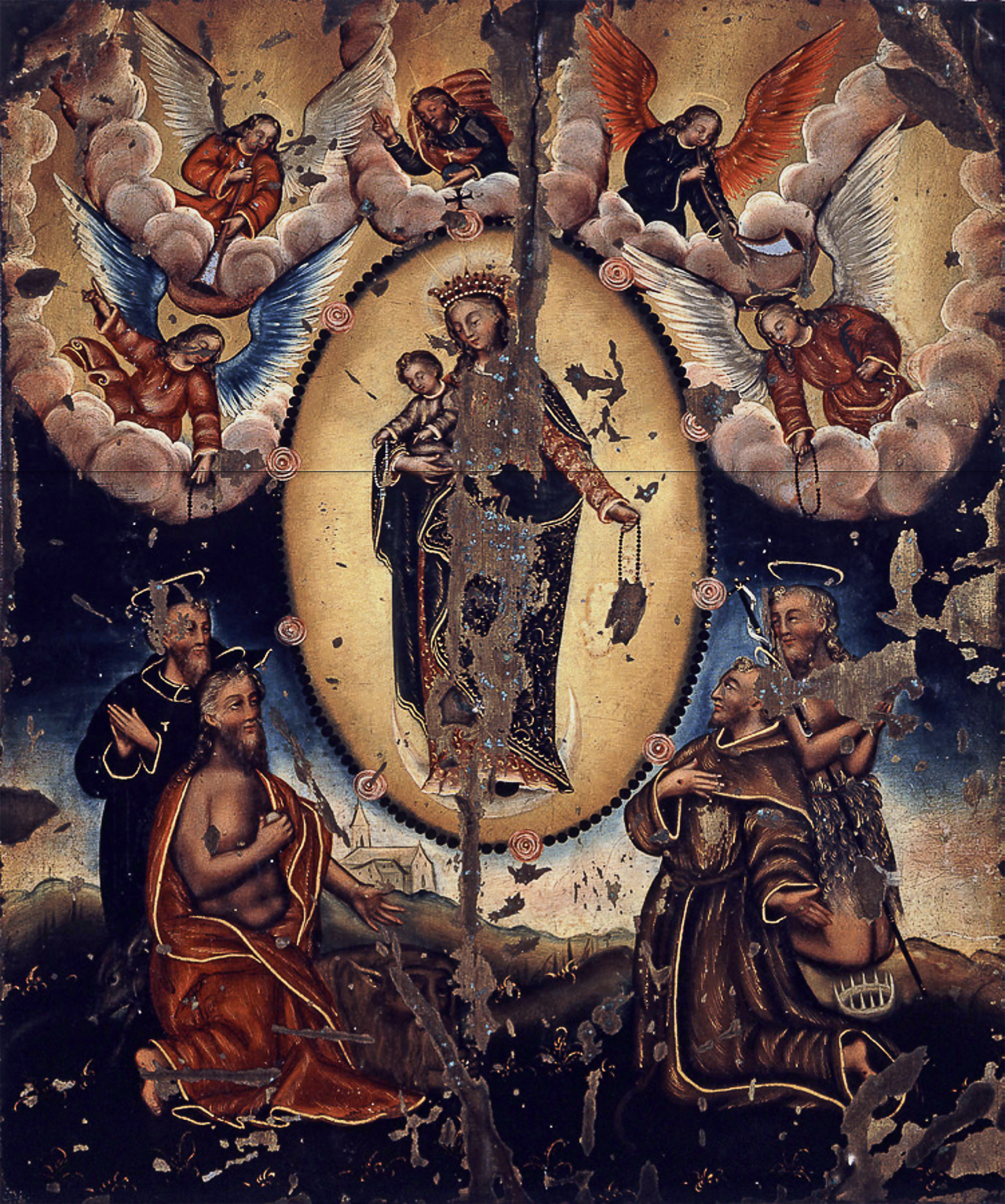
Go for two things. The first is the Keichō embassy treasures: the citizenship patent, the portrait of Hasekura at prayer, rosaries, a crucifix and the paintings he carried home. The galleries change every season and the originals go on and off display, so check the museum’s own site before you make a special trip for one object.
The second is Masamune’s armour, the black-lacquered five-plate cuirass with the crescent helmet. By the museum’s own account, an American film production once telephoned asking for reference material, and you will be told that Darth Vader owes something to the Date. I have no way of checking that and no great desire to; the armour itself is the better story, a plain, practical, gun-age cuirass that the Date put their men into in its thousands, and the samurai armour article explains why it looks the way it does.
Zuihōden
Masamune died in his Edo mansion on the 24th day of the fifth month of 1636 (27 June by the Western calendar) and asked, the story goes, to be buried on Kyōgamine, the hill where he had once heard the first cuckoo of the year. Tadamune built him Zuihōden (瑞鳳殿) there the following year, facing west across the Hirose to the castle, in lacquer, gold and carved colour. It burned on 10 July 1945 with everything else.
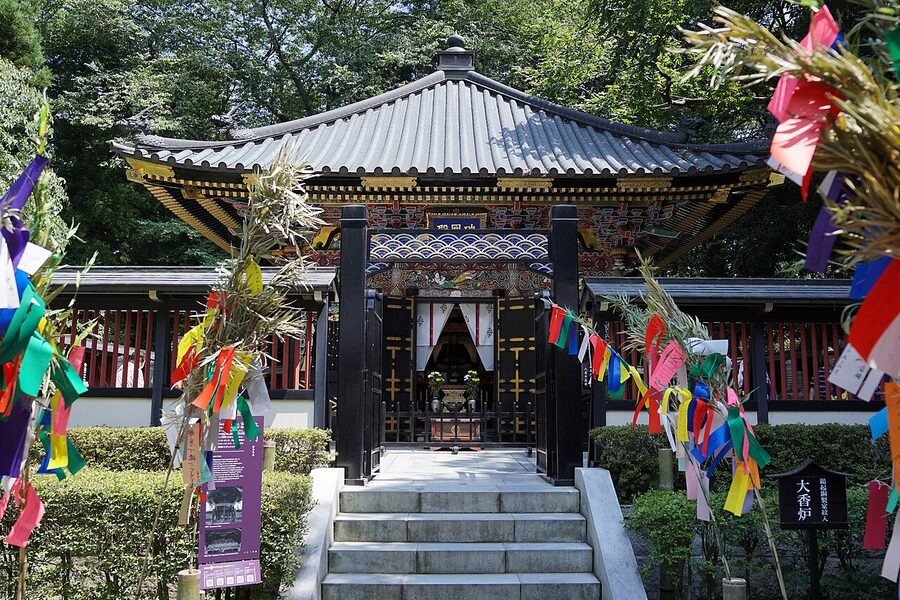
Before rebuilding, the city excavated the grave in 1974 and found Masamune’s bones and burial goods, which is how anyone knows that he stood about 159 centimetres tall. The mausoleum went back up in 1979 and the mausoleums of Tadamune (Kansenden) and of Tsunamune (Zennōden) in 1985. On either side of Masamune’s hall stand stone memorials to the fifteen retainers and five sub-retainers who killed themselves to follow him, and beside Tadamune’s, to sixteen more. By Tsunamune’s death in 1711 the shogunate had banned the practice, so his men shaved their heads instead.
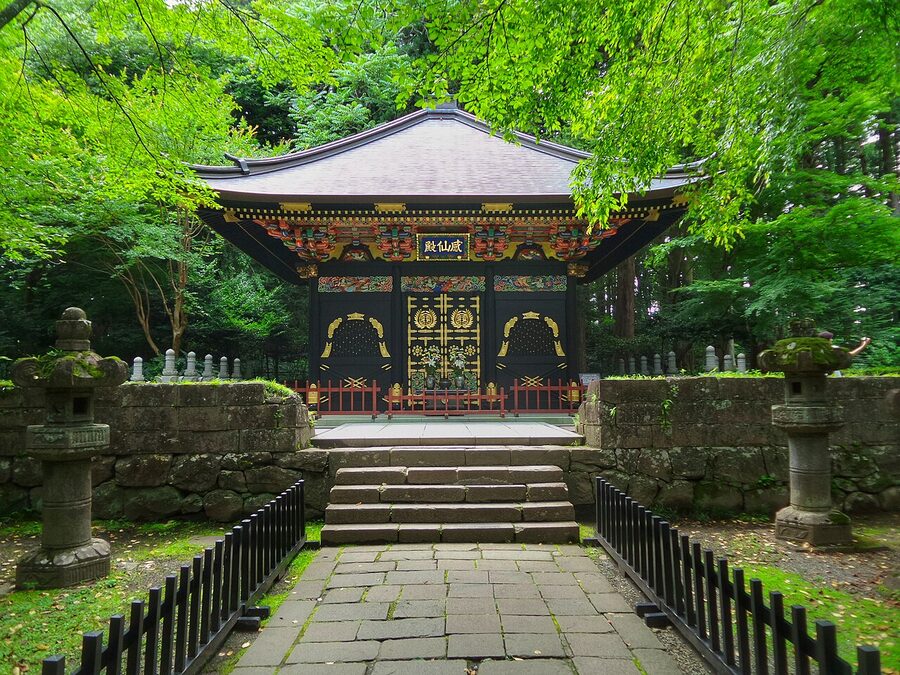
Zuihōden charges ¥570 for adults, ¥410 for high-school students and ¥210 for younger children, and opens 9:00 to 16:50 from February to November (last entry 16:30) and 9:00 to 16:20 in December and January (last entry 16:00). The Loople stop is Zuihōden-mae, and a Loople day pass gets you a small discount. It is closed on 31 December. Find the iron Boshin memorial on the way up; it says more about 1868 than anything on the castle ridge.
Ōsaki Hachimangū
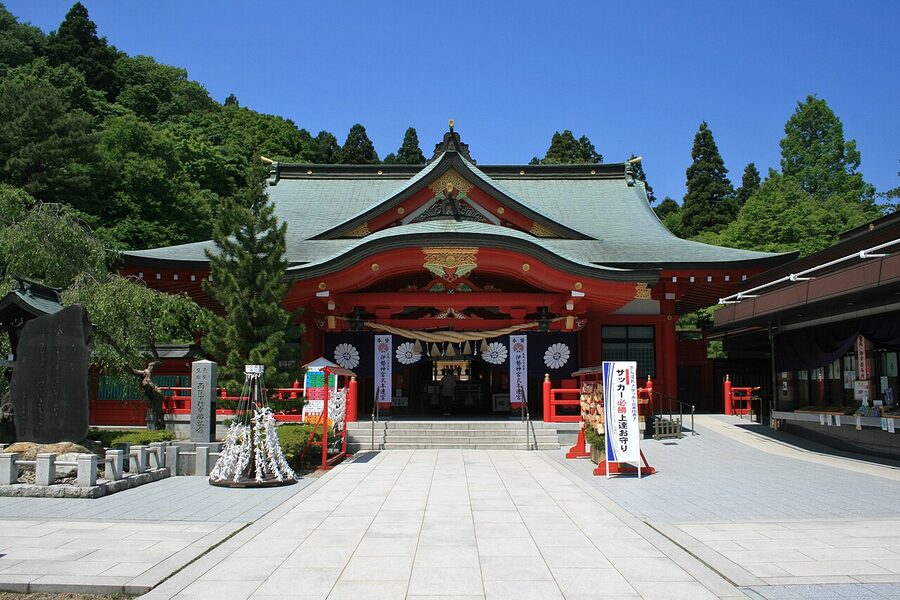
If you only see one building in Sendai, make it this one, because it is the finest thing Masamune put up in the city that is still standing. Ōsaki Hachimangū (大崎八幡宮) was begun in 1604 and finished in 1607 on the north-west edge of the castle town, the direction from which, by the geomancy of the day, bad luck arrived. Its main hall, connecting hall and worship hall are the oldest surviving example of the gongen-zukuri plan in Japan, the layout later used at Nikkō, and were designated a National Treasure in 1952.
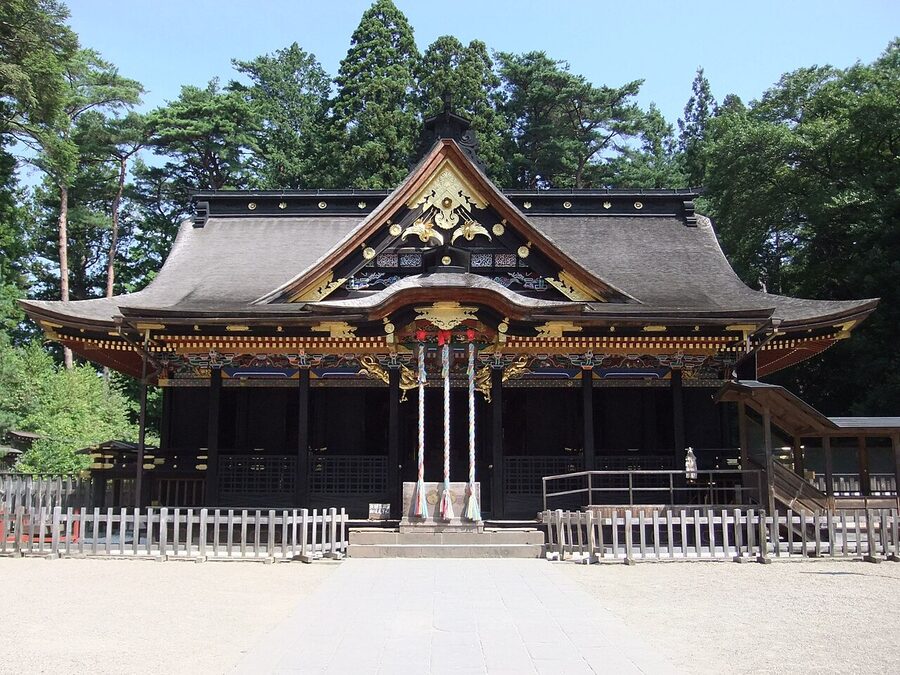
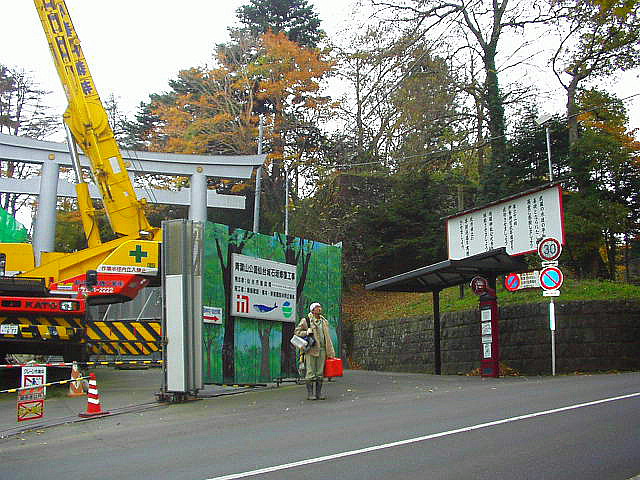
The grounds are free and the shrine office keeps roughly 9:00 to 17:00 hours; the Loople stop is Ōsaki Hachimangū-mae, near the end of the loop, or ordinary city buses from the station’s West Exit take half the time. Look for the carvings in the worship hall, some of them traditionally attributed to the legendary carpenter Hidari Jingorō, and the stone torii of 1668. I would put it among the three or four finest buildings in Tōhoku, and almost nobody on the castle ridge has heard of it.
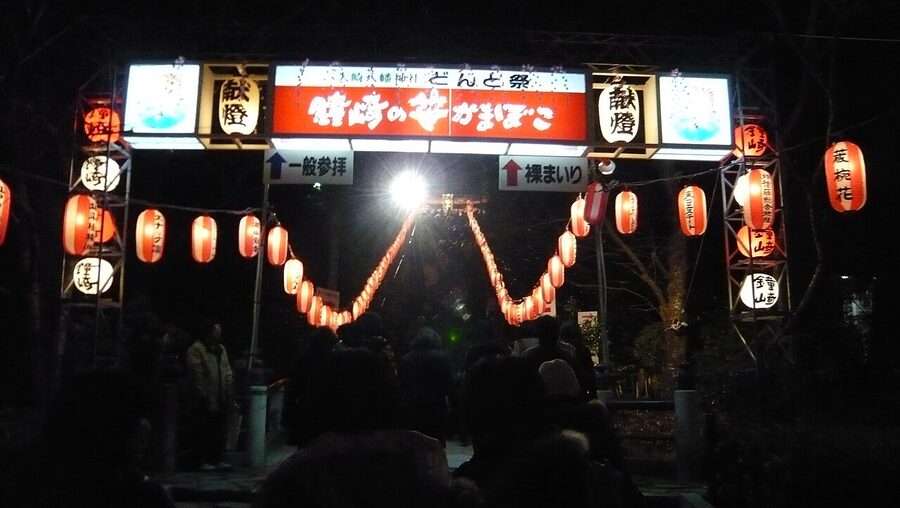
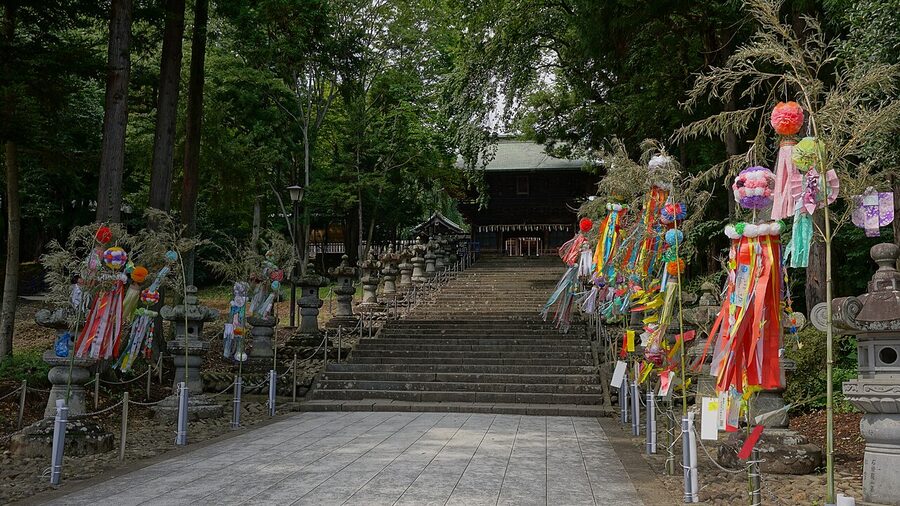
Come on 14 January if you can stand the cold. Dontosai, the fire festival, draws enormous crowds, and the hadaka-mairi, the naked pilgrimage of men in white loincloths walking through the winter streets to the fire, is one of those Japanese rituals that looks absurd until you are standing in the cold watching it. Pair it with the summer, when Sendai’s Tanabata fills Zuihōden with streamers, and you have the two ends of the Date city’s year.
Further out
If you have another day, the Date story keeps going outside the city. Iwadeyama, an hour or so by train with a change at Furukawa for the JR Rikuu East line, has the concrete Masamune in its old castle and the Yūbikan, a domain school and garden built by the Iwadeyama branch of the family. Zuigan-ji at Matsushima, Masamune’s other great building, is covered in the Masamune file, and it is a short ride out on the Senseki line.
For the bigger picture, the twelve castles with their original keeps are the place to start; Sendai is not on the list, and never could be, because it never had a keep to keep. In Tōhoku the only original keep is the small one at Hirosaki, built by a clan that owed the Date nothing. I like that the north’s greatest lord left the north’s best castle site and not its best castle.
If you want the whole run of periods this castle has lived through laid end to end, Japan through the ages does that. But do one thing before you leave Sendai. Go up to the honmaru at the end of the day, when the coach parties have gone, and stand by the horse.
It has been sent for scrap once, recast once and knocked sideways by an earthquake once, and it is looking out over a city that burned to the ground in 1945 and a coast the sea came over in 1611 and again in 2011. The keep base behind it is still empty. Masamune would, I think, approve.